Atypical Psychology
Study these flashcardsFree · spaced repetition · iPhone, Android, Mac & web
All cards
1
Describe the trend in the number of mental health disorders in 5-15 year olds between 1999 and 2017
Increased prevalence in both boys and girls
High in boys than girls for all years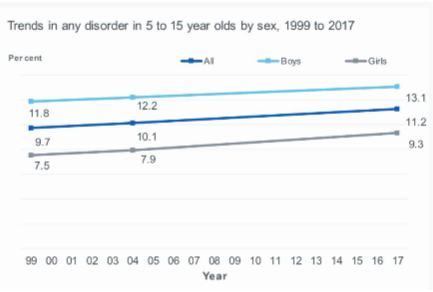
High in boys than girls for all years
2
Describe the trend in the number of common mental disorders in adults between 1993 and 2014
Increase in men and women
Women: highest percentage in 16-24y
Men: highest percentage in 25-34
Women: highest percentage in 16-24y
Men: highest percentage in 25-34
3
Outline the 4 common concepts of the causes of mental illness
Spiritual and supernatural - Eastern and Western countries
Environment
Societal - eg. increase in racial discrimination
Biological / genetic - universal idea
Environment
Societal - eg. increase in racial discrimination
Biological / genetic - universal idea
4
Medieval and early modern period view of mental health causes
Demonic possession
Unnatural being, evil magin
Alcohol, overwork, grief
Imbalance of the humors
Unnatural being, evil magin
Alcohol, overwork, grief
Imbalance of the humors
5
Outline Bethlehem Hospital
Founded in 13thC
Keeping house for the mentally ill
Hospital in the 16thC
Tourist destination in the 18thC
Deterministic view of mental illness - no control over it
Keeping house for the mentally ill
Hospital in the 16thC
Tourist destination in the 18thC
Deterministic view of mental illness - no control over it
6
Attitude towards mental illness in the 18thC
Insanity - irretrievable loss of reason
7
Consequences of the attitudes towards mental illness in the 18thC
Led to proliferation of madhouses
Imprisonment of the sane
Prompted increasing public concern
Imprisonment of the sane
Prompted increasing public concern
8
Changing attitudes and methods towards the end of the 18thC
Tuke in England pioneered moral treatment - rest, quiet, productive manual work
Pinel in France banned punishments, argued psych can be altered and mental illness can be treated
Novel physical treatments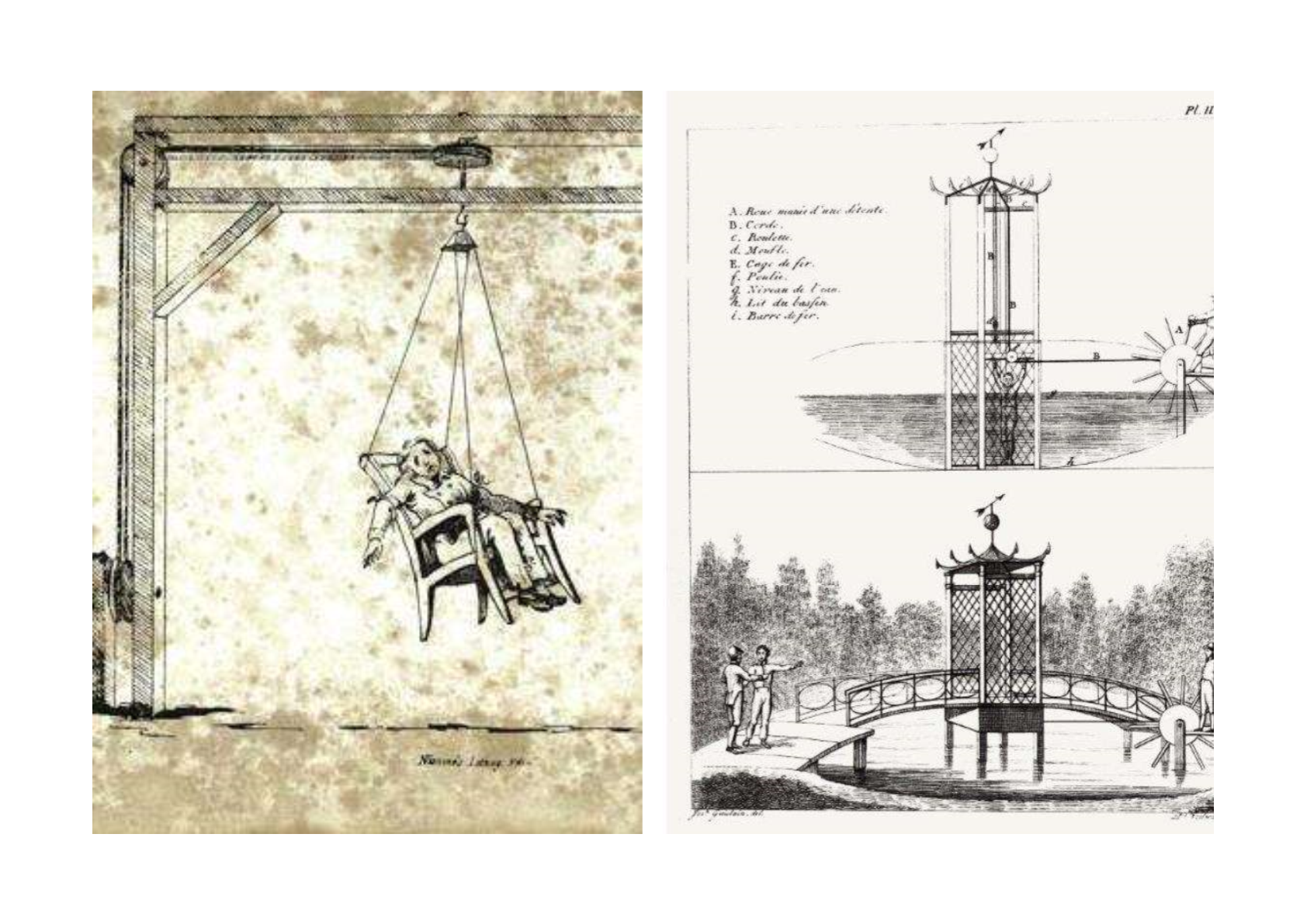
Pinel in France banned punishments, argued psych can be altered and mental illness can be treated
Novel physical treatments
9
19thC legislature
1845 County Asylums Act - public asylums required in every county
1845 Lunacy Act - extensice legal powers introduced to monitor practices of public asylums, inmates = "patients"
Reduced legal power of patients
Darwinism - degeneration theory (human race should be evolving but there may be some degeneration of the human line - blame placed on prisoners and patients with mental illnesses)
1845 Lunacy Act - extensice legal powers introduced to monitor practices of public asylums, inmates = "patients"
Reduced legal power of patients
Darwinism - degeneration theory (human race should be evolving but there may be some degeneration of the human line - blame placed on prisoners and patients with mental illnesses)
10
What did Kraepelin do and when?
End of 19thC
Published Compendium of Psychiatry
Insanity = organic origin, disease of the brain requiring medical treatment
Need scientific investigation
Need classification system based on patterns of symptoms
Medical Model - mental illness as discrete categories of mental / brain pathology like physical disease
Published Compendium of Psychiatry
Insanity = organic origin, disease of the brain requiring medical treatment
Need scientific investigation
Need classification system based on patterns of symptoms
Medical Model - mental illness as discrete categories of mental / brain pathology like physical disease
11
Which model largely dominated the 20thC in the USA?
Psychodynamic model
12
Name 2 current classification systems
DSM V
ICD10
ICD10
13
Which DSM version began following scientific and empirical ideas?
DSM III, 3rd edition
14
What did Rosenham do/find and when?
1973
Pseudopatients
Reported hearing voices
"empty, hollow, thud"
All diagnosed with SCZ and admitted as inpatients
Pseudopatients
Reported hearing voices
"empty, hollow, thud"
All diagnosed with SCZ and admitted as inpatients
15
Describe the major changes to the DSM III
Operational criteria
Includes time course and prognosis
Inclusion and exclusion criteria
Clinical practice should be aligned with scientific enquiry
Includes time course and prognosis
Inclusion and exclusion criteria
Clinical practice should be aligned with scientific enquiry
16
Give 3 examples of inclusion criteria for SCZ
2 or more symptoms present for at least one month eg. hallucinations
Level of functioning significantly/long term lowered
Persistence of disturbance of at least 6m
Level of functioning significantly/long term lowered
Persistence of disturbance of at least 6m
17
Give 2 examples of exclusion criteria for SCZ
Schizoaffective disorder and depression / bipolar rules out
Symptoms not caused by substance abuse/medical conditons
Symptoms not caused by substance abuse/medical conditons
18
6 effects of the introduction of the medical model
Rapid expansion of research on genetics, neural mechanisms etc.
Pursuit of genetic/neural markers of mental illness for diagnosis/prediction
Development of improved medication
Widespread medication prescriptions
Efforts towards public communication of biomedical research on mental illness
Effects of public attitudes towards mental health?
Pursuit of genetic/neural markers of mental illness for diagnosis/prediction
Development of improved medication
Widespread medication prescriptions
Efforts towards public communication of biomedical research on mental illness
Effects of public attitudes towards mental health?
19
How have attitudes towards SCZ, depression and alcohol dependence changed between 1996 and 2006?
Causes:
SCZ and depression - greater support for genetics/neurobiological and reduced support for"way raised"
Alcohol dependence - greater support for bad character
Treatment needs:
SCZ - greater support for physicians and mental hospital
Depression - greater support for physician
Alcohol dependence - greater support for psychiatrist
Stigma:
SCZ - increase for all categories
Depression - decrease in most categories
Alcohol dependence - mixed, highest stigma increase for "marry" (wouldn't want to marry"
SCZ and depression - greater support for genetics/neurobiological and reduced support for"way raised"
Alcohol dependence - greater support for bad character
Treatment needs:
SCZ - greater support for physicians and mental hospital
Depression - greater support for physician
Alcohol dependence - greater support for psychiatrist
Stigma:
SCZ - increase for all categories
Depression - decrease in most categories
Alcohol dependence - mixed, highest stigma increase for "marry" (wouldn't want to marry"
20
4 causal factors of mental illness
Genetic
Biological - eg. maternal illness during pregnancy
Experience
Environment
Biological - eg. maternal illness during pregnancy
Experience
Environment
21
Outline the diathesis-stress model
Diathesis = biological / gentic / personality / cognitive vulnerability
Stress = adversity
Stress = adversity
22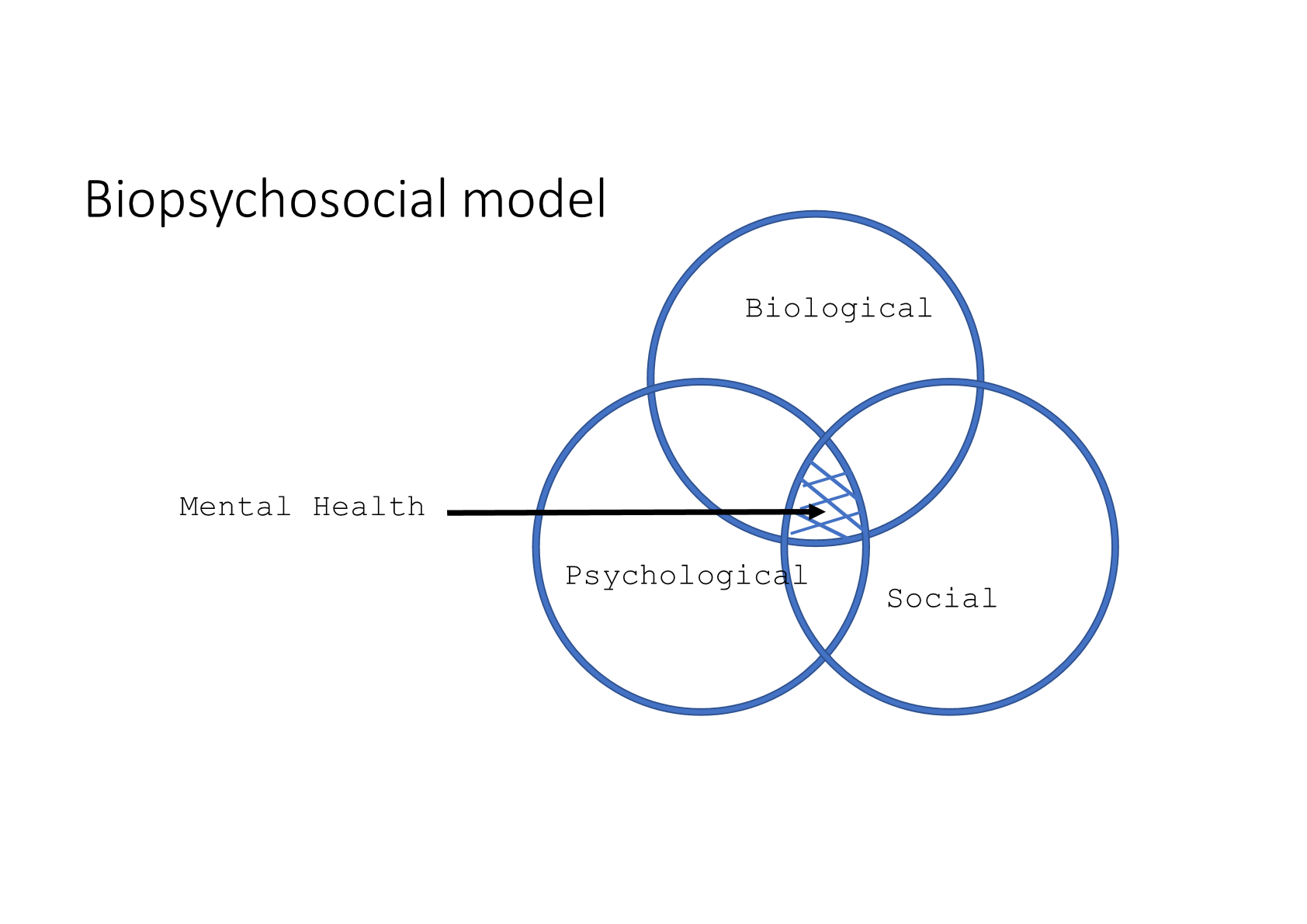
Outline the biopsychosocial model
23
Define deprression
Low mood
Disturbed sleep and appetite
Fatigue
Low self-esteem
Poor conc.
Suicidal ideation
Disturbed sleep and appetite
Fatigue
Low self-esteem
Poor conc.
Suicidal ideation
24
Define anxiety
Significant and persistent worry, either generally or about a specific stimuli/experience
25
Define SCZ
Complex disorder demonstrating positive and/or negative symptoms
26
Limitation of heritability estimates of mental disorders
Can't differentiate between nature and nuture
27
What is the family recurrence ratio
When prevalence among first degree relative of affected individuals compared to unaffected individual or population is greater than 1.0
28
What did the human genome project allow?
Identification of genetic variants associated with phenotypic variants
High heritability might indicate high genetic penetrance and vice versa
High heritability might indicate high genetic penetrance and vice versa
29
Describe genome-wide association studies
Case-control design
No hypothesis
Identify genotype for all known SNPs and their association with the condition
Expect many variants with small effect OR very variants with large effect to explain the phenotypic variation
No hypothesis
Identify genotype for all known SNPs and their association with the condition
Expect many variants with small effect OR very variants with large effect to explain the phenotypic variation
30
Initial GWAS outcomes for psychiatric disorders
Many common variants with small effect
Few studies observed effects that were significant
Many failed to replicate
BUT may have been double dipping (pps may have been in more than 1 sample)
Few studies observed effects that were significant
Many failed to replicate
BUT may have been double dipping (pps may have been in more than 1 sample)
31
Outline the latest GWAS outcomes for depression
Meta analysis
44 significant SNPs across samples
All humans carry genetic risk for depression
No specific gene for depression
Many genes close to significance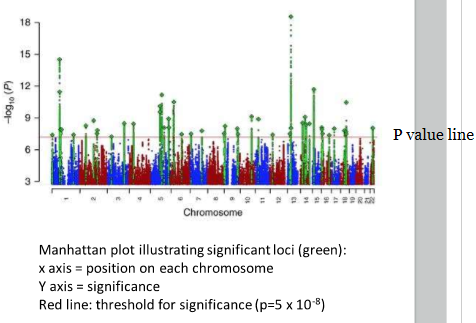
44 significant SNPs across samples
All humans carry genetic risk for depression
No specific gene for depression
Many genes close to significance
32
Outline the latest GWAS outcomes for anxiety disorders
Study by study review of 9 European ancestry samples using 2 approaches:
Case control
Phenotypic factor score
Case control:
Significant site at 3q12.3
Phenotypic factor score:
Significant site at 2p.21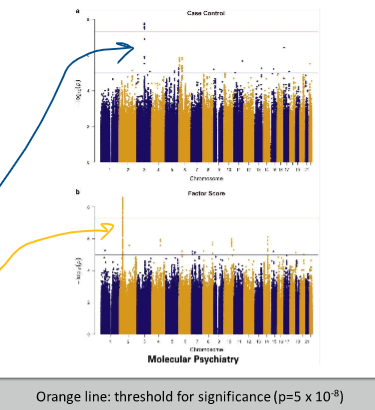
Case control
Phenotypic factor score
Case control:
Significant site at 3q12.3
Phenotypic factor score:
Significant site at 2p.21
33
Outline the latest GWAS outcomes for psychosis
Review of replications across non-overlapping samples (avoids double dipping)
Identified non-overlapping samples in only 2 studies
Each study found 8 genetic loci in either disorder (SCZ / bipolar)
3 loci common between SCZ and BD
Identified non-overlapping samples in only 2 studies
Each study found 8 genetic loci in either disorder (SCZ / bipolar)
3 loci common between SCZ and BD
34
4 reasons for heritability gap between twin studies and molecular estiamtes
Family and twin studies overestimate
GWAS underestimates heritability
Non-additive genetic effects
Interactions between genes and environment
GWAS underestimates heritability
Non-additive genetic effects
Interactions between genes and environment
35
Outline the psychological model for explaining anxiety
Mowrer 1947 - two factor theory of phobias
Excessive fear established by Pavlovian conditioning
Fear maintained by instrumental conditioning (avoidance and negative reinforcement)
Excessive fear established by Pavlovian conditioning
Fear maintained by instrumental conditioning (avoidance and negative reinforcement)
36
Outline Pavlovian conditioning
UCS --- UCR
NS --- NR
UCS + NS --- UCR
CS --- CR
NS --- NR
UCS + NS --- UCR
CS --- CR
37
Outline instrumental conditioning in terms of the acquisition of phobias
Acquire behaviours which reduce possibility of encountering fear objects
Thorndike's law of effect - behaviour followed by positive consequence likely to be repeated
Avoidance behaviours negatively reinforced by preventing exposure to phobia
Maintains phobia as it removes opportunity for CS --- CR association to be broken
Thorndike's law of effect - behaviour followed by positive consequence likely to be repeated
Avoidance behaviours negatively reinforced by preventing exposure to phobia
Maintains phobia as it removes opportunity for CS --- CR association to be broken
38
Outline the innate fear circuit for Pavlovian fear conditioning
Stimulus specificity (only some stimuli can become phobias) and preparedness (increased liklihood of acquring phobias that were dangerous in our evolutionary past)
Resistnace to extinction (presentation of trained CS with absence of an US = reduction of CR)
Slower extinction of fear CSs compared to NS
Instructed extinction - speeds up reduction of CR in case of NS compared to fear CSs
Resistnace to extinction (presentation of trained CS with absence of an US = reduction of CR)
Slower extinction of fear CSs compared to NS
Instructed extinction - speeds up reduction of CR in case of NS compared to fear CSs
39
What did Hugdahl and Ohman find and when?
1977
Measured skin conductance response to fear-relevant (snakes and spiders) vs fear irrelevant (circles and triangles)
Conditioned to fear-relevant/irrelevant via shocks (UCS)
After conditioning, half pps told no more shocks (extinction trials followed)
Instructions removed skin conductance response to fear irrelevant but not fear relevant
Suggests Pavlovian conditioning for fear stimulus unconscious and very difficult to remove association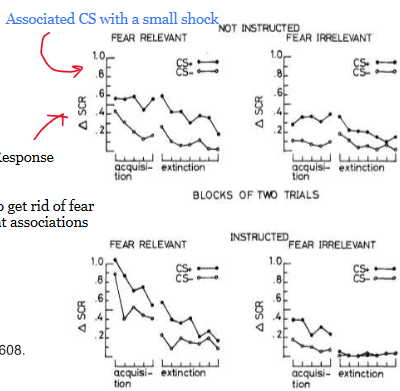
Measured skin conductance response to fear-relevant (snakes and spiders) vs fear irrelevant (circles and triangles)
Conditioned to fear-relevant/irrelevant via shocks (UCS)
After conditioning, half pps told no more shocks (extinction trials followed)
Instructions removed skin conductance response to fear irrelevant but not fear relevant
Suggests Pavlovian conditioning for fear stimulus unconscious and very difficult to remove association
40
6 cognitive factors in anxiety
Irrational beliefs
Excessive worry
Sense of impeding danger
Intense uncertainty about future
Physical/somatic symptoms
Cognitive biases in memory and attention
Excessive worry
Sense of impeding danger
Intense uncertainty about future
Physical/somatic symptoms
Cognitive biases in memory and attention
41
5 cognitive factors in depression
Attributional style
Rumination
Hopelessness
Guilt
Cognitive biases in memory and attention
Rumination
Hopelessness
Guilt
Cognitive biases in memory and attention
42
Outline the cognitive explanation for depression
Beck's theory
Core beliefs develop from early experience
Act as schemas through which situations are filtered
Produces auto negative thoughts and determines behaviours
Distorted cognition causes depressed state
Cognitive triad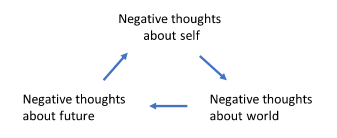
Core beliefs develop from early experience
Act as schemas through which situations are filtered
Produces auto negative thoughts and determines behaviours
Distorted cognition causes depressed state
Cognitive triad
43
Outline a test into Beck's cognitive theory of depression
Suggests fast auto, attentional biases for negative info
Stroop task
Shown emotional stroop task
Slower naming of ink colour for emotional words in stroop task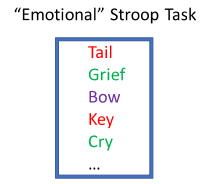
Stroop task
Shown emotional stroop task
Slower naming of ink colour for emotional words in stroop task
44
Outline how the dot probe task has provided evidence for Beck's cognitive theory of depression
Fixation on centre point
Then shown neutral and negative emotional face on left or right
Asked to look towards the cued dot target
Faster when dot cue is on the same side as the emotional face
Attentional bias
Took longer to look away from a negative emotional face that was being fixated on
Supports Beck's theory that attention is captured by negative emotions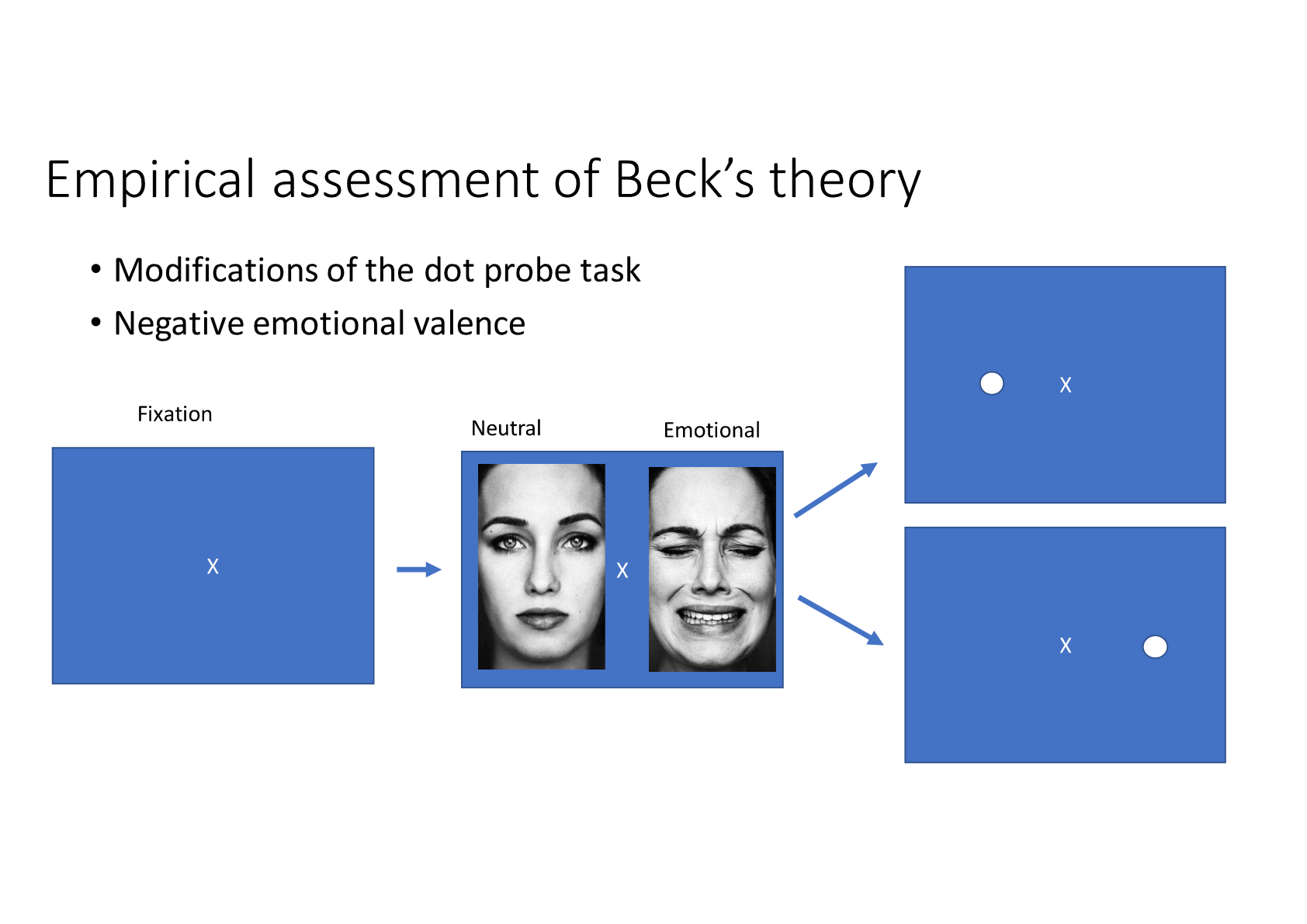
Then shown neutral and negative emotional face on left or right
Asked to look towards the cued dot target
Faster when dot cue is on the same side as the emotional face
Attentional bias
Took longer to look away from a negative emotional face that was being fixated on
Supports Beck's theory that attention is captured by negative emotions
45
What did Sanchez et al do and when?
2013
Measured disengagement
Disengagement trials:
Naturalistic viewing of 2 faces
Pps required to shift attention to emotional face
Stimuli on neutral face (ie. circle = respond left, square = respond right)
Attention needs to shift from emotional to neutral face to perform task
Complementary method for engagement trials
MDD slower at directing attention for disengagement from sad face condition compared to controls
Task responses slower after dwelling on sad faces compared to other emotions (due to difficulties disengaging with sadness?)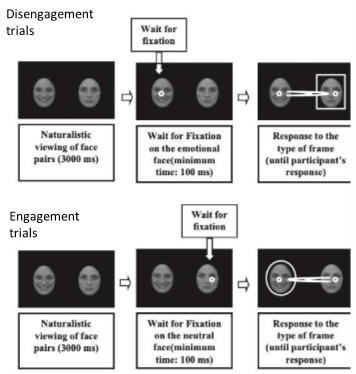
Measured disengagement
Disengagement trials:
Naturalistic viewing of 2 faces
Pps required to shift attention to emotional face
Stimuli on neutral face (ie. circle = respond left, square = respond right)
Attention needs to shift from emotional to neutral face to perform task
Complementary method for engagement trials
MDD slower at directing attention for disengagement from sad face condition compared to controls
Task responses slower after dwelling on sad faces compared to other emotions (due to difficulties disengaging with sadness?)
46
Give 4 examples of societal/public health factors highly associated with poor mental health
Poor access to healthcare
Food insecurity
Poor education
Poverty
Food insecurity
Poor education
Poverty
47
3 elements for evaluating the efficacy of a treatment
Randomised control trial
Treatment and placebo
Double blind
Treatment and placebo
Double blind
48
Name an antipsychotic drug
Chlorpromazine
49
Outline the discovery of chlorpromazine
Reduces psychotic symptoms
D2 antagonist
Dopamine theory of SCZ has dominated explanation of psychosis for decades as a result
D2 antagonist
Dopamine theory of SCZ has dominated explanation of psychosis for decades as a result
50
State the 2 different types of antipsychotic drugs
Typical
Atypical
Atypical
51
Outline typical antipsychotics
Relieve positive symptoms (hallucinations, delusions etc.)
No amelioration of negative symptoms
Some serotonergic, muscaranic and adrenergic actions
Many side effects - blurred vision, drowsiness, weight gain, high cholesterol
Eg. chlorpromazine
No amelioration of negative symptoms
Some serotonergic, muscaranic and adrenergic actions
Many side effects - blurred vision, drowsiness, weight gain, high cholesterol
Eg. chlorpromazine
52
Outline the 2 pathways that D2 antagonists affect
Nigrostriatal pathway - responsible for movement disorders
Tuberoinfundibular pathway - responsible for hyperprolactinemia
Tuberoinfundibular pathway - responsible for hyperprolactinemia
53
Side effects of D2 antagonists
Nigrostriatal pathway - rigidity, tremor, restlessness (similar to Parkinson's)
Tuberoinfundibular pathway - production of breast milk, erectile dysfunction, low sperm count
Tuberoinfundibular pathway - production of breast milk, erectile dysfunction, low sperm count
54
Outline atypical antipsychotics
D2 and 5-HT antagonists
Same serotonergic, histaminergic, adrenergic and muscarinic actions as typical
Reduction in extrapyramidal symptoms (looser D2 antagonism binding and faster dissociation)
Eg. clozapine
Same serotonergic, histaminergic, adrenergic and muscarinic actions as typical
Reduction in extrapyramidal symptoms (looser D2 antagonism binding and faster dissociation)
Eg. clozapine
55
What did Leucht et al find and when?
2017
Meta analysis of 167 double-blind randomised control trials
Compared antipscyhotics with placebo
More reduction in symptoms for antipscyhotic > placebo
Antipsychotic results:
22% show 50% reduction in symptoms
51% show 20% reduction in symptoms
Meta analysis of 167 double-blind randomised control trials
Compared antipscyhotics with placebo
More reduction in symptoms for antipscyhotic > placebo
Antipsychotic results:
22% show 50% reduction in symptoms
51% show 20% reduction in symptoms
56
5 moderators of antipscyhotic efficacy
Industry sponsorship - larger differences in non-industry sponsored studies
Sample size - larger sample = larger differences
Mean dose - larger dose = larger differences
Publication year - smaller differences over time
Sample size - larger sample = larger differences
Mean dose - larger dose = larger differences
Publication year - smaller differences over time
57
What fraction of patients have no response to antipsychotics?
Almost half
58
Why is CBT often a first-line treatment for psych disorders?
Strong empirical base
Highly effective
Response rates equal to of better than other treatments
Cheap and easy to deliver
Highly effective
Response rates equal to of better than other treatments
Cheap and easy to deliver
59
What does "first wave" CBT have origins in?
Associative learning
Pavlovian conditioning and instrumental learning
Pavlovian conditioning and instrumental learning
60
State 2 types of behavioural therapy
Systematic desensitisation
Exposure and response prevention therapy
Exposure and response prevention therapy
61
Outline systematic desensitisation
Ordered extinction of associations from least to most feared
62
Outline exposure and response prevention therapy
Ordered extinction of learned avoidance behaviours
63
What is "second wave" CBT underpinned by?
Cognitive theory of mental disorders
Beck's cognitive triad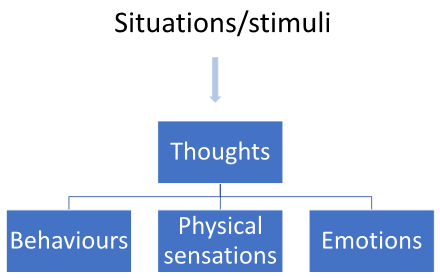
Beck's cognitive triad
64
Outline Beck's cognitive triad
Automatic negative thoughts relating to self, future and world
65
Outline the 5 principles of Beck's cognitive therapy
Collaborative process between patient and therapist
Identify maladaptive baises and beliefs
Examine evidence for and against biases and beliefs
Test validity of beliefs
Learn to modify thoughts by using experiential evidence
Identify maladaptive baises and beliefs
Examine evidence for and against biases and beliefs
Test validity of beliefs
Learn to modify thoughts by using experiential evidence
66
How does Beck's cognitive therapy differ from behavioural therapy?
Alters cognitive schema through appraisal processes, rather than extinguishing old schemas and learning new associations
67
Limitations for estimating the efficacy of psychological treatmetns
- Single blind at most
- Can't translate gold-standard randomised control trials used to test drugs for testing psychological therapy
- Subject to therapy bias
- Effectiveness influenced by experience/skill of therapist
- Hard for patients to turn up for treatment and complete homework
- Can't translate gold-standard randomised control trials used to test drugs for testing psychological therapy
- Subject to therapy bias
- Effectiveness influenced by experience/skill of therapist
- Hard for patients to turn up for treatment and complete homework
68
Outline research into the efficacy of Beck's second wave CBT for depression
Meta analysis
Very little difference between CBT and other therapies
Only shows improvement when compared to waiting list control and other forms of pscyhotherapy
So CBT and behavioural therapy useful - but CBT no necessarily the best
Very little difference between CBT and other therapies
Only shows improvement when compared to waiting list control and other forms of pscyhotherapy
So CBT and behavioural therapy useful - but CBT no necessarily the best
69
Outline third wave CBT
Involves any psychotherapeutic treatment (eg. mindfulness)
Delivery can be face-to-face, multimedia or a hybrid
Delivery can be face-to-face, multimedia or a hybrid
70
Research into third wave CBT
Largest reduction in symptoms compared to placebo, wait list and no treatment
71
What are the limitations of recent meta analyses using CBT to refer to any pscyh treatment?
Obscures individual efficacy rates which could be clinically relevant
Prevents elucidation of specific neurocognitive mechanisms of change
Reduces cross talk between resesarch, psychopharmacology, neural substrates and genetis
Limits future treatment developments
Prevents elucidation of specific neurocognitive mechanisms of change
Reduces cross talk between resesarch, psychopharmacology, neural substrates and genetis
Limits future treatment developments
72
5 factors limiting progress in determining the potential biological and psychological bases of disorders
Identifying genetic variants requires mega samples - heritability is also a mix of genetics and environment and only looks at a specific population at a specific time
Experimental control - natural, imperfect samples (different gender, ethnicity, SES etc)
Limited control over biases - research allegiance, publication bias, fewer negative results published
Comorbidity
Unclear boundaries for clinical diagnosis
Experimental control - natural, imperfect samples (different gender, ethnicity, SES etc)
Limited control over biases - research allegiance, publication bias, fewer negative results published
Comorbidity
Unclear boundaries for clinical diagnosis
73
Outline how comorbidity might limit our understanding of mental disorders
Research has found high comorbidities between different mental disorders
Makes it difficult to draw conclusions about specific disorders
Eg. meta analysis found patients with depression (unipolar and bipolar) have high comorbidity with anxiety, OCD, specific phobia
Makes it difficult to draw conclusions about specific disorders
Eg. meta analysis found patients with depression (unipolar and bipolar) have high comorbidity with anxiety, OCD, specific phobia
74
Outline how unclear boundaries might limit our understanding of mental disorders
Medical model assumes that pscyh symptoms present in disorders are absent in rest of population
Some ppl have some symptoms but not enough for clinical diagnosis
Eg. 16% ppl attending GPs in France with no psychiatric history reported auditory halllucinations
Ppl may be on more of a continuum than members of particular categories (eg. SCZ or not)
Some ppl have some symptoms but not enough for clinical diagnosis
Eg. 16% ppl attending GPs in France with no psychiatric history reported auditory halllucinations
Ppl may be on more of a continuum than members of particular categories (eg. SCZ or not)
75
Outline the Research Domain Criteria (RDoC)
Aim = understand nature of mental illness in terms of varying degrees of functioning in general pscyh / bio systems
Need to adopt dimensial conceptualisations of constructs in order to fully understand the spectrum of mental health and illness
Advocates for a paradigm shift away from natural categories of mental disorder
Looking at mental disorders as the traits that are involved, rather than a diagnostic entity
Argues that understanding mental pathology is the same as understanding neural pathology
Need to adopt dimensial conceptualisations of constructs in order to fully understand the spectrum of mental health and illness
Advocates for a paradigm shift away from natural categories of mental disorder
Looking at mental disorders as the traits that are involved, rather than a diagnostic entity
Argues that understanding mental pathology is the same as understanding neural pathology
76
State the units of measurement used by RDoC
Genes, molecules, cells, neural circuits, self report
77
Define constructs
Processes, mechanisms and responses
78
5 criticisms of RDoC
- Still difficult to draw the line between healthy and unhealthy trait dimensions (counters this by looking at statistics: statistical deviance from the normal distribution)
- Subjective experiences vs neuroscientific definitions of pathology (ignores whole context of the person that may not be captured by their neurobiology and is still important in the development of mental disorders)
- Significance of stakeholders in mental health research
- Critics argue mental pathology cannot be reduced to purely neurobiological factors
- Underestimates the context of the environment that the pathologies may be experienced in
- Subjective experiences vs neuroscientific definitions of pathology (ignores whole context of the person that may not be captured by their neurobiology and is still important in the development of mental disorders)
- Significance of stakeholders in mental health research
- Critics argue mental pathology cannot be reduced to purely neurobiological factors
- Underestimates the context of the environment that the pathologies may be experienced in
79
Outline the findings of research into the effect of income inequality on mental health outcomes
Studies of income inequality vary depending on included variables such as:
- country
- measures of mental health
Positive, negative and mixed results found
- country
- measures of mental health
Positive, negative and mixed results found
80
Meta analysis findings of income inequality on mental health outcomes
Only 9 out of 15,000 publications matched criteria for inclusion in meta analysis
1 positive, 6 mixed, 2 no association
Small but significant associations between income inequality and any mental health disorder and depression
1 positive, 6 mixed, 2 no association
Small but significant associations between income inequality and any mental health disorder and depression
81
What might cause variation in mental health outcomes to same adversity?
Variation in resilience
Involves interactions between vulnerability and adaptation, and risk and protective factors
Involves interactions between vulnerability and adaptation, and risk and protective factors
82
Define vulnerability
Individual variation in susceptibility to risk (and protective) factors
83
Define adaptation
Individual variation in response to risk (and protective) factors
84
What has research into early and recent life stressors found?
Early life stress has an inoculation-like effect (evidence for resilience)
Moderate stress in early life may be protective against future psychopathological conditions caused by recent stressors
Moderate stress in early life may be protective against future psychopathological conditions caused by recent stressors