Hypothesis Testing
Study these flashcardsFree · spaced repetition · iPhone, Android, Mac & web
All cards
1
Outline hypothesis testing
Inferential procedure
Uses sample data to evaluate credibility of a hypothesis about a population
Uses sample data to evaluate credibility of a hypothesis about a population
2
State the 3 types of hypothesis
Scientific
Working
Statistical
Working
Statistical
3
Define scientific hypothesis
Proposed explanation of a phenomenon
4
Define working hypothesis
Provisional hypothesis requiring further resesarch to evaluate
5
Define statistical hypothesis
Formally statse relation of lack of relation between different phenomena
6
Symbol for null and alternative hypotheses
Null = H0
Alternative = H1
Alternative = H1
7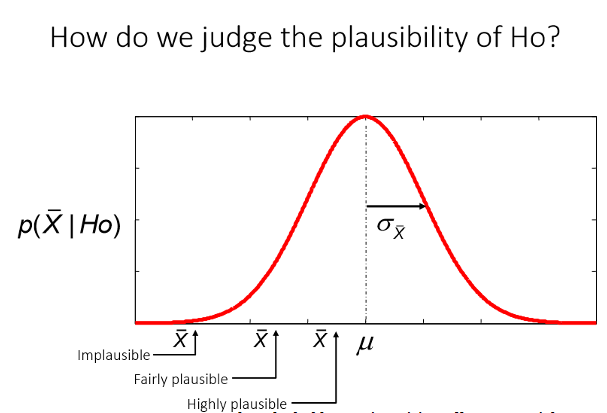
Image occlusion: name the hidden labels
8
How is the plausibility of the null hypothesis judged?
Calculating probability p (area under the curve from a sample mean)
Requires using the z tables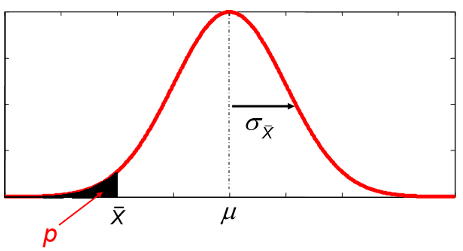
Requires using the z tables
9
Hypothesis tests are based on conditional probabilities. Explain what this means
Decision based on mean value, given the null hypothesis being true
p-value is the probability of the observed mean given that H0 is true
p-value is the probability of the observed mean given that H0 is true
10
If p < than alpha...
- Accept null, not significant
- Reject null, is significant
11
The lower the alpha level...
- the lower the significance level (low significance = low p values)
- the lower the significance level (high significance = low p values)
- the greater the significance level (low significance = low p values)
- the greater the significance level (high significance = low p values)
12
When to use one tailed test
When you have a specific reason to believe the effect will be in a certain direction
Eg. previous research
Eg. previous research
13
___ tailed tests more likely to reach significance because they have increased power
- One
- Two
14
Are the critical values for 2 tailed tests smaller or larger than 1 tailed tests?
Larger
Thus, H0 less likely to be rejected
Thus, H0 less likely to be rejected
15
Type 1 error
False positive
Wrongly accept H1 and reject H0
Wrongly accept H1 and reject H0
16
Type 2 error
False negative
Wrongly reject H1 and accept H0
Wrongly reject H1 and accept H0
17
Which error is more serious and why?
Both bad
Type 1 = actions might be taken that have no value
Type 2 = inaction when action should have been taken
Type 1 = actions might be taken that have no value
Type 2 = inaction when action should have been taken
18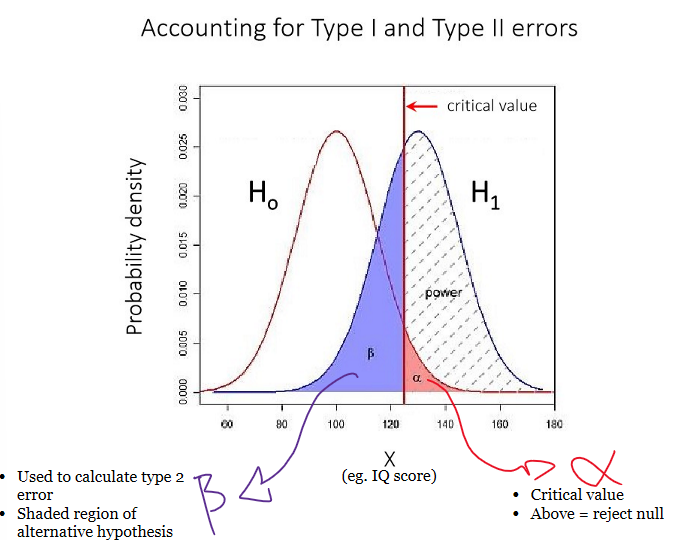
Image occlusion: name the hidden labels
19
Image occlusion: name the hidden labels
20
Image occlusion: name the hidden labels
21
Image occlusion: name the hidden labels
22
Image occlusion: name the hidden labels
23
Image occlusion: name the hidden labels
24
Image occlusion: name the hidden labels
25
Image occlusion: name the hidden labels
26
Image occlusion: name the hidden labels
27
Image occlusion: name the hidden labels
28
Image occlusion: name the hidden labels
29
Image occlusion: name the hidden labels
30
Image occlusion: name the hidden labels
31
Image occlusion: name the hidden labels
32
Image occlusion: name the hidden labels
33
Image occlusion: name the hidden labels
34
Image occlusion: name the hidden labels
35
5 criticisms of null hypothesis testing
- p < 0.05 is an arbitrary probability
- Doesn't consider effect size
- Doesn't consider variability of the effect size
- p hacking and HARKing
- Ignores judgement
- Doesn't consider effect size
- Doesn't consider variability of the effect size
- p hacking and HARKing
- Ignores judgement
36
Outline Popper's falsification principle
Hypotheses can never be verified, BUT can be falsified
Absolute truth not a part of the scientific method
Absolute truth not a part of the scientific method