Neurons + Neurotransmission
Study these flashcardsFree · spaced repetition · iPhone, Android, Mac & web
All cards
1
What do parameter neurons do and where are they found?
Transmit info via white matter to other regions of the brain
Found in cortex
Found in cortex
2
Describe grey matter
Where the cell bodies are
3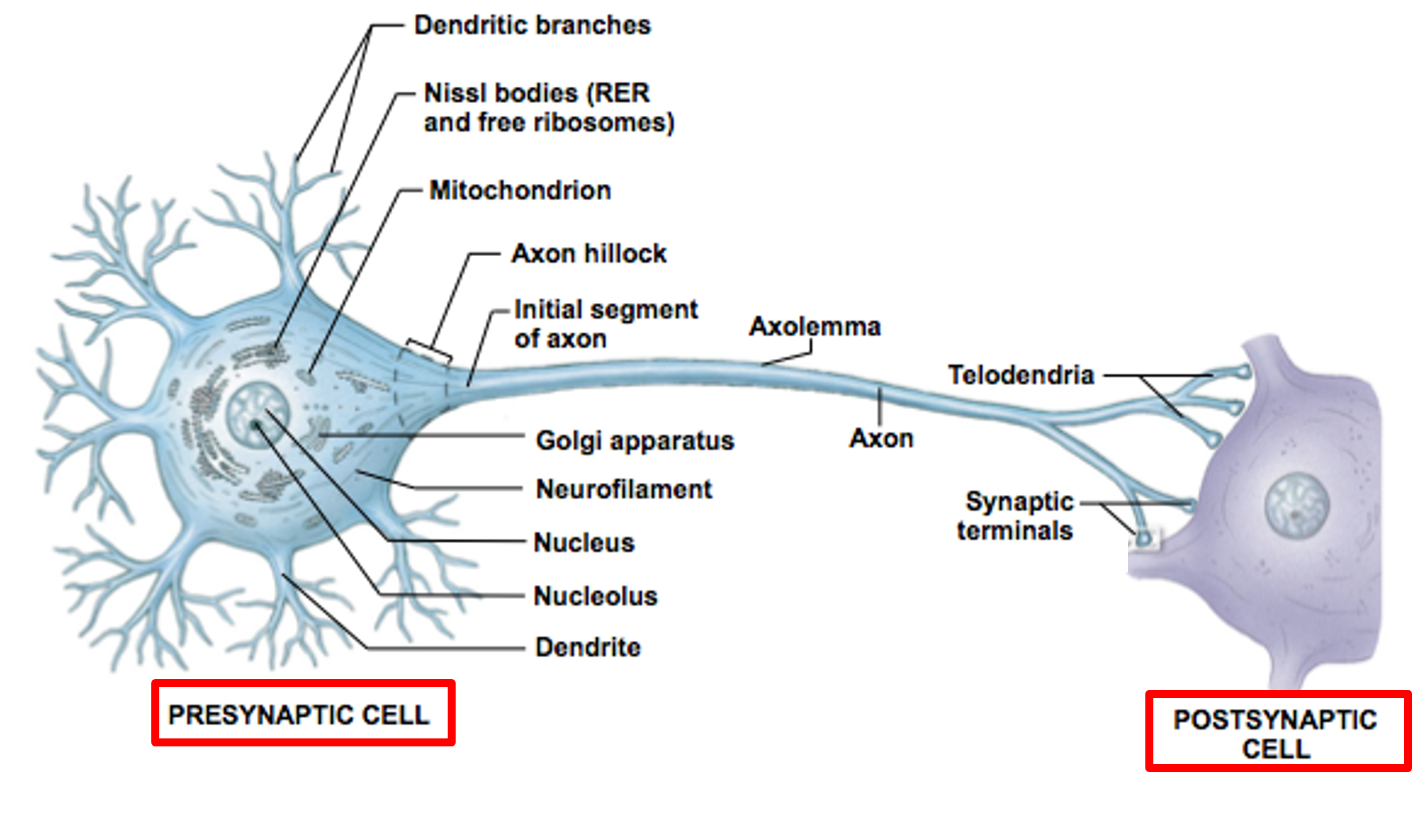
Image occlusion: name the hidden labels
4
Describe structure of axon membrane
Phospholipid bilayer
Fluid lipophilic layer
Ion channels
Fluid lipophilic layer
Ion channels
5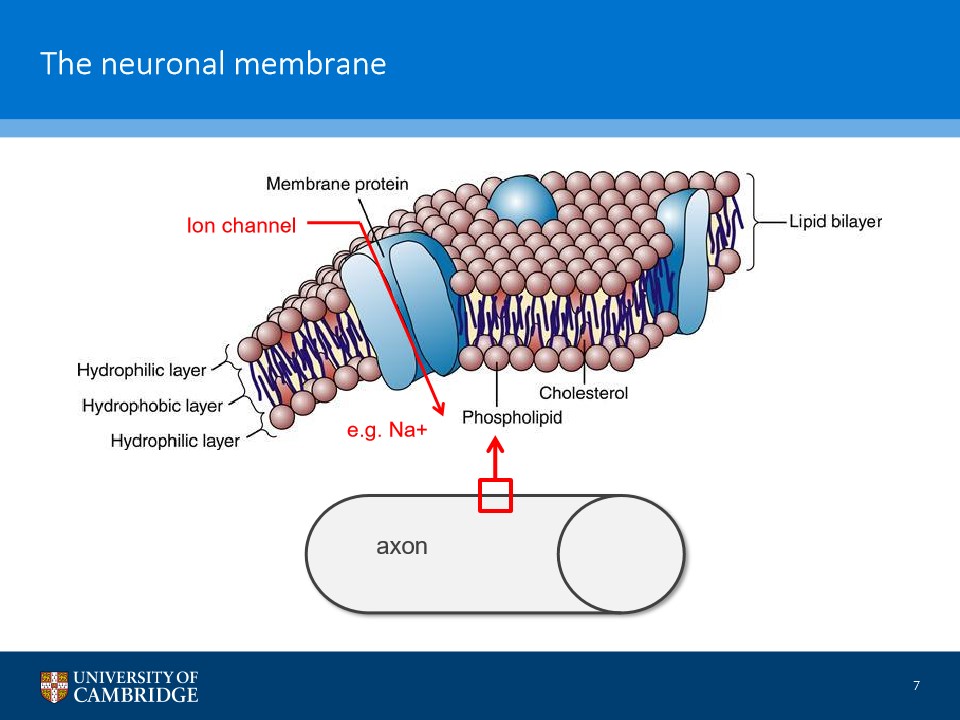
Image occlusion: name the hidden labels
6
Describe axon at rest
In axon, p.d. of -70mV (hyperpolarised)
High anion conc inside, low outside
Na+ lower conc. inside, higher outside
K+ higher con. inside, lower outside
Na+ channels closed
Some K+ channels open
Na+/K+ pump moves K+ in and Na+ out
High anion conc inside, low outside
Na+ lower conc. inside, higher outside
K+ higher con. inside, lower outside
Na+ channels closed
Some K+ channels open
Na+/K+ pump moves K+ in and Na+ out
7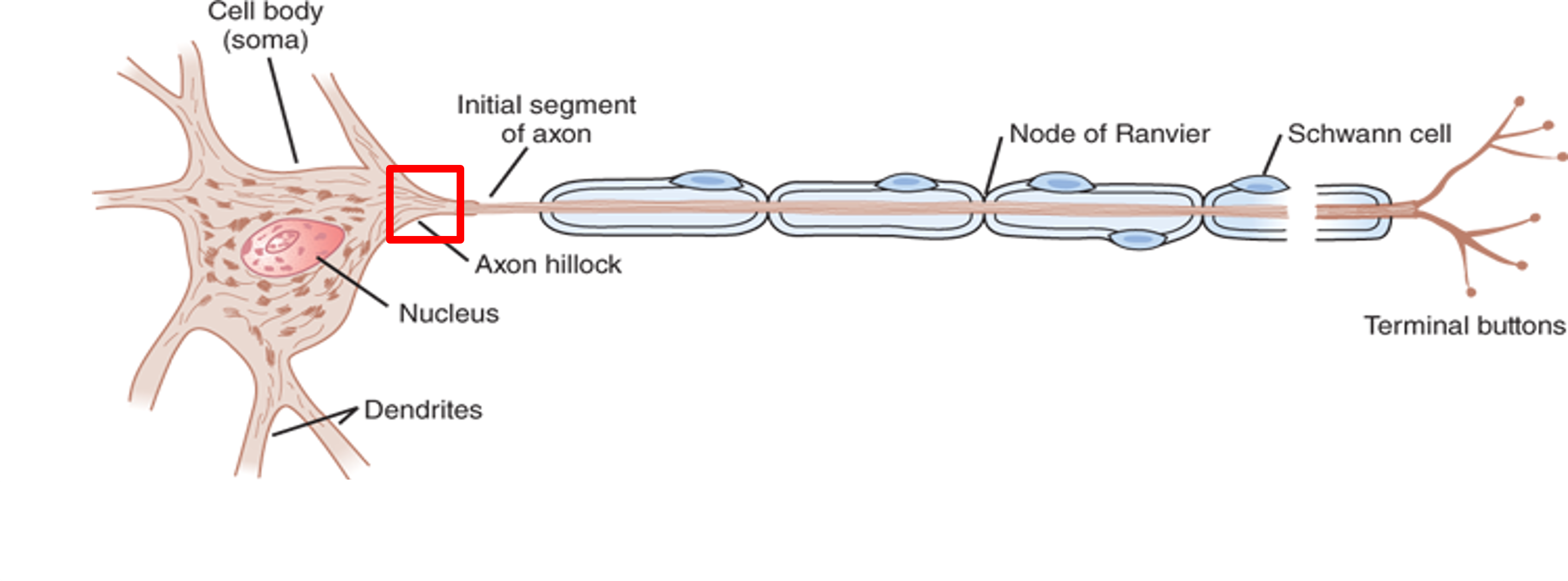
Image occlusion: name the hidden labels
8
Describe the Hodgkin Huxley model and what they did
Stimualted shape of axon potential in giant squid axon
Na+/K+ currents used to explain AP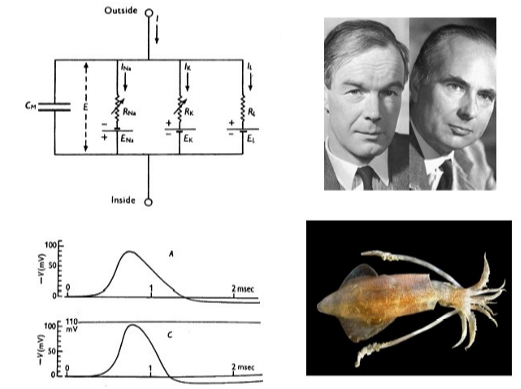
Na+/K+ currents used to explain AP
9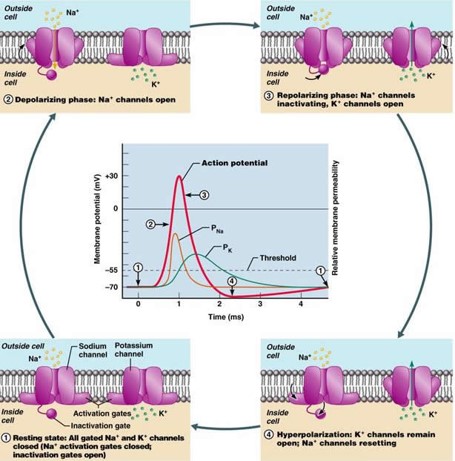
Image occlusion: name the hidden labels
10
2 factors that affect speed of AP
Myelination
Axon diameter
Axon diameter
11
Outline effect of myelination on AP
Insulates axon
Causes saltatory conduction
Depolarisation only at nodes of ranvier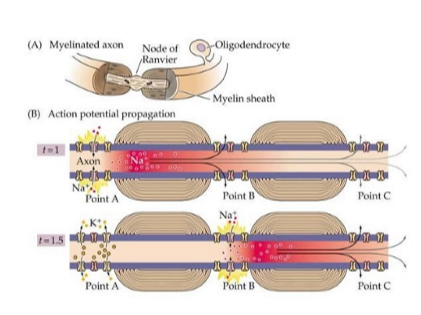
Causes saltatory conduction
Depolarisation only at nodes of ranvier
12
Outline effect of axon diamter on AP
Large diamter axons have a lower internal resistance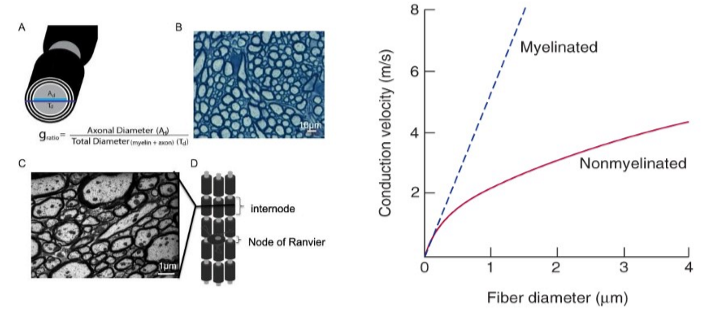
13
What does EPSP and IPSP mean?
Excitatory postsynaptic potential
Inhibitory postsynaptic potential
Inhibitory postsynaptic potential
14
Define analog
Graded change in potential
When info arrives at dendrites
When info arrives at dendrites
15
Define digital
All-or-none AP
Once info reaches axon
Once info reaches axon
16
What does summation depend on?
Distance and time of graded potentials
17
Define length constant
Distance over which voltage decreases by 63%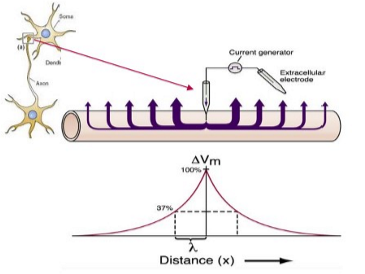
18
Define time constant
Time for voltage to increase/decrease by 63%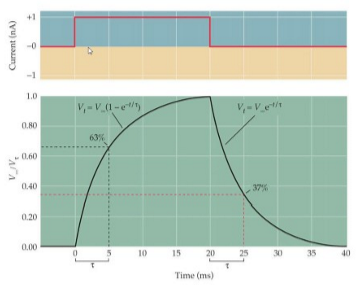
19
2 different way of exciting a neuron
Temporal summation
Spatial summation
Spatial summation
20
What is the threshold for an AP?
-55mV
21
2 types of synapses in brain
Chemical
Electrical
Electrical
22
Outline electical synapse
Bidirectional
AP enters presynaptic terminal
Connexons form hemichannels
Depolarised charge moves into post synaptic neuron
Direct coupling process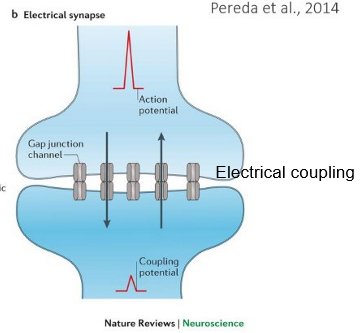
AP enters presynaptic terminal
Connexons form hemichannels
Depolarised charge moves into post synaptic neuron
Direct coupling process
23
3 different locations for synapses on a neuron
Axosomatic
Axodendritic
Axo-axonic
Axodendritic
Axo-axonic
24
Describe axosomatic synapse
Normally inhibitory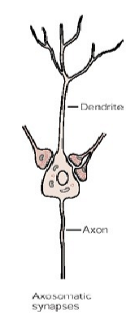
25
Describe axodendritic synapse
Excitatory - further from soma
Inhibitory - nearer soma
Temporal and spatial summation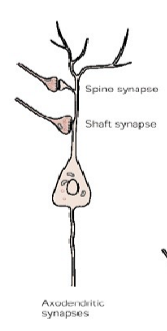
Inhibitory - nearer soma
Temporal and spatial summation
26
Describe axo-axonic synapse
Decreases release of a neurotransmitter from axon terminals
Pre synaptic inhibition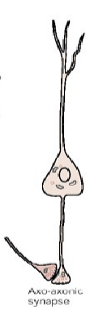
Pre synaptic inhibition
27
What are the 2 halves of the retina?
Temporal
Nasal
Nasal
28
What are simple and complex neurons in the primary visual cortex attuned to?
Vertical bars (simple)
Moving verticle bars (complex)
Moving verticle bars (complex)
29
What do dompamine neurons encode and who?
Shultz
Reward prediction errors (RPEs)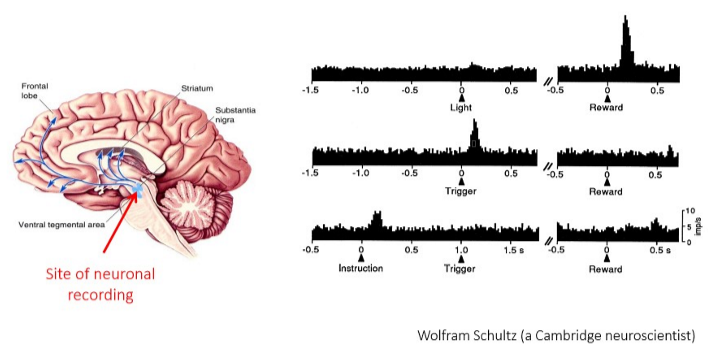
Reward prediction errors (RPEs)
30
Outline long term potentiation
Firing neuron consistantly and persistently, growth occurs
31
What does plasticity require?
Action potentials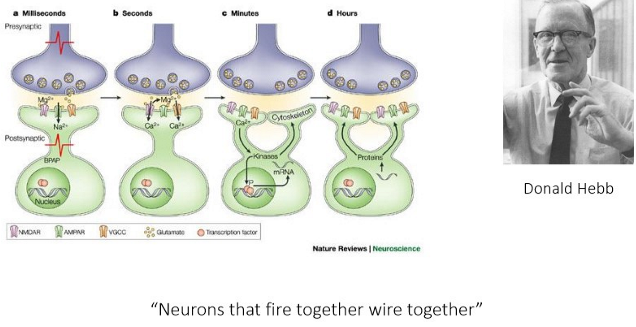
32
What are PRPs?
Plasticity related proteins
33
Outline tagging using the diagram to explain it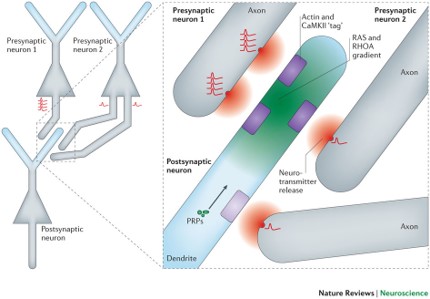
Strong activation of neuron 1 leads to formation of PRPs that strengthen synapses associated with a weakly stimulated neuron 2
Rogerson et al 2014
1 presynaptic neuron = high activation
Second presynaptic neuron = low activation
Both synaptic inputs will strengthen - likely a result of the PRPs (diffuse to neighbouring synaoses, binding together the different synaptic inputs)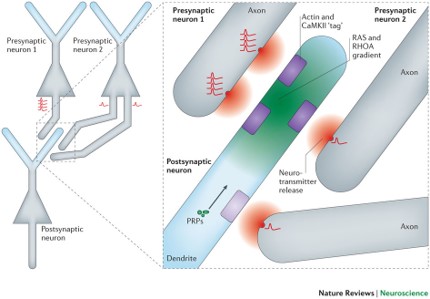
Rogerson et al 2014
1 presynaptic neuron = high activation
Second presynaptic neuron = low activation
Both synaptic inputs will strengthen - likely a result of the PRPs (diffuse to neighbouring synaoses, binding together the different synaptic inputs)
34
What happens during depolarisation?
Na+ in
35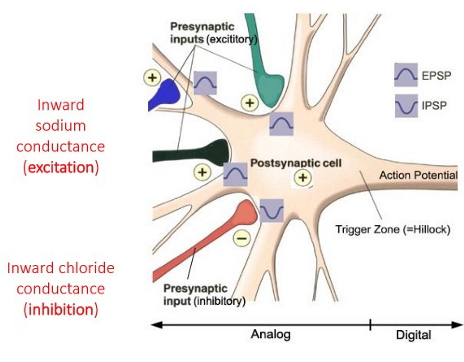
Image occlusion: name the hidden labels
36
Effect of inhibitory synapse
GABA causes Cl- to enter post synaptic neuron OR K+ to leave neuron
Causes hyperpolarisation
Causes hyperpolarisation
37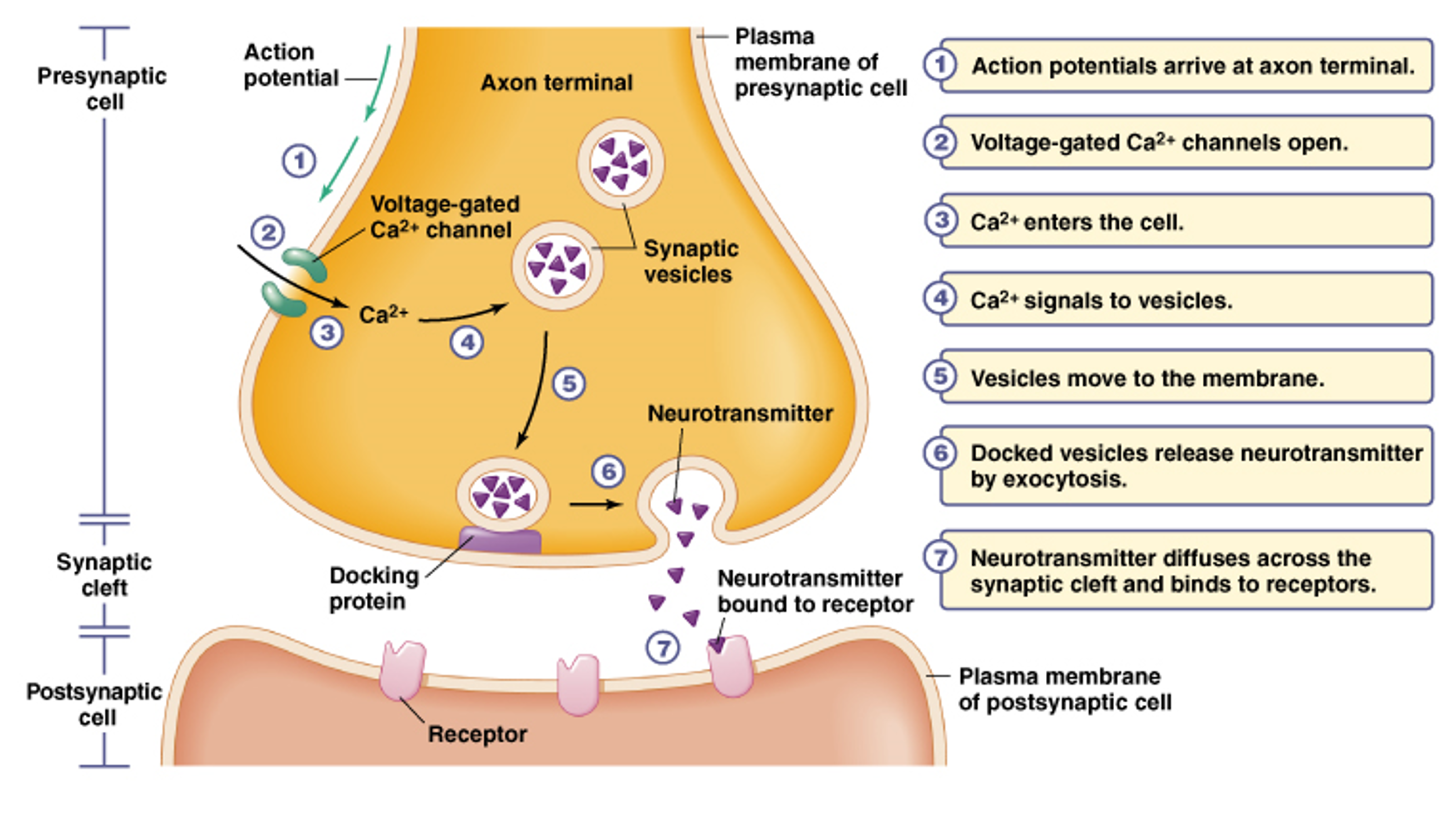
Image occlusion: name the hidden labels
38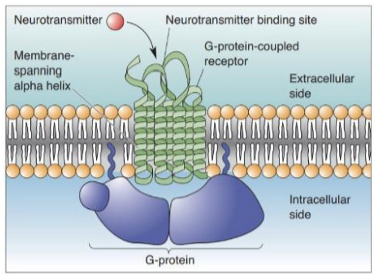
Image occlusion: name the hidden labels
39
2 types of receptors
Ionotrophic
Metabotrophic (g-protein-coupled receptors)
Metabotrophic (g-protein-coupled receptors)
40
Describe ionotrophic receptor
Ion channel
Neutransmitter binds directly
Increases conductance of particular ion
Important for fast neurotransmission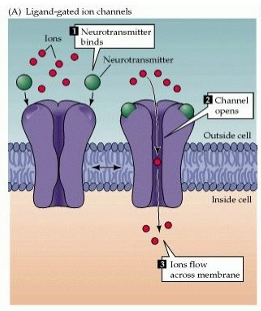
Neutransmitter binds directly
Increases conductance of particular ion
Important for fast neurotransmission
41
3 types of g protein
Alpha
Beta
Gamma
Beta
Gamma
42
What does the alpa g protein do?
Dissociates and moves through lipid bilayer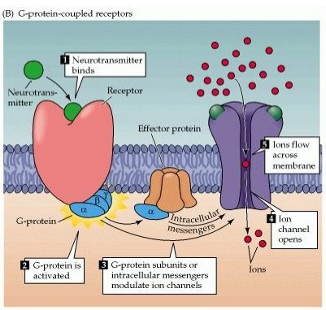
43
What % of the human genome codes for g protein coupled receptors (GPCRs)?
About 5%
Largest family are rhodopsin-like (sensory system)
Largest family are rhodopsin-like (sensory system)
44
Advantage of GPCRs for medication
Signal amplification to increase sensitivity:
G proteins activate a population of effector proteins, each generating second messages, leading to multiple actions (opening ion channels)
G proteins activate a population of effector proteins, each generating second messages, leading to multiple actions (opening ion channels)
45
2 ways of stopping neurotransmission
Blocking active reuptake
Enzymatic degradation
Enzymatic degradation
46
Describe active reuptake
Excess neurotransmitter absored in synaptic cleft, some neurotransmitter taken up by reuptake transporter [eugh]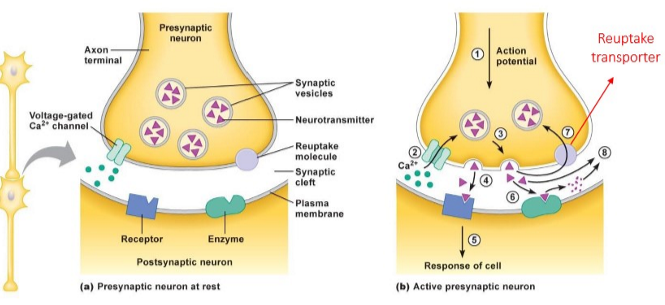
47
What do anti-depressant drugs do?
Block noradrenaline and serotonin reuptake transporters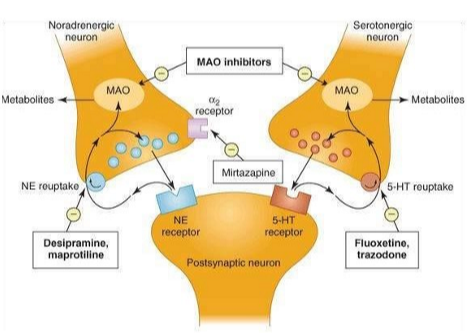
48
True or false: each neuron only produces one type of neurotransmitter
True
In most cases
In most cases
49
Describe enzymatic degradation
Cholinergic synapse
Acetylcholine (ACh) is the NET
Once released into synape ACh degraded by acetylcholinesterase (AChE)
Choline and acetate then recycled back into presynaptic terminal
AChE blocked by Tracine (treat Alzheimer's disease)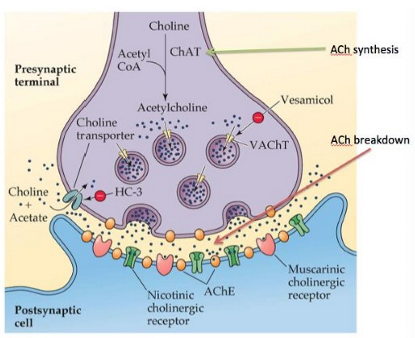
Acetylcholine (ACh) is the NET
Once released into synape ACh degraded by acetylcholinesterase (AChE)
Choline and acetate then recycled back into presynaptic terminal
AChE blocked by Tracine (treat Alzheimer's disease)
50
Important info about Ach
Ach has ionotrophic receptor (nicotinic receptor)
When activated lets through positive charge
Also has a g coupled protein receptor (muscarinic receptor)
When activated lets through positive charge
Also has a g coupled protein receptor (muscarinic receptor)
51
Define fasciculus
Clump of neurons
Creates a cable of axons
Creates a cable of axons
52
What are GABA and glutamate?
Amino acid neurotransmitters
53
What does GABA stand for?
Gamma Amino-Butyric Acid
54
Difference between GABA and glutamate
GABA = inhibitory
Glutamate = excitatory
Glutamate = excitatory
55
Which receptor is important for plasticity?
NMDA receptors
56
Describe process of synaptic transmission of glutamate
Binds to ionotropic and metabotropic receptors
Actively taken up by transporters in nearby glial cells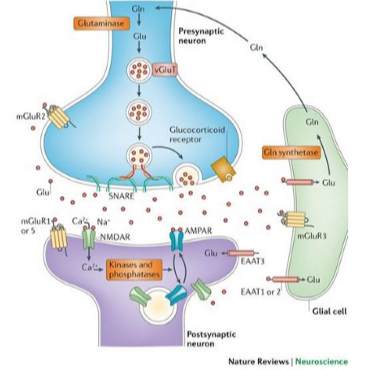
Actively taken up by transporters in nearby glial cells
57
What is a ligand-gated ionotrophic receptor?
Permits / blocks passage through a cell membrane in response to a chemical stimulus
58
Describe the NMDA receptor
Ligand-gated ionotrophic receptor
At rest = blocked by Mg2+ ions
Gates Na+ and Ca2+ (and K+)
Generates an EPSP (excitatory post synaptic potential)
Involved in synaptic plasticity and memory function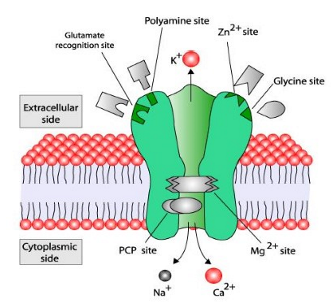
At rest = blocked by Mg2+ ions
Gates Na+ and Ca2+ (and K+)
Generates an EPSP (excitatory post synaptic potential)
Involved in synaptic plasticity and memory function
59
What do glutamate neurons in primary motor cortex do?
Control movement
60
What is the precursor for GABA?
Glutamate
61
Describe process of synaptic transmission of GABA
Formation of precursor (glutamate)
Synthesis (glutamic acid decarboxylase - responsible for the conversion of glutamate into GABA)
Release by exocytosis
Binding to GABA receptors
Binding to presynaptic receptors
Uptake by glia
Conversion to glutamte and glutamine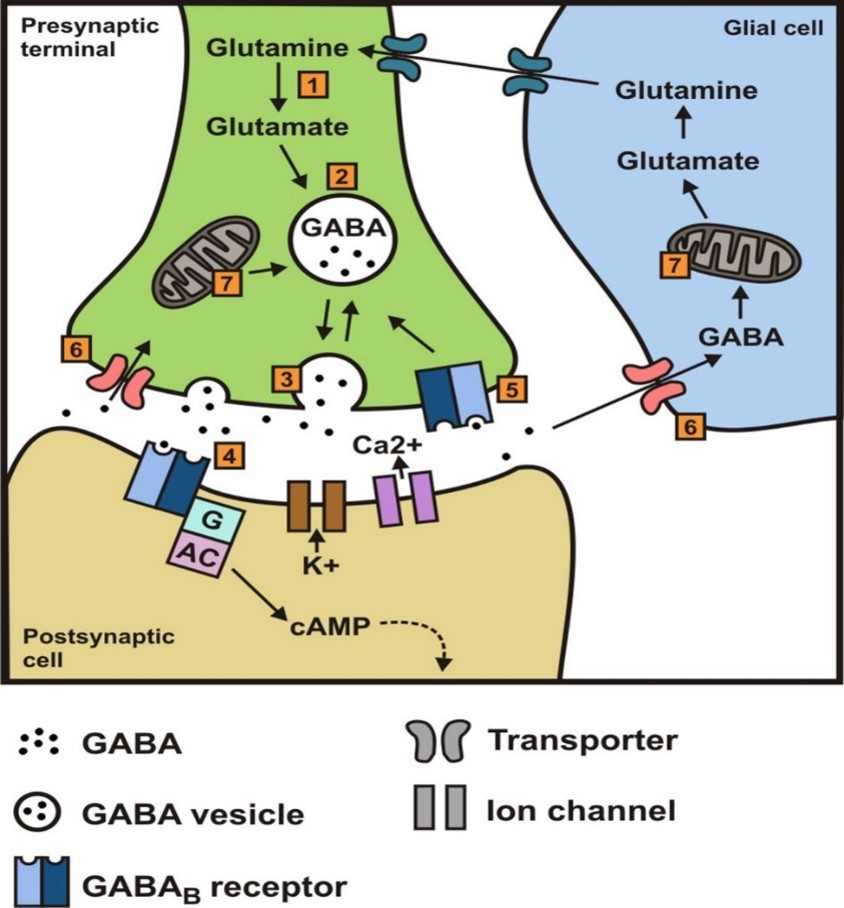
Synthesis (glutamic acid decarboxylase - responsible for the conversion of glutamate into GABA)
Release by exocytosis
Binding to GABA receptors
Binding to presynaptic receptors
Uptake by glia
Conversion to glutamte and glutamine
62
What is the ionotrophic receptor for GABA?
GABA-A receptor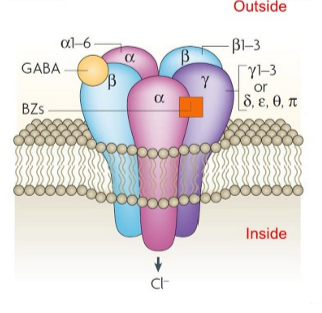
63
Describe the GABA-A receptor
Made up of 5 subunits
GABA binding causes Cl- to enter neuron
Hyperpolarising (less likely neuron will reach threshold to produce AP)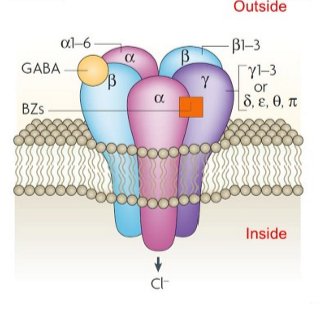
GABA binding causes Cl- to enter neuron
Hyperpolarising (less likely neuron will reach threshold to produce AP)
64
Define neuromodulation
Fine tuning of neuronal function
65
What are modulators and what do they do
Subset of neurotransmitters that change excitability of a neuron by changing the neuron's cellular and synaptic properties
Slower time scales than neurotransmitters
Normally use metabotropic (G-protein coupled receptors) rather thn ionotropic receptors
Eg. dopamine, serotonin Ach, noradrenaline, neuropeptides
Slower time scales than neurotransmitters
Normally use metabotropic (G-protein coupled receptors) rather thn ionotropic receptors
Eg. dopamine, serotonin Ach, noradrenaline, neuropeptides
66
Name the 3 monoamines
Dopamine
Serotonin
Noradrenaline
(all have amine group)
Serotonin
Noradrenaline
(all have amine group)
67
Which transporter protein is used in the reabsorption of dopamine?
DAT
Torres et al., 2003
Torres et al., 2003
68
Which transporter protein is used in the reabsorption of noradrenaline?
NET
Torres et al., 2003
Torres et al., 2003
69
Which transporter protein is used in the reabsorption of Serotonin (5-HT)?
SERT
Torres et al., 2003
Torres et al., 2003
70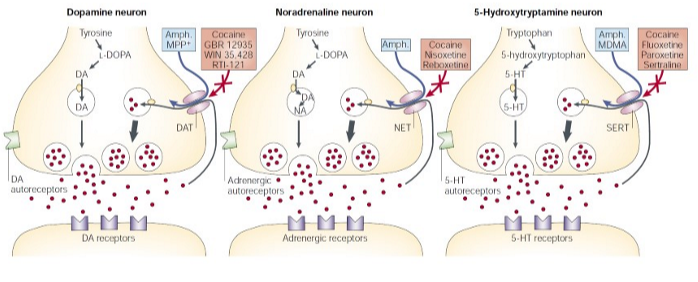
Image occlusion: name the hidden labels
71
Identify 2 brain areas involved in the dopamine system
Ventral tegmental area
Substantia nigra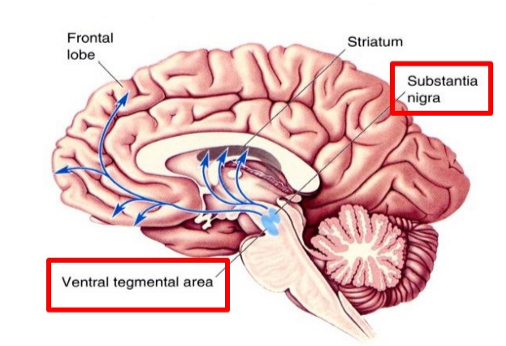
Substantia nigra
72
What is one importance of dopamine?
Involved in movement
Degenration of dopamine neurons in substantia nigra leads to Parkinson's disease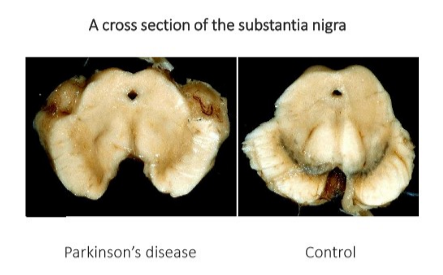
Degenration of dopamine neurons in substantia nigra leads to Parkinson's disease
73
How is dopamine involved in reward learning?
Schultz
Showed that through conditioning of a stimulus which predicts the onset of reward, the activity of dopamine neurons will track the most predictive stimulus
Once stimulus is fully predicted, there's no more surprise and activity drops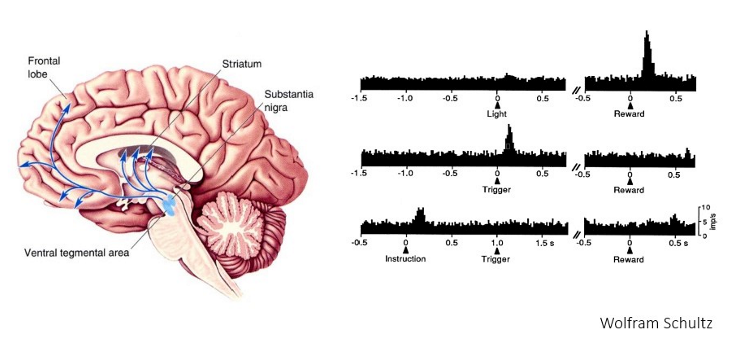
Showed that through conditioning of a stimulus which predicts the onset of reward, the activity of dopamine neurons will track the most predictive stimulus
Once stimulus is fully predicted, there's no more surprise and activity drops
74
Describe the D2 receptor
Dopamine receptor
G-protein coupled receptor (metabotropic)
Expressed in striatum
Low expression of D2 receptors in brain linked to addiction and eating disorders
Taq1A A1 allele, a mutation, leads to reduced D2 receptor expression and function
Ppl with high BMI and A1 allele show reduced activation of striatum (part of reward system) in response to milkshake - Stice et al, 2008
G-protein coupled receptor (metabotropic)
Expressed in striatum
Low expression of D2 receptors in brain linked to addiction and eating disorders
Taq1A A1 allele, a mutation, leads to reduced D2 receptor expression and function
Ppl with high BMI and A1 allele show reduced activation of striatum (part of reward system) in response to milkshake - Stice et al, 2008
75
Describe how dopamine is involved in working memory
Dopamine and noradrenaline richly innervate (to supply with nerves) prefrontal cortex
Brozoski and Goldman Rakic 1979 - dopamine plays critical role in short term spatial memory
Domapine neurons contribute to maintenance and manipulation of info in working memory
Brozoski and Goldman Rakic 1979 - dopamine plays critical role in short term spatial memory
Domapine neurons contribute to maintenance and manipulation of info in working memory
76
Where are the cell bodies for noradrenaline neurons found?
Locus coeruleus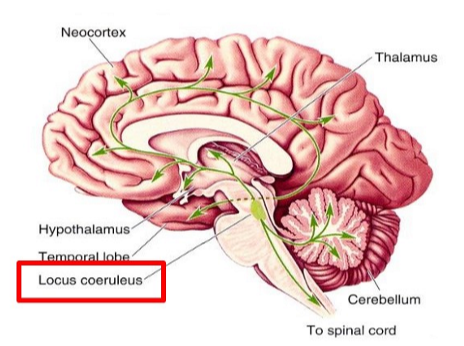
77
Outline the 4 functions of noradrenaline
Selective attention - phasic activity associated with focussed attention to target stimuli
Detection of novel and salient stimuli - informs hypothalamus of potentially threatening stimuli, mediating fight/flight response
Memory consolidation - noradrenergic transmission strengthens emotional memories
Cortical arousal - locas coeruleus activity fluctuates with different stages of sleep
Detection of novel and salient stimuli - informs hypothalamus of potentially threatening stimuli, mediating fight/flight response
Memory consolidation - noradrenergic transmission strengthens emotional memories
Cortical arousal - locas coeruleus activity fluctuates with different stages of sleep
78
How are noradrenergic neurons linked to stress?
Adapt to acute stressors
BUT become sensitised with chronic stress - hyperarousal and pathological anxiety
BUT become sensitised with chronic stress - hyperarousal and pathological anxiety
79
Identify one of the areas of the brain involved in the serotonin system
Raphe nuclei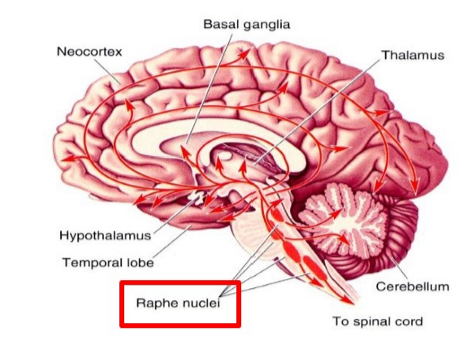
80
Outline the 3 functions of serotonin/5-HT
Mood, appetite, sleep - important regulatory role, SSRIs used to treat depression
Behavioural regulation - low serotonin associated with aggression, impulsivitiy and behavioural disinhibition
Stress - chronic, uncontrollable, unpredicatble stress sensitises serotonin systems
Behavioural regulation - low serotonin associated with aggression, impulsivitiy and behavioural disinhibition
Stress - chronic, uncontrollable, unpredicatble stress sensitises serotonin systems
81
What does inadequate control of stress by the prefrontal cortex cause?
Increased activity of 5-HT neurons
Results in abnormal behaviour and mood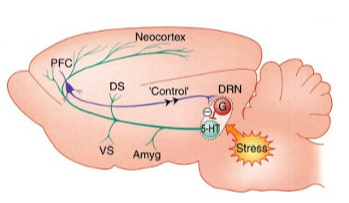
Results in abnormal behaviour and mood
82
What was found to happen as a result of genetic variation in the 5-HT transporter?
Hariri et al, 2002
Short allele = reduced SERT expression, higher 5-HT, increased anxiety
Showed greater activation of amygdala when looking at angry and afraid faces
Hasn't always been replicated tho - controversial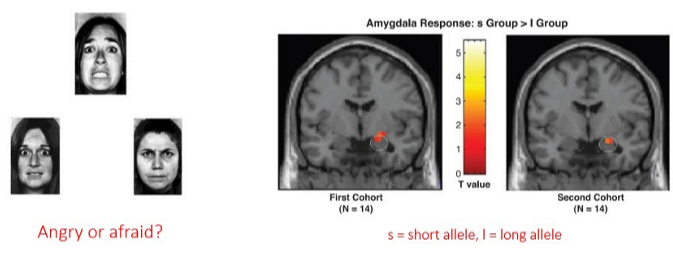
Short allele = reduced SERT expression, higher 5-HT, increased anxiety
Showed greater activation of amygdala when looking at angry and afraid faces
Hasn't always been replicated tho - controversial
83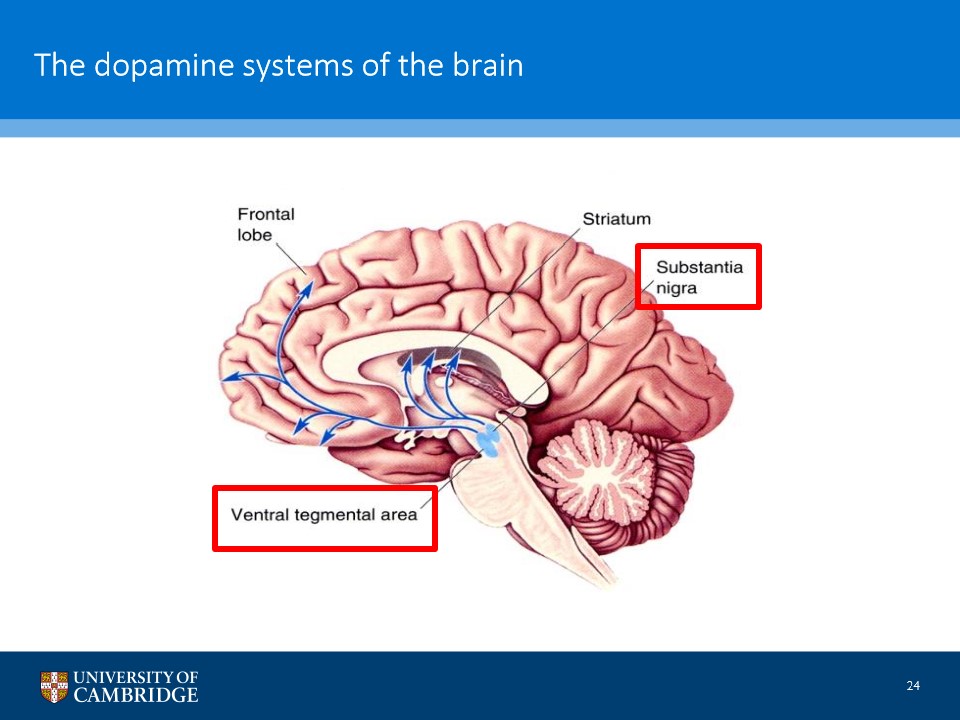
Image occlusion: name the hidden labels
84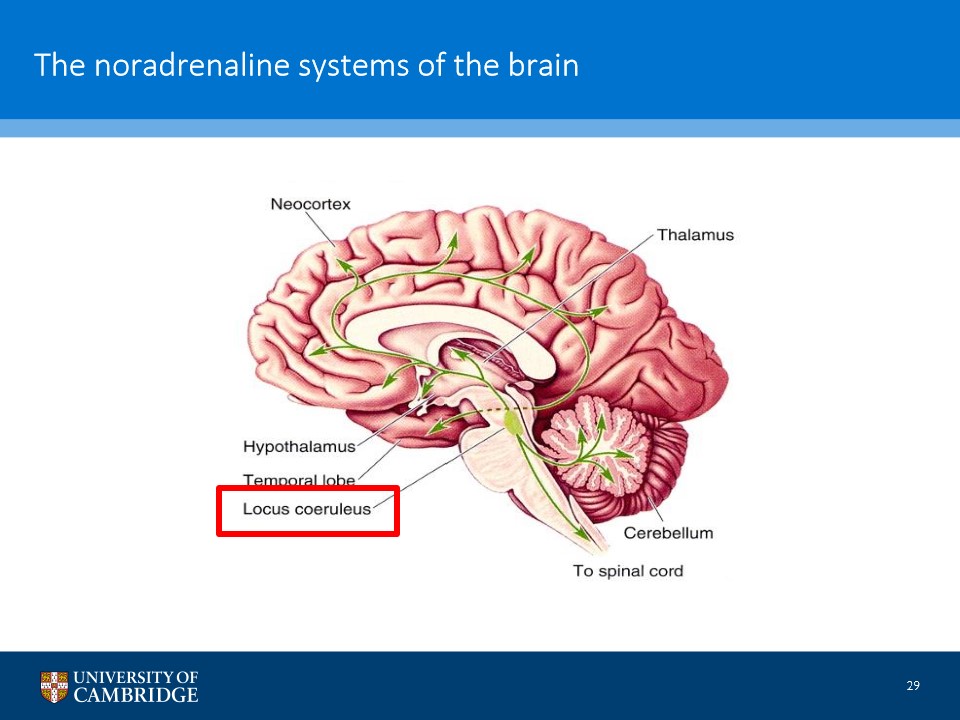
Image occlusion: name the hidden labels
85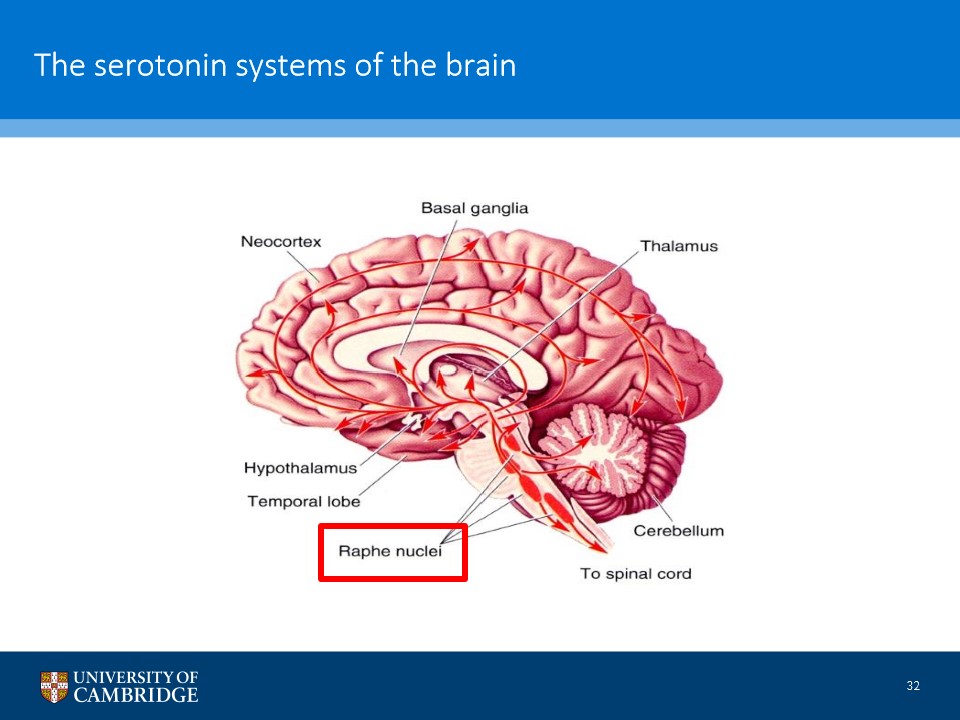
Image occlusion: name the hidden labels