A8 - Homeostasis
Study these flashcardsFree · spaced repetition · iPhone, Android, Mac & web
All cards
1
Define homeostasis
Maintanace of a constant internal environment
2
Definenegative feedback
When something changes, the opposite effect is initiated
Movement away from norm produces response to return value to norm
Movement away from norm produces response to return value to norm
3
What moniters internal body temp (blood)
Hypothalamus
4
What moniters external body temp?
Receptors in skin
5
What regulates and makes adjustments to body temp?
Autonomous nervous system
6
How mammals conserve heat in cold enviro
Vasoconstriction (reduced heat loss through radiation)
Hair rises (traps layer of air, insulates)
Reduced sweating
Behaviour (shelter, sun etc.)
Hair rises (traps layer of air, insulates)
Reduced sweating
Behaviour (shelter, sun etc.)
7
How mammals generate heat in cold enviro
Increased metabolic rate (respiration)
Shivering
Shivering
8
How mammals lose heat in warm enviro
Vasodilation
Increased sweating
Lower hair
Behaviour (shade etc.)
Increased sweating
Lower hair
Behaviour (shade etc.)
9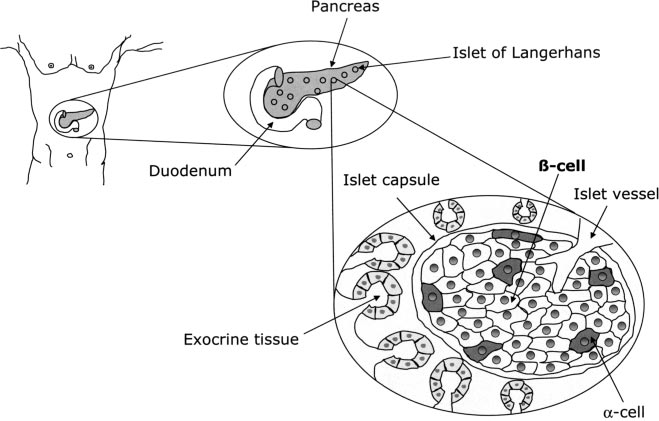
Image occlusion: name the hidden labels
10
What do islets of langerhan contain?
α cells
β cells
β cells
11
What do α cells do?
Secrete glucagon
12
What do β cells do?
Secrete insulin
13
What happens when blood glucose is too low?
Detected by pancreas
α cells secrete glucagon
Bind to specific receptors in plasma membrane of liver/muscle cells
Activates enzymes involved in glycogenolysis
Activates enzymes involved in gluconeogenesis
Increases blood glucose
α cells secrete glucagon
Bind to specific receptors in plasma membrane of liver/muscle cells
Activates enzymes involved in glycogenolysis
Activates enzymes involved in gluconeogenesis
Increases blood glucose
14
What is glycogenolysis
Glycogen converted to glucose
15
What is gluconeogenesis
Glycerol + aa = glucose
16
How does glucagon trigger glycogenolysis?
Glucagon/adrenaline bind to specific receptor in plasma membrane of liver/muscle cells
Activate adenylate cyclase
ATP to cAMP (2nd messenger)
cAMP activates protein kinase
Glycogen to glucose
Activate adenylate cyclase
ATP to cAMP (2nd messenger)
cAMP activates protein kinase
Glycogen to glucose
17
What happens when blood glucose is too high
Detected by pancreas
β cells secrete insulin
Binds to specific receptors in plasma membrane of liver/muscle cells
1. Increases no. of glucose carrier proteins in plasma membrane
Increased permeability of membrane to glucose
2. Activates enzymes involved in glycogenesis
Maintains conc. gradient for glucose FD
Glucose enters by FD
Decreases blood glucose
β cells secrete insulin
Binds to specific receptors in plasma membrane of liver/muscle cells
1. Increases no. of glucose carrier proteins in plasma membrane
Increased permeability of membrane to glucose
2. Activates enzymes involved in glycogenesis
Maintains conc. gradient for glucose FD
Glucose enters by FD
Decreases blood glucose
18
What is glycogenesis
Glucose to glycogen
19
Differences between type 1 and type 2 diabetes
Type 1:
Insulin dependent
Don't make insulin
Autoimmune response - body attacks beta cells
Type 2:
Insulin independant
Make insulin
Less receptors for insulin
Sometimes linked to not enough insulin
Caused by enviro factors
Insulin dependent
Don't make insulin
Autoimmune response - body attacks beta cells
Type 2:
Insulin independant
Make insulin
Less receptors for insulin
Sometimes linked to not enough insulin
Caused by enviro factors
20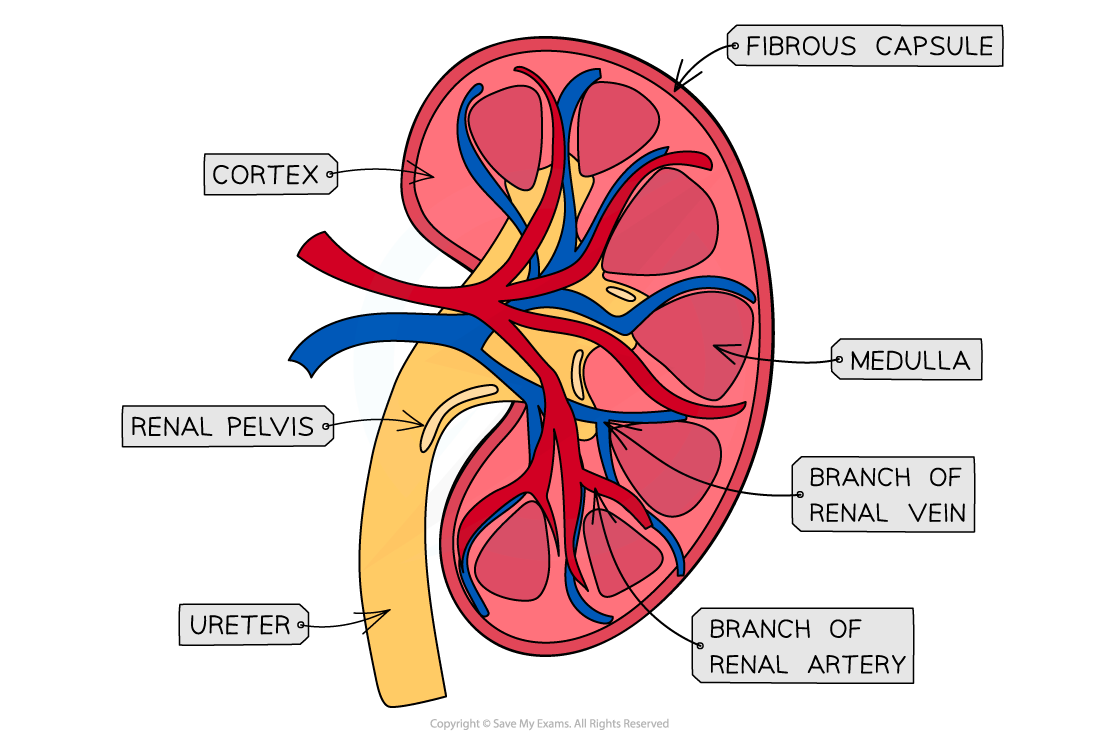
Image occlusion: name the hidden labels
21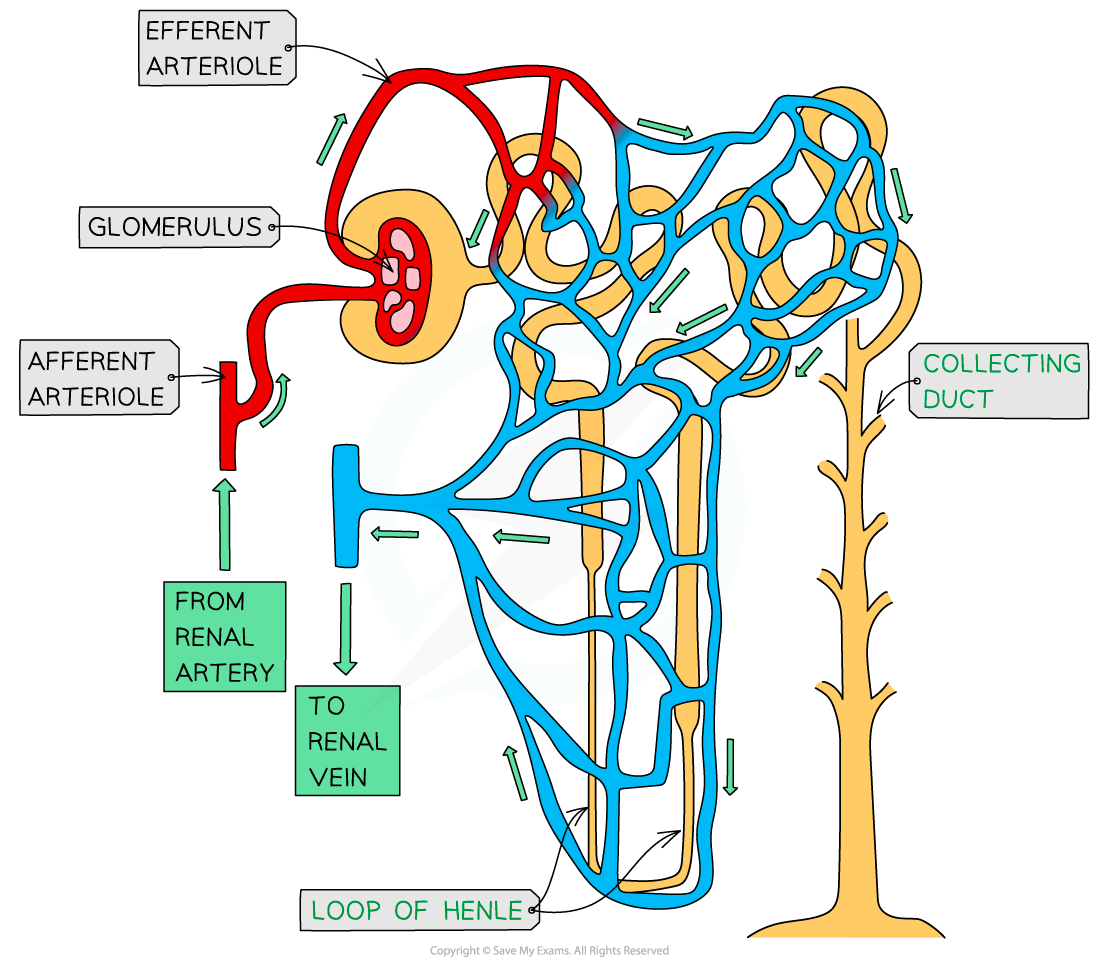
Image occlusion: name the hidden labels
22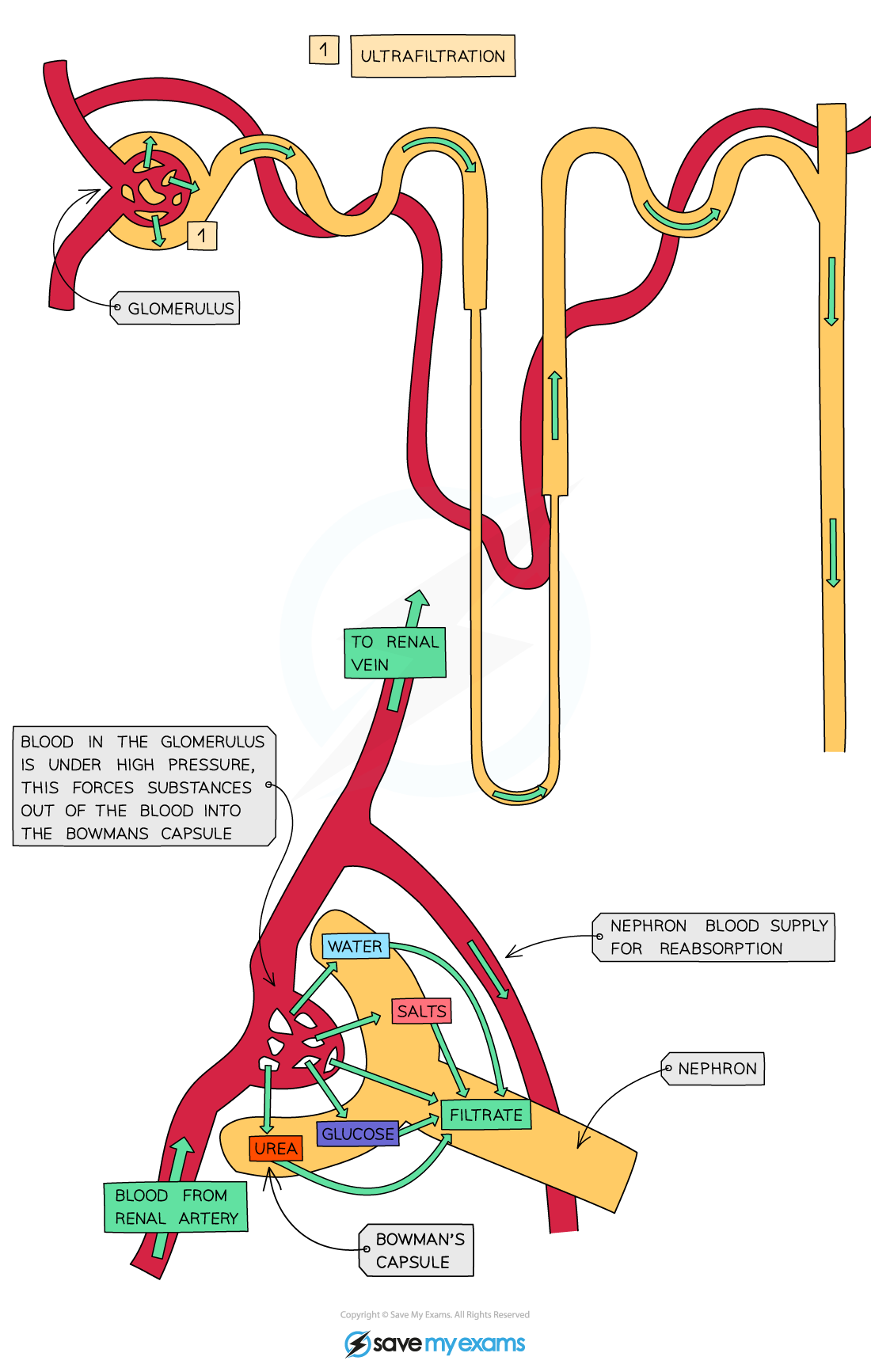
Image occlusion: name the hidden labels
23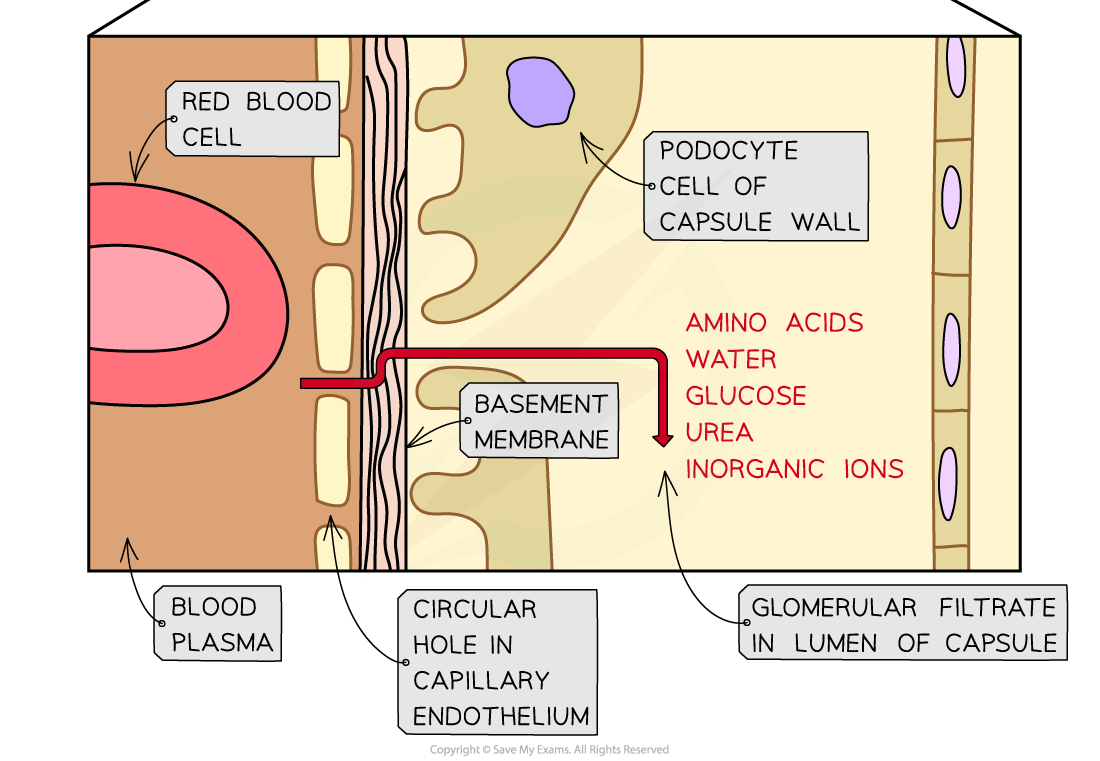
Image occlusion: name the hidden labels
24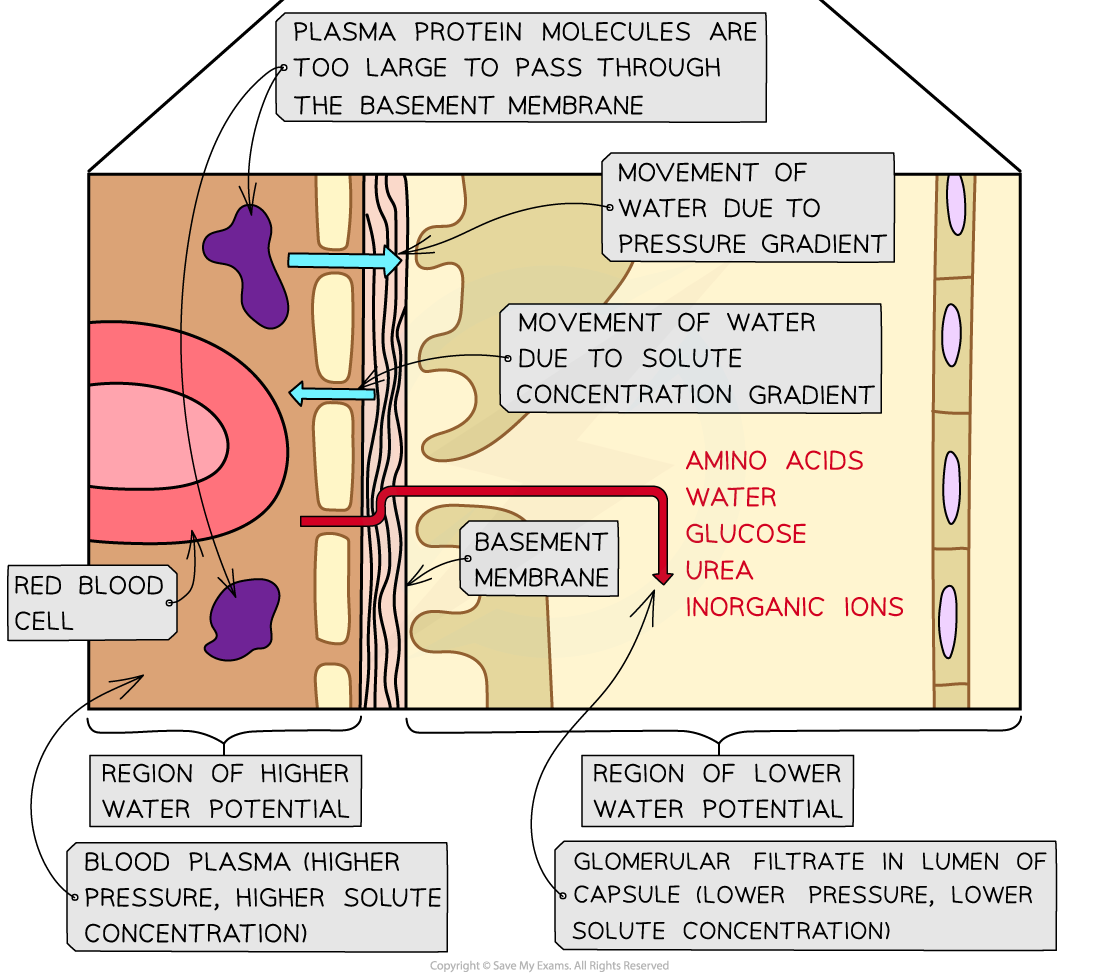
Image occlusion: name the hidden labels
25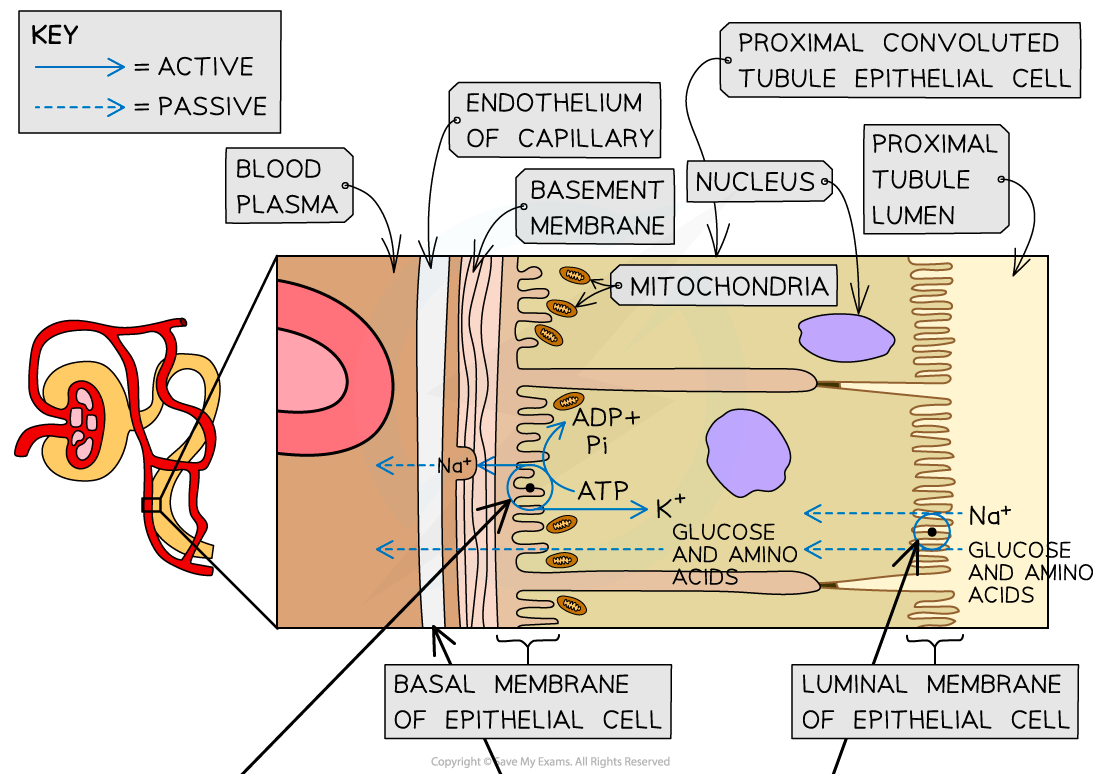
Image occlusion: name the hidden labels
26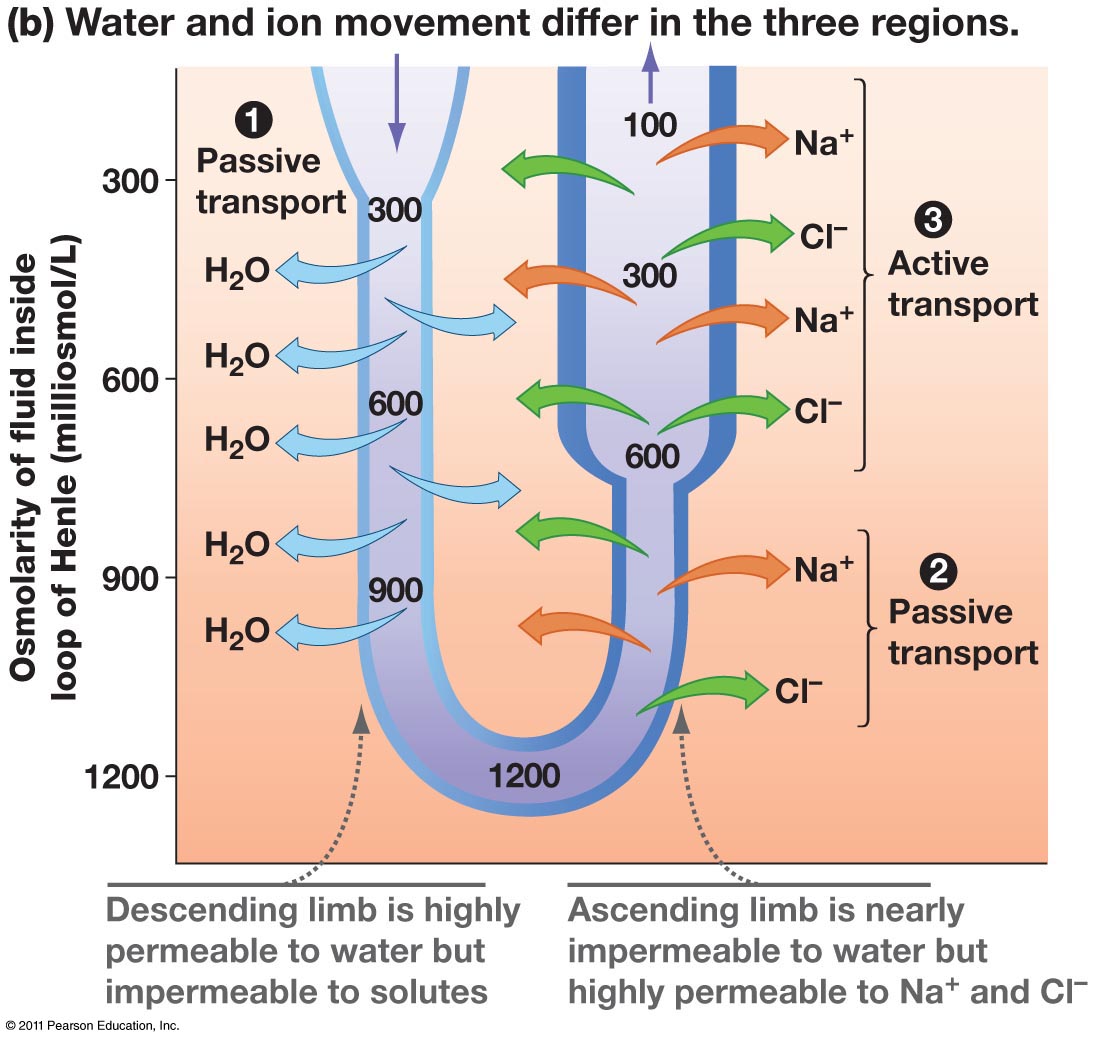
Image occlusion: name the hidden labels
27
Adaptations of the primary and distal convoluted tubules
Many microvilli so increased sa
Many mitochondria to produce ATP for AT of K+ and Na+
Many mitochondria to produce ATP for AT of K+ and Na+
28
What is ADH?
A hormone
29
Where are ADH receptors found?
Cells in the walls of the collecting duct have receptors
30
When is ADH released?
When theres low H2O in blood (thirsty)
31
Describe effect of ADH
ADH binds to specific complementary receptor
Triggers a chemical signal
Vesicle moves to cell surface membrane and adds aqauporins
H2O moves back into capillary from collecting duct by osmosis
Triggers a chemical signal
Vesicle moves to cell surface membrane and adds aqauporins
H2O moves back into capillary from collecting duct by osmosis
32
What happens when water level is low?
Hypothalamus detects high solute conc in blood
Pituitary gland releases ADH
ADH stimulates kidneys to reabsorb water into blood
Pituitary gland releases ADH
ADH stimulates kidneys to reabsorb water into blood
33
What happens when water level is high?
Hypothalamus detects low solute conc
Pituitary releases less ADH
Kidneys reabsorb less water
Pituitary releases less ADH
Kidneys reabsorb less water
34
What happens in the collecting duct?
Water moves out of collecting duct by osmosis into capillaries
Reabsorption of water
Reabsorption of water