HE - fundamental concepts in evolution
Study these flashcardsFree · spaced repetition · iPhone, Android, Mac & web
All cards
1
Define stratigraphy
Geological timescale
Chonologically organises strata and time by changes in stratigraphy that correspond to major events
Used to determine age of rocks
Chonologically organises strata and time by changes in stratigraphy that correspond to major events
Used to determine age of rocks
2
What are the 4 epochs in order of youngest to oldest
Holocene
Pleistocene
Pliocene
Miocene
Pleistocene
Pliocene
Miocene
3
What is important about the miocene?
Apes emerged
Last common ancester we share with chimps and bonobos was alive towards the end of this epoch
Last common ancester we share with chimps and bonobos was alive towards the end of this epoch
4
Outline the 4 principles of stratigraphy
Original horizontality
Superposition (lower down = older)
Original lateral continuity (idea that layers of a sediment should expand in all direction until it meets an obstacle)
Cross-cutting relationships (geological process cutting through rocks = youngest rocks)
Superposition (lower down = older)
Original lateral continuity (idea that layers of a sediment should expand in all direction until it meets an obstacle)
Cross-cutting relationships (geological process cutting through rocks = youngest rocks)
5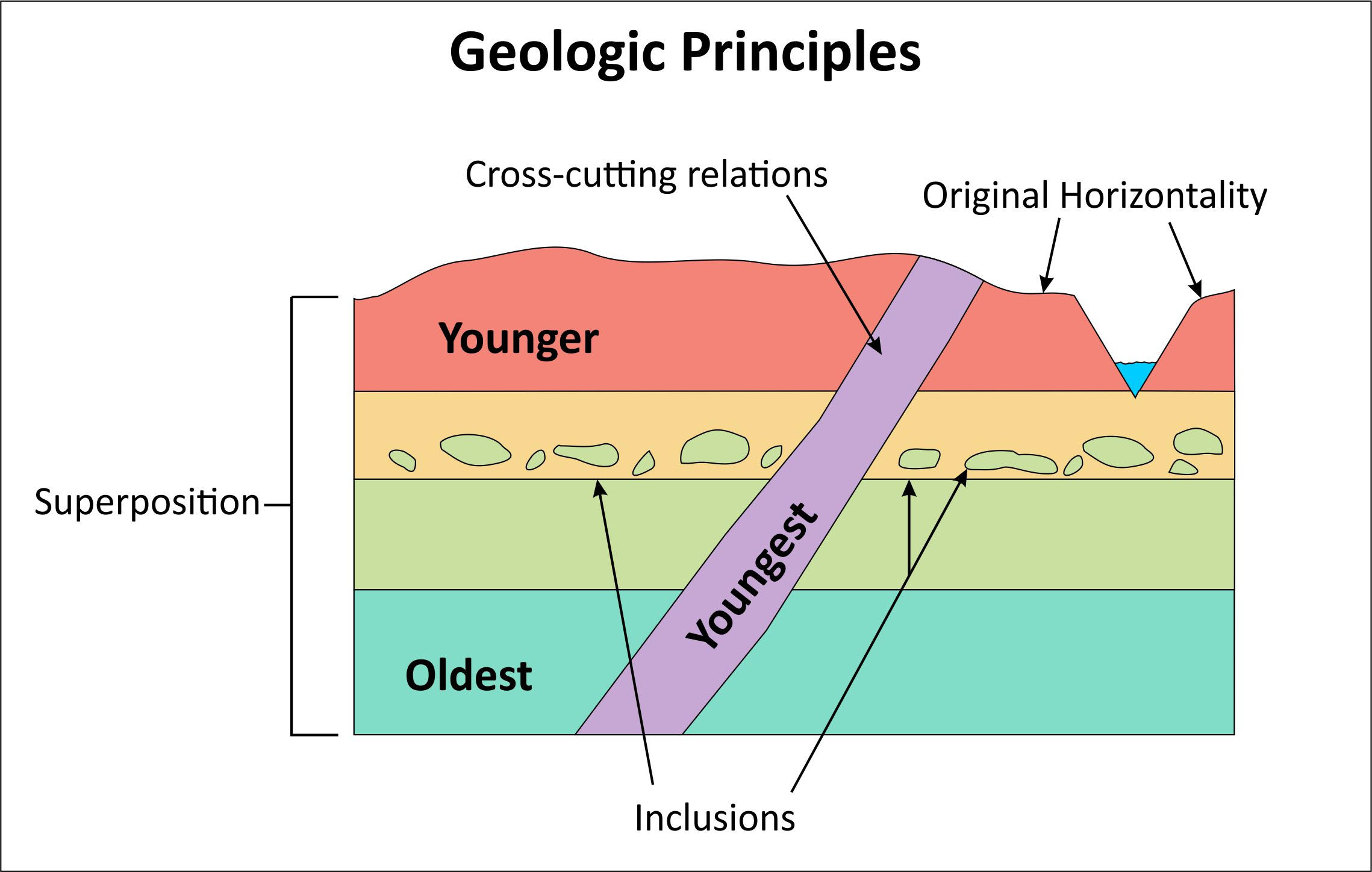
Image occlusion: name the hidden labels
6
4 requirements for evolution
Variation in population
Heritable traits
Differential success of reproduction (reproductive fitness)
Time
Heritable traits
Differential success of reproduction (reproductive fitness)
Time
7
Define variation
Differences in traits between members of a population
8
Define population
Group of organisms of 1 species that interbreed and live in the same place at the same time
9
State the 2 sources of variation
Mutation
Migration (gene flow)
Migration (gene flow)
10
Define genotype
Genetic makeup
11
Define phenotype
Observable characteristics
Genotype + environment
Genotype + environment
12
Define reproductive fitness
How successful an organism is in passing on its genes to offspring
13
Other than natural selection, what can cause evolution?
Random genetic drift
14
State the 4 different species concepts
Biological
Ecological
Phylogenetic
Evolutionary
Ecological
Phylogenetic
Evolutionary
15
Define the biological species concept
Group of organisms that are capable of interbreeding with one another in nature and producing fertile offspring
16
Criticism of biological species concept
Hamadyrus baboon and olive baboon considered separate species
BUT can produce fertile hybrids
Doesn't follow bio species concept
BUT can produce fertile hybrids
Doesn't follow bio species concept
17
Define the ecological species concept
Group of organisms that share the same ecological niche (interactions within an ecosystem)
18
Example of ecological species concept
Hamadyrus baboon and olive baboon considered separate species
Hamadyrus:
- Arid habitats
- 1 male units (harems)
Olive:
- Rainforests
- Multi-male multi-female
Hamadyrus:
- Arid habitats
- 1 male units (harems)
Olive:
- Rainforests
- Multi-male multi-female
19
Define the phylogenetic species concept
Populations/lineages that can be diagnosed by a unique combination of character states
20
Example of phylogenetic species concept
2 different species of Papio
Differences in temporal line
Papio hamadyrus = anterior
Papio anubis = normal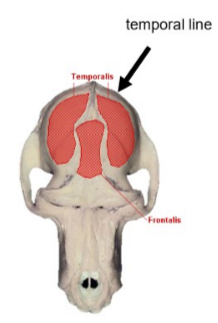
Differences in temporal line
Papio hamadyrus = anterior
Papio anubis = normal
21
Define the evolutionary species concept
Lineage evolving separately from other lineages with its own evolutionary role and tendencies
22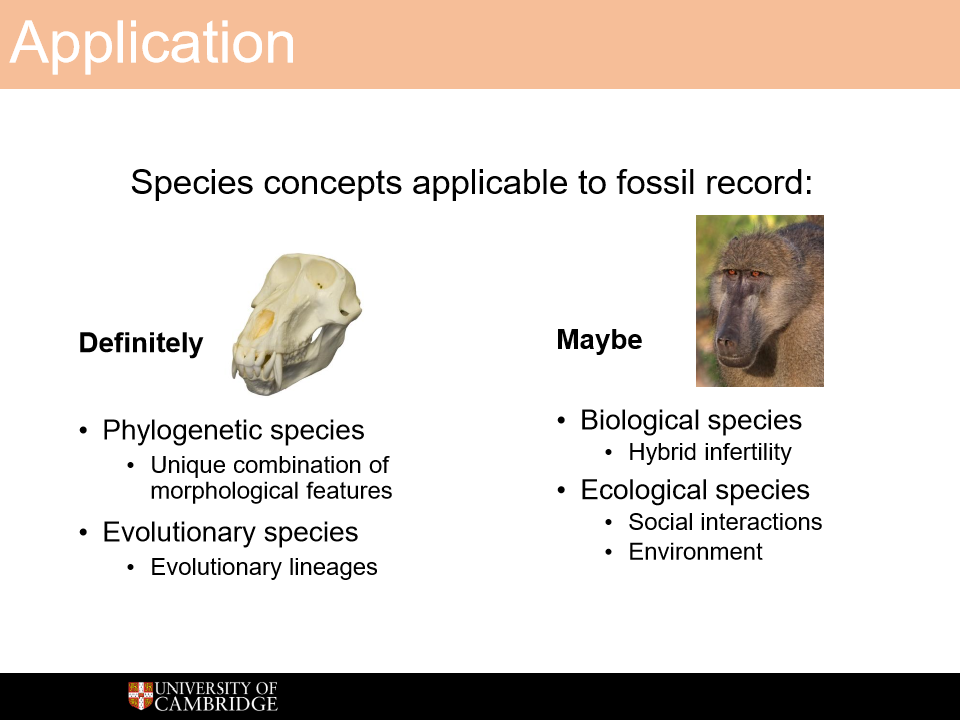
Image occlusion: name the hidden labels
23
Define speciation
When a group within a species separates from other members of its species and develops its own unique characteristics
24
State the 3 types of speciation
Allopatric
Parapatric
Sympatric
Parapatric
Sympatric
25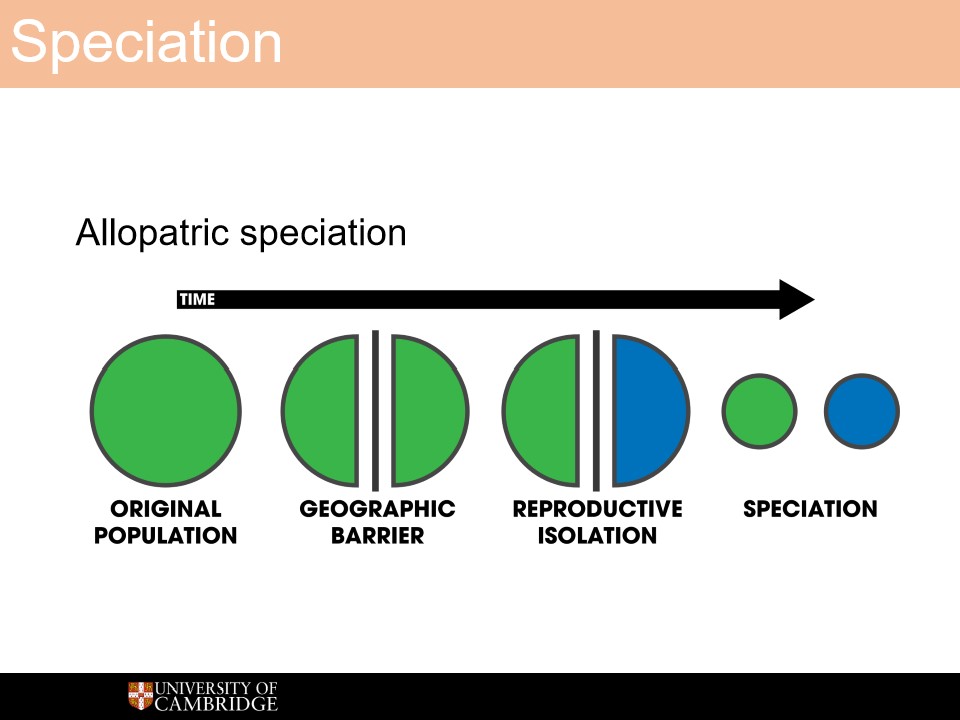
Image occlusion: name the hidden labels
26
Describe parapatric speciation
2 sub populations of a species
Some reproductive isolation but continue to interbreed, causing some allele exchange
Some reproductive isolation but continue to interbreed, causing some allele exchange
27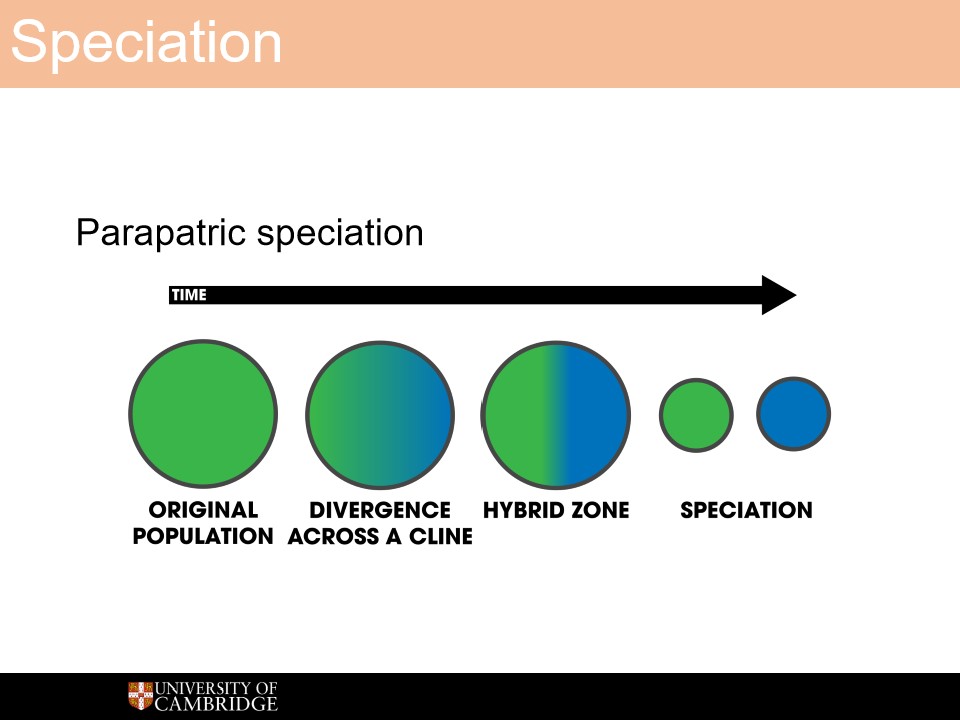
Image occlusion: name the hidden labels
28
Define systematics
Description and classification of life and relationships among them
29
What did Linnaeus do?
Created hierarchal classification of natural world
30
How to write genus + species
Genus species
31
Define taxonomy
Assembling organisms into groups (taxa) that are classified hierarcally
32
Define taxon
Group of organisms at any level in hierarchy
33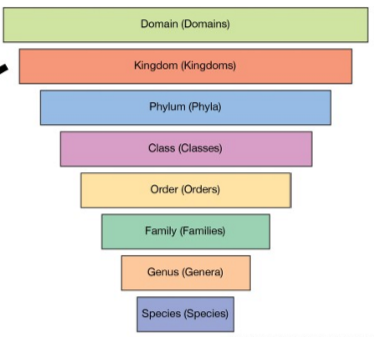
Image occlusion: name the hidden labels
34
Image occlusion: name the hidden labels
35
Outline the process of speciation
Formation of geographically / genetically / behaviourally isolated population within a species
Population persists and acquires further morphological / genetic / behavioural differences relative to its parental gene pool
Ends once isolated population becomes gentically distinct enough for it to be severed from the rest of its parent species' gene pool
Population persists and acquires further morphological / genetic / behavioural differences relative to its parental gene pool
Ends once isolated population becomes gentically distinct enough for it to be severed from the rest of its parent species' gene pool