Responses to internal stimuli
Study these flashcardsFree · spaced repetition · iPhone, Android, Mac & web
All cards
1
Define receptor
Cells which detect specific stimulus + convert energy into a generator potential
2
Define generator potential
Initial action potential
Occurs at receptor
Occurs at receptor
3
What is a pacinian curpuscle?
Pressure receptor
4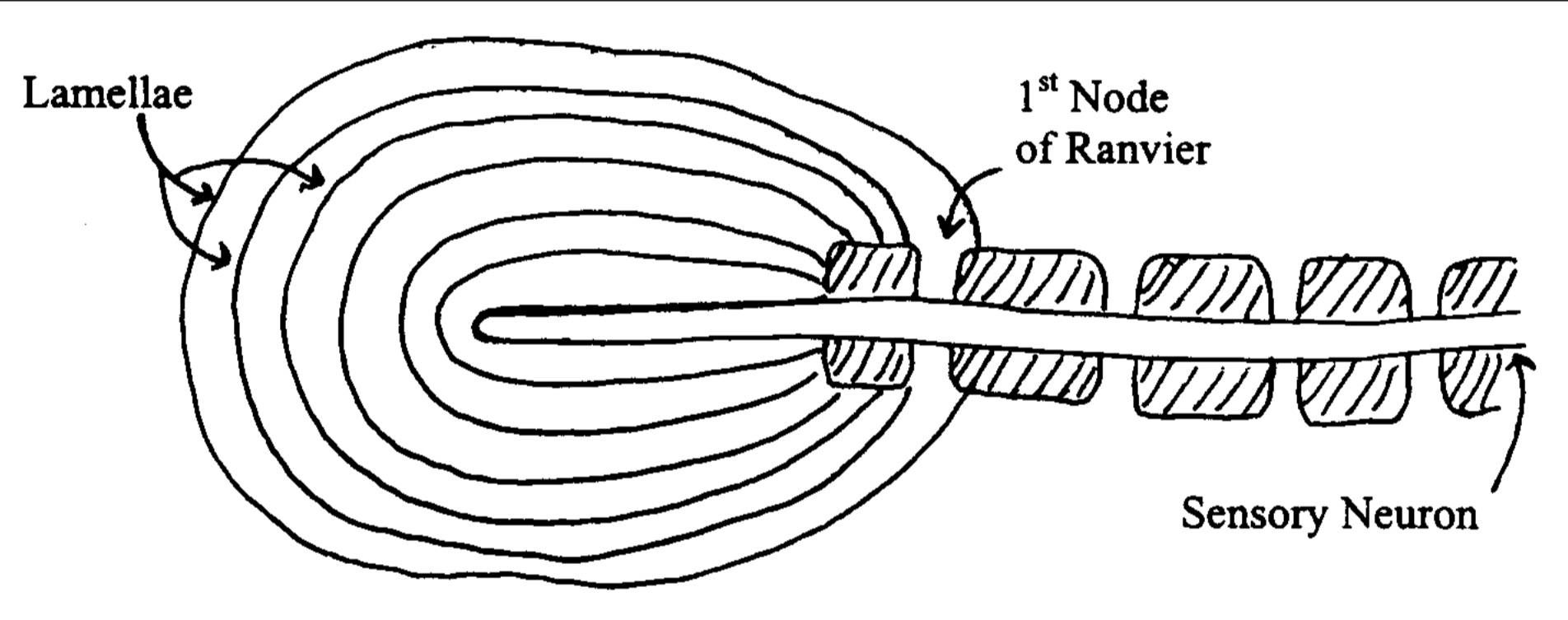
Image occlusion: name the hidden labels
5
Describe the process of a generator potential being produced
At rest, stretch mediated Na+ channels (SMNC) too narrow to allow Na+ in
Pressure applied
Pacinian corpuscle changes shape
Stretches open SMNC
Na+ diffuses into neurone and makes inside of membrane more positive
GP produced if threshold reached
Stimulates more Na+ channels to open and AP generated
Pressure applied
Pacinian corpuscle changes shape
Stretches open SMNC
Na+ diffuses into neurone and makes inside of membrane more positive
GP produced if threshold reached
Stimulates more Na+ channels to open and AP generated
6
What makes an AP more likely to be generated from a GP?
More pressure = more SMNC open = more Na+ open = threshold more likely
7
How is pressure intensity detected by the brain?
More intense = more frequent AP
8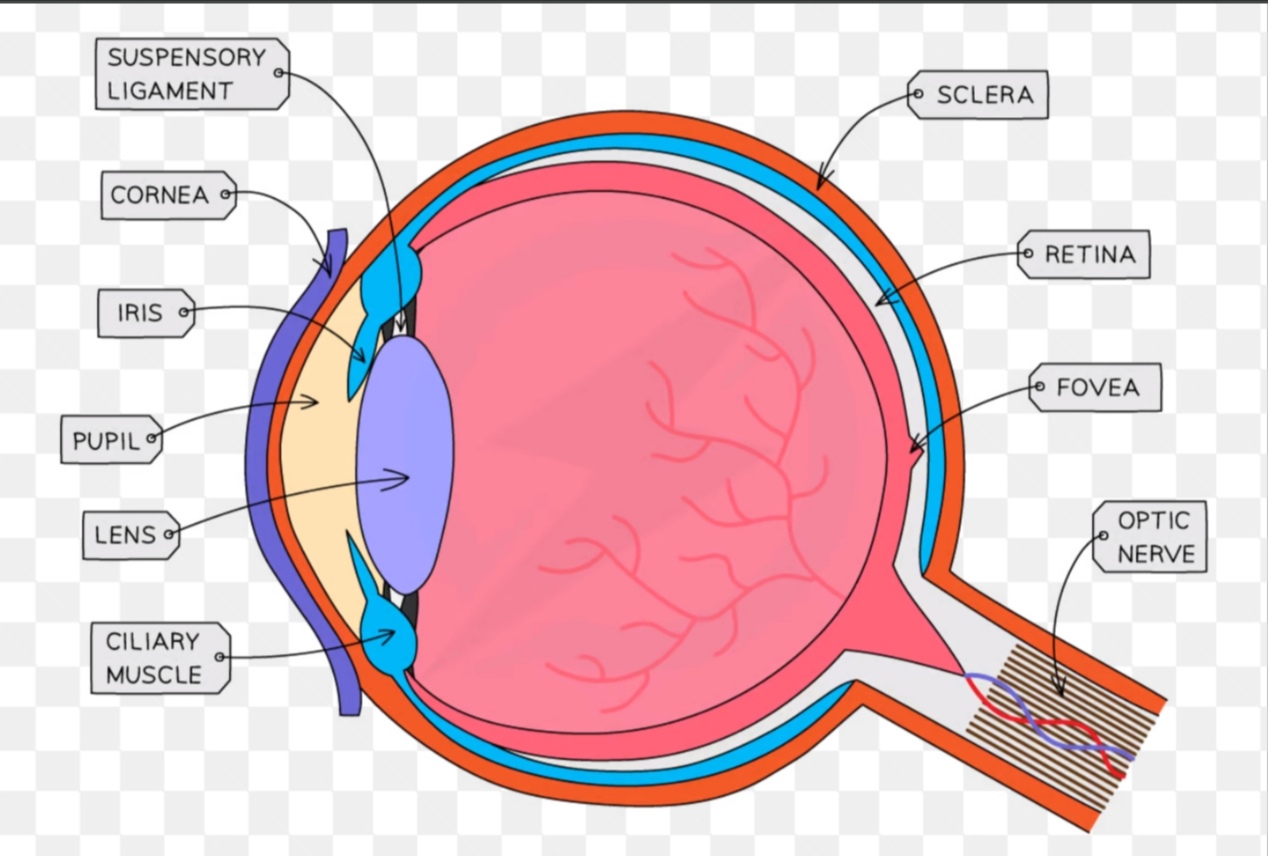
Image occlusion: name the hidden labels
9
Image occlusion: name the hidden labels
10
What are the 2 types of photoreceptor cells in the eye?
Rods
Cones
Cones
11
Features of rod cells
Sensitive to low light
Low visual acuity
Black and white
Evenly spread on retina
Low visual acuity
Black and white
Evenly spread on retina
12
Why do rod cells have low visual acuity?
Multiple rod cells to 1 bipolar neurone
Retinal convergence means brain can't distinguish between AP
Retinal convergence means brain can't distinguish between AP
13
Why do rod cells have have sensitivity to light?
Multiple rod cells to 1 bipolar neurone
Spatial summation
Threshold for AP more likely to be reached
Spatial summation
Threshold for AP more likely to be reached
14
What pigment is found in rod cells?
Rhodopsin
15
Features of cone cells
High visual acuity
Colour vision
Mainly in fovea
Colour vision
Mainly in fovea
16
Why do cone cells have high visual acuity?
1 cone cell to 1 bipolar neurone
No retinal convergence
Brain can distinguish between AP
No retinal convergence
Brain can distinguish between AP
17
Which 3 colours do cone cells have pigments for?
Red
Blue
Green
Blue
Green
18
Another word for light pigment
Phototopsin
19
How does light generate and AP?
Pigment in rod/cone cells broken down by light
Initiated GP
AP in bipolar neurone
Travels to optic nerve
Initiated GP
AP in bipolar neurone
Travels to optic nerve
20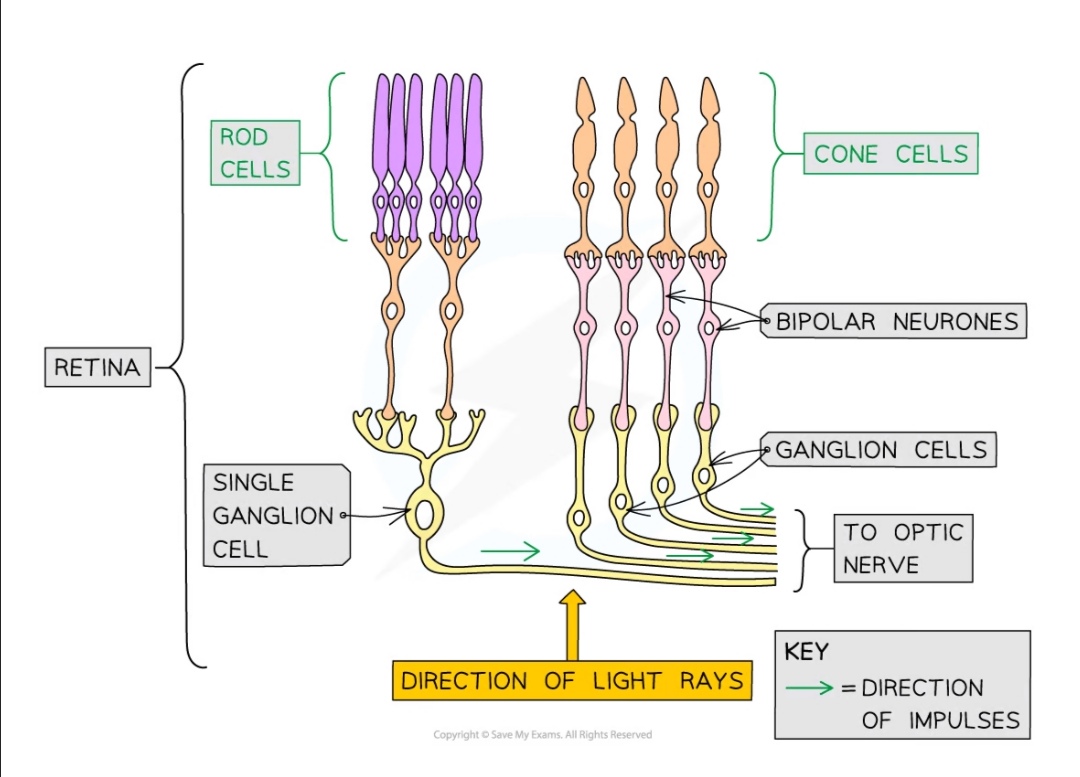
Image occlusion: name the hidden labels
21
Image occlusion: name the hidden labels
22
Define myogenic and give an example
Contracts and relaxes without receiving signal from brain
Cardiac muscle (cells beats on their own)
Cardiac muscle (cells beats on their own)
23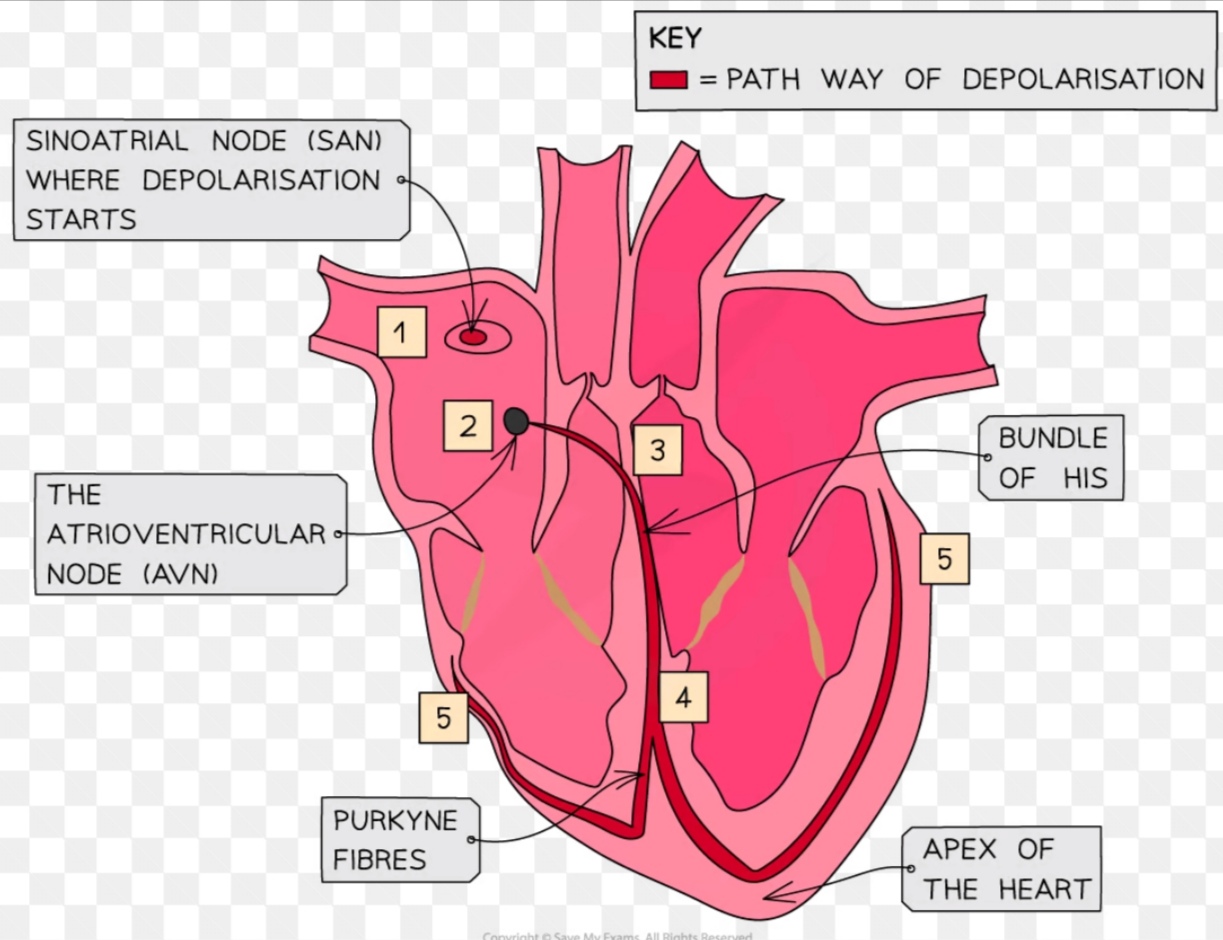
Image occlusion: name the hidden labels
24
What controls the rate of the SAN firing?
Medulla
25
Define baroreceptors
Pressure receptors
In aorta and carotid artery
Stimulated by high and low BP
In aorta and carotid artery
Stimulated by high and low BP
26
Define chemoreceptors
pH receptors in aorta, carotid artery and medulla
Affected by CO2 conc.
Affected by CO2 conc.
27
Describe what would happen to heart rate if BP increased
Bbaroreceptors detect high BP
Medulla
More electrical impulses along parasympathetic pathway
Reduced frequency of electrical impulses at SAN
Reduced contractions
Reduced HR
Medulla
More electrical impulses along parasympathetic pathway
Reduced frequency of electrical impulses at SAN
Reduced contractions
Reduced HR
28
Describe the effect of high CO2 conc. on HR
Chemo receptors detect high CO2
Medulla
More electrical impulses along sympathetic pathway
Increased frequency of electrical impulses at SAN
More contractions
Increased HR
Medulla
More electrical impulses along sympathetic pathway
Increased frequency of electrical impulses at SAN
More contractions
Increased HR
29
Which neurotransmitter produced in sympathetic pathway?
Noradrenaline
30
Which neurotransmitter produced in parasympathetic pathway?
Ach