A4 - Gene Pools, Selection + Speciation
Study these flashcardsFree · spaced repetition · iPhone, Android, Mac & web
All cards
1
Define natural selection
Process where organisms that are better adapted to their environment survive and reproduce in greater number, increasing the frequency of the advantageous allele within the population
2
Define selection pressure
Something that causes selection of an advantageous allele
3
Mark points for natural selection questions
Variation due to genetic mutation
Intraspecific
Competition
Reproduce more
Advantageous allele frequency increases
More generations = increased frequency
Intraspecific
Competition
Reproduce more
Advantageous allele frequency increases
More generations = increased frequency
4
What are the 3 types of selection?
Directional
Stabilising
Disruptive
Stabilising
Disruptive
5
Directional selection
Favours extremes
Due to change in environment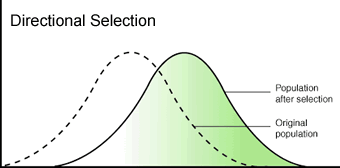
Due to change in environment
6
Stabilising selection
Envrionemt is stable
Favours average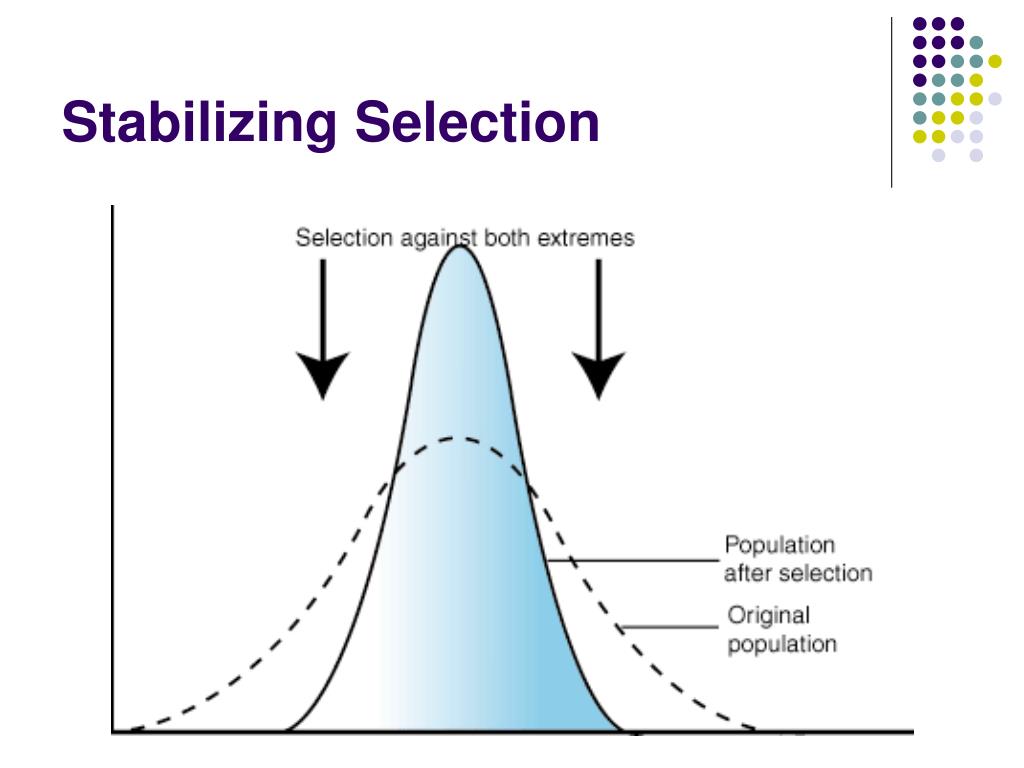
Favours average
7
Disruptive selection
Favours extremes
Due to change in environment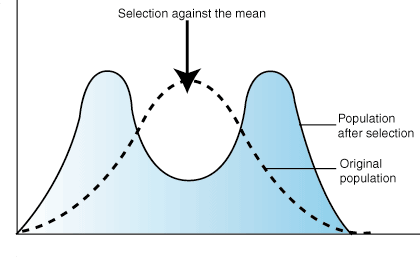
Due to change in environment
8
Define speciation
Evolution of new species from existing species
9
How does speciation occur?
Natural selection changes frequency of alleles
Undergo reproductive isolation to become genetically distinct
Undergo reproductive isolation to become genetically distinct
10
What are the 2 types of speciation?
Allopatric
Sympatric
Sympatric
11
Allopatric speciation
Speciation where biological populations are geographically isolated by a barrier and evolve genetic reproductive success
12
Sympatric speciation
Biological populations are not geographically isolated
Mutation causes reproductive isolation
Mutation causes reproductive isolation
13
Define genetic drift
Change in allele frequency in small populations
14
What are the 2 types of genetic drift?
Founder effect
Genetic bottleneck
Genetic bottleneck
15
Founder effect
Small numer of population are isolated from the main group and colonise another area
Due to migration and geographical isolation
Increased allele frequency
Reduced genetic diversity
Due to migration and geographical isolation
Increased allele frequency
Reduced genetic diversity
16
Genetic bottleneck
Event occurs which drastically reduces population size
Reduces genetic diversity
Survivors form a much smaller group than before
E.g. hunting, earthquake, disease
Reduces genetic diversity
Survivors form a much smaller group than before
E.g. hunting, earthquake, disease
17
Define gene pool
Total sum of all alleles of all genes in a population
18
What are the 2 Hardy Weinberg equations?
p$2$ + 2pq + q$2$ = 1
p + q = 1
p + q = 1
19
Which letters represent allele frequency?
p = dominant
q = recessive
q = recessive
20
Which letters represent the number of individuals?
p$2$ = homozygous dominant
pq = heterozygous
q$2$ = homozygous recessive
pq = heterozygous
q$2$ = homozygous recessive