Self Recognition
Study these flashcardsFree · spaced repetition · iPhone, Android, Mac & web
All cards
1
Define self recognition
Cognitive processes we use to distinguish ourselves from others
2
State the 2 domains
Psychological self
Physical self
Physical self
3
Define psychological self
Self referential processing (processing of info relative to the self)
4
What does the psychological self include?
Representation - labelling of stimuli as self-referential
Monitoring - of self-referential stimuli
Evaluation - of self-referential stimuli
Integration - linkage of stimuli to personal context
Monitoring - of self-referential stimuli
Evaluation - of self-referential stimuli
Integration - linkage of stimuli to personal context
5
Define physical self
Self-recognition of body
6
What does the physical self include?
Self awareness - recognition of own body
Unity - experience of self as a unit
Agency - feeling of being casually involved in an action
Spatial perspectivity - location of body in space
Ownership - understanding the body as belonging to the self
Unity - experience of self as a unit
Agency - feeling of being casually involved in an action
Spatial perspectivity - location of body in space
Ownership - understanding the body as belonging to the self
7
What are the 3 other aspects of the self?
Mind reading - covert mimicing of other's mental states (similar to ToM)
Emotion - convergence/experience of interoceptive (internal to an organism) and exteroceptive (external to an organism) stimuli
Autobiographical memory - integration of stimuli in personal context
Emotion - convergence/experience of interoceptive (internal to an organism) and exteroceptive (external to an organism) stimuli
Autobiographical memory - integration of stimuli in personal context
8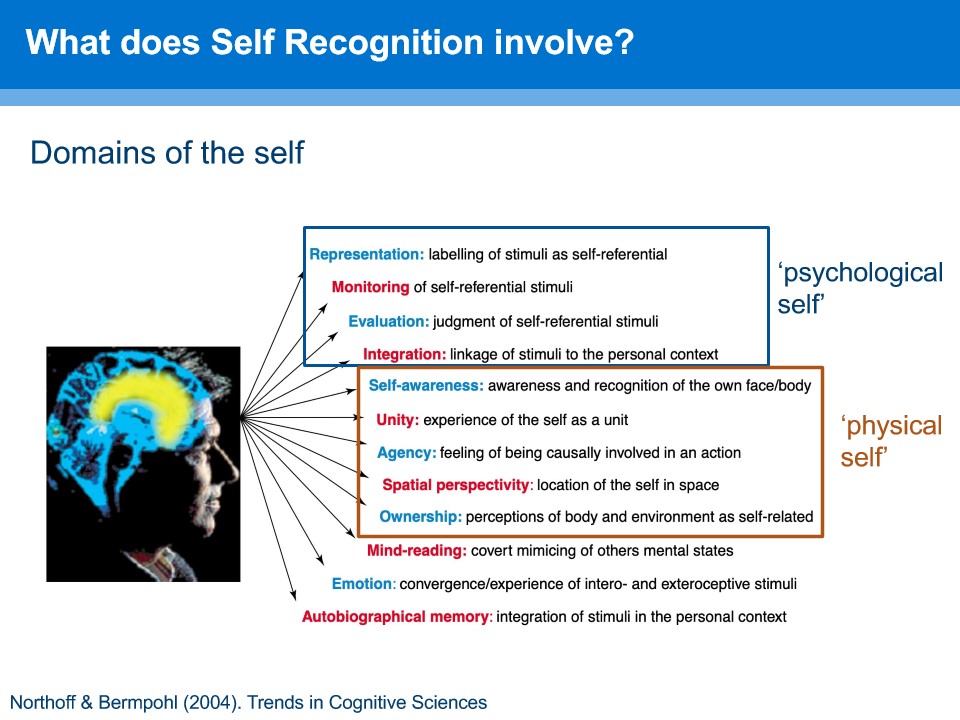
Image occlusion: name the hidden labels
9
Image occlusion: name the hidden labels
10
Image occlusion: name the hidden labels
11
Image occlusion: name the hidden labels
12
Image occlusion: name the hidden labels
13
Image occlusion: name the hidden labels
14
Image occlusion: name the hidden labels
15
Image occlusion: name the hidden labels
16
Image occlusion: name the hidden labels
17
Image occlusion: name the hidden labels
18
Image occlusion: name the hidden labels
19
Image occlusion: name the hidden labels
20
Method for fMRI studies of the self
Pps answer self vs other judgements
Compare BOLD signal
Compare BOLD signal
21
Northoff method and when?
2006
Meta analysis
27 neuroimaging studies comparing self vs other perspective
Meta analysis
27 neuroimaging studies comparing self vs other perspective
22
Northoff inital results
All studies showed activation in medial regions of brains' cortex
Activation in these cortical midline structures occurred across all functional domains
Suggests commonality in cognitive processes underlying self-recognition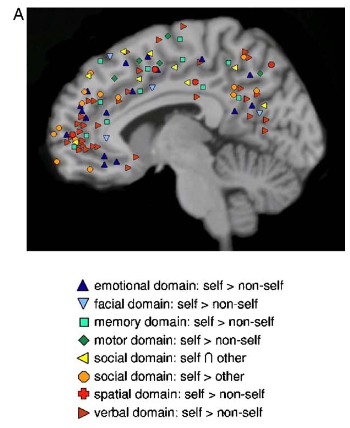
Activation in these cortical midline structures occurred across all functional domains
Suggests commonality in cognitive processes underlying self-recognition
23
What did Northoff find after analysing the results?
Indicates 3 cortical midline structure (CMS) clusters associated with self-recognition
Red = mPFC
Green = anterior cingulate cortex
Blue = posterior cingulate cortex
Suggests functional specialisation in CMS associated with self recognition but no simple mapping to different domains of seld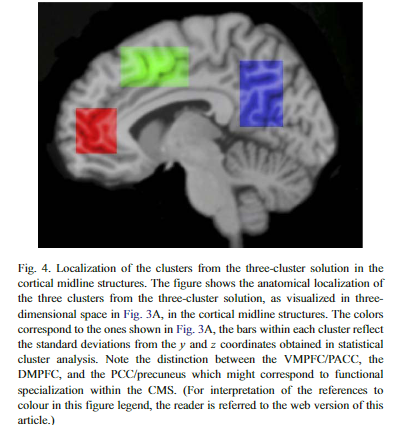
Red = mPFC
Green = anterior cingulate cortex
Blue = posterior cingulate cortex
Suggests functional specialisation in CMS associated with self recognition but no simple mapping to different domains of seld
24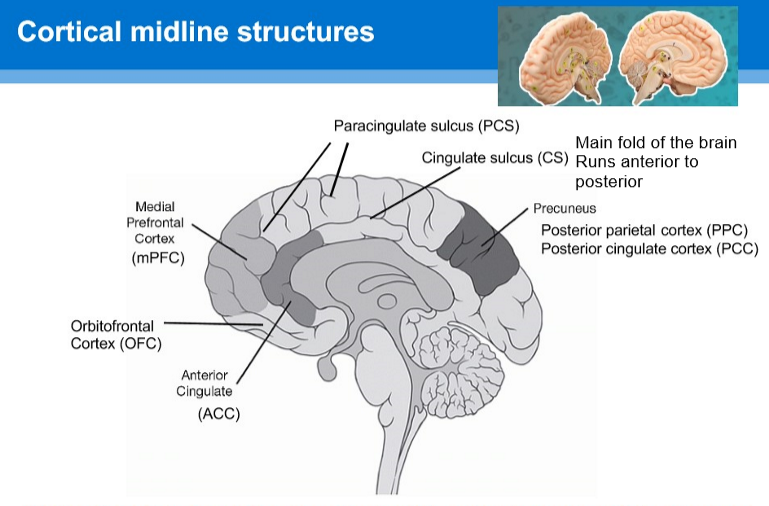
Image occlusion: name the hidden labels
25
D'Argembeau method and when
2007
Subtraction analysis - self vs other judgements
Pps made judgements from 1st/3rd person persepctive on extent to which an adjective applied to them/other person
Copared brain activity associated with descisions relating to self and decisions relating to perspective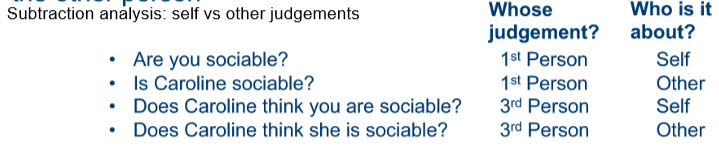
Subtraction analysis - self vs other judgements
Pps made judgements from 1st/3rd person persepctive on extent to which an adjective applied to them/other person
Copared brain activity associated with descisions relating to self and decisions relating to perspective
26
D'Argembeau results
When judgements made about the self = activity in dorsal anterior and ventral anterior mPFC (even if from 3rd perspective)
When judgements made in 3rd person perspective = activity in posterior dorsal mPFC (regardless of self vs other judgements)
When judgements made in 3rd person perspective = activity in posterior dorsal mPFC (regardless of self vs other judgements)
27
What did Hu et al find and when?
2016
fMRI meta anlysis comparing 37 self-referential psych judgement studies to 23 self-face physical recognition studies
Found anterior mPFC and posterior cingulate cortex more activy in self-referential (psych self) vs other-referential
Posterior mPFC and lateral brain regions more activy in self-face (physical self) vs other-face
Only brain areas active for both psych and physical self processing = dosal anterior cingulate cortex/mPFC, inferior frontal gyrus/insula
Findings compatible with supramodularity view
fMRI meta anlysis comparing 37 self-referential psych judgement studies to 23 self-face physical recognition studies
Found anterior mPFC and posterior cingulate cortex more activy in self-referential (psych self) vs other-referential
Posterior mPFC and lateral brain regions more activy in self-face (physical self) vs other-face
Only brain areas active for both psych and physical self processing = dosal anterior cingulate cortex/mPFC, inferior frontal gyrus/insula
Findings compatible with supramodularity view
28
Define conjunction analysis
Which brain areas are active during both judgements?
29
Outline the supramodularity view of cortical midline structures (CMS)
Suggests CMS activated by self-referential stimuli regardless of sensory modality
30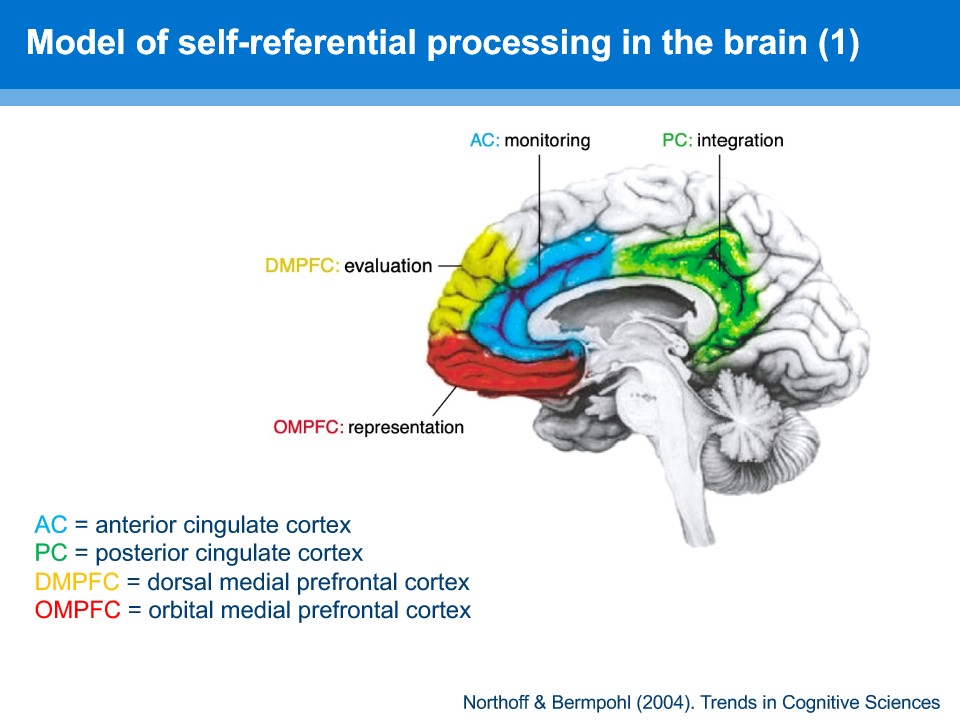
Image occlusion: name the hidden labels
31
Outline mindfulness
Focused awareness on thoughts, feelings, bodily sensations and surrounding environment
Involves self recognition
Involves self recognition
32
Investigation into mindfulness
Falcone and Jerram 2018
Meta analysis of 21 fMRI studies of minfulness meditation
Meditation vs non-mediation / rest control
Meditation = increased activity in anterior cingulate cortex, insula and globus pallidus (in basal ganglia)
Supports Northoff and Bermpohl 2004 model of self-referential processing
Meta analysis of 21 fMRI studies of minfulness meditation
Meditation vs non-mediation / rest control
Meditation = increased activity in anterior cingulate cortex, insula and globus pallidus (in basal ganglia)
Supports Northoff and Bermpohl 2004 model of self-referential processing
33
Outline functional connectivty
Areas of brain involved in same function
34
Define default mode network (DMN)
Broad network of interconnecting brain areas active when brain is at rest
Allows thinking to be internally directed (self-referential)
Allows thinking to be internally directed (self-referential)
35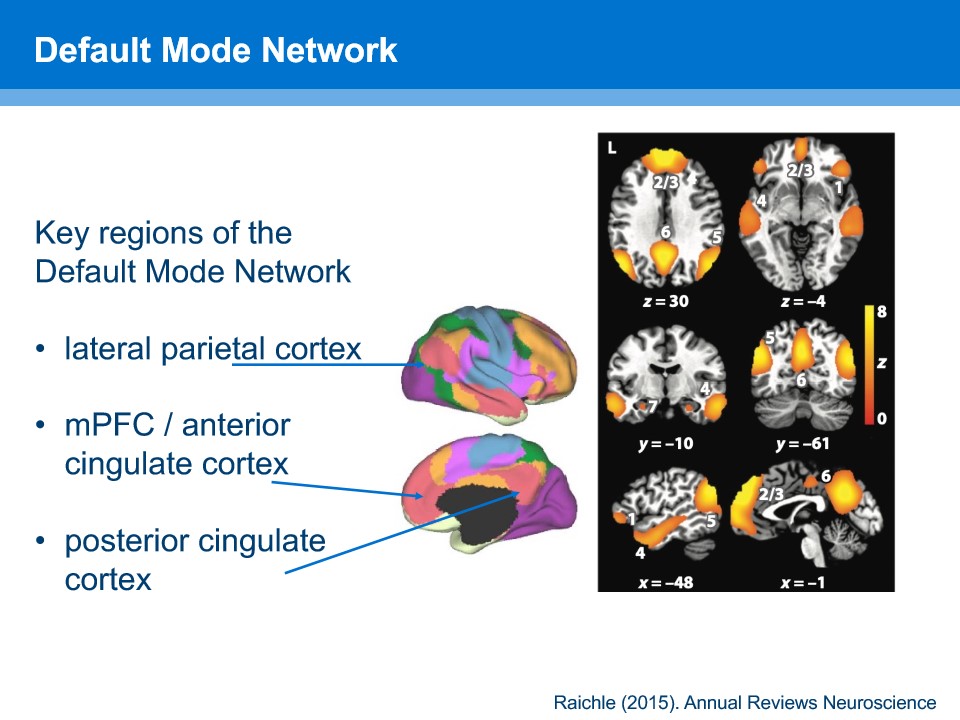
Image occlusion: name the hidden labels
36
What did Qin and Northoff find and when?
2011
2 meta analyses
Compared self-recognition and DMN studies
Found overlap between areas active during self-recogntion and DMN:
Anterior mPFC
Posterior cingulate cortex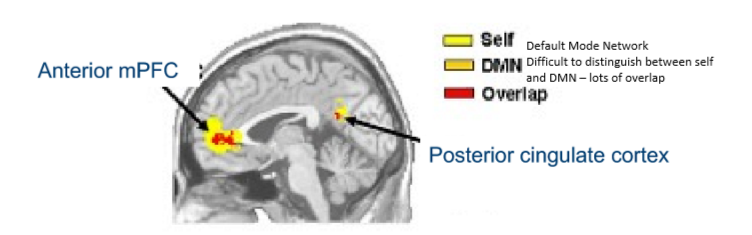
2 meta analyses
Compared self-recognition and DMN studies
Found overlap between areas active during self-recogntion and DMN:
Anterior mPFC
Posterior cingulate cortex
37
What did Davey et al find and when?
2016
Compared brain activity in DMN and during self-referential task
Overlapping activity in mPFC and posterior cingulate cortex
BUT stronger mPFC activity for self-referential
Stronger medial and lateral parietal activation for DMN
Suggests broader processing in DMN than just self-referential
Looked at timings of self-referential activity across network in mPFC, PCC and left inferior parietal lobe (IPL)
Found self-referential processes originate in PCC but are moderated by regulatory effects of mPFC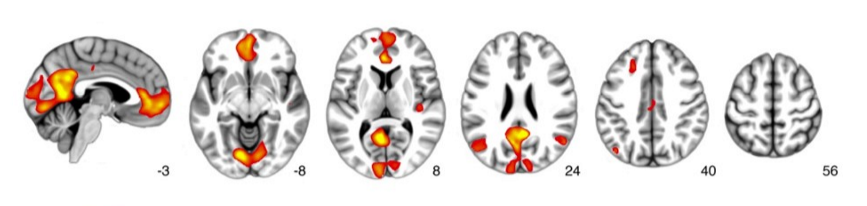
Compared brain activity in DMN and during self-referential task
Overlapping activity in mPFC and posterior cingulate cortex
BUT stronger mPFC activity for self-referential
Stronger medial and lateral parietal activation for DMN
Suggests broader processing in DMN than just self-referential
Looked at timings of self-referential activity across network in mPFC, PCC and left inferior parietal lobe (IPL)
Found self-referential processes originate in PCC but are moderated by regulatory effects of mPFC
38
Define depression
Mood disorder, causing persistent feeling of sadness and loss of interest
39
Define rumination
Common cognitive symptom of depression
Retrieve and repetitively rehearse personal content relating to past and current problems
Linked to attentional problems
Retrieve and repetitively rehearse personal content relating to past and current problems
Linked to attentional problems
40
What did Nejad et al find and when?
2013
Reviewed 12 studies of self-related processing in patients with depression
Found dysfunctional (increased) self-recognition activity in anterior cortical midline structures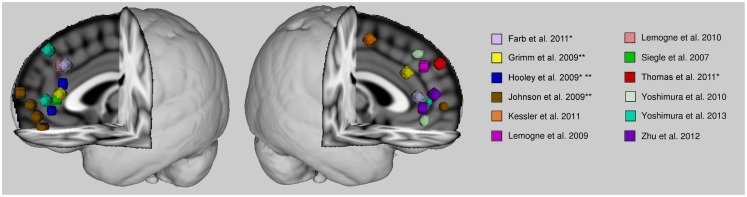
Reviewed 12 studies of self-related processing in patients with depression
Found dysfunctional (increased) self-recognition activity in anterior cortical midline structures
41
What did Lemogne et al find and when?
2009
+ive and -ive adjectives
Depressed compared to non-depressed
Referred to themselves or were socially desirable?
Depressed = greater activation of medial frontal gyrus within dorsomedial PFC for self-referential compared with general judgements
Increased functional connectivity in depressed between dorsomedial PFC with anterior cingulate and dorsolateral PFC but not with posterior cingulate cortex - suggests issue with connectivity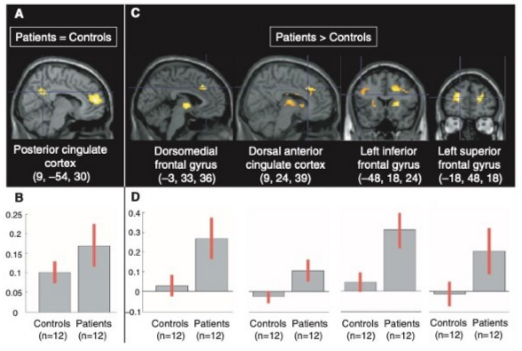
+ive and -ive adjectives
Depressed compared to non-depressed
Referred to themselves or were socially desirable?
Depressed = greater activation of medial frontal gyrus within dorsomedial PFC for self-referential compared with general judgements
Increased functional connectivity in depressed between dorsomedial PFC with anterior cingulate and dorsolateral PFC but not with posterior cingulate cortex - suggests issue with connectivity
42
What did Kaiser et al find and when?
2015
Hyperconnectivity within default mode network consistent with dysfunctional self-referential thought
Hypoconnectivity between default mode network and networks involved in emotional regulation, cognitive control, attention
Black arrows = hypoconnectivity
White arrows = hyperconnectivity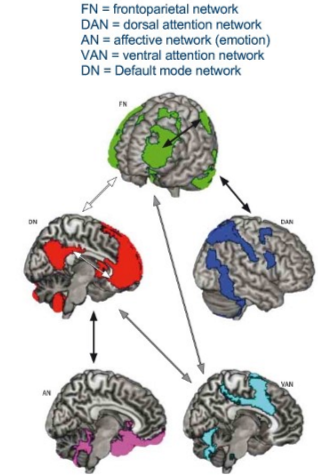
Hyperconnectivity within default mode network consistent with dysfunctional self-referential thought
Hypoconnectivity between default mode network and networks involved in emotional regulation, cognitive control, attention
Black arrows = hypoconnectivity
White arrows = hyperconnectivity
43
Define agency
Subjective awareness of initiating, executing and controlling one's own actions
44
Define body-ownership
Knowledge that part of your body is moving, for example
45
Outline the comparator/forward model
Blakemore et al 2001
Individual initiated movement (motor command), copy of command sent to other brain regions, then matched to sensory feedback from execution of movement, providing awareness of self-generated action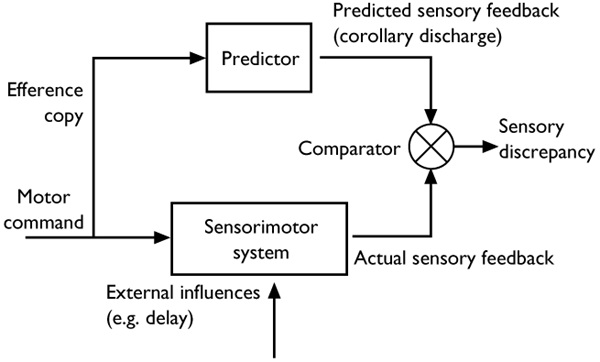
Individual initiated movement (motor command), copy of command sent to other brain regions, then matched to sensory feedback from execution of movement, providing awareness of self-generated action
46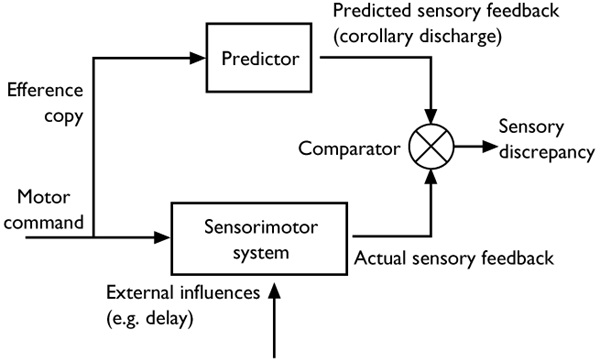
Image occlusion: name the hidden labels
47
Image occlusion: name the hidden labels
48
Image occlusion: name the hidden labels
49
Image occlusion: name the hidden labels
50
Image occlusion: name the hidden labels
51
Predicted sensory feedback ≡ actual sensory feedback = ?
Match
Agency over action
Agency over action
52
Predicted sensory feedback ≠ actual sensory feedback = ?
Mismatch
Other agents initiated action
Other agents initiated action
53
What did David et al find and when?
2008
Lateral parietal regions associated with matching outcomes to actions
Dosolateral PFC and supplementary motor area implicated in planning and action initiation
Agency not associated with medial cortical structures
Difference in mechanisms between agency and self-referential processing
Lateral parietal regions associated with matching outcomes to actions
Dosolateral PFC and supplementary motor area implicated in planning and action initiation
Agency not associated with medial cortical structures
Difference in mechanisms between agency and self-referential processing
54
What did Tsakiris find and when?
2010
Activity in midline cortical structures for body ownership are absent in agency manipulations
Suggests distinct neural processing for agency compared to self-referential processing
Activity in midline cortical structures for body ownership are absent in agency manipulations
Suggests distinct neural processing for agency compared to self-referential processing
55
Define anarchic hand syndrome
Focused movements of hand made without conscious intention of individual
Impairment in agency - due to dissociation between intention and action
Impairment in agency - due to dissociation between intention and action
56
Define alien hand syndrome
Subjective feeling that hand does not belong to individual
Impairment in body-ownership
Impairment in body-ownership
57
Lesion locations involved in anarchic/alien hand syndrome are associated with what?
Brain regions active during agency and body-ownership task performance
58
Define reality monitoring
Cognitive process of discriminating between real and imagined info
59
What did Johnson and Raye suggest about reality monitoring and when?
1981
Uses a comparitor process - current mental info compared to characteristic traces for perceived and imagined info
Source Monitoring Framework
Derived from previous experience
Include: contextual, sensory, semantic and cognitive attributes
Uses a comparitor process - current mental info compared to characteristic traces for perceived and imagined info
Source Monitoring Framework
Derived from previous experience
Include: contextual, sensory, semantic and cognitive attributes
60
What did Simons et al find and when?
12 fMRI studies of reality monitoring
Associated with anterior mPFC activity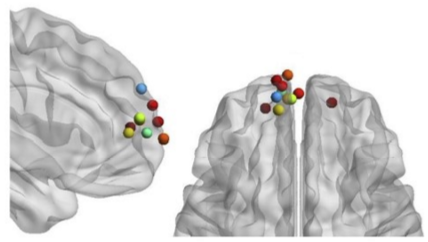
Associated with anterior mPFC activity
61
Why do hallucinations arise?
Failure to discriminate between external info from senses and info which is self-generated
62
What did Garrisonet al find and when?
2017
Patients with SCZ show reality monitoring impairment
Hallucinations associated with enhanced externalising bias (more likely to believe something imagined was perceived than something perceived being imagined)
Also show associated reality-monitoring specific dysfunction within anterior mPFC
Patients with SCZ show reality monitoring impairment
Hallucinations associated with enhanced externalising bias (more likely to believe something imagined was perceived than something perceived being imagined)
Also show associated reality-monitoring specific dysfunction within anterior mPFC
63
What did Buda et al find and when?
2011
MRI (structural)
Individual differences in appearance of paracingulate sulcus (PCS)
Bilateral absence in healthy pps = less accurate in reality-monitoring tasks in lab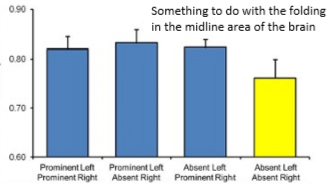
MRI (structural)
Individual differences in appearance of paracingulate sulcus (PCS)
Bilateral absence in healthy pps = less accurate in reality-monitoring tasks in lab
64
What did Garrison et al find and when?
2015
PCS length predicts whether patients with SCZ experience hallucinations
Shorter PCS in SCZ = more likely to experience hallucinations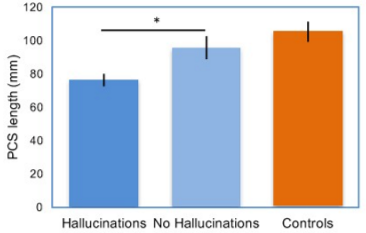
PCS length predicts whether patients with SCZ experience hallucinations
Shorter PCS in SCZ = more likely to experience hallucinations
65
What did Zmigrod et al find and when?
2016
Met-analysis of fMRI studies
Widespread activity during hallucinations
Increased acitivity in paracingulate cortex
Auditory hallucinations = auditory cortex
Visual hallucinations = visual cortex
Supports the idea the hallucinations may arise due to sensory hyperactivity plus mPFC hypoactivity - results in reality monitoring impairment
Met-analysis of fMRI studies
Widespread activity during hallucinations
Increased acitivity in paracingulate cortex
Auditory hallucinations = auditory cortex
Visual hallucinations = visual cortex
Supports the idea the hallucinations may arise due to sensory hyperactivity plus mPFC hypoactivity - results in reality monitoring impairment