Primatology - adaptations + diversity
Study these flashcardsFree · spaced repetition · iPhone, Android, Mac & web
All cards
1
Define adaptations
Characteristics that improve an organism's chances for survival and/or reproduction
Passed down through subsequent generations
Maintained through evolution and selection
Passed down through subsequent generations
Maintained through evolution and selection
2
Outline 2 types of selective pressures
Abiotic environment - climate, habitat
Biotic environment - food, predators, disease, other species, conspecifics (attraction/competition)
Biotic environment - food, predators, disease, other species, conspecifics (attraction/competition)
3
Define conspecific
Animal/plant belonging to the same species
4
Outline the 3 mechanisms of selection
Natural selection
Sexual selection
Genetic drift
Sexual selection
Genetic drift
5
Outline the functional traits of primates and their respective selective pressures
Limbs - habitat
Teeth - diet
Senses and the brain - food, sociality, diurnal life
Life history - developmental and energetic constraints
Teeth - diet
Senses and the brain - food, sociality, diurnal life
Life history - developmental and energetic constraints
6
Define convergent evolution
Evolved separately, rather than being passed down from 1 common ancestor
7
Outline the comparative approach
Identification of correlated factors
Build evolutionary theories
Infer selective processes
Infer events of convergent evolution
Build evolutionary theories
Infer selective processes
Infer events of convergent evolution
8
Define homologous characteristic
Present in common ancestor
9
Define analogous characteristic
Homoplasy
Present in some species
Result of convergent evolution
Present in some species
Result of convergent evolution
10
Primate features and adaptations for locomotion
Hands - high prehensility, opposable thumb, nails instead of claws, tactile pads with enriched sensory nerves of digit tips
Feet - high prehensility, divergent and partially opposable big toe
Clavicle - mobile arms and shoulders
Feet - high prehensility, divergent and partially opposable big toe
Clavicle - mobile arms and shoulders
11
4 types of locomotion
Clinging and leaping
Quadrupedalism
Brachiation - hangers
Bipedalism
Quadrupedalism
Brachiation - hangers
Bipedalism
12
4 types of dietary specialisations
Omnivores - lack of specialisation (baboons, chimps)
Frugivores - fruit (cercopithecines)
Folivores - leaves, grass (gorillas)
Insectivores - arthropods (some prosimians)
Frugivores - fruit (cercopithecines)
Folivores - leaves, grass (gorillas)
Insectivores - arthropods (some prosimians)
13
Define homoplasy
Correspondence/similarity in form/function between parts of different species/lineage that is not attributable to common ancestry but is the result of of parallel/convergent evolution in similar environments/ecological niches - Merriam Webster
14
Define sexual dimorphism
Differences between males and females
15
Example of sexual dimorphism in teeth
Some male primates have larger canines
Common in male-male competition
Common in male-male competition
16
How to interpret allometric scaling
Line = average
Anything above / below deviates from expected
Eg. brain weight larger than expected in relation to body size in chimps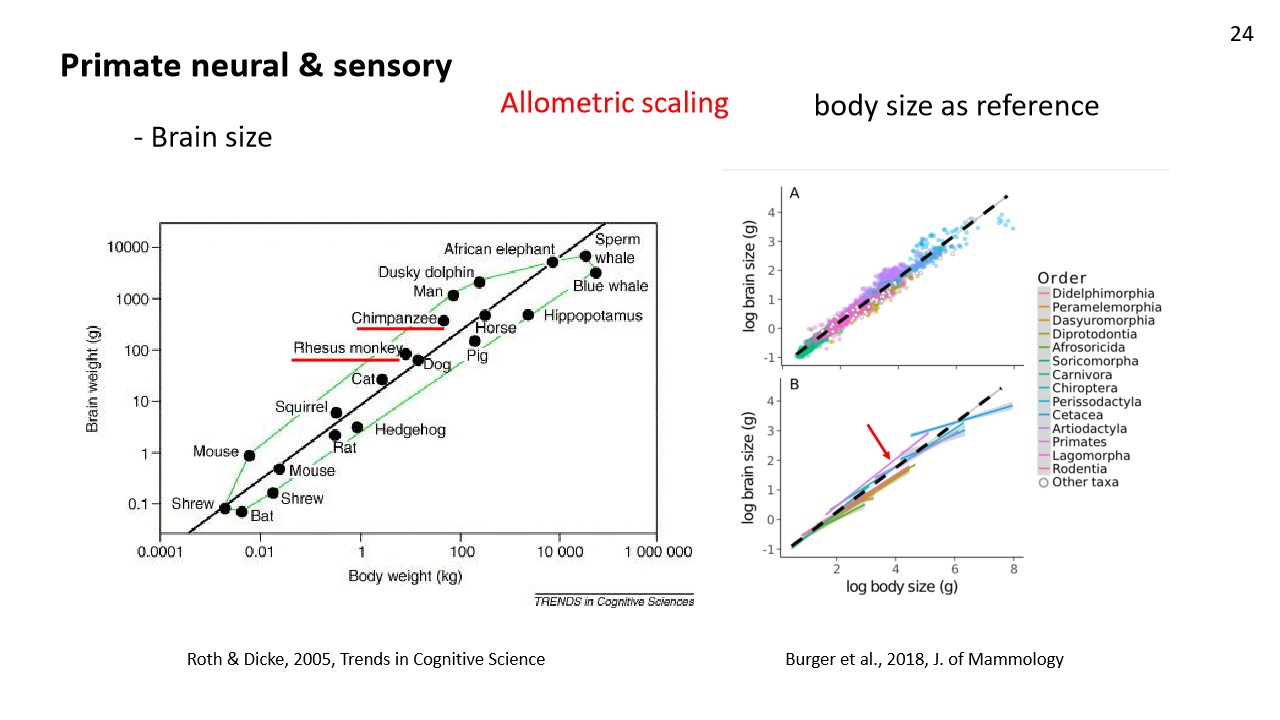
Anything above / below deviates from expected
Eg. brain weight larger than expected in relation to body size in chimps
17
Primate features and adaptations for senses and the brain
Rely on vision > olfaction - reduction of olfactory apparatus (short snouts), redced olfactory brain structures
Colour vision
Stereoscopic vision - allows primates to thrive in trees
Forward facing eyes
Colour vision
Stereoscopic vision - allows primates to thrive in trees
Forward facing eyes
18
Define stereotypic vision
Ability of visual brain to register a sense of 3D and form from visual inputs
Often refers to sense of depth derived from 2 eyes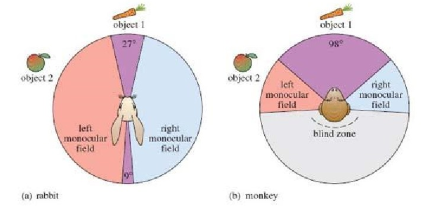
Often refers to sense of depth derived from 2 eyes
19
Define life history
Timing and pace of major life events
20
Outline the 7 steps to primate life history
Gestation
Birth
Growth
Maturation
Reproduction
Senescence (process of deterioration with age)
Death
Birth
Growth
Maturation
Reproduction
Senescence (process of deterioration with age)
Death
21
What does this graph suggest about reproduction in primates?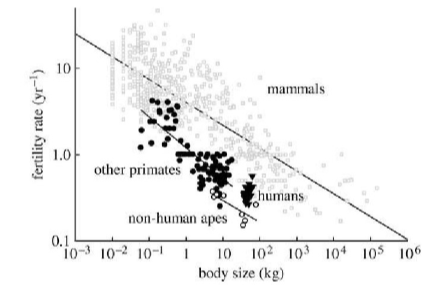
Below allometric line
Slower reproductive rates than expected for body size
Slower reproductive rates than expected for body size
22
Primate life history: fast or slow? And why?
Slow
Large brains -> slow maturation -> slow life history
Large brains -> slow maturation -> slow life history
23
Characteristics of primate life history
Long life expectancy
Slow reproductive rates
Low fertility
Low mortality
Slow reproductive rates
Low fertility
Low mortality
24
Outline the 9 consequences of slow life history in primates
Intense parental care
Great dependence on flexible learned behaviour
Live in social groups
Mostly diurnal
Stable groups
Long-term relationships
Cooperation
Overlapping generations
Social learning, culture
Great dependence on flexible learned behaviour
Live in social groups
Mostly diurnal
Stable groups
Long-term relationships
Cooperation
Overlapping generations
Social learning, culture
25
Define taxonomy
Description, identificantion, nomenclature (picking names for things) and classification of organisms
26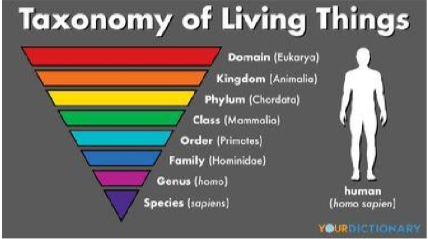
Image occlusion: name the hidden labels
27
Image occlusion: name the hidden labels
28
Image occlusion: name the hidden labels
29
Image occlusion: name the hidden labels
30
Image occlusion: name the hidden labels
31
Image occlusion: name the hidden labels
32
Image occlusion: name the hidden labels
33
Image occlusion: name the hidden labels
34
2 contrasting definitions of species
Biological barrier between individuals - cannot reproduce and produce fertile offpsring
Geographical barrier between individuals
Geographical barrier between individuals
35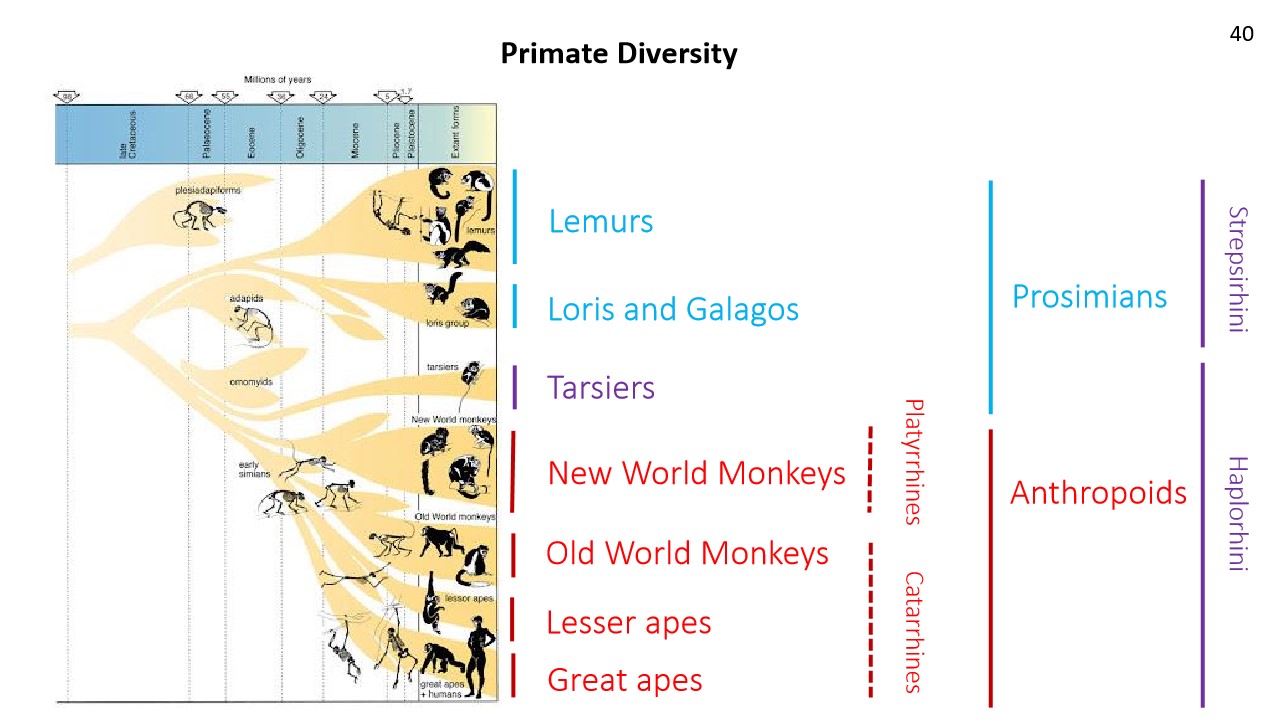
Image occlusion: name the hidden labels
36
Outline the characteristics of prosimians
Small
Rely ^^^ on smell
Eat insects and fruit
Mostly solitary
Mostly nocturnal
Home-range: male > female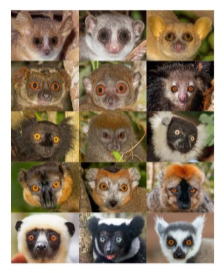
Rely ^^^ on smell
Eat insects and fruit
Mostly solitary
Mostly nocturnal
Home-range: male > female
37
Example of a prosimian
Lemurs
38
Outline the characteristics of platyrrhini
Variable size and social systems
Dichromatic vision
Mostly diurnal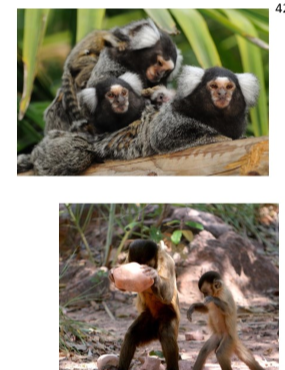
Dichromatic vision
Mostly diurnal
39
Example of a platyrrhini
Capuchins
40
Outline the characteristics of cercopithecines and colobines
Variable size and social systems
Group living
Hierarchal dominance
Female philopatry
Sexual dimorphism
Strictly diurnal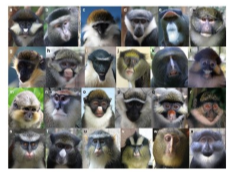
Group living
Hierarchal dominance
Female philopatry
Sexual dimorphism
Strictly diurnal
41
Difference between cercopithecines and colobines
Cercopithecines: frugivores/omnivores, cheek pouches, multi-male multi-female groups, female sexual swellings
Colobines: folivores, harem systems, infanticide common
Colobines: folivores, harem systems, infanticide common
42
Outline the characteristics of apes
No tail strictly diurnal
43
Examples of lesser apes
Gibbons
Siamands
Siamands
44
Outline the characteristics of apes
No tail strictly diurnal
45
2 examples and characteristics of an ape
Orang-utans:
Semi-solitary
Long dependency period
Chimps:
Multi-male multi-female
Female dispersal
Male-dominance
Semi-solitary
Long dependency period
Chimps:
Multi-male multi-female
Female dispersal
Male-dominance