HE - the first hominins
Study these flashcardsFree · spaced repetition · iPhone, Android, Mac & web
All cards
1
Human derived traits: cranium
Reduced facial prognathism
Small face
Large brain
Reduced brow ridges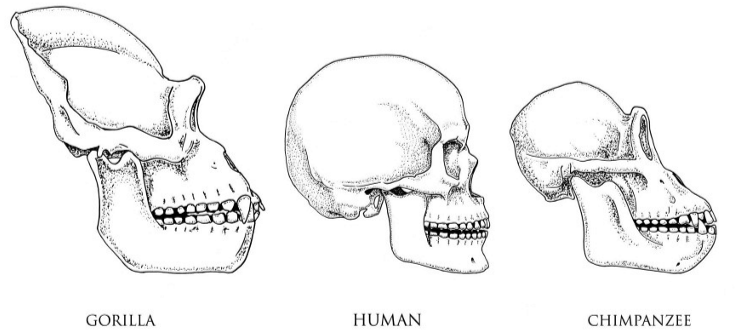
Small face
Large brain
Reduced brow ridges
2
Difference between ancestral and derived traits
Ancestral = traits which are present in the common ancestor
Derived = traits that arise during the evolution of the group and differ from the traits of the ancestor
Derived = traits that arise during the evolution of the group and differ from the traits of the ancestor
3
Human derived traits: teeth compares to chimp
Parabolic dental arch (chimp has U-shaped)
Small incisors + canines
No diastema (gap between teeth)
No C/P3 honing complex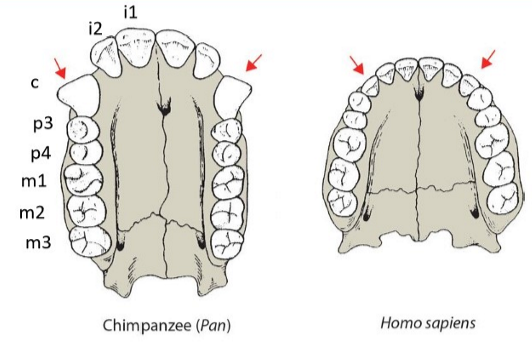
Small incisors + canines
No diastema (gap between teeth)
No C/P3 honing complex
4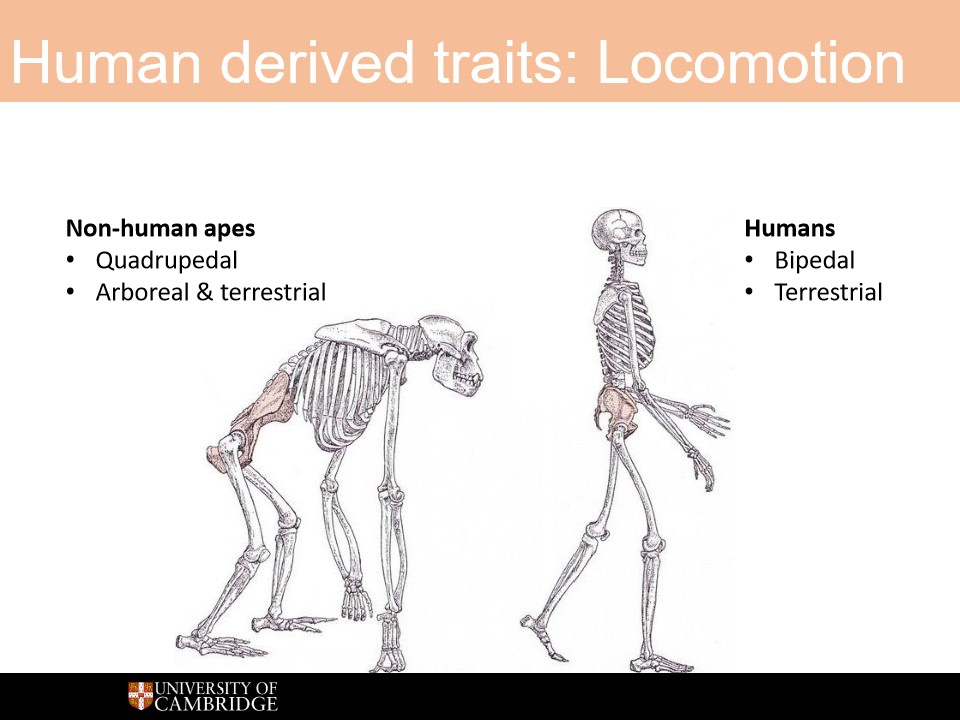
Image occlusion: name the hidden labels
5
Human derived traits: locomotion compared to non-human apes
Legs > arms
Anterior foramen magnum
S-shaped spine
Lower body:
- Short and wide pelvis to support organs above
- Femur slants inwards (knees closer to centre of gravity)
- Larger lower limb joints
- Linea aspera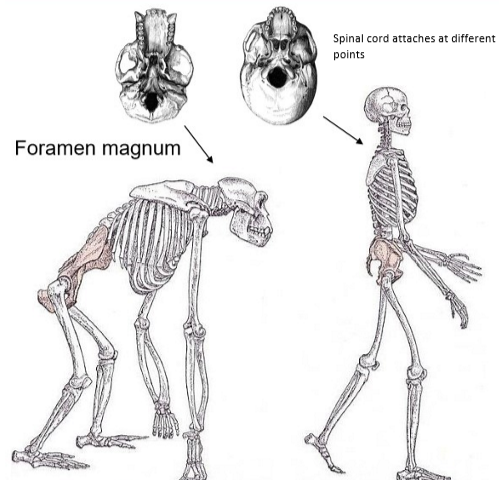
Anterior foramen magnum
S-shaped spine
Lower body:
- Short and wide pelvis to support organs above
- Femur slants inwards (knees closer to centre of gravity)
- Larger lower limb joints
- Linea aspera
6
What is linea aspera?
Ridge on bone as a result of muscle attachment at back of femur
7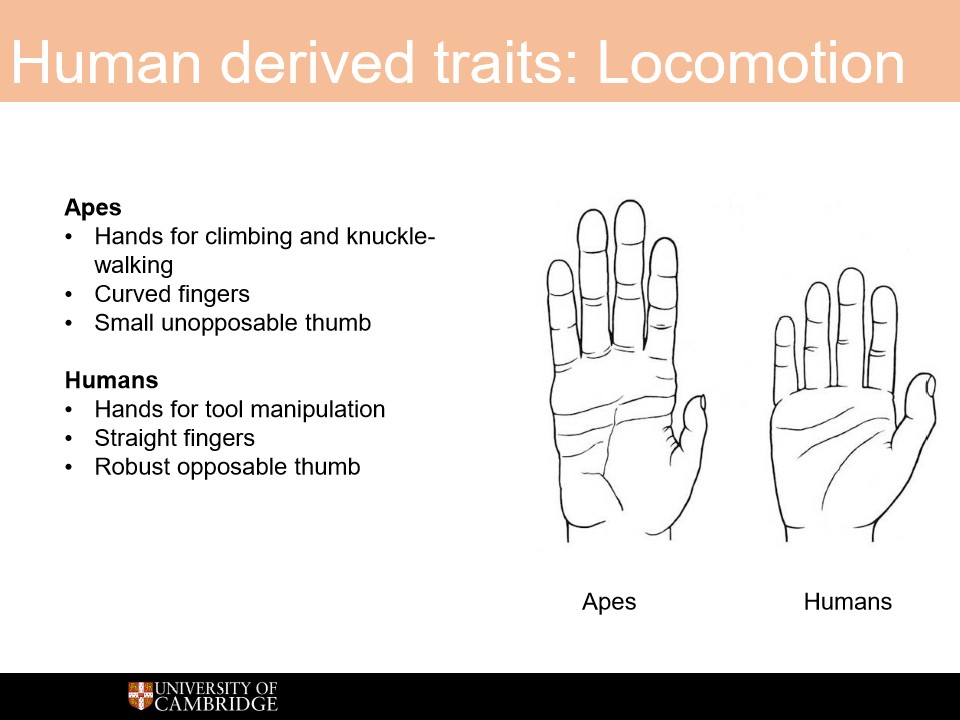
Image occlusion: name the hidden labels
8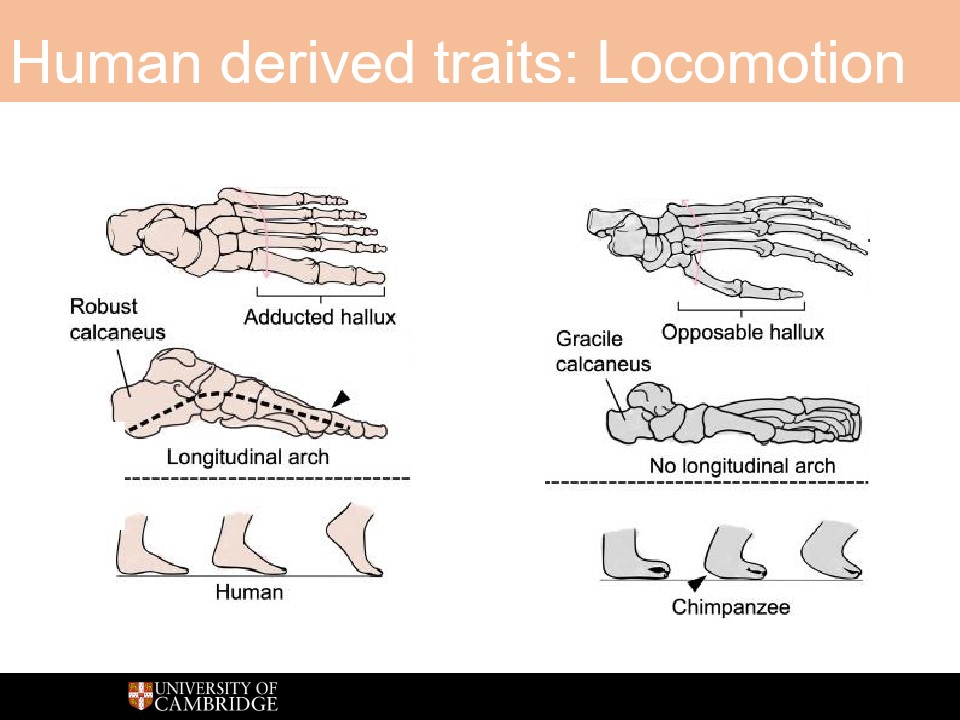
Image occlusion: name the hidden labels
9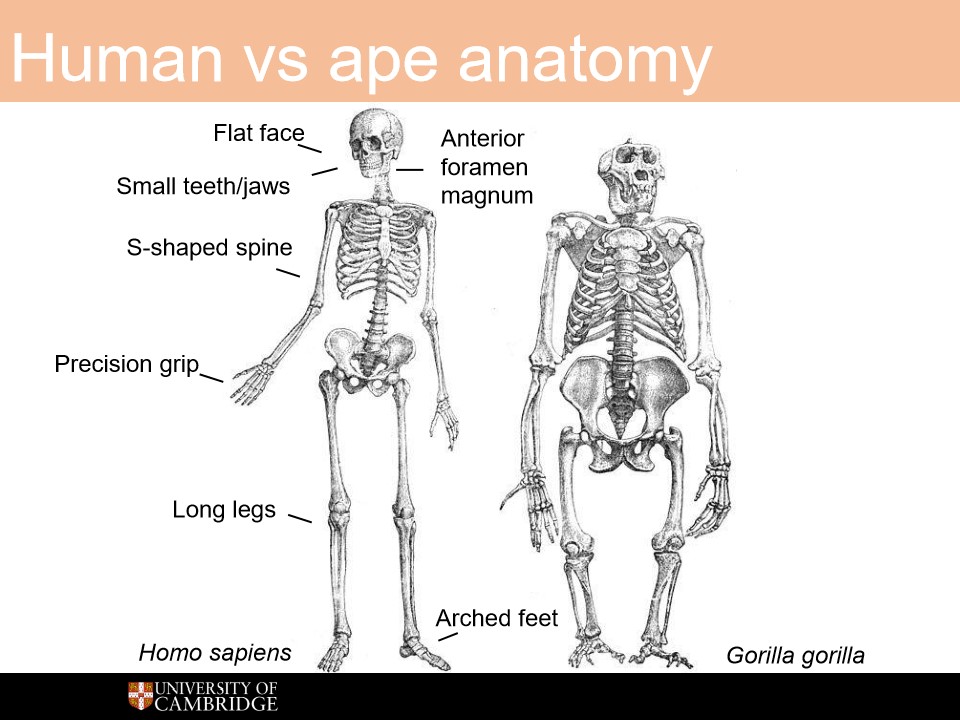
Image occlusion: name the hidden labels
10
What climate conditions allowed for hominins to evolve?
Rainfall declined
More seasonal climates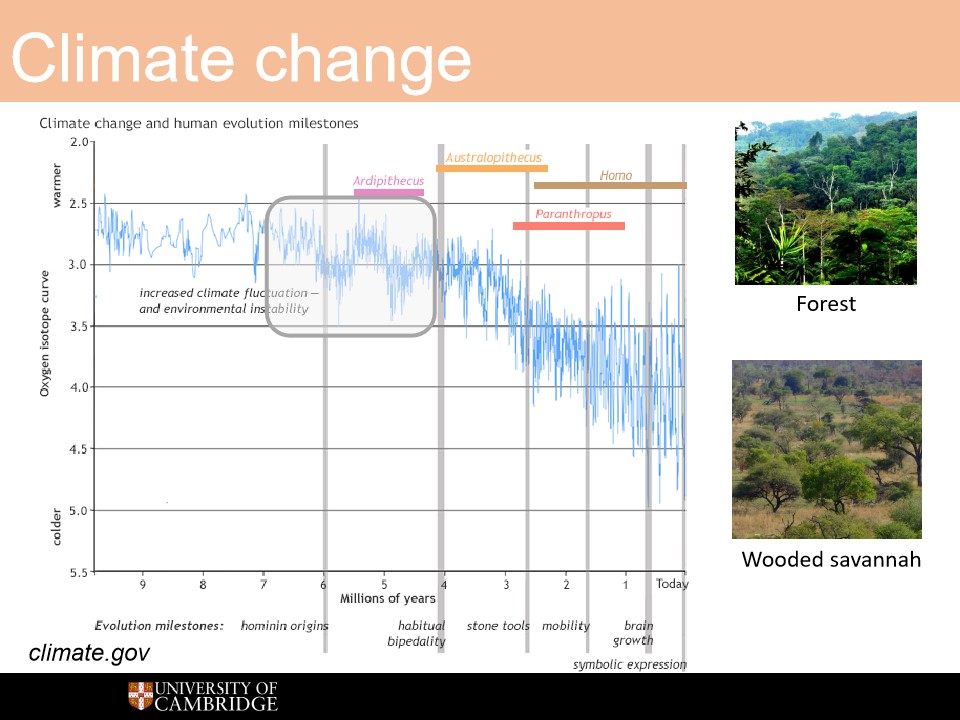
More seasonal climates
11
State the 3 possible genera of stem hominins
Orrorin
Sahelanthropus
Ardipithecus
Sahelanthropus
Ardipithecus
12
State the 4 potential species of stem hominins
Sahelanthropus tchadensis
Orrorin tugenensis
Ardipithecus kadabba
Ardipithecus ramidus
Orrorin tugenensis
Ardipithecus kadabba
Ardipithecus ramidus
13
Factfile: Sahelanthropus tchadensis
Anterior foramen magnum
Reduced C/P3 honing complex
Thick enamel
BUT:
Large brow ridge
Small brain
Incisors and canines similar to chimps
Morphology of femur between Miocene apes and later bipedal humans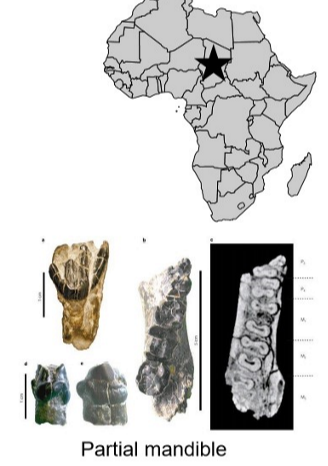
Reduced C/P3 honing complex
Thick enamel
BUT:
Large brow ridge
Small brain
Incisors and canines similar to chimps
Morphology of femur between Miocene apes and later bipedal humans
14
Factfile: Orrorin tugenensis
Ancestral:
Ape-like teeth
Big, sharpened canine
Derived:
Reinforced femoral neck (helps with bipedal locomotion)
Linea aspera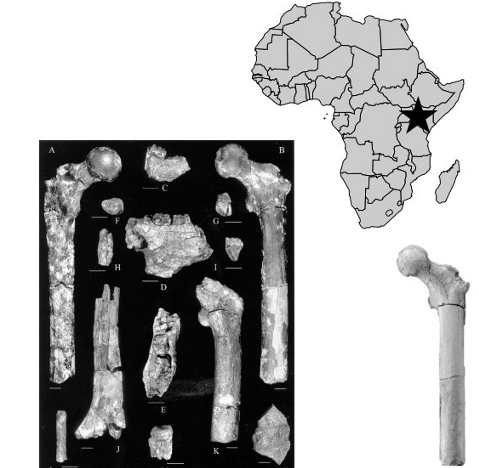
Ape-like teeth
Big, sharpened canine
Derived:
Reinforced femoral neck (helps with bipedal locomotion)
Linea aspera
15
Factfile: Ardipithecus kadabba
Derived features:
- No C/P3 honing complex
- Large molars and narrow incisors
- Robust toe bone suggests bipedal locomotion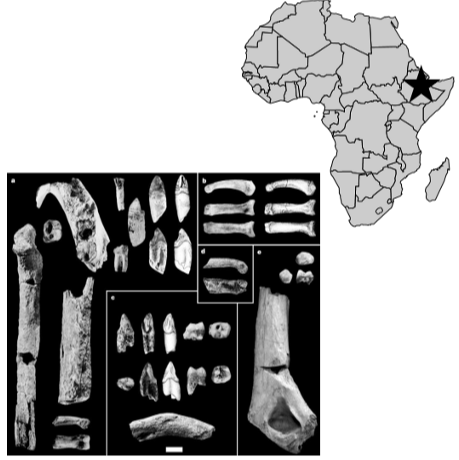
- No C/P3 honing complex
- Large molars and narrow incisors
- Robust toe bone suggests bipedal locomotion
16
Factfile: Ardipithecus ramidus
Craniodental features:
- Reduced facial prognathism
- Reduced canine size
- No C/P3 honing complex
Locomotion:
- Long arms
- Grasping foot
- Curved fingers
- Pelvis intermediate between ape and human
Suggests climbing > walking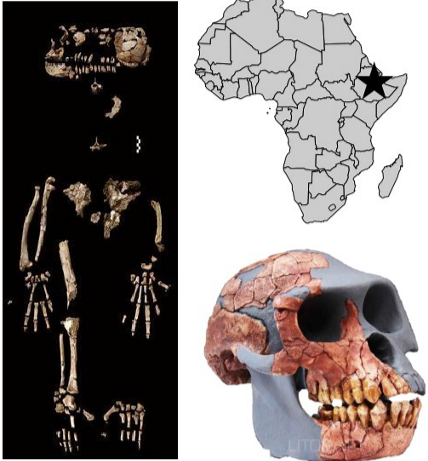
- Reduced facial prognathism
- Reduced canine size
- No C/P3 honing complex
Locomotion:
- Long arms
- Grasping foot
- Curved fingers
- Pelvis intermediate between ape and human
Suggests climbing > walking
17
Features found in all potential early hominins
Signs of upright posture and bipedal locomotion
All retain adaptation to arboreal locomotion
Canine size reduced
All retain chimp-like brain size
All retain adaptation to arboreal locomotion
Canine size reduced
All retain chimp-like brain size
18
What does paleobiology involve?
Diet, environment, locomotion, growth, sexual dimorphism, behaviour
19
Outline the 2 opposing paleobiological explanation for why bipedalism may have evolved
Frees up hands:
- Darwin 1971
- Can carry tools, food, infants
- Enables tool production
Energetically efficient:
- Climate change opens up wooded areas with open grassland
- Efficient locomotion between woods
- Chimps need 75% more energy than humans when walking
- Darwin 1971
- Can carry tools, food, infants
- Enables tool production
Energetically efficient:
- Climate change opens up wooded areas with open grassland
- Efficient locomotion between woods
- Chimps need 75% more energy than humans when walking
20
Criticism of the 'free hands' bipedalism explanation
- Stone tools didn't appear until 3.3 Ma
21
Evidence for preference for wooded habitats
Associated fauna
Botanical remains
Possible stem hominins found in forest, open woodlands and swamps
Botanical remains
Possible stem hominins found in forest, open woodlands and swamps
22
State the genus believed to be an archaic hominin
Australopiths
Not believed to be stem hominin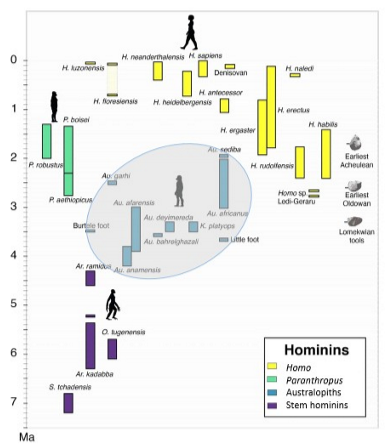
Not believed to be stem hominin
23
Features of the Pliocene epoch
Date: 5.3 - 2.6 Ma
Global cooling
Reduction in forest cover
Increased prevalence of open grasslands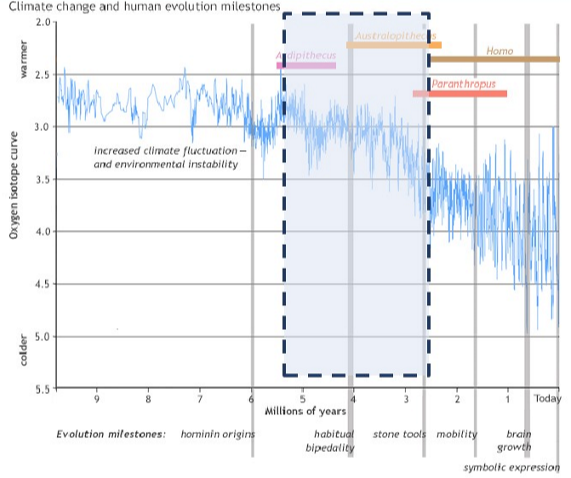
Global cooling
Reduction in forest cover
Increased prevalence of open grasslands
24
Factfile: Australopiths
Specimen examples: 'Lucy', 'Little Foot'
Height: 1.1 - 1.5m
Weight: 30 - 50kg
Males > females (can be twice as large)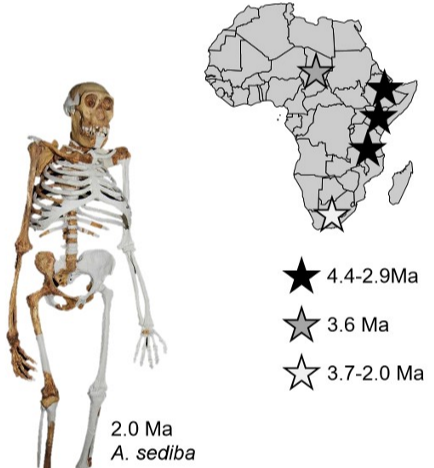
Height: 1.1 - 1.5m
Weight: 30 - 50kg
Males > females (can be twice as large)
25
Cranium features of Australopiths
Cranium:
- Reduced prognathism (Hominin feature)
- No C/P3 honing complex (Hominin feature)
- Small anterior teeth (Hominin feature)
- Saggital crest (Australopithecus feature)
- Large cheek teeth (Australopithecus feature)
- Robust mandibles (Australopithecus feature)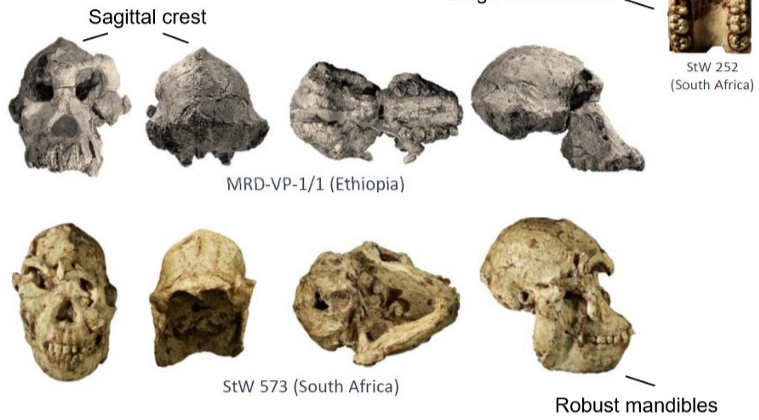
- Reduced prognathism (Hominin feature)
- No C/P3 honing complex (Hominin feature)
- Small anterior teeth (Hominin feature)
- Saggital crest (Australopithecus feature)
- Large cheek teeth (Australopithecus feature)
- Robust mandibles (Australopithecus feature)
26
Postcranium features of Australopiths
Postcranium:
- Broad pelvis (Hominin feature)
- Arched foot (Hominin feature)
- No divergent big toe (Hominin feature)
- Long arms (ape feature)
- Curved fingers (ape feature)
- Ape-like shoulder (ape feature)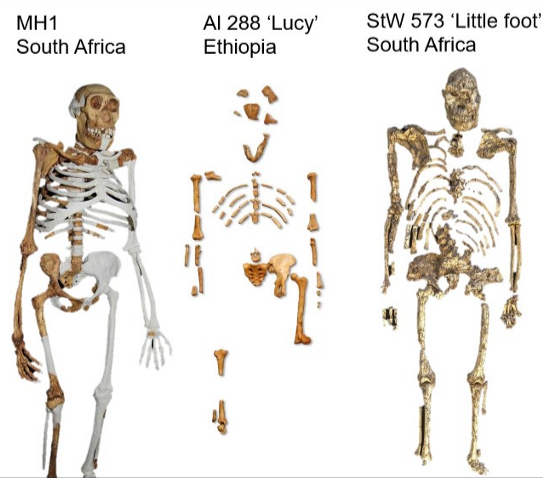
- Broad pelvis (Hominin feature)
- Arched foot (Hominin feature)
- No divergent big toe (Hominin feature)
- Long arms (ape feature)
- Curved fingers (ape feature)
- Ape-like shoulder (ape feature)
27
How many well documented species of Australopiths?
3
28
How many potential species of Australopiths?
9
29
What is the sister taxa of hominins?
Panins
30
Give 2 examples of panins
Chimps
Bonobos
Bonobos
31
What has research suggested about the features that supposedly distinguish modern humans from great apes?
Bipedalism believed to be unique to humans
BUT some features (eg. orientation of foramen magnum) also found in non-hominoid primates associated with different/non-bipedalism locomotion
BUT some features (eg. orientation of foramen magnum) also found in non-hominoid primates associated with different/non-bipedalism locomotion
32
Canine size reduction exclusive to hominins
- true
- false
33
What has research suggested an anteriorly positioned foramen magnum is associated with?
Upright posture and bipedalism
BUT comparisons with other primates suggest it's more related with differences in head carriage and facial length
BUT comparisons with other primates suggest it's more related with differences in head carriage and facial length
34
What is one of the misconceptions when studying evolution?
That modern humans evolved more after their split from great apes
Great apes HAVE continued to evolve since then - sometimes underappreciated
Great apes HAVE continued to evolve since then - sometimes underappreciated
35
1st major specialisation in hominins: old view
Increase in brain size
36
1st major specialisation in hominins: new view
Bipedalism