HE - Plio-Pleistocene diversification
Study these flashcardsFree · spaced repetition · iPhone, Android, Mac & web
All cards
1
4 species of Australopiths
A. anamensis
A. afarensis
A. africanus
A. sediba
A. afarensis
A. africanus
A. sediba
2
Age order and sites of the Australopiths
anamensis - oldest - east Africa
afarensis - east Africa
africanus - South Africa
sediba - South Africa
robust Australopithecus (also called Paranthropus) - most recent - east and South Africa
afarensis - east Africa
africanus - South Africa
sediba - South Africa
robust Australopithecus (also called Paranthropus) - most recent - east and South Africa
3
Australopithecus anamensis hominin features
Large molars
Reduced canines
Bipedal locomotion
Reduced canines
Bipedal locomotion
4
Australopithecus anamensis acestral ape features
U-shaped dental arcade
Receding chin
Larger canines than later hominins
Prognathic face
Receding chin
Larger canines than later hominins
Prognathic face
5
Australopithecus afarensis hominin features
Somewhat human-like premolars (2 cusps instead of 1)
V-shaped dental arcade
V-shaped dental arcade
6
Australopithecus afarensis acestral ape features
Heavy cranial musculature
Chimp-sized brain
Diastema (gap between teeth)
Chimp-sized brain
Diastema (gap between teeth)
7
Australopithecus africanus derived features
Postcranium similar to afarensis
Gracile (small/slender) cranium
BUT relatively large madibles with large molars indicating heavy chewing
Relatively large upper arm joints - potentially more arboreal than afarensis
Gracile (small/slender) cranium
BUT relatively large madibles with large molars indicating heavy chewing
Relatively large upper arm joints - potentially more arboreal than afarensis
8
Define derived trait
Form of a trait that evolved from an ancestral form
9
Australopithecus sediba derived features
Postcranium features similar to afarensis
Gracile cranium
Smaller teeth than other Australopiths
Parabolic dental arcade (no spaces between canines and 1st premolars)
Gracile cranium
Smaller teeth than other Australopiths
Parabolic dental arcade (no spaces between canines and 1st premolars)
10
Outline features 3.5 - 2 Ma
Epoch: Plio-Pleistocene
Global cooling and drying continues
Environmental fluctuations increase in frequency and amplitude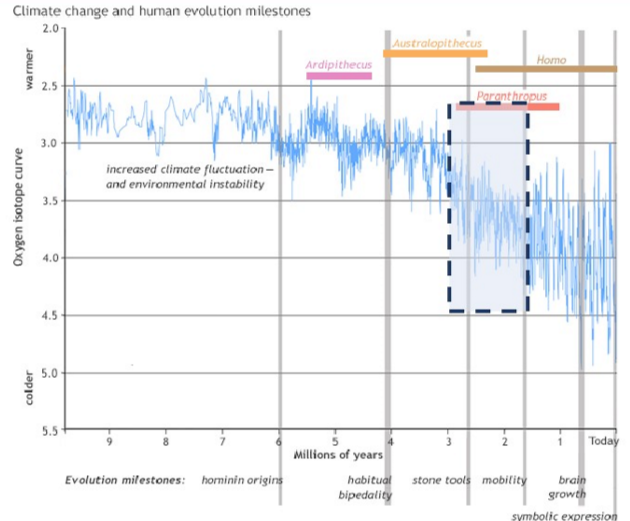
Global cooling and drying continues
Environmental fluctuations increase in frequency and amplitude
11
Outline the variability selection hypothesis
Form of natural selection that explains adaptation as a response to dramatically increased variability in the environment
Evident in the gene pool and adaptations of an organism over time
Organisms that can cope with widely varying conditions have a better chance of surviving novel and unpredictable environments
Australopiths inhabit 'mosaics' of wooded and open environments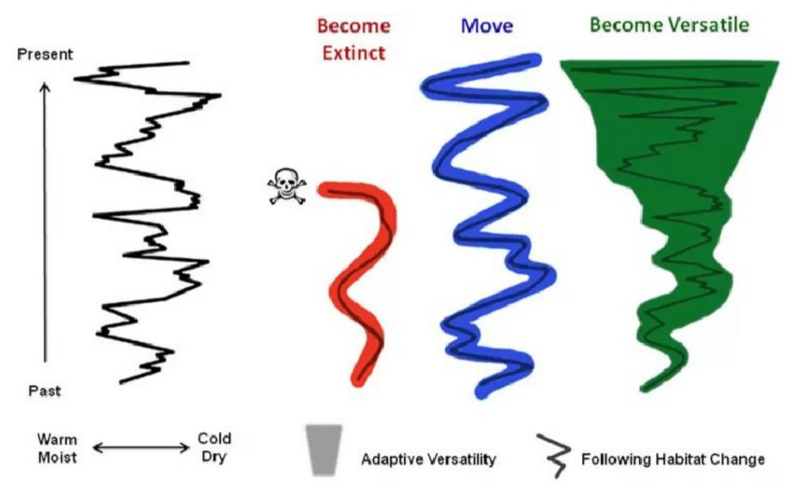
Evident in the gene pool and adaptations of an organism over time
Organisms that can cope with widely varying conditions have a better chance of surviving novel and unpredictable environments
Australopiths inhabit 'mosaics' of wooded and open environments
12
What do ratio of C13 to C12 isotopes in bones and teeth show?
Shows which kind of plants animals consume
BUT not which part of plant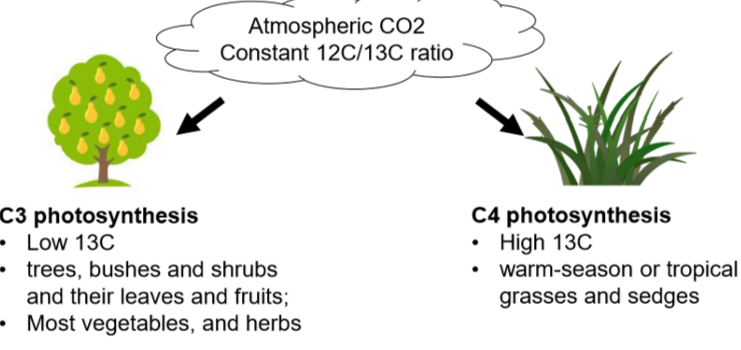
BUT not which part of plant
13
Factfile: first stone tools
Cores and flakes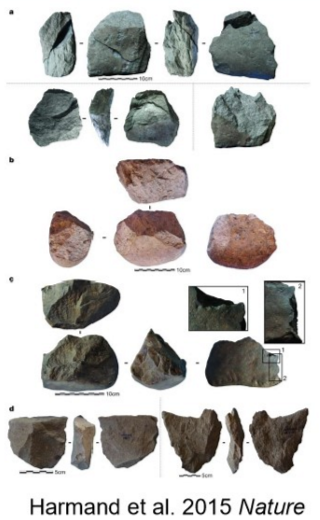
14
Factfile: first cut marks
Presumable scavenged (bone marks)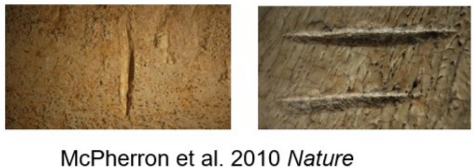
15
Outline 2 different adaptations to the change in environment during the Plio-Pleistocene epoch
Produced 2 genuses: Homo and Paranthropus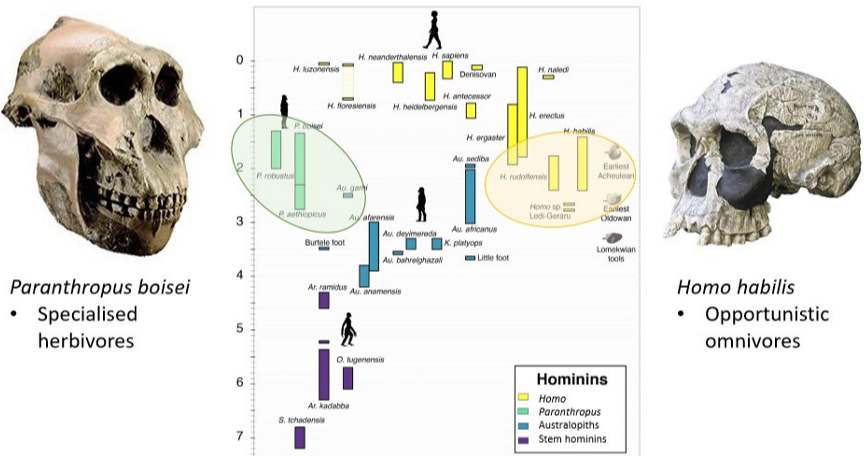
16
State the 3 species of Paranthropus
P. aethiopicus
P. robustus
P. boisei
P. robustus
P. boisei
17
Age order and sites of the Paranthropus species
aethiopicus - oldest - east Africa
robustus - South Africa
boisei - most recent - east Africa
robustus - South Africa
boisei - most recent - east Africa
18
Paranthropus general characteristics
Body similar to Australopithecus - lower limbs adapted to bipedalism, upper limbs adapted to climbing
Highly robust crania with prominent crests for muscle attachment
Large cheek teeth with thick enamel
Very large and robust mandible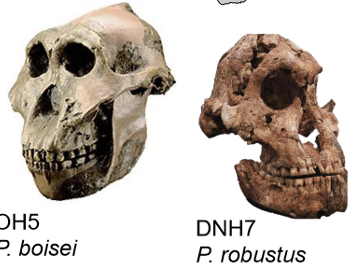
Highly robust crania with prominent crests for muscle attachment
Large cheek teeth with thick enamel
Very large and robust mandible
19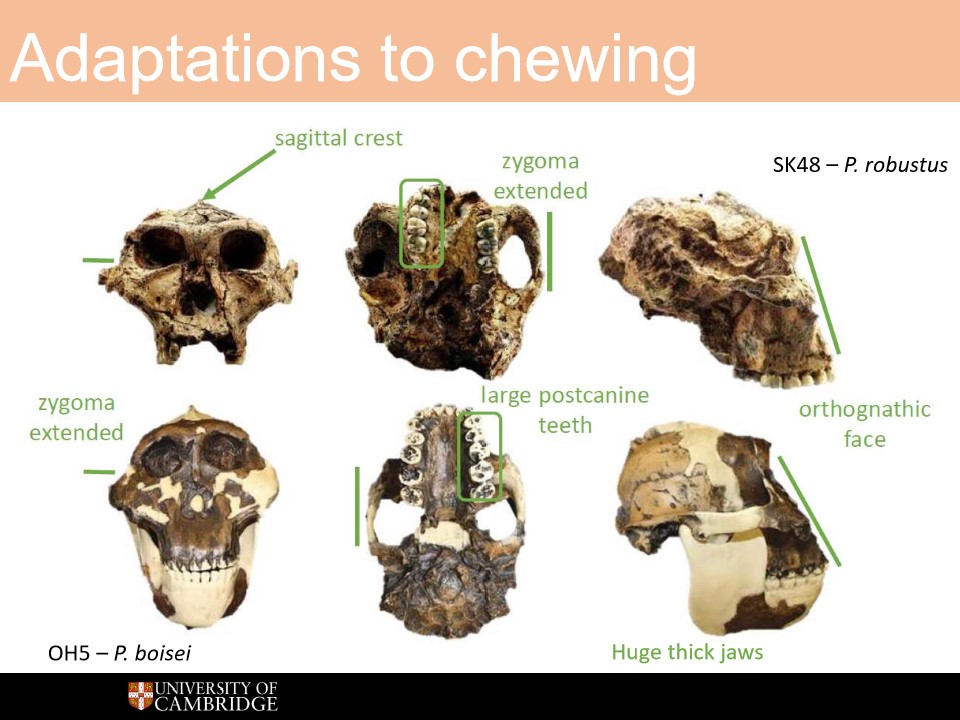
Image occlusion: name the hidden labels
20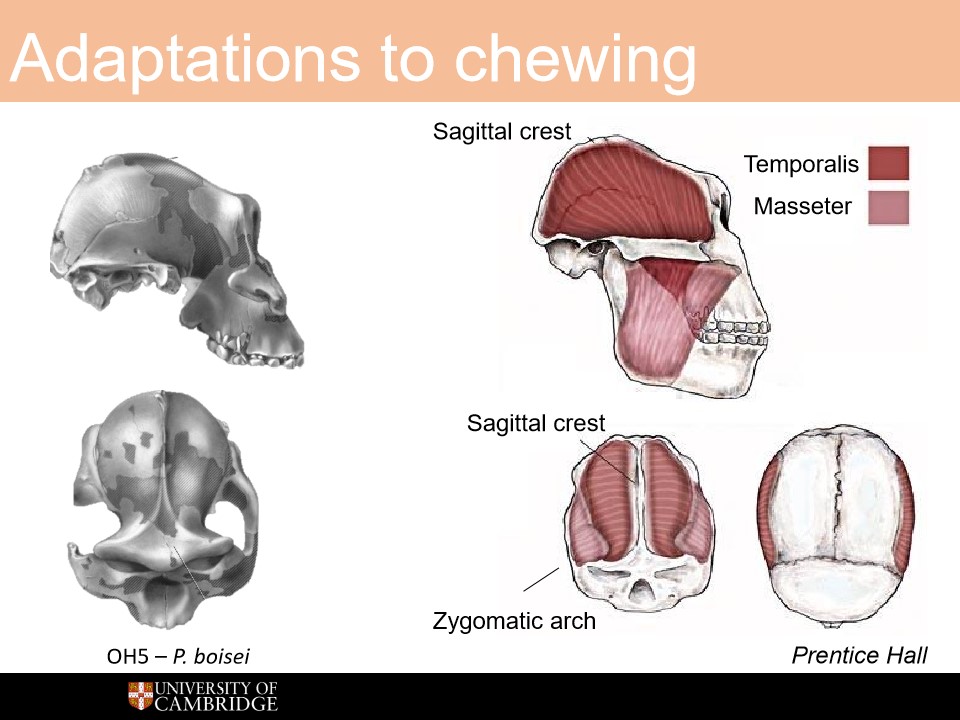
Image occlusion: name the hidden labels
21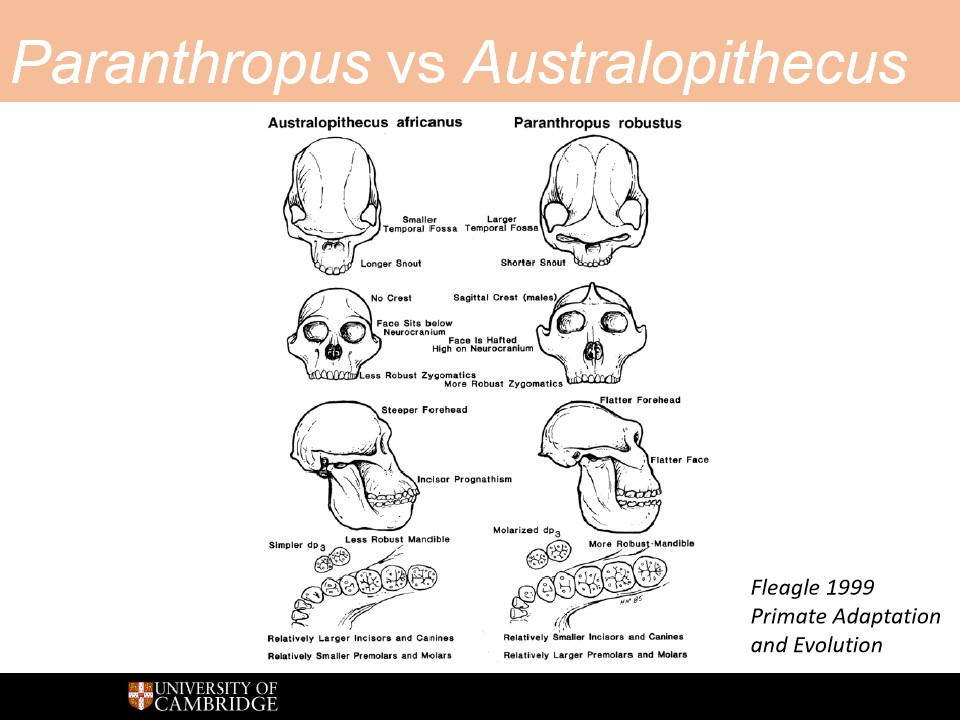
Image occlusion: name the hidden labels
22
Paranthropus aethiopicus distinctive features
Strongle prognathic face
Large (megadont) cheek teeth
Posterior sagittal crest
Small brain
Other aspects resemble A. afarensis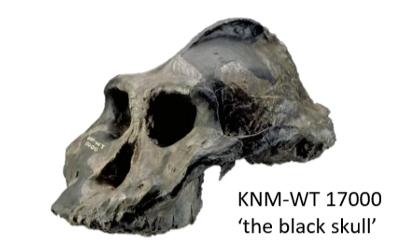
Large (megadont) cheek teeth
Posterior sagittal crest
Small brain
Other aspects resemble A. afarensis
23
Paranthropus robustus distinctive features
Flat face
Small front teeth
Large cheek teeth
Anterior sagittal crest
Bone tools to dig for termites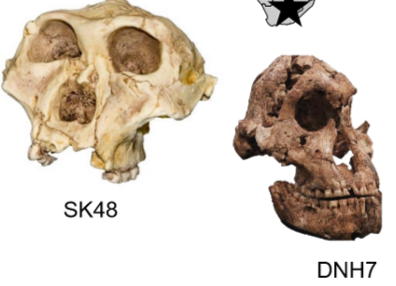
Small front teeth
Large cheek teeth
Anterior sagittal crest
Bone tools to dig for termites
24
Paranthropus boisei distinctive features
Very flat face
Most robust of all Paranthropus with largest teeth
Thickest enamel of all hominins
Slight evolutionary increase in brain size
Anterior foramen magnum suggests habitual posture similar to premodern Homo and modern humans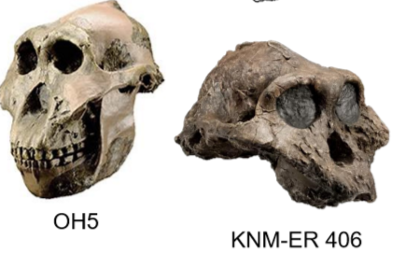
Most robust of all Paranthropus with largest teeth
Thickest enamel of all hominins
Slight evolutionary increase in brain size
Anterior foramen magnum suggests habitual posture similar to premodern Homo and modern humans
25
Describe the sexual dimorphism that has been observed in Paranthropus boisei
Males larger than females
26
Several similarities between Paranthropus boisei and which other species?
A. afarensis
BUT no evidence of direct phyletic link
BUT no evidence of direct phyletic link
27
What does evidence suggest about the habitats of Paranthropus boisei
Exploited open habitats
28
What do Paranthropus boisei hand fossils indicate?
Capability of modern human-like precision grip
29
Describe the dental morphology of Paranthropus boisei
Small incisors and canines (diet doesn't require significant amount of incisal preparation - leaves / berries)
Large postcanine teeth
Enamel described as 'hyper thick' (resist wear and protect from cracking under high occlusal loads)
Microwear and larger jaw muscles indicate diet of small, hard objects
Large postcanine teeth
Enamel described as 'hyper thick' (resist wear and protect from cracking under high occlusal loads)
Microwear and larger jaw muscles indicate diet of small, hard objects
30
What is one of the limitations for microwear evidence in Paranthropus boisei?
Very little evidence
Fossils discovered by the surface so microwear also caused by:
- Erosion
- Weathering
- Trampling
Fossils discovered by the surface so microwear also caused by:
- Erosion
- Weathering
- Trampling
31
Postcranium features of Paranthropus
Mix of human and ape-like features very similar to Australopithecus
32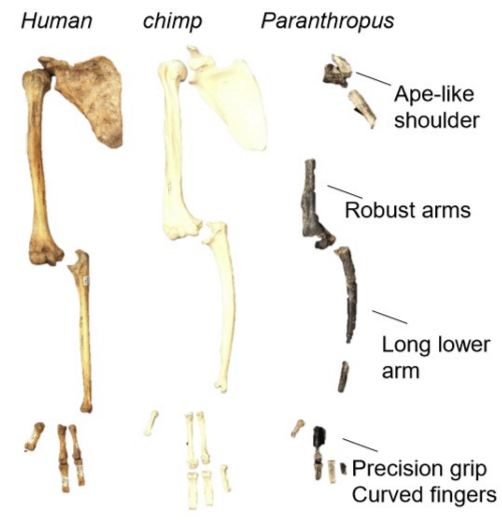
Image occlusion: name the hidden labels
33
Sexual dimorphism in Paranthropus
Males have crests, females don't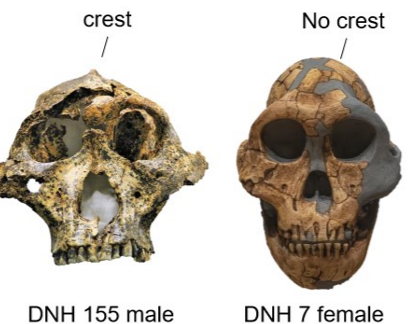
34
What do all Paranthropus share?
Same dental traits:
Reduced incisors and canines
Molarised premolars
Massive molars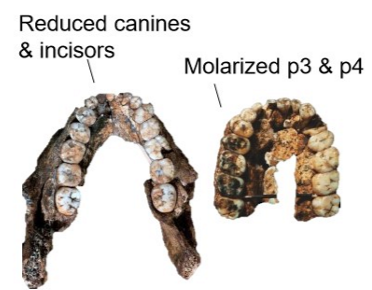
Reduced incisors and canines
Molarised premolars
Massive molars
35
Evidence for Paranthropus diet
Microwear - tooth damage by mastication indicated different diet across Paranthropus species despite morphological similarity
P. boisei: scratches indicative of diet consisting of neither hard/tough food (grass, sedges)
P. robustus: lots of pits suggest hard but not tough foods (fruit, nuts, seeds)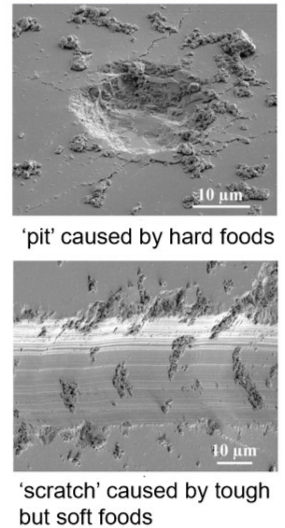
P. boisei: scratches indicative of diet consisting of neither hard/tough food (grass, sedges)
P. robustus: lots of pits suggest hard but not tough foods (fruit, nuts, seeds)
36
State the 2 competing hypotheses for Paranthropus evolution
Monophyly vs paraphyly
37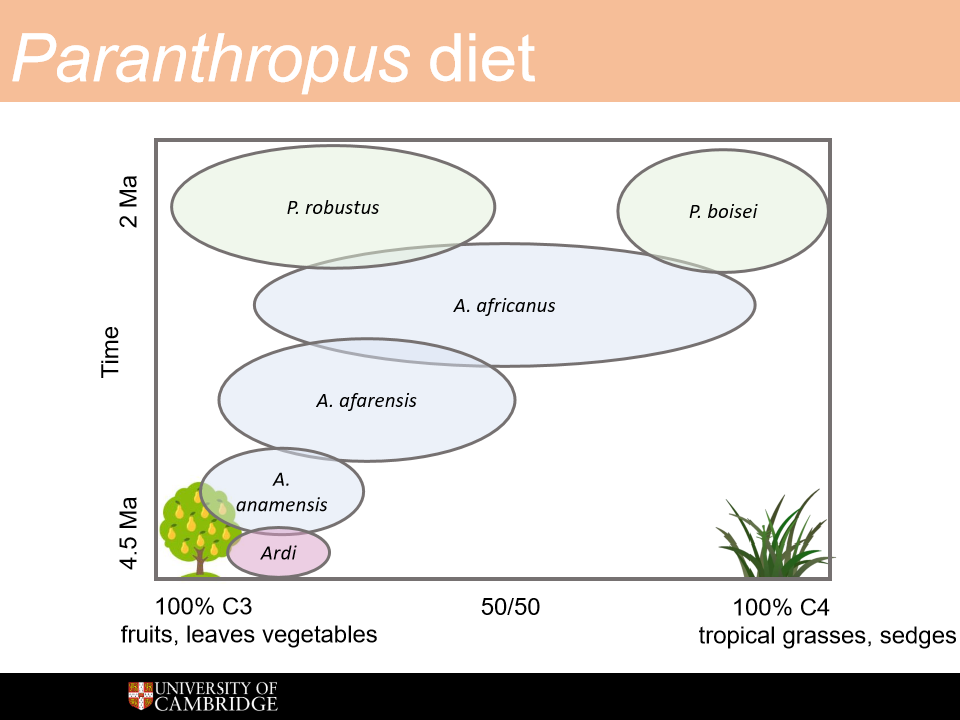
Image occlusion: name the hidden labels
38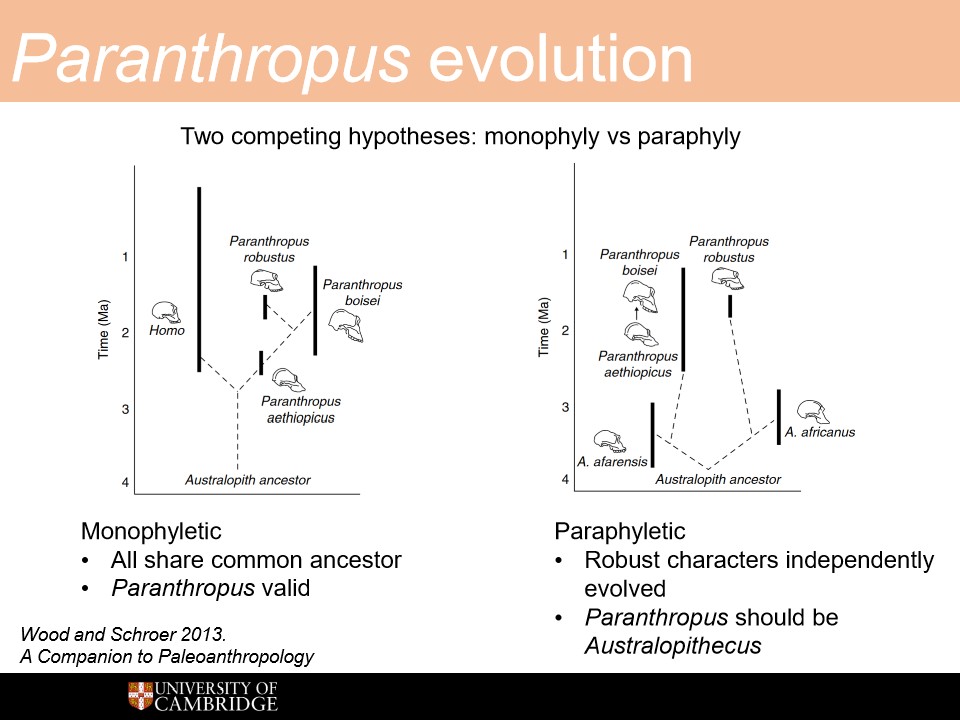
Image occlusion: name the hidden labels
39
Example of homoplasy
Convergent evolution in hominins and lemurs:
- Flat, shortened face
- Sagittal crest
- Broad zygomatic (cheek bone) arches
- Reduced front teeth
- Enlarged molars and premolars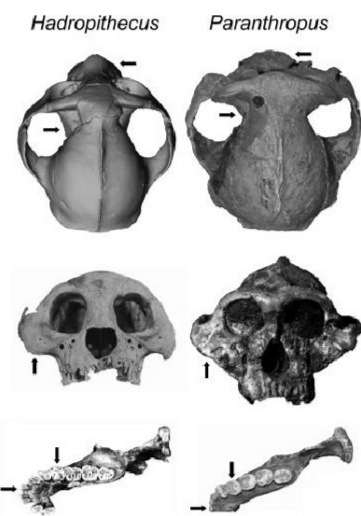
- Flat, shortened face
- Sagittal crest
- Broad zygomatic (cheek bone) arches
- Reduced front teeth
- Enlarged molars and premolars
40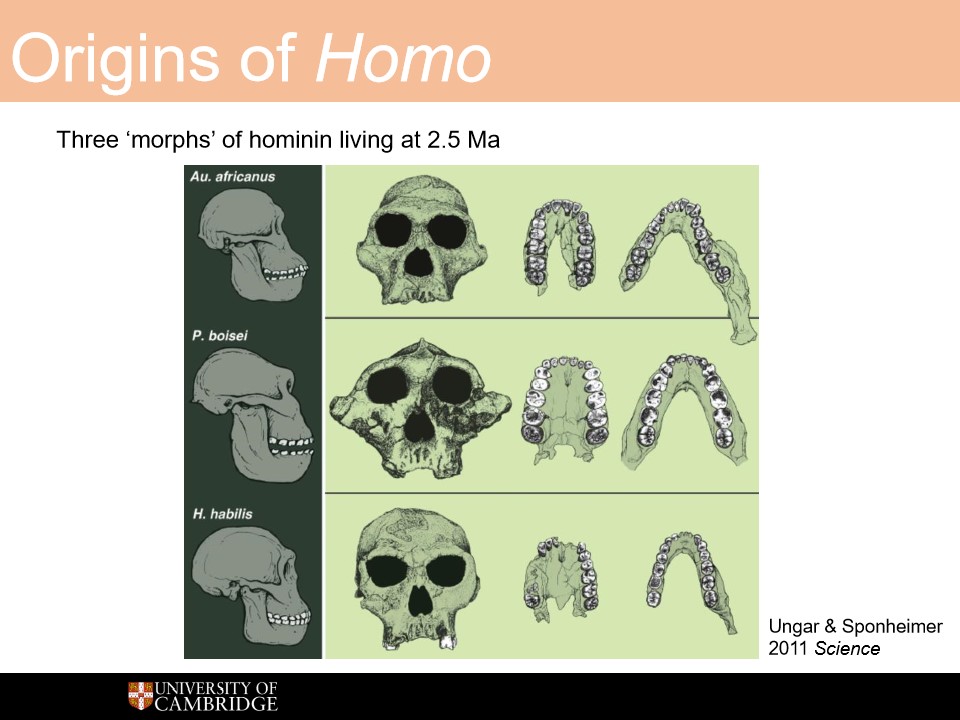
Image occlusion: name the hidden labels
41
State the 2 species of early Homo
H. habilis
H. rudolfensis
H. rudolfensis
42
Early Homo general features
Reduction in jaw and tooth size
More parabolic dental arch
Increased brain volume
Stone tools
Omnivory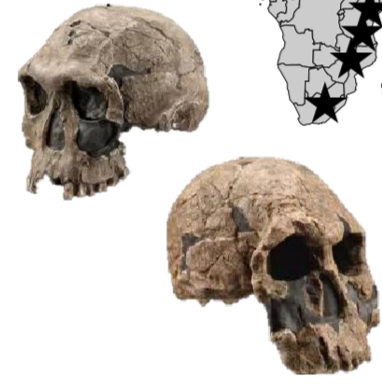
More parabolic dental arch
Increased brain volume
Stone tools
Omnivory
43
Age order and sites of Earliest Homo species
Homo sp: - oldest - east Africa
Homo habilis - east and South Africa
Homo rudolfensis - most recent - east Africa
Homo habilis - east and South Africa
Homo rudolfensis - most recent - east Africa
44
Homo sp: (don't know species) distinctive features
Reduction in tooth size relative to Austraslopithecus
Human-like parabolic dental arch
Primitive sloping chin resembles Australopithecus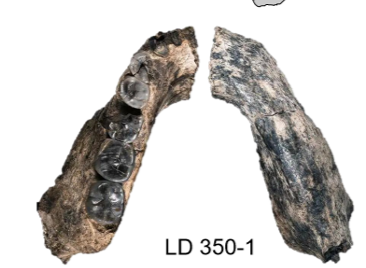
Human-like parabolic dental arch
Primitive sloping chin resembles Australopithecus
45
Homo habilis distinctive features
Long arms and short legs similar to Australopithecus
Small brain (500cc) but slightly larger than Australopithecus
Moderate prognathism
Brow ridges
Small teeth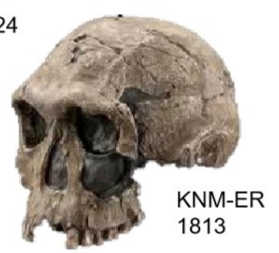
Small brain (500cc) but slightly larger than Australopithecus
Moderate prognathism
Brow ridges
Small teeth
46
Homo rudolfensis distinctive features
Large brain (750cc)
Large molars
Wide, flat face
Square mouth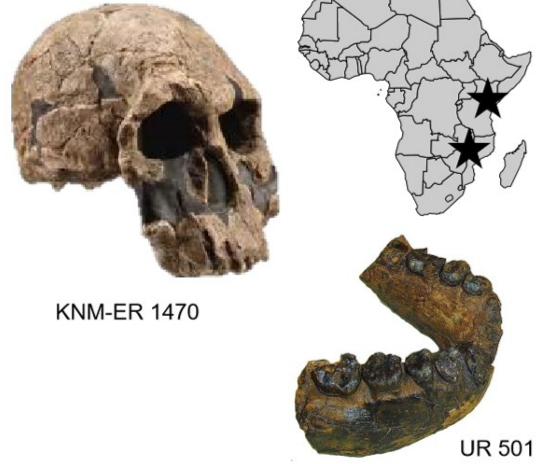
Large molars
Wide, flat face
Square mouth
47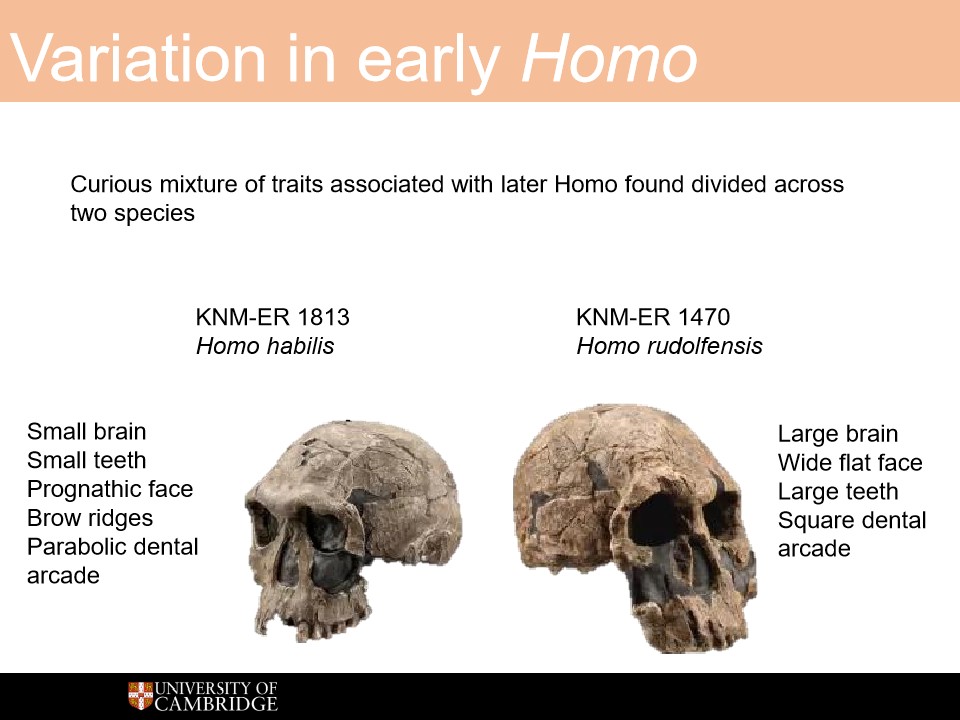
Image occlusion: name the hidden labels
48
State the 3 candidates for the direct ancestor of the genus Homo
Australopithecus garhi
Australopithecus africanus
Australopithecus afarensis
Australopithecus africanus
Australopithecus afarensis
49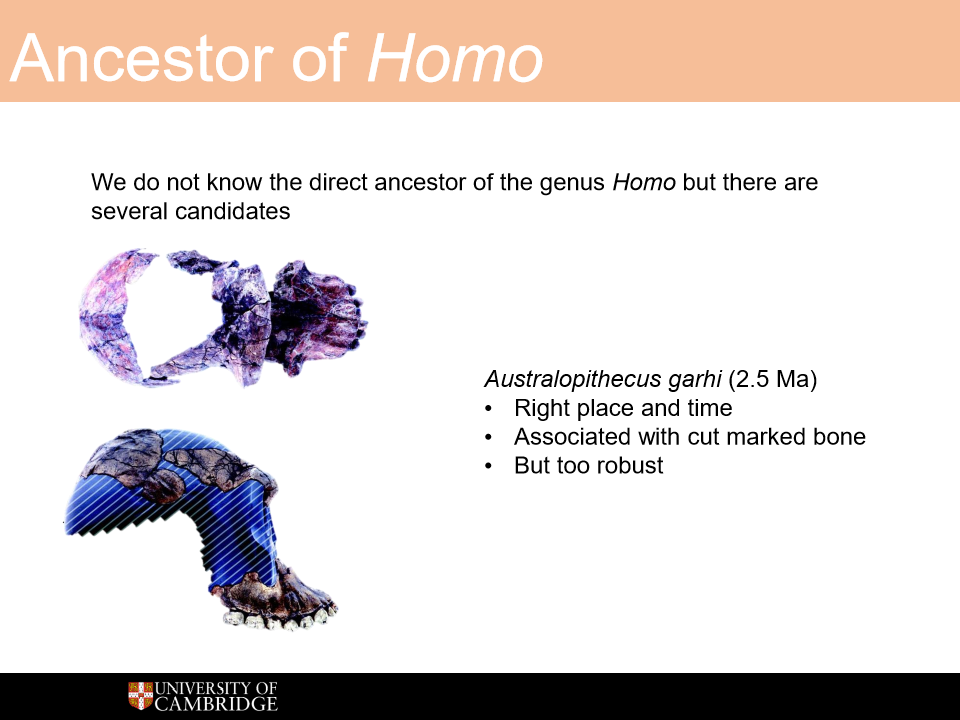
Image occlusion: name the hidden labels
50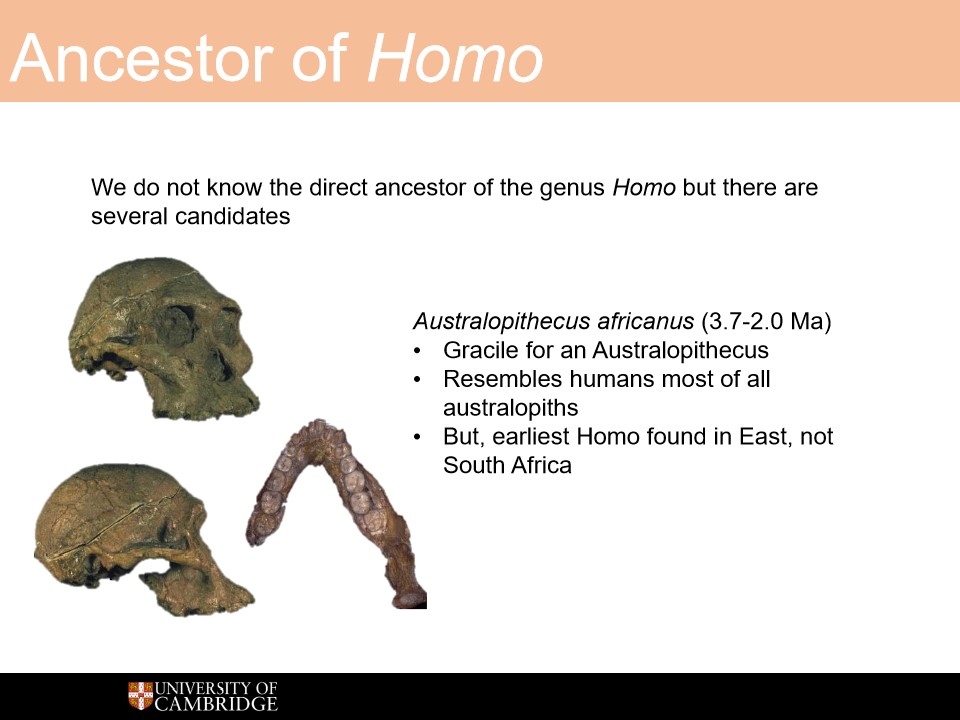
Image occlusion: name the hidden labels
51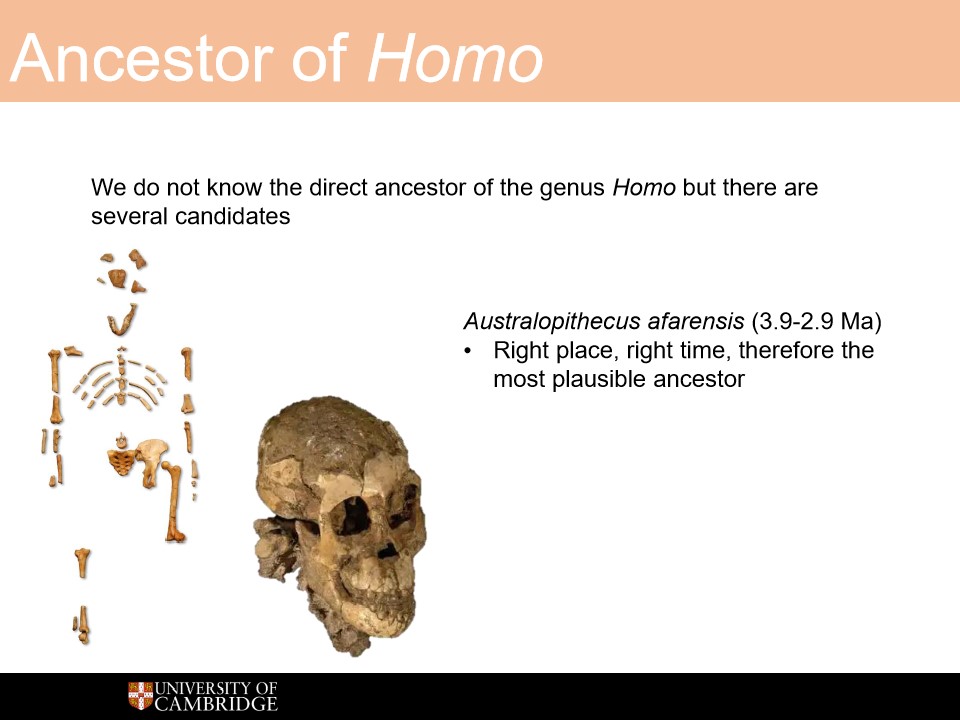
Image occlusion: name the hidden labels
52
Image occlusion: name the hidden labels
53
Image occlusion: name the hidden labels
54
What did the discovery of Sahelanthropus tchandensis reinforce?
This species showed no temporal/spatial overlap with other hominins
Reinforced theory that only 1 hominin species existed in a region at a given time >3 Ma
Reinforced theory that only 1 hominin species existed in a region at a given time >3 Ma
55
3 limitations of making conclusion about early hominins
- Each taxon only has a small number of specimens
- Detailed comparative analysis impossible
- Variation cannot be quantified (weakens statements about differences between samples)
- Detailed comparative analysis impossible
- Variation cannot be quantified (weakens statements about differences between samples)
56
State the driving force behind origin, extinction and adaptive events of human lineage
Environmental and climatic change
57
What does hominin fossil evidence suggest about coexistence?
Suggests multiple hominin taxa coexisted during the Pleistocene
Clear evidence that Au. afarensis coexisted with at least one other hominin species
Clear evidence that Au. afarensis coexisted with at least one other hominin species
58
Outline the difference between broad and direct sympatry
Broad sympatry = 2 or more species occurring over the same region
Direct symaptry = co-occurrence of 2 or more species in the same immediate area
Direct symaptry = co-occurrence of 2 or more species in the same immediate area
59
Which 2 species appear to have been living in direct sympatry with each other?
Au. afarensis
Au. deyiremeda
Au. deyiremeda
60
Name 3 factors that can impact taxonomic diversity and coexistence of sympatric species
Foraging strategies
Type and quantity of resources
Predation pressure
Type and quantity of resources
Predation pressure