Prenatal Craniofacial Development - 10
Study these flashcardsFree · spaced repetition · iPhone, Android, Mac & web
All cards
1
Birth Defects Involving the Pharyngeal Apparatus
•
•
•
•
•
•
•
•
•
•
•
•
•
•
Birth Defects Involving the Pharyngeal Apparatus
• 22q11 Deletion syndrome
• Treacher Collins syndrome
• (Pierre) Robin sequence (syndrome)
• Goldenhar syndrome
• Branchial Fistulas and Lateral Cervical Cyst
• Thyroglossal Cyst and Fistula
• Tongue Tie (Ankyloglossia)
• 22q11 Deletion syndrome
• Treacher Collins syndrome
• (Pierre) Robin sequence (syndrome)
• Goldenhar syndrome
• Branchial Fistulas and Lateral Cervical Cyst
• Thyroglossal Cyst and Fistula
• Tongue Tie (Ankyloglossia)
2
: a group of abnormalities occurring together
Syndrome: a group of abnormalities occurring together
3
22q11 (.2) Deletion Syndrome is also called (broad definition)
22q11 (.2) Deletion Syndrome is also called DiGeorge syndrome (broad definition)
4
22q11 (.2) Deletion Syndrome is caused by
22q11 (.2) Deletion Syndrome is caused by 1.5 – 3 Mb of heterozygous deletion of chromosome 22q11.2
5
22q11 (.2) Deletion Syndrome occurs live births
22q11 (.2) Deletion Syndrome occurs 1 in ~3000 live births
6
What is the most common microdeletion syndrome?
22q11 (.2) Deletion Syndrome
7
22q11 (.2) Deletion Syndrome includes and .
22q11 (.2) Deletion Syndrome includes DiGeorge syndrome (DGS) and Velocardiofacial syndrome (VCFS).
8
22q11 (.2) Deletion Syndrome is characterized by of the pharyngeal apparatus
22q11 (.2) Deletion Syndrome is characterized by defects in multiple derivatives of the pharyngeal apparatus
9
Image occlusion: name the hidden labels
10
Image occlusion: name the hidden labels
11
Image occlusion: name the hidden labels
12
Image occlusion: name the hidden labels
13
Image occlusion: name the hidden labels
14
is a key etiologic gene
TBX1 (T-box 1) is a key etiologic gene
15
TBX1 (T-box 1) encodes a
TBX1 (T-box 1) encodes a transcription factor
16
TBX1 (T-box 1) is expressed in the - Ectoderm, endoderm and mesoderm (regulates neural crest-derived cells indirectly via intercellular signaling)
TBX1 (T-box 1) is expressed in the pharyngeal arches - Ectoderm, endoderm and mesoderm (regulates neural crest-derived cells indirectly via intercellular signaling)
17
22q11 (.2) Deletion Syndrome Craniofacial phenotypes
• Small (micrognathia), small , square
• Low-set , abnormally folded , abnormality
• defects (submucous or overt cleft, high arched palate, bifid uvula)
• Mostly explained by impaired development of the structures derived from the
• Small (micrognathia), small , square
• Low-set , abnormally folded , abnormality
• defects (submucous or overt cleft, high arched palate, bifid uvula)
• Mostly explained by impaired development of the structures derived from the
22q11 (.2) Deletion Syndrome Craniofacial phenotypes
• Small lower jaw(micrognathia), small mouth, square nasal tip
• Low-set ear, abnormally folded pinna, middle ear abnormality
• Palate defects (submucous or overt cleft, high arched palate, bifid uvula)
• Mostly explained by impaired development of the structures derived from the 1st and 2nd pharyngeal arches
• Small lower jaw(micrognathia), small mouth, square nasal tip
• Low-set ear, abnormally folded pinna, middle ear abnormality
• Palate defects (submucous or overt cleft, high arched palate, bifid uvula)
• Mostly explained by impaired development of the structures derived from the 1st and 2nd pharyngeal arches
18
22q11 (.2) Deletion Syndrome Cardiovascular phenotypes
• Abnormal – Interrupted , Aberrent
• Abnormal – Interrupted , Aberrent
22q11 (.2) Deletion Syndrome Cardiovascular phenotypes
• Abnormal great arteries – Interrupted Aortic Arch (IAA), Aberrent right subclavian artery (A-RSA)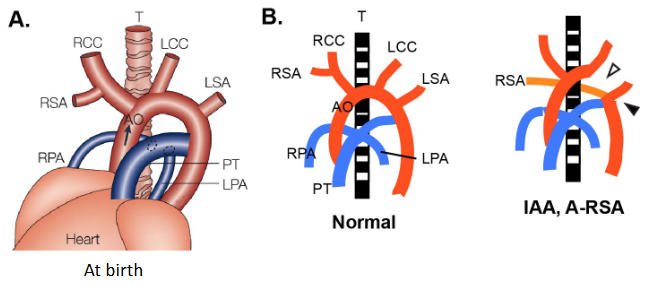
• Abnormal great arteries – Interrupted Aortic Arch (IAA), Aberrent right subclavian artery (A-RSA)
19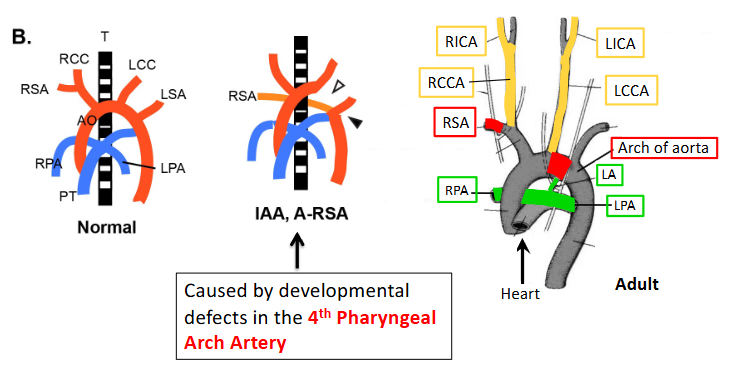
Image occlusion: name the hidden labels
20
Image occlusion: name the hidden labels
21
Image occlusion: name the hidden labels
22
22q11 (.2) Deletion Syndrome Cardiovascular phenotypes
• Heart Defects – ,
• Heart Defects – ,
22q11 (.2) Deletion Syndrome Cardiovascular phenotypes
• Heart Defects – Persistent truncus arteriosus (PTA), Transposition of the great arteries (TGA)
• Heart Defects – Persistent truncus arteriosus (PTA), Transposition of the great arteries (TGA)
23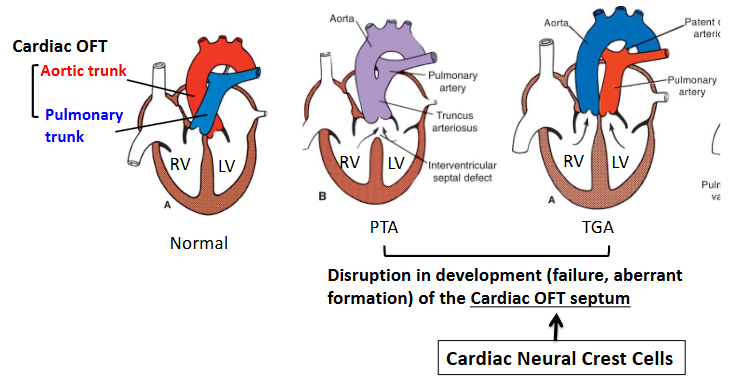
Image occlusion: name the hidden labels
24
Image occlusion: name the hidden labels
25
Image occlusion: name the hidden labels
26
Image occlusion: name the hidden labels
27
Image occlusion: name the hidden labels
28
Image occlusion: name the hidden labels
29
Image occlusion: name the hidden labels
30
Image occlusion: name the hidden labels
31
Image occlusion: name the hidden labels
32
Image occlusion: name the hidden labels
33
Image occlusion: name the hidden labels
34
Image occlusion: name the hidden labels
35
Image occlusion: name the hidden labels
36
Image occlusion: name the hidden labels
37
22q11 (.2) Deletion Syndrome deficiency in the pharyngeal glands
• (low serum calcium levels. Might cause seizures)
- Lack of due to impaired/failed development of
the
• (recurrent ear and respiratory infections)
- Lack of, or impaired function of, due to impaired development
of the
• (low serum calcium levels. Might cause seizures)
- Lack of due to impaired/failed development of
the
• (recurrent ear and respiratory infections)
- Lack of, or impaired function of, due to impaired development
of the
22q11 (.2) Deletion Syndrome deficiency in the pharyngeal glands
• Hypocalcemia (low serum calcium levels. Might cause seizures)
- Lack of parathyroid hormone due to impaired/failed development of
the parathyroid glands
• Immunodeficiency (recurrent ear and respiratory infections)
- Lack of, or impaired function of, T cells due to impaired development
of the thymus glands
• Hypocalcemia (low serum calcium levels. Might cause seizures)
- Lack of parathyroid hormone due to impaired/failed development of
the parathyroid glands
• Immunodeficiency (recurrent ear and respiratory infections)
- Lack of, or impaired function of, T cells due to impaired development
of the thymus glands
38
22q11 (.2) Deletion Syndrome deficiency in the pharyngeal glands is caused by developmental defects in the
22q11 (.2) Deletion Syndrome deficiency in the pharyngeal glands is caused by developmental defects in the 3rd Pharyngeal Pouch
39
Treacher Collins Syndrome is also called
Treacher Collins Syndrome is also called Mandibulofacial Dysostosis
40
Treacher Collins Syndrome occurs births
Treacher Collins Syndrome occurs 1 in ~10,000 births
41
Treacher Collins Syndrome is categorized as disorder of (mostly )
Treacher Collins Syndrome is categorized as disorder of Craniofacial development (mostly 1st pharyngeal arch)
42
Treacher Collins Syndrome characteristics include
• , , and
• ,
• and other deformity of the ,
• , , and
• ,
• and other deformity of the ,
Treacher Collins Syndrome characteristics include
• Micrognathia, hypoplastic zygomatic arches, macrostomia (wide mouth) and cleft palate
• Slanted eyes, Lower eyelid coloboma
• Microtia and other deformity of the ears, Deafness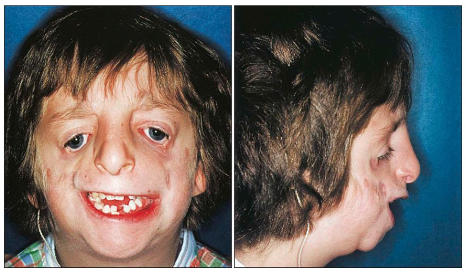
• Micrognathia, hypoplastic zygomatic arches, macrostomia (wide mouth) and cleft palate
• Slanted eyes, Lower eyelid coloboma
• Microtia and other deformity of the ears, Deafness
43
Treacher Collins Syndrome is caused by mutation in , encoding a protein ‘ '
Treacher Collins Syndrome is caused by heterozygous mutation in TCOF1, encoding a protein ‘treacle'
44
Treacle is involved in making
Treacle is involved in making ribosomes (rRNA production)
45
TCOF1 is expressed in the and
TCOF1 is expressed in the neuroepithelium and neural crest cells
46
TCOF1 haplo-insufficiency leads to due to increased cell death and decreased cell proliferation
TCOF1 haplo-insufficiency leads to deficiency in neural crest cells due to increased cell death and decreased cell proliferation
47
: one cause leading to a chain of developmental malformation
Sequence: one cause leading to a chain of developmental malformation
48
(Pierre) Robin Sequence (Syndrome) occurs in births
(Pierre) Robin Sequence (Syndrome) occurs in 1 in ~8500 births
49
(Pierre) Robin Sequence (Syndrome) is characterized as disorder of (mostly )
(Pierre) Robin Sequence (Syndrome) is characterized as disorder of Craniofacial development (mostly 1st pharyngeal arch)
50
(Pierre) Robin Sequence (Syndrome) characteristics include
• (small lower jaw), (downward displacement or retraction of the tongue),
• obstruction -> distress. difficulties
• Many implicated, including
• (small lower jaw), (downward displacement or retraction of the tongue),
• obstruction -> distress. difficulties
• Many implicated, including
(Pierre) Robin Sequence (Syndrome) characteristics include
• Micrognathia (small lower jaw), Glossoptosis (downward displacement or retraction of the tongue), Cleft secondary palate
• Upper airway obstruction -> respiratory distress. Feeding difficulties
• Many genes implicated, including SOX9
• Micrognathia (small lower jaw), Glossoptosis (downward displacement or retraction of the tongue), Cleft secondary palate
• Upper airway obstruction -> respiratory distress. Feeding difficulties
• Many genes implicated, including SOX9
51
Syndrome = Oculoauriculovertebral spectrum, Hemifacial microsomia
Goldenhar Syndrome = Oculoauriculovertebral spectrum, Hemifacial microsomia
52
Goldenhar Syndrome occurs in births
Goldenhar Syndrome occurs in 1 in ~25,000 births
53
characteristics include
• Under-development of the ( ), , , and usually on side
• Abnormal development of the pharyngeal arches
• May be accompanied by defects in other organs (heart, kidney, lung, brain, vertebrae …)
• Multifactorial etiology – chromosomal anomalies, gene mutations, twin pregnancy, maternal diabetes
• Under-development of the ( ), , , and usually on side
• Abnormal development of the pharyngeal arches
• May be accompanied by defects in other organs (heart, kidney, lung, brain, vertebrae …)
• Multifactorial etiology – chromosomal anomalies, gene mutations, twin pregnancy, maternal diabetes
Goldenhar Syndrome characteristics include
• Under-development of the oral-facial area (zygomatic arch, palate, mandible, lips), nose, eye, ear and vertebrae usually on one side
• Abnormal development of the 1st and 2nd pharyngeal arches
• May be accompanied by defects in other organs (heart, kidney, lung, brain, vertebrae …)
• Multifactorial etiology – chromosomal anomalies, gene mutations, twin pregnancy, maternal diabetes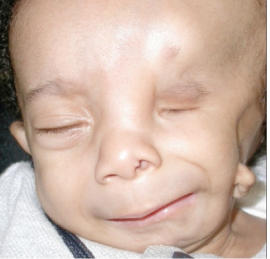
• Under-development of the oral-facial area (zygomatic arch, palate, mandible, lips), nose, eye, ear and vertebrae usually on one side
• Abnormal development of the 1st and 2nd pharyngeal arches
• May be accompanied by defects in other organs (heart, kidney, lung, brain, vertebrae …)
• Multifactorial etiology – chromosomal anomalies, gene mutations, twin pregnancy, maternal diabetes
54
Branchial Fistulas and Lateral Cervical Cyst is the aberrant development of the
Branchial Fistulas and Lateral Cervical Cyst is the aberrant development of the Pharyngeal Clefts
55
Normally, 2nd, 3rd, 4th pharyngeal clefts are covered up by the 2nd pharyngeal arch, become , and then
Normally, 2nd, 3rd, 4th pharyngeal clefts are covered up by the 2nd pharyngeal arch, become cervical sinus, and then disappear
56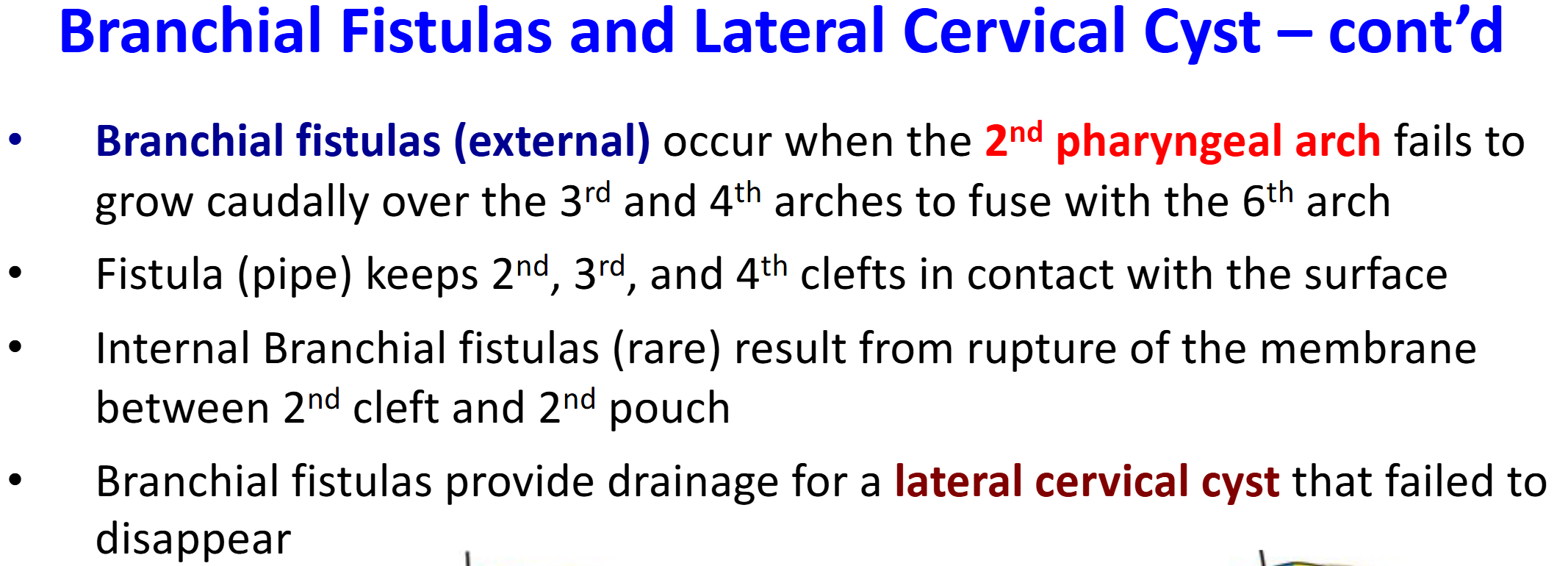
Image occlusion: name the hidden labels
57
Image occlusion: name the hidden labels
58
Image occlusion: name the hidden labels
59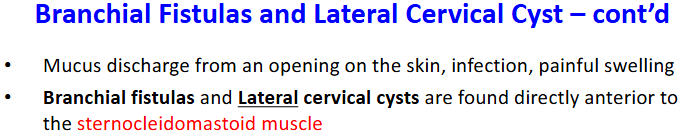
Image occlusion: name the hidden labels
60
Image occlusion: name the hidden labels
61
Image occlusion: name the hidden labels
62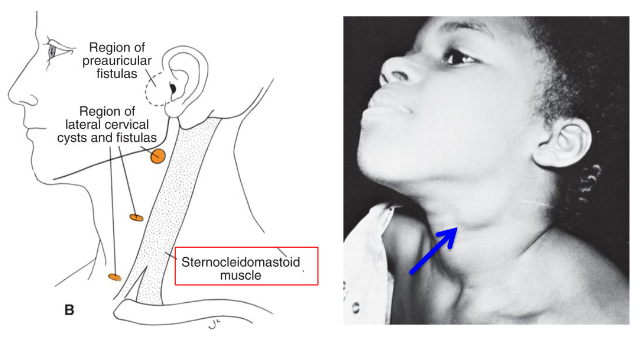
Image occlusion: name the hidden labels
63
Thyroglossal Cyst and Fistula
• During migration of the thyroid gland from the foramen cecum, a forms connecting the two ( )
• Thyroglossal duct normally . If not, -->
• Thyroglossal cysts can , creating a connecting to outside
• During migration of the thyroid gland from the foramen cecum, a forms connecting the two ( )
• Thyroglossal duct normally . If not, -->
• Thyroglossal cysts can , creating a connecting to outside
Thyroglossal Cyst and Fistula
• During migration of the thyroid gland from the foramen cecum, a canal forms connecting the two (thyroglossal duct)
• Thyroglossal duct normally disappears. If not, --> Thyroglossal cysts
• Thyroglossal cysts can rupture, creating a fistula connecting to outside
• During migration of the thyroid gland from the foramen cecum, a canal forms connecting the two (thyroglossal duct)
• Thyroglossal duct normally disappears. If not, --> Thyroglossal cysts
• Thyroglossal cysts can rupture, creating a fistula connecting to outside
64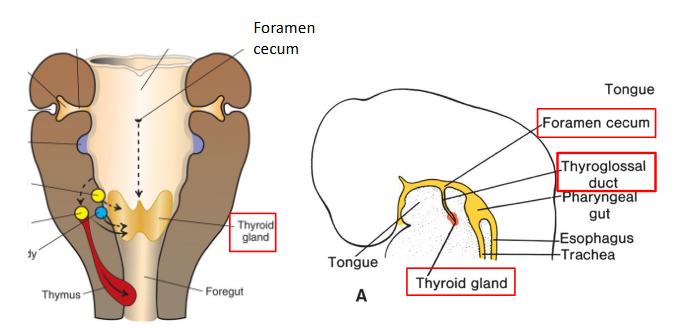
Image occlusion: name the hidden labels
65
Image occlusion: name the hidden labels
66
Image occlusion: name the hidden labels
67
Image occlusion: name the hidden labels
68
Image occlusion: name the hidden labels
69
Image occlusion: name the hidden labels
70
Image occlusion: name the hidden labels
71
Image occlusion: name the hidden labels
72
Image occlusion: name the hidden labels
73
Image occlusion: name the hidden labels
74
Image occlusion: name the hidden labels
75
Thyroglossal Cyst and Fistula can lead to , ,
Thyroglossal Cyst and Fistula can lead to mucus discharge, infection, painful swelling
76
Thyroglossal cysts may lie at any point along the of the
Thyroglossal cysts may lie at any point along the migratory path of the thyroid gland
77
Thyroglossal Cyst and Fistula are always close to the
Thyroglossal Cyst and Fistula are always close to the midline
78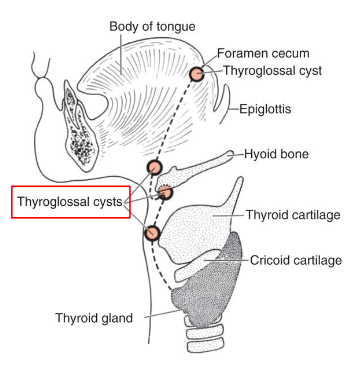
Image occlusion: name the hidden labels
79
Image occlusion: name the hidden labels
80
Image occlusion: name the hidden labels
81
Image occlusion: name the hidden labels
82
Image occlusion: name the hidden labels
83
Image occlusion: name the hidden labels
84
Image occlusion: name the hidden labels
85
Image occlusion: name the hidden labels
86
Image occlusion: name the hidden labels
87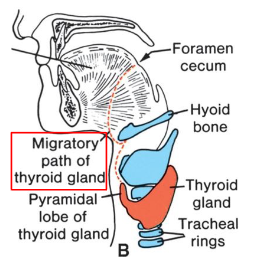
Image occlusion: name the hidden labels
88
Image occlusion: name the hidden labels
89
Image occlusion: name the hidden labels
90
Image occlusion: name the hidden labels
91
Image occlusion: name the hidden labels
92
Image occlusion: name the hidden labels
93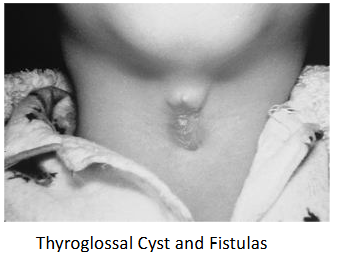
Image occlusion: name the hidden labels
94
Tongue Tie (Ankyloglossia) affects ,
Tongue Tie (Ankyloglossia) affects feeding, speech
95
The condition in which the tongue is not freed from the floor of the mouth due to the frenulum at the tip of the tongue is called
Tongue Tie (Ankyloglossia)
96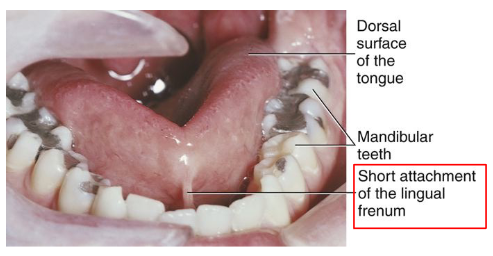
Image occlusion: name the hidden labels
97
Image occlusion: name the hidden labels
98
Image occlusion: name the hidden labels