All cards
1
to arise
survenir, surgir, émerger
2
When and where did the Celtic Revival arose?
in the nineteenth century in Ireland and Britain.
3
Why did the Celtic Revival arose?
as a result of archeological discoveries of Iron age objects. And due to a new consciousness of national identity. And a desire to return to a more localised and vernacular society.
4
search for, sought
rechercher, recherché
5
a mouthpiece
un porte-parole, un organe diffusion
6
Which movements did the Celtic Revival overlapped and influenced?
Particularly Art Nouveau and Arts and Crafts, and Glasgow style for the celtic symbols.
7
to revive
faire renaitre
8
to survey
faire un levé, un plan
9
prominent
éminent
10
an array of ...
une série de ...
11
What were the main caracteristic of the Celtic Revival?
- Archeological discoveries of Iron age objects
- As Art Nouveau, the Celtic Revival was crossing the disciplines
- Used to inforce the cultural identity of Scotland
- An art against modernity and industrialisation
- As Art Nouveau, the Celtic Revival was crossing the disciplines
- Used to inforce the cultural identity of Scotland
- An art against modernity and industrialisation
12
pattern
motif, modèle, schéma
13
zeitgeist
esprit du temps
14
a (zeitgeist..) sensor
un capteur
15
putty
mastic
16
The Glasgow Four are ...?
Two couples ;
- Mackintosh
- Herbert MacNair
- Frances
- and Margaret MacDonald
- Mackintosh
- Herbert MacNair
- Frances
- and Margaret MacDonald
17
readily
facilement, aisément, rapidement
18
The Vienna Secession exhibition was in ...?
1900
19
comprise
comprendre, comporter, constituer
20
to straddle
chevaucher, enjamber
21
ruthless
impitoyable
22
to draw from
puiser de
23
everpresent
omniprésent
24
entranced
fasciné
25
to take its toll
avoir de lourdes conséquences
26
to bequeath, a bequest
léguer, un leg
27
eerie
étrange, inquiétant, sinistre
28
adrift
à la dérive
29
ground work
fondement
30
tin
étain
31
The Assyrian art
The city of Ashur in the late bronze age. Assyria is considered the 1st true empire.
32
In what form was the library of Ashurbanipal?
In the form of clay tablets, inscribed with cuneiform in the languages of Akkadian and Sumerian.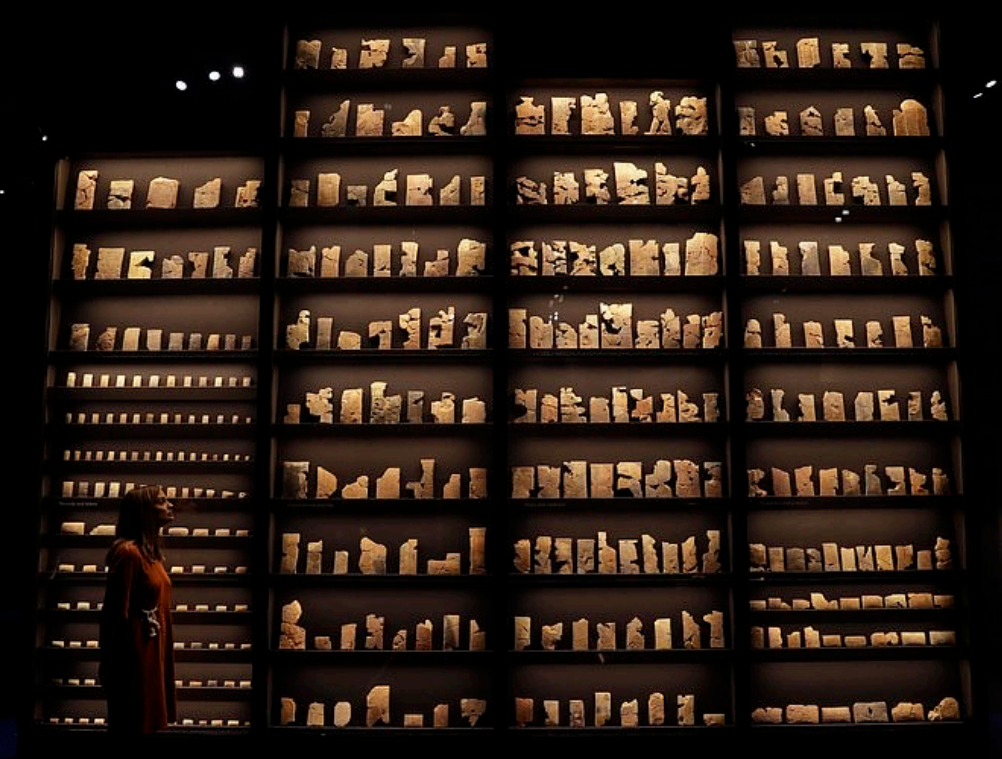
33
appaling
affreux, effroyable
34
to behead
décapiter
35
to skin, to flay
écorcher
36
to grind
broyer
37
might
puissance
38
a paper-pusher
un gratte papier
39
intricate
complexe
40
remote
distant
41
to loom
plâner
42
a sinew
artère
43
unsettling
troublant, déconcertant
44
utterly/ utter
complètement/ total, absolu
45
relentless
incessant
46
to urge
inciter
47
Lamassu
un génie protecteur de la mythologie mésopotamienne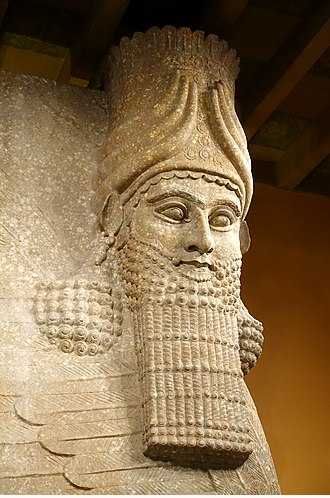
48
fearsome
redoutable, terrible
49
mayhem
pagaille, bazar
50
ringlets
bouclettes
51
at bay
à distance
52
solace
réconfort, consolation
53
to deceive, to cheat
tromper
54
to rot, to decompose
pourrir, se décomposer
55
belongings
les biens de quelqu'un
56
to strut
frimer, se pavaner
57
in reverence
en recueillement
58
prick
con, connard
59
dispel, get rid of
dissiper
60
spools
bobines
61
a shed
un hangar, une remise
62
stanza
strophe
63
slender
mince, élancé
64
souple
lithe
65
lumpy
en surpoids
66
rotund, plump
rond
67
to be shrouded
être entouré de
68
to conjecture, to hypothesize
supposer
69
to root around
fouiller
70
a rash
une série, une vague
71
misleading
trompeur
72
to lie
résider, se trouver
73
seemingly
apparement
74
to discard
jeter qch
75
to ferry
transporter
76
to roam
vagabonder
77
to excavate
mettre à jour
78
bluntly
franchement
79
woven
tressé (object)
80
plaited
tressé (cheveux)
81
crosshatching
hachure croisée
82
the breadth
l'ampleur, la diversité
83
a moniker
un surnom
84
anachronistic
anachronique
85
to adorn, adorned
orner, orné
86
When and where was the first Stone Age statuette discovered, that launched the rash of venuses?
IN the 19th century, in 1864, in Dordogne.