ANS 2140L: Unit 1
Study these flashcardsFree · spaced repetition · iPhone, Android, Mac & web
First 300 of 395 cards
1
artery prefix
arteri
2
heart prefix
cardi
3
blood suffix
emia
4
red prefix
erythro
5
blood prefix
hemo
6
white prefix
leuko
7
vessel prefix
vaso
8
functions to carry nutrients to tissues and waste (urea, NH3/ammonia) from tissue for disposal
circulatory system
9
functions to return extracellular fluid to the veins and disease control
lymphatic system
10
these carry blood away from the heart, comprised of three coats/layers
arteries
11
protein that allows for greater elasticity of tissues, breaks down over time
elastin
12
main structural protein, provides strength to tissues and gives protection to more fragile structures like organs
makes up 25-30% of body protein and has triple helical structure
makes up 25-30% of body protein and has triple helical structure
collagen
13
artery - innermost layer, consists of a continuous layer of endothelial cells that line the lumen and a layer of supportive connective tissue
tunica intima
14
artery - middle layer, contains smooth muscle circularly arranged containing elastin, usually the thickest layer
tunica media
15
artery - outermost layer, connective tissue containing elastin and collagen
tunica adventitia (tunica extrema)
16
_______ arteries are thick walled and near the heart, have a high proportion of elastin (includes aorta and its major branches)
elastic (large)
17
________ arteries deliver blood to specific body organs, have high proportion of smooth muscle
muscular (distributing)
18
__________ are the smalles arteries, have lesser proportions of smooth muscle and elastin
arterioles
19
endothelial cells covered with a basement membrane, function in exchange of materials between the blood and tissues
capillaries
20
_________ capillaries have endothelial cells held together by tight junctions, found in most tissues, such as skeletal muscle
continuous
21
_________ capillaries have an endothelial cell layer containing numerous holes, resulting in porous capillaries that allow rapid absorption and filtration
located in kidneys and intestines
located in kidneys and intestines
fenestrated
22
_______ capillaries have an endothelial cell layer with numerous large intercellular gaps and an incomplete basement cell layer
allows for the exchange of larger molecules and materials such as red blood cells
located in spleen, liver, lymph nodes, bone marrow, and endocrine cells (places where cell production occurs)
allows for the exchange of larger molecules and materials such as red blood cells
located in spleen, liver, lymph nodes, bone marrow, and endocrine cells (places where cell production occurs)
sinusoidal
23
blood vessels that carry blood back to the heart, comprised of 3 layers with little smooth muscle and elastin and are thin-walled
veins
24
type of vein - much like capillaries but of larger diameter
venules
25
smooth muscle circularly arranged, more collagen, less elastin
veins
26
extracellular fluid which is returned to the blood
returned to the heart by muscular contraction and/or gravity
returned to the heart by muscular contraction and/or gravity
lymph
27
the lymphatic system is structurally very similar to the _________ system
venous
28
these permit the flow of blood from the atria into the ventricles but prevent blood from flowing back into the atria when the ventricles contract
atrioventricular valves
29
the right atrioventricular valve is _________, meaning it has 3 leaflets
tricuspid (3 cusps/leaflets)
30
these are found where the blood leaves the heart, permit blood to leave the heart but not return
semilunar valves (aortic and pulmonary)
31
heart sound made when the atrioventricular valves snap shut
lub
32
heart sound made when the semilunar valves snap shut
dub
33
third heart sound is referred to as a ________ and can be caused by a malfunction in the valves, can also be temporarily caused by dehydration or disease in some species
murmur
34
blood circulates from the heart (right ventricle) to the lungs and back to the heart (left atrium)
pulmonary circulation
35
blood circulates from the heart (left ventricle) to an organ and back to the heart (right atrium)
systemic circulation
36
blood passes from one organ to another organ that is not the heart
blood passes through 2 capillary beds in a series
blood passes through 2 capillary beds in a series
portal circulation
37
________ portal circulation is when blood collected from the aborptive areas of the digestive system (stomach/small intestine) is transported to the liver
hepatic
38
_______________________ portal circulation is when blood from the hypothalamus goes directly to the hypophysis (pituitary) before returning to the heart
carries hormones, prevents the degradation of the small amounts of hormones produced
carries hormones, prevents the degradation of the small amounts of hormones produced
hypothalamic-hypophyseal
39
overall blood circulation pattern (terms separated by commas, valves not included)
vena cava, right atrium, right ventricle, pulmonary artery, lungs, pulmonary vein, left atrium, left ventricle, aorta (blood then goes to an organ)
40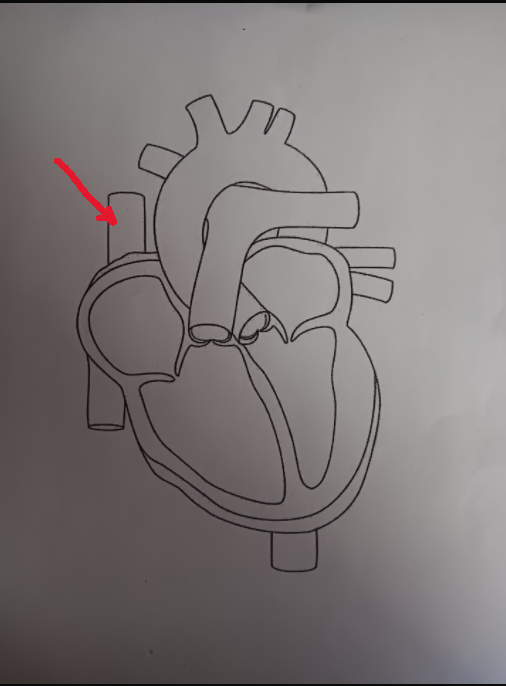
superior vena cava
41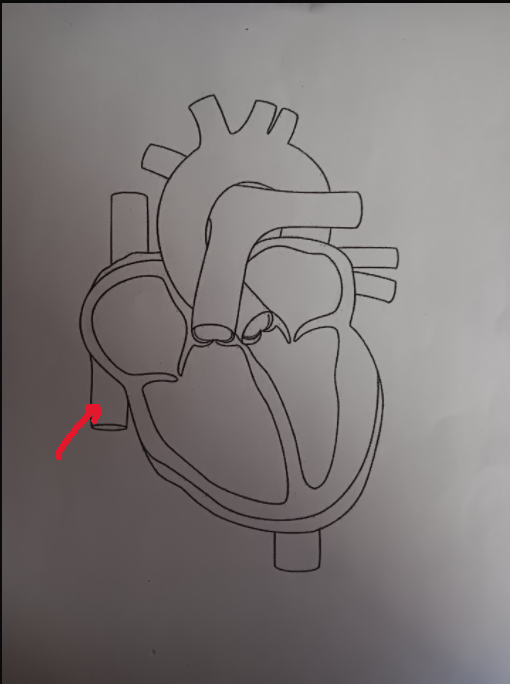
inferior vena cava
42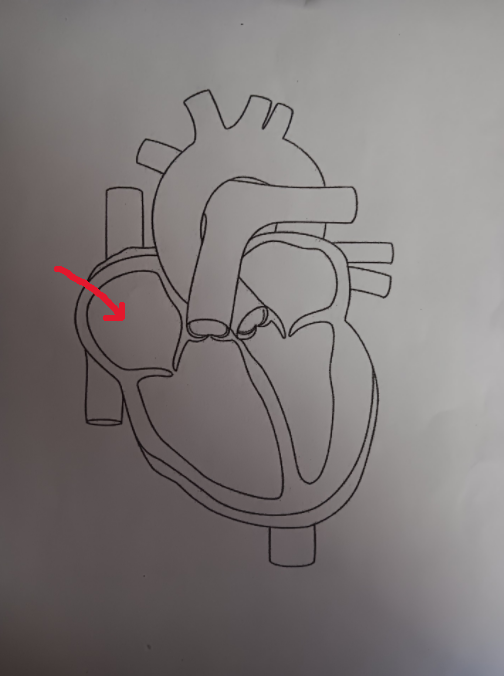
right atrium
43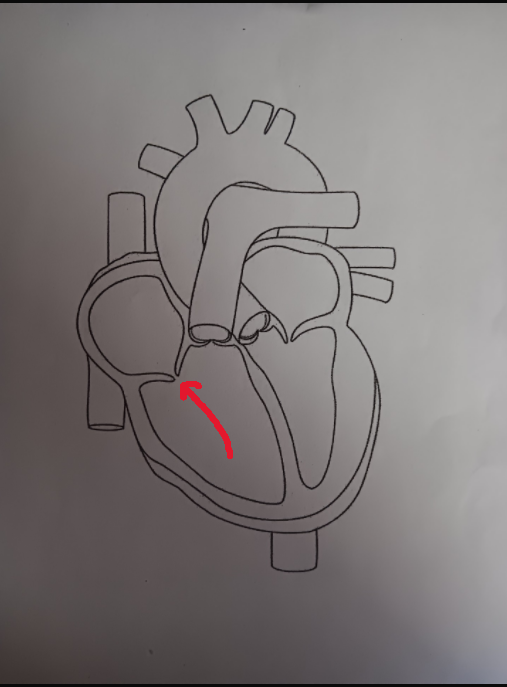
right atrioventricular valve
44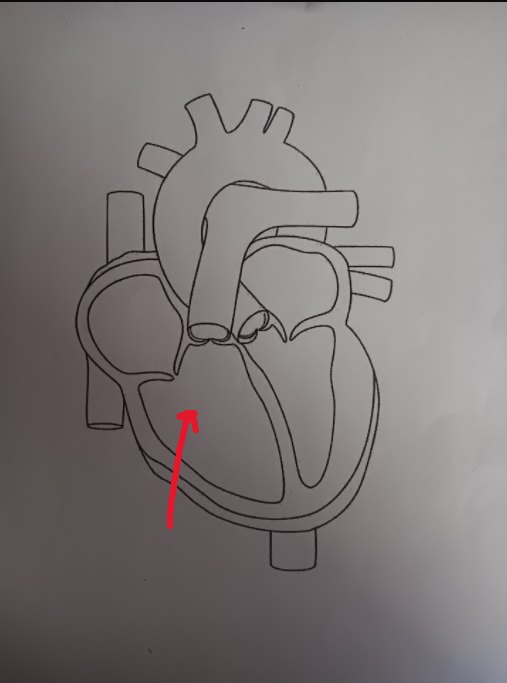
right ventricle
45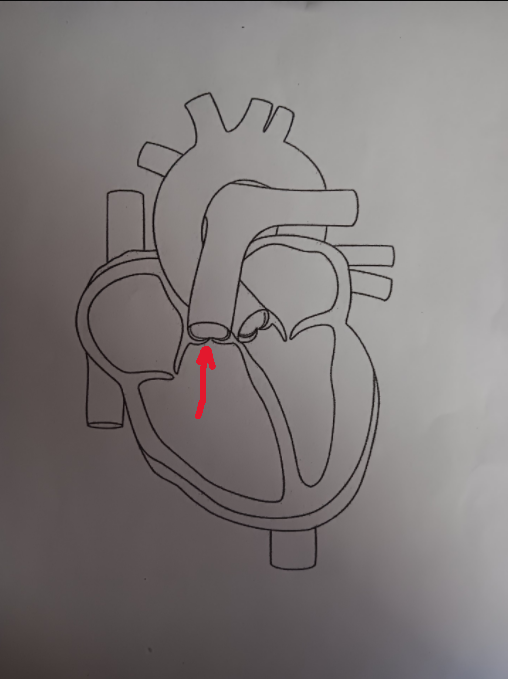
semilunar pulmonary valve
46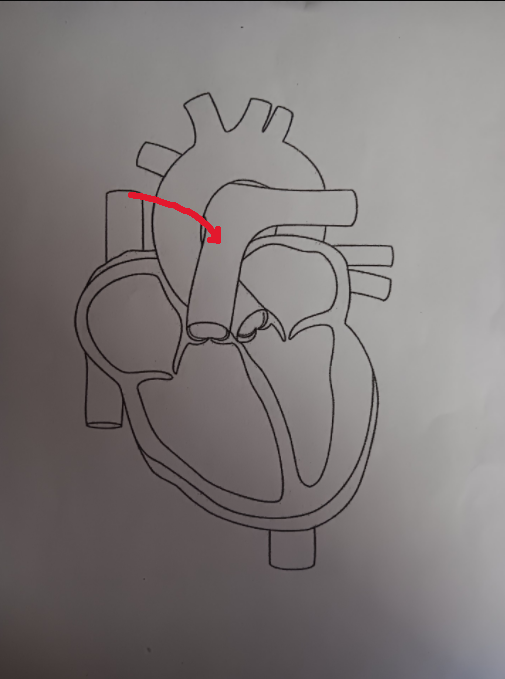
pulmonary trunk
47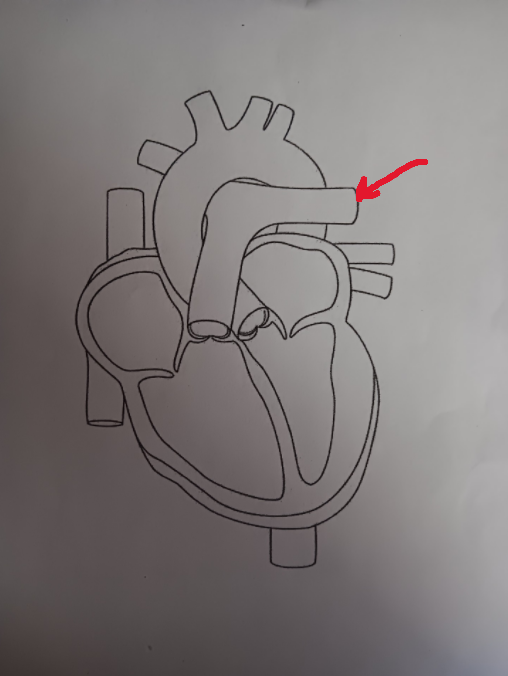
pulmonary artery
48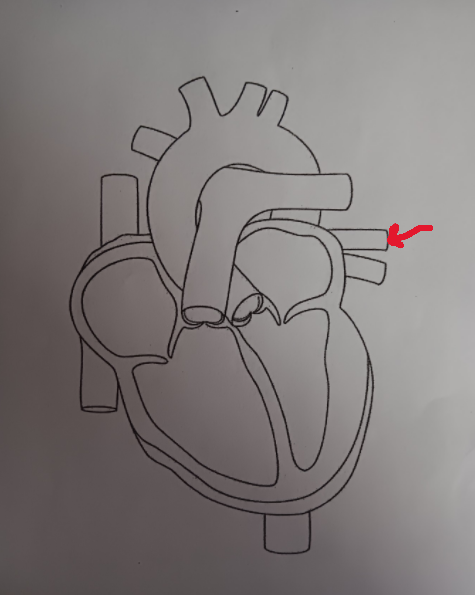
pulmonary vein
49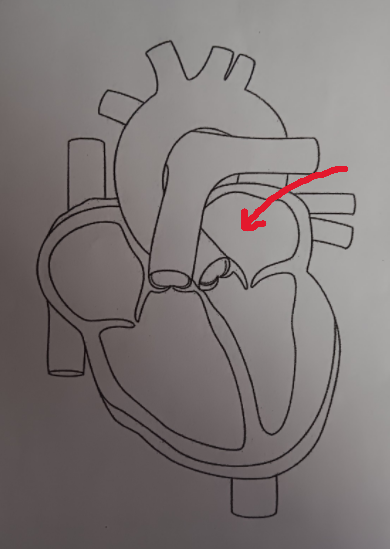
left atrium
50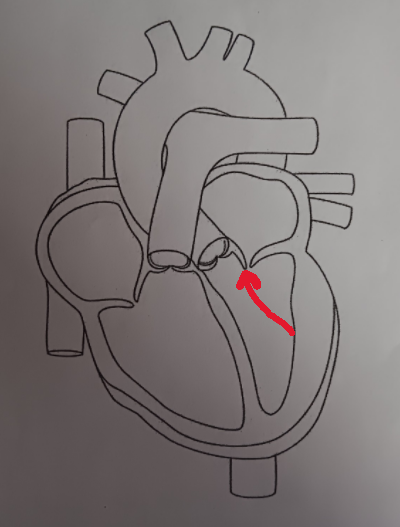
left atrioventricular valve
51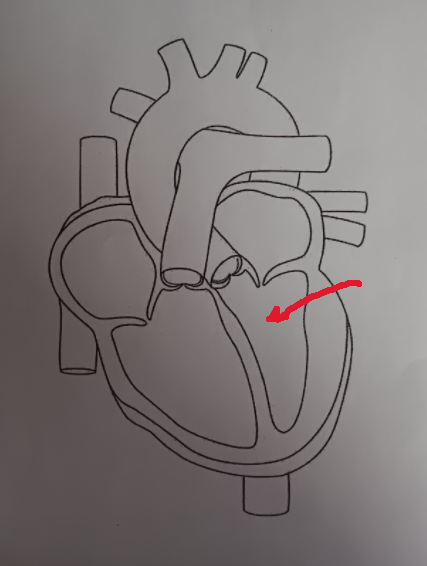
left ventricle
52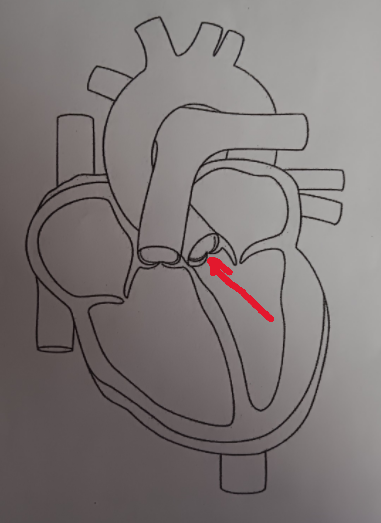
semilunar aortic valve
53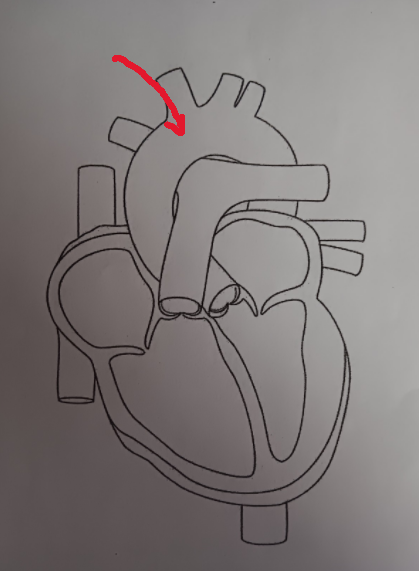
aorta
54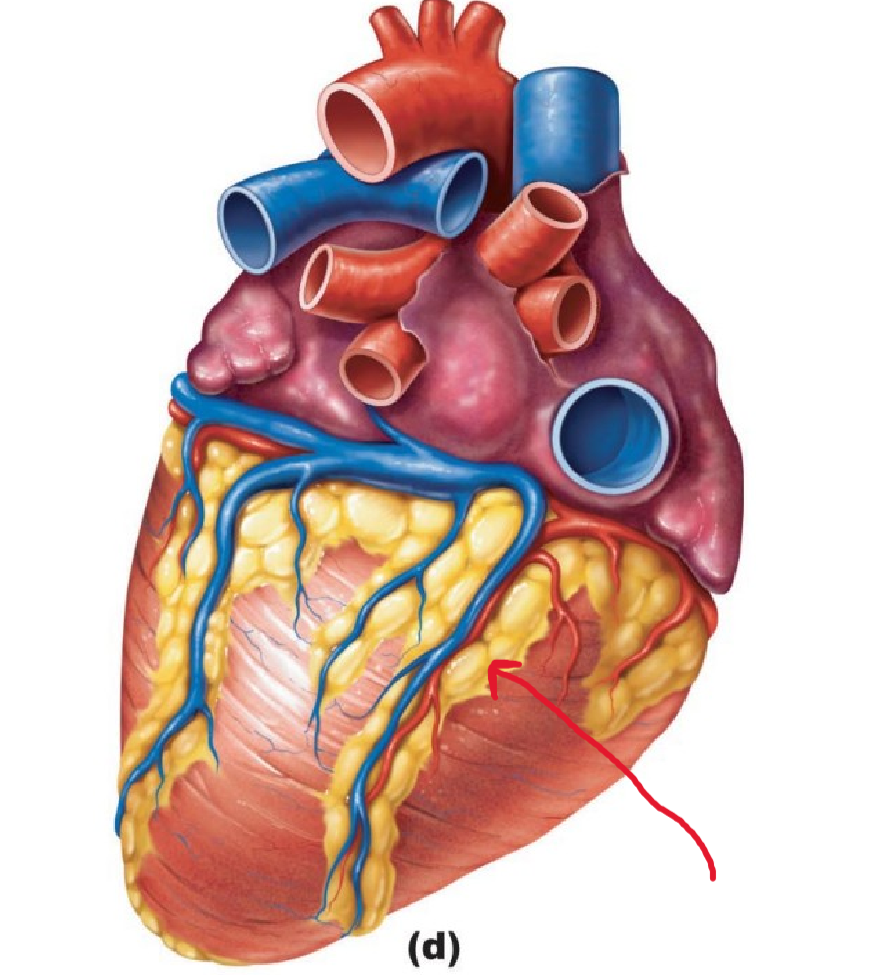
coronary artery
55
back or upper side
dorsal
56
the underside or abdominal area
ventral
57
front/frontal area
anterior
58
back, rear area
posterior
59
in humans, anterior and _______ are synonymous
ventral
60
in animals, anterior and ________ are synonynous
cranial
61
toward the middle or body midline, particulary toward the body midline
medial
62
away from the body midline, toward the side
lateral
63
near, closer to the point under consideration
proximal
64
far or away, farther from the point under consideration
distal
65
divides the animal into dorsal and ventral portions
frontal planes (coronal planes)
66
divides the animal into cranial and caudal (head and tail) portions
transverse planes (axial planes)
67
separate the animal or person into right and left halves
median planes (midsagittal planes)
68
any plane parallel to the midsagittal (median) plane, ie divides the animal into left and right portions
sagittal planes
69
an organ, gland, or tissue ________ a substance if it both produces and exports the substance out of the tissue or organ
secretes
70
an organ, tissue, or gland _________ a substance if the substance is made elsewhere
excretes
71
seven key factors which play into physiology and changes in physiology
nutrition, age, gender, genetics, physical change, environment, chemical change (naggpec?)
72
arm prefix
brachi
73
tail prefix
cauda
74
neck prefix
cervic
75
body
corpus
76
foot prefix
ped (pod)
77
throat prefix
pharyngo (laryngo)
78
nose prefix
nas (rhin)
79
plastic surgery suffix
plasty
80
chest lining prefix
pleur
81
lungs prefix
pneum (pulm)
82
chest prefix
thora
83
windpipe prefix
trache
84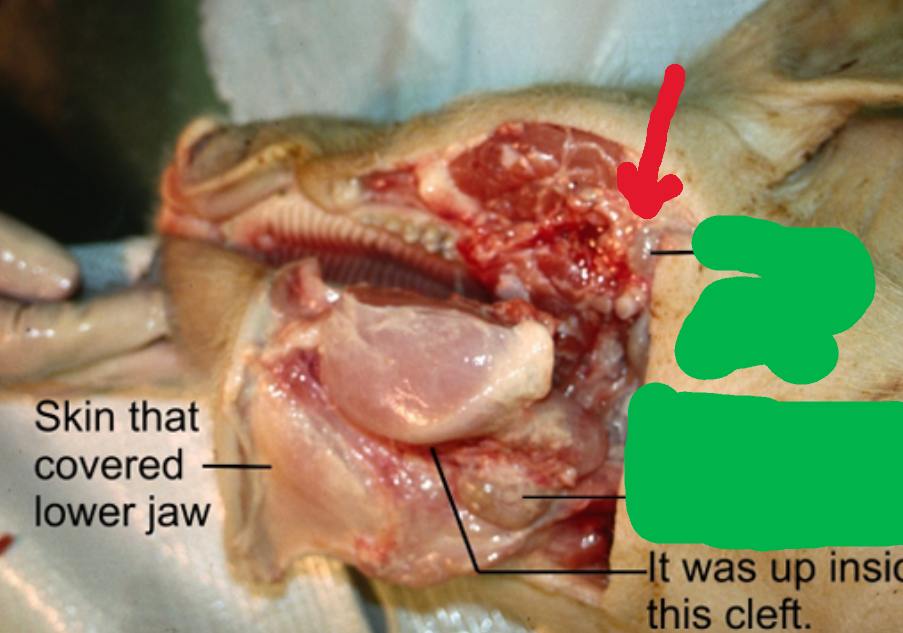
parotid salivary gland
85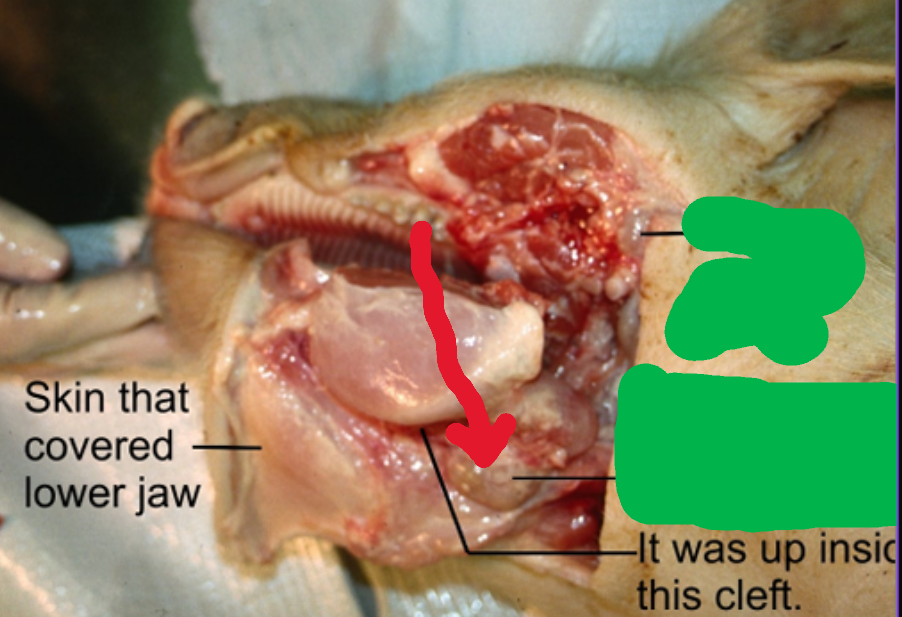
submandibular salivary gland (submaxillar salivary gland)
86
found in saliva - slippery glycoprotein that functions in lubrication
mucin
87
found in saliva - enzyme that breaks down starch (a polysaccharide) to maltose (a disaccharide)
initiates starch digestion
initiates starch digestion
salivary amylase
88
found in saliva - a form of this substance secreted into saliva
secretory immunoglobulin A (S-IgA)
89
found in saliva - includes sodium, potassium, chloride, and bicarbonate
keep the mouth pH near neutrality
keep the mouth pH near neutrality
electrolytes
90
found in saliva - enzyme secreted by the sublingual salivary gland that works with gastric lipase to start the digesting of triglycerides
lingual lipase
91
found in saliva - an antimicrobial enzyme
lysozyme
92
the ________ ______ secrete mucin, bicarbonate, water, and salivary amylase
salivary glands
93
_________ salivary glands are found on either side, below the tongue
sublingual
94
_________ salivary glands are found below the ears
parotid
95
____________ salivary glands are found at the base of the jaw on the medial edge
submandibular
96
the 4 major components secreted by the salivary glands
bicarbonate, salivary amylase, water, mucin (b-swm)
97
the empty space in the mouth
buccal cavity
98
roof of the mouth with underlying bone
hard palate
99
the softer tissue posterior to the hard palate
soft palate
100
the open space behind the buccal cavity, it begins at the soft palate and ends at the juncture of larynx and esophagus (part of both the digestive and respiratory systems)
pharynx
101
part of the respiratory tract between the pharynx and trachea
contains vocal cords and thus functions in vocalizations
contains vocal cords and thus functions in vocalizations
larynx
102
the _______ is between the pharynx and trachea
larynx
103
forms the anterior wall of the larynx and functions to protect vocal cords
thyroid cartilage
104
curled inside the opening into the trachea
blacks the larynx during swallowing (degultition)
prevents food from entering the larynx and passing into the lungs
blacks the larynx during swallowing (degultition)
prevents food from entering the larynx and passing into the lungs
epiglottis
105
transports air from the larynx to the bronchi, pale to white in color
has distinctive cartilage rings that hold it open for air passage
has distinctive cartilage rings that hold it open for air passage
trachea
106
the ________ connects the larynx to the bronchi
trachea
107
parallels the trachea and is dorsal to it, pink in color
carries ingested food from the pharynx to the stomach
carries ingested food from the pharynx to the stomach
esophagus
108
the esophagus is ________ to the trachea
dorsal
109
membrane lining the walls of the thoracic cavity and surrounding the lungs
pleura
110
the _______ cushions the lungs and provides lubrication to allow the lungs to move smoothly within the thoracic cavity
pleura
111
paired organs that are dorsal to the heart and typically bright pink to bright red
lungs
112
located caudally to the larynx and ventrally to the lungs, pumps blood throughout the body
heart
113
membrane surrounding the heart, forms a fluid-filled sac that contains the heart
pericardium
114
the ________ functions to contain the heart within the chest cavity and to prevent the heart from over-expanding when blood volume increases
pericardium
115
skeletal muscle that separates the thoracic cavity, which is anterior from the abdominal cavity
contraction of this increases the size of the thoracic cavity
contraction of this increases the size of the thoracic cavity
diaphragm
116
membrane that lines the abdominal cavity and surrounds vital organs
peritoneum
117
the __________ supports vital organs and serves as a conduit for blood and lymph vessels and nerves
peritoneum
118
large purplish brown organ lying just posterior to the diaphragm
functions as a major metabolic processing unit that maintains levels of nutrients in the blood
functions as a major metabolic processing unit that maintains levels of nutrients in the blood
liver
119
in digestion, the ______ functions to secrete bile
liver
120
stores and excretes bile, found under the right lobe of the liver
gall bladder
121
just to the right of the liver and partially covered by this liver looking at it from the ventral side
produces hydrochloric acid and the enyme pepsinogen to begin digestion of proteins
produces hydrochloric acid and the enyme pepsinogen to begin digestion of proteins
stomach
122
part of the peritoneum, it covers much of the stomach and is lacey in appearance
greater omentum
123
the _______ ________ is part of the immune system, leukocyte production occurs here
substantial amount of fat deposited here in older animals
substantial amount of fat deposited here in older animals
greater omentum
124
purplish red organ located to the left of the stomach
removes old and damaged erythrocytes, recycling the components for other uses in the body
removes old and damaged erythrocytes, recycling the components for other uses in the body
spleen
125
the _______ is the largest lymphatic organ in the body, functions as a site for production of lymphocytes
spleen
126
typically pink in color with a bumpy texture like chewed gum
has both endocrine functions (secretes hormones glucagon and insulin) and exocrine functions (secrets digestive enzymes like proenzymes trypsinogen and chymotrypsinogen)
has both endocrine functions (secretes hormones glucagon and insulin) and exocrine functions (secrets digestive enzymes like proenzymes trypsinogen and chymotrypsinogen)
pancreas
127
the __________ is found in the duodenal loop of the small intestine
pancreas
128
comprised of three parts, smaller in diameter than the large intestine but much longer
responsible for digestion of foodstuffs and absorption of the digestive products
responsible for digestion of foodstuffs and absorption of the digestive products
small intestine
129
first part of small intestine - recieves chyme from the stomach
forms a loop and produces copious amounts of bicarbonate to neutralize acidic chyme
also receives bile from the gall bladder and enzymes secreted by the pancreas
forms a loop and produces copious amounts of bicarbonate to neutralize acidic chyme
also receives bile from the gall bladder and enzymes secreted by the pancreas
duodenum
130
middle portion of the small intestine - usually the longest part
digestion of protein and carbohydrate is fairly complete here
absorption of amino acids, monosaccharides, calcium, and iron occurs here
digestion of protein and carbohydrate is fairly complete here
absorption of amino acids, monosaccharides, calcium, and iron occurs here
jejunum
131
last part of small intestine - absorption of bile salts, water, electrolytes, and vitam B12 occurs here
connects to the large intestine, a constriction at this point called the ileocecal valve regulates flow of material from here into the large intestine
enters the large intestine at a Y-shaped juncture with the cecum and colon
connects to the large intestine, a constriction at this point called the ileocecal valve regulates flow of material from here into the large intestine
enters the large intestine at a Y-shaped juncture with the cecum and colon
ileum
132
folds of the peritoneum that connect and anchor the small intestine
mesentery
133
refers to the network of blood vessels that collect blood from the stomach, small intestine, and large intestine
delivers blood, which will be high in absorbed nutrients after a meal, directly to the liver
delivers blood, which will be high in absorbed nutrients after a meal, directly to the liver
hepatic portal system
134
comprised of 3 parts, larger in diameter than small intestine but much shorter and thinner-walled
typically greenish in color due to concentrated bile pigments
typically greenish in color due to concentrated bile pigments
large intestine
135
part of large intestine - blind sac that is often quite large
microbial fermentation of residual startch and some cellulose and absorption of fermentation products and water occurs here
in a few species (such as humans), this part may have a small extension at the end called the appendix
microbial fermentation of residual startch and some cellulose and absorption of fermentation products and water occurs here
in a few species (such as humans), this part may have a small extension at the end called the appendix
cecum
136
longest part of the large intestine - microbial fermentation of residual starch and some cellulose and absorption of fermentation products and water occurs here
relative amount of fermentation that occurs here varies with species
relative amount of fermentation that occurs here varies with species
colon
137
last part of the large intestine, responsible for the formation of characteristic shape of droppings found in many animals
rectum
138
external opening for digestive tract, fecal material exits here
anus
139
two organs located lateral to the spine and dorsal to the intestines
functions include removal of waste products from blood and regulation of blood volume and body pH
functions include removal of waste products from blood and regulation of blood volume and body pH
kidneys
140
stores urine in animals
urinary bladder
141
the two major body cavities
thoracic, abdominal
142
order of the parts of the small intestine
duodenum, jejunum, ileum (DJ Ian?)
143
order of the parts of the large intestine
cecum, colon, rectum
144
substances absorbed by the jejunum
monosaccharides, amino acids, calcium, iron (MACI)
145
substances absorbed by the ileum
water, electrolytes, bile salts, vitamin B12 (WEBB)
146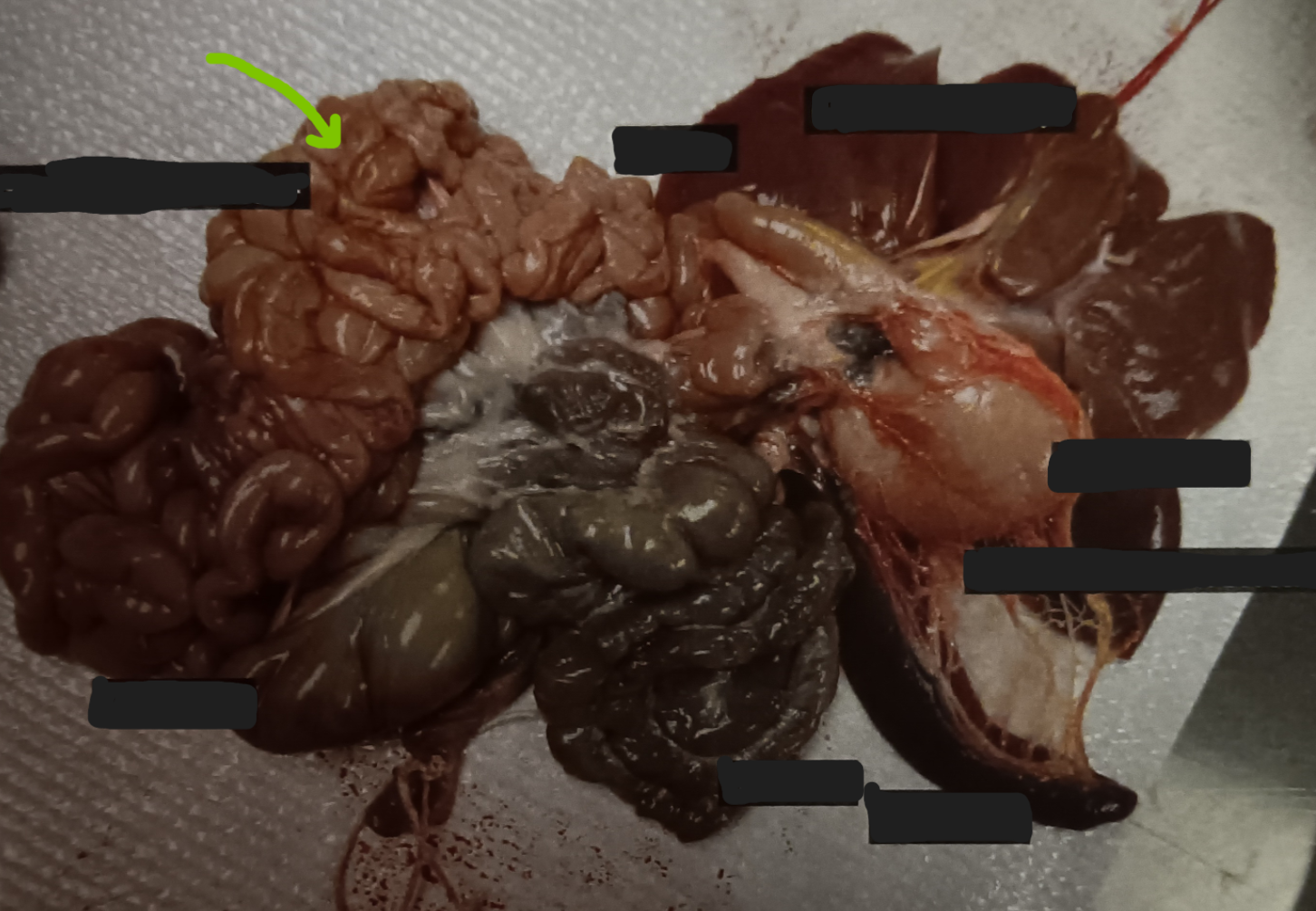
small intestine
147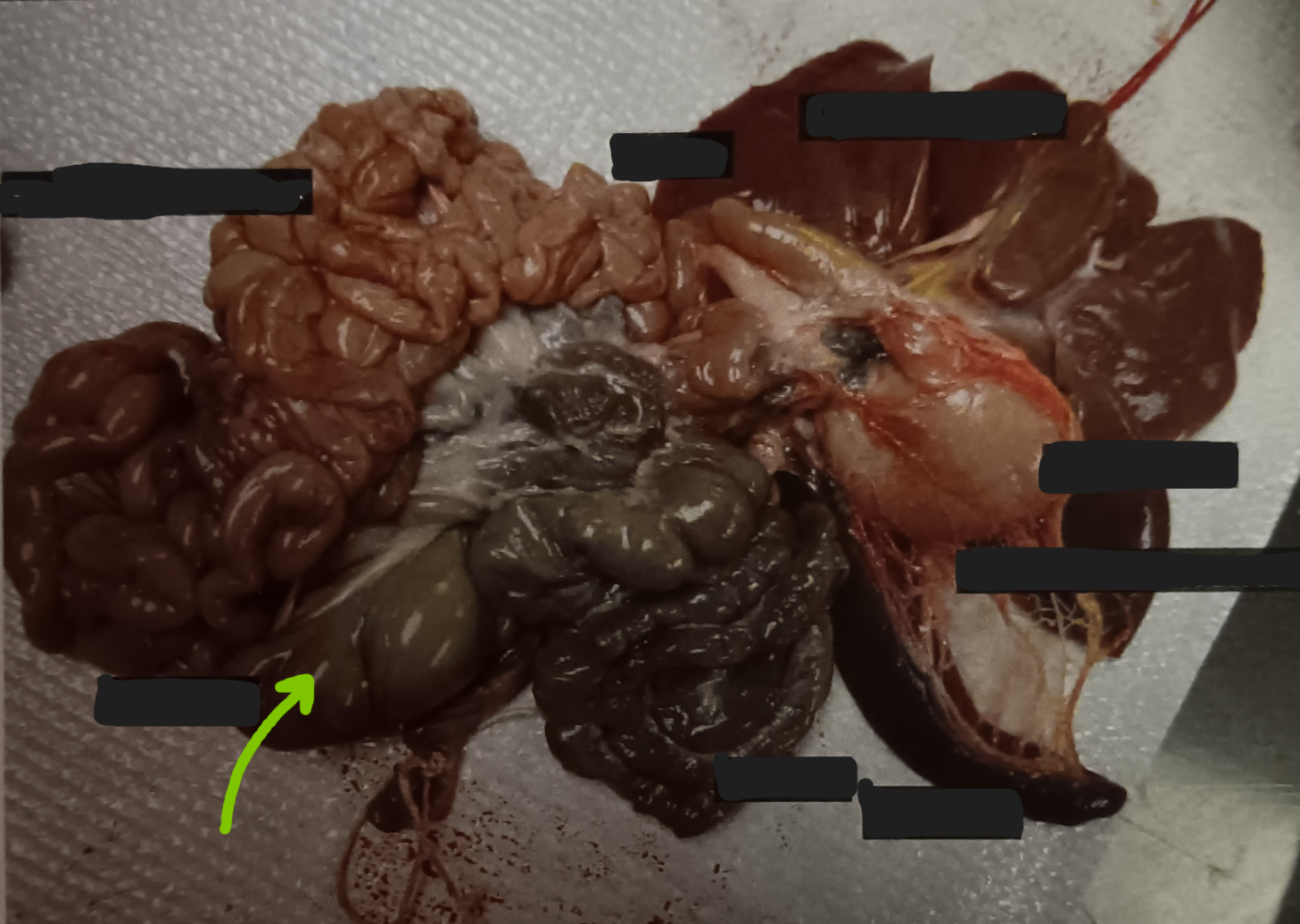
cecum
148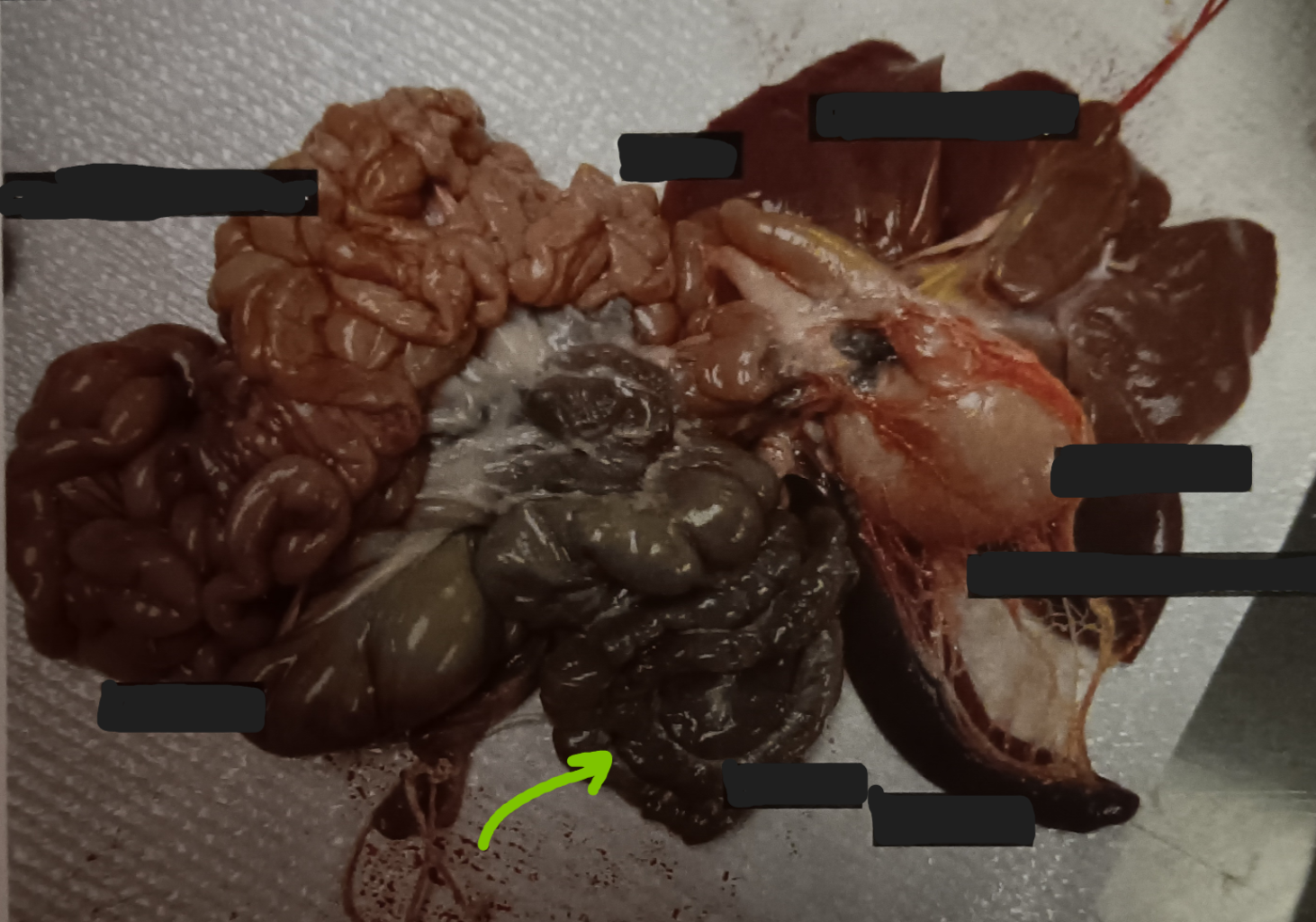
colon
149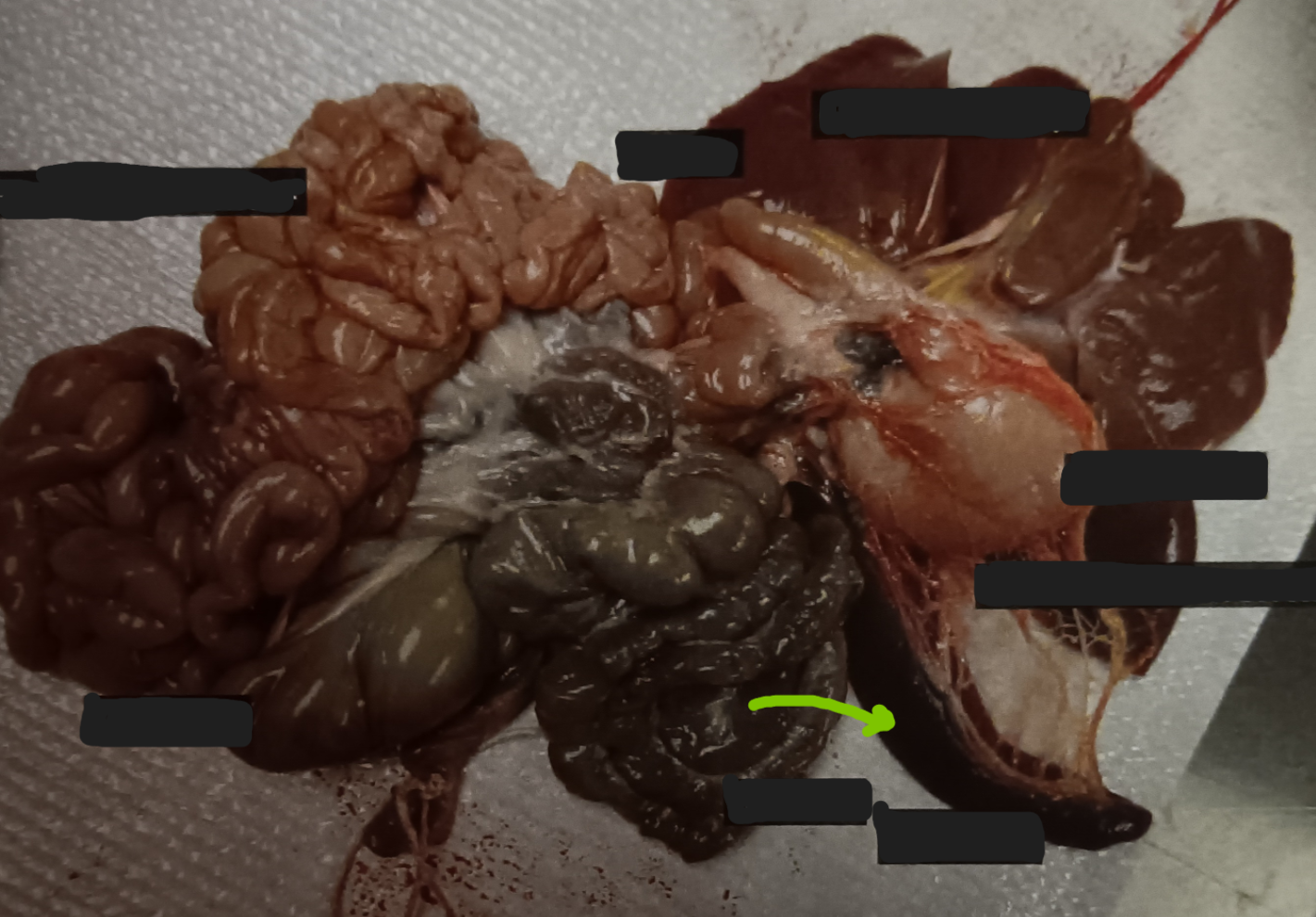
spleen
150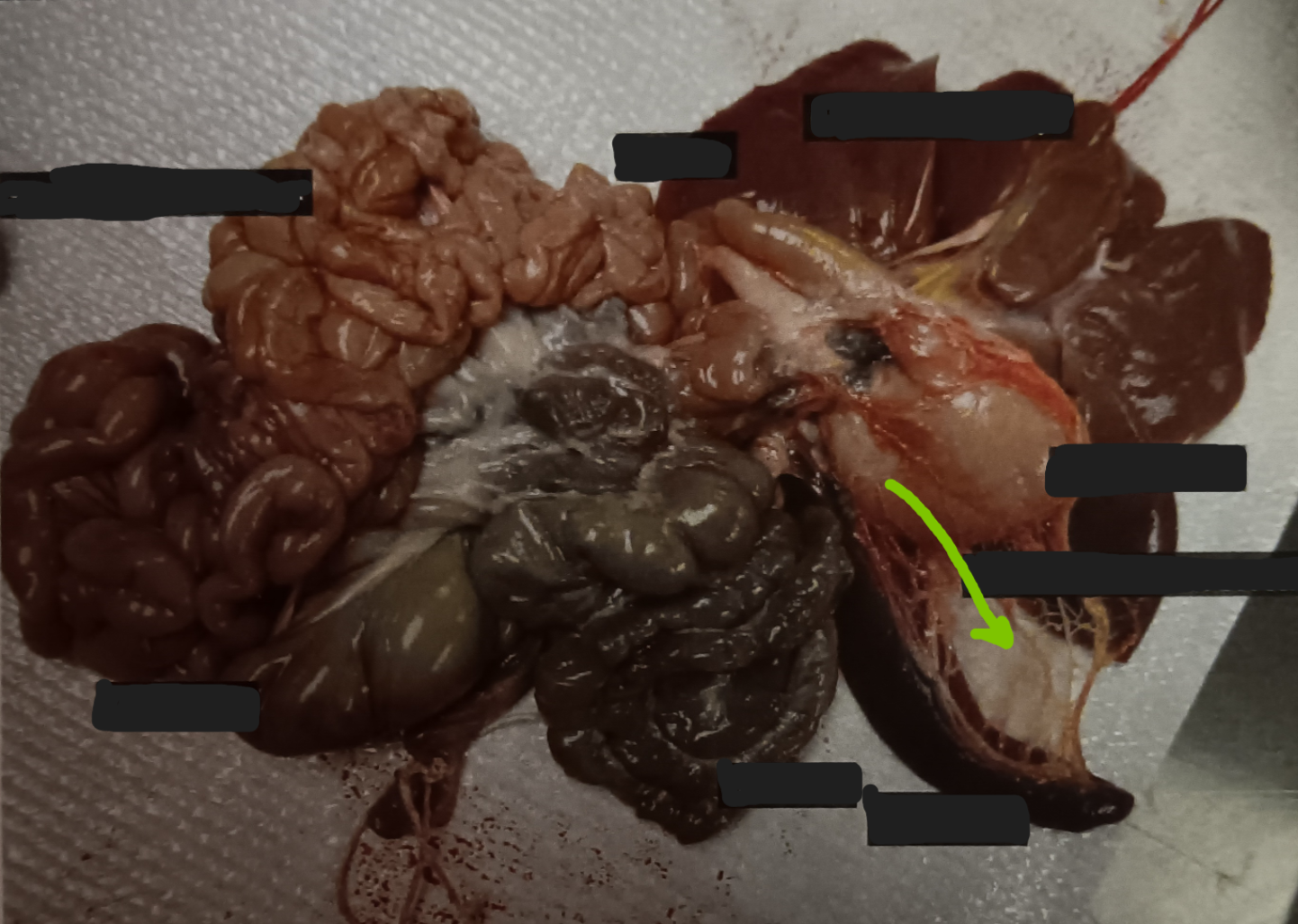
greater omentum
151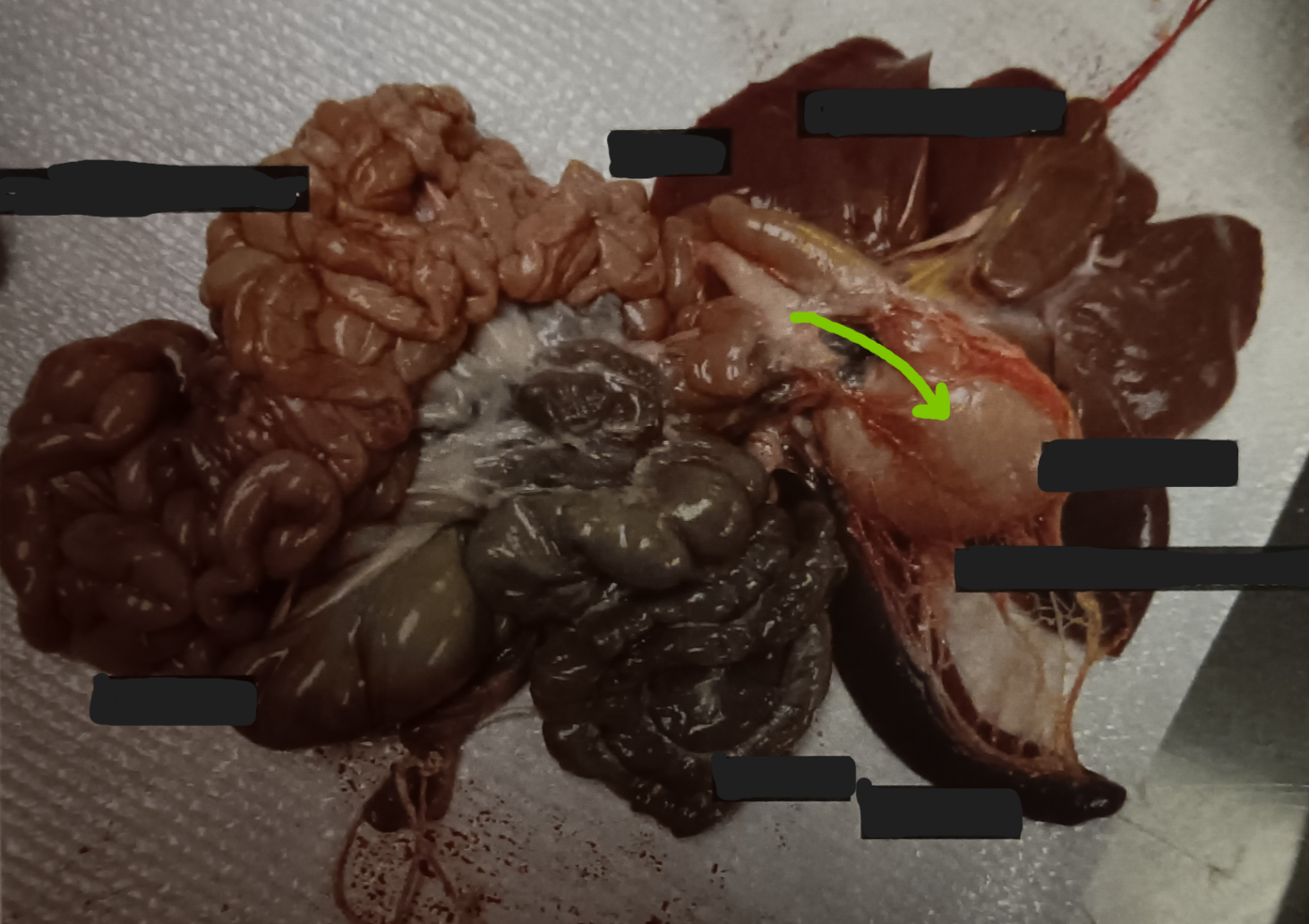
stomach
152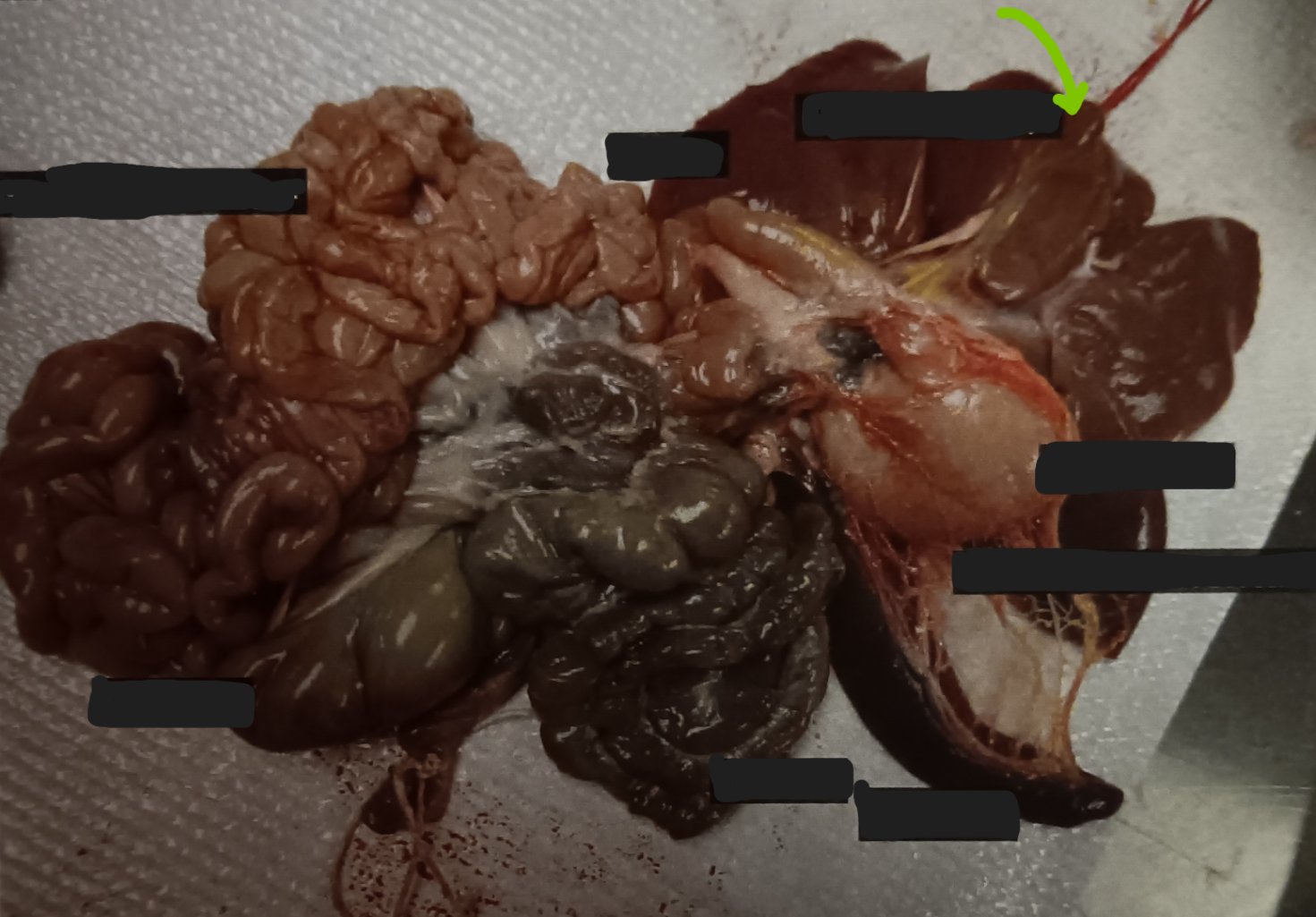
gall bladder
153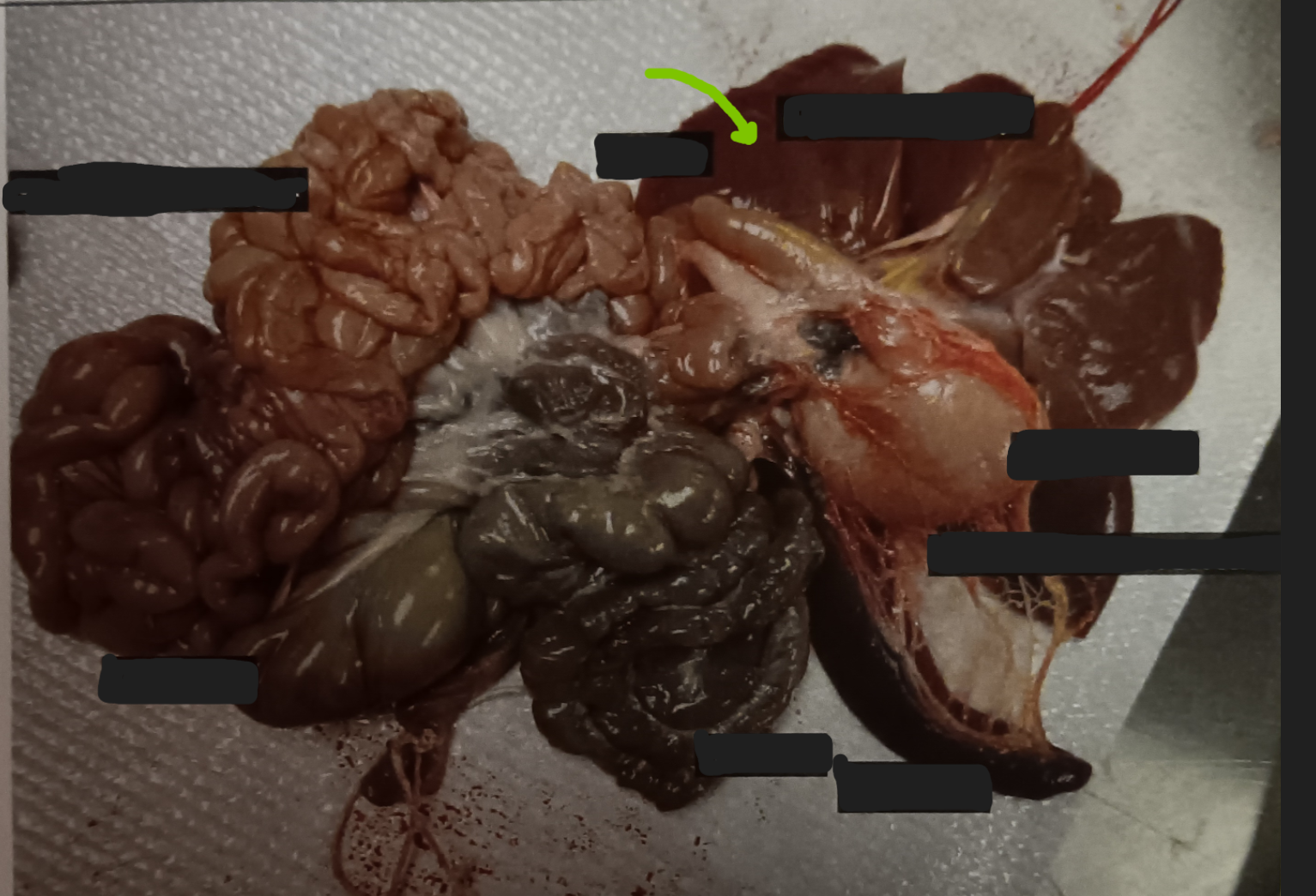
liver
154
below prefix
infra
155
between prefix
inter
156
sheath/husk suffix
lemma
157
large prefix
mega (megalo)
158
muscle prefix
myo
159
half prefix
semi
160
above prefix
supra
161
the three types of muscle
smooth, cardiac, skeletal
162
true/false: smooth muscle is striated
false
163
true/false: cardiac muscle is striated
true
164
true/false: skeletal muscle is striated
true
165
smooth muscle has __________ contraction
involuntary
166
cardiac muscle has ___________ contraction
involuntary
167
skeletal muscle has _________ contraction
voluntary
168
______ muscle is found in the GI, reproductive system, ureters, and blood vessels
smooth
169
_______ muscle is found in the heart
cardiac
170
_______ muscle is attached to bones
skeletal
171
________ muscle has circular and longitudinal layers, individual cells
smooth
172
_______ muscle has cells connected by intercalated discs, branched
cardiac
173
________ muscle has longitudinal layers and is not branched, elongated cells = muscle fibers
skeletal
174
_______ muscle has a single nucleus that is centrally located
smooth
175
_______ muscle has 1 or 2 nuclei centrally located, many become binucleated within a few weeks of life
cardiac
176
________ muscle is multinucleated, peripherally located
skeletal
177
these connect cell membranes of one cell to the next which increases electrical and molecular connections (important for rhythmic heart beats)
aids in maintaining structure
aids in maintaining structure
intercalated discs
178
2 types of contractions smooth muscle is involved in
peristalsis, segmentation
179
progressive alternating wave of coordinated contraction and relaxation of smooth muscle
result - movement of material
result - movement of material
peristalsis
180
stationary rhythmic contraction and relaxation of circular intestinal smooth muscle
result - mixing
result - mixing
segmentation
181
functions of skeletal muscle
maintain posture, movement
182
end of the muscle that is attached to a stationary part of bone
origin
183
the end of the muscle that is attached to a mobile section of bone
insertion
184
4. on lateral part of hind leg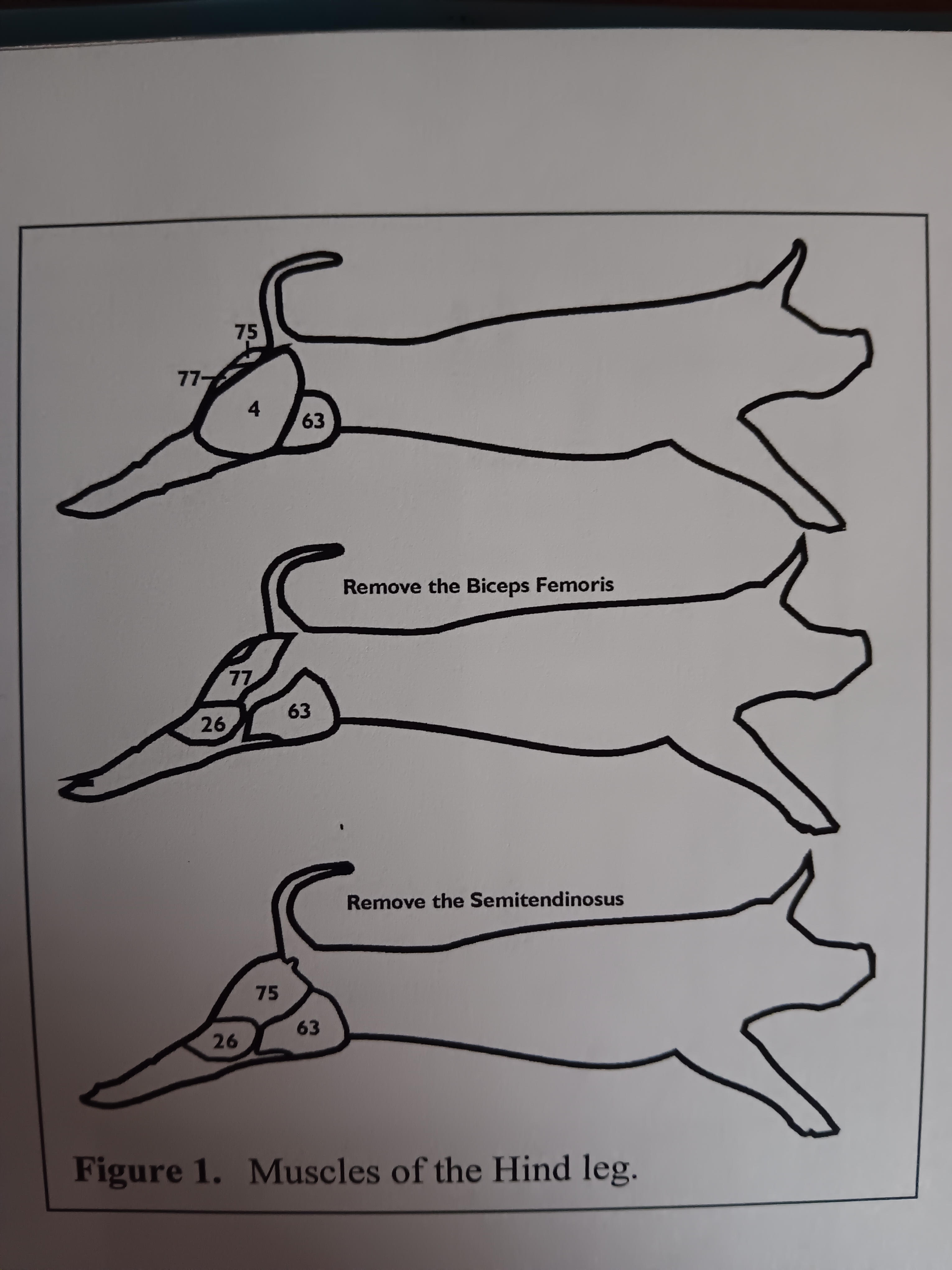
biceps femoris
185
8. directly under skin, horizontal striations, usually separated with the skin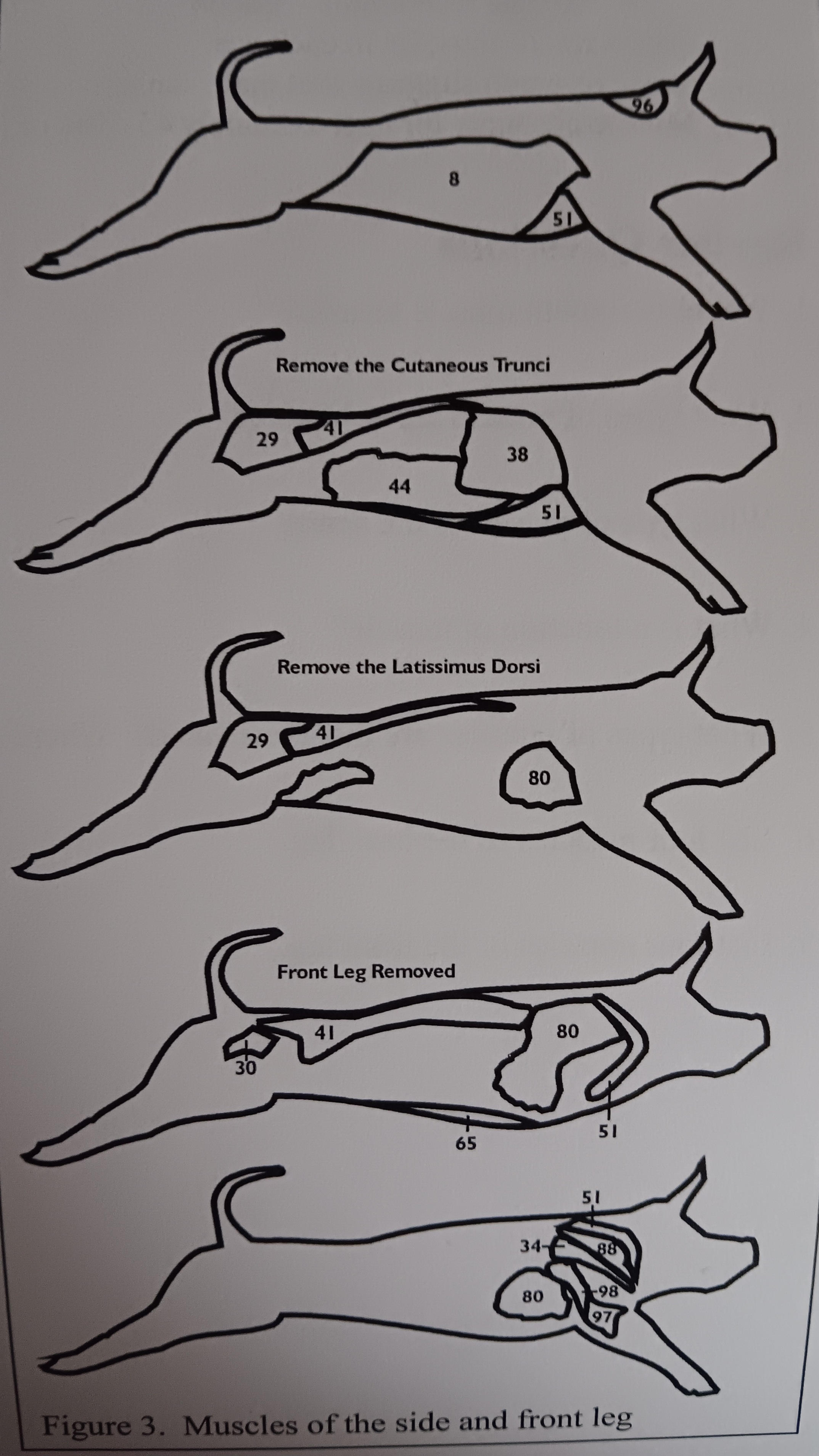
cutaneous trunci
186
26. in the middle of the hind leg, contracts when you move leg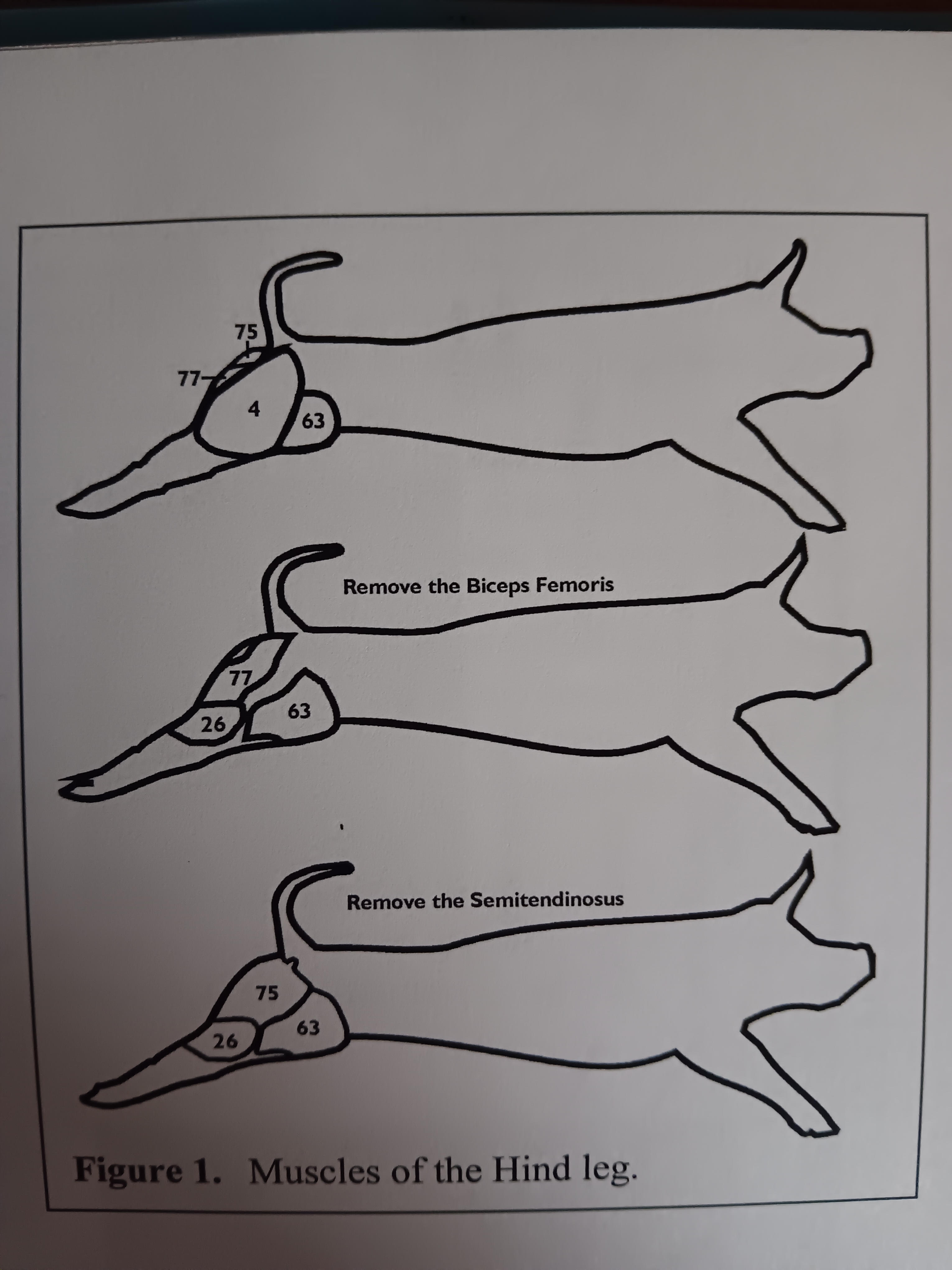
gastrocnemius
187
29. located anterior of tail and dark pink in color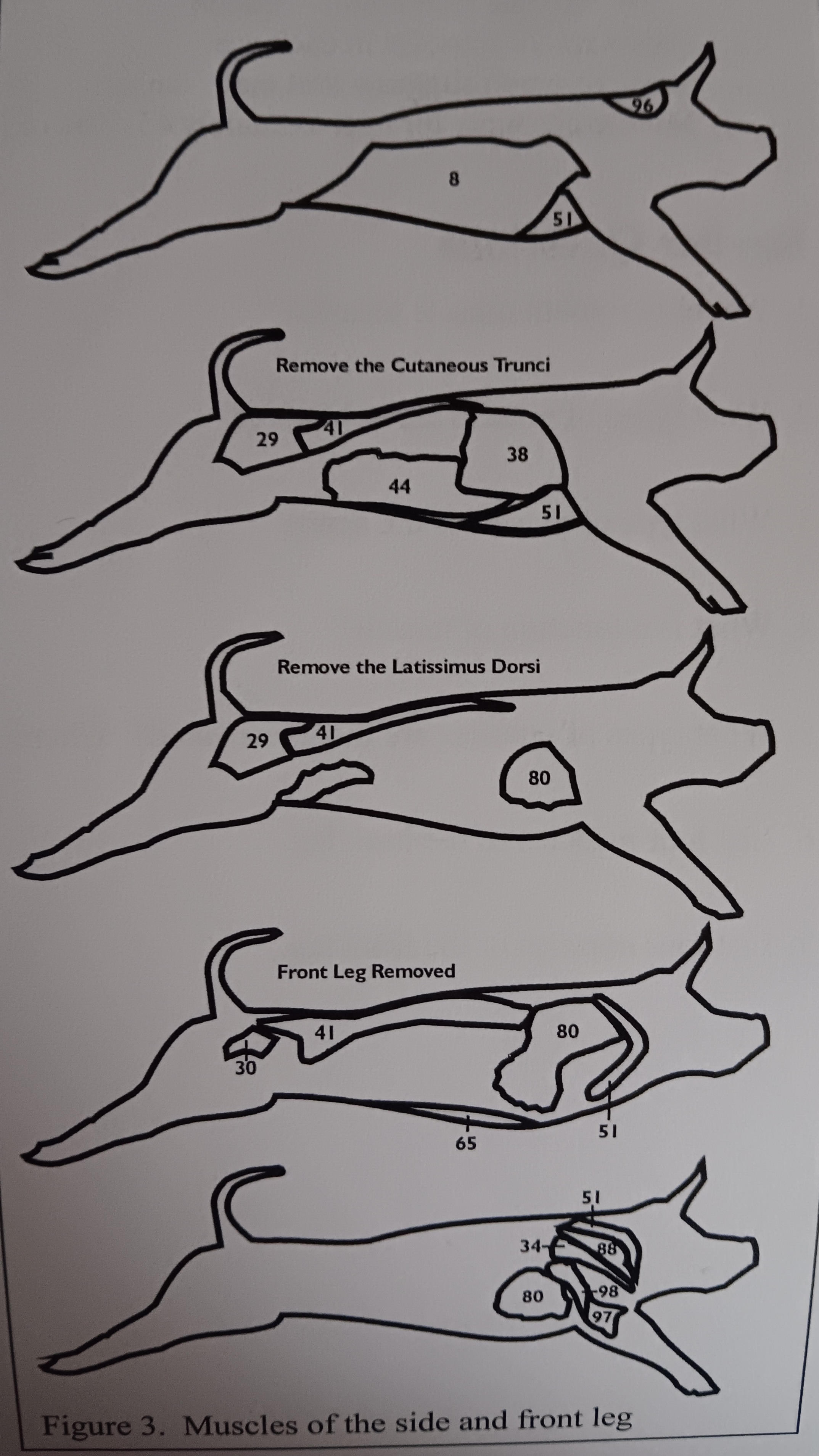
gluteus group
188
31. on the medial part of the hind leg, thin sheet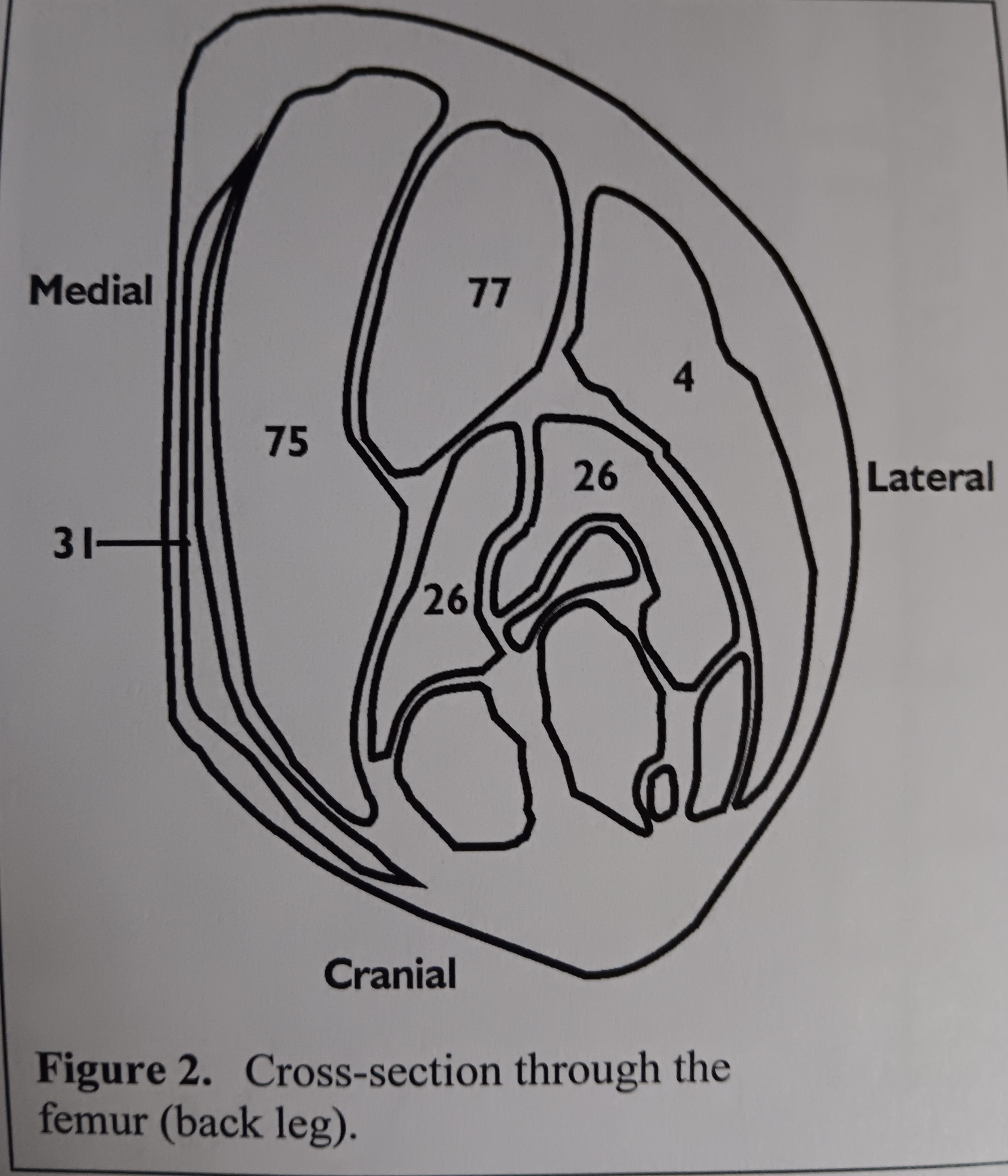
gracilis
189
34. below the scapula ridge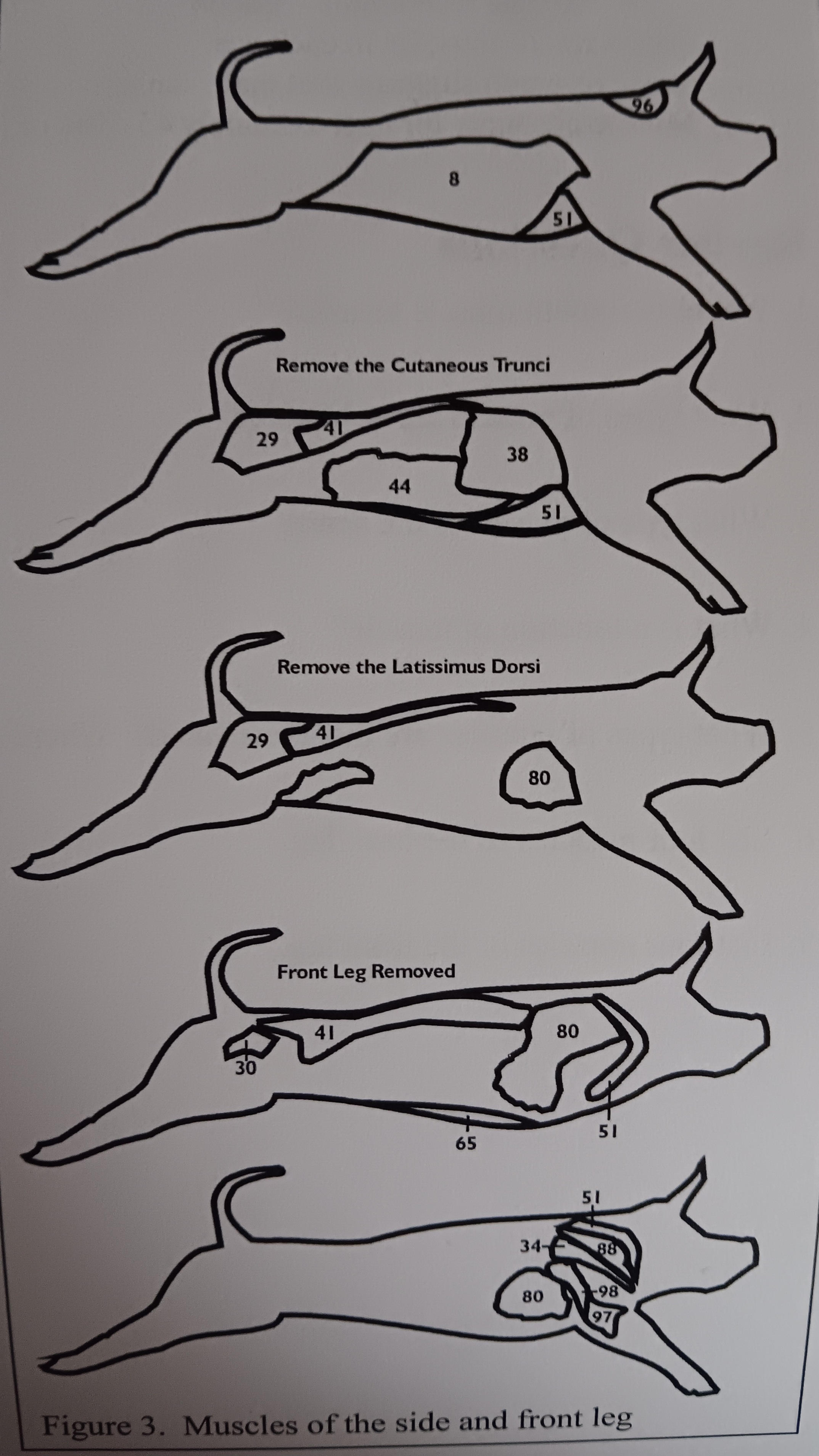
infraspinatus
190
38. located caudal of the shoulder and the striations fan out caudal/dorsal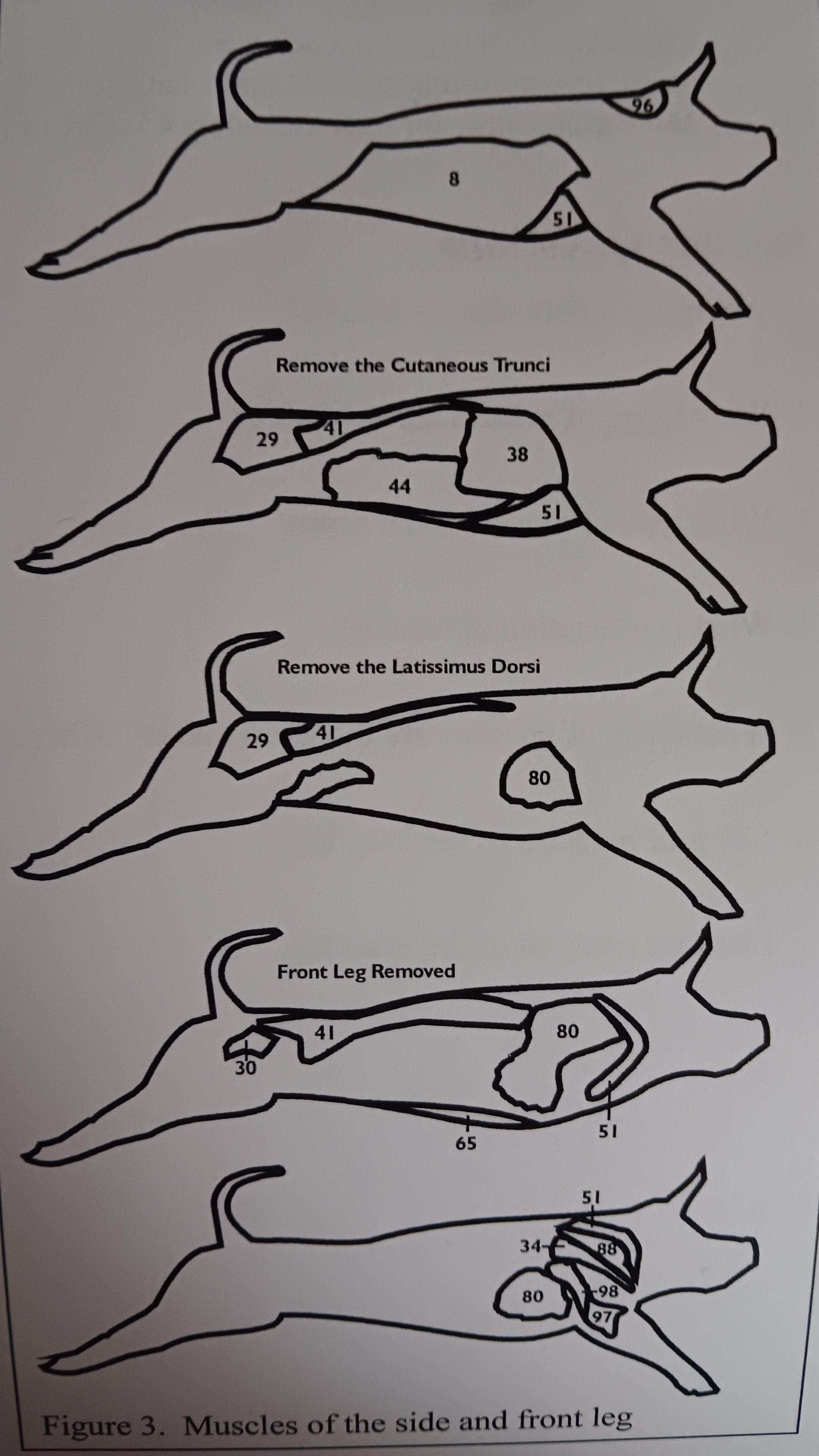
latissimus dorsi
191
41. runs along the exterior of the spine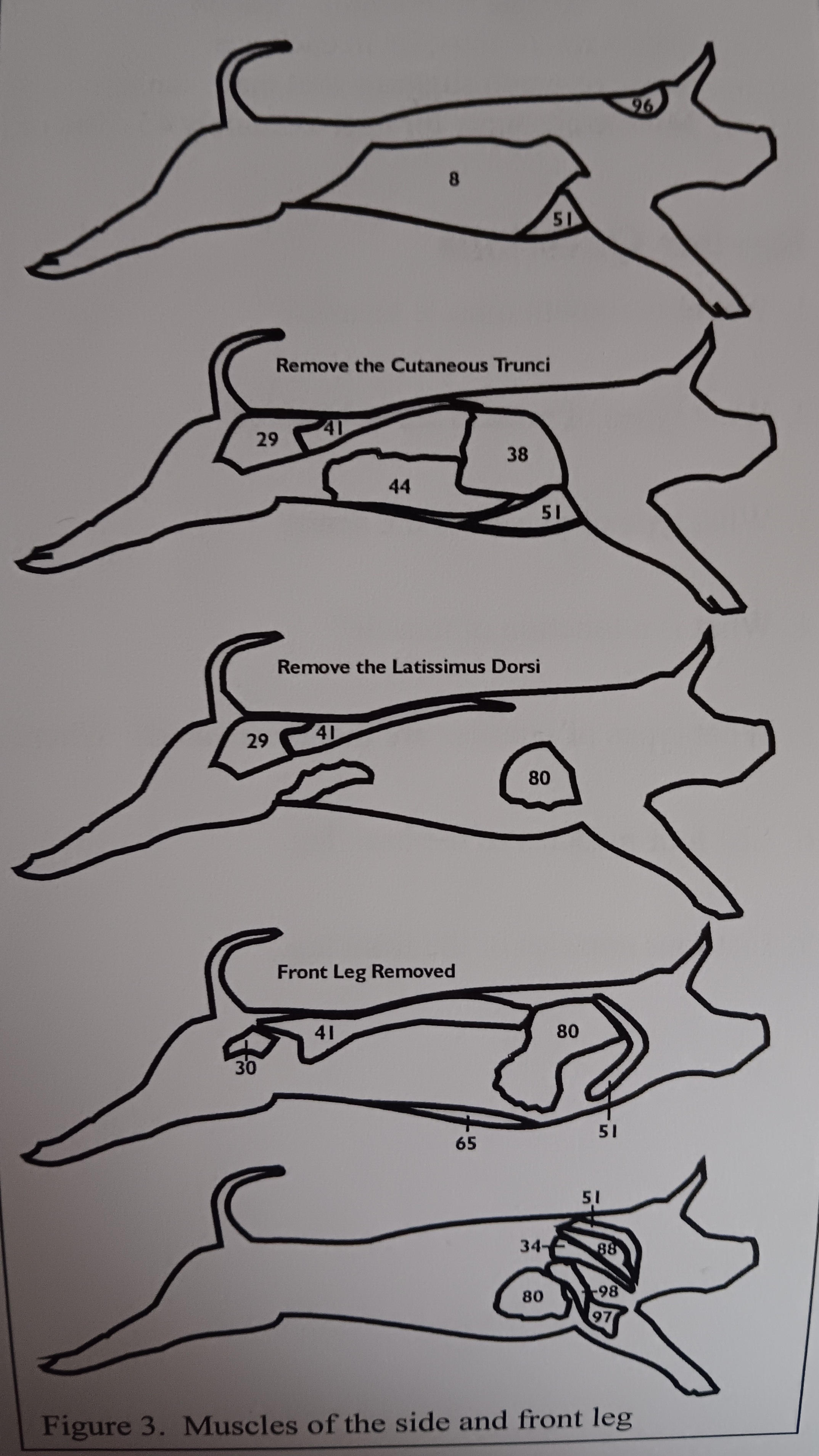
longissimus dorsi
192
44. located lateral of rectus abdominis and striations run diagonally cranial/dorsal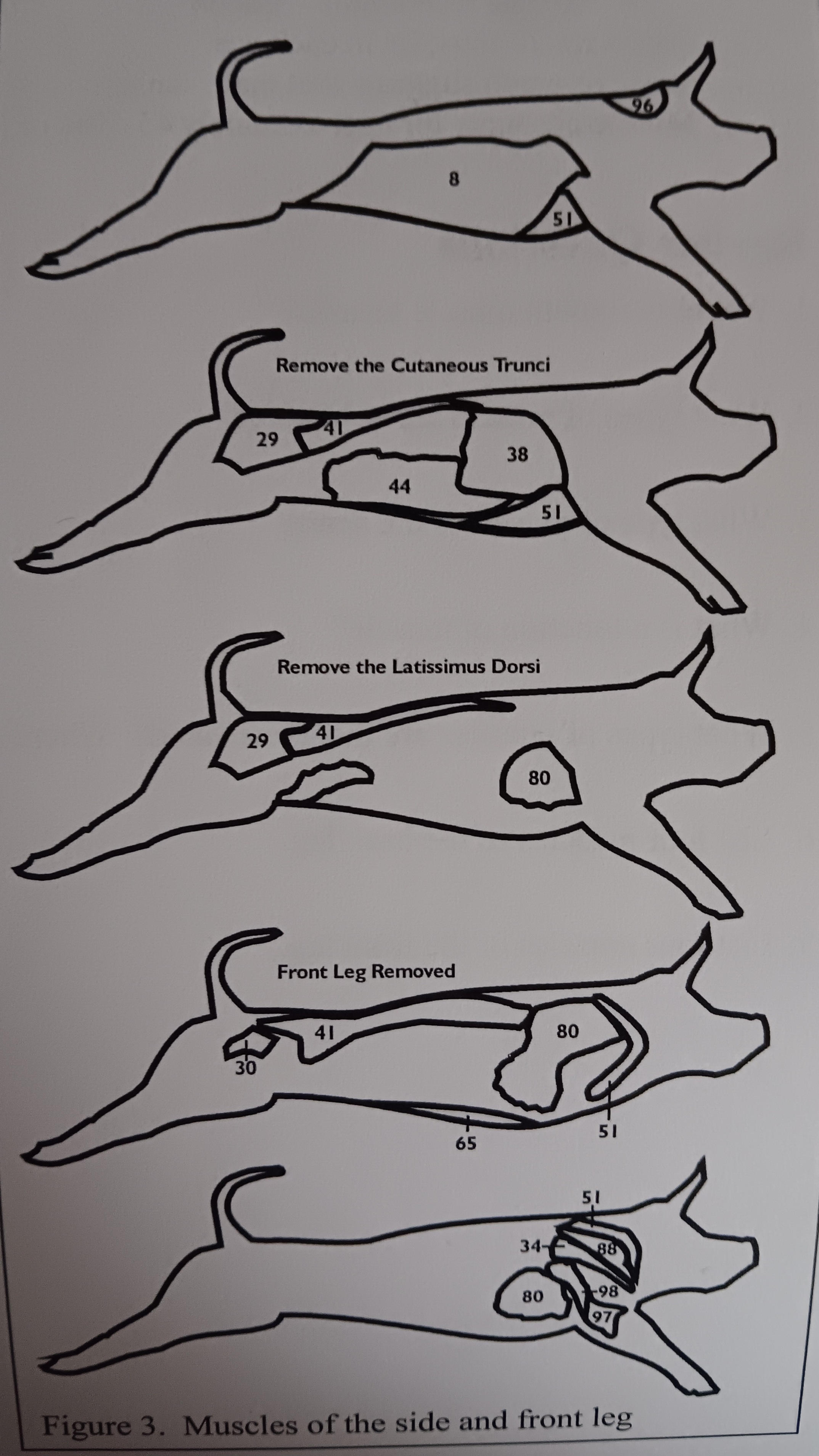
obliquus externus abdominis
193
51. wraps around the medial part of front legs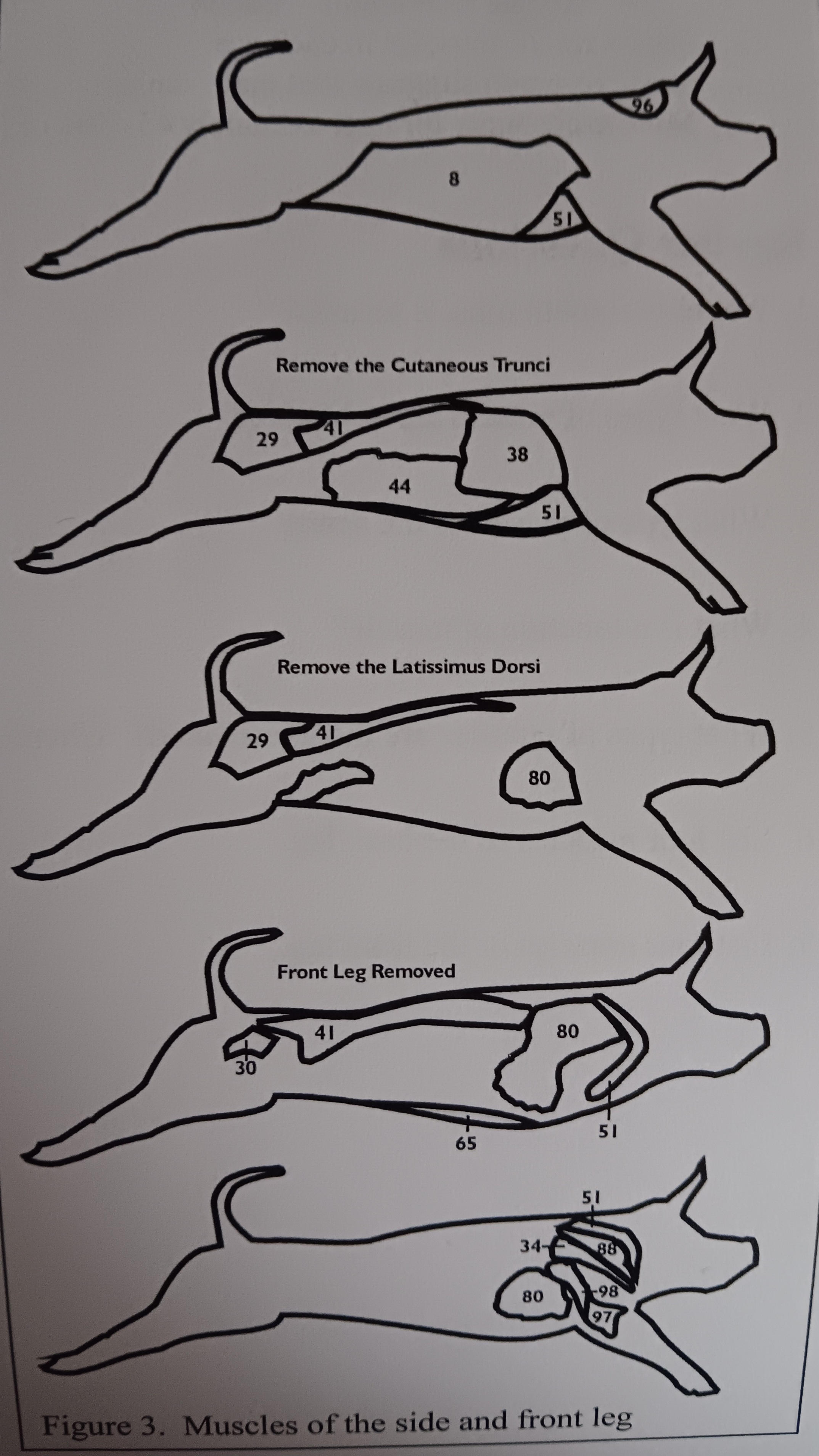
pectoralis profundi
194
63. located near stifle on cranial part of hind leg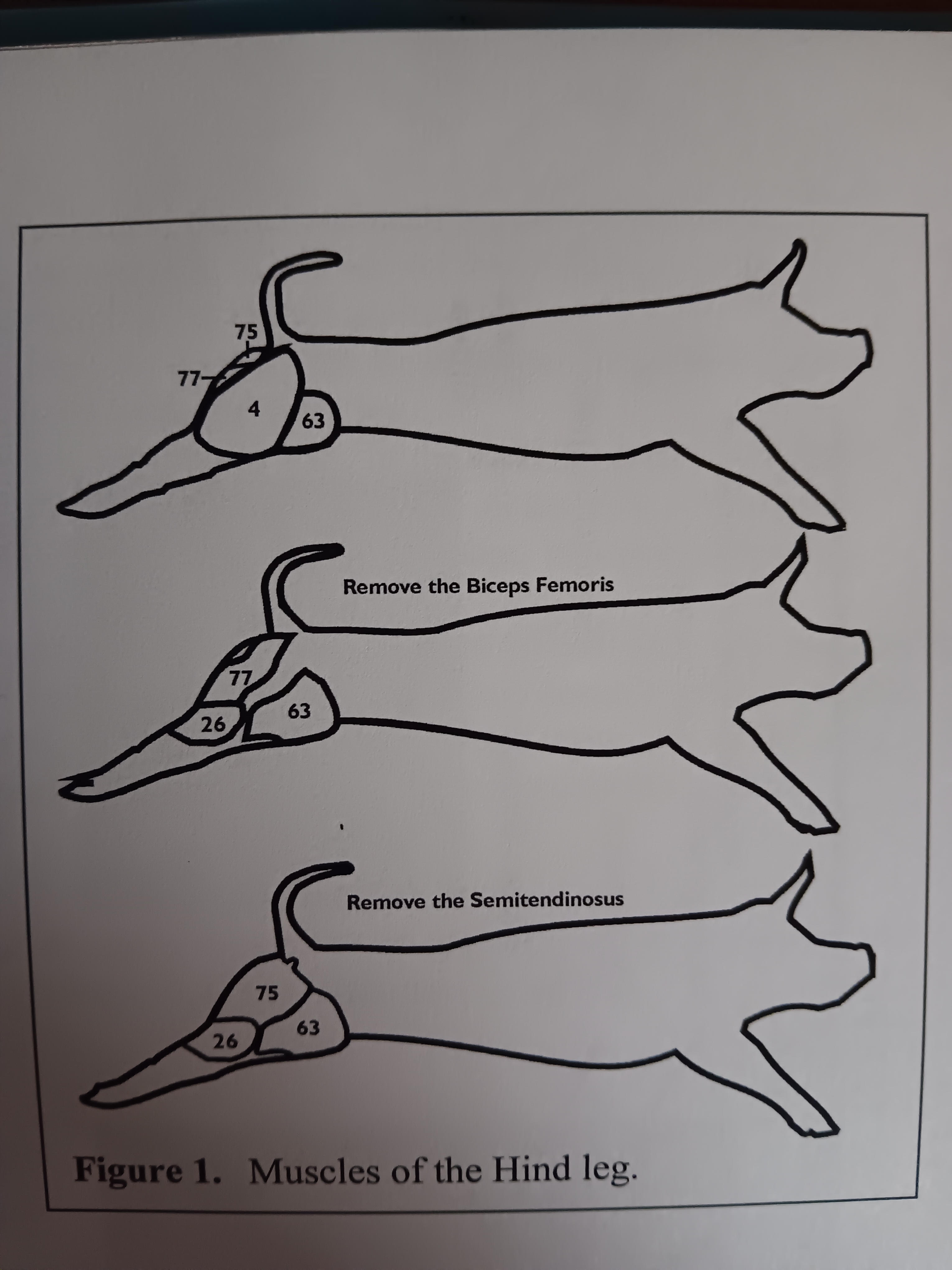
quadriceps femoris
195
65. located in the stomach region, the "abs"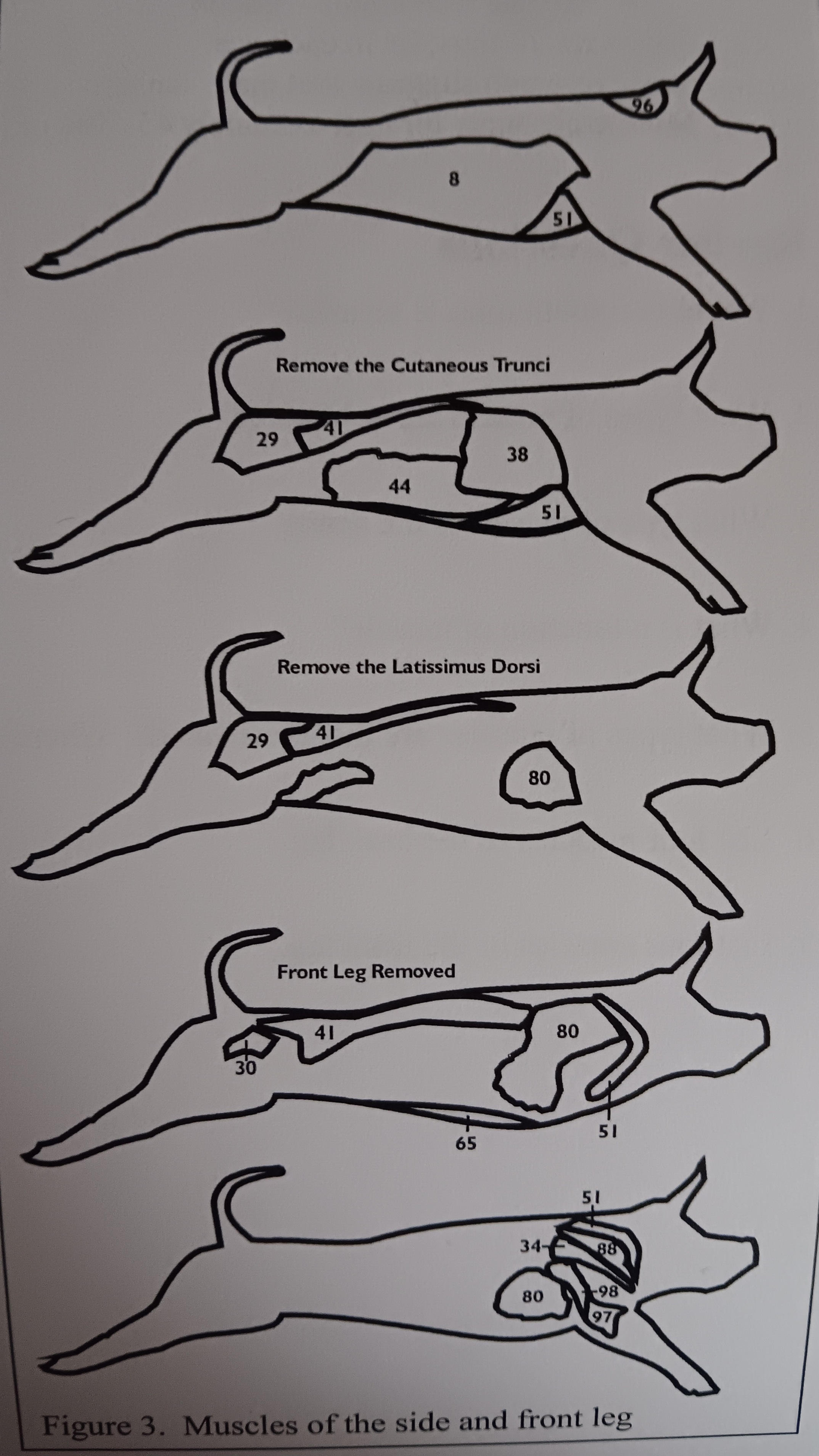
rectus abdominis
196
75. located on inner leg, lateral to Gracilis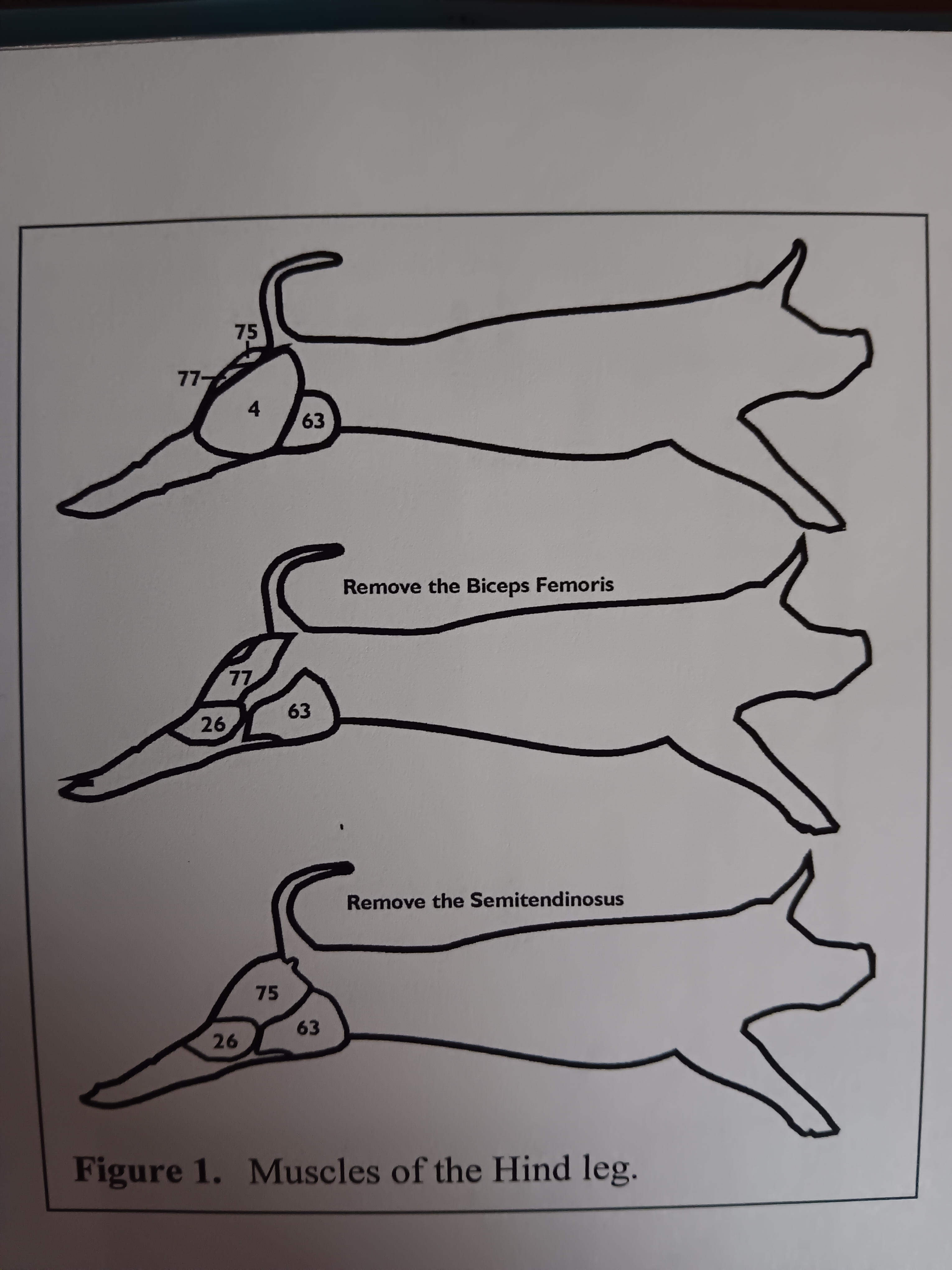
semimembranosus
197
77. located on caudal part of hind leg, below the tail, tendon-like
semitendinosus
198
80. medial, beneath the latissimus dorsi, large white lines make it look like "knuckles" or "serrated"
serratus ventralis
199
88. located in front of the scapula ridge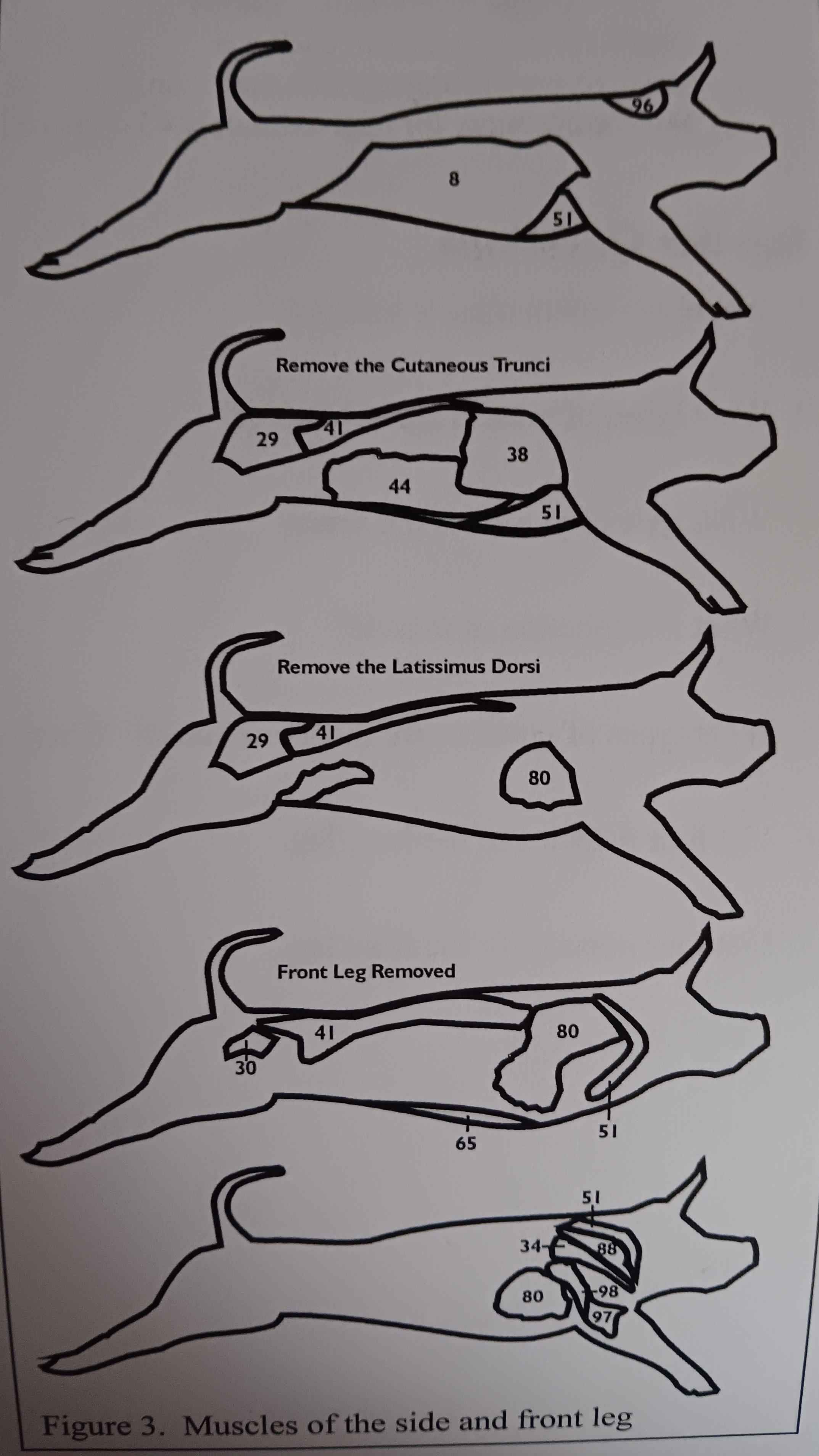
supraspinatus
200
96. located dorsal of the shoulder and looks like a large dark traingle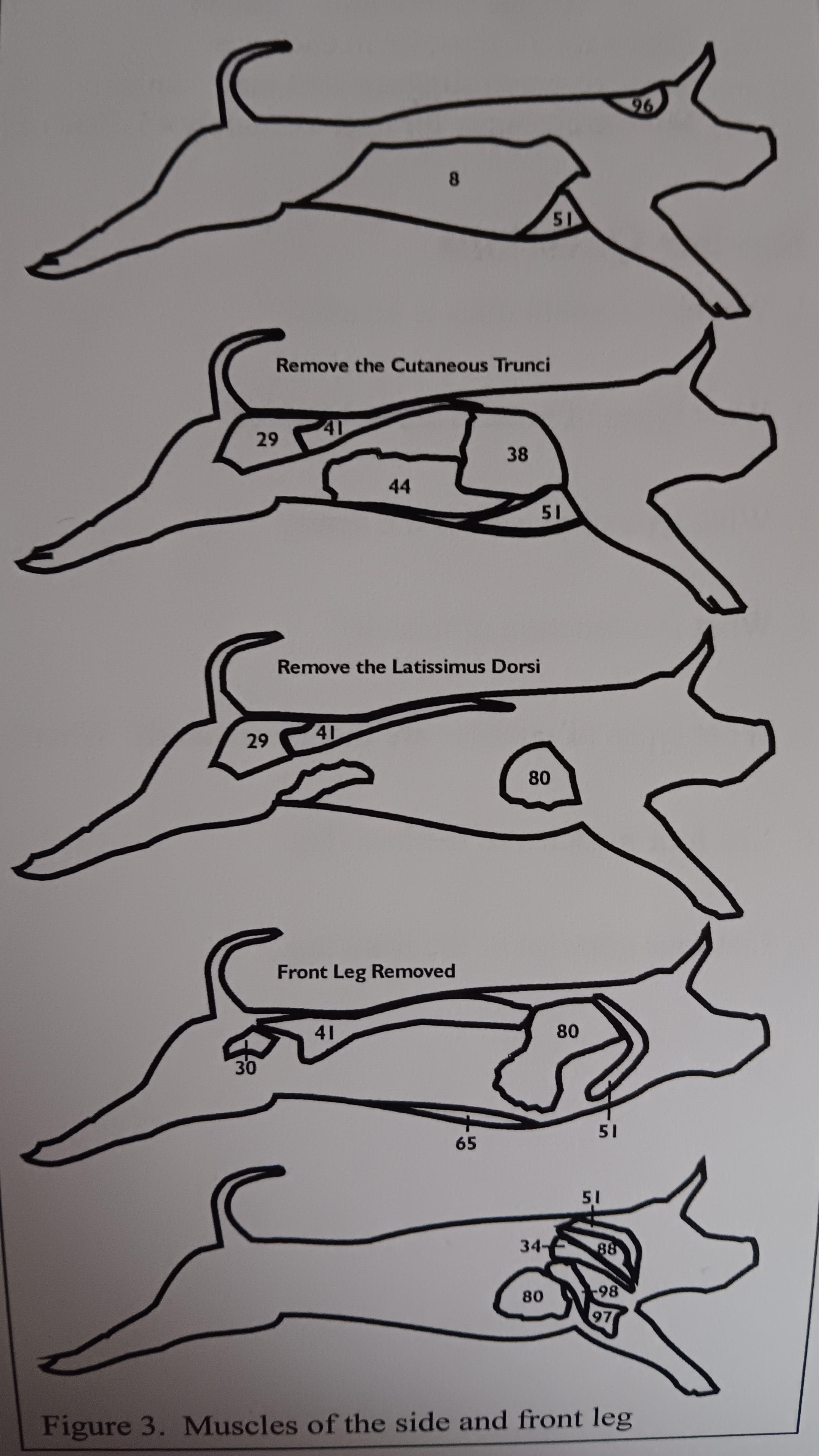
trapezius
201
97-98. located on caudal part of front leg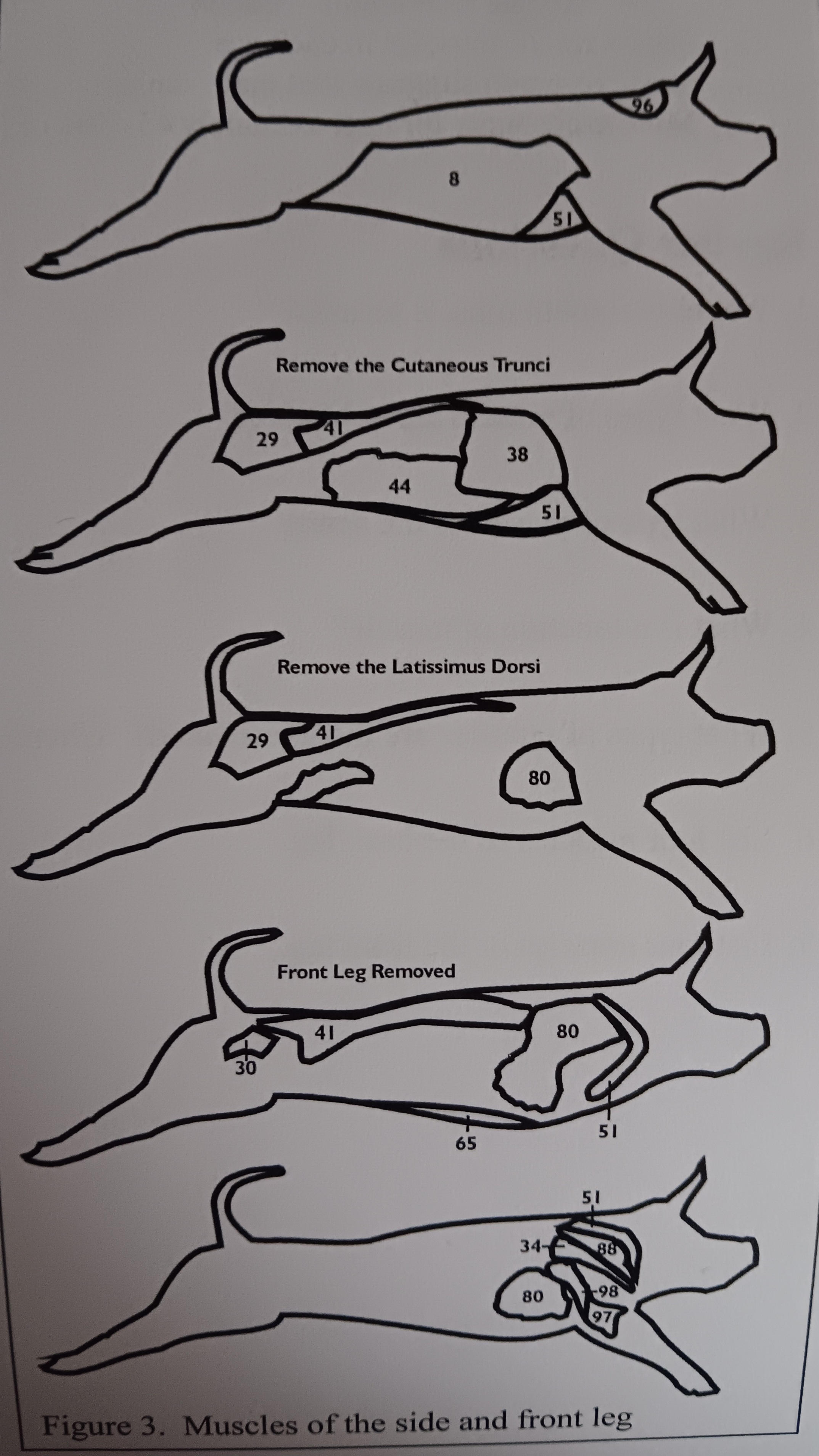
triceps group
202
muscle located on the back of the scapula
subscapularis
203
muscle that begins at the medial surface caudal to the last rib and ventral to the vertebrae
psoas major
204
muscle layer that lines the skin, seen after skinning the animal
responsible for skin twitching reflexes
responsible for skin twitching reflexes
cutaneous trunci
205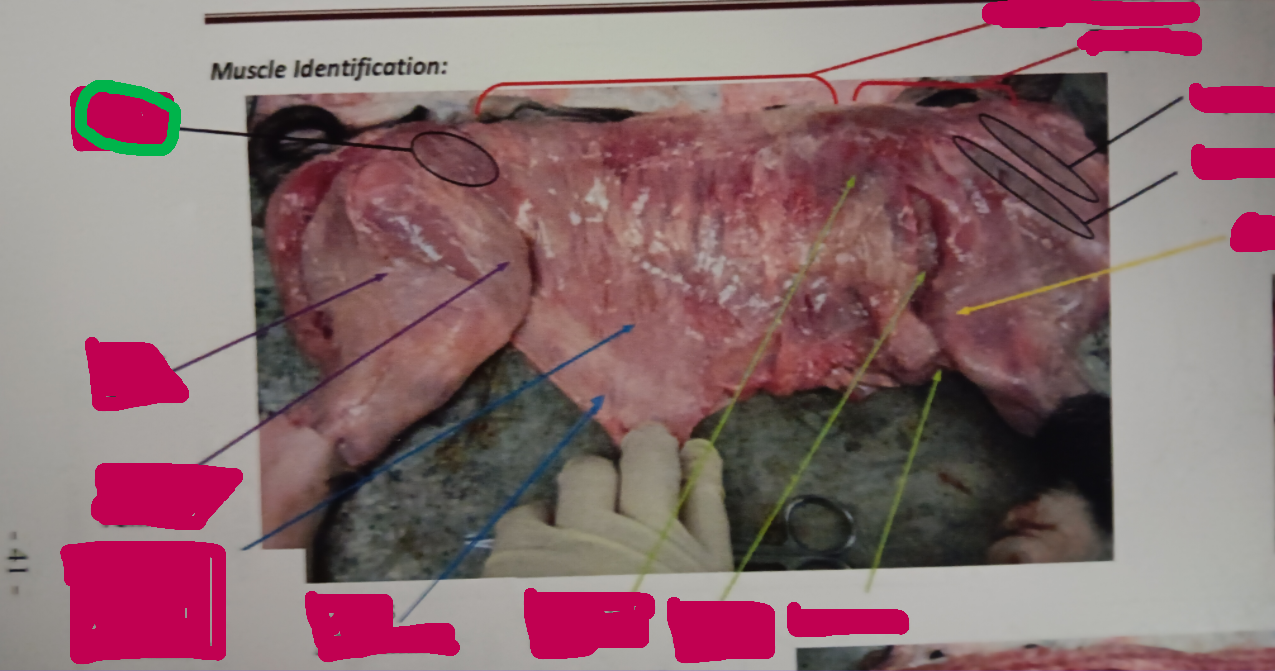
gluteus group
206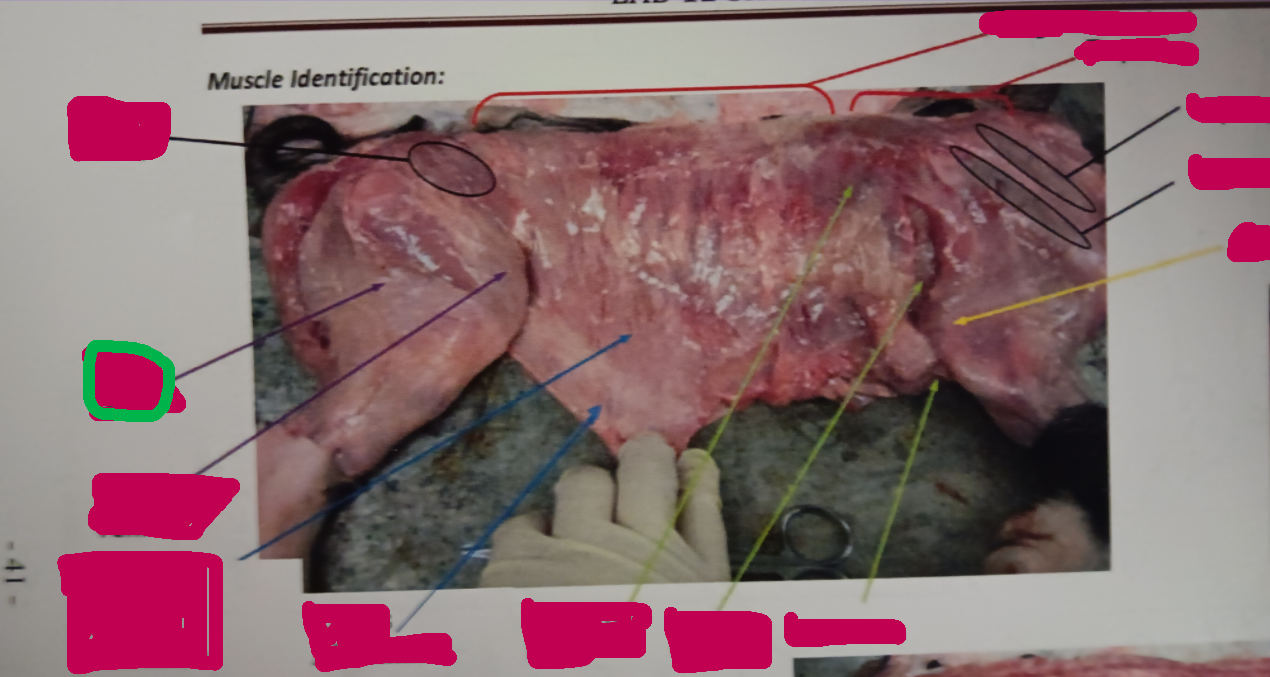
biceps femoris
207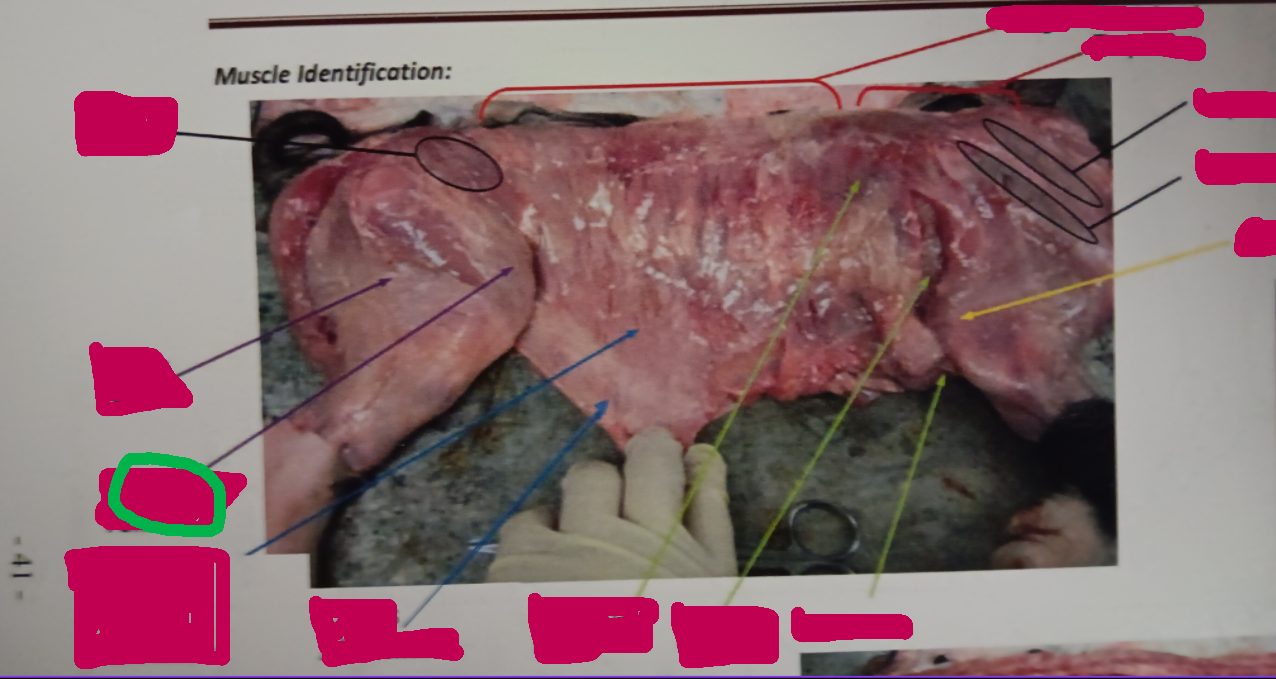
quadriceps femoris
208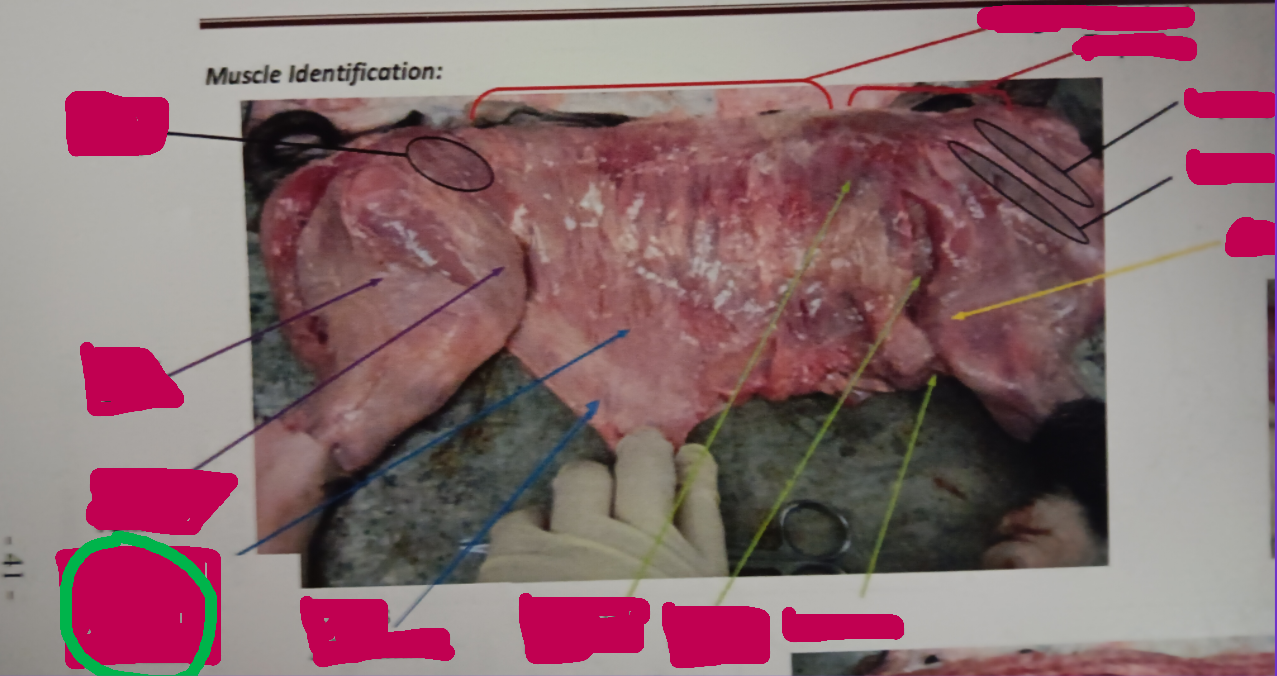
obliquus externus abdominis
209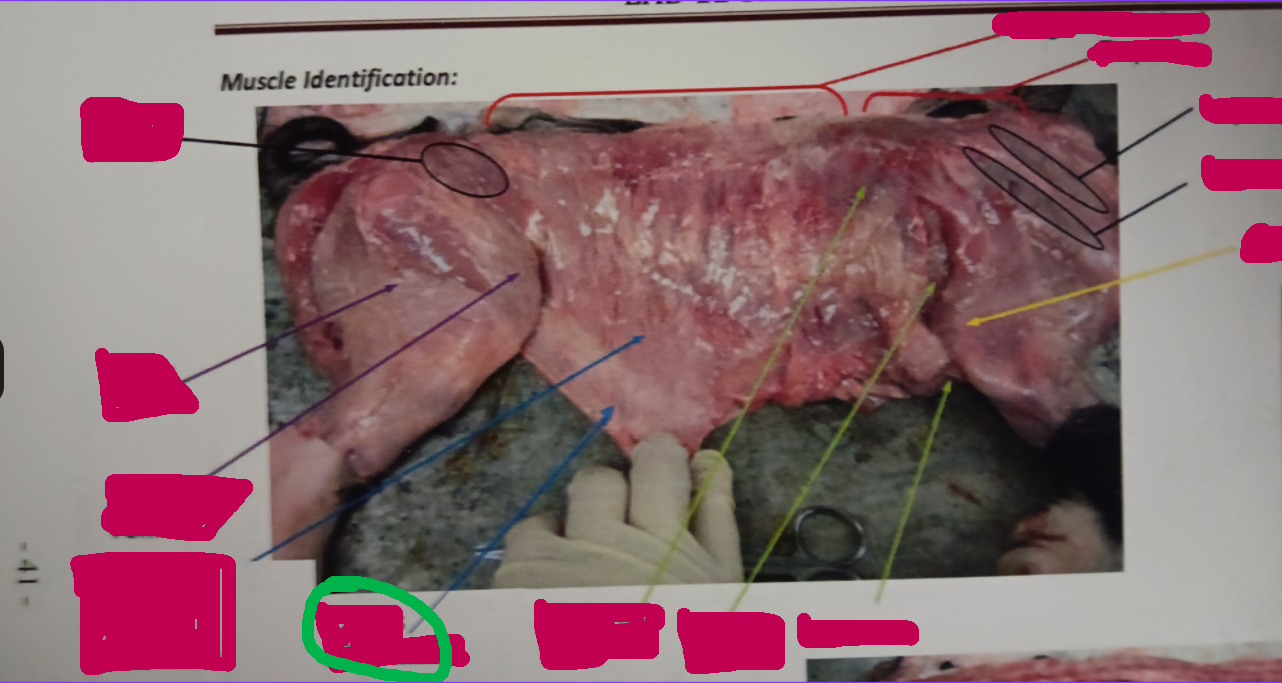
rectus abdominis
210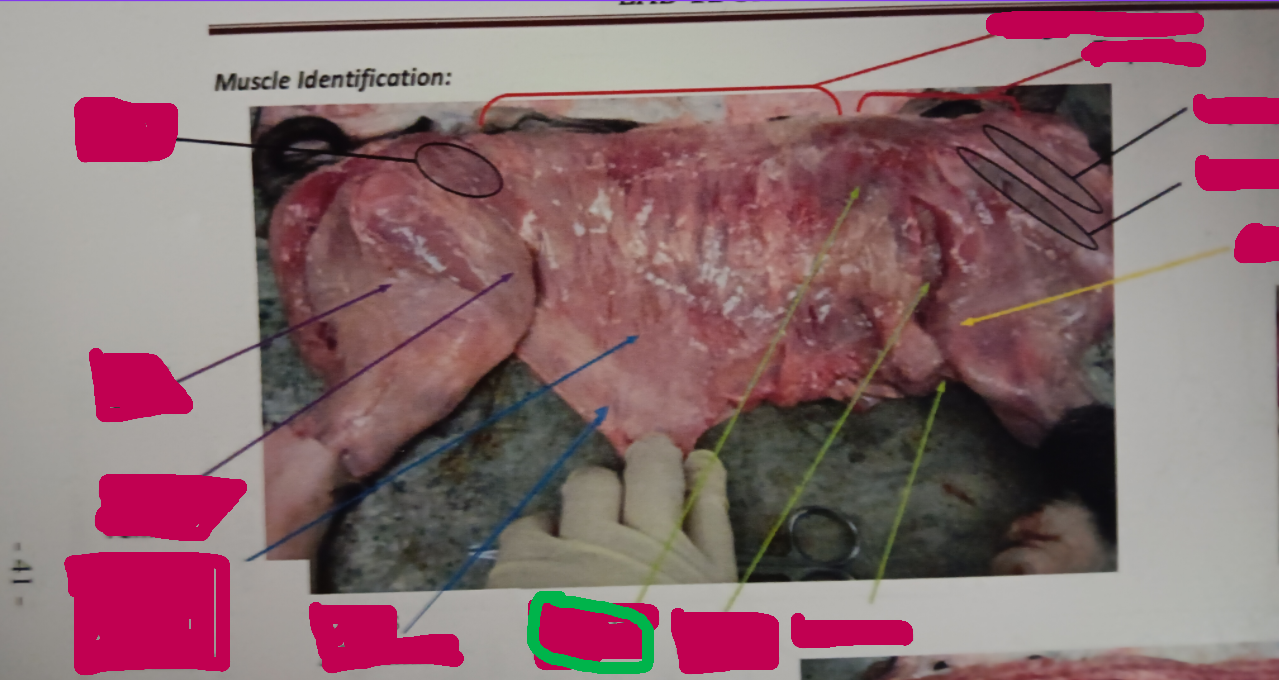
latissimus dorsi
211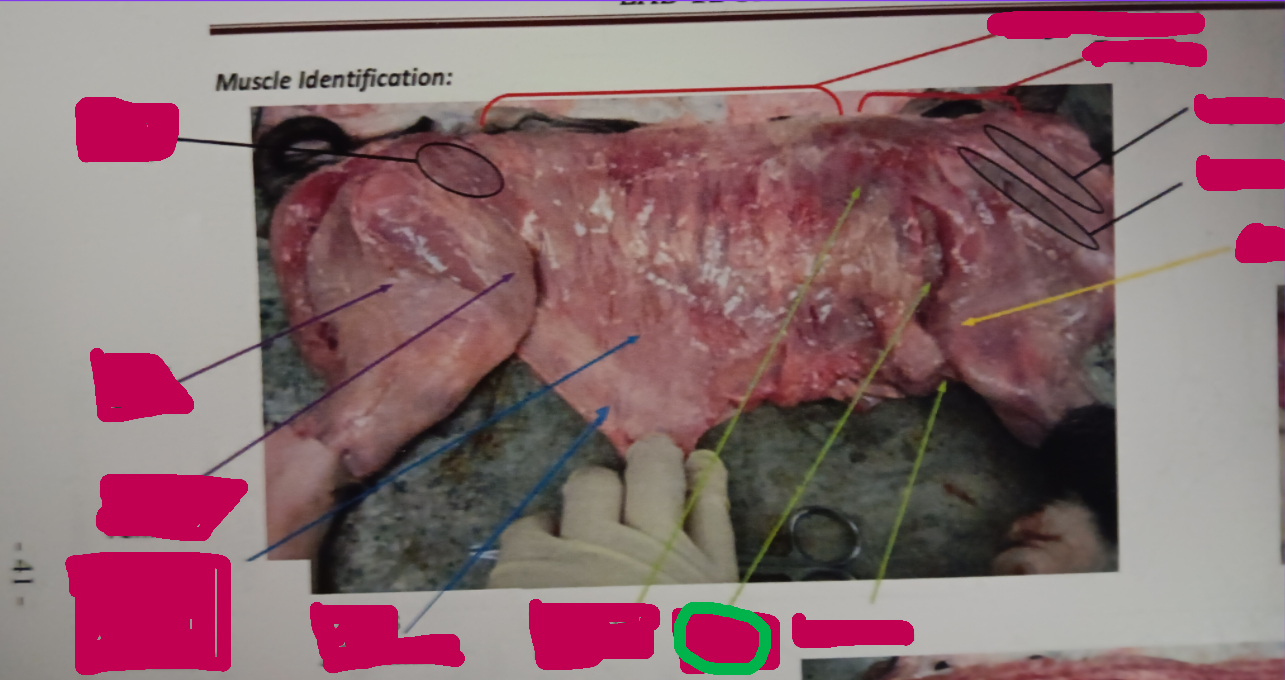
serratus ventralis
212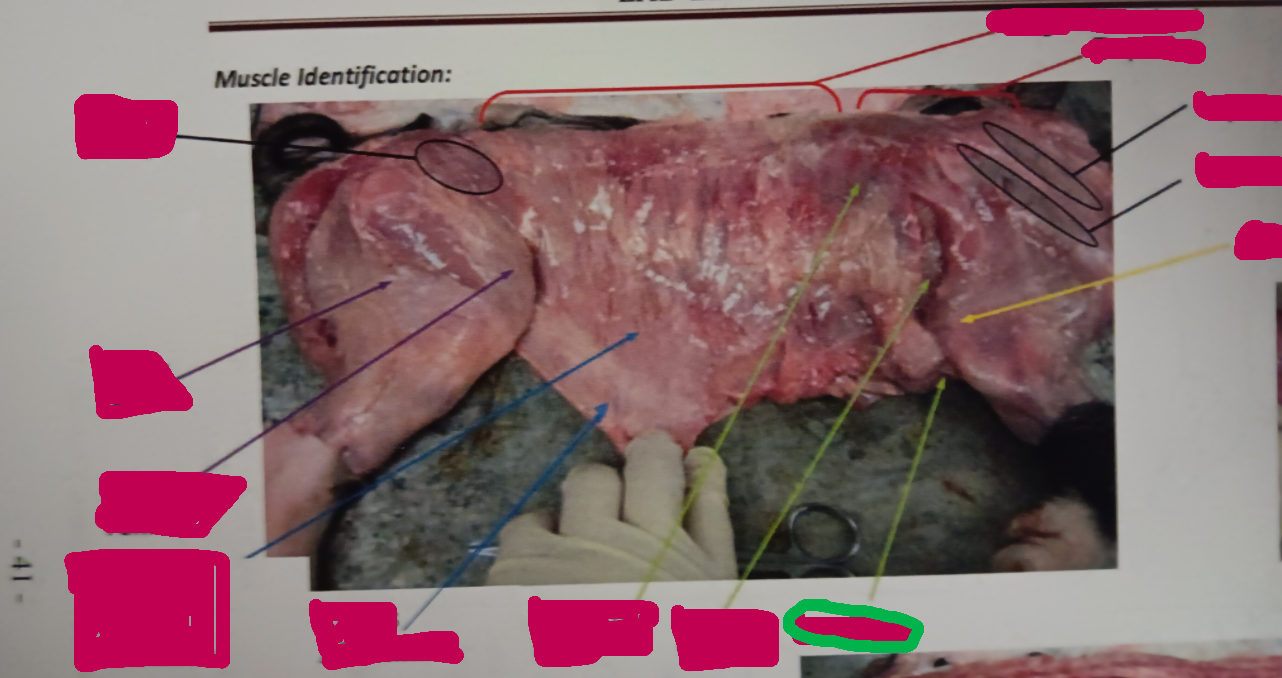
pectoralis
213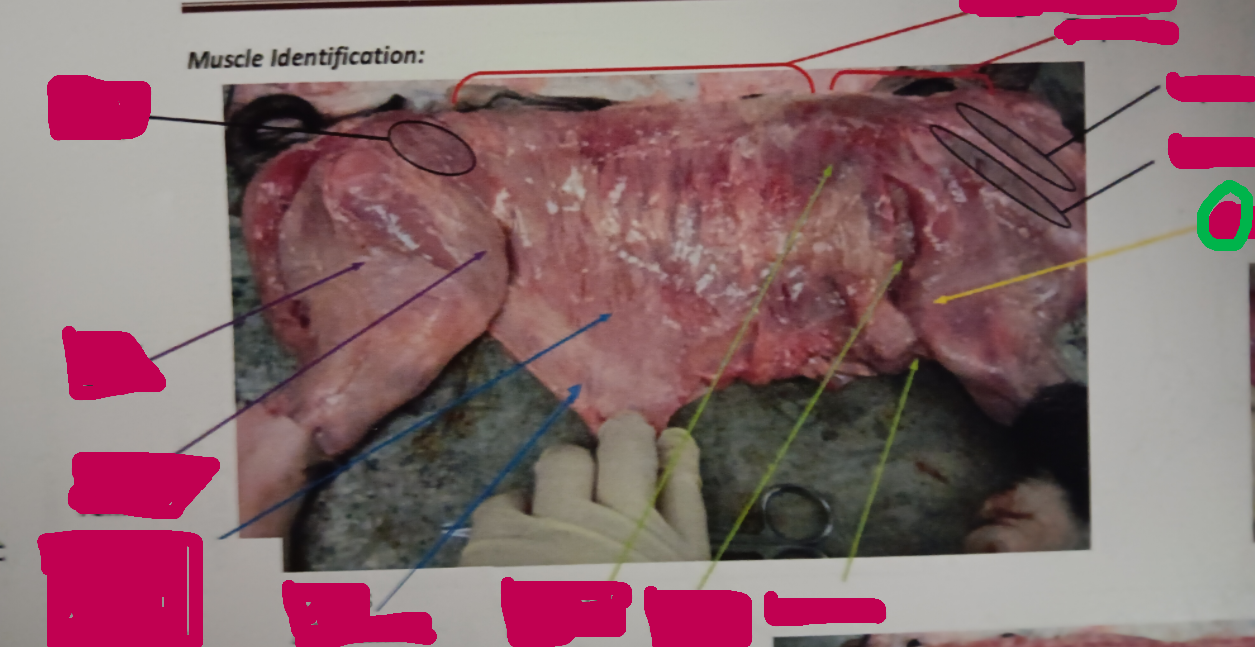
triceps group
214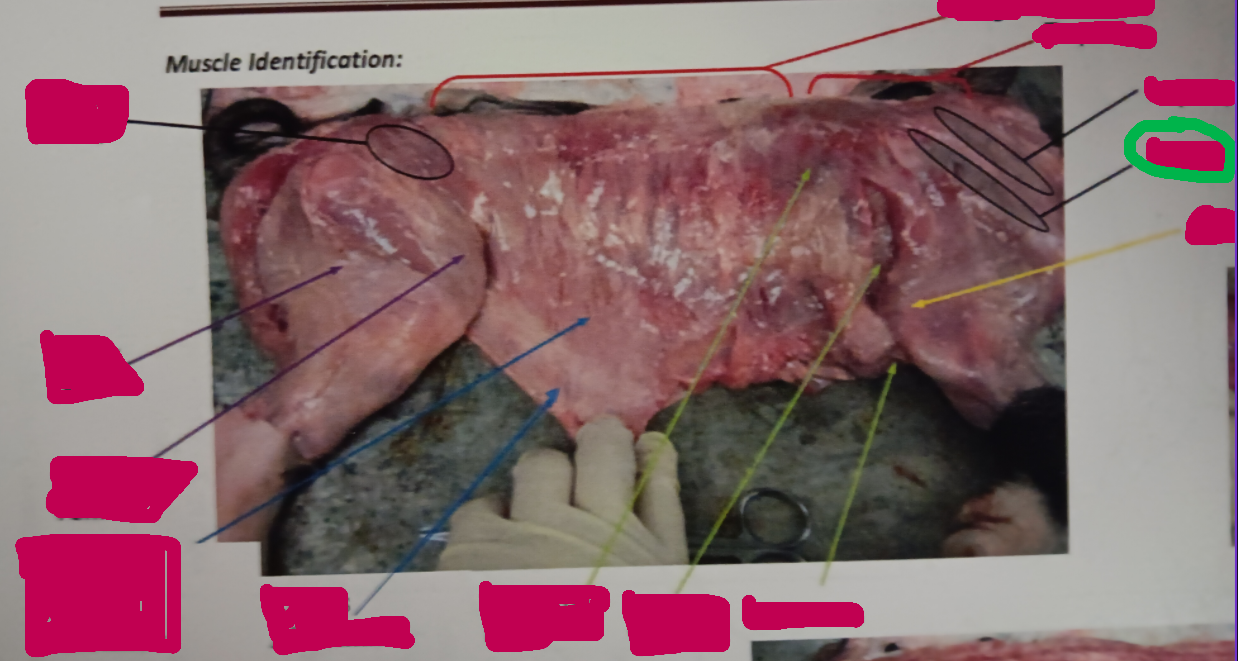
infraspinatus
215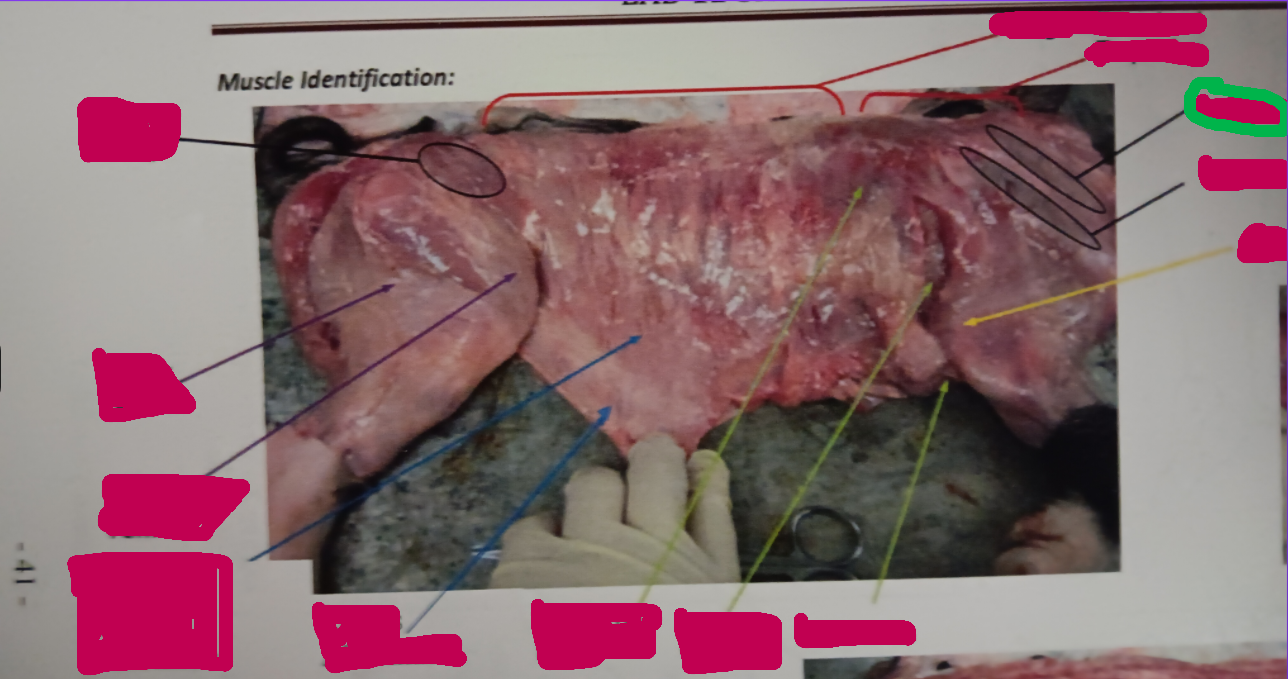
supraspinatus
216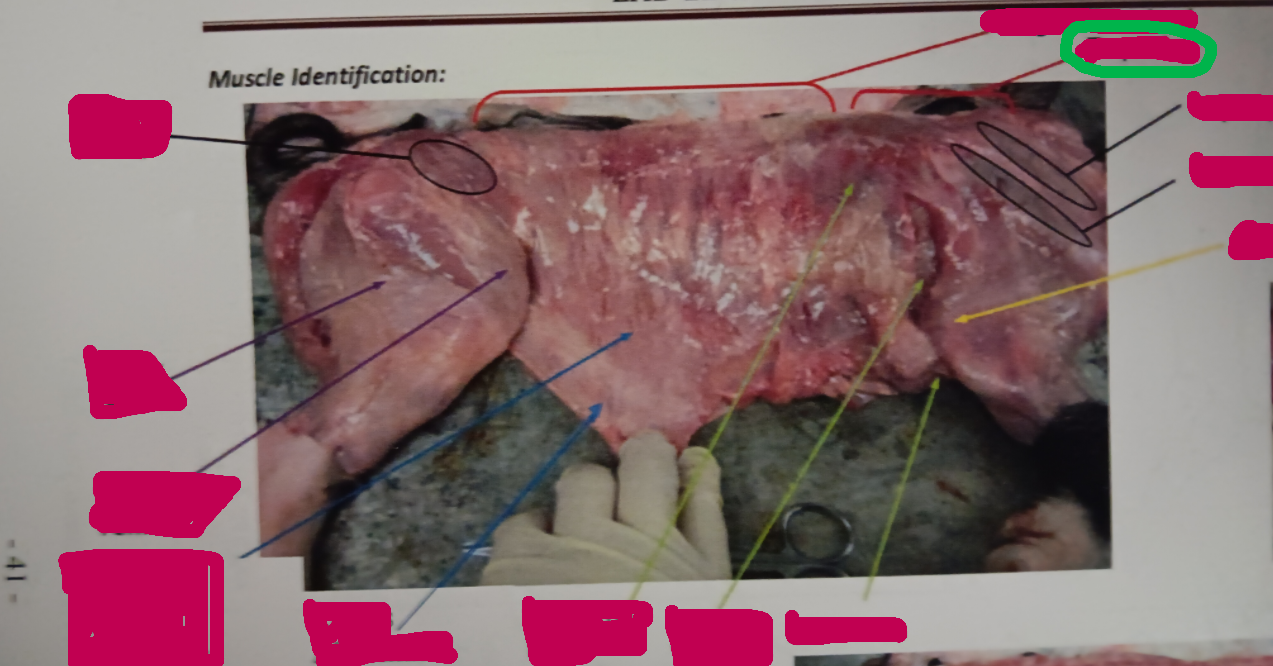
trapezius
217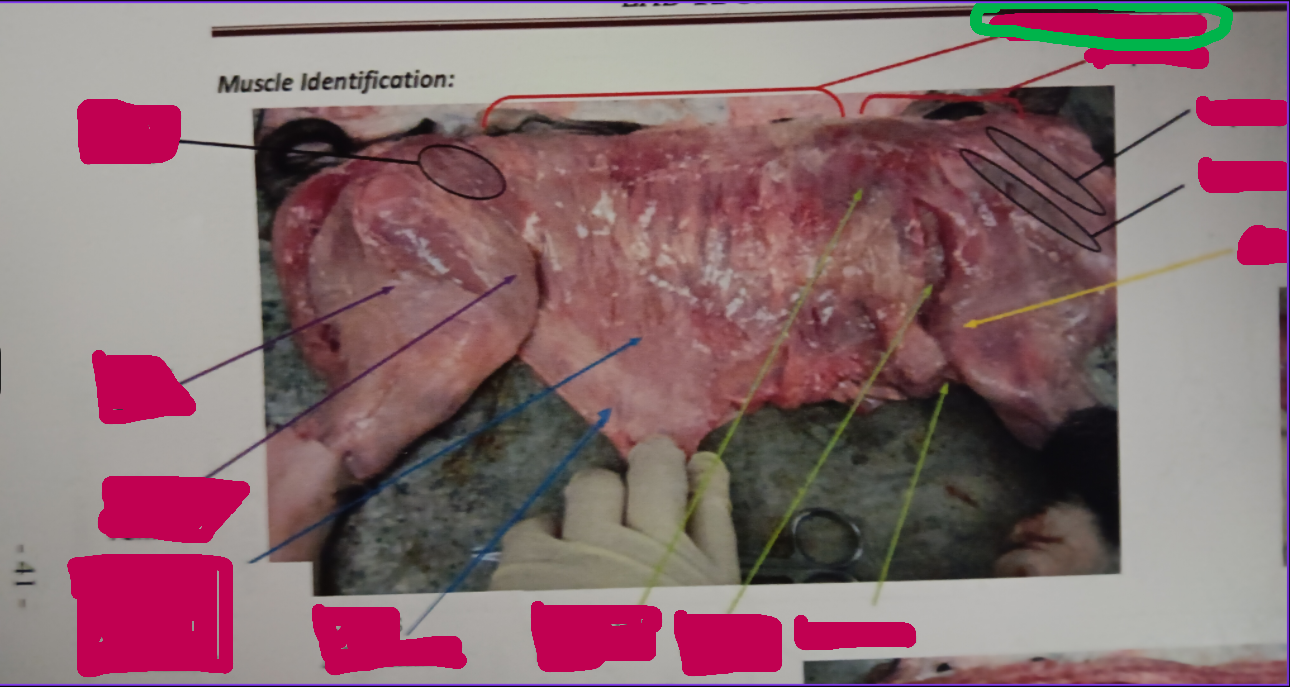
longissimus dorsi
218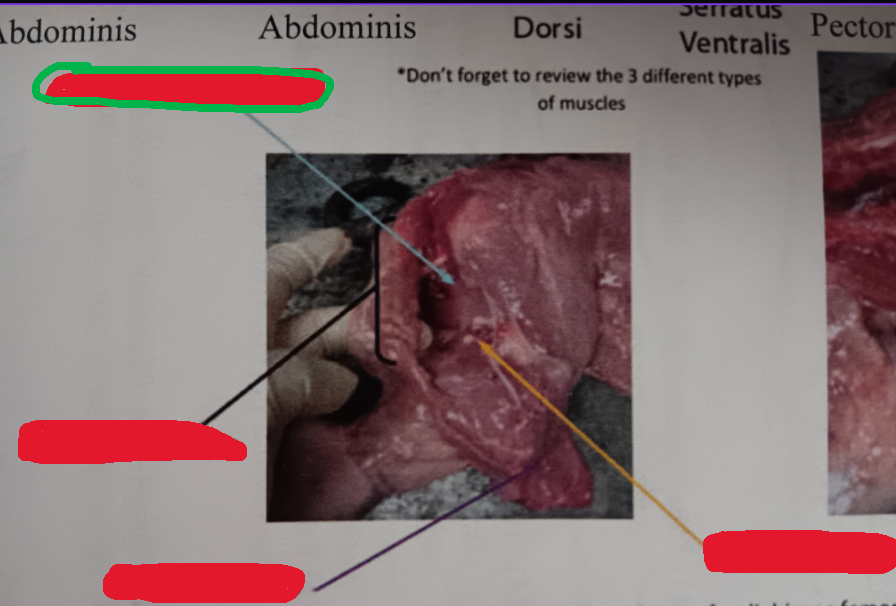
semimembranosus
219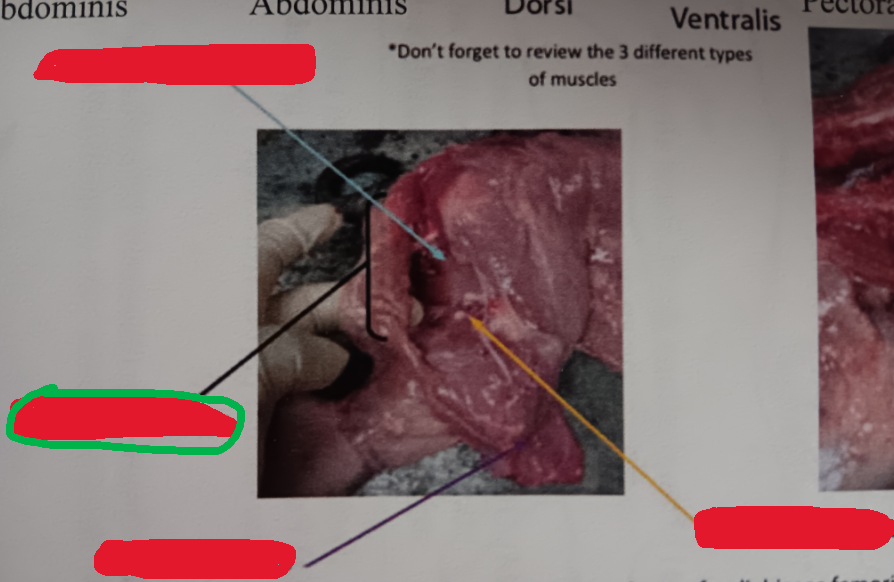
semitendinosus
220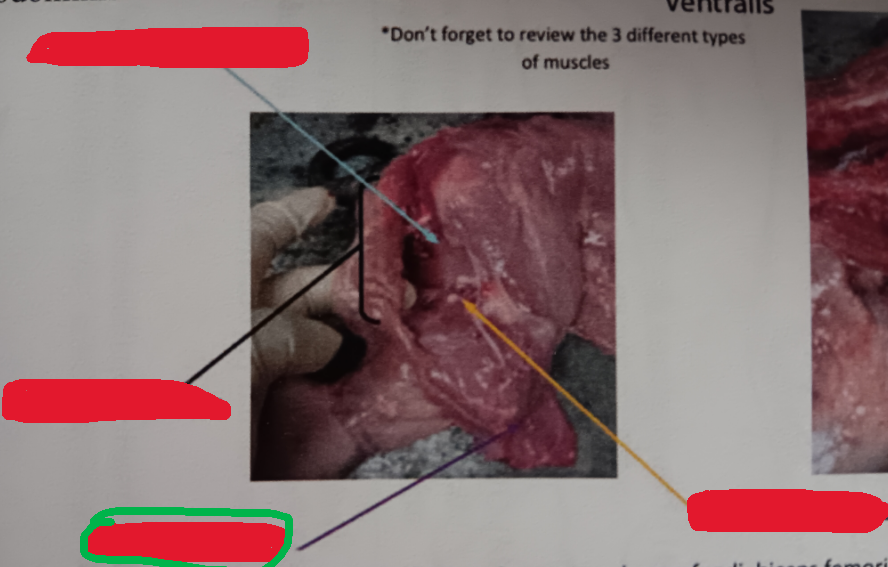
biceps femoris
221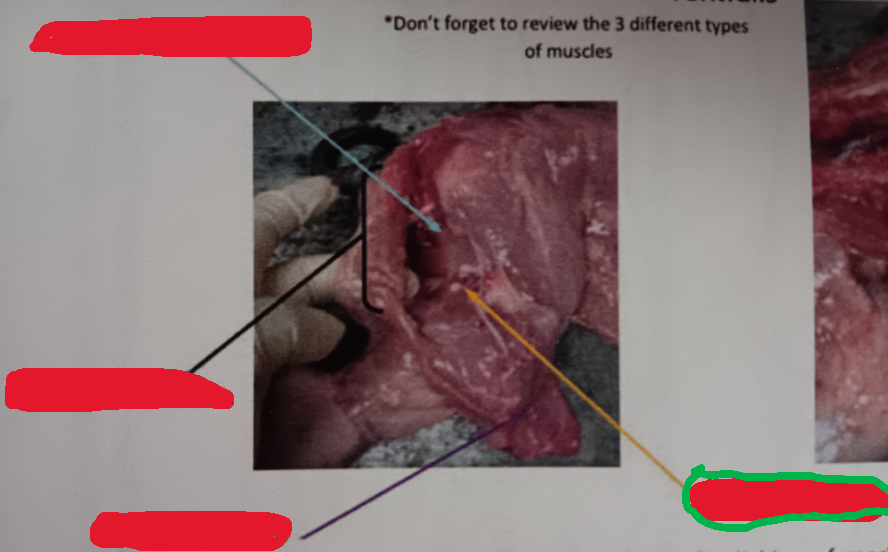
gastrocnemius
222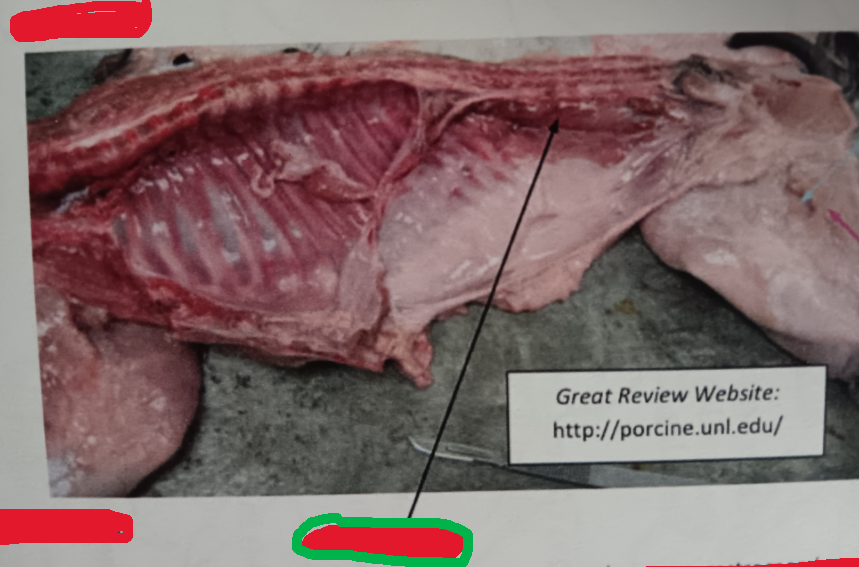
psoas major
223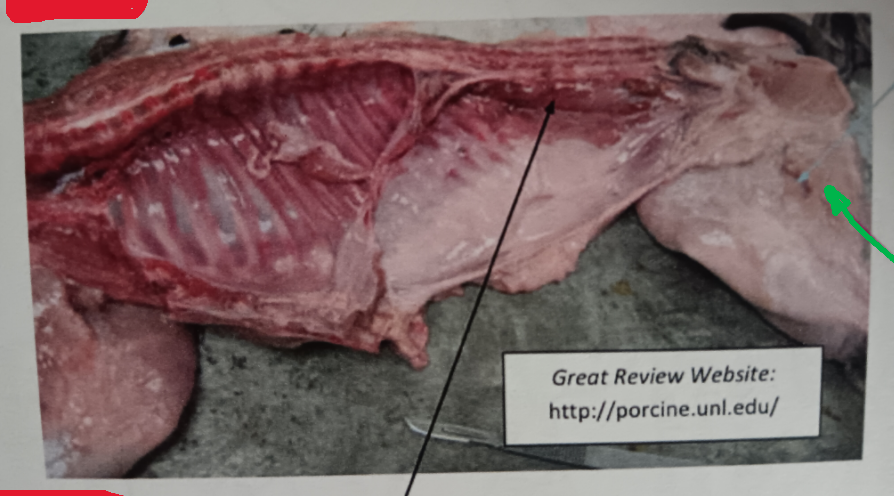
gracilis (thin outer layer)
224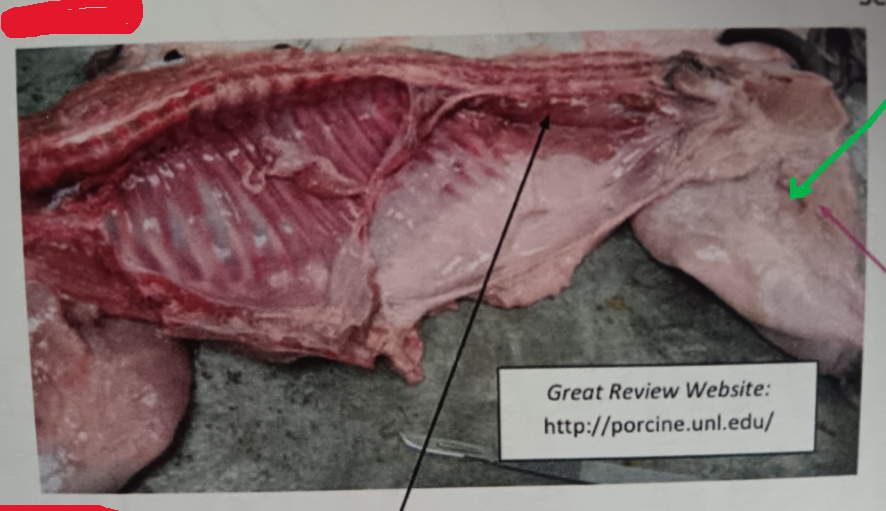
semimembranosus
225
bile prefix
chole
226
gallbladder prefix
cholecyst
227
bladder/sac prefix
cyst
228
teeth prefix
dont
229
intestines prefix
entero
230
stomach prefix
gastri
231
tongue prefix
glosso
232
taste prefix
gusta
233
liver prefix
hepa
234
function in prehension and particle reduction
teeth
235
functions in prehension, mixing, and taste
tongue
236
connects pharynx to stomach
transports food and drink via peristalsis
transports food and drink via peristalsis
esophagus
237
valve that allows enrtry of food into stomach and prevents regurgitation
esophageal sphincter (cardiac sphincter)
238
valve that controls stomach emptying
pyloric sphincter
239
longitudinal wrinkles inside the stomach that become more prominent as the stomach empties
allow stomach to expand as needed
allow stomach to expand as needed
rugae
240
secretory cells found in depressions/pits in the stomach
gastric glands
241
secrete mucous in the stomach
goblet cells (mucous neck cells)
242
secrete hormone gastrin in the stomach
G-cells
243
secrete pepsinogen and rennin in the stomach
chief cells
244
secrete HCl and intrinsic factor in the stomach
parietal glands
245
these include the teeth, tongue, salivary glands, liver, gall bladder, and pancreas
accessory organs (contribute directly to the breakdown of feed)
246
head prefix
cephalo (crani)
247
brain prefix
cerebro (encephalo)
248
nerve prefix
neur
249
eye prefix
optic (opt)
250
ear prefix
ot (auri)
251
the three embryonic germ layers found in almost all bilaterians
endoderm, mesoderm, ectoderm
252
innermost lining of cells within a developing fetus
endoderm
253
________ cells form two "tubes" - digestive and respiratory tubes
also form gastrointestinal system, lungs, thyroid cells, and pancreatic cells
also form gastrointestinal system, lungs, thyroid cells, and pancreatic cells
endoderm
254
middle of the 3 germ cell layers
gives rise to skeletal muscles, reproductive structures, bones, and connective tissue
gives rise to skeletal muscles, reproductive structures, bones, and connective tissue
mesoderm
255
outside layer of the devloping embryo - gives rise to the epidermis and most of the nervous system
ectoderm
256
neural tube cells form the _______ ________ ________
central nervous system (brain, spinal cord)
257
neural crest cells form the __________ _________ __________
peripheral nervous system (somatic and visceral sensory neurons)
258
elements under voluntary control
somatic nervous system
259
governs automatic physiological responses
autonomic nervous system
260
the two elements of the autonomic nervous system
parasympathetic system, sympathetic system
261
governs vegetative functions such as digestion and homeostatic maintenance
parasympathetic system
262
governs fight or flight (stress) responses
sympathetic system
263
the two distinct colors of the tissue in the nervous system
gray, white
264
contains cell bodies and nuclei and dendrites of the nerve cells
gray matter
265
gray matter contains ____________ axons
unmyelinated
266
_____ ________ forms the cortex over the cerebrum as well as deeper masses known as nuclei
gray matter
267
contains high concentrations of myelinated axons
white matter
268
the three major parts of the brain
cerebrum, cerebellum, brainstem
269
the brain contains 4 internal chambers called ________ that are filled with cerebrospinal fluid
ventricles
270
brain ventricles are derived developmentally from the ______ of the embryonic neural tube
lumen
271
connective tissue membranes that surround the brain and spinal cord
lie between nervous tissue and bones
lie between nervous tissue and bones
meninges
272
in non-ectoderm glia (microglia), these are resident immune cells
meninges
273
nerve cells, conduct nerve impulses
neurons
274
supporting cells, provide nutrition, support, establish blood-brain barrier, make myelin sheath around axons of neurons
glial cells
275
responsible for higher mental functions, contains both gray and white matter
cerebrum
276
the __________ is divided into two hemispheres
cerebrum
277
in more developed animals, the hemispheres of the cerebrum consist of thick folds called ________ which are separated by grooves called ________
gyri, sulci
278
cerebrum - responsible for voluntary motor control, reasoning, planning, emotions, social judgement
frontal lobe
279
cerebrum - percieves sensations from skin, muscles, tendons, and joint receptors
parietal lobe
280
cerebrum - contains auditory centers to recieve signals from the ears
important in memory - damage to area can cause amnesia
important in memory - damage to area can cause amnesia
temporal lobe
281
cerebrum - responsible for vision and eye coordination
occipital lobe
282
cerebrum - intigrates sensory information from viscera, role in taste and language function
located in the middle of the brain where all the lobes meet, cannot be seen externally
located in the middle of the brain where all the lobes meet, cannot be seen externally
insula
283
band of nervous tissue that connects the two halves of the cerebrum
carries nerve impulses between the two cerebral hemispheres
carries nerve impulses between the two cerebral hemispheres
corpus callosum
284
relay center for all sensory information (except smell) going to cerebrum
thalamus
285
the walls of the third brain ventricle make up the ____________, which is filled with cerebral spinal fluid
thalamus
286
floor and part of walls of third brain ventricle
responsible for regulating many types of behavior, including:
thirst, hunger, body temp, sleep/wakefulness, sexual arousal, anger, fear, pain, pleaure, ADH, oxytocin, inhibitory pituitary-regulating hormones
responsible for regulating many types of behavior, including:
thirst, hunger, body temp, sleep/wakefulness, sexual arousal, anger, fear, pain, pleaure, ADH, oxytocin, inhibitory pituitary-regulating hormones
hypothalamus
287
also know as the hypophysis - hormone-related functions
pituitary
288
two parts of the pituitary
anterior pituitary, posterior pituitary (adenohyphphysis, neurohyphopysis)
289
pituitary - secretes GH, TSH, ACTH, FSH, LH, and prolactin
release of these hormones regulated by the hypothalamus
release of these hormones regulated by the hypothalamus
anterior pituitary
290
pituitary - excretes ADH and oxytocin, these hormones are produced by the hypothalamus
posterior pituitary
291
the __________ _______ sits at the base of the brain and is protected by the sella turica and sphenoid bone
pituitary gland
292
point at which optic nerves cross over on the way to the brain from the eyes
optic chiasm
293
part of the forebrain that processes olfactory information (may be its only function in lower vertebrates)
it is also the neural basis of emotional states in higher vertebrates
it is also the neural basis of emotional states in higher vertebrates
limbic system
294
the hypothalamus and fornix are structures of the _______ ________
limbic system
295
second largest part of the brain, consist of gray and white matter
white matter has a distinctive appearance that looks like shrub (arbor vitae)
white matter has a distinctive appearance that looks like shrub (arbor vitae)
cerebellum
296
the ________ recieves input from joint, tendon, and muscle receptors and is responsible for coordination of movement
cerebellum
297
the brainstem is composed of the __________, ______, and ________ _____________
midbrain, pons, medulla oblongata
298
brainstem - short segment that connects the hindbrain and forebrain
many functions - responses to stimuli, eye movement, vocalization
many functions - responses to stimuli, eye movement, vocalization
midbrain
299
brainstem - contains two respiratory centers and is a pathway for nerve fibers passing through the brain to the spinal cord
pons
300
brainstem - contains cell bodies of several cranial nerves
primary function is regulation of several autonomic systems
primary function is regulation of several autonomic systems
medulla oblongata
95 more cards in OutLearn. Open the full deck