ANS 2140L: Unit 2
Study these flashcardsFree · spaced repetition · iPhone, Android, Mac & web
First 300 of 455 cards
1
joint prefix
arth (arthr)
2
wrist prefix
carpus
3
cartilage prefix
chondr
4
to break suffix
clast
5
ribs prefix
cost
6
bone marrow prefix
myel
7
bone prefix
osteo (oss)
8
union prefix
syn
9
ankle prefix
tarsus
10
the study of bones
osteology
11
1/3 of bone is made of _________
ossien (organic)
12
2/3 of bone is made of __________ ___________
tricalcium phosphate (inorganic)
13
hard, outer skeleton that is outside of the body
found in arthropods and molluscs with shells
found in arthropods and molluscs with shells
exoskeleton
14
skeleton embedded within the muscle
endoskeleton
15
consists of the bones of the skull, ribs, veterbrae, and sternum
highly mobile and protect major organs
highly mobile and protect major organs
axial skeleton
16
consists of bones of the appendages/limbs, includes wings, tails, legs, and arms
aid in motion of the organism
aid in motion of the organism
appendicular skeleton
17
bones embedded in the organs
some of these do not serve a function at this point
some of these do not serve a function at this point
heterotrophic bones (splanchnic or visceral bones)
18
end of the muscle that is attached to a stationary part of bone
origin
19
the end of the muscle that is attached to a mobile section of bone
insertion
20
_________ attach muscle to bone
tendons
21
__________ attach bone to bone
ligaments
22
the two ends of long bone
epiphysis
23
the shaft of long bone
diaphysis
24
a growth region of cartilage between the epiphysis and diaphysis
epiphyseal plate
25
line formed in the bone when growth has ended
remnant of the epiphyseal plate
remnant of the epiphyseal plate
epiphyseal line
26
membrane lining the medullary cavity
endosteum
27
membrane covering the outer surface of the bone composed of connective tissue
full of nerves and causes pain when a bone breaks
full of nerves and causes pain when a bone breaks
periosteum
28
hollow area in the center of the bone where bone marrow is located
bone marrow produces blood cells
bone marrow produces blood cells
medullary cavity
29
spongy bone, also known as cancellous bone
diploe
30
dense, hard layer of bone
compact bone
31
composed of adipocytes and stem cells
yellow bone marrow
32
gives rise to red blood cells, platelets, and some white blood cells
red bone marrow
33
type of bone that is dumbbell shaped, includes bones of the limbs
aid in movement and carry the weight of the body
aid in movement and carry the weight of the body
long bone
34
true/false: long bones include the ankle and wrist bones
false
35
type of bone that is thin and curved, mostly diploe surrounded by thin layer of compact bone
provide protection to vital organs
provide protection to vital organs
flat bone
36
type of bone that is round or cubicle in shape
reduce friction and concussion
reduce friction and concussion
short bone
37
bones that form tendons and aid in movement (eg patella)
sesamoid bones (type of short bone)
38
type of bone - bones of the vertebral column
irregular bone
39
type of bone that contains spaces filled with air, spaces serve numerous functions
birds - reduce weight and allow flight
mammals - help warm and condition air during inspiration
birds - reduce weight and allow flight
mammals - help warm and condition air during inspiration
pneumatic bone
40
birds have an _____ __________ _________, meaning inspired air moves through their bones along with their lungs
open respiratory system
41
points at which 2 or more bones meet
lined with cartilage which provides cushion and smooth movement
lined with cartilage which provides cushion and smooth movement
joints
42
bones in this joint do not move
they may overlap or interlock and are held together by fibers
they may overlap or interlock and are held together by fibers
fibrous (immovable)
43
this type of joint allows for some movement
bones are held together by ligaments and padded with cartilage
bones are held together by ligaments and padded with cartilage
cartilaginous (slightly moveable)
44
this type of joint is the most common in the body
have a wide range of motion
have a wide range of motion
synovial (freely moving)
45
the three types of joints
fibrous, cartilaginous, synovial
46
non-mobile joints, found in the skull
immovable
47
extension and flexion joints, elbow or knee
hinge
48
joints with rotation of one bone around another, joint just below the skull
pivot
49
joints with flexion, extension, adduction, abduction, and rotation
includes the shoulder and hip joints
includes the shoulder and hip joints
ball-and-socket
50
joints with flexion, extension, adduction, abduction, and circumduction
found in wrist and foot
found in wrist and foot
condyloid
51
joints that allow for smooth continuous motions
foud in wrist and vertebrae
foud in wrist and vertebrae
gliding
52
joints with flexion, extension, adduction, abduction, circumduction
found in thumb
found in thumb
saddle
53
true/false: during early life, bones are solid
false
54
the skeletal system is responsible for providing ________ __________, _______ ________, and works with muscle to perform _______ ____________, and protects ______ ________
structural support, body form, body movements, major organs
55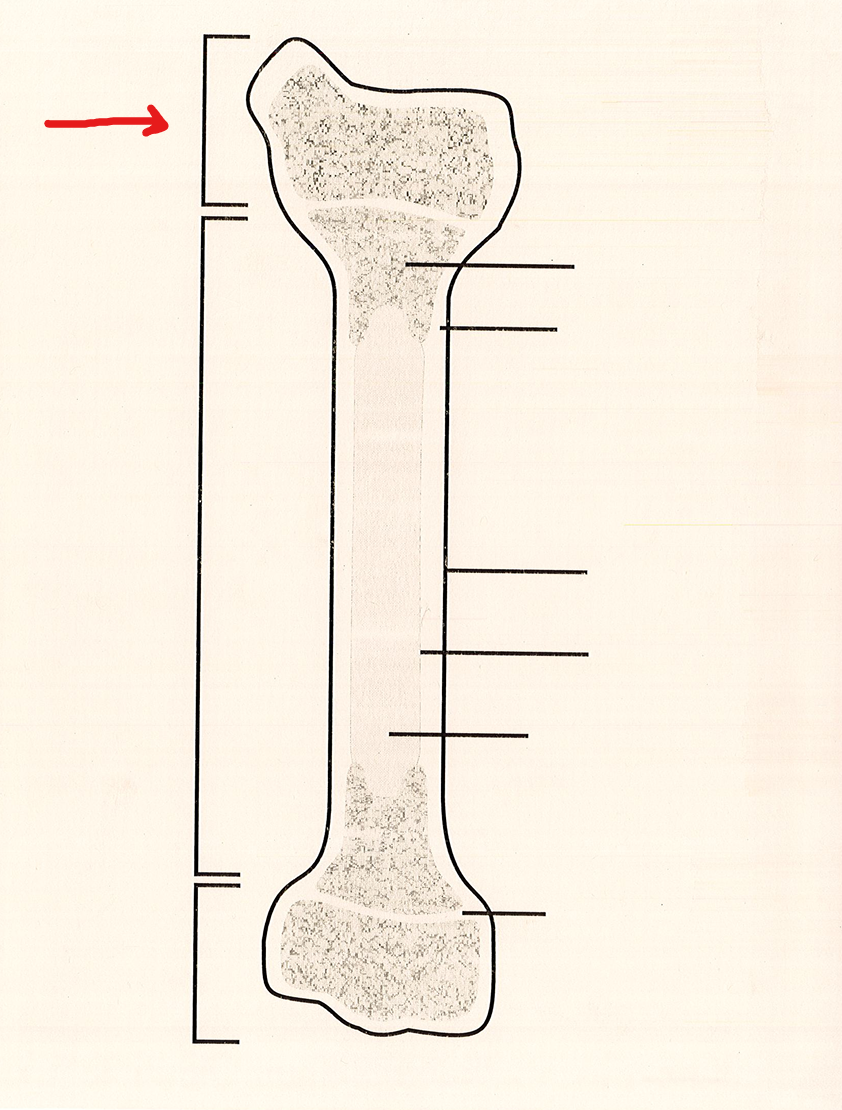
proximal epiphysis
56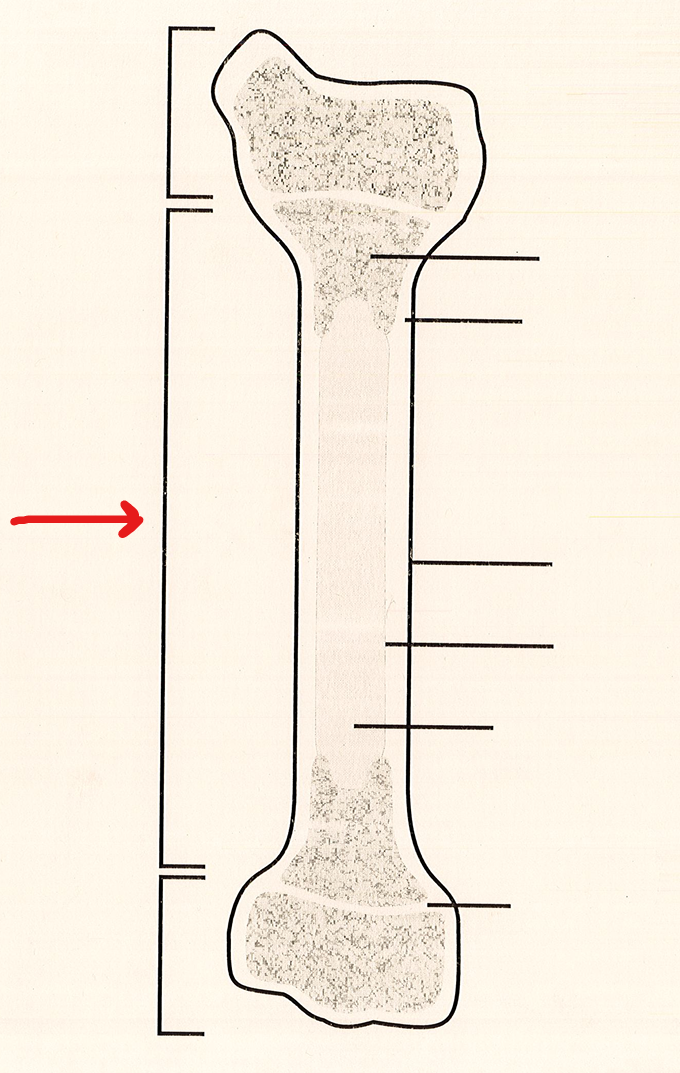
diaphysis
57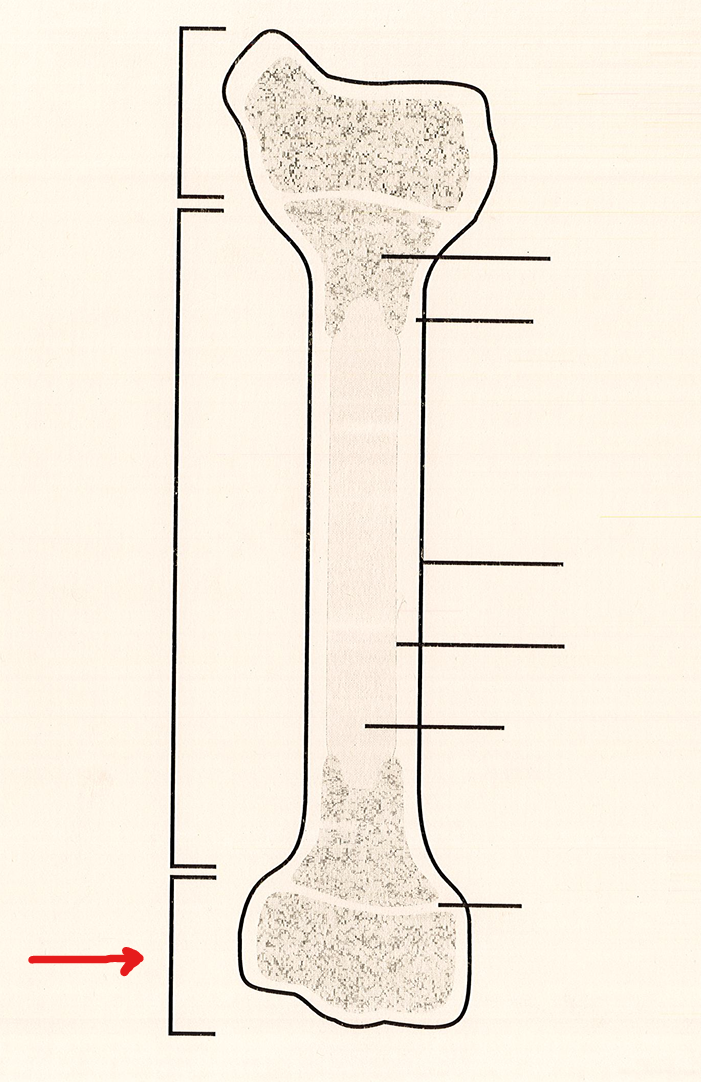
distal epiphysis
58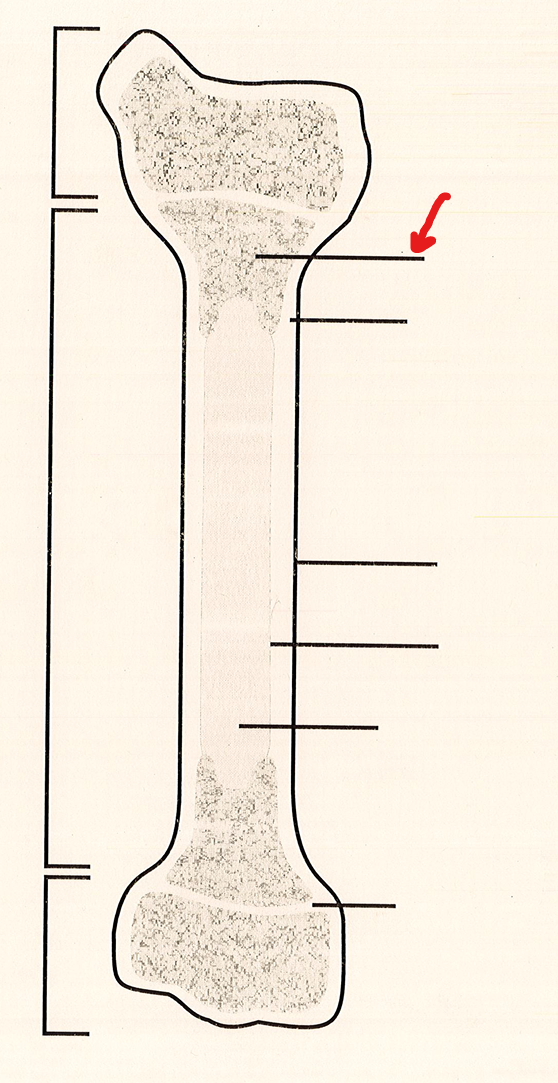
spongy bone
59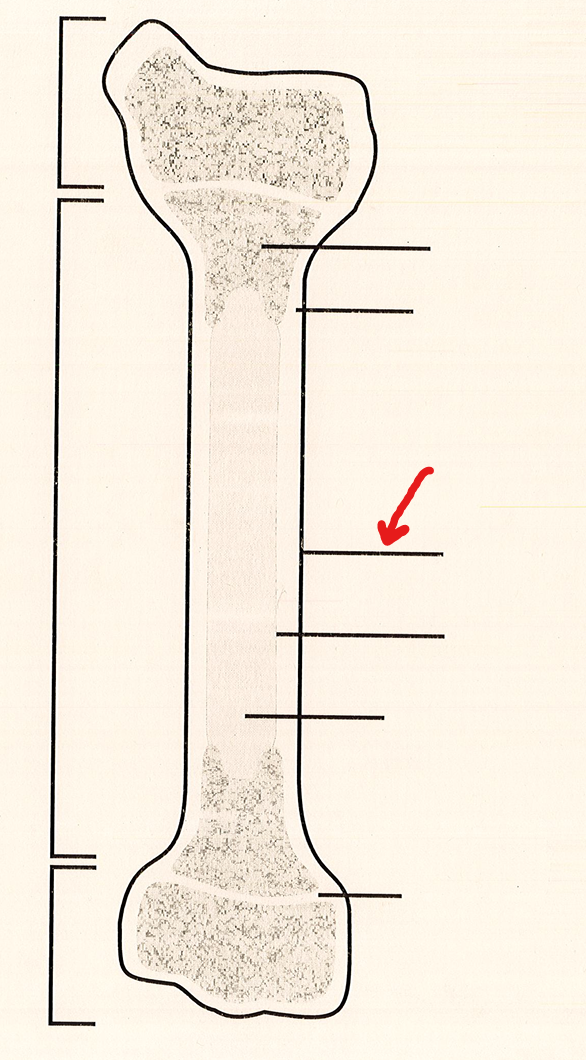
periosteum
60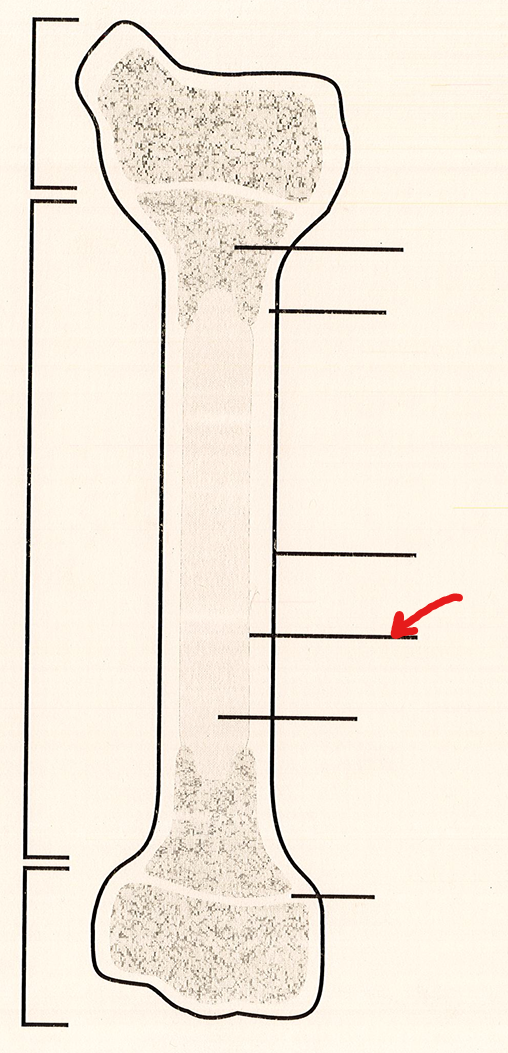
endosteum
61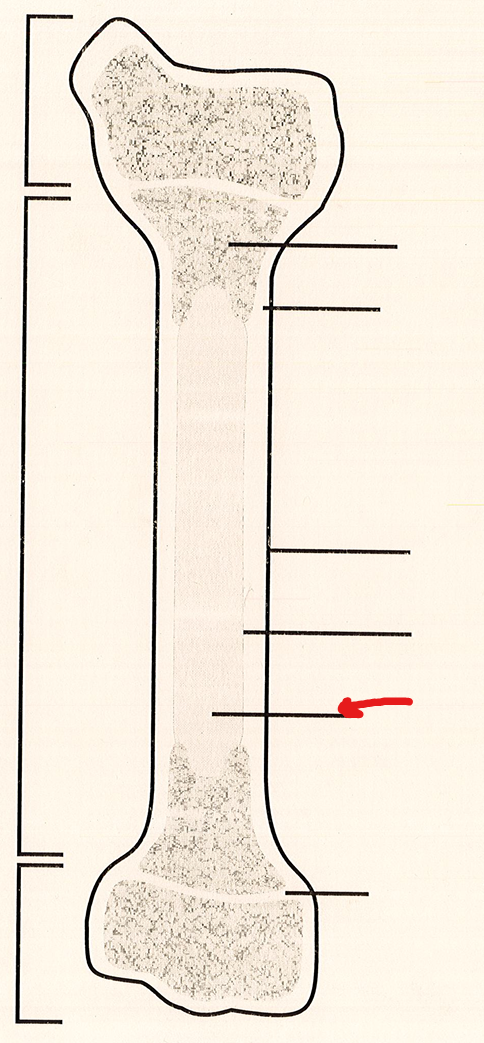
medullary cavity
62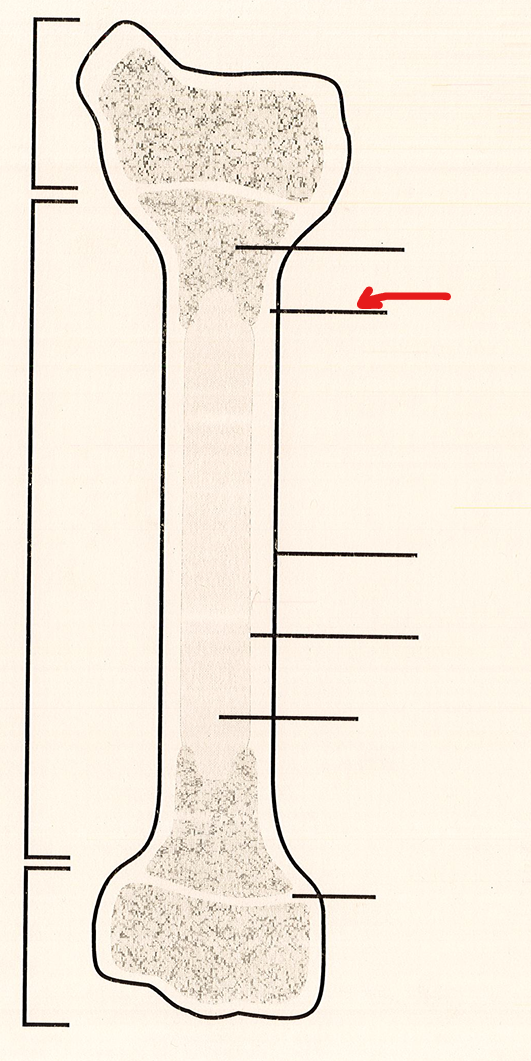
compact bone
63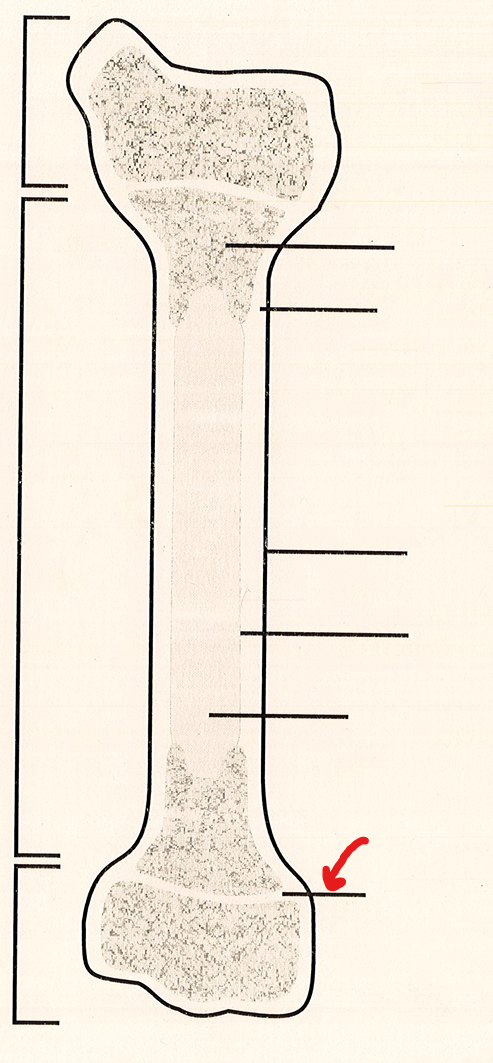
epiphyseal line
64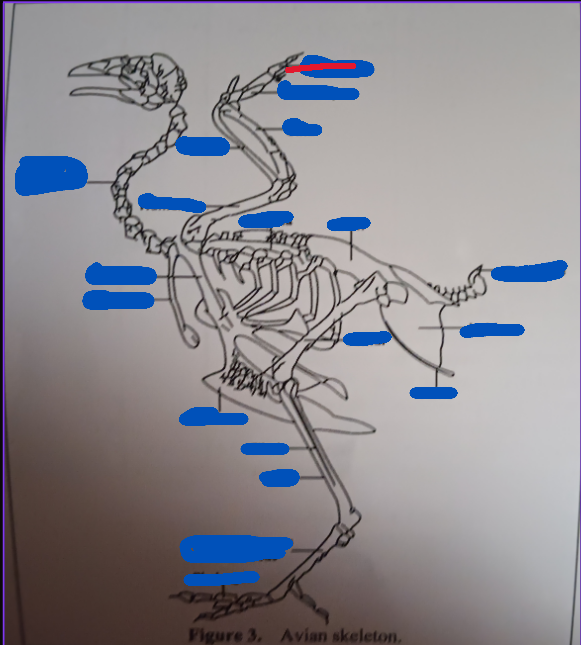
phalanges
65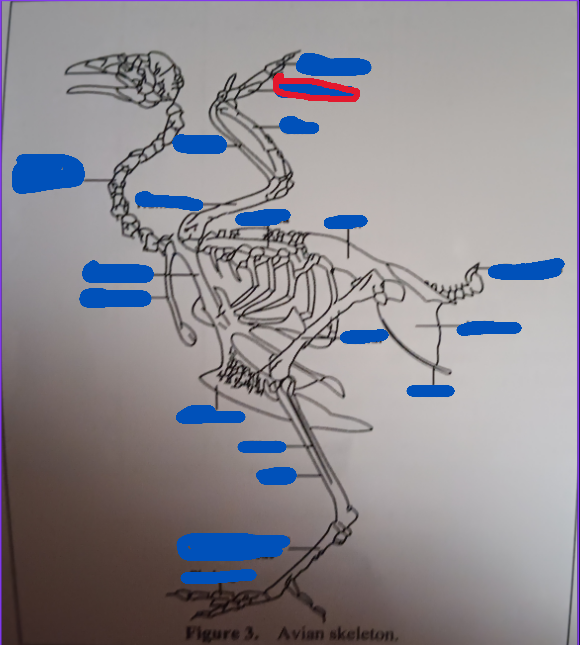
metacarpus
66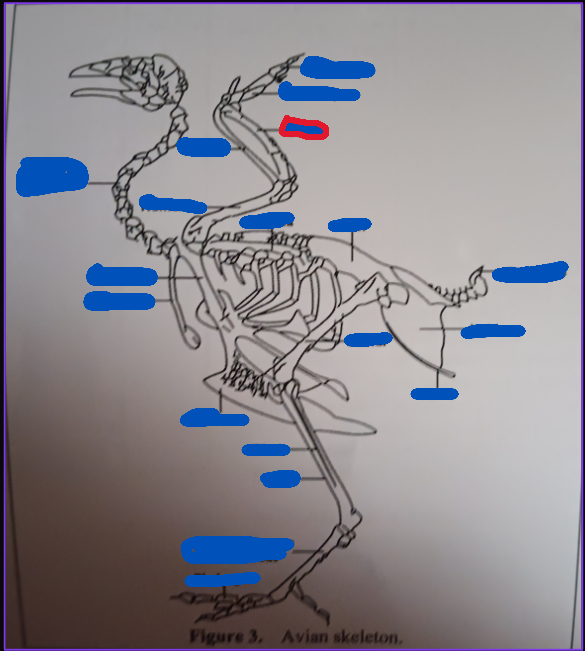
ulna
67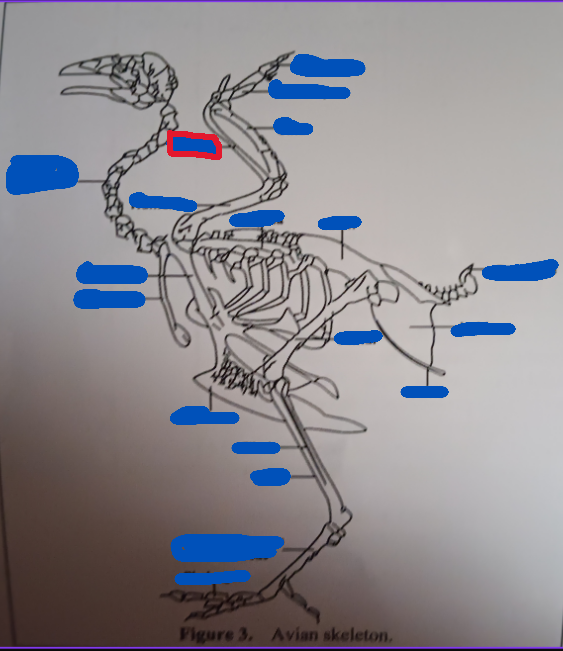
radius
68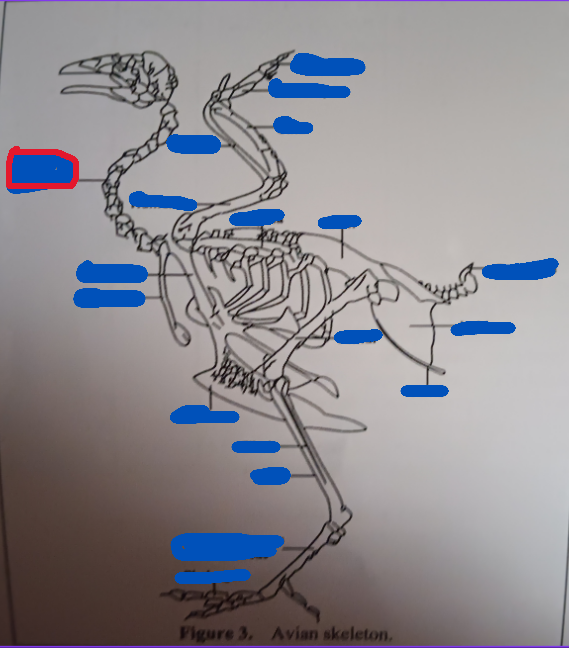
cervical vertebrae
69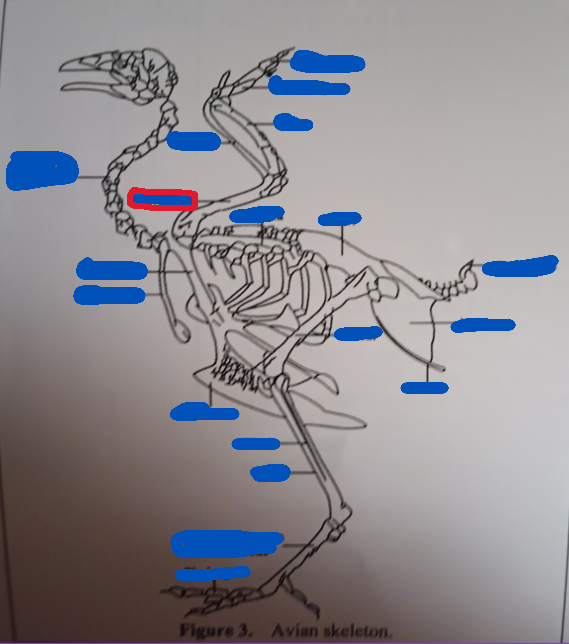
humerus
70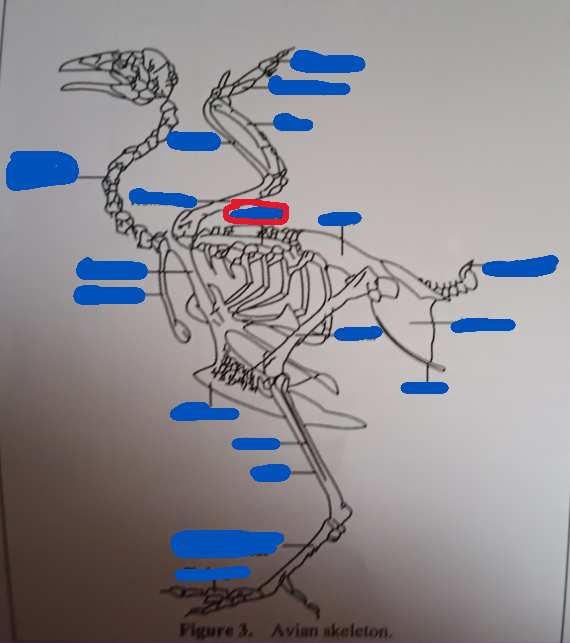
scapula
71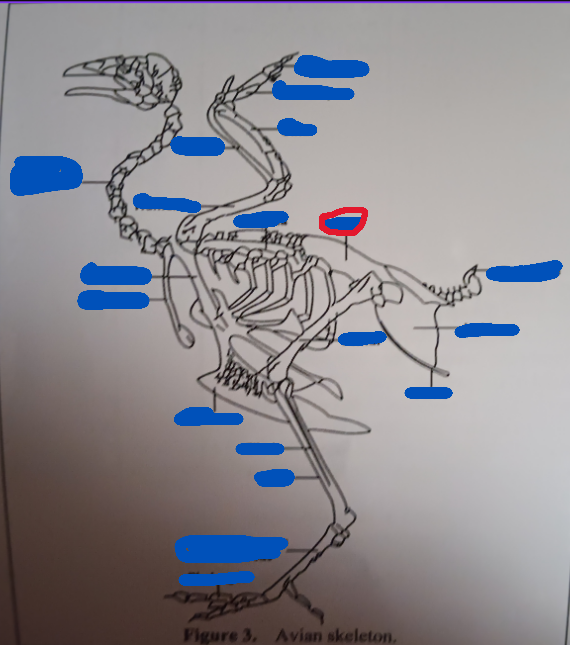
ilium
72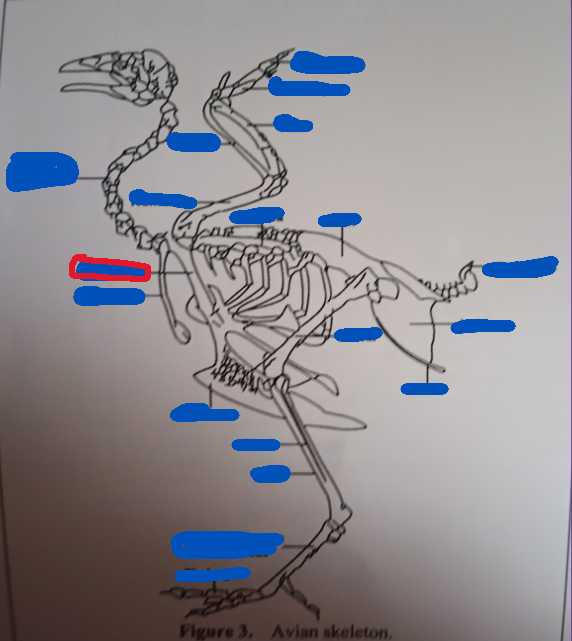
coracoid
73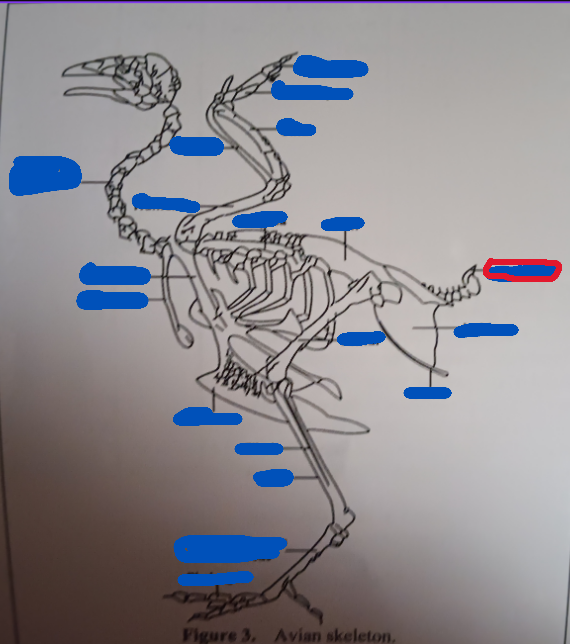
pygostyle
74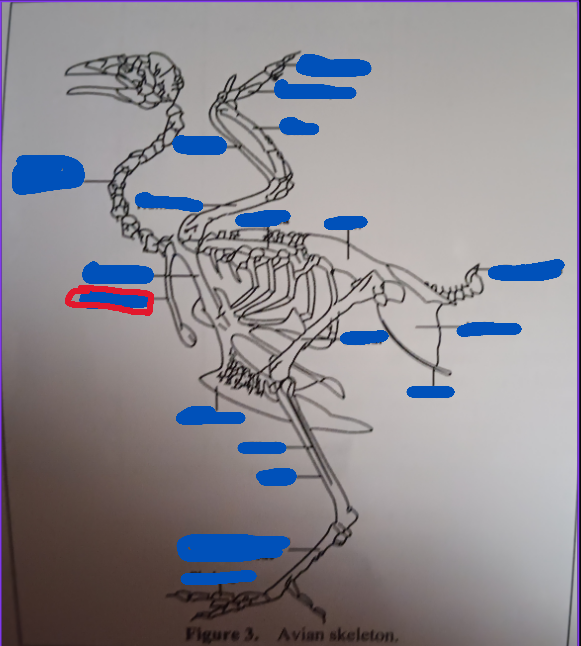
clavicle
75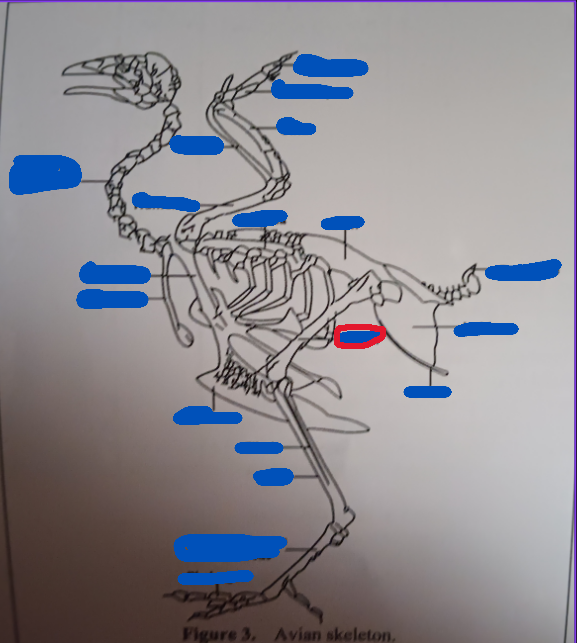
femur
76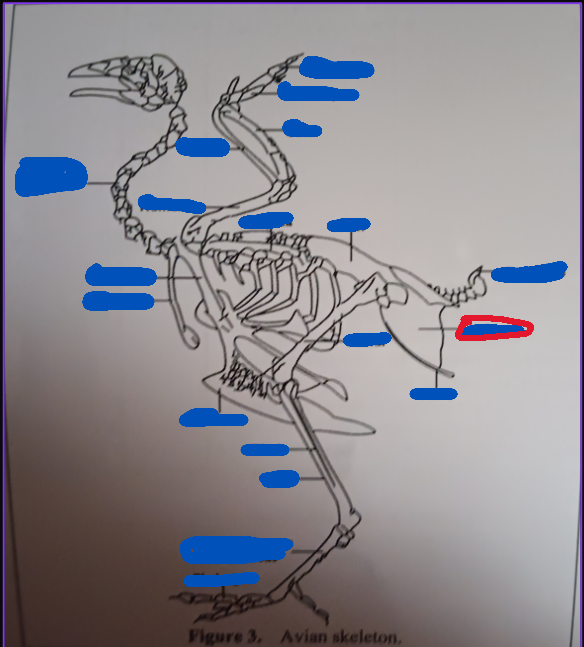
ischium
77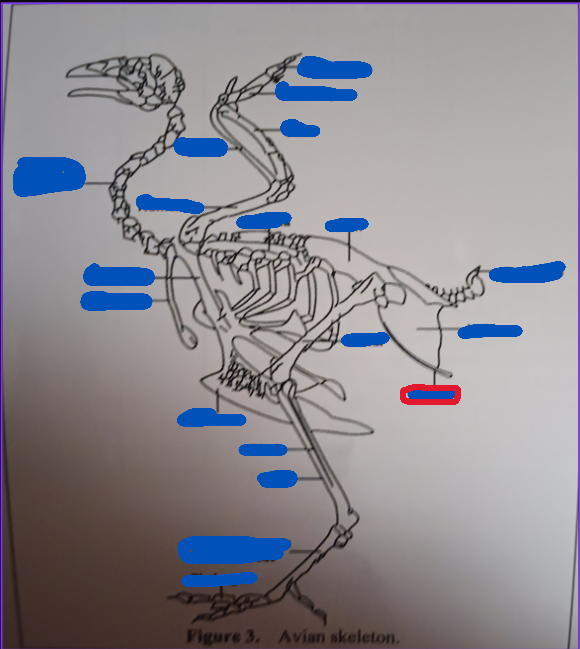
pubis
78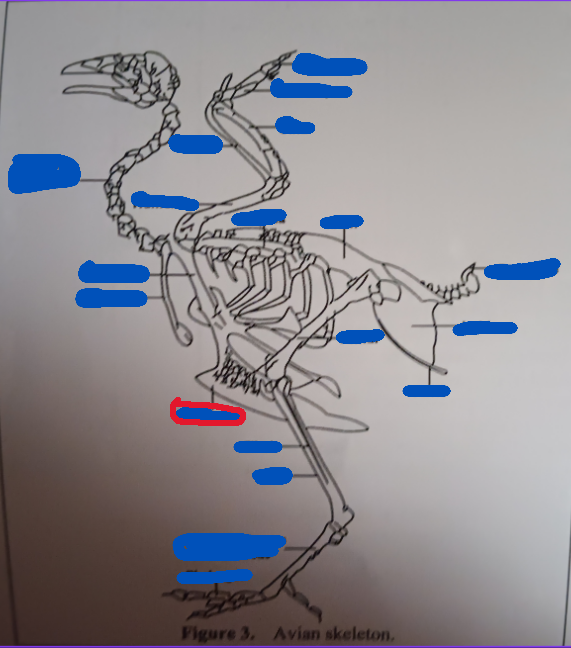
sternum
79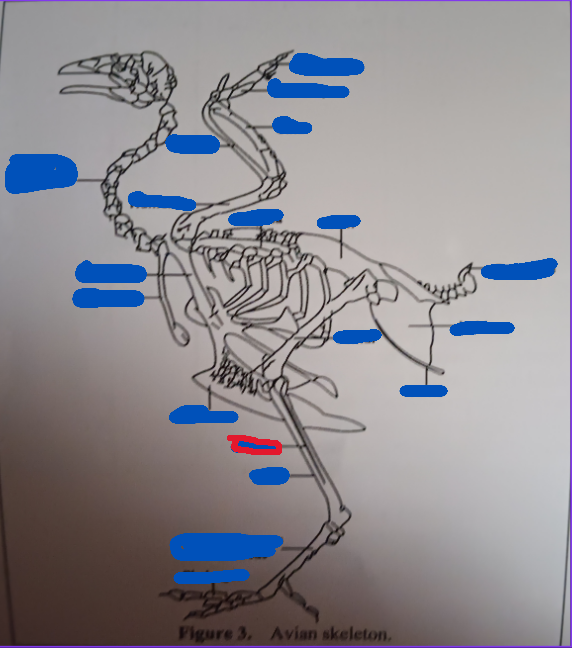
fibula
80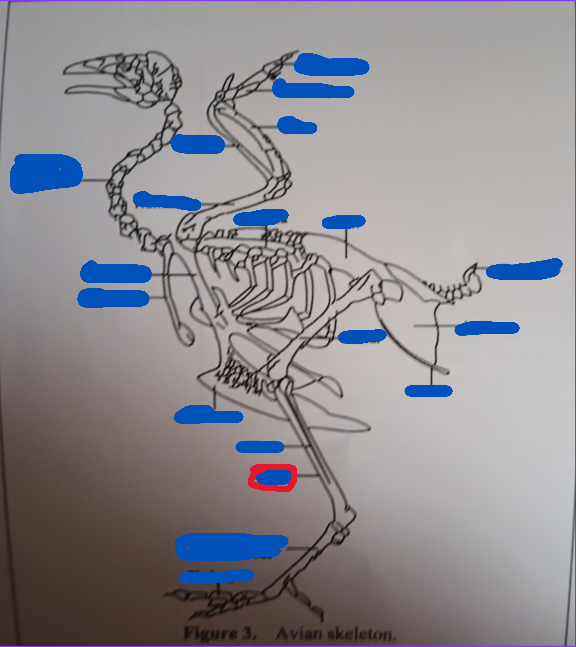
tibia
81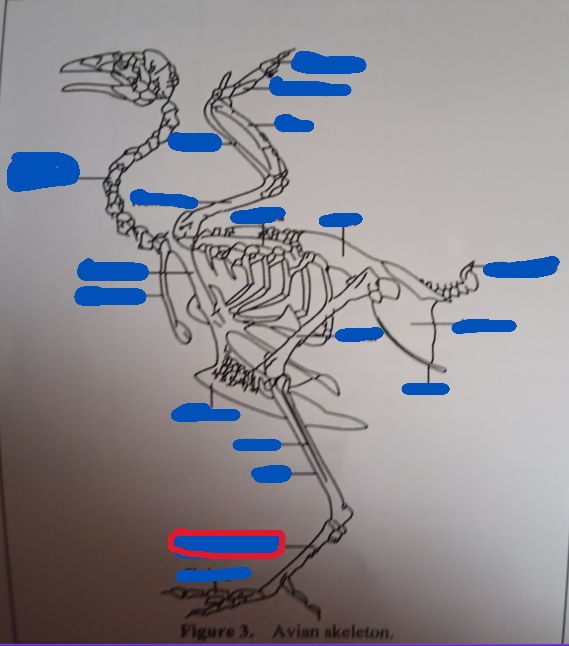
tarsometatarsus (metatarsus)
82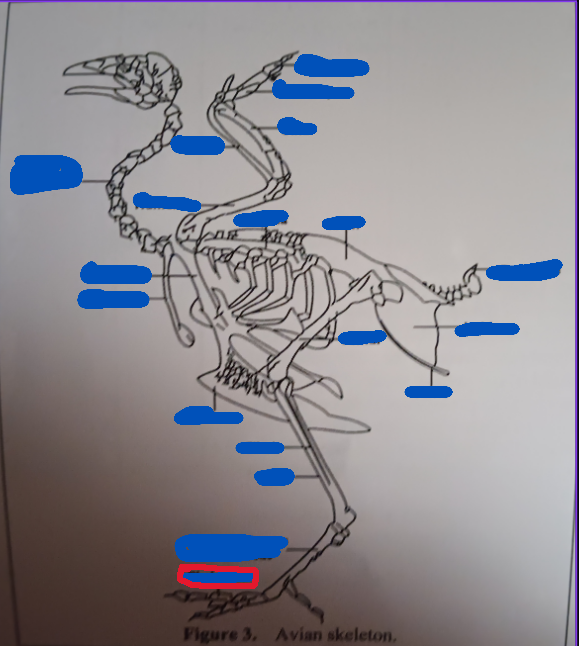
phalanges
83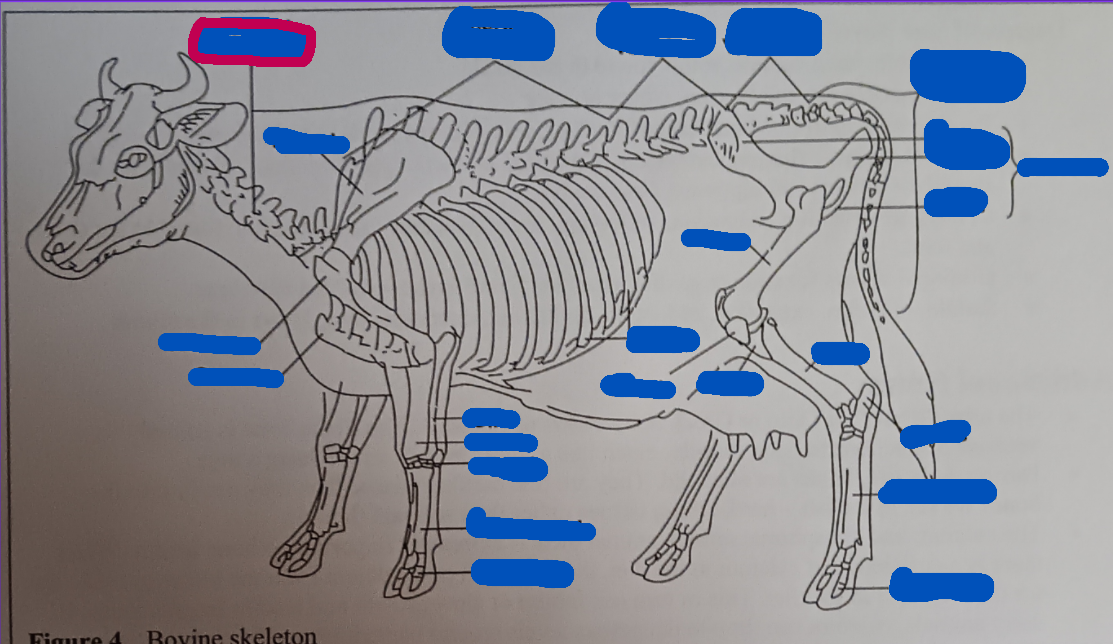
cervical vertebrae
84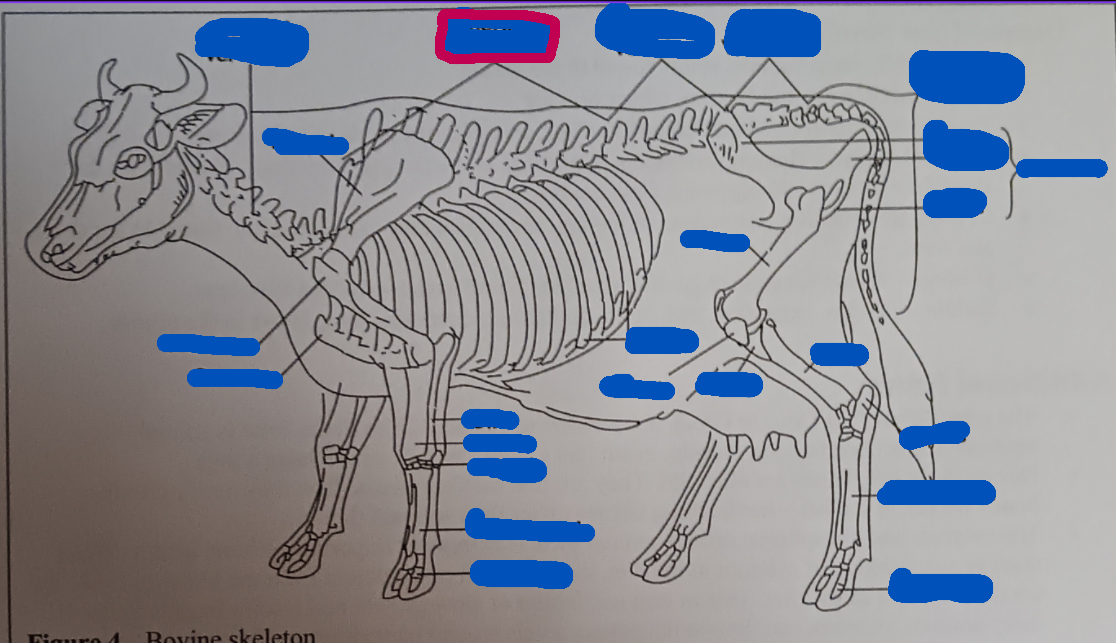
thoracic vertebrae
85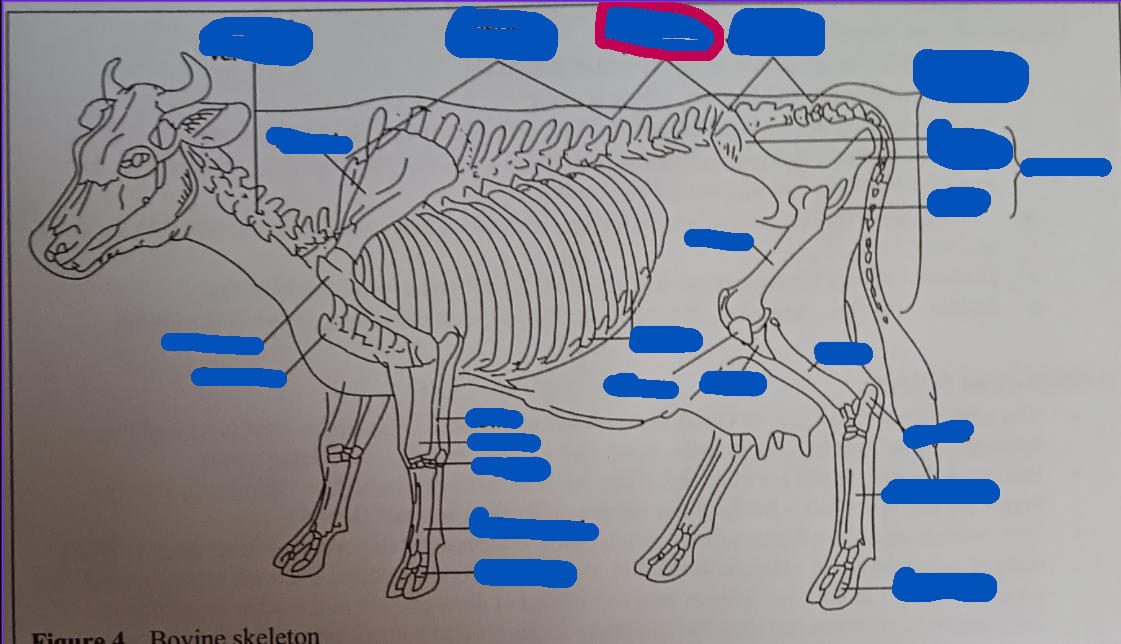
lumbar vertebrae
86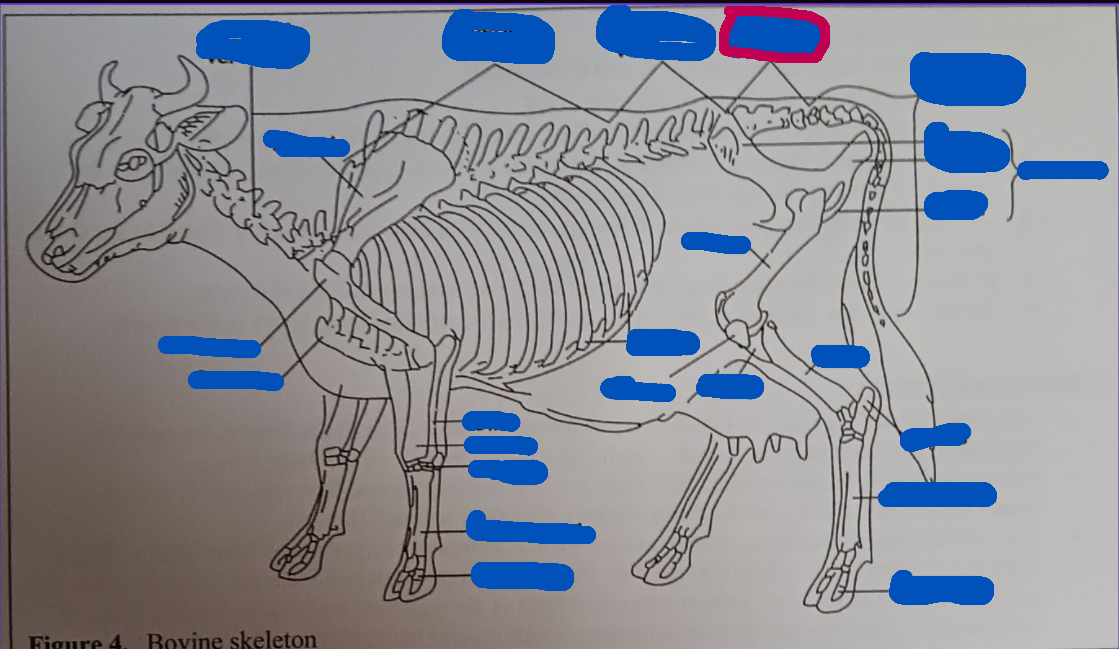
sacral vertebrae
87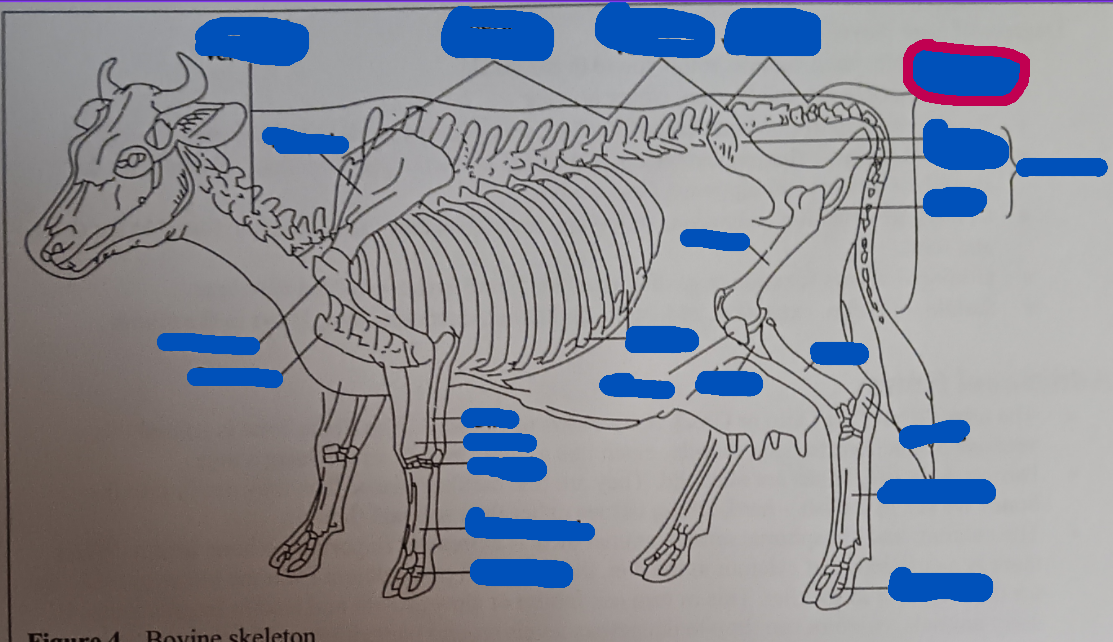
coccygeal vertebrae
88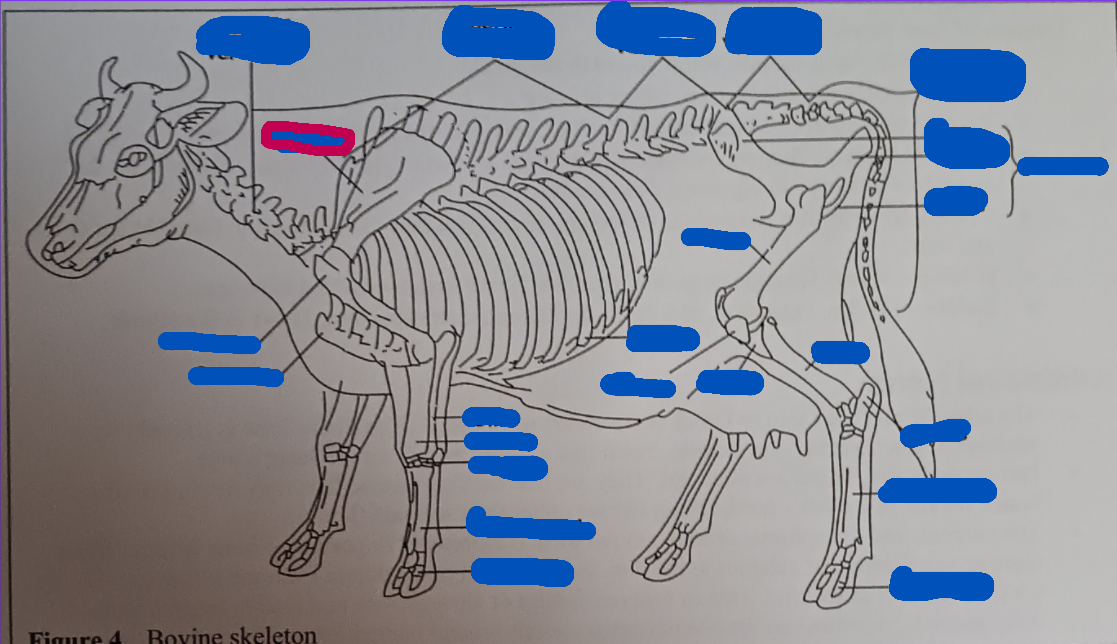
scapula
89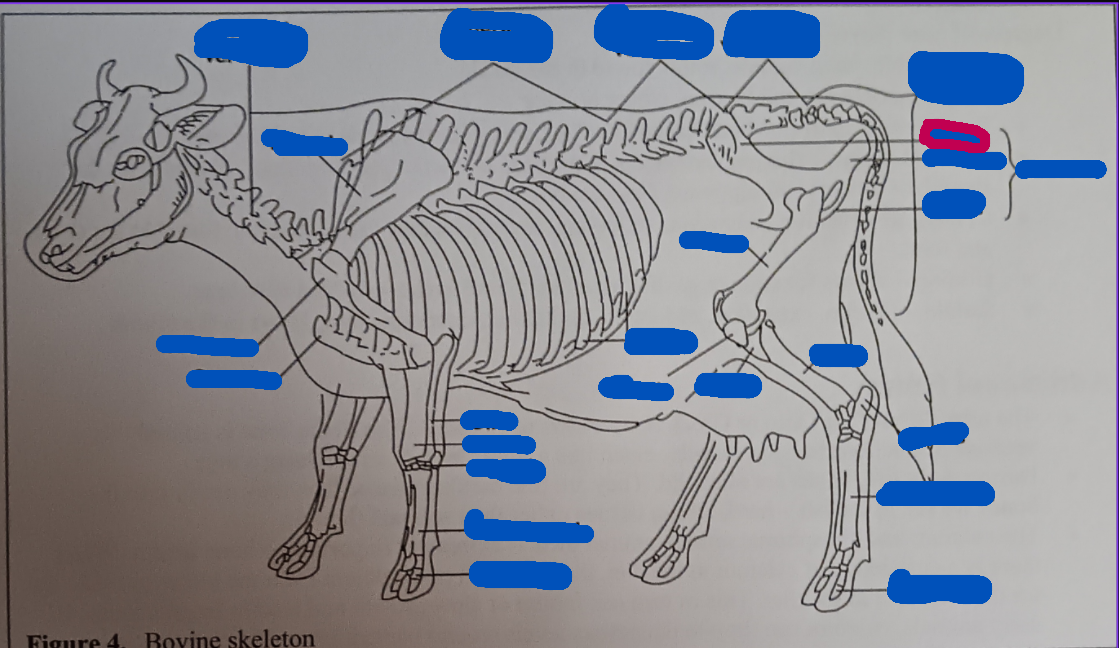
ilium
90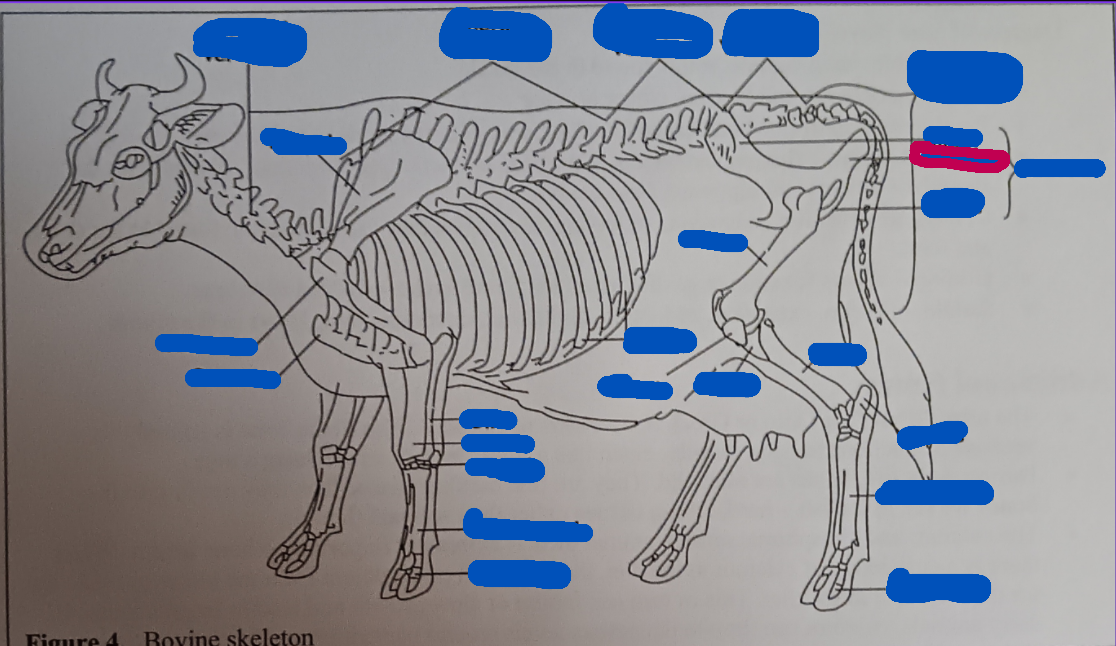
ischium
91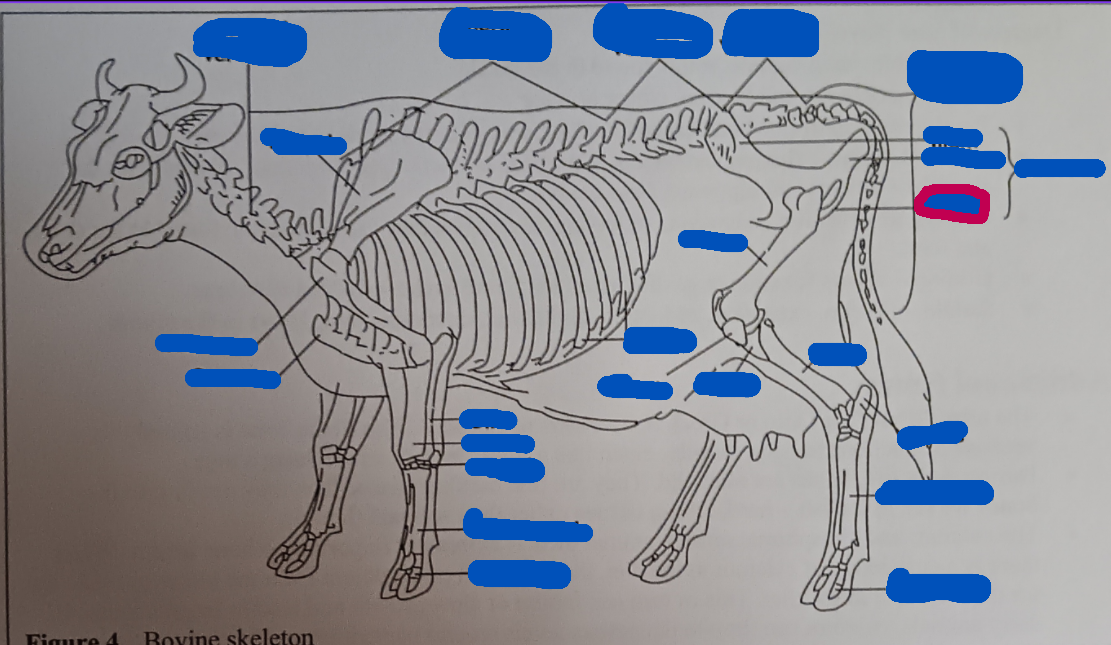
pubis
92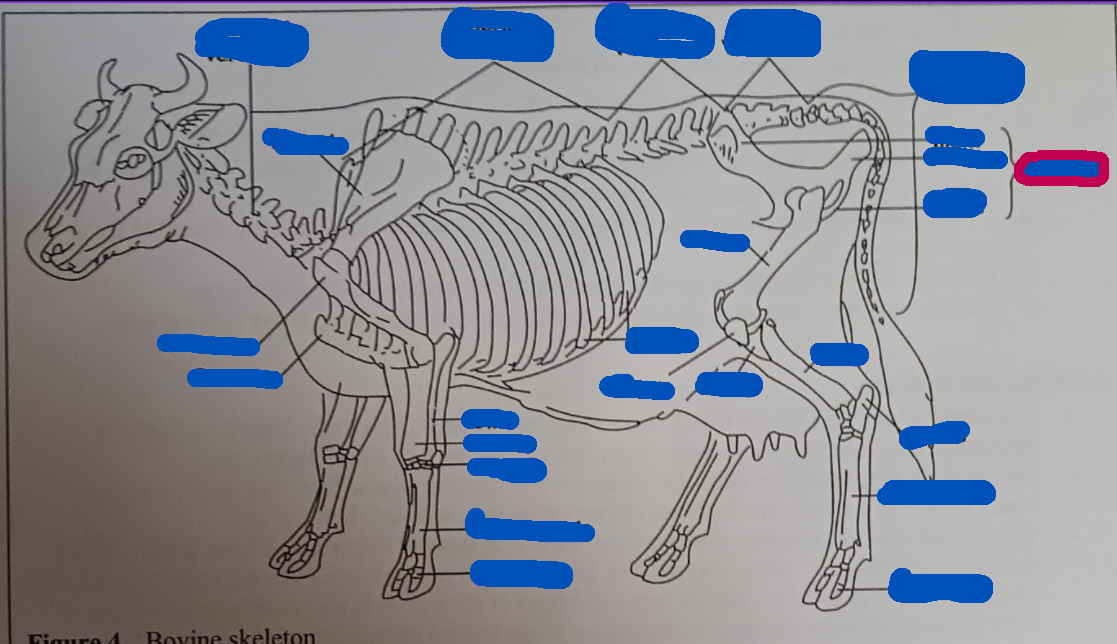
os coxae
93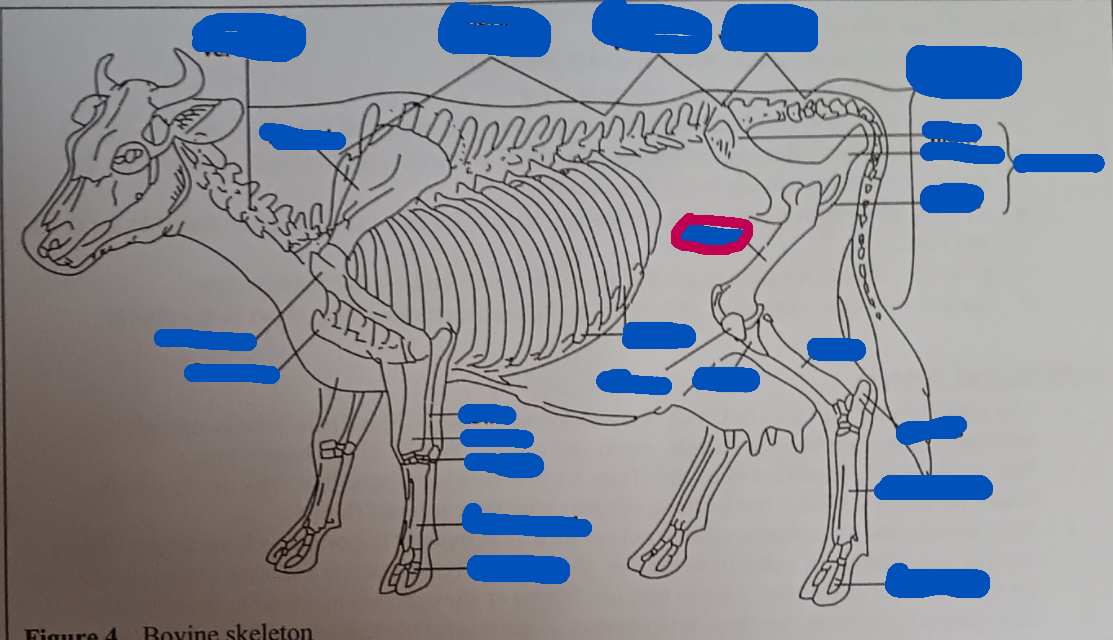
femur
94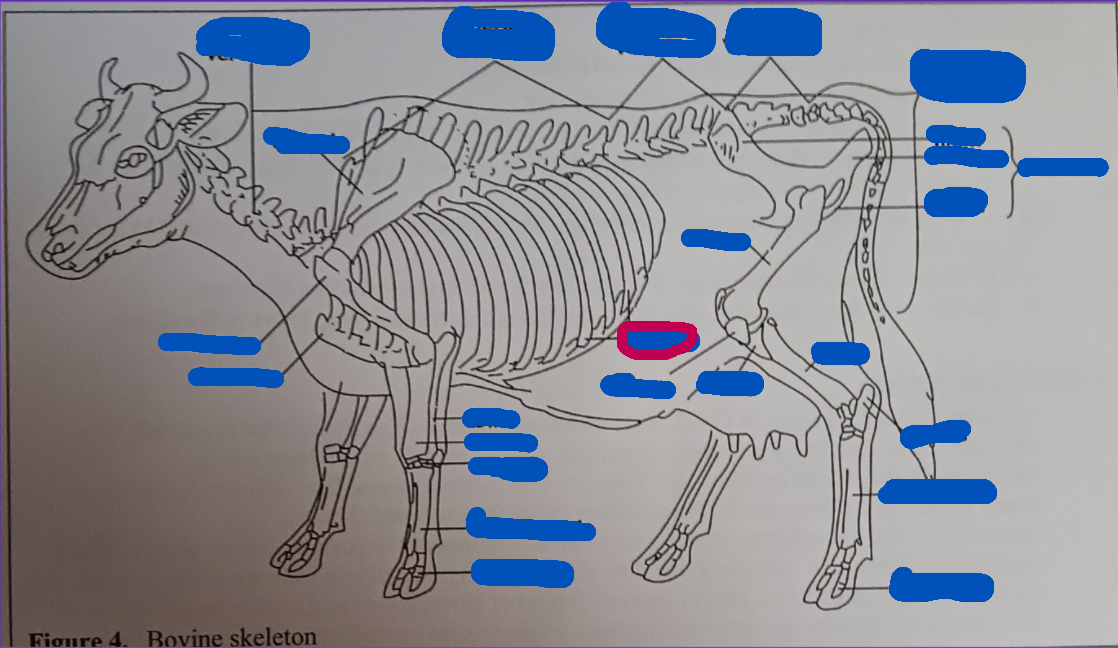
costae
95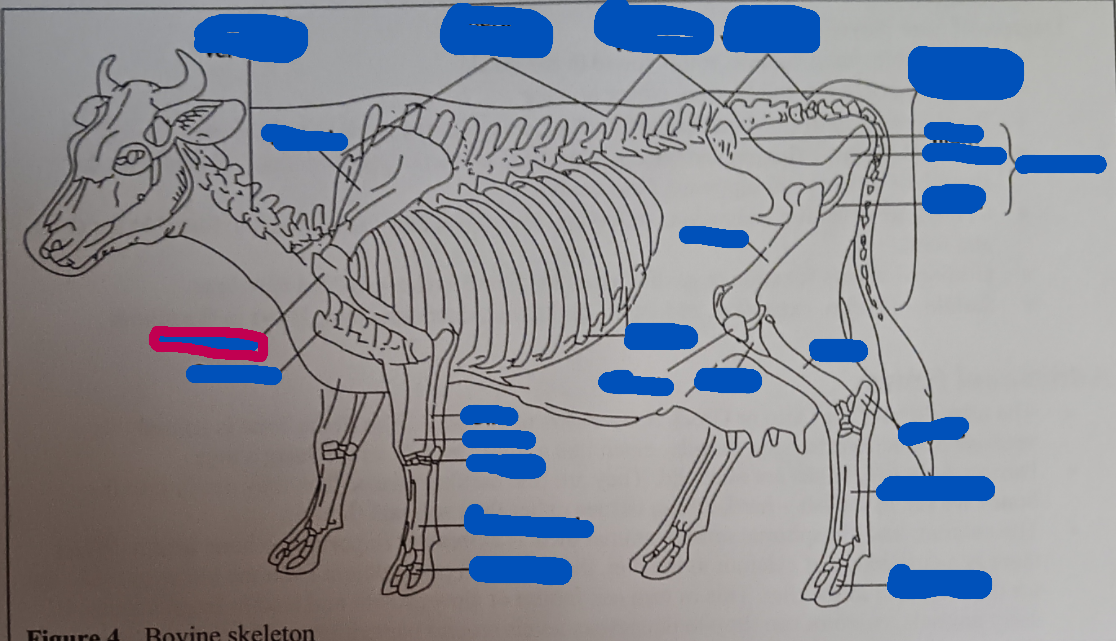
humerus
96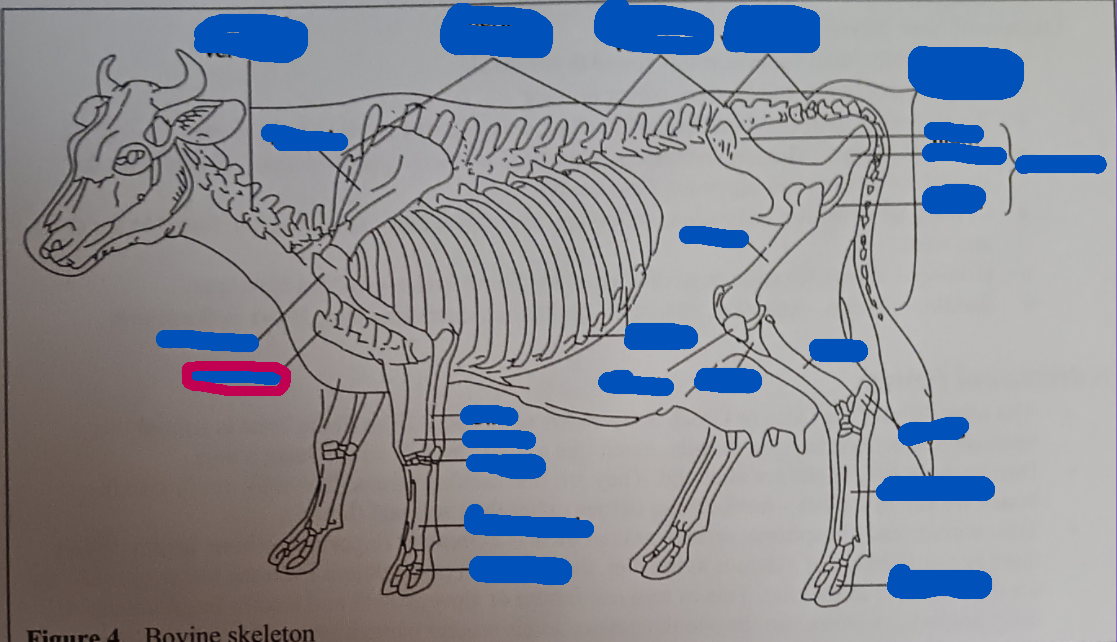
sternum
97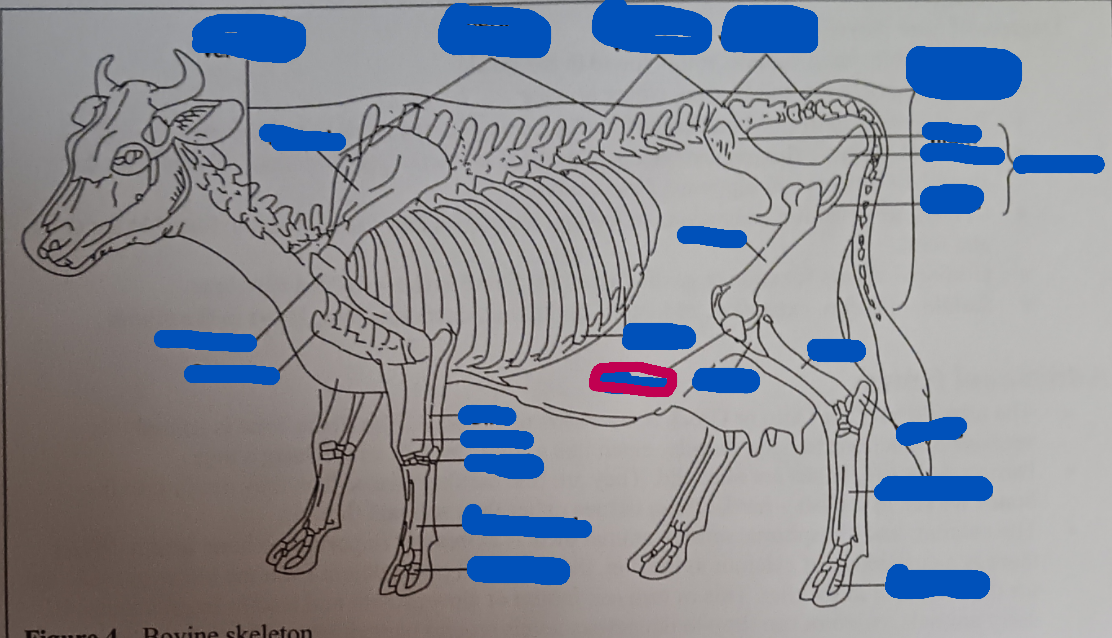
patella
98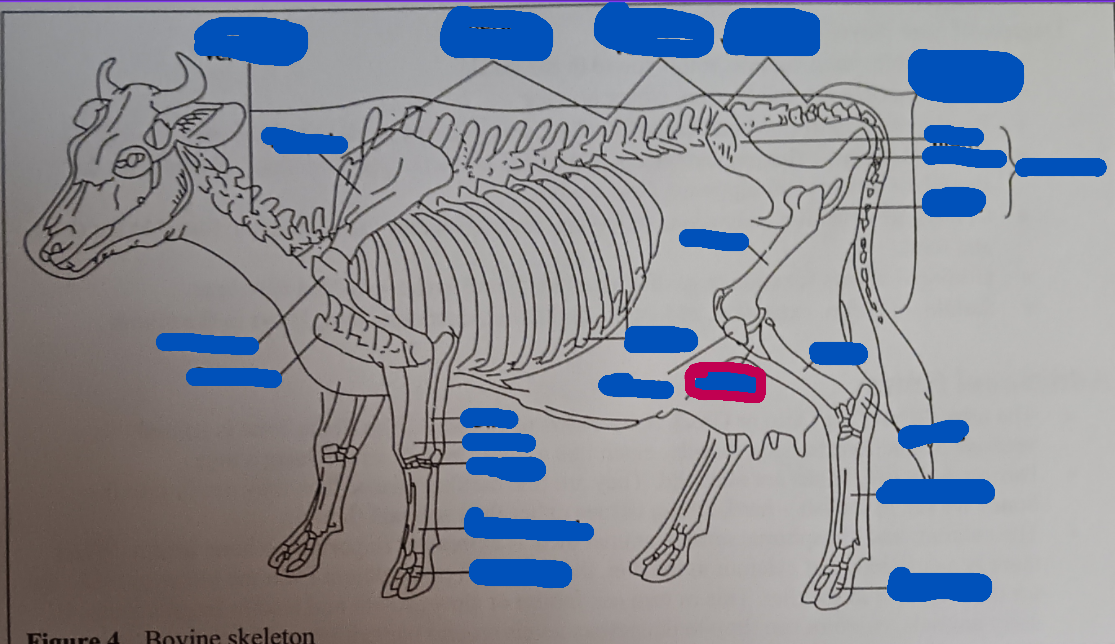
fibula
99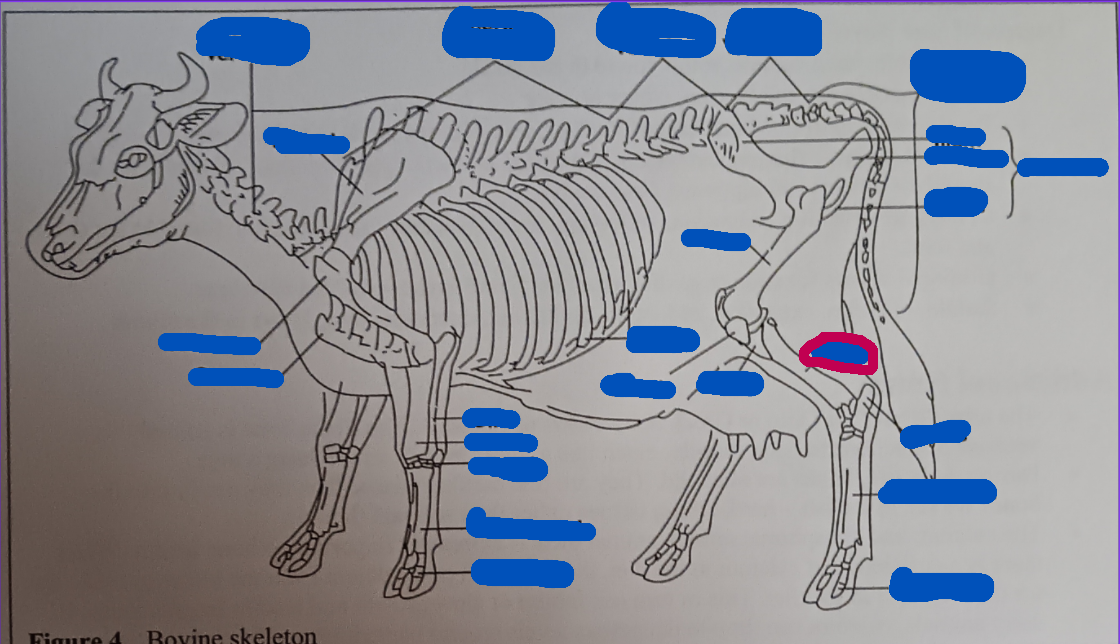
tibia
100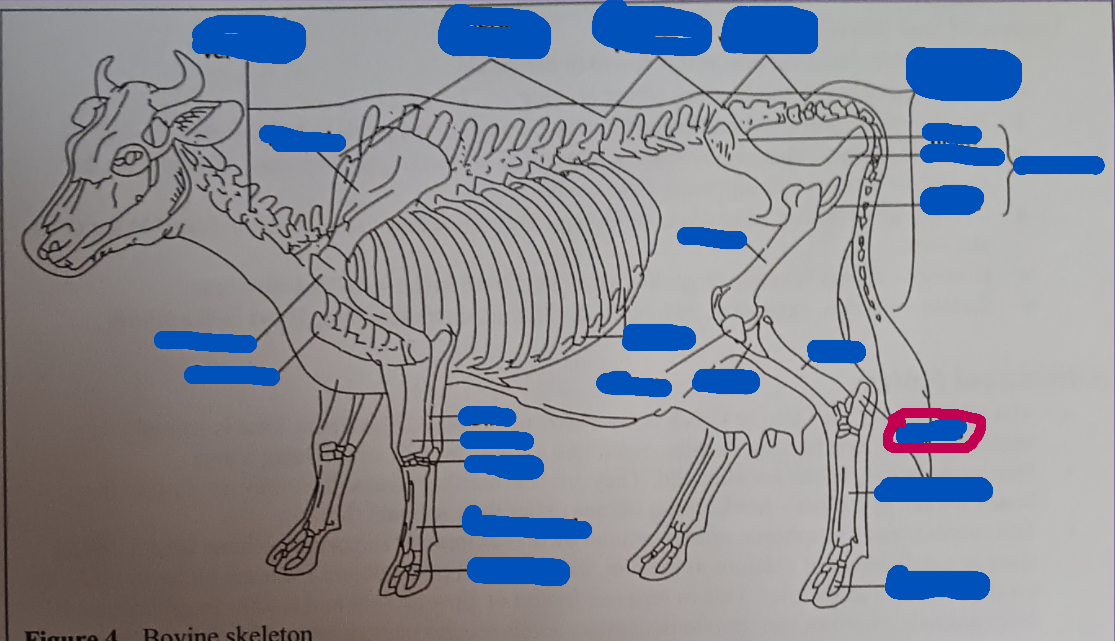
tarsus
101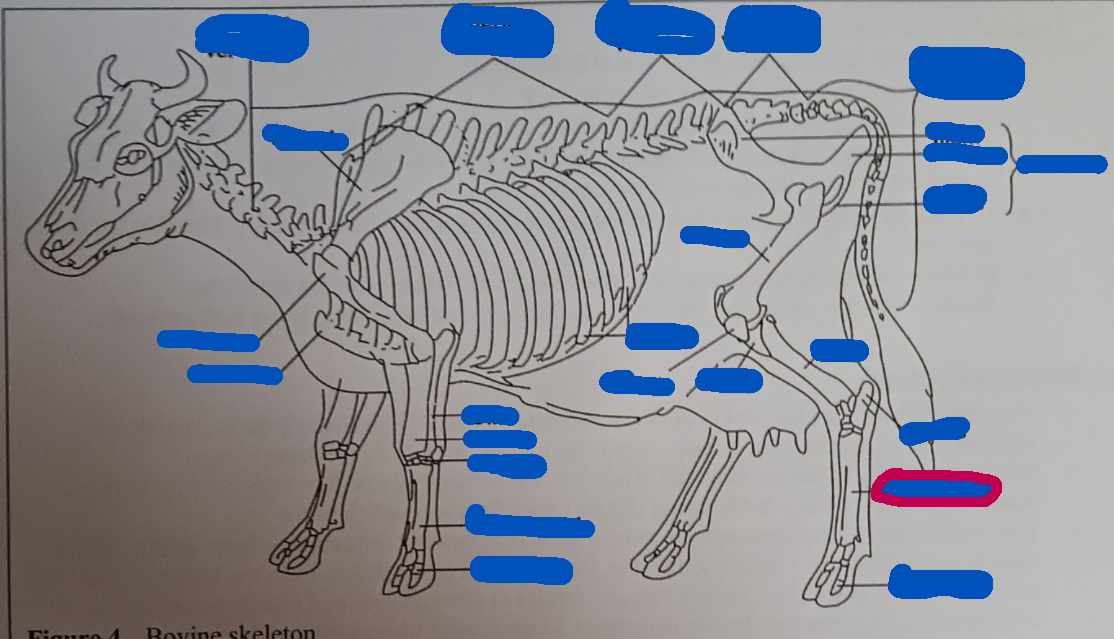
metatarsus
102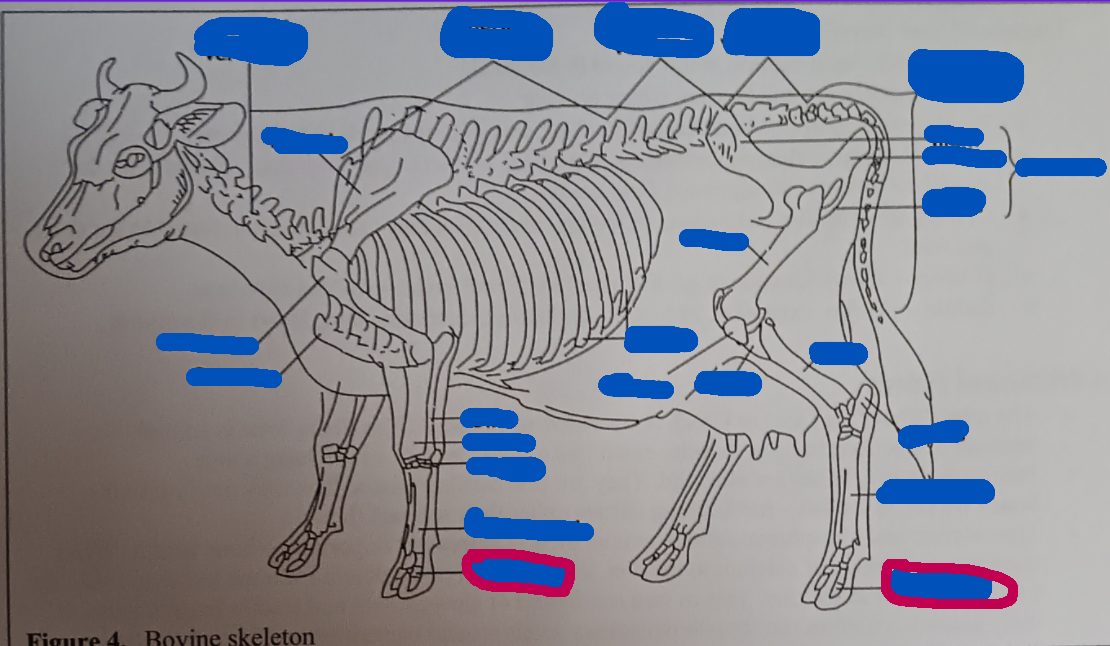
phalanges
103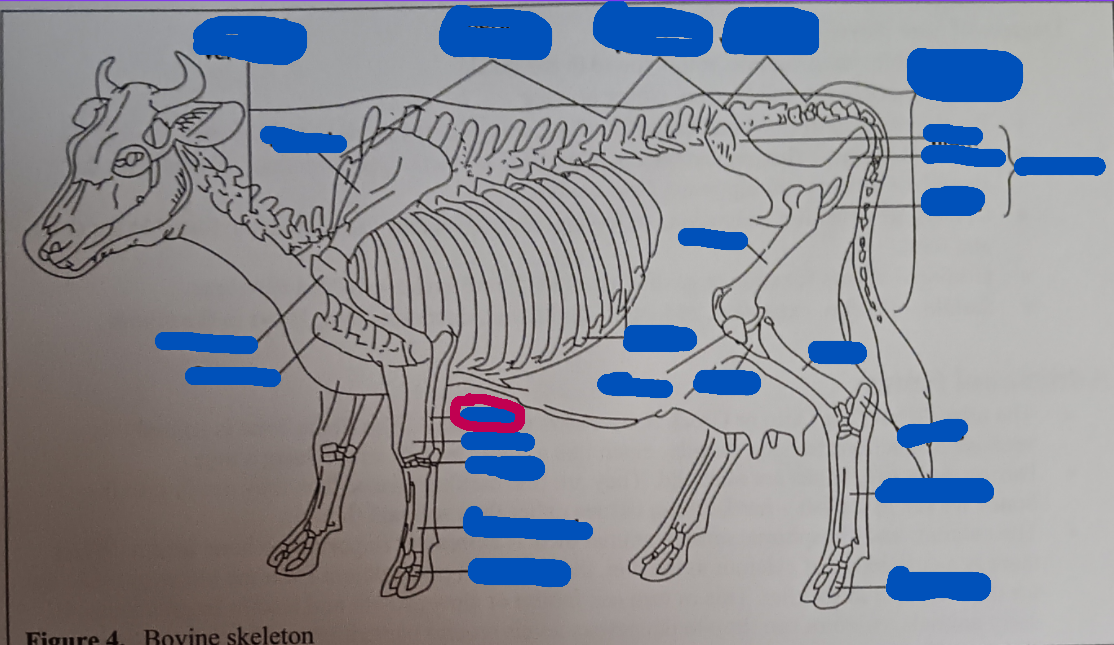
ulna
104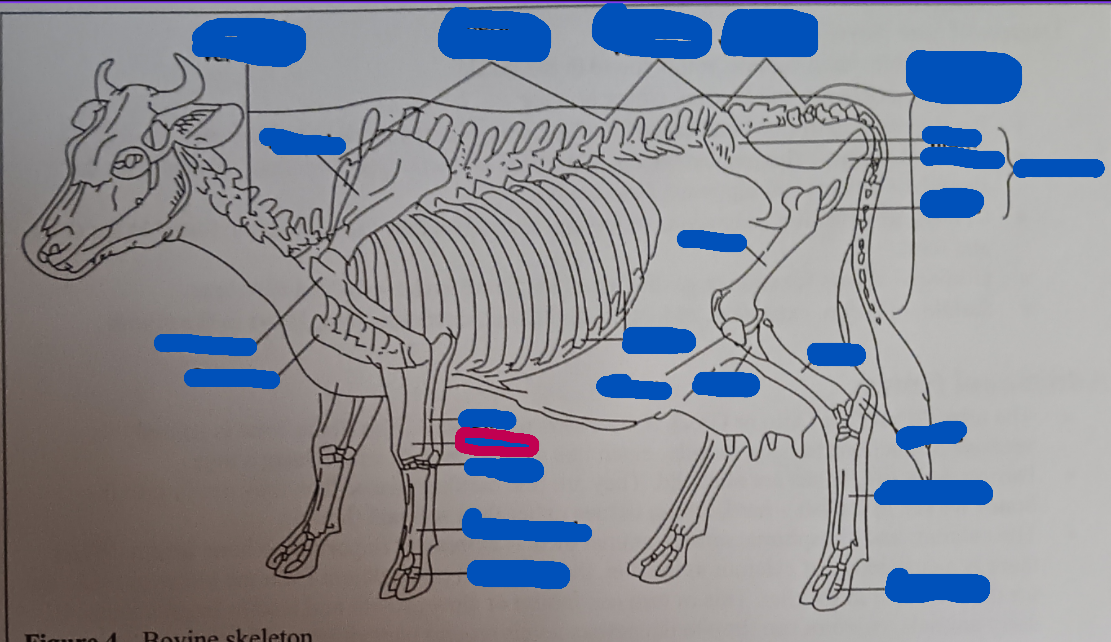
radius
105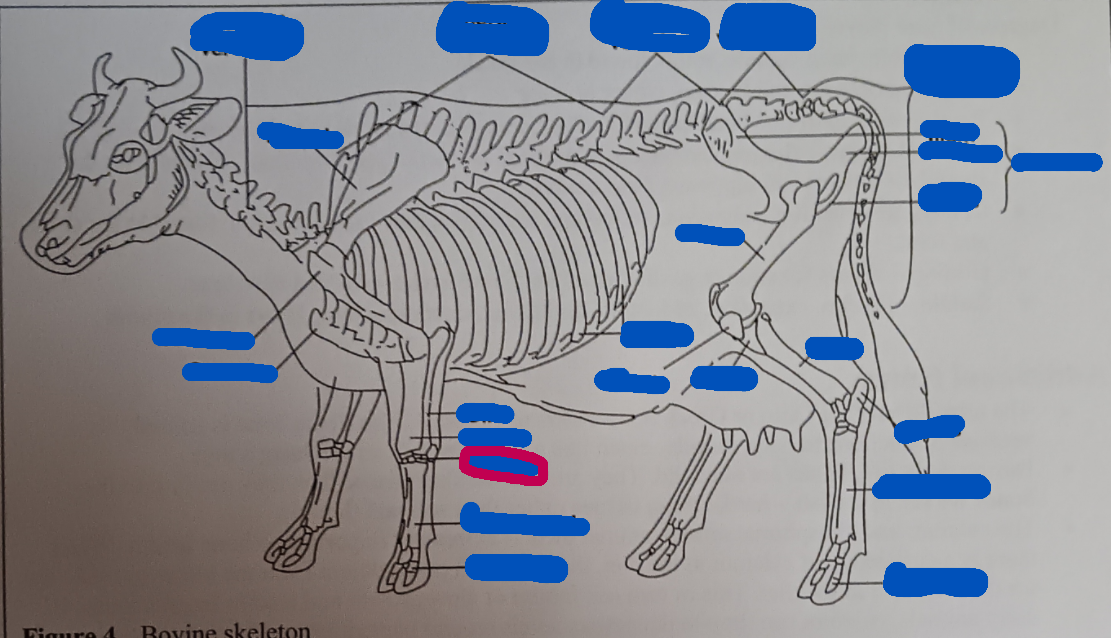
carpels
106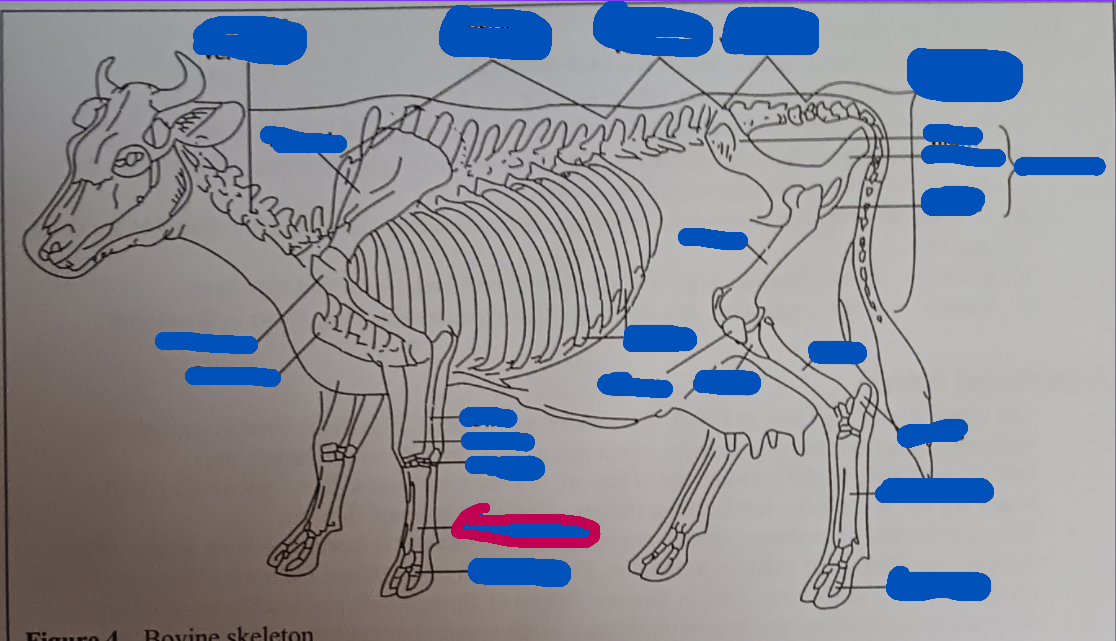
metacarpels
107
pain suffix
algia
108
breakdown suffix
lysis
109
large prefix
macro
110
small prefix
micro
111
disease suffix
pathy
112
lack suffix
penia
113
to eat suffix
phagia
114
before prefix
pre
115
true/false: birds have teeth
false
116
avian: combined oral and pharyngeal space
no sharp distinction between the mouth and pharynx in birds
joint area for digestive and respiratory systems
no sharp distinction between the mouth and pharynx in birds
joint area for digestive and respiratory systems
oropharynx
117
a complex of cartilage and bone that strengthens and supports the tongue
found in all birds and mammals
found in all birds and mammals
hyoid apparatus
118
avian - secretes mucin, bicarbonate, and water
salivary glands
119
chicken/turkey salivary glands do NOT produce _________ __________
salivary amylase
120
avian - passage between oral and nasal cavities
palatine cleft
121
avian - common opening of the Eustachian tubes
remain open continuously to permit pressure equalization in flight
remain open continuously to permit pressure equalization in flight
infundibular cleft
122
avian - canals that extend from the middle ear
eustachian tubes
123
avian - opening into larynx, closes to block food from entering the larynx
laryngeal cleft
124
avian - allows passage of air from oropharynx into trachea, located at the top of the trachea
larynx
125
true/false: in birds, the larynx contains vocal cords
false
126
avian - transport air from the larynx to bronchi
pale in color, has distinctive cartilage rings
pale in color, has distinctive cartilage rings
trachea
127
avian - Y-shaped organ located at the base of the trachea
responsible for vocalization in birds, does not use vocal cords
sound produced by syringeal muscles and tympanic membranes in conjunction with clavicular air sac
responsible for vocalization in birds, does not use vocal cords
sound produced by syringeal muscles and tympanic membranes in conjunction with clavicular air sac
syrinx
128
true/false: birds use vocal cords to make noise
false (use syringeal muscles and tympanic membrane in conjunction with clavicular air sac)
129
avian - thin-walled distensible tube with small amount of muscle compared to mammals
transports feedstuffs from oropharynx to crop, then from crop to proventriculus
transports feedstuffs from oropharynx to crop, then from crop to proventriculus
esophagus
130
avian - feed storage area, soaking also occurs here
crop
131
true/false: all birds have a crop
false (owls and some quails lack a crop)
132
glandular stomach in birds - secretes pepsinogen for protein breakdown, HCl, mucous and gastrin
chemical and enzymatic breakdown
chemical and enzymatic breakdown
proventriculus
133
avian - a muscular part of the digestive system that grinds feed
rocks and pebbles lodged here and function similarly to teeth
rocks and pebbles lodged here and function similarly to teeth
ventriculus
134
avian small intestine does not produce the _______ enzyme
lactase
135
avian - part of small intestine, yolk stalk remnant
marks juncture of jejunum and ileum, part of the immune system (lymphocyte production)
marks juncture of jejunum and ileum, part of the immune system (lymphocyte production)
meckel's diverticulum
136
avian - the large intestine is composed of the ____ and _____
ceca, colon
137
chickens have two ____, which are where microbial fermentation of residual starch and some cellulose occur in the large intestine
ceca (plural of cecum)
138
true/false: birds do not have an appendix
true
139
avian - very short part of large intestine, absorption of fermentation products from the cecum occurs here
urine is stored here prior to excretion
urine is stored here prior to excretion
colon
140
avian - juncture of the ureters, colon, and reproductive system in birds
cloaca
141
avian - produces B-lymphocytes, located dorsal to the cloaca
easily seen in chicks but has regressed by sexual maturity
easily seen in chicks but has regressed by sexual maturity
bursa of fabricius
142
avian - external opening of the cloaca, where material exits
vent
143
lobulated in birds, located in synsacral cavity
kidneys
144
avian - the _________ is the fused ischium and ilium
synsacrum
145
upon prefix
epi
146
over/excessive prefix
hyper
147
inflammation suffix
itis
148
middle prefix
meso (medio)
149
tumor/swelling suffix
oma
150
many/several prefix
poly
151
the avian male reproductive system is located entirely ______ the body and contains no ____________ _______
within, accessory glands
152
male gonads are located at the anterior end of the kidneys
produce sperm and testosterone
do not descend in birds, found within body cavity
produce sperm and testosterone
do not descend in birds, found within body cavity
testes
153
located at the hilus of the testis
functions to increase sperm motility and fertilizing capacity
functions to increase sperm motility and fertilizing capacity
epididymis
154
each of these connect to a testis
function in sperm storage, maturation, and adding necessary fluid
also help maximize sperm motility and fertilization capacity
function in sperm storage, maturation, and adding necessary fluid
also help maximize sperm motility and fertilization capacity
vas deferens
155
responsible for ova production and estrogen production
ovary
156
reproductive gametes of the female
the largest of these is named F1
the largest of these is named F1
follicles
157
avian - site of ovulation - no blood vessels in this area
no bleeding when ovulation occurs
no bleeding when ovulation occurs
stigma line
158
avian - this consists of the infundibulum, magnum, isthmus, uterus, and vagina
oviduct
159
in birds, fertilization occurs here
infundibulum
160
avian - catches ova when it is ovulated, location of sperm storage and fertilization
infundibulum
161
avian - glandular structure that secretes the albumen protein (egg white)
magnum
162
avian - the two shell membranes are deposited, where the inner and outer shell membranes are put on
isthmus
163
avian - plumping, the taking up of water, occurs
egg shell and shell pigment deposited
where egg spends most of the formation time
egg shell and shell pigment deposited
where egg spends most of the formation time
uterus
164
avian - rotates the egg from pointed end down to round end down
vagina
165
avian - type of follicular growth that lasts months to years
most follicles are in this phase
most follicles are in this phase
slow growth
166
avian - follicular growth that occurs 6-11 days prior to ovulation, yolk can increase in size up to 4 fold
rapid growth
167
avian - provides a storage area for sperm after copulation until oviposition occurs
utero-vaginal juncture
168
chicken sperm can be stored and viable for up to __ ____ in the hen
42 days
169
refers to the laying of the egg
oviposition
170
avian - beginning of formation of head
22 hours
171
avian - heart begins to beat
42 hours
172
avian - beginning of formation of feathers
day 8
173
avian - appearance of scales and claws
day 13
174
avian - pulmonary surfactant begins to be produced
day 18
175
avian - chick hatches
day 21
176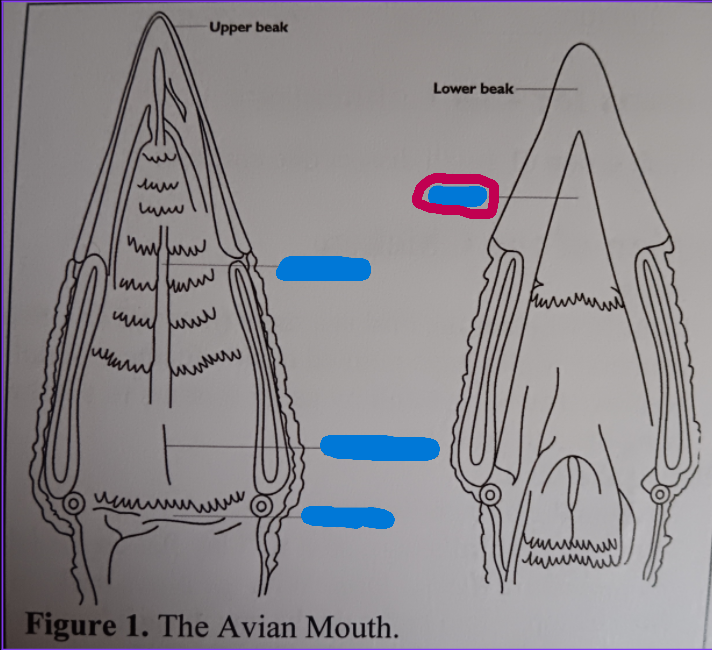
tongue
177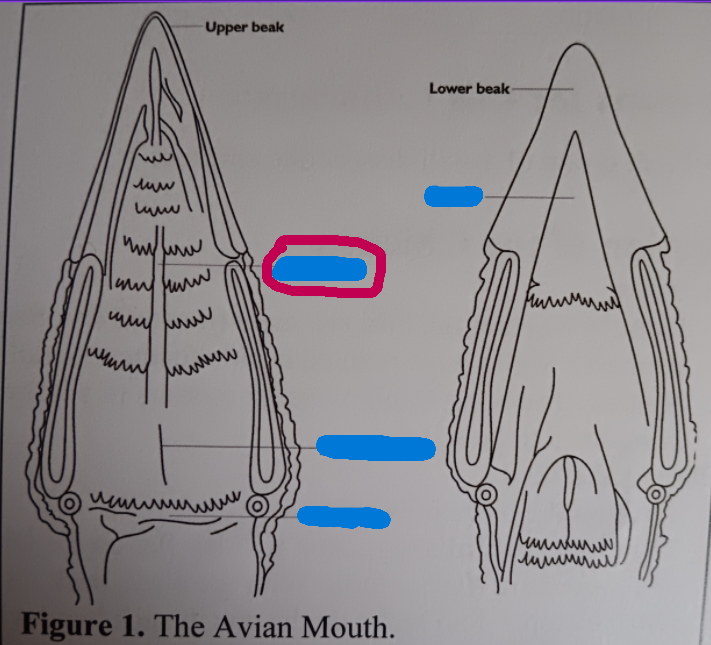
palatine cleft
178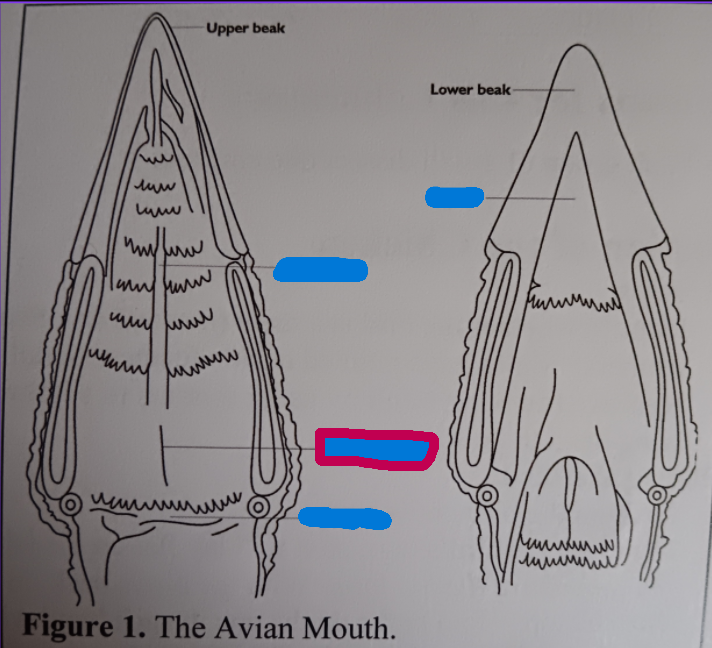
infundibular cleft
179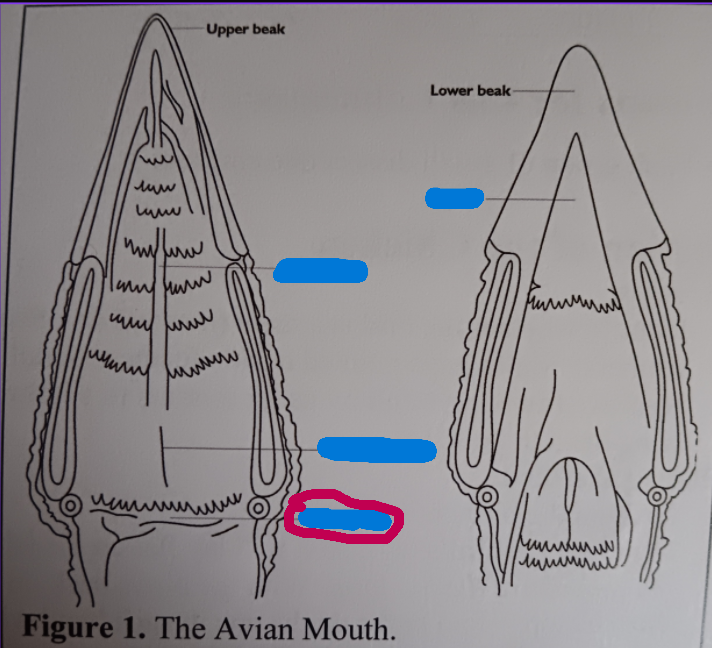
oropharynx
180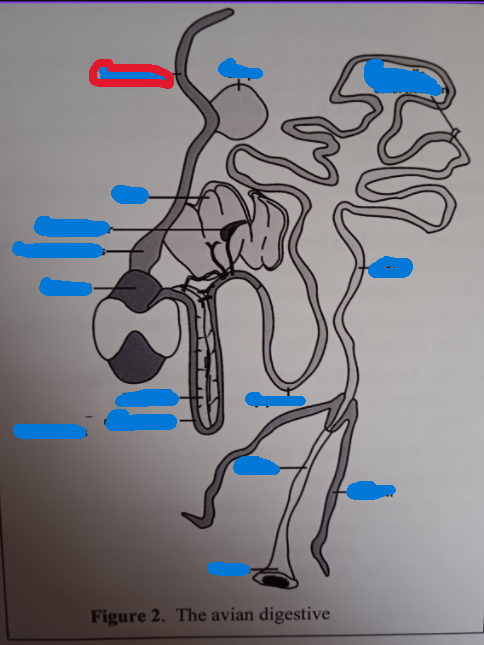
esophagus
181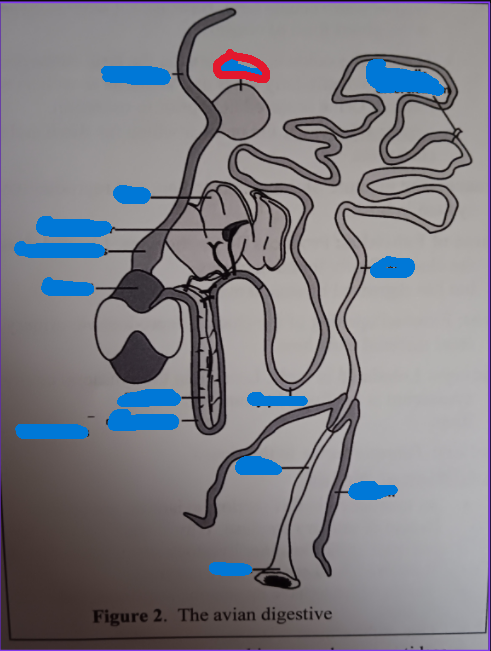
crop
182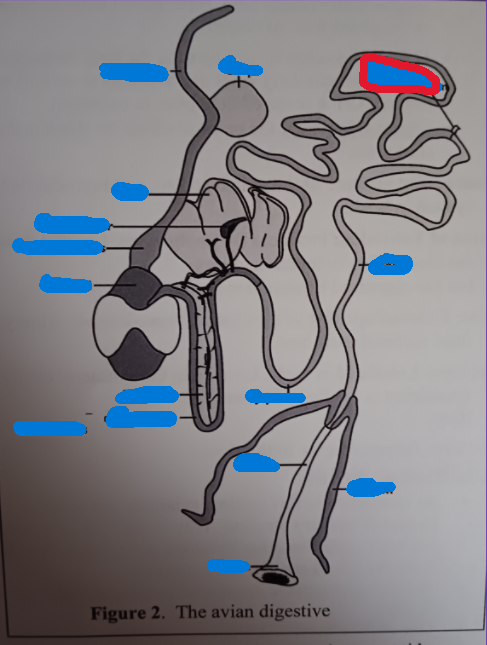
meckel's diverticulum
183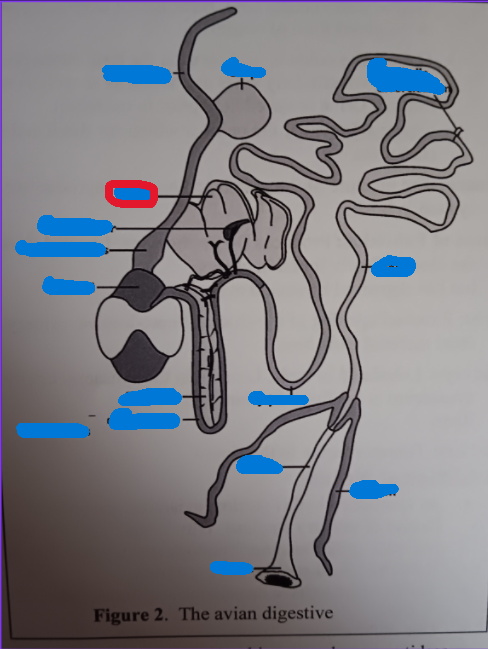
liver
184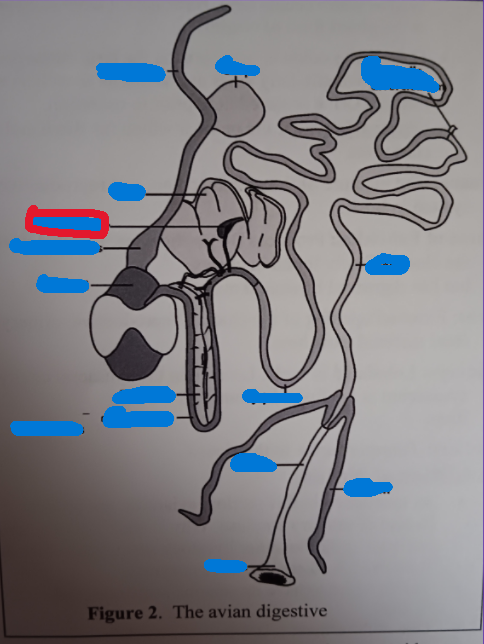
gall bladder
185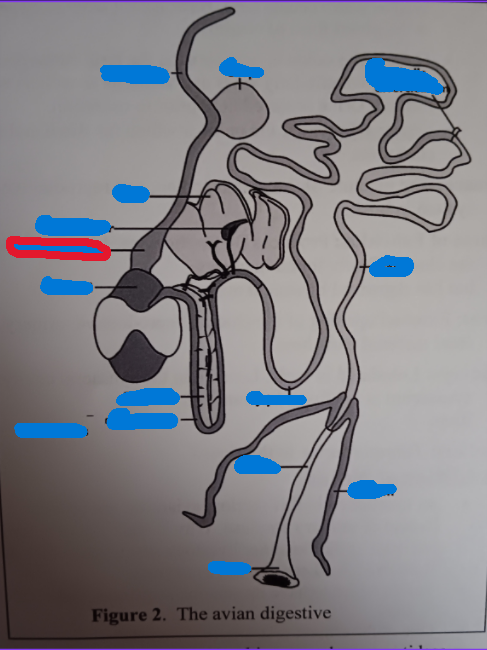
proventriculus
186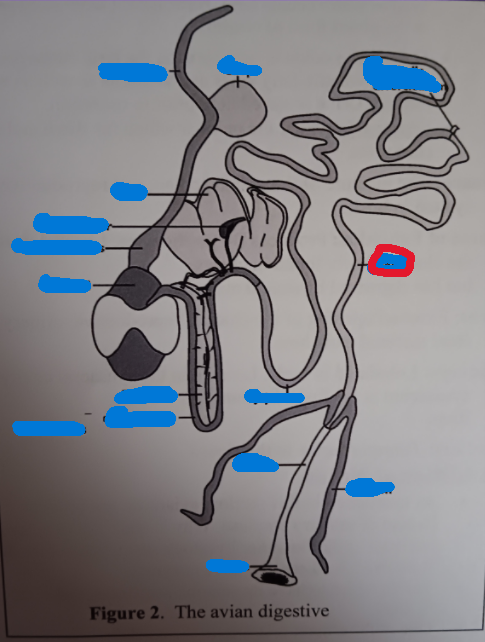
ileum
187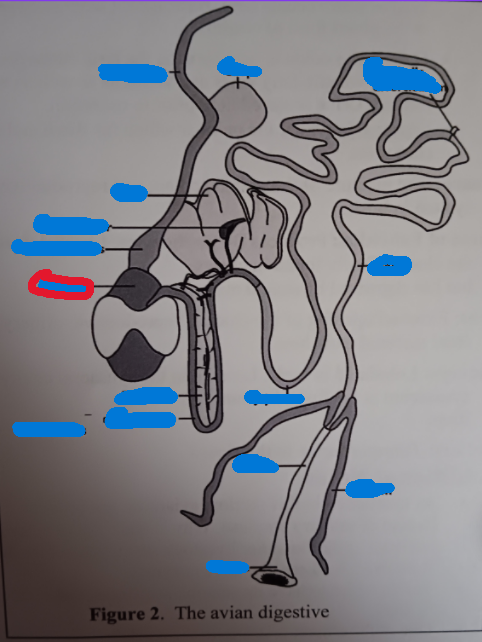
ventriculus
188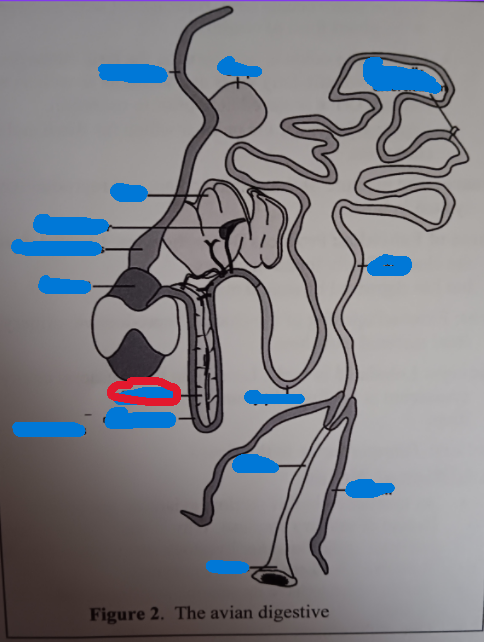
pancreas
189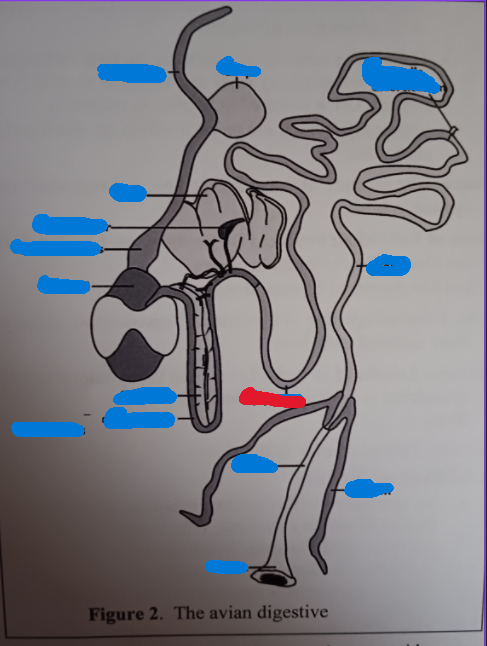
jejunum
190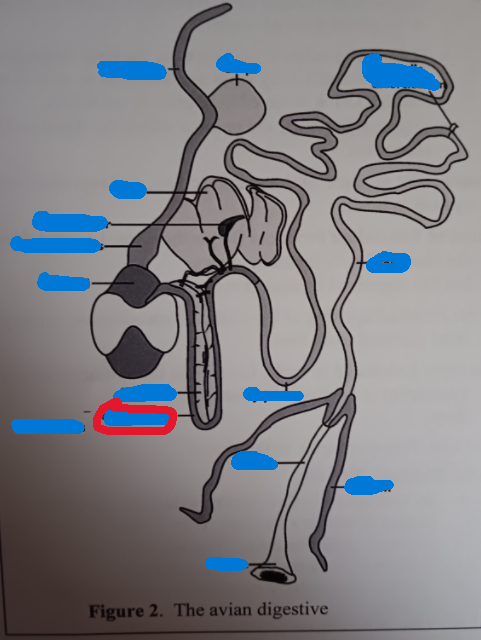
duodenal loop
191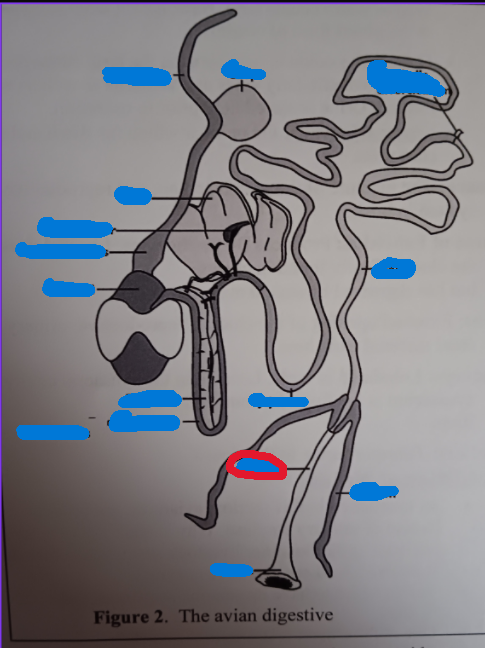
colon
192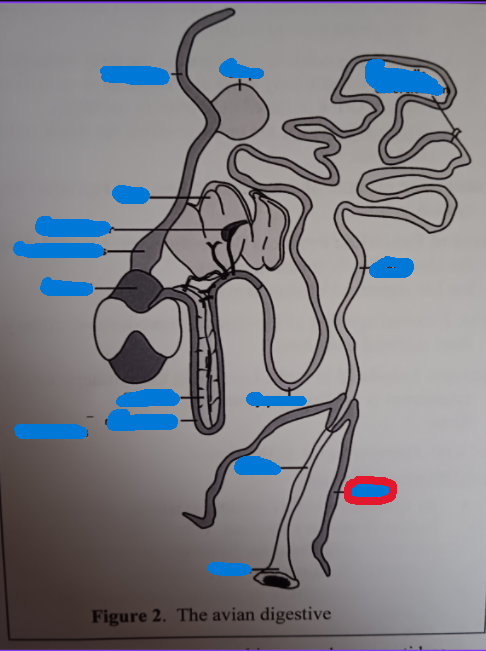
cecum
193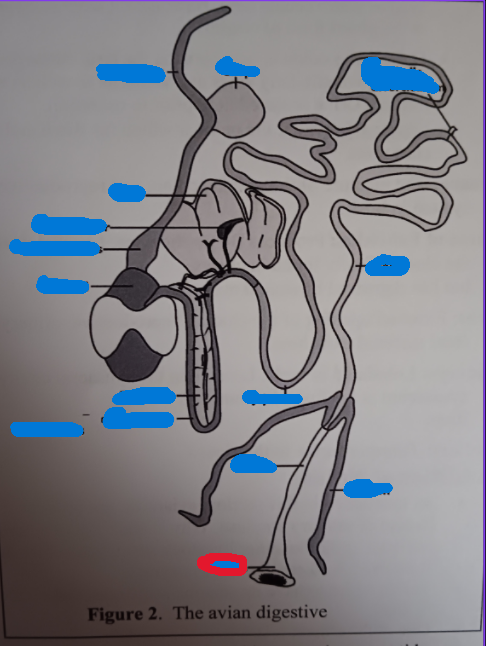
cloaca
194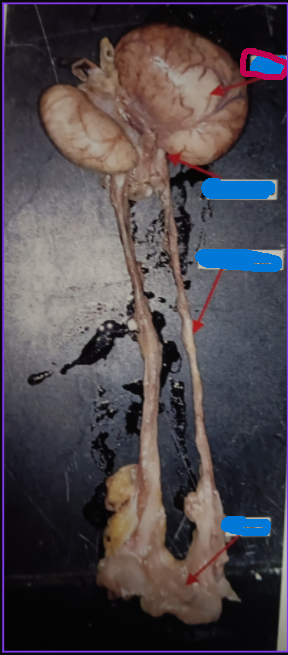
testis
195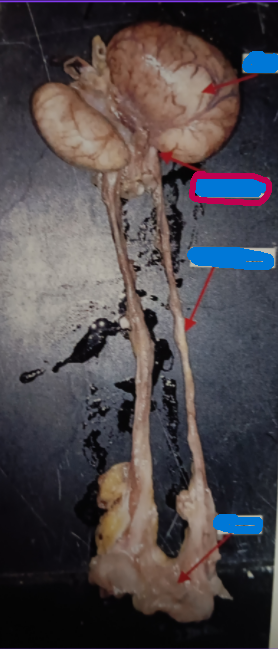
epididymis
196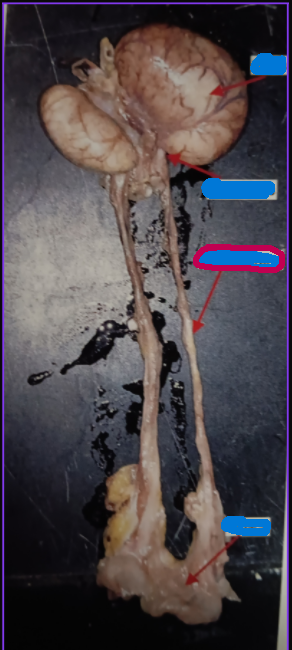
vas deferens
197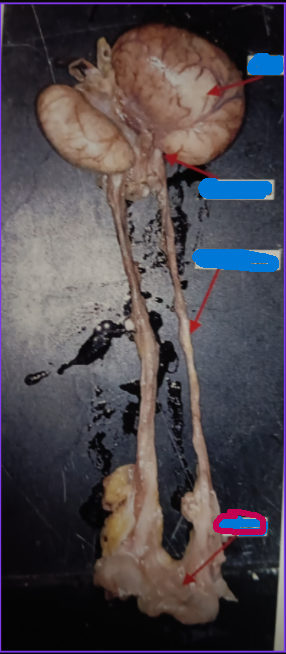
cloaca
198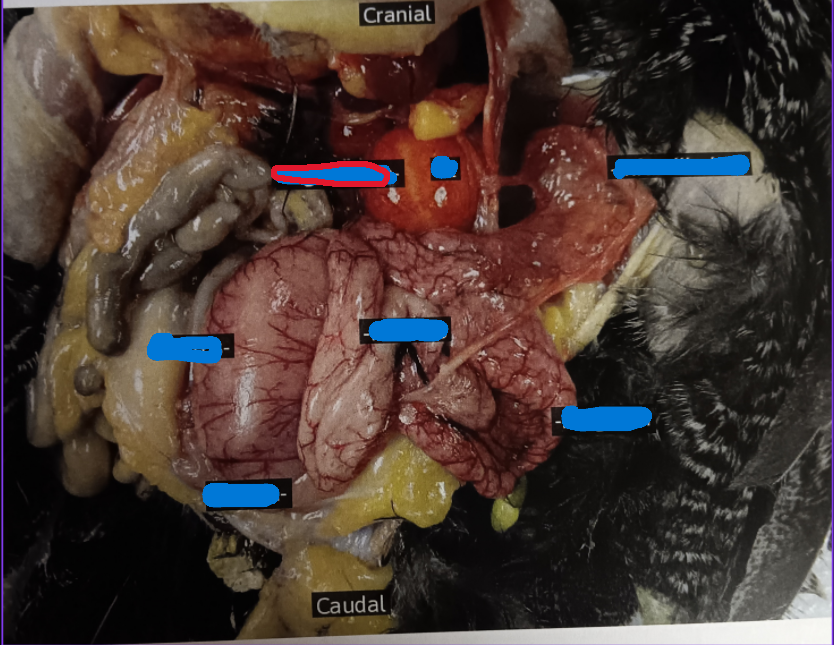
stigma line
199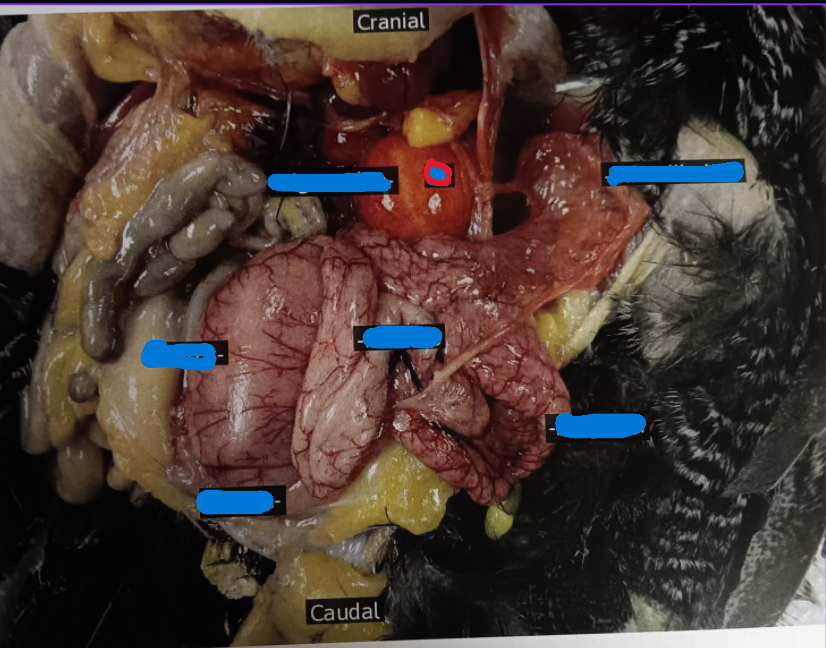
F1
200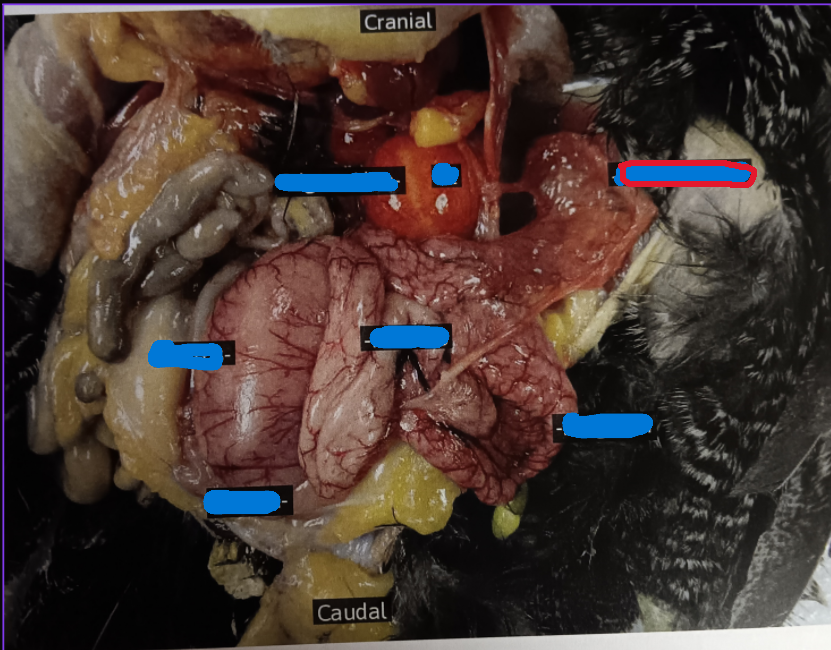
infundibulum
201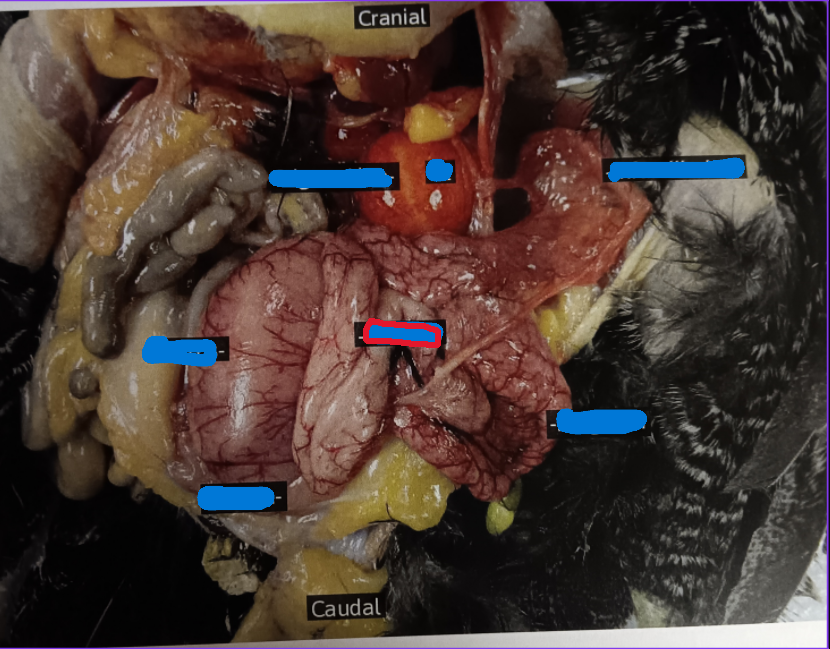
isthmus
202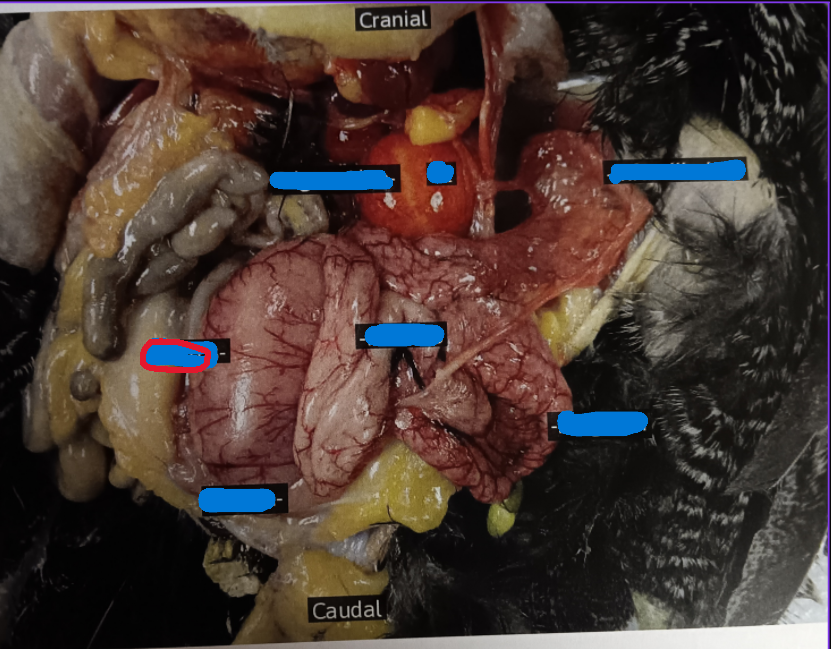
uterus
203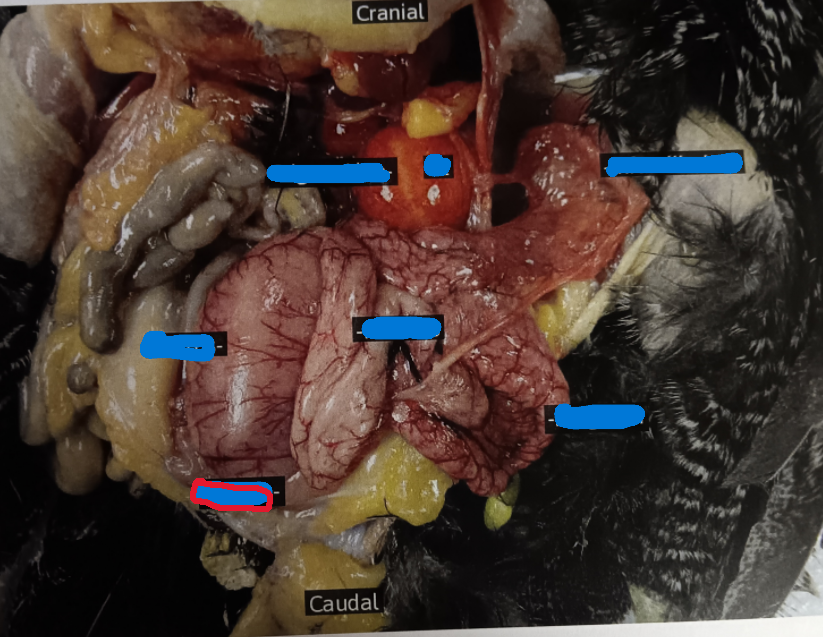
vagina
204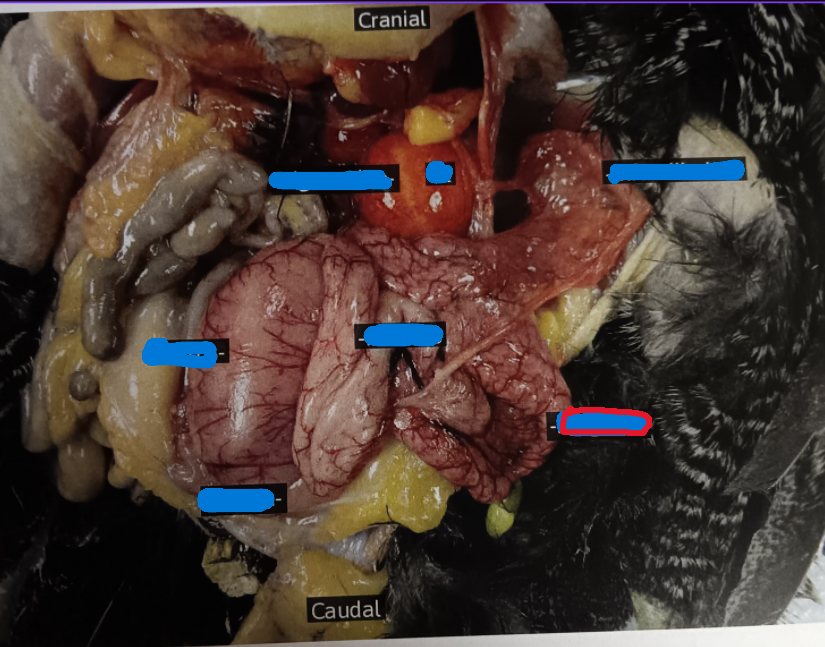
magnum
205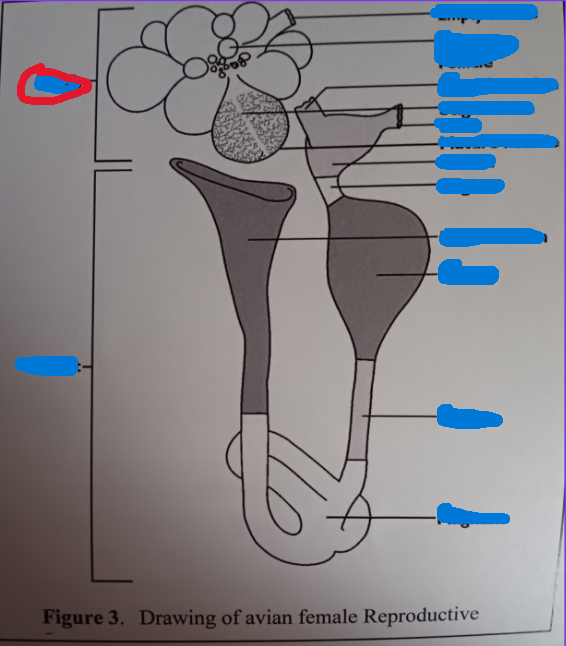
ovary
206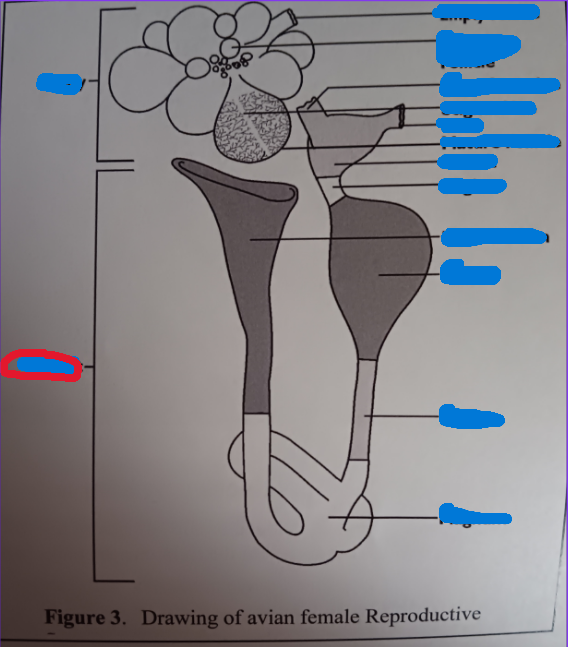
oviduct
207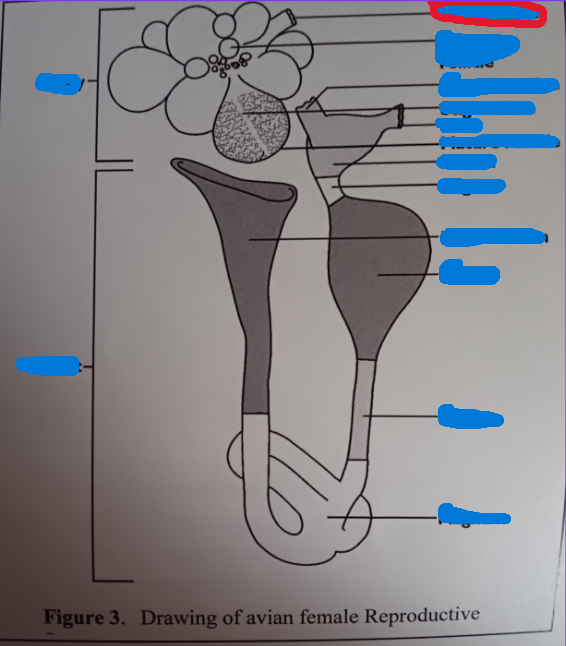
empty follicle
208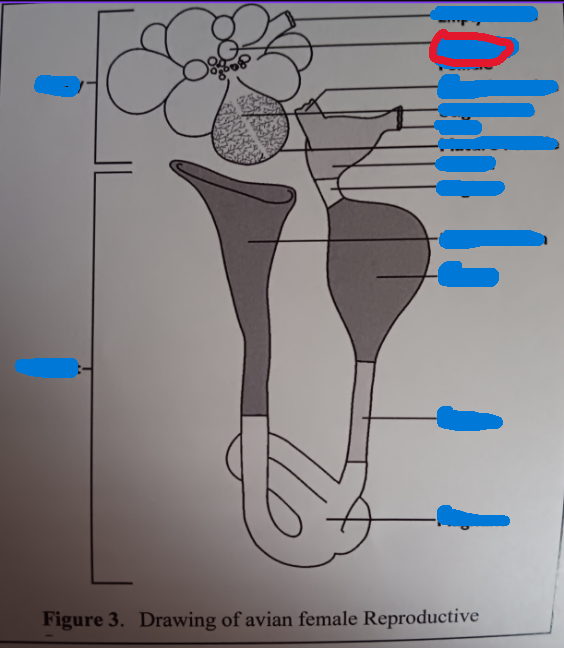
immature follicle
209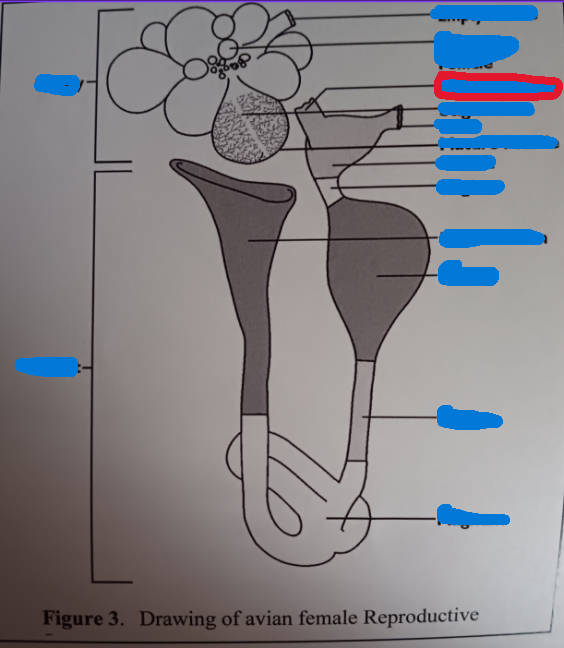
large intestine
210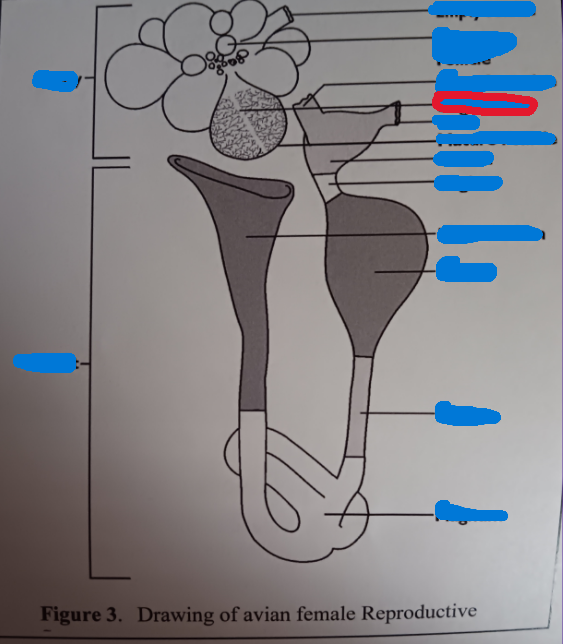
stigma line
211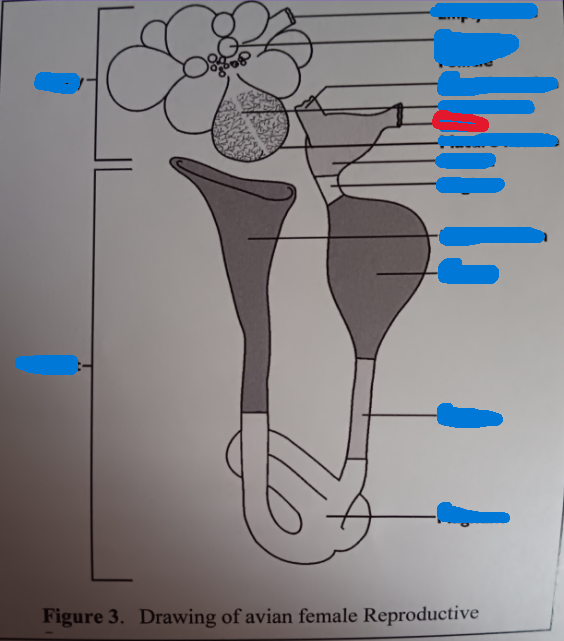
vent
212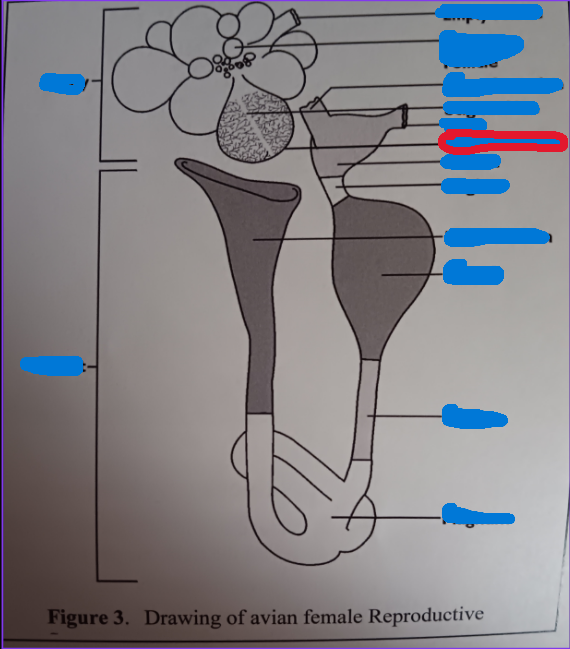
mature follicle
213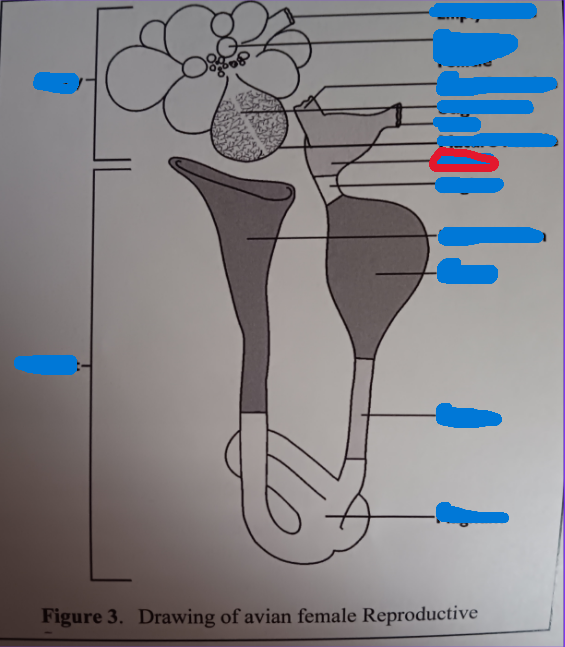
cloaca
214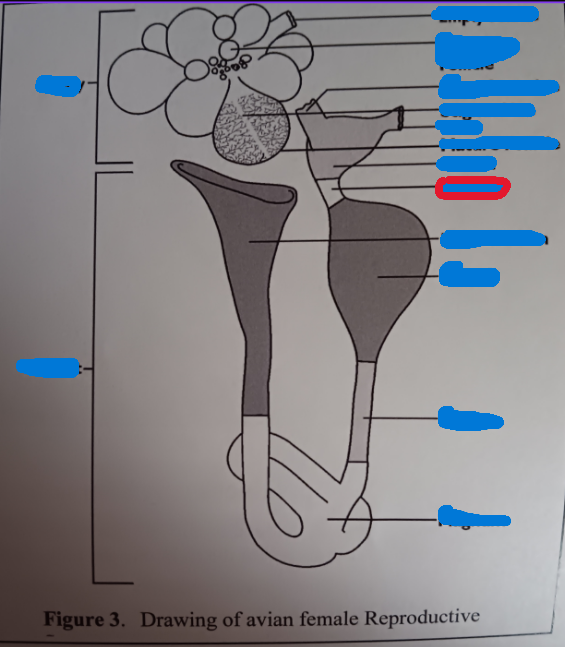
vagina
215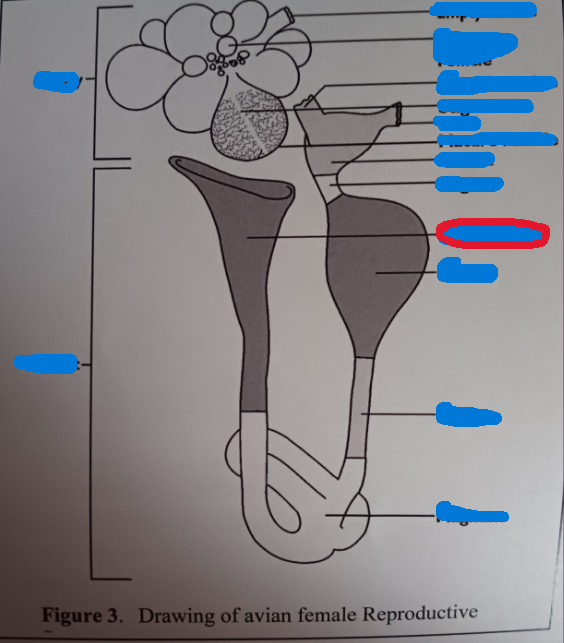
infundibulum
216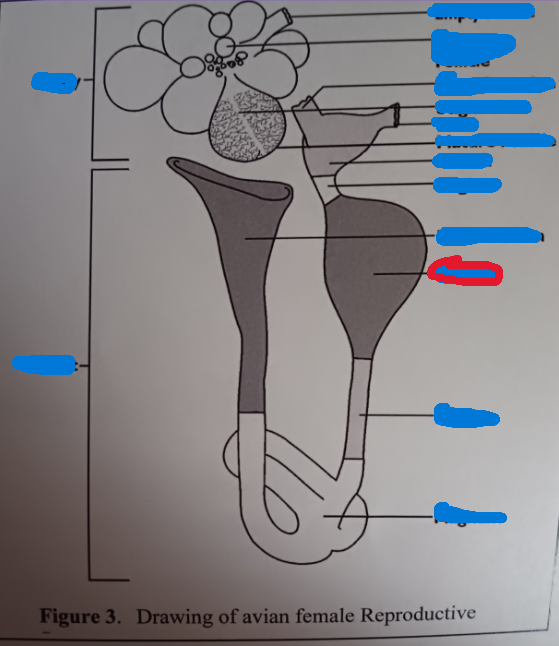
uterus
217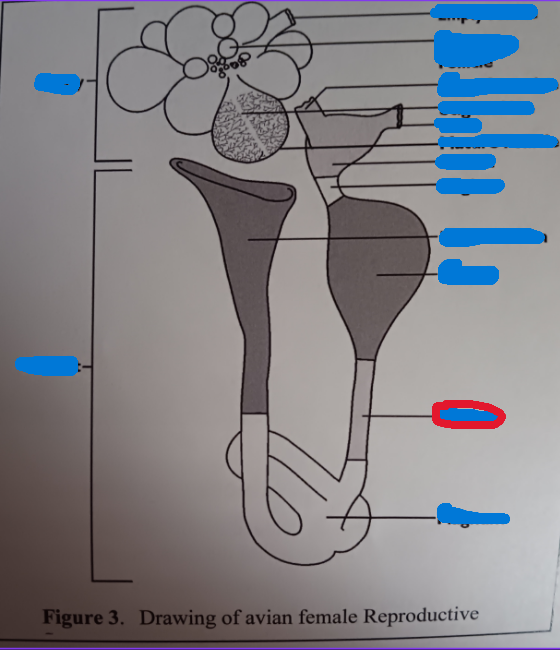
isthmus
218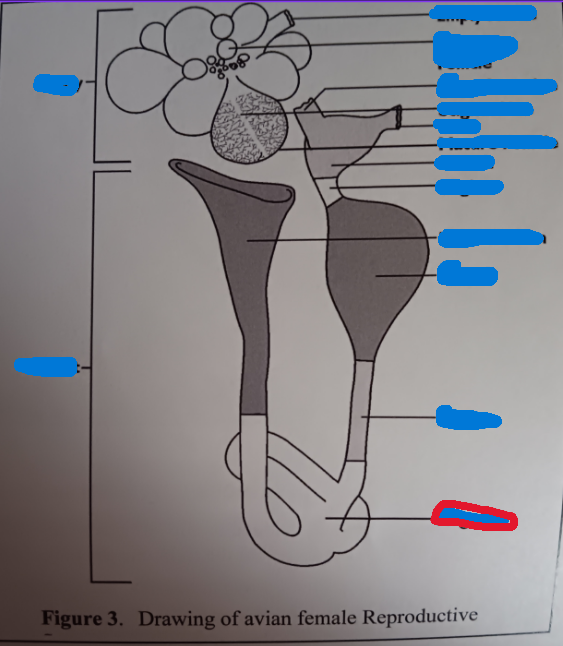
magnum
219
avian salivary glands produce __________, _____, and _____
bicarbonate, mucin, water (BMW, no salivary amylase)
220
in hens, the mature oviduct is found on the ____ side of the bird
left (right side atrophies)
221
the egg is in the ___________ for __ hours, where it then travels to the ______ for __ hours where egg _______ is secreted
it then travels through the _______ where the inner and outer _____ __________ are put on which takes ___ hours
the egg then travels to the _______ where shell pigment is deposited and the egg is here for ____ hours
the egg then travels to the ______ where it is rotated so the ____ end is down, which takes __ hours
___________ occurs __ hours later
it then travels through the _______ where the inner and outer _____ __________ are put on which takes ___ hours
the egg then travels to the _______ where shell pigment is deposited and the egg is here for ____ hours
the egg then travels to the ______ where it is rotated so the ____ end is down, which takes __ hours
___________ occurs __ hours later
infundibulum, 1/4, magnum, 3, albumen, isthmus, shell membranes, 1 1/4, uterus, 20 3/4, vagina, round, 1/4, oviposition, 1/2
222
heterotrophic bone - bone in the snout of the pig
os rostrale
223
heterotrophic bone - bones in the heart of cattle, sheep, and goats
ossa cordis
224
heterotrophic bone - bone in the diaphragm of camels
os phrenic
225
heterotrophic bone - bones in the penis of carnivores (dogs and cats) and rodents
ossa penis (ossa plural of os)
226
heterotrophic bone - round bones found in the eyes of birds
scleral rings
227
heterotrophic bone - found in the tongue of avians and mammals
hyoid apparatus
228
without prefix
an (a)
229
away from prefix
ab
230
to/toward prefix
ad (af)
231
through prefix
dia
232
difficult prefix
dis (dys)
233
away from prefix
ex (ef)
234
condition of/state caused by suffix
osis
235
flowing suffix
rrhea
236
a tube extending from the mouth to the anus
digestive tract
237
these contribute directly to physical (mechanical) breakdown of feed or produce secretions that aid in its chemical breakdown
includes teeth, tongue, salivary glands, liver, gall bladder, and pancreas
includes teeth, tongue, salivary glands, liver, gall bladder, and pancreas
accessory organs
238
the four parts of the rumination cycle
regurgitation, reinsalvation, remastication, redeglutition
239
first step of rumination cycle - after feed has been initially chewed and swallowed, the reticulum initiates retrieval so it can return to the mouth
regurgitation
240
second step of rumination cycle - the salivary glands add more mucin and bicarbonate to assist in breaking down the feed more
reinsalvation
241
third step of rumination cycle - rechewing the food
remastication
242
fourth step of rumination cycle - re-swallowing the feed
redeglutition
243
these function in prehension and particle reduction
teeth
244
this functions in prehension, mixing, and taste
tongue
245
true/false: ruminants produce salivary amylase
false
246
in ruminants, saliva contains __________, _____, and ____ in a water solution
bicarbonate, mucin, urea
247
the four compartments of the ruminant stomach (in order that food travels through)
reticulum, rumen, omasum, abomasum
248
part of ruminant stomach - initiates regurgitation, also called the honeycomb stomach due to honeycomb appearance of interior surface or the "hardware stomach"
reticulum
249
part of ruminant stomach - site of microbial fermentation of feed and absorption of volatile fatty acids
also called fermentation vat
also called fermentation vat
rumen
250
numerous, closely packed protrusions found in the interior of the rumen
papillae
251
part of ruminant stomach - water absorption, interior comprised of numerous folds or leaves like pages of a book
omasum
252
part of ruminant stomach - compartment that is the "true" or glandular stomach of ruminants
produces HCl, pepsinogen, and intrinisc factor
produces HCl, pepsinogen, and intrinisc factor
abomasum
253
the stomach of newborn mammals produces ______, an enzyme that curdles milk
rennin
254
the ruminant stomach secretes the enzyme ________, the hormone _______, and has longitudinal wrinkles called _____
lysozyme, gastrin, rugae
255
overlays the stomach, lace-like appearance due to fat deposition that occurs in older animals
part of the immune system - leukocyte production occurs here
part of the immune system - leukocyte production occurs here
greater omentum
256
two folds that close when young suckles to cause the milk to bypass the reticulum and rumen so that it is not fermented
connects esophagus to abomasum
connects esophagus to abomasum
esophageal groove (reticular groove)
257
what the jejunum absorbs
monosaccharides, amino acids, calcium, iron (and fatty acids)
258
what the ileum absorbs
water, electrolytes, bile salts, vitamin B12
259
shell/outside layer
cortex
260
marrow/middle layer
medulla
261
kidney prefix
nephr (ren)
262
__ to __ percent of the total blood supply goes to the kidney
20, 25
263
removes waste products and helps regulate blood volume and body pH
urinary system
264
the functional unit of the kidney - where filtration of blood occurs
nephron
265
the urinary system regulates ____ _____, filters _____, maintains ___________ balance, resorbs _____ and useful constituents, regulates ____ ____ balance, collects and stores _____
body water, blood, electrolyte, water, acid base, urine
266
in avians, urine is stored in the _____ ________
large intestine (no urinary bladder)
267
both mammals and birds excrete urine that contains ____, ____ _____, _______, and _________ as well as other nitrogen containing compounds
urea, uric acid, ammonia, creatinine
268
in mammals, the primary nitrogen containing compound of urine is ____, which is the end product of nitrogen obtained when protein is metabolized
urea
269
in both birds and mammals, the end product of nitrogen from nucleic acids is ____ _____
uric acid
270
the primary nitrogen compound in bird urine is ____ ____
uric acid
271
the outer part of the kidney - the renal corpuscle and proximal and distal tubules are located here
renal cortex
272
this consists of the glomerular capsule and the glomerulus
functions to filter blood to produce glomerular filtrate, gluconeogenesis also occurs here
functions to filter blood to produce glomerular filtrate, gluconeogenesis also occurs here
renal corpuscle
273
process in which the body makes glucose from non-carbohydrate substrates like lactate, pyruvate glycerol, and amino acids
gluconeogenesis
274
inner part of the kidney
renal medulla
275
cone shaped structures, purplish red in color
base is continuous with renal cortex - functions to convert filtrate from the glomerular capsule into urine
base is continuous with renal cortex - functions to convert filtrate from the glomerular capsule into urine
renal pyramids
276
located between the renal pyramids and are extensions of the cortex into medulla that support the cortex of the kidney
composed of lines of blood vessels and cortical material
composed of lines of blood vessels and cortical material
renal columns
277
funnel shaped opening in the kidney that initially recieves urine from the collecting ducts
this appears white from the connective tissue lining this area
this appears white from the connective tissue lining this area
renal pelvis
278
the nephron consists of the ______ ________ and the _____ ______
renal corpuscle, renal tubule
279
the ____ __ _____ is responsible for the reabsorption of salt and water from urine
loop of henle
280
these are located on the superior pole of each kidney
adrenal glands
281
this secretes steroid hormones, including aldosterone and cortisone
adrenal cortex
282
this secretes epinephrine (adrenaline) and norepinpehrine
adrenal medulla
283
filtrate produced per minute by both kidneys (work rate of kidney)
glomerular filtration rate
284
secreted by the posterior pituitary in the brain and increases H2O resorption by the kidney
antidiuretic hormone (ADH)
285
steroid hormone secreted by the adrenal cortex - increases Na+ retention by the kidney
aldosterone
286
enzyme secreted by the kidney - converts angiotensinogen into the hormone angiotensin I
ultimately increases the release of aldosterone
ultimately increases the release of aldosterone
renin
287
secreted by heart atria and decreases Na+ retention by the kidney
natriuretic hormone
288
protein hormone secreted by the kidney - acts to stimulate red blood cell production in bone marrow
erythropoietin
289
the small intestine of ruminants does not produce _______
sucrase (produces CAMEL, no S)
290
the adrenal cortex secretes the _______ hormones __________ and _________
steroid, aldosterone, cortisone (AC - AC)
291
the adrenal medualla secretes __________ and ____________
epinephrine, norepinephrine (AM - EN)
292
water retention can be caused by the retention of _______
sodium (water follows sodium)
293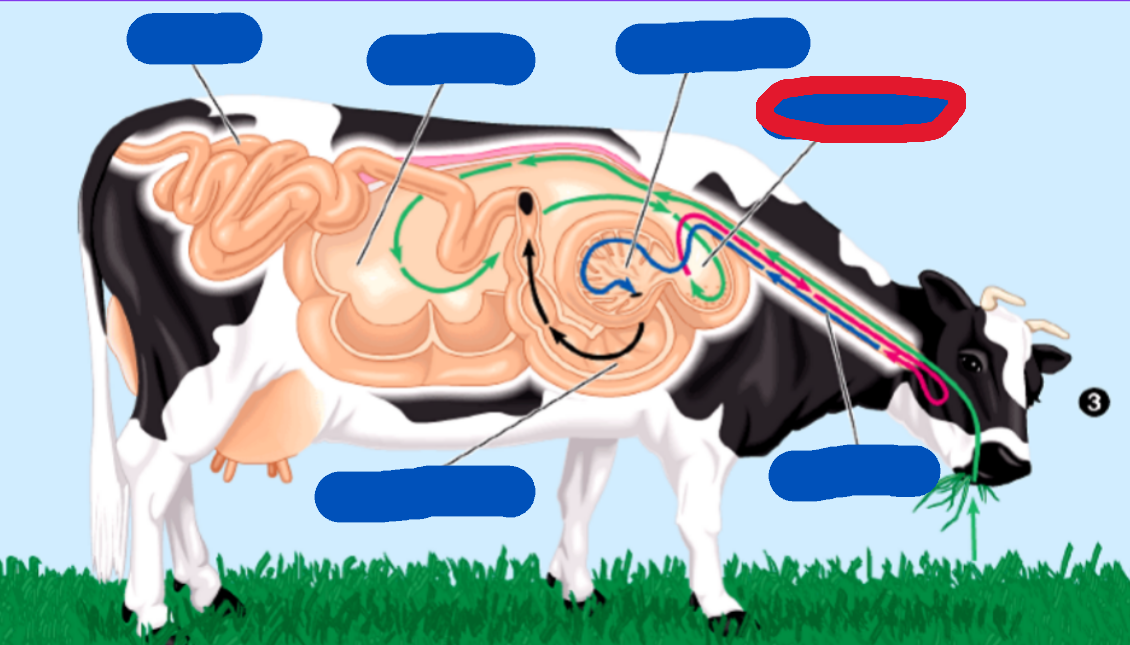
reticulum
294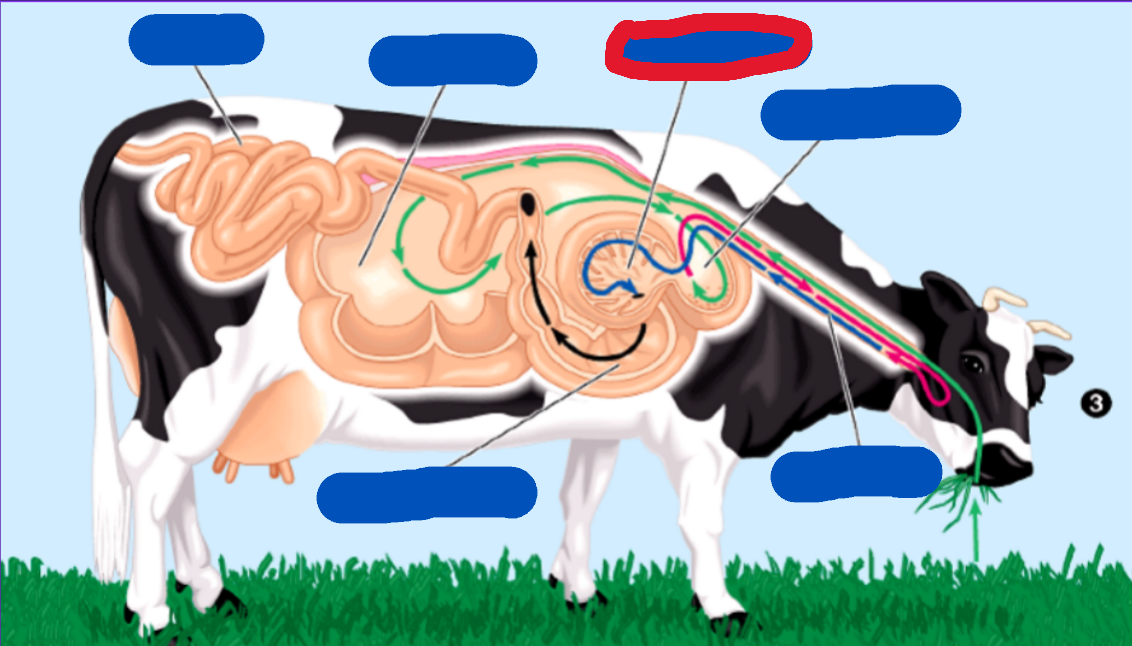
omasum
295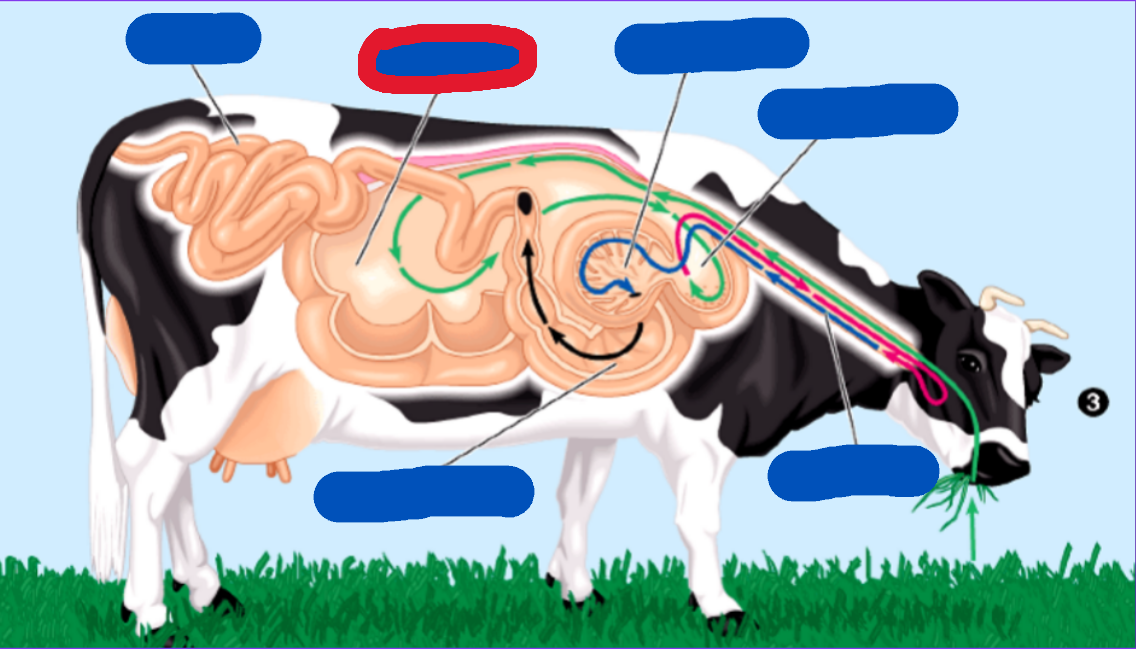
rumen
296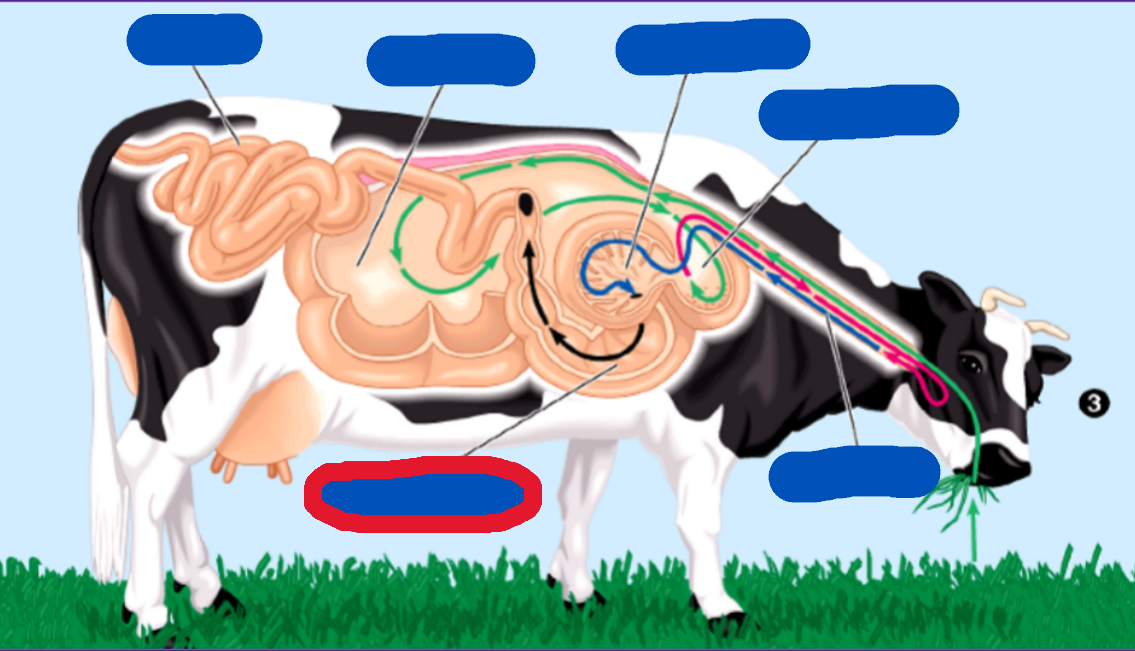
abomasum
297
part of ruminant stomach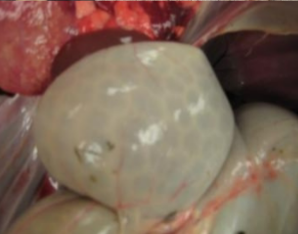
reticulum (honeycomb)
298
ruminant stomach part - fermentation vat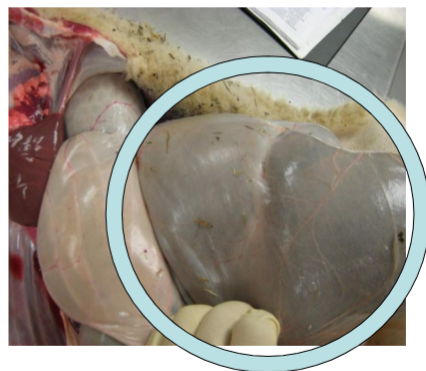
rumen
299
found on internal surface of rumen - increase surface area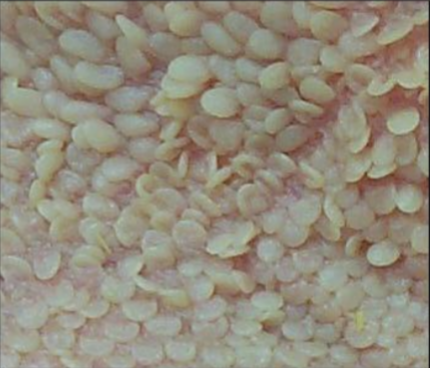
papillae
300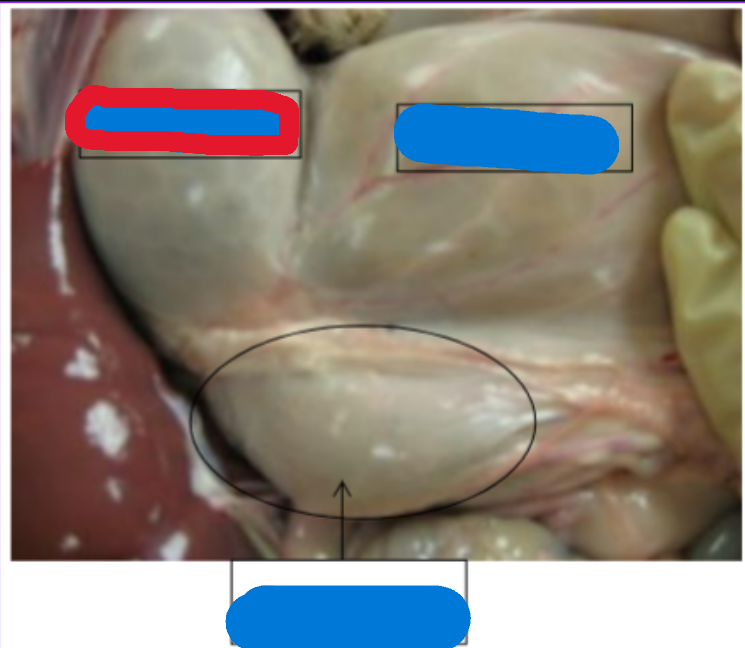
reticulum
155 more cards in OutLearn. Open the full deck