1.2 Language of Anatomy, Anatomical Position, + Body Cavities
Study these flashcardsFree · spaced repetition · iPhone, Android, Mac & web
All cards
1
Superior
cranial - toward the head end or upper part of a structure of the body (above)
2
Inferior
caudal - away from the head end or toward the lower part of a structure or the body (below)
3
Ventral
anterior - toward or at the front of the body (in front of)
4
Dorsal
posterior - toward or at the back of the body (behind)
5
Medial
toward or at the midline of the body (on the inner side of)
6
Lateral
away from the midline of the body (on the outer side of)
7
Intermediate
between a more medial and a more lateral structure
8
Proximal
closer to the origin of the body part or the point of attatchment of a limb to the body trunk
9
Distal
farther from the origin of the body part or the point of attatchment of a limb to the body trunk
10
Superficial
external - toward or at the body surface
11
Deep
internal - away from the body surface (more internal)
12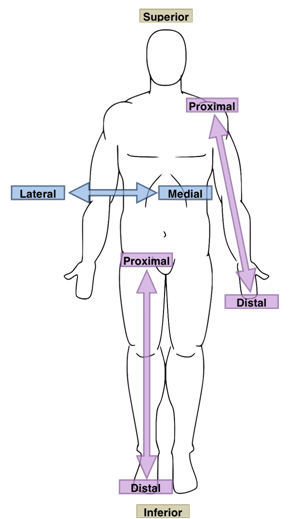
13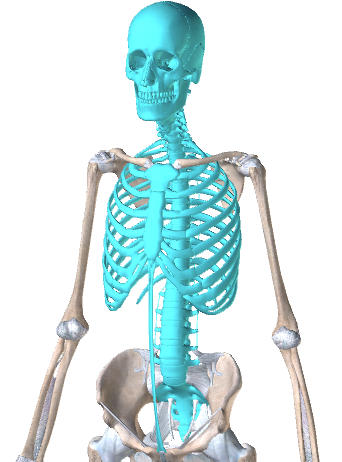
14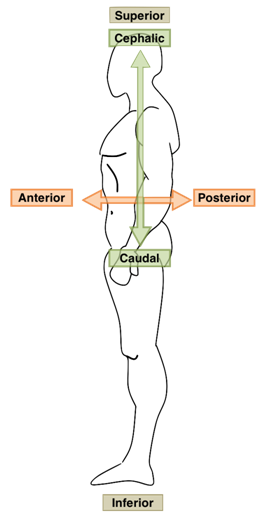
15
Flexion
closing of a joint - "bending"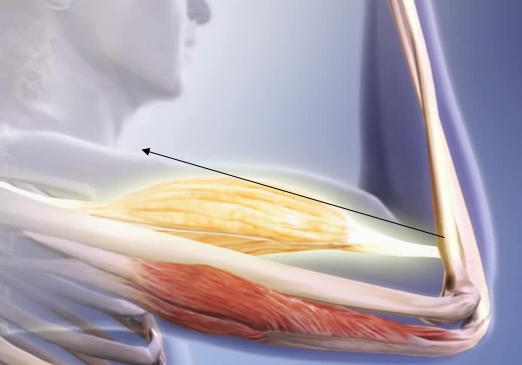
16
Extension
opening of a joint "straightening"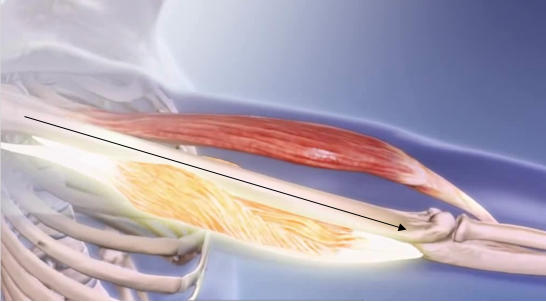
17
Abduction
movement away from the midline 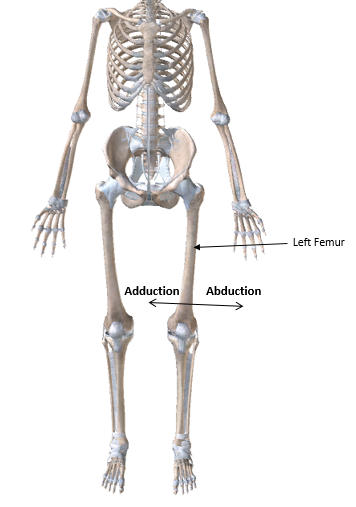
18
Adduction
movement towards the midline 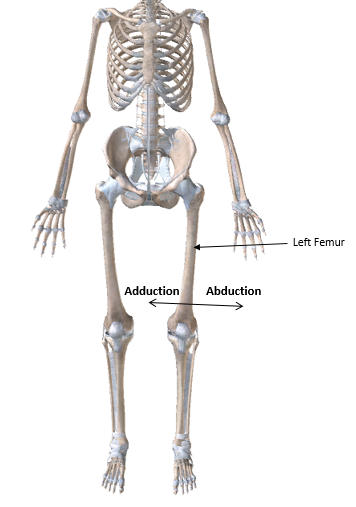
19
Dorsiflexion
flexion superiorly occurring at the subtalar (ankle) joint - movement of the toes "up"
20
Plantarflexion
flexion inferiorly occurring at the subtalar (ankle) joint - movement of the toes "down"
21
Radial Deviation
lateral movement of the wrist towards the radius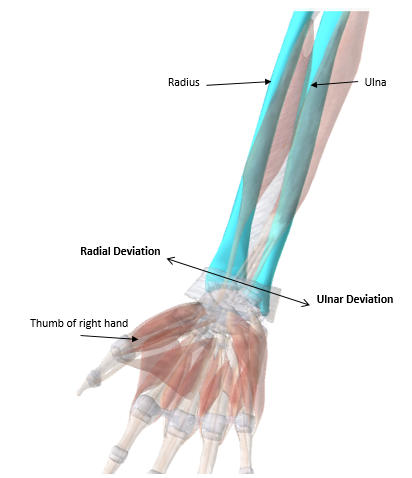
22
Ulnar Deviation
medial movement of the wrist towards the ulna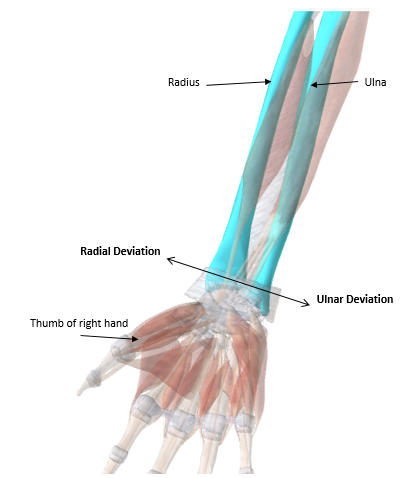
23
Pronation
rotation of the forearm so that the palm faces posteriorly or rotation of the ankle so the sole of the foot faces larerally
24
Supination
rotation of the forearm so that the plam faces anteriorly or rotation of the ankle so the sole of foot faces medially
25
Elevation
upward movement of a structure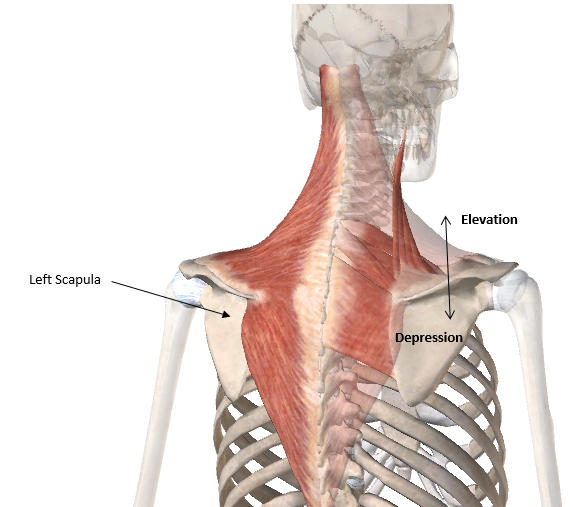
26
Depression
Downward movement of a structure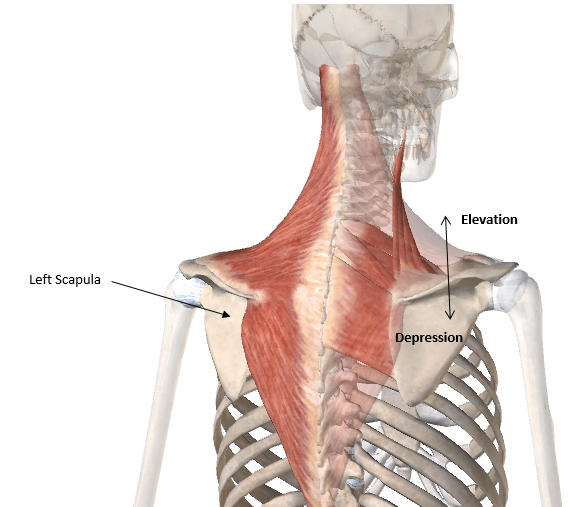
27
Retraction
movement of a structure to be drawn in the posterior direction (drawn backward)
28
Protraction
movement of a structure to be drawn in the anterior direction (drawn forward)
29
Anatomical Position
the reference point of a standard body position; in this position, the body is vertical with feet slightly apart. Like someone standing at attention.
- palms of the hands face upward (in supination)
- thumbs point away from the body
- palms face forward in anatomical position so the forearm (radius and ulna) are uncrossed
- palms of the hands face upward (in supination)
- thumbs point away from the body
- palms face forward in anatomical position so the forearm (radius and ulna) are uncrossed
30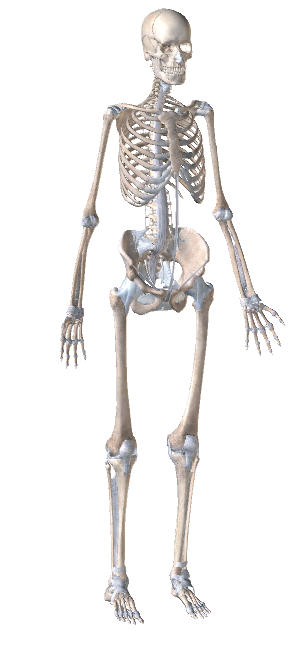
31
Axial 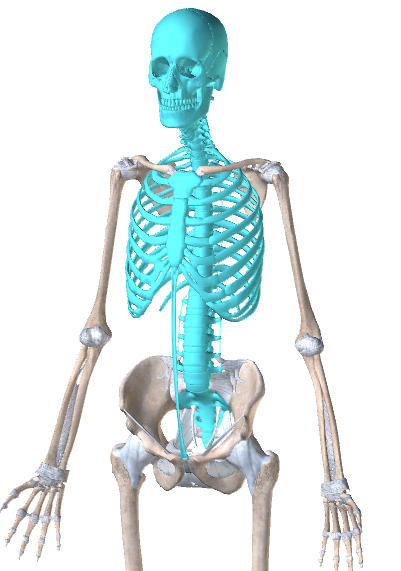
makes up the axis of the body and includes the head, neck, and trunk
32
Appendicular
part of the body that consists of the appendages or limbs that are attached to axis of the body as well as the pelvic and pectoral (shoulder) girdles that serve as a point of attatchment.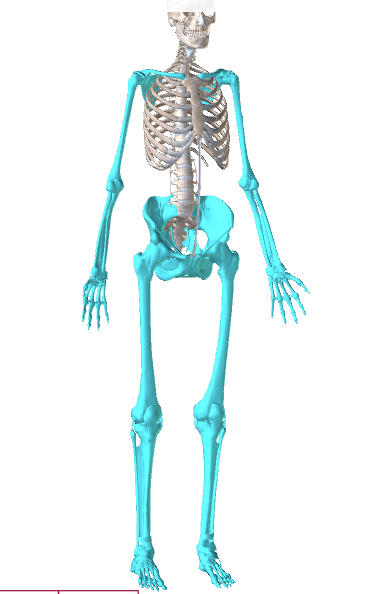
33
Planes of the Body (sections)
- sagittal
- frontal
- transverse
34
Section
named for the plane along which it can be cut
35
Sagittal
verticle plane that divides the body into anterior and posterior sections also know as the median plane or midsaggital plane
36
Frontal
planes divide the body into anterior and posterior sections, also known as a coronal plane
37
Transverse
known as a horizontal plane, runs horizontally from right to left and divides the body into superior and inferior parts; also known as a cross section.
38
Oblique Sections
cuts made diagonally between the horizontal and the verticle planes
39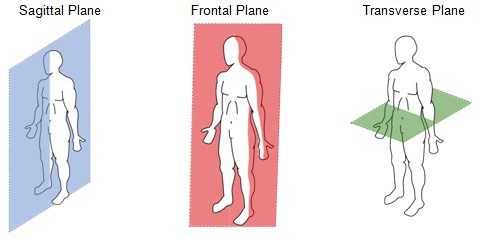
planes of the body
40
2 Sets of Body Cavities
dorsal and ventral
41
Dorsal Cavity
primarily protects the nervous system organs, which a very fragile
42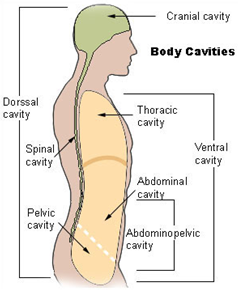
Image occlusion: name the hidden labels
43
cranial cavity
sits in the skull and houses the brain
44
Spinal Cavity (Vertebral)
Runs within the bony vertebral column and encases the spinal cord
45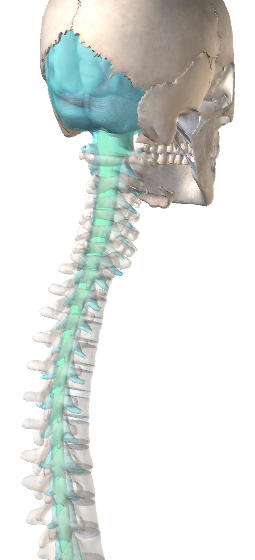
posterior view of brain and spinal cord (highlighted in blue) contained within the cranial and spinal cavities
46
Ventral Body Cavity
the anterior and the larger of the two cavities
contains the thoracic cavity, abdominopelvic cavity and houses the visceral organs
contains the thoracic cavity, abdominopelvic cavity and houses the visceral organs
47
Thoracic Cavity
protected by the ribs and muscles found within the chest
48
Pleural Cavities
thoracic cavity is further divided into this which each contain a lung and pericardial cavity
49
Pericardial Cavity
surrounds the heart and encloses the thracic organs which are the esophagus and trachea
50
Mediastinum
where the pericardial cavity is located; a subsection of the thoracic cavity situated between the pleural cavities
51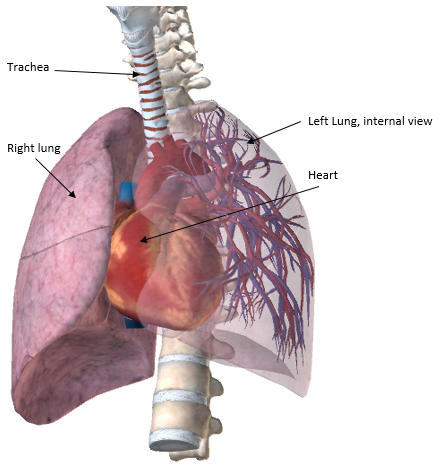
anterior view of organs within the thoracic cavity
52
Diaphragm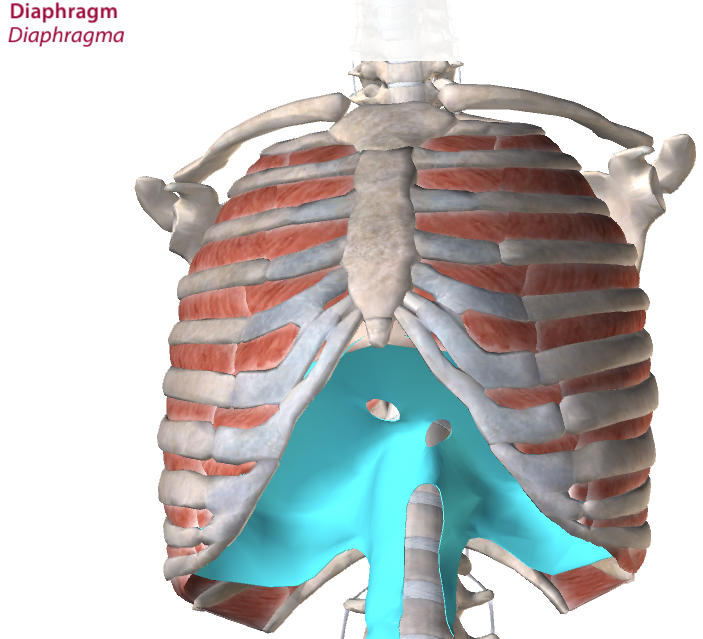
thoracic cavity is divided from the absominopelvic cavity by this; is a dome shaped muscle that is vital to the breathing mechanism
53
Abdominopelvic Cavity
Has two parts, the abdominal cavity and pelvic cavity
54
Abdominal Cavity
Superior portion; houses the stomach, intestines, spleen, and liver
55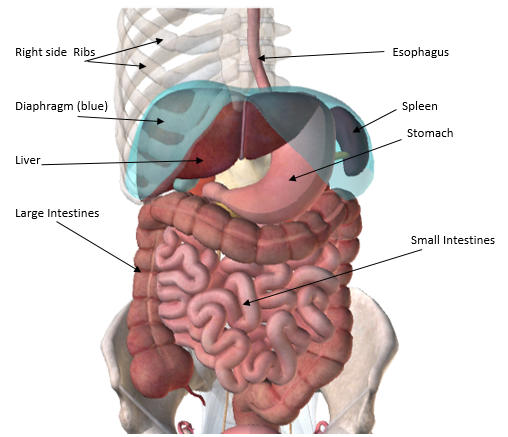
organs within the abdominal cavity below the diaphragm
56
Pelvic Cavity
Lies in the bony pelvis and houses the bladder, reproductive organs, and the rectum.
This are is very vulnerable to injust due to the walls of the abdominal cavity are formed only by the muscles in the trunk of the body.
This are is very vulnerable to injust due to the walls of the abdominal cavity are formed only by the muscles in the trunk of the body.
57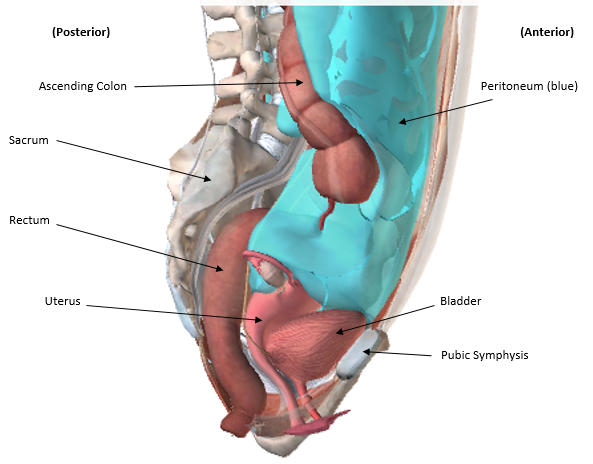
Organs within the pelvic cavity, peritoneum highlighted in blue
58
Serosa
Walls of the ventral body cavity as well as the outer surface of the organs are covered by this membrane. Lubricated by serous fluid that is secreted by the membrane itself and reduces the friction between the organs as they slide around.
59
Serous Membranes
named for the specific cavity they line as well as the organs they line and cover
60
Parietal Pericardium (serous)
lines the pericardial cavity and the visceral pericardium which covers the heart.
61
Parietal Pleurae
lines the walls of the thoracic cavity and the visceral pleurae cover the lungs
62
Parietal Peritoneum
covers the walls of the abdominopelvic cavity
63
Visceral Peritoneum
Covers most of the organs within the abdominopelvic cavity
64
Pleurisy
inflammation when the serous membranes become rough insteadof smooth as the organs now stick togetheras they try to slide past one another
65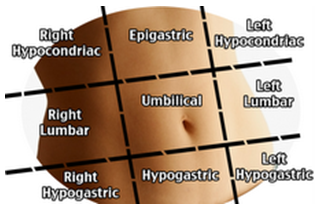
Abdominopelvic regions
66
ubilical region
surrounds the navel and the umbilical region
67
epigastic region
above or superior to the umbilical region
68
hypogastic region
located below or inferior to the umbilical region
69
right and left iliac
hypogastric regions that are located beside or lateral to the hypogastric region, the iliac is the superior part of the pelvic bone.
70
right and left lumbar regions
lie beside or lateral to the umbilical region; the right and left hypochondriac regions lie lateral to the epigastic region
71
right and left hypochondriac regions
lie beside the epigastic region
72
oral cavity
contains the mouth, teeth, and tongue.
73
digestive cavity
extends all the way from the oral cavity to the anus
74
nasal cavity
located within and posterior to the nose; part of the respiratory tract.
75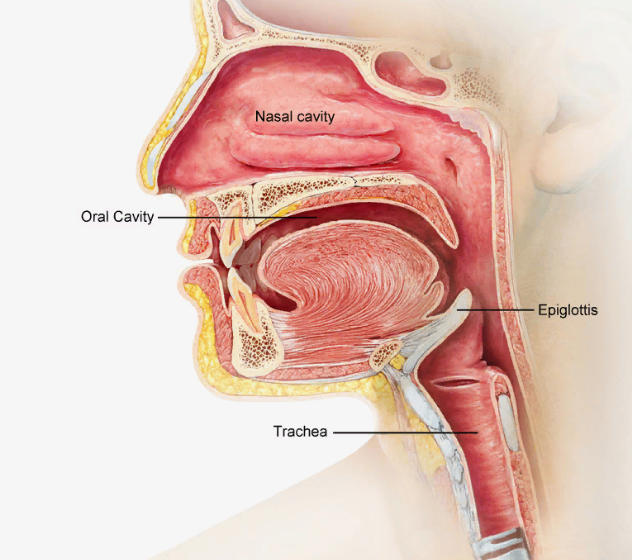
midsagittal view of the oral and nasal cavities
76
orbital cavities
in the skull and houses the eyes
77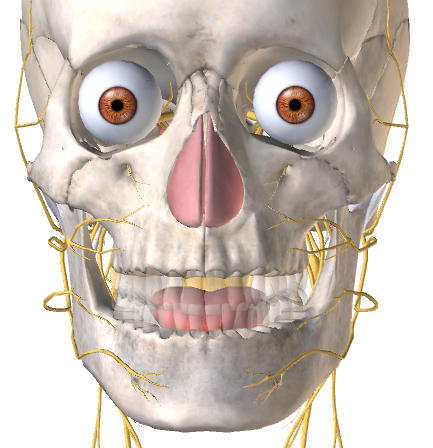
anterior view of the orbital cavities and eyes
78
middle ear cavities
in the skull and lie medial to the eardrums,
79
3 tiny bones in the ear that trasmit sound vibrations to the hearing receptors in the inner ear
malleus, incus, and stapes
80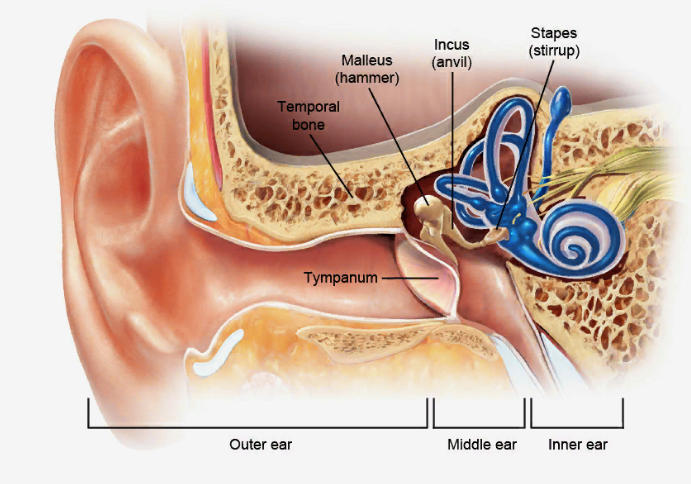
outer, middle, and inner ear
81
synovial cavities
joint cavities that are enclosed within fibrous capsules that surround freely moveable joints of the body (ex: elbow and knee joints)
82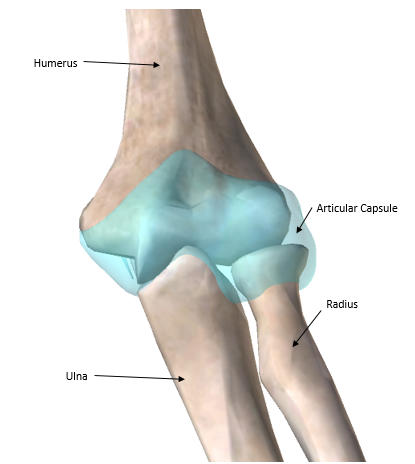
articular capsule of the left elbow