Moisture content of Asphalt
Study these flashcardsFree · spaced repetition · iPhone, Android, Mac & web
All cards
1
what is considered a representative sample?
1000g minimum
2
how does the sample need to be presented in the can?
it needs to be evenly distributed
3
what must be recorded before weighing out the mass of the sample inside of the canister?
the temperature, this is the Original Temp
4
what needs to be measured before putting the sample in the oven? to what do you round to?
1 mass of the sample canister
2 mass of sample canister + sample at original temp (Moist sample weight = Mi)
round to 0.1g
2 mass of sample canister + sample at original temp (Moist sample weight = Mi)
round to 0.1g
5
what temp does the oven need to be and for how long?
325F (+/- 25F) for 90 min (+/- 5min)
6
After 90 minutes in the oven, what do you do?
get the mass (Mass A) and return to oven
7
how long does the sample go into the oven for the 2nd time?
30 min (+/- 5 min)
8
after taking the sample for the 2nd time, what do you do?
take the mass (Mass B) and your are good to go
9
what is the formula for % change?
A = sample after 90 min in oven
B = sample after 120 min in oven(90 min + 30 min)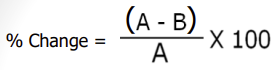
B = sample after 120 min in oven(90 min + 30 min)
10
at what point do your stop drying your sample in 30 min intervals?
whenever % change is less than / equal to 0.05% (0.0005 on calculator)
11
after % change <= 0.05%, when can you measure mass again?
whenever it has reached its original temp (used to take initial massMi)
you can take the temp again to get final mass (Mf)
you can take the temp again to get final mass (Mf)
12
after initial and final mass have been recorded
how do you find moisture content and where do you round to?
how do you find moisture content and where do you round to?
Mi = inital mass (mass when taking original temp)
Mf = final mass (mass @ original temp after oven)
round to the nearest 0.01% (0.0001 on calculator)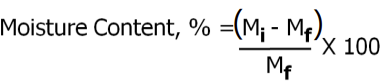
Mf = final mass (mass @ original temp after oven)
round to the nearest 0.01% (0.0001 on calculator)