MIDTERM 1: Ch. 1, 4-10, 12
Study these flashcardsFree · spaced repetition · iPhone, Android, Mac & web
All cards
1
Environment def
everything that effects a living organism
2
Ecology def
biological science about the relationship b/w organisams and environment
3
Environmental science
interdisiplinary study of the earth, incl. physical and social sciences, economics, and philosophy
4
carrying capacity
# of organisms an area can support without environmental degredation
5
sustainability
how long a system can survive
-> at or below carrying capacity
-> at or below carrying capacity
6
how to evaluate economics, growth v. development
1. GDP (gross domestic product) $\$$/ yr
annual value of goods and services
2. Per capita GDP $\$$ /yr / person
3. Degree of industrialization
annual value of goods and services
2. Per capita GDP $\$$ /yr / person
3. Degree of industrialization
7
What is globalization and what drives rapid globalization
interconnectedness - social, economic, environment
communication tech, human mobility, international trade
communication tech, human mobility, international trade
8
when ralking about renewable resources, what is sustainable yield? environmental degredation?
rate of use < rate of replenish
rate of use > rate of replenish
rate of use > rate of replenish
9
what are the environmental worldviews:
in order of high consumption to high conservation: planetary management, stewardship, environmental wisdom
10
major environmental and resource issues and their main causes
air pollution, biodiversity depletion, food supply issues, waste production, water pollution
rapid popualtion growth, unsustainable resource use, poverty
rapid popualtion growth, unsustainable resource use, poverty
11
what is natural capital
solar energy -> natural capital, including resources and services
12
types of resources
perpetual (solar energy, tides, wind)
renewable (fresh air, fresh water, fertile soild, biodiversity)
non renewable (fossil fuels, minerals)
renewable (fresh air, fresh water, fertile soild, biodiversity)
non renewable (fossil fuels, minerals)
13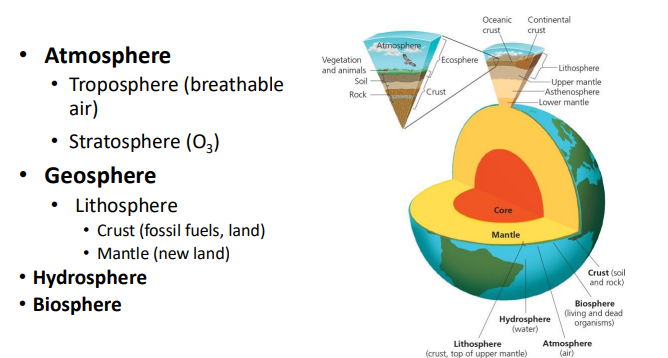
Major Parts of Earth’s Life-Support Systems
(abiotic ecosystem components)
(abiotic ecosystem components)
14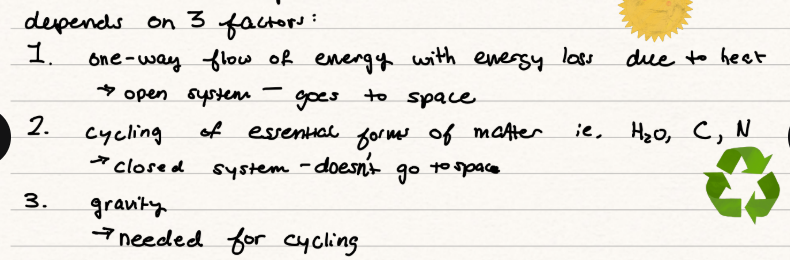
What Sustains Life on Earth?
15
How Does the Sun Sustain Life on Earth?
16
Levels of Organization in Nature (in ecology)
ecosphere, ecosystems, communities, populations, organisms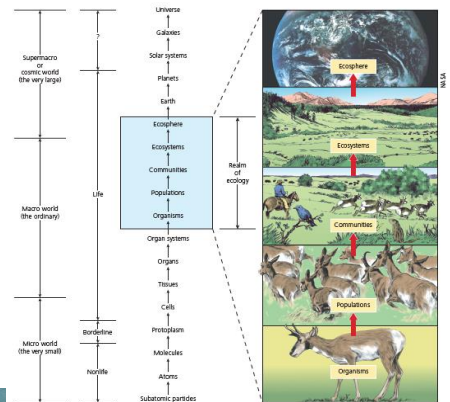
17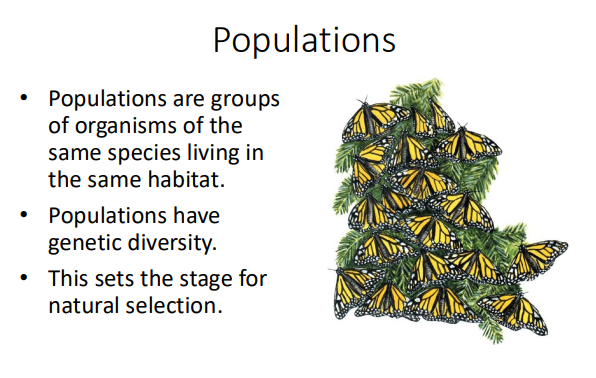
What are populations?
18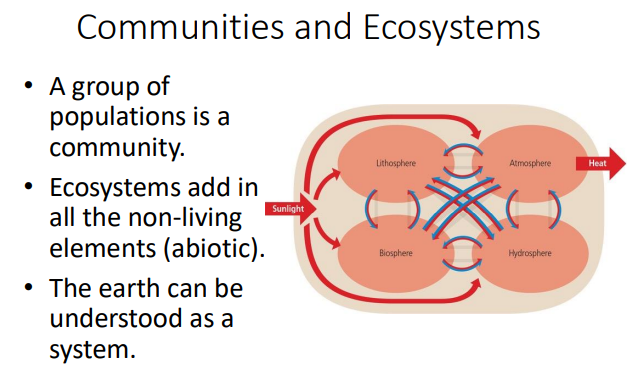
What are communities and ecosystems?
19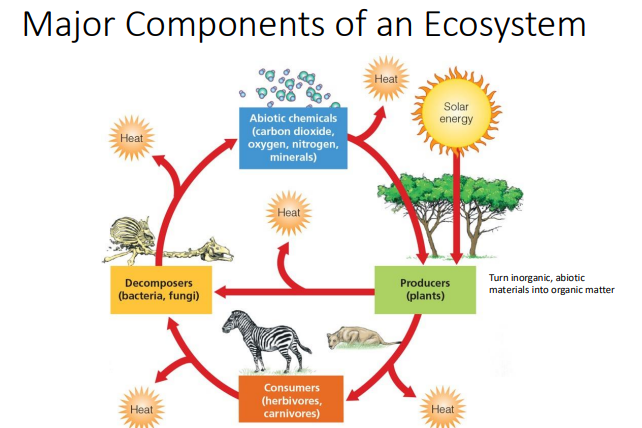
Major components of an ecosystem
20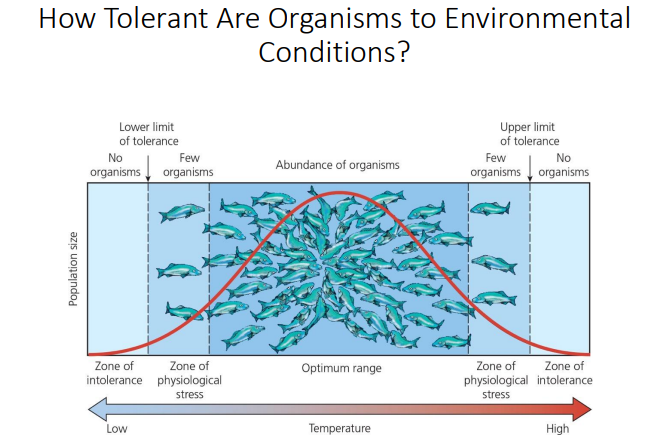
Diagram for how tolerant organisms are to environmental conditions
21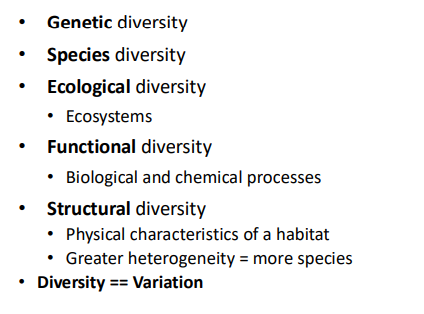
What is biodiversity (biological capital)
22
What is primary productivity
Rate of photosynthesis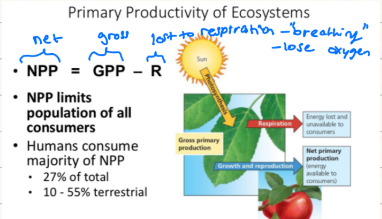
23
Matter cycling: which nutrients/matter gets cycled (import ones)
water, carbon, nitrogen, phosphorus, sulfur
24
What are living things restricted by?
Their environmental conditions and trophic level
25
What Is Evolution?
Change in a population’s genetic makeup through successive generations
theory of natural selection: to describe the
mechanism through
which organisms adapt to
their environment
theory of natural selection: to describe the
mechanism through
which organisms adapt to
their environment
26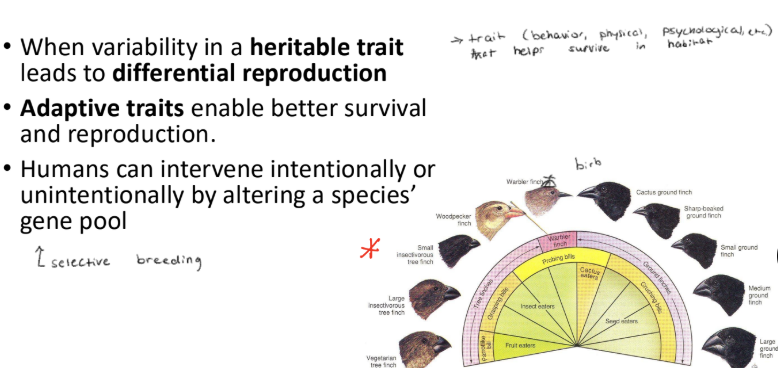
What Role Does Natural Selection Play?
27
Types of Natural Selection
1. directional
2. stabalizing
3. diversifying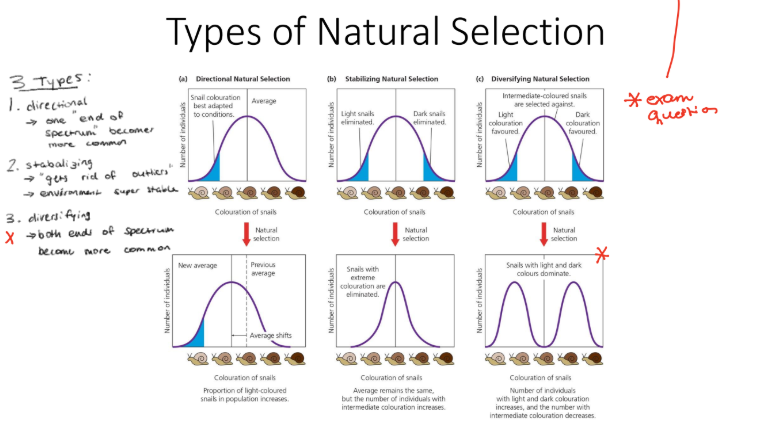
2. stabalizing
3. diversifying
28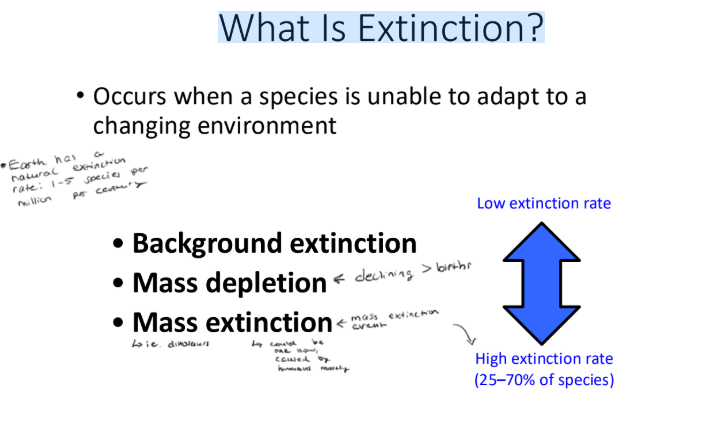
What Is Extinction?
29
formula for biodiversity
biodiversity = speciation (new species evolved) - extinction (species dies out)
30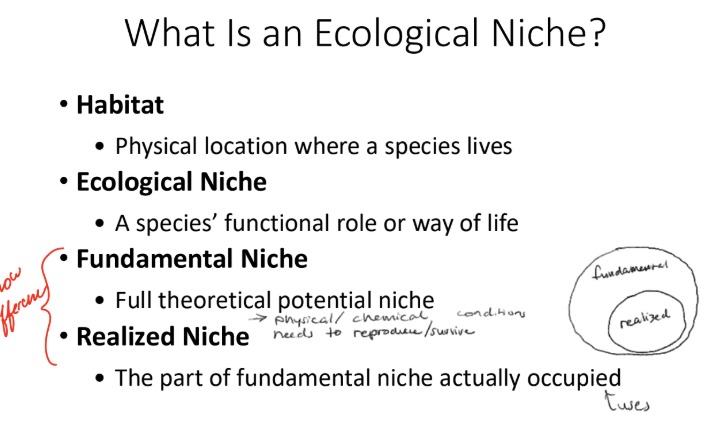
What is ecological niche? What is the difference between fundamental and realized niche?
31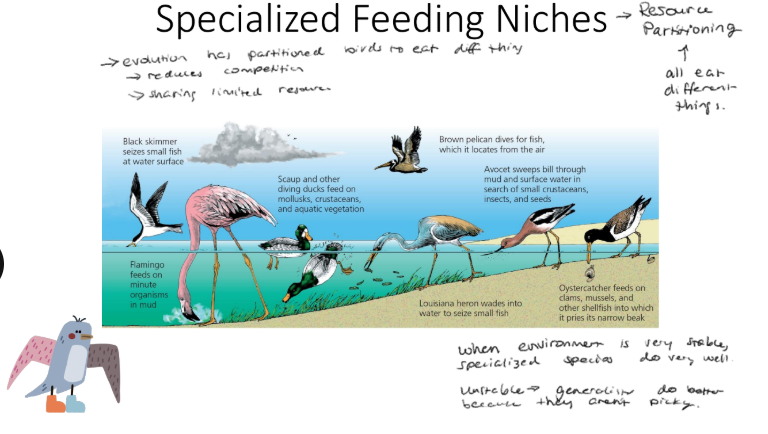
What is resource partioning?
32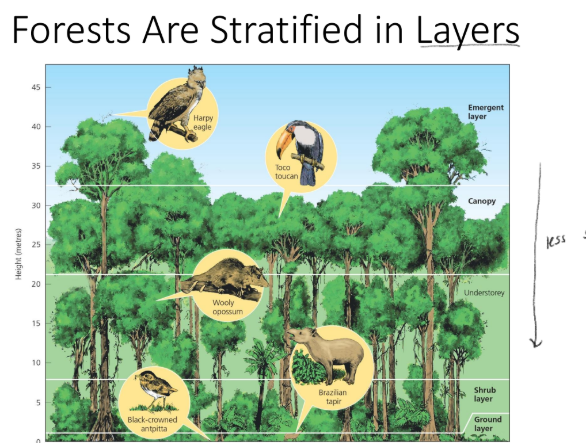
How are forests stratified?
33
What biome experiences permafrost?
artic tundra (polar grasslands)
34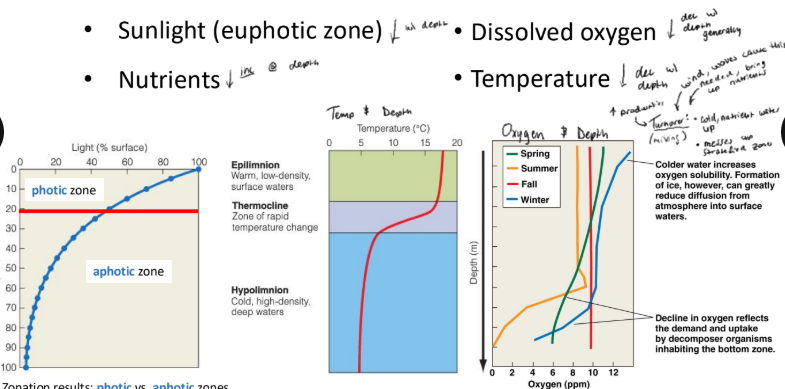
What Factors Limit Life at Different Depths of Water?
35
What benefits do marine ecosystems provide?
just know a few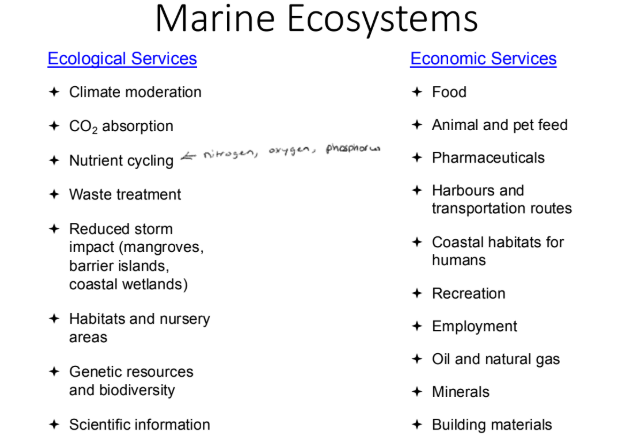
36
What benefits do freshwater ecosystems provide?
just know some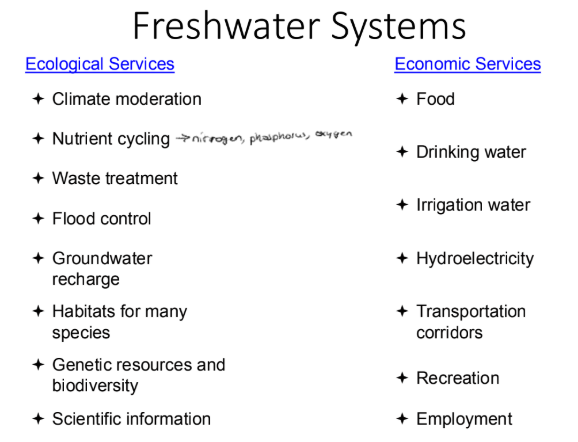
37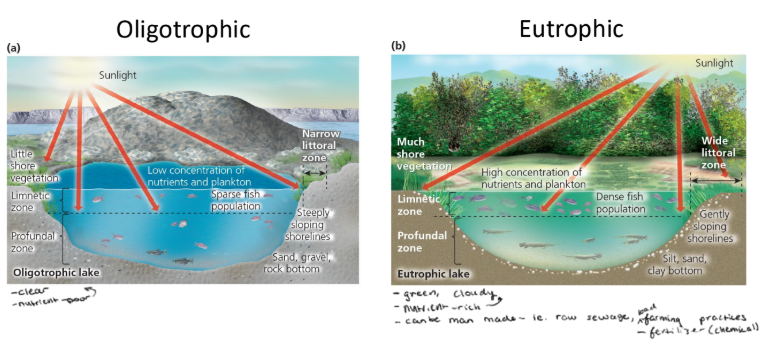
How Do Plant Nutrients Affect Lakes? Types of lakes in terms of nutrients
38
What Are Freshwater Inland Wetlands? What benefits do they provide?
also reduces flooding and promotes nutrient and water cycling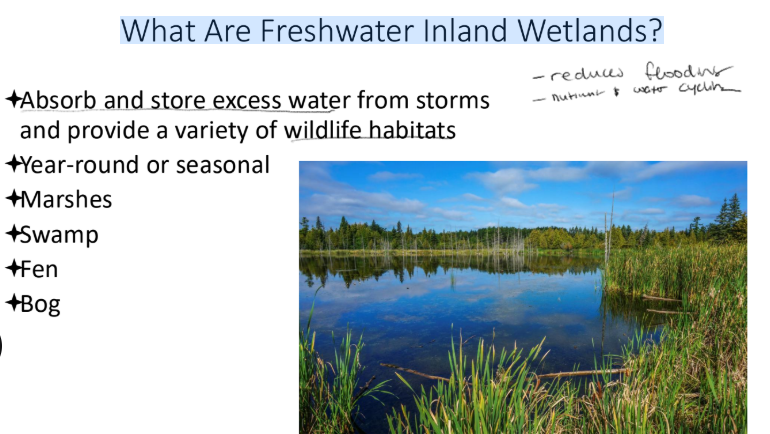
39
Summary of swamp classification
forested wetland
40
Summary of marsh classification
Wet grassland
41
Summary of fen classification
“Peatland” (mostly sedges). Water from soils below
42
Summary of bog classification
“Peatland” (Sphagnum). Water from precipitation. Nurtrient poor, gets nutrients from rain ("ombrotrophic")
43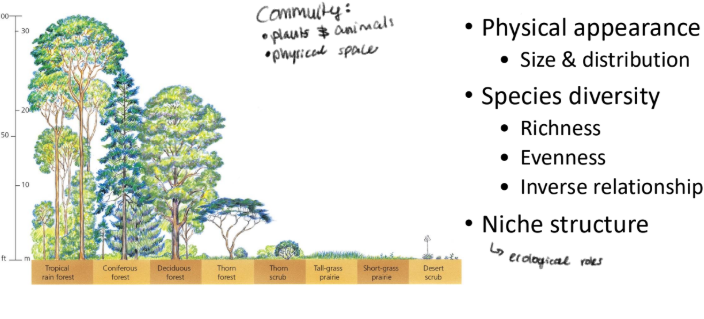
What Is Community Structure?
44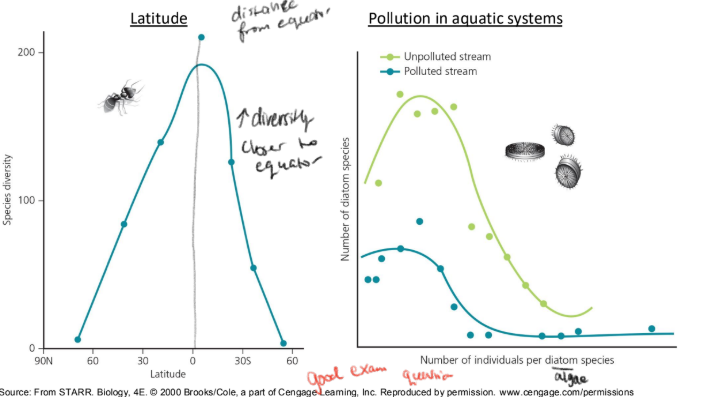
What Determines Species Diversity? Some Examples
45
Types of Species and Their Roles
1. Native (eg. deer)
2. Non-native, incl. invasive and alien (eg. large mouth bass)
3. Indicator - sensitive to environmental conditions, indicator of habitat's wellbeing
4. Keystone - play critical ecological roles (eg. beaver, atlantic salmon)
5. Foundation - create and enhance habitats (eg. beaver, elephant)
2. Non-native, incl. invasive and alien (eg. large mouth bass)
3. Indicator - sensitive to environmental conditions, indicator of habitat's wellbeing
4. Keystone - play critical ecological roles (eg. beaver, atlantic salmon)
5. Foundation - create and enhance habitats (eg. beaver, elephant)
46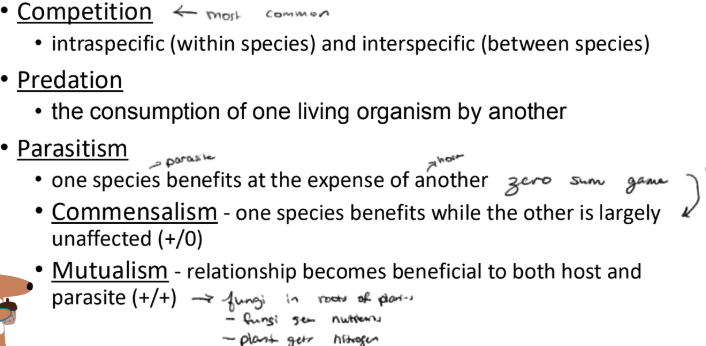
Species Interactions
47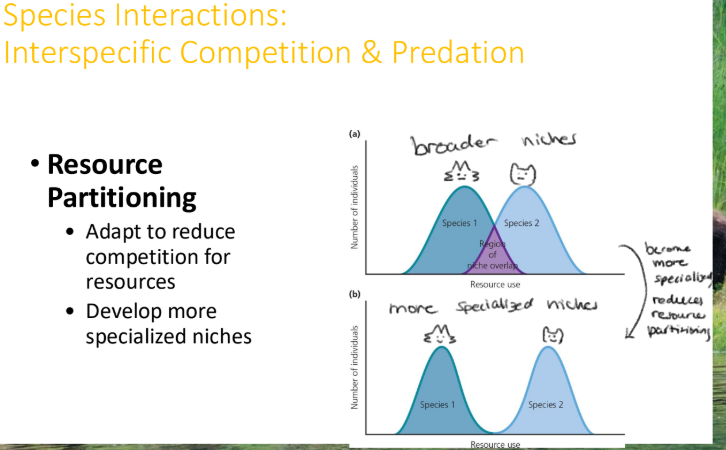
What is resource partitioning? Graph?
48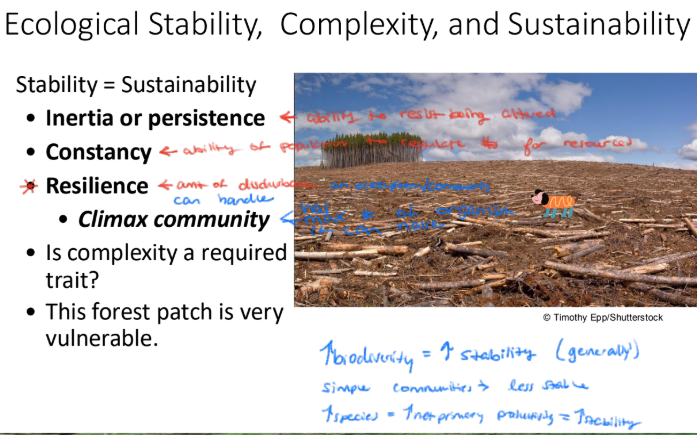
What makes up ecological stability?
49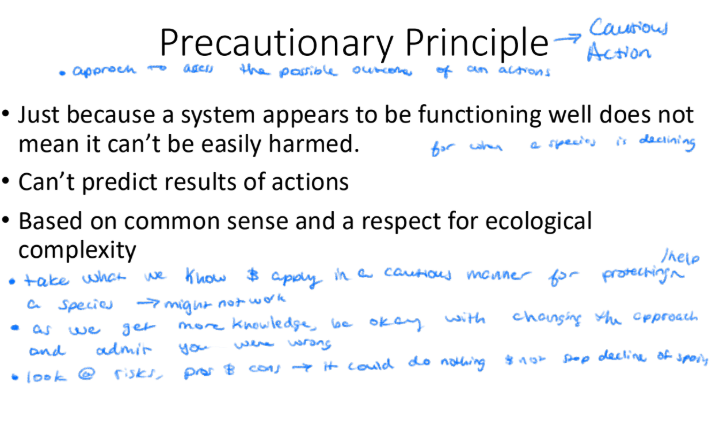
What is the precautionary priciple?
50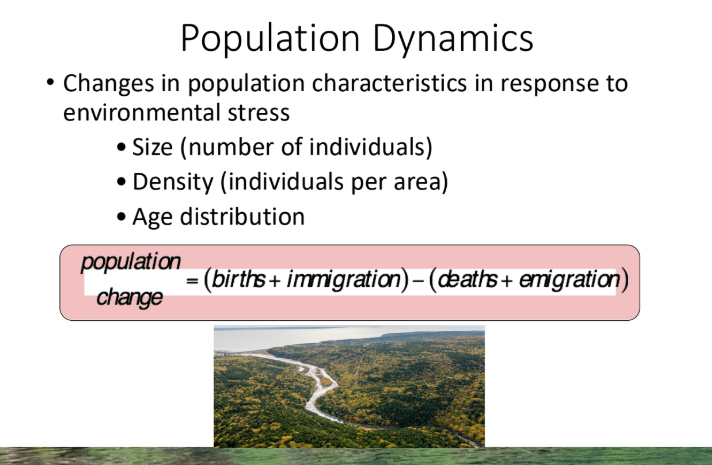
What are population dynamics? Formula
51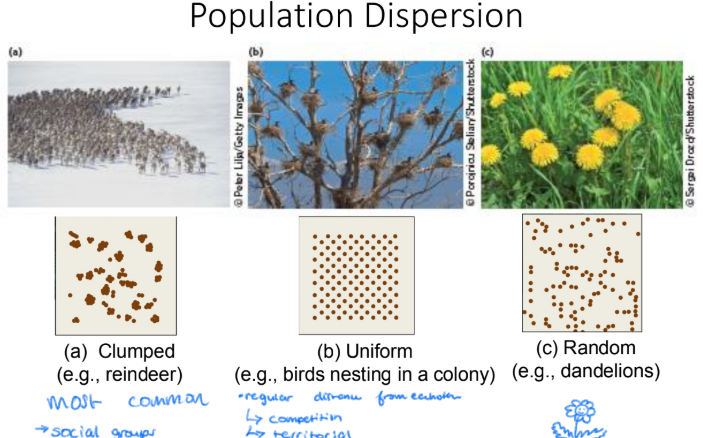
Types of population dispersion
52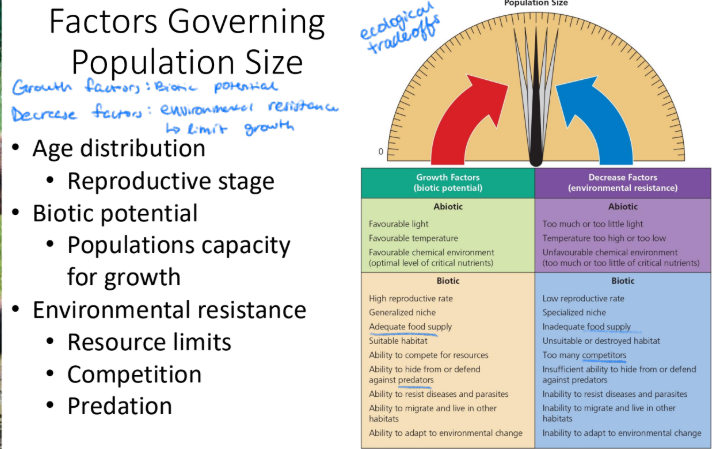
What factors dictate population size?
53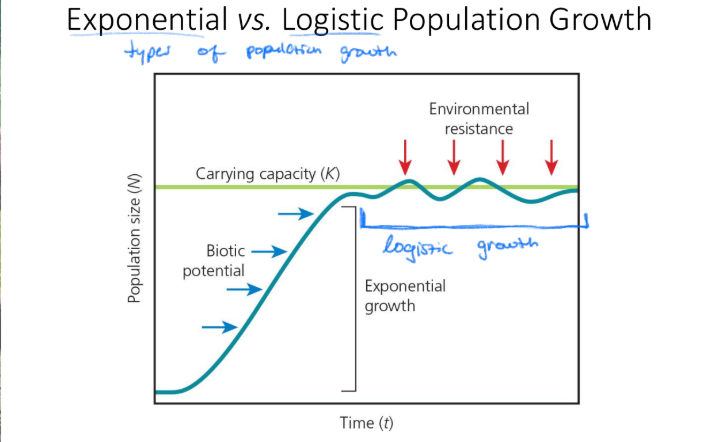
Types of population growth
54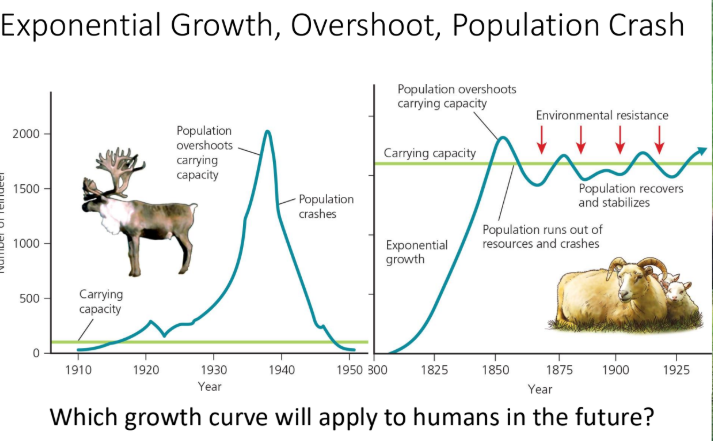
draw graphs of population overshoot then crash (one for massive overshoot, crash and die out, one for small overshoot, small crash, then stablizes)
55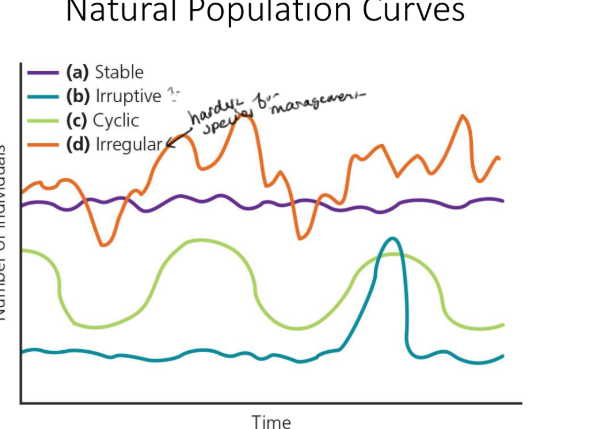
Types of population curves and their graphs
56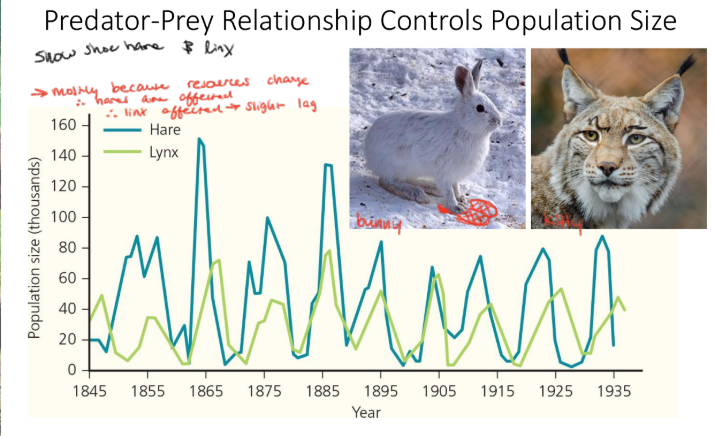
predator prey population graph
57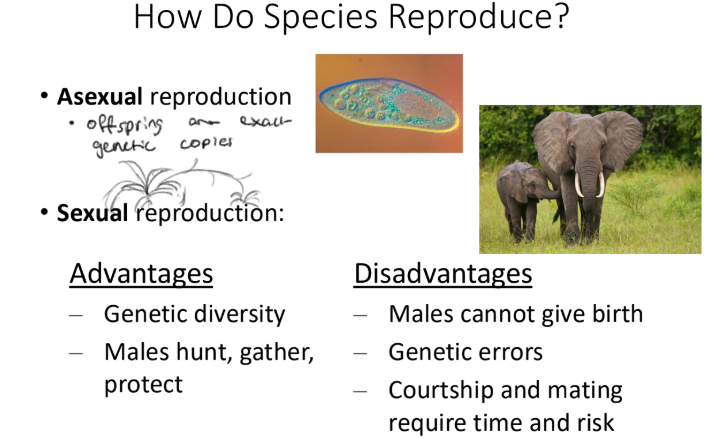
How do species reproduce? (types and pros/cons)
58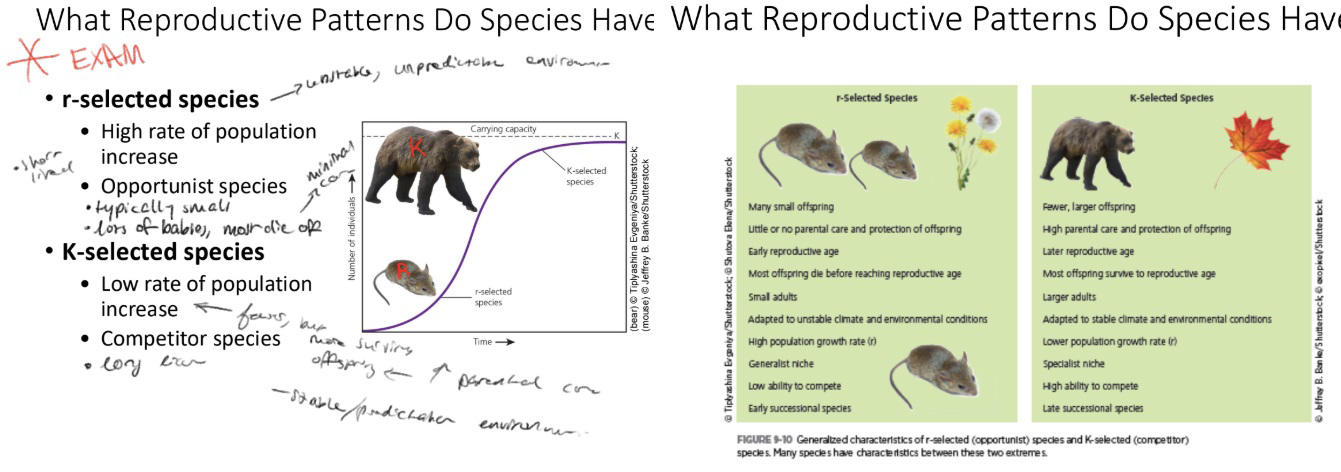
What Reproductive Patterns Do Species Have?
59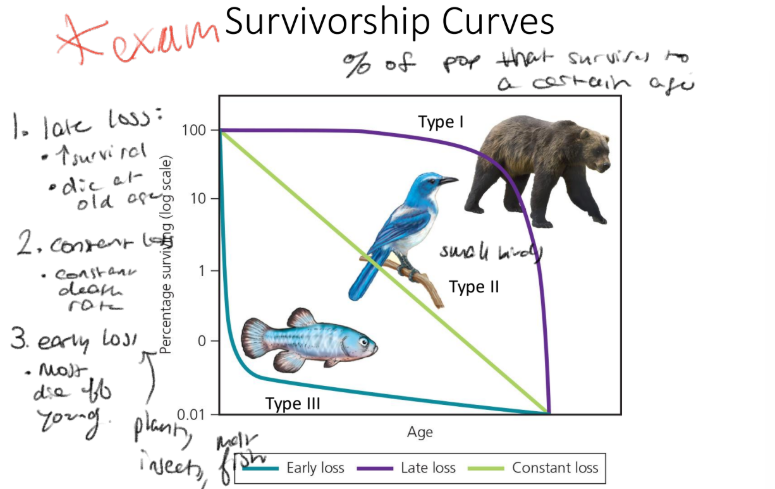
Survivorship curves: graph and types
60
Human Impacts on Natural Systems
• Habitat degradation and fragmentation
• Ecosystem simplification
• Use and waste of primary resources
• Genetic resistance
• Predator elimination
• Introduction of non-native species
• Overharvesting renewable resources
• Interference with ecological systems
• Creating fossil fuel dependent systems
• Ecosystem simplification
• Use and waste of primary resources
• Genetic resistance
• Predator elimination
• Introduction of non-native species
• Overharvesting renewable resources
• Interference with ecological systems
• Creating fossil fuel dependent systems
61
Do communities have one species or several
several
62
What factors cause communities to change?
succession (inclu. evolving) and disturbance
63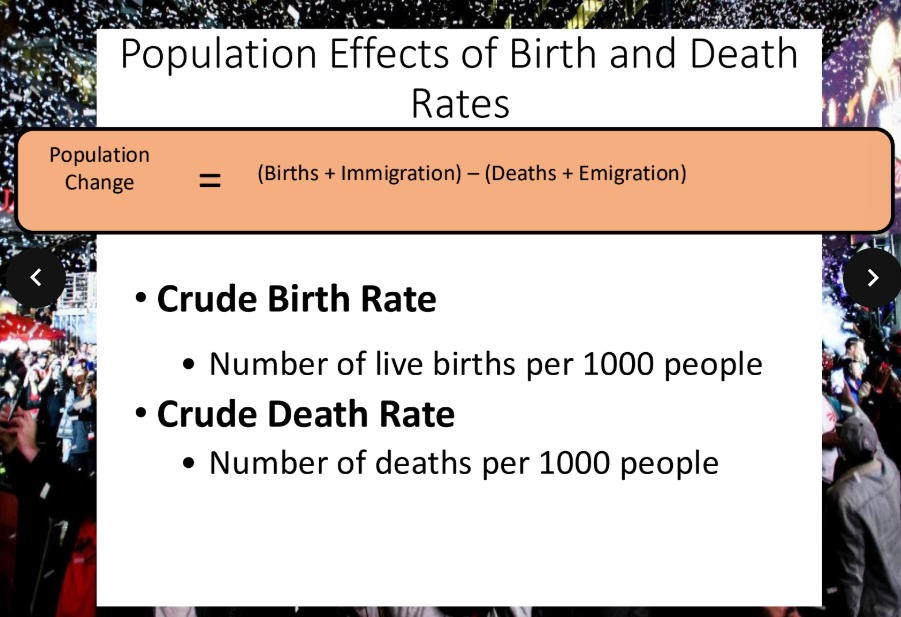
Forumula for population change? What do crude birth rate and crude death rate mean?
64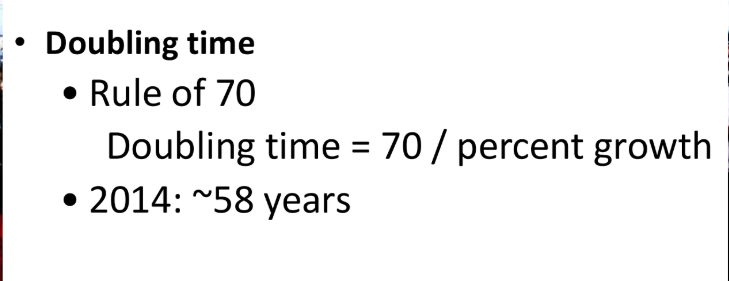
How to approximate doubling time?
65
Global fertility rates: what rates are involved and what are their meanings?
replacement level fertility is always slightly over 2. This is the rate that keeps a population the same size (not including migration)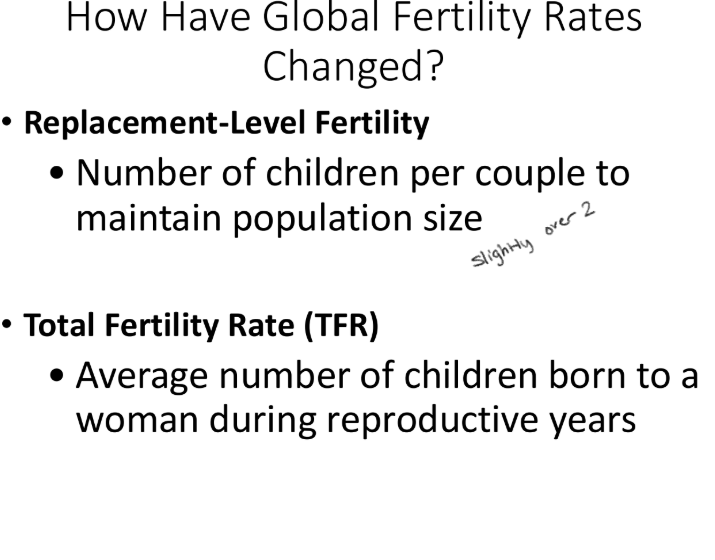
66
have global fertility rates increased or decreased in the past 50 years?
decreased
67
generally, which has higher FERTILITY rates: "more developed" or "less developed" countries?
"less developed" countries have higher fertility rates overall
68
generally, which has higher LIFE EXPECTANCIES: "more developed" or "less developed" countries?
"more developed" countries have higher fertility rates overall
69
Factors Affecting Birth and Fertility Rates
DONT NEED TO MEMORISE THESE ALL JUST KNOW THE JIST
1. Children in the labour force
2. Cost of raising and educating children
3. Availability of pension systems <- better support for seniors means that they don't need to rely on children as much to support them, meaning they font need to have as many kids
4. Urbanization <- better access to family planning
5. Education and employment for women
6. Infant mortality rate
7. Average marrying age
8. Availability of legal abortions
9. Availability of birth control
Other factors can include cultral and religious beliefs, ie. encouraging larger families, being against abortion or birth control, lack of seperation of church and state, etc
1. Children in the labour force
2. Cost of raising and educating children
3. Availability of pension systems <- better support for seniors means that they don't need to rely on children as much to support them, meaning they font need to have as many kids
4. Urbanization <- better access to family planning
5. Education and employment for women
6. Infant mortality rate
7. Average marrying age
8. Availability of legal abortions
9. Availability of birth control
Other factors can include cultral and religious beliefs, ie. encouraging larger families, being against abortion or birth control, lack of seperation of church and state, etc
70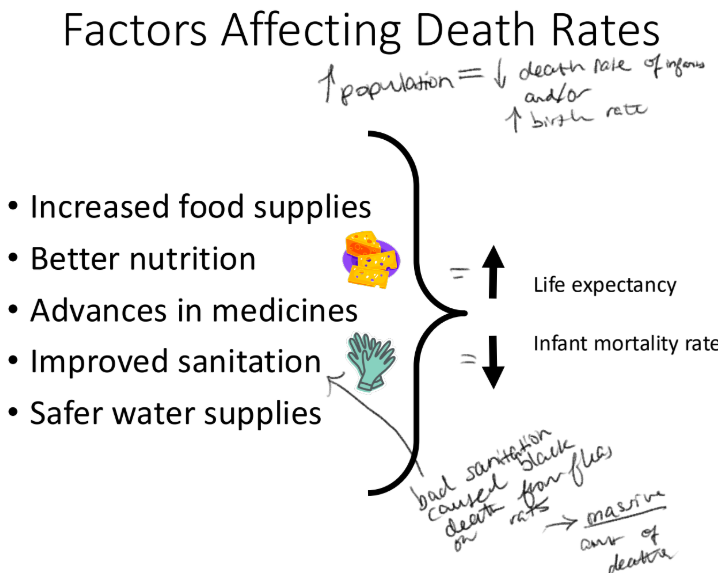
Factors Affecting Death Rates
71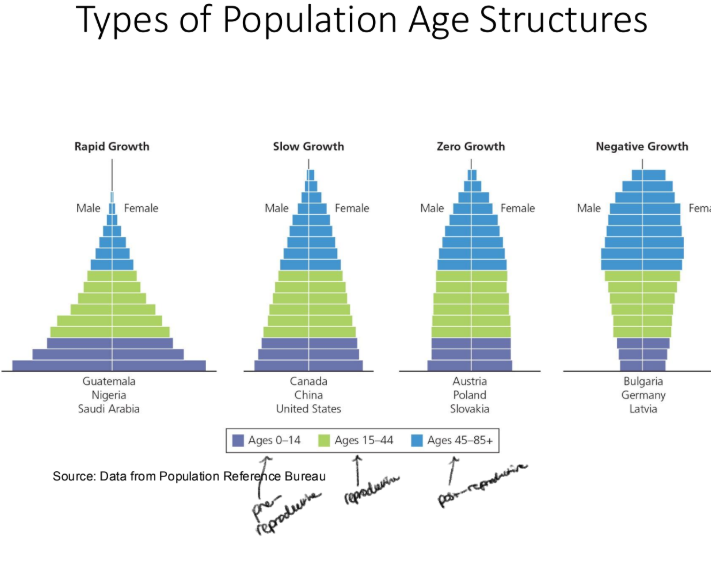
Types of population age structures
72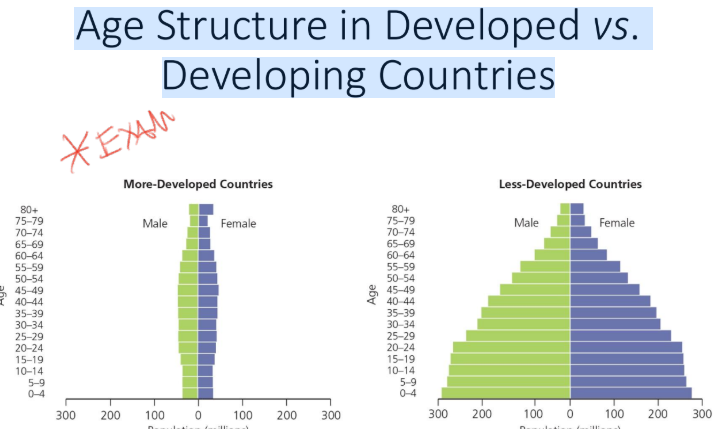
Age Structure in Developed vs. Developing Countries
73
What does family planning mean/include?
Educational and clinical services:
• Birth spacing
• Birth control - access to safe and reliable contraceptives
• Health care
includes safe, accessible, legal abortions
• Birth spacing
• Birth control - access to safe and reliable contraceptives
• Health care
includes safe, accessible, legal abortions
74
does family planning increase or decrease fertility rates? why?
decreases
lowers amount of unwanted/ unplanned pregancies
lowers amount of unwanted/ unplanned pregancies
75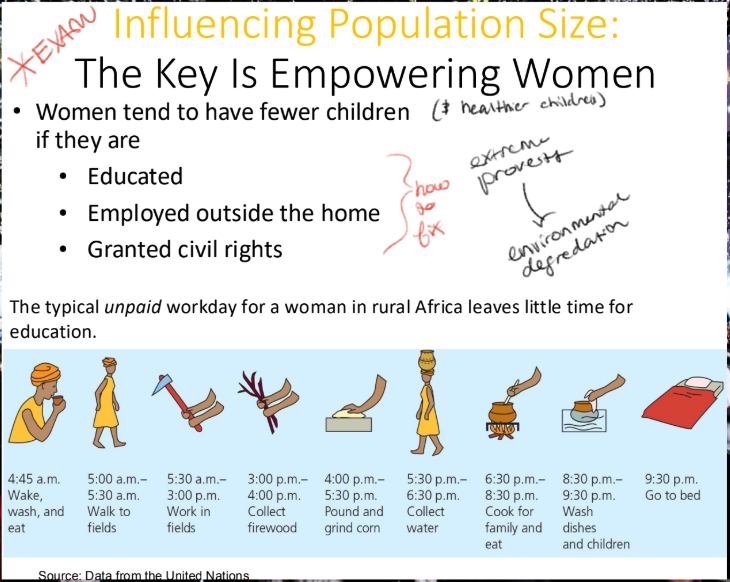
What is the key factor in influencing (reducing) population size?
76
What Can We Do to Slow Population Growth?
• Universal access to family planning and health care
• National population policies
• Improve status of women
• Increase education, particularly for girls
• Increase male involvement in
parenting
• Reduce poverty
• Reduce unsustainable
consumption
• National population policies
• Improve status of women
• Increase education, particularly for girls
• Increase male involvement in
parenting
• Reduce poverty
• Reduce unsustainable
consumption
77
Is controlling human population growthis a key factor in environmental and economic sustainability?
Yes
78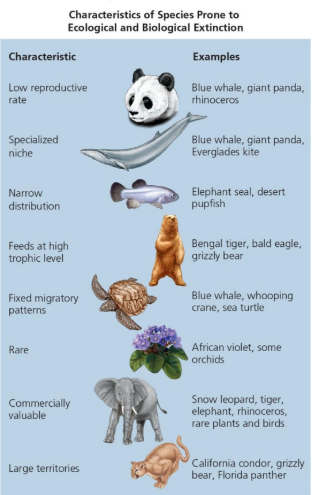
Characteristics of Extinction-Prone Species
79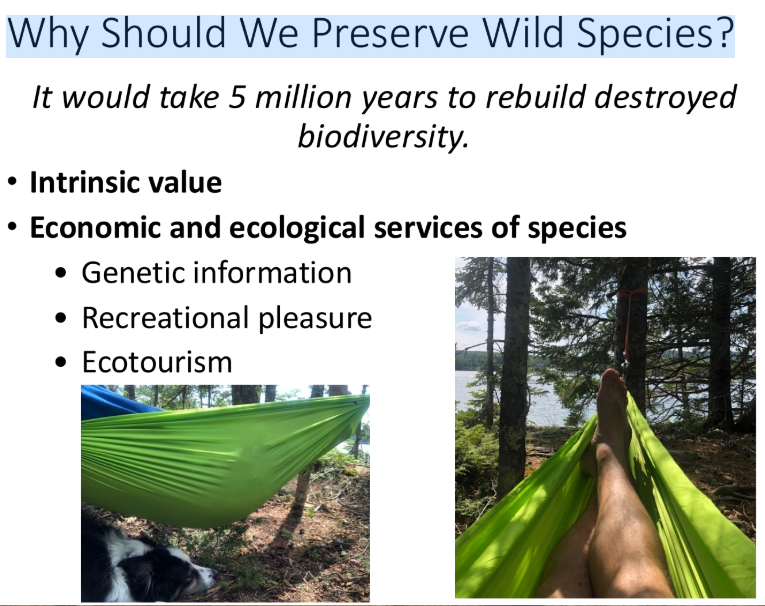
Why Should We Preserve Wild Species?
80
Basic and Secondary Causes of Depletion and Extinction
Basic:
- population growth
- risimg resource use
- no environmental accounting
- poverty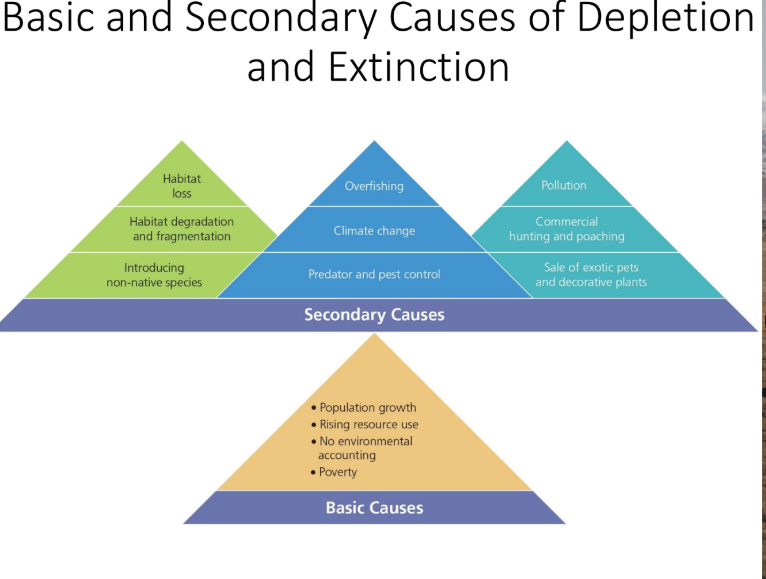
- population growth
- risimg resource use
- no environmental accounting
- poverty
81
Causes of Depletion of Wild Species
should memorize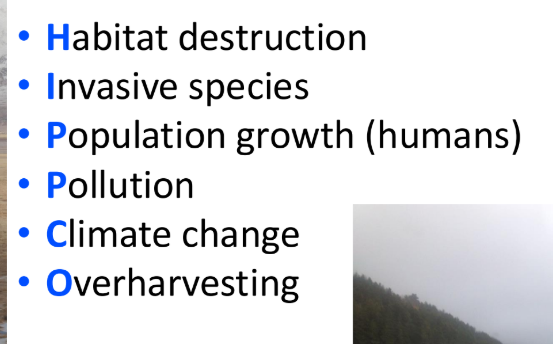
82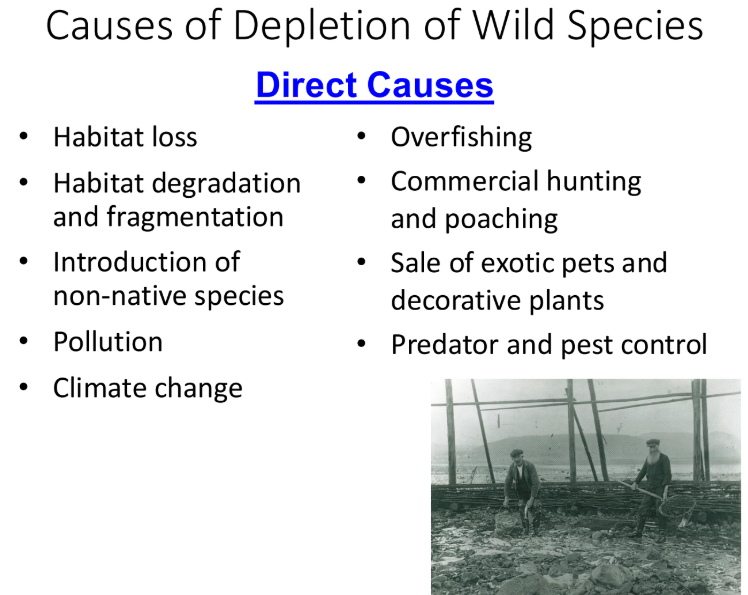
Causes of Depletion of Wild Species: Direct Causes
83
What is the greatest single threat to species survival?
Habitat loss and degredation
84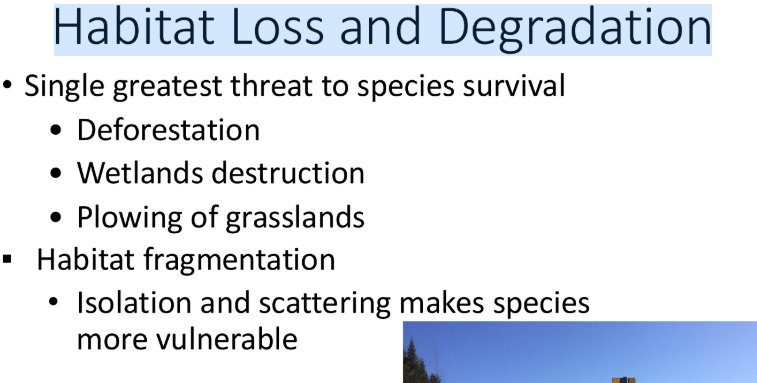
Habitat Loss and Degradation: why is it bad? what are some examples?
85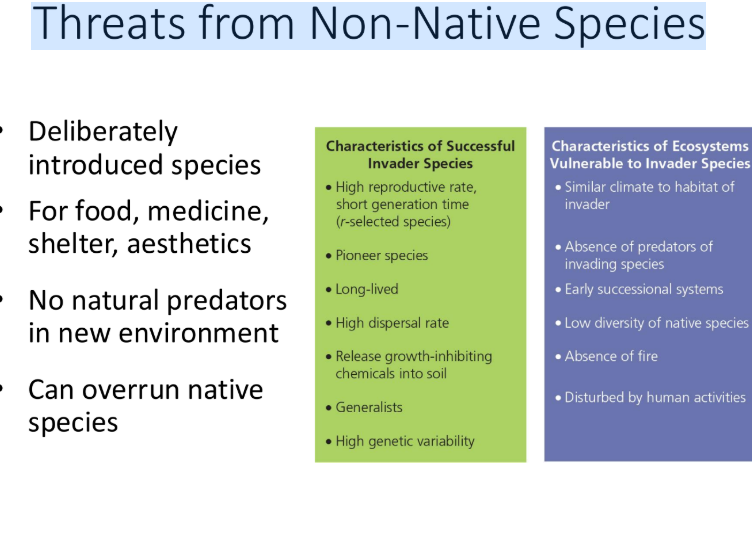
Threats from Non-Native Species: why/how do non-native species arrive? why are they an issue?
86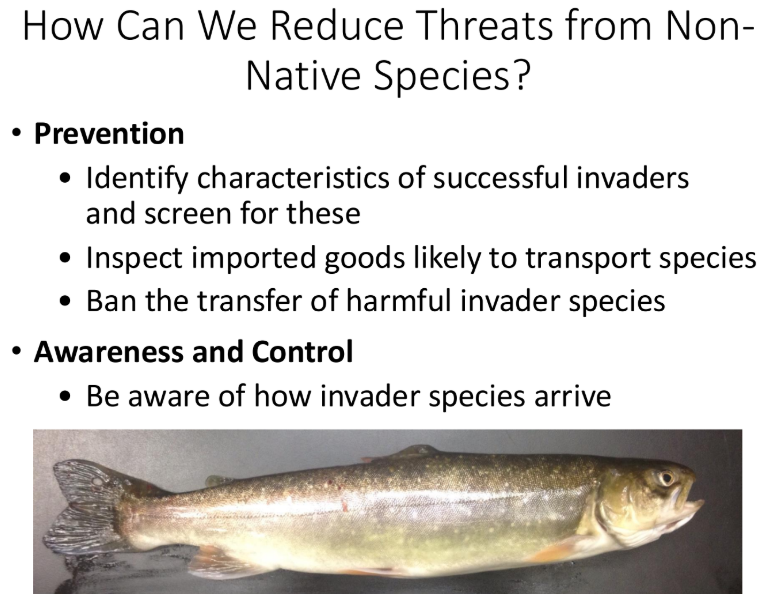
How Can We Reduce Threats from Non-
Native Species?
Native Species?
87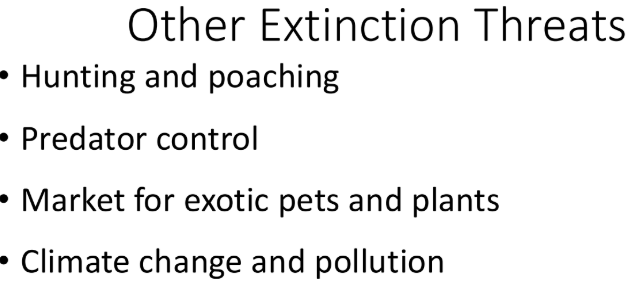
What are other extinction threats? Besides non-native species and habitiat degredation
88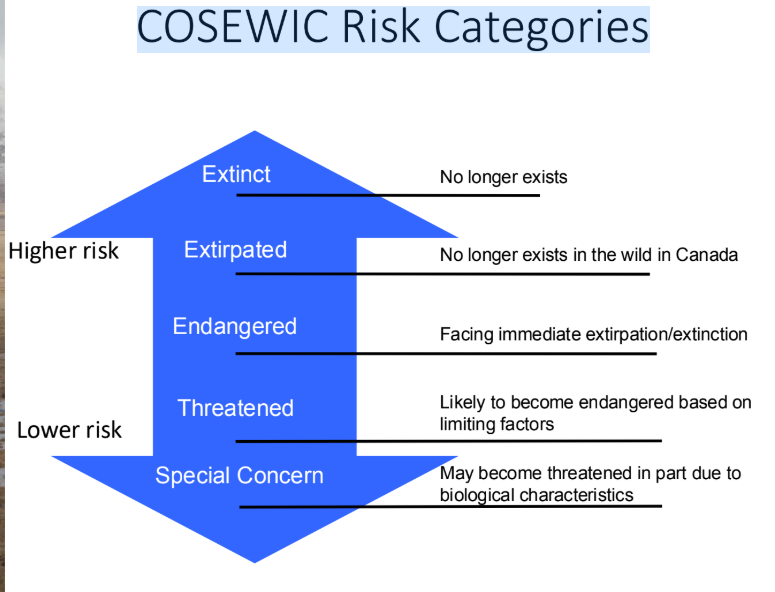
COSEWIC Risk Categories: what are they and what are the catagories?
89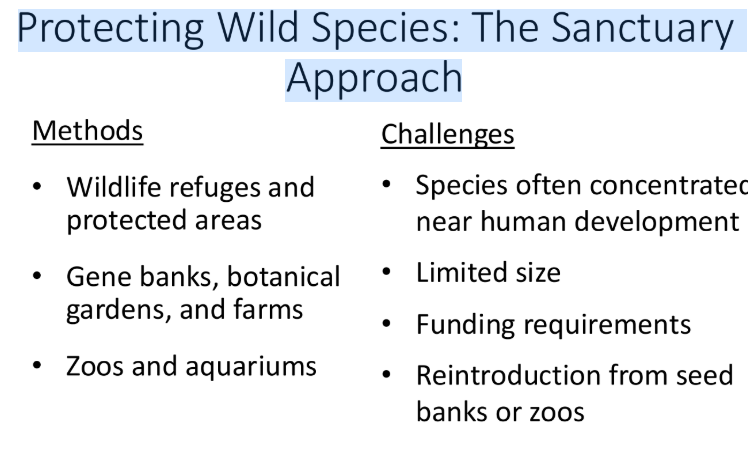
Protecting Wild Species: The Sanctuary Approach - what are the methods and challenges?
90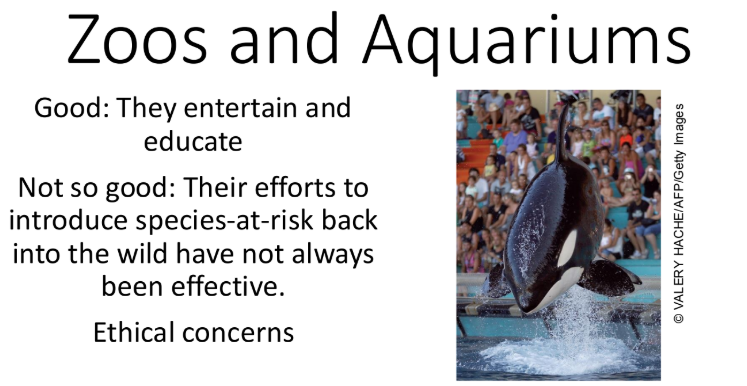
pros and cons of zoos/aquariums
91
What is background extinction? What is mass extinction?
Background extinction is the normal amount of species going extinct without human factors.
Mass extinction is a widespread, rapid decrease in biodiversity (many species going extinct)
Mass extinction is a widespread, rapid decrease in biodiversity (many species going extinct)