All cards
1
What Systems Provide Us With Food? Where is food procuced
Croplands 77%
• Grains (primarily)
• Wheat, corn, rice > 50% of all food calories
• Annual crops
Rangelands 16%
• Meat, mostly from grazing livestock
Ocean fisheries 7%
• Grains (primarily)
• Wheat, corn, rice > 50% of all food calories
• Annual crops
Rangelands 16%
• Meat, mostly from grazing livestock
Ocean fisheries 7%
2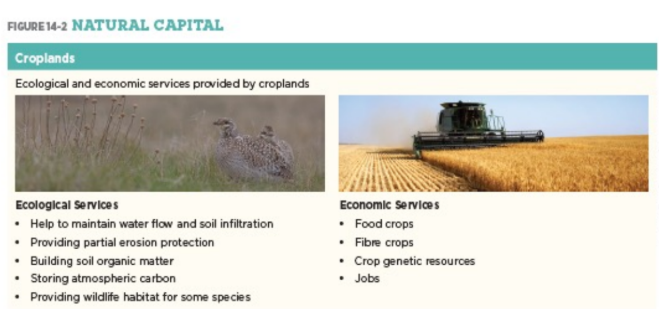
economic and ecologial services of croplands
3
What Are the Major Types of Food Production?
Industrialized Agriculture (80%)
• High input, high-throughput
• For example, plantation agriculture
(cash crops)
Traditional Agriculture
• Low-throughput agriculture
• Subsistence agriculture
• Traditional intensive agriculture
• Not economically feasible to produce the food
needed to sustain earth’s population
• High input, high-throughput
• For example, plantation agriculture
(cash crops)
Traditional Agriculture
• Low-throughput agriculture
• Subsistence agriculture
• Traditional intensive agriculture
• Not economically feasible to produce the food
needed to sustain earth’s population
4
Producing Food by Green Revolution:
3 steps to increase yield per area?
3 steps to increase yield per area?
Three steps to increase yield per unit of cropland:
1. Monocultures
• Selectively-bred/engineered for high yield
2. Increased fertilizer, pesticides, water
3. Multiple cropping (only where possible)
Advanced technology
• Decrease fertilizer, fuel while increasing
yield
1. Monocultures
• Selectively-bred/engineered for high yield
2. Increased fertilizer, pesticides, water
3. Multiple cropping (only where possible)
Advanced technology
• Decrease fertilizer, fuel while increasing
yield
5
Changing Habits: food
cultivating new foods
avoidind food waste
avoidind food waste
6
How Are Rangelands Used to Produce Meat?
types of rangeland use and their impacts
types of rangeland use and their impacts
Overgrazing
• Soil erosion
• Soil compaction
• Productivity loss
• Desertification
Light grazing
• Stimulate growth
• Increase diversity
• Soil erosion
• Soil compaction
• Productivity loss
• Desertification
Light grazing
• Stimulate growth
• Increase diversity
7
Is Producing More Meat the Answer?
What are the drawbacks
What are the drawbacks
Energy inefficient
Health consequences
Feedlots
Health consequences
Feedlots
8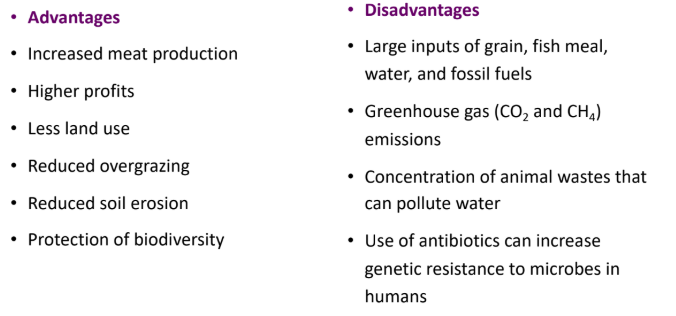
Trade-offs: Animal Feedlots
advantages and disadvantages
advantages and disadvantages
9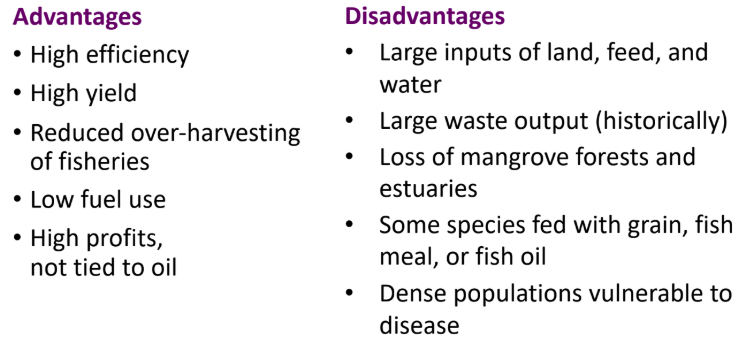
Trade-offs: Aquaculture
advantages and disadvantages
advantages and disadvantages