EXAM Ch. 17, 19, 20, 22, GL
Study these flashcardsFree · spaced repetition · iPhone, Android, Mac & web
All cards
1
What types of commercial energy does the world depend on? Examples of these?
carbon-containing fossil fuels
- oil
- natural gas
- coal
- oil
- natural gas
- coal
2
What percent of commercial energy used worldwide comes from non-renewable fossil fuels?
90%
3
What is net energy production
Net energy yield (or gain) = the total amount of energy available - the energy needed to make it available
high = best bang for your buck
high = best bang for your buck
4
what is the most widely used energy source? what fraction does it make up?
oil, 1/3
5
what are the different types of oil
- crude oil/petroleum
- conventional oil - pumped using traditional techiques
- unconventional oil - oil extracted from substrate using specialized processes
- conventional oil - pumped using traditional techiques
- unconventional oil - oil extracted from substrate using specialized processes
6
who has the world's oil supplies - the group
opex (organization of petroulem exporting countries) make up 80%
12 countries, not including canada
12 countries, not including canada
7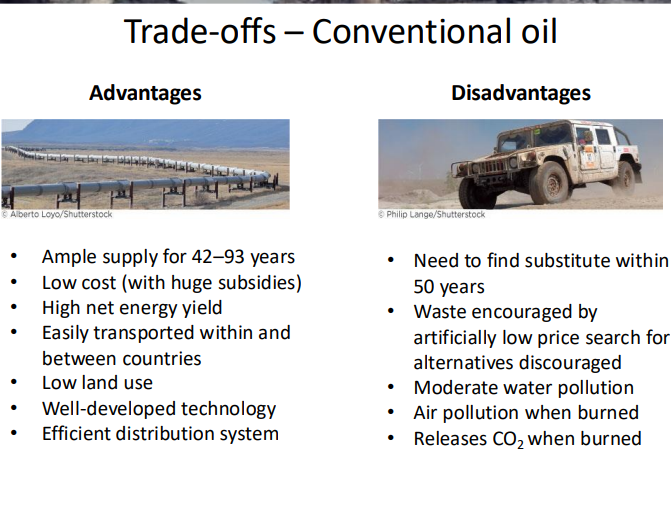
advantages and disadvantages of conventional oil
8
what is oil sand
Oil sand - mixture of clay, sand, water, and a combustible organic material
called bitumen (a thick and sticky heavy oil with a high sulphur content)
unconventional oil
called bitumen (a thick and sticky heavy oil with a high sulphur content)
unconventional oil
9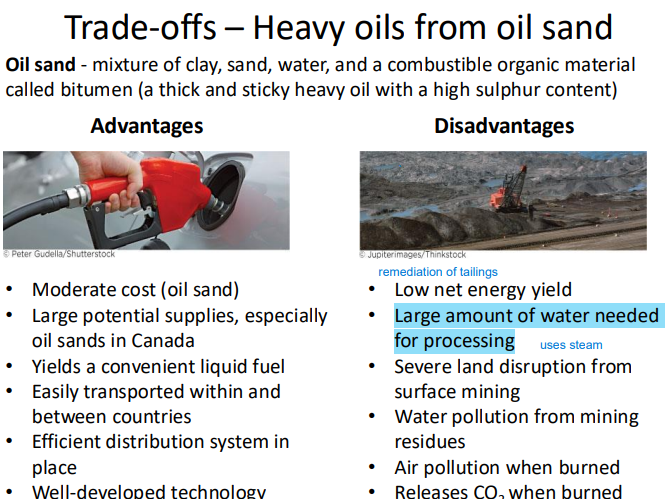
advantages and disadvantages of heavy oils from sand
10
what is natural gas (what it's made of and how it's formed)
• Consists primarily of methane (CH4)
• Formed from fossil deposits for millions of years and subjected to high
temperatures and pressures.
• Formed from fossil deposits for millions of years and subjected to high
temperatures and pressures.
11
types of natural gas
• Conventional natural gas lies above most reservoirs of crude oil
• Unconventional natural gas is found in other underground sources (e.g.
shale gas trapped in fine-grain sedimentary rocks) (FRACKING)
• Unconventional natural gas is found in other underground sources (e.g.
shale gas trapped in fine-grain sedimentary rocks) (FRACKING)
12
what are the advantages and disadvantages of natural gas / fracking
WATER POLLUTION
- pump water into deposits, break up rock, releases gas
- leeching of contaminated water, dumping
- sinkholes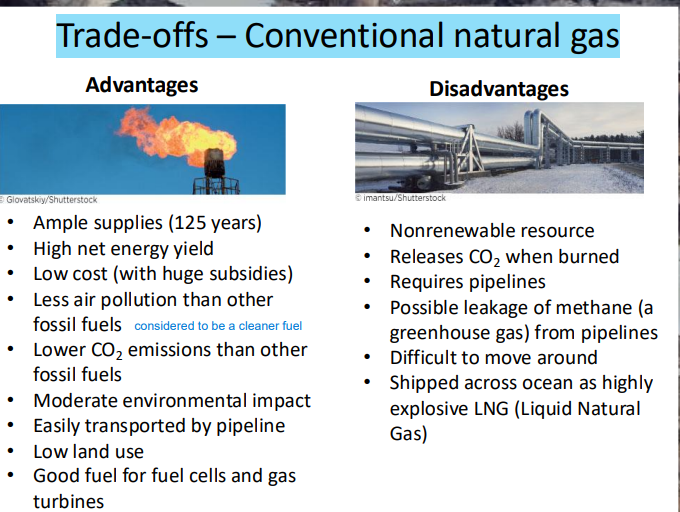
- pump water into deposits, break up rock, releases gas
- leeching of contaminated water, dumping
- sinkholes
13
how long will the world's natural gas reserves last?
62-125 yrs
14
what is coal
• a solid fossil that consists mostly of carbon (plus sulphur, mercury
and radioactive material)
• Formation takes millions of years
and radioactive material)
• Formation takes millions of years
15
how is coal extracted
surface or subsurface mining
16
what is the most abundant fuel? how many years of it left>
coal, 10x more than oil and natural gas combined
200-1000 yrs
200-1000 yrs
17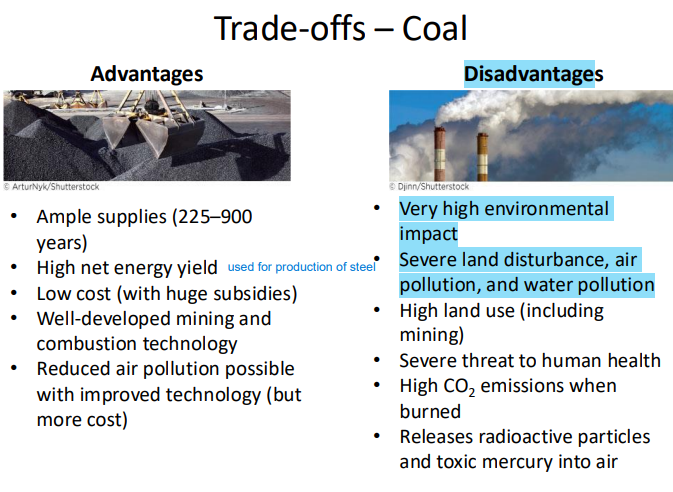
advantages and disadvantages of coal
18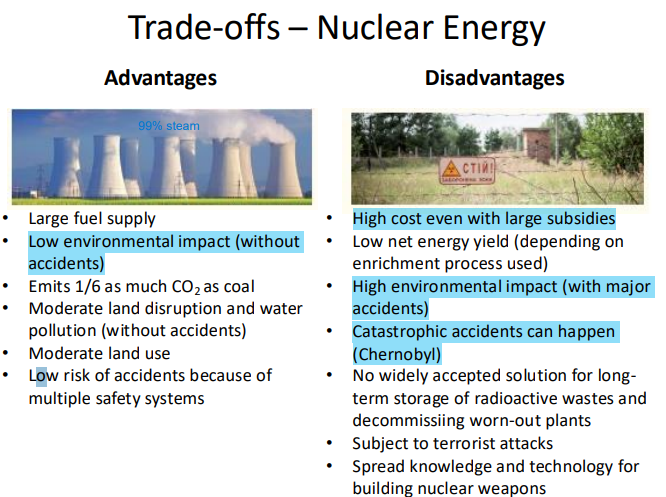
advantages and disadvantages of nuclear
19
types of renewable energy
1. Solar
2. Flowing water
3. Wind
4. Biomass (plant materials
and animal wastes)
5. Geothermal
6. Hydrog
2. Flowing water
3. Wind
4. Biomass (plant materials
and animal wastes)
5. Geothermal
6. Hydrog
20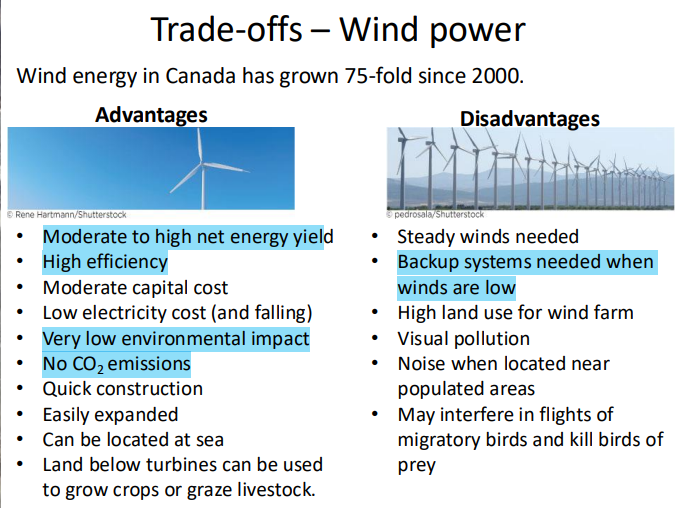
advantages and disadvantages of wind power
21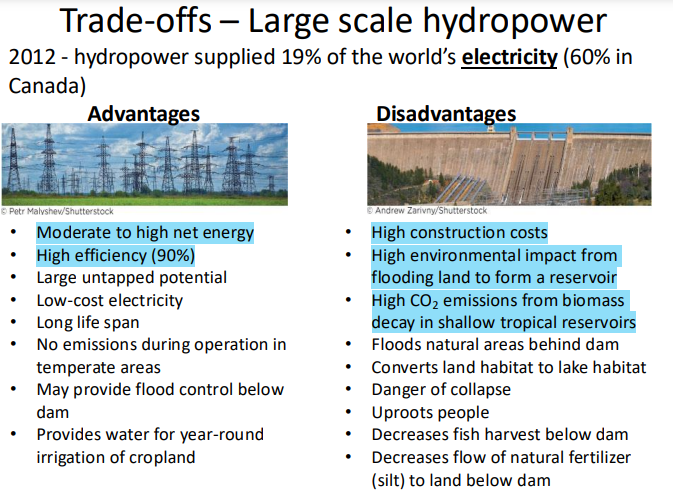
advantages and disadvantages of hydropower
22
What is risk?
Risk is the likelihood of suffering harm from a hazard
23
What are the main hazards we face?
• Cultural hazards: smoking, poor diet, driving, etc.
• Chemical hazards: harmful chemicals in air, water, soil and food
• Physical hazards: fire, tornado, earthquake, etc.
• Biological hazards: pathogens (e.g. viruses), pollen, venomous
animals, etc.
• Chemical hazards: harmful chemicals in air, water, soil and food
• Physical hazards: fire, tornado, earthquake, etc.
• Biological hazards: pathogens (e.g. viruses), pollen, venomous
animals, etc.
24
How do we assess and manage risks?
• Risk assessment is the scientific process of estimating how much
harm a particular hazard can cause to human health.
• Risk management involves deciding whether or how to reduce a
particular risk to a certain level and at what cost.
harm a particular hazard can cause to human health.
• Risk management involves deciding whether or how to reduce a
particular risk to a certain level and at what cost.
25
What is the most preventable major cause of suffering
and premature death among adults?
and premature death among adults?
Cigarette smoking
26
What is the greatest health risk of all?
Poverty
27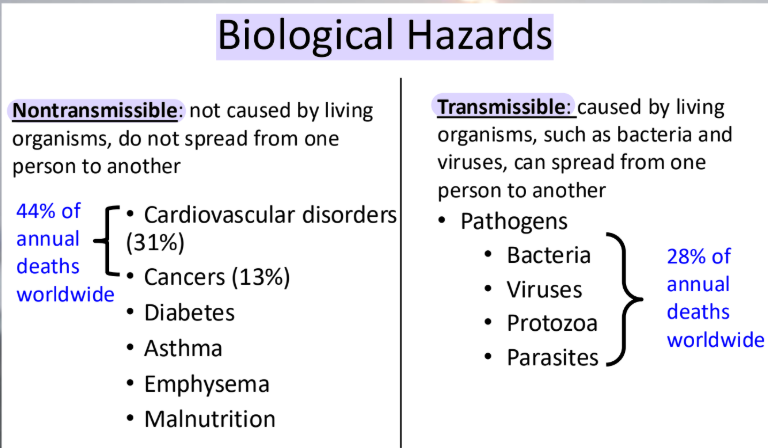
Types of biological hazards and examples of each
28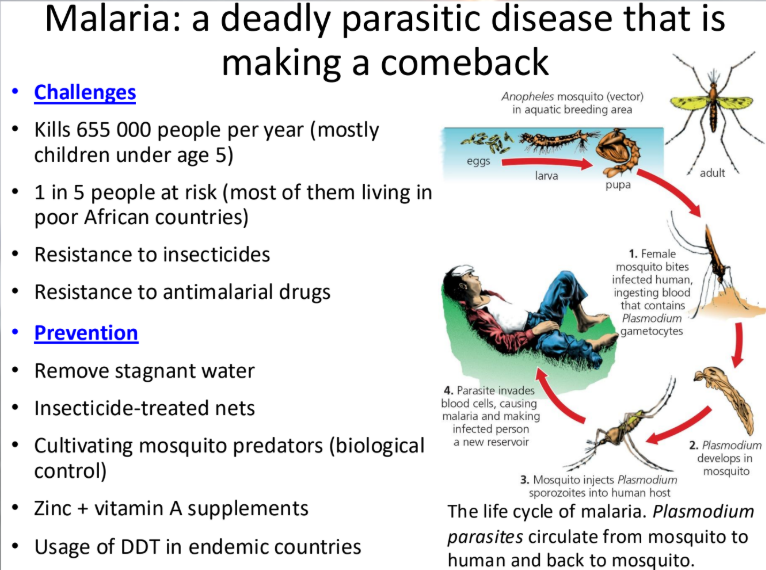
challenges and prevention of malaria
29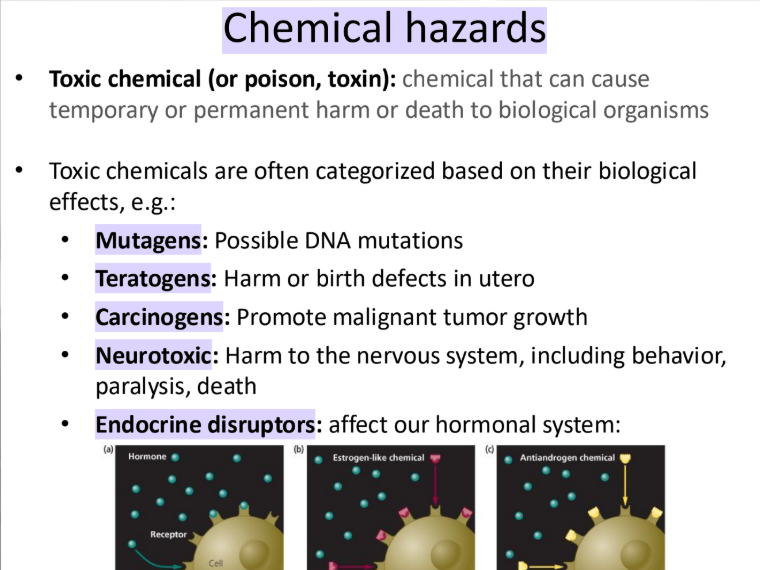
What are chemical hazards and what are the types
30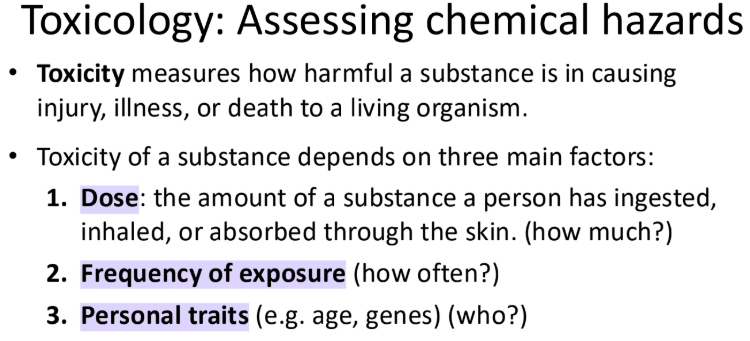
what is toxicity and what factors affect it?
31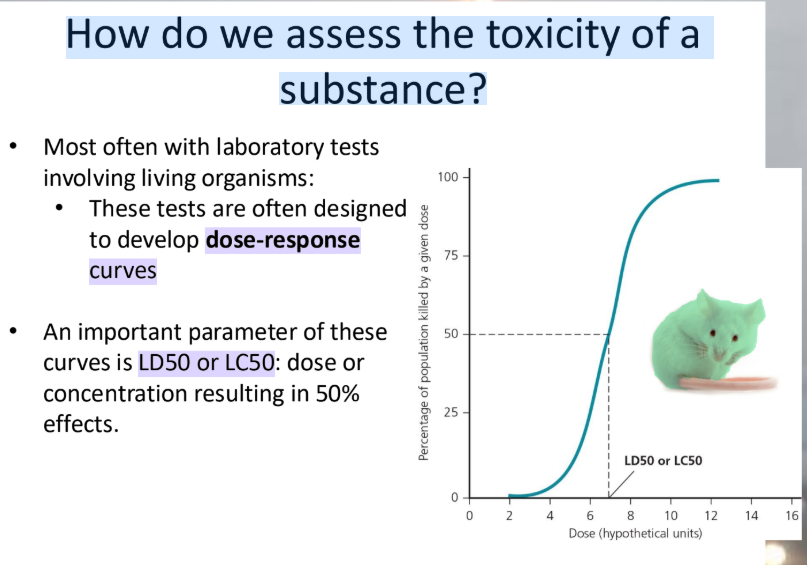
How do we assess the toxicity of a substance?
32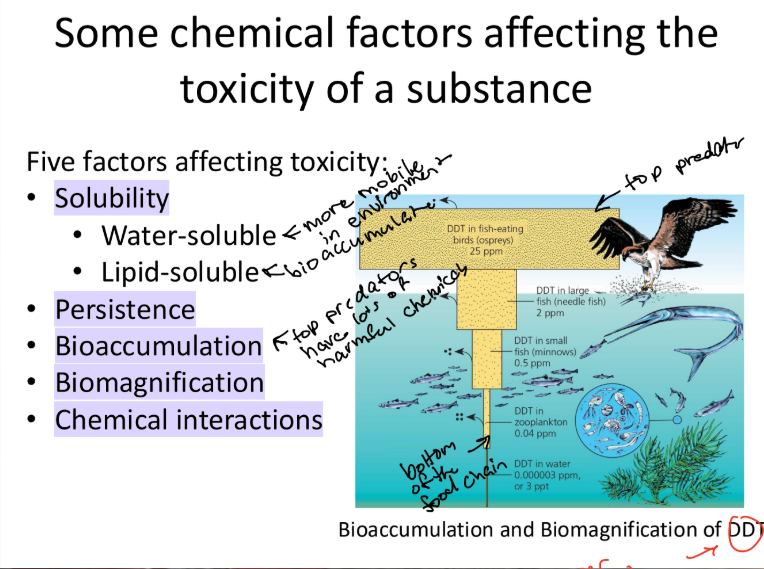
Some chemical factors affecting the toxicity of a substance
33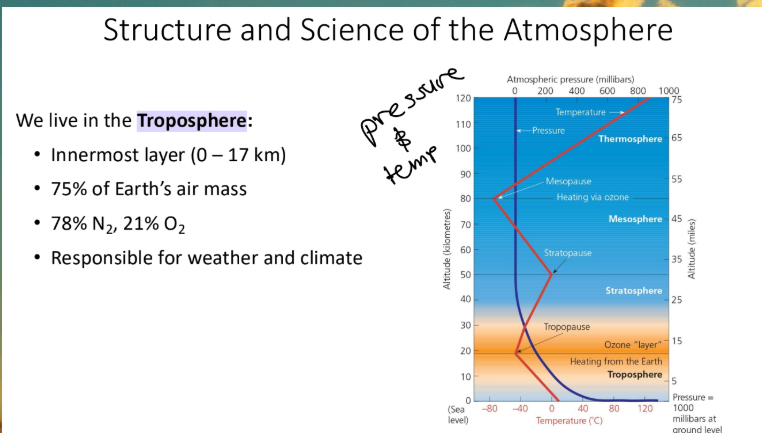
what is the structure of the atmostphere? which part do we live in? what is its purpose?
34
how is the stratosphere different from the trophosphere?
• Stratosphere (17 – 48 km) similar composition to
troposphere, except more O3 and less H2O
troposphere, except more O3 and less H2O
35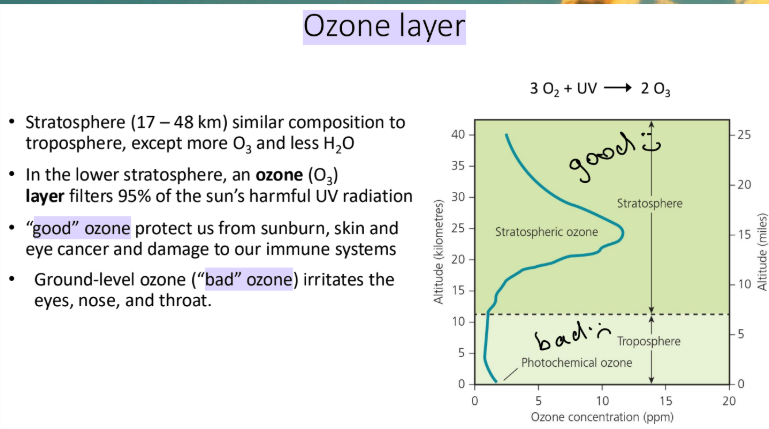
what is the difference between "good" and "bad" ozone? graph of ozone distribution?
36
What is air pollution?
• Air pollution: presence of chemicals in the
atmosphere in concentrations high enough to
affect climate and harm organisms and
materials.
• heat and noise are also considered forms of
air pollution.
atmosphere in concentrations high enough to
affect climate and harm organisms and
materials.
• heat and noise are also considered forms of
air pollution.
37
Two types of air pollutants
• Primary pollutant: Chemicals directly to the
air by natural events or human activities.
• Secondary pollutant: Harmful chemicals
formed when a primary air pollutant reacts
with natural air components and/or other
pollutants.
air by natural events or human activities.
• Secondary pollutant: Harmful chemicals
formed when a primary air pollutant reacts
with natural air components and/or other
pollutants.
38
Sources and types of outdoor air pollution
sources: natural, stationary, mobile
types primary, secondary
types primary, secondary
39
Major outdoor air pollutants and their sources
Carbon monoxide (CO) - fossil fuels
Nitrogen dioxide (NO2) - fossil fuels
Sulphur dioxide (SO2) - coal
Suspended particulate matter (SPM) - coal and diesel
Lead (Pb) - paint, batteries
Ozone (O3) - secondary pollutant
Nitrogen dioxide (NO2) - fossil fuels
Sulphur dioxide (SO2) - coal
Suspended particulate matter (SPM) - coal and diesel
Lead (Pb) - paint, batteries
Ozone (O3) - secondary pollutant
40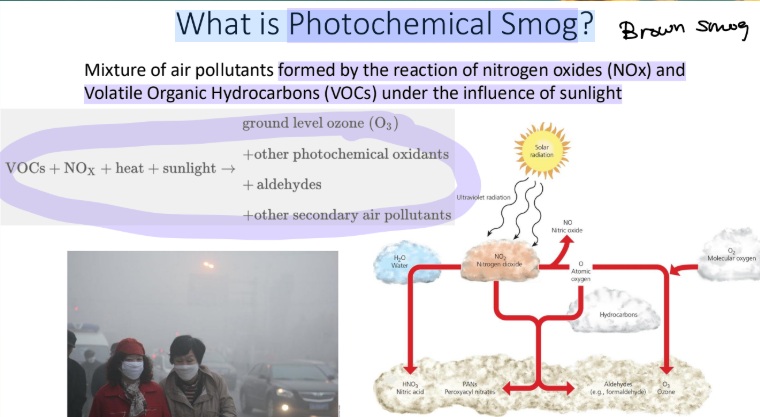
What is Photochemical Smog?
41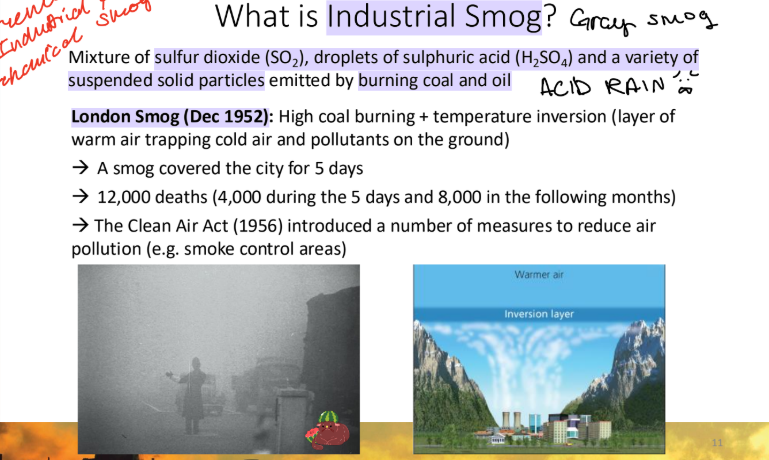
What is Industrial Smog?
42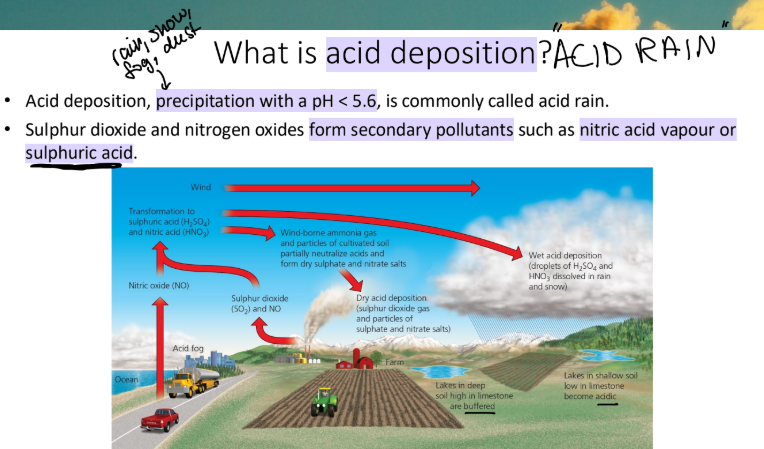
What is acid deposition?
43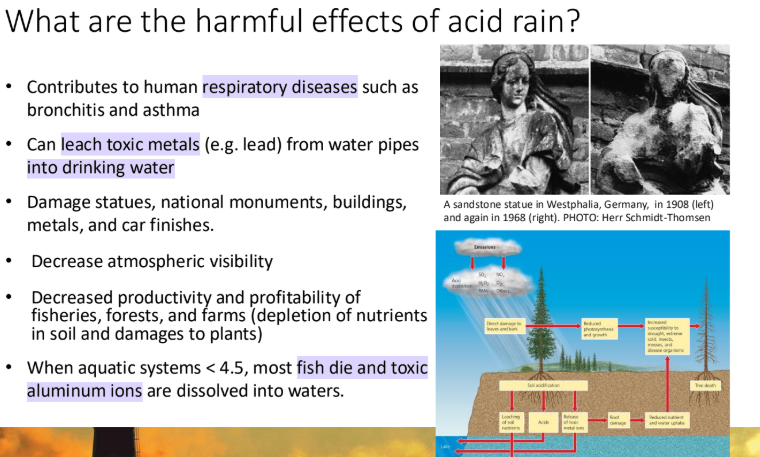
What are the harmful effects of acid rain?
44
What is water pollution?
Water pollution is any chemical, biological, or physical change in water
quality that has a harmful effect on living organisms or that makes water
unsuitable for desired uses.
quality that has a harmful effect on living organisms or that makes water
unsuitable for desired uses.
45
Major categories of water pollutants
• Infectious agents
• Oxygen-demanding wastes
• Inorganic chemicals
• Organic chemicals
• Plant nutrients
• Sediment
• Radioactive materials
• Heat (thermal pollution)
• Oxygen-demanding wastes
• Inorganic chemicals
• Organic chemicals
• Plant nutrients
• Sediment
• Radioactive materials
• Heat (thermal pollution)
46
How do we measure water quality?
• Bacterial count
• Physico-chemical analysis
• Indicator organisms (biomonitoring)
• Physico-chemical analysis
• Indicator organisms (biomonitoring)
47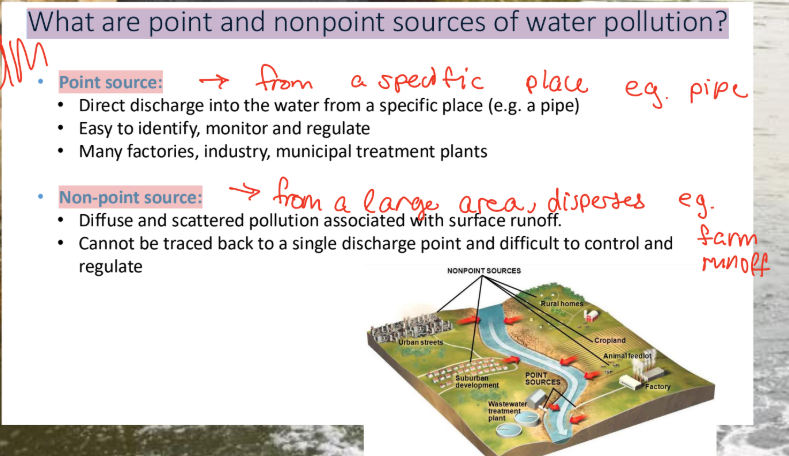
What are point and nonpoint sources of water pollution?
48
What are the major sources of water pollution?
• Agricultural activities are by far the leading
cause of water pollution (fertilizers,
pesticides, bacteria, sediments, etc.)
• Industrial facilities
• Mining
• Municipal effluents
cause of water pollution (fertilizers,
pesticides, bacteria, sediments, etc.)
• Industrial facilities
• Mining
• Municipal effluents
49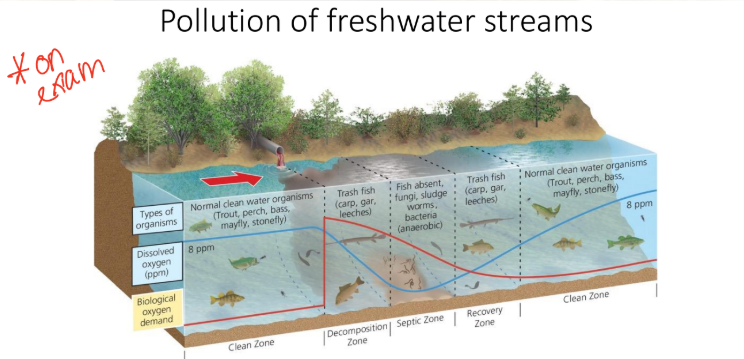
Pollution of freshwater streams (Diagram)
50
Ocean pollution: Sources
- industry
- cities
- urban sprawl
- farms
- red tides
- toxic sediment
- cities
- urban sprawl
- farms
- red tides
- toxic sediment
51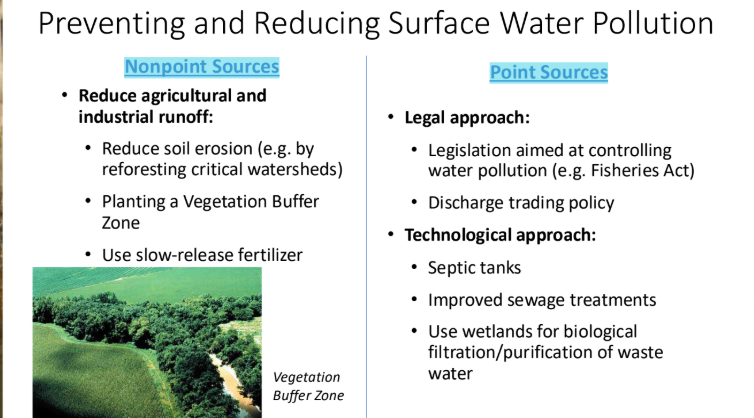
Preventing and Reducing Surface Water Pollution: Point and Nonpoint Sources
52
migratory pattern of salmon
spawn in river, go to ocean, then come back to reproduce
53
what was the guest lecturer's research objective
Assess how freshwater ecosystem productivity and
ecological function vary across a gradient of salmon
restoration initiatives
ecological function vary across a gradient of salmon
restoration initiatives
54
what is benthic productivity
ptroductivity at the bottom of the river/water
55
do freshwater or marine systems have more stable isotopes
marine