All cards
1
Joints
where two bones meet and where body movement occurs
2
Functional classifications
Synarthrosis, Amphiarthrosis, Diarthrosis or Synovial
3
Synarthrosis
immovable joint; most stable; edges of bone may touch or interlock; ex. skull bones
4
Amphiarthrosis
slightly movable joint; middle stability; ex. pubic symphysis
5
Diarthrosis or Synovial
freely movable joint
6
Synovial Joints
surrounded by joint capsule (articular capsule); contains synovial membrane
7
Synovial fluid
acts like WD-40 for bones; has the consistency of egg yolk
8
Articular cartilage
covers articulating surfaces and prevents direct contact between bones
9
Meniscus
fibrocartilage pad between opposing bones
10
Fat pads
adipose tissue covered by synovial membrane; protect articular cartilages
11
Ligaments
support and strengthen joints
12
Sprain
ligament with torn collagen fibers
13
Tendons
attach to muscles around joint
14
Bursae
small pockets of synovial fluid; cushion areas where tendons or ligaments rub against other tissues
15
Flexion
angle formed by the two bones decreases
16
Extension
angle formed by the two bones increases
17
Abduction
movement away from midline
18
Adduction
movement toward midline
19
Lateral flexion
only occurs at spinal joints
20
Rotation
left or right; Internal (medial) rotating towards midline; External (lateral) rotating away from midline
21
Pronation
rotates forearm so that radius rolls across ulna; results in palm facing posteriorly
22
Supination
turns palm anteriorly; forearm is supinated in anatomical position
23
Open chain movements
the joint that is moving is either the hand or the leg; ex. bicep curl or leg extension
24
Closed chain movements
the body is moving and the hand/leg is still
25
Circumduction
a complete circular movement without rotation; only occurs with ball and socket joints
26
Inversion (subtalar joint)
twists sole of foot medially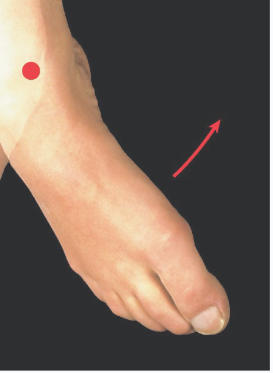
27
Eversion (subtalar joint)
twists sole of foot laterally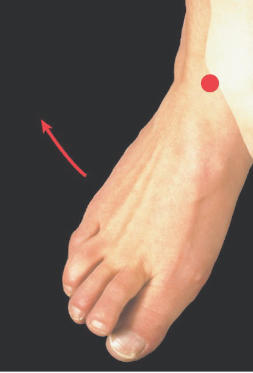
28
Dorsiflexion
flexion at ankle (lifting toes)
29
Plantar flexion
extension at ankle (pointing toes)
30
Opposition
movement of thumb toward palm or other fingers
31
Reposition
the thumb moves away form the fingers and back into a neutral position
32
Protraction
forward at the mouth or jaw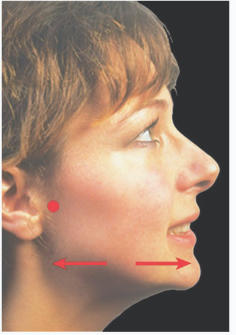
33
Retraction
back at the mouth or jaw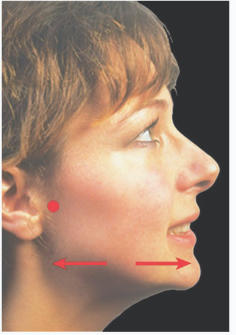
34
Elevation
up at the mouth or jaw
35
Depression
down at the mouth or jaw
36
Plane joint (gliding joint)
flattened or slightly curved surfaces; limited motion (nonaxial)
37
Hinge joint
angular motion in a single plane (monaxial)
38
Condylar joint
oval articular face within a depression; motion in two planes (biaxial)
39
Intervertebral Joints
first two cervical vertebrae are joined by synovial joints (no disc); synovial joints lie between adjacent articular processes; adjacent vertebral bodies form symphyses (amphiarthrodial joint)
40
Intervertebral disc
separates vertebral bodies
41
Annulus fibrosus
tough outer layer of fibrocartilage; attaches disc to vertebrae
42
Nucleus pulposus
elastic, gelatinous core; absorbs shocks
43
Bulging disc
bulge in annulus fibrosus; invades vertebral canal; can possibly compress spinal nerves
44
Herniated disc
nucleus pulposus breaks through annulus fibrosus; frequently inflames spinal nerves
45
Ligamenta flava
connect laminae of adjacent vertebrae
46
Posterior longitudinal ligament
connects posterior surfaces of vertebral bodies
47
Anterior longitudinal ligament
connects anterior surfaces of vertebral bodies
48
Elbow joint
hinge joint; articulations involve humerus, radius, and ulna
49
Humero-ulnar joint
largest, strongest joint at elbow
50
Humero-radial joint
smaller joint
51
Knee joint
complex hinge joint; transfers weight from femur to tibia
52
Medial and lateral menisci
fibrocartilage pads at femur-tibia articulations; cushion and stabilize joint
53
Anterior and posterior cruciate ligaments (ACL and PCL)
inside joint capsule
54
Medial collateral ligament and Lateral collateral ligament (MCL and LCL)
support the knee joint
55
Shoulder joint (glenohumeral joint)
ball-and-socket diarthrosis; between head of humerus and glenoid fossa of scapula; greatest range of motion of any joint; most frequently dislocated joint
56
Glenoid labrum
rim of fibrocartilage; extends beyond bony rim and deepens socket of glenoid cavity
57
Shoulder separation
partial or complete dislocation of acromioclavicular joint
58
Rotator cuff muscles
supraspinatus, infraspinatus, teres minor, subscapularis
59
Hip joint
between head of femur and acetabulum of hip bone; strong ball-and-socket diarthrosis; wide range of motion
60
Acetabular labrum
rim of fibrocartilage; increases depth of joint cavity
61
Transverse plane movements
Rotation, Pronation, Supnation
62
Frontal plane movements
abduction, adduction, Lateral flection
63
Saggital plane movements
Flection, extention