Basic Terminology
Study these flashcardsFree · spaced repetition · iPhone, Android, Mac & web
All cards
1
eukaryotic cell 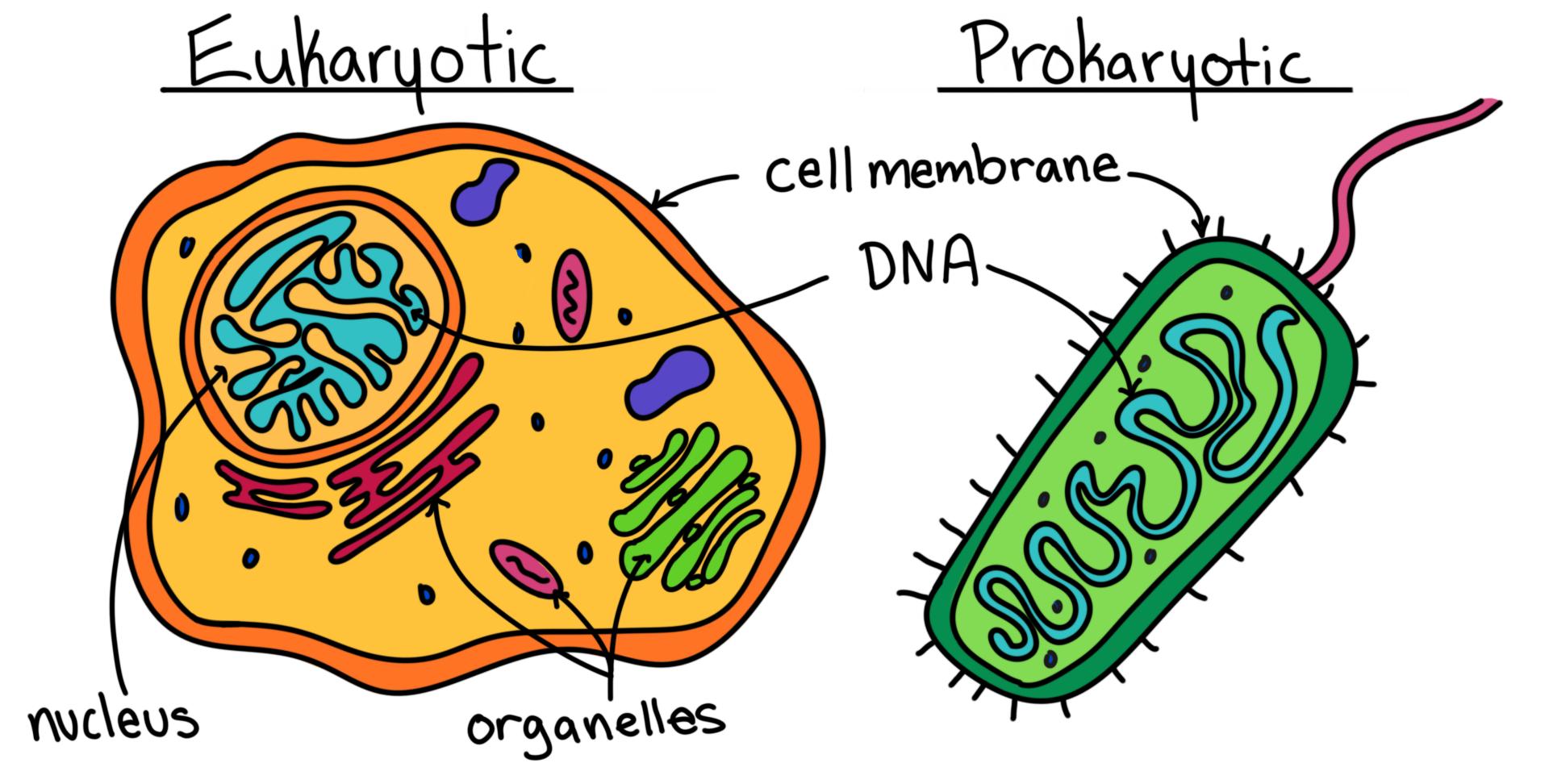
subdivided by internal membranes into carious membrane-enclosed organelles. The largest organelle is the nucleus, which contains the cell's DNA. The other organelles are located in the cytoplasm.
2
prokaryotic cell 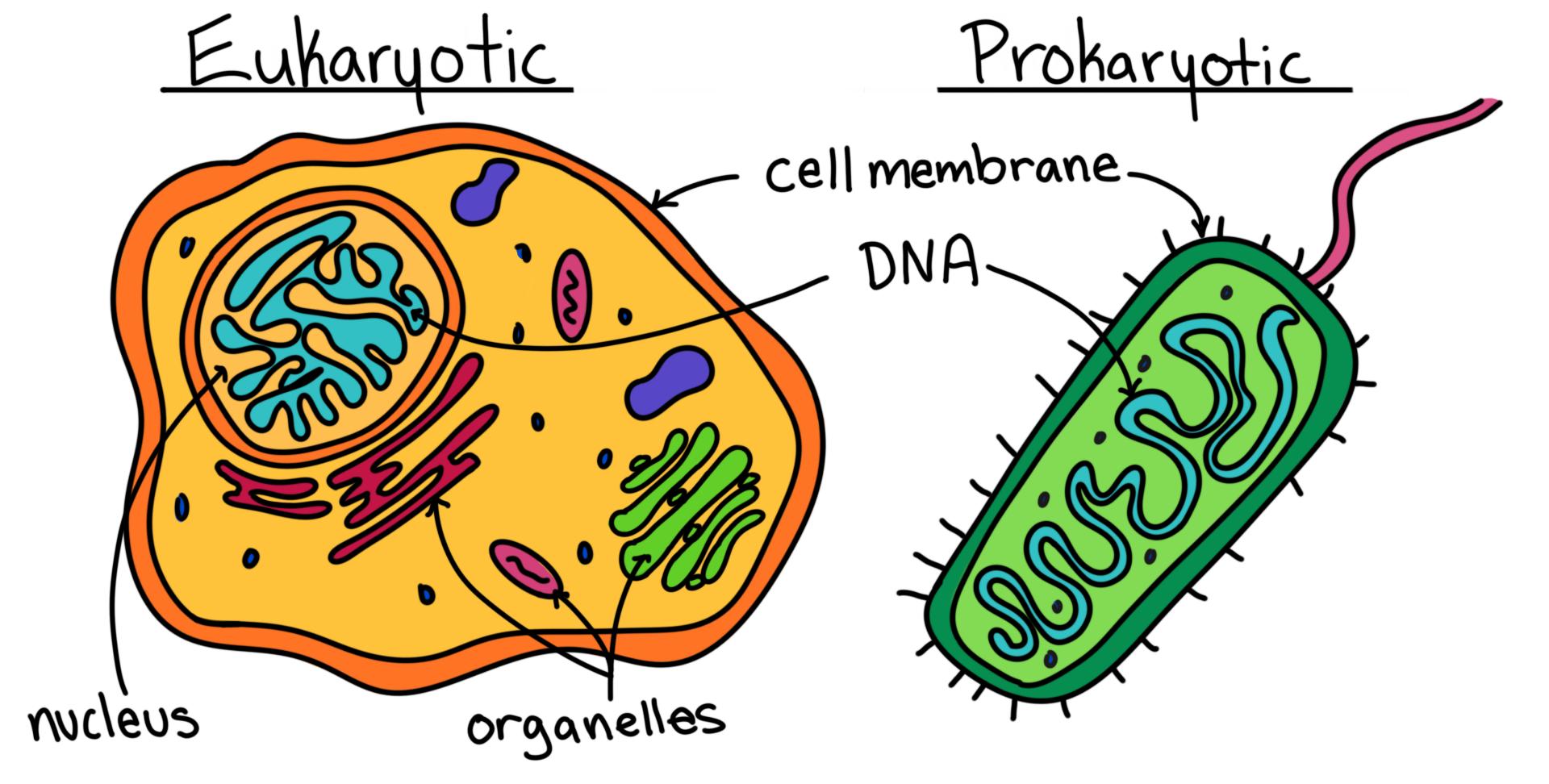
DNA is not separated from the rest of the cell by enclosure in a membrane-counded nucleaus. Also lack other kinds of membran-enclosed organells that characterize eukaryotic cells.
3
gene expression
sequenence of nucleaotides along a gene is transcribed into RUT, which is then translated into a specific protein with a unique shape/function.
4
genome
The entire "library" of genetic instructions that an organism inherits is called the genome.
5
genomics
the study of whole sets of genes and their interactions within a species, as well as genome comparisons between species.
6
bioinformatics
the use of computers, software, and mathematical models to process and integrate biological infrom from large data sets.
7
positive feedback
a form of regulation in which an end product of a process speeds up that process.
8
negative feedback
a form of regulation in which accumulation of an end product of a a process slows the process.
9
bacteria
one of the two prokaryotic domains, the other being archae
10
achaea
one of the the two prokaryotic domains, the other being bacteria
11
eukarya
the domain that includes all eukayotic organisms.
12
primary structure 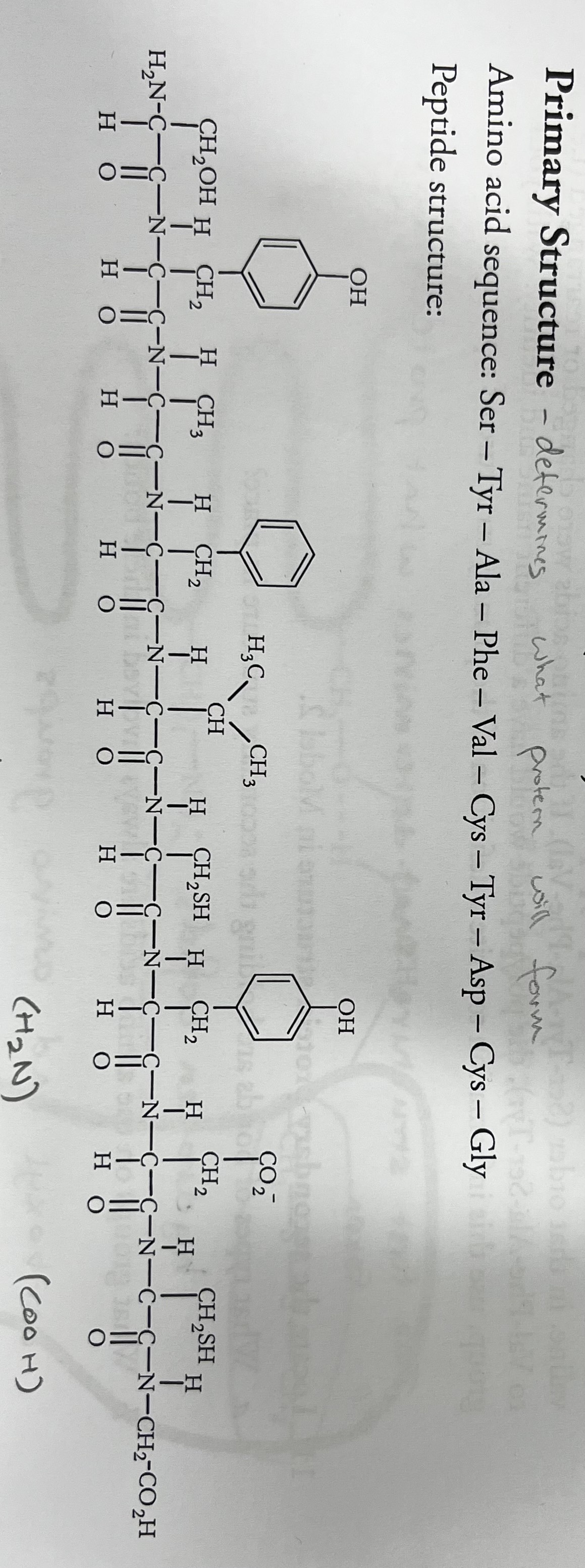
determines what protein will form
13
secondary structure
interactions bewteen amino and carboxyl groups
14
tertiary structure
interactions between R groups
15
Quaternary structure 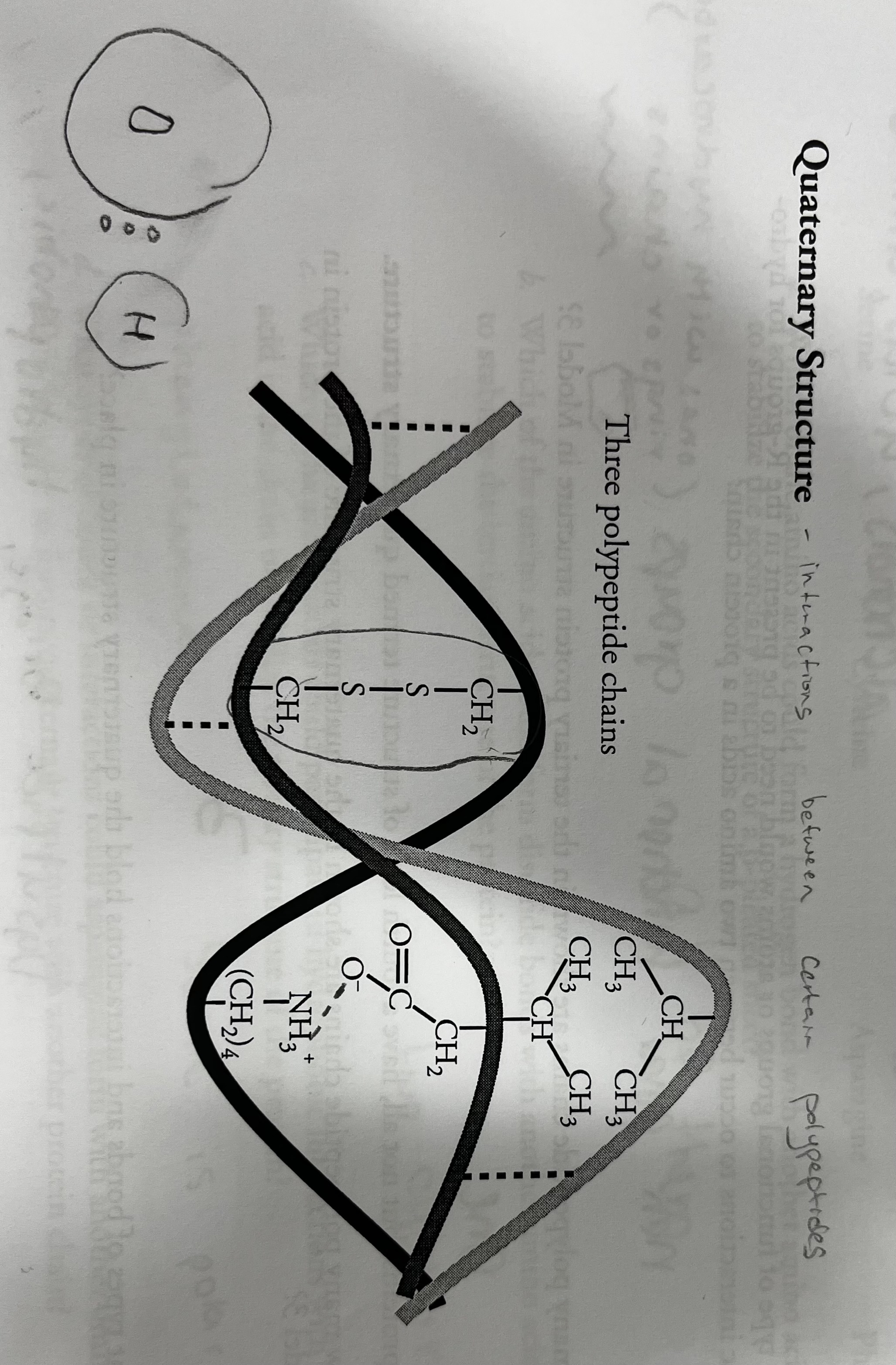
interactions between certain polypeptides
16
polar covalent bonds 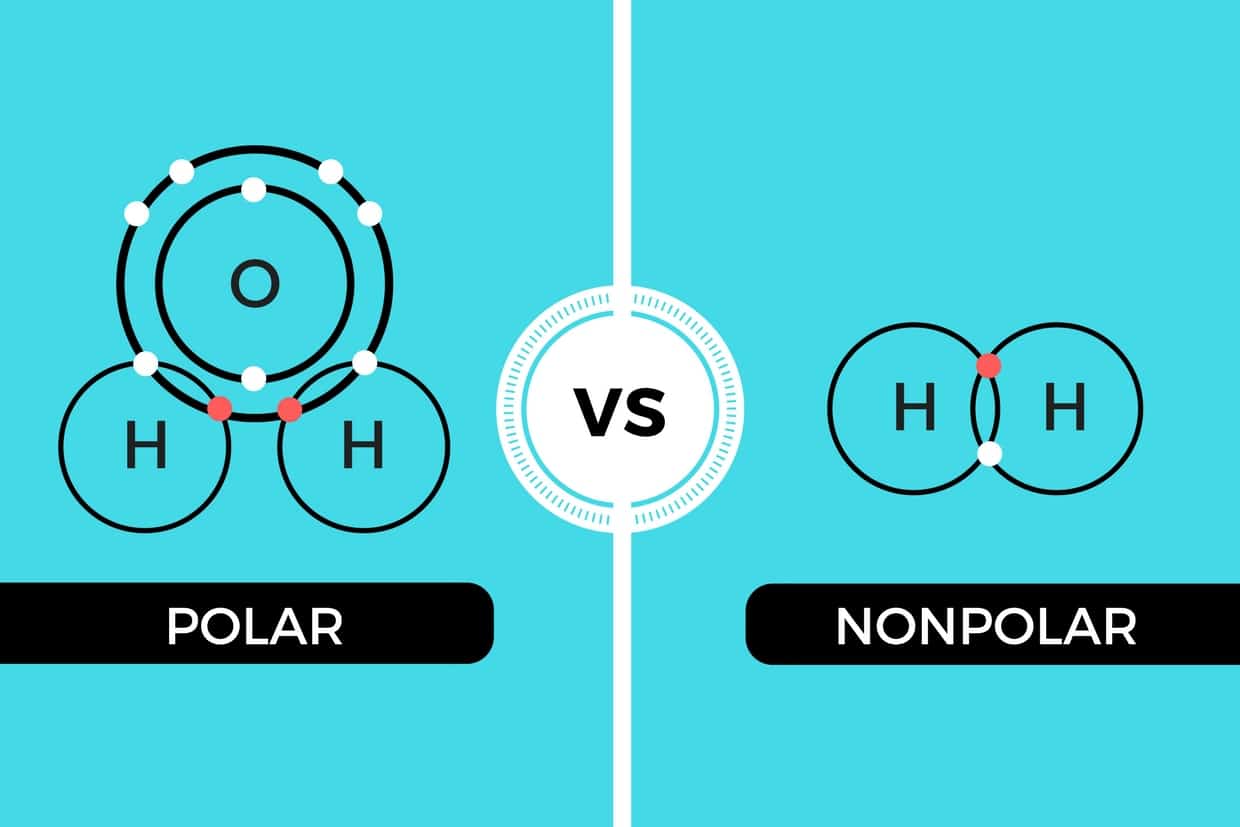
______ result in when electrons are unequally shared between atoms
17
non polar covalent bonds 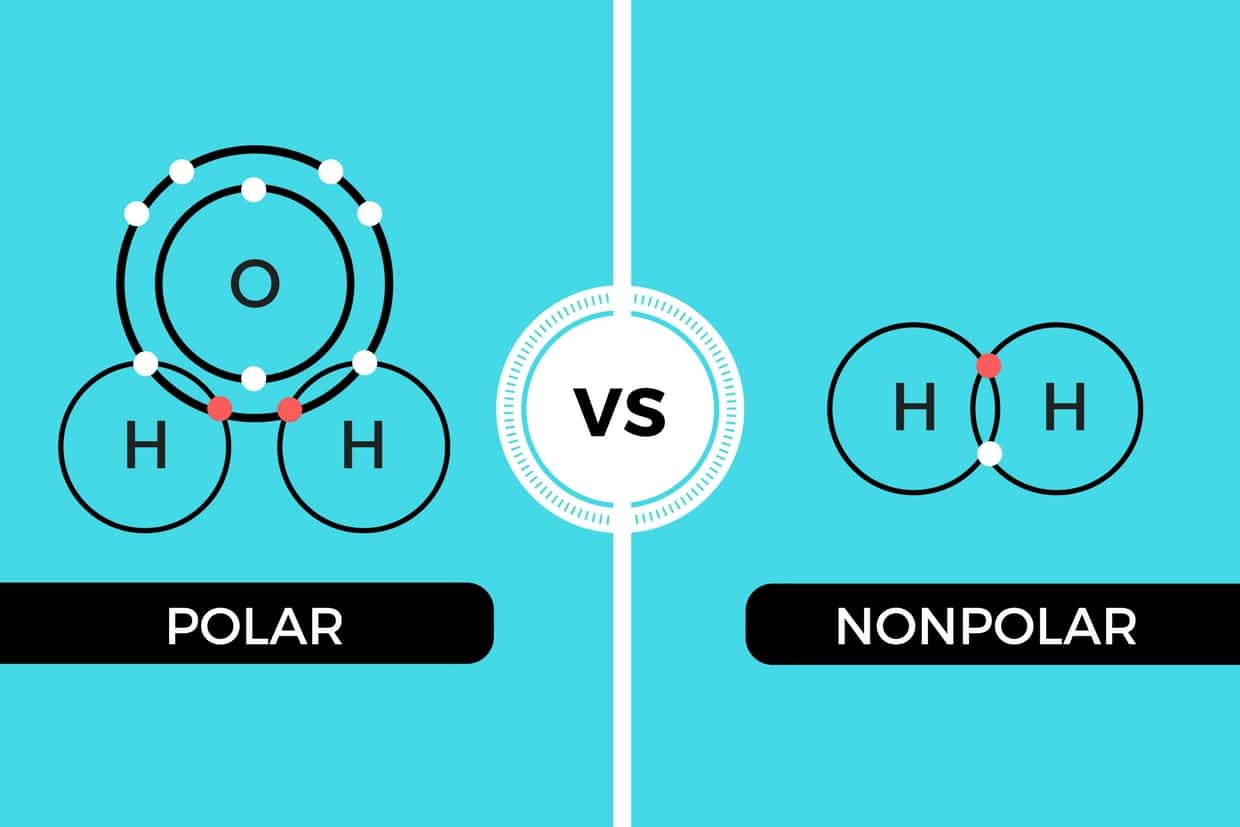
______ result when electrons are more equally shared between atoms
18
When two of the SAME molecules form hydrogen bonds with each other this is called _____
cohesion
19
When two DIFFERENT molecules form hydrogen bonds with each other it is called _______
adhesion
20
____ is the result of increased hydrogen bonding forces between water moleules at the surface.
surface tension
21
____ is used to build all macromolecules, store energy and form cells
Carbon
22
____ is used to build proteins and nucleaic acids
Nitrogen
23
______ is used to build nucleaic acids and and certain lipids.
Phosphorus
24
____ are chemical subunits used to create polymers 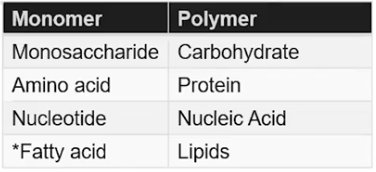
monomers
25
____ is a molecule made up of many monomers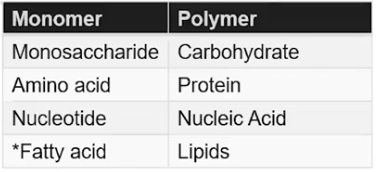
polymers
26
______ ____ reactions are used to create macromolecules.
The sub-components of a water molecule (H and OH) are removed from interacting monomers and a covalent bond forms between them.
The H and OH join together to form a molecule of water; water is a byproduct of this reaction.
The sub-components of a water molecule (H and OH) are removed from interacting monomers and a covalent bond forms between them.
The H and OH join together to form a molecule of water; water is a byproduct of this reaction.
Dehydration synthesis
27
______ are nonpolar macromolecules that do not have true monomers but are comprised of subunits such as fatty acids and glycerol.
Lipids