Structure, Bonding & States of Matter
Study these flashcardsFree · spaced repetition · iPhone, Android, Mac & web
All cards
1
What is the point at which a substance Melts and or Freezes?
Melting Point
2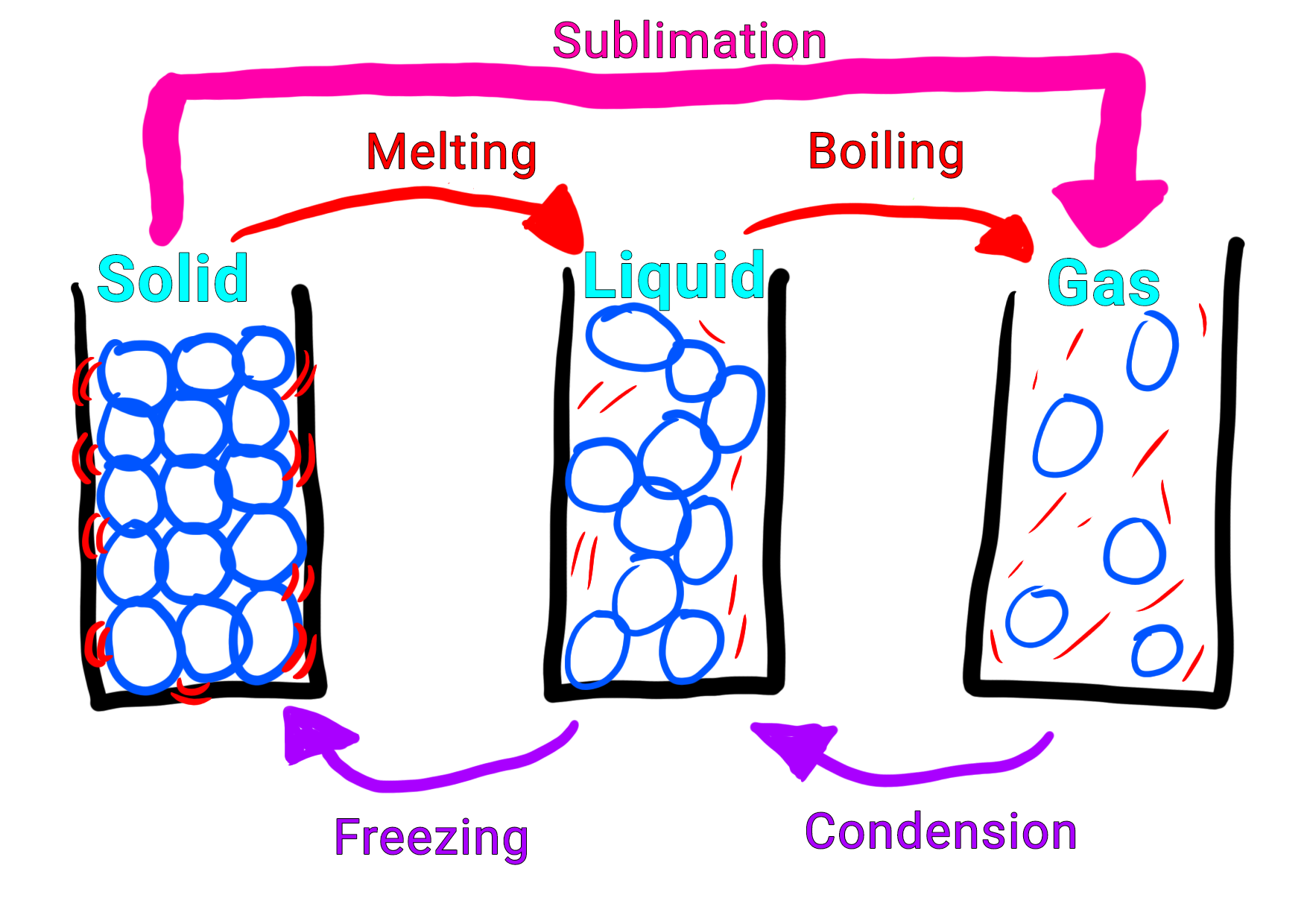
Fill in the gaps for the Changes of State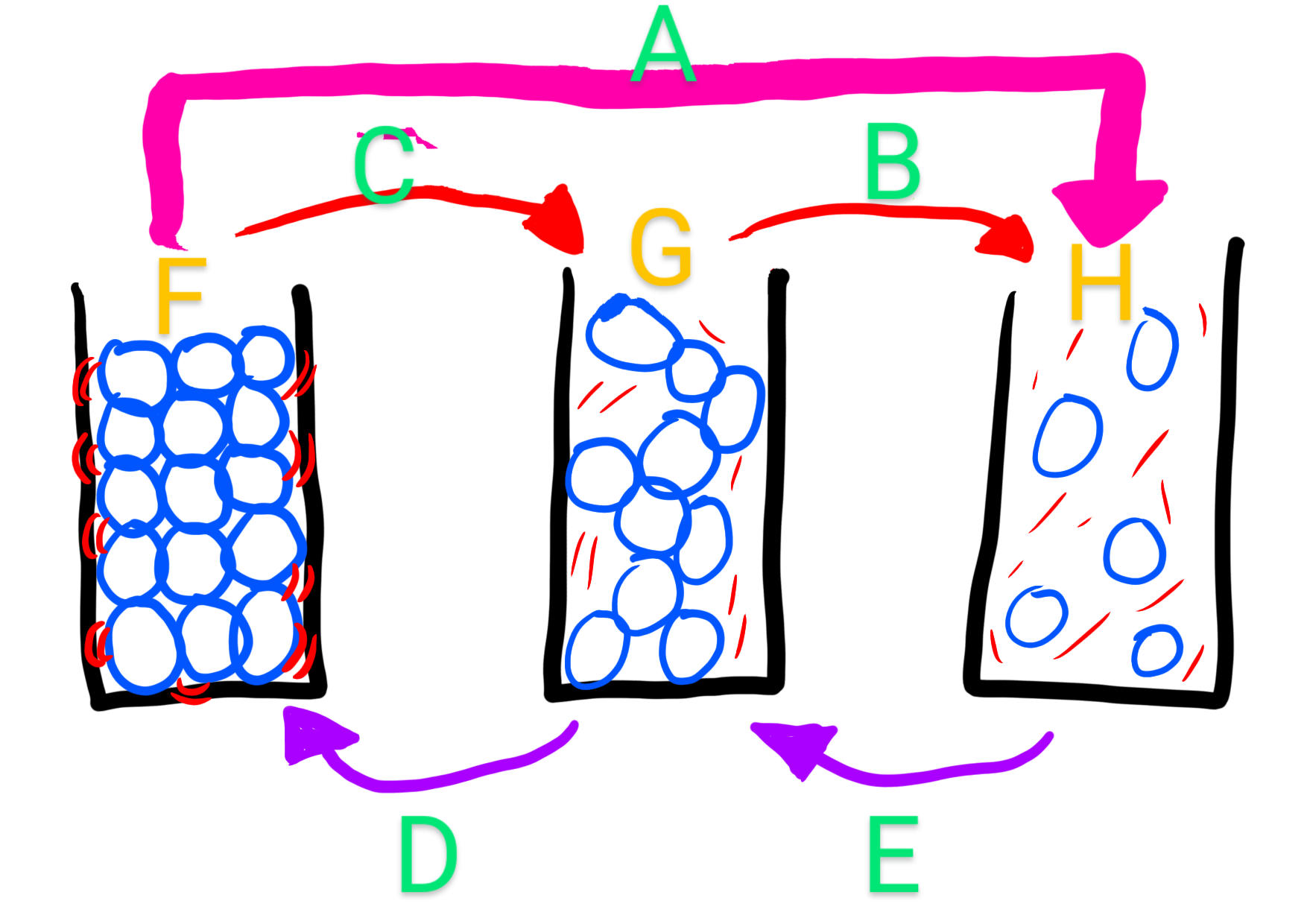
3
What point is Boiling and Condensation?
Boiling Point
4
What are the properties of a Solid?
Movement of particles: Vibrate
Arrangement:
Ordered Layers
Forces between particles:
Strong Attraction
Distance between particles: None
(touch each other)
Fixed shape? : Yes
Fixed Volume? : Yes
Compressibal? : No
Energy particles: Low
(don't move around)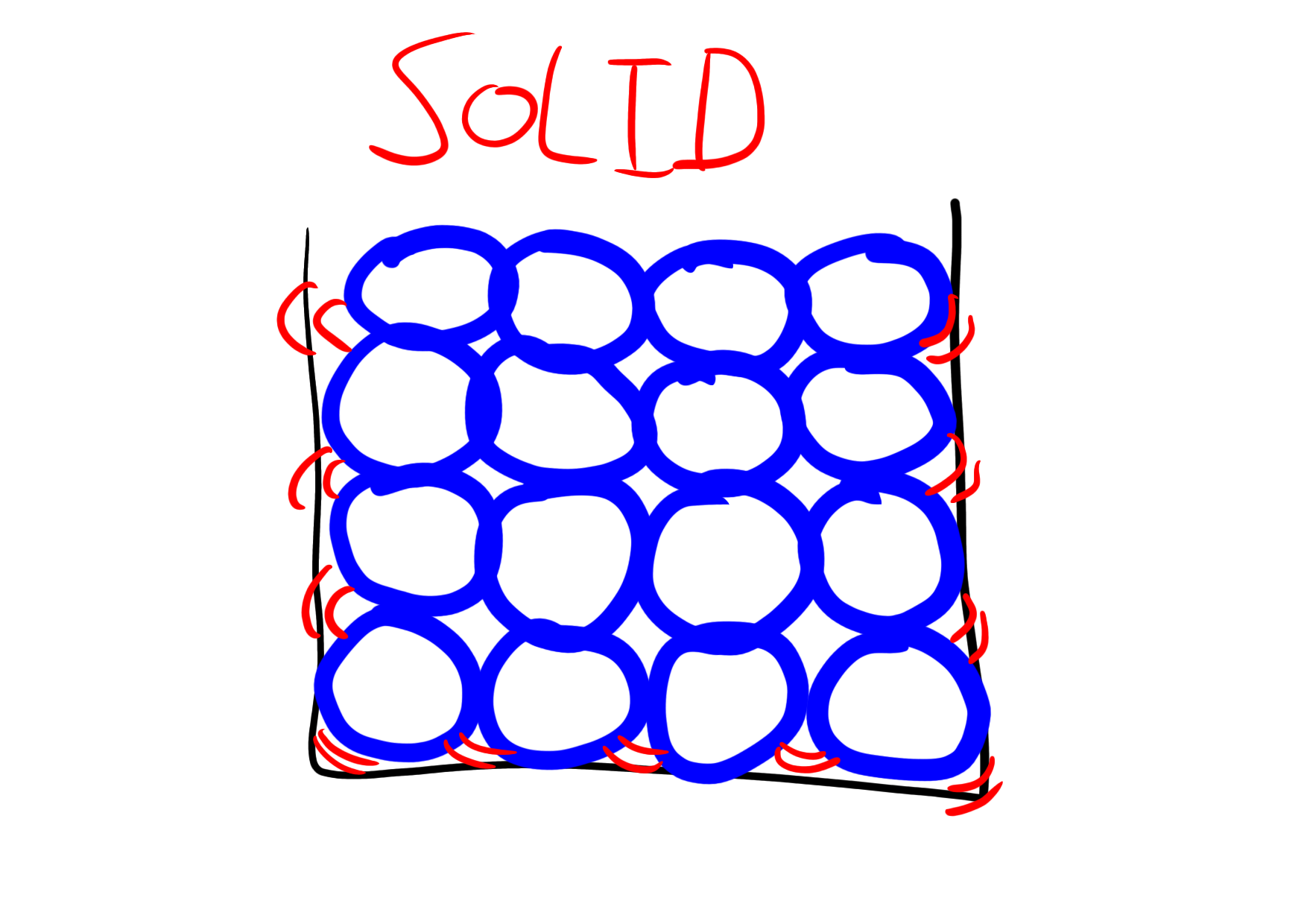
Arrangement:
Ordered Layers
Forces between particles:
Strong Attraction
Distance between particles: None
(touch each other)
Fixed shape? : Yes
Fixed Volume? : Yes
Compressibal? : No
Energy particles: Low
(don't move around)
5
What are the properties of a Liquid?
Movement of particles: Slide Past eachother
Arrangement: Irregular/Random Pattern
Forces between particles:
Attraction Less than Solid & More than Liquid
Distance between particles: Very close
Fixed shape? : No
Fixed Volume? : Yes
Compressibal? : No
Energy particles: Less than Gass and More than Solid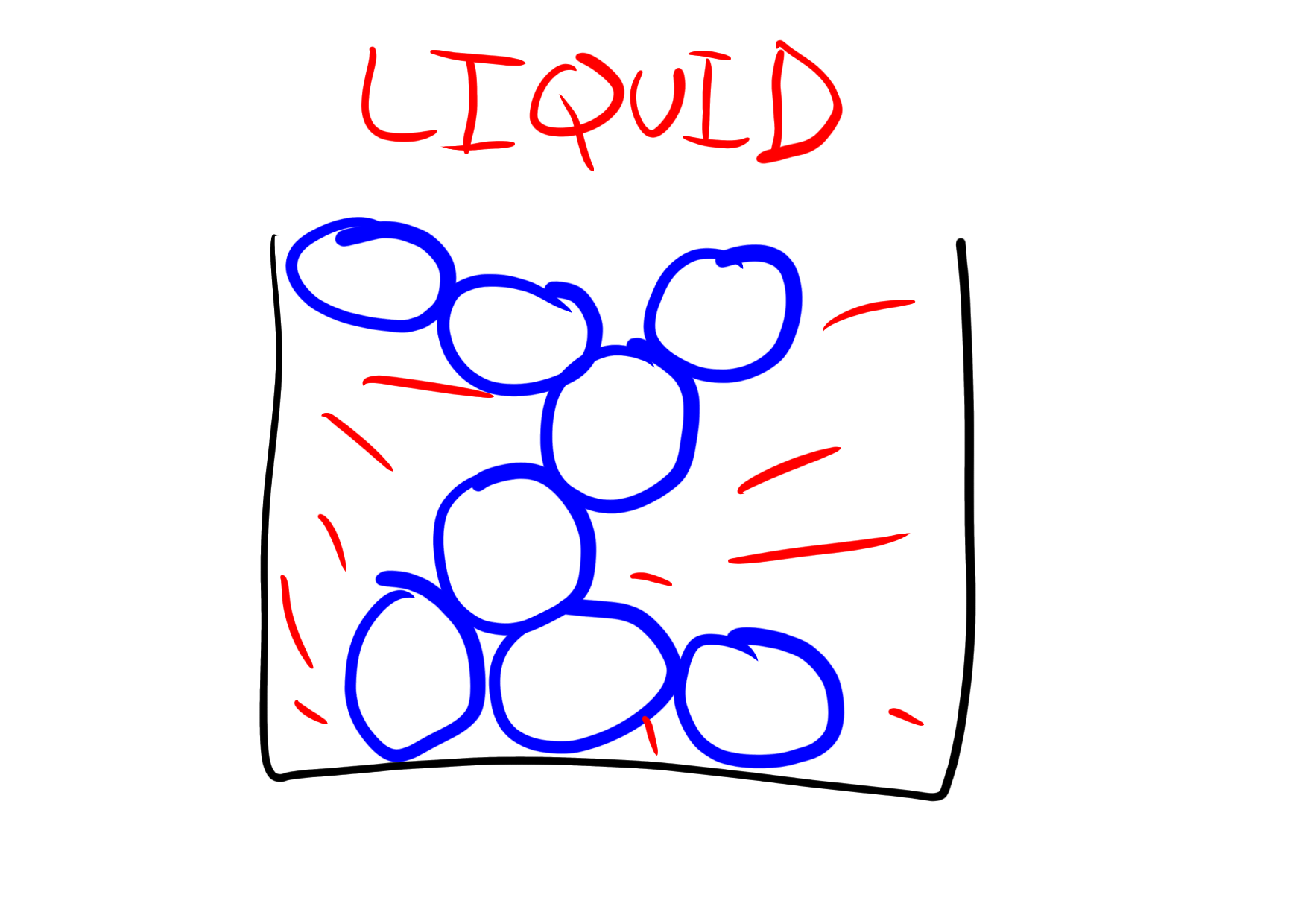
Arrangement: Irregular/Random Pattern
Forces between particles:
Attraction Less than Solid & More than Liquid
Distance between particles: Very close
Fixed shape? : No
Fixed Volume? : Yes
Compressibal? : No
Energy particles: Less than Gass and More than Solid
6
What are the properties of a Gas?
Movement of particles: Move in Any Direction
Arrangement:
Irregular/Random Pattern
Forces between particles: Week so they move around
Distance between particles: Free (lots of space)
Fixed shape? : No
Fixed Volume? : No
Compressibal? : Yes
Energy particles: High
(move around a lot)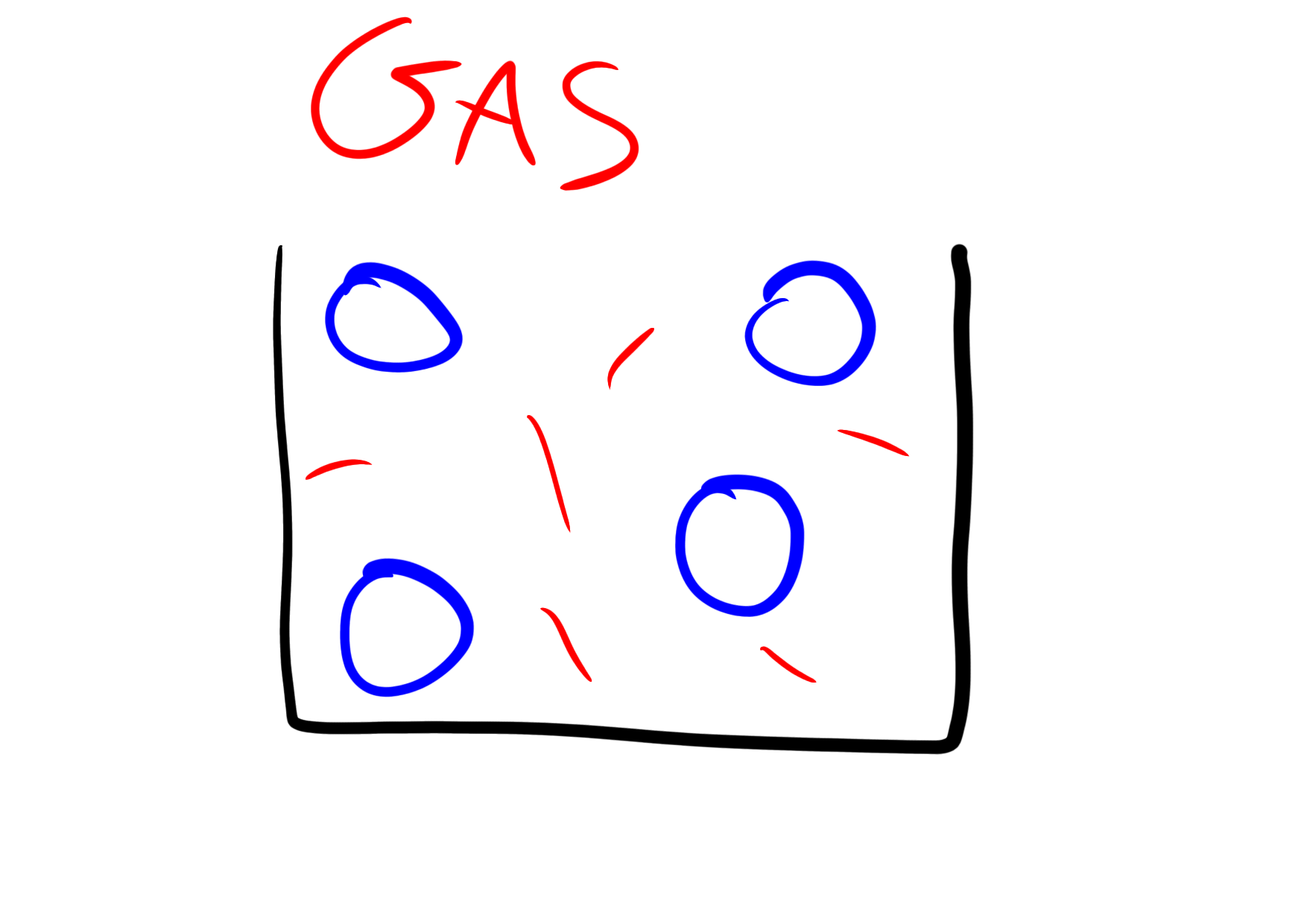
Arrangement:
Irregular/Random Pattern
Forces between particles: Week so they move around
Distance between particles: Free (lots of space)
Fixed shape? : No
Fixed Volume? : No
Compressibal? : Yes
Energy particles: High
(move around a lot)
7
what are the limits to the particle model?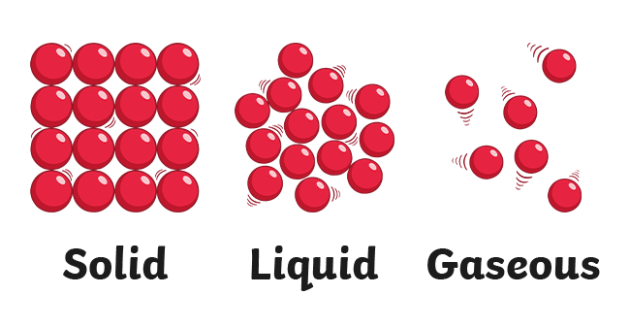
• It can't show FORCES between them.
• Particles vary in SIZE and /SHAPE
• Atoms are mainly empty space (solid spheres).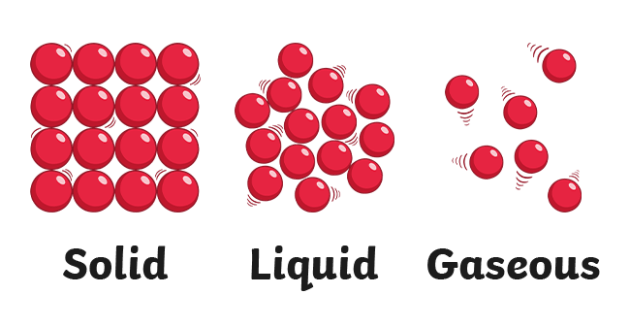
• Particles vary in SIZE and /SHAPE
• Atoms are mainly empty space (solid spheres).
8
What are the symbols for solid, liquid, gas and aqueous?
Solid: (s)
Liquid: (l)
Gas: (g)
Aqueous: (aq)
Liquid: (l)
Gas: (g)
Aqueous: (aq)
9
Define aqueous
Something dissolved in water.
10
when is a change of state & and Why does it happen & how can you tell on a graph?
During a change of state, the Temperature Stays Constant.
This is because Energy is Being Transferred to Make Or Break Bonds.
It is Shown By Straight Line.
(flattened/plateaus)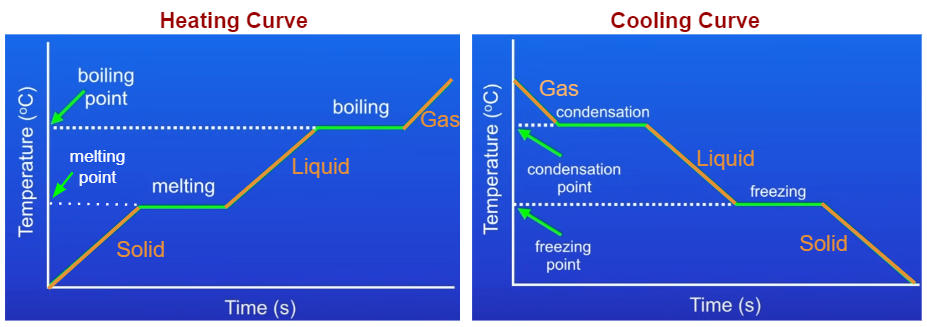
This is because Energy is Being Transferred to Make Or Break Bonds.
It is Shown By Straight Line.
(flattened/plateaus)
11
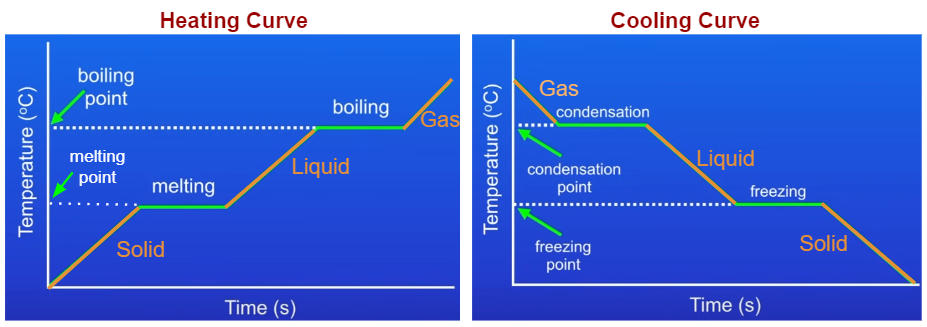
Describe a heating and cooling curve?
HEATING CURVE Temperature increase to begin with (it is a solid).
Temperature is Constant at Melting Point then Increases again
(it is a liquid).
Temperature is Constant at Boiling Point. Then increases again
(it is now a gas).
COOLING CURVE
Temperature Decreases to begin with (it is a gas).
Temperature is Constant at the Boiling Point. Then Decreases again
(it is liquid).
Temperature is Constant at the Melting Point
(it is solid).
Temperature is Constant at Melting Point then Increases again
(it is a liquid).
Temperature is Constant at Boiling Point. Then increases again
(it is now a gas).
COOLING CURVE
Temperature Decreases to begin with (it is a gas).
Temperature is Constant at the Boiling Point. Then Decreases again
(it is liquid).
Temperature is Constant at the Melting Point
(it is solid).
12
What are atoms made of?
Protons, neutrons & electrons 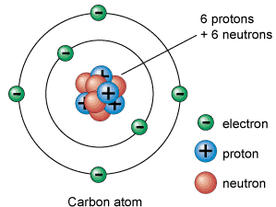
13
What is the arrangement of electron shells around the nucleus?
(2,8,8)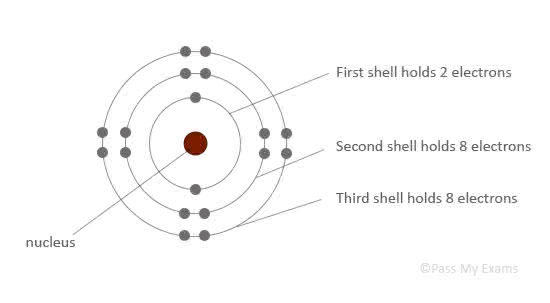
14
when are atoms most stable (least reactive)?
With a full outer shell
15
when is an outer shell full?
2 or 8 electrons
16
What are incomplete shells?
They are unstable
17
why do atoms bond?
To make a full outer shell, because it is more stable
18
what type of bonding do non-metals and metals do?
Ionic Bonding
19
What type of bonding do non-metals do?
Covalent Bonding
20
what type of bondings do metals do?
Metallic Bonding
21
What happens if an atom gains electron?
It becomes negatively charged.
22
What happens if an atom loses an electron?
It becomes positively charged.
23
how do atoms become ions?
They lose or gain electrons from the outer shell.
24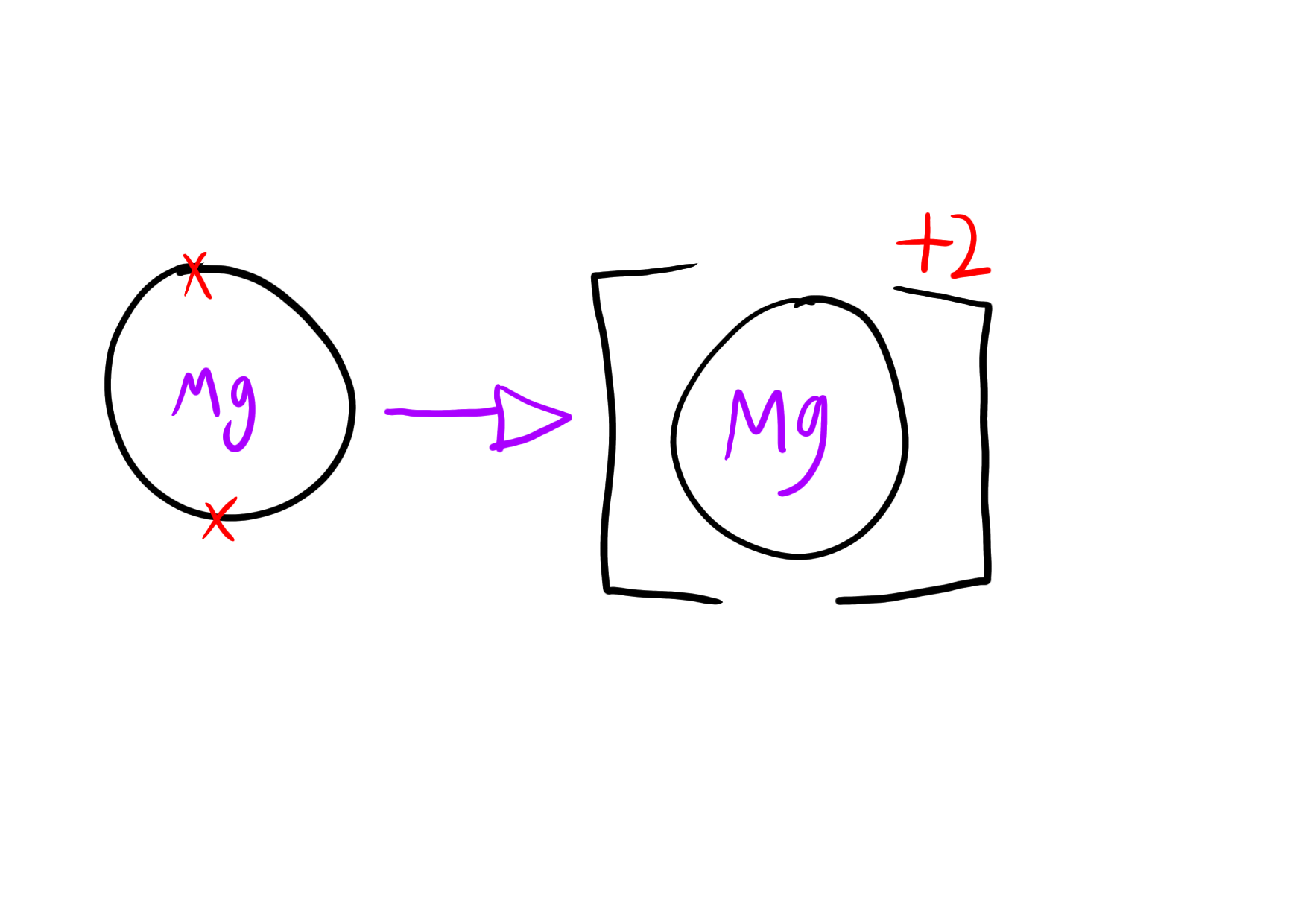
How does Magnesium become an Ion? (draw)
25
How does Flourine become an Ion (draw)?
It becomes Floride 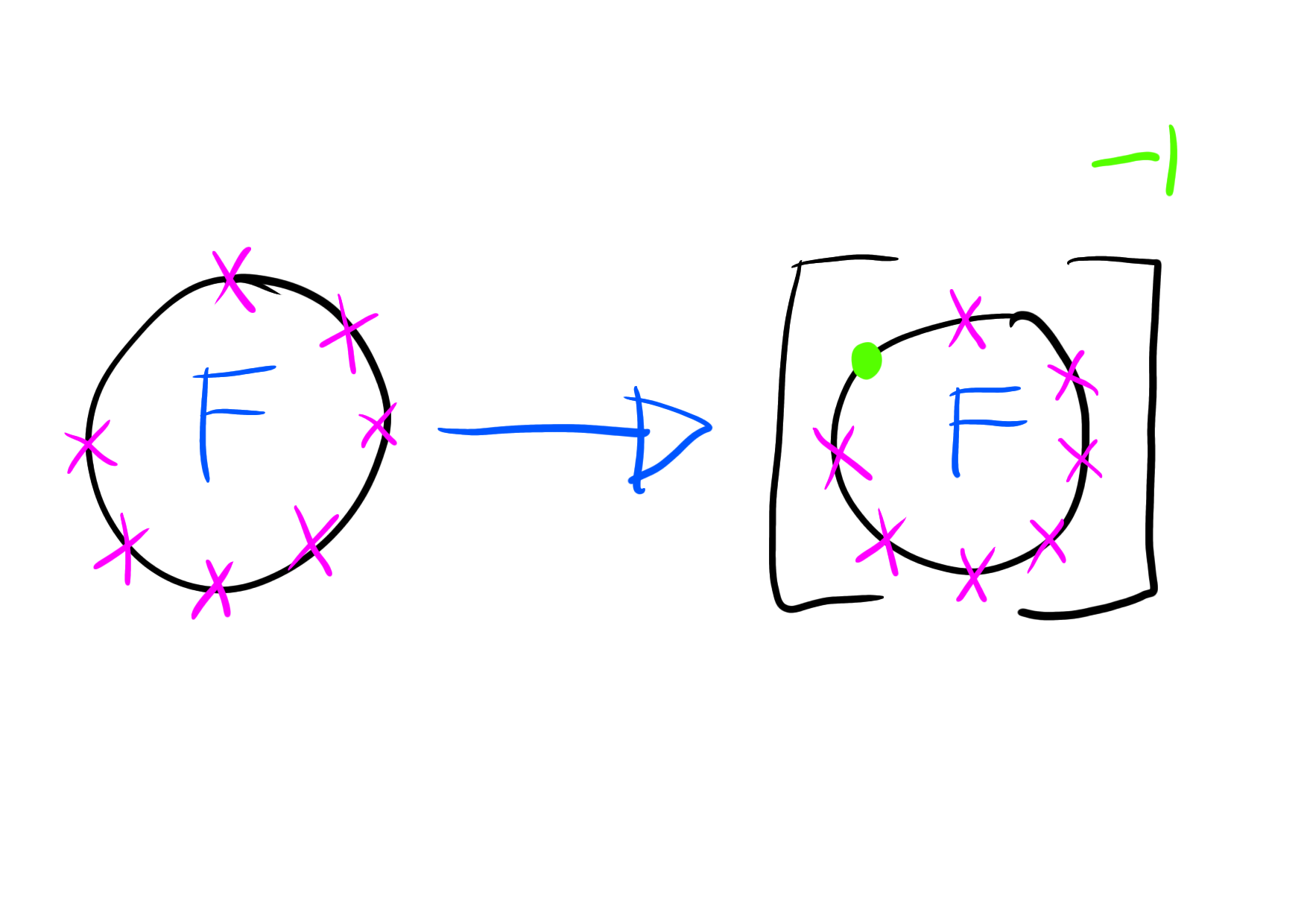
26
What do you need for Ionic Bonding?
Metal + Non-Metal = Ionic Bonding
27
how many electrons are in the outer shells of noble gases?
8 electrons
28
What is a compound ion?
When ions are Made Up Of More than One Atom.
29
when do you use dots and crosses to show what happenes when atoms react in a diagram?
Dots for the atom that has less electrons in the outer shell than the other atom it is reacting with.
Crosses for the atom that has the more electrons in the outer shell than the atom it is reacting with.
Crosses for the atom that has the more electrons in the outer shell than the atom it is reacting with.
30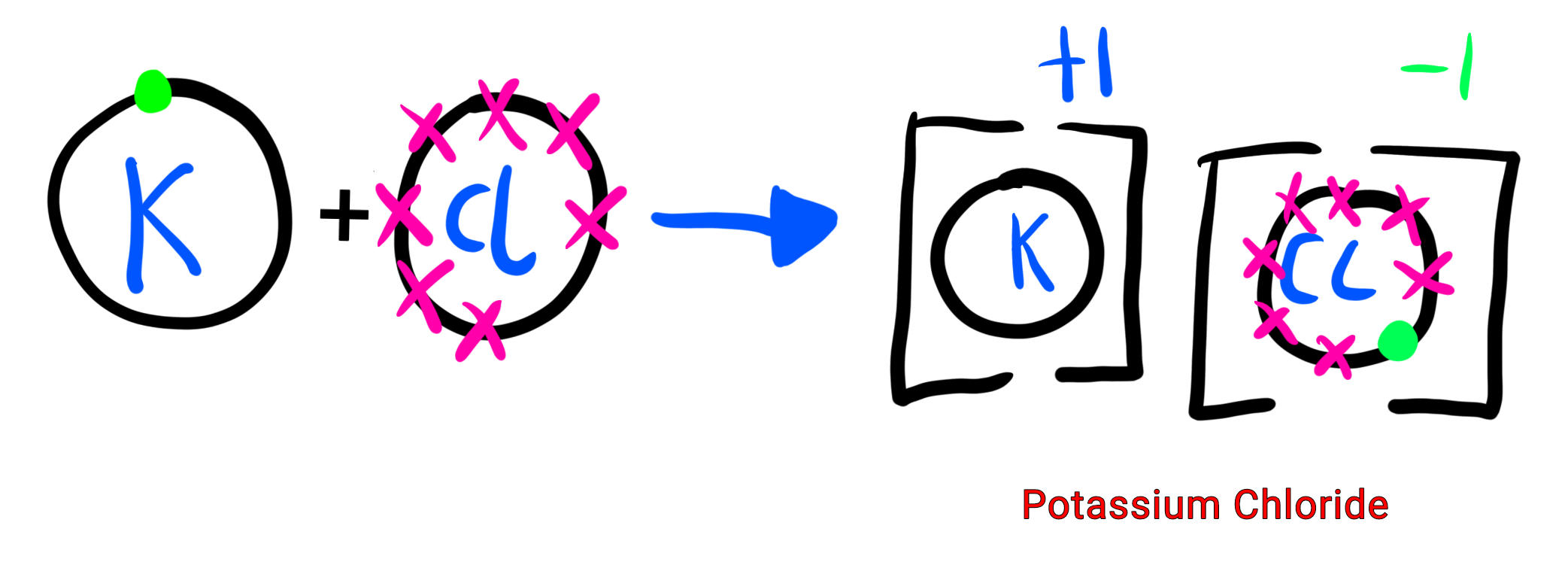
Draw a diagram that that shows what happens when potassium and chlorine react.
31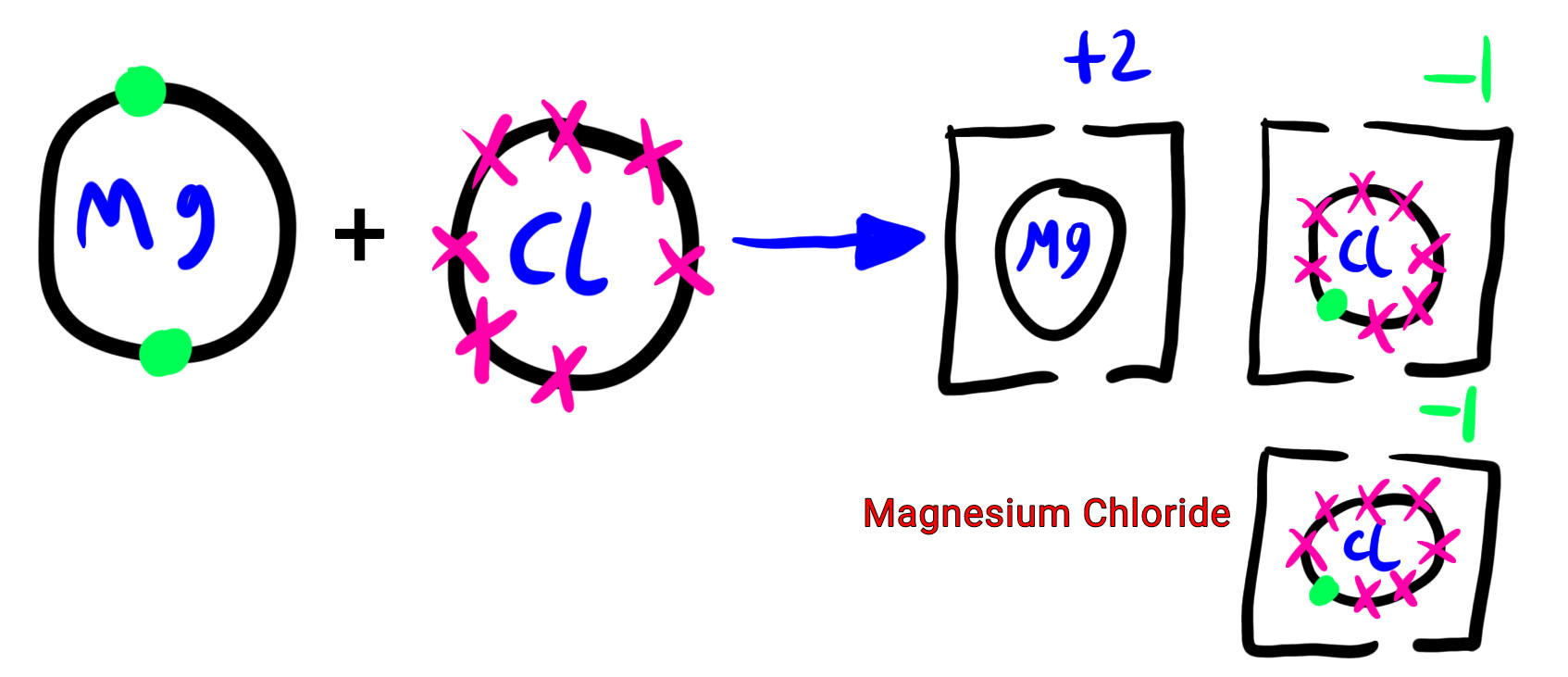
Draw a diagram that that shows what happens when magnesium and chlorine react.
32
What does the group number on the periodic table indicate?
How many electrons are in the outer shell
33
describe in words potassium and chlorine reacting.
To make potassium chloride the potassium atom transfers 1 electron to the chlorine atom so that both have a full outer shell to make a potassium ion a charge of positive 1 and chlorine ion of -1.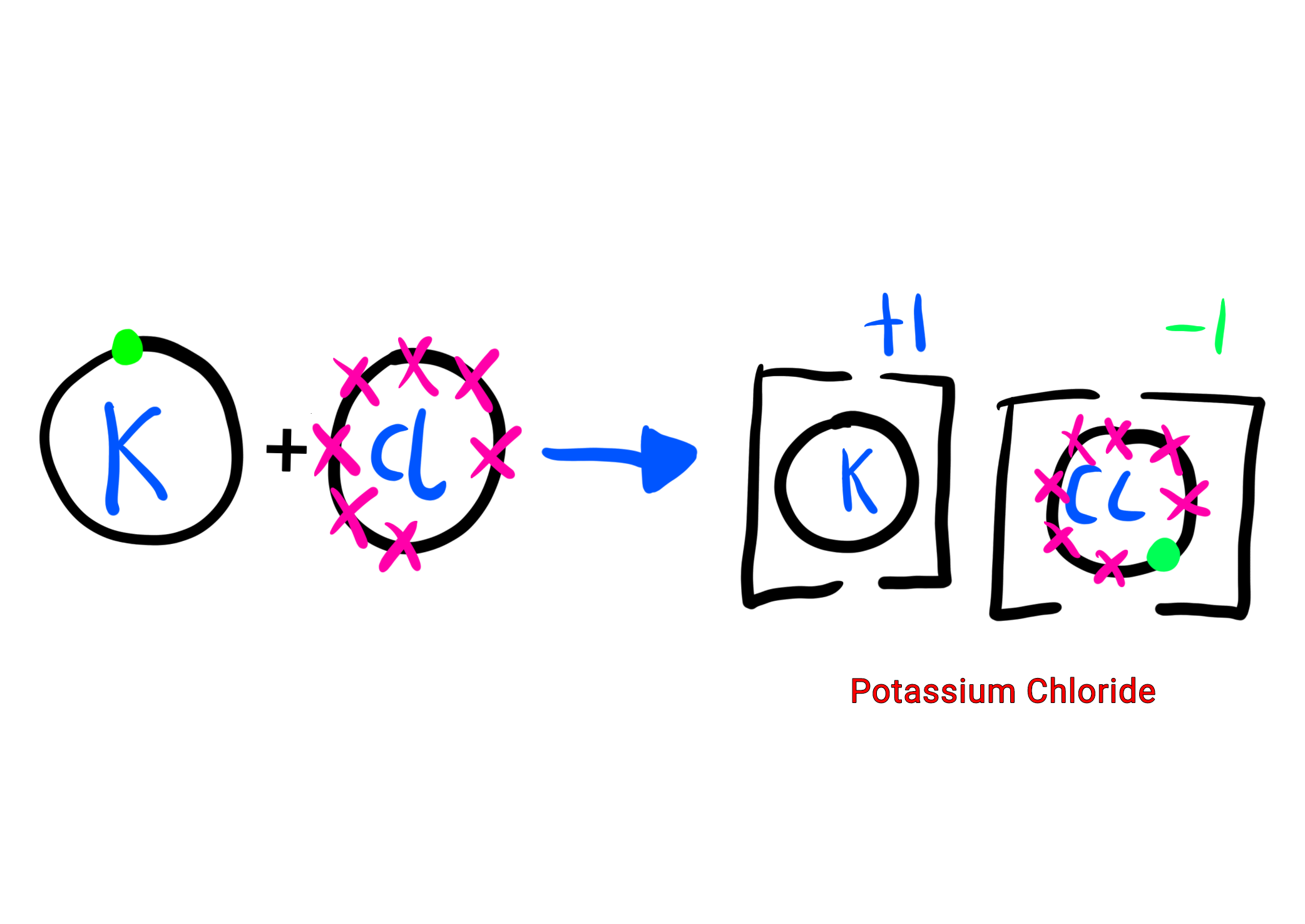
34
In which directions can an Electrostatic Forces go
All directions
35
what is this diagram called? 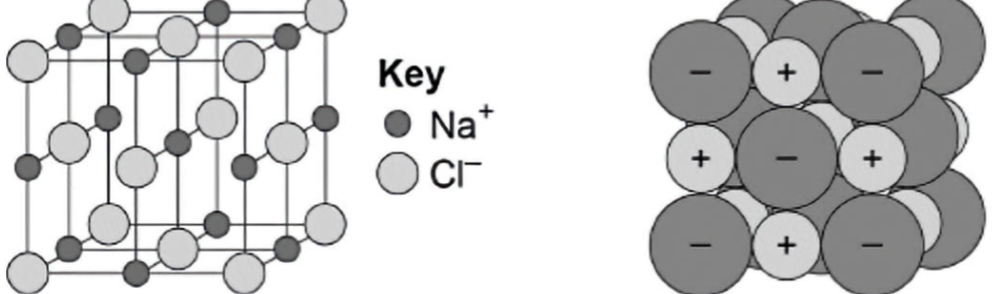
Giant Ionic Lattice/Ionic Compound
36
What do Giant Ionic Lattices represent? 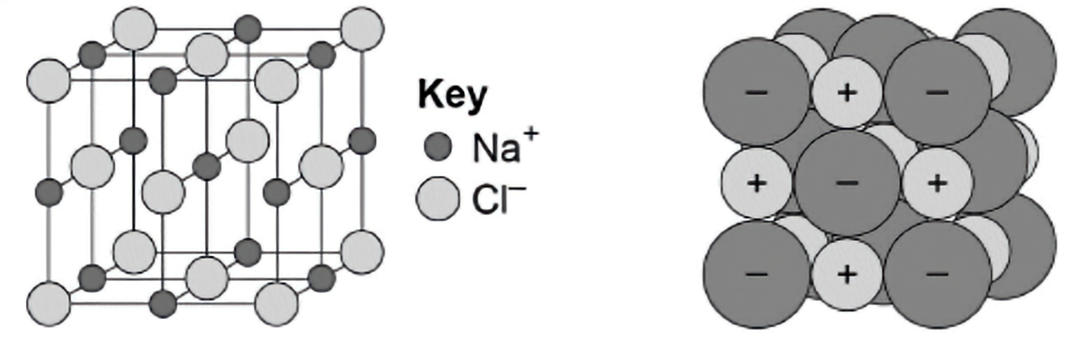
Represents Ionic Bonds in Ionic Compound in a 3D Way.
37
What is a compound?
Different elements bonded together
38
What is Molecular Formula?
Molecular Formula is actual numbers of each atom in a compound e.g H2O2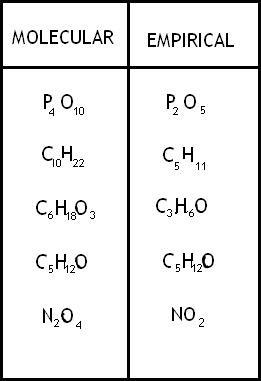
39
What is Empirical Formula?
Empirical formula is the simplest whole number ratio of atoms.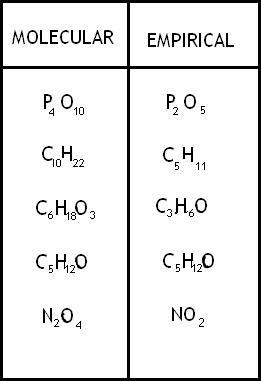
40
What is Covalent Bonding?
Covalent Bonds are formed when atoms of NON-METALS SHARE PAIRS of ELECTRONS. 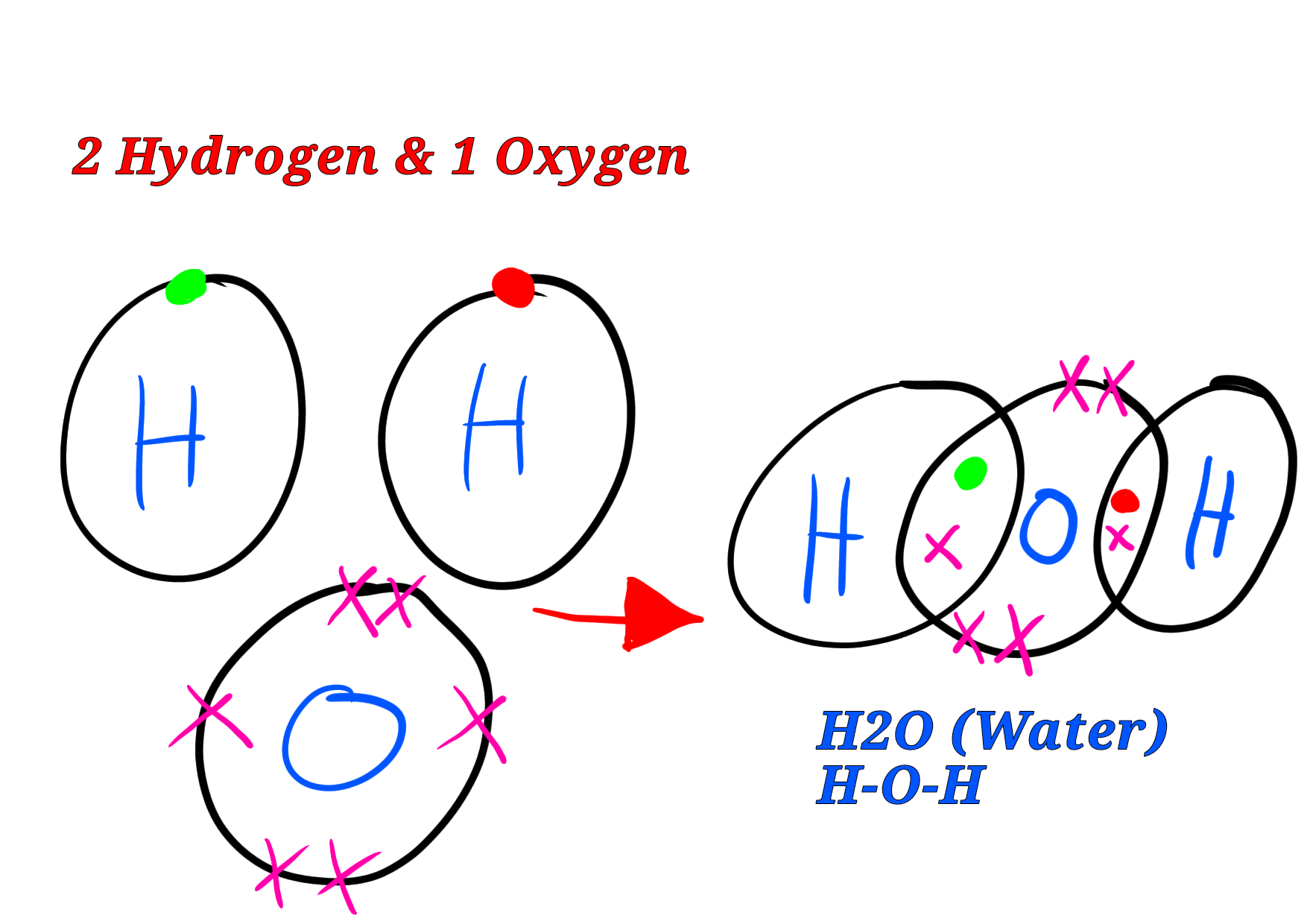
41
Draw a dot and cross diagram to show the bonding of a Hydrogen Molecules
A shared power of electrons give both items a stable arrangement and forms a Covalent Bond. 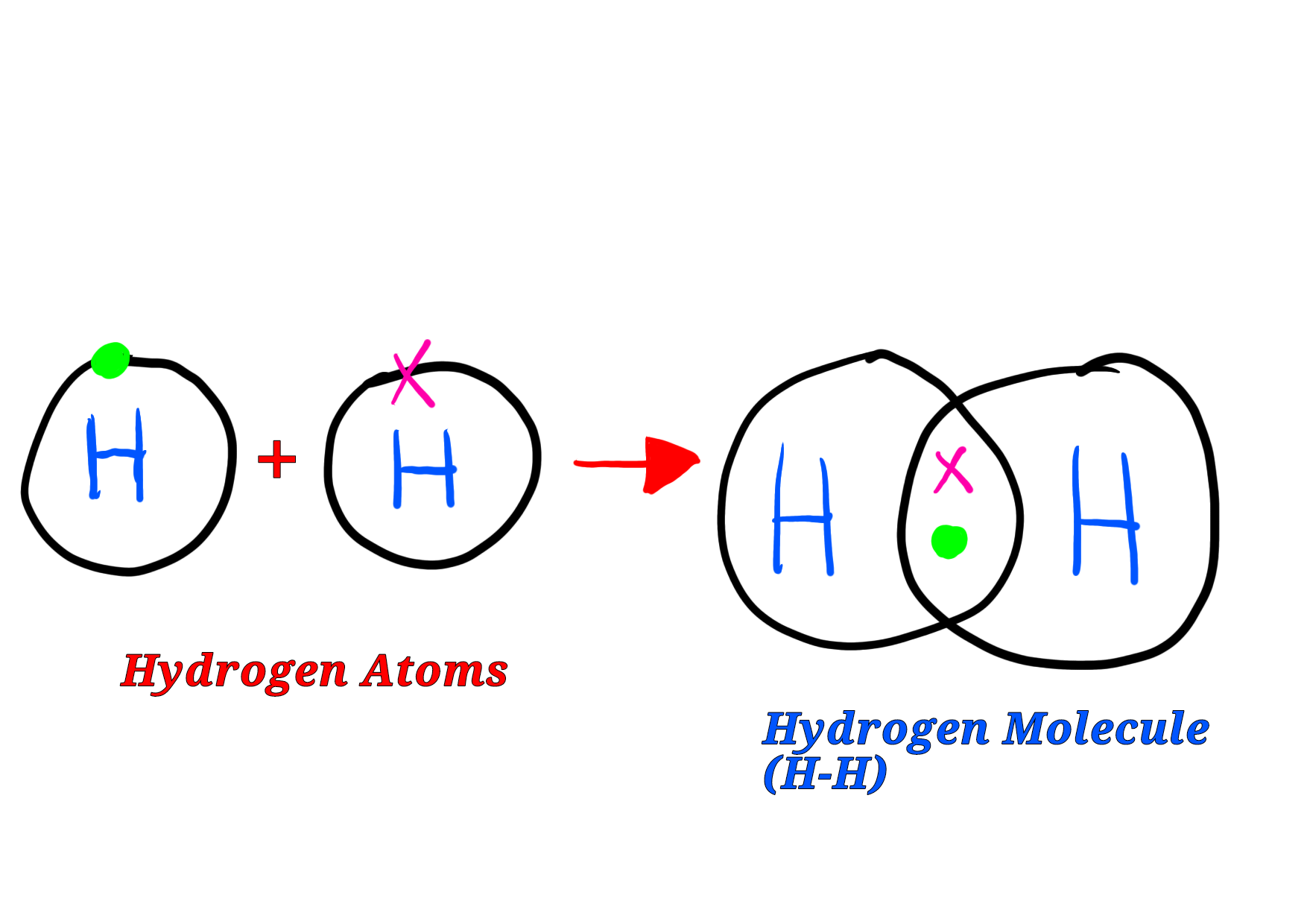
42
Draw a dot and cross diagram to show the bonding of an Oxygen Molecule (covalent)
This is a double covalent bond. (two pairs of electrons involved)
Only the electrons in the outer shell are shown here.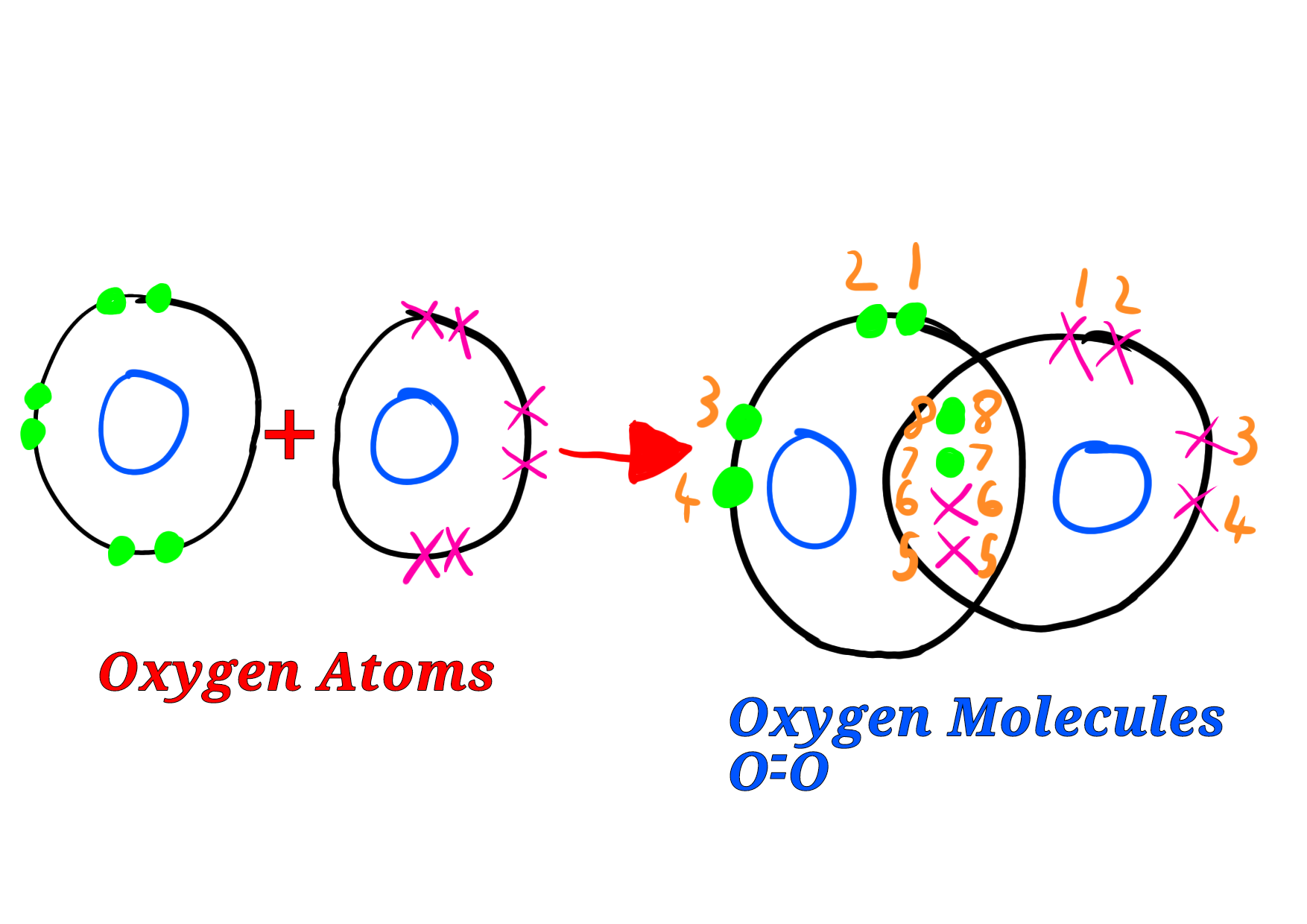
Only the electrons in the outer shell are shown here.
43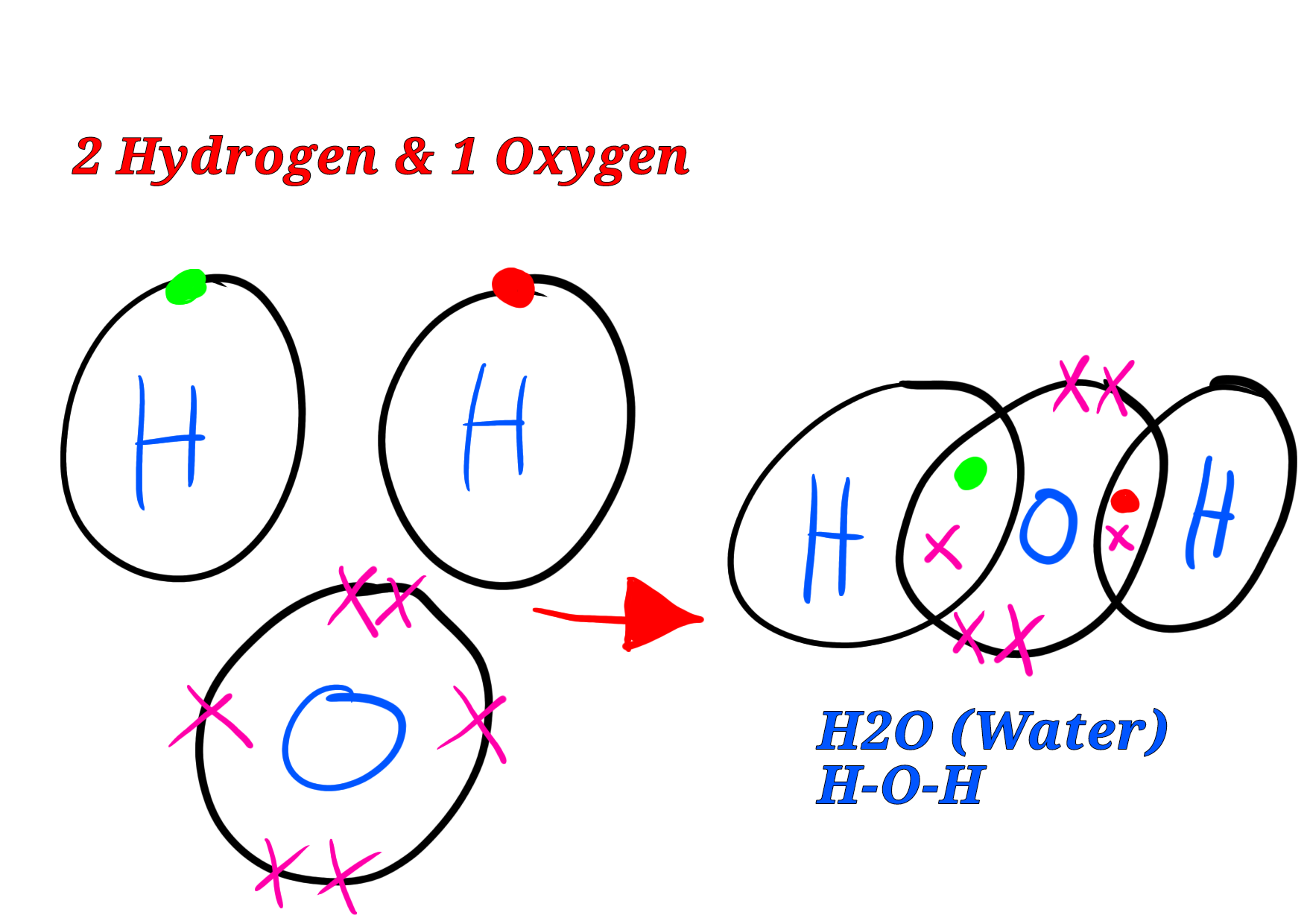
Draw a dot and cross diagram to show the bonding of Water
44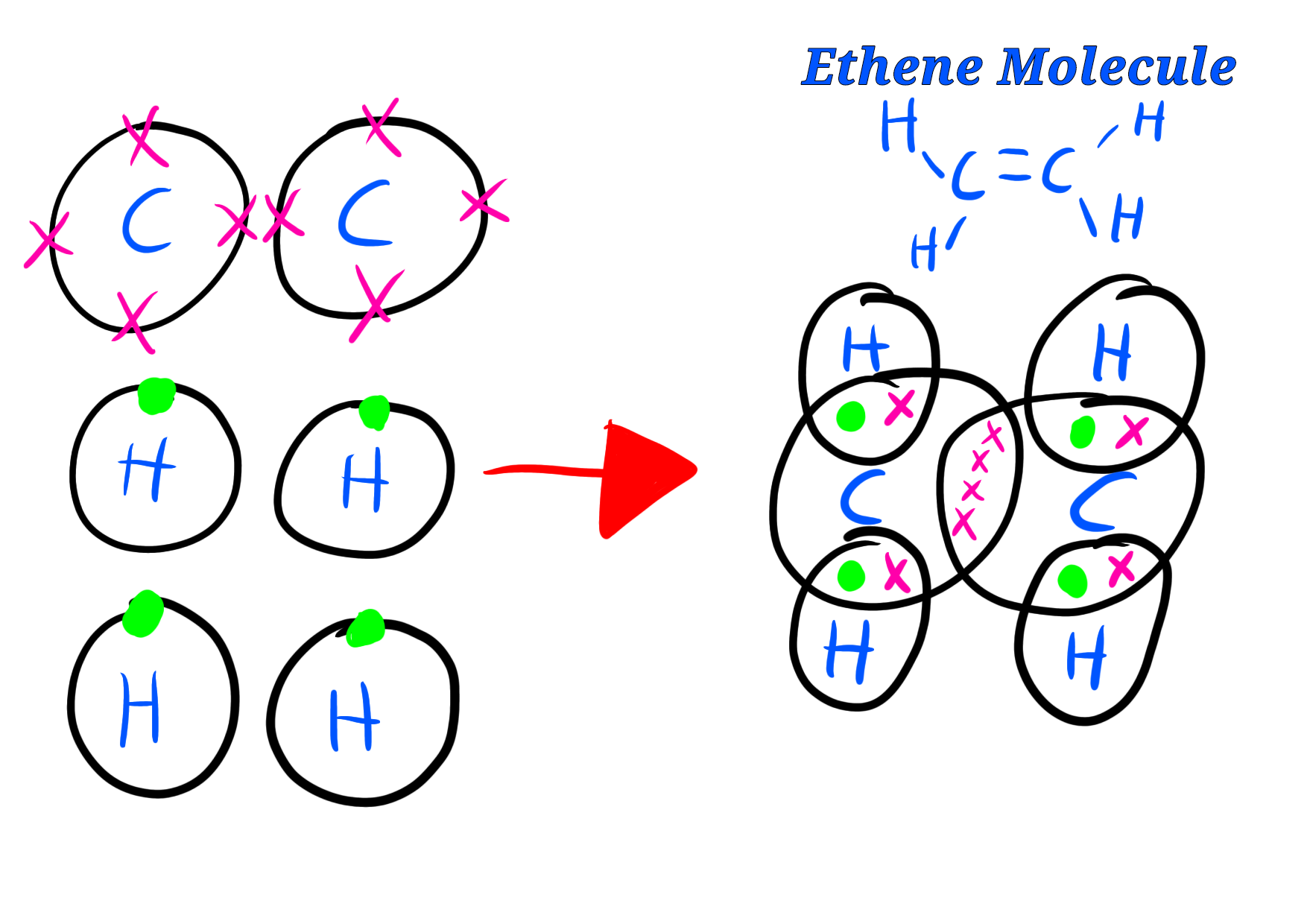
Draw a dot and cross diagram to show the bonding of Ethene
45
why do Larger Simple Covalent molecules have high melting and boiling points?
Intermolecular Forces Increase with Size Of the Molecules so More Energy Needed to Break Them
Meaning molecules have high melting and boiling points.
Meaning molecules have high melting and boiling points.
46
What are polymers?
Long Chains of Monomers and are Very Large Covalent Molecules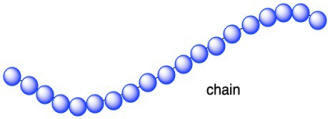
47
What Are intermolecular forces & are they weak or strong and what does that mean?
Force Between Molecules.
Weak, overall Not Lots Of Energy is Needed To Break Them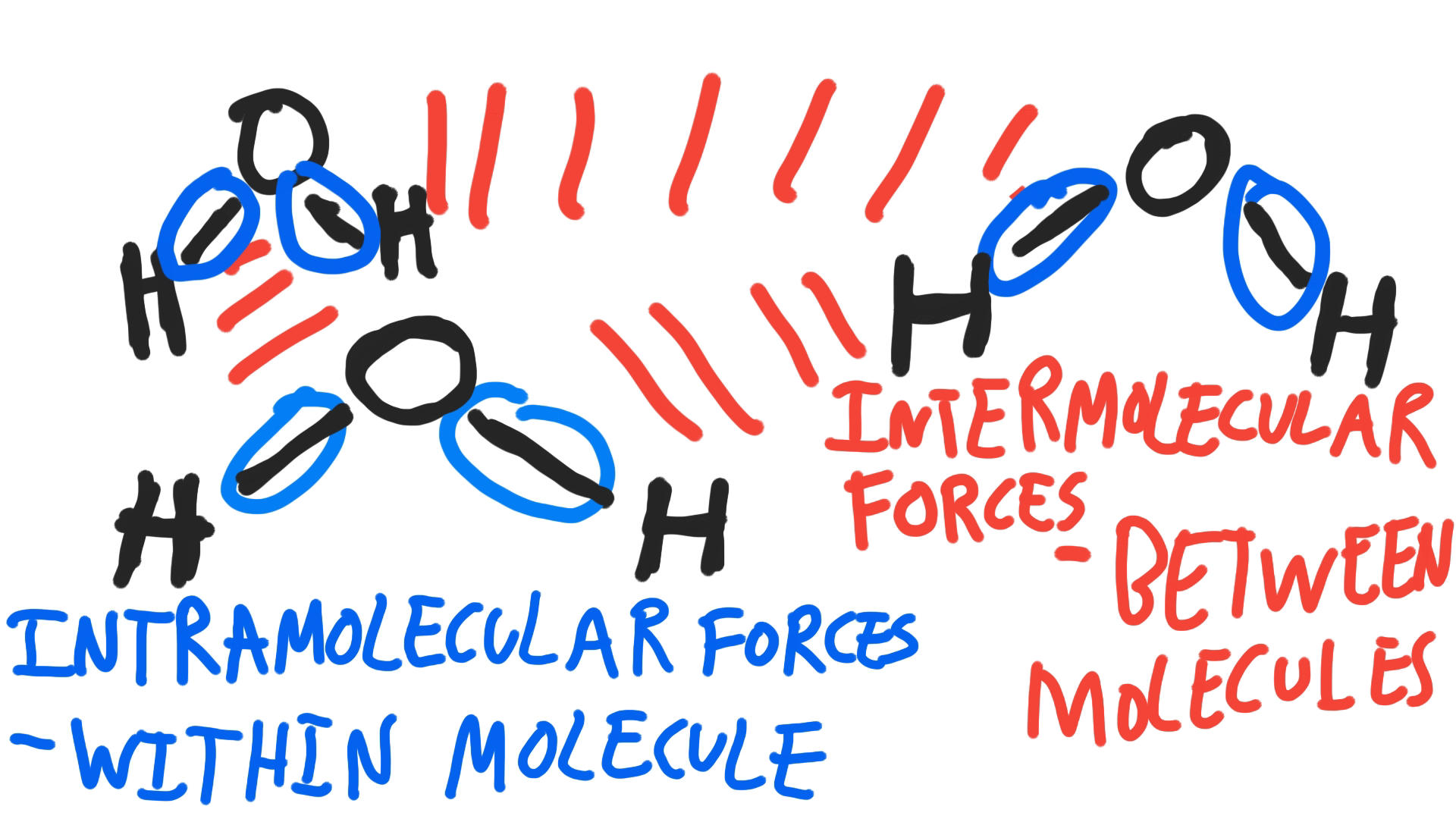
Weak, overall Not Lots Of Energy is Needed To Break Them
48
what state are Small/ Simple Covalent molecules in & why?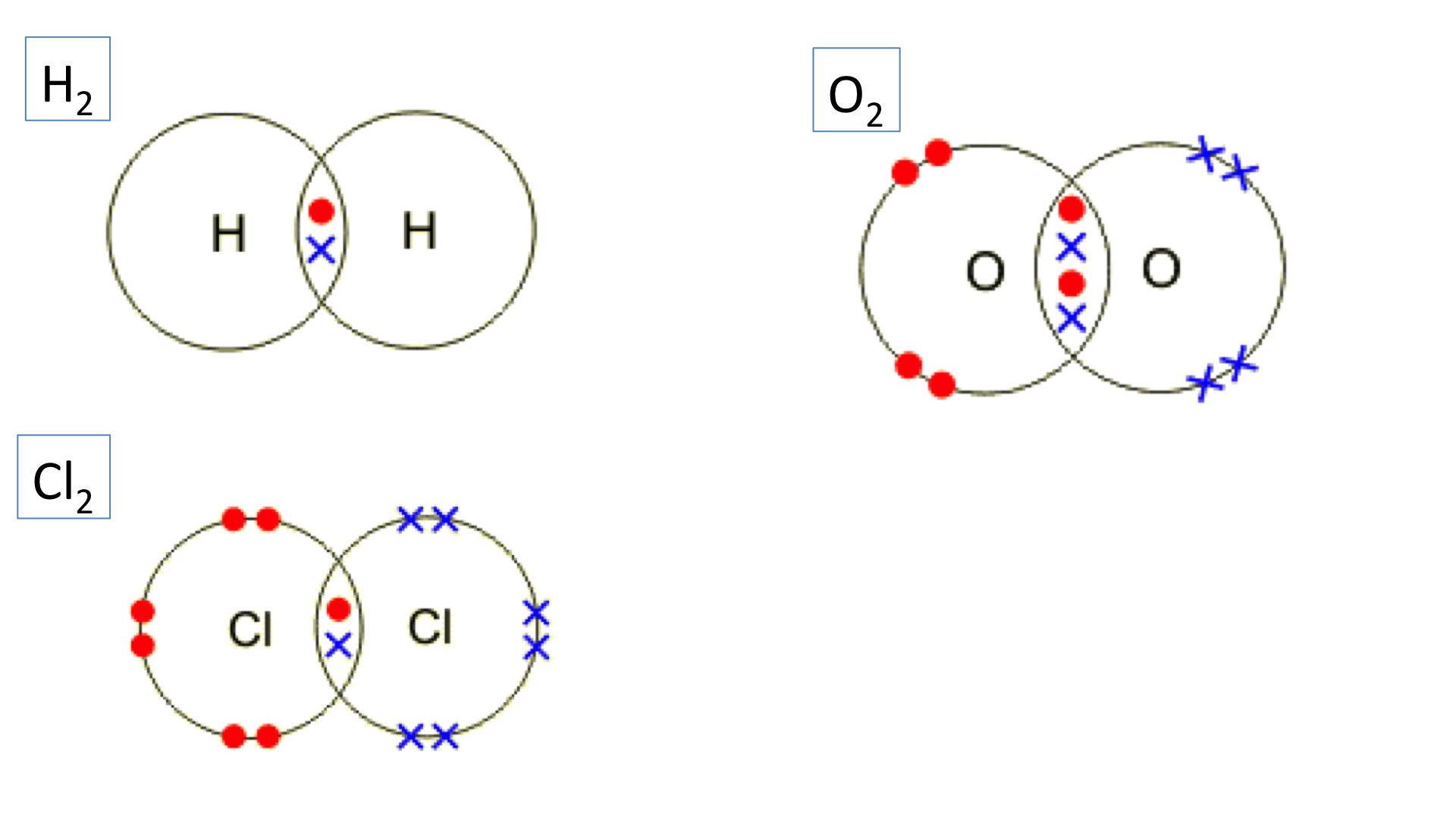
Liquid or Gas because have Weak Intermolecular Forces so have Low Melting or Boiling Points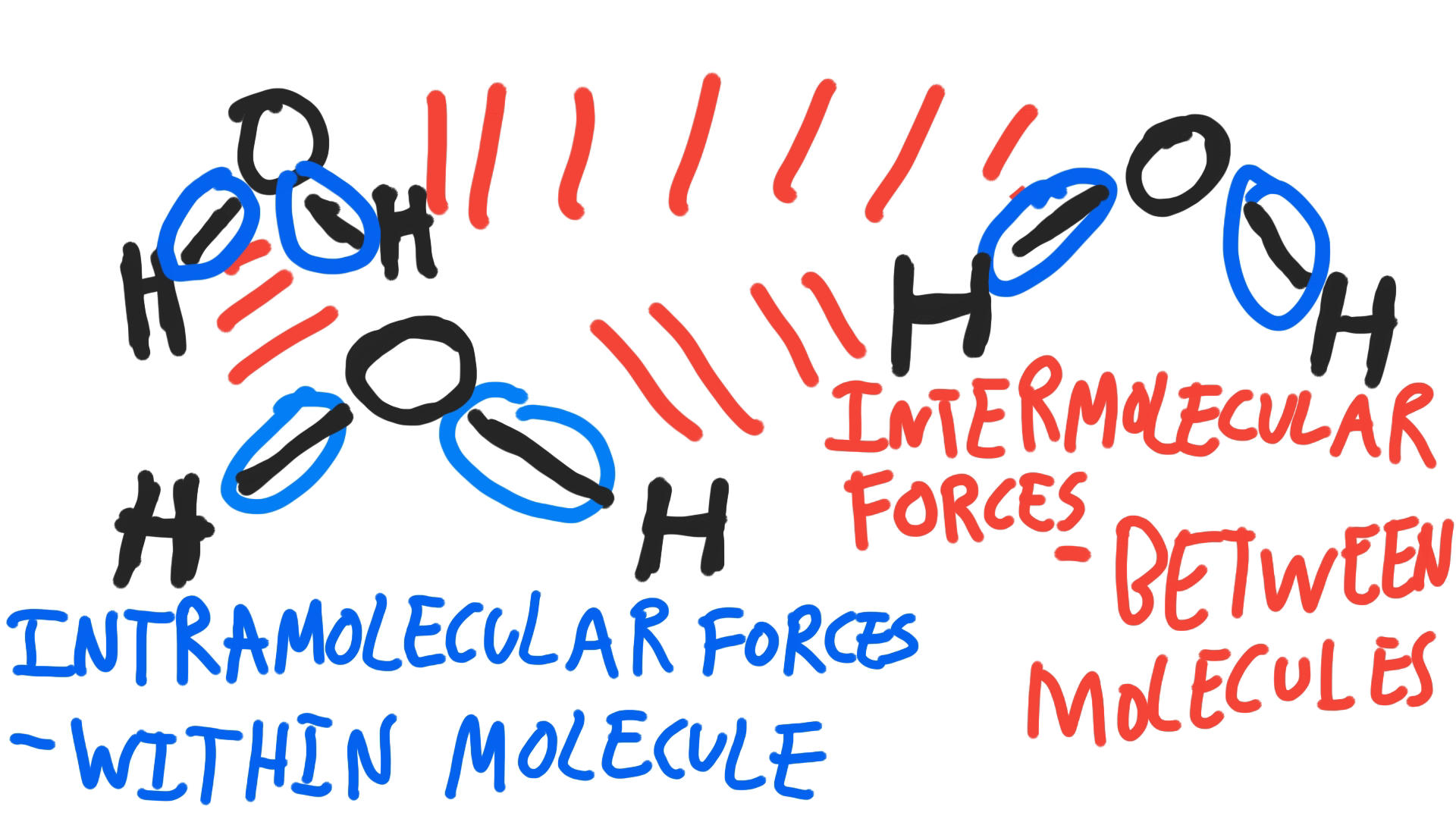
49
What are the properties for Small/ Simple Covalent Molecules?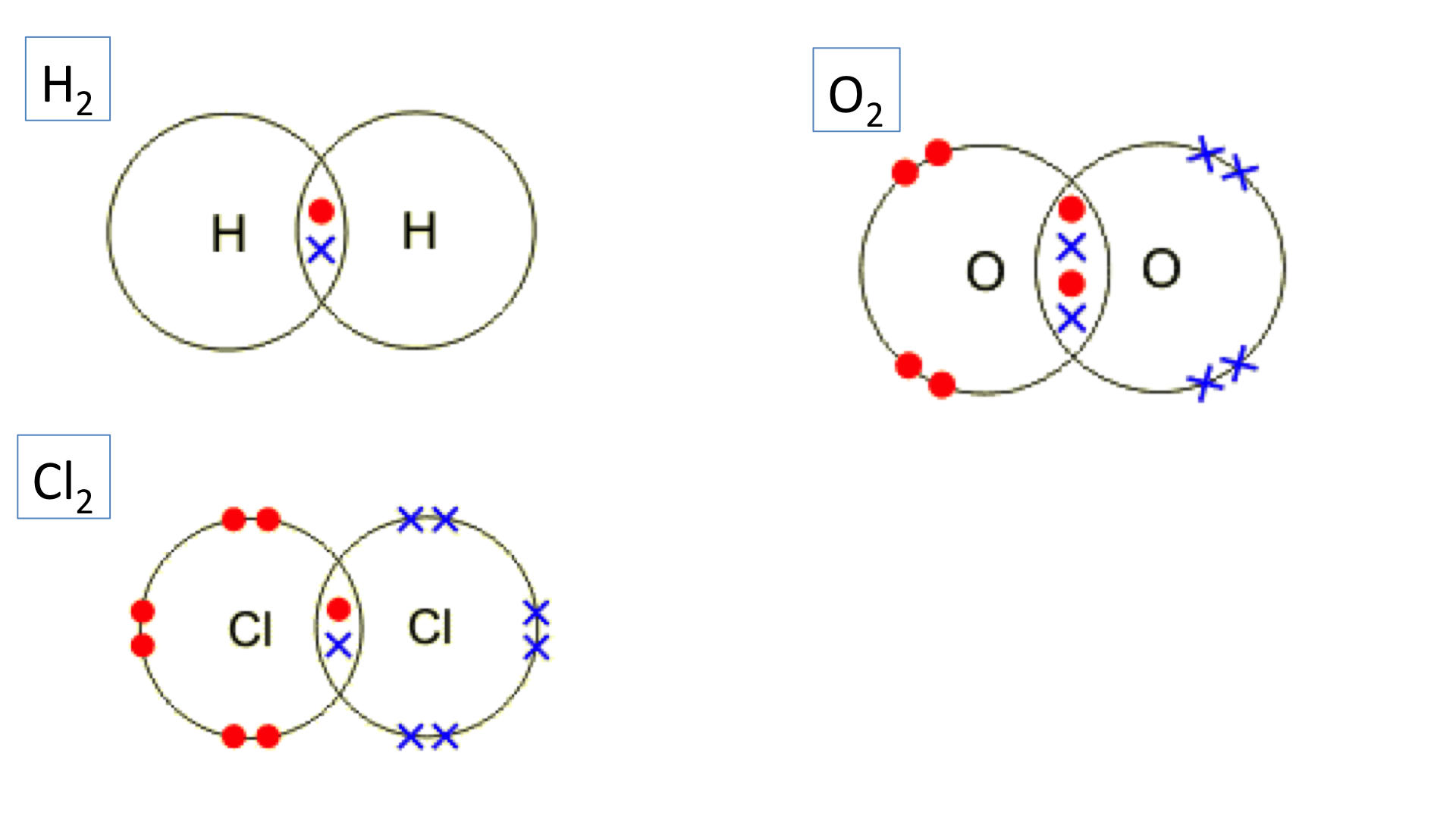
SMALL/SIMPLE COVALENT MOLECULES Properties
Conduct?: Covalent substances do NOT conduct Heat & Electricity because they don't have any free Moving/Delocalised Electrons or Ions So Can't Carry Charge.
Melting/Boiling Points: LOW Melting or Boiling Points because have Weak Intermolecular Forces so Little Energy Needed to Break Them
Soluble?: YES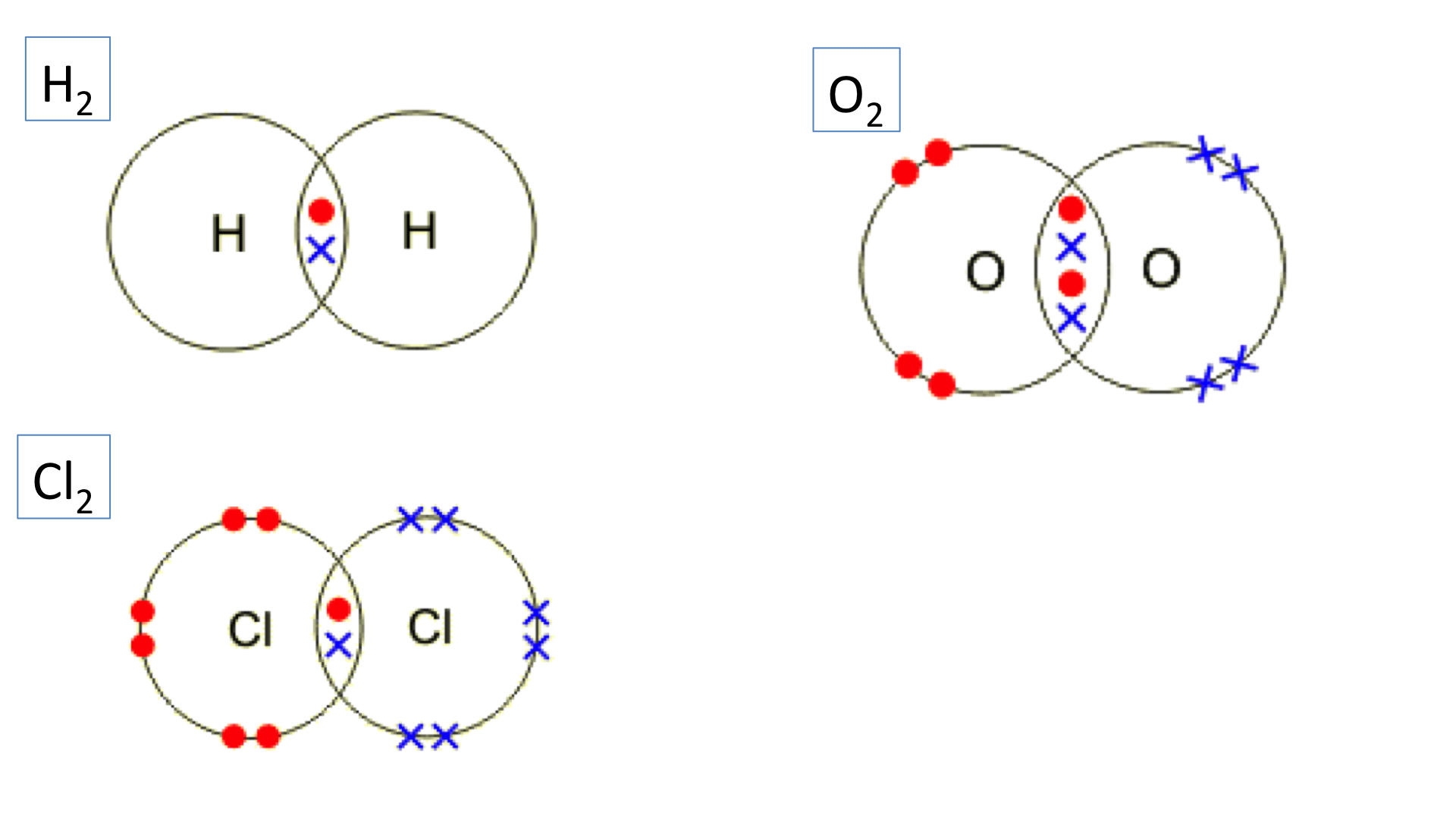
Conduct?: Covalent substances do NOT conduct Heat & Electricity because they don't have any free Moving/Delocalised Electrons or Ions So Can't Carry Charge.
Melting/Boiling Points: LOW Melting or Boiling Points because have Weak Intermolecular Forces so Little Energy Needed to Break Them
Soluble?: YES
50
What are the description of the structure for Small/ Simple Covalent Molecules?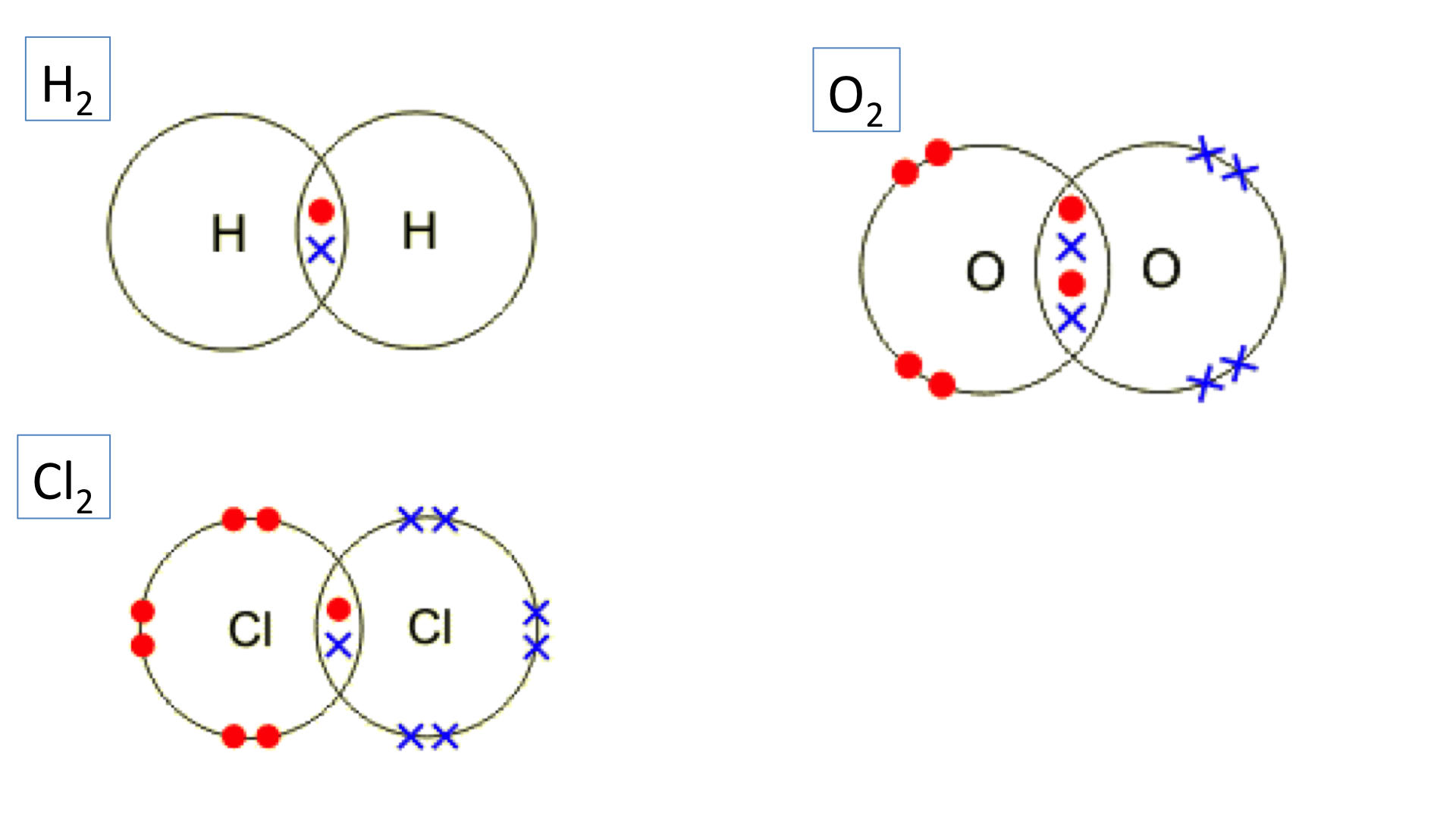
• Strong Covalent Bonds Between the Non-metal Atoms
• Weak Intermolecular Forces between the Molecules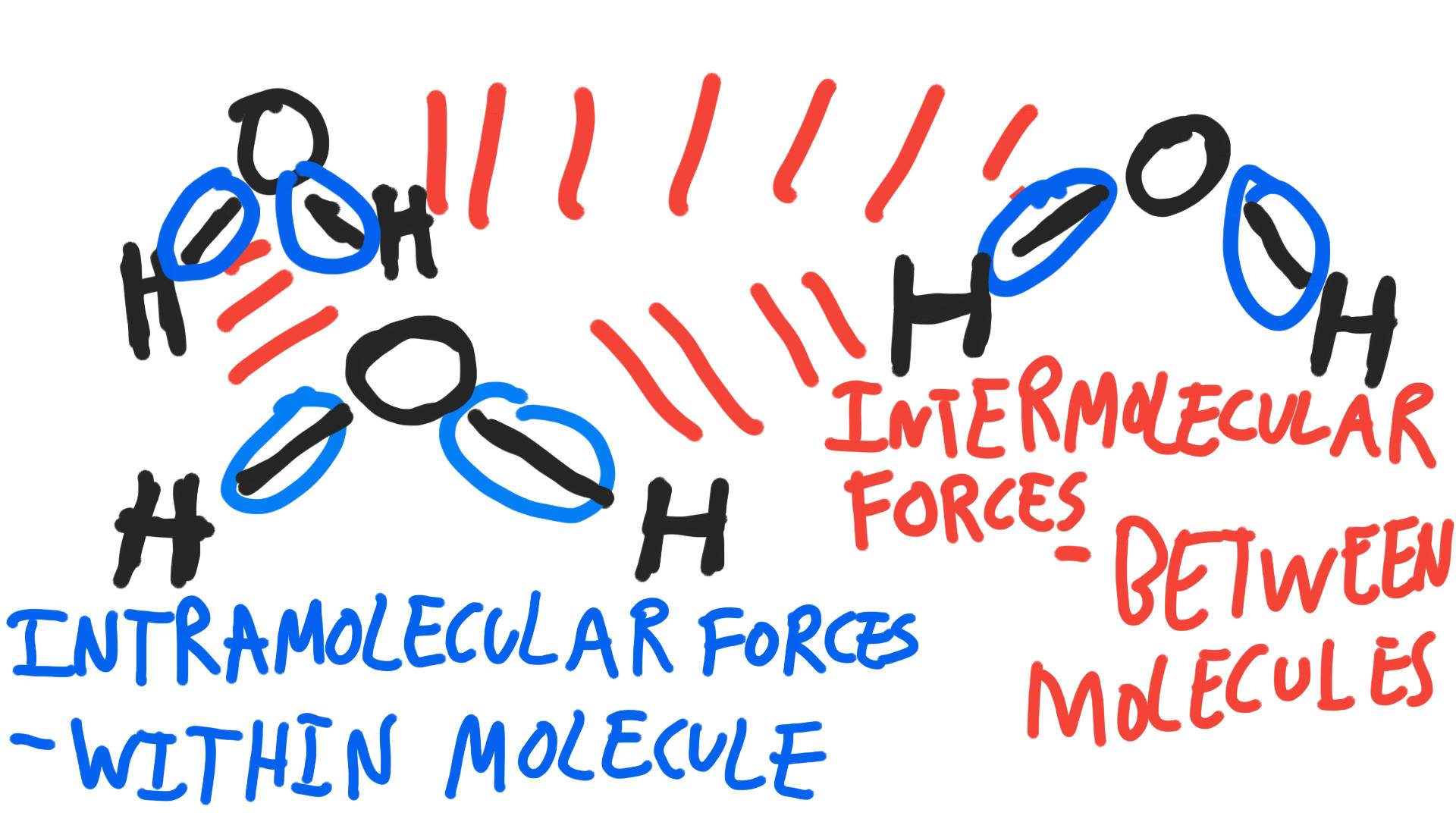
• Weak Intermolecular Forces between the Molecules
51
What is the force between the atoms in a Giant Ionic Lattice & Is it Strong or Weak?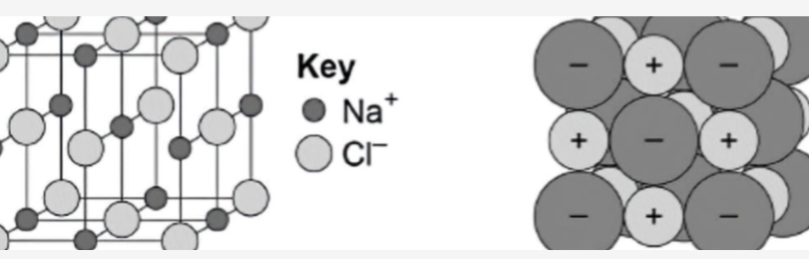
Electrostatic so Strong so have High Energy Required To Break the Bonds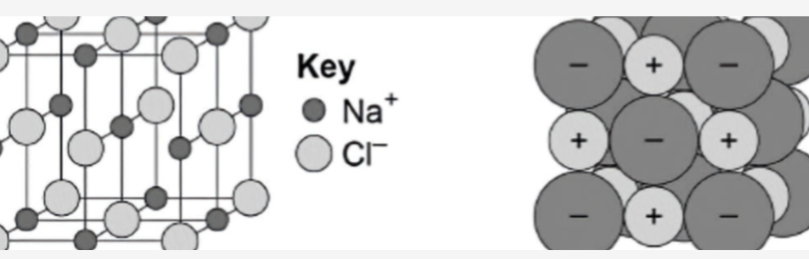
52
What are the Properties & why is that for a Giant Ionic Lattice/Ionic Compound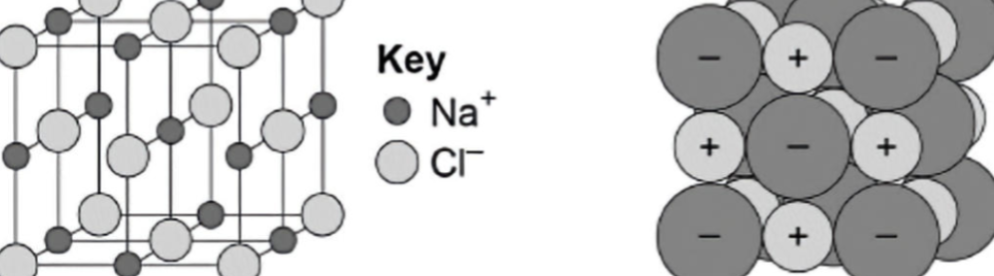
GIANT IONIC LATTICE/IONIC COMPOUND/LATTICE Properties
Conduct?:YES but it Depends On State. Aqueous & Liquid can because ions Free to move Throughout Structure so Can Carry Charge.
Melting/Boiling Point?: HIGH it has Strong Electrostatic Attraction between the Ions so Needs A Lot of Energy to Break Bonds
Soluble?:Yes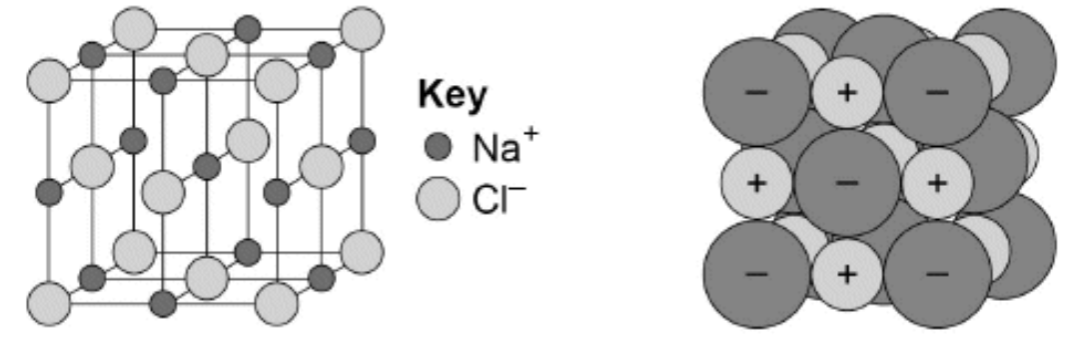
Conduct?:YES but it Depends On State. Aqueous & Liquid can because ions Free to move Throughout Structure so Can Carry Charge.
Melting/Boiling Point?: HIGH it has Strong Electrostatic Attraction between the Ions so Needs A Lot of Energy to Break Bonds
Soluble?:Yes
53
What is the Description of Structure for a Giant Ionic Lattice/Ionic Compound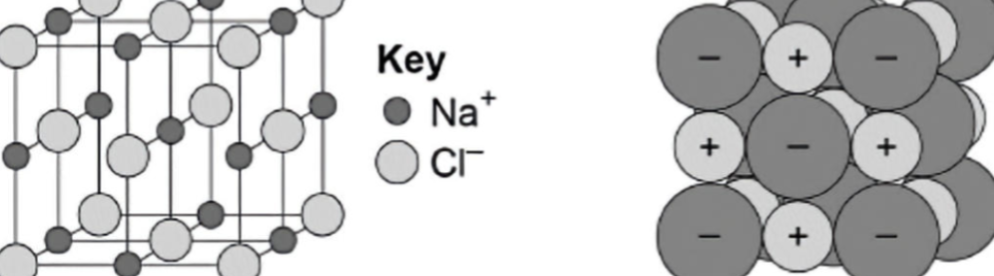
• Positively Charged Metal Ions and Negatively Charged Non-metal Ions
• The ionic lattice is Held Together By Strong Electrostatic Forces of Attraction Between the Oppositely Charged Ions.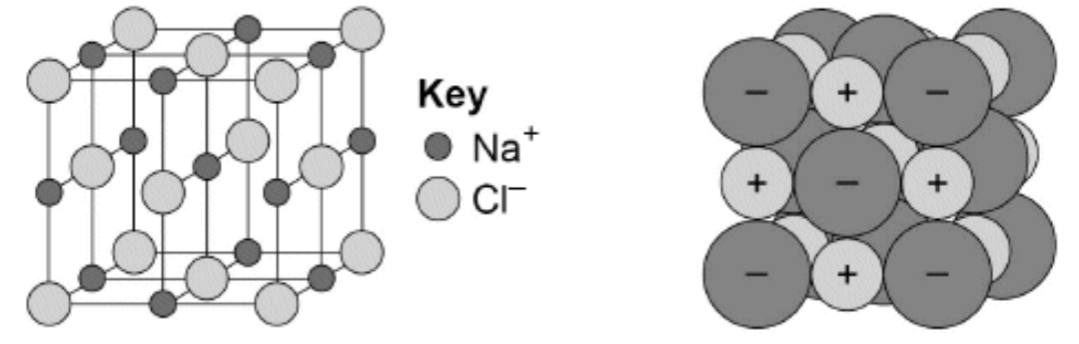
• The ionic lattice is Held Together By Strong Electrostatic Forces of Attraction Between the Oppositely Charged Ions.
54
draw a ethene as a monomer and what is this called?
repeating unit of a polymer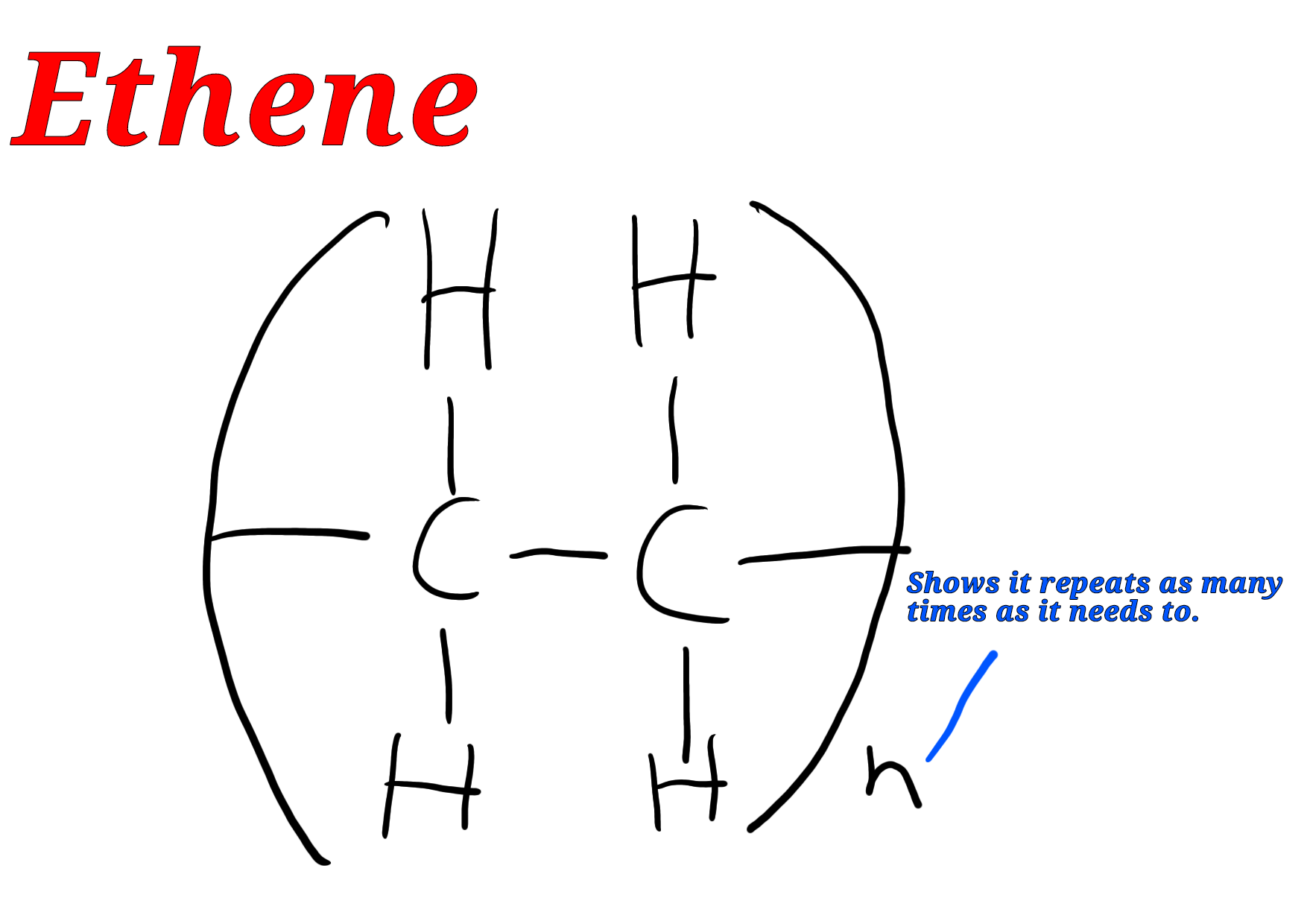
55
How strong are the Intermolecula forces between Monomers in a Short Chain Polymer?
Short Chains means week Intermolecular Forces.
56
How strong are the Intermolecula forces between Monomers in a Long Chain Polymer?
Long Chains mean strong Intermolecular Forces
57
What are the ways you can represent molecules?
• 3D Ball & Stick Model
• 2D Ball & Stick Model
• Dot & Cross
• Dot & Cross No Circles
• Displayed Formula showing bonds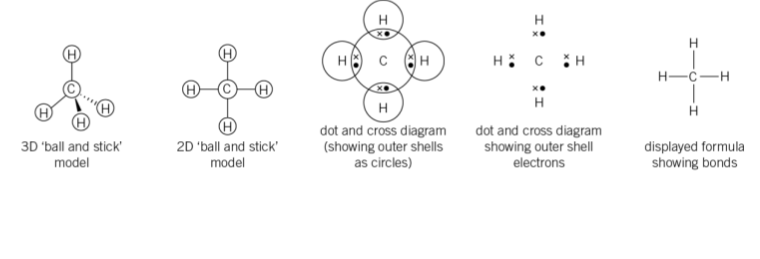
• 2D Ball & Stick Model
• Dot & Cross
• Dot & Cross No Circles
• Displayed Formula showing bonds
58
What atoms is Silicone Dioxide (Silica made out of?
Oxygen and Silicon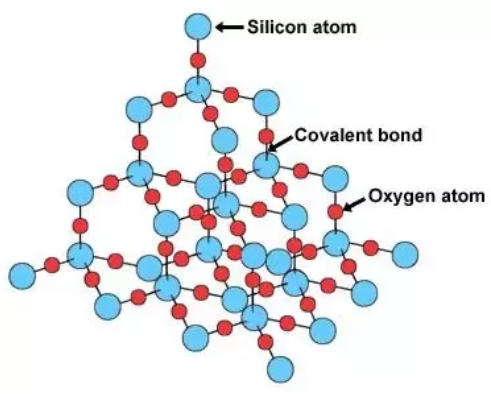
59
What are the properties & Structure Description of Diamond?
DIAMOND
Physical Description: Hard
Structure Description: Each Carbon is Bonded to 4 Others by Strong Covalent Bonds
Melting & Boiling Points: High because Lots Of Energy is needed to Strong Covalent Break Bonds
Conductivity?:NO because No Delocalized Electrons or Ions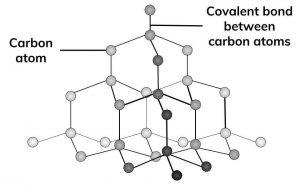
Physical Description: Hard
Structure Description: Each Carbon is Bonded to 4 Others by Strong Covalent Bonds
Melting & Boiling Points: High because Lots Of Energy is needed to Strong Covalent Break Bonds
Conductivity?:NO because No Delocalized Electrons or Ions
60
Describe the Metallic Structure
• Ordered Layers
• Layers can Slide Over each other
• The Electrons Form a 'Sea' Surrounding the Positive Metal Ions.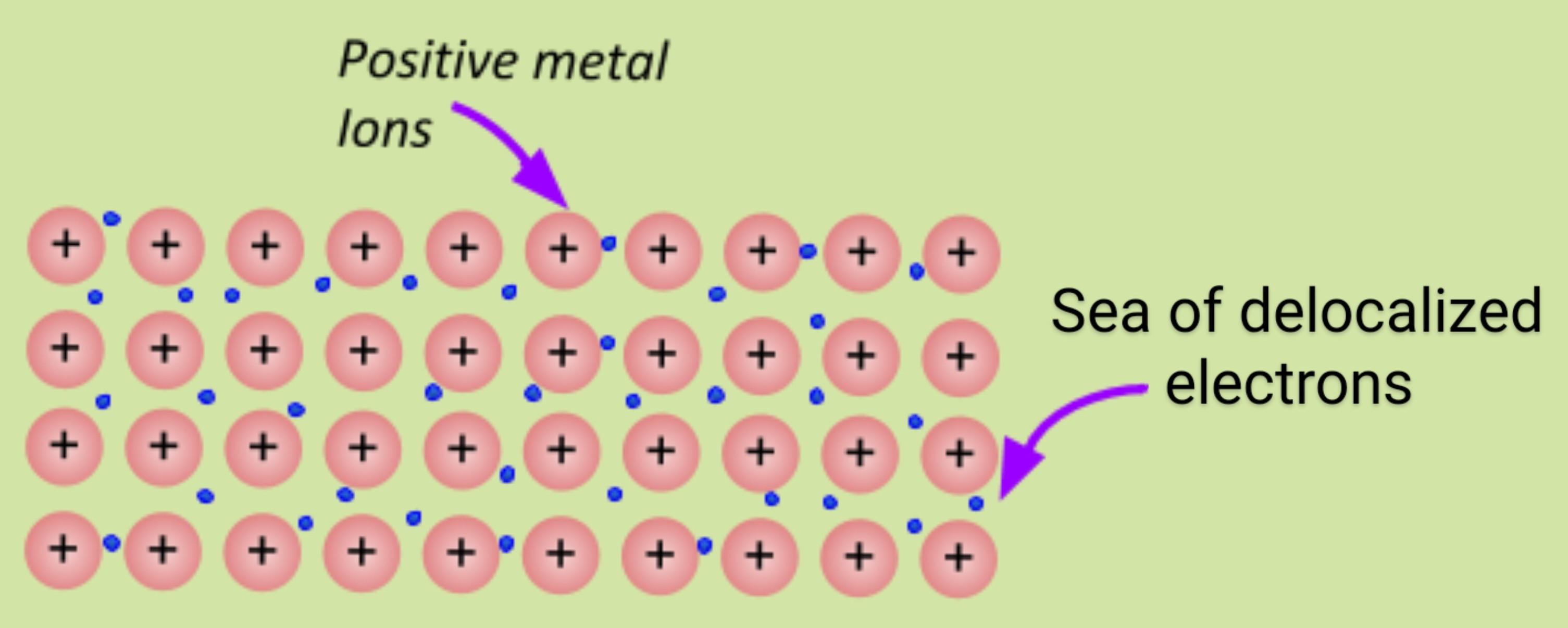
• Layers can Slide Over each other
• The Electrons Form a 'Sea' Surrounding the Positive Metal Ions.
61
What are the properties & Structure Description of Graphite?
Physical Description: SOFT & SLIPPERY
Because the Layers Can Slide Past Each Other & Held by Weak Intermolecular Forces
Structure Description: Each Carbon is Bonded to 3 Others By Strong Covalent Bonds to Form Hexagonal Layers with Weak Intermolecular Forces between them.
Also the Layers can Slide Over Each Other.
Melting & Boiling Points: HIGH Lots of energy is needed to break strong convalent bonds
Conductivity?:Yes-
Delocalized Electrons Between Layers can carry charge throughout the structure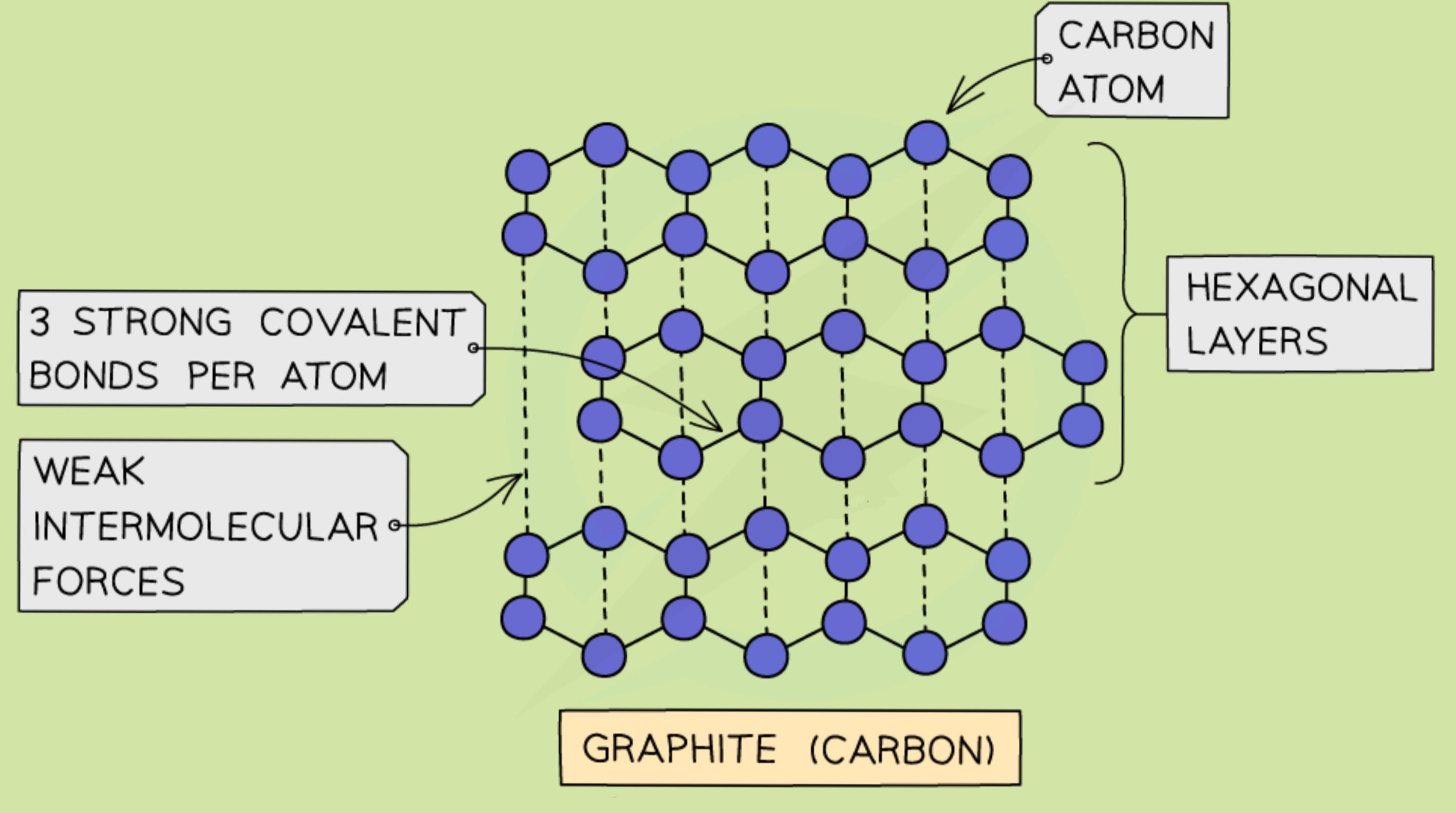
Because the Layers Can Slide Past Each Other & Held by Weak Intermolecular Forces
Structure Description: Each Carbon is Bonded to 3 Others By Strong Covalent Bonds to Form Hexagonal Layers with Weak Intermolecular Forces between them.
Also the Layers can Slide Over Each Other.
Melting & Boiling Points: HIGH Lots of energy is needed to break strong convalent bonds
Conductivity?:Yes-
Delocalized Electrons Between Layers can carry charge throughout the structure
62
What is Metallic Bonding?
Electrostatic Attraction between a Lattice of Positive Ions and Sea of Delocalised Electrons .
63
define a Lattice
Regular repeating pattern 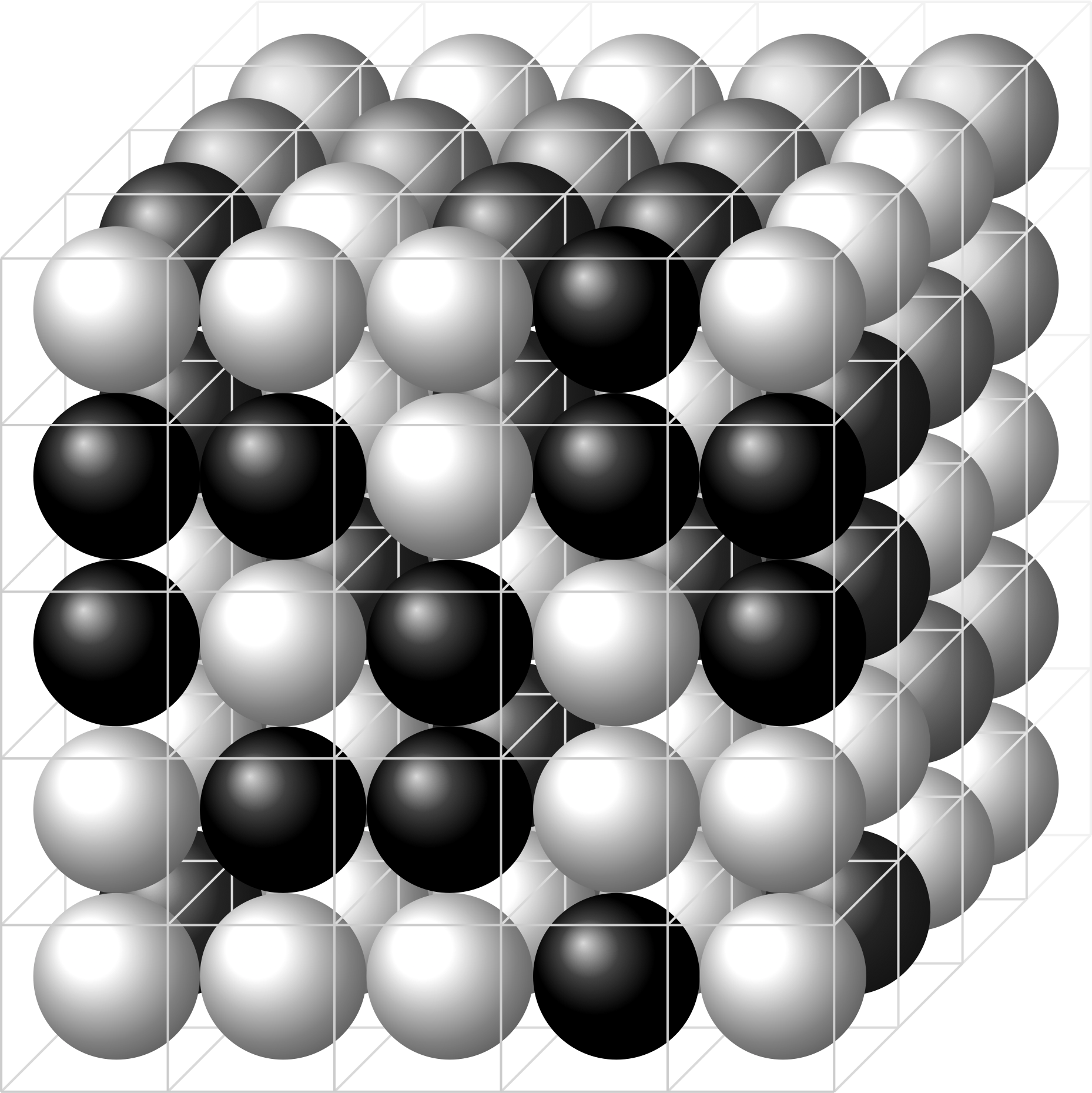
64
Define Delocalised
Electrons which are Not Attracted to the Atom they Came From so Free to Move Around the Structure.
65
Properties of Metallic Bonds & why are they that?
METALLIC BONDS Properties
Conduct Heat/Electricity?: Yes
Metallic Bonds conduct Electricity & Heat
because Delocalized Electrons present which can move throughout the structure.
Melting/Boiling Point: HIGH
Because the Metal Ions and Delocalized Electrons are held together by strong Electrostatic Attraction which needs a lot of energy to break bonds.
Strong or Week Bonds?: Very strong Metallic Bonds so it takes a lot of energy to break them
• Malleable- bent and shaped without breaking because layers can slide over each other
• Ductile - turn into wires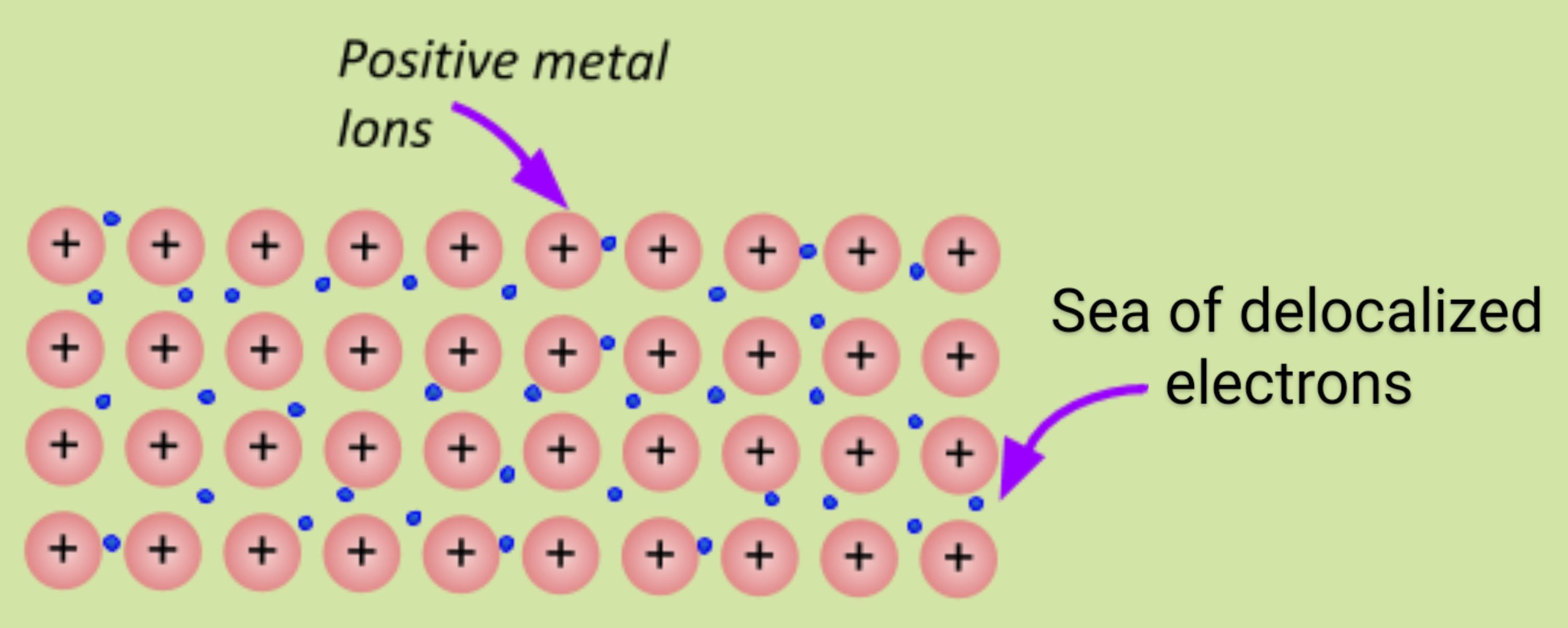
Conduct Heat/Electricity?: Yes
Metallic Bonds conduct Electricity & Heat
because Delocalized Electrons present which can move throughout the structure.
Melting/Boiling Point: HIGH
Because the Metal Ions and Delocalized Electrons are held together by strong Electrostatic Attraction which needs a lot of energy to break bonds.
Strong or Week Bonds?: Very strong Metallic Bonds so it takes a lot of energy to break them
• Malleable- bent and shaped without breaking because layers can slide over each other
• Ductile - turn into wires
66
Are Metallic Bonds strong so what is the result of that ?
Yes so it takes a lot of energy to break the atoms apart.
67
Define Metal Alloys
Mixture of metals and other elements e.g Steel
68
Are Pure Metals strong or soft?
Pure Metals are too soft for many uses.
69
Are Alloys strong or soft?
Alloys are hard and strong
70
what is the Propertie of Alloy Diagram
Disordered layers and stronger because of it.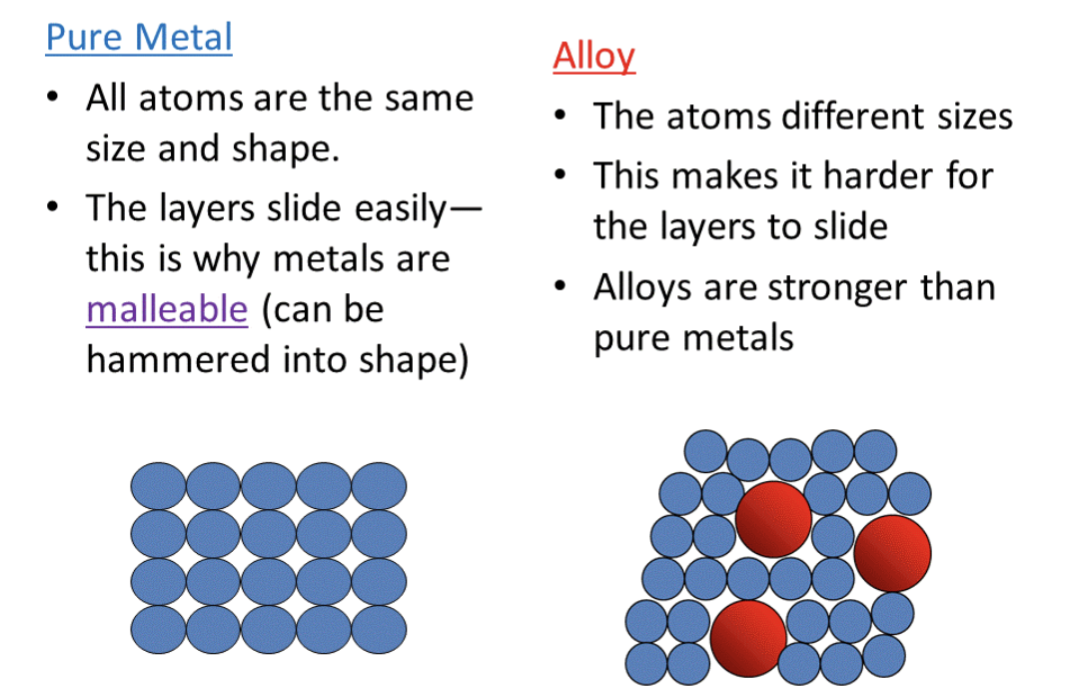
71
What is Electrostatic Attraction?
A Strong Force that Attracts Positively and Negatively Charged Particles Together.
72
What does metallic bonding always occur between?
Metals
73
What is Graphene and what are its properties?
GRAPHENE
Graphene is a single layer (1 atom thick) of Graphite.
Melting & Boiling Point?:High Melting & Boiling Point
Conducts?: Yes it Conducts Electricity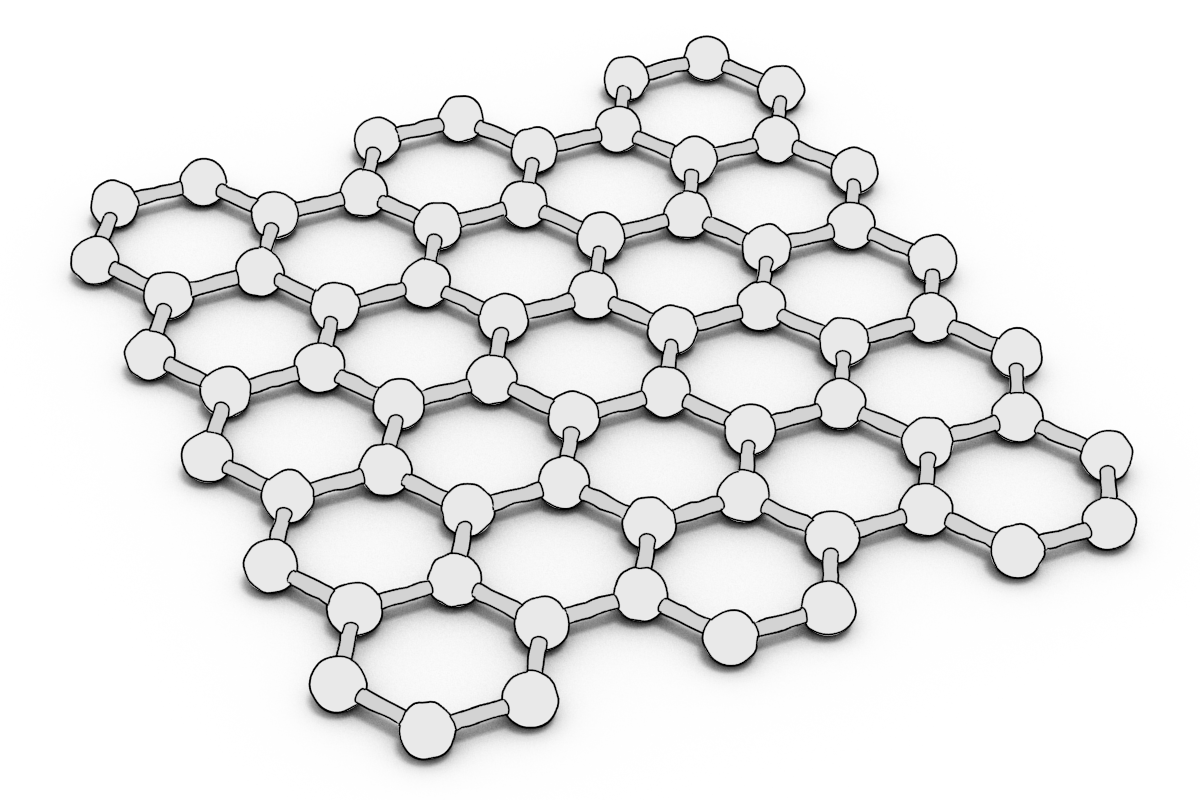
Graphene is a single layer (1 atom thick) of Graphite.
Melting & Boiling Point?:High Melting & Boiling Point
Conducts?: Yes it Conducts Electricity
74
what are all the Giant Covalent Structures/ Allotropes of Carbon ?
• Diamond
• Graphite
• Graphene
• Fullerene
• Carbon Nanotubes
• Graphite
• Graphene
• Fullerene
• Carbon Nanotubes
75
What is Fullerene & it's Properties & what are its uses ?
FULLERENE
They are Large Molecules of Carbon. Shaped as Hollow Shapes like Closed Tubes & Spheres.
Based on Hexagonal Rings Of Carbon. They Contain Rings of 5 or 7 Carbon Atoms.
USES
• Drugs can be Placed Inside Fullerenes & Delivered into the Body.
• Have a Large Surface Area so could Help Make Industrial Catalysts.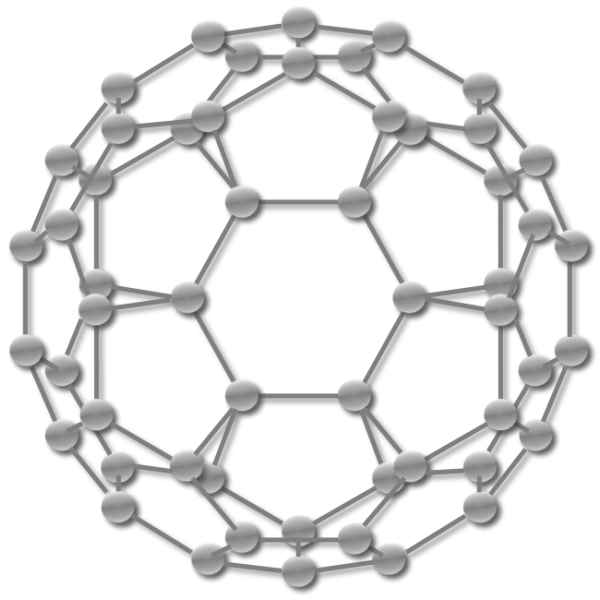
They are Large Molecules of Carbon. Shaped as Hollow Shapes like Closed Tubes & Spheres.
Based on Hexagonal Rings Of Carbon. They Contain Rings of 5 or 7 Carbon Atoms.
USES
• Drugs can be Placed Inside Fullerenes & Delivered into the Body.
• Have a Large Surface Area so could Help Make Industrial Catalysts.
76
What are Carbon Nanotubes & it's Properties?
CARBON NANOTUBES
Fullerene which is like a Layer Of Graphene Rolled Into A Cylinder.
It is longer than it is wide.
Conduct?: Yes they Conduct Electricity & Heat because have delocalized electrons
They are strong.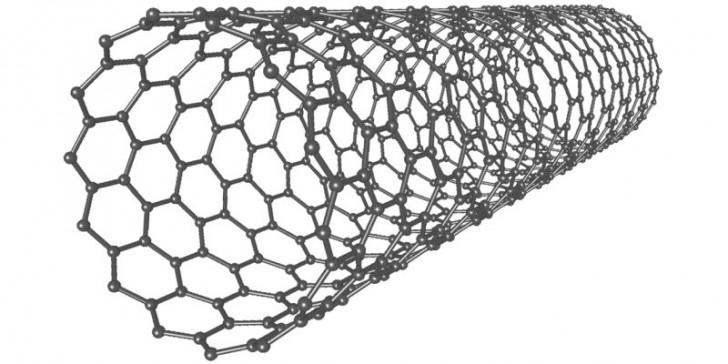
Fullerene which is like a Layer Of Graphene Rolled Into A Cylinder.
It is longer than it is wide.
Conduct?: Yes they Conduct Electricity & Heat because have delocalized electrons
They are strong.
77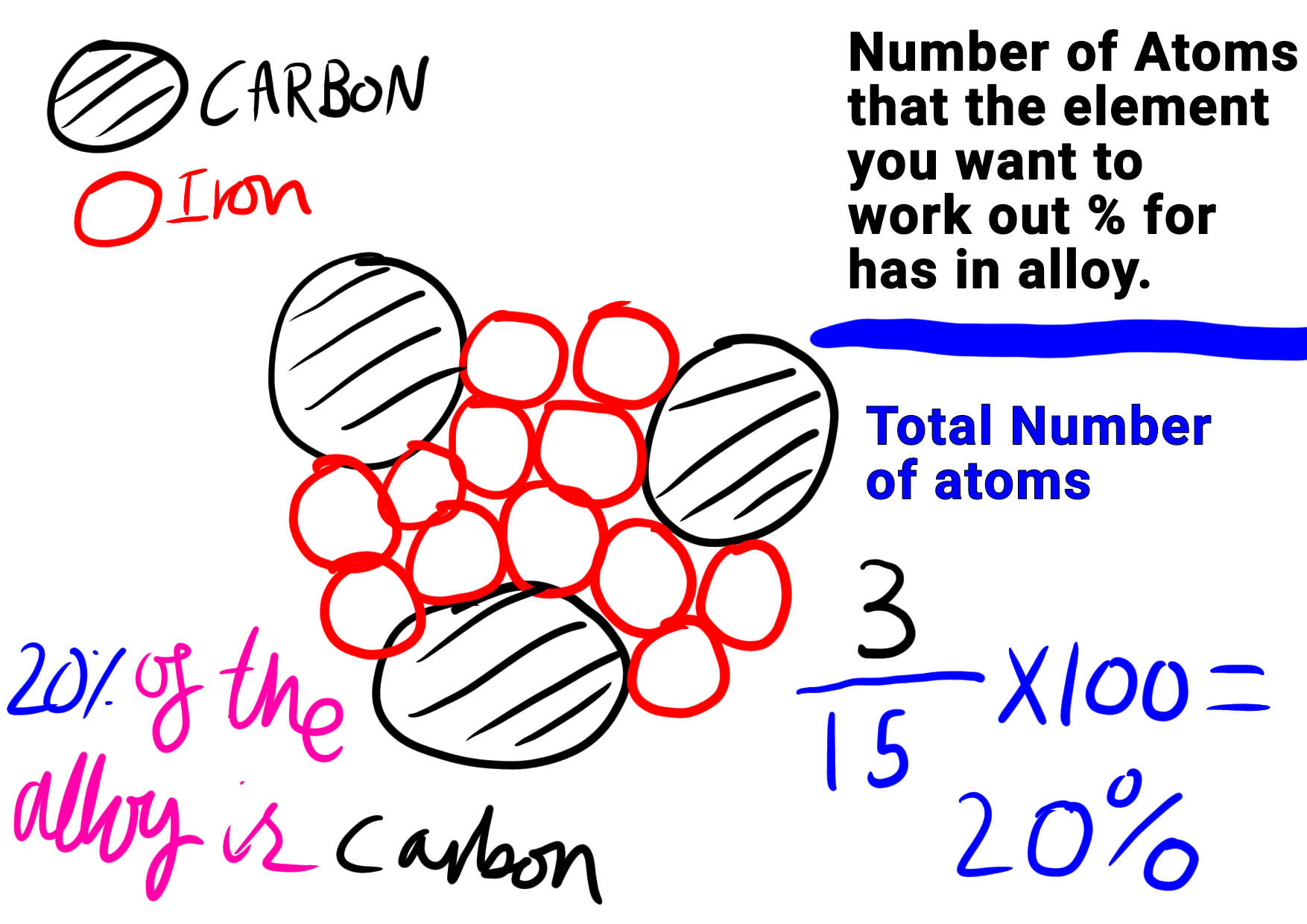
How to work out % of a certain element in an Alloy? Also an example will be give..
78
define Nanoparticles
structures that Contain just a Few Atoms Or Less.
79
how many Metres to a Nanometres.
1nm=
(0.000000001m)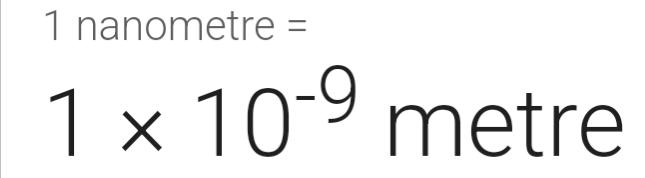
(0.000000001m)
80
What are the uses of Nanoparticles?
• Sunscreen
• Cosmetics and Face Creams
• Medicines and Medical Treatments
• Technology
• Protection against bacteria
• Cosmetics and Face Creams
• Medicines and Medical Treatments
• Technology
• Protection against bacteria
81
What are the Pros and Cons of the uses of Nanoparticles?
MEDICINE
PROS
Nanomedicines Absorbed More Easy By body. So Could Deliver Drugs Right Into Cell they are Needed.
CONS
• Use in Medicine is Still Relatively New, &Limited Knowledge on their Long-term Toxicity.
ELECTRONICS
PROS
• Some Nanoparticles Conduct Electricity so they used in Tiny Electric Circuits for computer chips.
CONS
• Development and Production can be expensive.
SUNSCREEN
PROS
• Used in Cosmetics. For example, they used to improve moisturizers without making them really oily.
CONS
• Products containing nanoparticles Aren't Clearly Labelled and we don't know the Long Term Health Effects on Humans yet.
PROS
Nanomedicines Absorbed More Easy By body. So Could Deliver Drugs Right Into Cell they are Needed.
CONS
• Use in Medicine is Still Relatively New, &Limited Knowledge on their Long-term Toxicity.
ELECTRONICS
PROS
• Some Nanoparticles Conduct Electricity so they used in Tiny Electric Circuits for computer chips.
CONS
• Development and Production can be expensive.
SUNSCREEN
PROS
• Used in Cosmetics. For example, they used to improve moisturizers without making them really oily.
CONS
• Products containing nanoparticles Aren't Clearly Labelled and we don't know the Long Term Health Effects on Humans yet.