Chemical Changes
Study these flashcardsFree · spaced repetition · iPhone, Android, Mac & web
All cards
1
what is the order of reactivity?
Peter -POTASSIUM
Sings -SODIUM
Lovley -LITHIUM
Country -CALCIUM
Music -MAGNESIUM
Always -ALUMINIUM
(Carbon)
Zendaya -ZINC
Is -IRON
The -TIN
Lead -LEAD (Led)
(Hydrogen)
Charlie -COPPER
Strums -SILVER
Guitar -GOLD
Perfectly -PLATINUM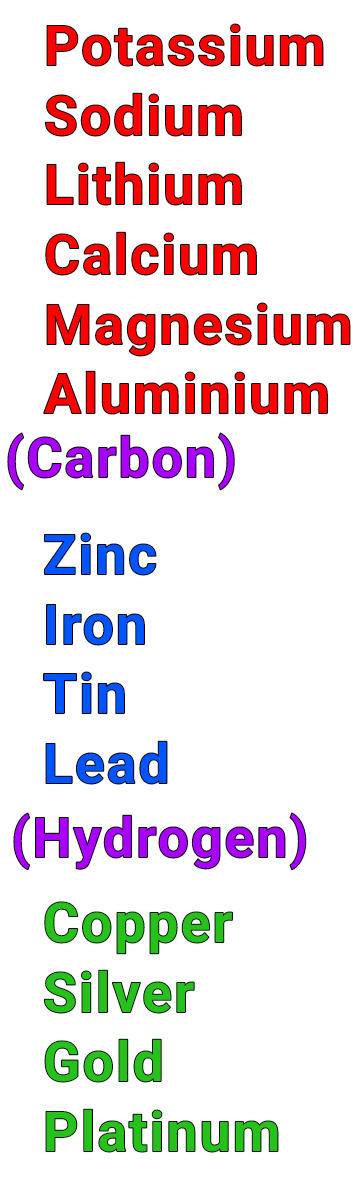
Sings -SODIUM
Lovley -LITHIUM
Country -CALCIUM
Music -MAGNESIUM
Always -ALUMINIUM
(Carbon)
Zendaya -ZINC
Is -IRON
The -TIN
Lead -LEAD (Led)
(Hydrogen)
Charlie -COPPER
Strums -SILVER
Guitar -GOLD
Perfectly -PLATINUM
2
What will happen if a metal is more reactive than another metal?
It will Displace the Metal from its Compound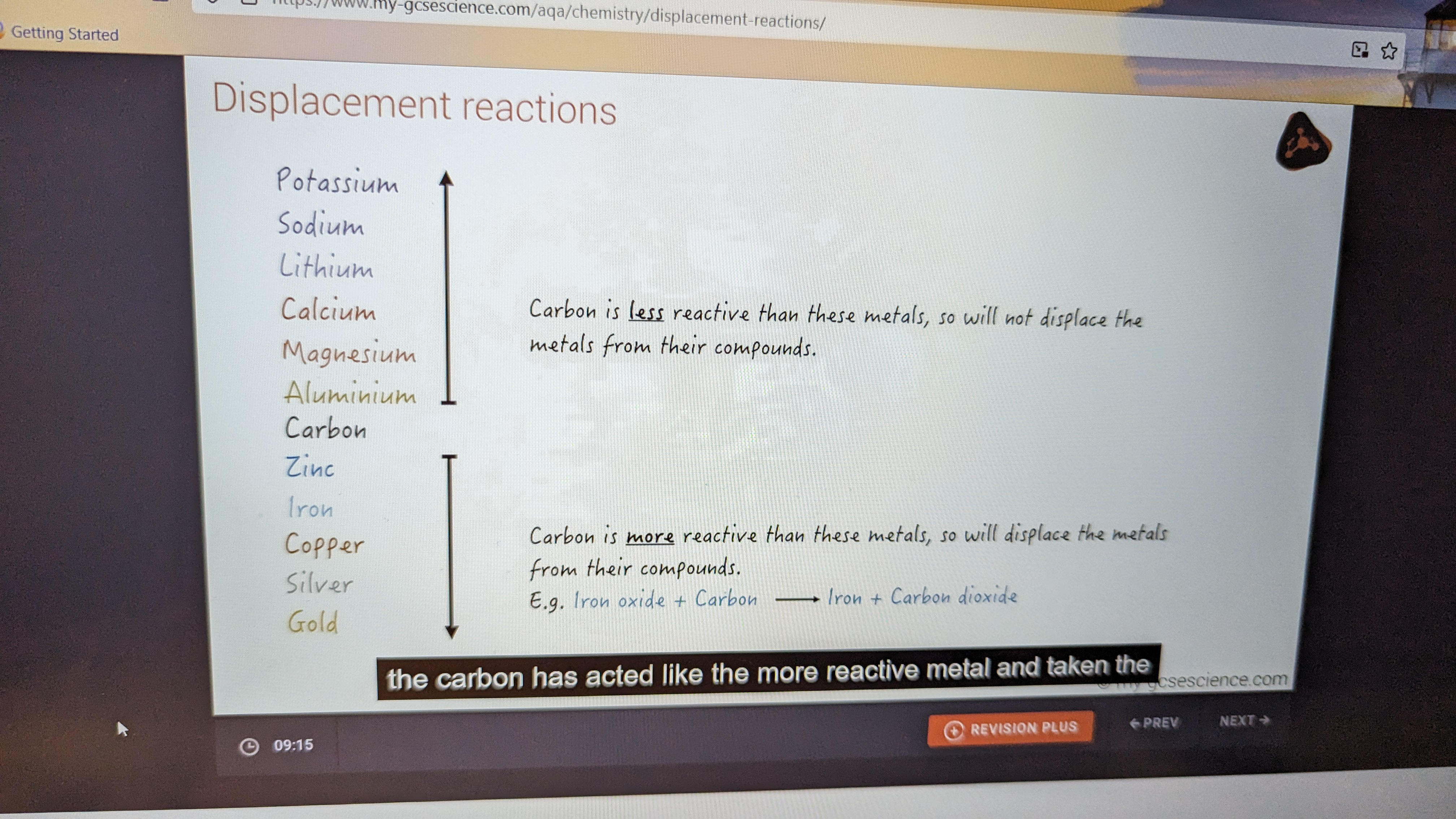
3
What will happen if a metal is Less reactive than another metal?
It will Not Displace the Metal from its Compound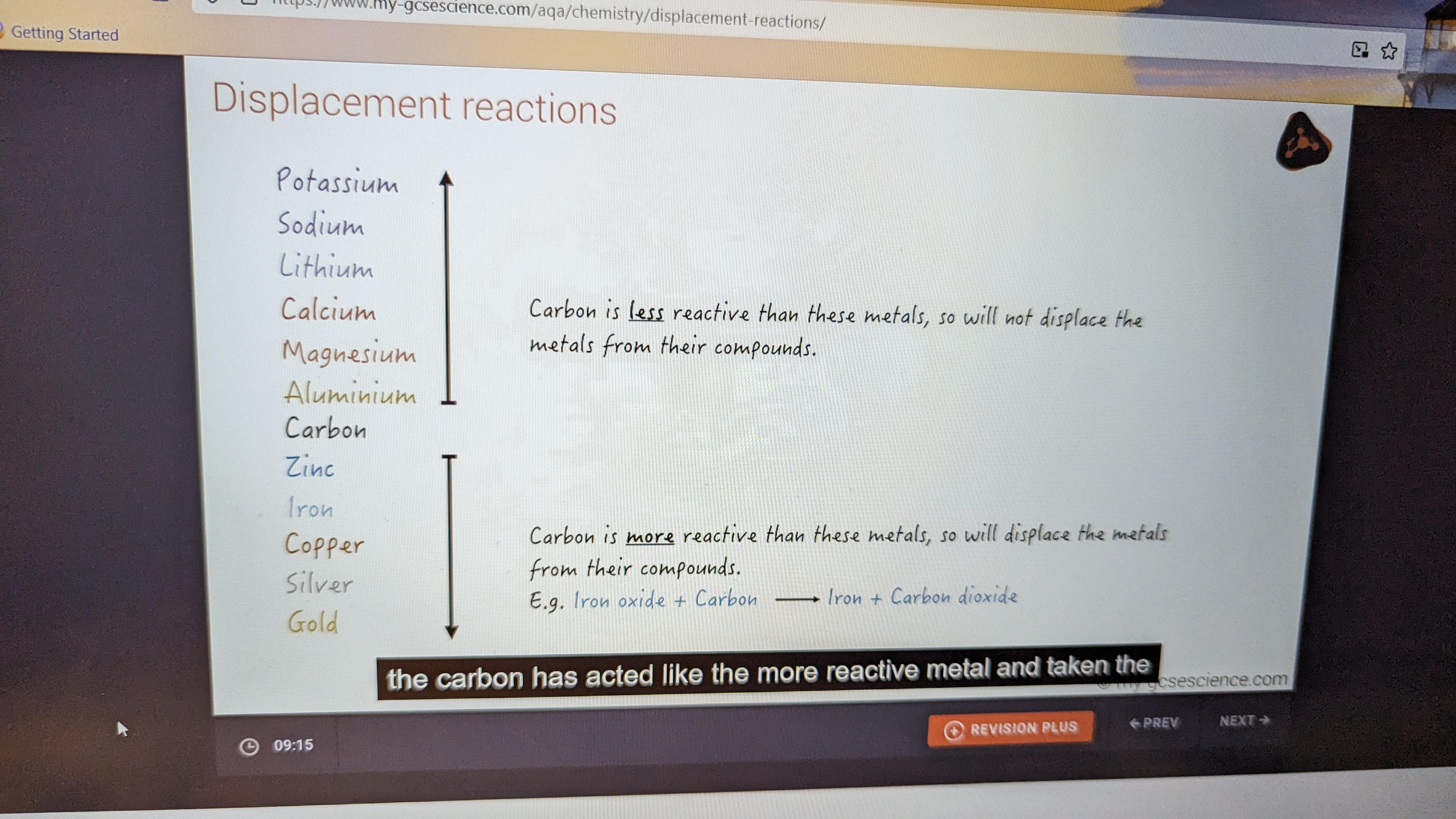
4
Down to which metal do they react with oxygen?
Silver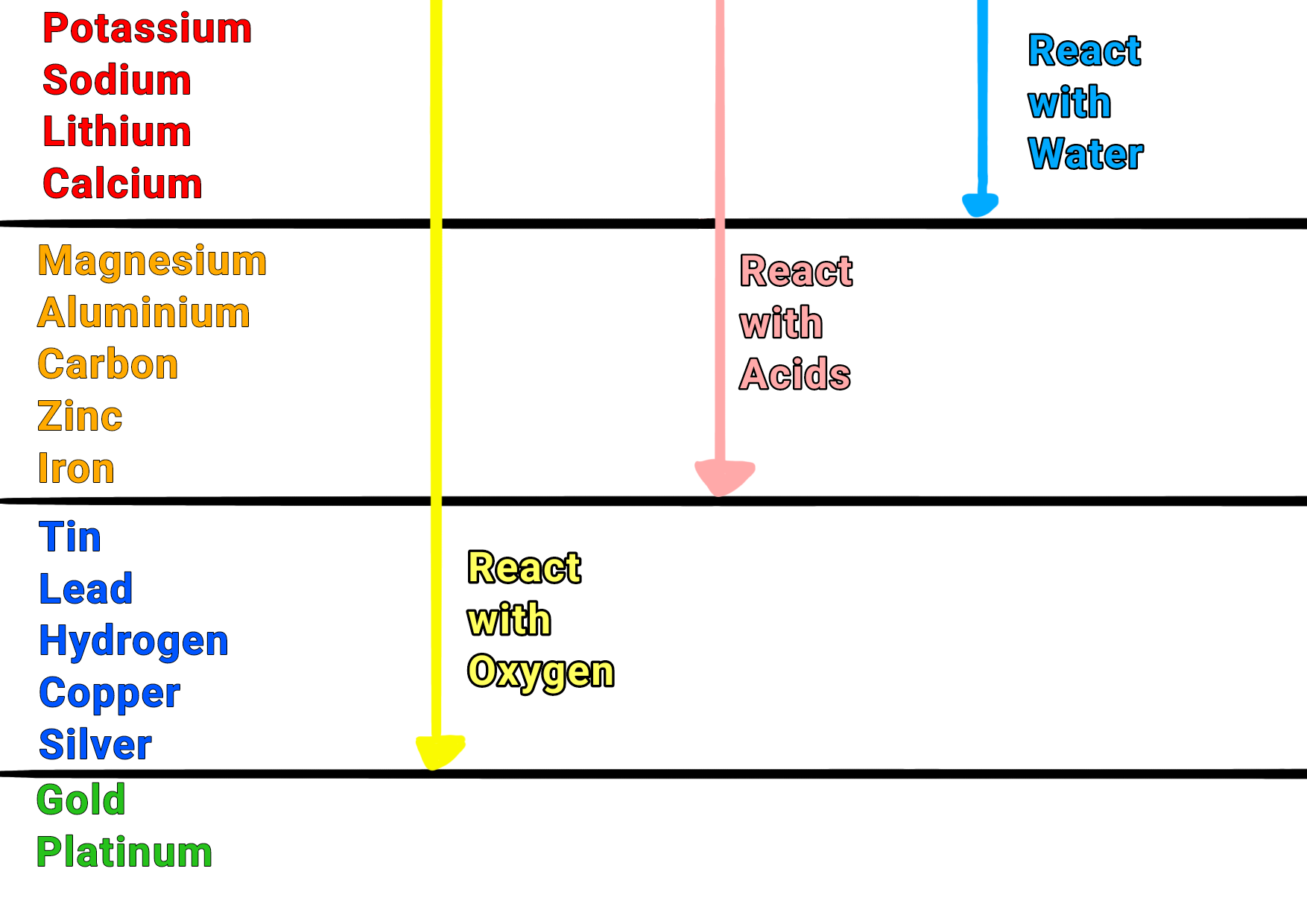
5
Down to which metal do they react with Acid?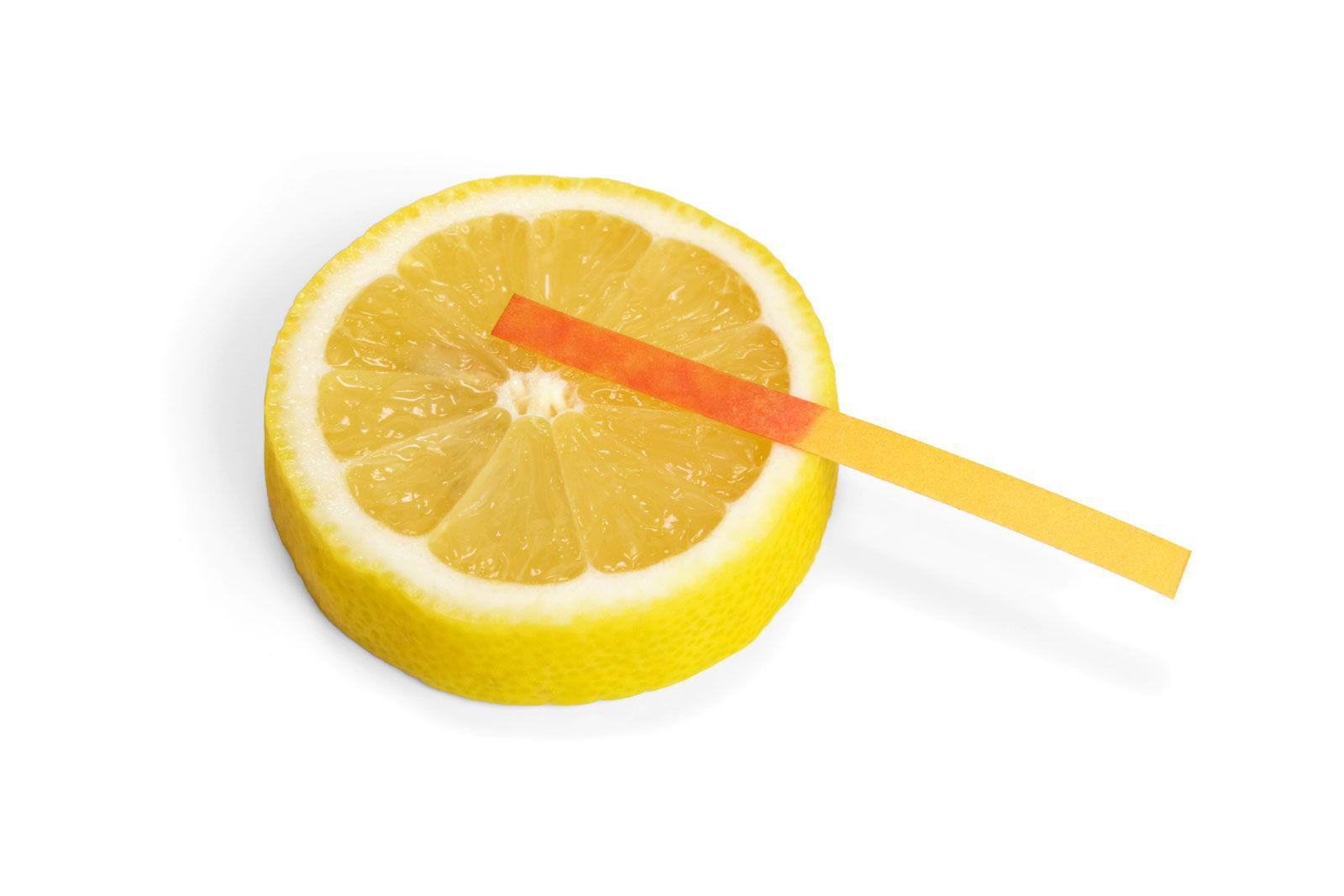
Iron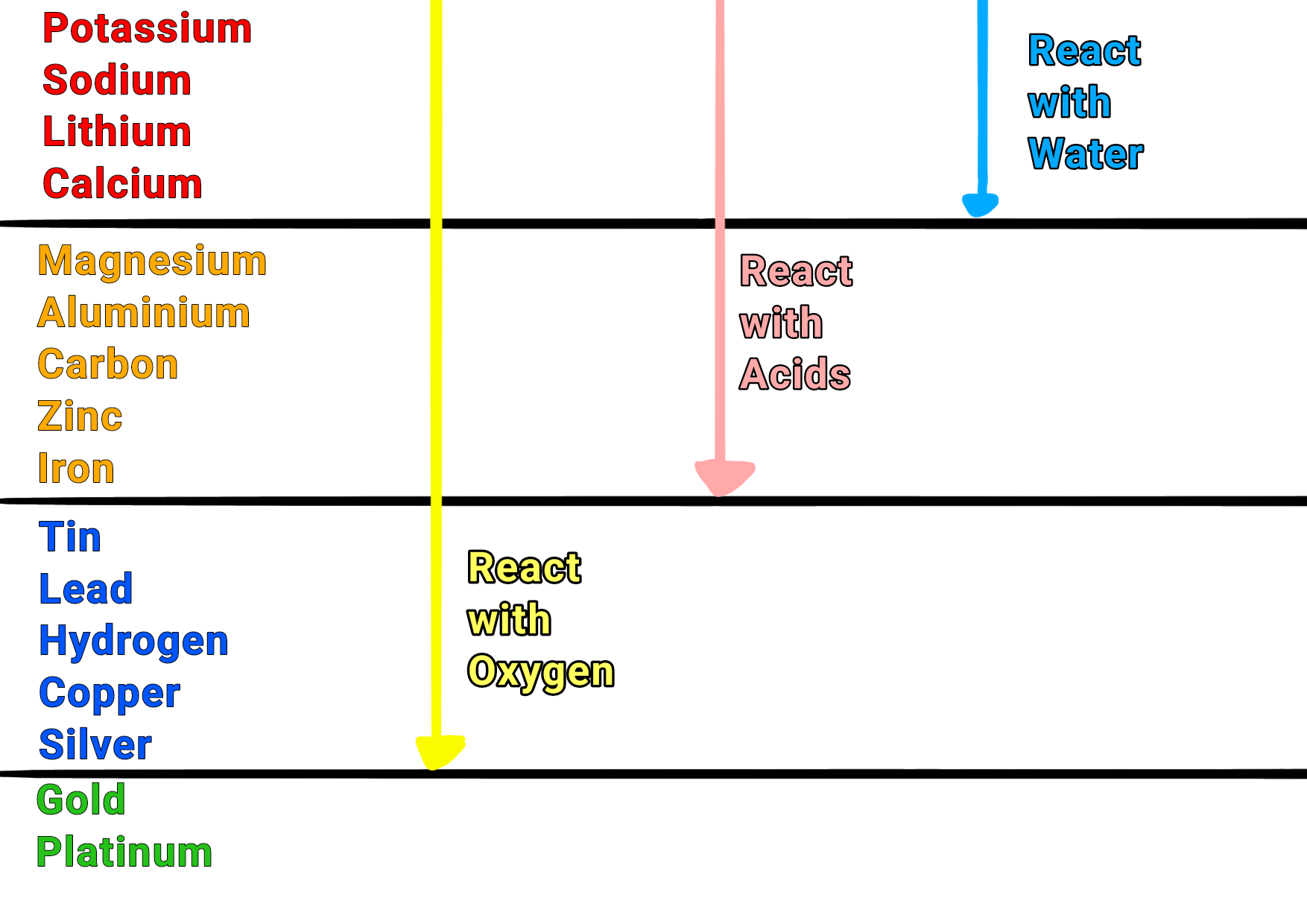
6
Down to which metal do they react with Water?
Calcium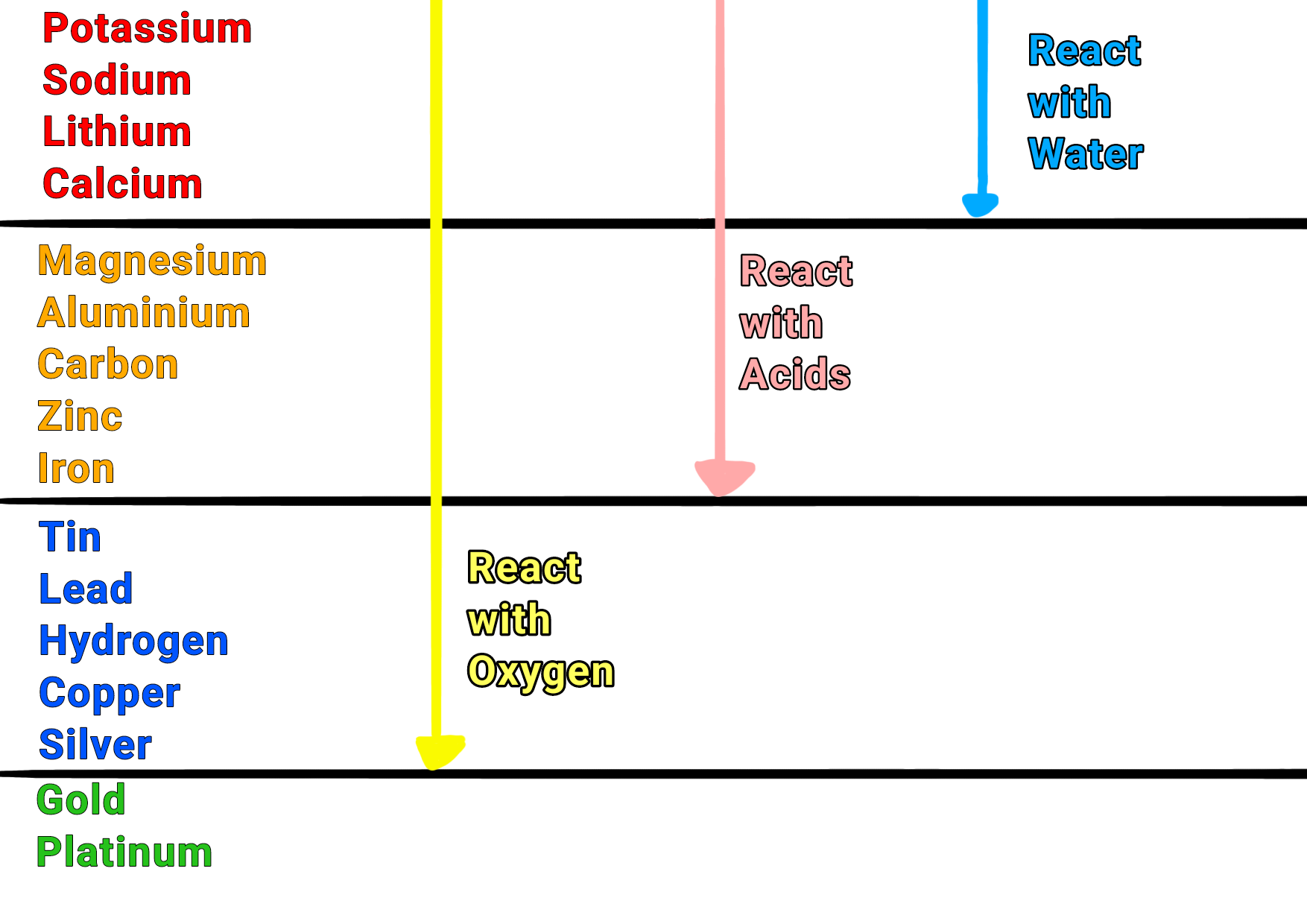
7
Which Metals don't react with Acid, Oxygen or Water
Gold & Platinum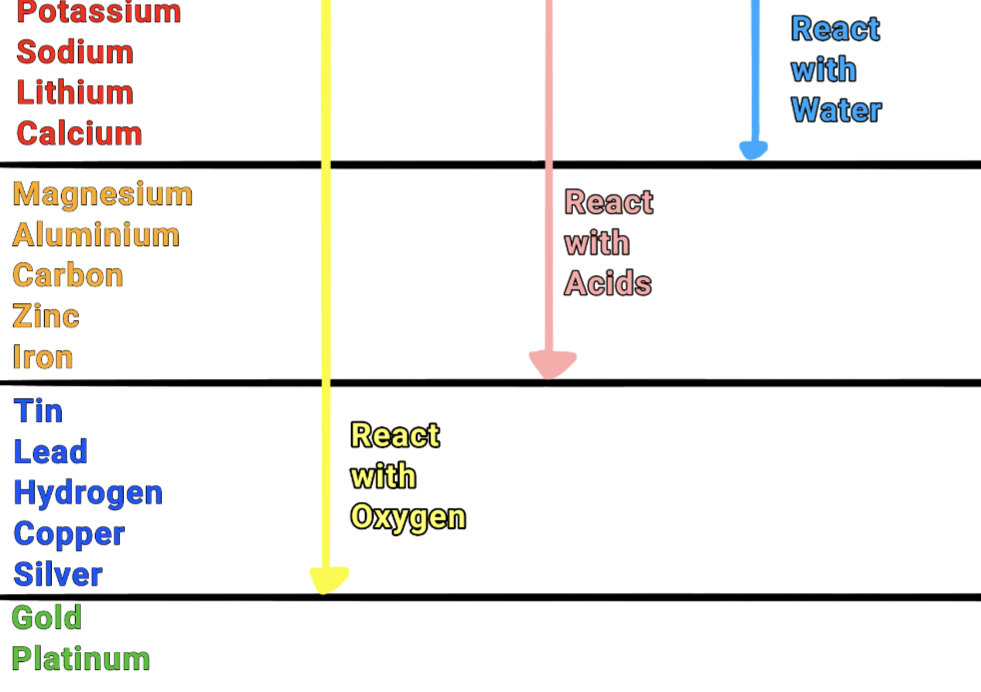
8
how do different Reactivity of Metals react with Acids?
(Most Reactive, Medium,Least)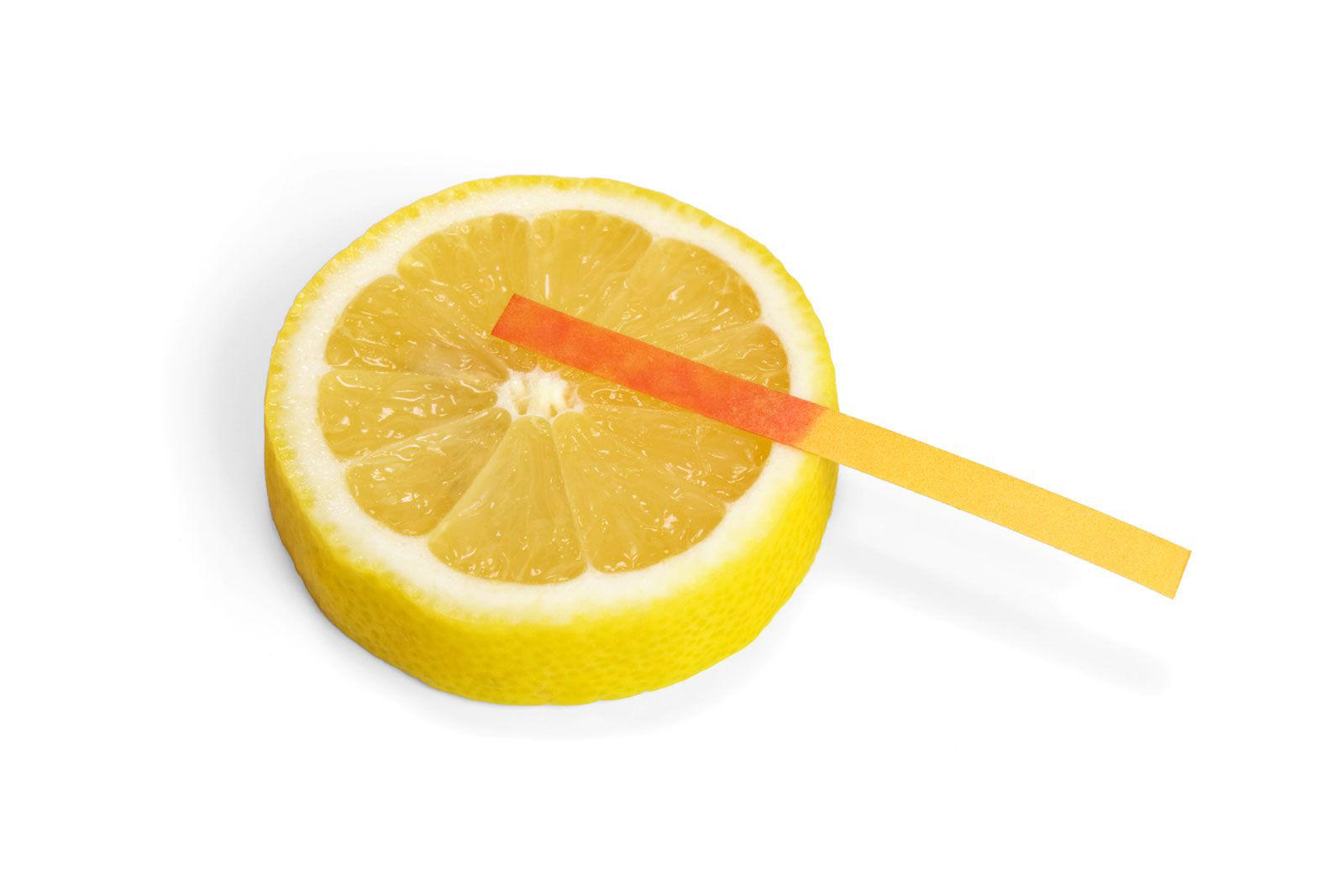
(Most Reactive, Medium,Least)
Most Reactive:
Extremely Violent Reaction form
Salt + Hydrogen
Medium Reactive:
React with acids to form Salt + Hydrogen
Least Reactive:
Don't react with Acids.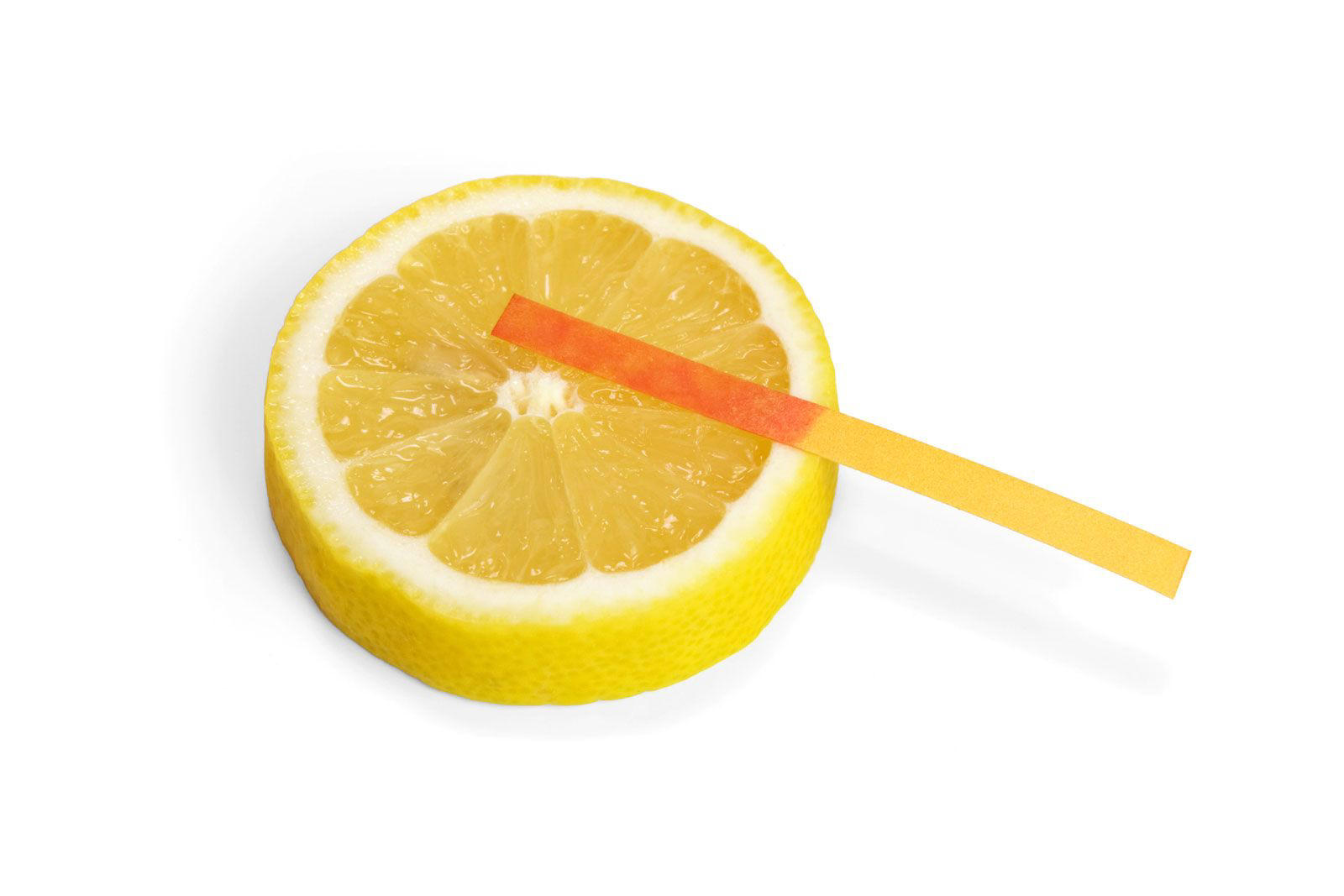
Extremely Violent Reaction form
Salt + Hydrogen
Medium Reactive:
React with acids to form Salt + Hydrogen
Least Reactive:
Don't react with Acids.
9
what are the observations when a Metal Reacts with Acid?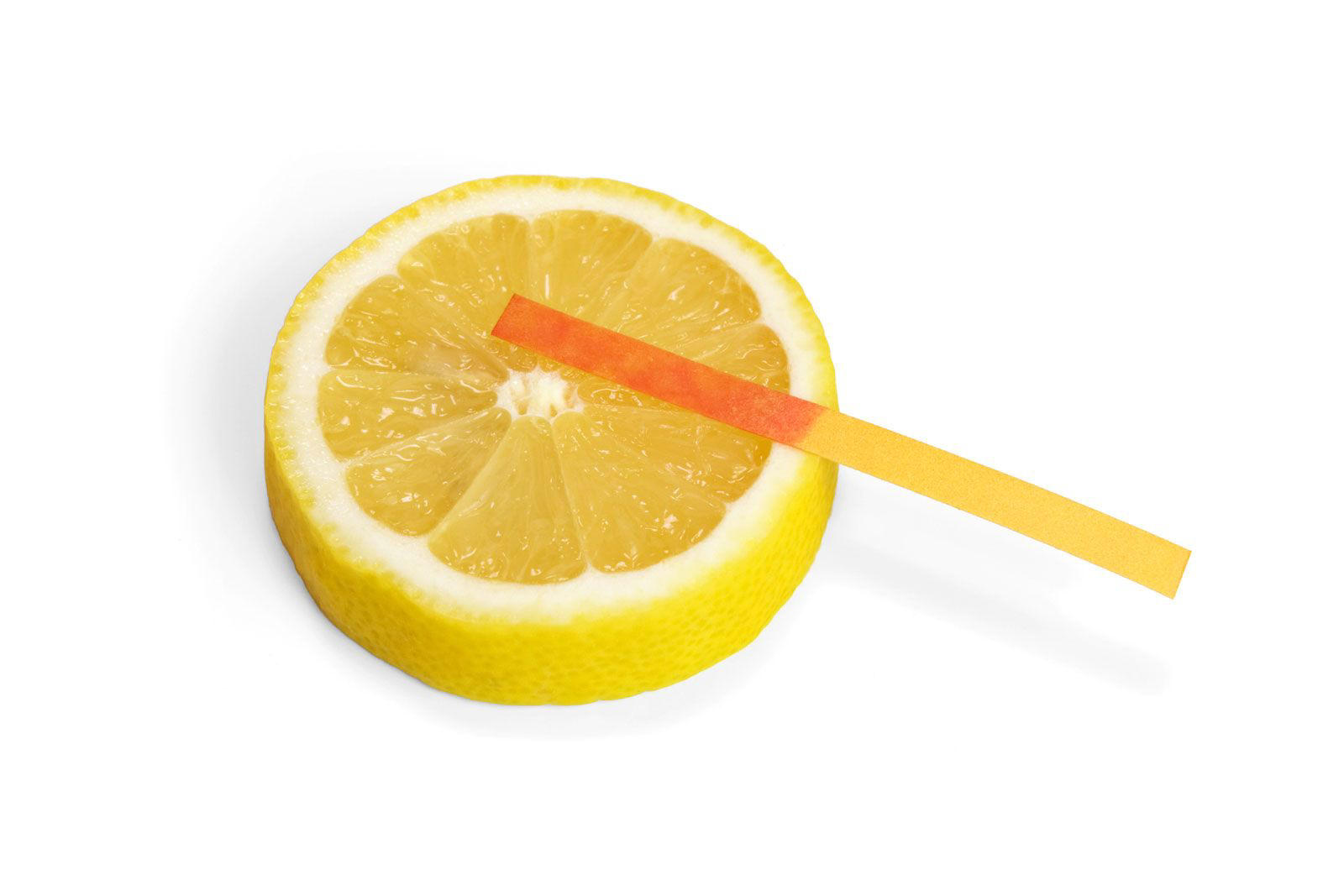
Metal Dissolves & Hydrogen Bubbles Form/ it Fizzes & Temperature Increases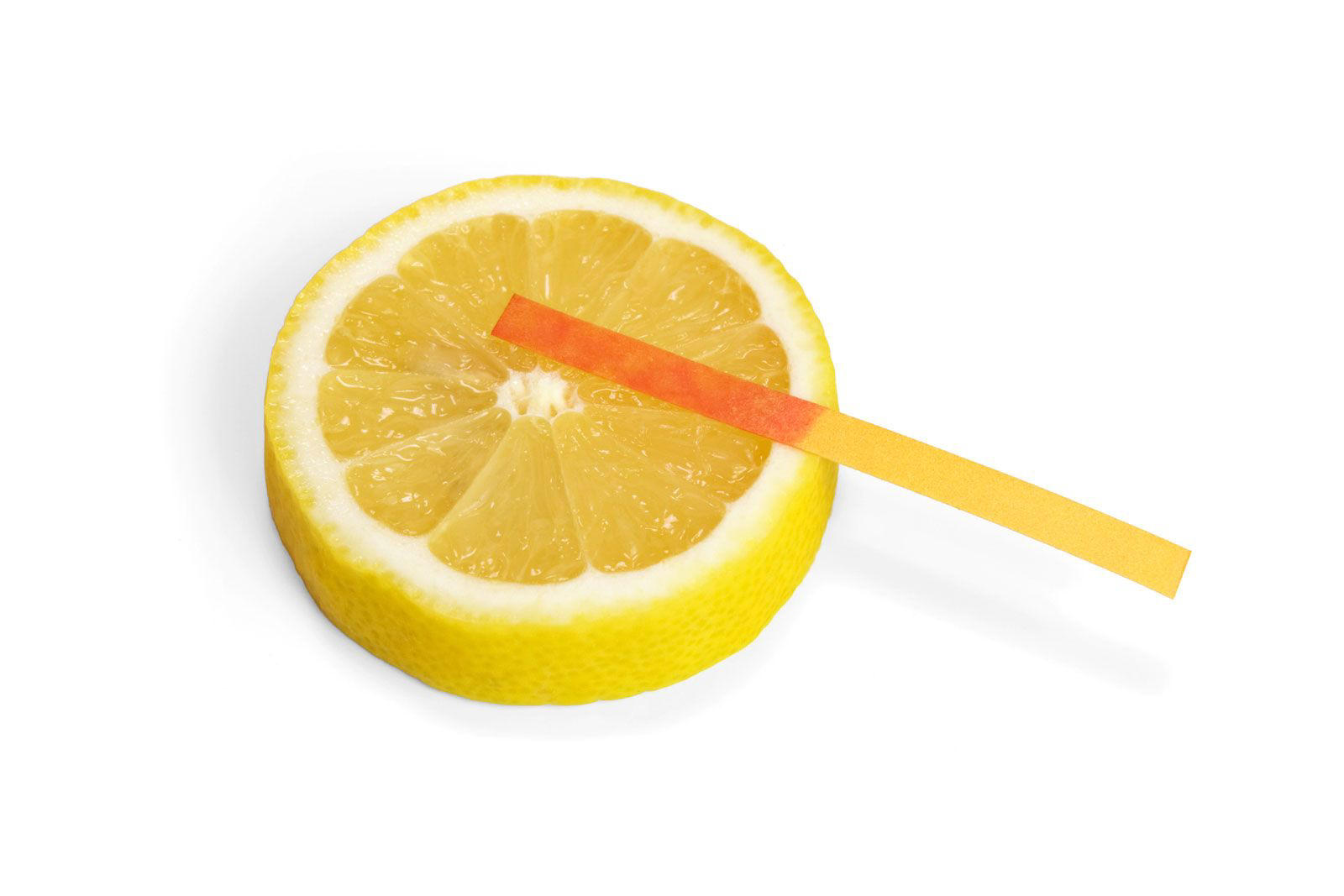
10
how do different Reactivity of Metals react with Oxygen?
Most Reactive:
Very Vigorously at Room Temperature
Medium Reactive:
React Very Slowly at Room Temperature but Faster when Hot
Least Reactive:
Don't react with Oxygen.
Very Vigorously at Room Temperature
Medium Reactive:
React Very Slowly at Room Temperature but Faster when Hot
Least Reactive:
Don't react with Oxygen.
11
how do different Reactivity of Metals react with Water?
Most Reactive:
Reacts with water & Potassium Burns a Lilac-coloured Flame
Medium Reactive:
Reacts Slowly with Hot Water
(doesn't react with cold water)
Least Reactive:
Don't react with Water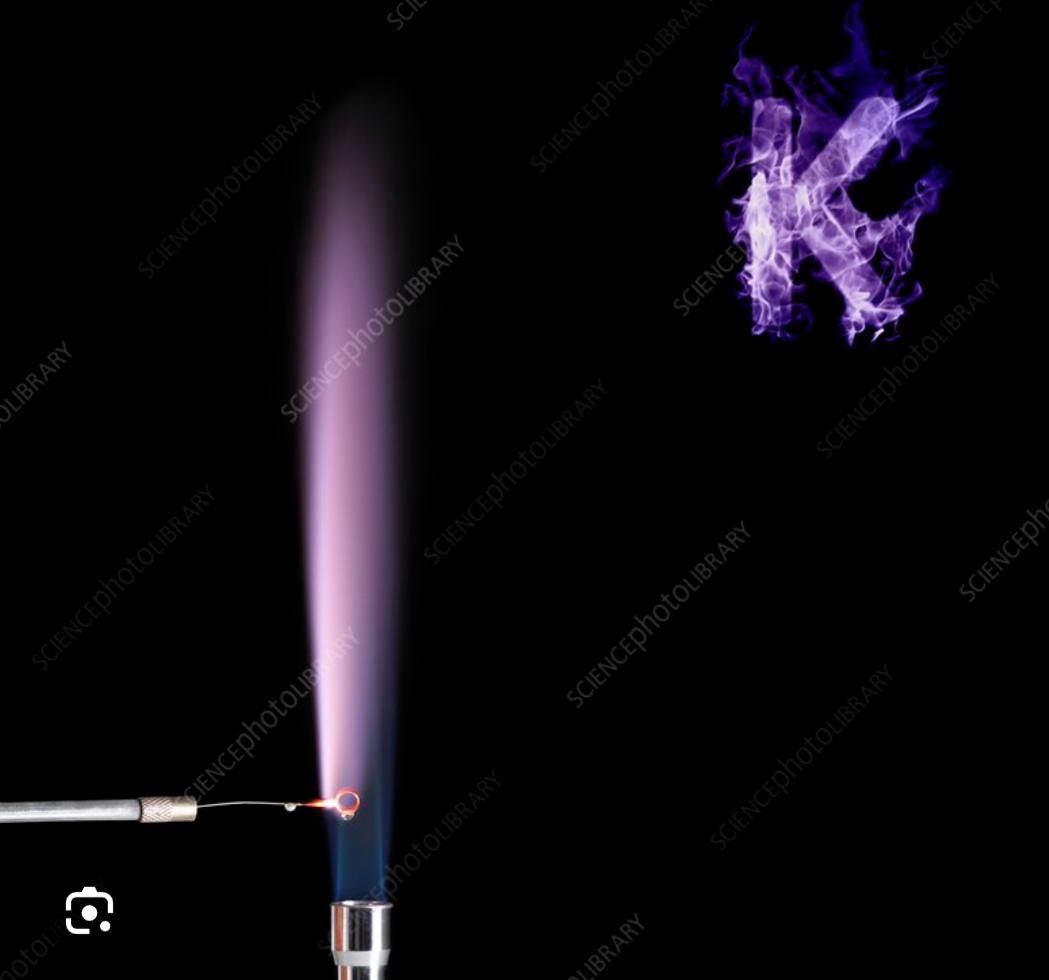
Reacts with water & Potassium Burns a Lilac-coloured Flame
Medium Reactive:
Reacts Slowly with Hot Water
(doesn't react with cold water)
Least Reactive:
Don't react with Water
12
What would be a Positive Test for the Gas Hydrogen & Observations if present?
Test: Lighted splint held in Test Tube
Observation: Squeeky Pop sound heard
Inference: Hydrogen present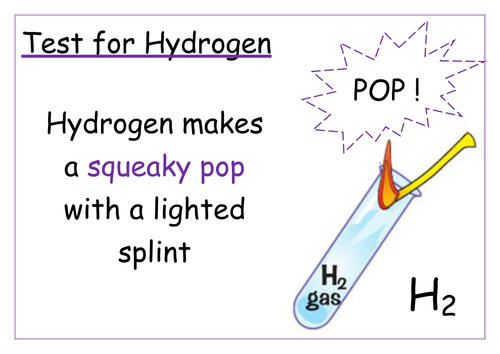
Observation: Squeeky Pop sound heard
Inference: Hydrogen present
13
What would be a Positive Test for the Gas Oxygen & Observations if Present?
Test: Glowing Splint held in a Test Tube
Observation: Splint Relights
Inference: Oxygen Present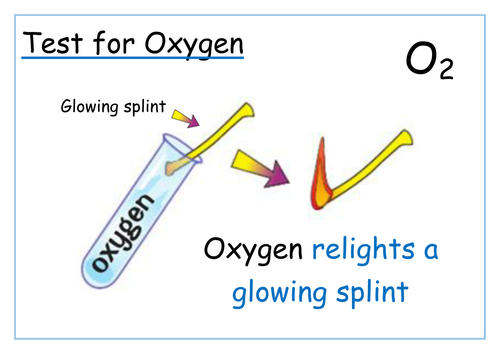
Observation: Splint Relights
Inference: Oxygen Present
14
What would be a Positive Test for the Gas Carbon Dioxide & Observations if Present?
Test: Gas Bubbled through Limewater
Observation: Limewater Turns Milky or Cloudy White
Inference: Carbon Dioxide Present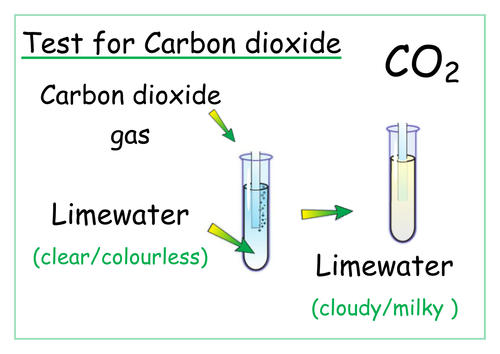
Observation: Limewater Turns Milky or Cloudy White
Inference: Carbon Dioxide Present
15
What would be a Positive Test for the Gas Chlorine & Observations if Present?
Test: Damp Litmus Paper held in a Test Tube
Observation: Paper turns White/Bleached
Inference: Chlorine Present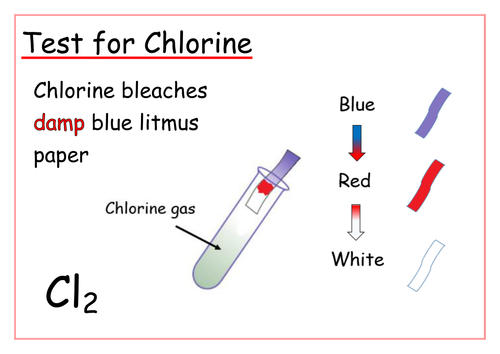
Observation: Paper turns White/Bleached
Inference: Chlorine Present
16
what are the state symbols?
aq- aqueous
g- gass
l- liquid
s- solid
g- gass
l- liquid
s- solid
17
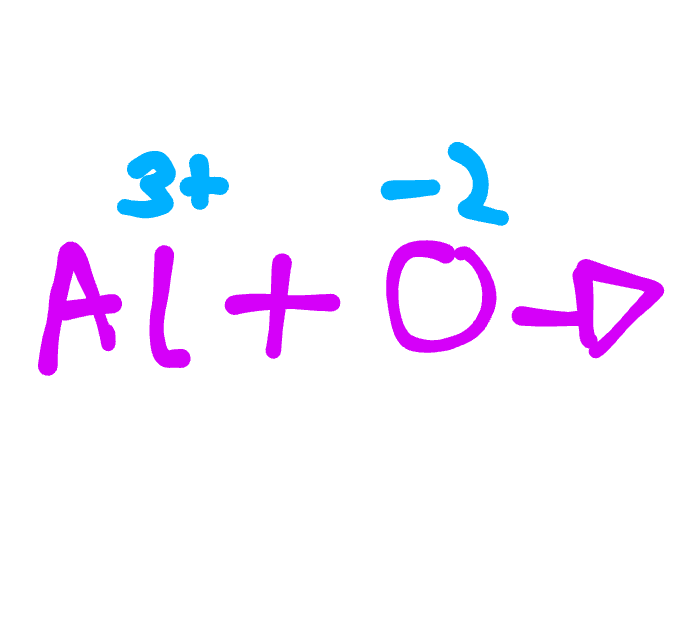
What is the general formula for Displacement Reactions?
18
what happens when there is a Displacement Reaction?
The More Reactive Metal Displaces the Less Reactive Metal from its Compound.
19
What are the Products?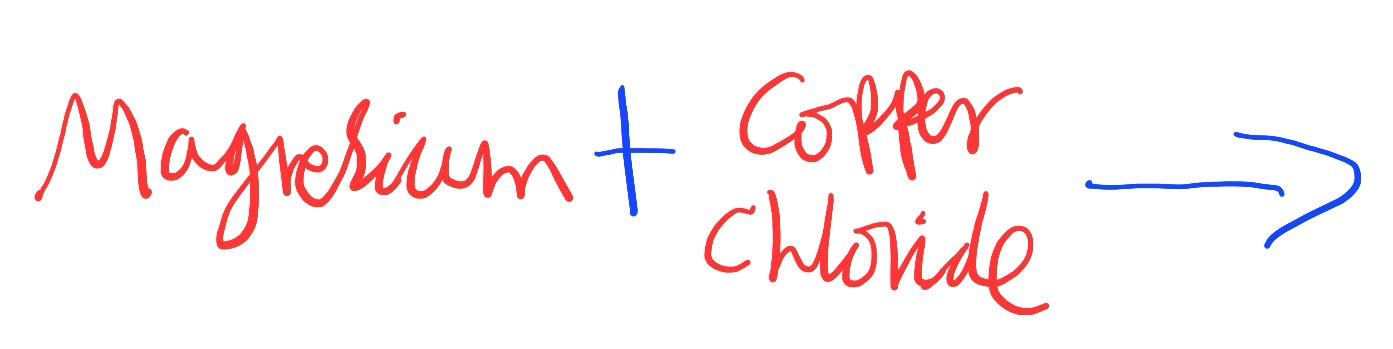
20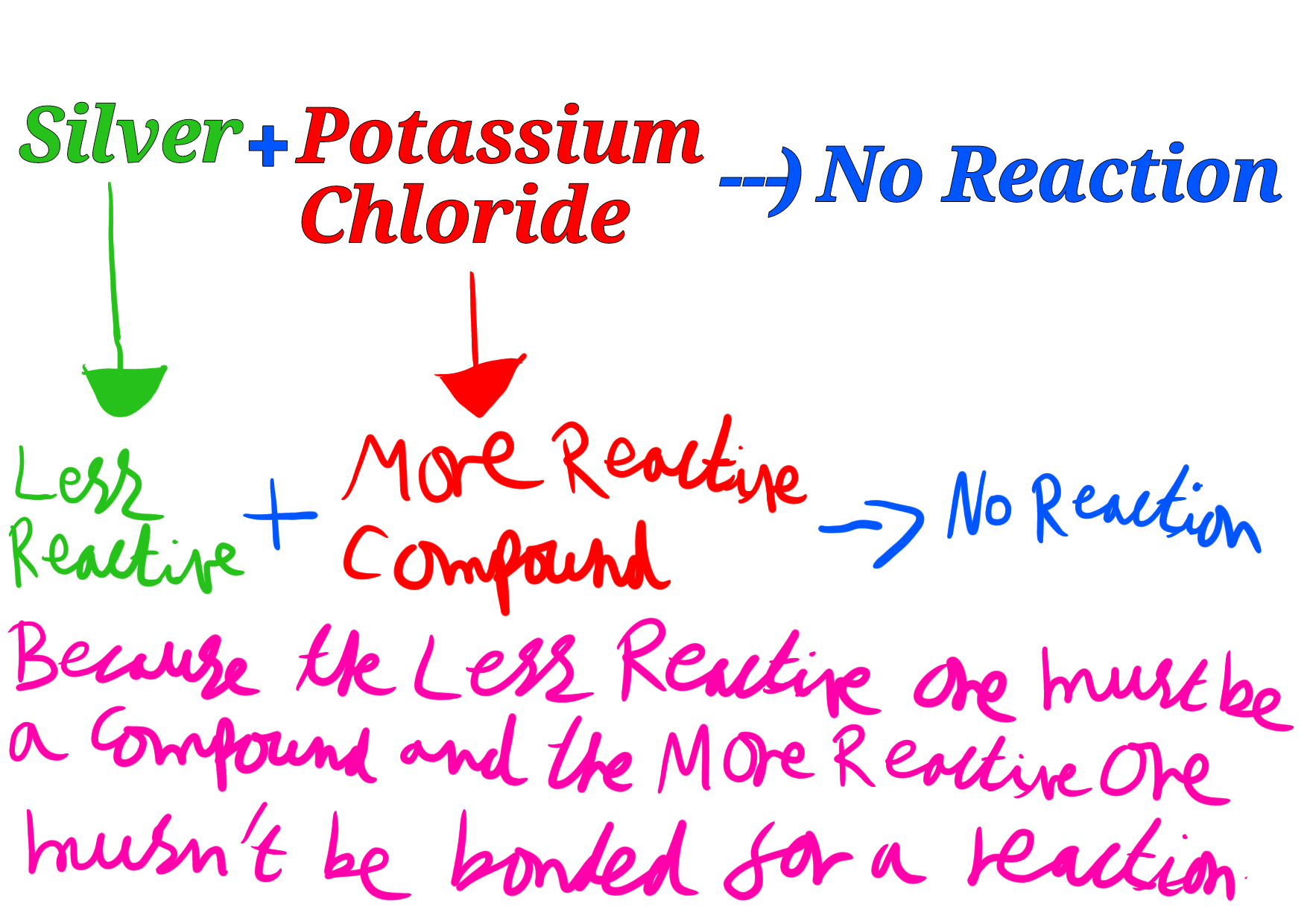
What would the Product be? 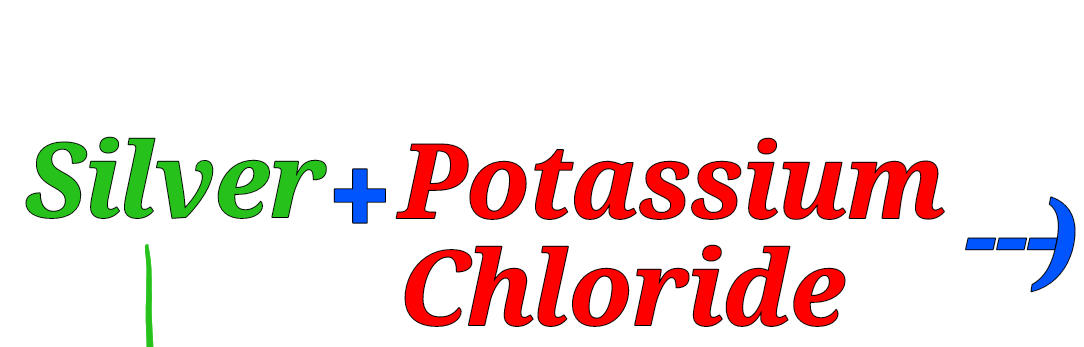
21
What are the three different ways for extracting metals with different reactivities?
• Electrolysis
• Reduction By Carbon
• Mining
• Reduction By Carbon
• Mining
22
How does Electrolysis work? how much does it Cost? and which type of Reactive Metals is it used for?
• Uses an Electric Current to Separate a Metal Compound
into a Metal & Non-metal
• Used for reactive metals
• Very Expensive
into a Metal & Non-metal
• Used for reactive metals
• Very Expensive
23
How does Reduction By Carbon work? What does it Produce ? and which type of Reactive Metals is it used for?
• Uses Carbon to Reduce a Metal Oxide
• Oxygen is Removed from Metal Oxide but needs High Temperature
• Produces Carbon Dioxide + Metal
• Uses for Metals in Midiling Reactivity
• Oxygen is Removed from Metal Oxide but needs High Temperature
• Produces Carbon Dioxide + Metal
• Uses for Metals in Midiling Reactivity
24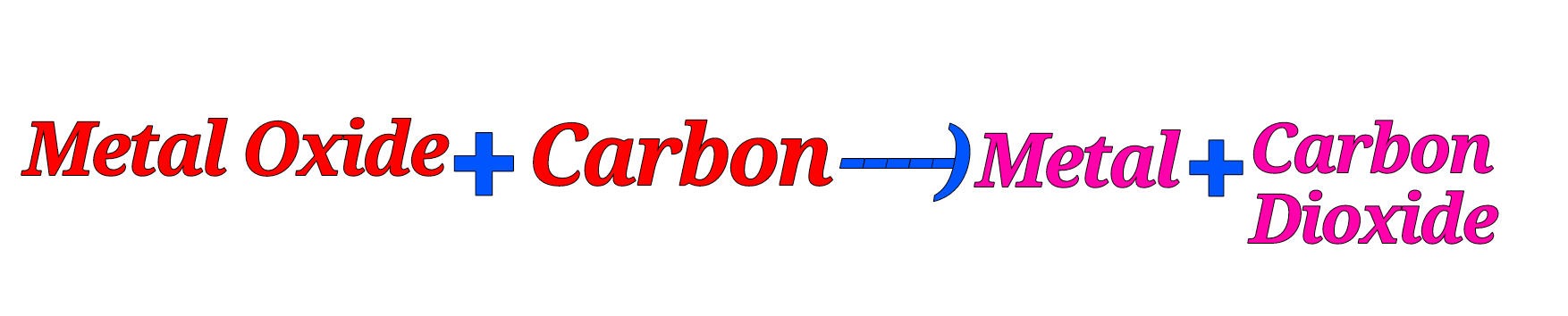
What is the formula for Reduction By Carbon?
25
How does Mining work? and which type of Reactive Metals is it used for?
• Native metals are Found in their Pure Form, not compound and mine from Earth
• Least Reactive
• Least Reactive
26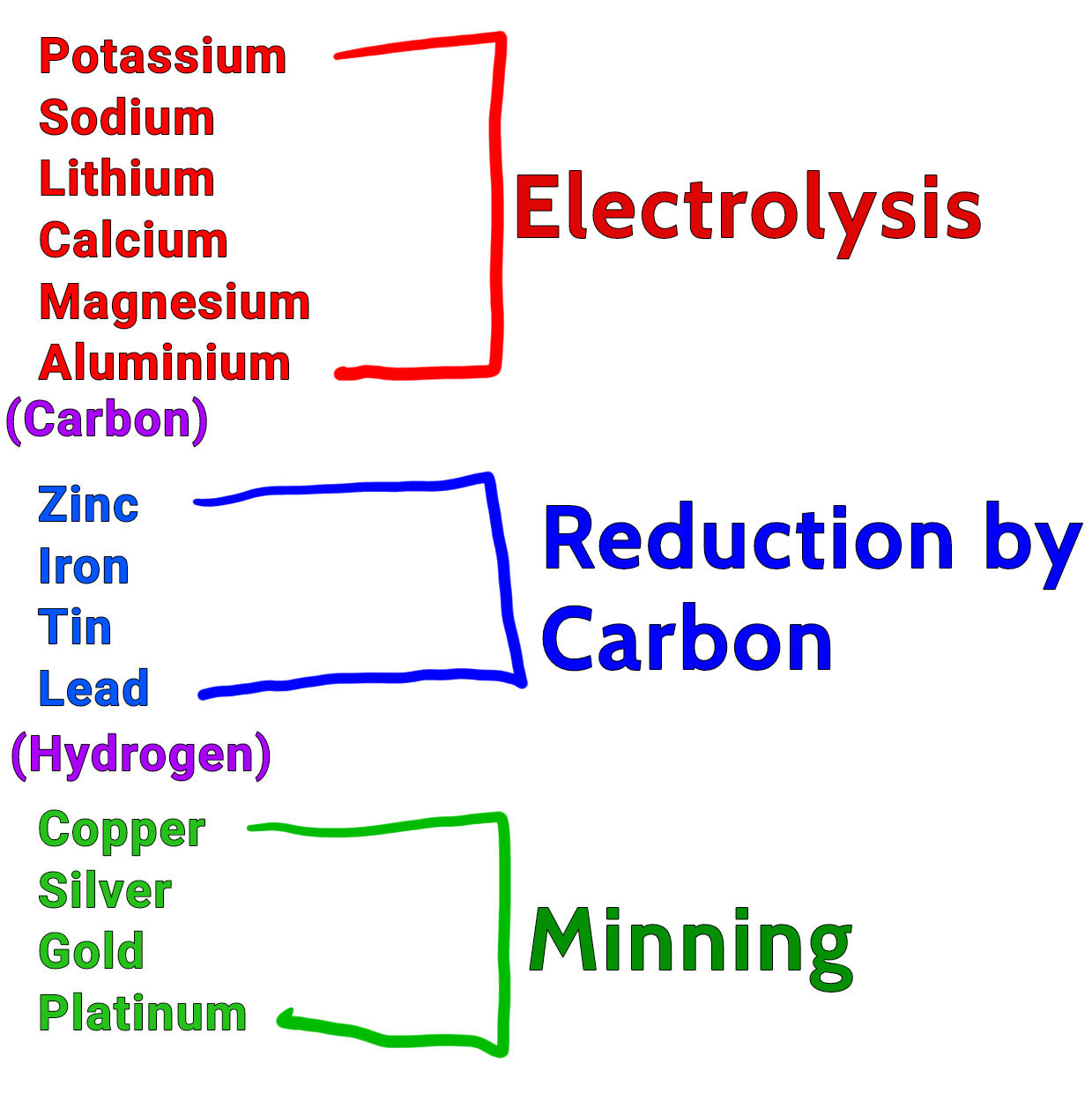
Which different metal groups from Reactivity Series are Extracted by Electrolysis, Reduction & Mining?
(On reactivity series)
(On reactivity series)
27
define Oxidation
Oxidation Is Loss
of Electrons or Oxygen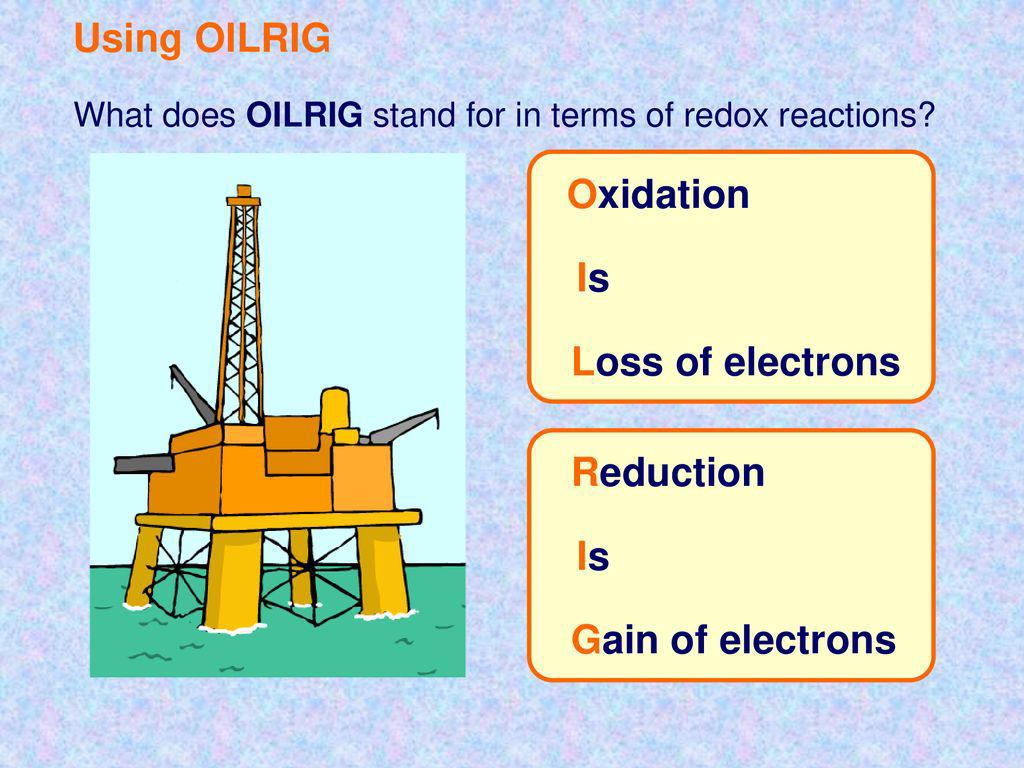
of Electrons or Oxygen
28
define Reduction
Reduction Is Gain
of Electrons or Oxygen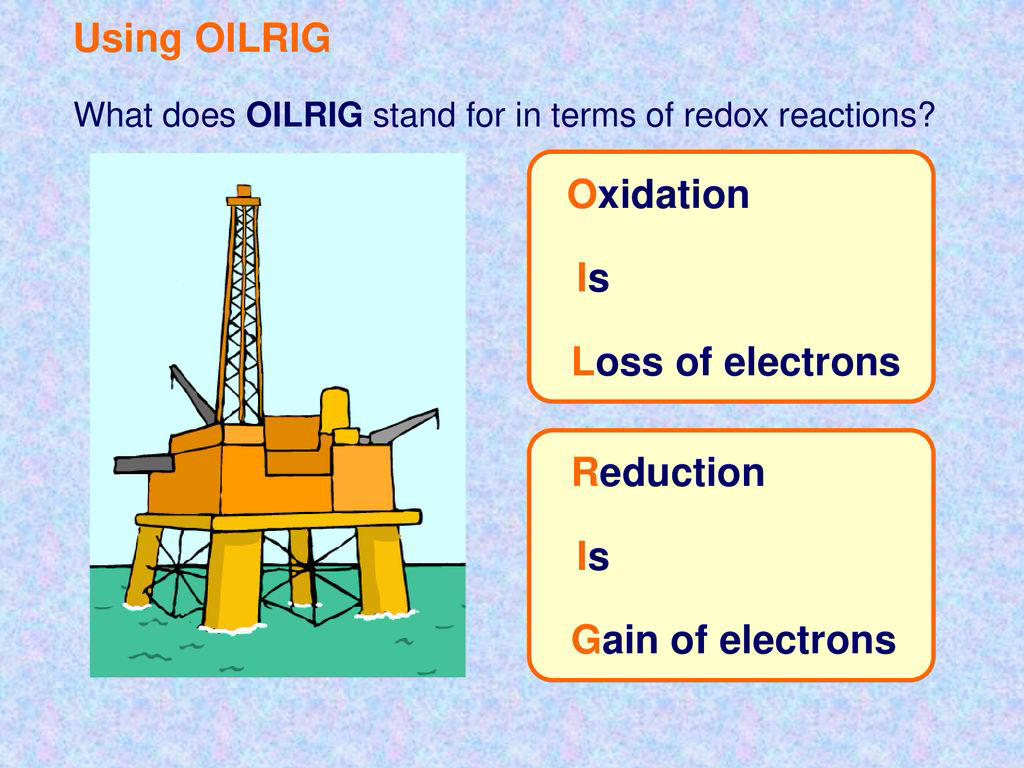
of Electrons or Oxygen
29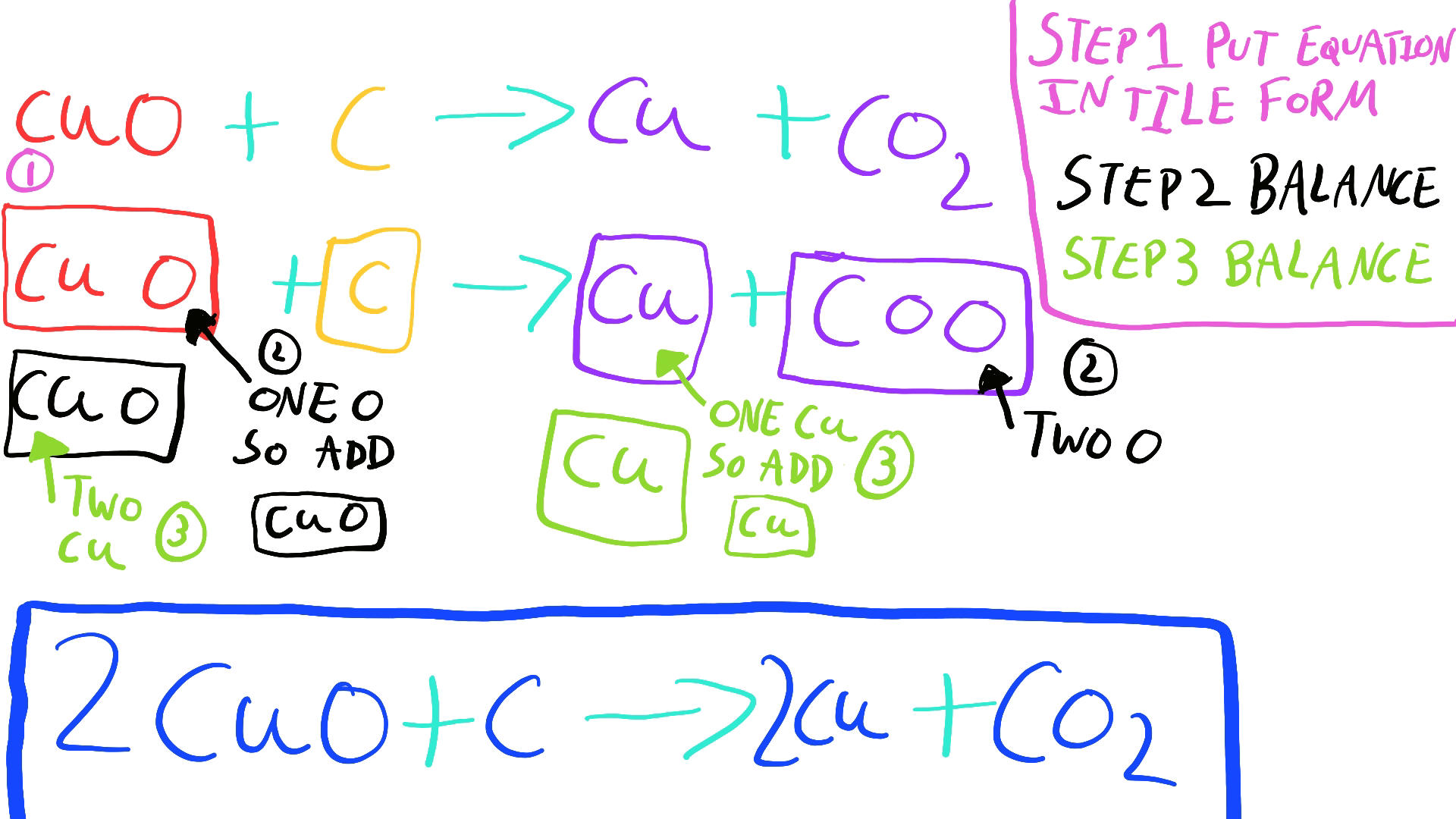
Balance the equation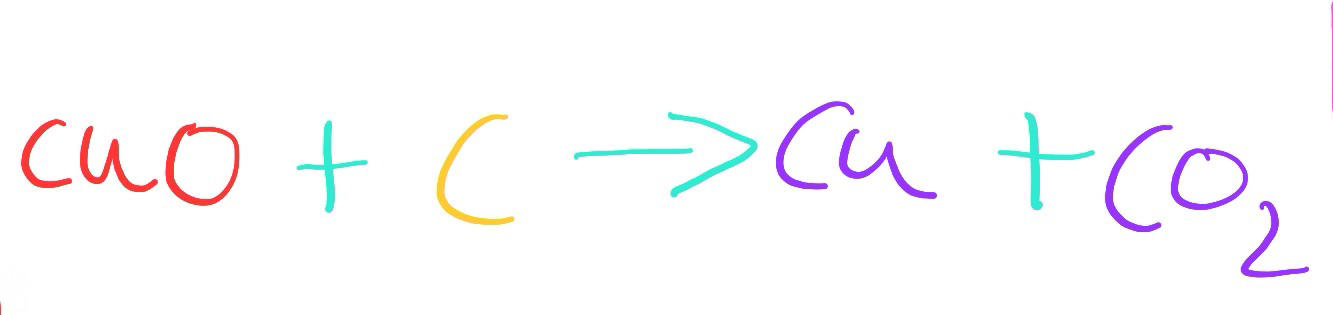
30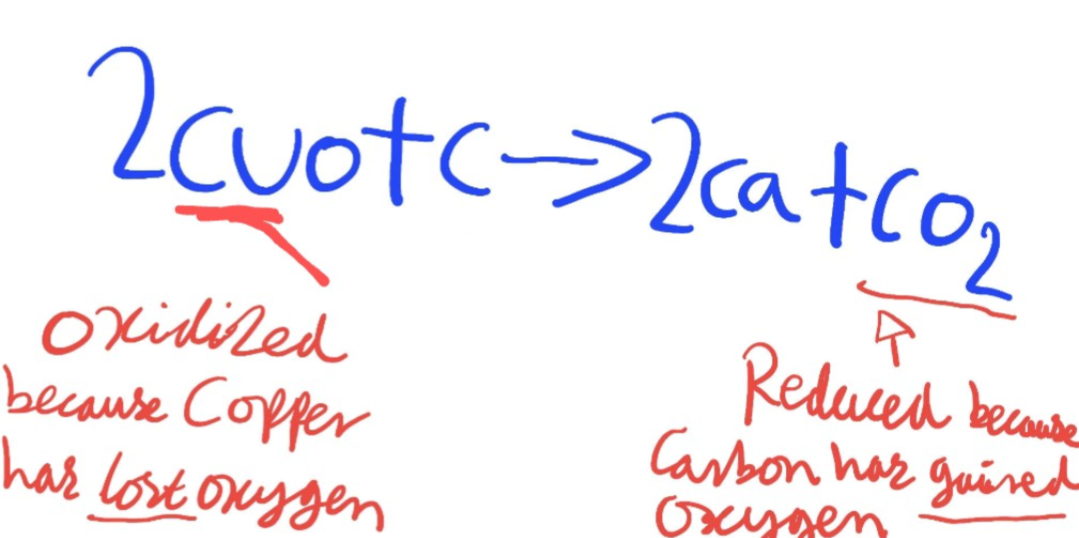
Which one has been Oxidized & which Reduced? 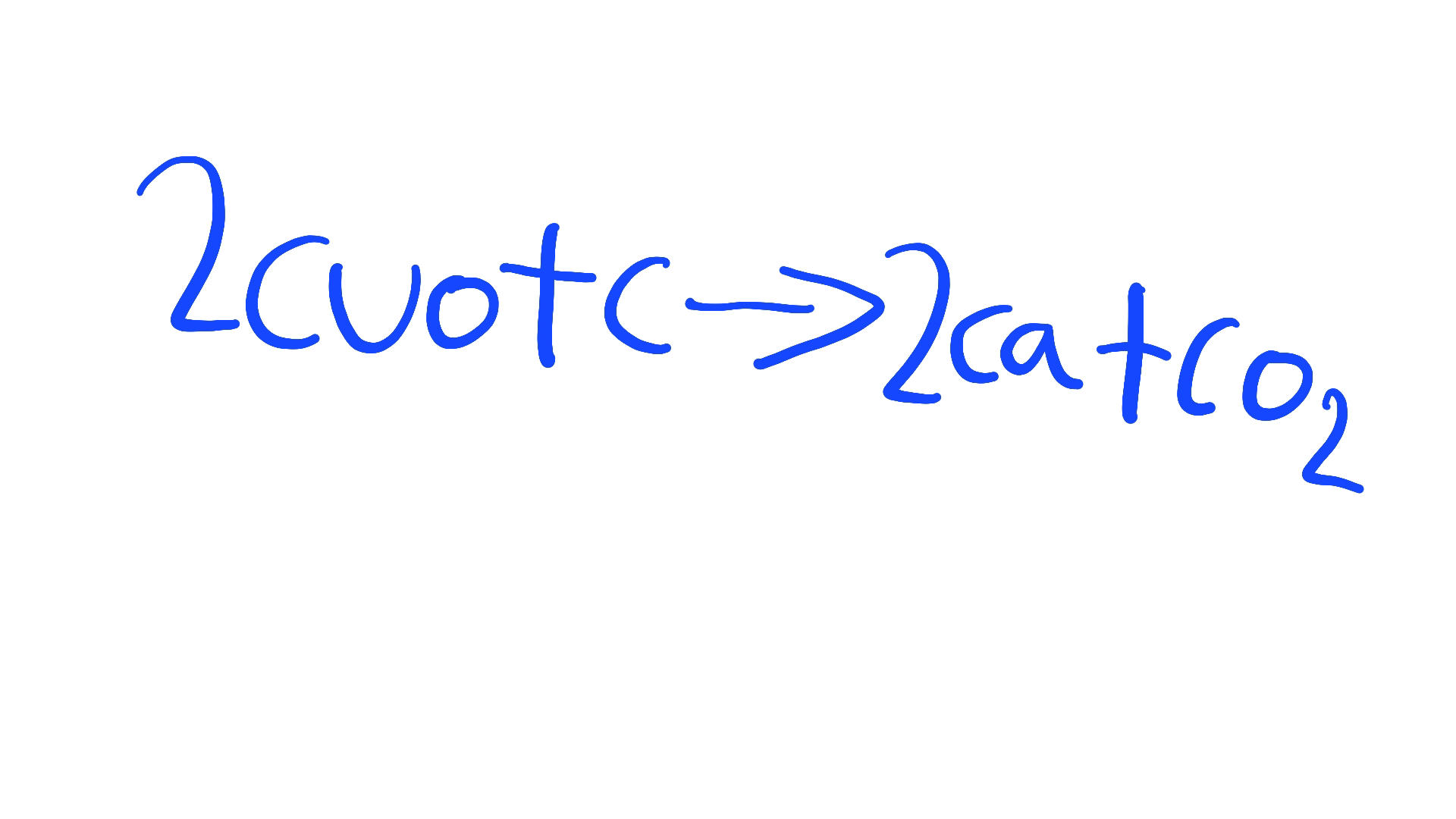
31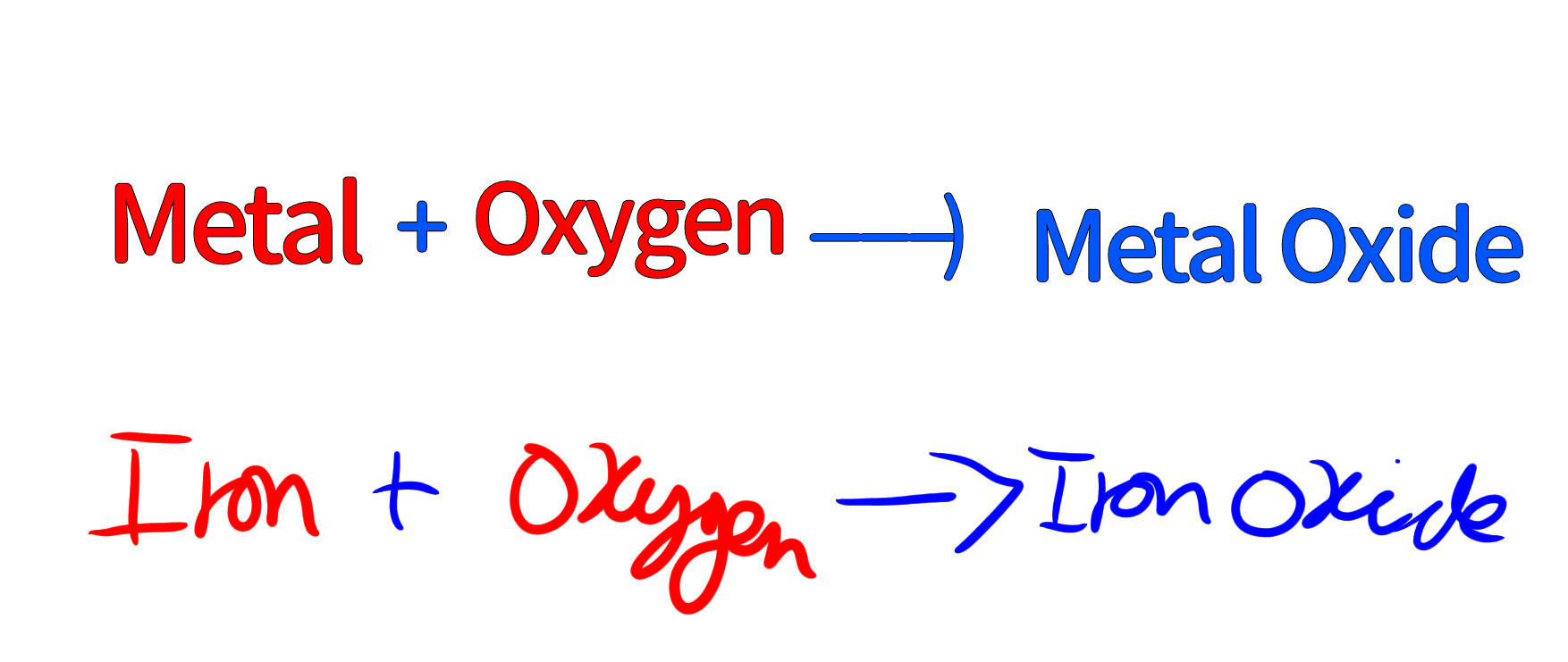
What is the General Equation for the Reaction Between Metal and Oxygen?
32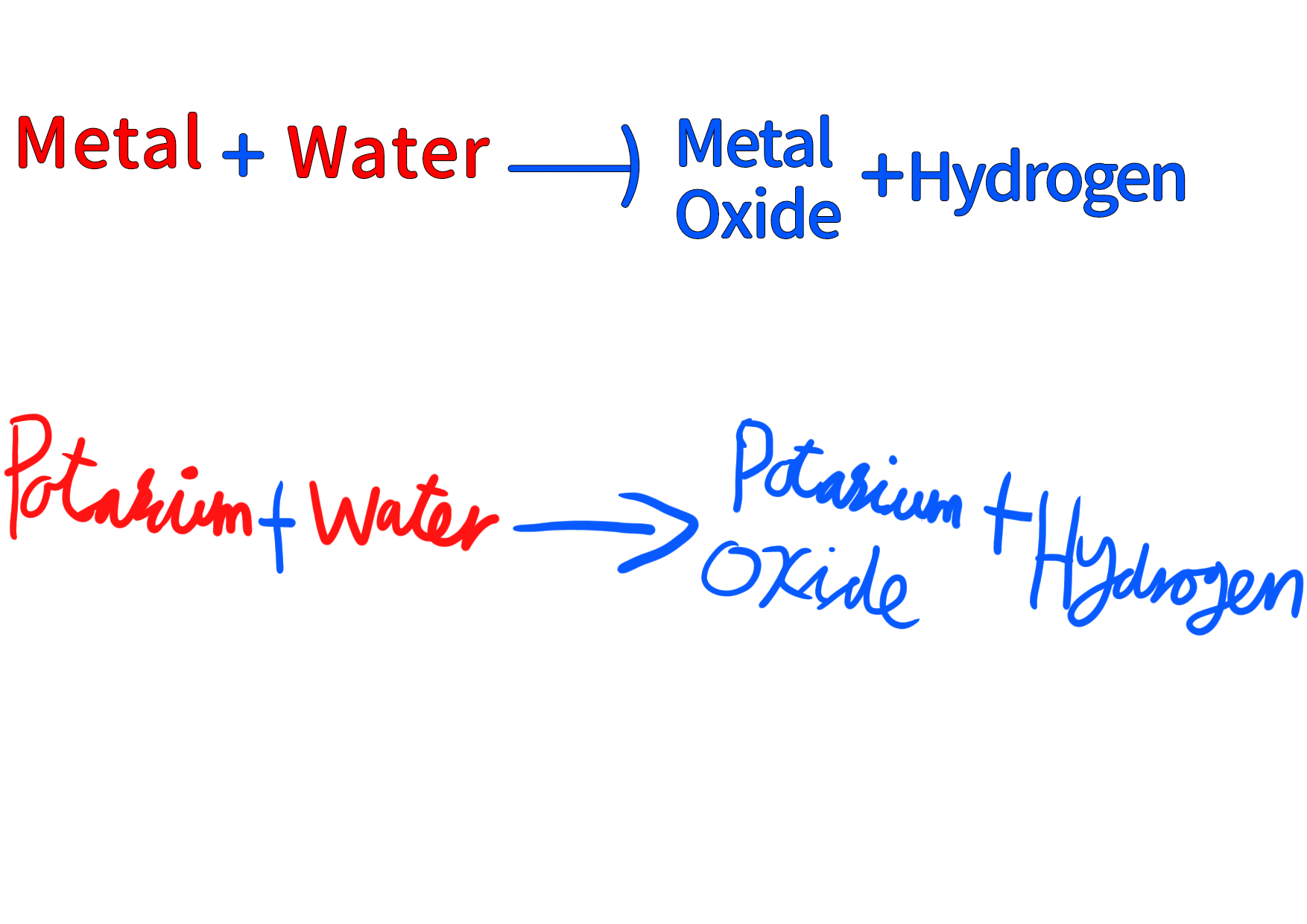
What is the General Equation for the Reaction Between Metal and Water?
33
What 3 Substances is Rusting a Reaction Between?
Metal, Water & Oxygen
34
What speeds up Rusting?
Salt
35
What happens to Strength of Metal When it Corodes?
Weakens
36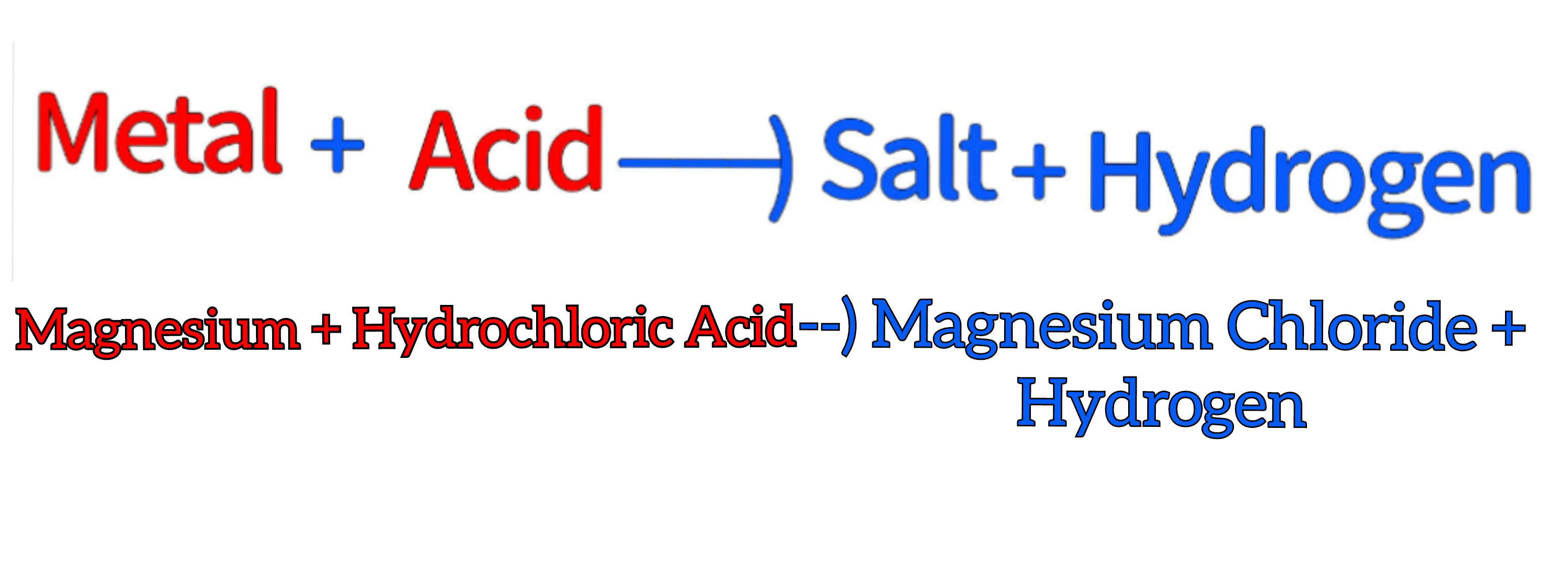
What is the General Equation for the Reaction Between Metal and Acid?
37
What are the 3 Lab Acids & their Formulae?
• Hydrochloric Acid
• Sulfuric Acid
• Nitric Acid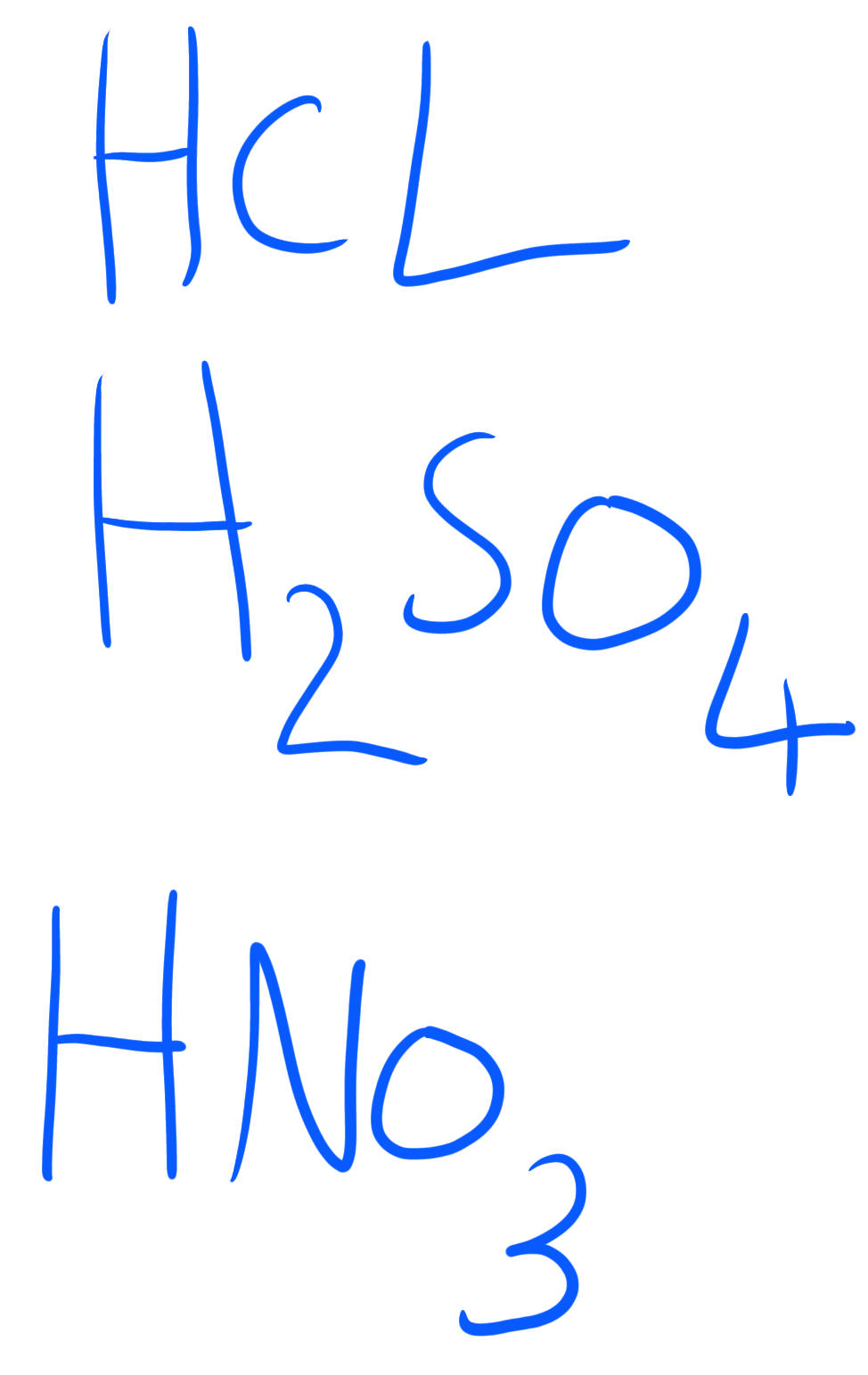
• Sulfuric Acid
• Nitric Acid
38
What Ions do the 3 Lab Acids Make When in Water & symbols?
Hydrochloric Acid--) Chloride Ions
Sulfuric Acid --) Sulfate Ions
Nitric Acid --) Nitrate Ions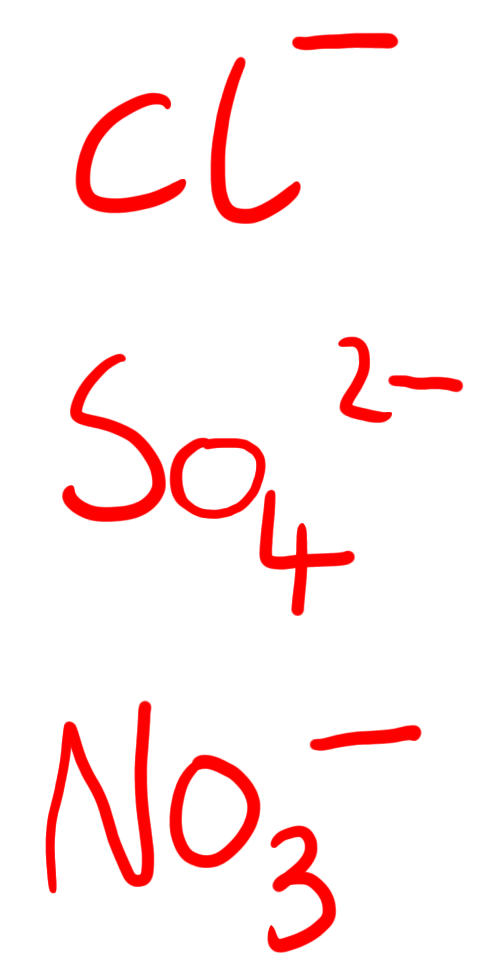
Sulfuric Acid --) Sulfate Ions
Nitric Acid --) Nitrate Ions
39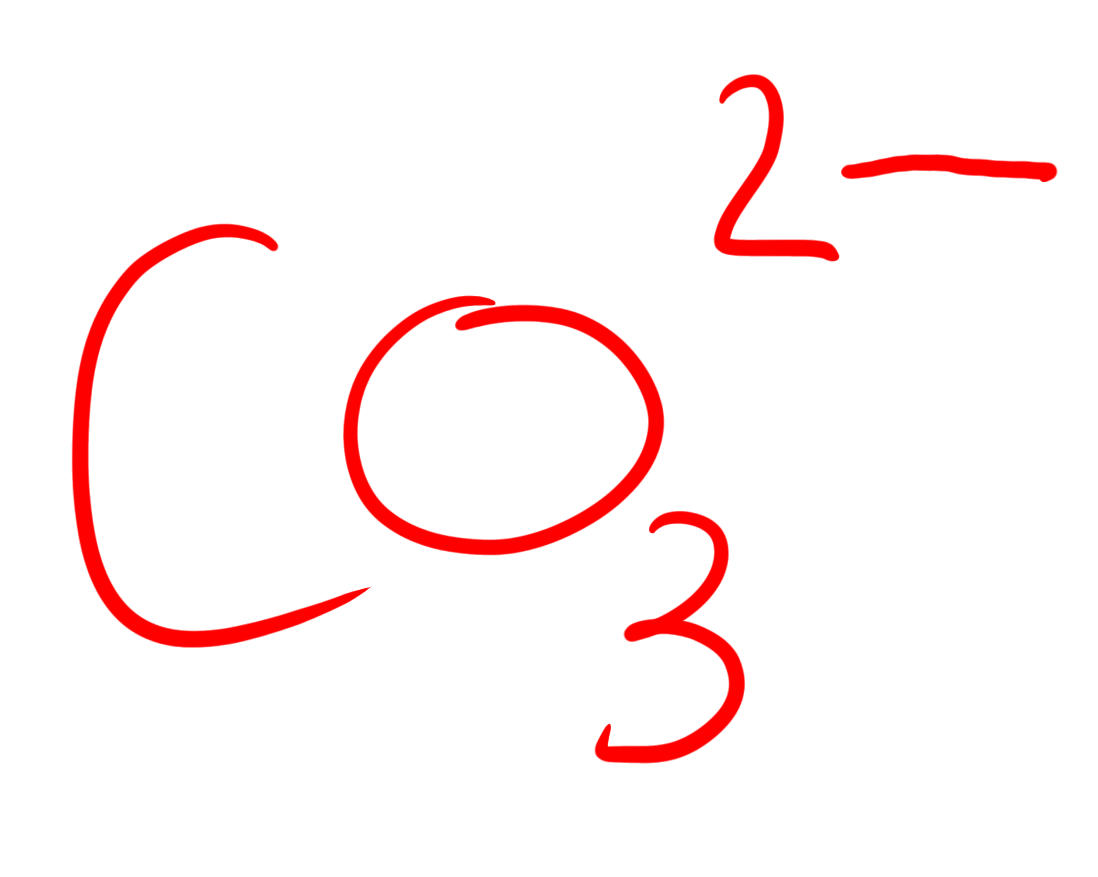
What is the symbol for Carbonate Ion?
40
what Ion do Acids always contain?
Acids always contain H+ Ions- Exception to Non-Metals Covalntly Bond Rule
41
what Ion do Alakli always contain?
Alkali always contain OH- Ions
42
What are the Properties of Alkalis
• Nuetralises Acid
• All dissolve in water to produce OH- ions: Form Solutions with Hydroxide Ions
• High pH 8+ & turn Blue or Purple in Universal Indicator
• Red Litmus turns Blue &
Blue Litmus Stays Blue
• Phenolphthalein Pink
• Any Hydroxide is an Alkali
• All Alkalis are Bases
(not all bases are Alkali)
• Alkalis are Soluble
• All dissolve in water to produce OH- ions: Form Solutions with Hydroxide Ions
• High pH 8+ & turn Blue or Purple in Universal Indicator
• Red Litmus turns Blue &
Blue Litmus Stays Blue
• Phenolphthalein Pink
• Any Hydroxide is an Alkali
• All Alkalis are Bases
(not all bases are Alkali)
• Alkalis are Soluble
43
What are the Properties of Acids
• Neutralised by Bases
• Produces H+ Ions when Dissolved in Water
• Low pH 6- & turns orange or red in Universal Indicator,
• Blue Litmus Paper turns Red&
Red Litmus Stays Red
• Phenolphthalein Colorless
• Acids are Soluble
• Produces H+ Ions when Dissolved in Water
• Low pH 6- & turns orange or red in Universal Indicator,
• Blue Litmus Paper turns Red&
Red Litmus Stays Red
• Phenolphthalein Colorless
• Acids are Soluble
44
What are some examples of Base?
All Hydroxides, Oxides & Carbonates
• Sodium Hydroxide
• Calcium Carbonate
• Copper Oxide
• Sodium Hydroxide
• Calcium Carbonate
• Copper Oxide
45
Define Bases
Any Substance That Reacts With Hydrogen Ions- Compound (H+)
46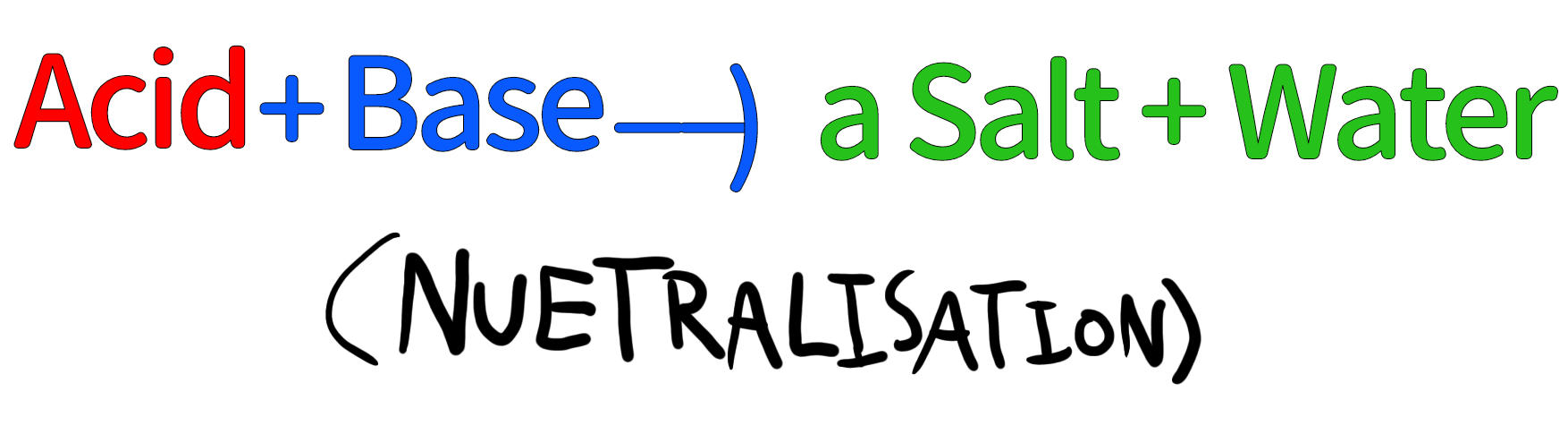
What is the General Equation for the Reaction Between Acid and Base?
47
What are the Products when Sulfuric Acid & Sodium Hydroxide react? 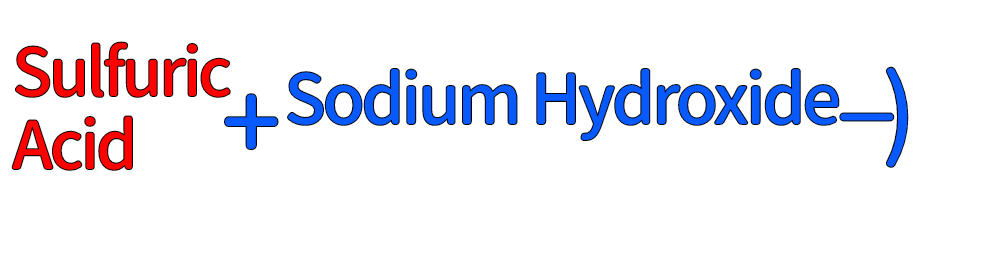
balance
& make example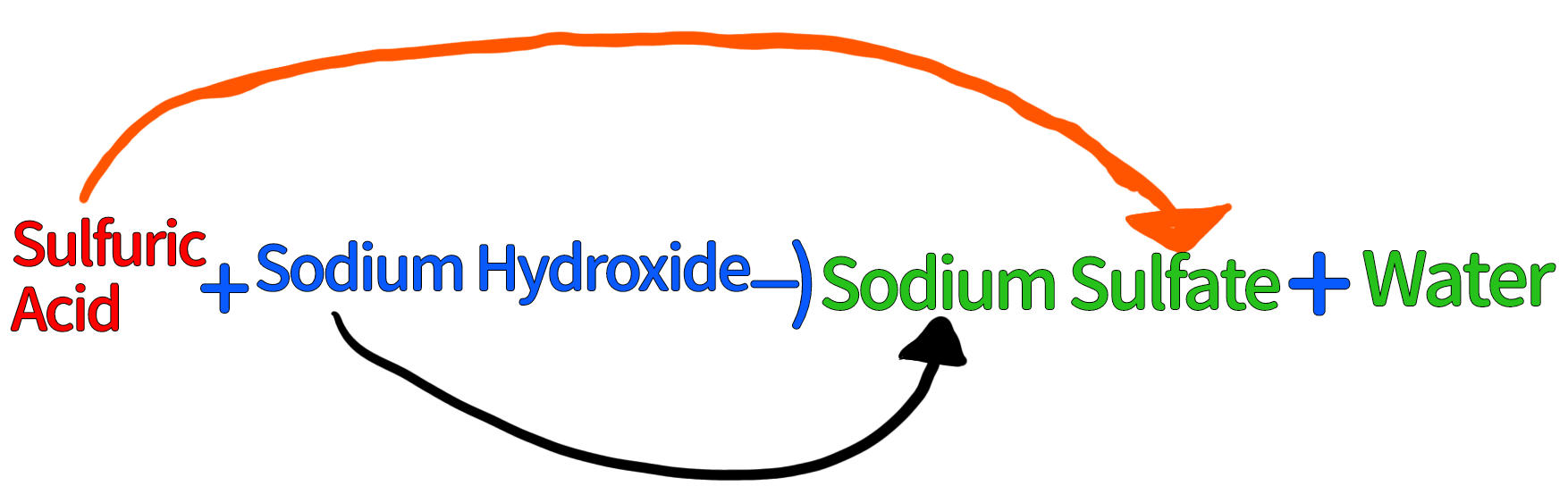
& make example
48
how to make Salts?
By Reacting Acids with Metals, Metal Oxides, Hydroxides or Carbonates.
49
What will the name of the salt depend on?
type of Acid Used, and Metal in the Substance Which Reacts With the Acid.
e.g magnesium + sulfuric acid--) magnesium sulfate + hydrogen
e.g magnesium + sulfuric acid--) magnesium sulfate + hydrogen
50
Method Making Salts Required Practical 1
1. Measure 20 cm³
Acid into Measuring Cylinder & Pour into Beaker.
2. Heat Acid Gently Using Bunsen Burner.
3. Add Small Amounts of Insoluble Base in Excess.
4. Filter Using Filter Paper & Funnel Solution to Remove Excess Oxide.
5. Pour Solution into Evaporating Basin.
6. Evaporate Solution Using Water Bath Until Crystals Start Form.
7. Leave Evaporating Basin in Cool Place For At Least 24 hours.
8. Gently pat Crystals Dry Between Two Pieces Of Filter Paper.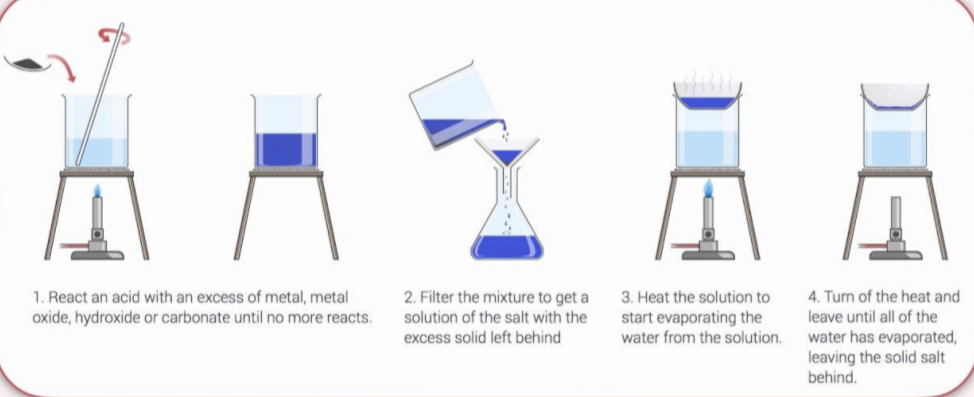
2. Heat Acid Gently Using Bunsen Burner.
3. Add Small Amounts of Insoluble Base in Excess.
4. Filter Using Filter Paper & Funnel Solution to Remove Excess Oxide.
5. Pour Solution into Evaporating Basin.
6. Evaporate Solution Using Water Bath Until Crystals Start Form.
7. Leave Evaporating Basin in Cool Place For At Least 24 hours.
8. Gently pat Crystals Dry Between Two Pieces Of Filter Paper.
51
Why do we add excess?
To Neutralise Acid
52
Why filter it?
To get rid of excess
53
Safety for Required Practical 1 Making Salts
● Wear Safety Goggles as Acid is corrosive.
● Hair is Tied Back
● When Bunsen Burner Not in use, Turn It Off or Leave It On Orange Safety Flame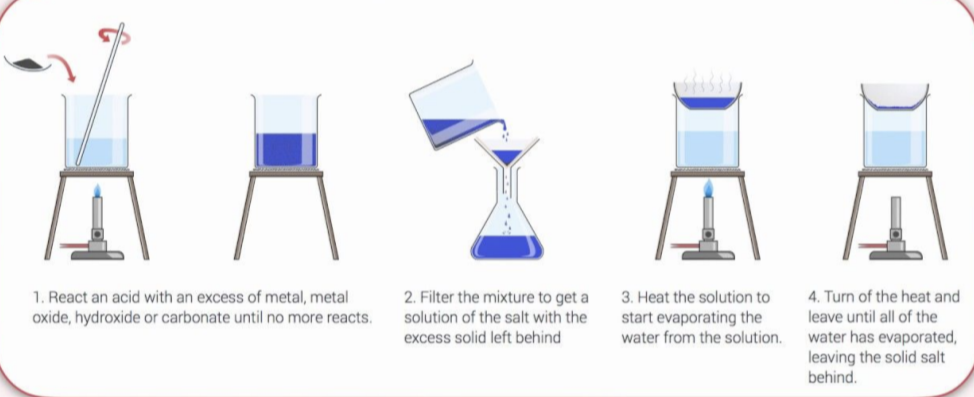
● Hair is Tied Back
● When Bunsen Burner Not in use, Turn It Off or Leave It On Orange Safety Flame
54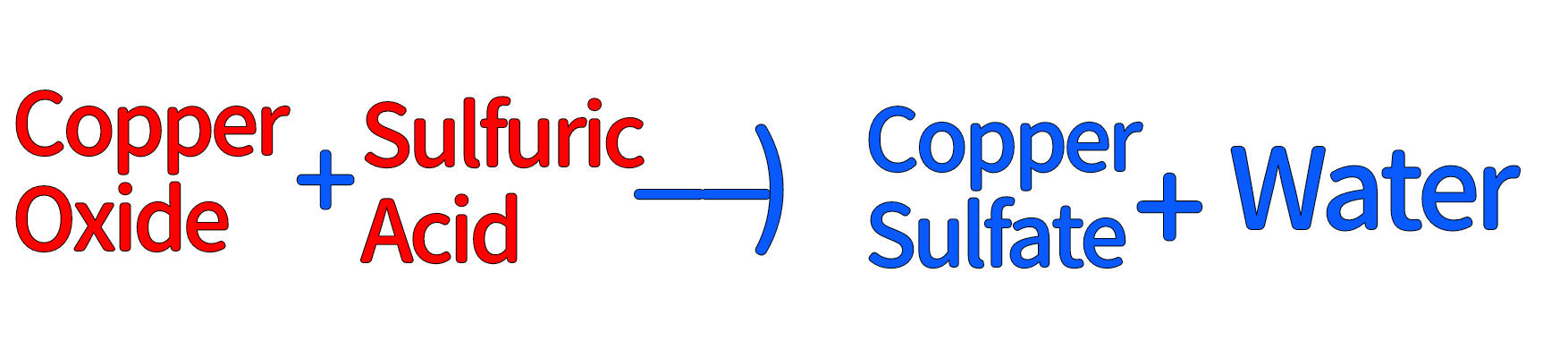
What is the Word Equation Describing the Reaction Between Copper Oxide & Sulfuric Acid?
55
What is the General Equation for Reaction between Acid & Metal Carbonate
56
What are the Products when Sulfuric Acid & Calcium Carbonate react? 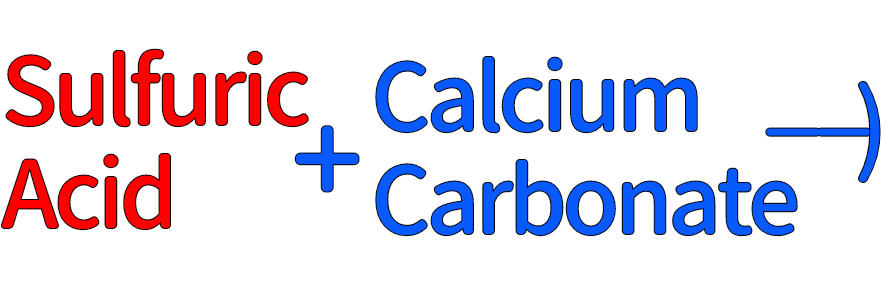
57
Clear to Blue
58
define Titration
An Accurate Way of How Much of Each Chemical is Needed for Neutralisation to Occur.
59
Define Titration
How Much Acid Neutralizes a Known Volume of Alkali?
Or: How much alkali neutralises a known volume of acid?
Or: How much alkali neutralises a known volume of acid?
60
What is the Method for Titration Neutralisation Required Practical 2?
1) Use Pipette To Measure Set Volume of which ever Chemical they say (UNKNOWN) into Conical Flask
2) Place Conical Flask on a White Tile
3) Fill the Burette with (KNOWN) Acid using a Funnel and Record the Initial Reading of (KNOWN)Acid in Burette.
Make sure to measure from the bottom of the Meniscus
4) Add Drops Of Indicator in this case Phenolphthalein to Conical Flask
5) Slowly Open Burette Tap while Swirling Conical Flask & (KNOWN) Acid
drop-by-drop Near End Point. Close Burett when a Colour Change Occurs.
The Solution Turns from pink to colourless
6) Record Final Reading of (KNOWN) Acid in Burette and Calculate Titre. This is the Volume of (KNOWN) Acid used to Neutralise (UNKNOWN) Alkali.
7) Repeat until you have Constant Results which are within 0.1 cm³ of each other.
8) Calculate Titre Mean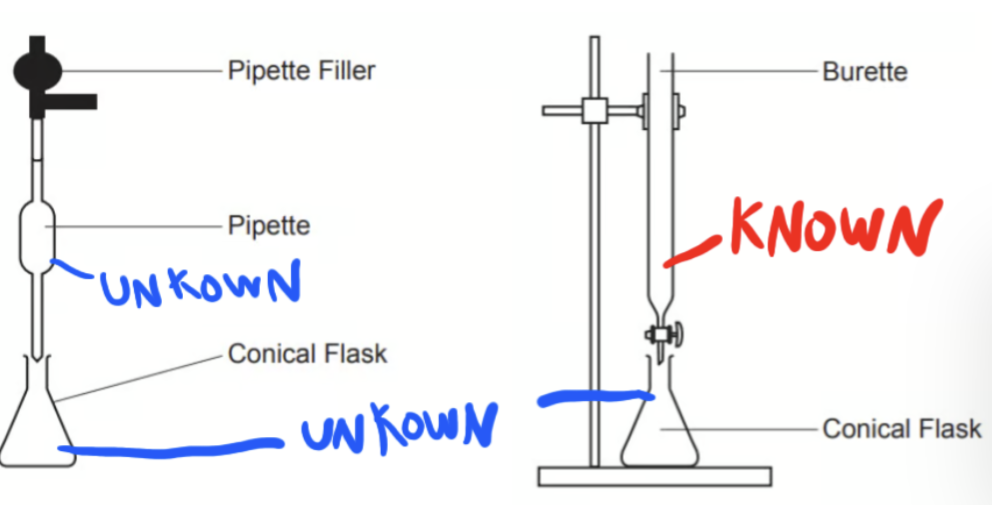
2) Place Conical Flask on a White Tile
3) Fill the Burette with (KNOWN) Acid using a Funnel and Record the Initial Reading of (KNOWN)Acid in Burette.
Make sure to measure from the bottom of the Meniscus
4) Add Drops Of Indicator in this case Phenolphthalein to Conical Flask
5) Slowly Open Burette Tap while Swirling Conical Flask & (KNOWN) Acid
drop-by-drop Near End Point. Close Burett when a Colour Change Occurs.
The Solution Turns from pink to colourless
6) Record Final Reading of (KNOWN) Acid in Burette and Calculate Titre. This is the Volume of (KNOWN) Acid used to Neutralise (UNKNOWN) Alkali.
7) Repeat until you have Constant Results which are within 0.1 cm³ of each other.
8) Calculate Titre Mean
61
What does Titration allow you to calculate? 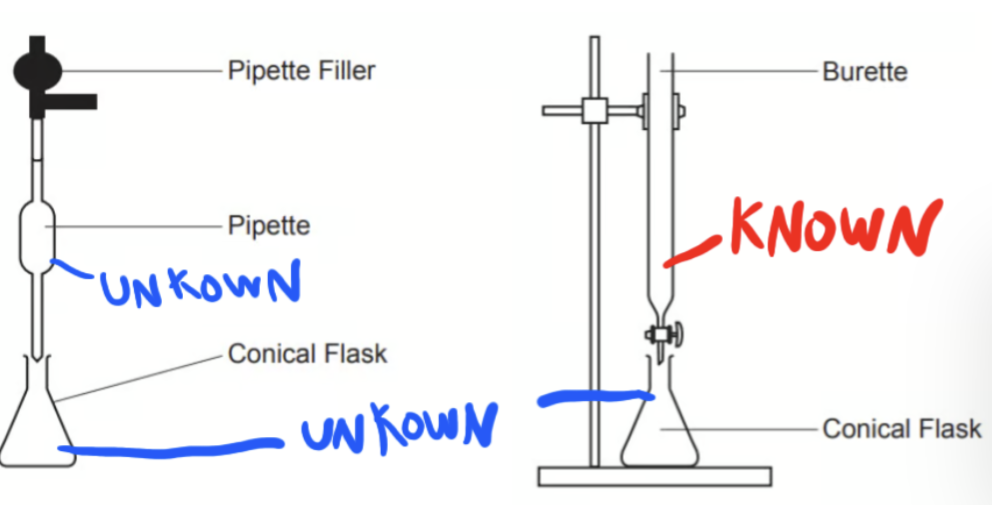
Allows you to calculate the Concentration of a Solution.
62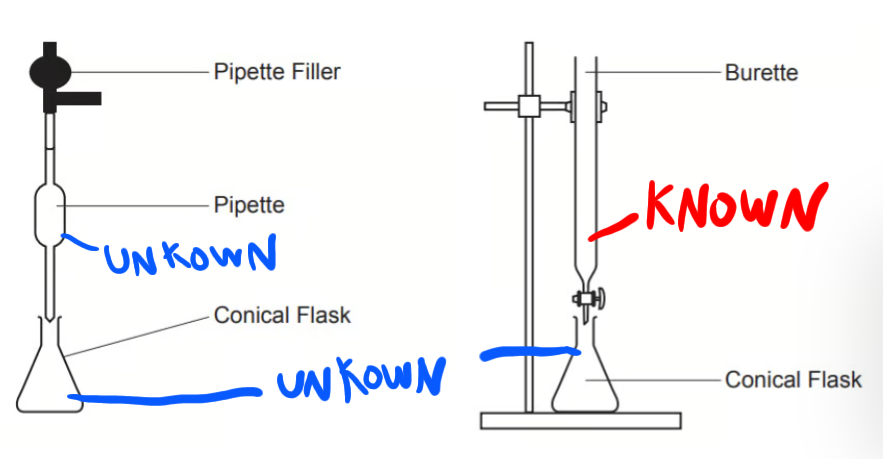
Lable Equipment 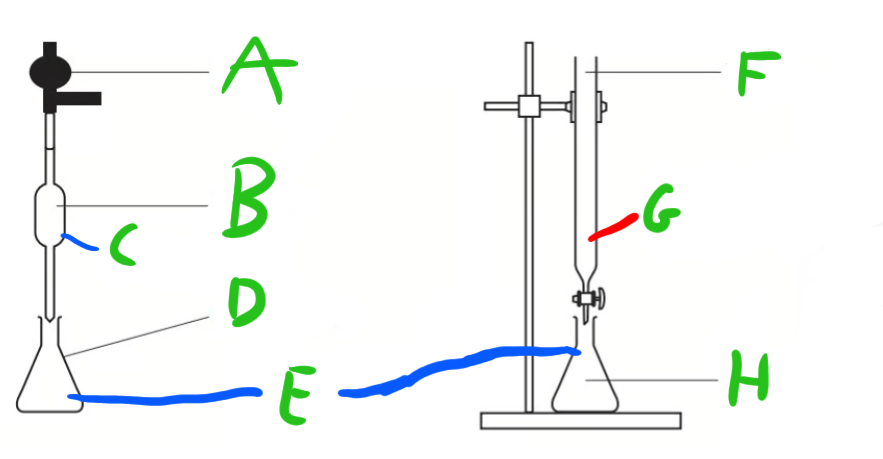
63
Why use Phenolphthalein instead of Universal indicator for Titration? 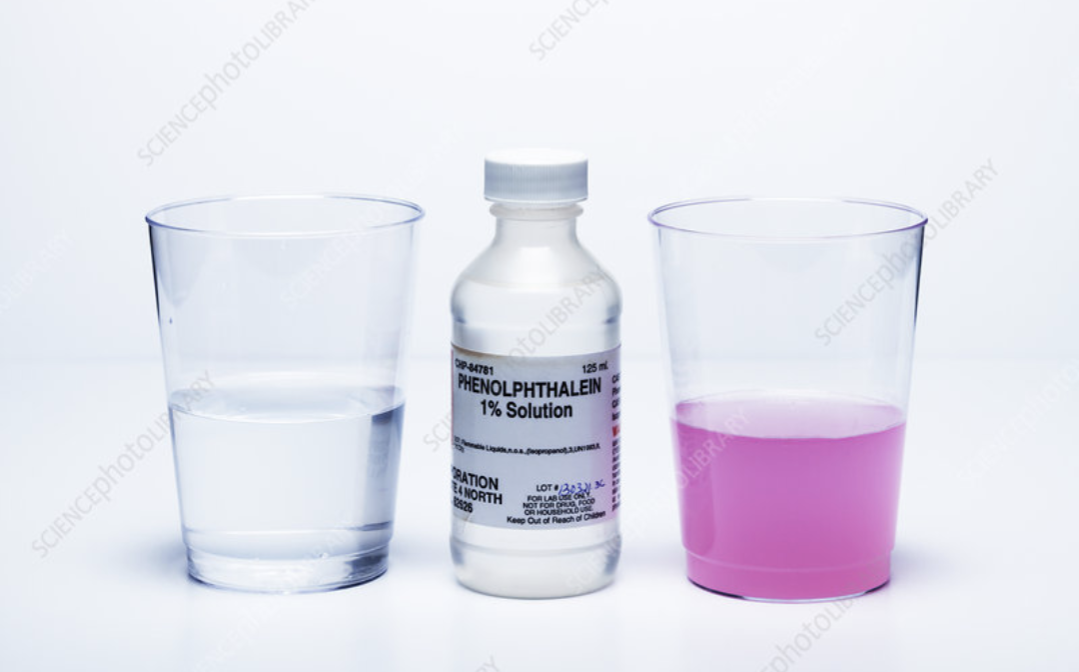
Because it gives a clear Colour Change when it Neutralizes 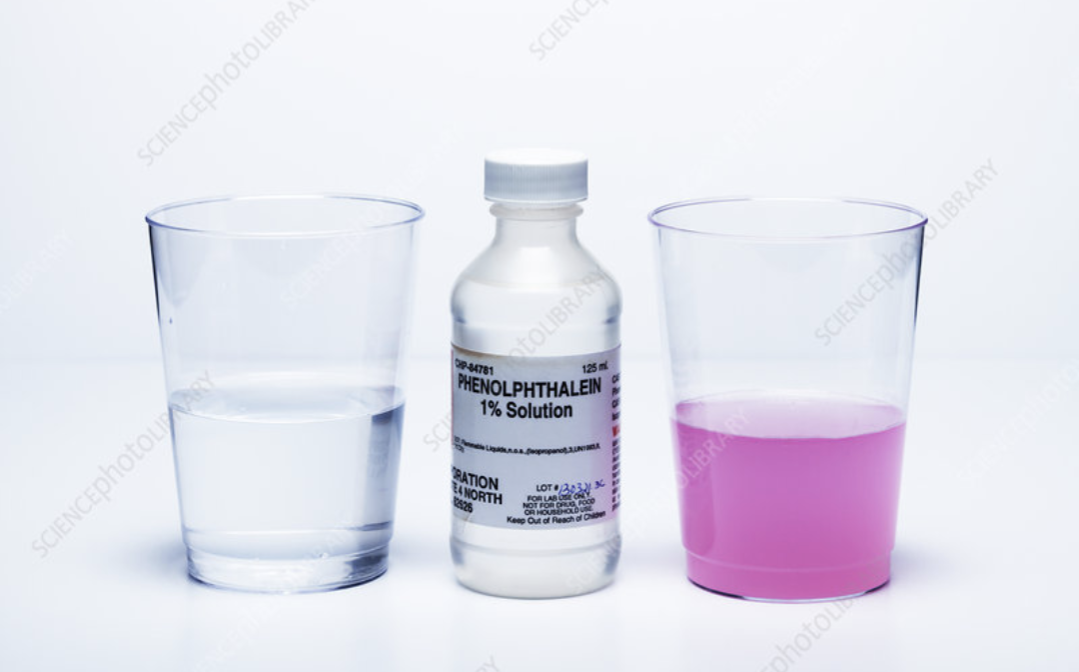
64
What are the Colours for Phenolphthalein? (Acid/Akali)
Pink when Alkali
Colourless when Acid/Anything Else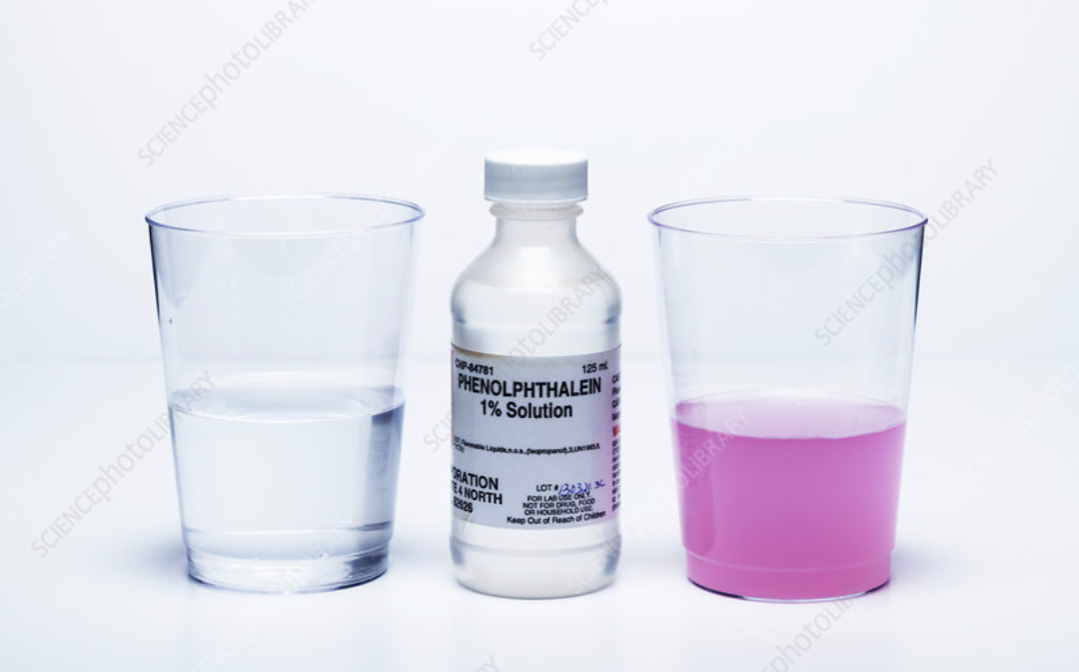
Colourless when Acid/Anything Else
65
need to know volume of acid and down. can I and the concentration of one of them for titration to useful
66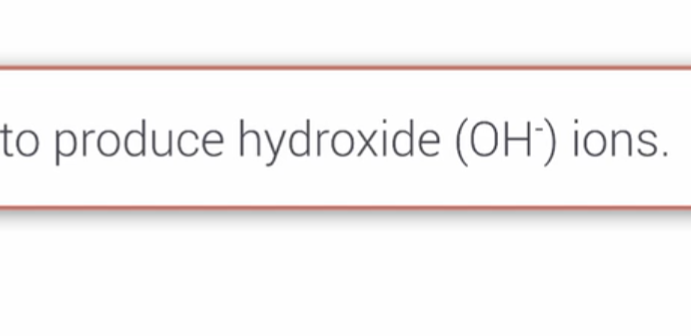
What happens when Alkali Dissolves in Water?
67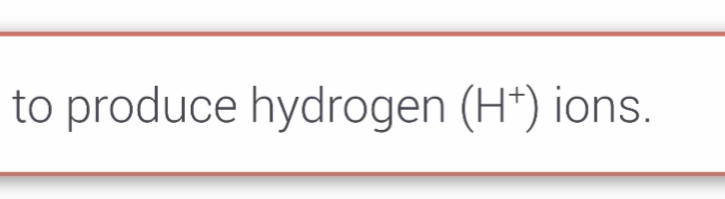
What happens when Acid Dissolves in Water?
68
All Acids have what ion in the compound (symbol equation)?
H+ & is always at the start 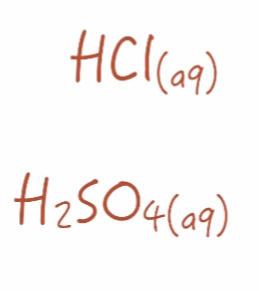
69
All Alkalis have what ion in the compound & in the symbol equation?
OH- always a the end of the compound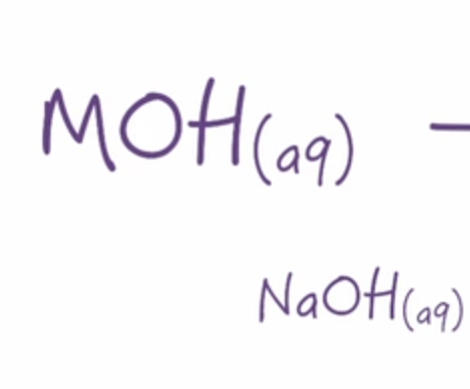
70
Define Strong Acids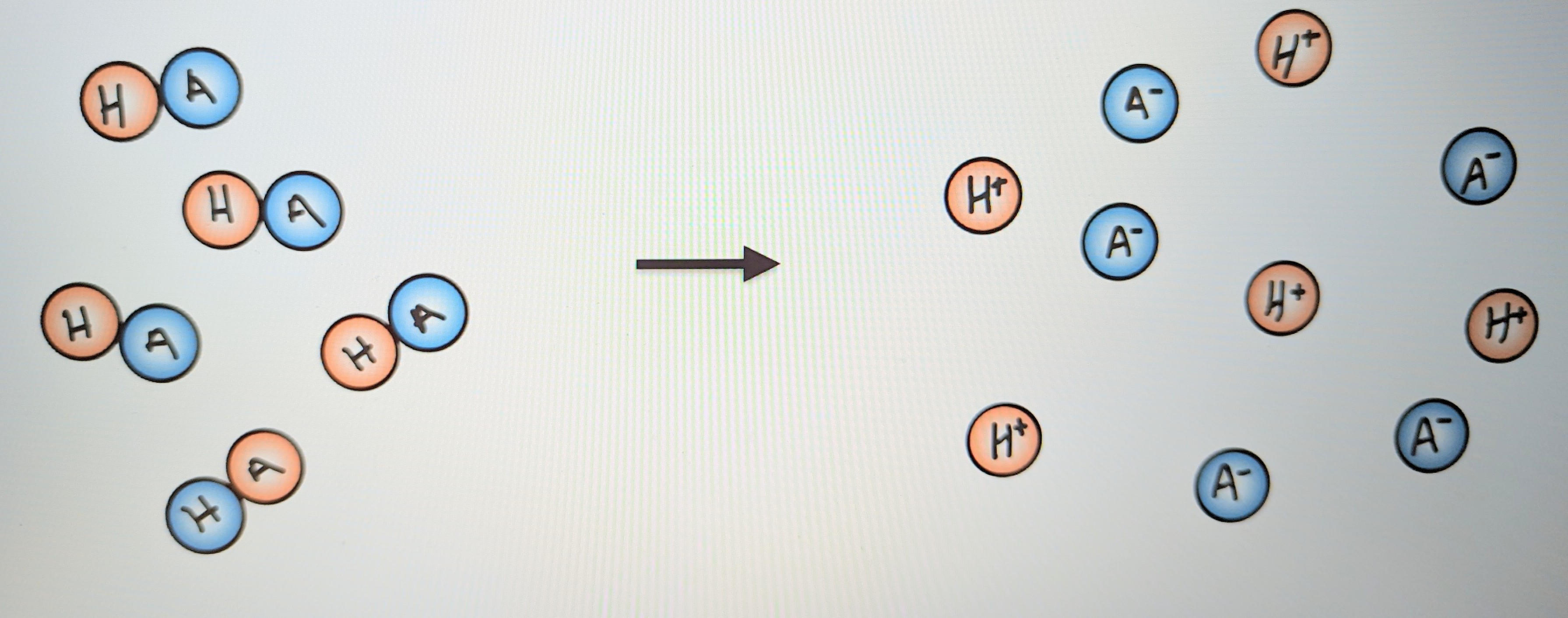
Strong Acids Fully Dissociate when they Dissolve In Water.
No Molecules of Original Acid Left & Change is Not Reversible.
No Molecules of Original Acid Left & Change is Not Reversible.
71
Give Examples of strong acids
• Hydrochloric Acid
• Sulphuric Acid
• Nitric Acid
• Sulphuric Acid
• Nitric Acid
72
Define Weak Acids
Weak Acids Don't Fully Dissociate into Ions when they Dissolve in Water.
Only some of Original Acid Molecules Associate into Ions & the Change is Reversible
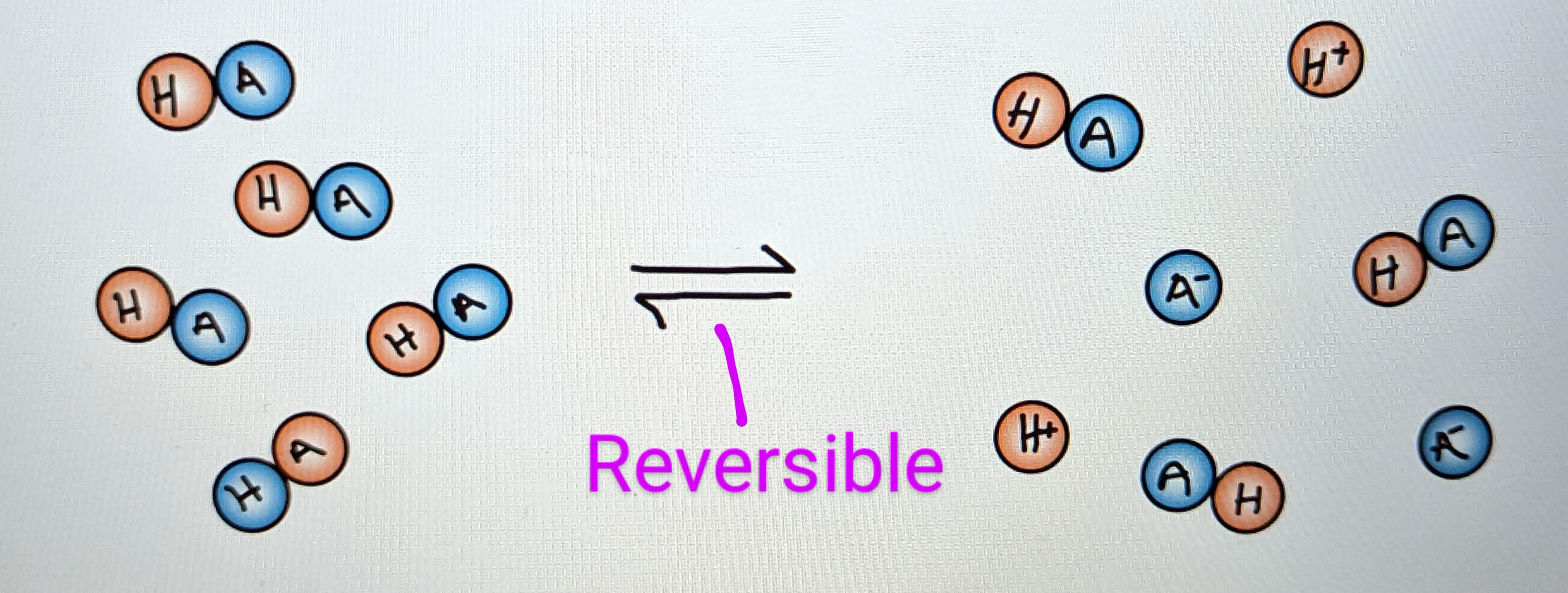
Only some of Original Acid Molecules Associate into Ions & the Change is Reversible
73
Give Examples of weak acids
• Ethanoic Acid (viniger)
• Citric Acid (lemons)
• Carbonic Acid (fizzy drinks &acid rain)
• Citric Acid (lemons)
• Carbonic Acid (fizzy drinks &acid rain)
74
How does the concentration of H+ ions change for each pH?
pH 1 there is 1 number before decimal (0.1)
pH 2- 0.01
pH 3- 0.001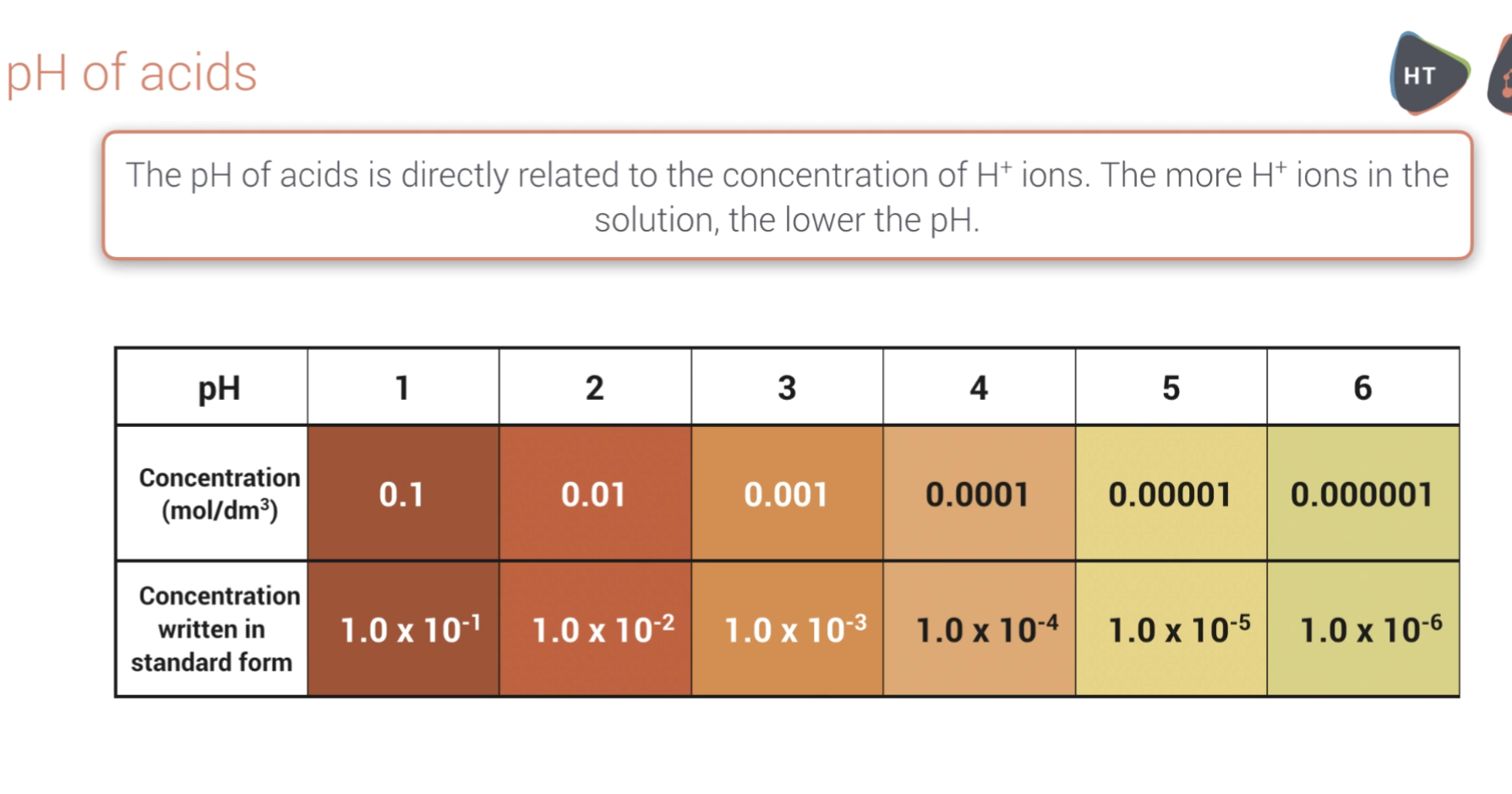
pH 2- 0.01
pH 3- 0.001
75
How is the pH determined for a Acid?
pH of Acids is Directly Related to the Concentration of H+ ions.
More H+ ions in the Solution, the Lower the pH.
More H+ ions in the Solution, the Lower the pH.
76
Define Concentrated Acid
High Number of Molecules Dissolve, per dm³ of solution
77
Define Dilute Acid
Low Number of Molecules Dissolved per dm³ of Solution
(high concentration of water)
(high concentration of water)
78
How do you decrease an acids pH?
By using a Stronger Acid Or Increase Concentration of Acid (add more acid)
79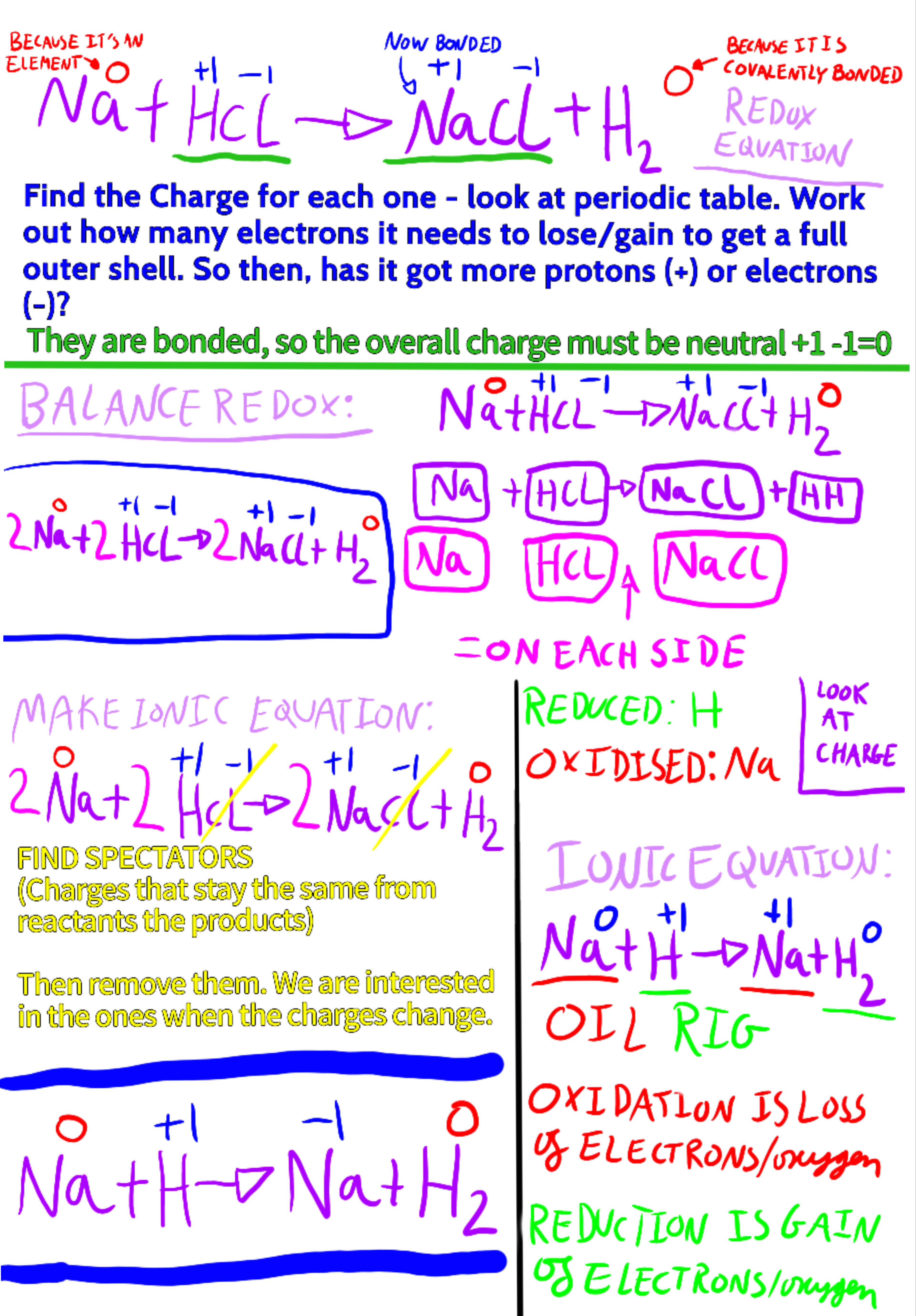
Make Ionic Equation for this Redox Equation & use it to find What has been Oxidized & Reduced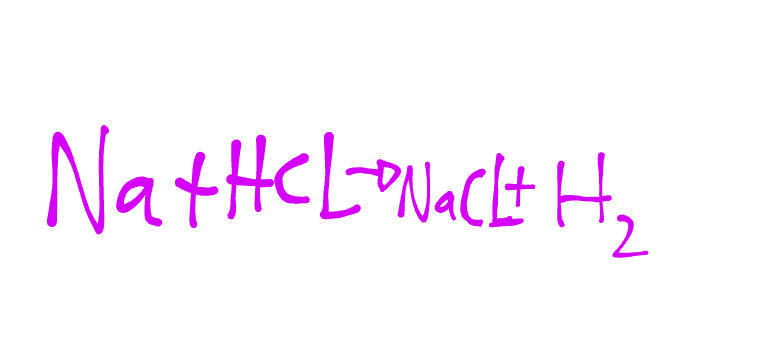
80
Define Dissociate
The Breaking Apart of a Molecule into Ions when Dissolved in Water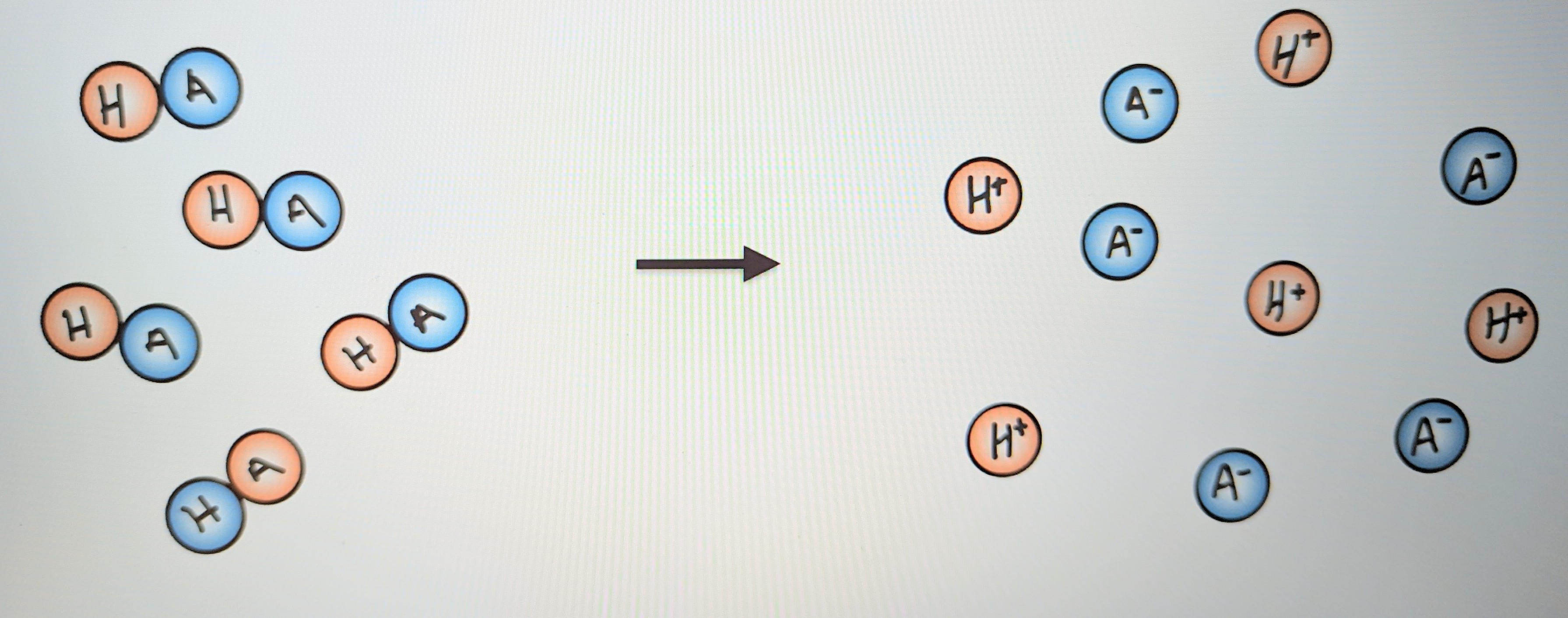
81
Define Redox
Reduction & Oxidation
82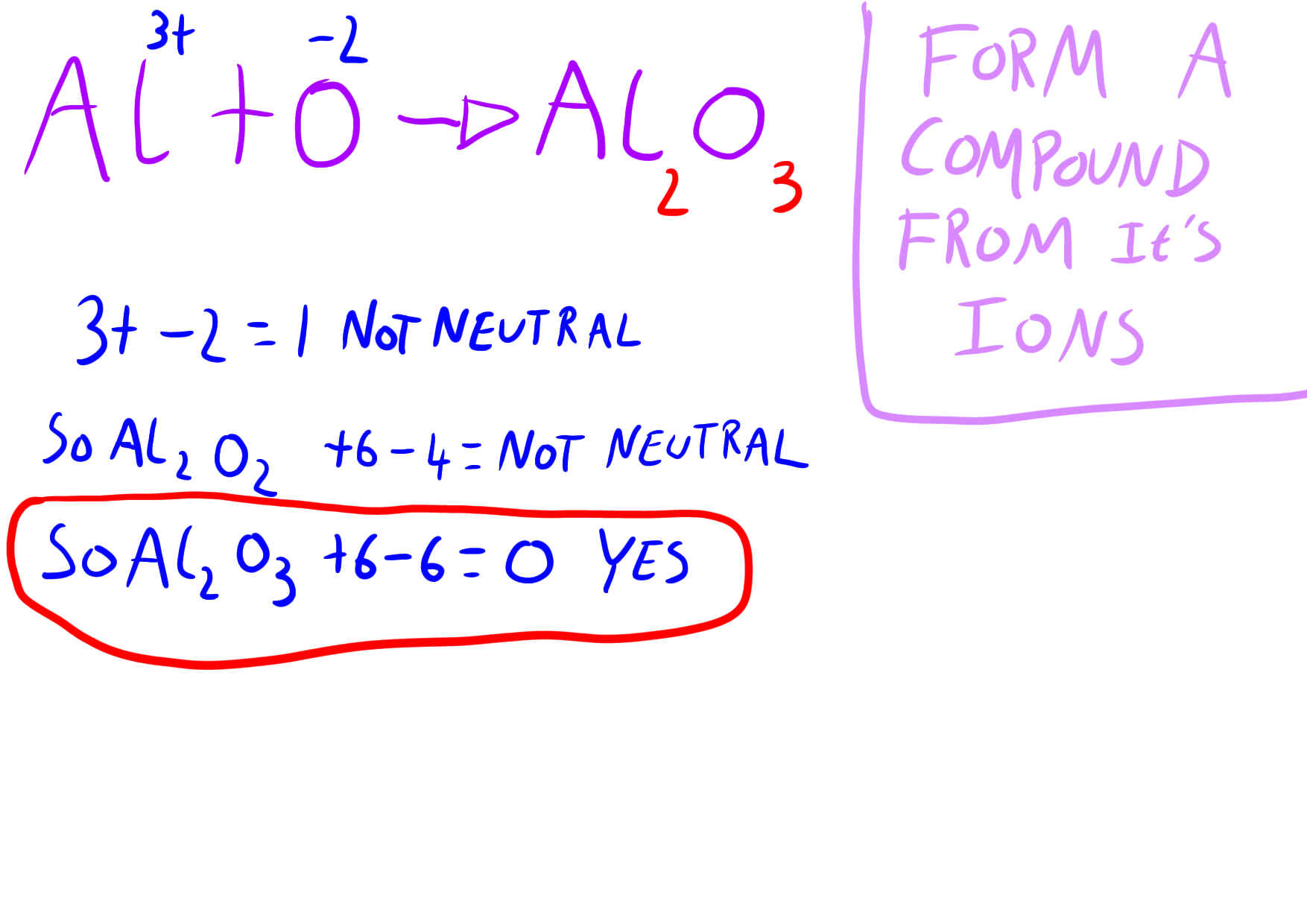
Form the Compound out of it's ions