REQUIRED PRACTICAL PAPER 2 CHEM
Study these flashcardsFree · spaced repetition · iPhone, Android, Mac & web
All cards
1
METHODS FOR
Rate of Reaction Required Practical Measuring Production of Gas
Rate of Reaction Required Practical Measuring Production of Gas
• Clamp a Gas Syringe To Clamp Stand
• Measure out 50ml of Hydrochloric Acid Using a Measuring Cylinder, then Pour Into Conical Flask
• Push Delivery Tube to End
• Weigh 0.5g of Powdered Calcium Carbonate on Balance Scale & Add to Conical Flask - add bung with Ml Of Capillary Tube - Start Timer
• Record Volume of CO2 Every 10 Seconds
• Rinse & Repeat with Different Concentrations of Acid
• Tends to be Transition Metals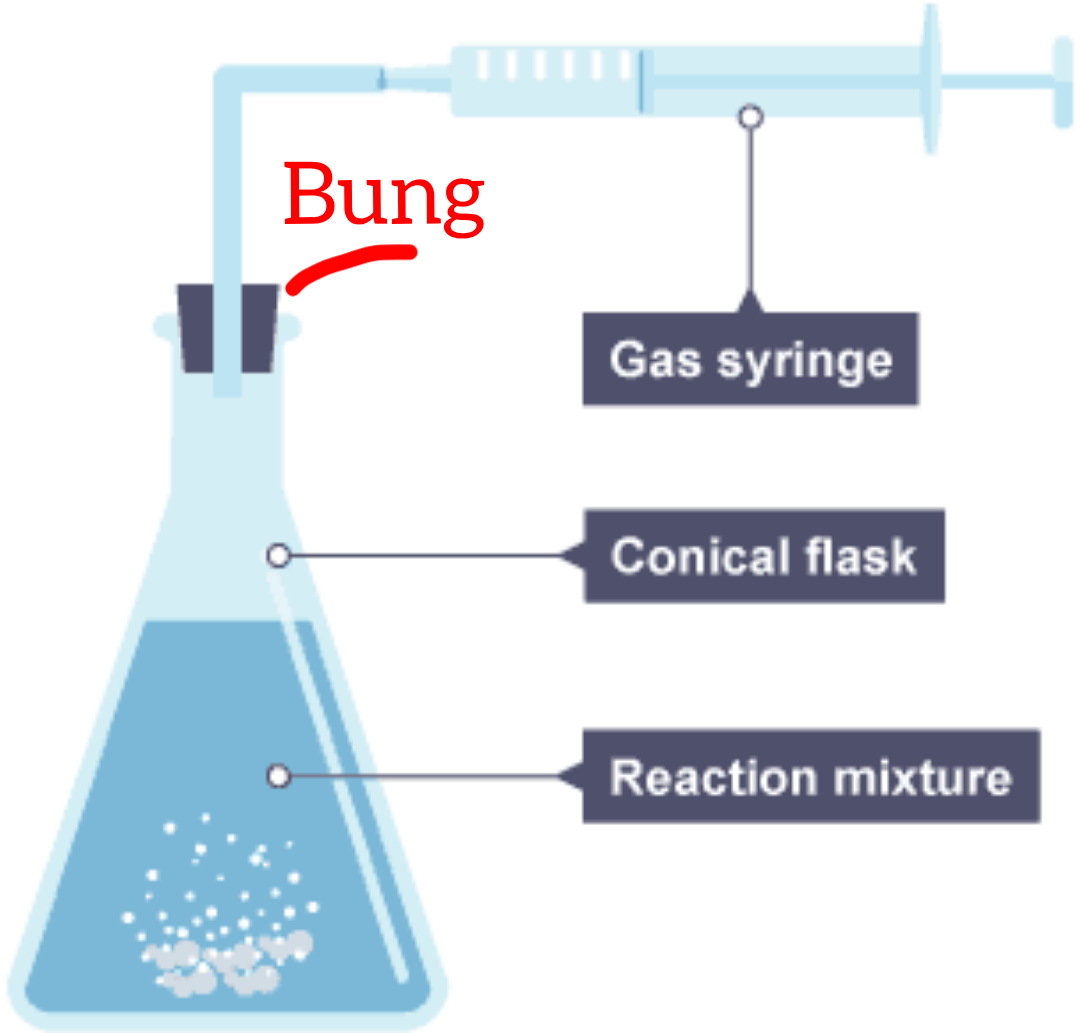
• Measure out 50ml of Hydrochloric Acid Using a Measuring Cylinder, then Pour Into Conical Flask
• Push Delivery Tube to End
• Weigh 0.5g of Powdered Calcium Carbonate on Balance Scale & Add to Conical Flask - add bung with Ml Of Capillary Tube - Start Timer
• Record Volume of CO2 Every 10 Seconds
• Rinse & Repeat with Different Concentrations of Acid
• Tends to be Transition Metals
2
EQUATION FOR
Rate of Reaction Required Practical Measuring Production of Gas
Rate of Reaction Required Practical Measuring Production of Gas
calcium carbonate + hydrochloric acid → calcium chloride + water + carbon dioxide
CaCO3(s) + 2HCl(aq) → CaCl2(aq) + H2O(l) + CO2(g)
CaCO3(s) + 2HCl(aq) → CaCl2(aq) + H2O(l) + CO2(g)
3
WHAT EQUATION FOR
Rate of Reaction Required Practical Change in Colour
Rate of Reaction Required Practical Change in Colour
sodium thiosulfate + hydrochloric acid → sodium chloride + water + sulfur dioxide + sulfur
Na2S2O3(s) + 2HCl(aq) → 2NaCl(aq) + H2O(l) + SO2(g) + S(s)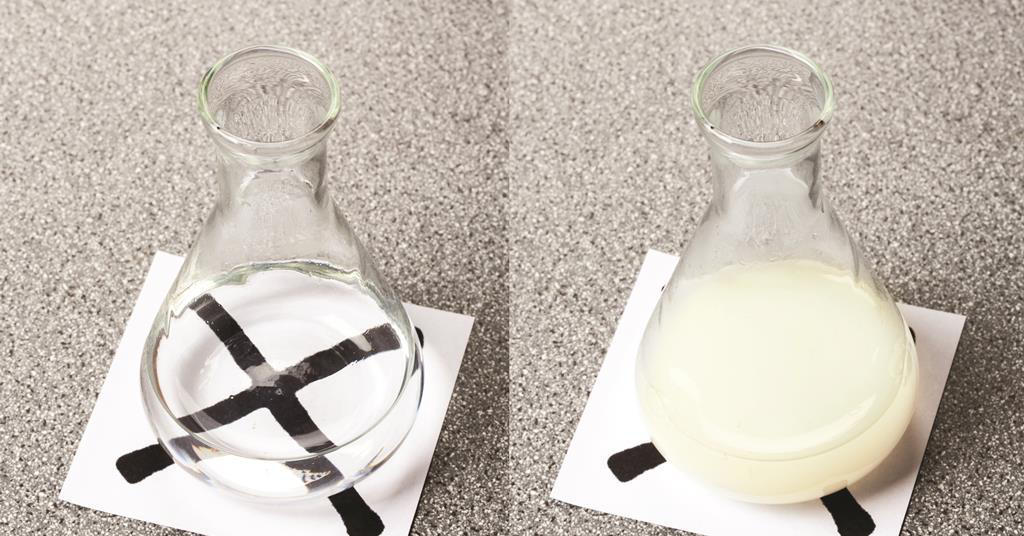
Na2S2O3(s) + 2HCl(aq) → 2NaCl(aq) + H2O(l) + SO2(g) + S(s)
4
METHOD FOR
Rate of Reaction Required Practical Change in Colour
Rate of Reaction Required Practical Change in Colour
• Black X on a White Tile
• For First Temperature Measure Out 25cm³ of Sodium Thiosulfate Using Measuring Cylinder & Pour Into a Conical Flask
• Place Conical Flask Over White Tile
• Measure 10cm³ of HCl in Separate Measuring Cylinders & then Add to Conical Flask Start Stopwatch
• Look Down Directly into Conical Flask
• Stop Stopwatch When X is No Longer Visible
• Record Table
• Repeat Diff Concentrations of Sodium Thiosulfate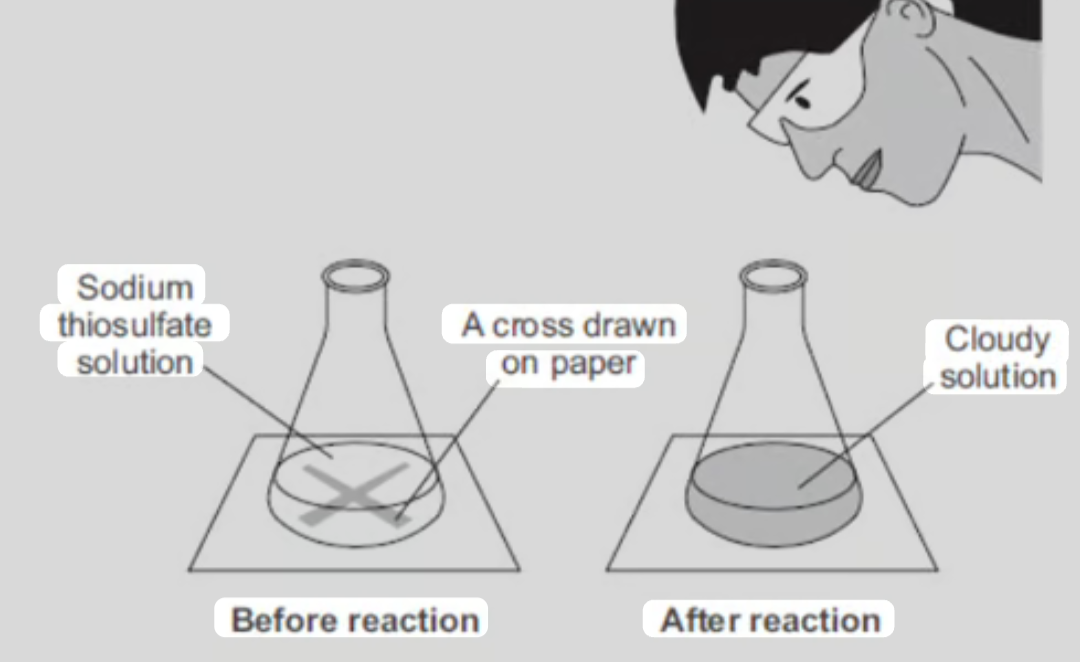
• For First Temperature Measure Out 25cm³ of Sodium Thiosulfate Using Measuring Cylinder & Pour Into a Conical Flask
• Place Conical Flask Over White Tile
• Measure 10cm³ of HCl in Separate Measuring Cylinders & then Add to Conical Flask Start Stopwatch
• Look Down Directly into Conical Flask
• Stop Stopwatch When X is No Longer Visible
• Record Table
• Repeat Diff Concentrations of Sodium Thiosulfate
5
What is Method for Chromatography REQUIRED PRACTICAL?
1) Draw Horizontal Pencil Line 2 cm from Short Edge of Chromatography Paper.
Mark Each Colouring Name at Equal Intervals Across Line Not Too Close To The End Paper.
2. Use Capillary Tube to put a Spots of Each Colouring on Line. A
- Small Spot Ensures Colouring Separates Clearly.
3)Pour Water into Beaker
4) Suspend Paper in Beaker so Bottom Edge of Paper Touches Water.
- Make Sure Sides of Paper Do Not Touch Beaker Wall
5. Wait for Water Solvent to Travel at Least Three Quarters Up Paper.
Remove Paper & Draw Another Pencil Line Where Solvent Front is.
6. Hang Paper Up To Dry.
7. Calculate the Rf
values for each spot. Rf value is calculated by distance travelled by
substance/ solvent front.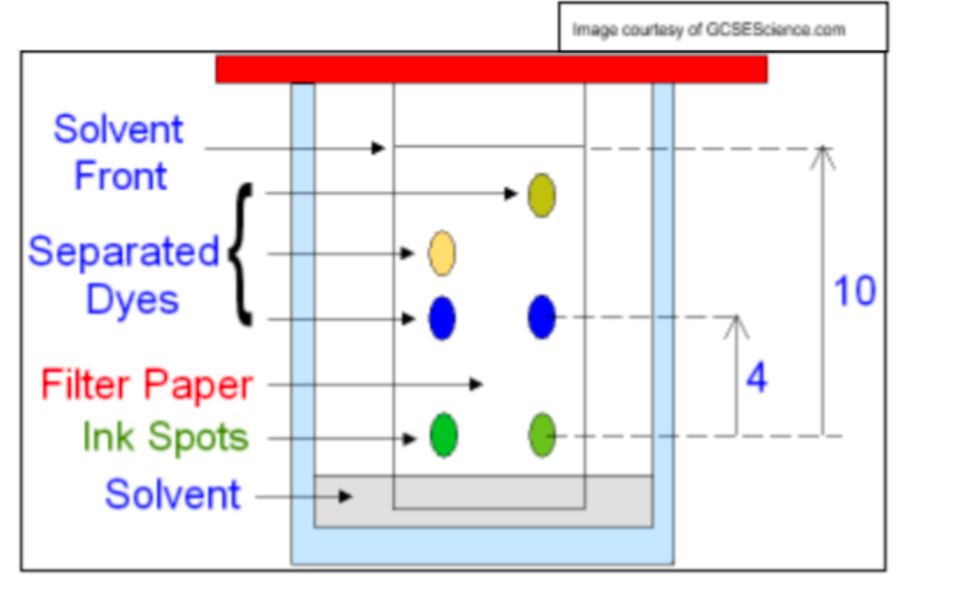
Mark Each Colouring Name at Equal Intervals Across Line Not Too Close To The End Paper.
2. Use Capillary Tube to put a Spots of Each Colouring on Line. A
- Small Spot Ensures Colouring Separates Clearly.
3)Pour Water into Beaker
4) Suspend Paper in Beaker so Bottom Edge of Paper Touches Water.
- Make Sure Sides of Paper Do Not Touch Beaker Wall
5. Wait for Water Solvent to Travel at Least Three Quarters Up Paper.
Remove Paper & Draw Another Pencil Line Where Solvent Front is.
6. Hang Paper Up To Dry.
7. Calculate the Rf
values for each spot. Rf value is calculated by distance travelled by
substance/ solvent front.
6
What does the Flame Test for Metal Ions Show?
Use of Chemical Tests to Identify ions in Unknown Single Ionic Compounds Covering
ions From Flame Tests & Sulphates.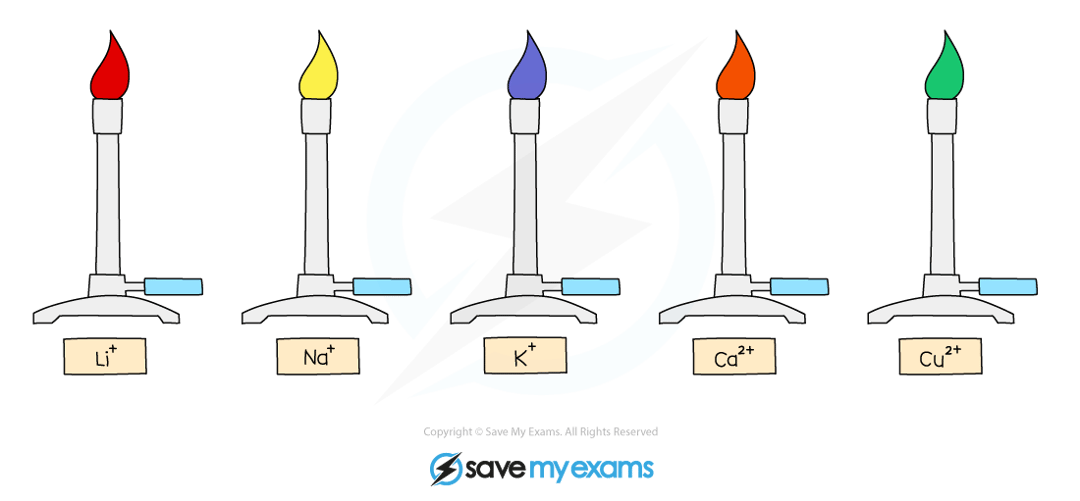
7
What is the Methods for REQUIRED PRACTICAL for Flame Test for Metal Ions?
1. Pour 1 cm³ of Each Known Chloride Solution into 5 Test Tubes.
2. Clean the Nichrome Wire by Dipping it in Dilute Hydrochloric Acid.
3. Dip Nichrome Wire into Solution & Hold Tip in a Blue Bunsen Flame.
4. Record Colour of Flame.
5. Repeat for Following Solutions & Make Sure to Clean Wire After Each Test.
6. Pour 1 cm³ of Unknown Salt Solution into Test Tube.
7. Dip ichrome Wire into Solution & Hold Tip in Blue Bunsen Flame.
8. Record Colour Flame, should Able to Compare Results With
Known Chloride with Matching Colour Flame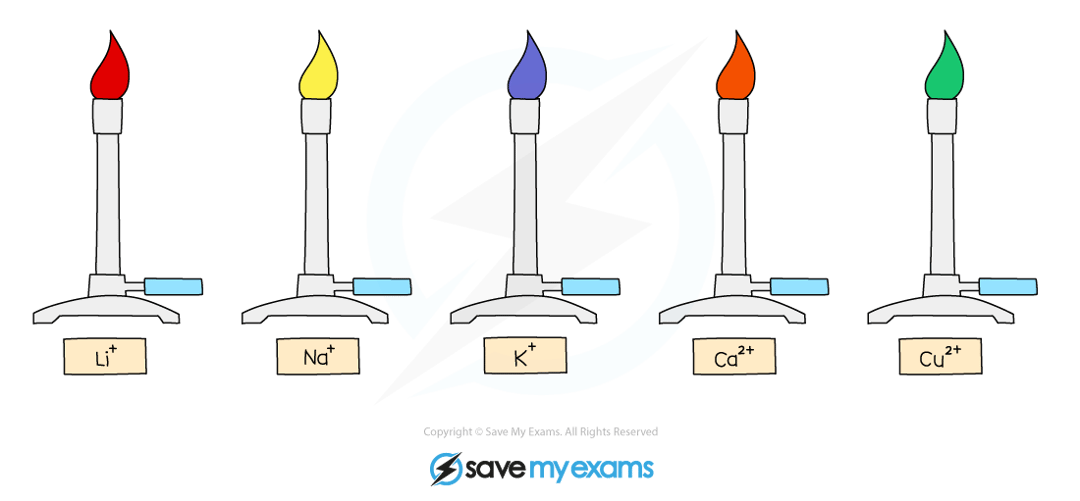
2. Clean the Nichrome Wire by Dipping it in Dilute Hydrochloric Acid.
3. Dip Nichrome Wire into Solution & Hold Tip in a Blue Bunsen Flame.
4. Record Colour of Flame.
5. Repeat for Following Solutions & Make Sure to Clean Wire After Each Test.
6. Pour 1 cm³ of Unknown Salt Solution into Test Tube.
7. Dip ichrome Wire into Solution & Hold Tip in Blue Bunsen Flame.
8. Record Colour Flame, should Able to Compare Results With
Known Chloride with Matching Colour Flame
8
What are the Results for the Flame Tests for Metal Ions?
-Lithium (Li+) – Crimson Flame
- Sodium (Na+) – Yellow Flame
- Potassium (K+) – Lilac Flame
- Calcium (Ca2+) – Orange-Red Flame
- Copper (II) (Cu2+) – Green Flame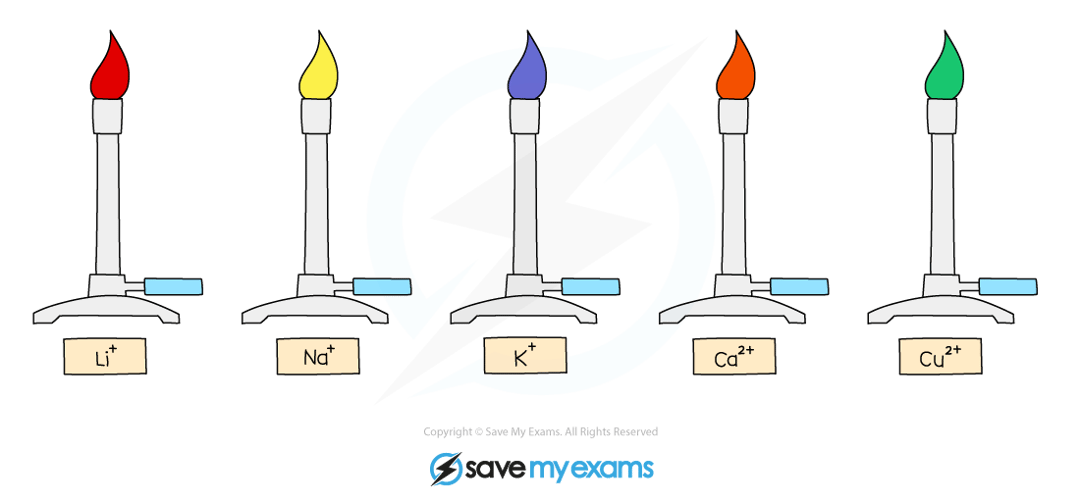
- Sodium (Na+) – Yellow Flame
- Potassium (K+) – Lilac Flame
- Calcium (Ca2+) – Orange-Red Flame
- Copper (II) (Cu2+) – Green Flame
9
What is the Methods for the Carbonate ion (CO3²-) Test REQUIRED PRACTICAL?
1. Place a 2 cm³ of Limewater in a Clean Test Tube.
2. Add a Little Dilute Hydrochloric Acid to Unknown Solution.
3. If See Bubbles, Transfer Gas Produced to Limewater Using Delivery Tube.
4. Repeat Process for Known Sodium Solutions to Identify Carbonates Ions..
2. Add a Little Dilute Hydrochloric Acid to Unknown Solution.
3. If See Bubbles, Transfer Gas Produced to Limewater Using Delivery Tube.
4. Repeat Process for Known Sodium Solutions to Identify Carbonates Ions..
10
What are the Results for the Carbonate ion (CO3²-) Test REQUIRED PRACTICAL?
Bubbles Produced & Limewater Goes Cloudy If Present
11
What is the Methods for the Sulphate ion (SO4²-) Test?
1. Add 10 Drops of Dilute Hydrochloric Acid to Unknown Solution in Test Tube.
2. Add 2 cm³ Barium Chloride Solution.
3. Pour 1 cm³ of Known Sodium Solutions into Separate Test Tubes.
4. Add 5 Drops of Dilute Hydrochloric Acid & then 2 cm³ of Barium Chloride.
2. Add 2 cm³ Barium Chloride Solution.
3. Pour 1 cm³ of Known Sodium Solutions into Separate Test Tubes.
4. Add 5 Drops of Dilute Hydrochloric Acid & then 2 cm³ of Barium Chloride.
12
What Are Results if Present for the Sulphate ion (SO4²-) Test?
White Precipitate Formed If Present.
13
What is the Required Practical for Analysing a Sample of Water / Portable Water from Salty Water?
1. Universal Indicator to Test pH of Water.
2. Measure & Record Mass of Empty Evaporating Basin.
3. Pour Water into Evaporating Basin & Evaporate Water using Bunsen Burner Until Most Water Evaporated.
4. Once Evaporating Basin is Cool, Re-weigh & Record Change in Mass.
5. Calculate Mass of Dissolved Solids in Water.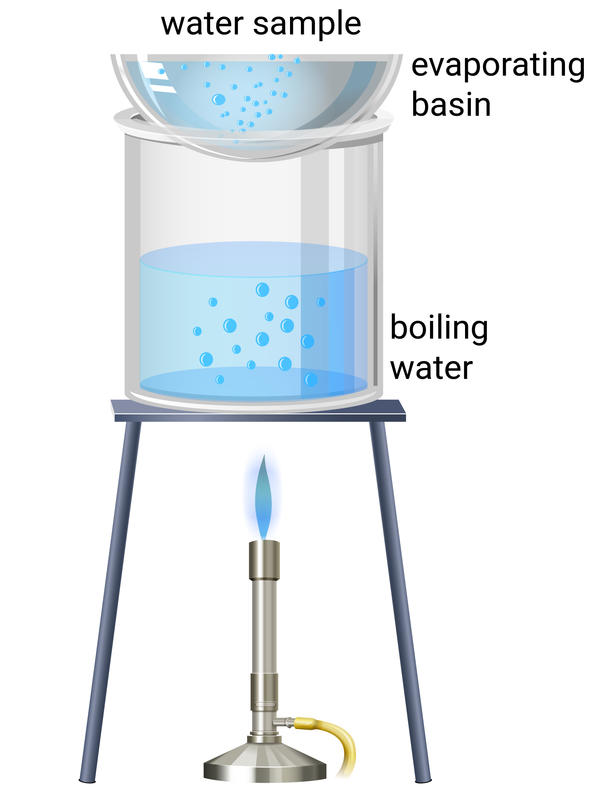
2. Measure & Record Mass of Empty Evaporating Basin.
3. Pour Water into Evaporating Basin & Evaporate Water using Bunsen Burner Until Most Water Evaporated.
4. Once Evaporating Basin is Cool, Re-weigh & Record Change in Mass.
5. Calculate Mass of Dissolved Solids in Water.