Particle Model
Study these flashcardsFree · spaced repetition · iPhone, Android, Mac & web
All cards
1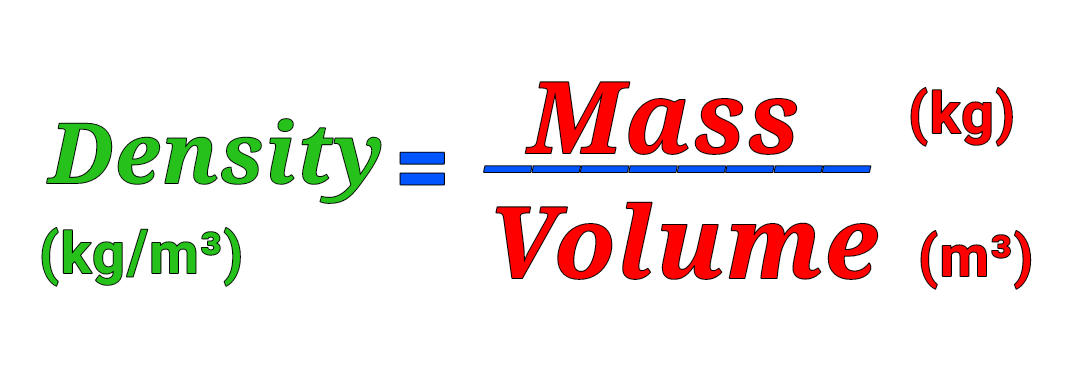
What is the Density Equation & Units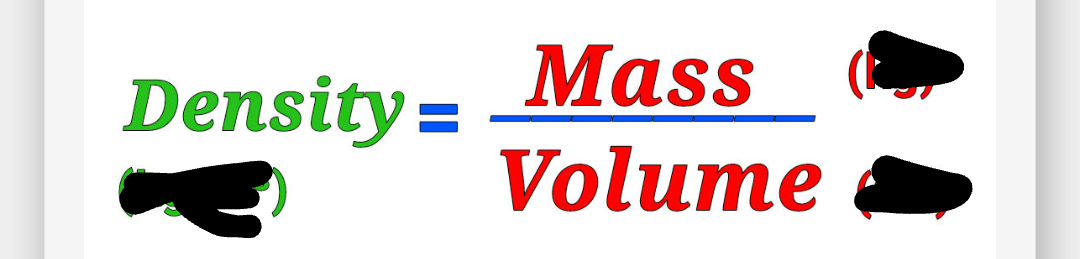
2
What are the steps for calculating the Density of a Regular Solid REQUIRED PRACTICAL?
1) Find mass of the Solid on a Balance
2) Measure the 3 Dimensions to Calculate the Volume
3) Calculate Density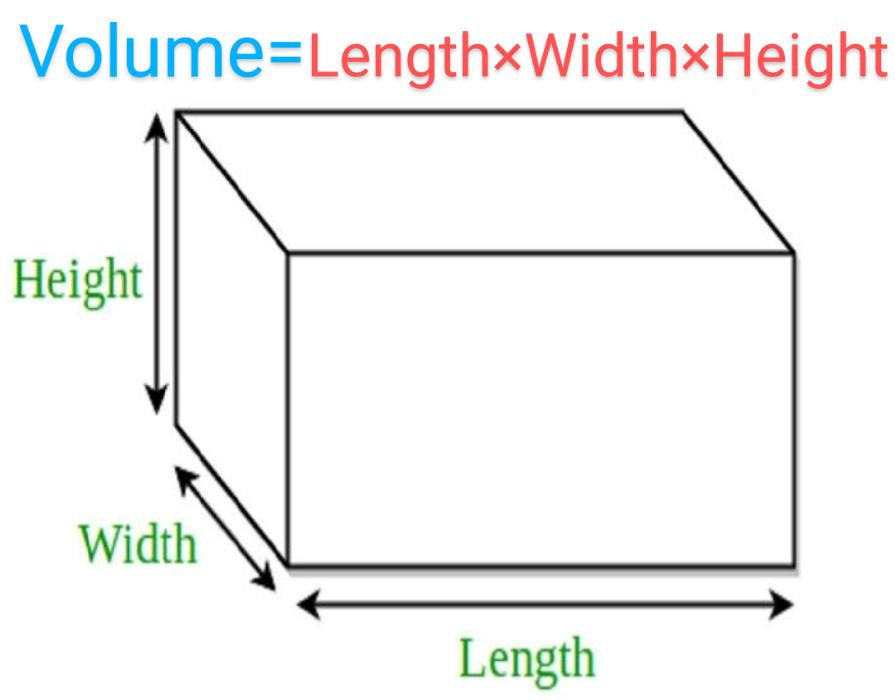
2) Measure the 3 Dimensions to Calculate the Volume
3) Calculate Density
3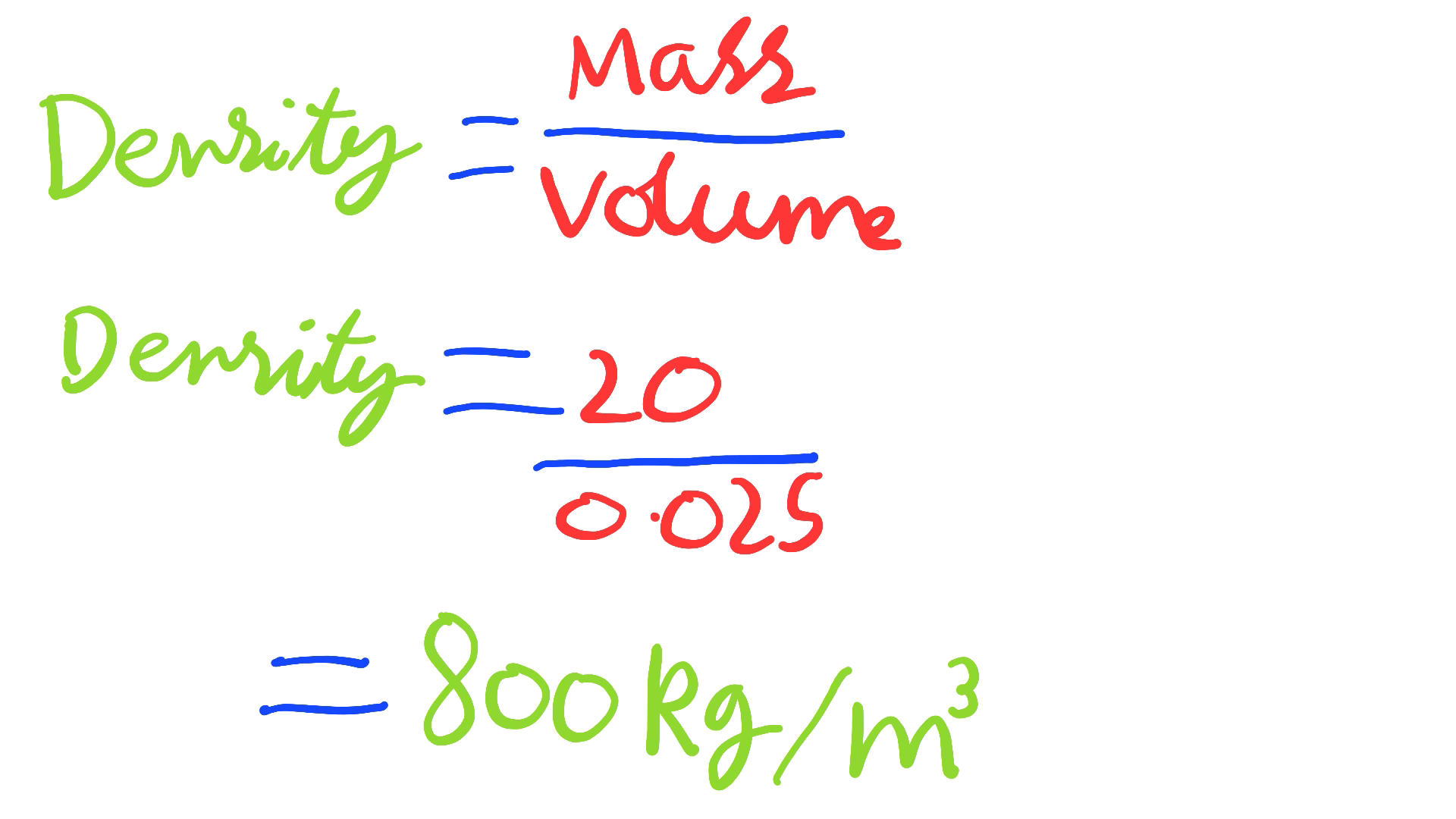
Calculate A piece of wood with volume of 0.25 m³ and a mass of 20 kg. what's the density?
4
What are the steps for calculating the density of a Irregular Solid & How to use Eureka Can? REQUIRED PRACTICE
1) Find mass of the Solid on a Balance
2) Find the Volume with a Eureka Can
3) Calculate Density
Using Eureka Can
1) Add Water until just Overflowing
2) Place a Measuring Cylinder Under Spout
3) Add the Object
4) Collect the Water and Read Off the Volume because
Amount of Water it Displaces is Equal to its Volume.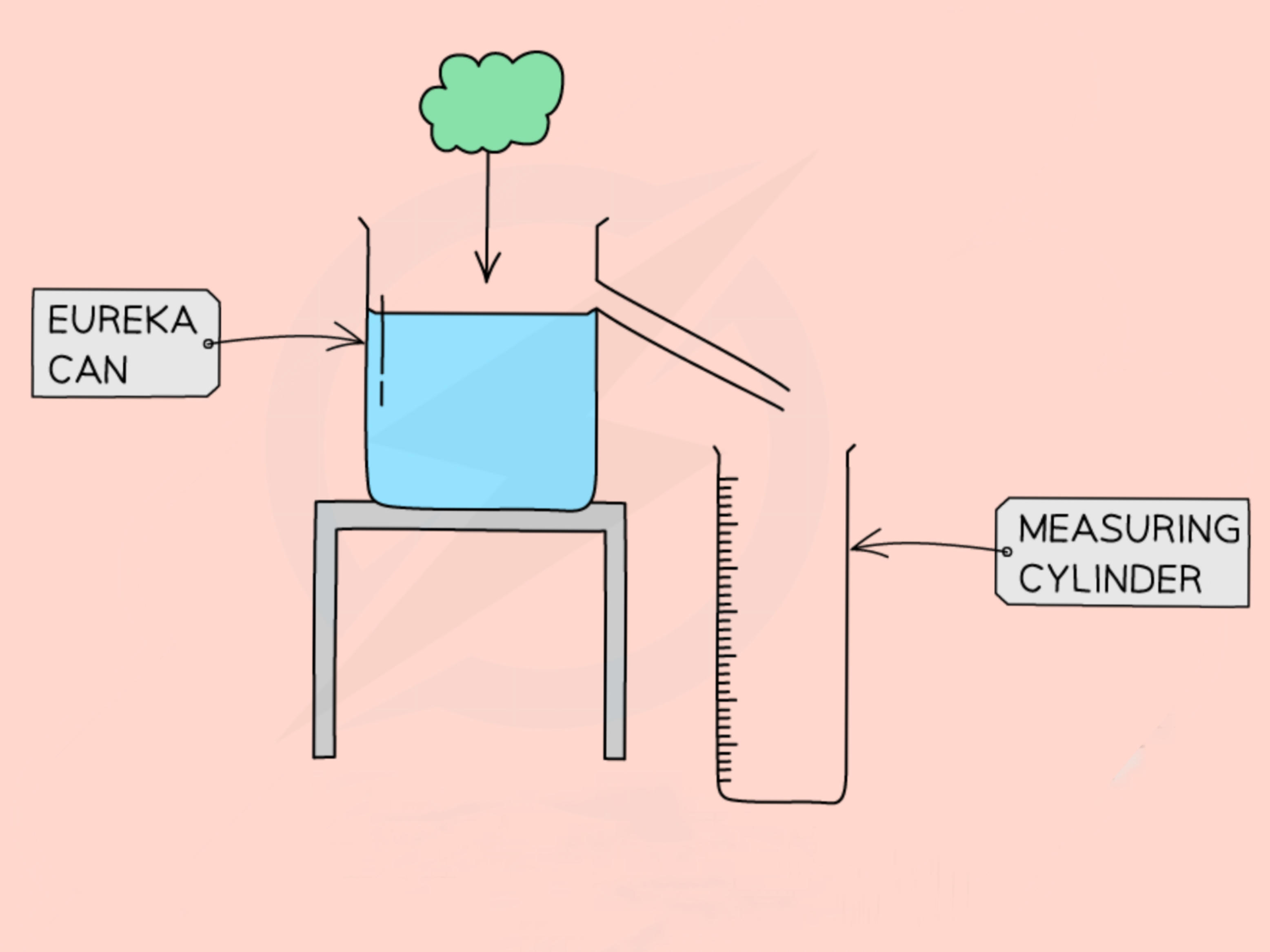
2) Find the Volume with a Eureka Can
3) Calculate Density
Using Eureka Can
1) Add Water until just Overflowing
2) Place a Measuring Cylinder Under Spout
3) Add the Object
4) Collect the Water and Read Off the Volume because
Amount of Water it Displaces is Equal to its Volume.
5
What is ml the same units as & what do you have to do after that?
ml=cm³ so you must convert to m³ because that's the units for volume.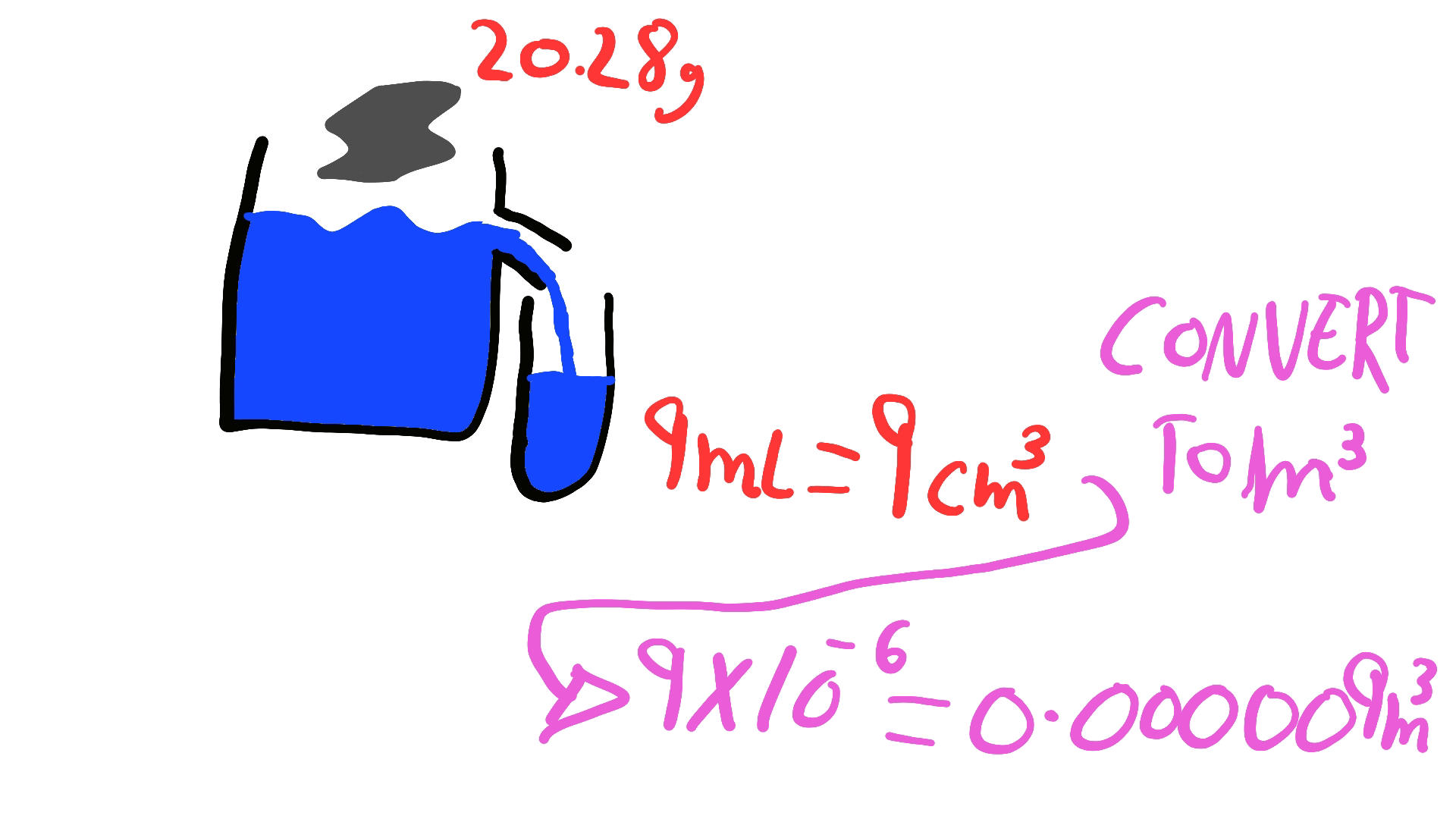
6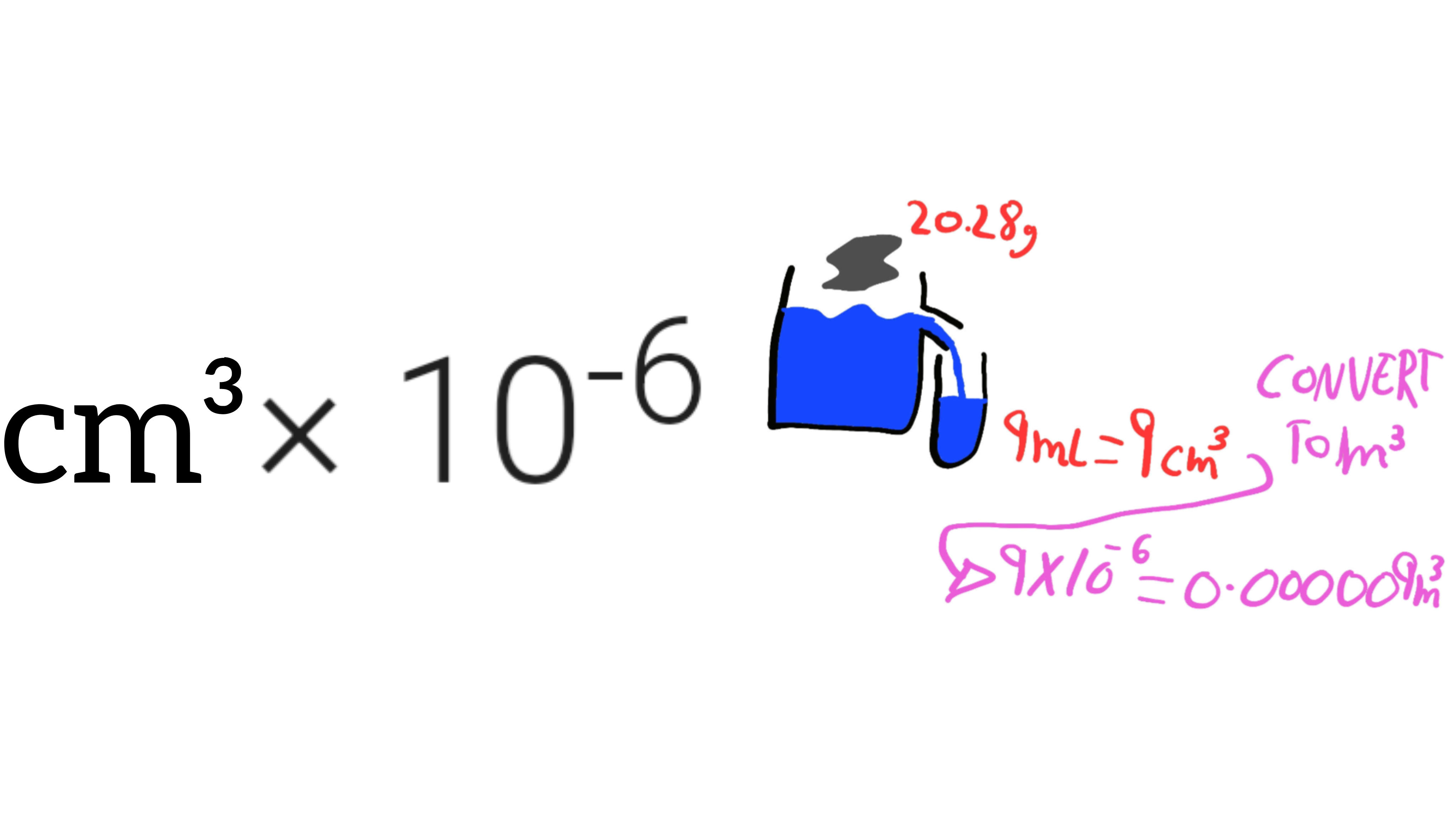
How to Convert cm³ to m³?
7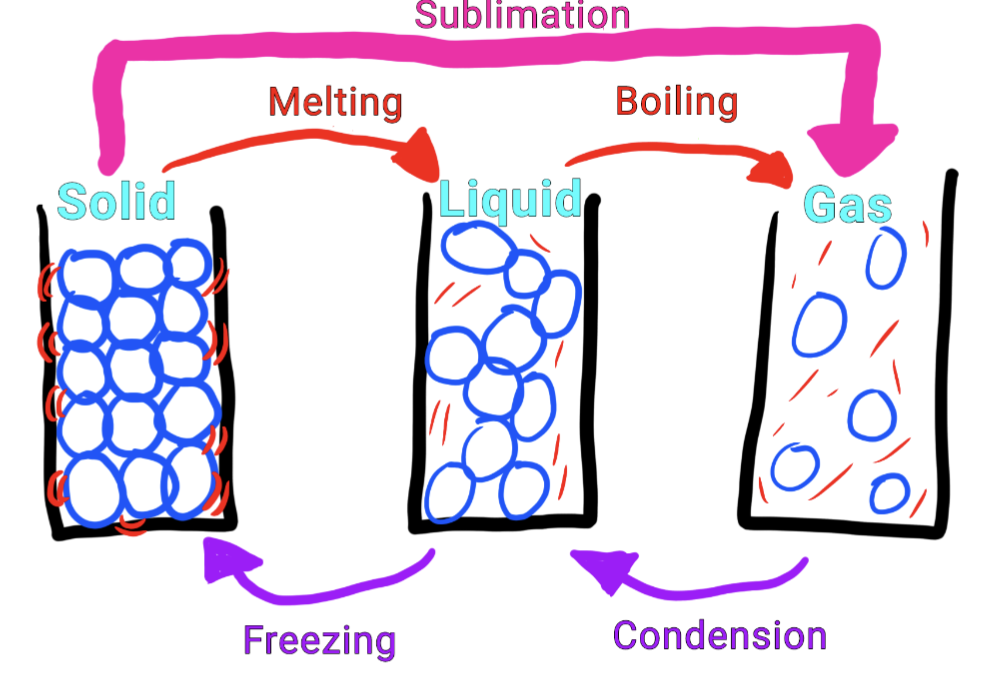
Fill in the gaps for the Changes of State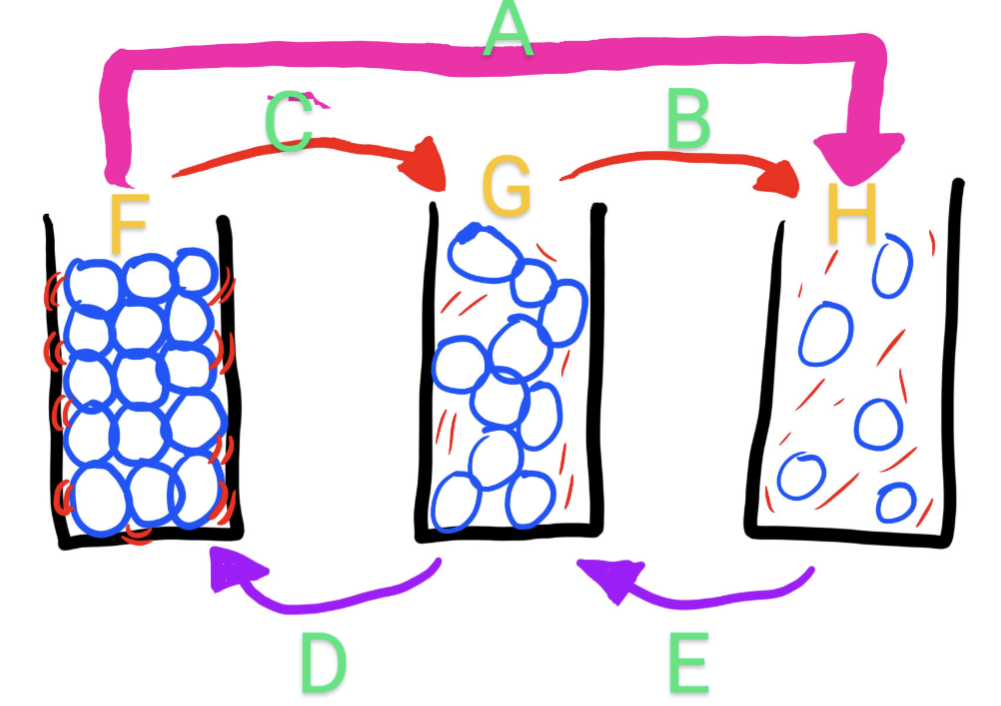
8
What are the properties of a Solid?
Movement of particles: Vibrate
Arrangement:
Ordered Layers
Forces between particles: Strong Attraction
Distance between particles: None
(touch each other)
Fixed shape? : Yes
Fixed Volume? : Yes
Compressibal? : No
Energy particles: Low
(can't move around)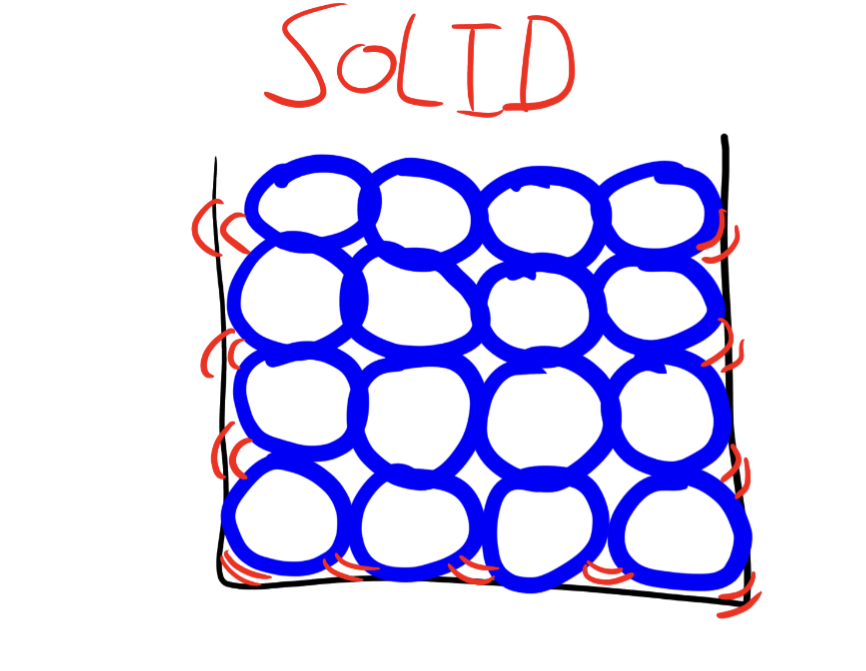
Arrangement:
Ordered Layers
Forces between particles: Strong Attraction
Distance between particles: None
(touch each other)
Fixed shape? : Yes
Fixed Volume? : Yes
Compressibal? : No
Energy particles: Low
(can't move around)
9
What are the properties of a Liquid?
Movement of particles: Slide Past eachother
Arrangement:
Irregular/Random Pattern
Distance between particles: Very close
Fixed shape? : No
Fixed Volume? : Yes
Compressibal? : No
Energy particles: Less than Gass and More than Solid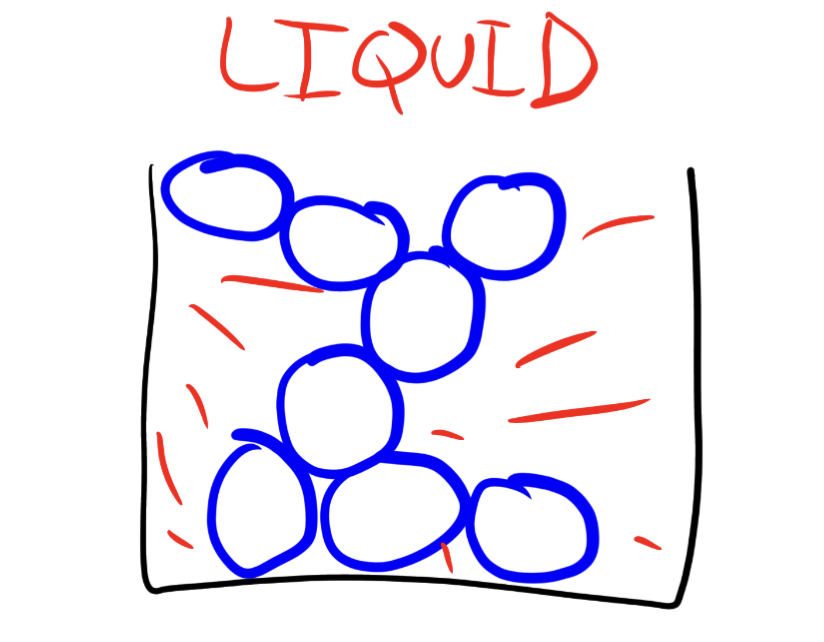
Arrangement:
Irregular/Random Pattern
Distance between particles: Very close
Fixed shape? : No
Fixed Volume? : Yes
Compressibal? : No
Energy particles: Less than Gass and More than Solid
10
What are the properties of a Gas?
Movement of particles: Move in any direction
Arrangement:
Random Pattern
Forces between particles: Week so they move around
Distance between particles: Free
(lots of space)
Fixed shape? : No
Fixed Volume? : No
Compressibal? : Yes
Energy particles: High
(move around fast)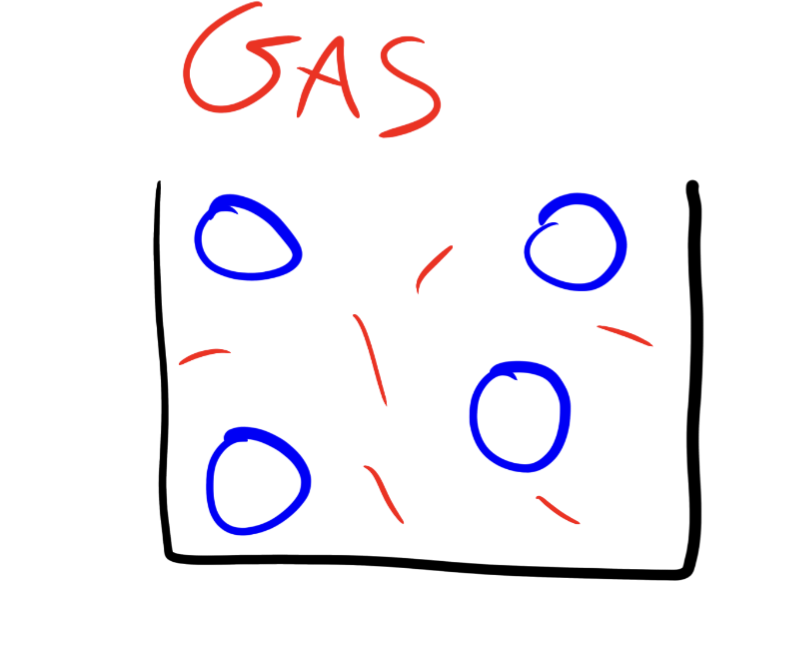
Arrangement:
Random Pattern
Forces between particles: Week so they move around
Distance between particles: Free
(lots of space)
Fixed shape? : No
Fixed Volume? : No
Compressibal? : Yes
Energy particles: High
(move around fast)
11
Define Internal Energy & what is it of
The Internal Energy of a System is the
Total Kinetic and Potential Energy of All of the Particles it Contains.
Total Kinetic and Potential Energy of All of the Particles it Contains.
12
when is a change of state & and how does it happen & how can you tell on a graph?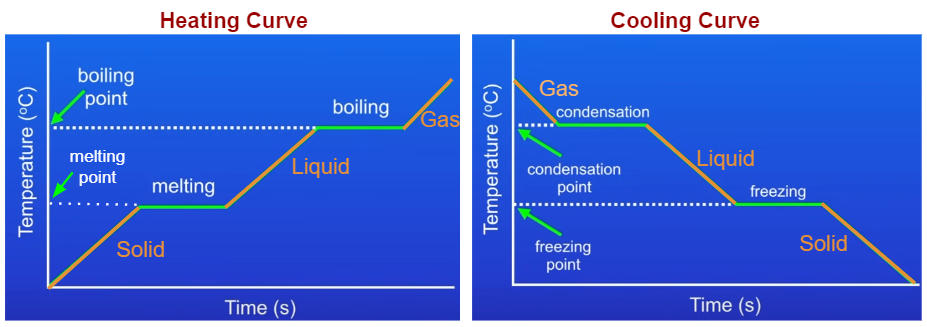
Energy is being Transferred to Make or Break Bonds.
During a change of state, the Temperature Stays Constant.
It is shown by Straight Line.
(flattened/plateaus)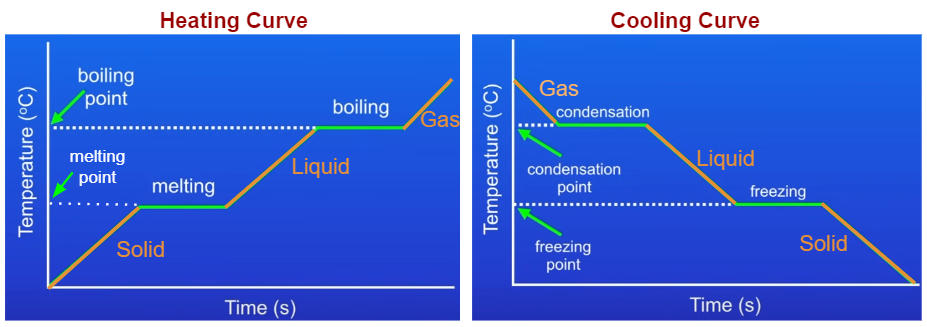
During a change of state, the Temperature Stays Constant.
It is shown by Straight Line.
(flattened/plateaus)
13
Describe a heating and cooling curve?
HEATING CURVE Temperature increase to begin with (it is a solid).
Temperature is constant at Melting Point then increases again
(it is a liquid).
Temperature is constant at Boiling Point. Then increases again
(it is now a gas).
COOLING CURVE
Temperature decreases to begin with (it is a gas).
Temperature is constant at the Boiling Point. Then decreases again
(it is liquid).
Temperature is constant at the Melting Point
(it is solid).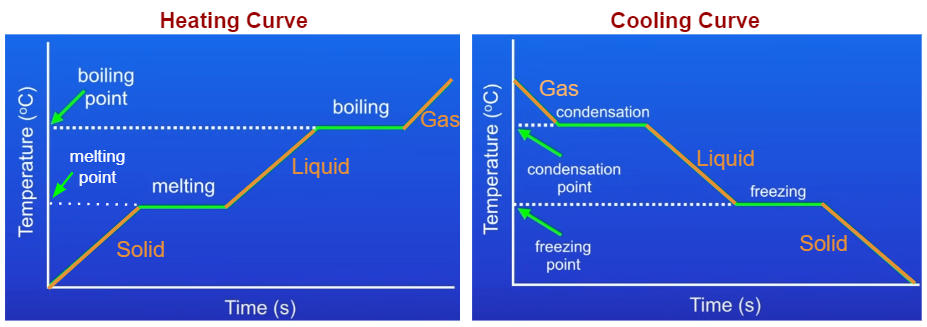
Temperature is constant at Melting Point then increases again
(it is a liquid).
Temperature is constant at Boiling Point. Then increases again
(it is now a gas).
COOLING CURVE
Temperature decreases to begin with (it is a gas).
Temperature is constant at the Boiling Point. Then decreases again
(it is liquid).
Temperature is constant at the Melting Point
(it is solid).
14
What the Units for Specific Heat Capacity?
J/kg °C
15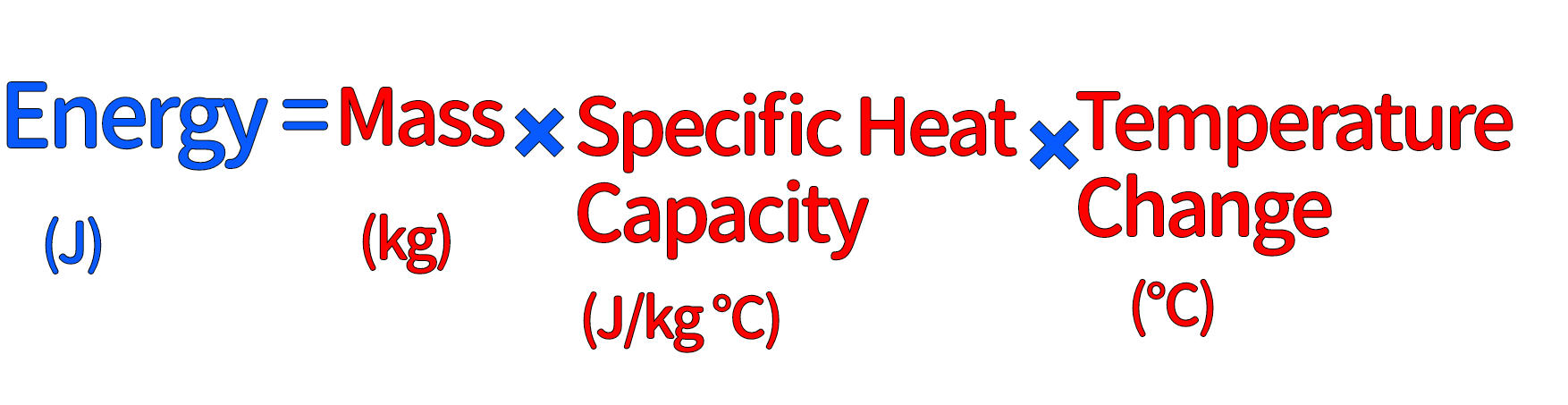
what is the formula that links energy, mass, specific heat capacity and temperature change? (DON'T NEED TO REMEMBER FOR GCSE )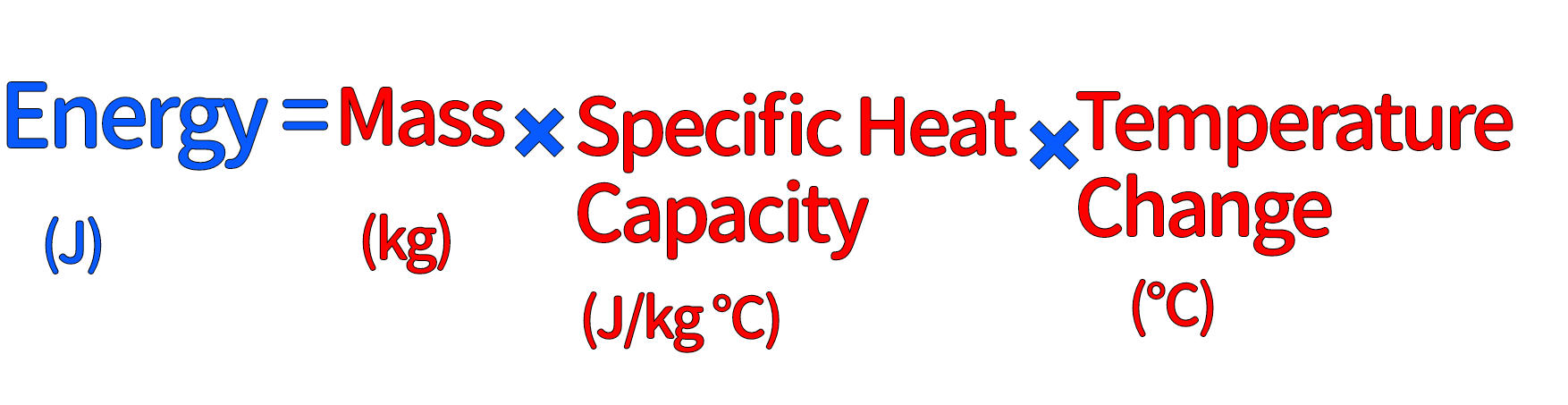
16
Definition of Specific Heat Capacity
The Amount of Energy required to raise 1 kg of the material by 1°C.
17
What the Units for Specific Latent Heat?
J/kg
18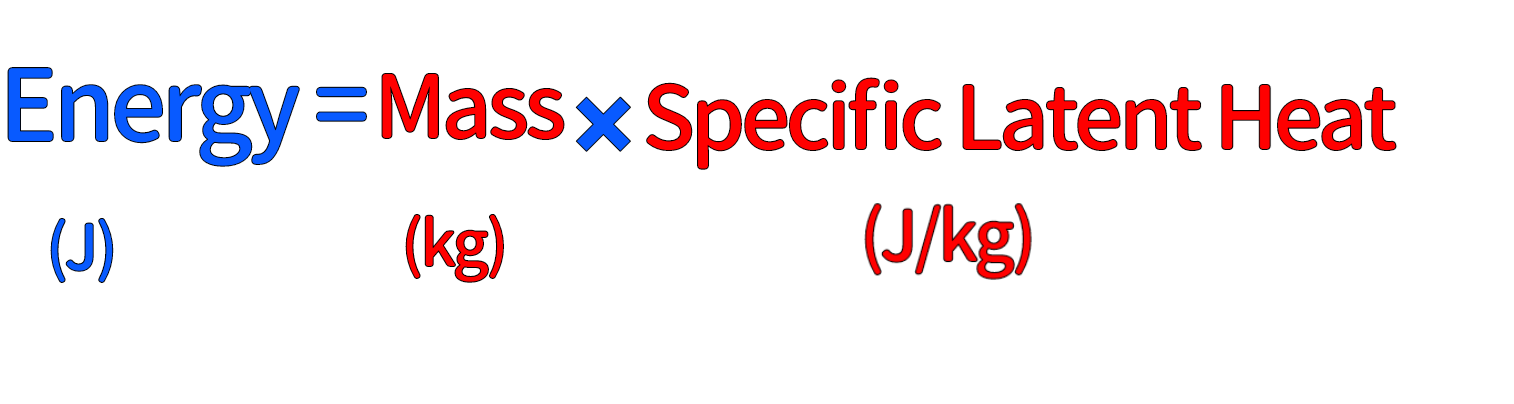
What is the equation that links energy specific latent heat and mass? GET GIVEN IT IN TESTS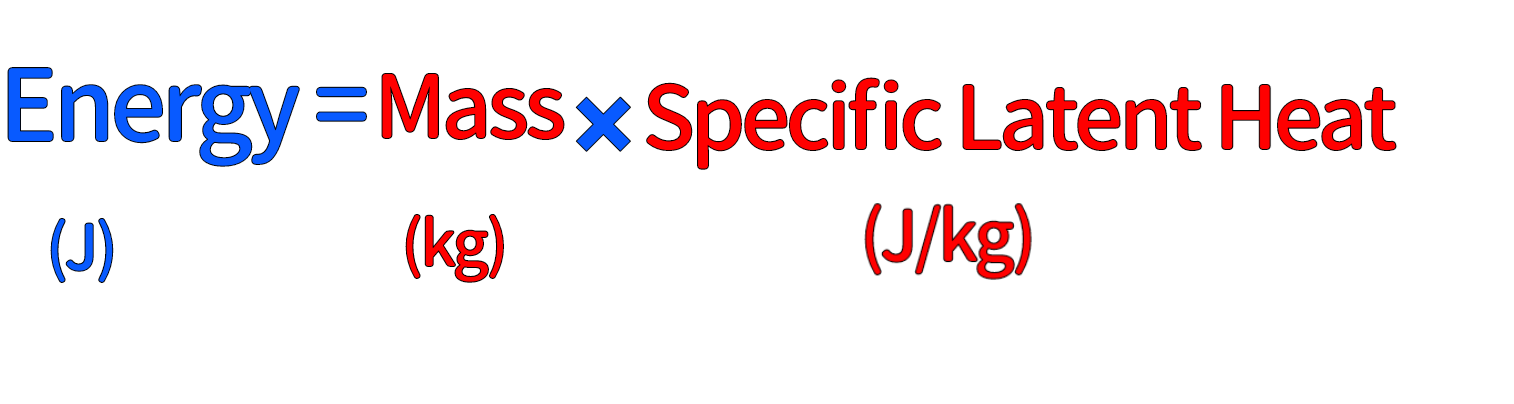
19
What is the Definition of Specific Latent Heat?
The amount of energy for 1kg of a Substance to Change State without Changing Temperature
20
what is the equation for Pressure & units?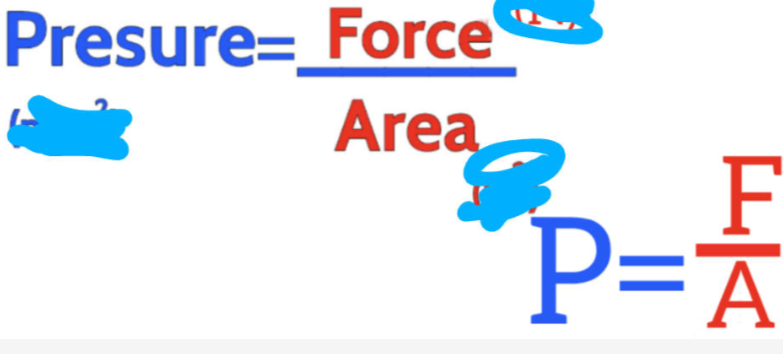
BIG N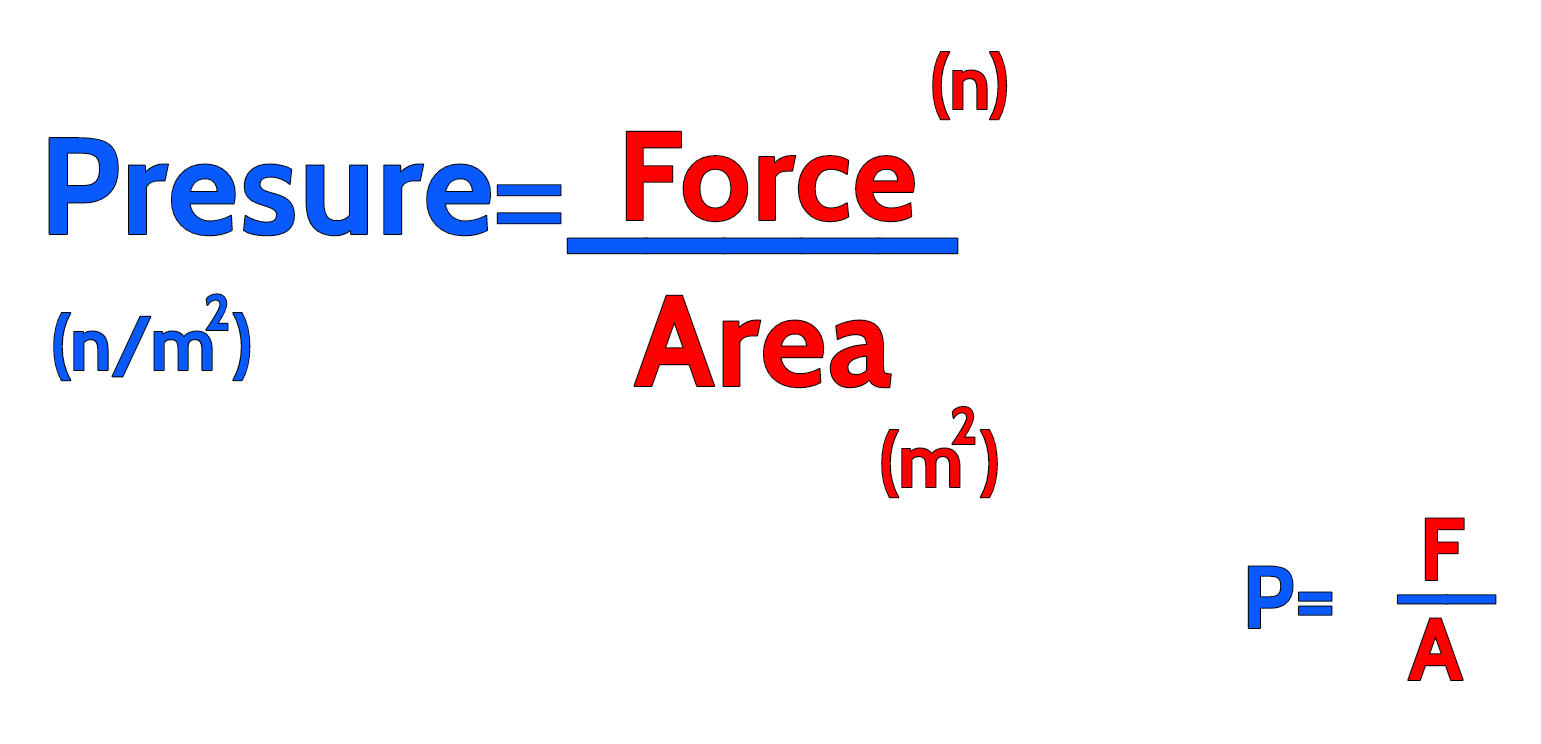
21
How does pressure act on a Can when heated and cooled?
1) The Pressure Inside & Out are Equal
2) During Heating More Kinetic Energy means More Pressure
3) When it goes into Water, the Coldness Takes Away Kinetic Energy.
Therefore More Pressure Outside than Inside so the Can Crushes because of the Imbalance Of Pressure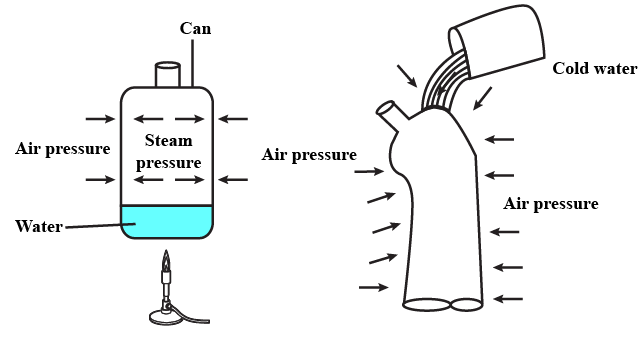
2) During Heating More Kinetic Energy means More Pressure
3) When it goes into Water, the Coldness Takes Away Kinetic Energy.
Therefore More Pressure Outside than Inside so the Can Crushes because of the Imbalance Of Pressure
22
What happens when there are more collisions of particles?
More Collisions of Particles, the Greater the Force
23
when are the more collisions of particles when it's hot or cold & what happens to them?
Hot, particles speed up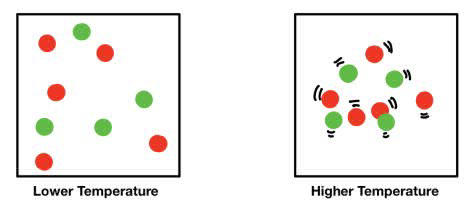
24
What are the two types of units for pressure?
N/m² or Pa (Pascal)
25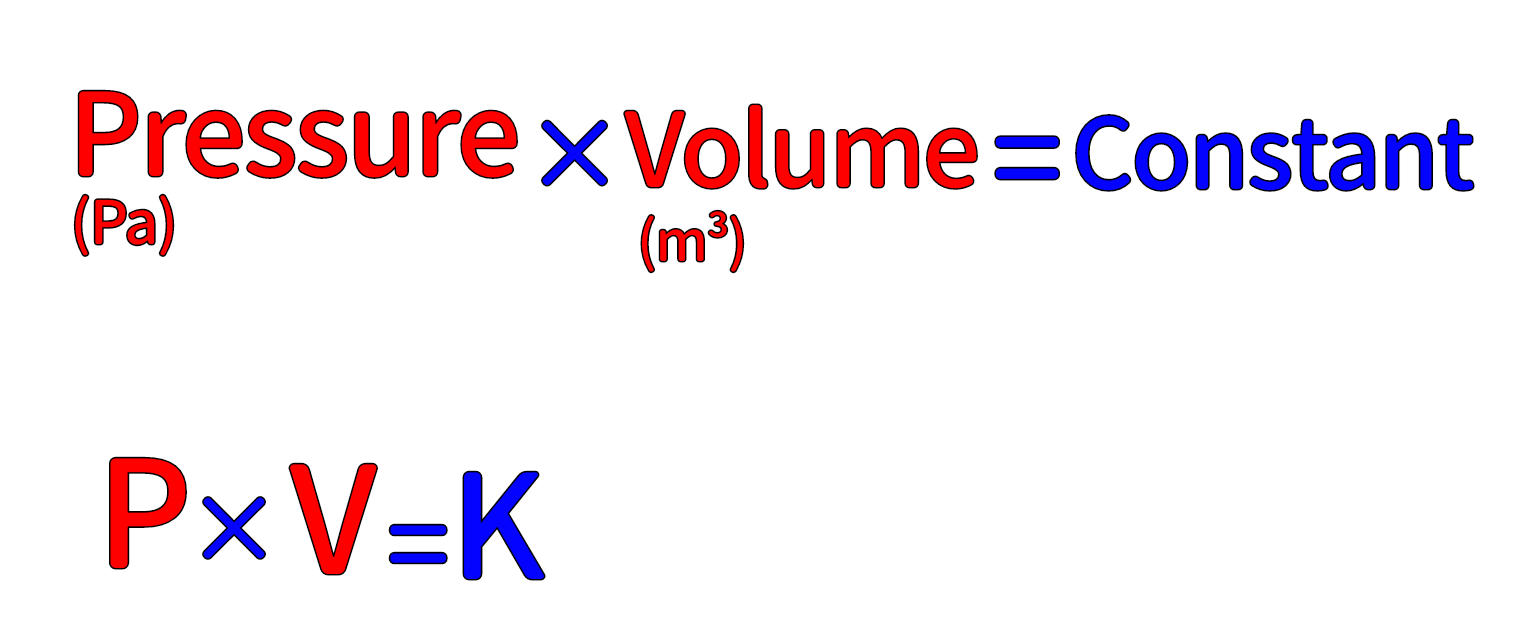
what is the equation for Constant?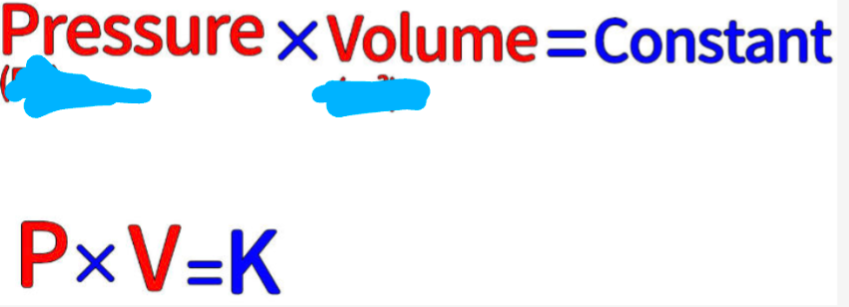
26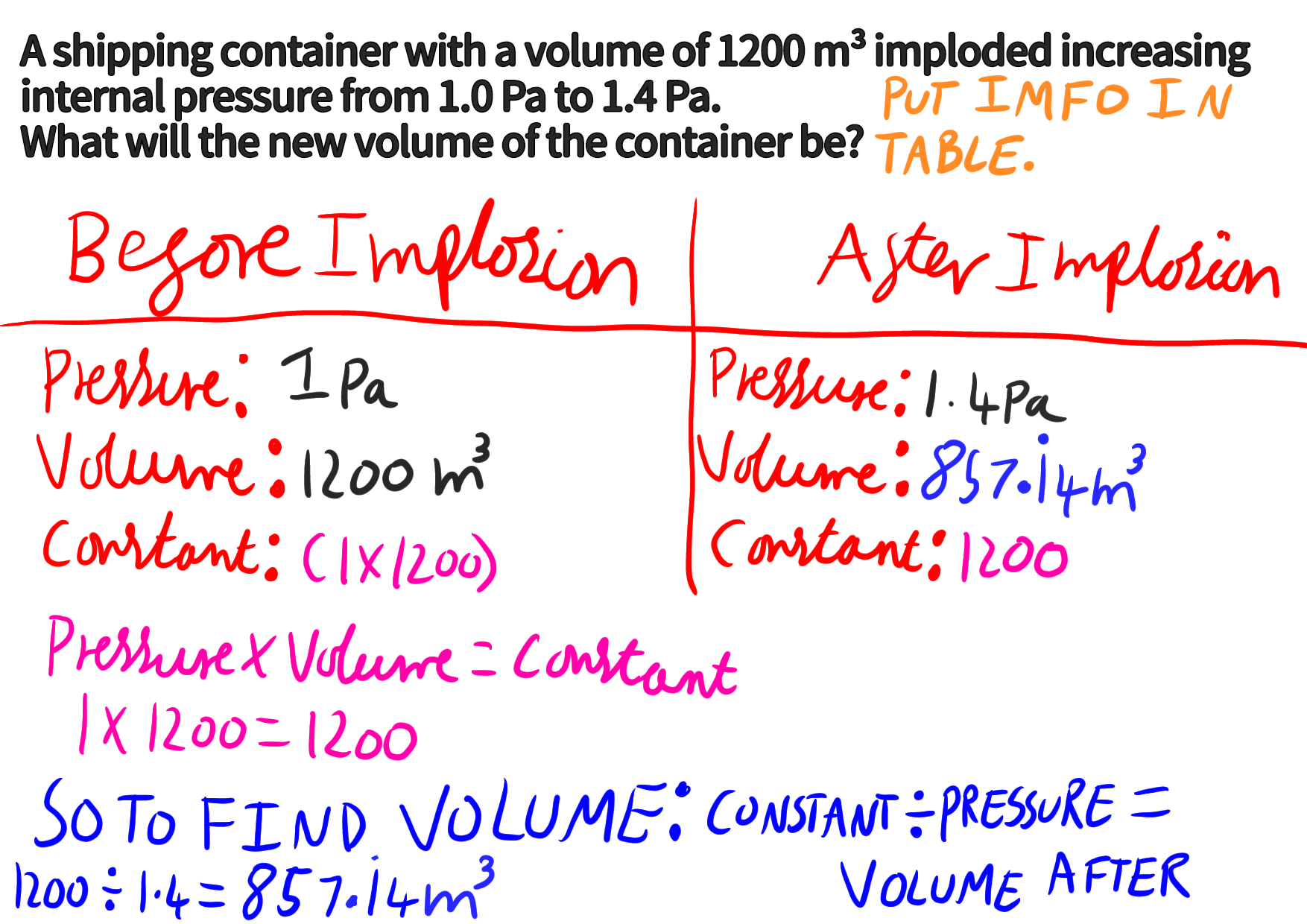
A shipping container with a volume of 1200 m³ imploded increasing internal pressure from 1.0 Pa to 1.4 Pa. What will the new volume of the container be?
27
what is a Constant?
Makes the equation work perfectly
28
What relationship has Pressure and Volume got & what does it mean?
It has a Inverse Relationship which means when One Increase the other Decreases
29
How do you use Density of an Object to Determine if it will Float or Sink In Water?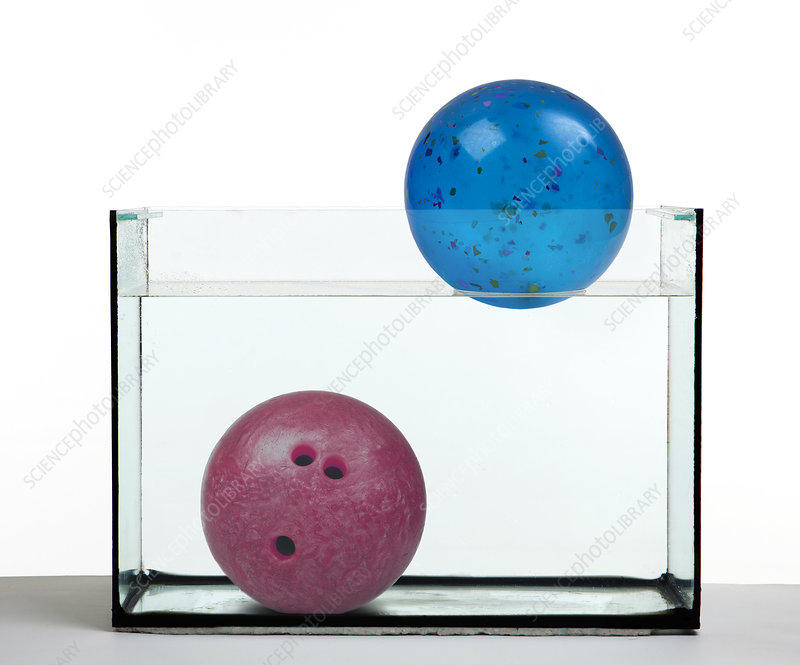
Denser Than Water= Sink
Same or Less= Float
Same or Less= Float
30
Explain what happens to the Mass of a Substance when it Changes State?
Mass doesn't Change
31
Describe what it's meant by the Melting Point of substance
Temperature at which it Changes State from Solid to Liquid
& Liquid to Solid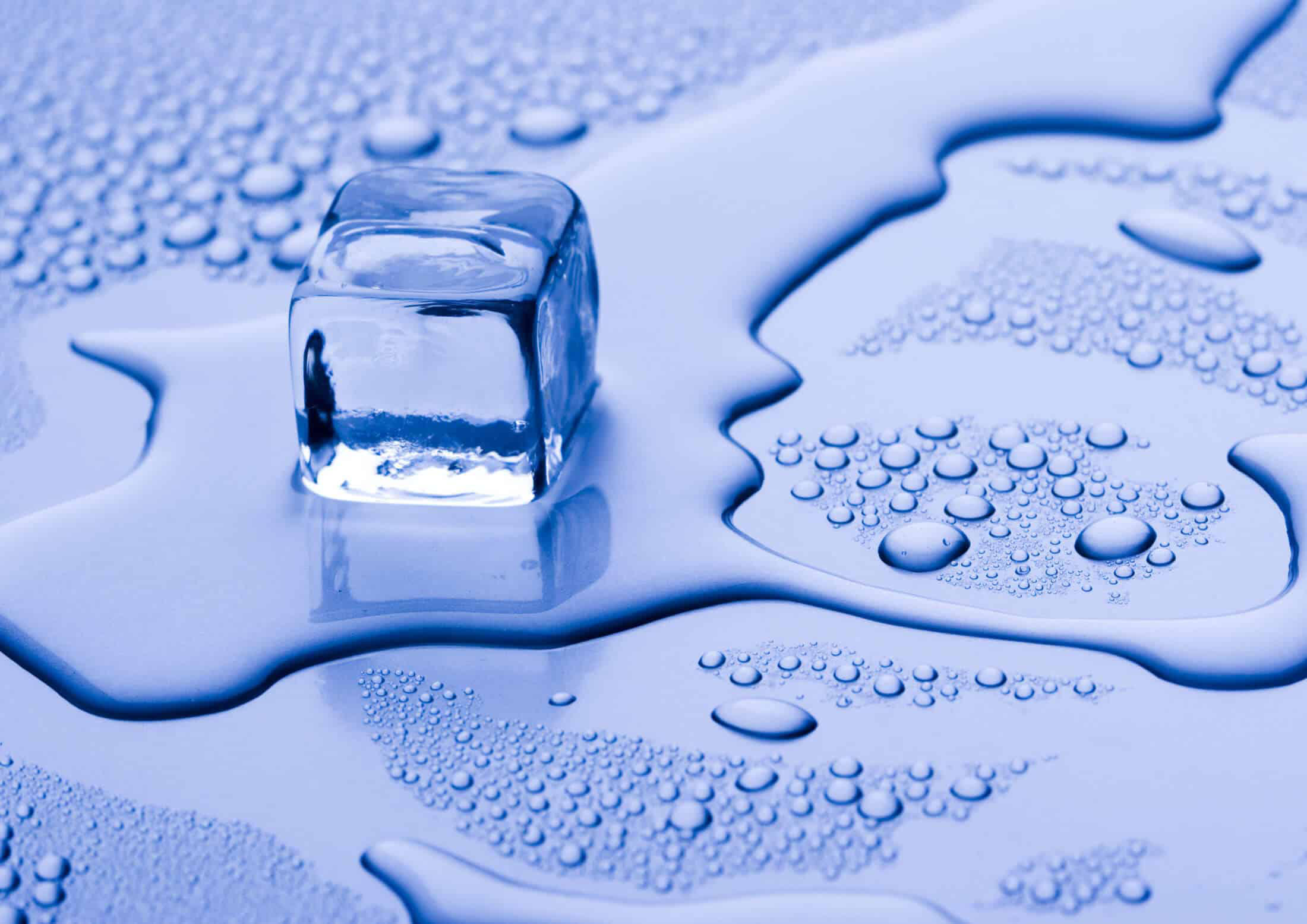
& Liquid to Solid
32
Describe what it's meant by the Boiling Point of a substance
Temperature at which it Changes State from Liquid to Gas
& Gas to Liquid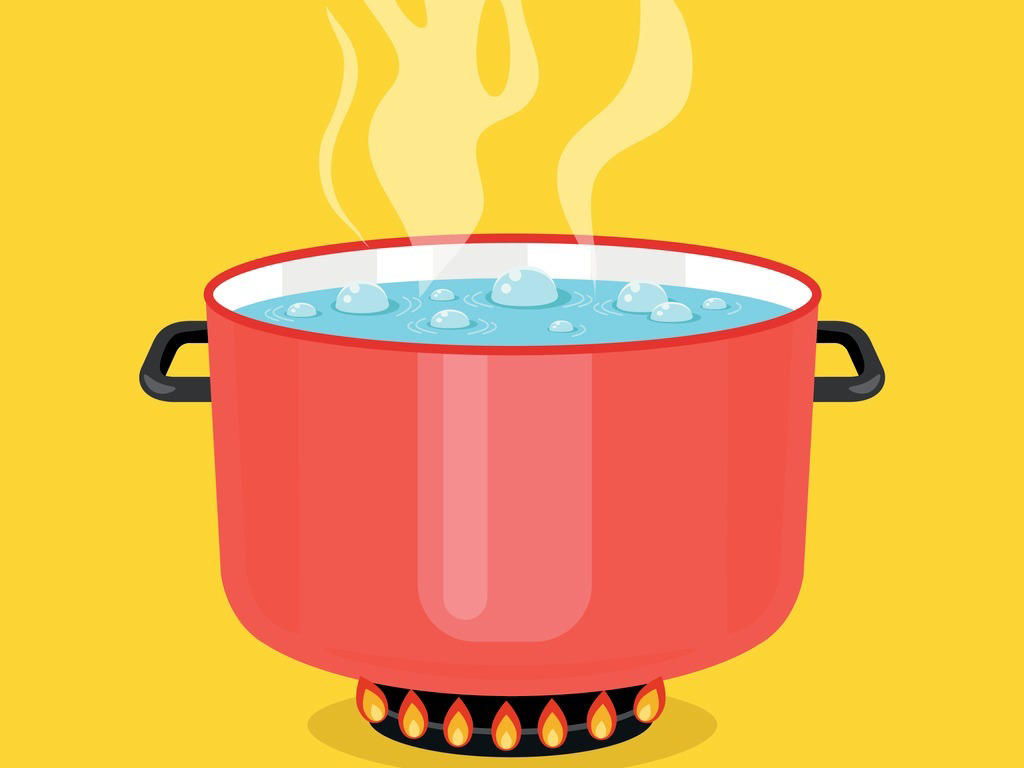
& Gas to Liquid
33
What is the difference between Boiling and Evaporation?
In Boiling, Bubbles of gas Form throughout Liquid. They Rise to the Surface and Escape to Surroundings, Forming Gas
In Evaporation, Particles Leave Liquid from its Surface Only.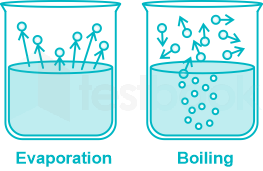
In Evaporation, Particles Leave Liquid from its Surface Only.
34
Explain why Gas is a Less Dense than Solid & Liquids?
The Particles are Further Apart from Each Other so they are less dense.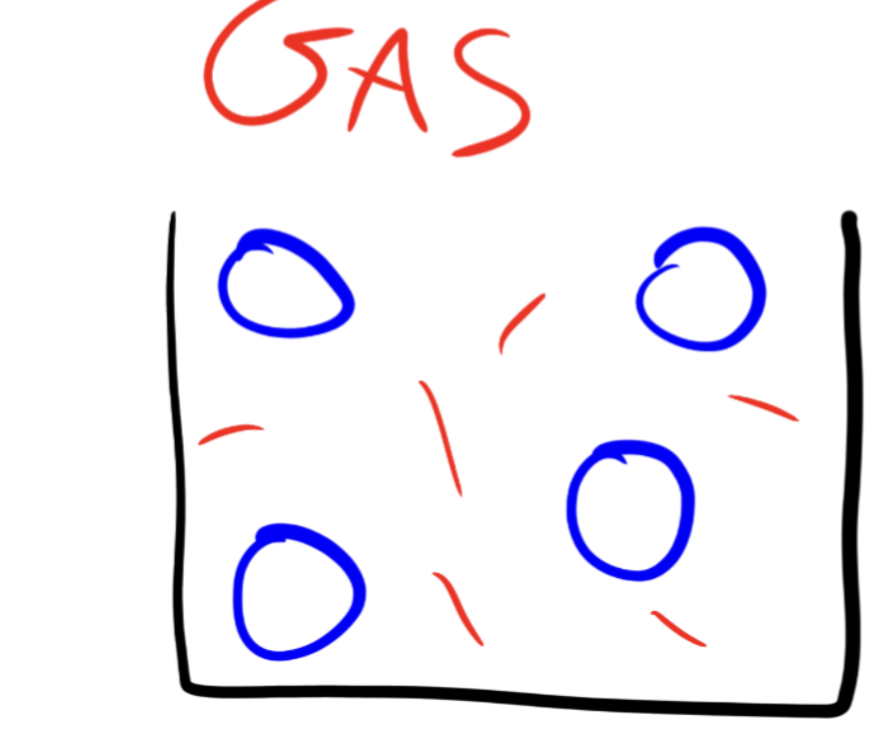
35
Describe how the Internal Energy of a Substance can be Increased
Heating a Substance
36
Describe the Changes of Intermolecular Forces During Changes Of State
Become Weaker from Solid to Liquid to Gas
Become Stronger from Gas to Liquid to Solid
Become Stronger from Gas to Liquid to Solid
37
Describe how the Pressure Exerted By a Gas can be Changed
Changing the Temperature of a Gas, held at Constant Volume
38
What happens to the Pressure when you Cool or Heat a Gas at Constant Volume
Pressure Increases as you Heat it.
Pressure Decrease as you Cool it.
Pressure Decrease as you Cool it.