Chemical Analysis
Study these flashcardsFree · spaced repetition · iPhone, Android, Mac & web
All cards
1
Define Pure Substance
Single Element or Compound Not Mixed with Any Other Substance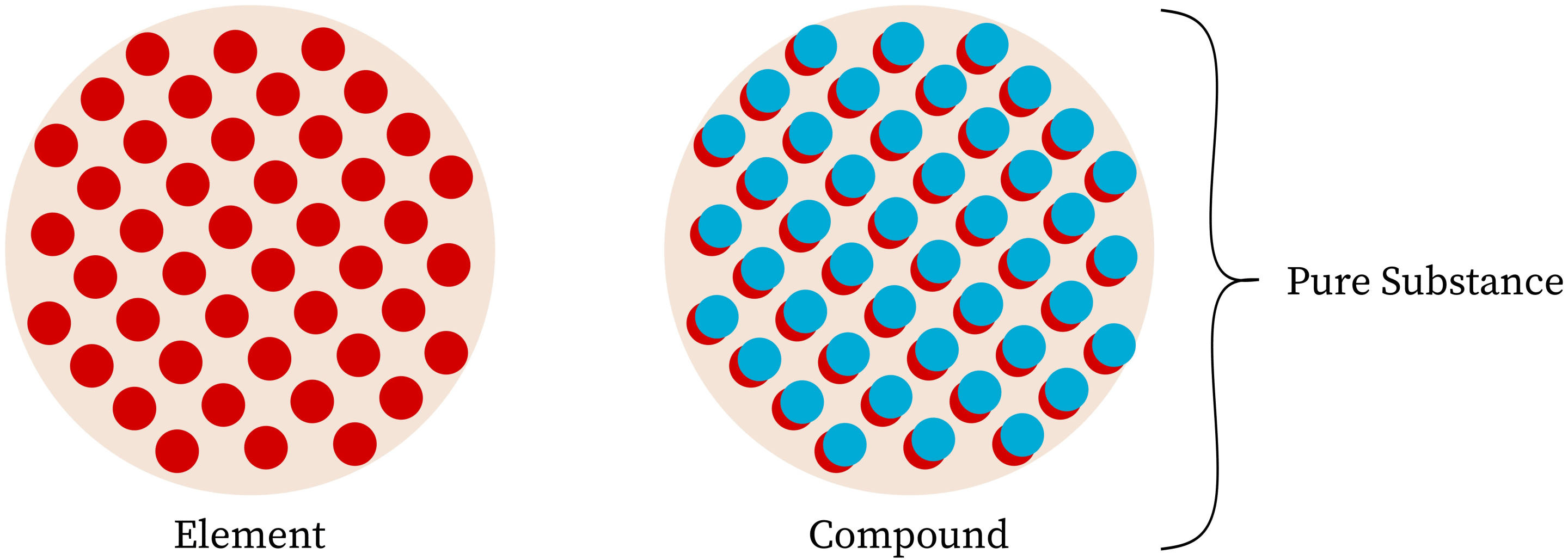
2
define a Mixture/Impure Substance
Consist of Two or More Elements or Compounds, NOT Chemically Combined Together
Chemical Properties of each Substance in Mixture are Unchanged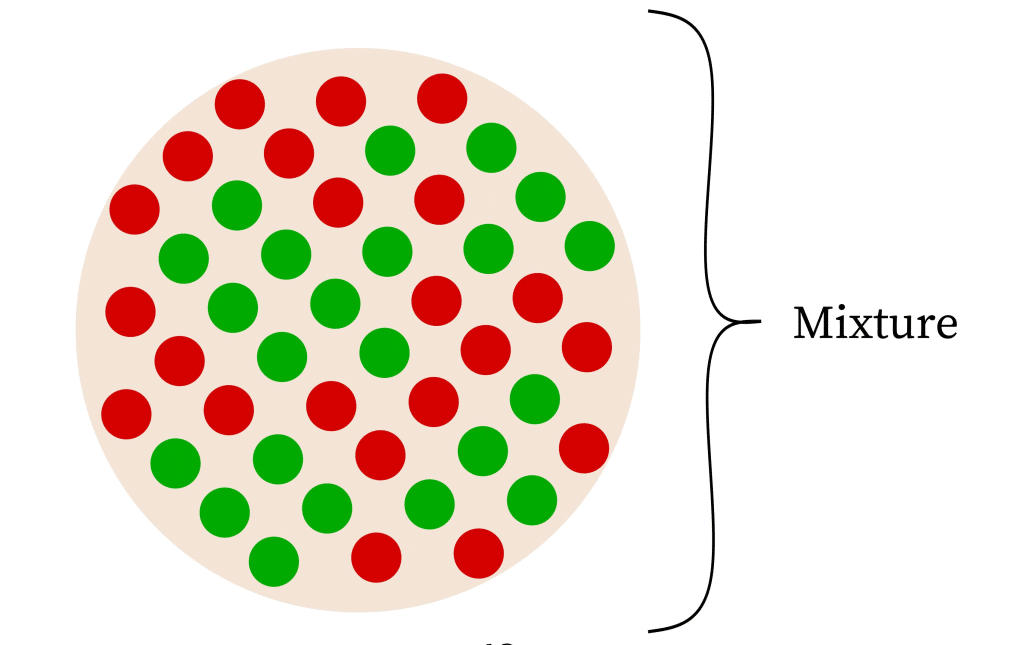
Chemical Properties of each Substance in Mixture are Unchanged
3
Define Compound
Contains Two or More Elements Chemically Combined in Fixed Proportions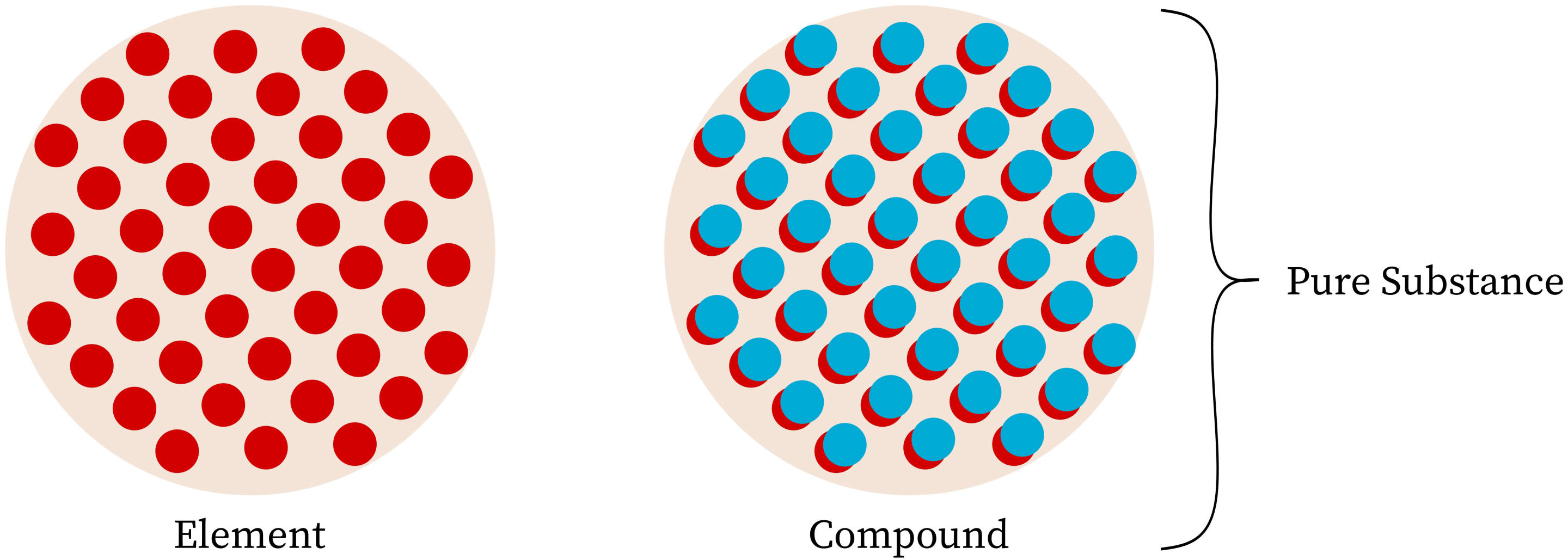
4
Define Element
Substance That is Made From Only One Type of Atom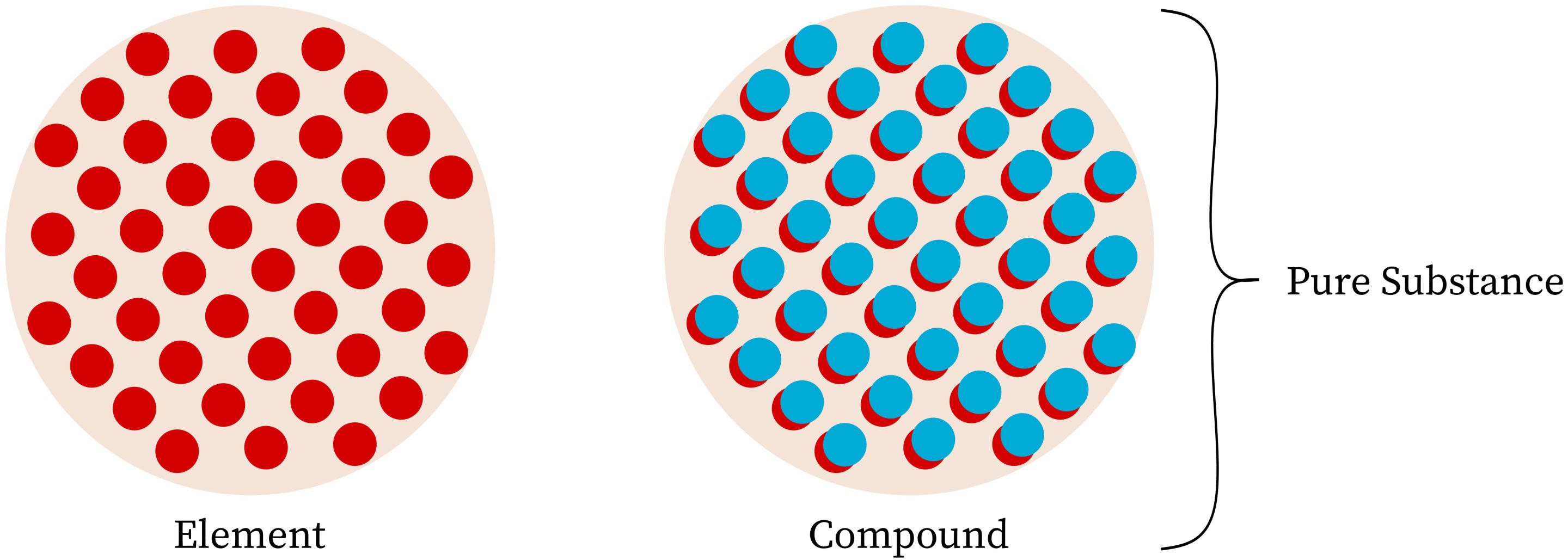
5
How do You Work Out if a Substance is Pure or Impure?
Pure Substance has Specific & Fixed Melting & Boiling Point
6
What is the melting point and boiling point of water?
0°C= Melting Point
100°c= Boiling Point
100°c= Boiling Point
7
What Will Impure Substance Boil at?
Over a Range of Temperatures
8
What is a Formulation?
Mixture that has Been Designed As a Useful Product
9
Give some Examples of Formulations?
- Lotions
- Paints
- Medicines
- Fuels
- Fertilizes
- Food
- Cleaning Agents
- Paints
- Medicines
- Fuels
- Fertilizes
- Food
- Cleaning Agents
10
What would be a Positive Test for the Gas Hydrogen & Observations if present ?
Test:Lighted splint held in Test Tube
Observation:Squeeky Pop sound
heard
lnference:Hydrogen present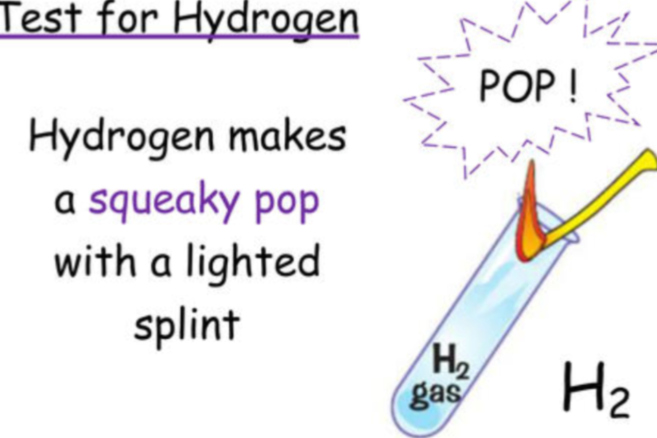
Observation:Squeeky Pop sound
heard
lnference:Hydrogen present
11
What would be a Positive Test for the
Gas Carbon Dioxide & Observations/if Present?
Gas Carbon Dioxide & Observations/if Present?
Test:Gas Bubbled through Limewater
Observation:Limewater Turns Milky*or Cloudy White
lnference:Carbon Dioxide if
Present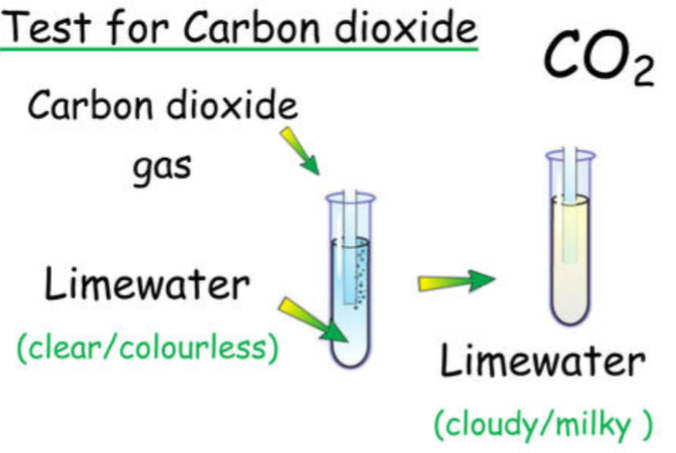
Observation:Limewater Turns Milky*or Cloudy White
lnference:Carbon Dioxide if
Present
12
What would be a Positive Test if Gas Chlorine Present & Observations?
Test:Damp Litmus Paperheld in a Test Tube
Observation:Paper is Bleached
lnference: Chlorine Present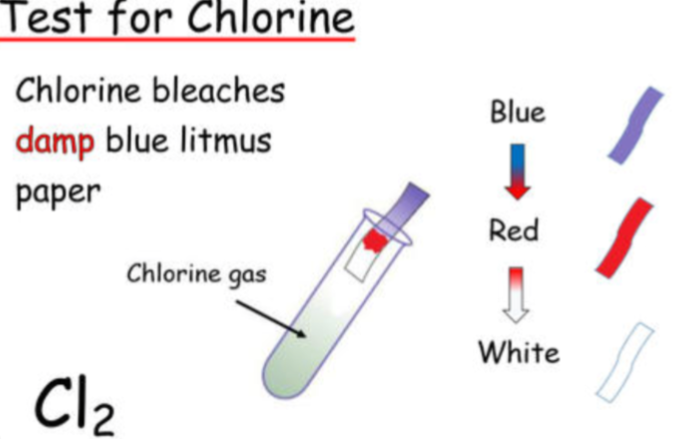
Observation:Paper is Bleached
lnference: Chlorine Present
13
What would be a Positive Test for the
Gas Oxygen & Observations if Present?
Gas Oxygen & Observations if Present?
Test:Glowing Splintheld in
aTest Tube
Observation: Splint Relights
lnference:Oxygen Present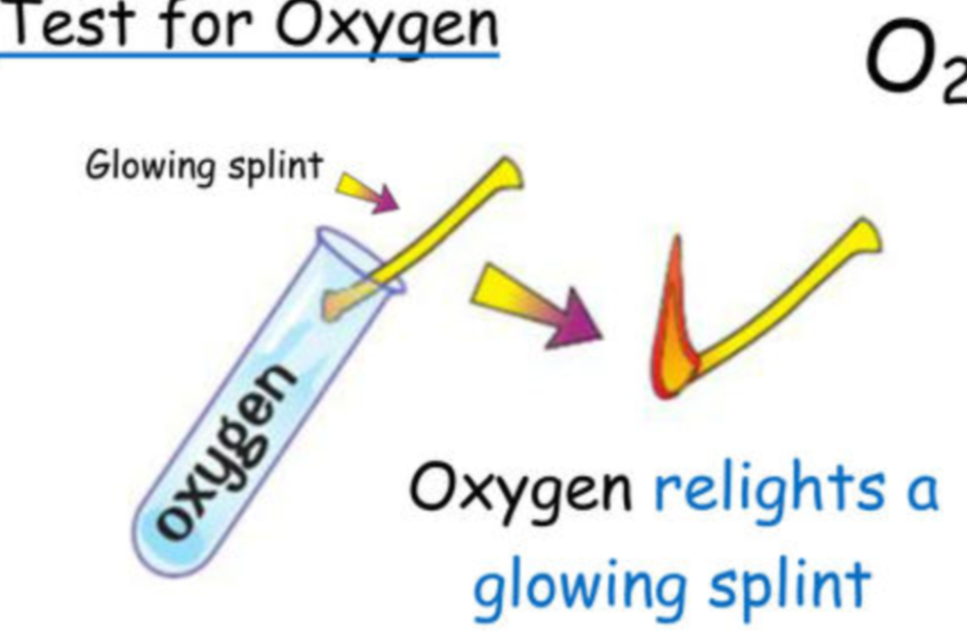
aTest Tube
Observation: Splint Relights
lnference:Oxygen Present
14
What does Chromotography Separate?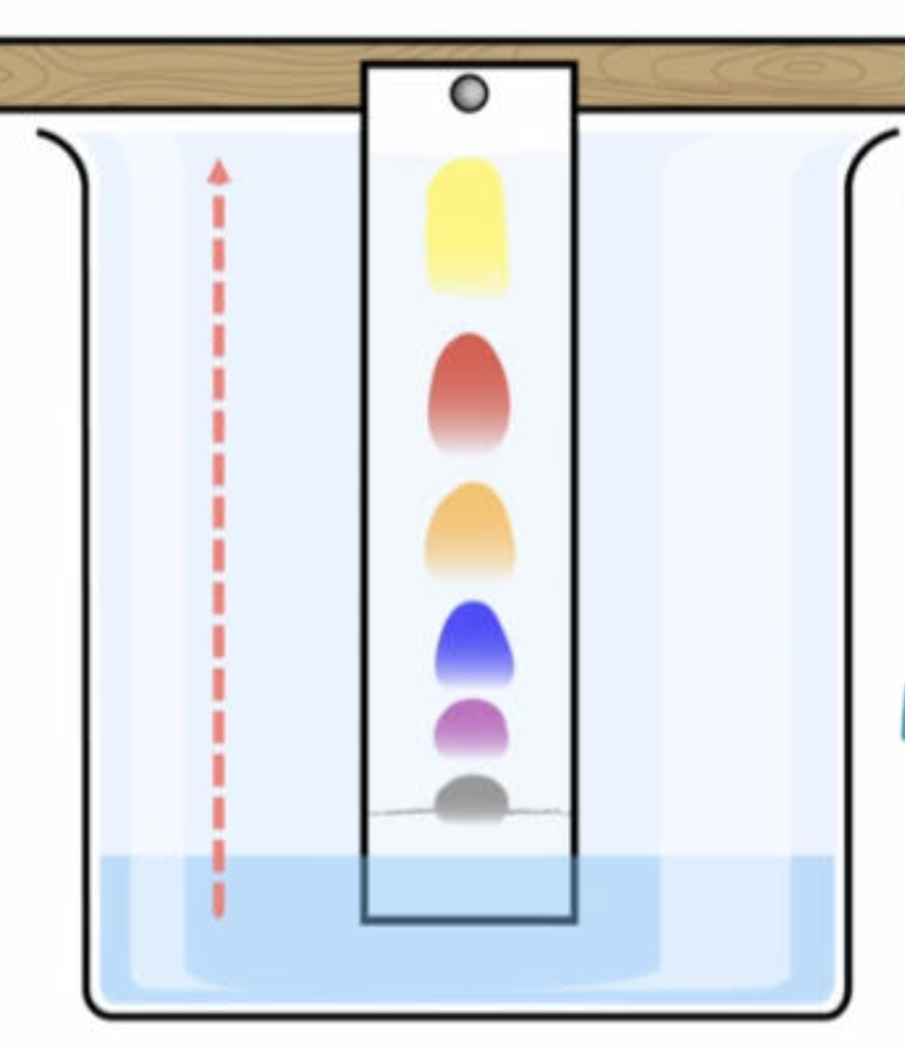
Two or More Dissolved Solids from a Solution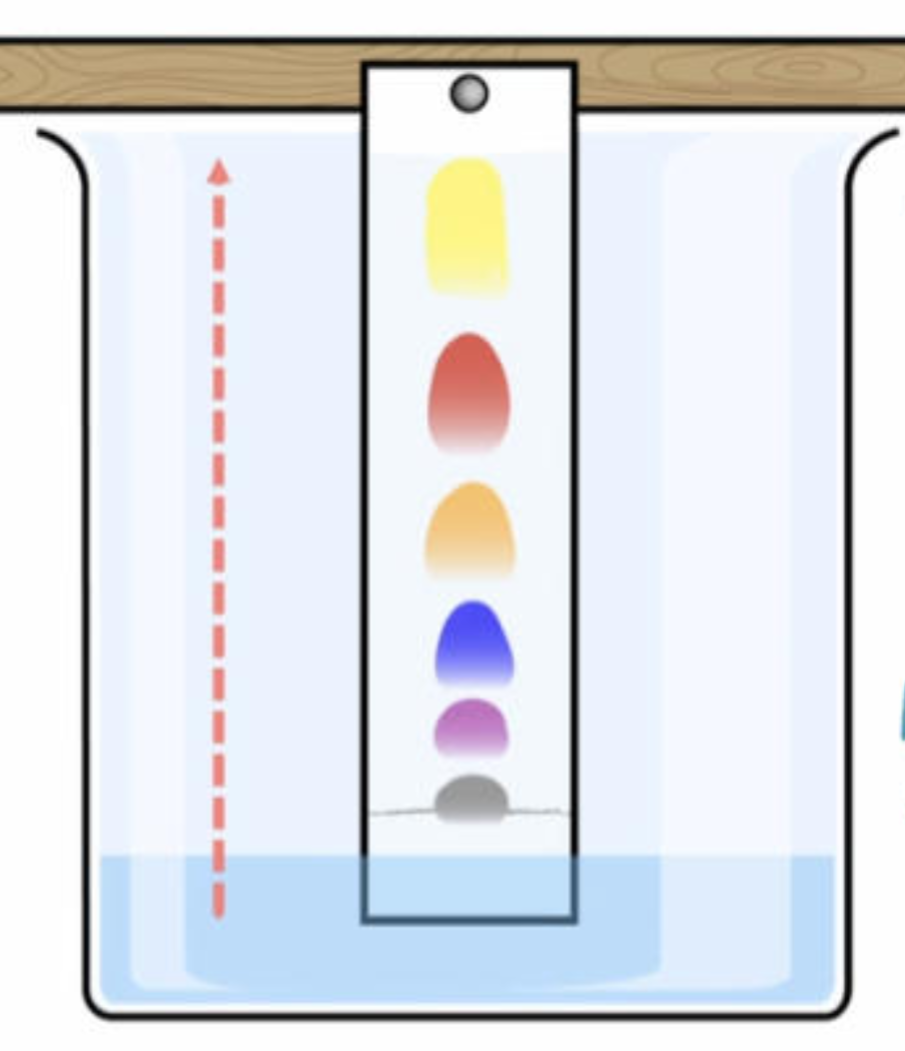
15
Describe Chromotography Reults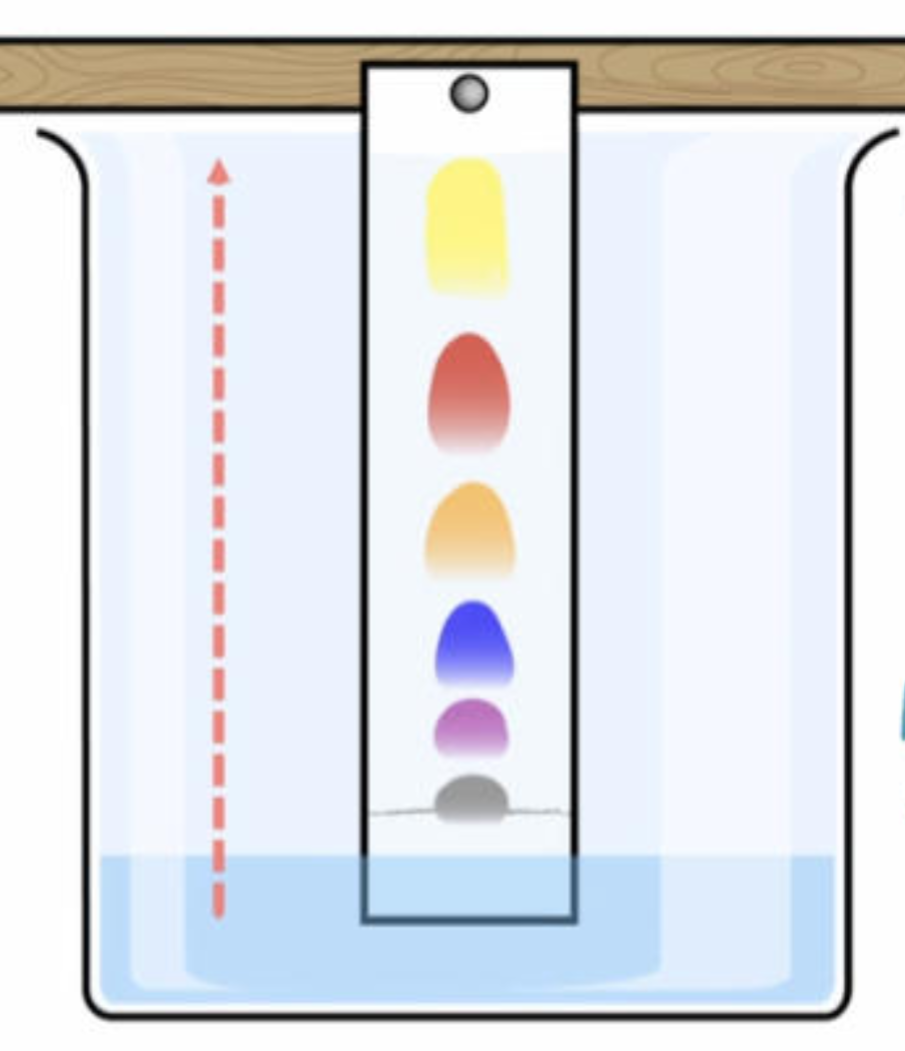
Less Soluble Solids Travel Shorter Distances Up The Paper
More Soluble Solids Travel Further
Solvent Caries Dissolved Solids Up The Paper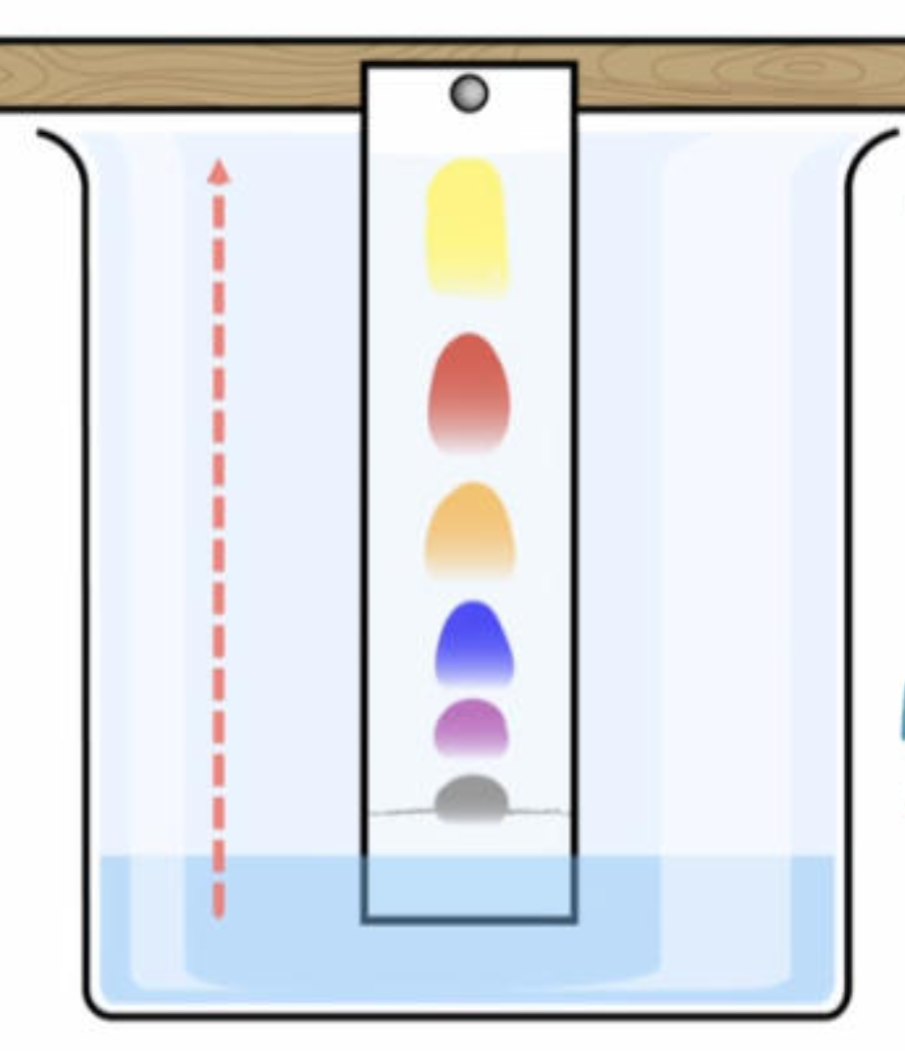
More Soluble Solids Travel Further
Solvent Caries Dissolved Solids Up The Paper
16
What is the Mobile Phase in Chromatography?
Substance that Moves e.g Solvent (water)
17
What is the Stationery Phase in Chromatography?
Part that Doesn't Move e.g Paper
18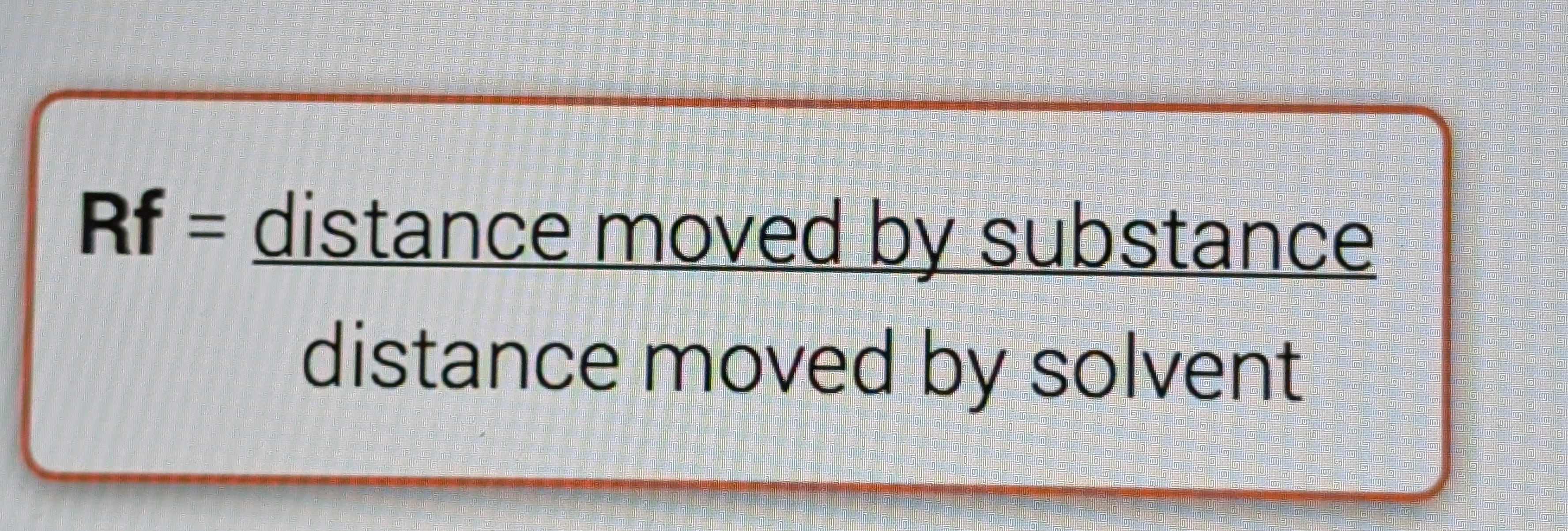
What is the Formula for RF (Retention factor)?
19
How do you work out Rf?
Measure Distance of Pencil Line to Solvent From
Measure from Each Dot of Colour Down to Pencil Line then use Equation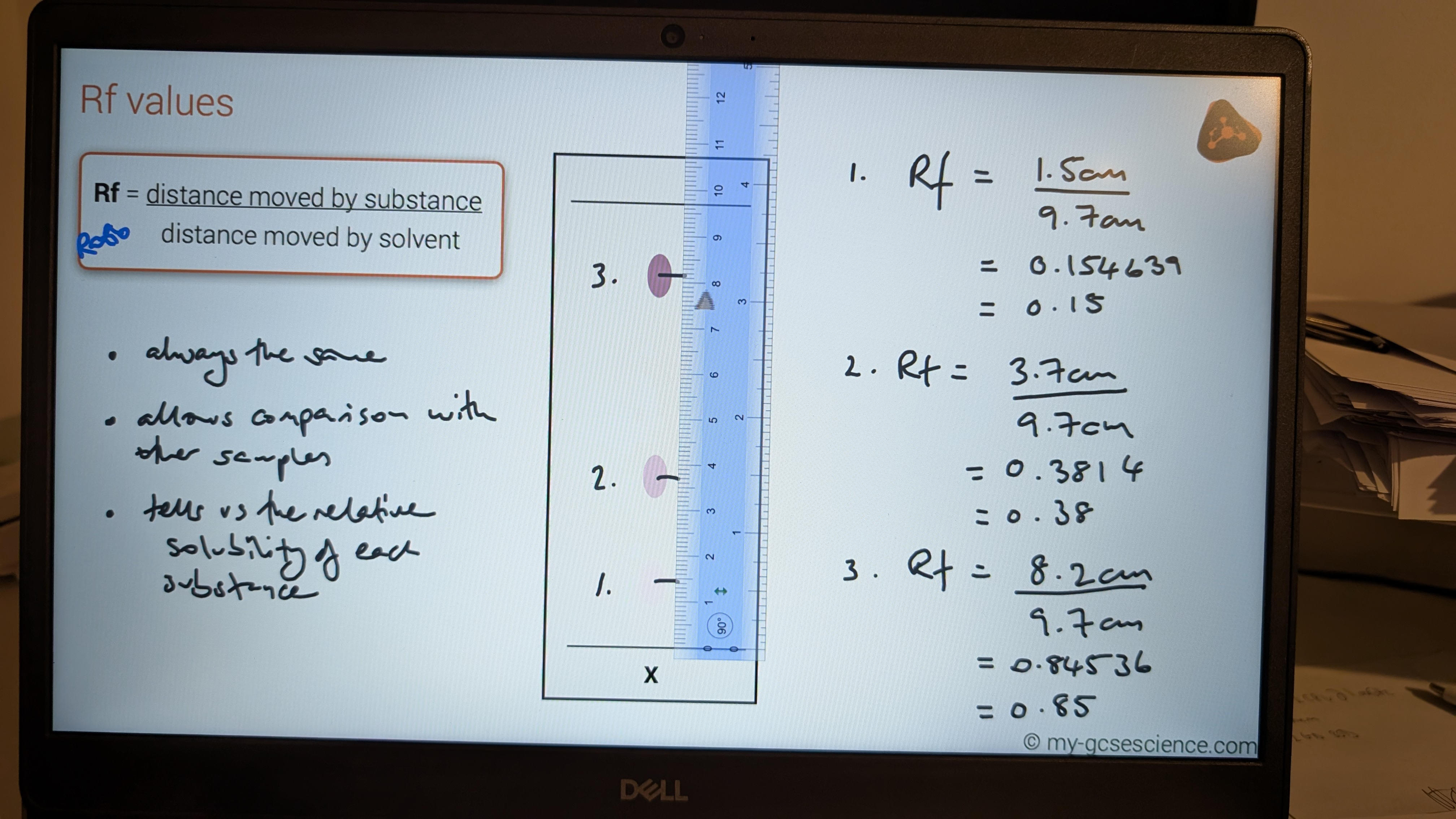
Measure from Each Dot of Colour Down to Pencil Line then use Equation
20
Why is Rf good?
- Always Same
- Allows Comparison with Samples
- Tells us Relative Solubility by Each Substance
- Max RF 1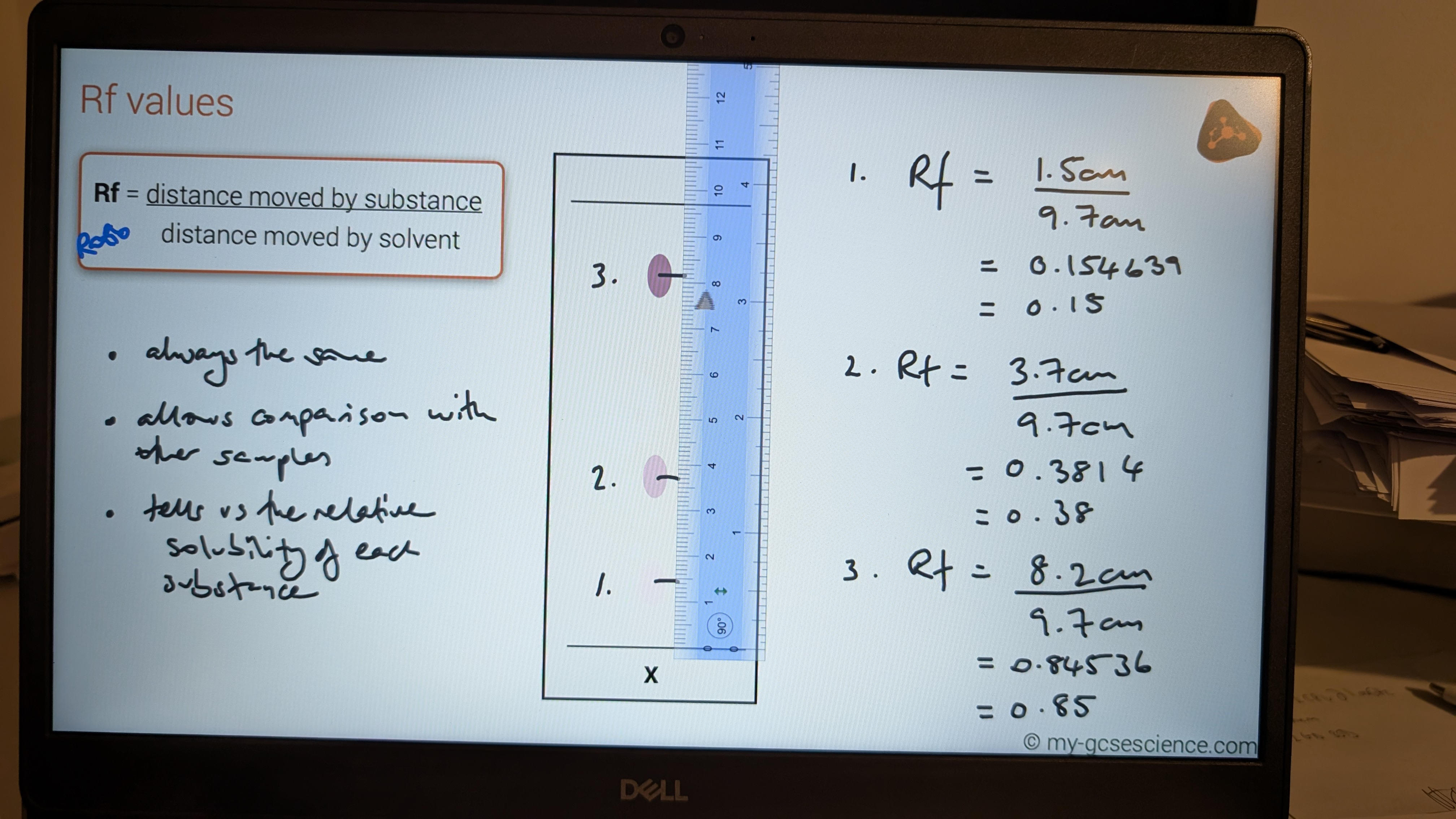
- Allows Comparison with Samples
- Tells us Relative Solubility by Each Substance
- Max RF 1
21
What is Method for Chromatography REQUIRED PRACTICAL?
1) Draw Horizontal Pencil Line 2 cm from Short Edge of Chromatography Paper.
Mark Each Colouring Name at Equal Intervals Across Line Not Too Close To The End Paper.
2. Use Capillary Tube to put a Spots of Each Colouring on Line. A
- Small Spot Ensures Colouring Separates Clearly.
3)Pour Water into Beaker
4) Suspend Paper in Beaker so Bottom Edge of Paper Touches Water.
- Make Sure Sides of Paper Do Not Touch Beaker Wall
5. Wait for Water Solvent to Travel at Least Three Quarters Up Paper.
Remove Paper & Draw Another Pencil Line Where Solvent Front is.
6. Hang Paper Up To Dry.
7. Calculate the Rf
values for each spot. Rf value is calculated by distance travelled by
substance/ solvent front.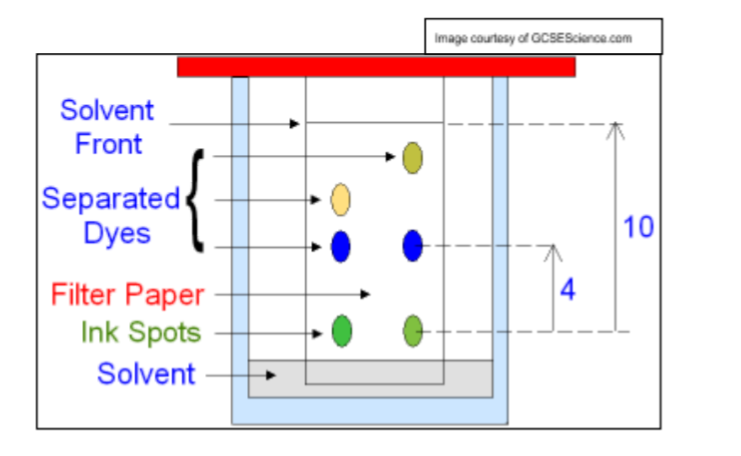
Mark Each Colouring Name at Equal Intervals Across Line Not Too Close To The End Paper.
2. Use Capillary Tube to put a Spots of Each Colouring on Line. A
- Small Spot Ensures Colouring Separates Clearly.
3)Pour Water into Beaker
4) Suspend Paper in Beaker so Bottom Edge of Paper Touches Water.
- Make Sure Sides of Paper Do Not Touch Beaker Wall
5. Wait for Water Solvent to Travel at Least Three Quarters Up Paper.
Remove Paper & Draw Another Pencil Line Where Solvent Front is.
6. Hang Paper Up To Dry.
7. Calculate the Rf
values for each spot. Rf value is calculated by distance travelled by
substance/ solvent front.
22
Define Cation
An Ion with Positive Charge. With Exception of H+ these will Always be Metal Ions.
23
Define Insoluble
Substance Which Is Unable to Dissolve in Water
24
Define Soluable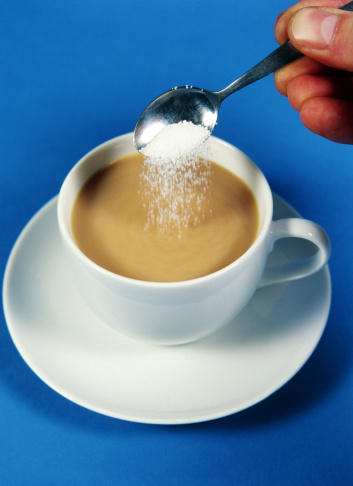
Substance Which Dissolves in Water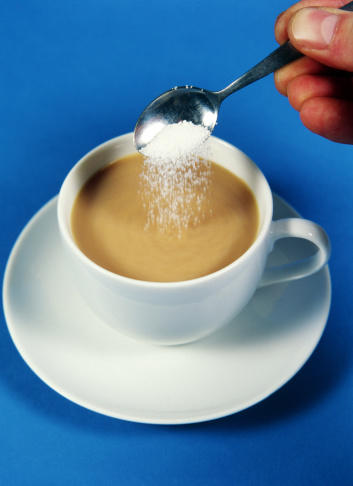
25
Define Precipitate
Insoluable Solid Produce from Reaction Between Two Solutions
26
Sodium Hydroxide Solution is Added to a Solution of Compound.
A white Precipitate Forms.
Which Metal/s Could that Compound Contain?
A white Precipitate Forms.
Which Metal/s Could that Compound Contain?
Calcium, Aluminium & Magnesium ions All Produce White Precipitate when .
27
What does the Flame Test for Metal Ions Show?
Use of Chemical Tests to Identify ions in Unknown Single Ionic Compounds Covering
ions From Flame Tests & Sulphates.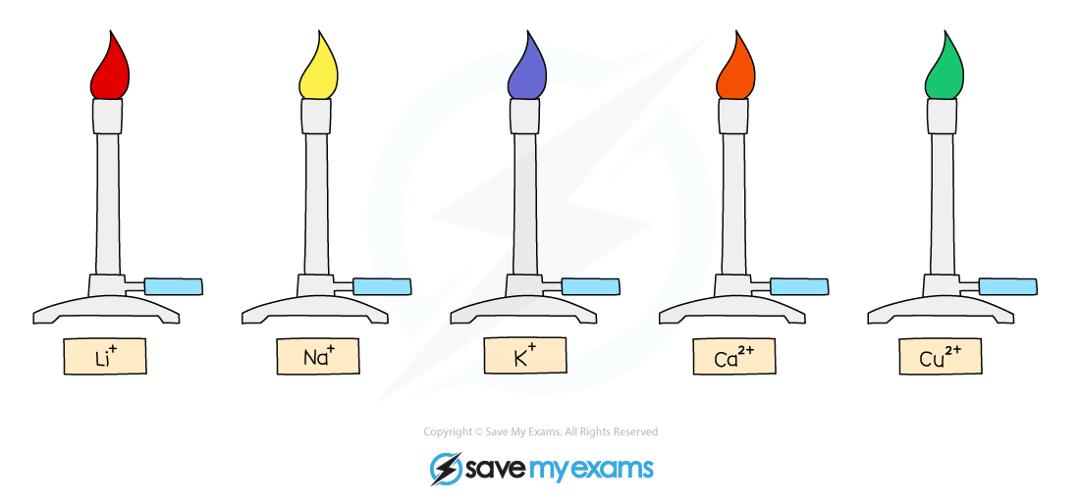
28
What is the Methods for REQUIRED PRACTICAL for Flame Test for Metal Ions?
1. Pour 1 cm³ of Each Known Chloride Solution into 5 Test Tubes.
2. Clean Nichrome Wire by Dipping it in Dilute Hydrochloric Acid.
3. Dip Nichrome Wire into Solution & Hold Tip in a Blue Bunsen Flame.
4. Record Colour of Flame.
5. Repeat for Following Solutions & Make Sure to Clean Wire After Each Test.
6. Pour 1 cm³ of Unknown Salt Solution into Test Tube.
7. Dip Nichrome Wire into Solution & Hold Tip in Blue Bunsen Flame.
8. Record Colour Flame, should Able to Compare Results With
Known Chloride with Matching Colour Flame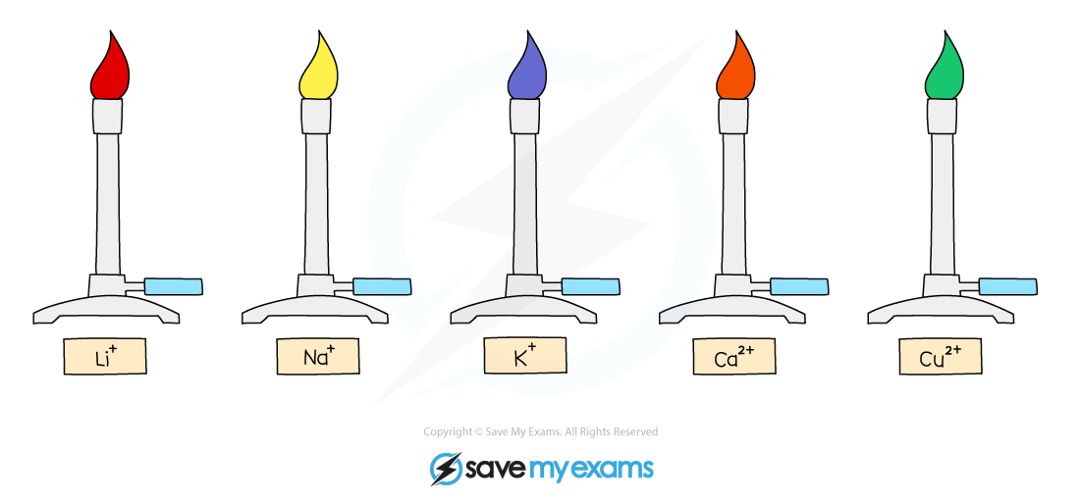
2. Clean Nichrome Wire by Dipping it in Dilute Hydrochloric Acid.
3. Dip Nichrome Wire into Solution & Hold Tip in a Blue Bunsen Flame.
4. Record Colour of Flame.
5. Repeat for Following Solutions & Make Sure to Clean Wire After Each Test.
6. Pour 1 cm³ of Unknown Salt Solution into Test Tube.
7. Dip Nichrome Wire into Solution & Hold Tip in Blue Bunsen Flame.
8. Record Colour Flame, should Able to Compare Results With
Known Chloride with Matching Colour Flame
29
What are the Results for the Flame Tests for Metal Ions?
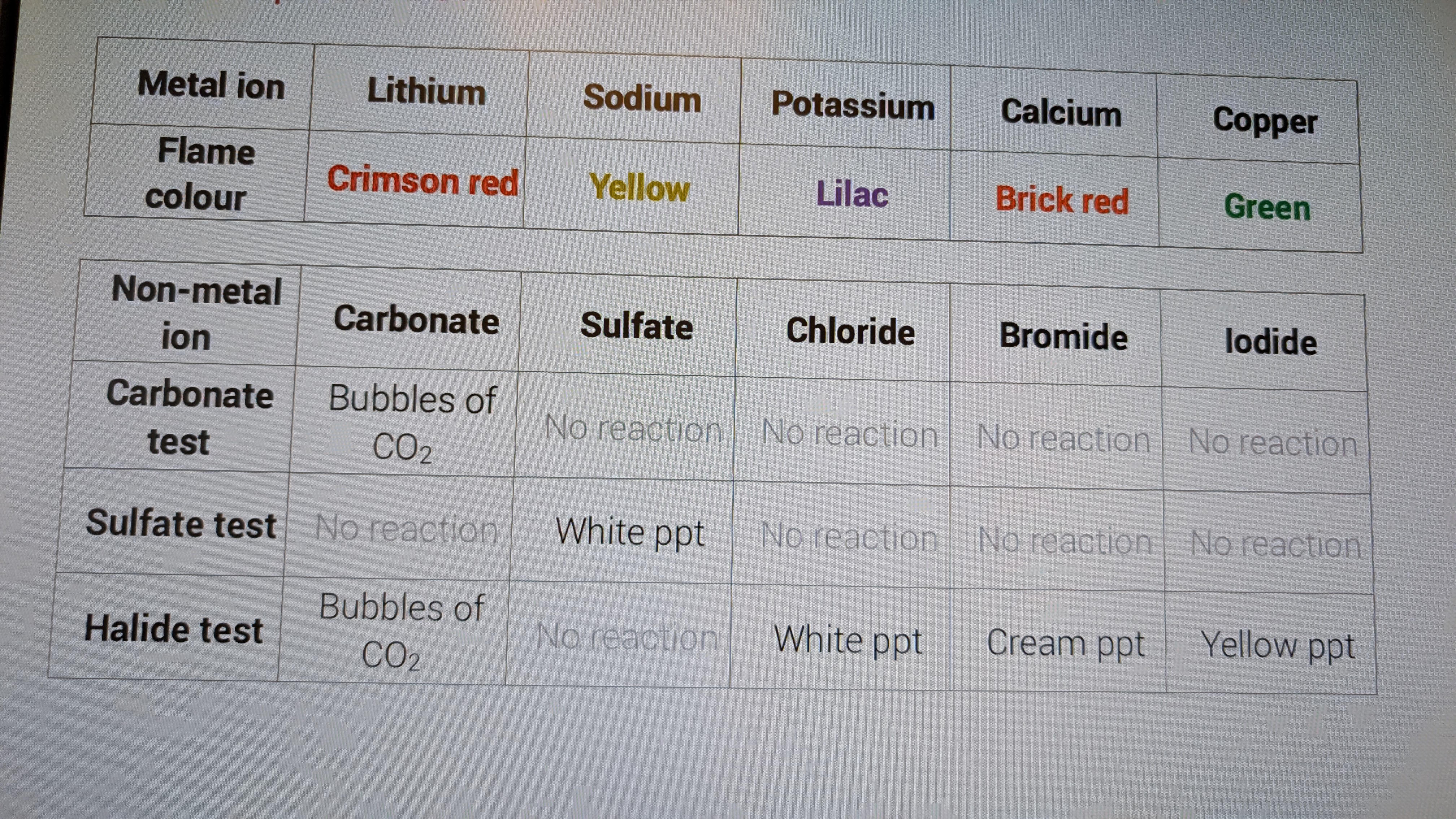
-Lithium (Li+) – Crimson/Red Flame
- Sodium (Na+) – Yellow Flame
sun yellow
- Potassium (K+) – Lilac Flame
- Calcium (Ca2+) – Orange-Red/Brick Red Flame
calcium in orange
- Copper (II) (Cu2+) – Green Flame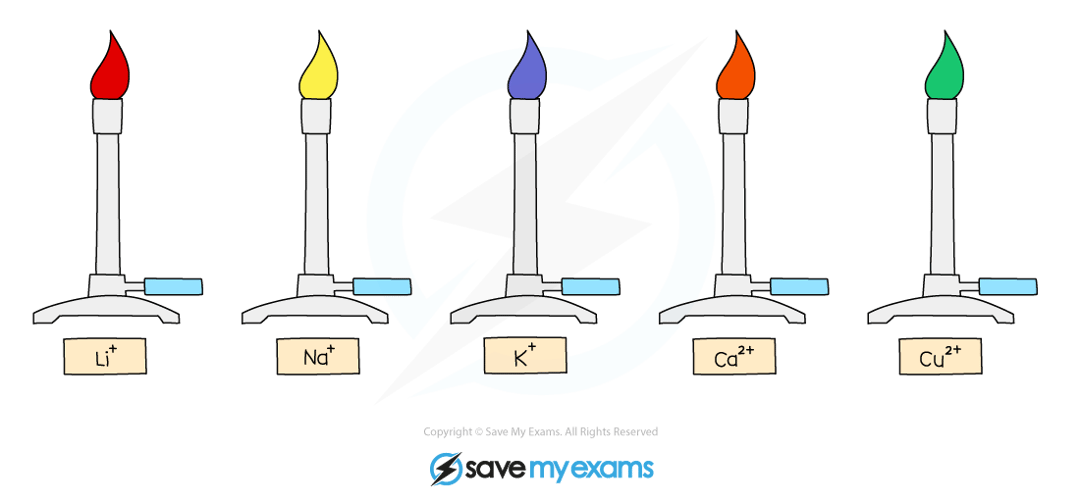
- Sodium (Na+) – Yellow Flame
sun yellow
- Potassium (K+) – Lilac Flame
- Calcium (Ca2+) – Orange-Red/Brick Red Flame
calcium in orange
- Copper (II) (Cu2+) – Green Flame
30
What is the Methods for the Carbonate ion (CO3²-) Test REQUIRED PRACTICAL?
1. Pour 2 cm³ of Limewater in Test Tube.
2. Add a Little Dilute Hydrochloric Acid to Unknown Solution.
3. See if Bubbles Form as Gas Transferred to Limewater Using Delivery Tube.
4. Repeat Process for Known Sodium Solutions to Identify Carbonates Ions..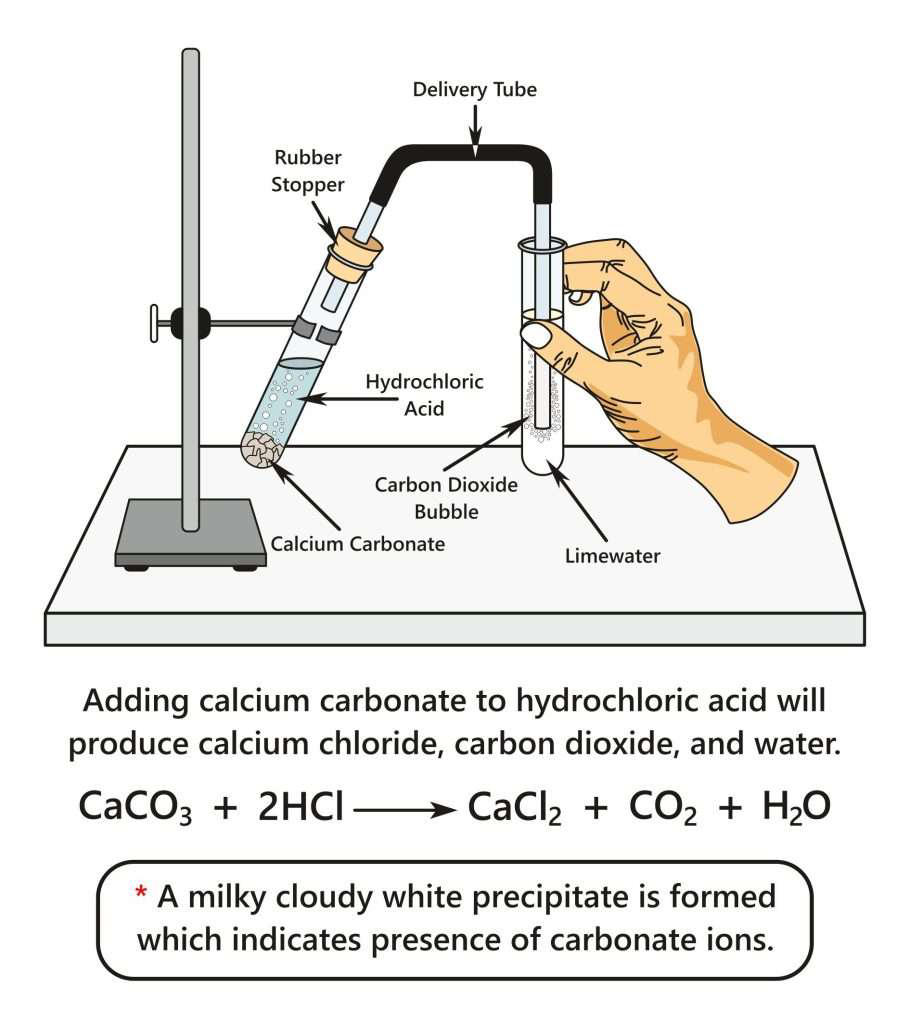
2. Add a Little Dilute Hydrochloric Acid to Unknown Solution.
3. See if Bubbles Form as Gas Transferred to Limewater Using Delivery Tube.
4. Repeat Process for Known Sodium Solutions to Identify Carbonates Ions..
31
What are the Results for the Carbonate ion (CO3²-) Test if Present REQUIRED PRACTICAL?
Bubbles Produced & Limewater Goes Cloudy If Carbonates Ions Present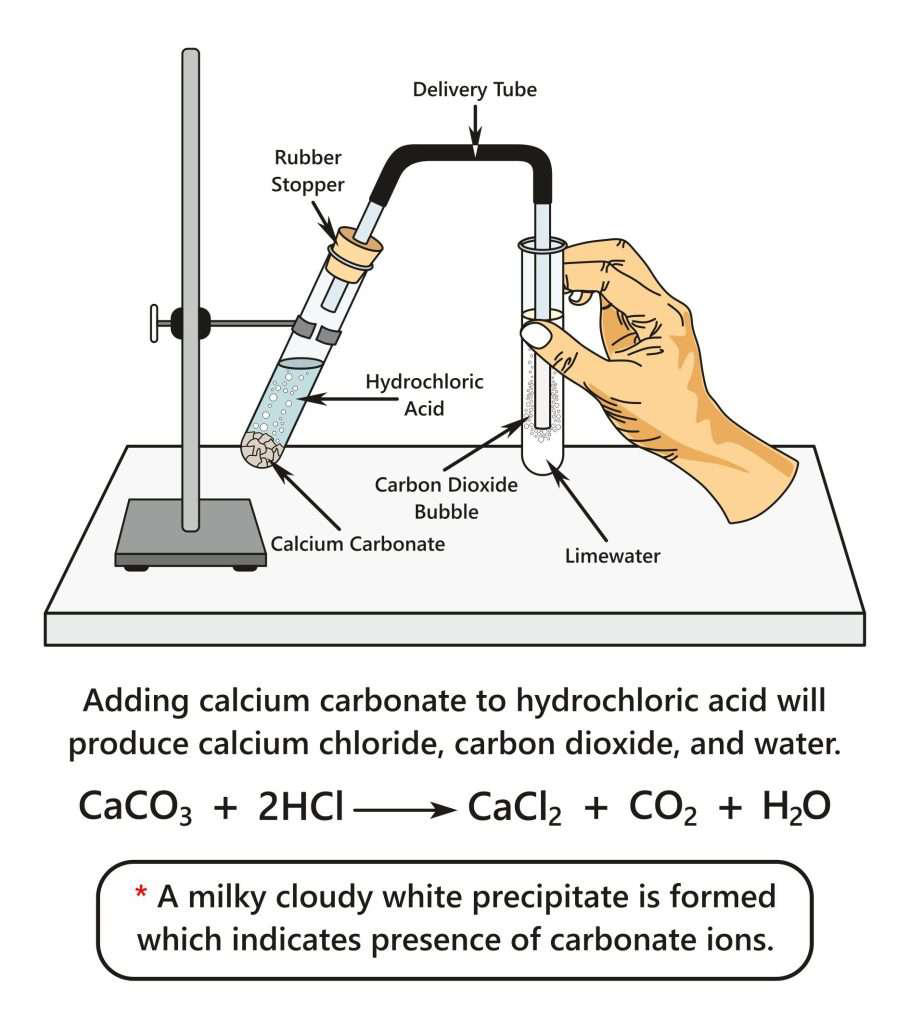
32
What is the Methods for the Sulphate ion (SO4²-) Test?
1. Add 10 Drops of Dilute Hydrochloric Acid to Unknown Solution in Test Tube
then Add 2 cm³ Barium Chloride Solution.
2. Pour 1 cm³ of Known Sodium Solutions into Separate Test Tubes.
& Do Same as Unknown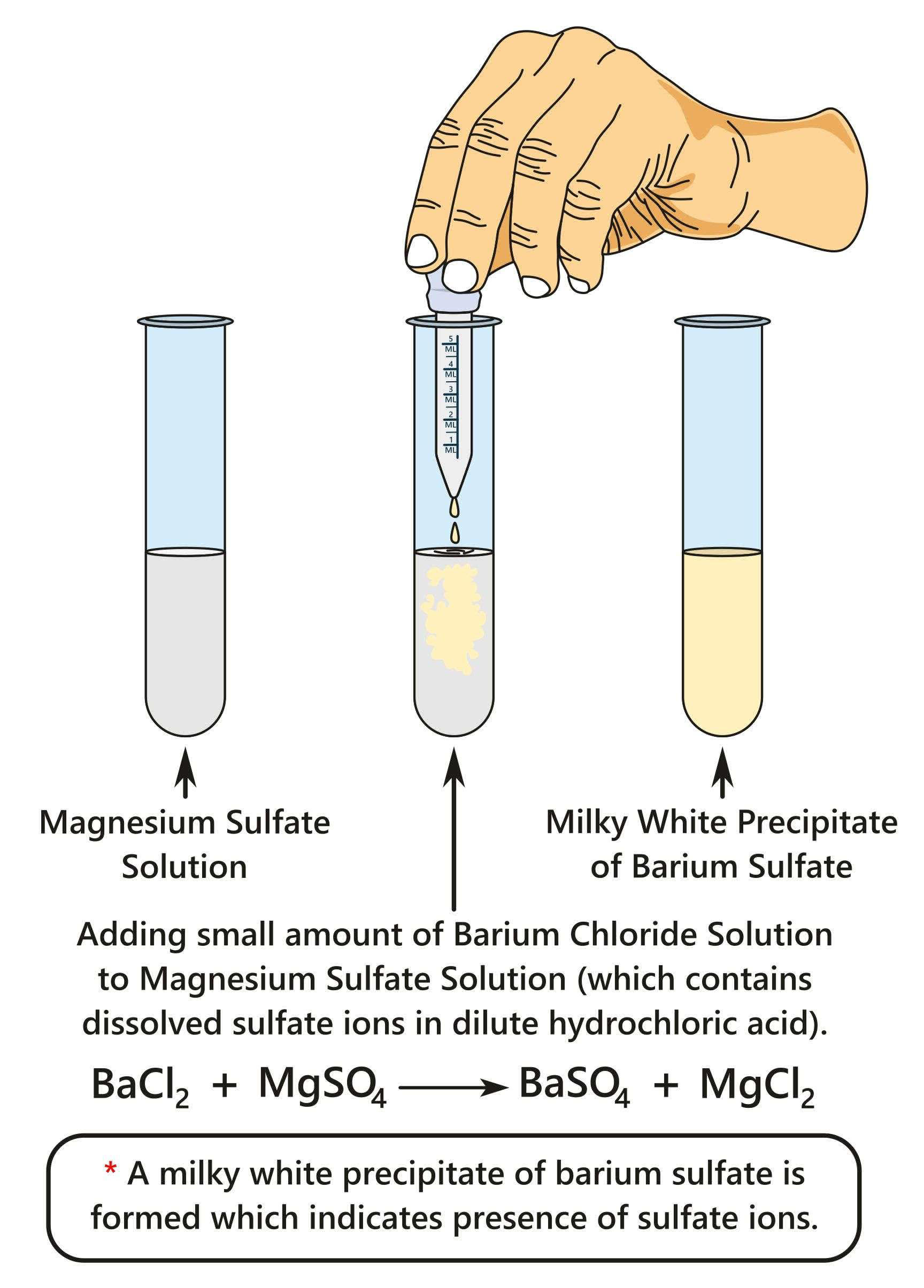
then Add 2 cm³ Barium Chloride Solution.
2. Pour 1 cm³ of Known Sodium Solutions into Separate Test Tubes.
& Do Same as Unknown
33
What Are Results if Present for the Sulphate ion (SO4²-) Test?
White Precipitate Formed If Sulphate Ions Present.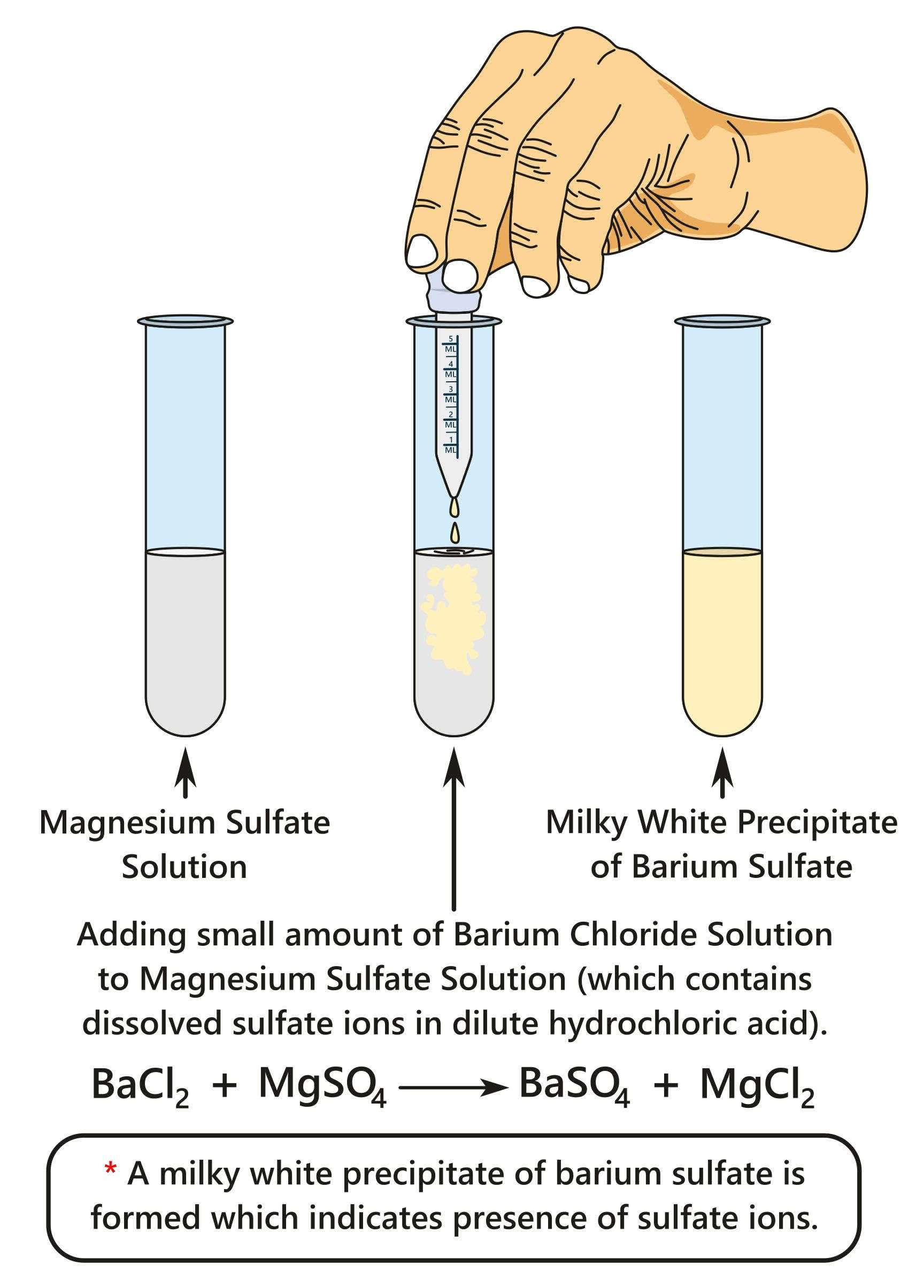
34
What is the Method for Halide ion (Cl-Br-I-) Test?
1. Add 10 Drops of Dilute Nitric Acid & Add a 1 cm³ Silver Nitrate to Unknown Solution in a Test Tube.
2. Pour Known Sodium Solutions into Separate Test Tubes.
3. Repeat Steps 1 & 2 for Solutions.
4. Record Colour of Precipitate Formed in Each Test Tube.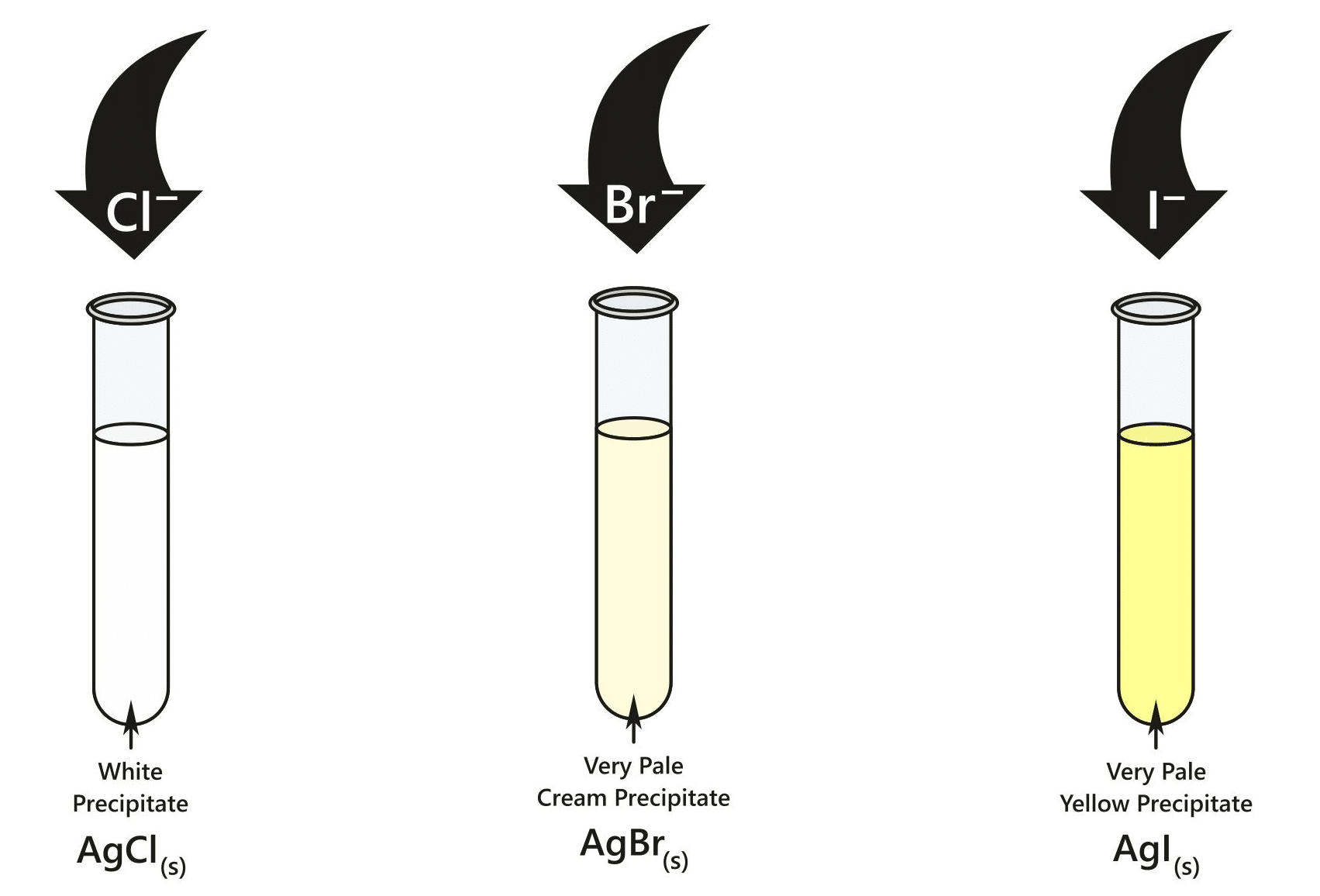
2. Pour Known Sodium Solutions into Separate Test Tubes.
3. Repeat Steps 1 & 2 for Solutions.
4. Record Colour of Precipitate Formed in Each Test Tube.
35
What is the Method for Testing Metal Hydroxide?
1) Add Salt Solution to Test Tube
2) Add Few Drops of Sodium Hydroxide
3) Observe Precipitate
2) Add Few Drops of Sodium Hydroxide
3) Observe Precipitate
36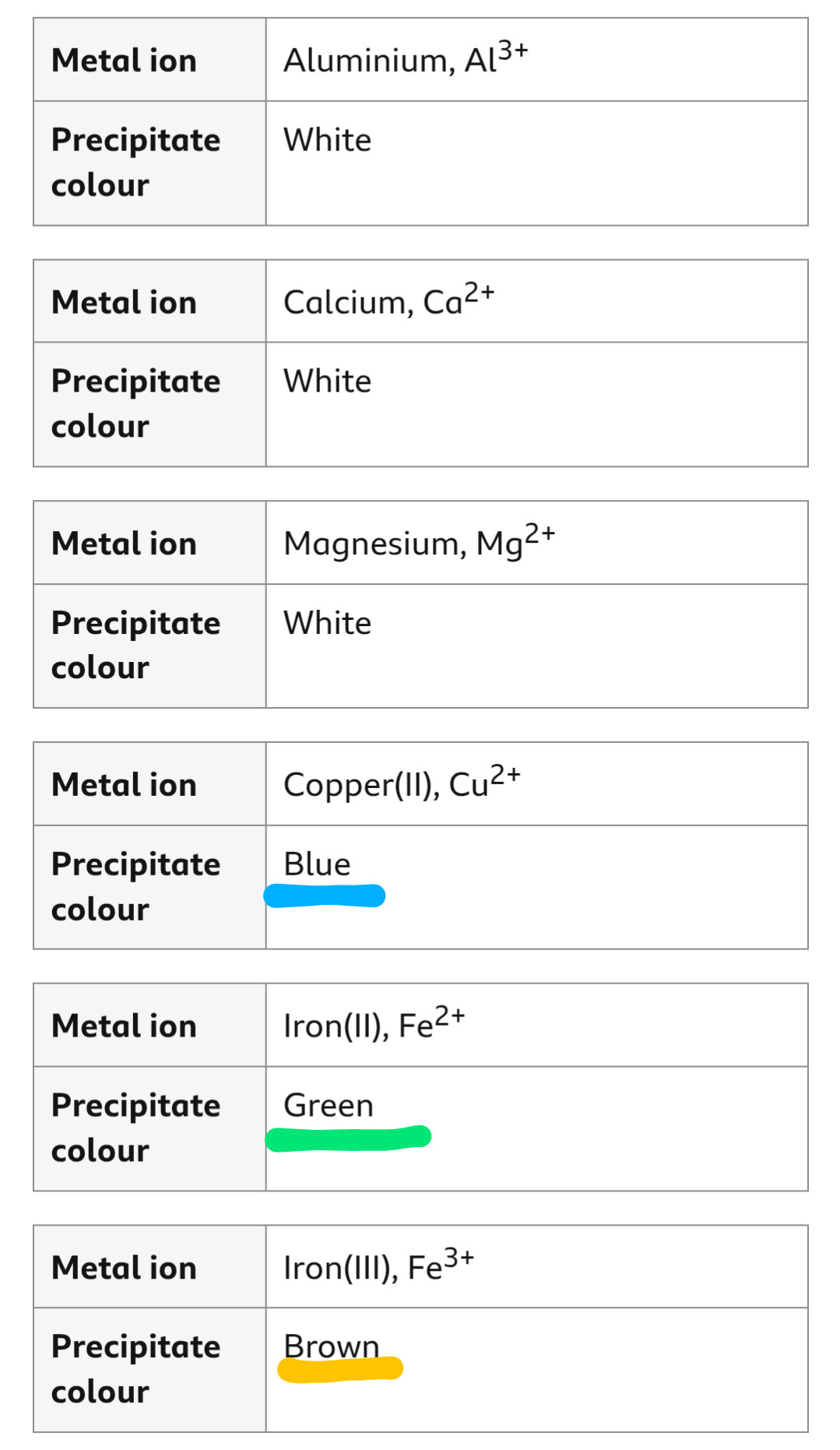
What are the Results for the Metal Hydroxides?
37
How to Distinguish Between Aluminium, Calcium & Magnesium ions?
If Excess Sodium Hydroxide Solution is Added:
- Aluminium Hydroxide Precipitate Dissolves to Form Colourless Solution
- Calcium Hydroxide Precipitate is Unchanged
- Magnesium Hydroxide Solution is Unchanged
Sodium Hydroxide can give a positive result for Aluminium ions,
Cannot Distinguish Between Calcium & Magnesium Ions so use Flame Tests.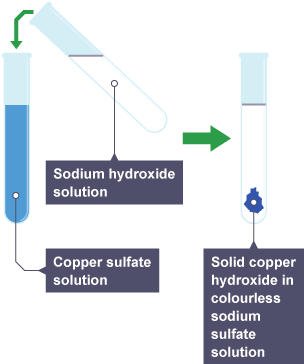
- Aluminium Hydroxide Precipitate Dissolves to Form Colourless Solution
- Calcium Hydroxide Precipitate is Unchanged
- Magnesium Hydroxide Solution is Unchanged
Sodium Hydroxide can give a positive result for Aluminium ions,
Cannot Distinguish Between Calcium & Magnesium Ions so use Flame Tests.
38
Results for Halide ion Test
Chloride - White Precipitate Produced
Bromide-Cream Precipitate Produced
Iodide - Yellow precipitate produced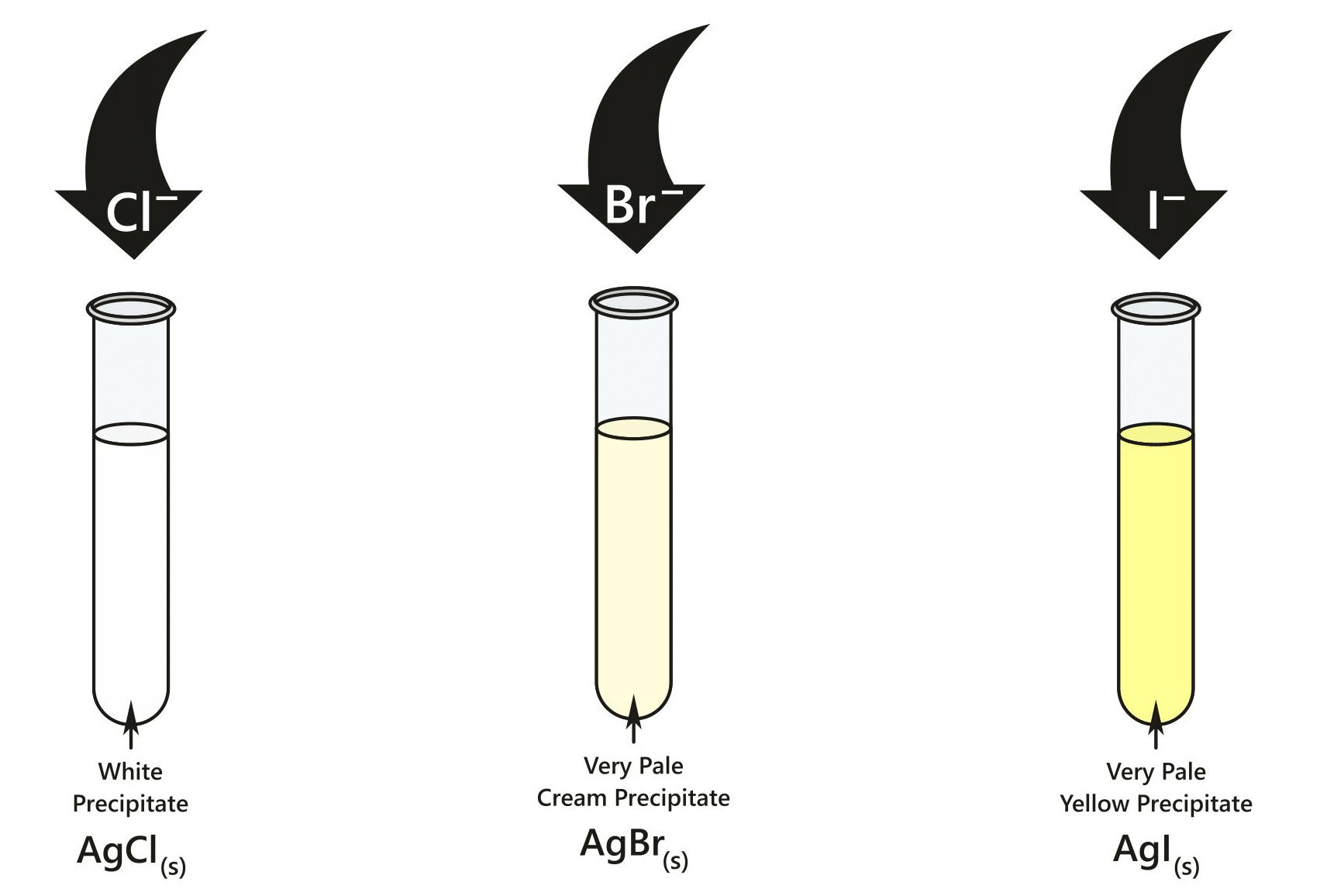
Bromide-Cream Precipitate Produced
Iodide - Yellow precipitate produced
39
Define Anion
Ion with Negative Charge always Non-Metals
40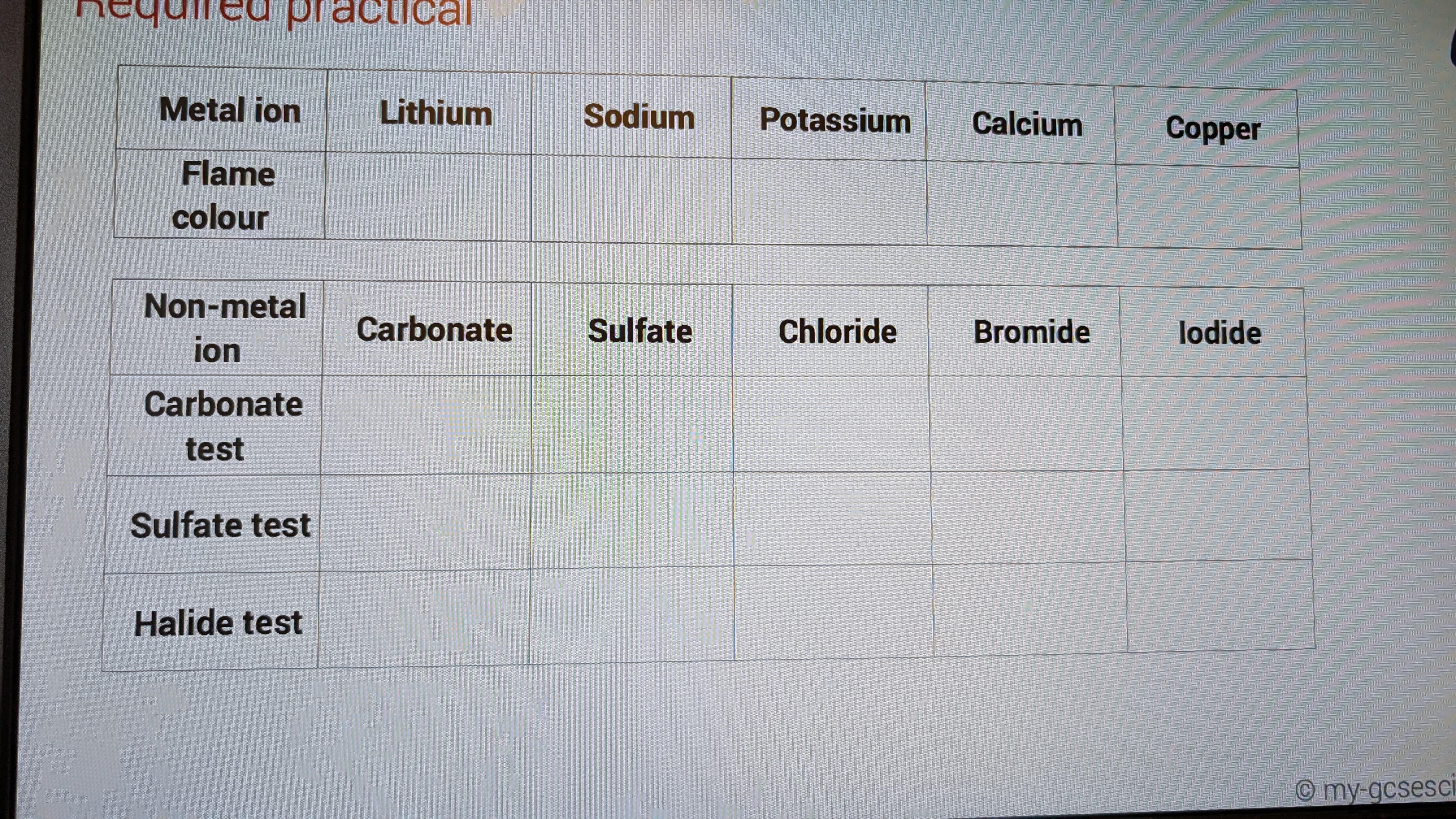
41
Write the symbol and Ionic equation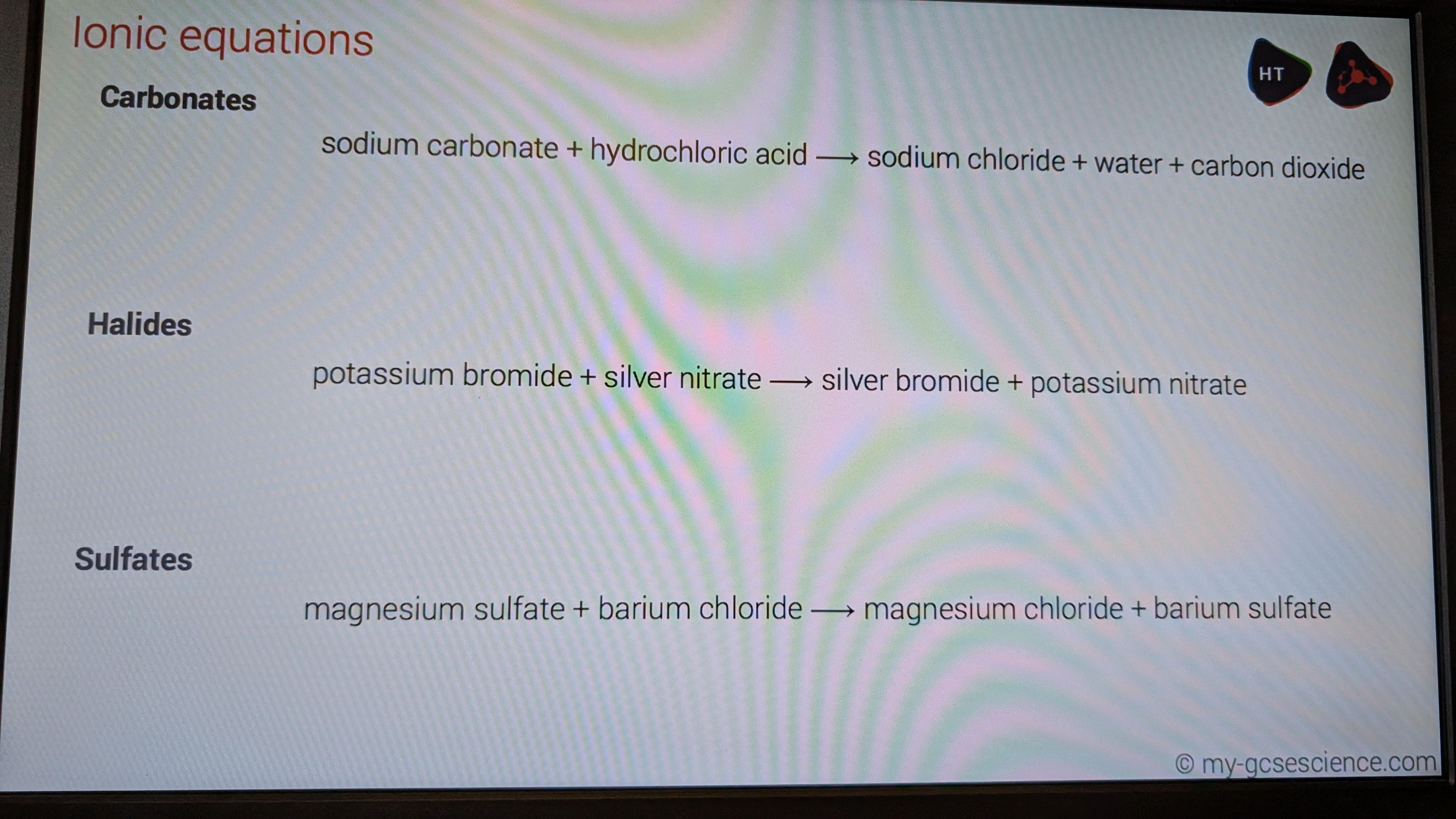
42
Define Precipitate
Insoluable Solid Produced from Reaction Between Two Solutions
43
What are the Pros & Cons of Using Instrumental Methods?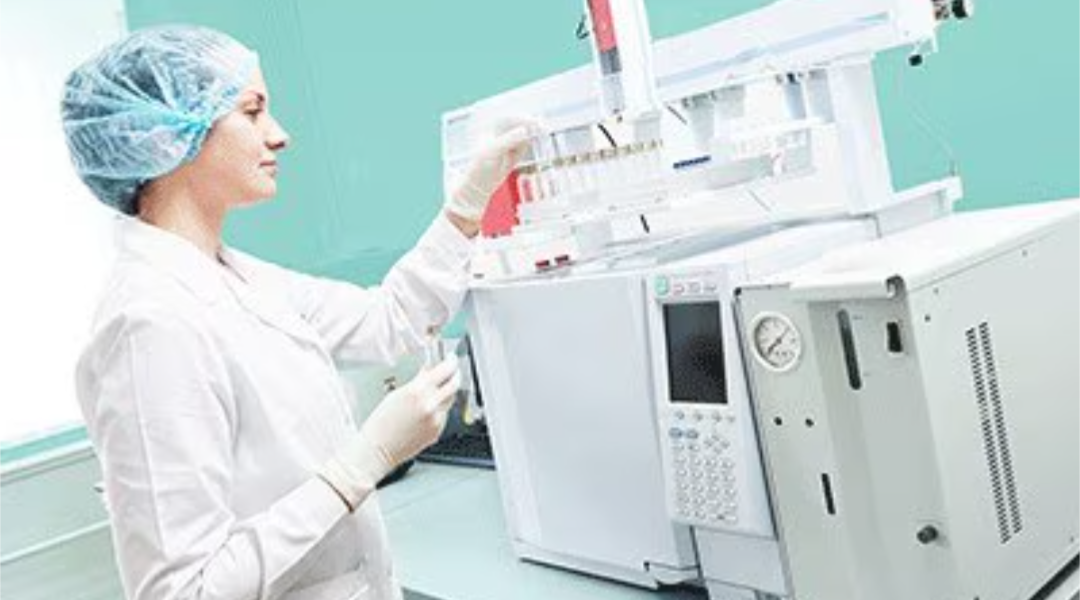
Pros
- More Accurate
- More Sensitive
- Faster
- Able to Test Much Smaller Samples
Cons
- Expensive
- Complex - Special Training Needed
- Comparison with Known Data often Needed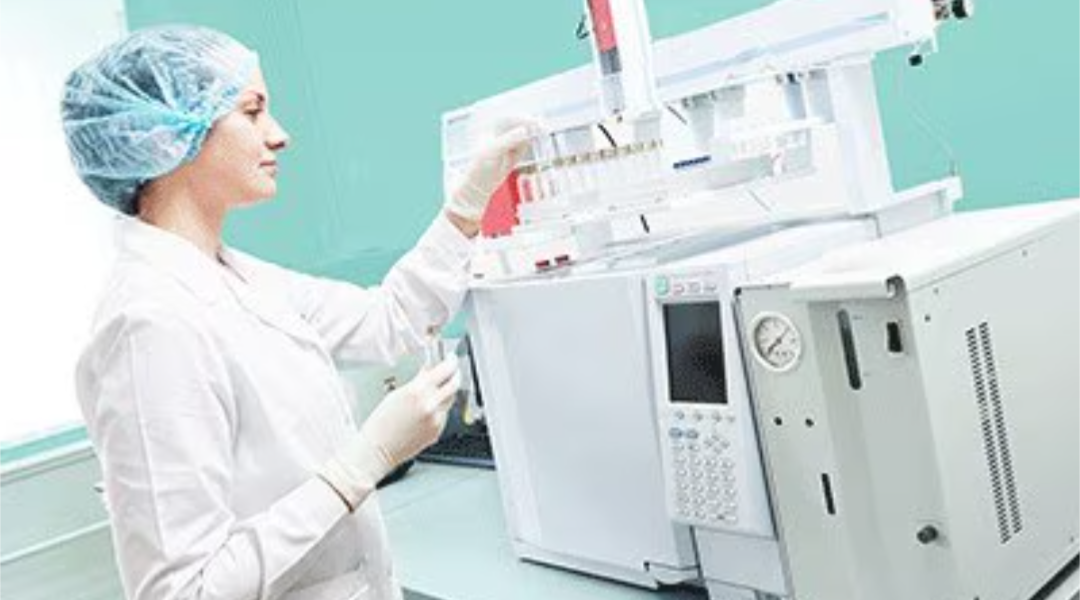
- More Accurate
- More Sensitive
- Faster
- Able to Test Much Smaller Samples
Cons
- Expensive
- Complex - Special Training Needed
- Comparison with Known Data often Needed
44
What is an Example of an Instrumental Method?
Flame Emission Spectroscopy Used to Analyse Metal Ions in Solution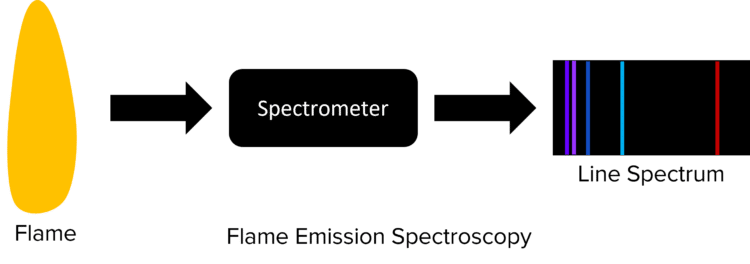
45
Which ions are Present in this Ownknown Sample?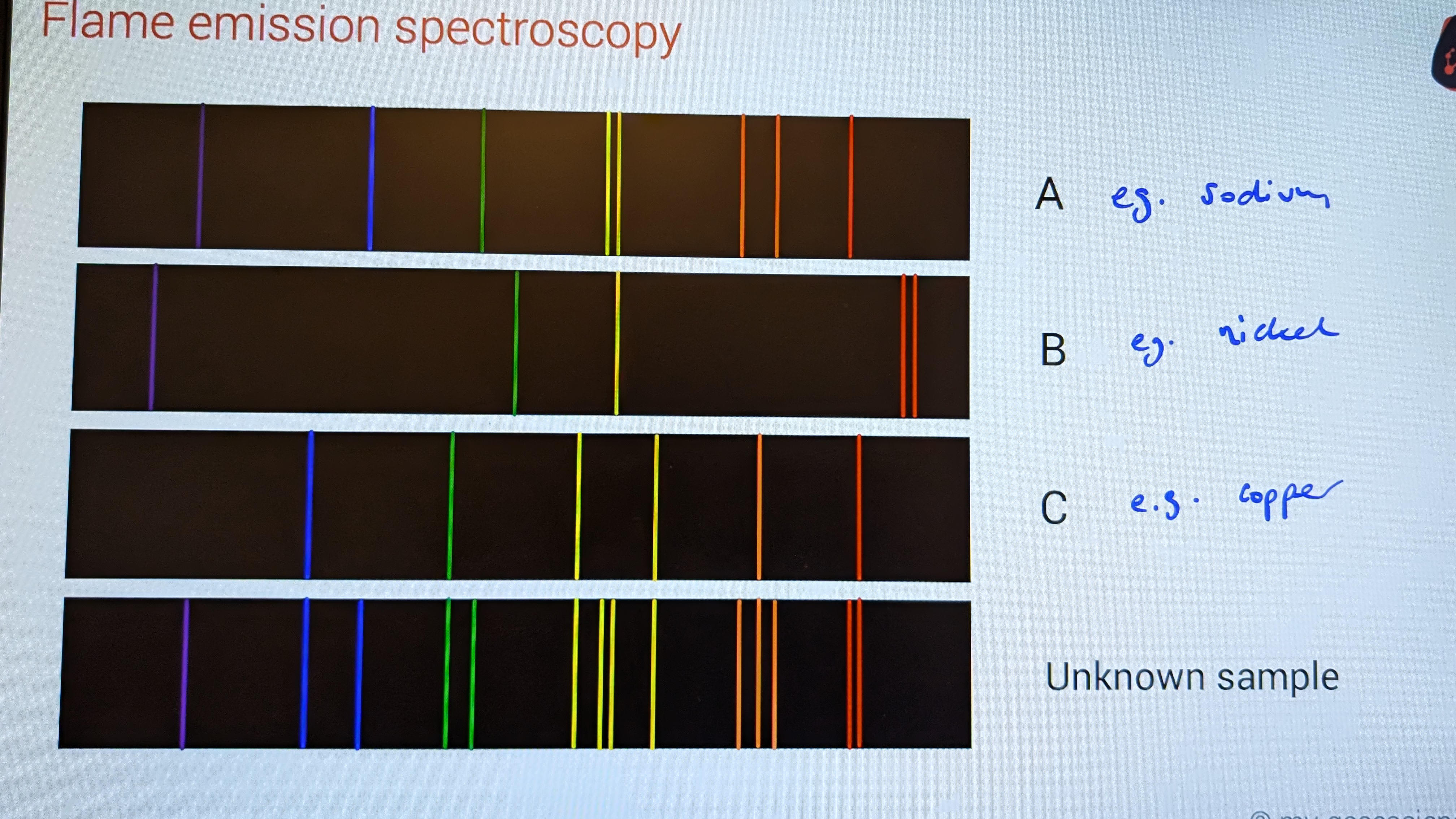
Unkown has More Lines than A So it's Likely to be Mixture of 2 Ions
So Mixture of A+C
So Mixture of A+C