All cards
1
What is a Scalar Quantity?
Quantity that has Magnitude Only
2
What is a Vector Quantity?
Quantity that has Both Magnitude & Direction
ONLY SPATIAL DIRECTION- UP etc
ONLY SPATIAL DIRECTION- UP etc
3
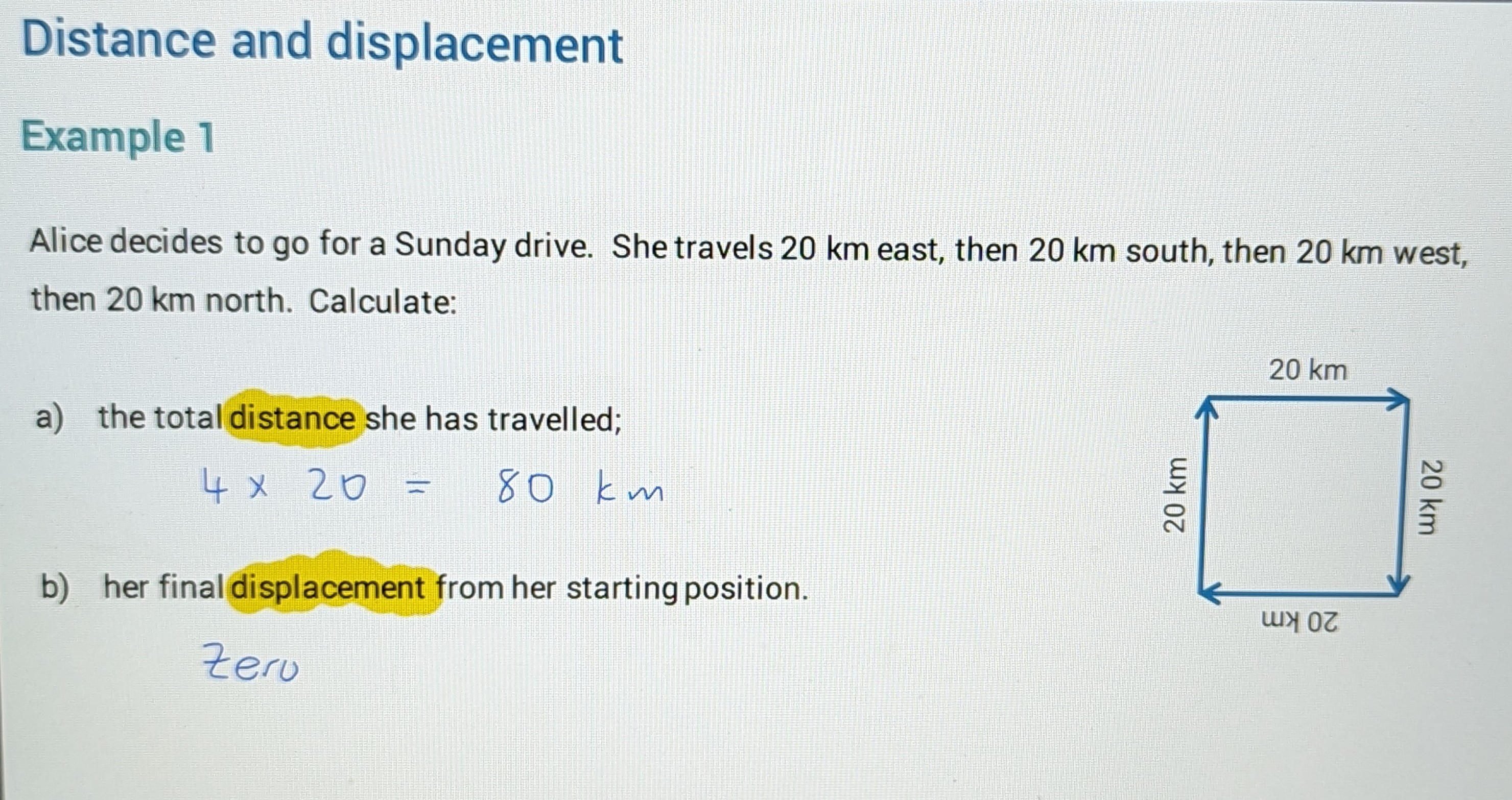
What is Distance & is it Scalar or Vector?
How Far (Scalar)
4
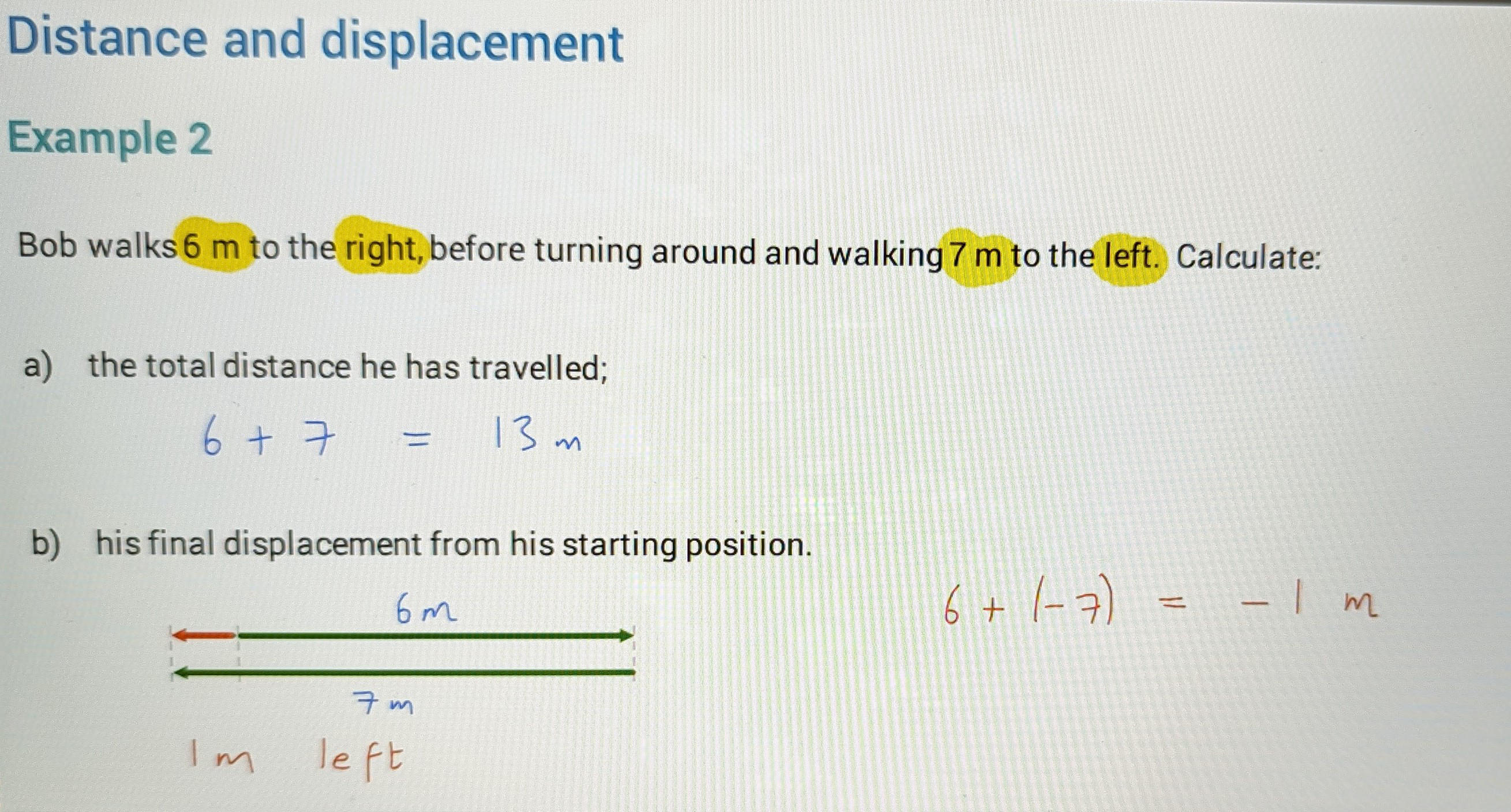
What is Displacement & is it Scalar or Vector?
How Far From Particular Point (Vector)
5
When Drawing Vectors How are Larger values Represented?
Longer Arrows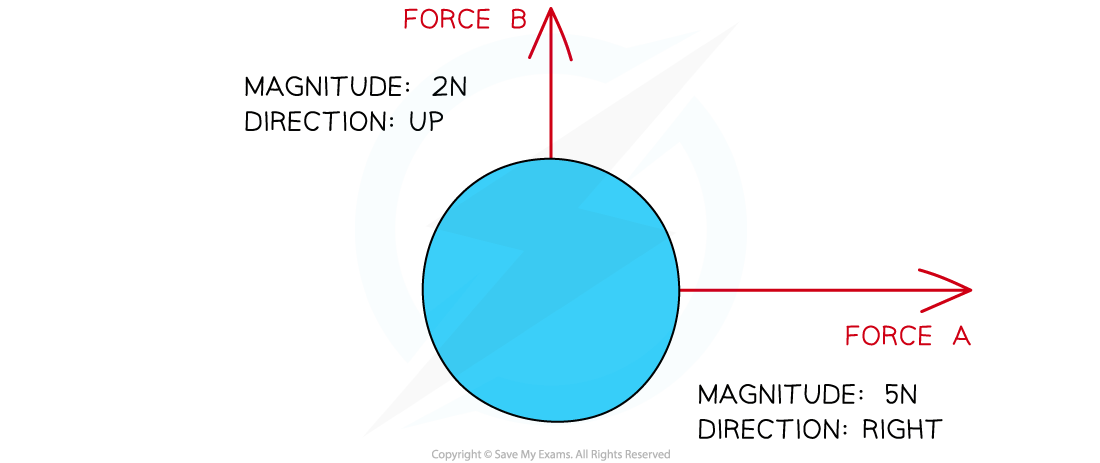
6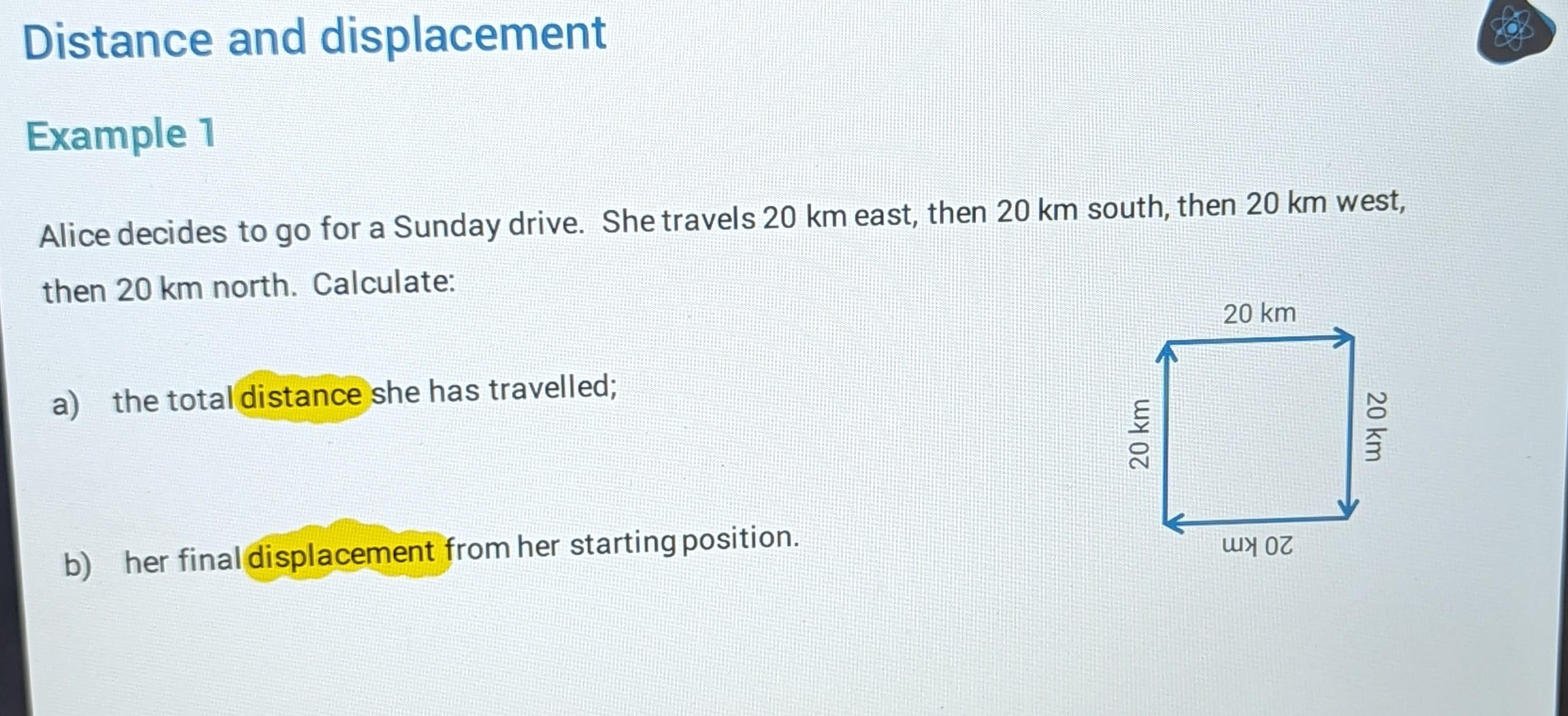
7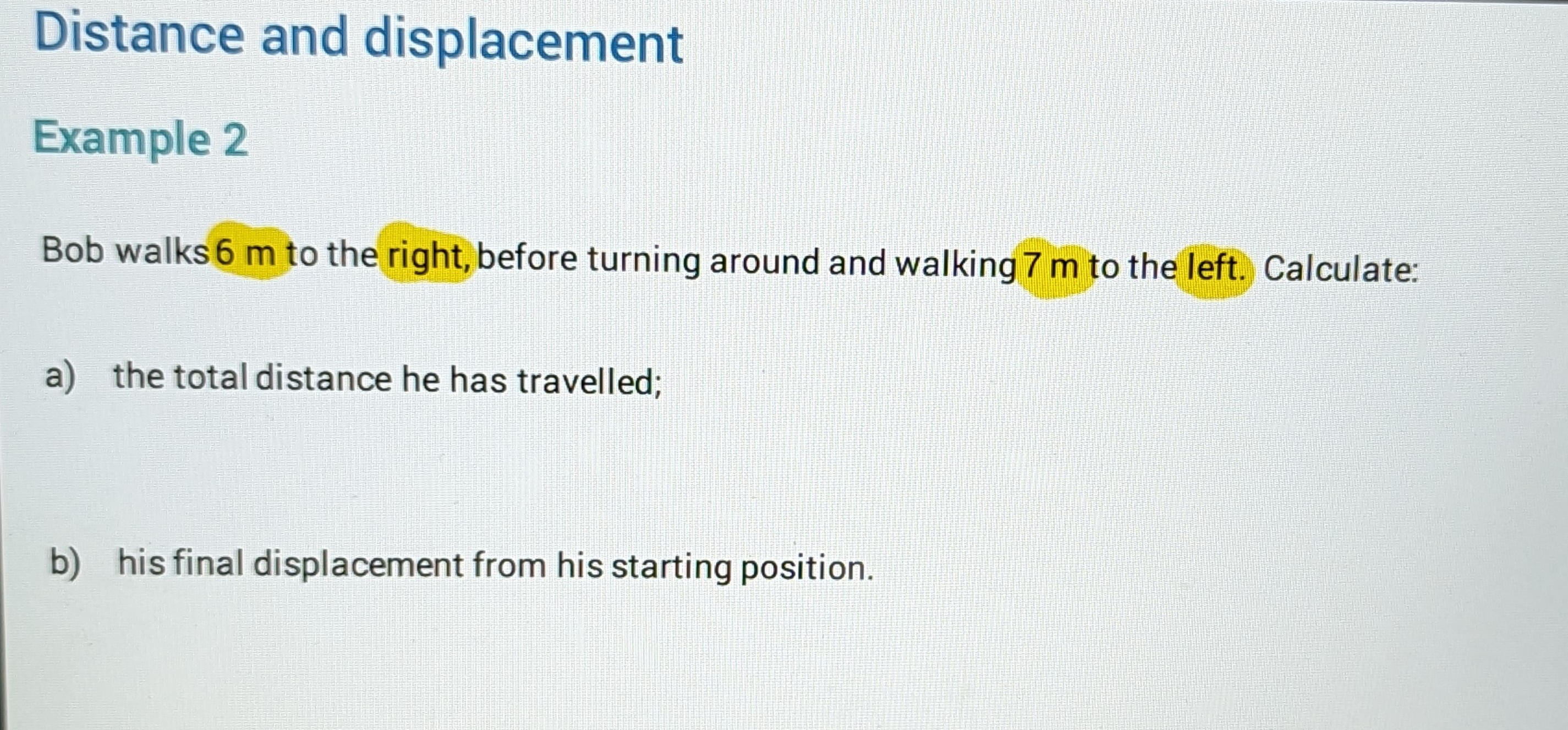
8
What is Speed & is it Scalar or Vector?
How Fast (Scalar)
9
What is Velocity & is it Scalar or Vector?
How Fast in Given Direction (Vector)
10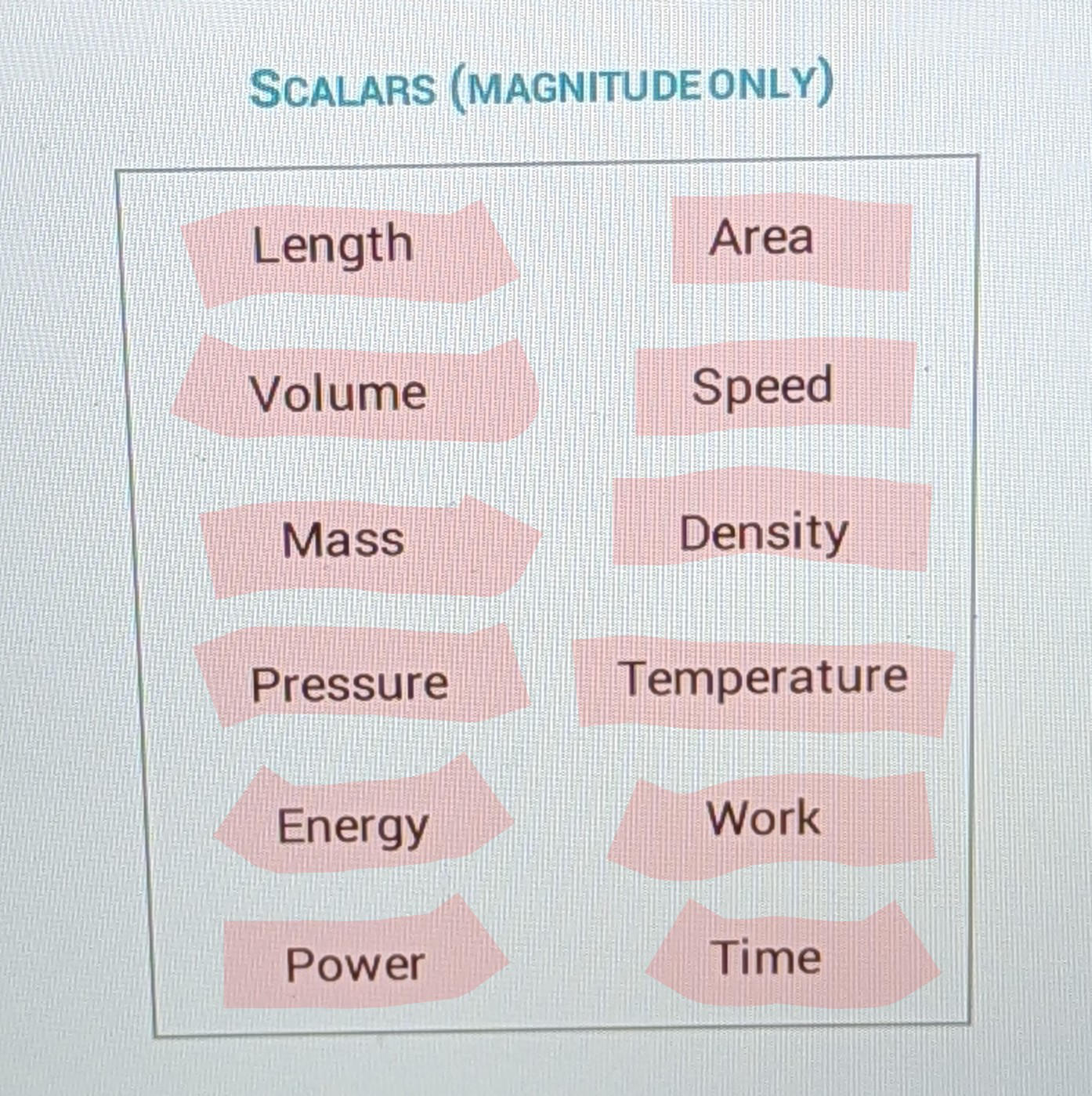
List some Scalers
11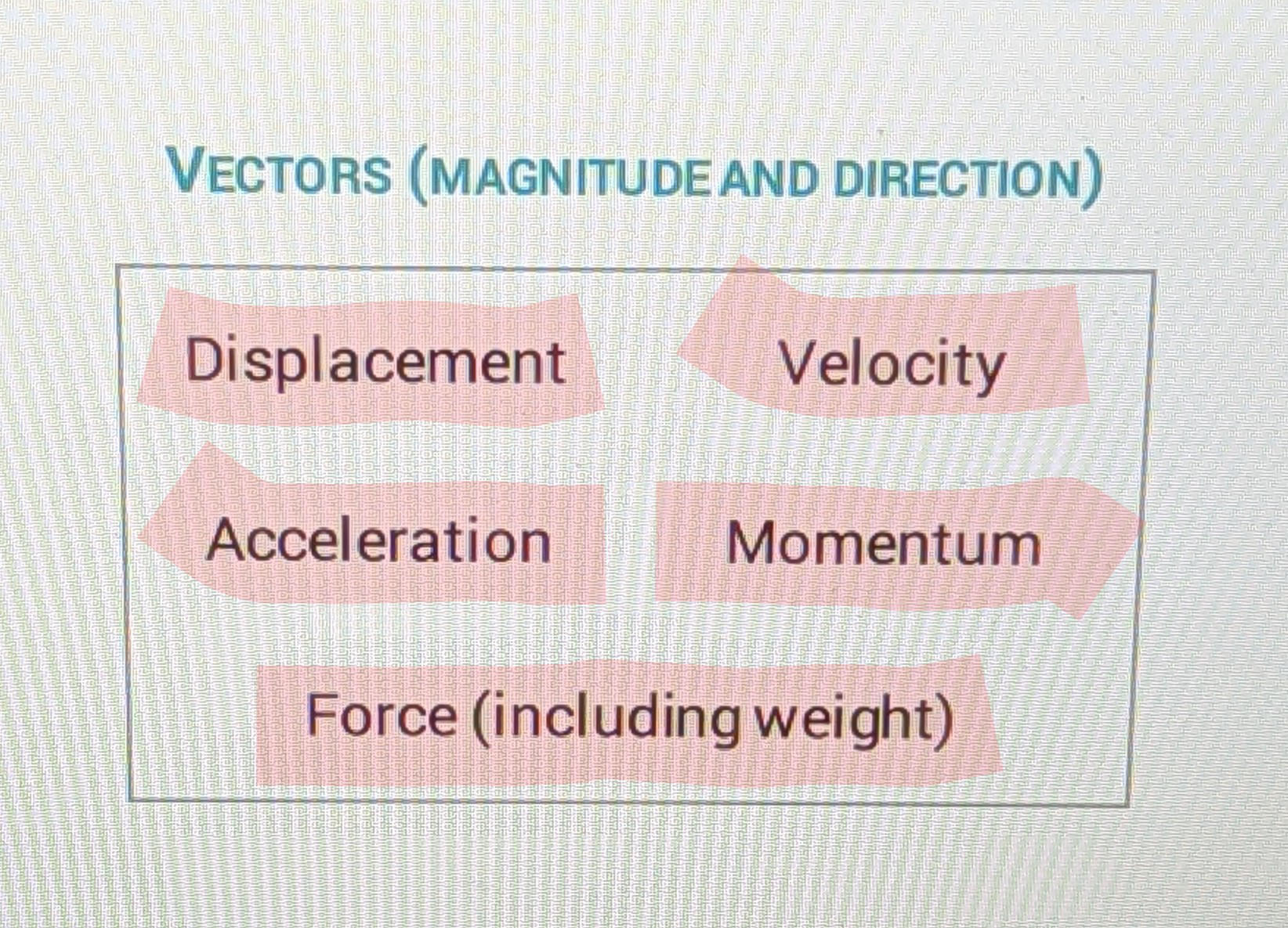
List some Vectors
12
What do Forces Allow?
Allow Objects to Interact With One Another.
13
What Can Forces Change?
• Speed of Object
• Direction in Which Object is Moving
• Shape of Object
• Direction in Which Object is Moving
• Shape of Object
14
What are Contact Forces?
Act Between Objects which Are TOUCHING One Another.
15
What are Non-Contact Forces?
Act Between Objects Even When NOT TOUCHING One Another.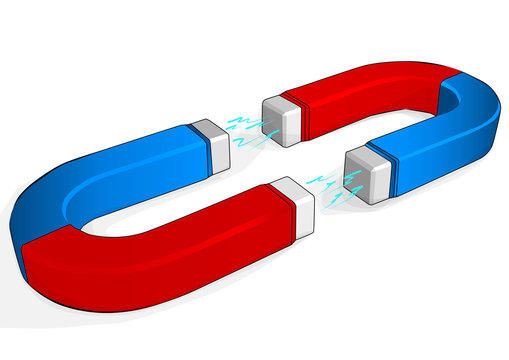
16
A resultant force is shown below. Which of the options correctly shows its component forces?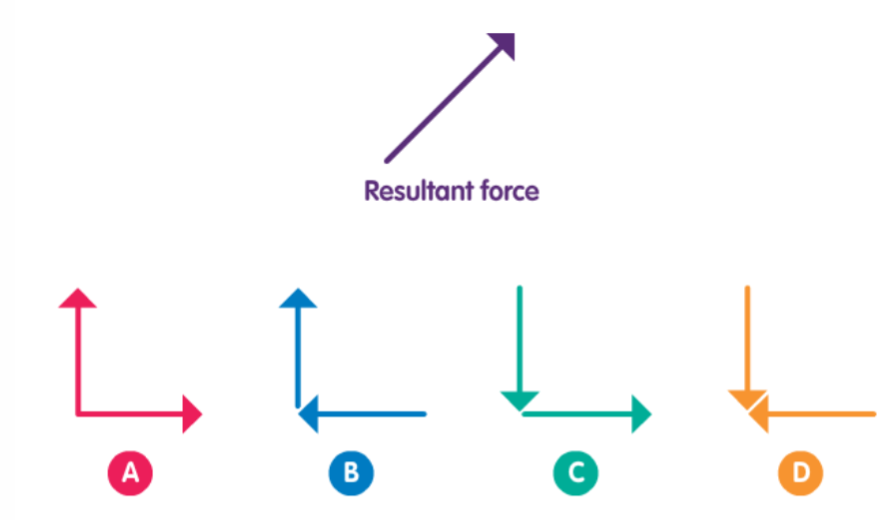
The Two Component Forces in A, when Placed Head To Tail, would Produce a Resultant Force Going Towards the Upper Right.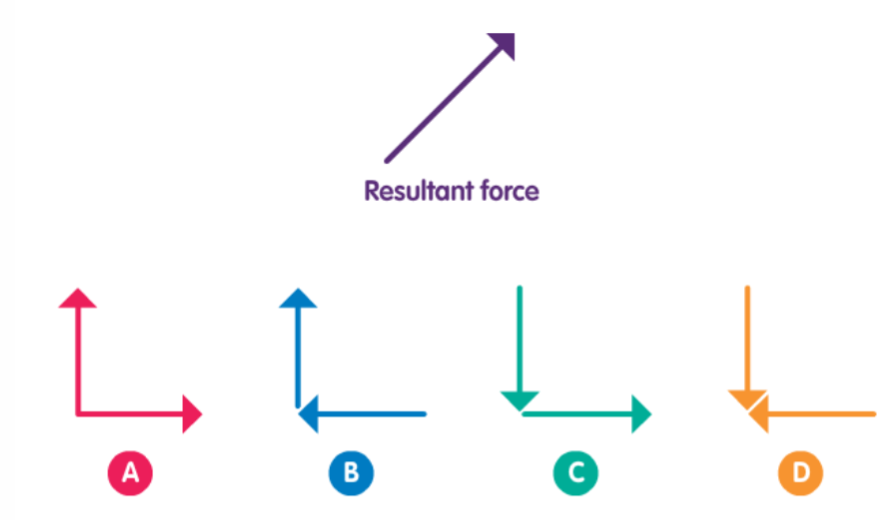
17
List some Contact Forces & What They are
• Friction- Opposes Motion
• Air Resistance- Act Opposite to Direction of Motion
• Normal Reaction- Object at Rest on Surface
• Tension- Tries to Pull it Back to Original Shape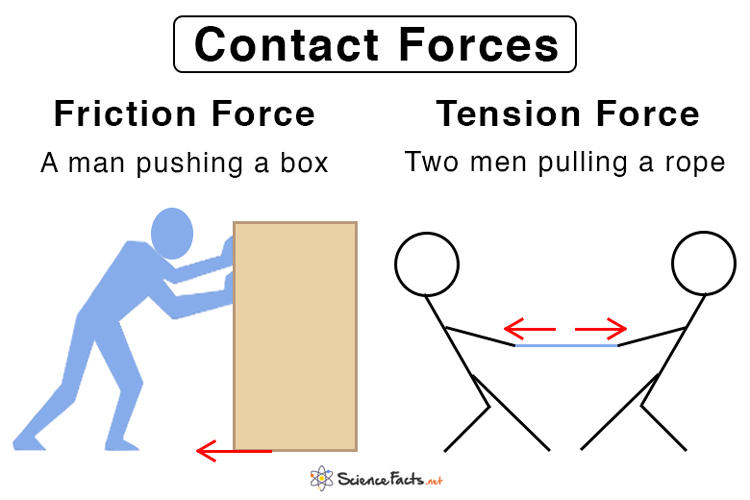
• Air Resistance- Act Opposite to Direction of Motion
• Normal Reaction- Object at Rest on Surface
• Tension- Tries to Pull it Back to Original Shape
18
List some Non-contact Forces & What They are
• Electrostatic- Two Objects Electrically Charged will Either be Attracted or Reppeled from One Another
• Magnetic- Forces will be Exerted Between Poles of Magnets
(Like Poles Reppel & Unlike Attract)
• Gravitational- Exists Between All Masses & are Attractive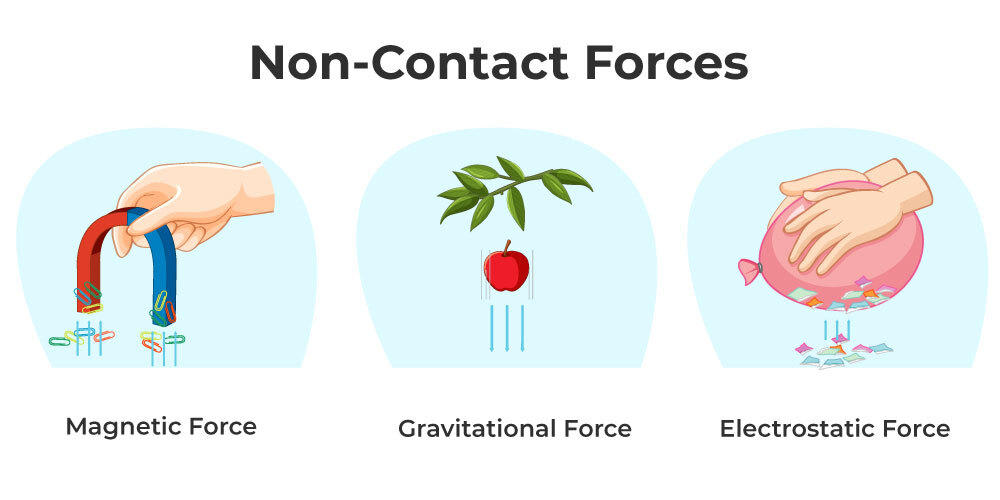
• Magnetic- Forces will be Exerted Between Poles of Magnets
(Like Poles Reppel & Unlike Attract)
• Gravitational- Exists Between All Masses & are Attractive
19
What is Mass & Measured in & is it Scalar or Vector?
How Much Matter is in an Object & Measured in kg.
Scalar.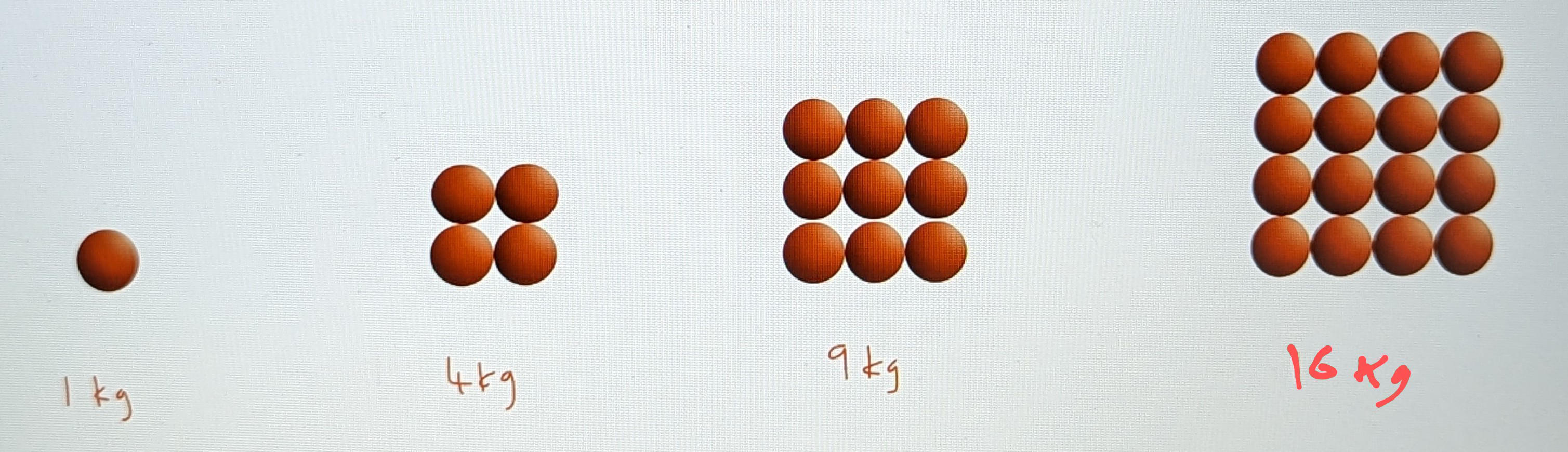
Scalar.
20
What does Gravity Tell Us?
All Objects Are Attracted Towards Each Other.
21
When Does the Force of Attraction Increase?
When Objects Have Larger Mass & Closer Together.
22
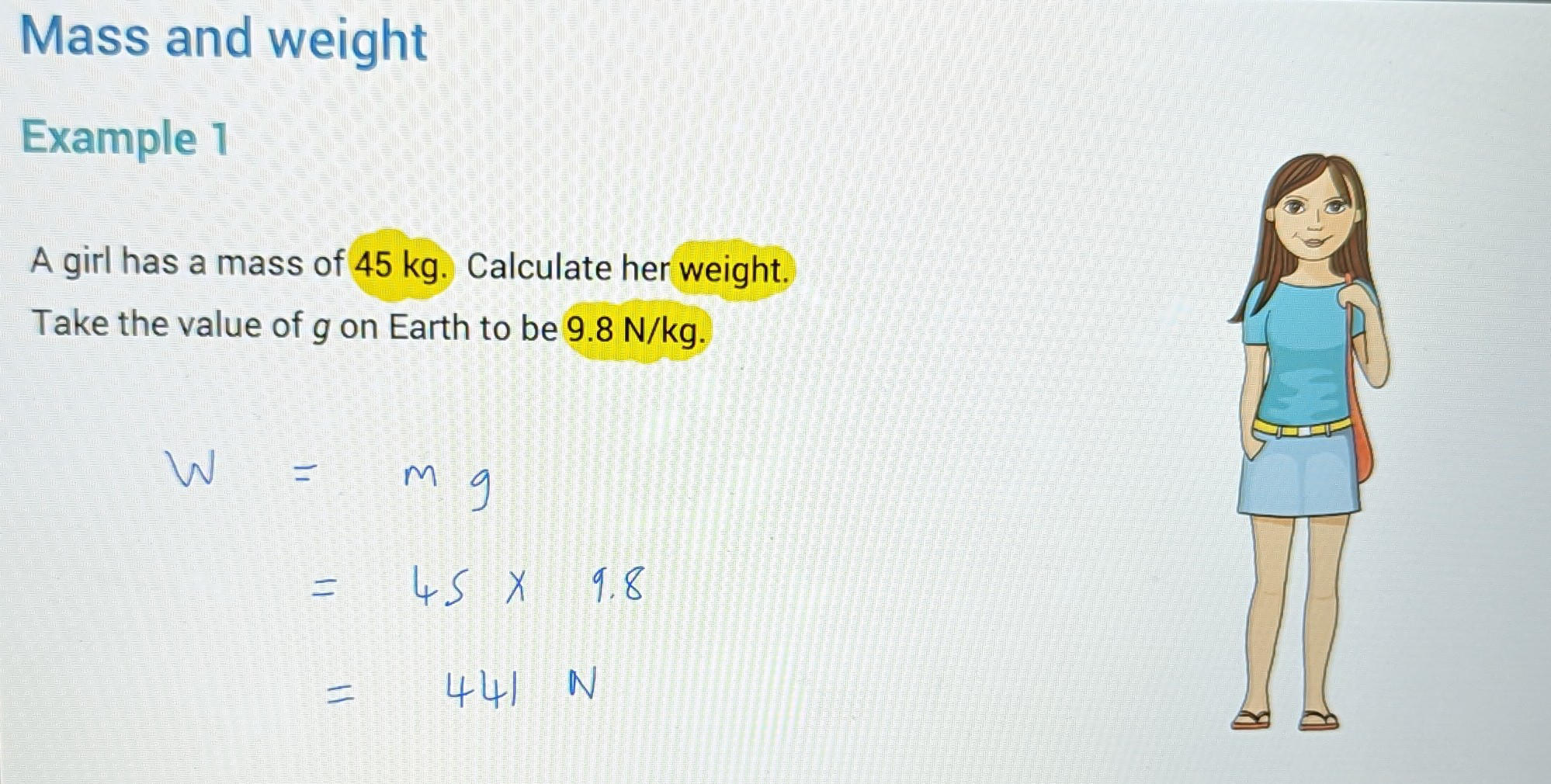
What is Weight and Measured in & is it Scalar or Vector?
Force Acting On Object Due to Gravity & Measured in (N).
Vector.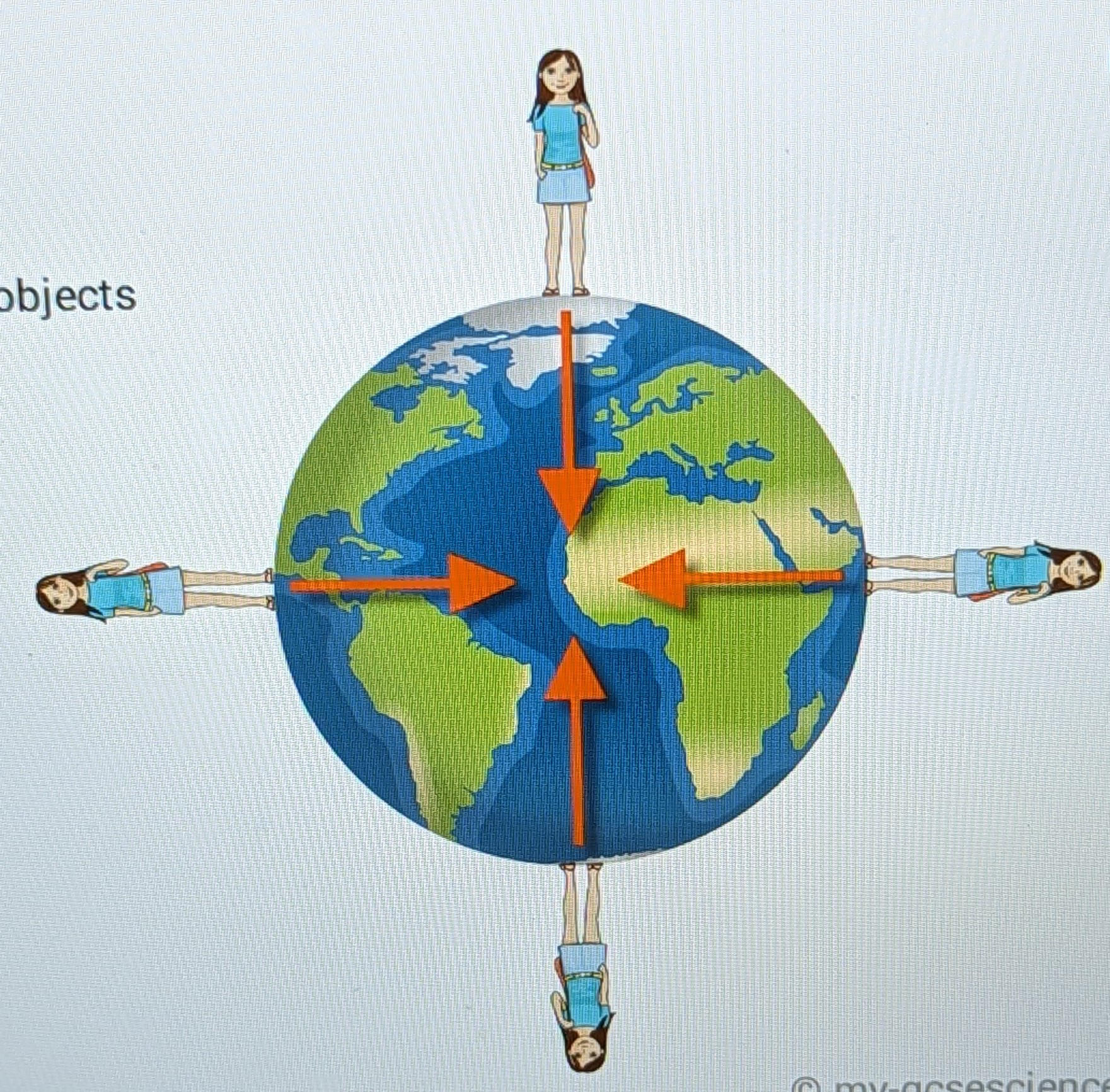
Vector.
23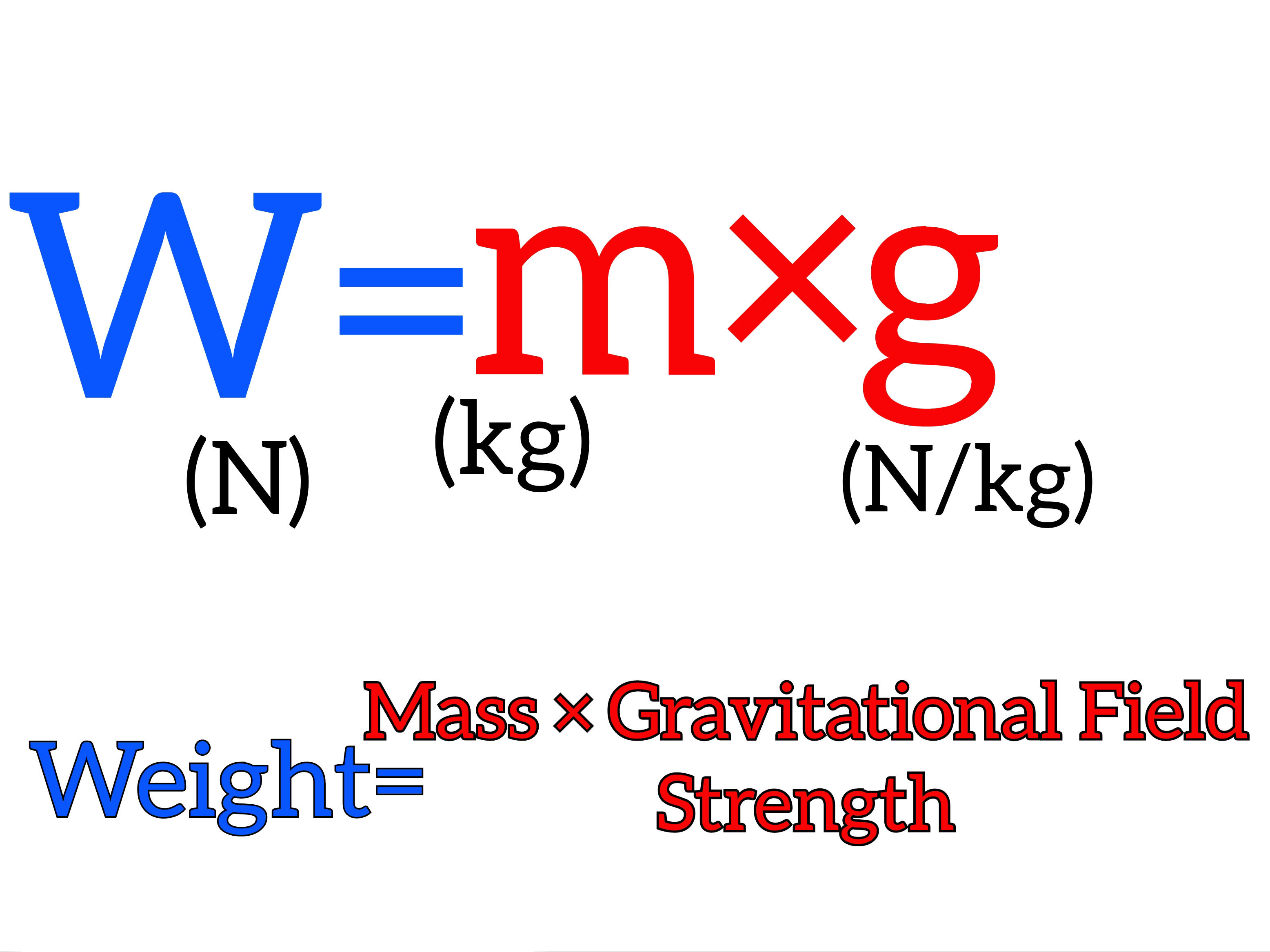
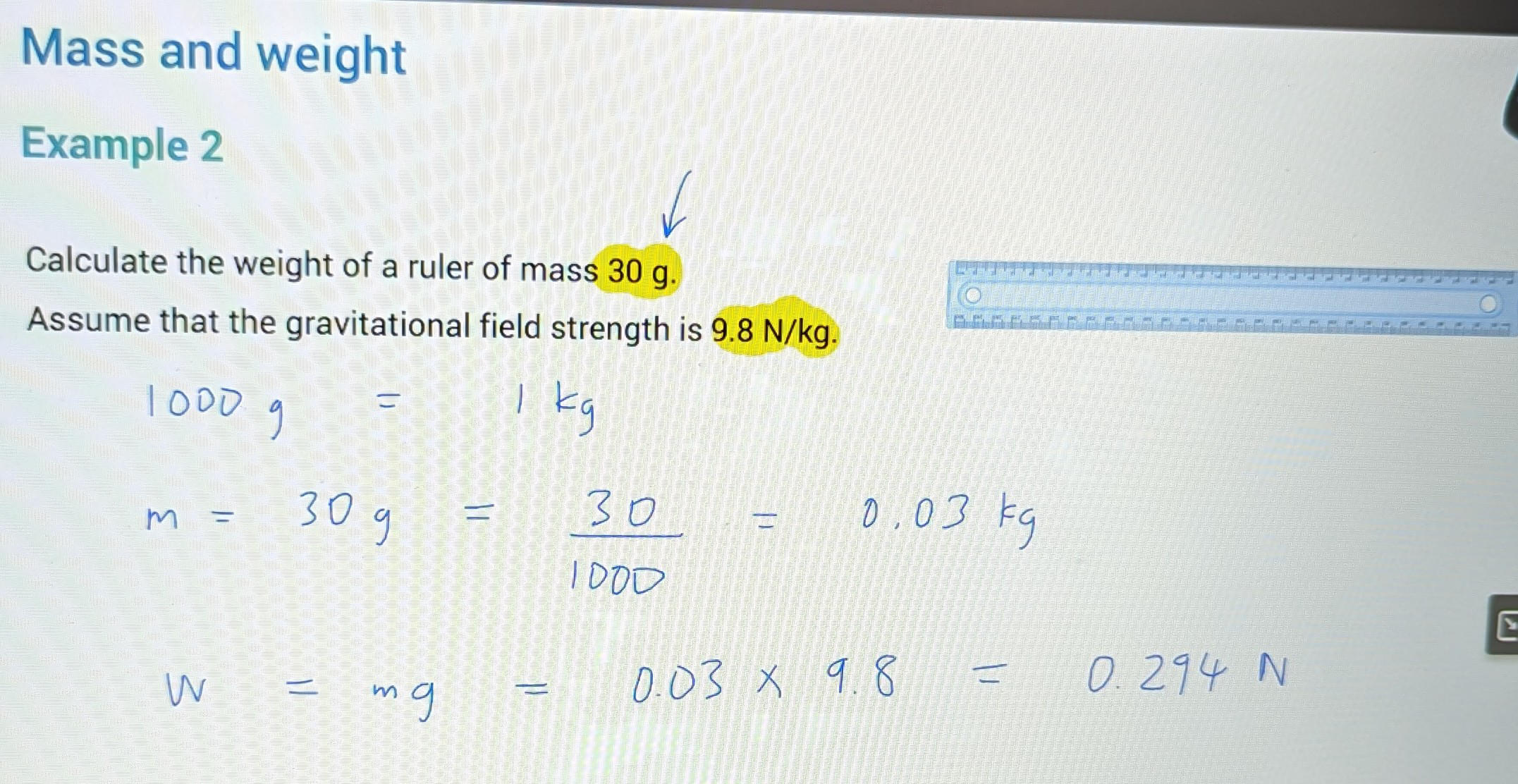
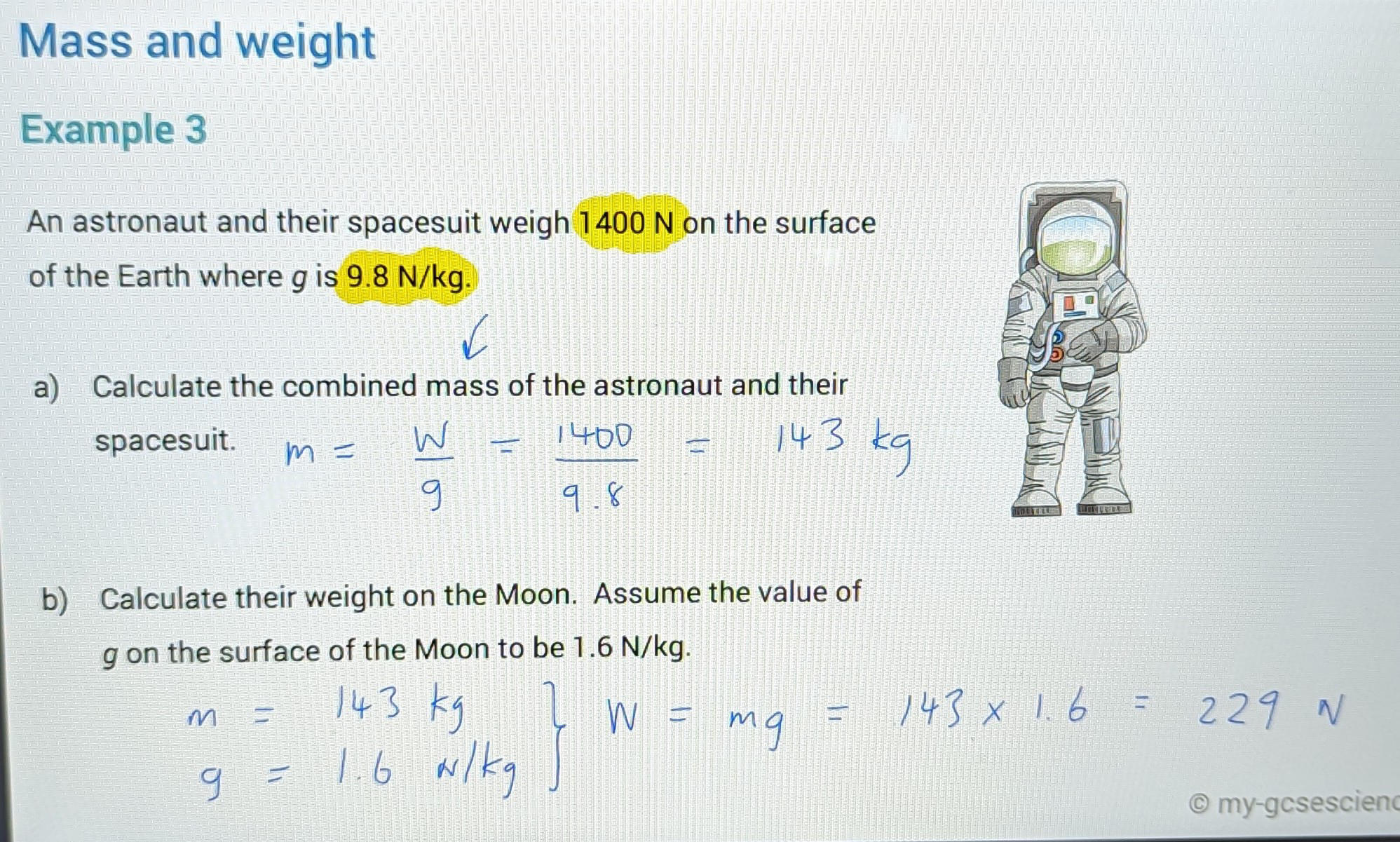
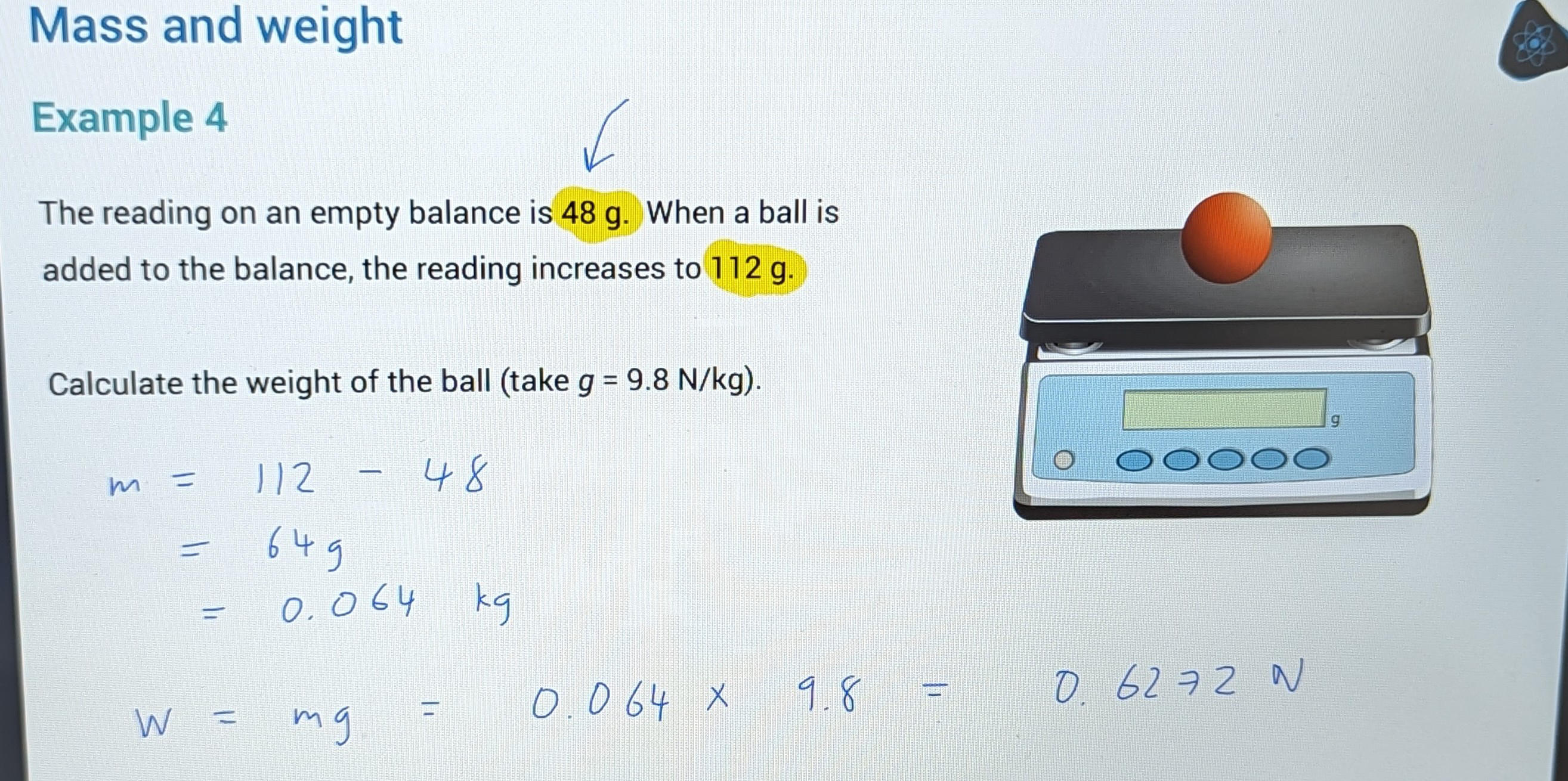
What Formula for Weight & Units?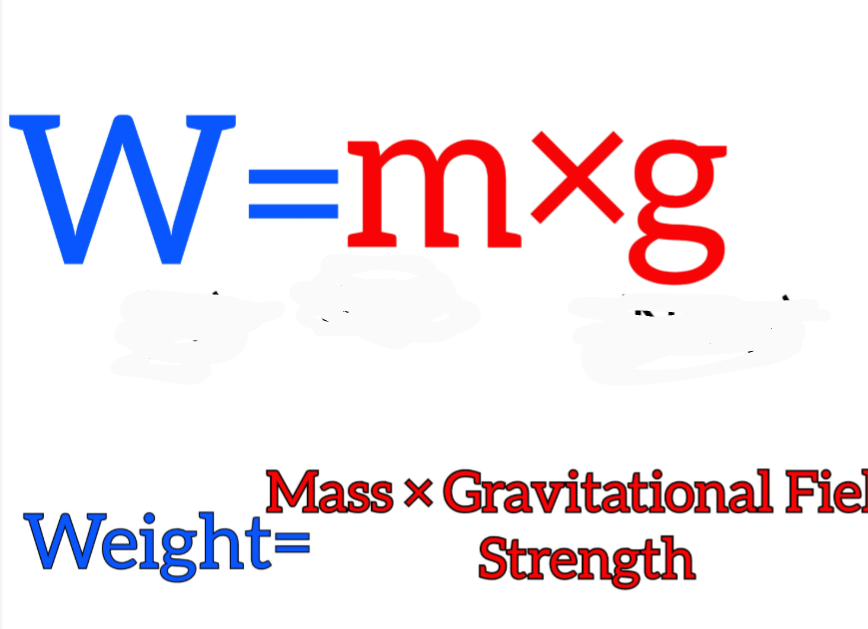
24
What Is the Gravitational Field Strength on Earth & What does that Mean?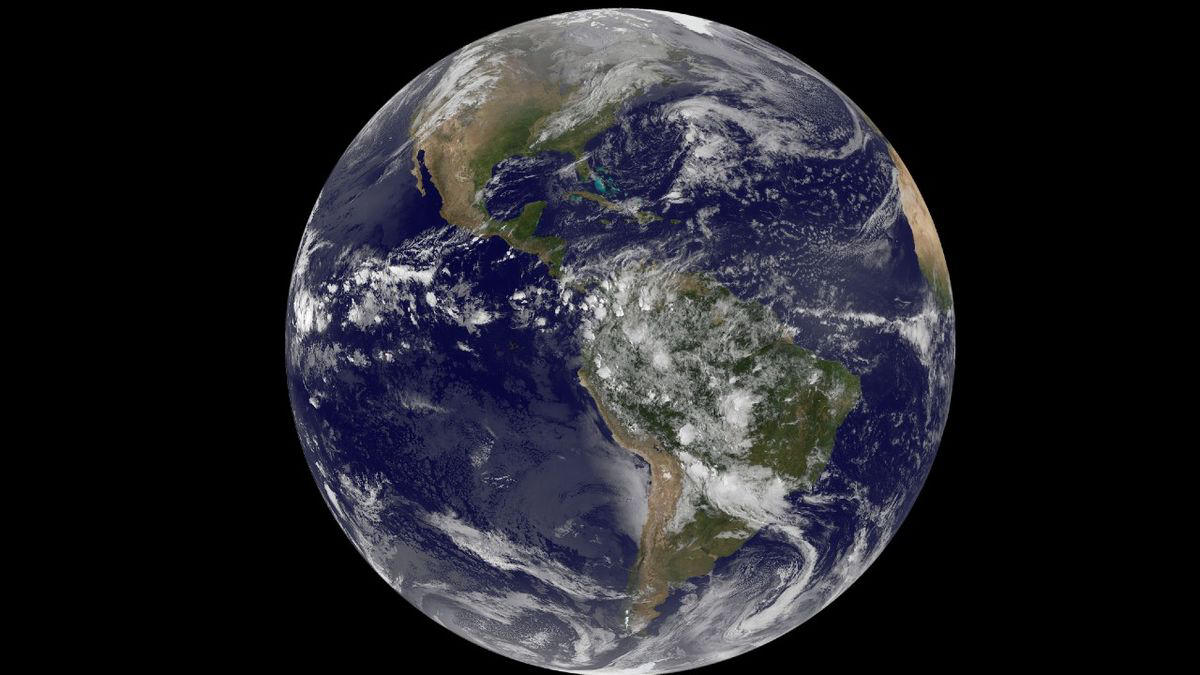
9.8N
An Object on Earth With Mass of 1kg Has Weight of 9.8N.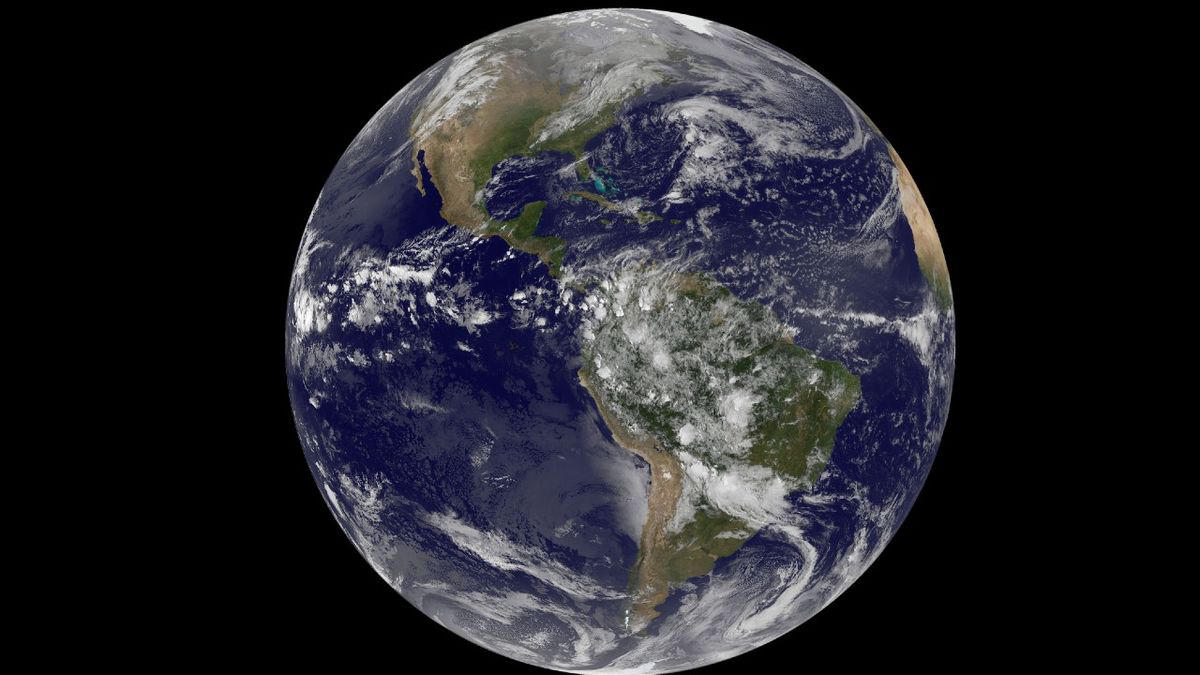
An Object on Earth With Mass of 1kg Has Weight of 9.8N.
25
What is Centre Mass?
Point From Which an Object's Weight Can Be Considered to Act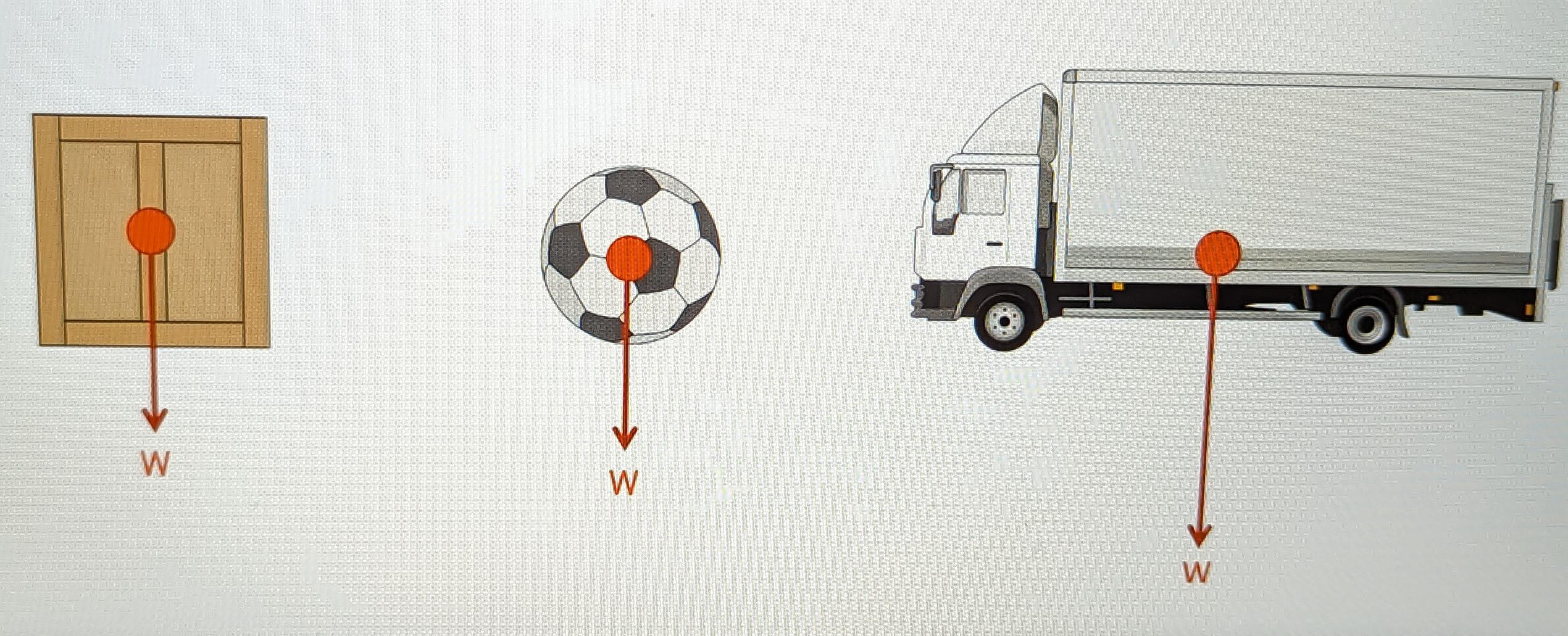
26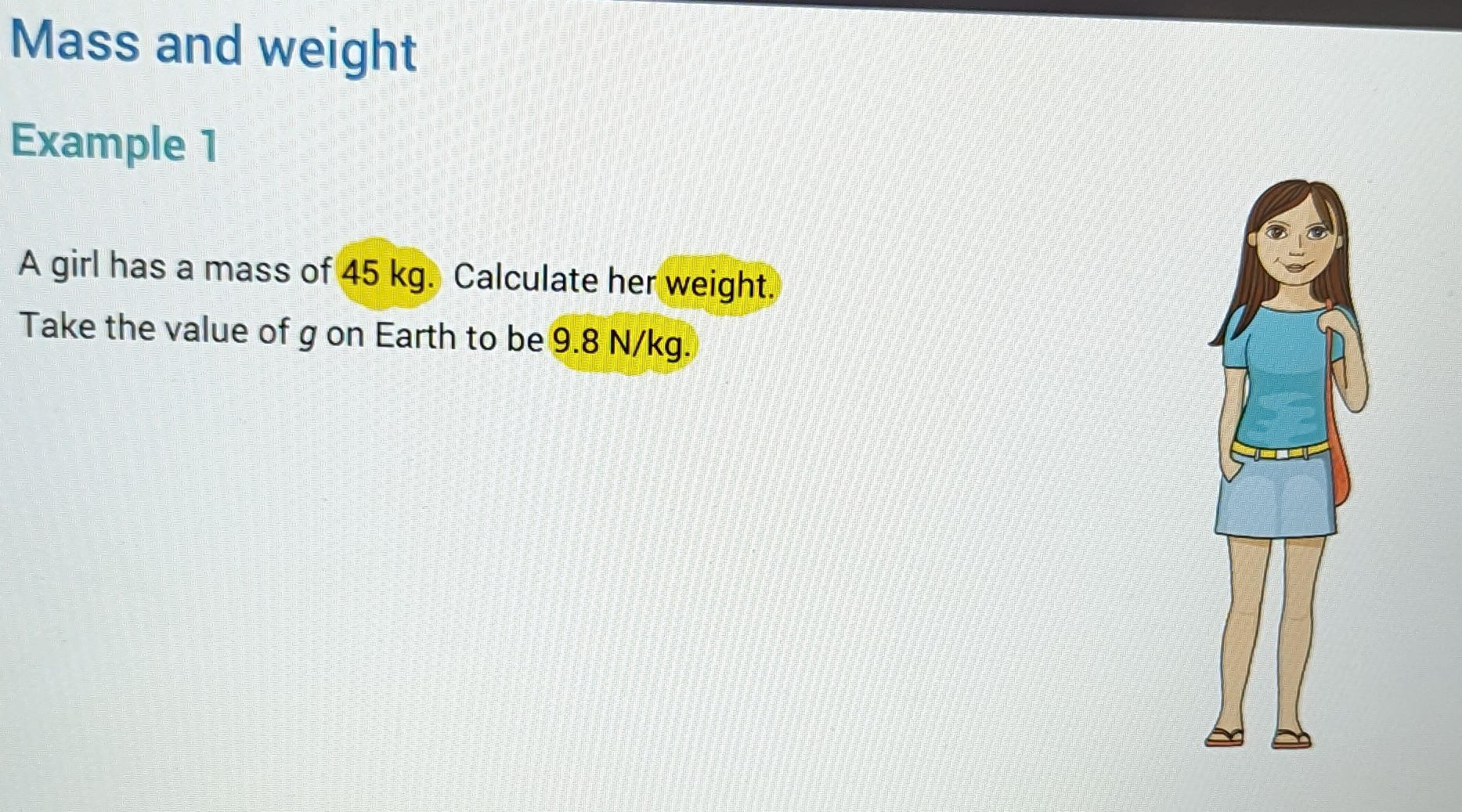
27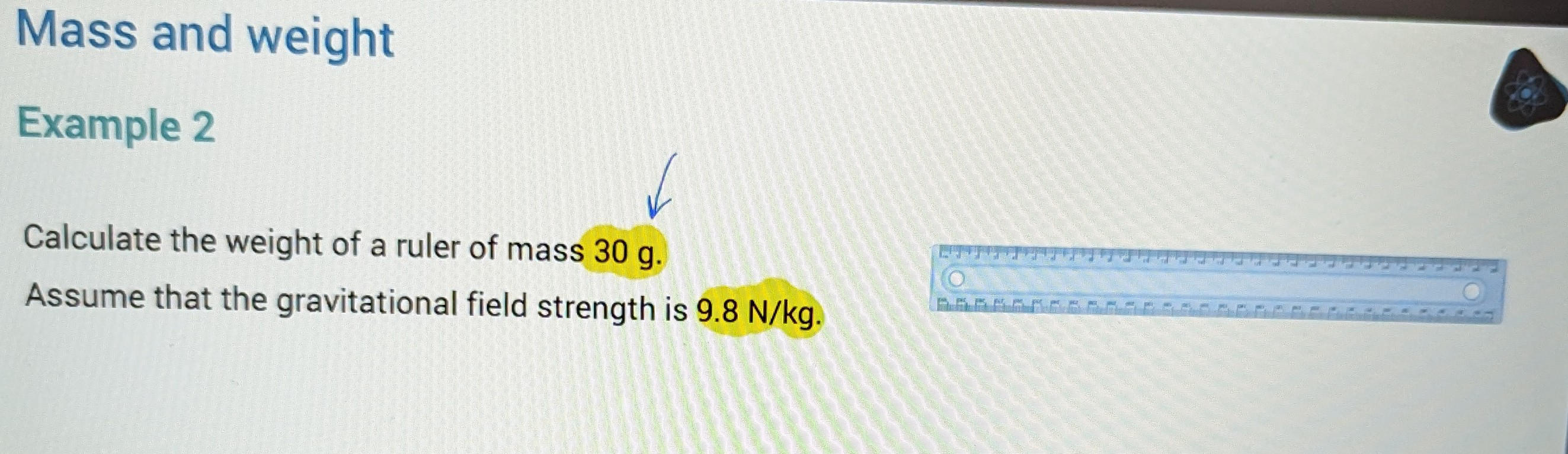
28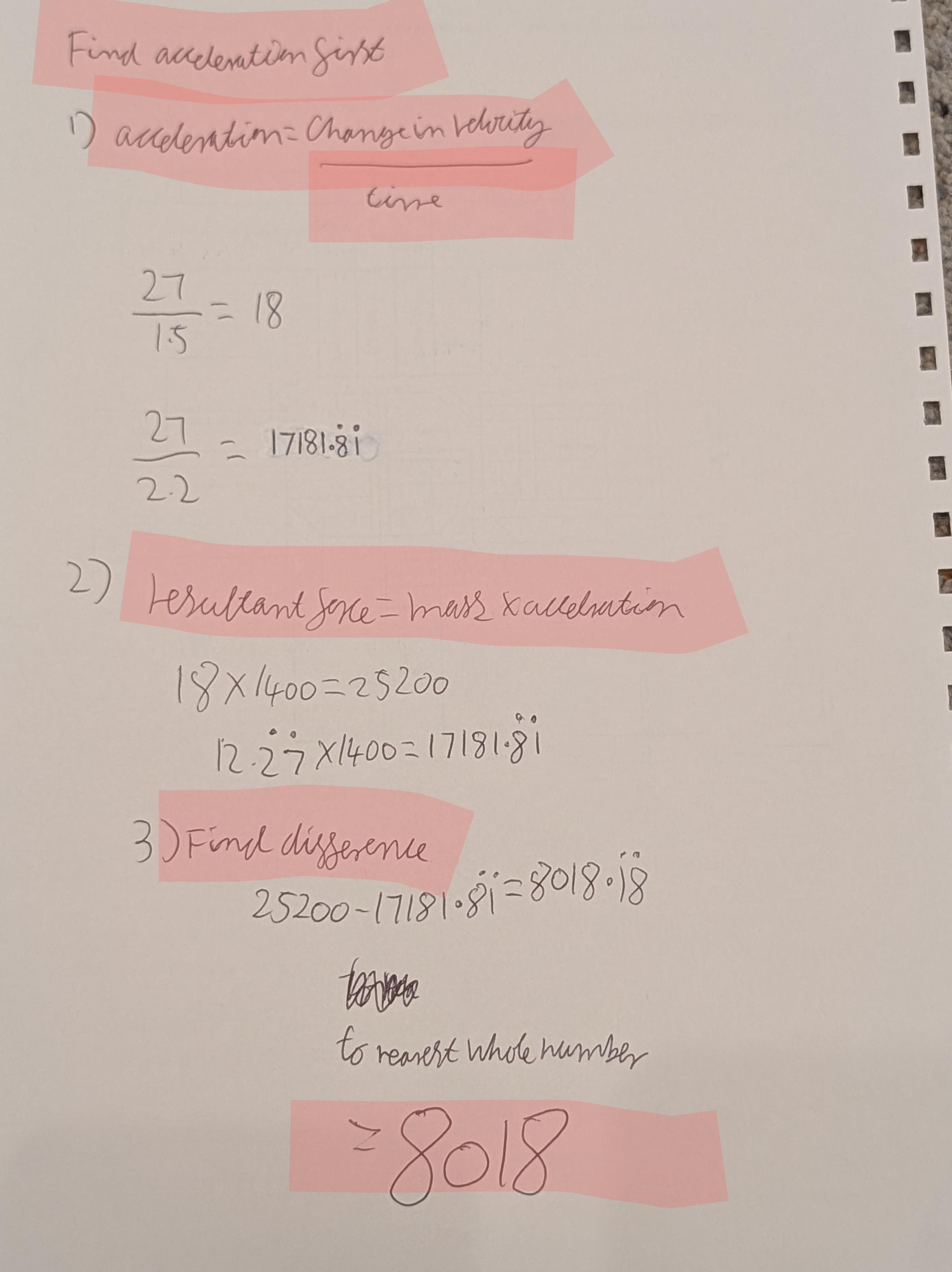
A family car has a mass of 1400 kg. In an accident it hits a wall and goes from a speed of 27 m/s to a standstill in 1.5 seconds. By how much would the force have been reduced if the car had had a crumple zone that increased the collision time to 2.2 seconds? Give your answer to the nearest whole number.
29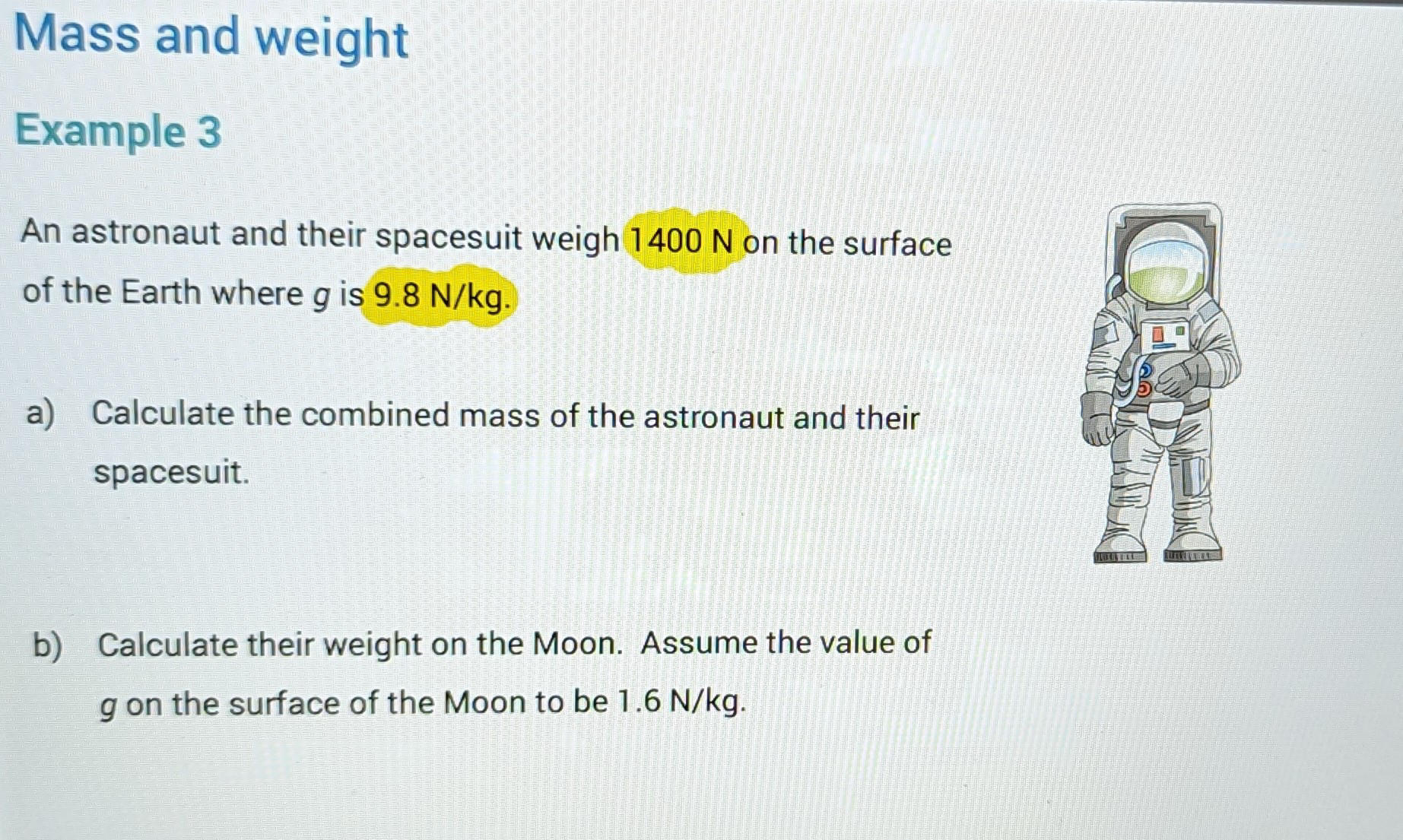
30
True or False your Mass Changes on a Different Planet & Your Weight Stays the Same?
FALSE
Your Mass Stays the Same on a Different Planet & Your Weight Changes Due to Different Gravity.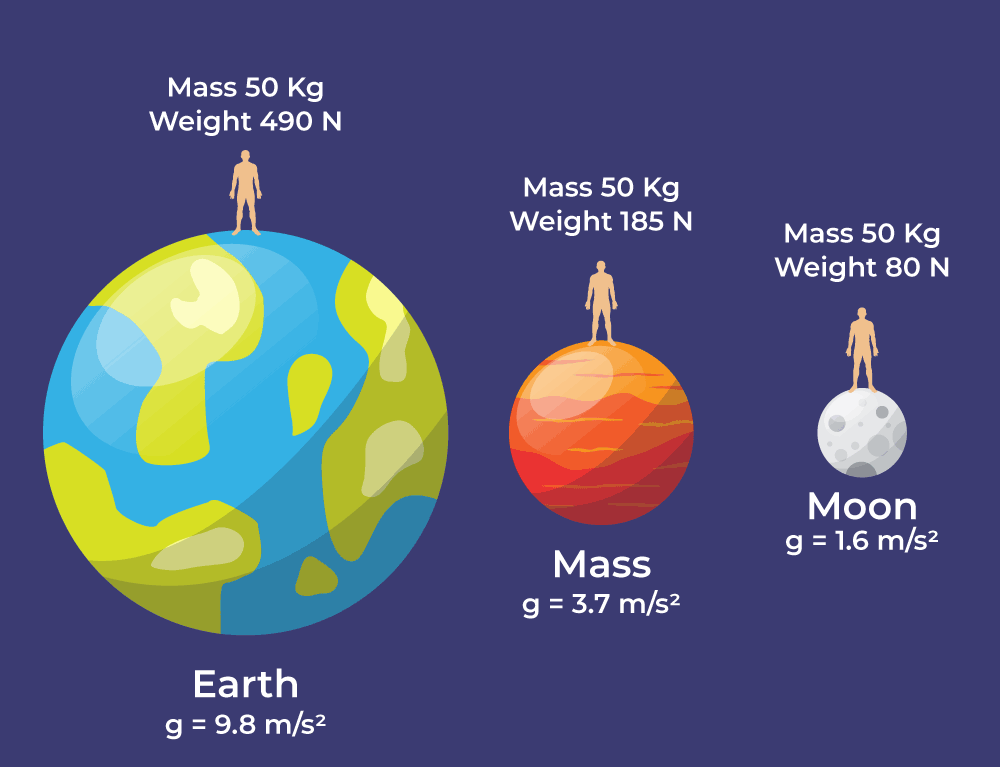
Your Mass Stays the Same on a Different Planet & Your Weight Changes Due to Different Gravity.
31
What are the standard units for momentum?
kg m/s
32
What does it Mean to be Weightless?
If Gravitational Field Strength is Zero.
W=mg
0=10×0
Weight= Zero
W=mg
0=10×0
Weight= Zero
33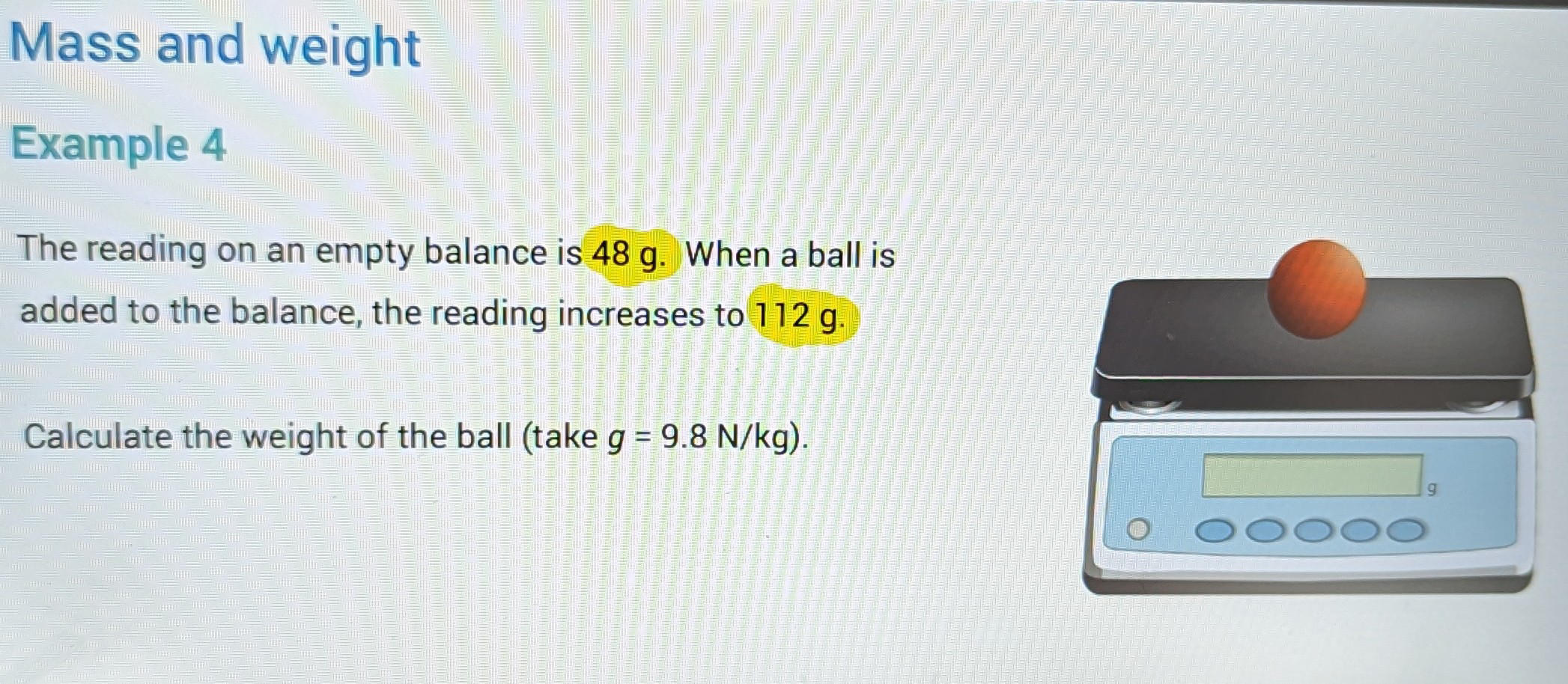
34
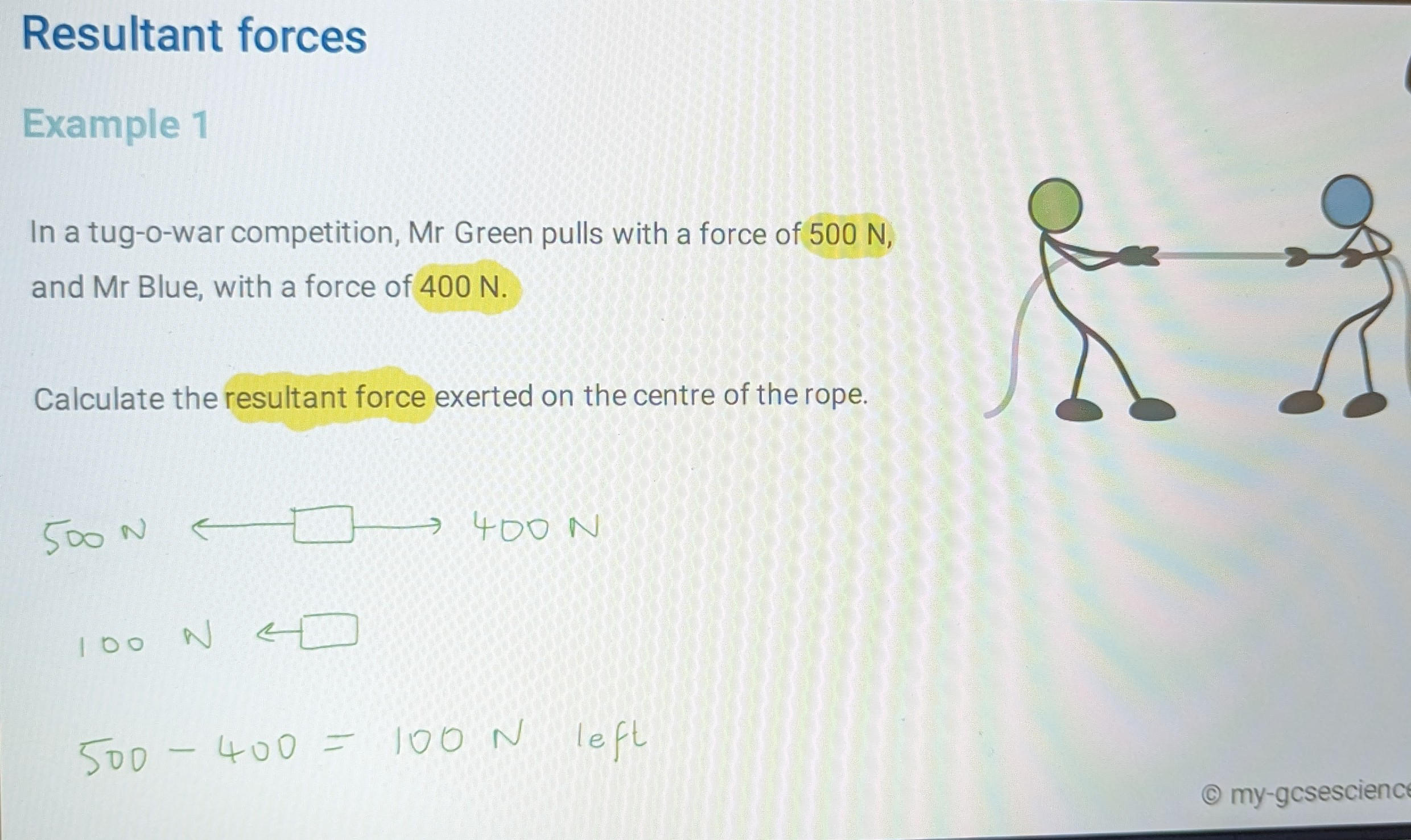
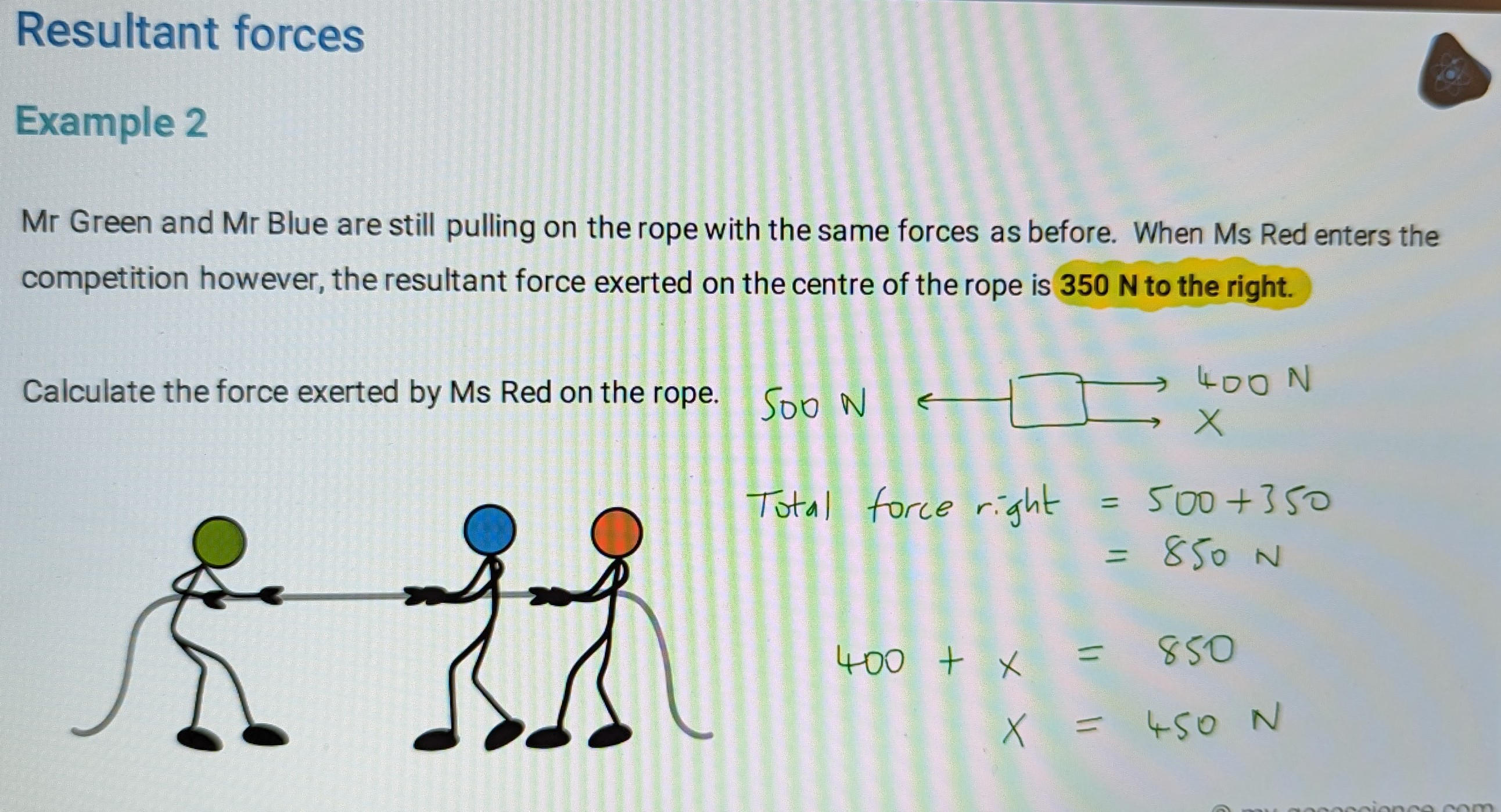
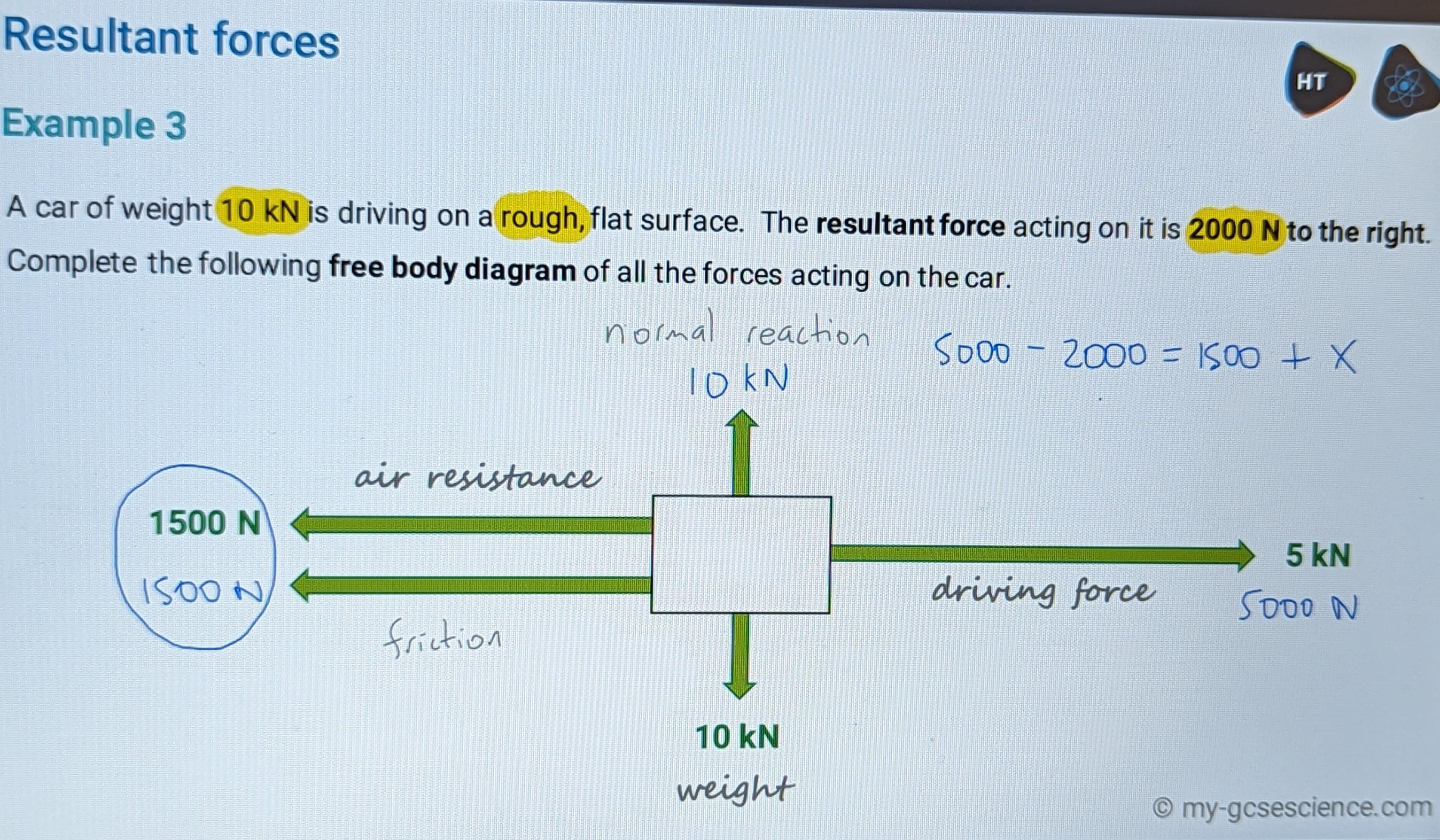
What is a Resultant Force?
Two or More Forces Acting On Object, They can be Replaced By Single Force That Has Same Effect As Original Forces Combined
THE SINGLE FORCE IS RESULTANT FORCE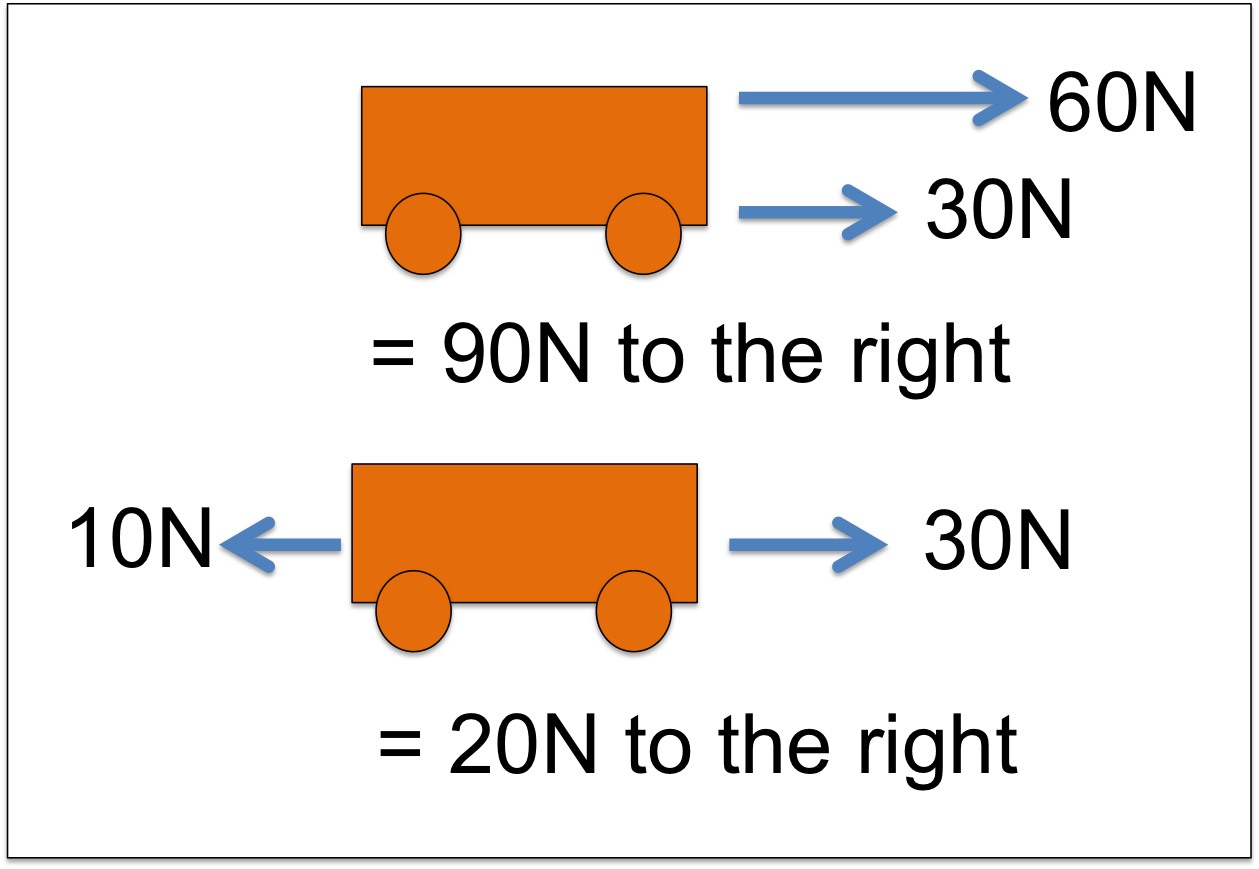
THE SINGLE FORCE IS RESULTANT FORCE
35
10 newton Metres is equal to How Many Joules?
10 Joules
36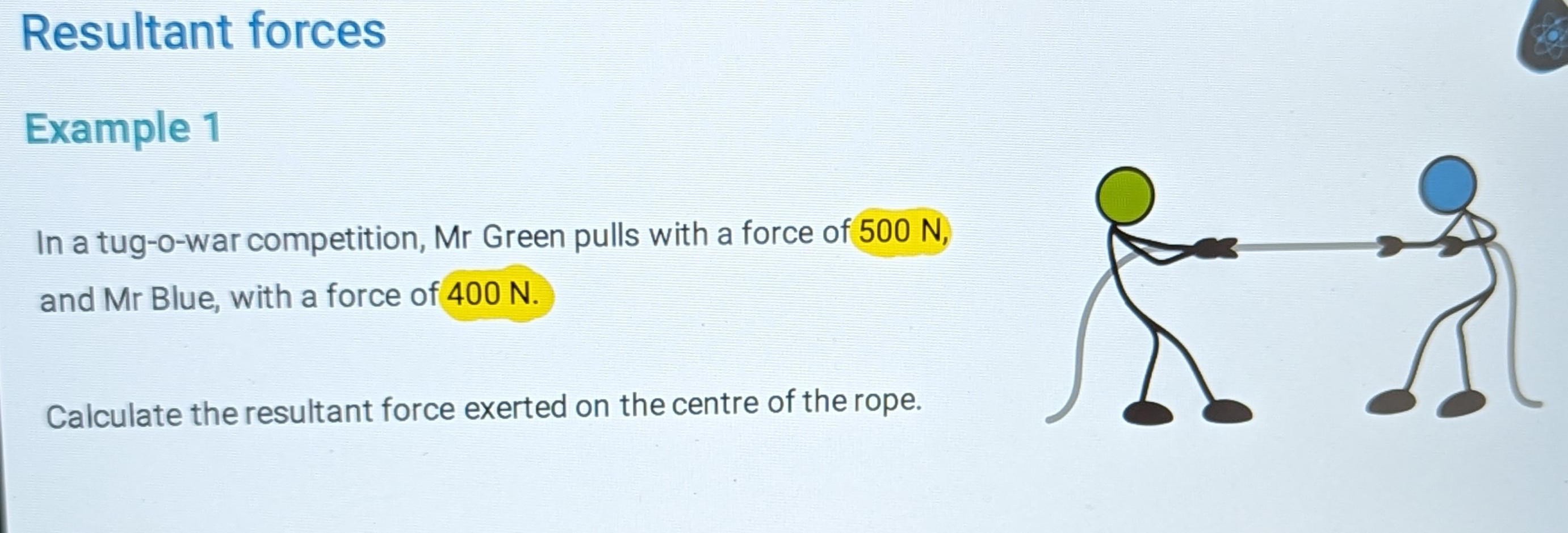
37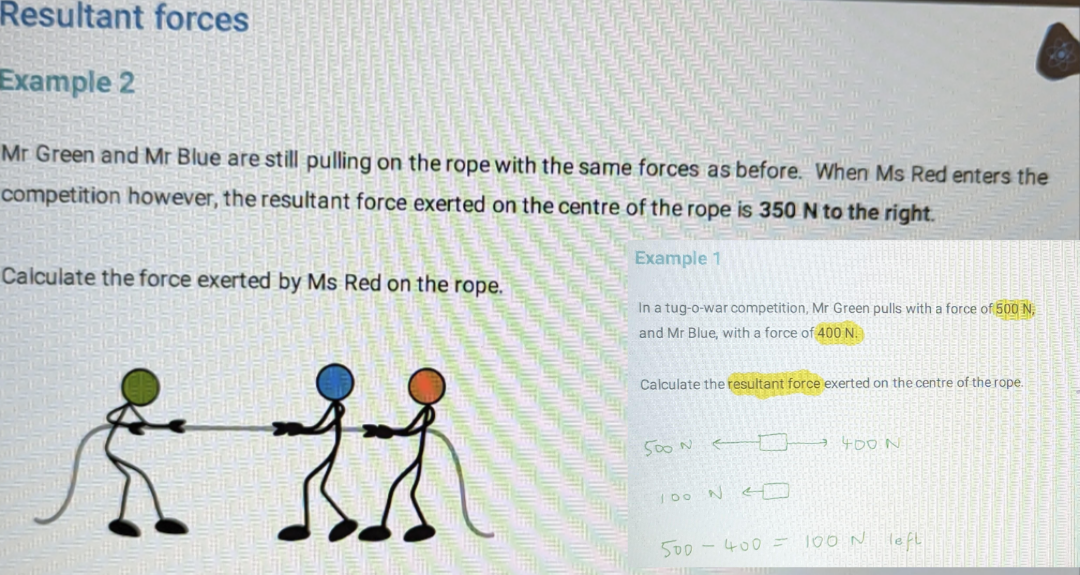
38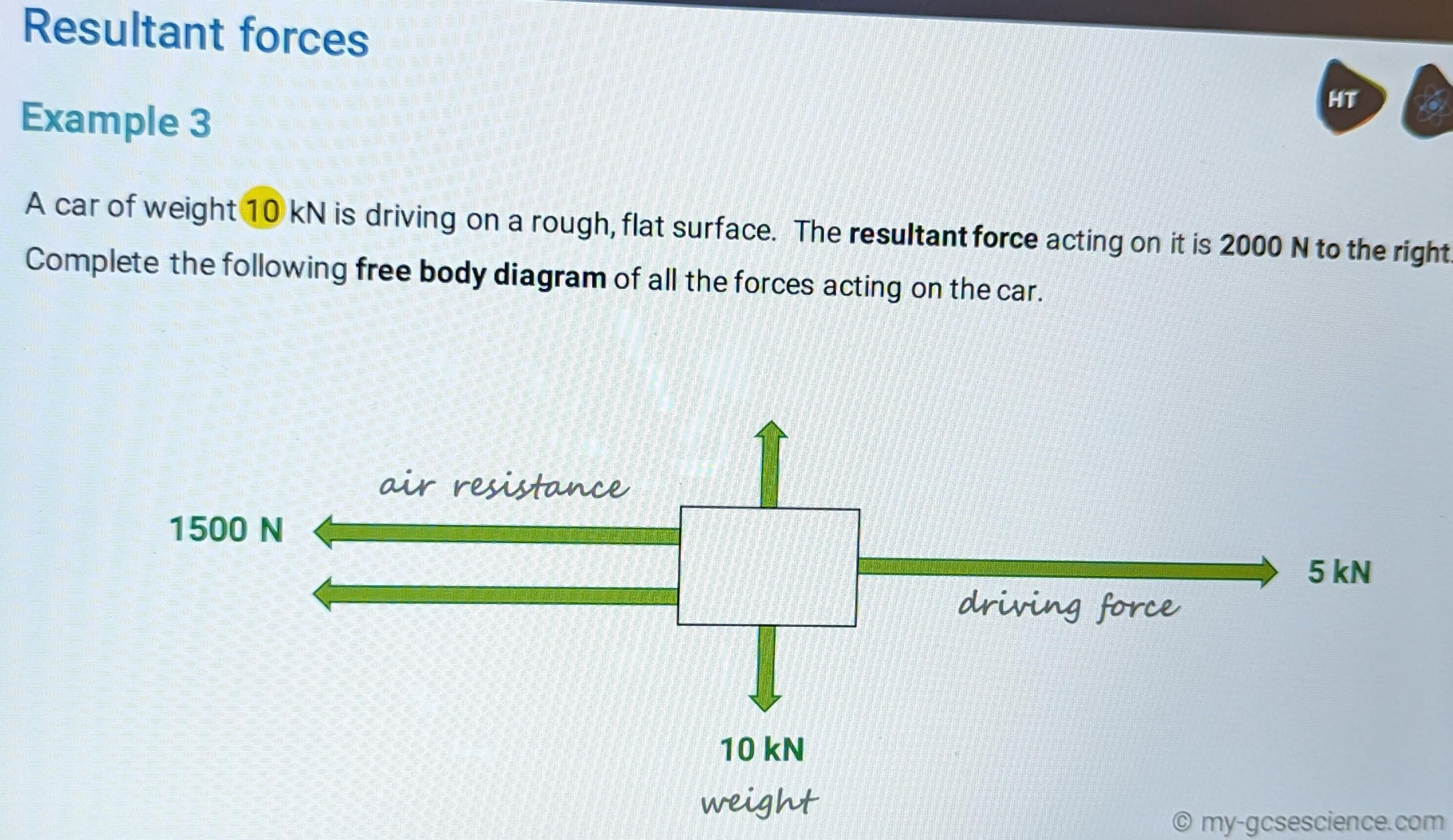
39
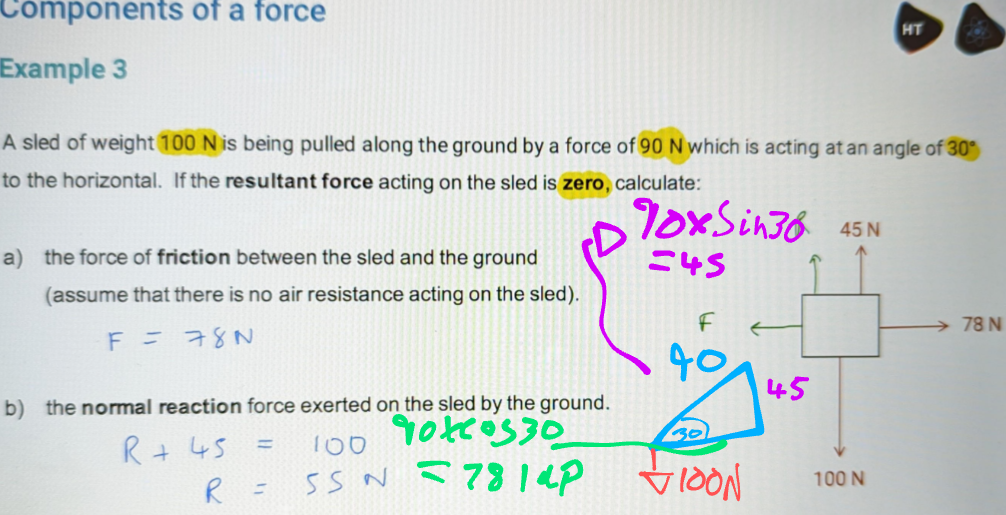
Why do you Resolve a force?
A Single Force is Same (Resolved) as Two Component Forces Acting at Right Angles to One Another.
40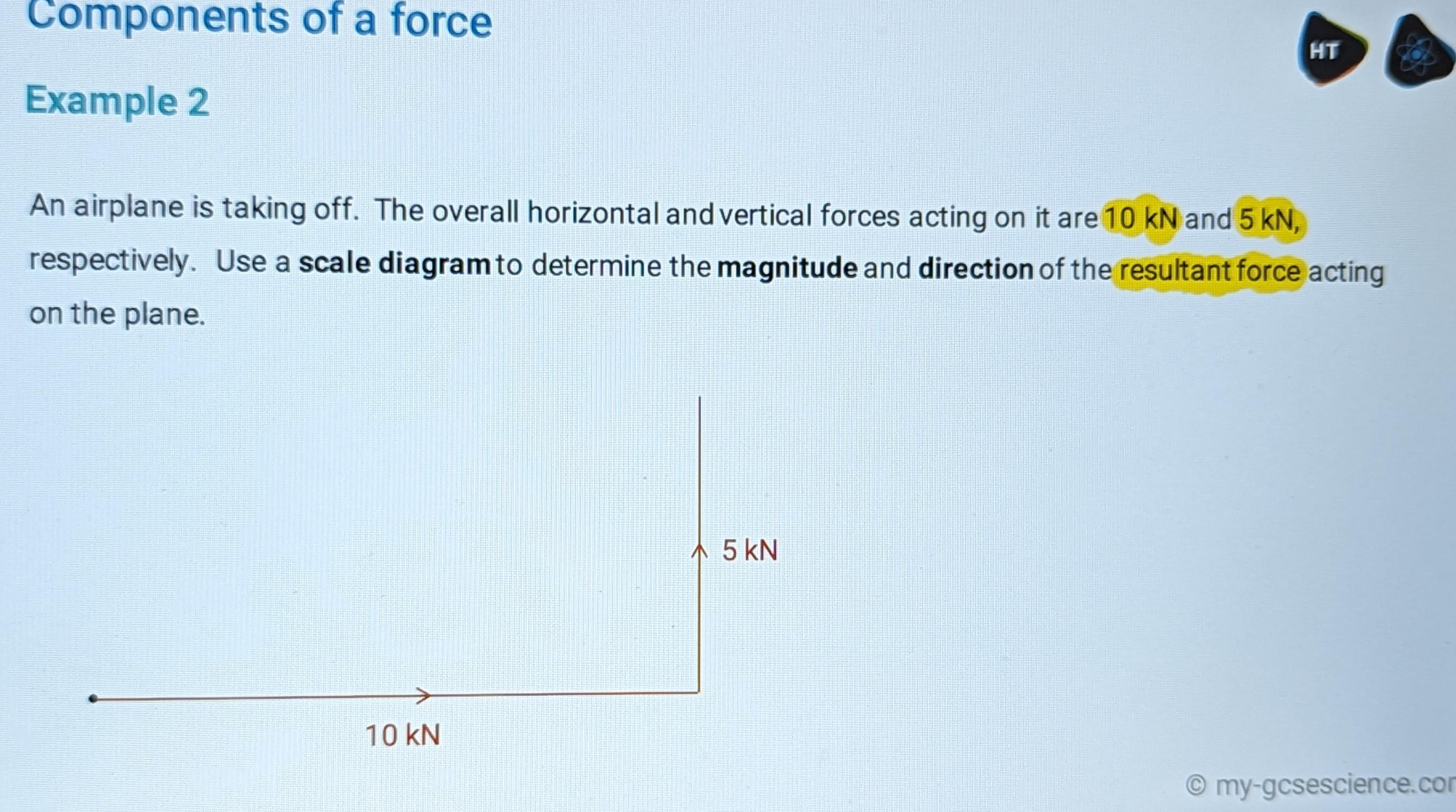
Draw up a Suitable Scale and Join to Make a Triangle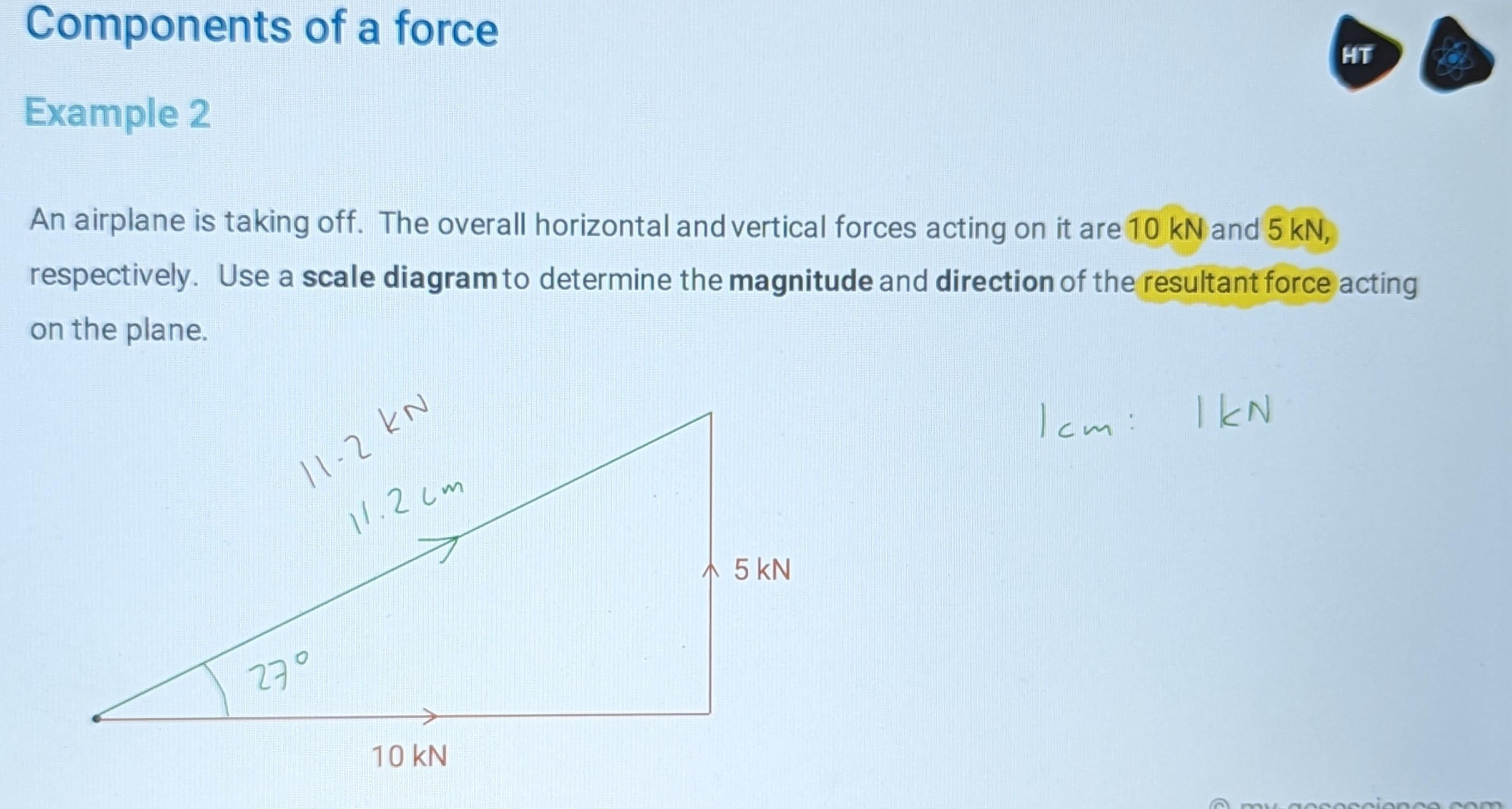
41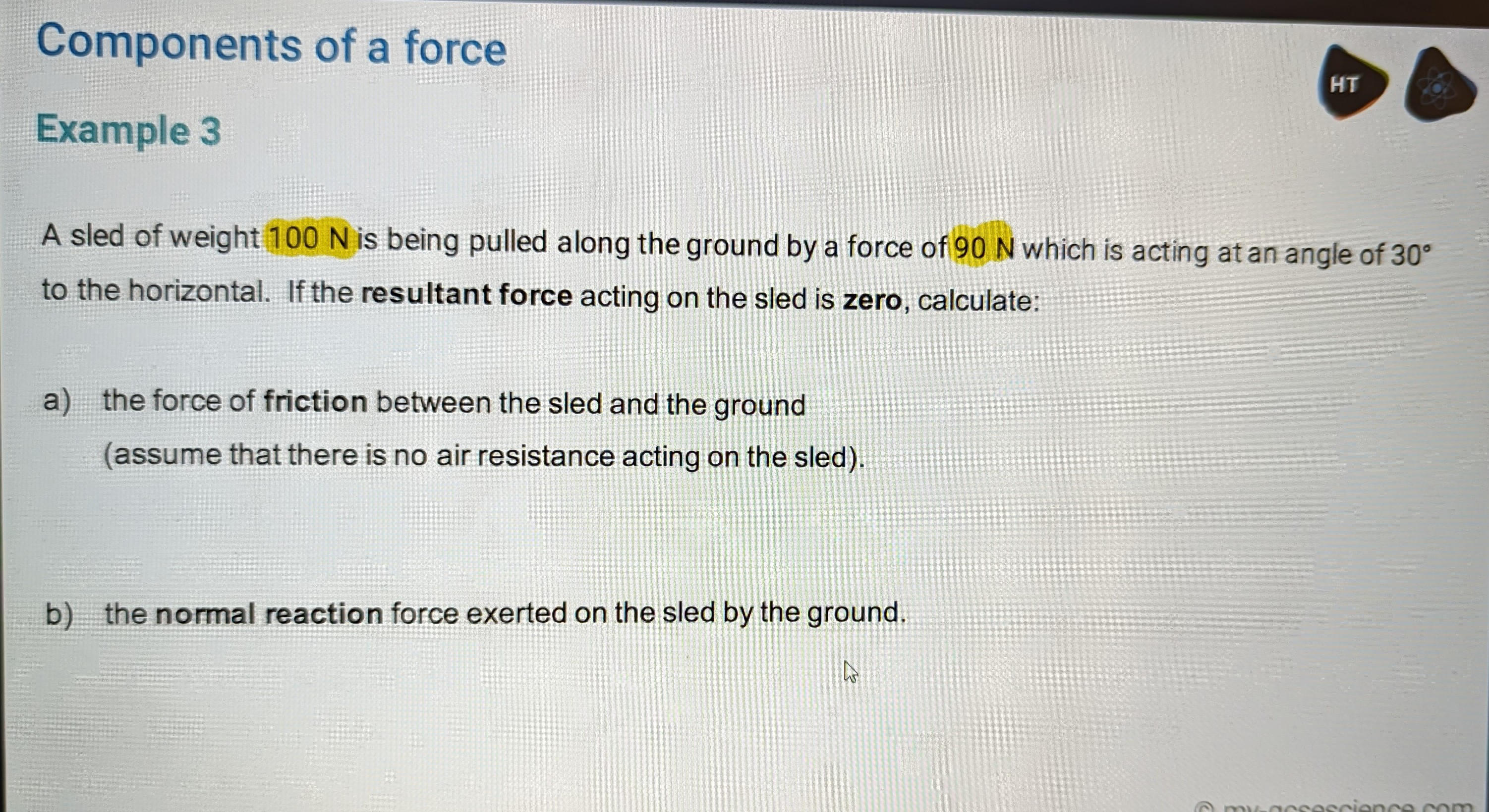
42
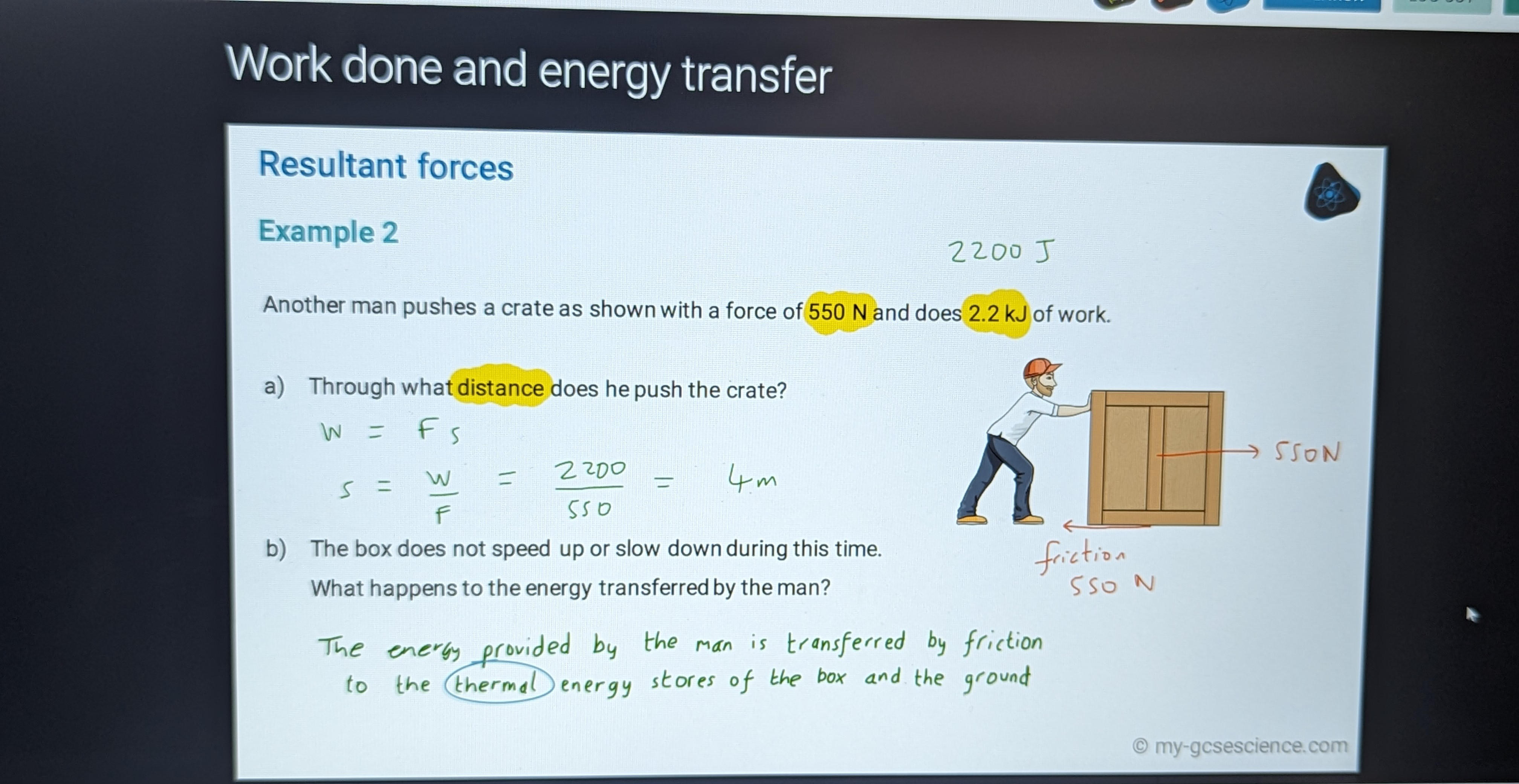
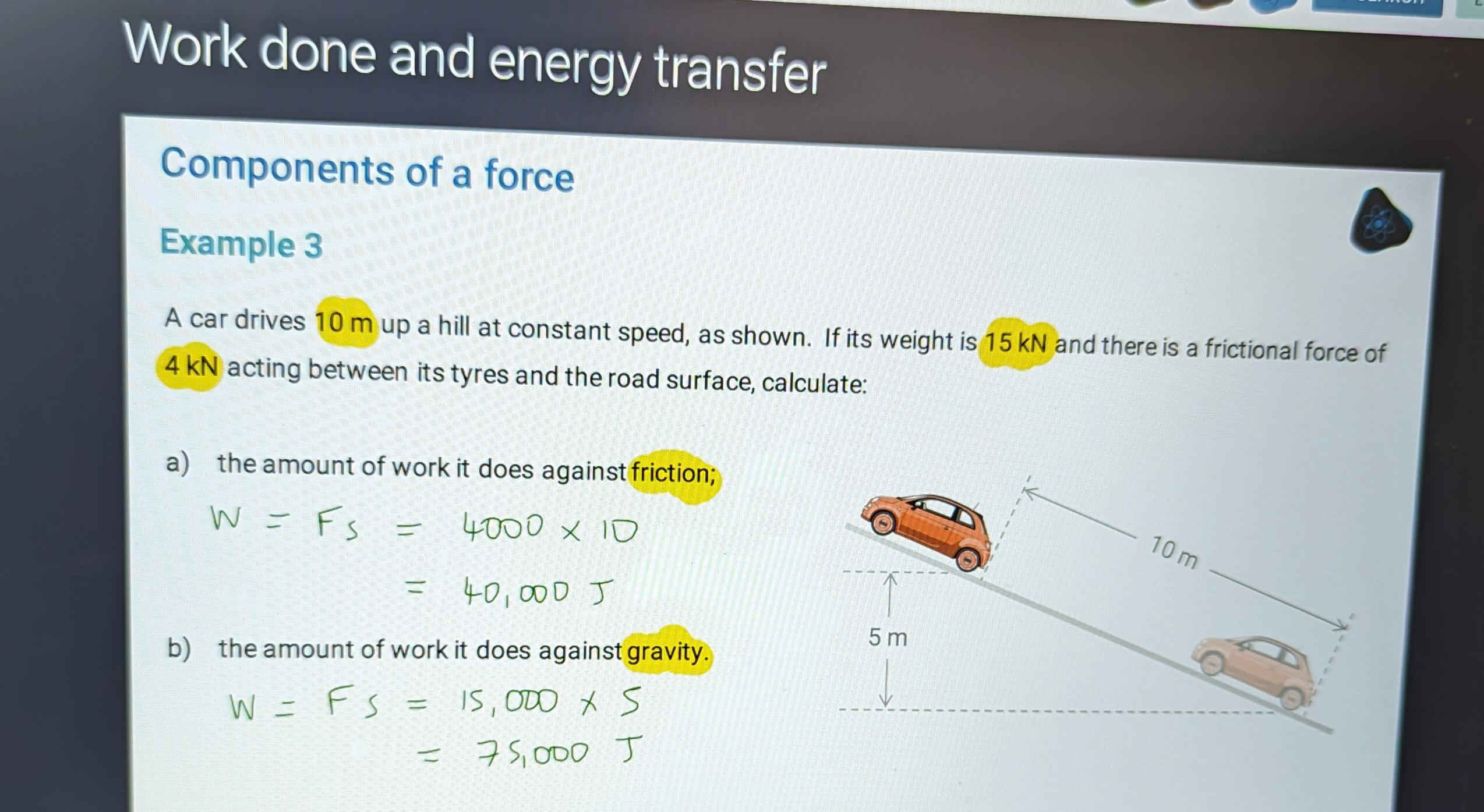
What is Work Done and what is it equal to?
When Force Causes Object to Move Through a Distance Work is Done.
Force has Done Work on Object.
Amount Work Done= Energy Transferred to It.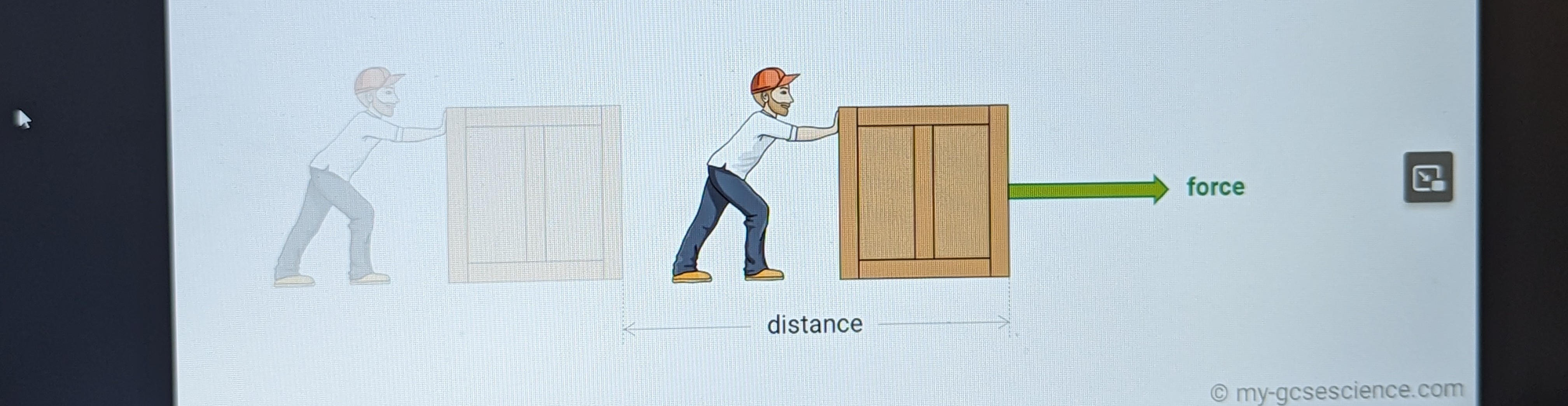
Force has Done Work on Object.
Amount Work Done= Energy Transferred to It.
43
When is Work Not Done?
Work is NOT Done when Object Does NOT Move in Direction of Force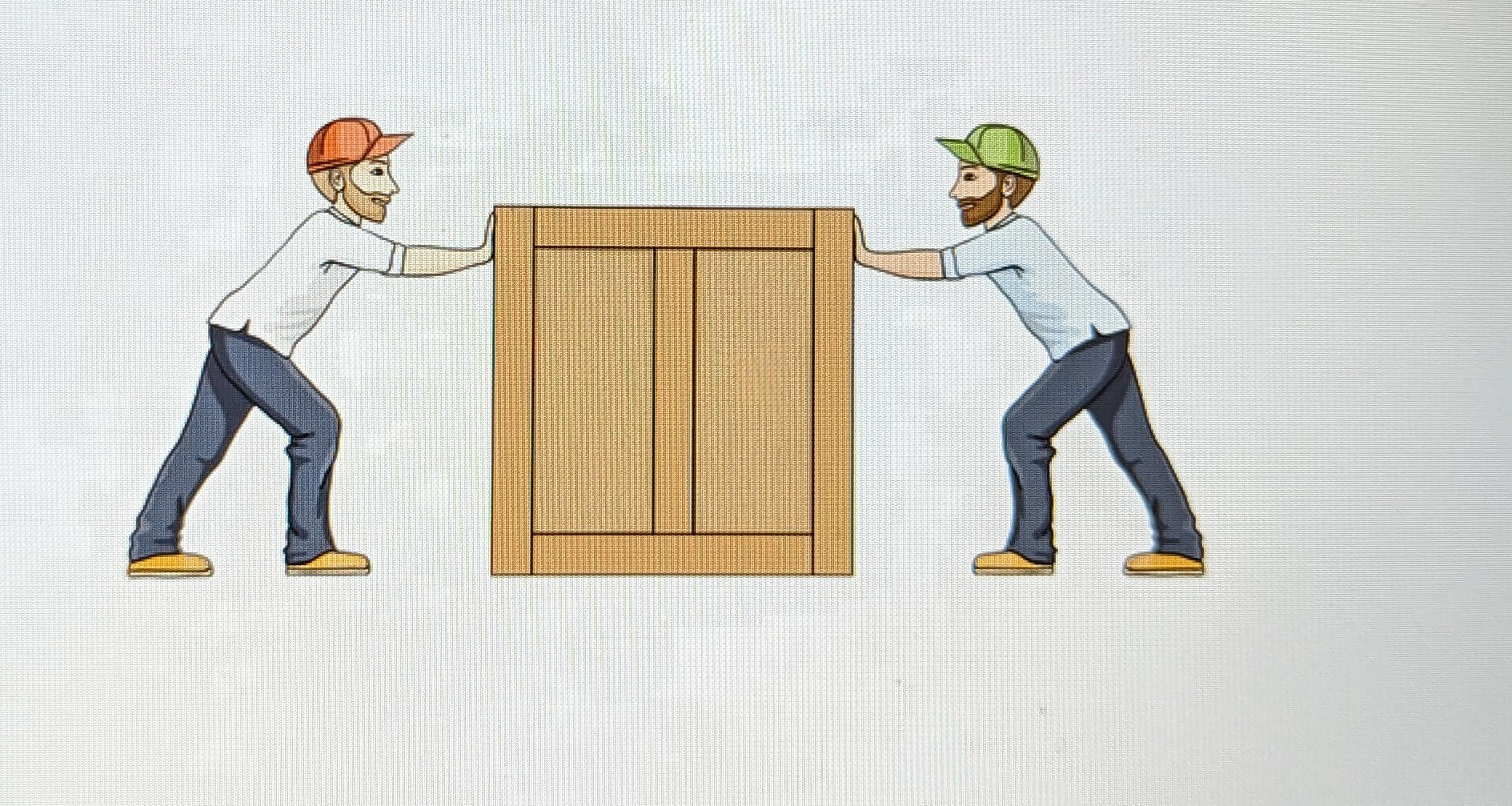
44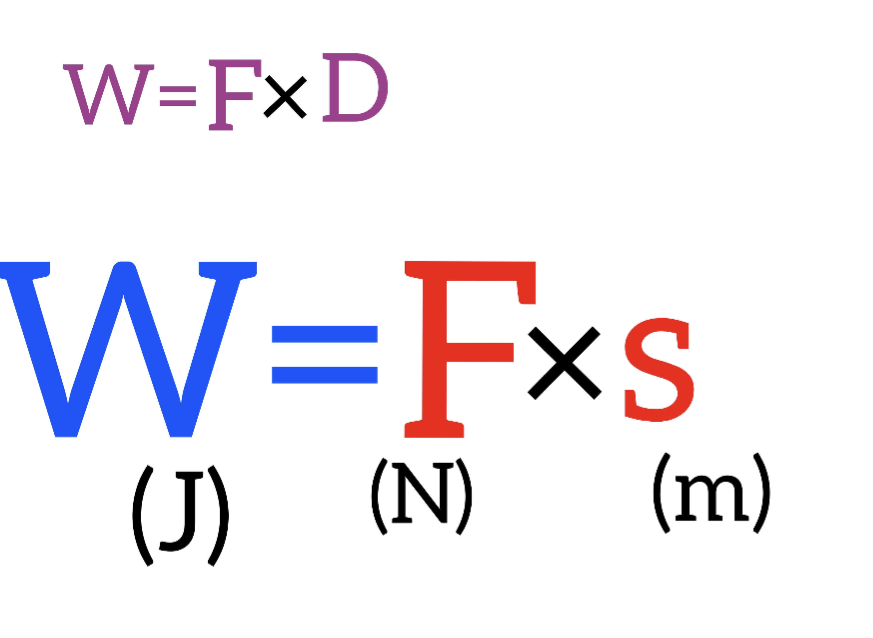
What is Equation for Work Done & Units?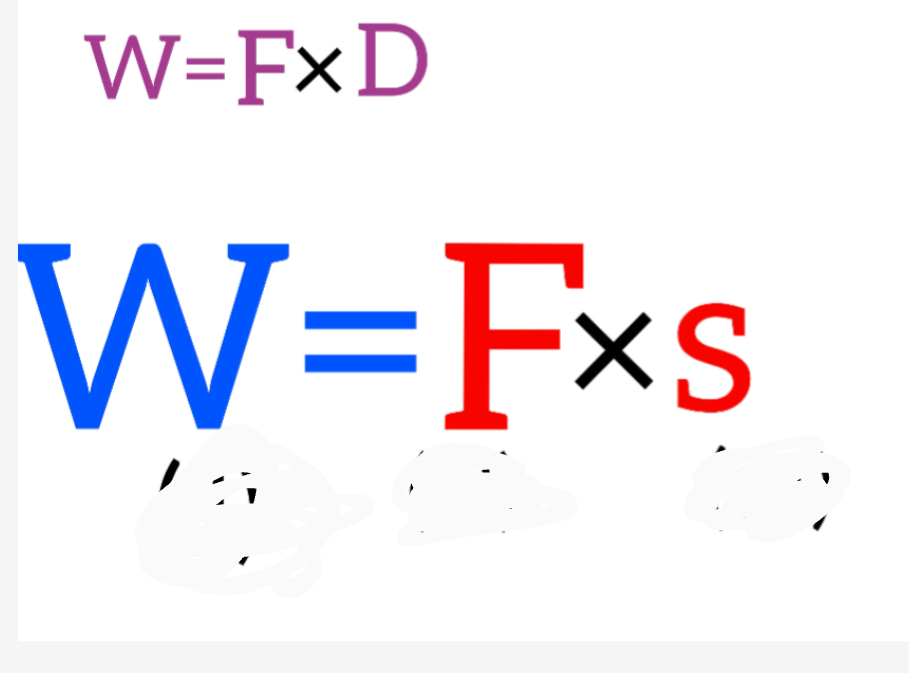
45
Define the Unit of Work...
1 Joule of Work Is Done On an Object When a Force of 1 Newton Causes its Displacement to Change by 1 Meter.
46
47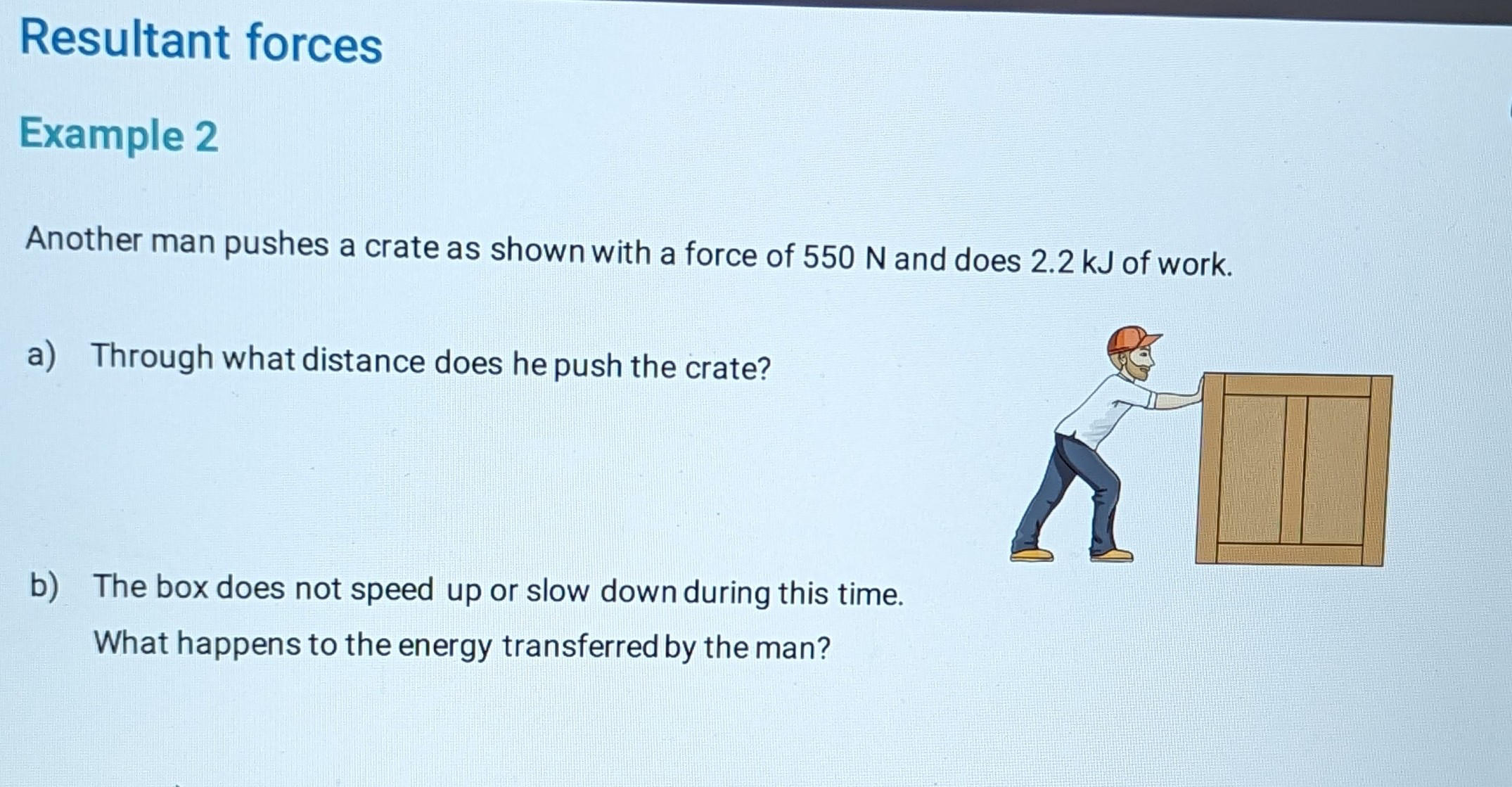
48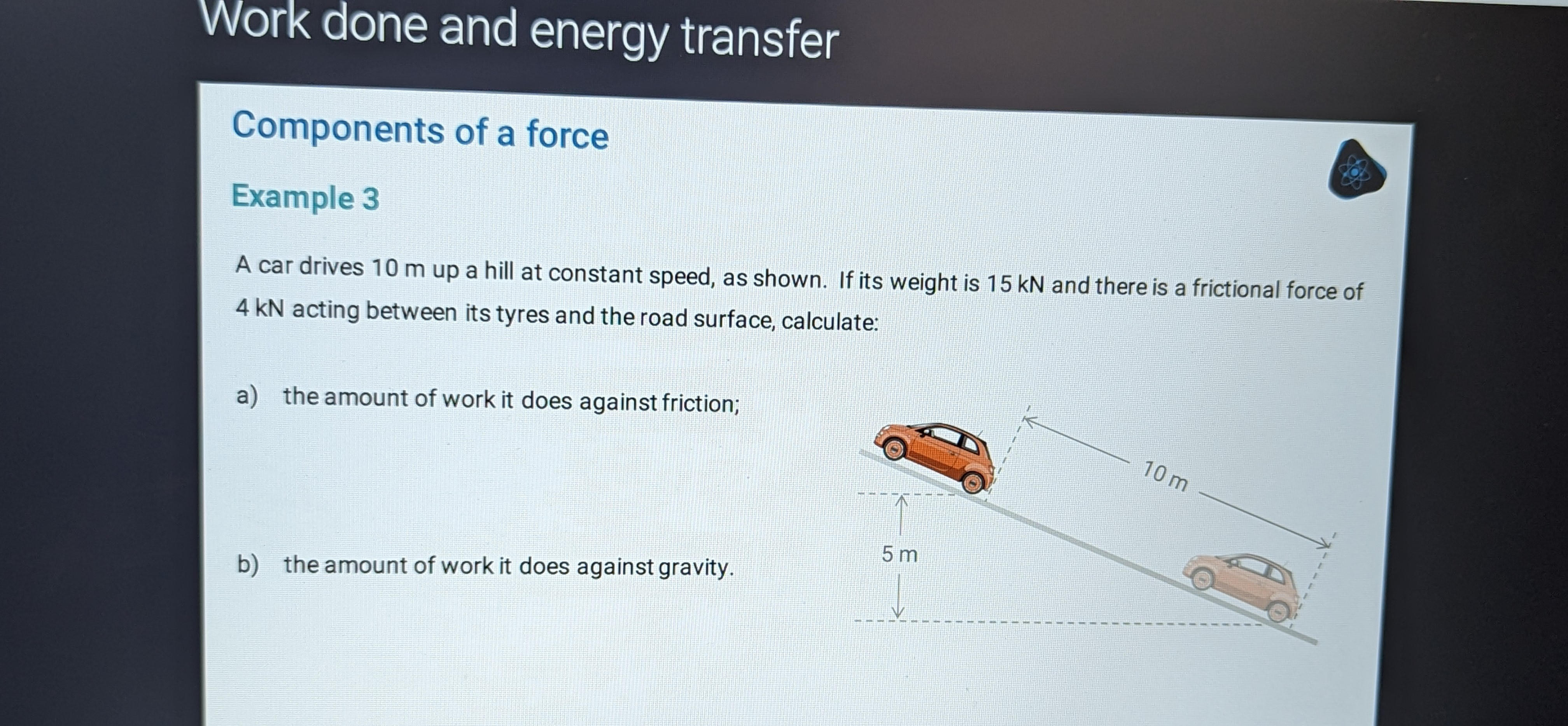
49
What is the term for the upward force on an object that is Submerged in a liquid?
Upthrust
50
What Can One Force Do On an Object?
Movement & Rotation
51
What Can Two Force Do On an Object?
Extension, Bending & Compression.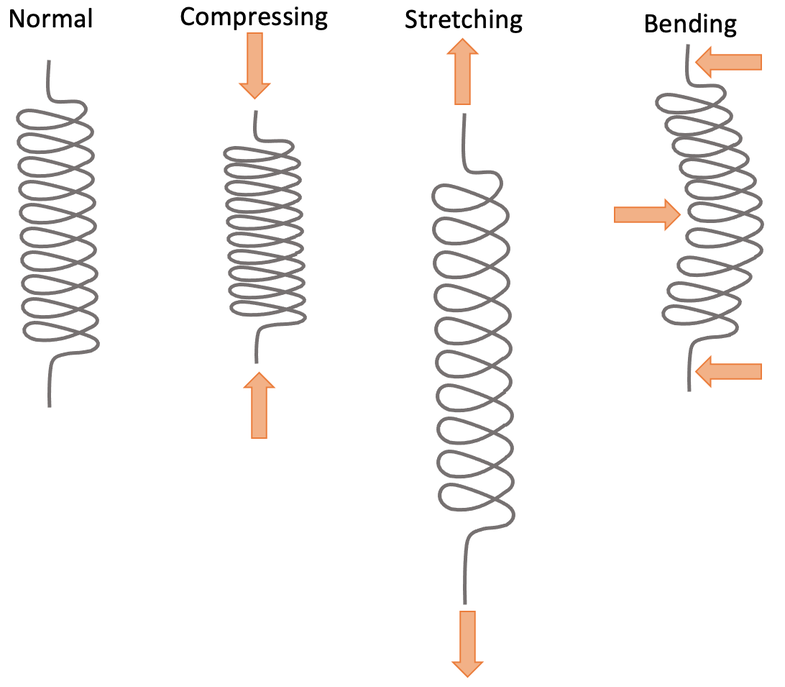
52
Define Elastic Deformation
Will Return to its Original Shape When Forces Acting On it Removed
53
Define Inelastic Deformation
Will NOT Return to Original Shape when Forces Acting on it Removed.
54
What is the Extension of a Spring?
How Far Spring Has Extended when Force is Applied.
55
what is a Relationship between Extension and Force
Directly Proportional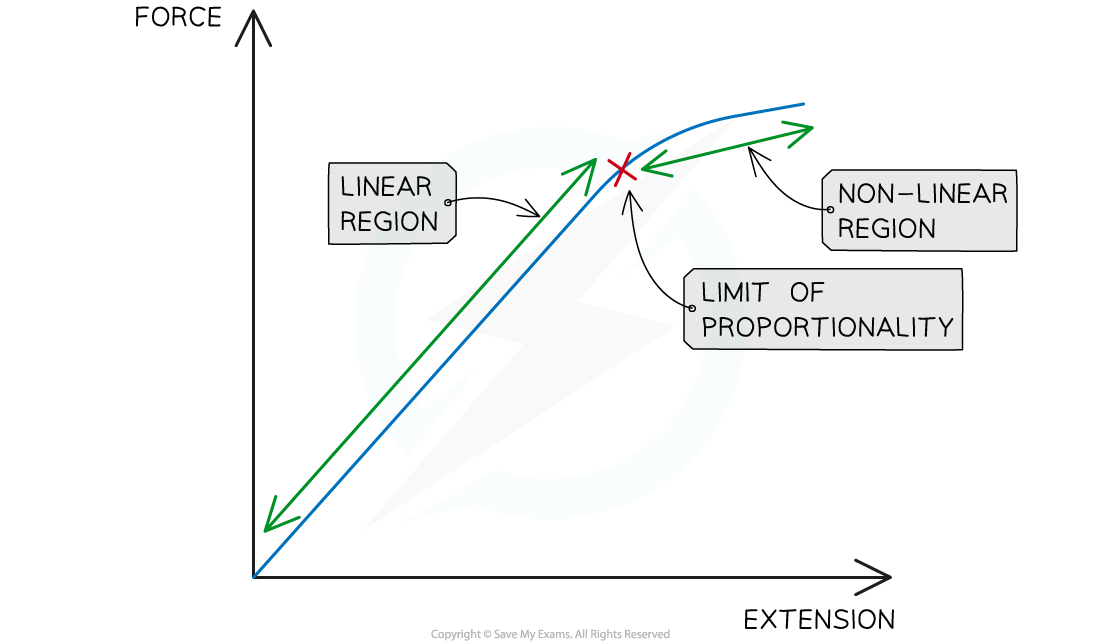
56
What is Limit of Proportionality?
Point Beyond Force Applied to Object is No Longer Proportional to Extension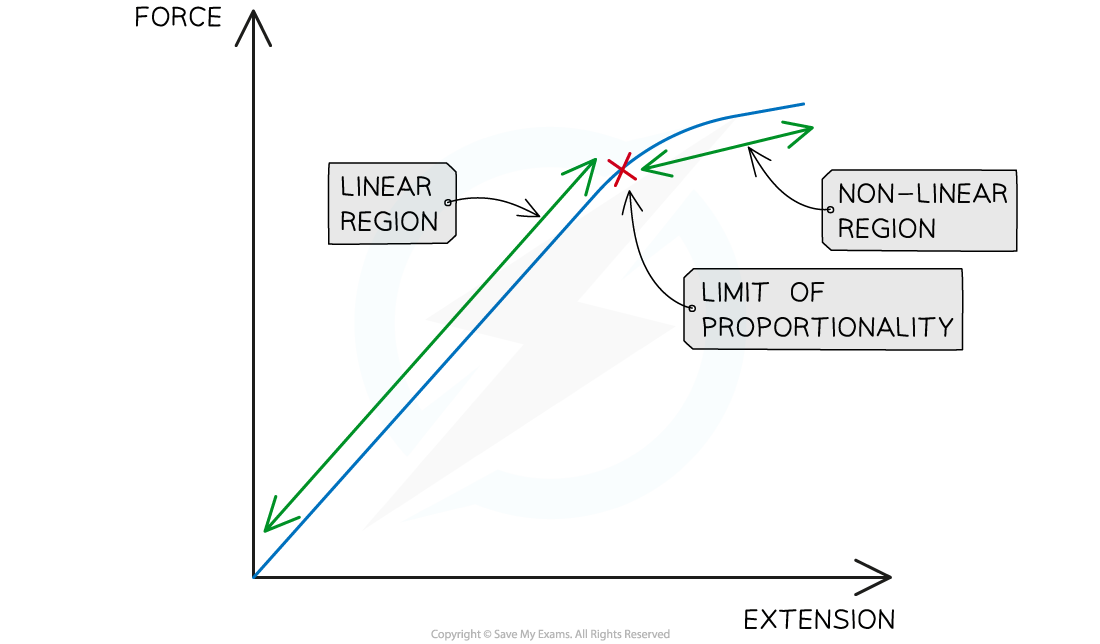
57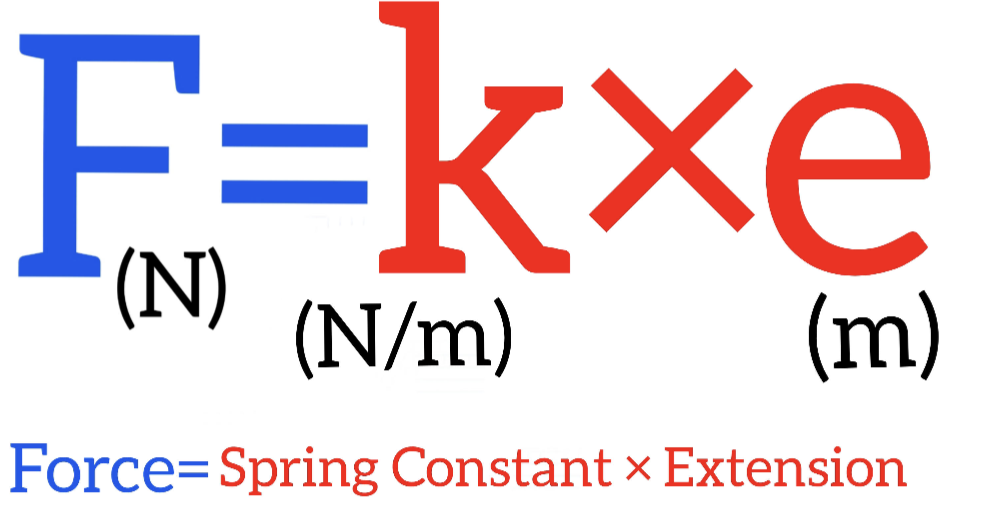
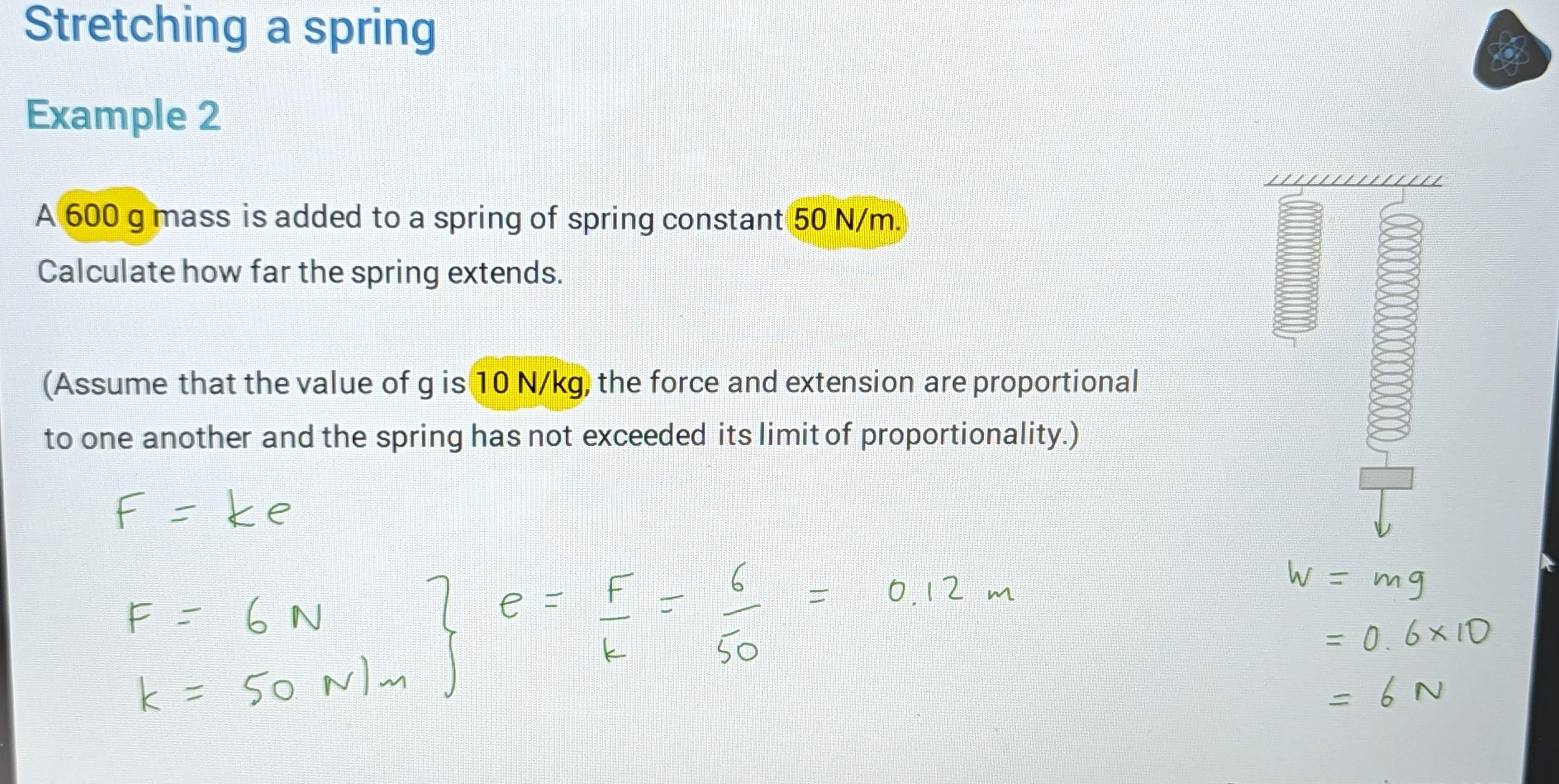
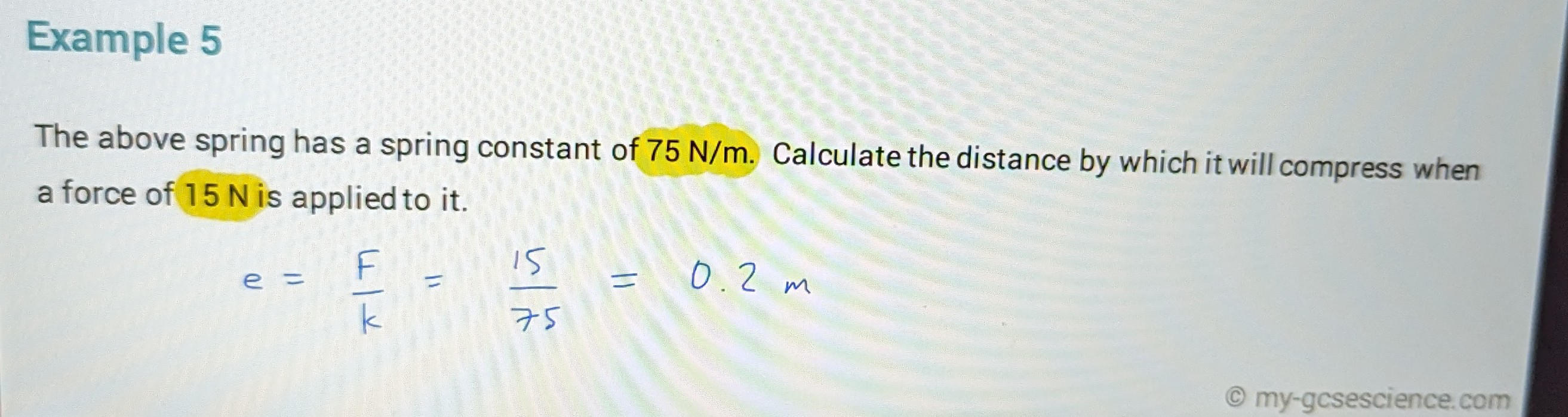
What is the Formula for that links Spring Constant, Force & Extension? 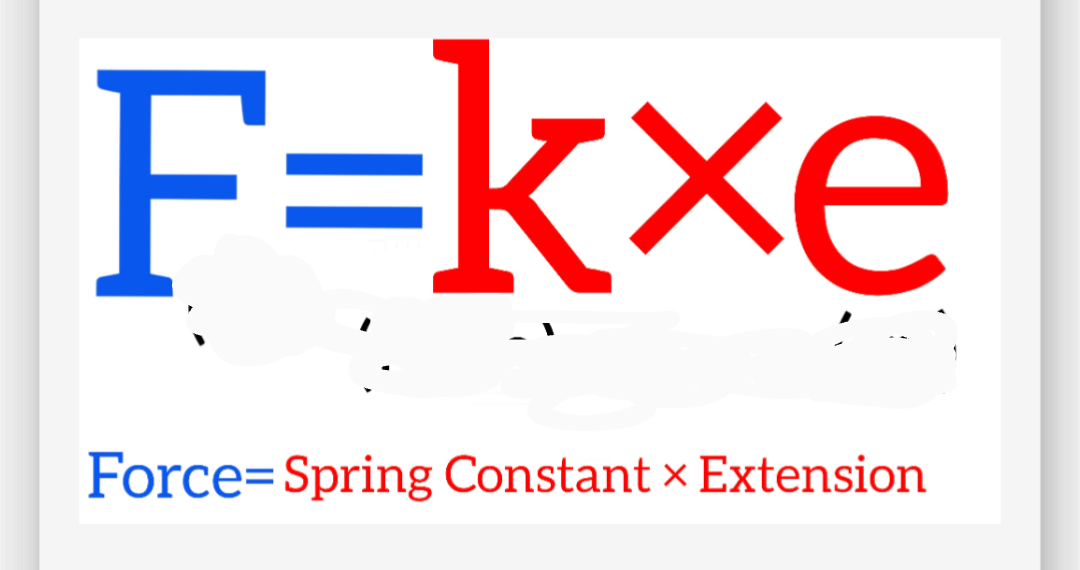
58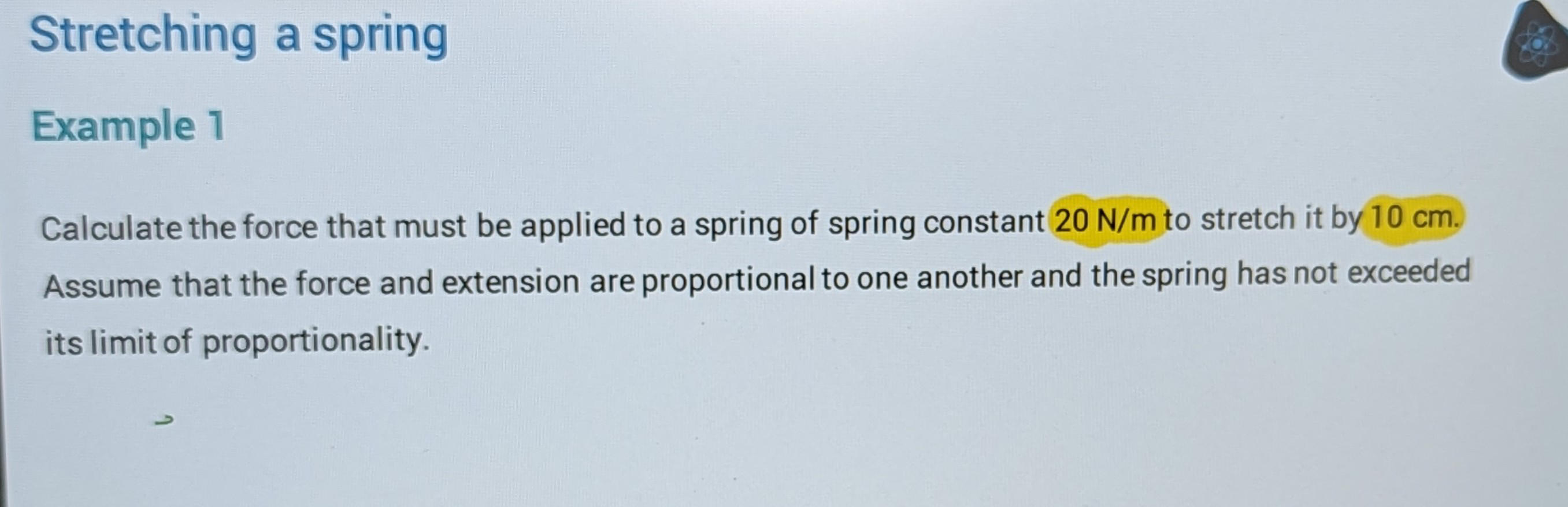
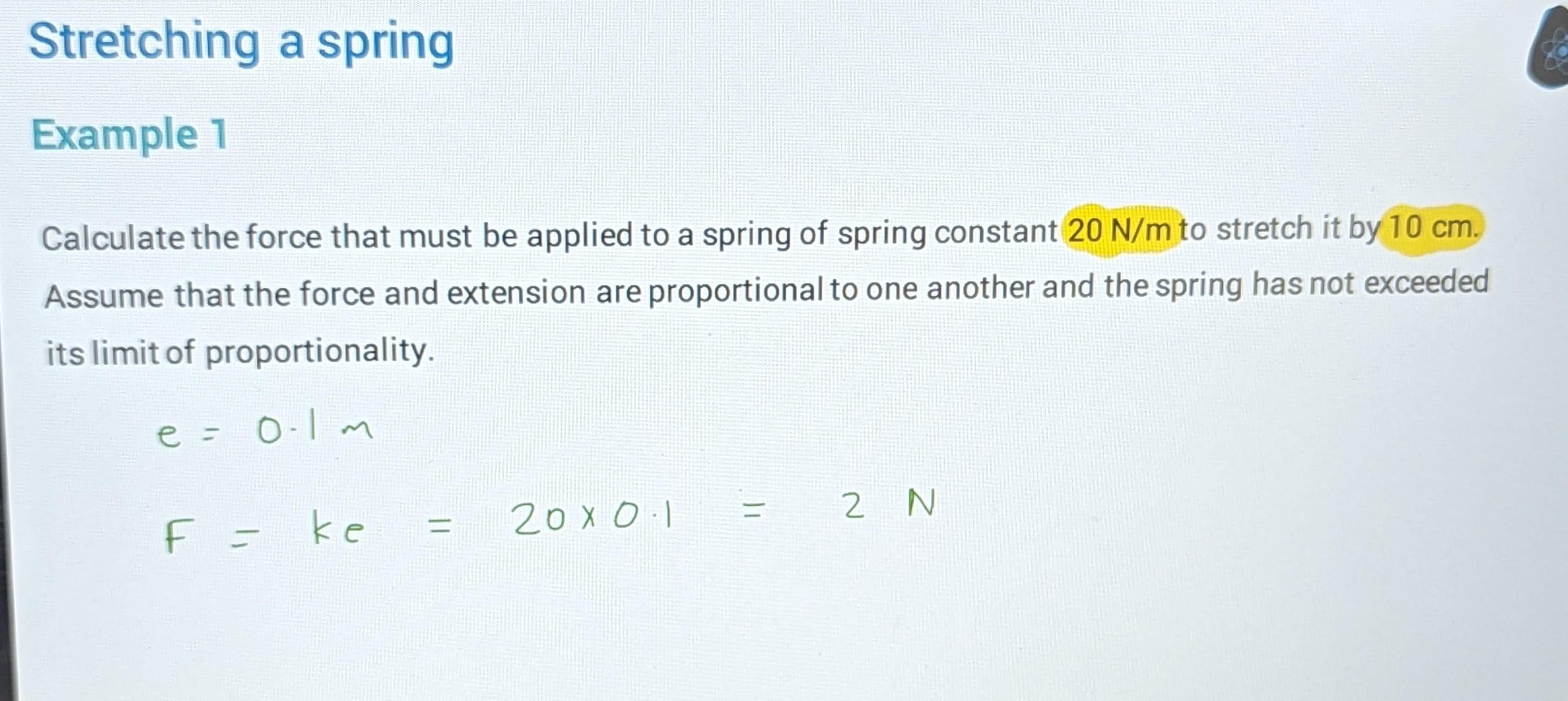
59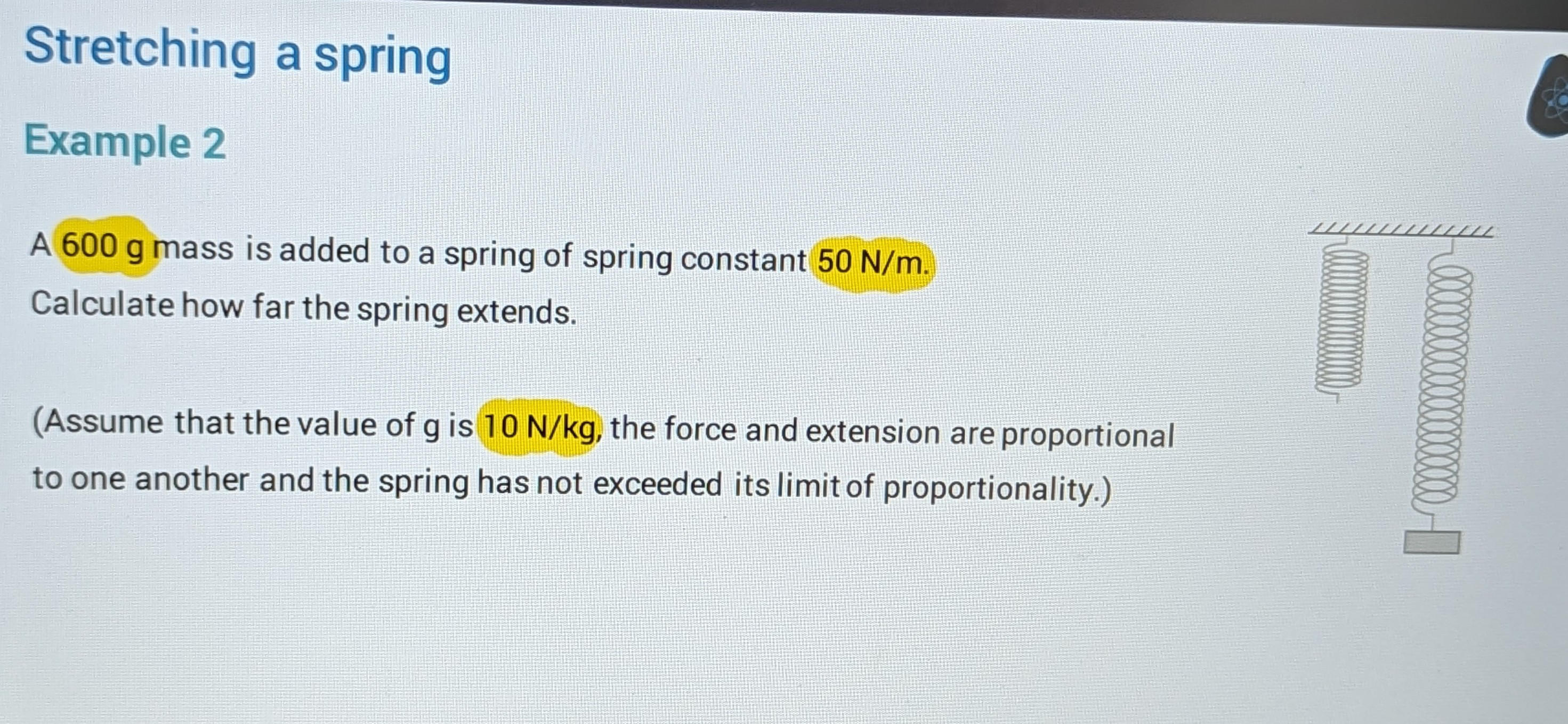
60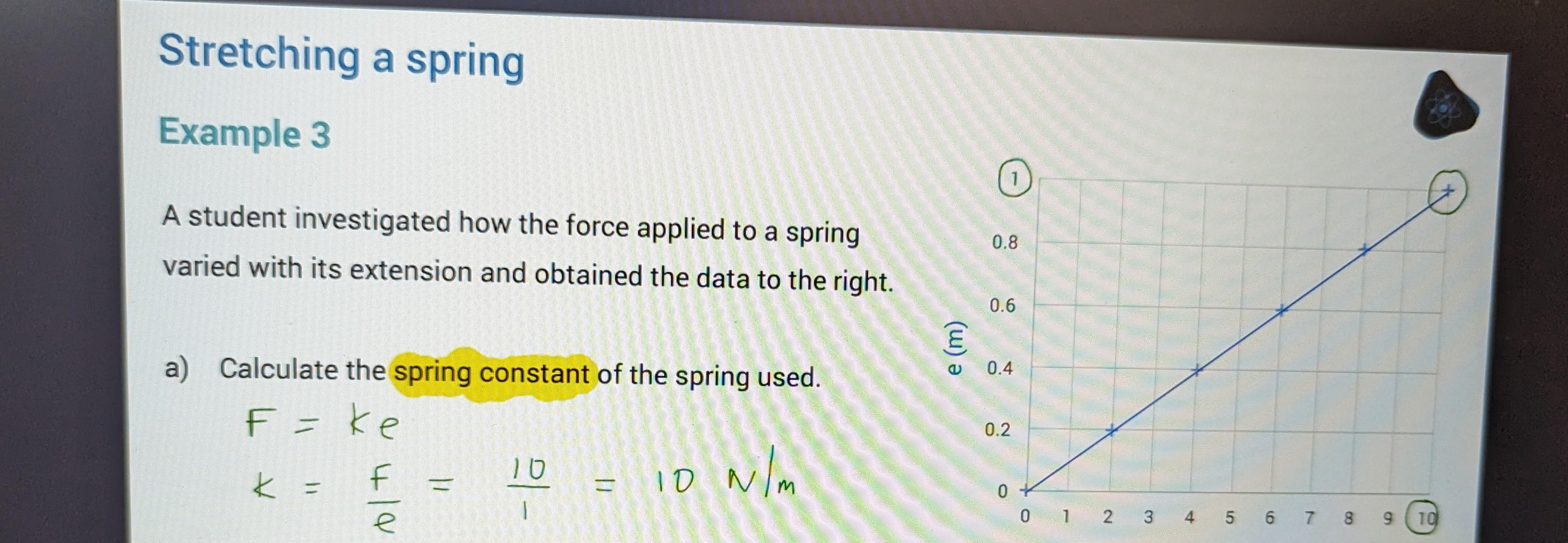
Answer A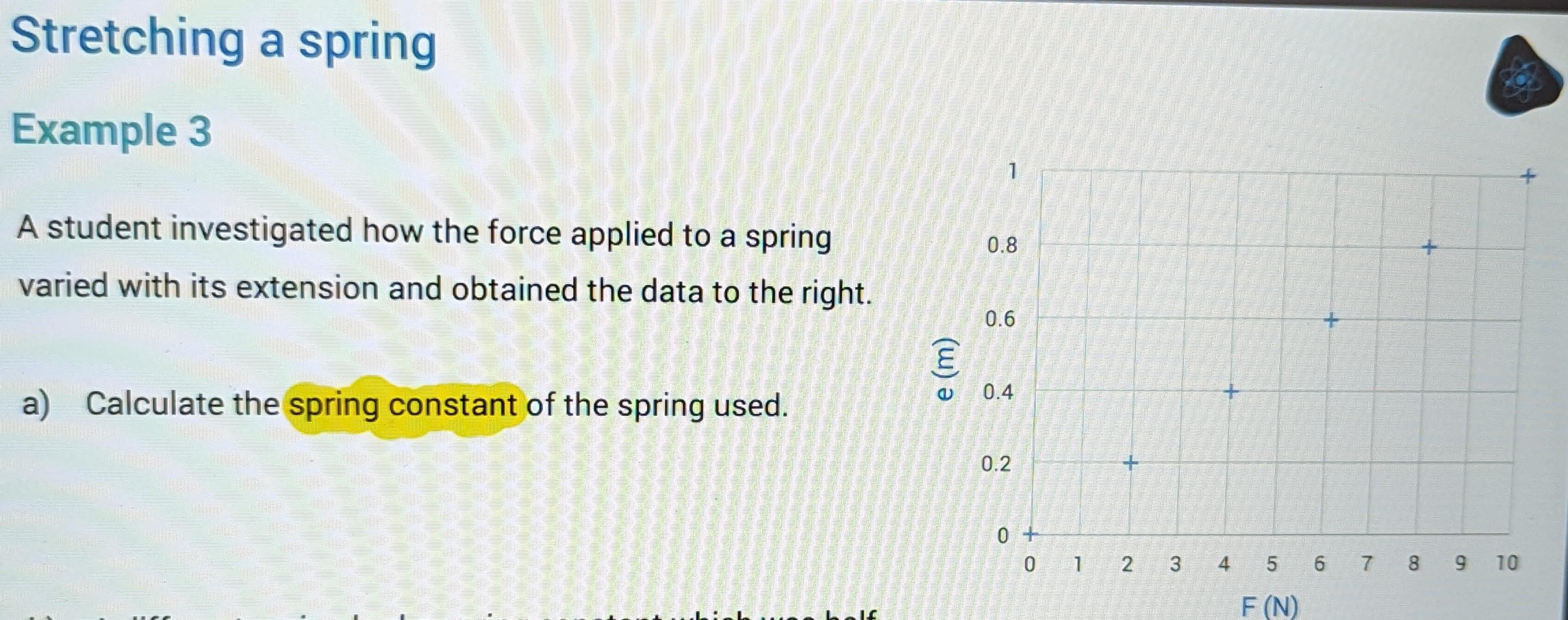
61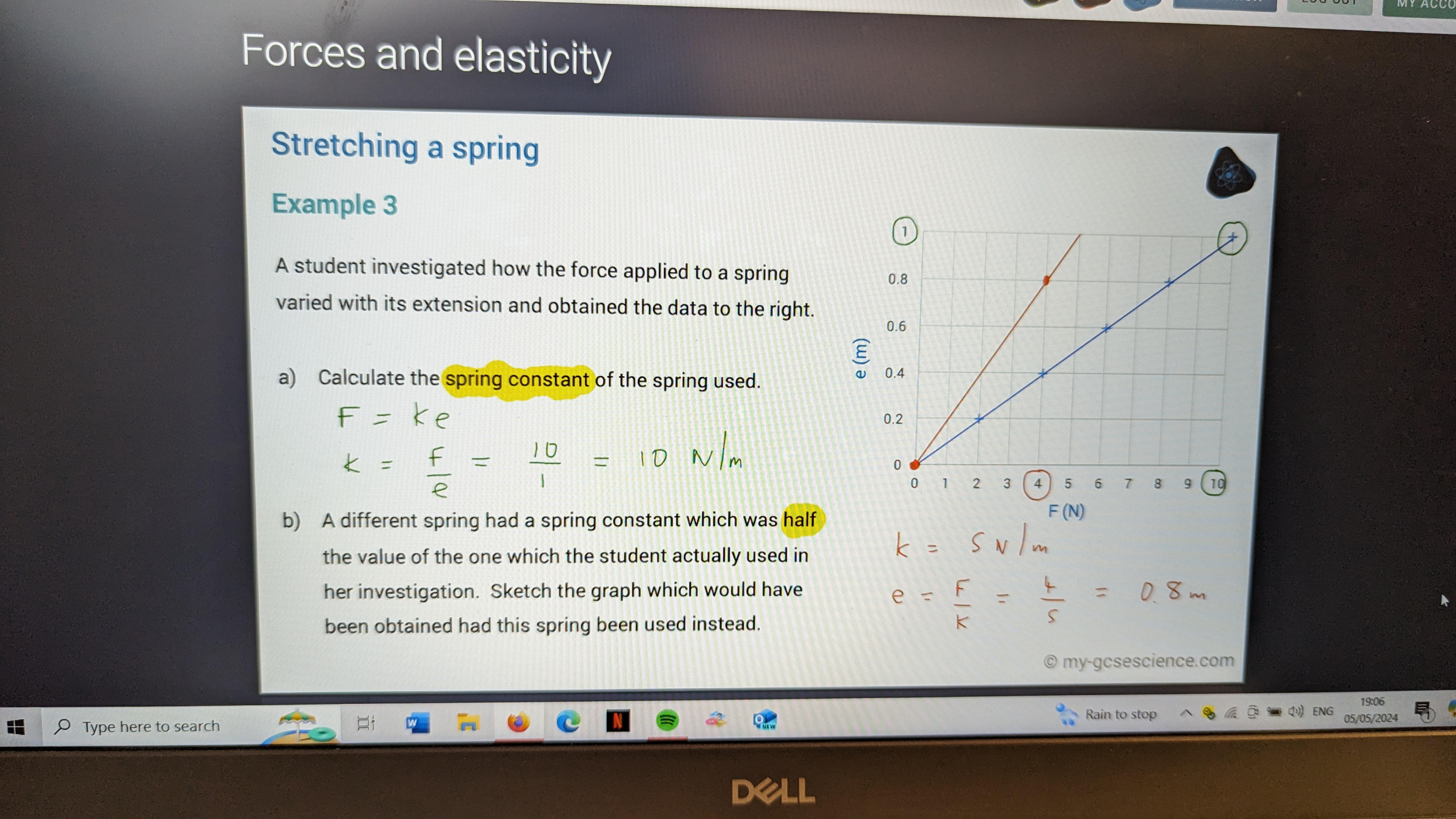
Answer B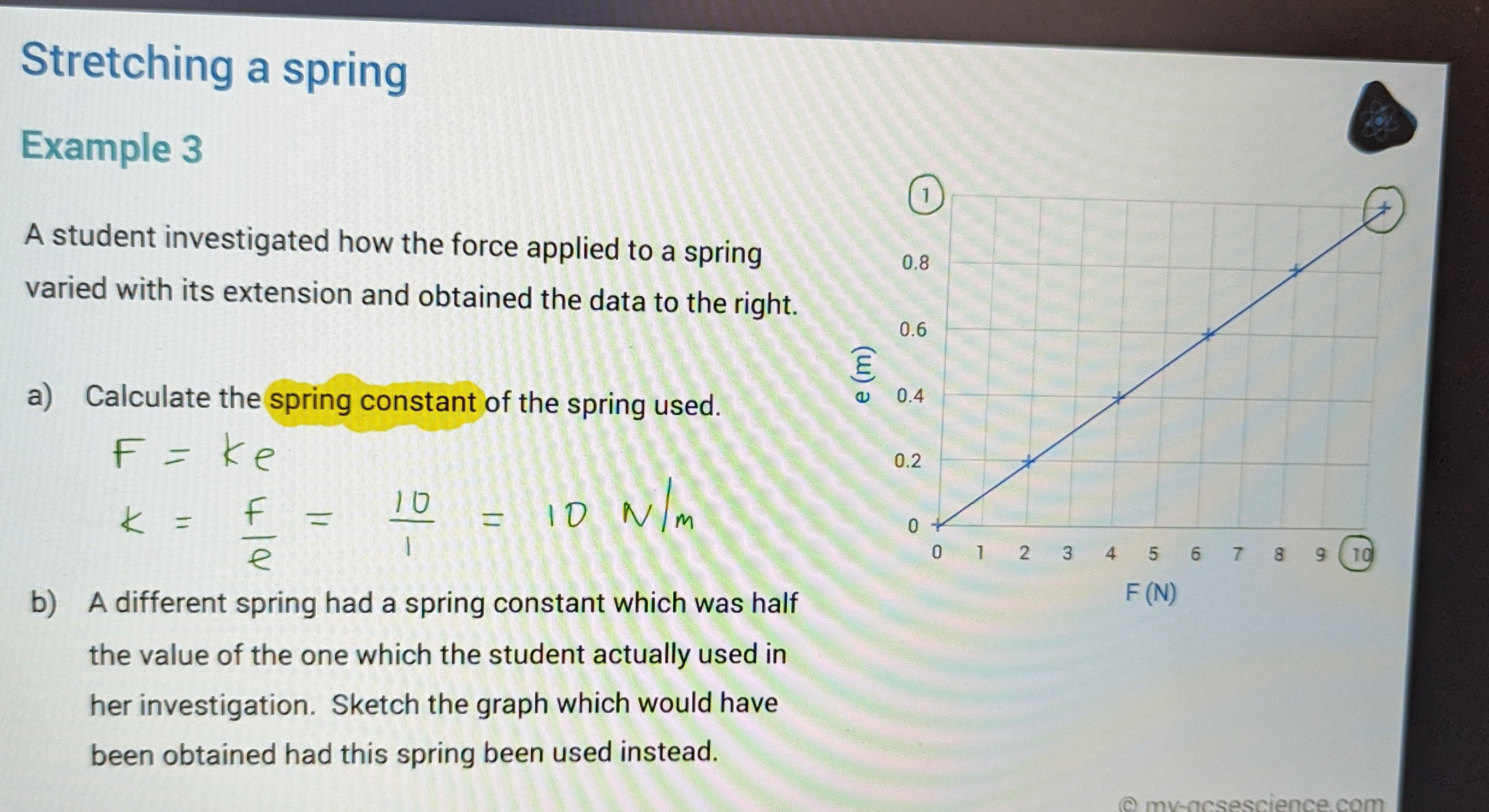
62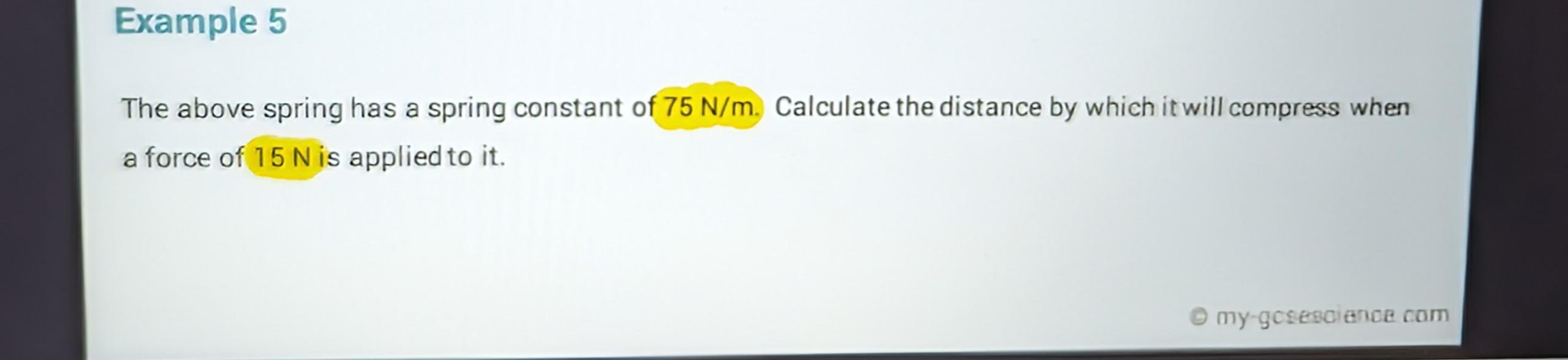
63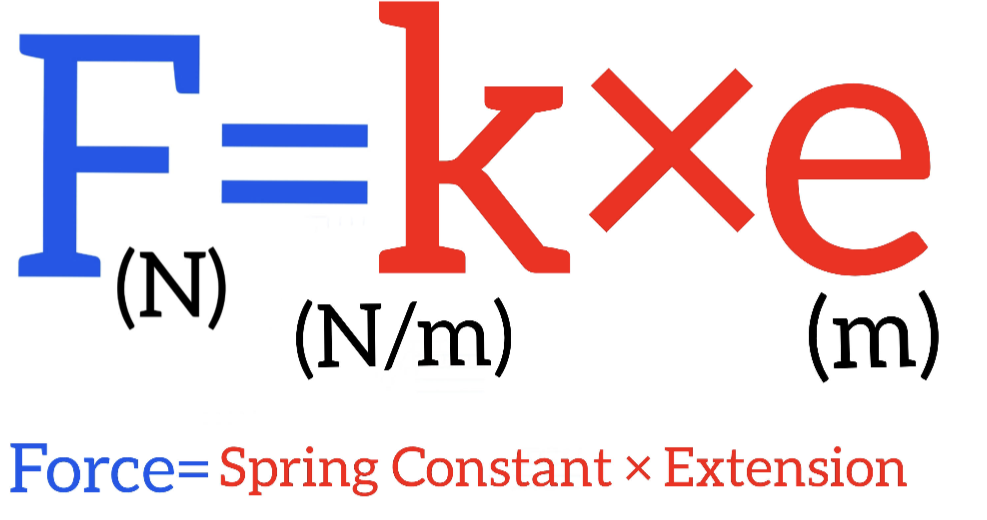
What is the Second Force Equation with Compression?
64
What is the Method for Required Practical 6 Force and Extension?
1. Set up Equipment, Ensuring Spring Return To its Original Dimensions if Stretched
2. Attach Pointer to Base of the Spring & Align Top of Ruler with Top of Spring.
3. Measure initial Length of the Spring.
4. Add a 10g Mass to Base of Spring & Record Length of Spring.
5. Repeat& Continue Add Masses
6. Calculate Extension= Current Position - Original Position.
7. Convert All Masses to Weights Using the Equation:
Weight (N) = mass (kg) x 9.81 (N/kg)
8. Plot Graph of force (y-axis) Against Extension (x-axis).
Calculate Gradient.
If the spring obeys Hooke’s Law, the graph of force against extension will be linear and
pass through the origin. The gradient will be equal to 1 / k, where k is the Spring Constant
measured in N/m.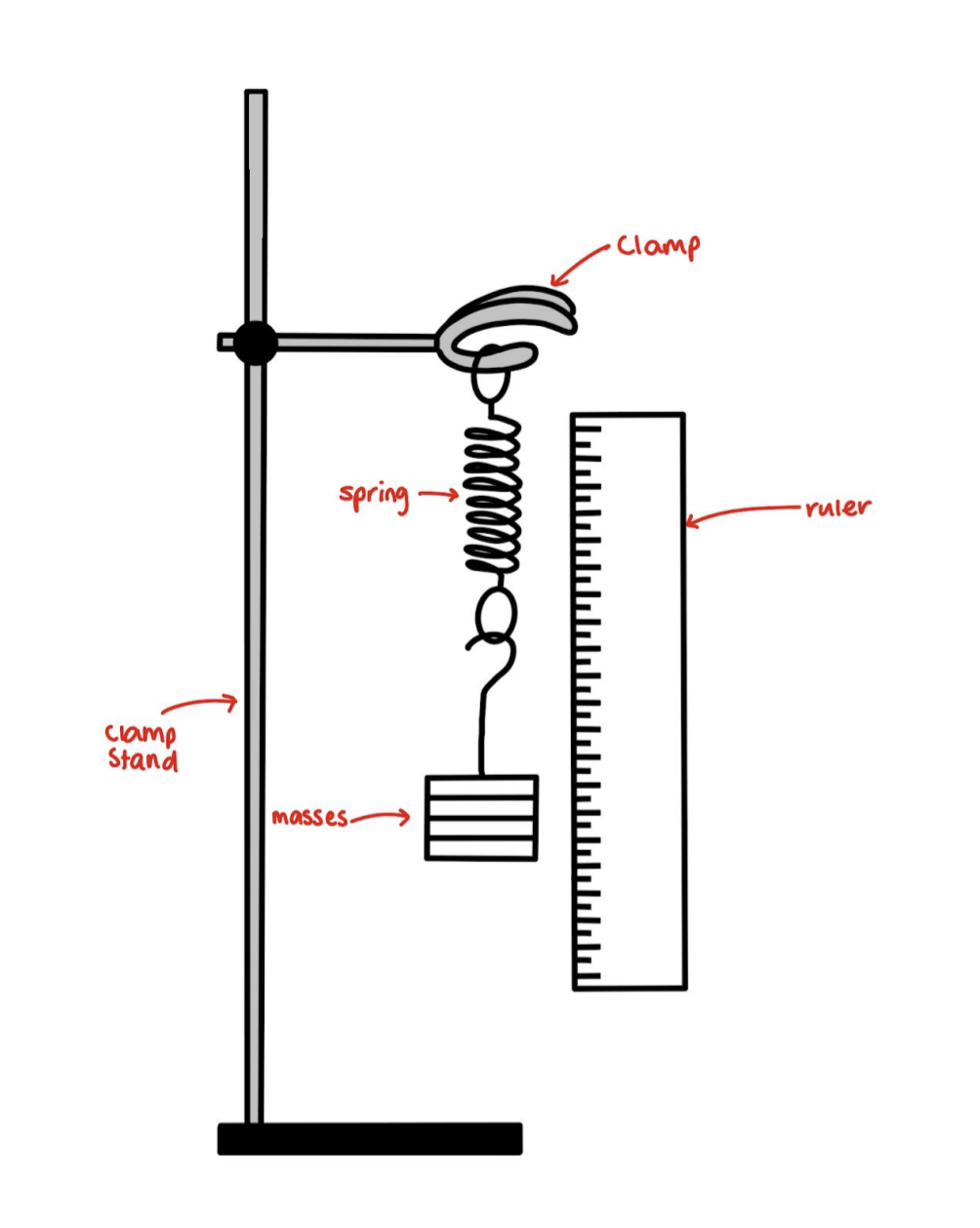
2. Attach Pointer to Base of the Spring & Align Top of Ruler with Top of Spring.
3. Measure initial Length of the Spring.
4. Add a 10g Mass to Base of Spring & Record Length of Spring.
5. Repeat& Continue Add Masses
6. Calculate Extension= Current Position - Original Position.
7. Convert All Masses to Weights Using the Equation:
Weight (N) = mass (kg) x 9.81 (N/kg)
8. Plot Graph of force (y-axis) Against Extension (x-axis).
Calculate Gradient.
If the spring obeys Hooke’s Law, the graph of force against extension will be linear and
pass through the origin. The gradient will be equal to 1 / k, where k is the Spring Constant
measured in N/m.
65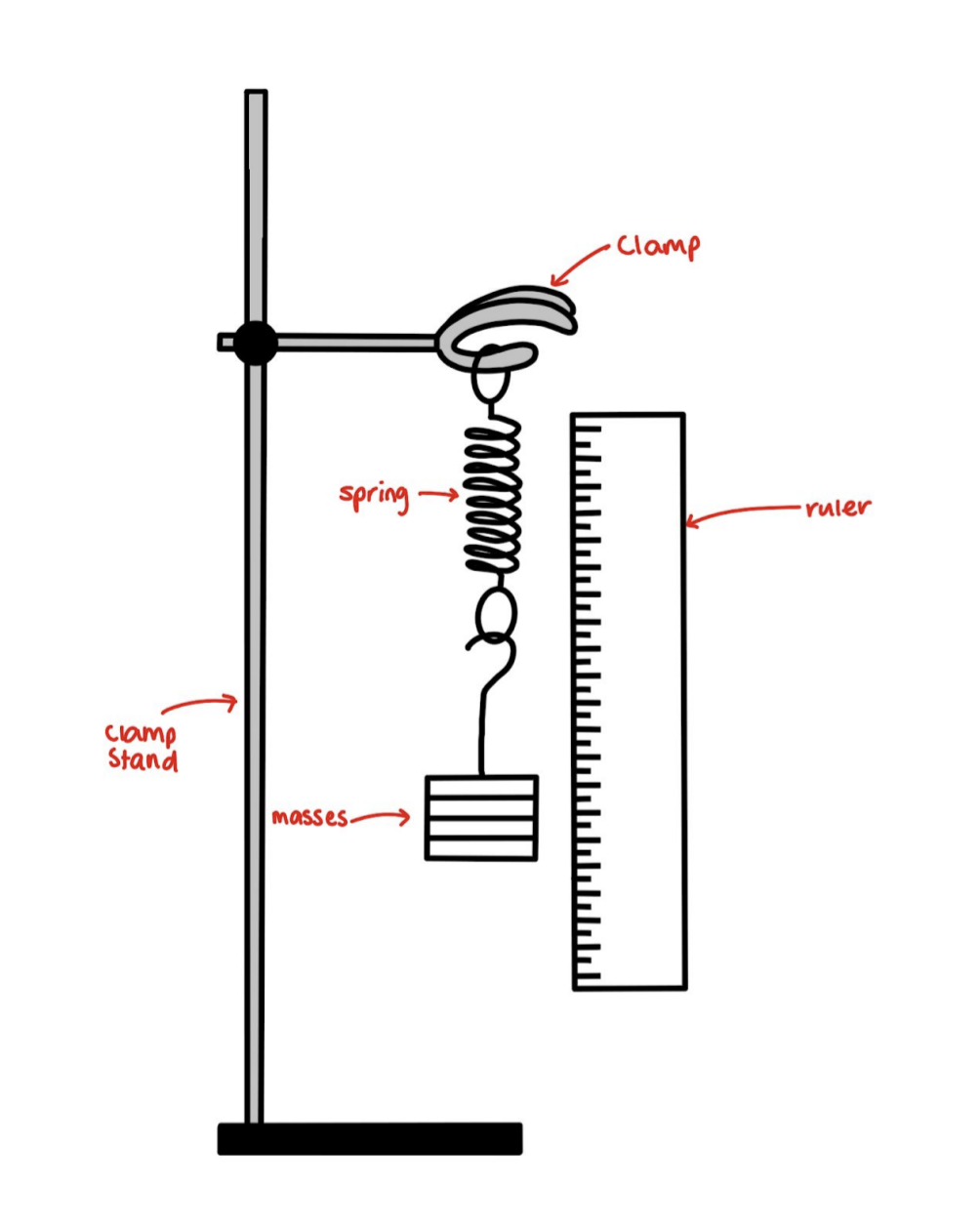
What is the Equipment for Required Practical 6 Force and Extension?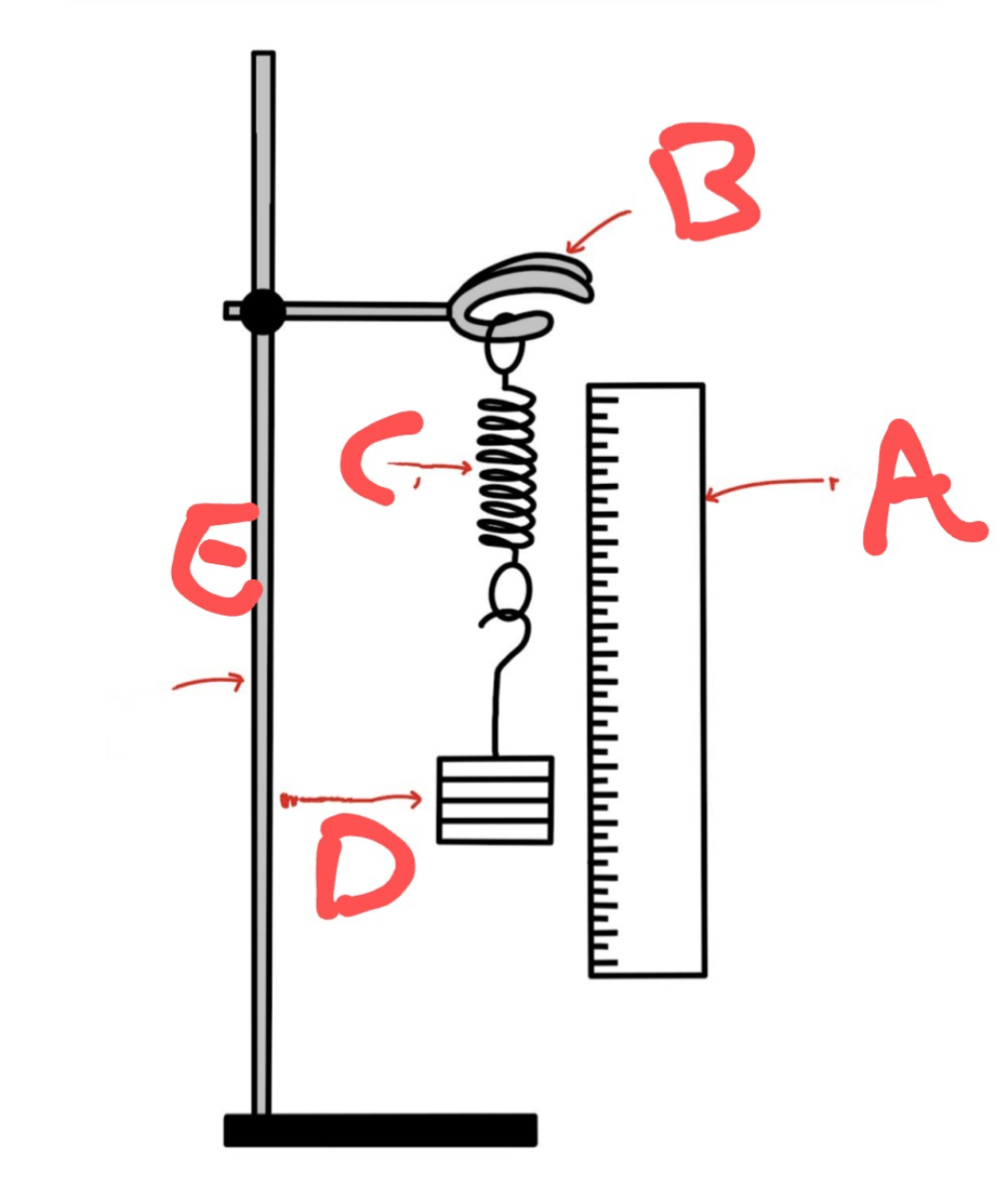
66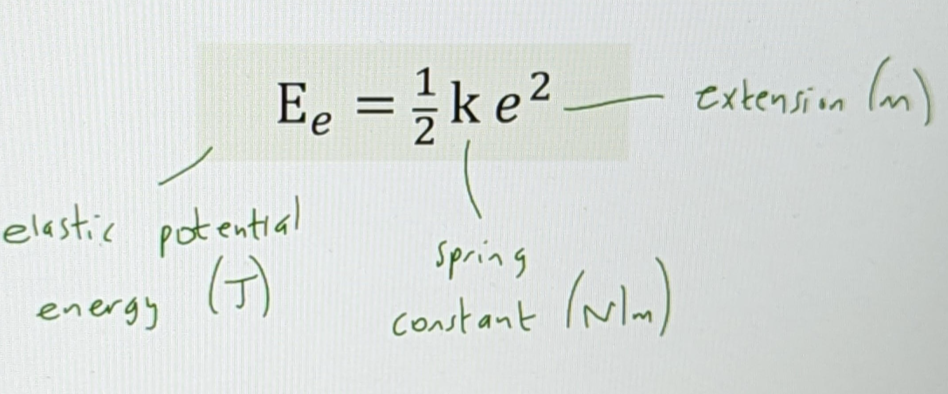
What is the Formula Units for Elastic Potential Energy #given forum?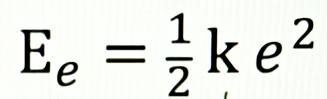
67
Define a Moment of a Force
Turning Effect it Has About a Pivot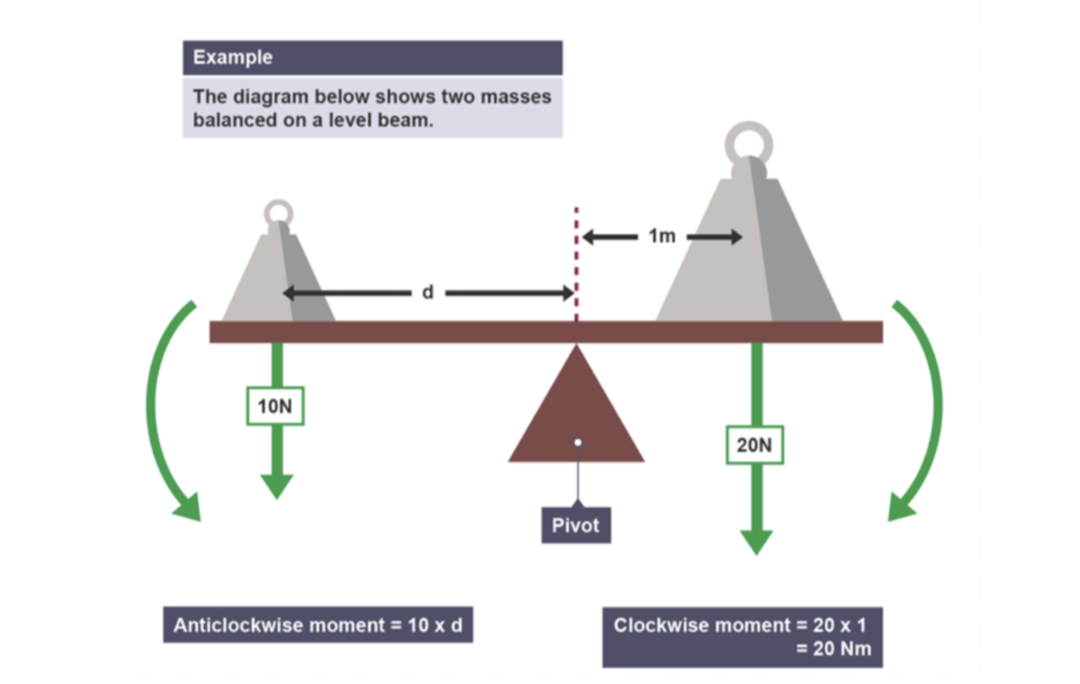
68
What is the Rule for a Moment of a Force for Opening a Door?
As we Apply Force Further from Pivot the Moment Exerted By it Increases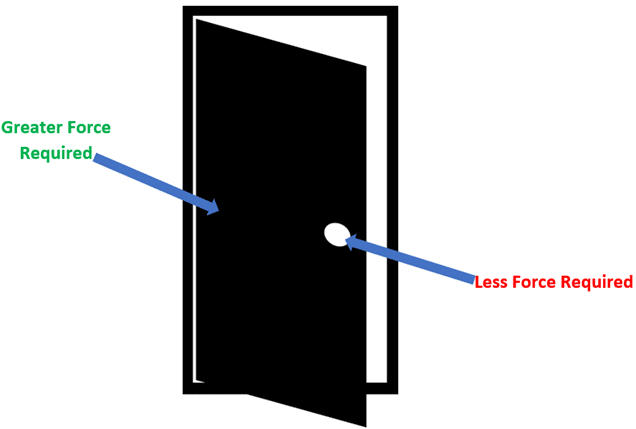
69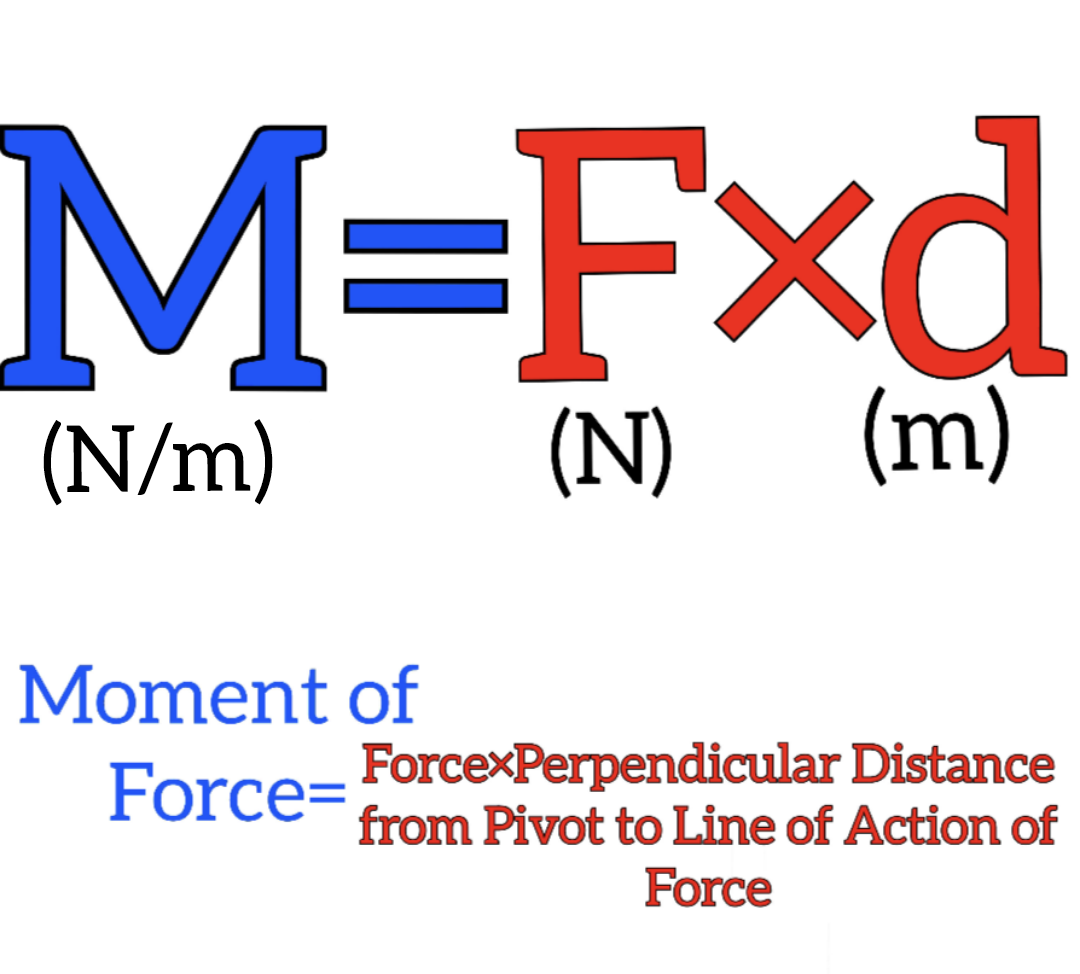
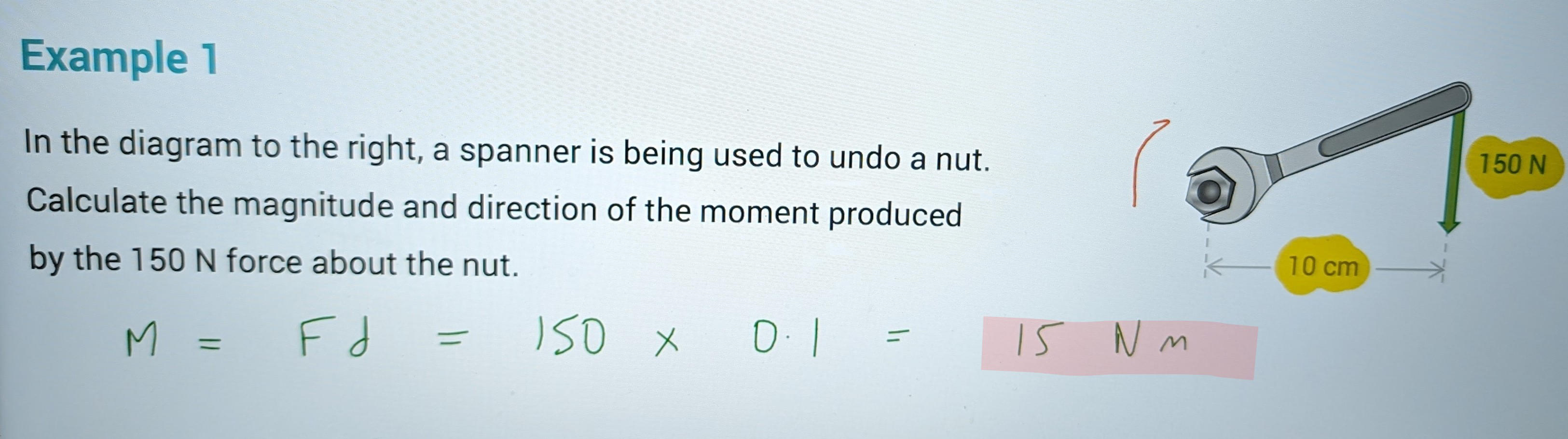
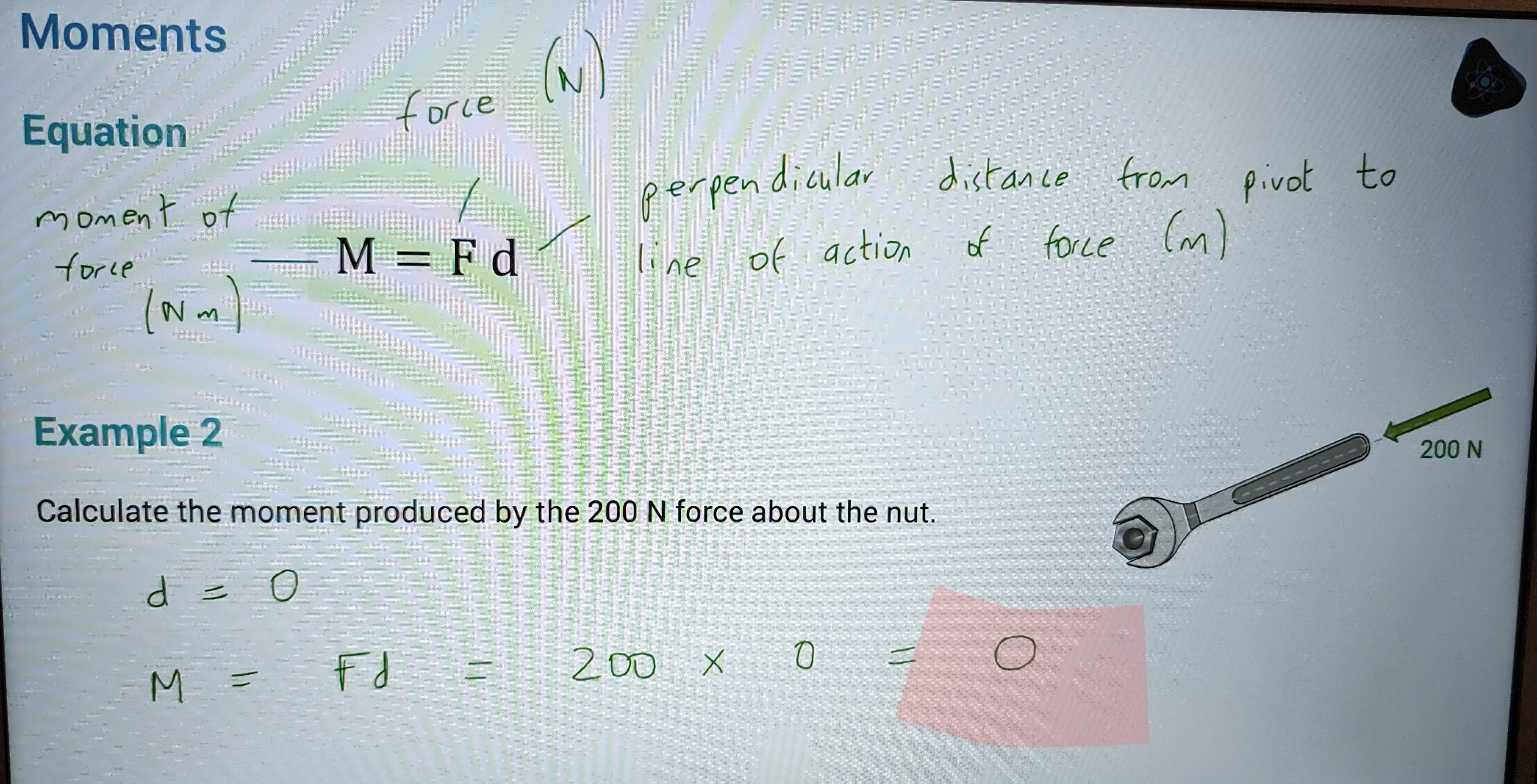
What is the Equation for Moment Units? 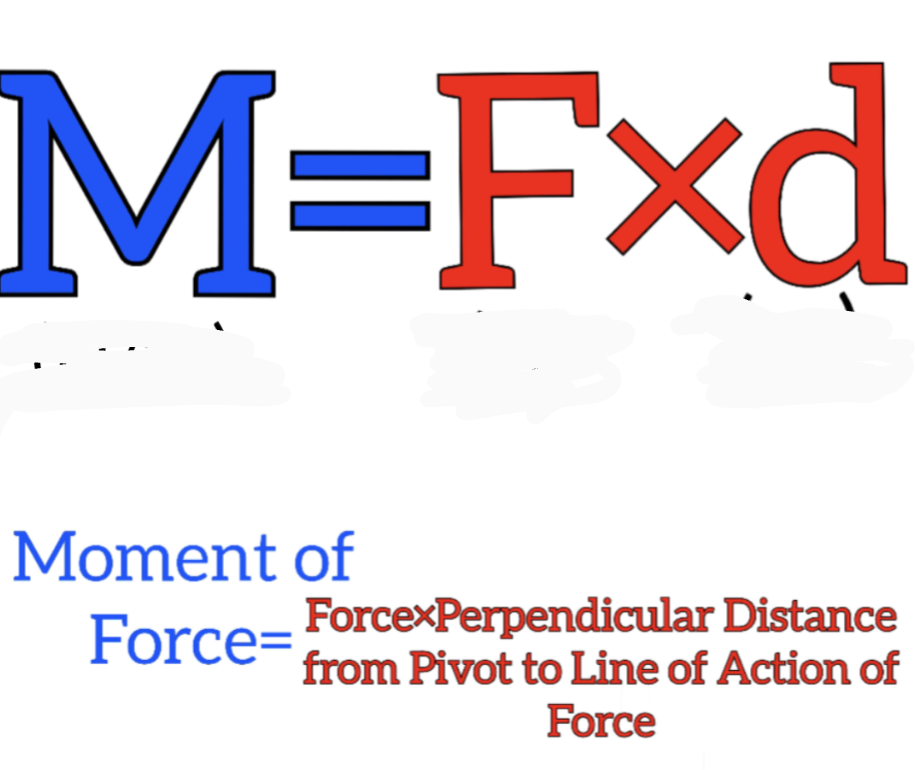
70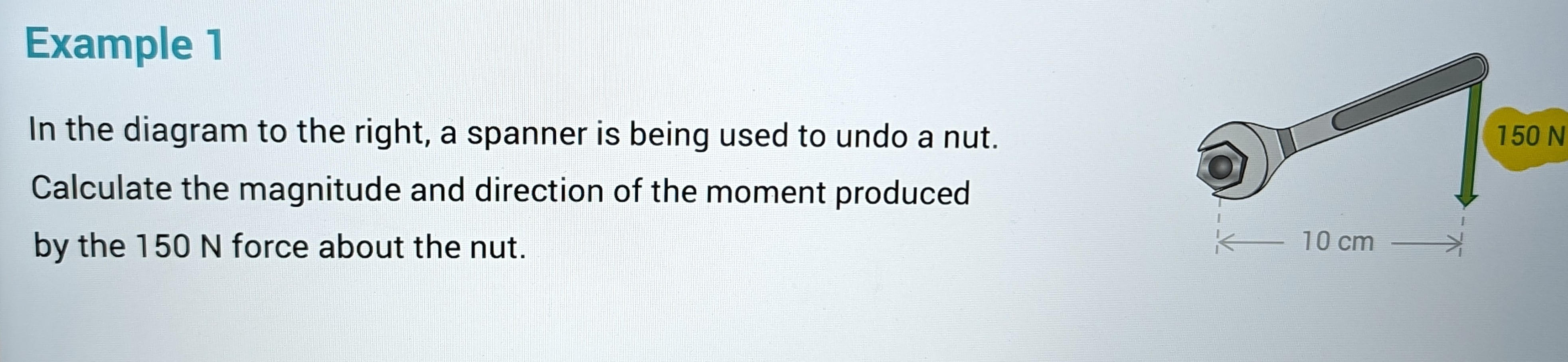
71 
72
How can Two or more forces affect on an object for Turning?
Two or More Forces can Combine to Produce No Overall Turning Effect On an Object
73
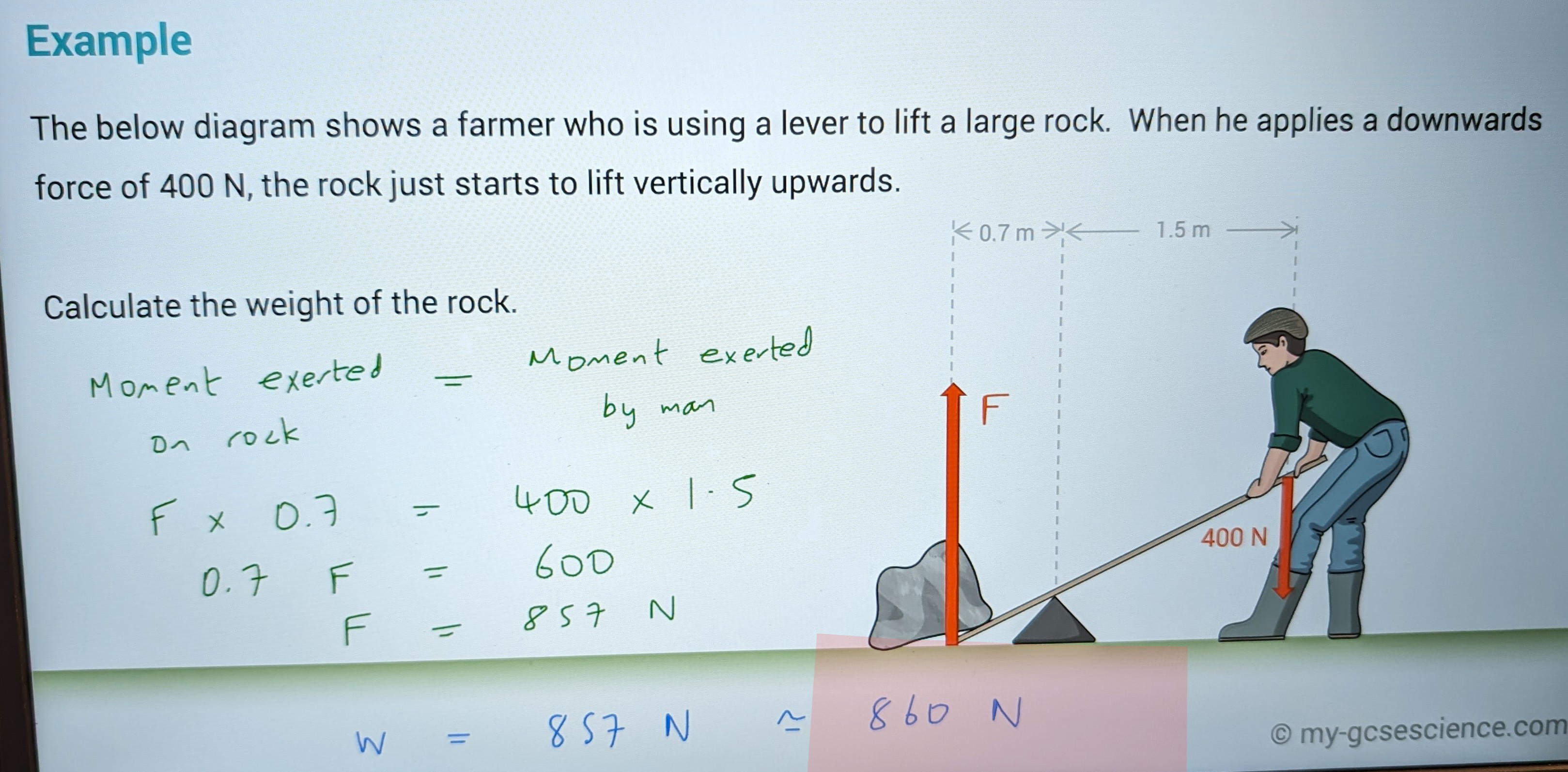
What is the Principle Of Moments?
When an Object is (Equilibrium) Balanced the Sum of Anti-Clockwise Movements About a Pivot is Equal to Sum of Clockwise Movement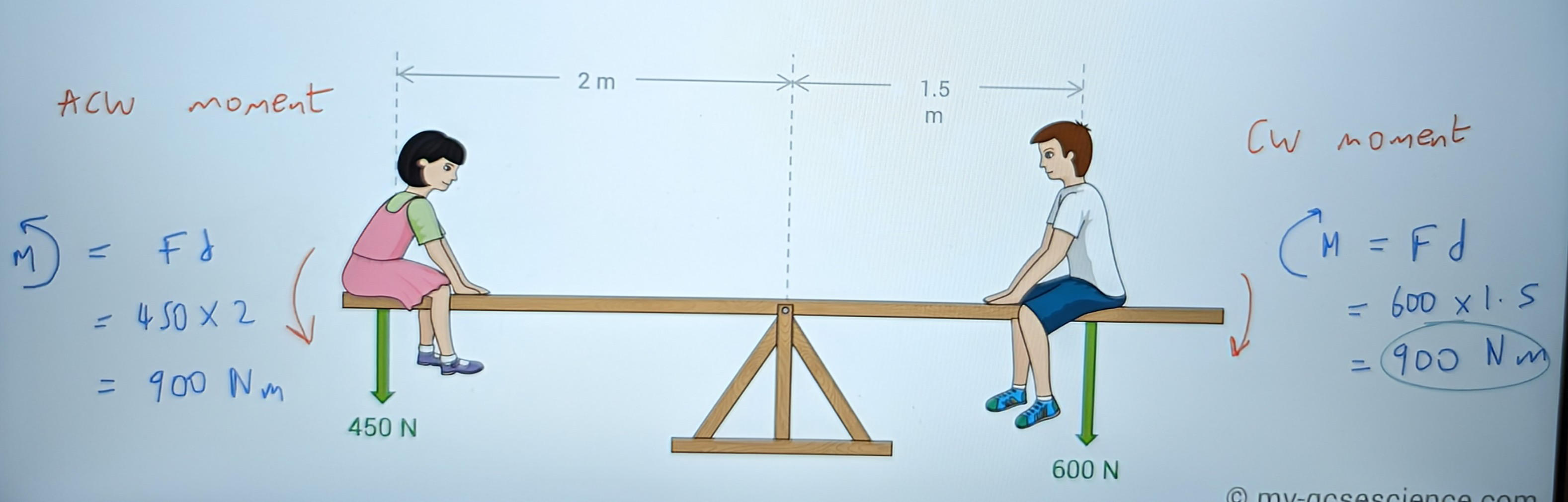
74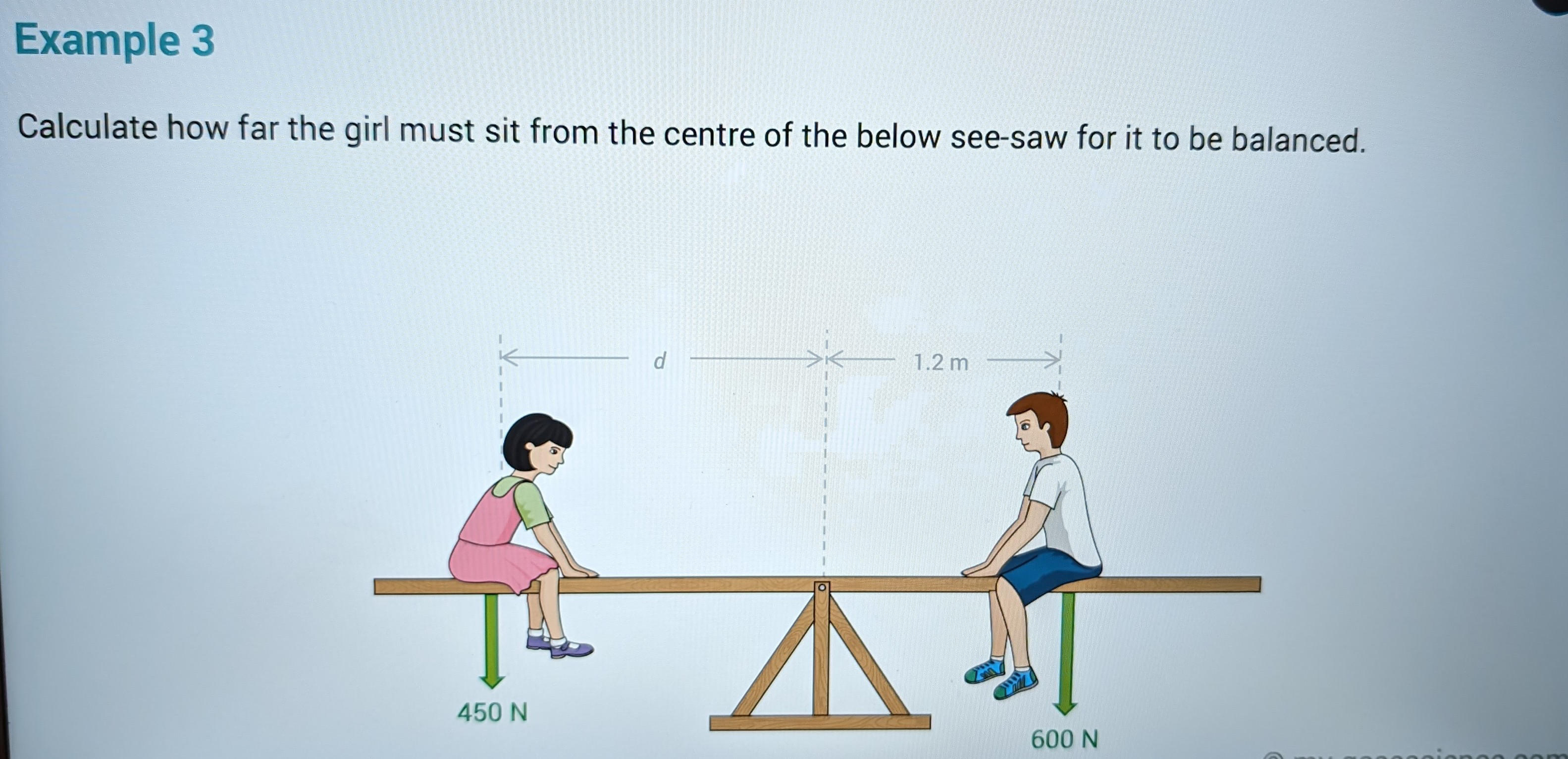
TIP Split Equation in Half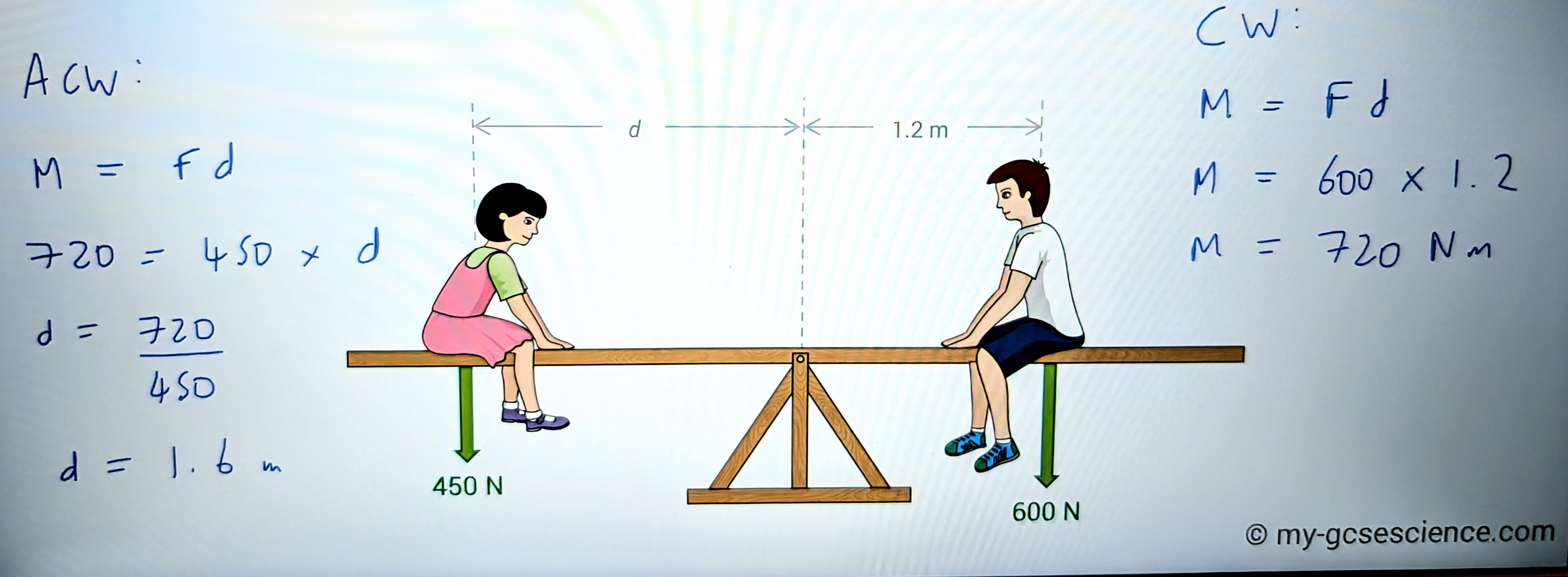
75
What Levers & Gears Allow Us To Do?
To Increase Size or Turning Effect of Force or to Cause Objects to Move More Quickly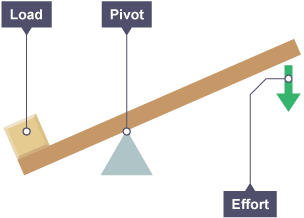
76
The diagram below shows two children on a see-saw. Think about the moment produced by Sam's weight. In which direction does this moment act?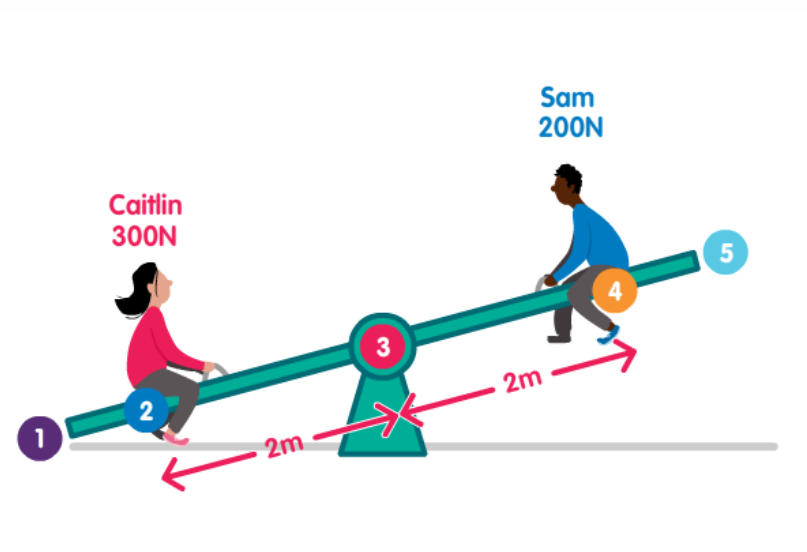
Clockwise
Sam's weight acts downwards, and Sam is to the right of the pivot, so the moment produced by Sam's weight acts clockwise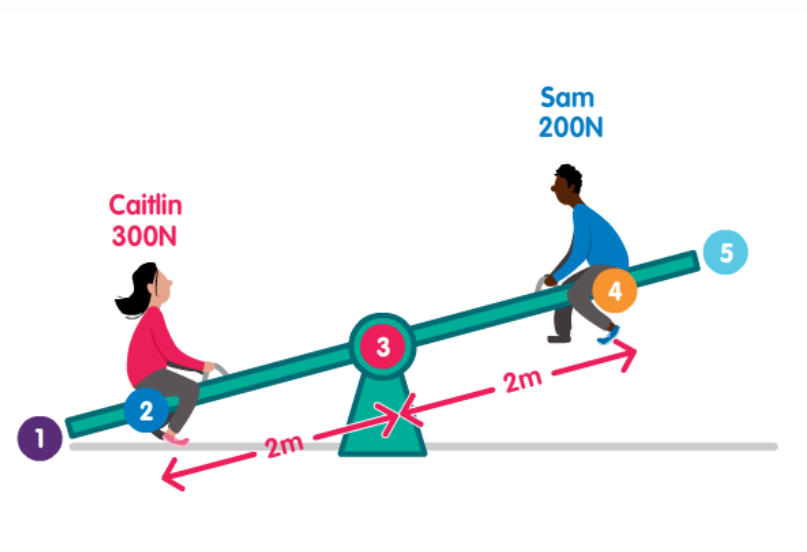
Sam's weight acts downwards, and Sam is to the right of the pivot, so the moment produced by Sam's weight acts clockwise
77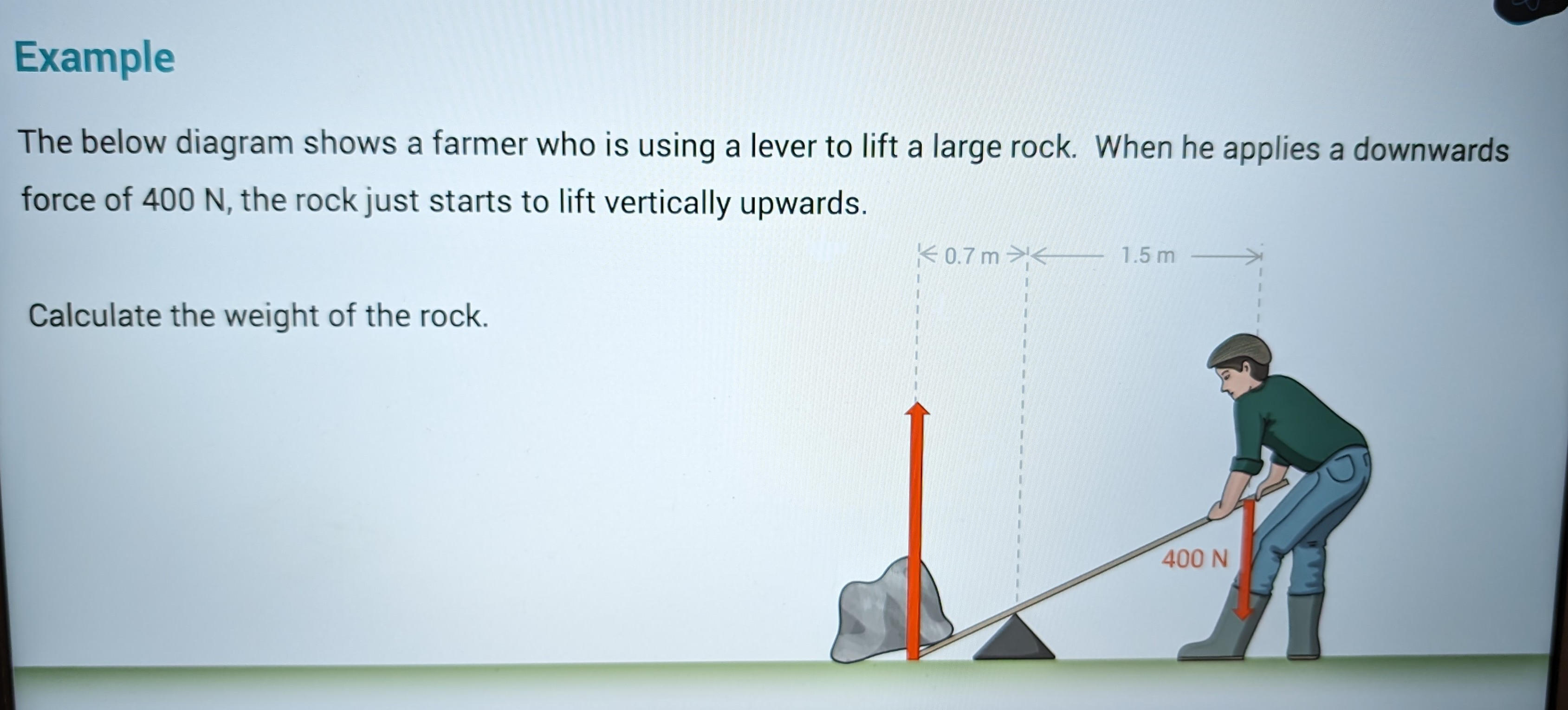
78
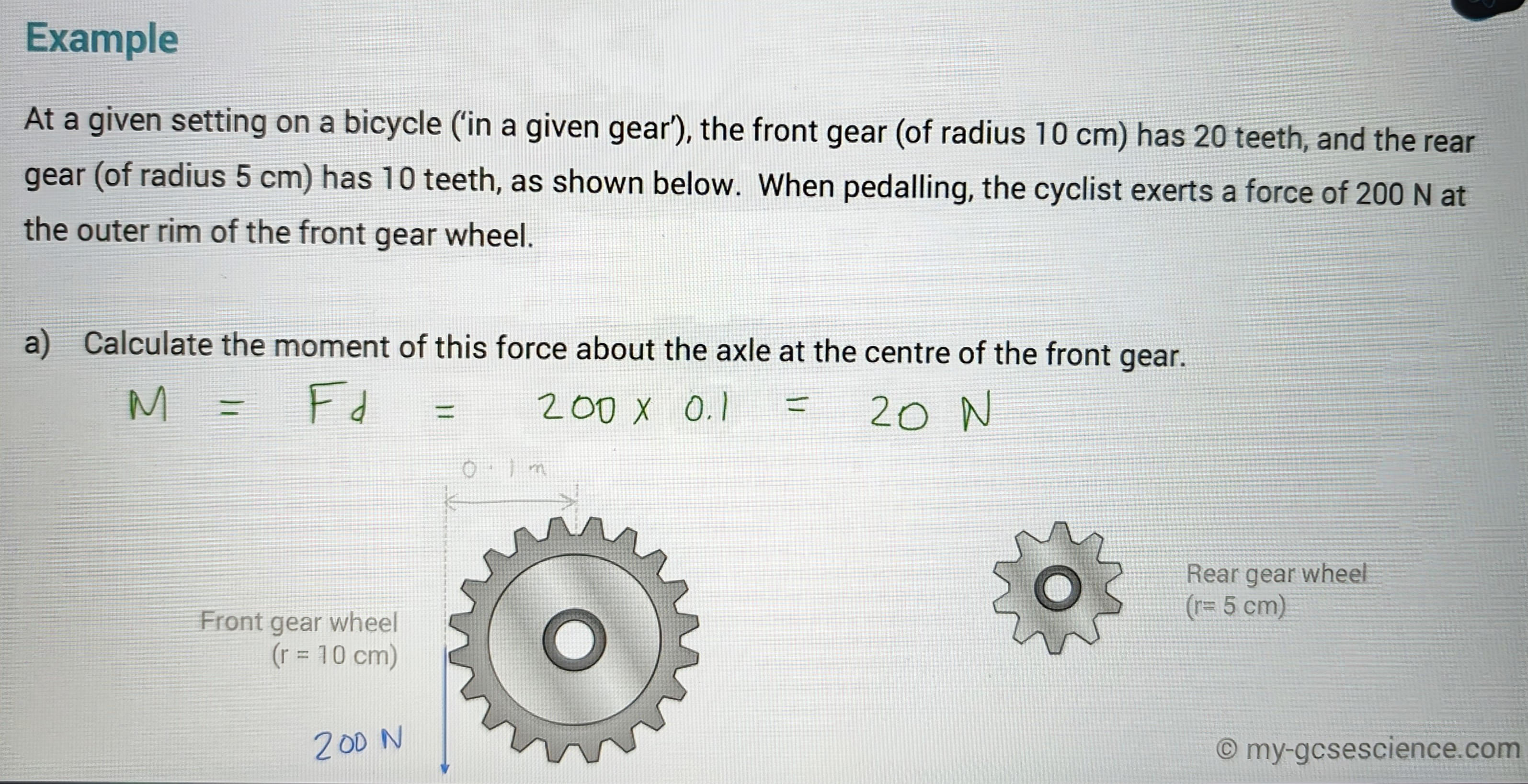
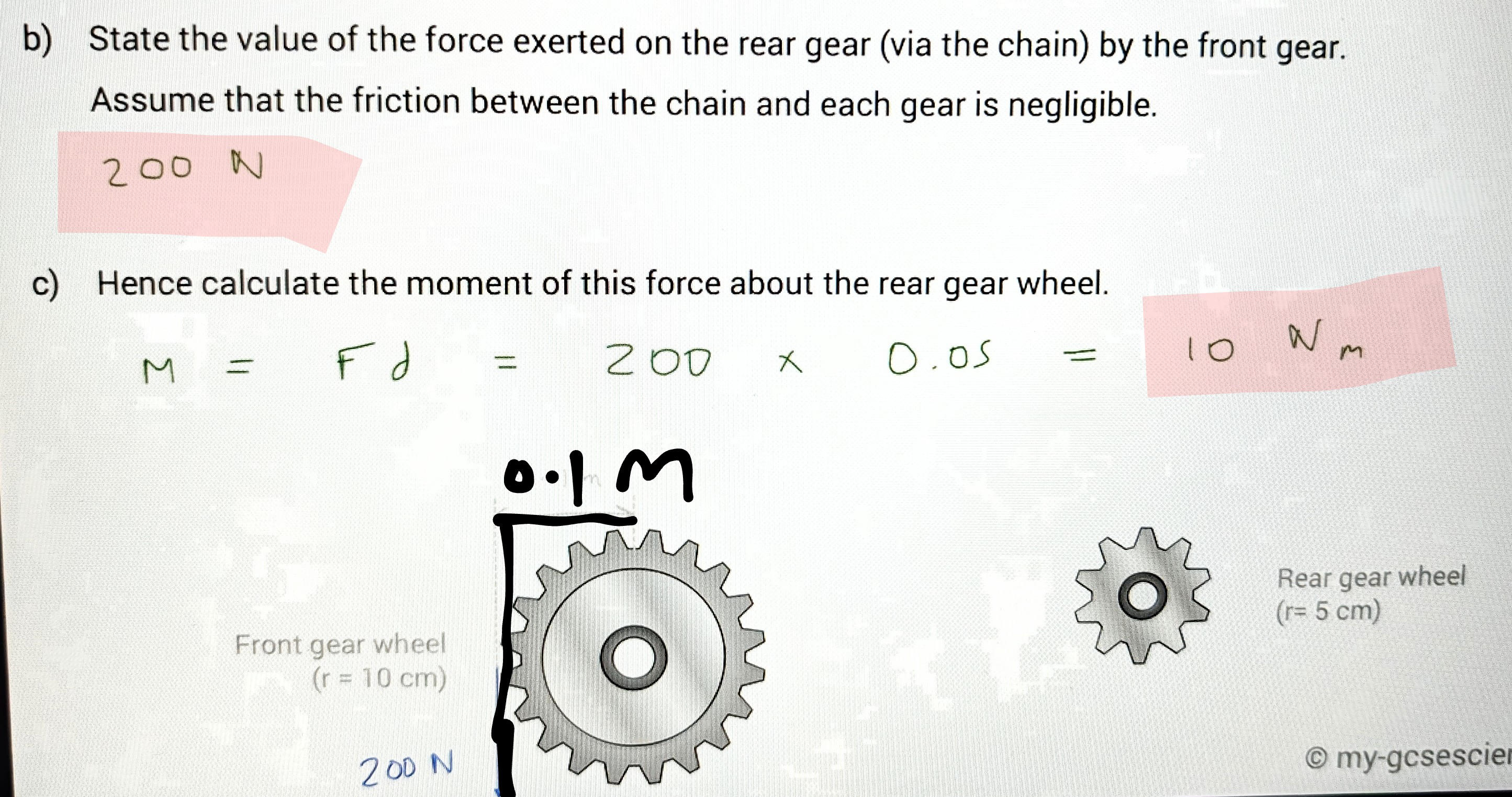
What do Gears Allow?
Allow Rotational Effects of Force to be Increased or Decreased.
79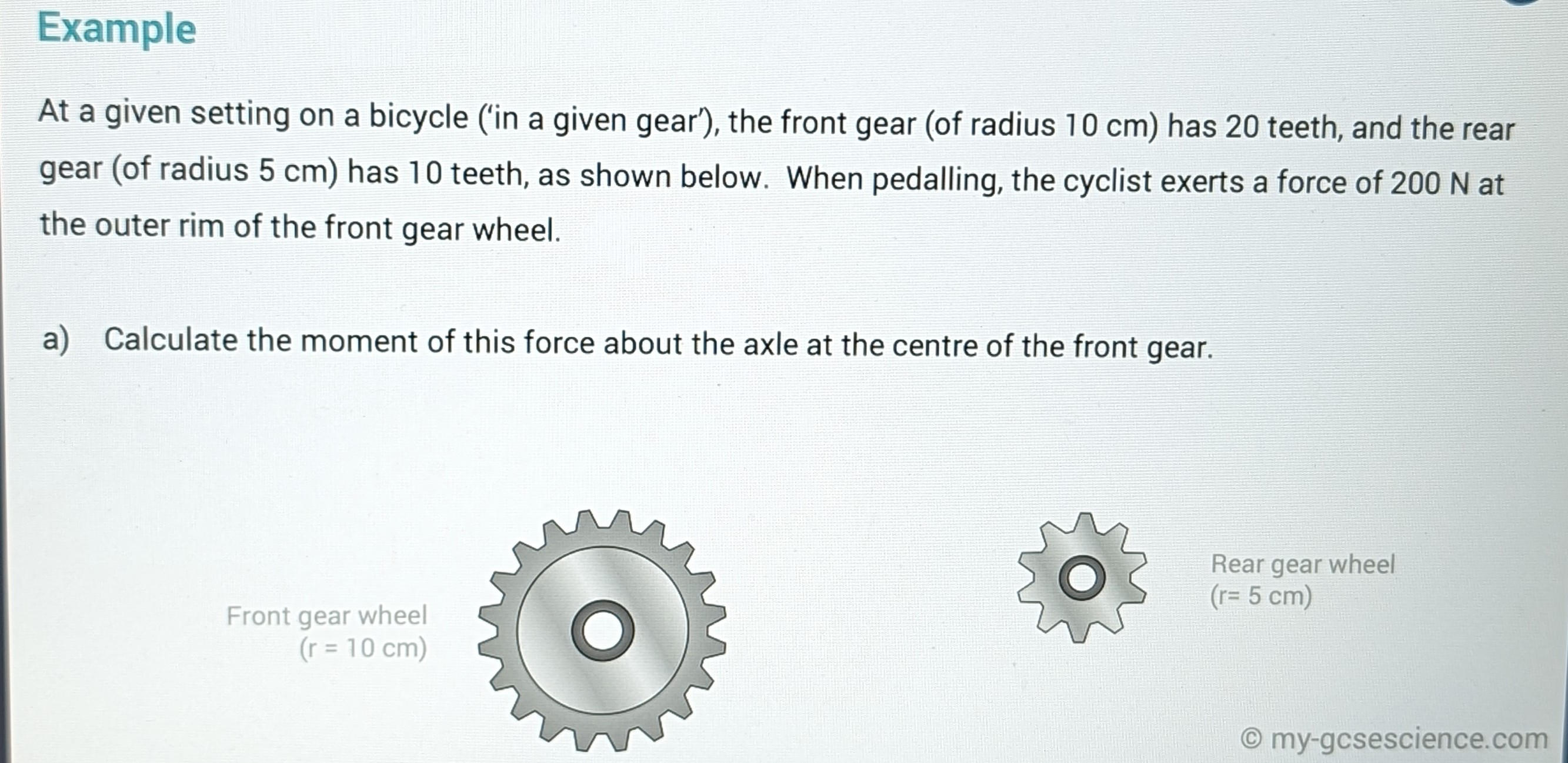
80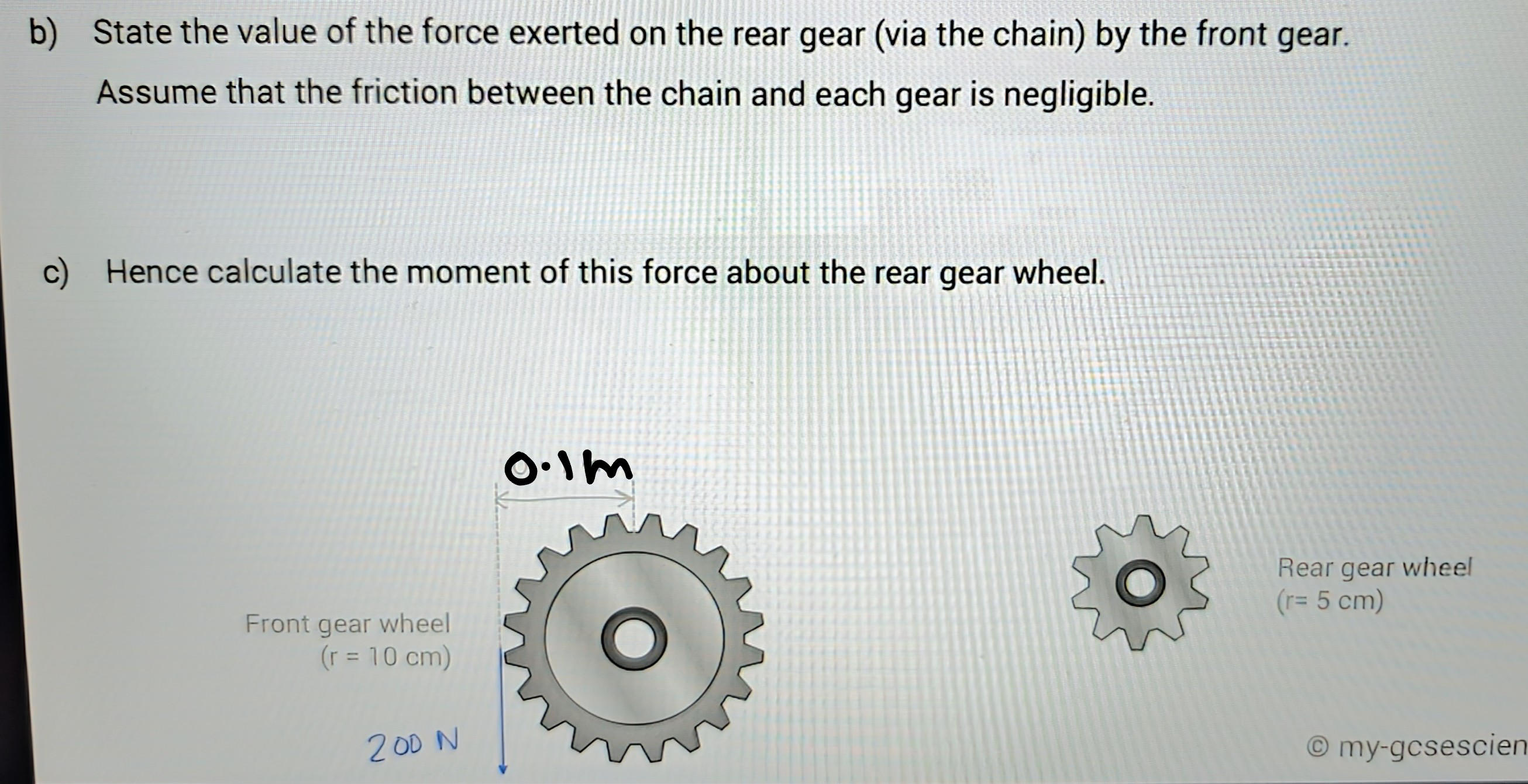
81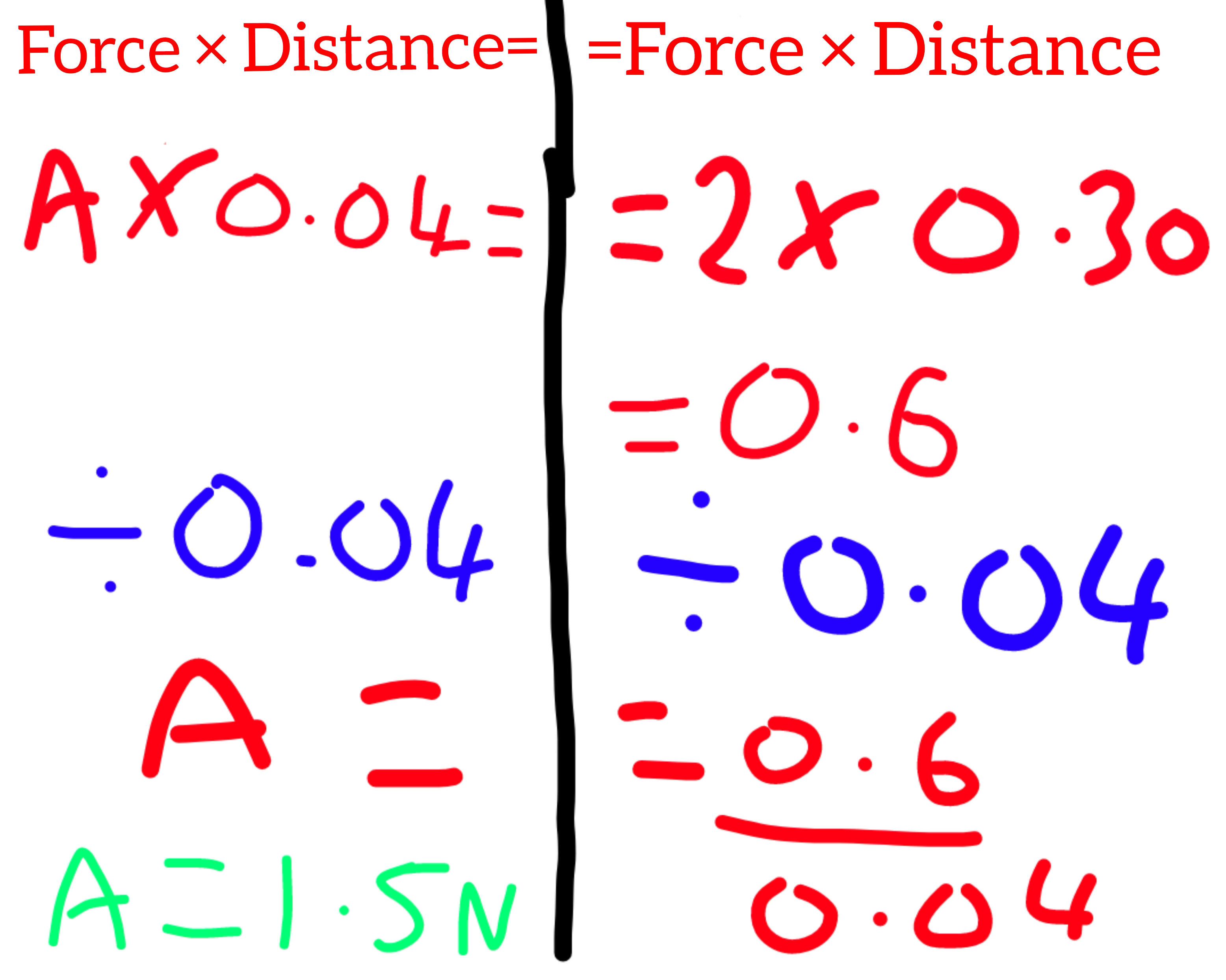
DO A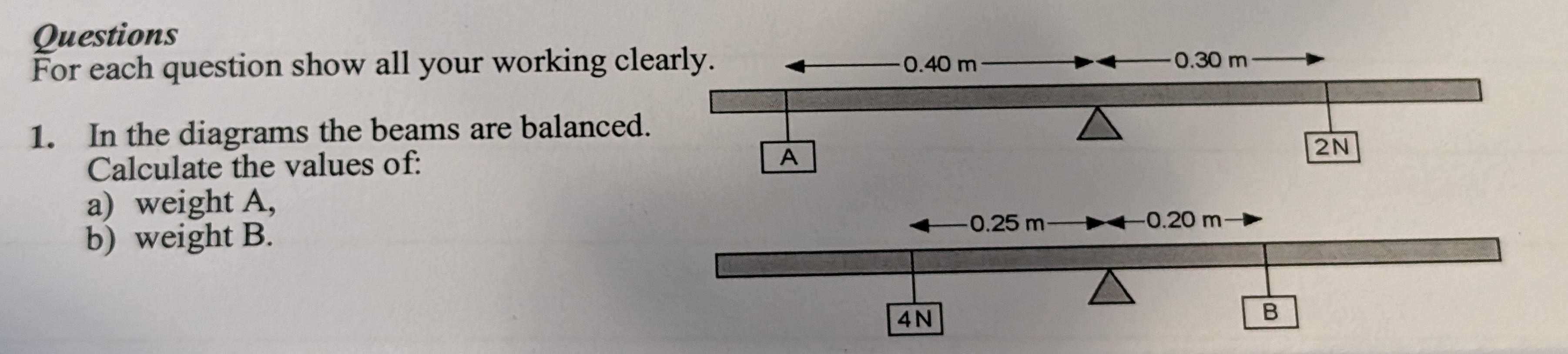
82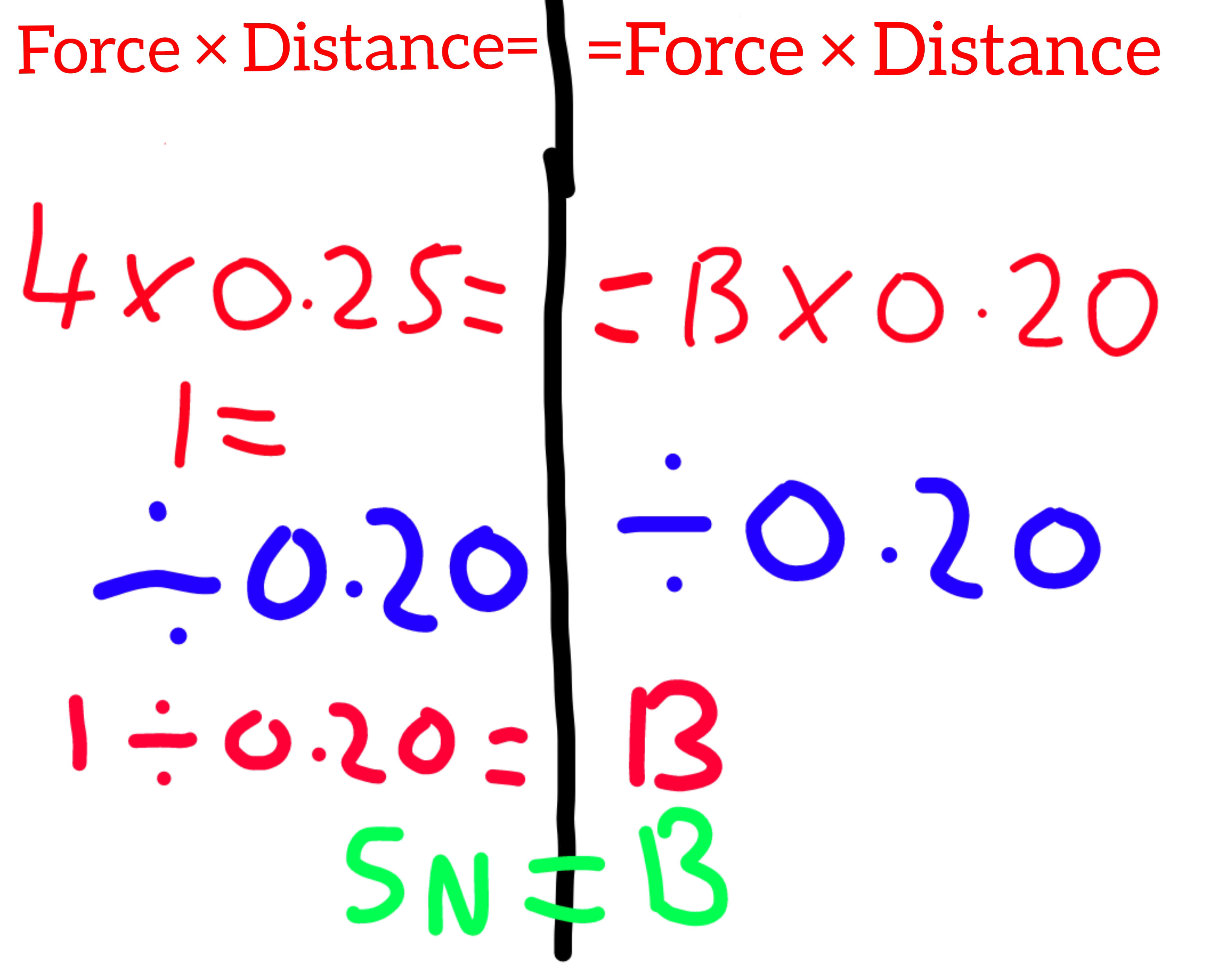
DO B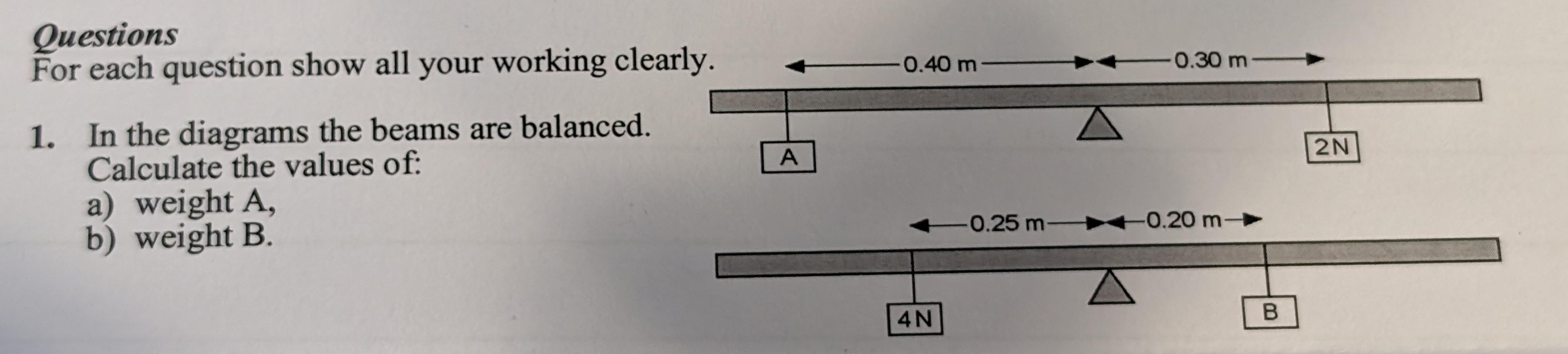
83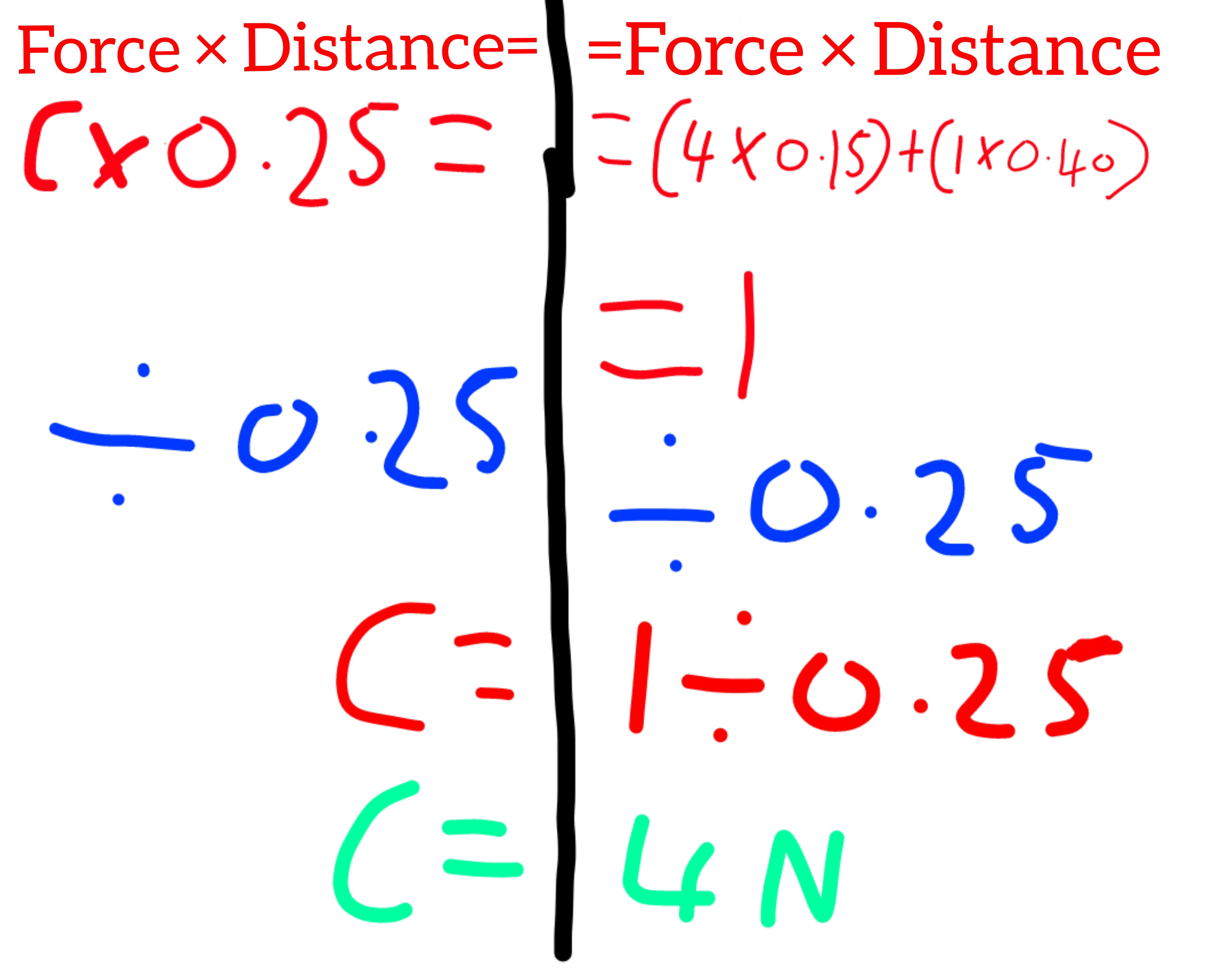
DO C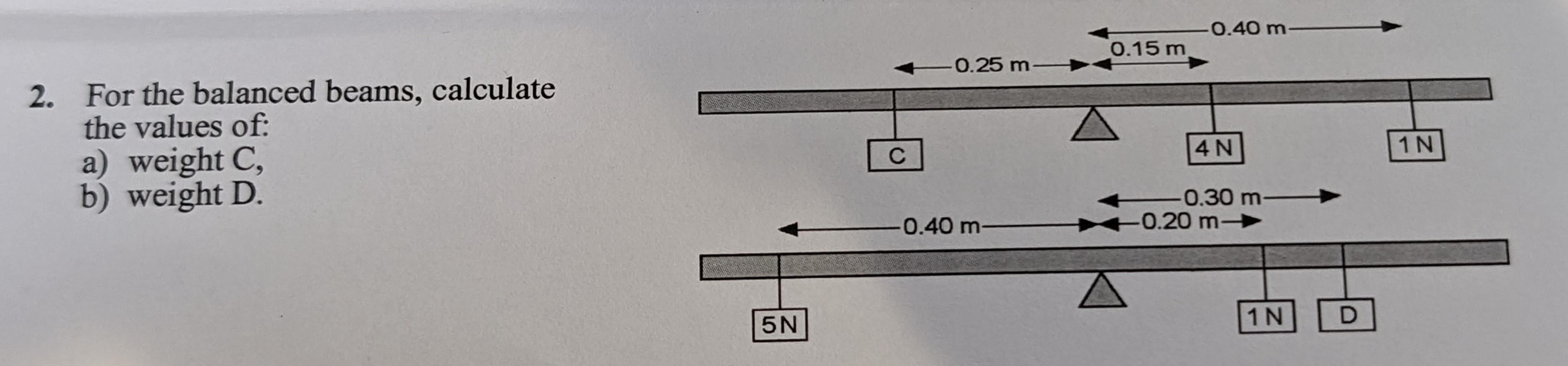
84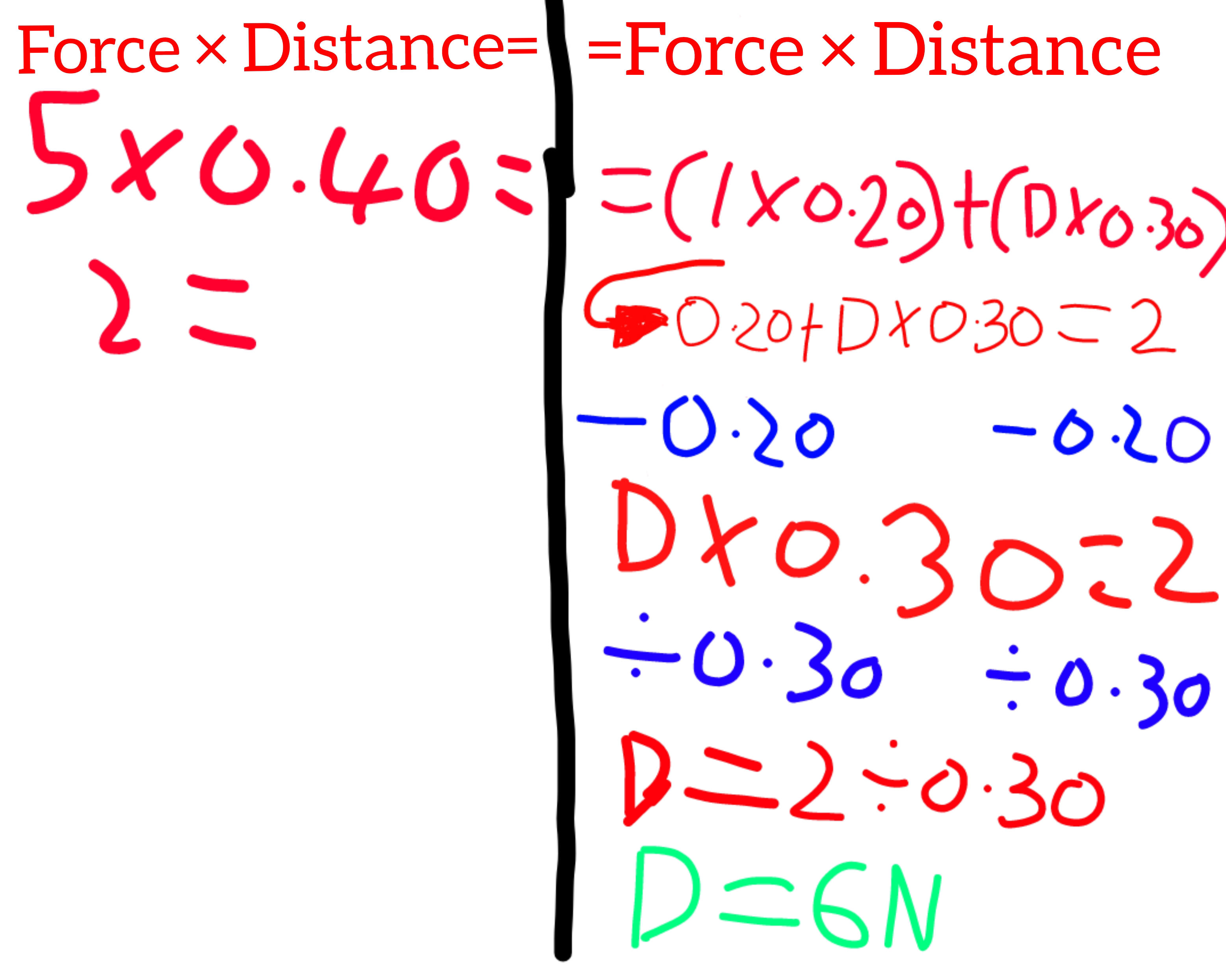
DO D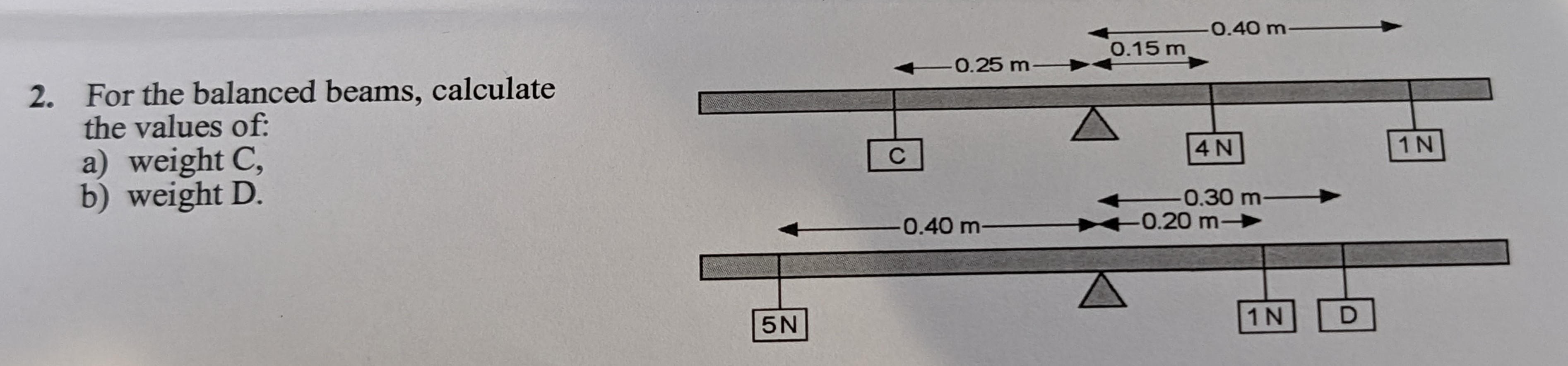
85
Define Fluid
Gas or Liquid
86
How does Pressure in a Fluid Act & What Does it Produce?
Pressure in Fluid Always Produces a Force which Acts at Right Angles to Surface of Walls of its Container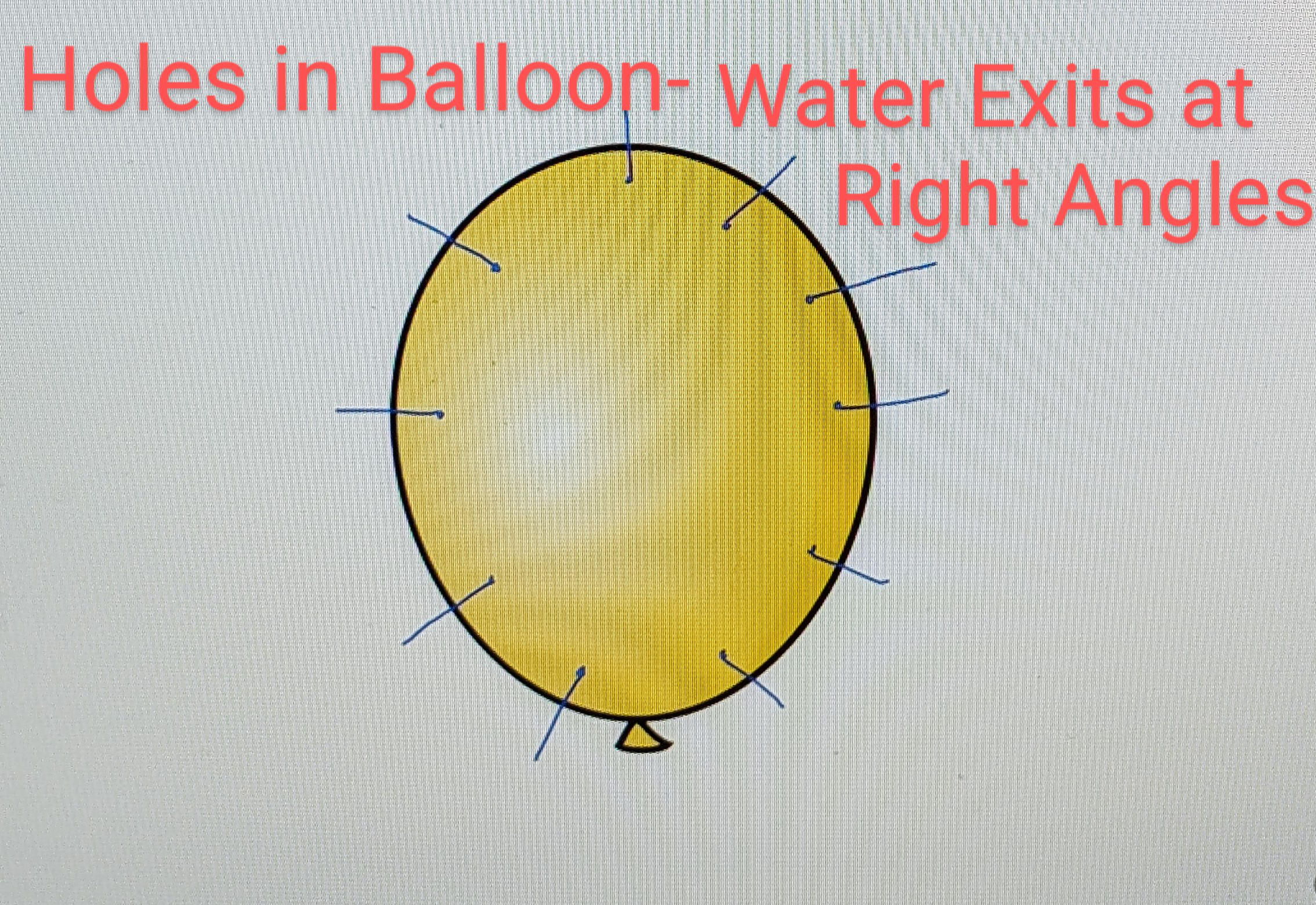
87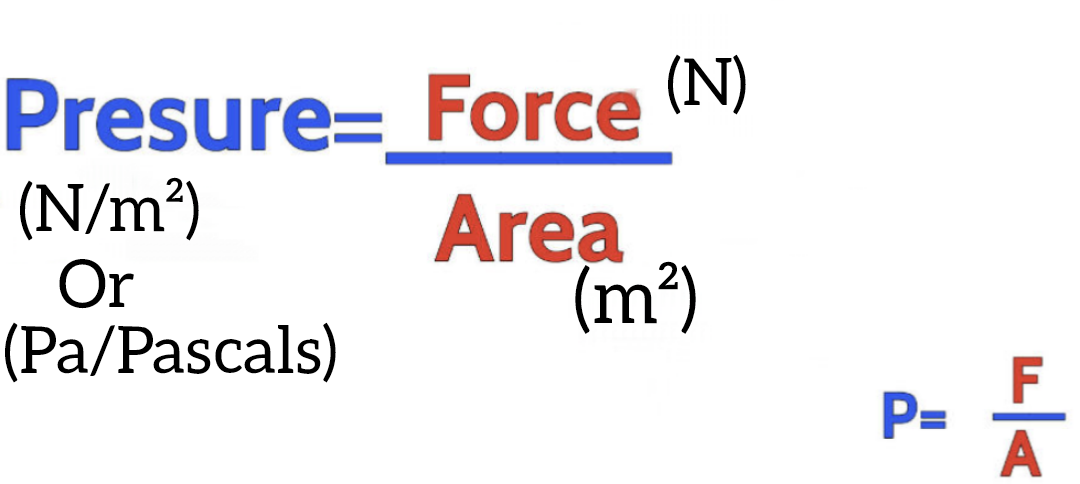
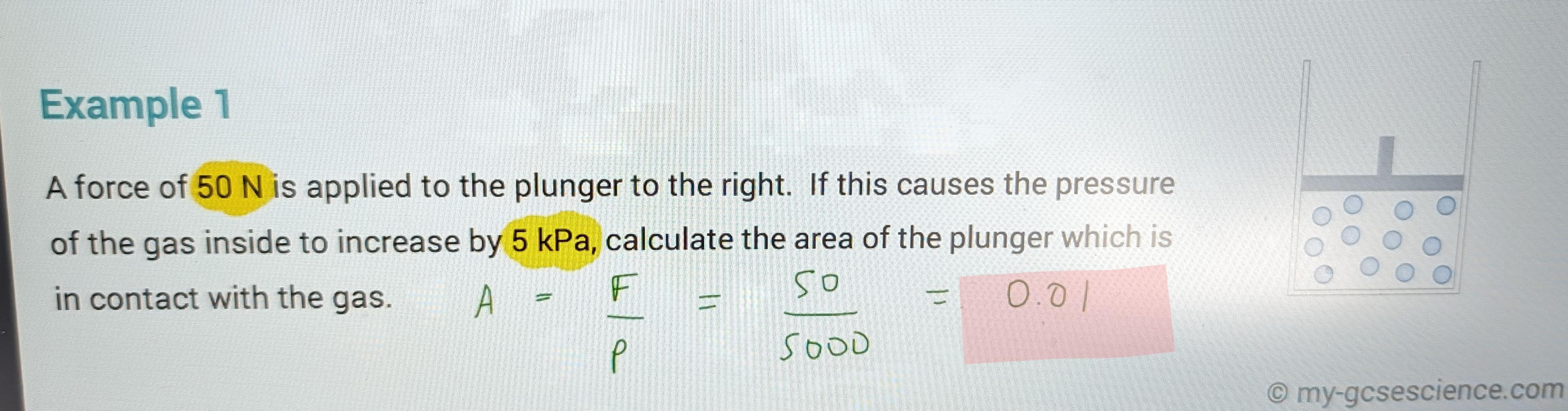
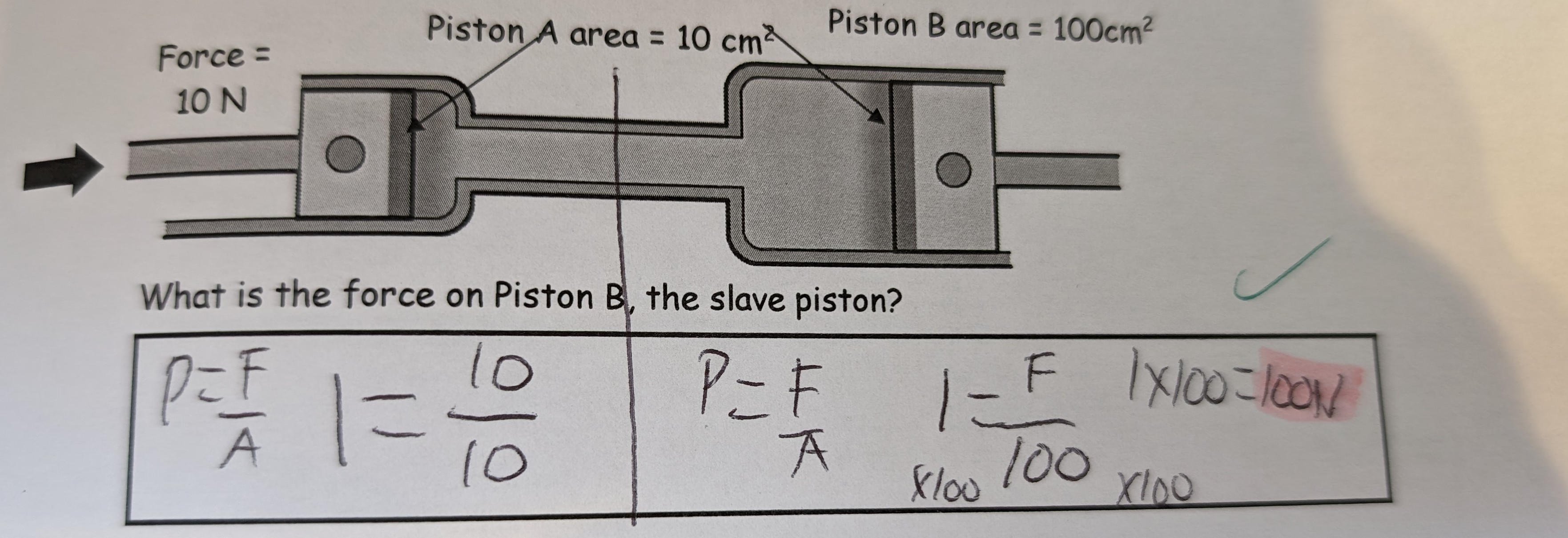
How Can you Calculate Force Exerted by Piston?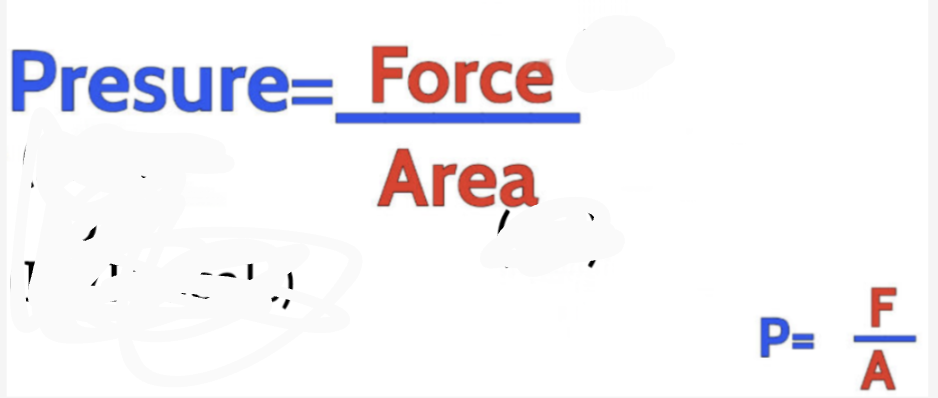
88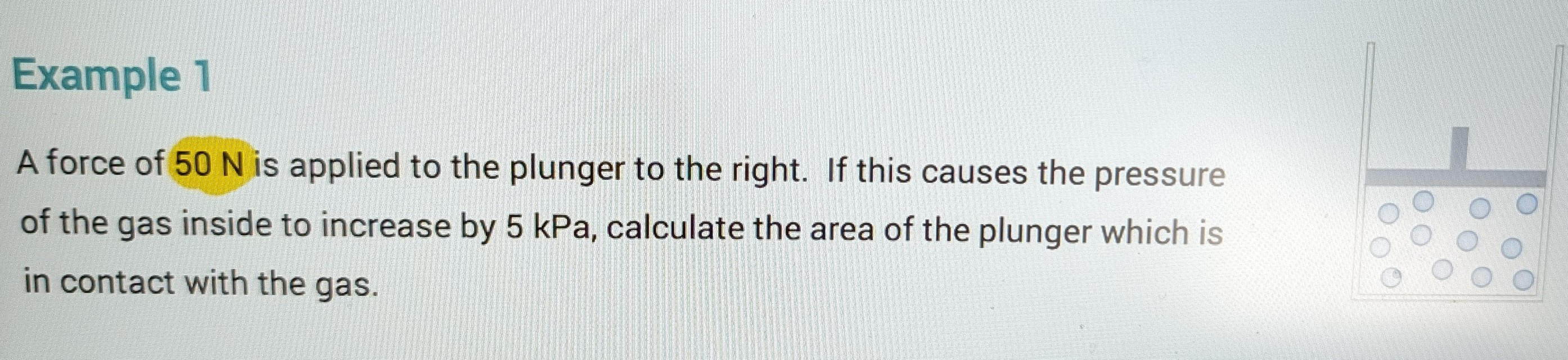
89
Define Hydraulic Systems by what Principles do they use?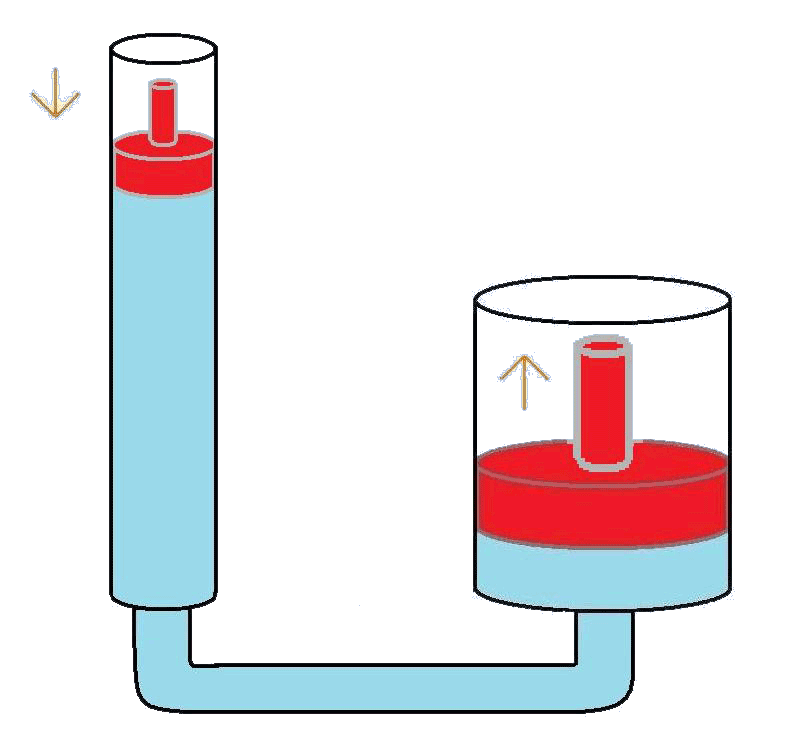
Use Principles that Pressure is Transmitted through Liquid.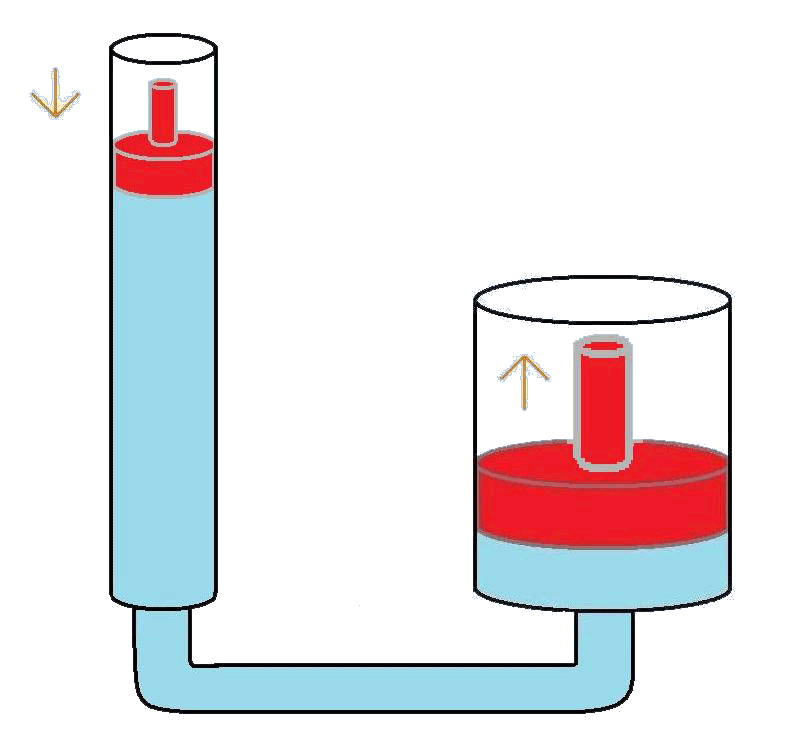
90
How Pressure Spread ina Hydraulic System & Why?
Pressure Inside All Parts of Hydraulic System is Same Because Liquid Can't be Compressed.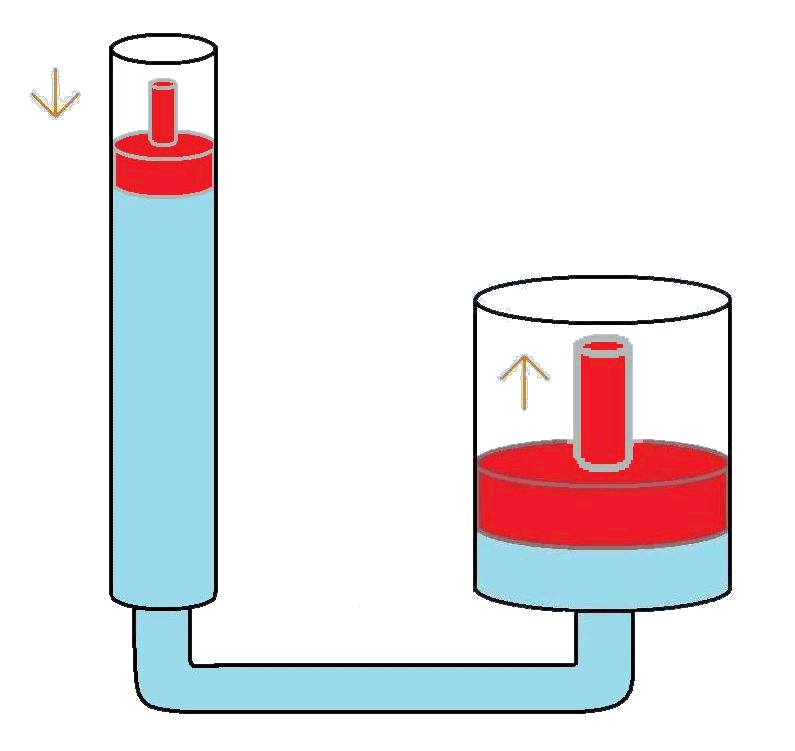
91
The atmosphere gets less __________ with increasing altitude. What is the missing word in this sentence?
Dense
92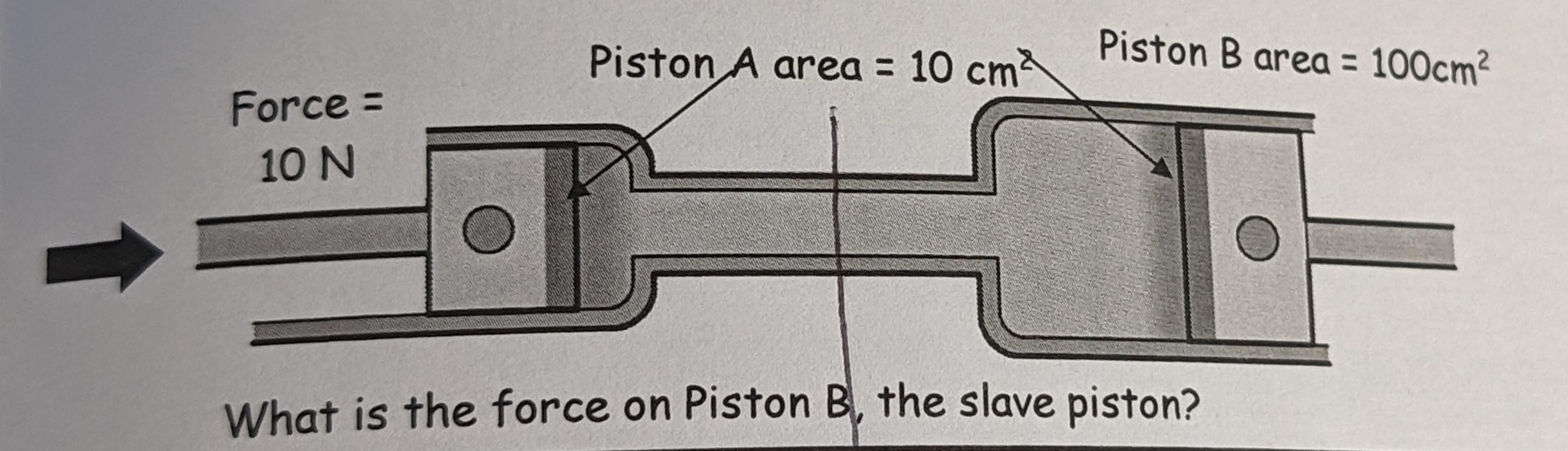
93
Why can't Liquids be Compressed?
Low Potential Energy/Internal Energy.
94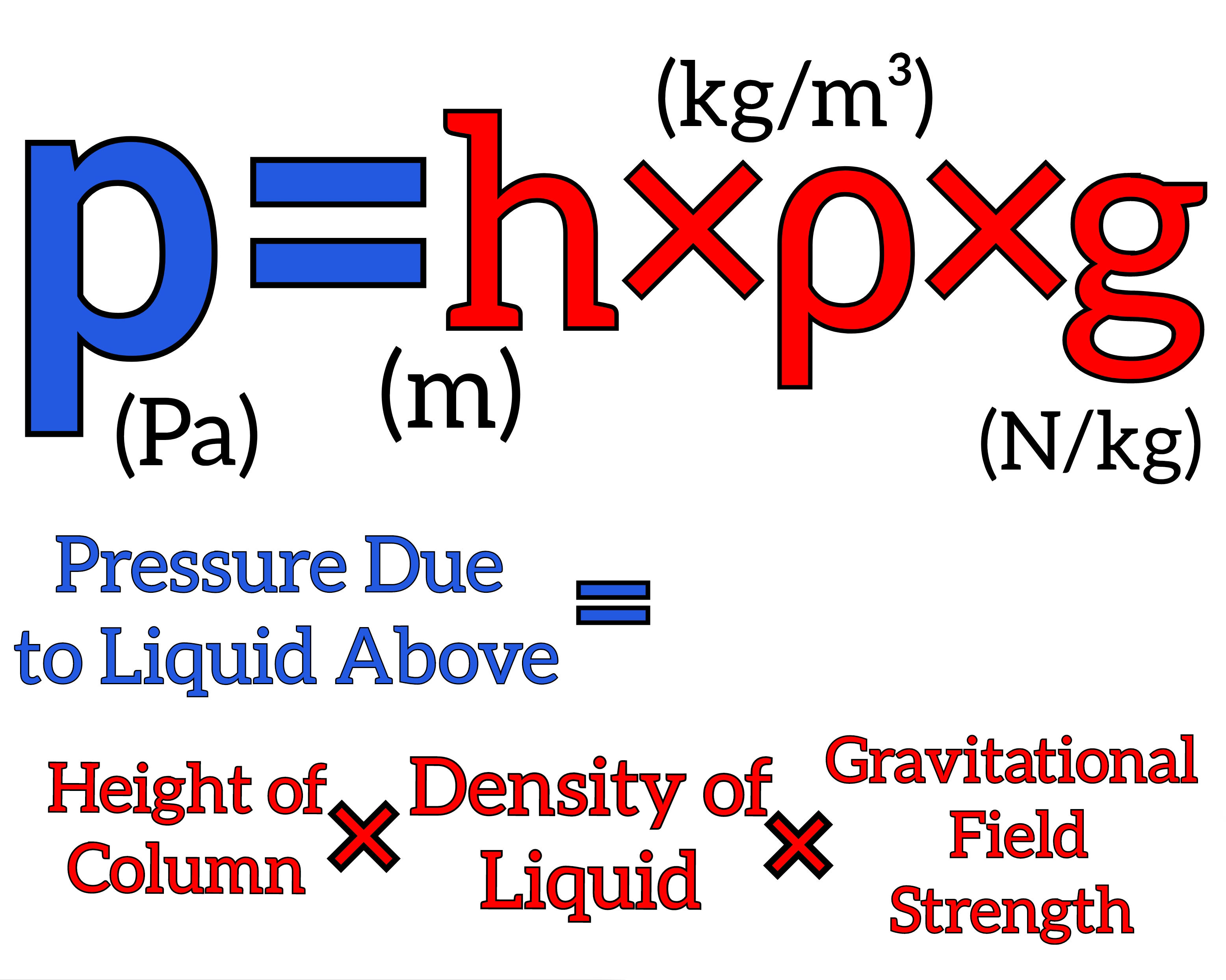
What is the Equation for Pressure Due to a Column of Liquid & Units?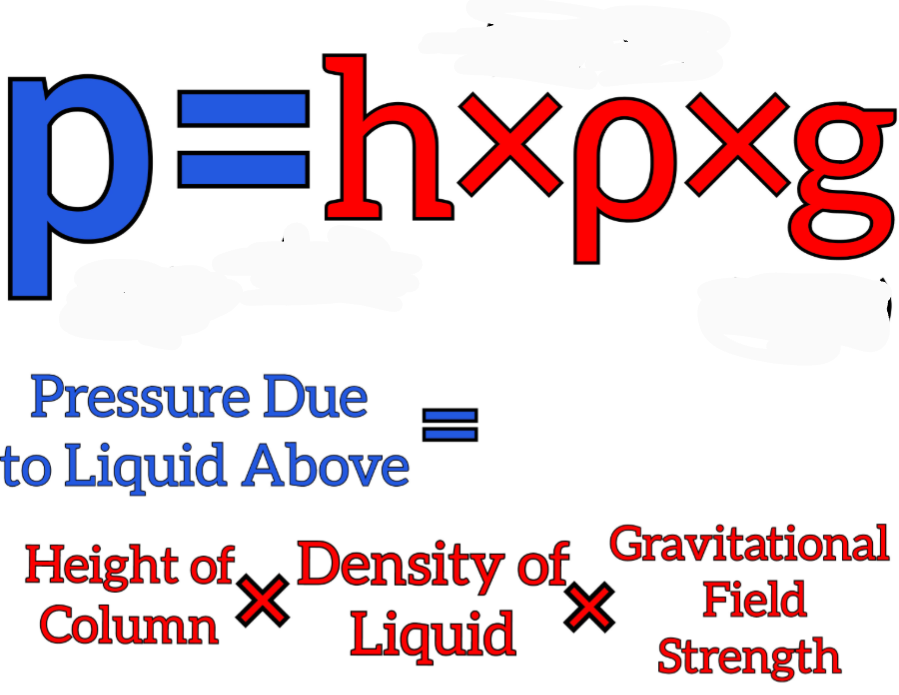
95
When will an Object Float after being Sunk & How?
If Density of Submerged Object is Less than Density of Water Around it then Up Thrust Force will Be Greater than Weight of Object so Object Float.
96
Why will an Object Sink?
If Object is More Dense than Water it's Weight will be Greater Than Up Thrust Force Acting on it so Object Will Sink.
97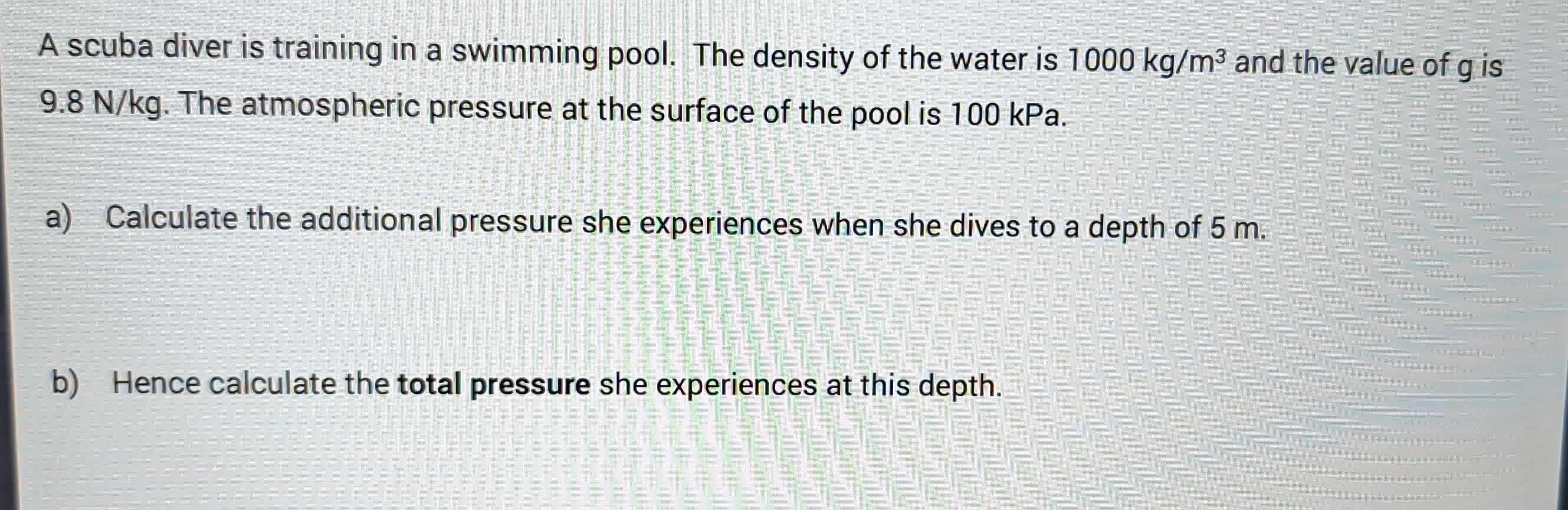
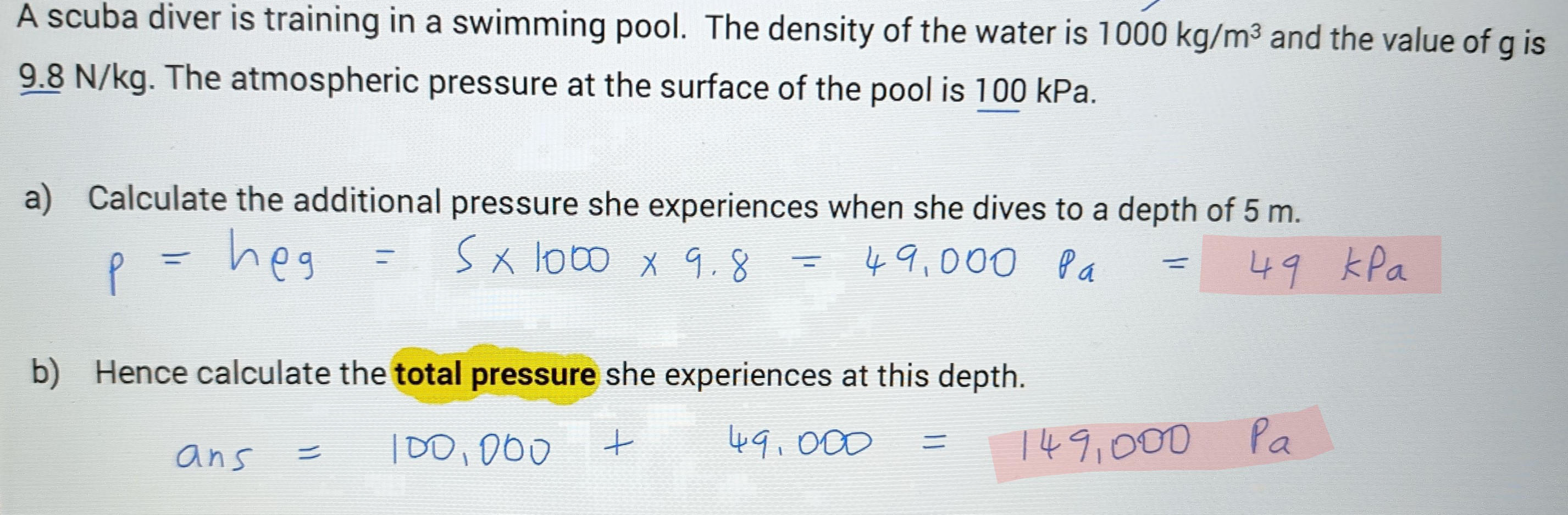
98
Increase
99
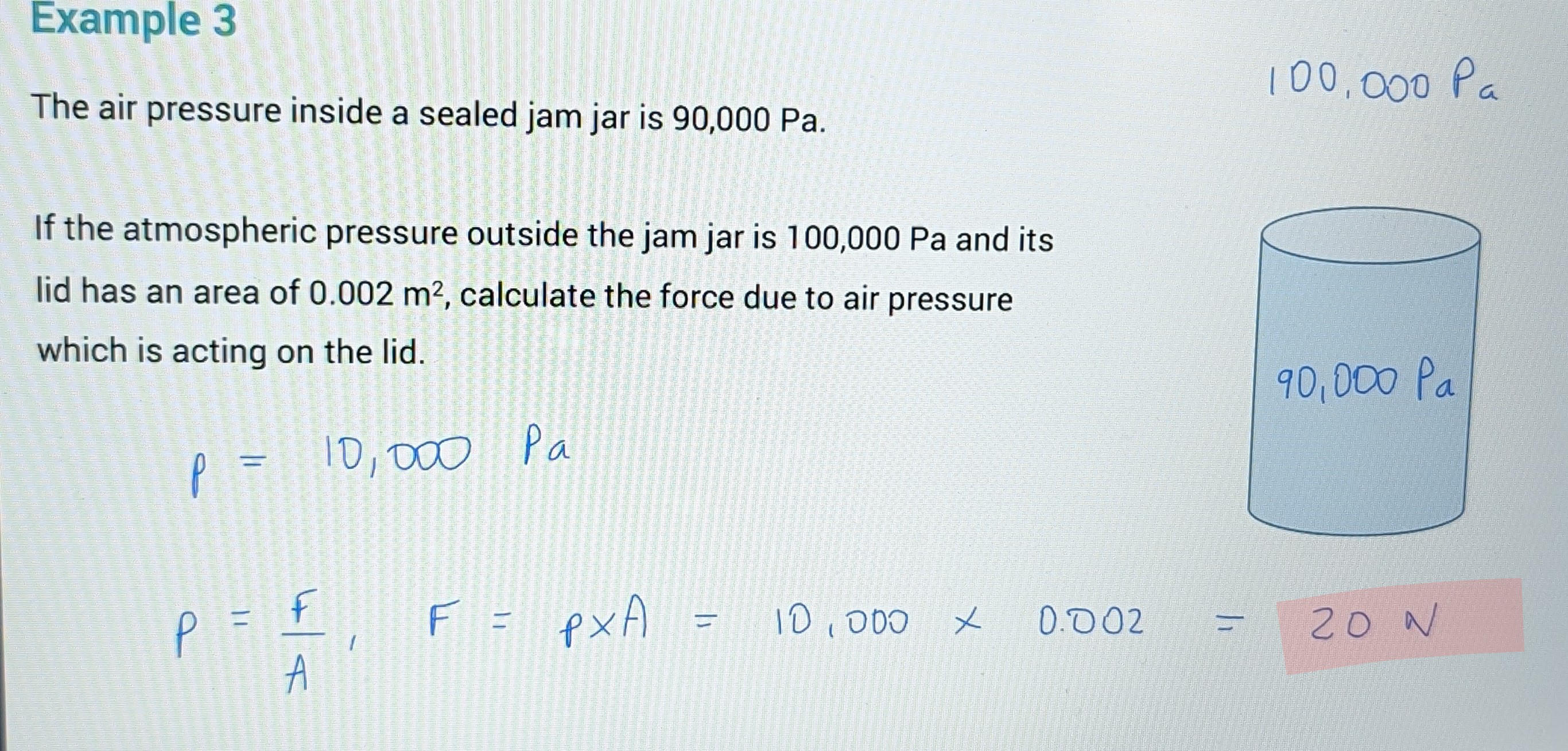
Why Atmospheric Pressure Decrease with Height?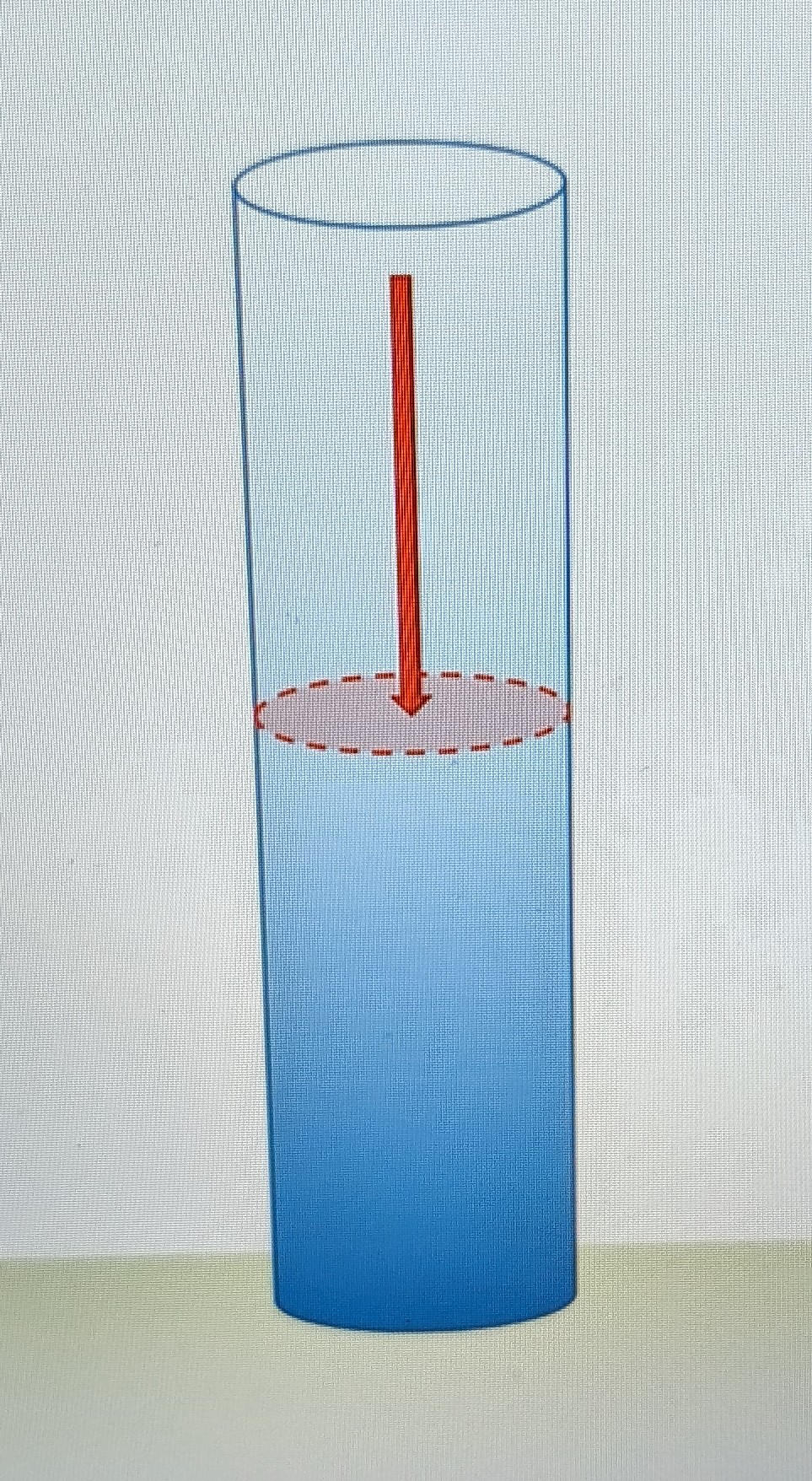
Due to Gravity Air Particles in Atmosphere Experience Force Downwards to Centre Earth
Pressure at Given Height is Caused by Weight of Particles Above
As Height increases Less Air Particles Above Pushing Down on Particles Below.
Air Pressure Decreases With Height.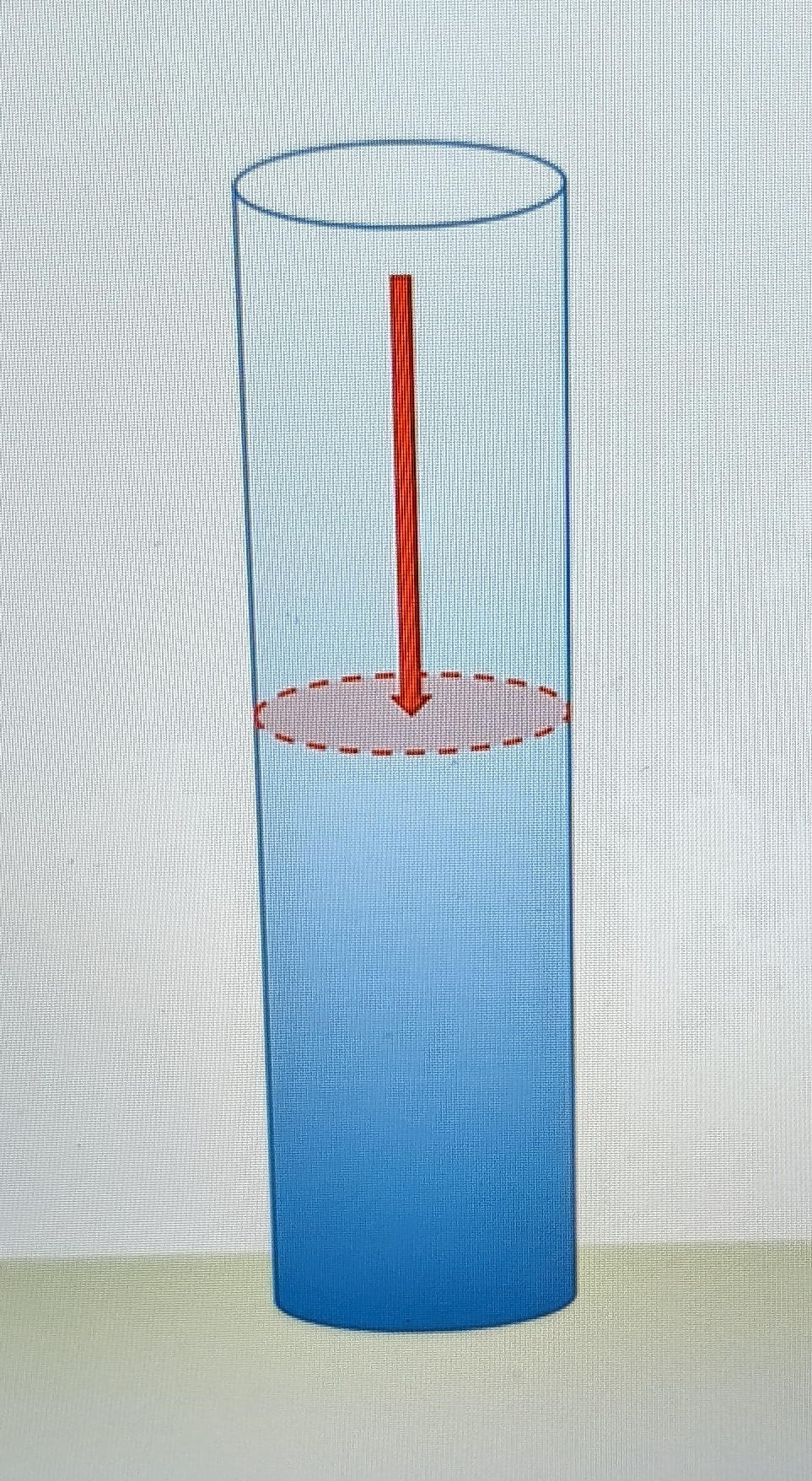
Pressure at Given Height is Caused by Weight of Particles Above
As Height increases Less Air Particles Above Pushing Down on Particles Below.
Air Pressure Decreases With Height.
100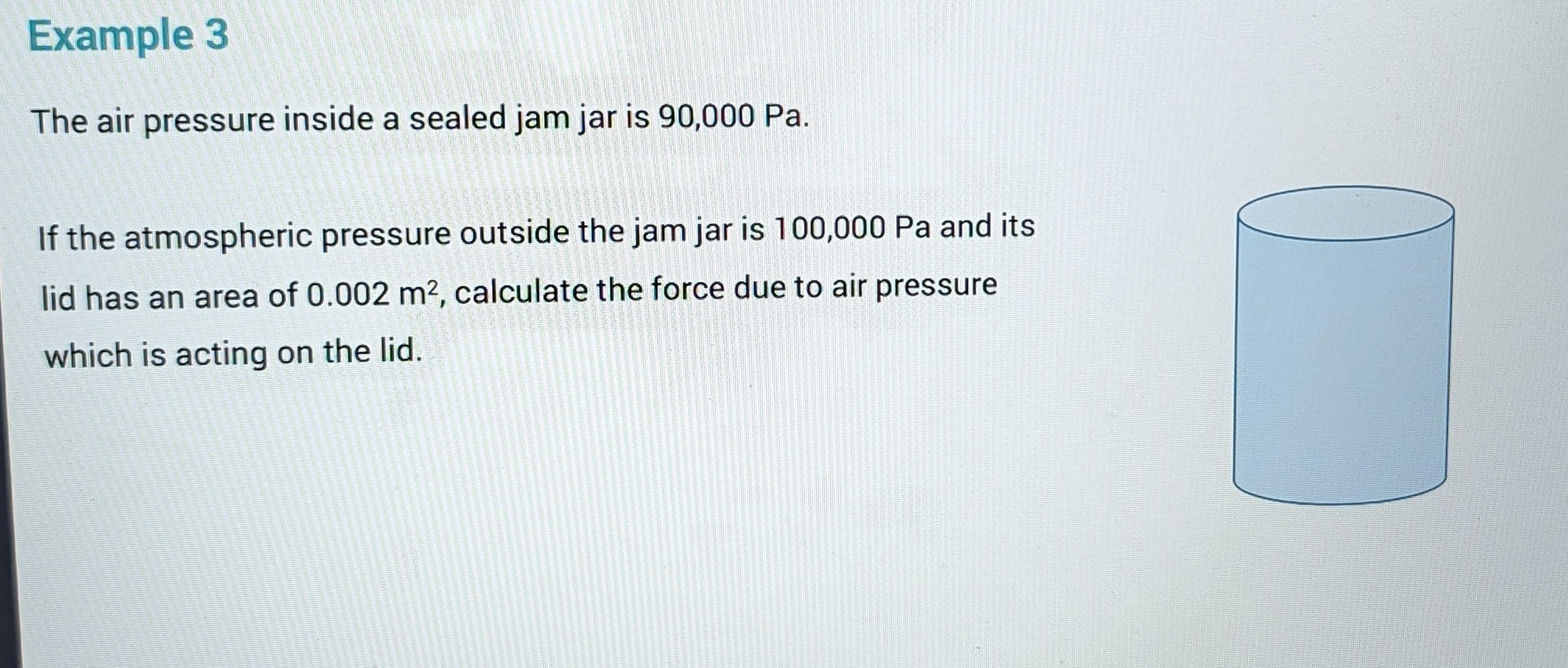
101
What is Displacement Vs to distance?
Displacement= how Far from Particular Point
Distance= how far
Distance= how far
102
What is Velocity Vs to Speed?
Velocity= How Fast in Given Direction
Speed= How Fast
Speed= How Fast
103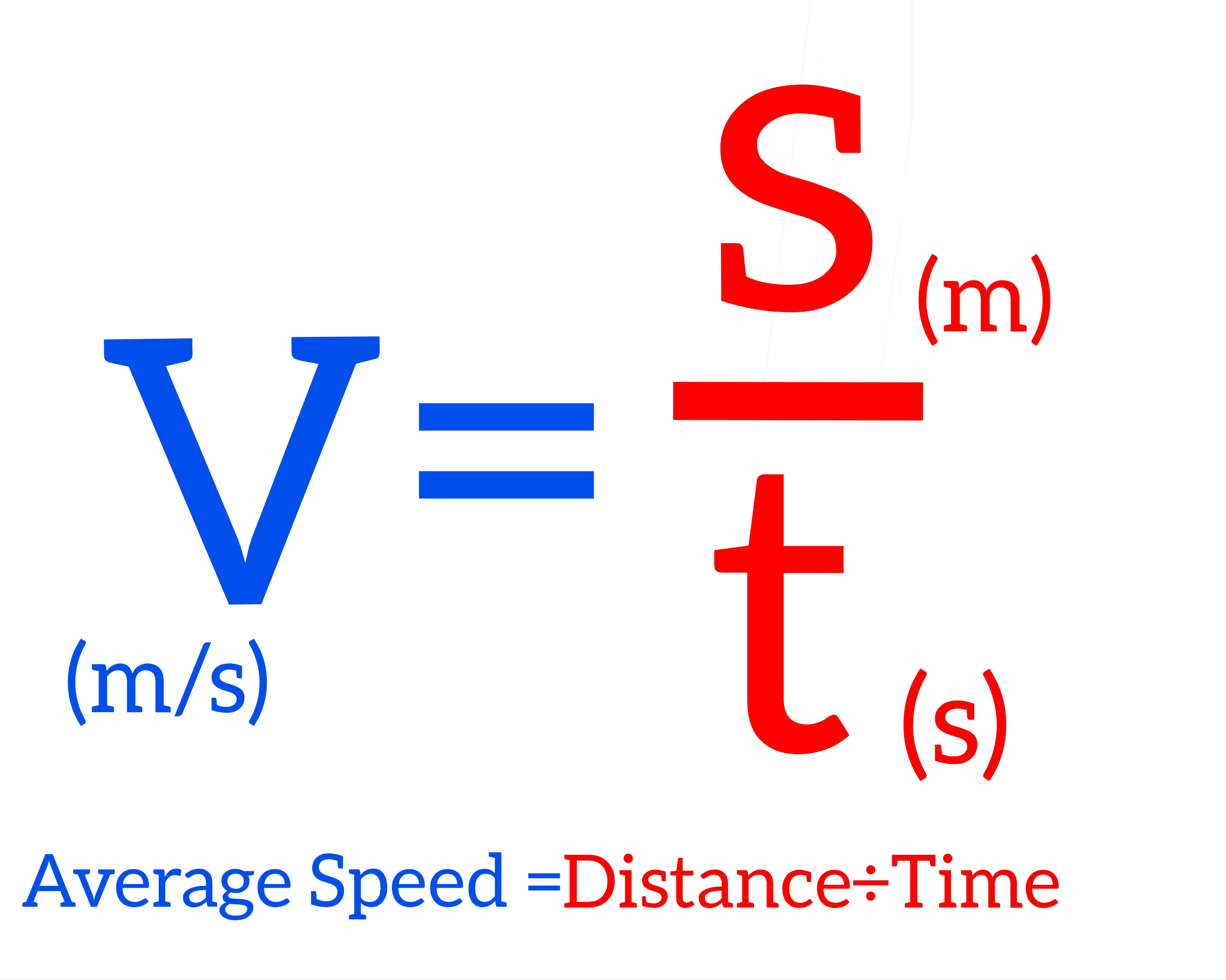
What is the Average Speed Equation & Units?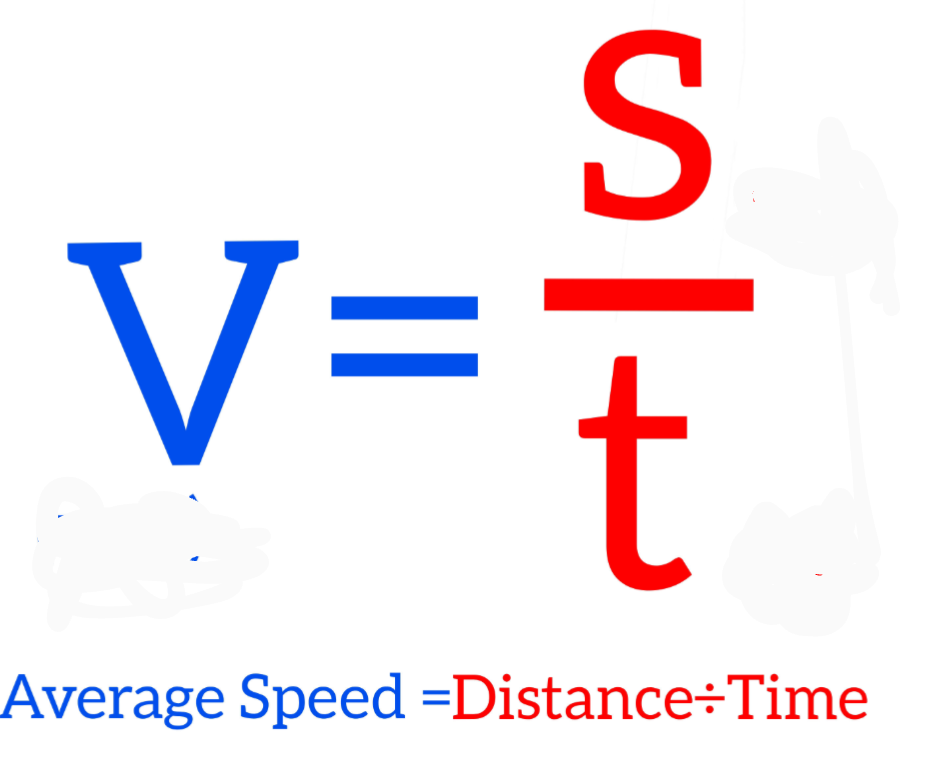
104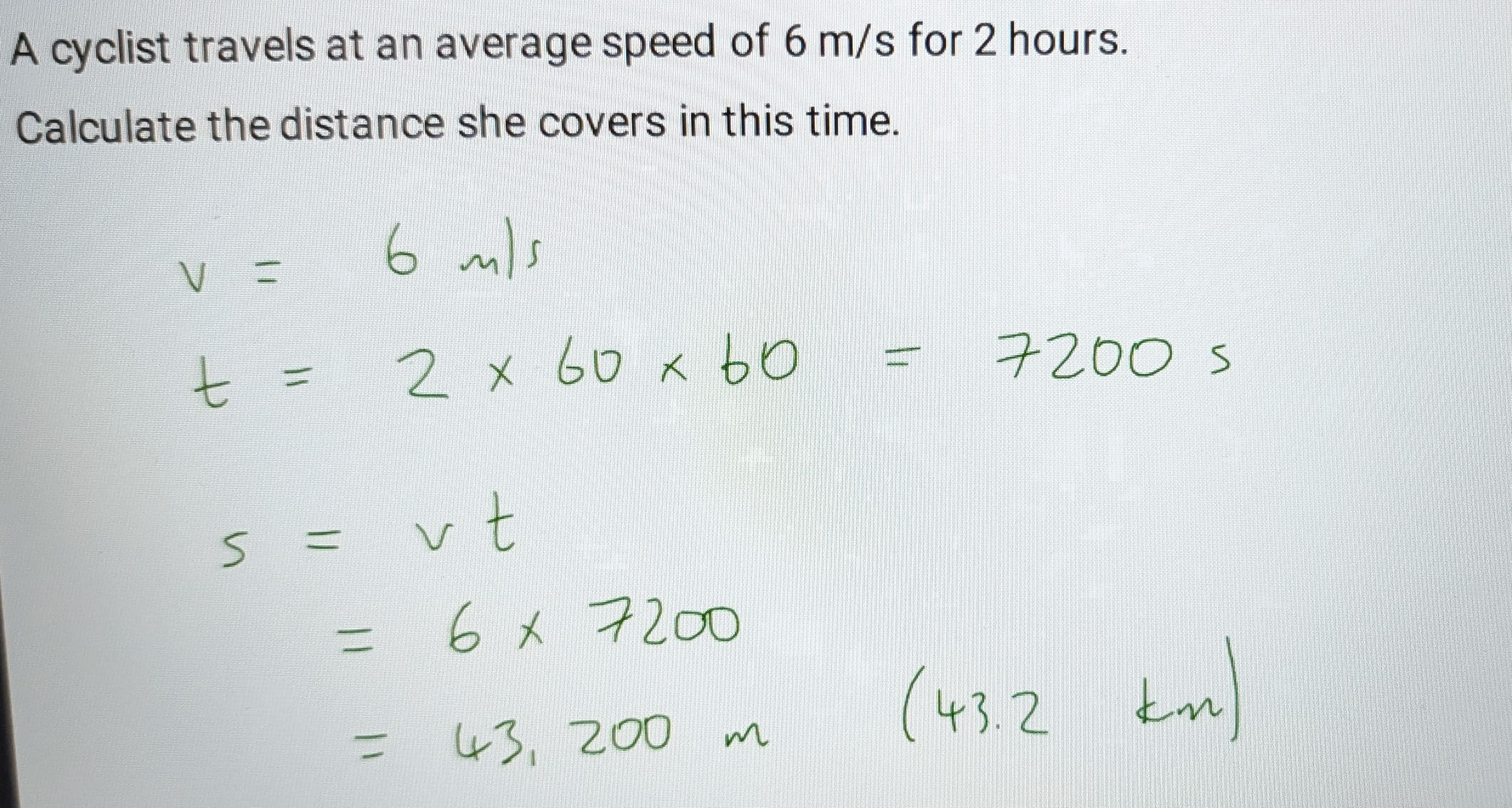
A cyclist travels at an average speed of 6 m/s for 2 hours.
Calculate the distance she covers in this time
Calculate the distance she covers in this time
105
106
What is the average for walking, running & cycling?
Walking= 1.5 m/s
Running= 3 m/s
Cycling= 6 m/s
Running= 3 m/s
Cycling= 6 m/s
107
What do Typical Values of Speed depend on?
• Age
• Fitness
• Terrain
• Distance
• Fitness
• Terrain
• Distance
108
What is the Velocity Law when in Motion in a Circle?
When Object at Steady Speed in Circular Path it's Velocity Constantly Changing because Direction of Motion Changing.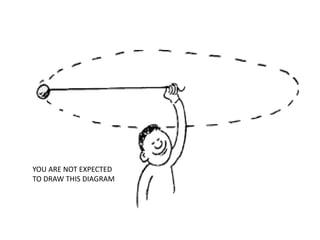
109
Write down an example of an Object Which is Traveling at Constant Speed with a Constantly Changing Velocity?
Ball attached to a String Swung Around in a Horizontal Circle at Constant Speed.
110
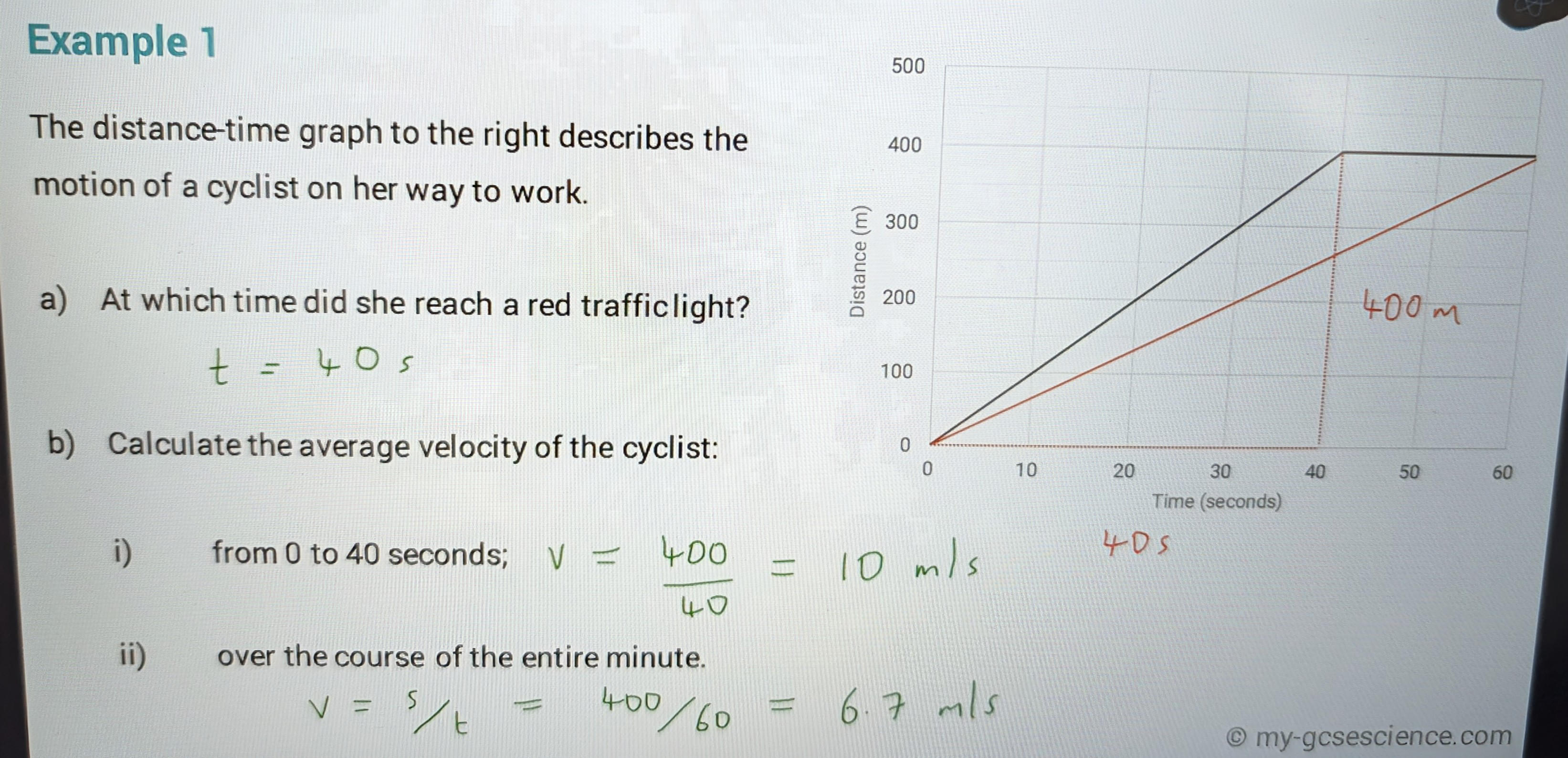
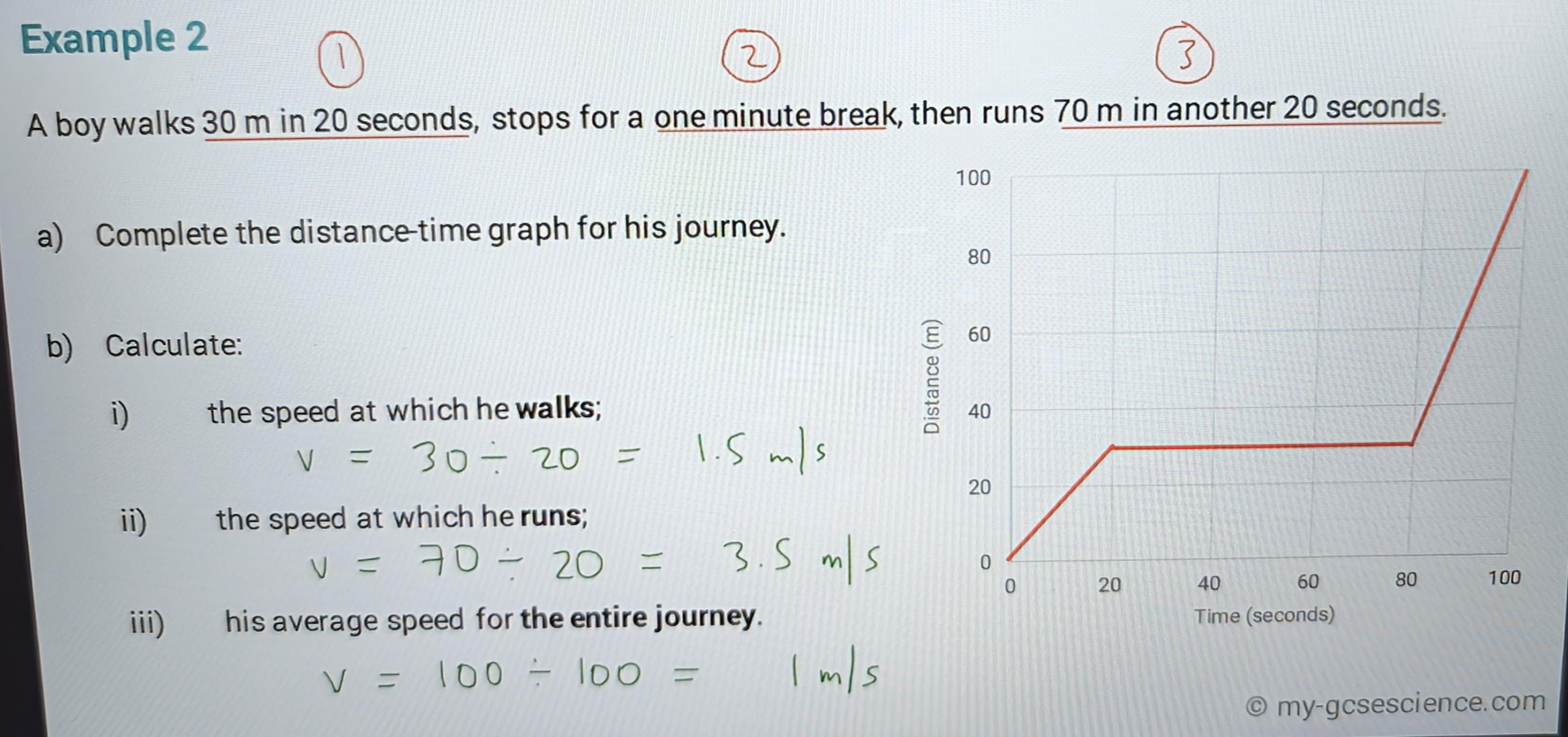
How can you Calculate the Speed of an Object from a Distance Time Graph?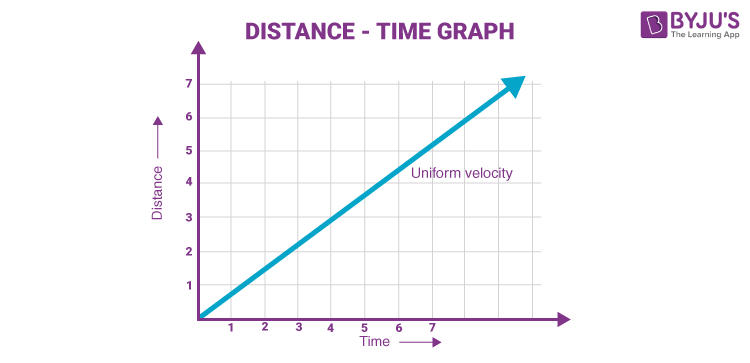
From it's Gradient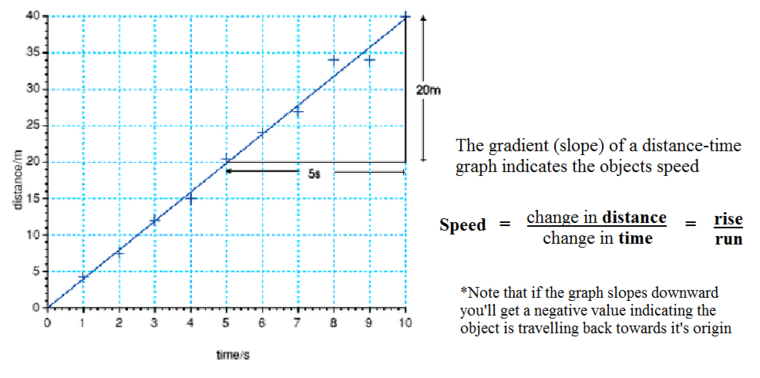
111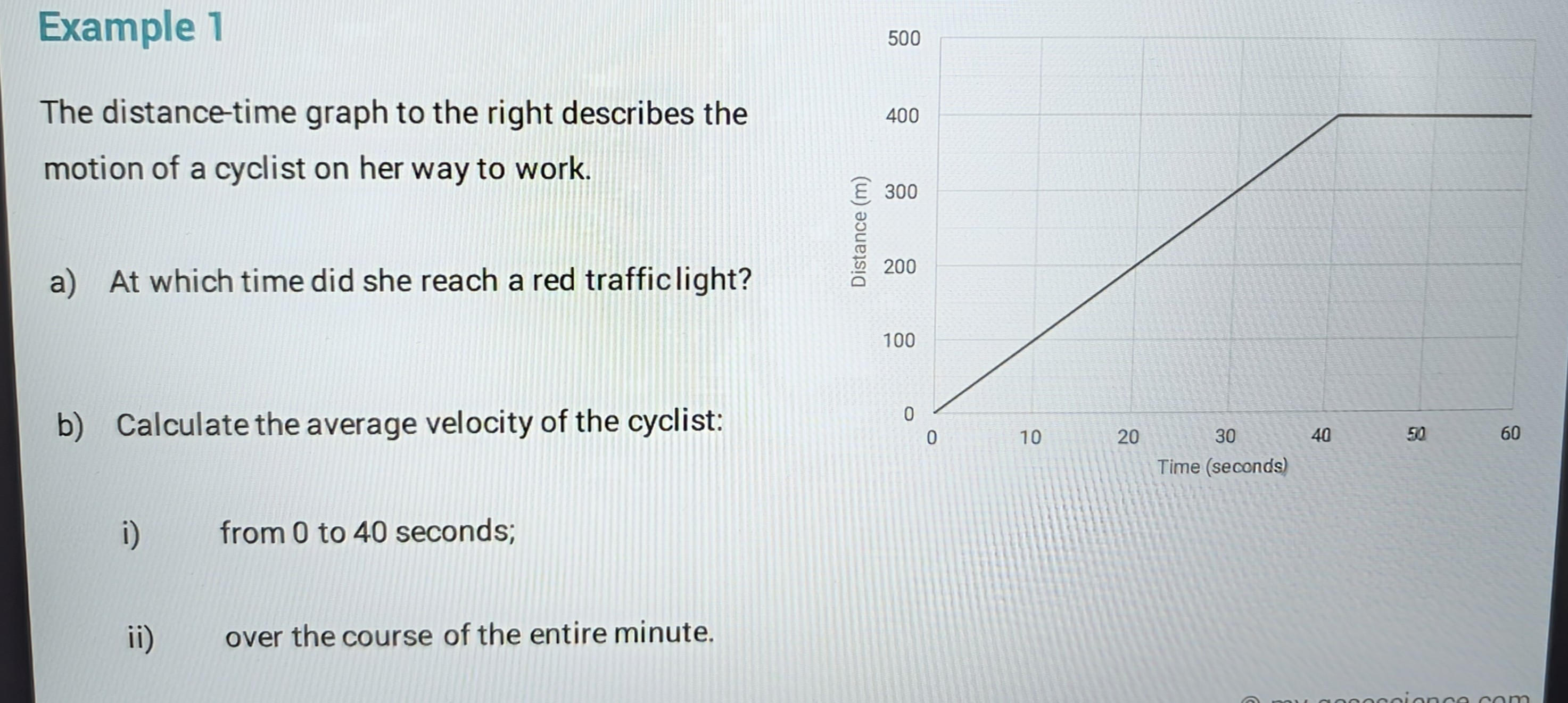
112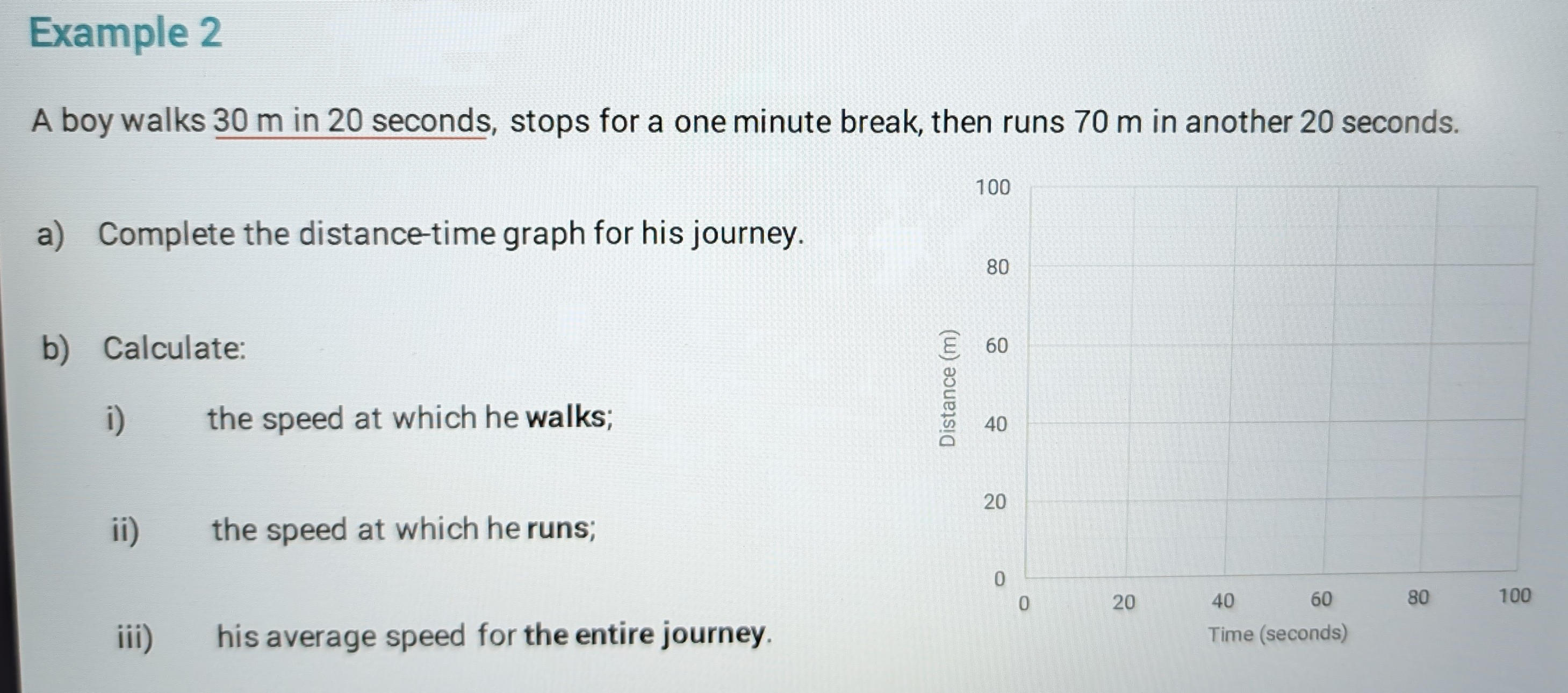
113
Define Uniform Acceleration
Velocity Increasing at Constant Rate
114
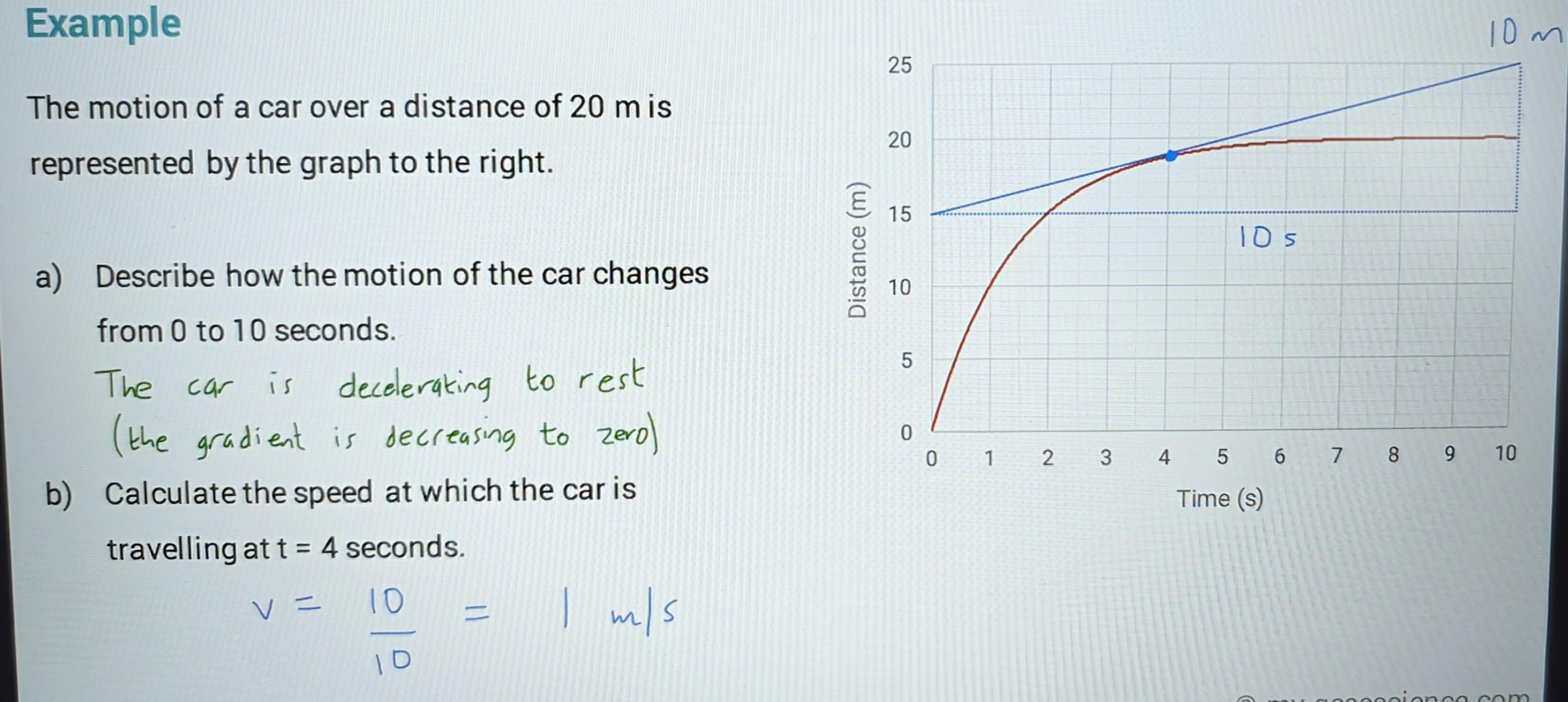
How to Calculate the Speed of an Object when it is Accelerating from Particular Time in Distance Time Graph?
• Draw Tangent to the Line at that Time
• Measure Gradient of Tangent
• Measure Gradient of Tangent
115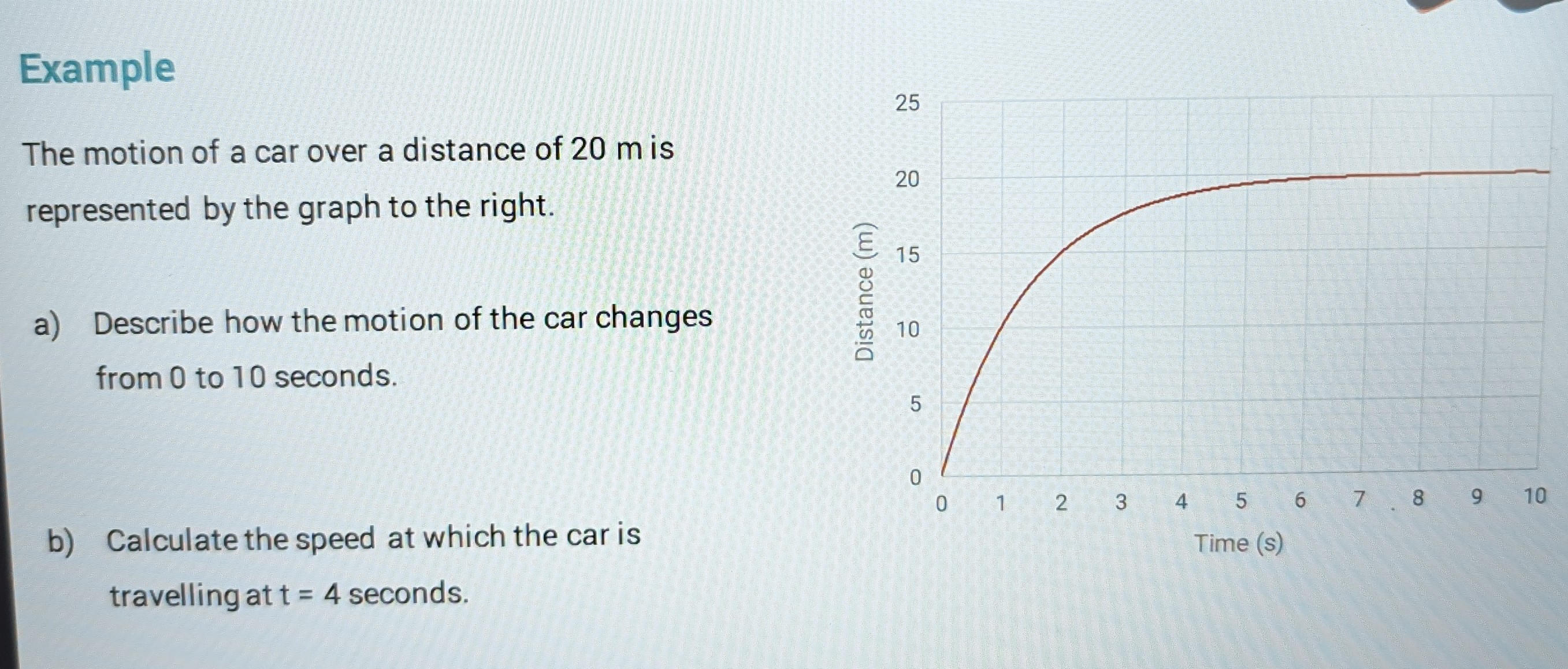
116
An Object is at Rest what will the Distance Time Graph?
Horizontal Line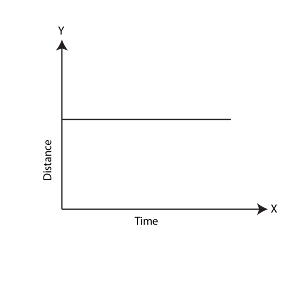
117
An Object Accelerates Conformally from Rest. what will its Distance Time Graph Look Like?
It will be a Curve of Increasing Positive Gradient Which gets Steeper as Time increases.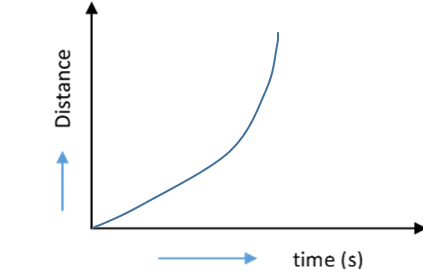
118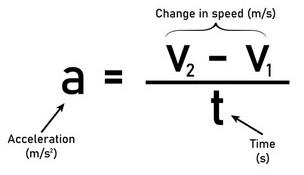
What is the First Acceleration Equation & units?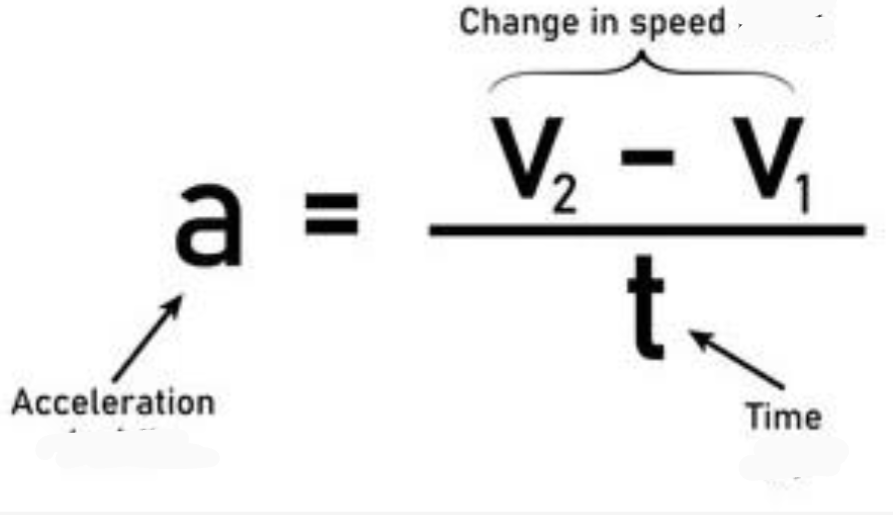
119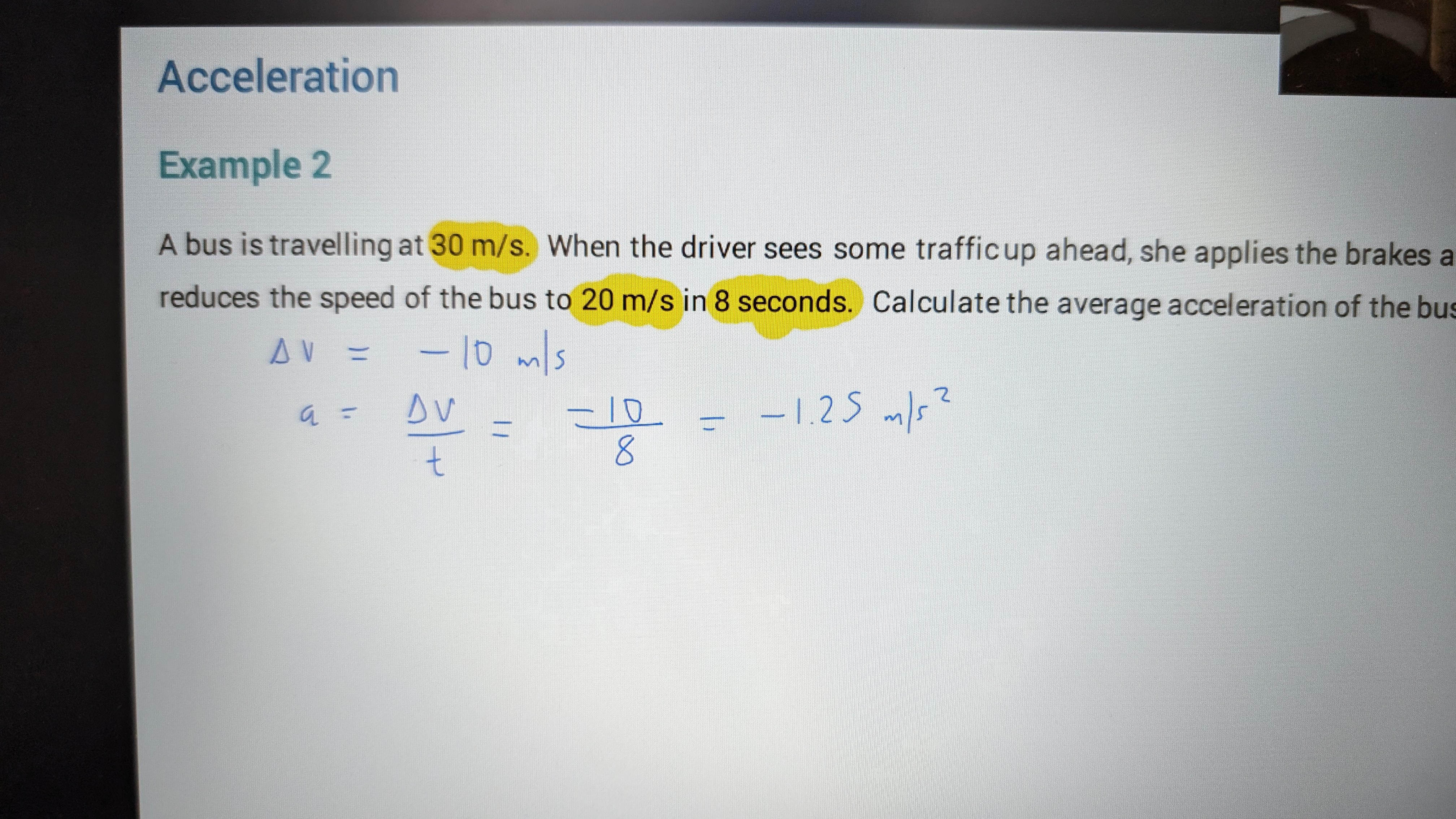
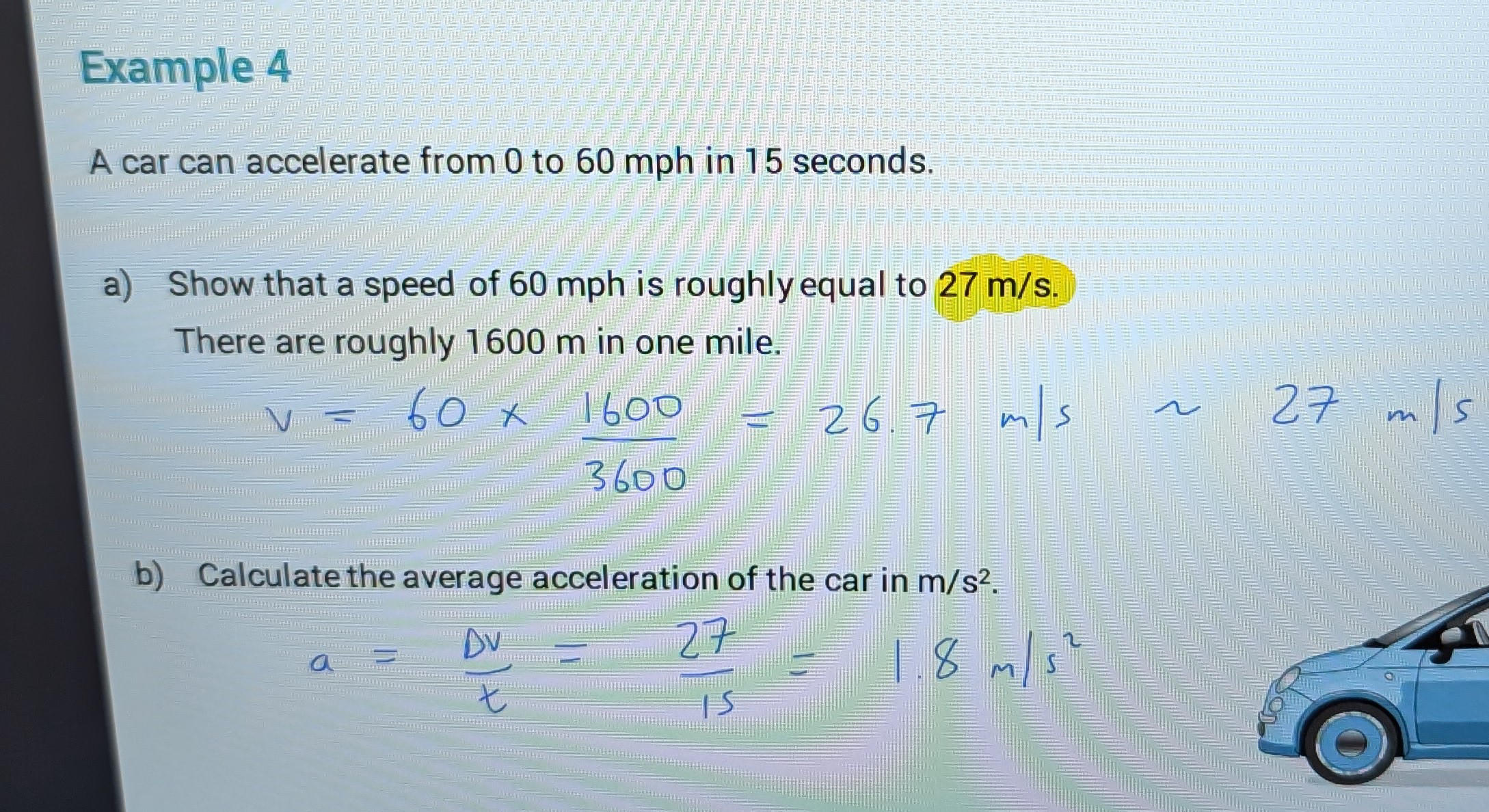
A bus is travelling at 30 m/s. When the driver sees some trafficup ahead, she applies the brakes and reduces the speed of the bus to 20 m/s in 8 seconds. Calculate the average acceleration of the bus.
120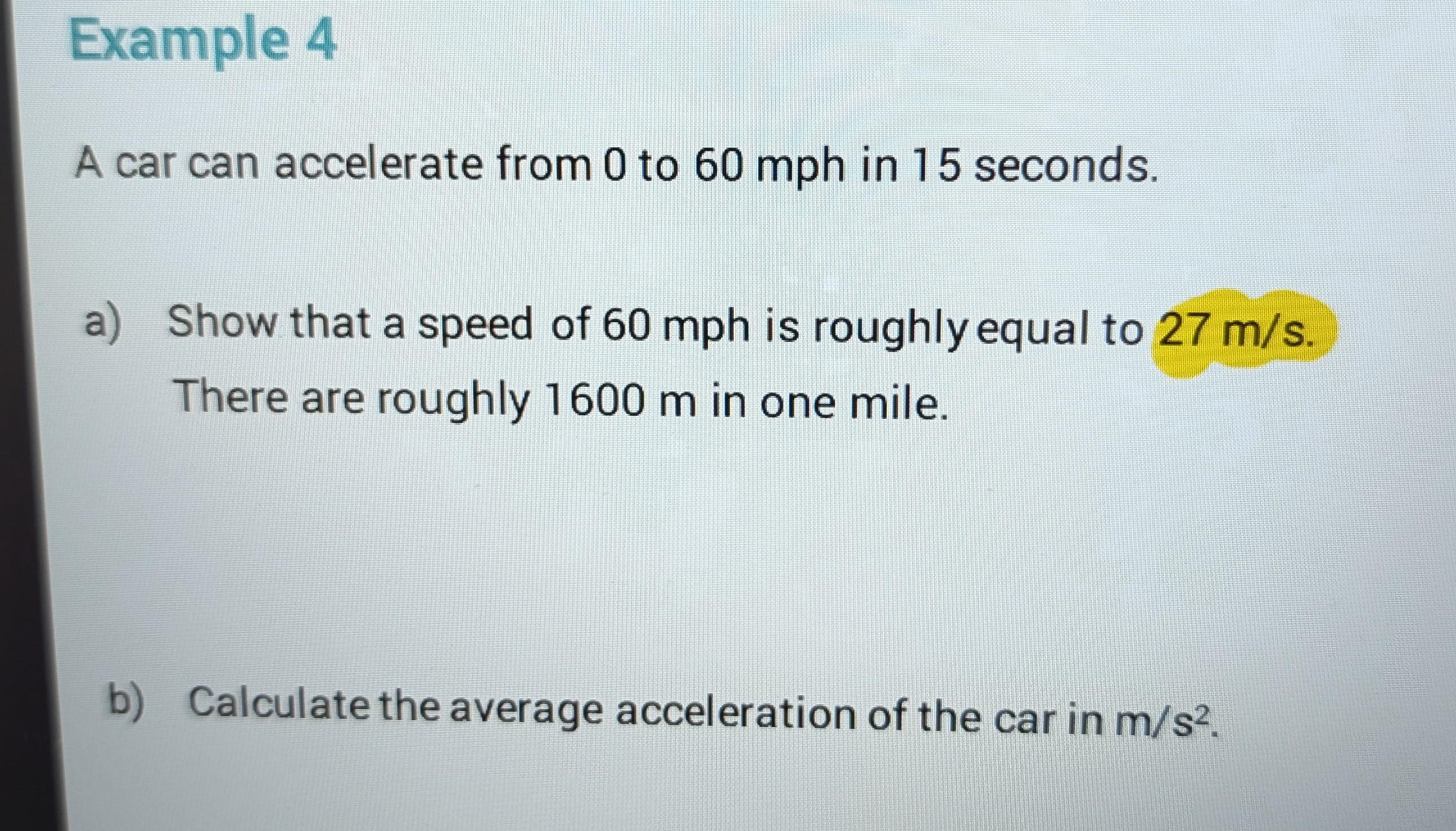
121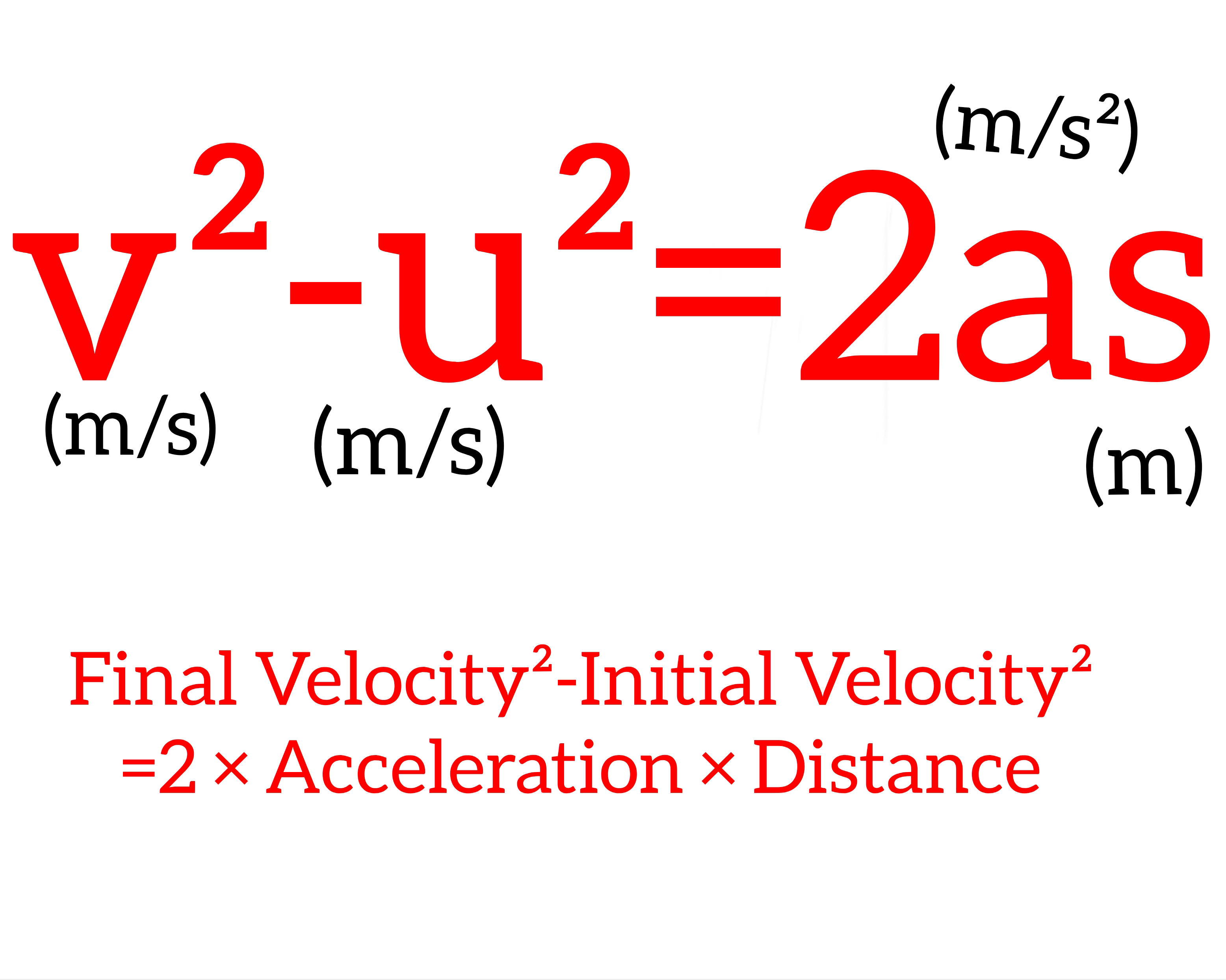
What is the second Acceleration Equation and Units?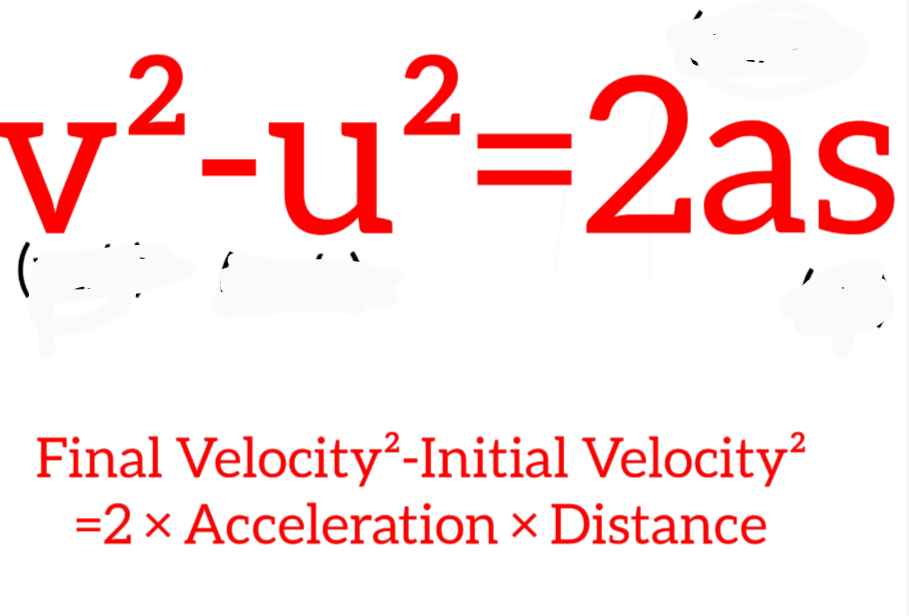
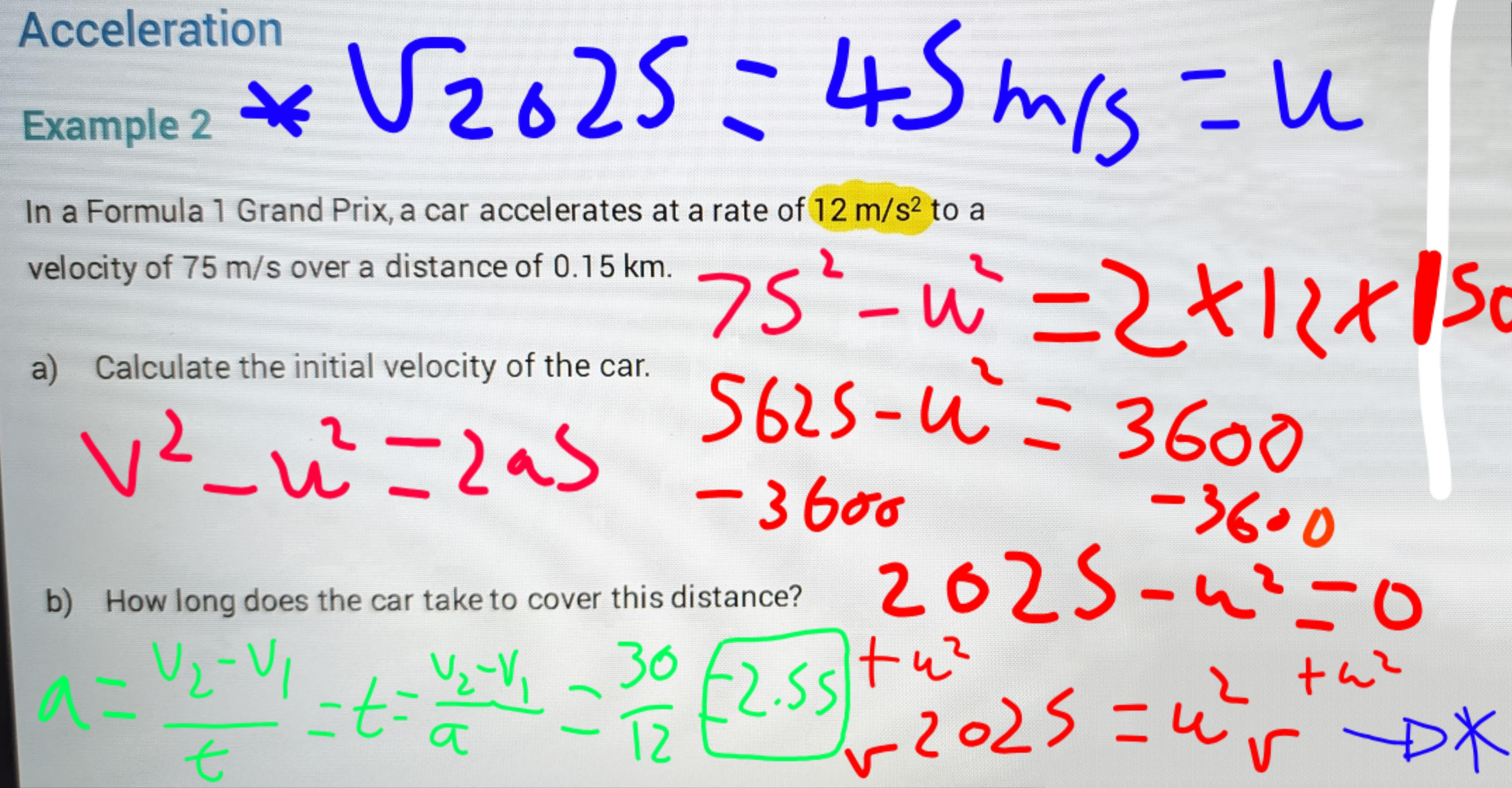
122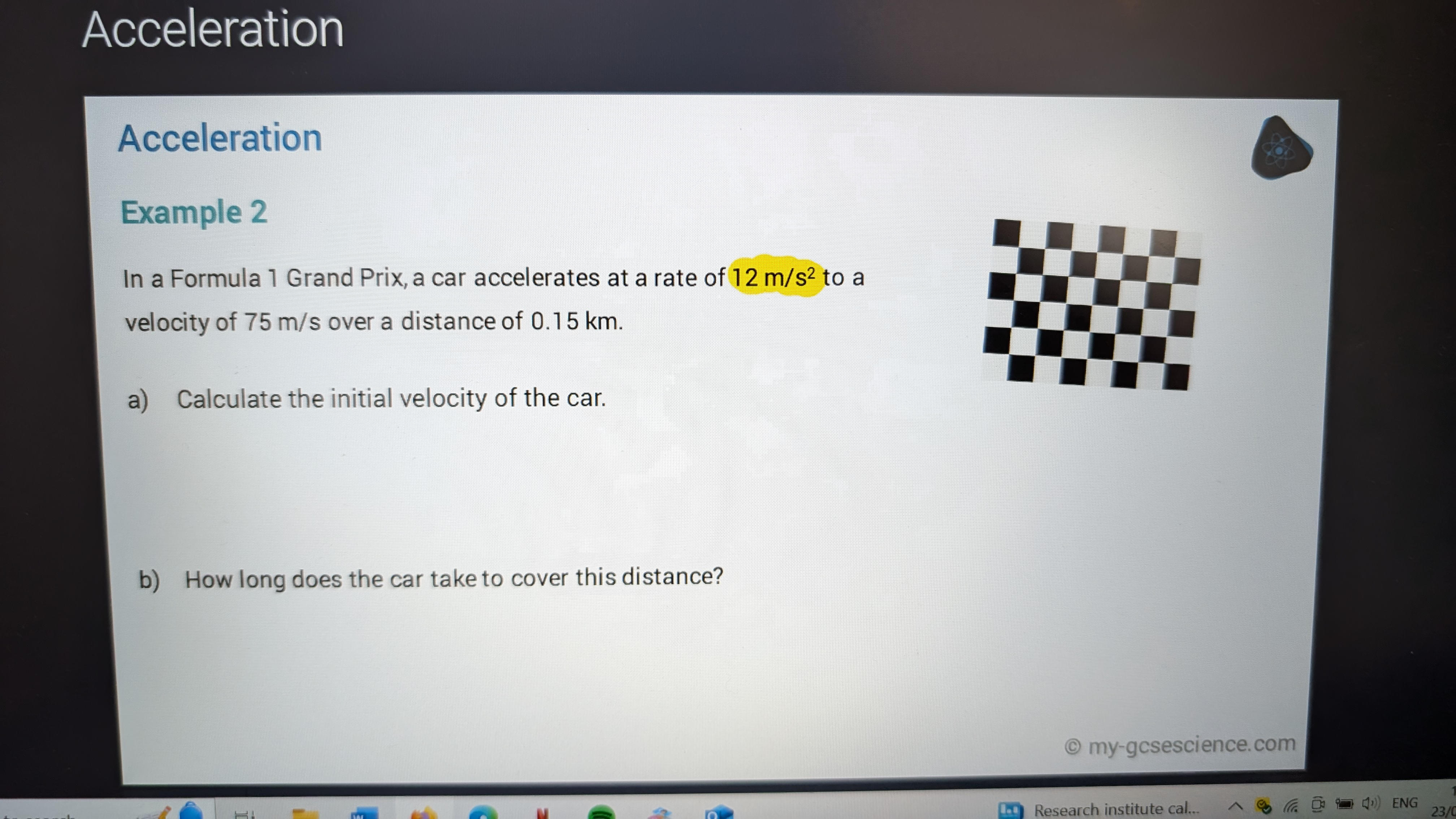
123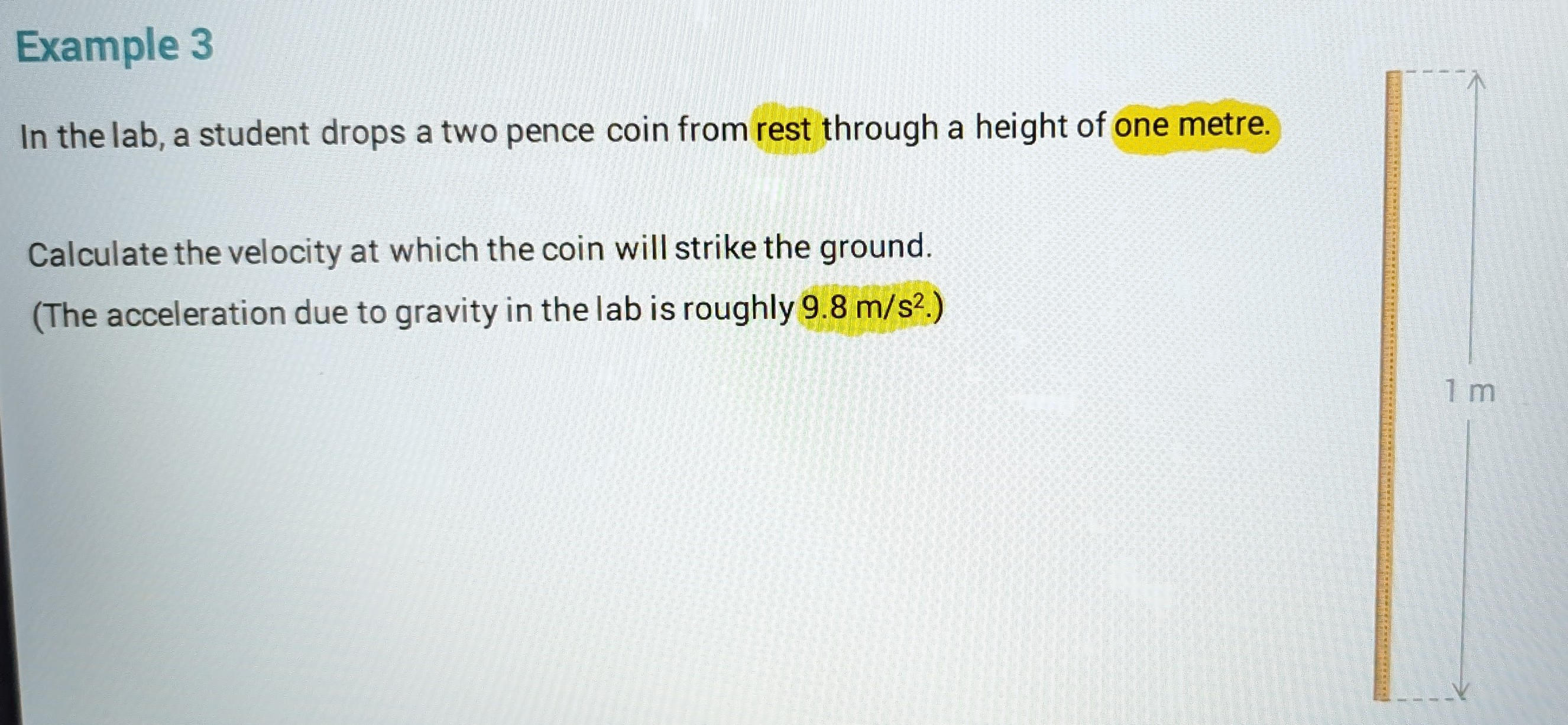
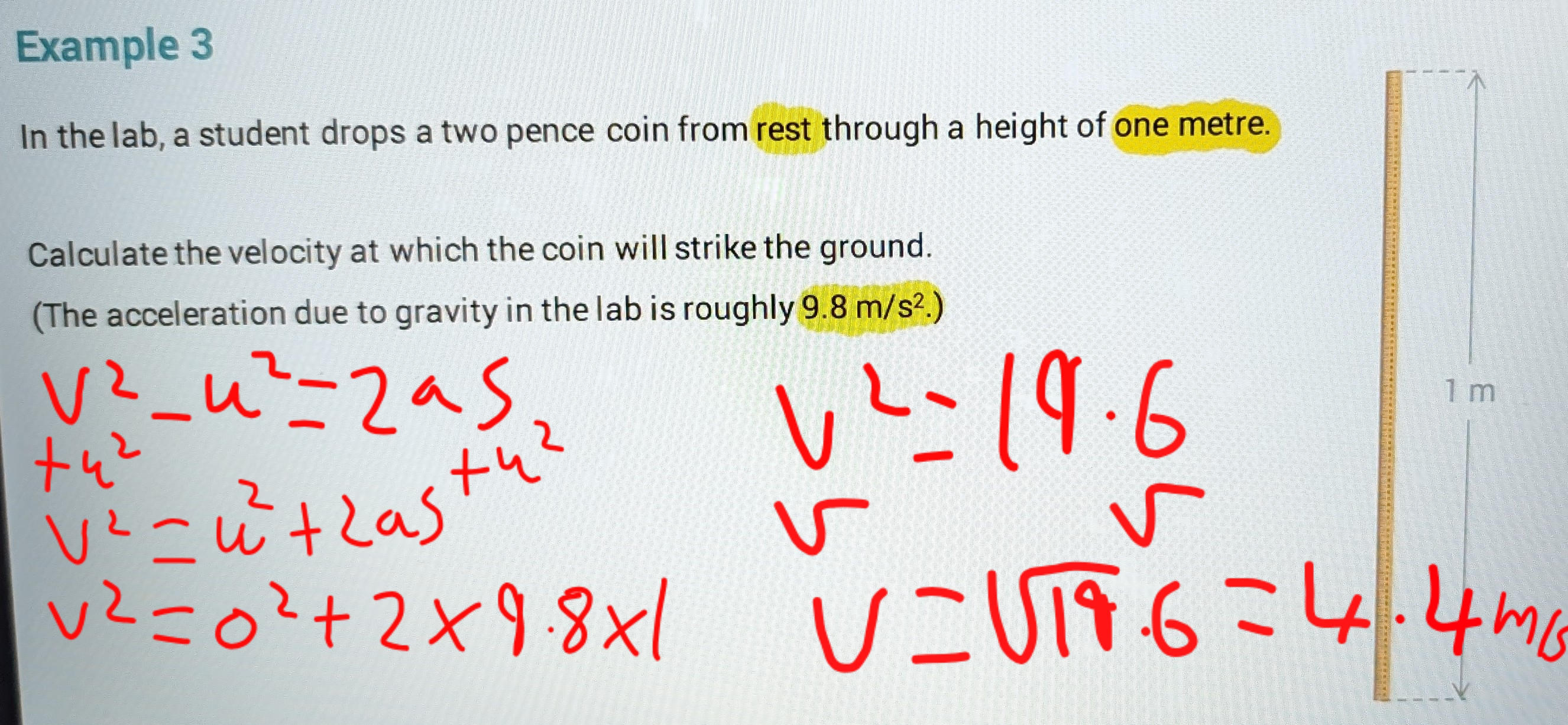
124
The Gradient of a Velocity Time Graph at a Given Point in Time is Equal to What?
Acceleration
125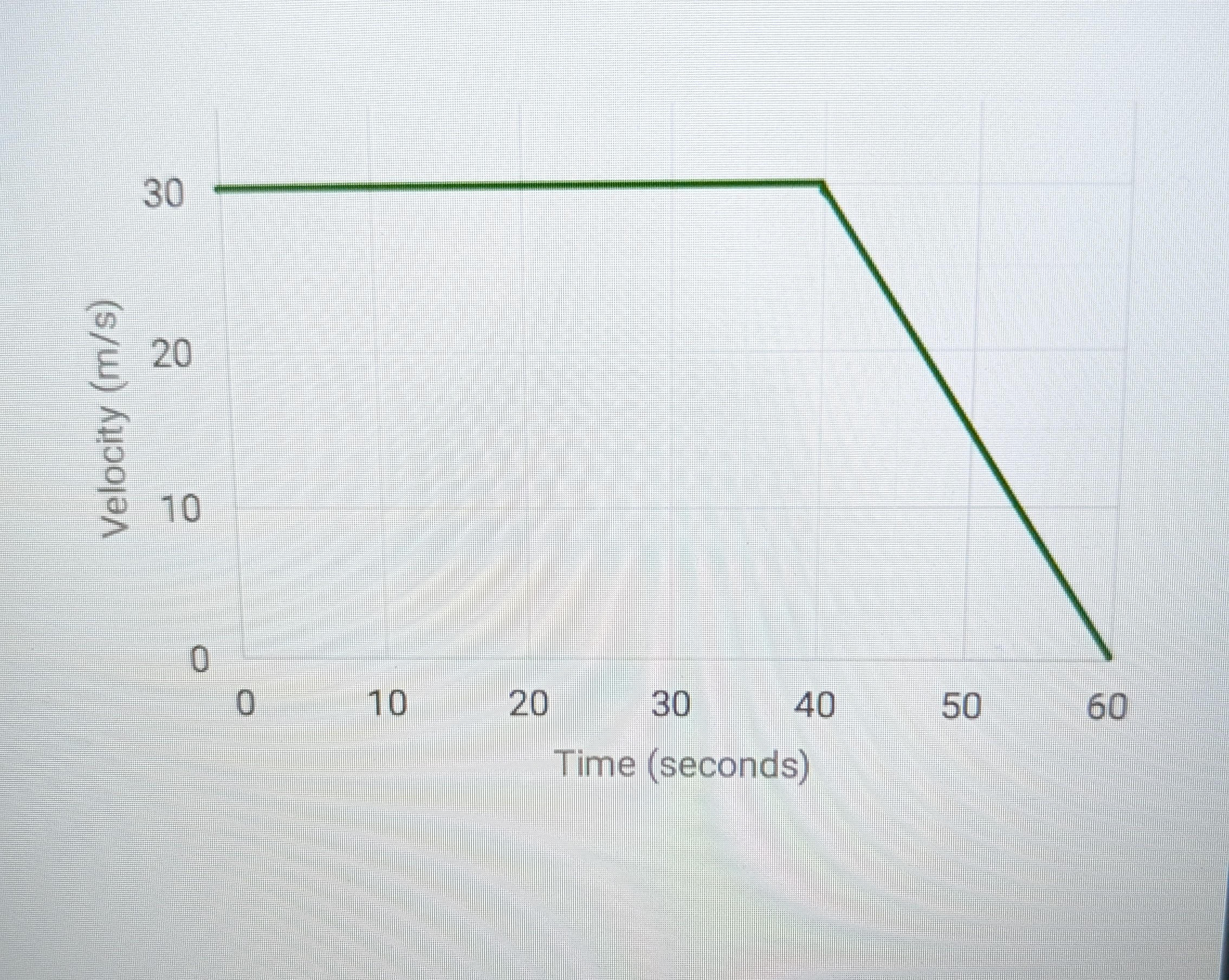
Do part A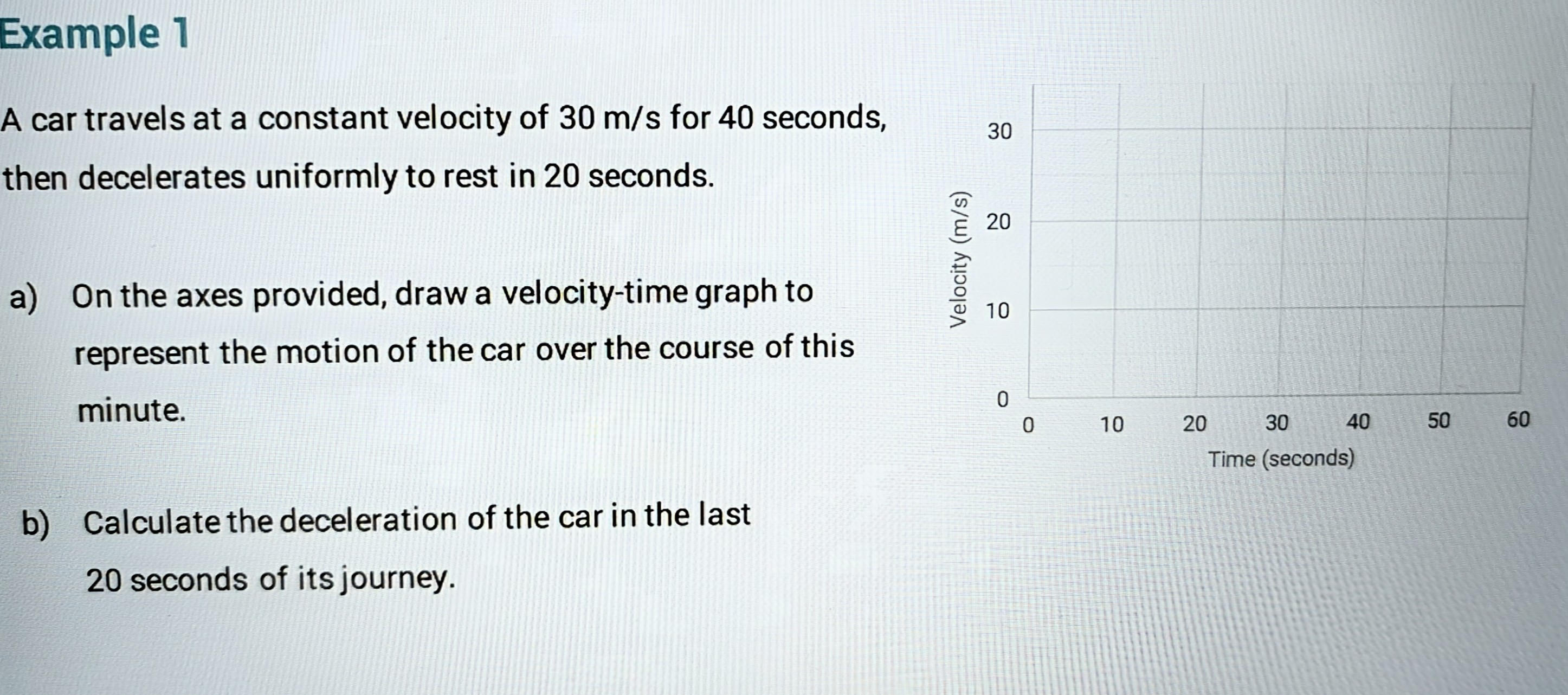
126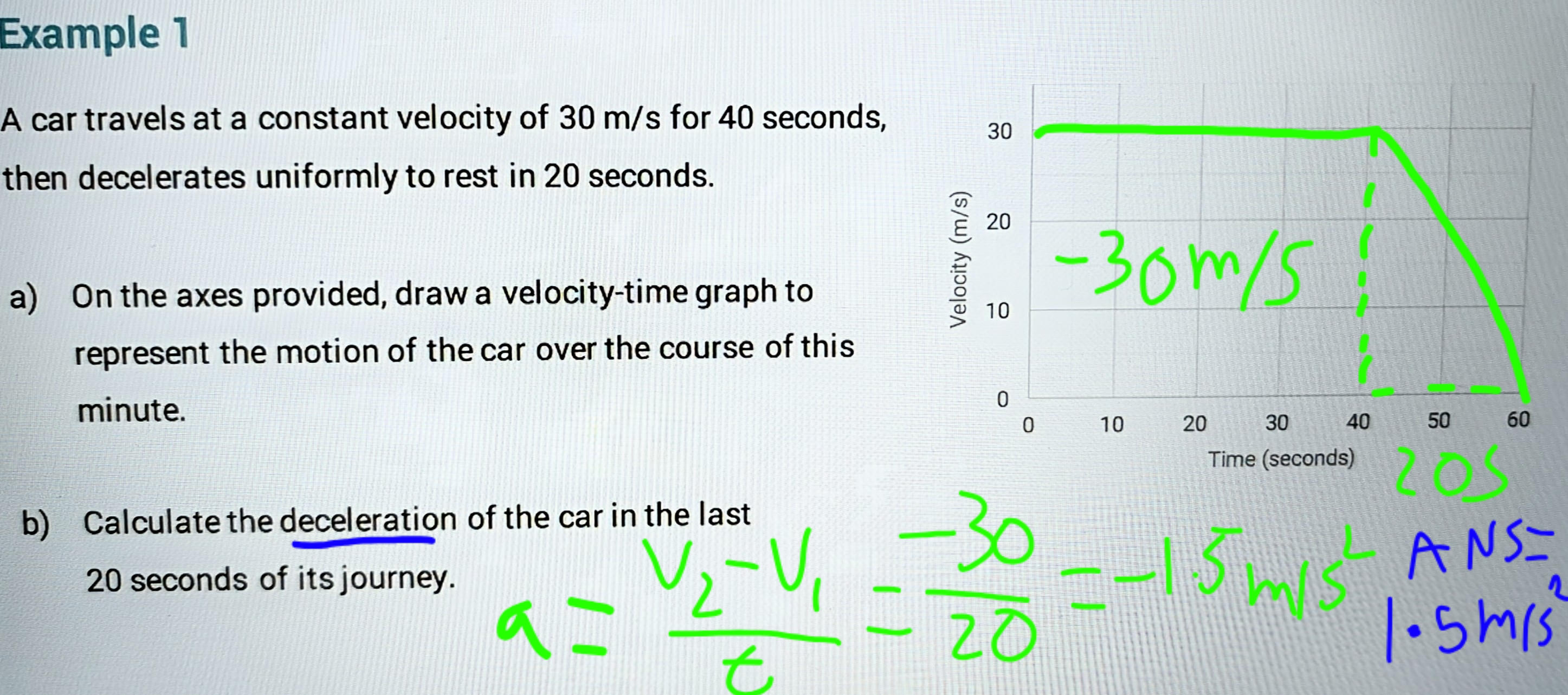
Do part B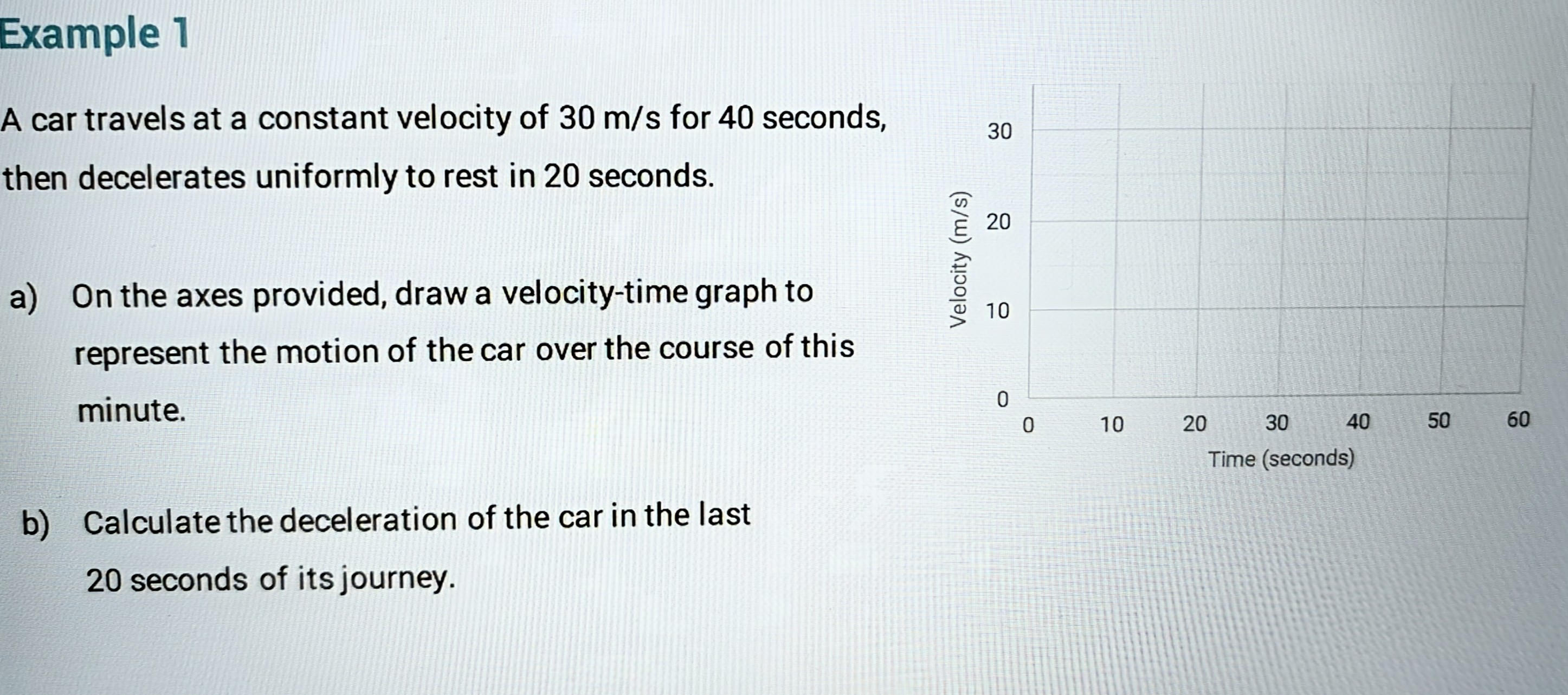
127
What is Negative Acceleration the Same as?
Deceleration
128
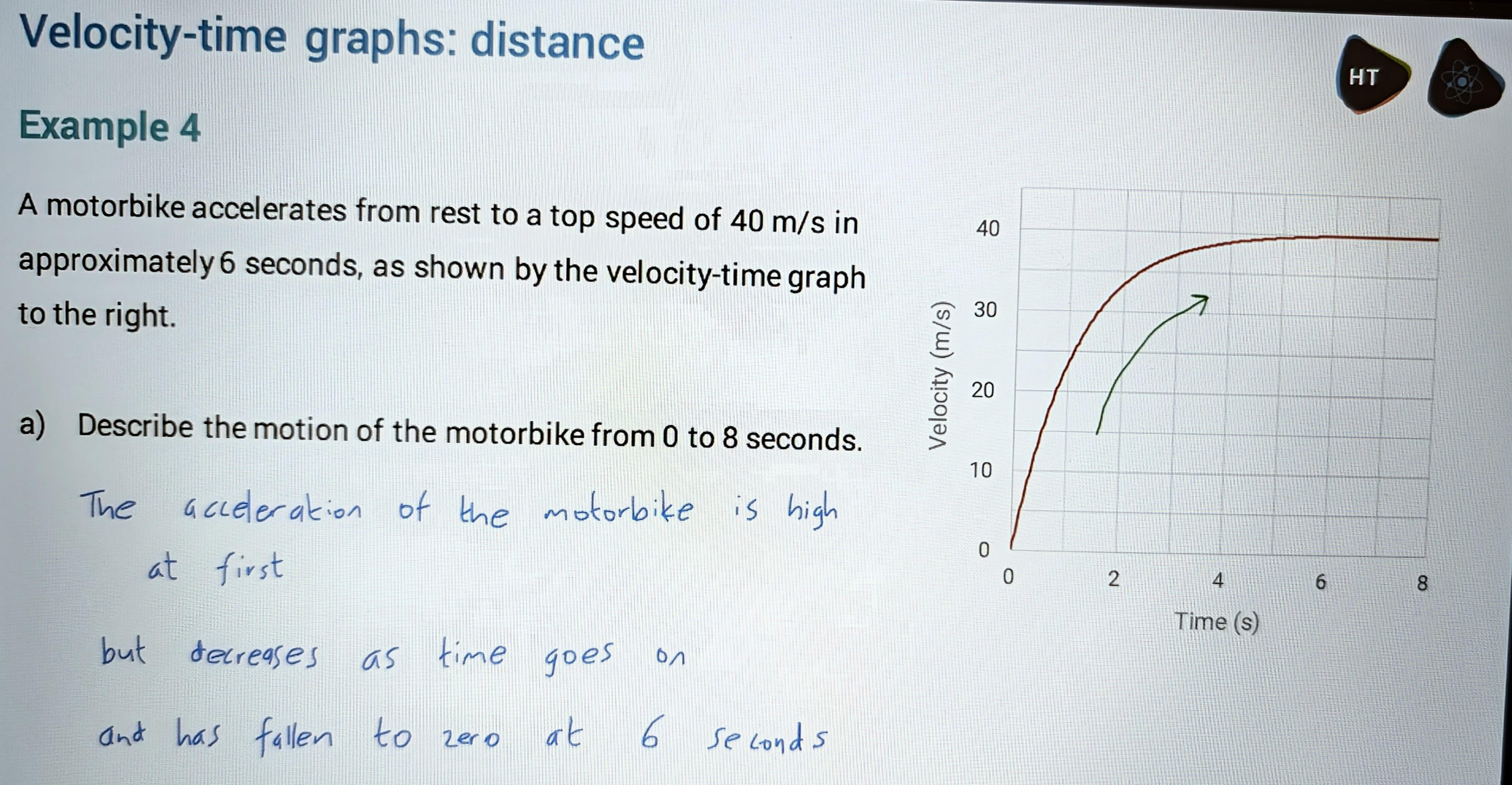
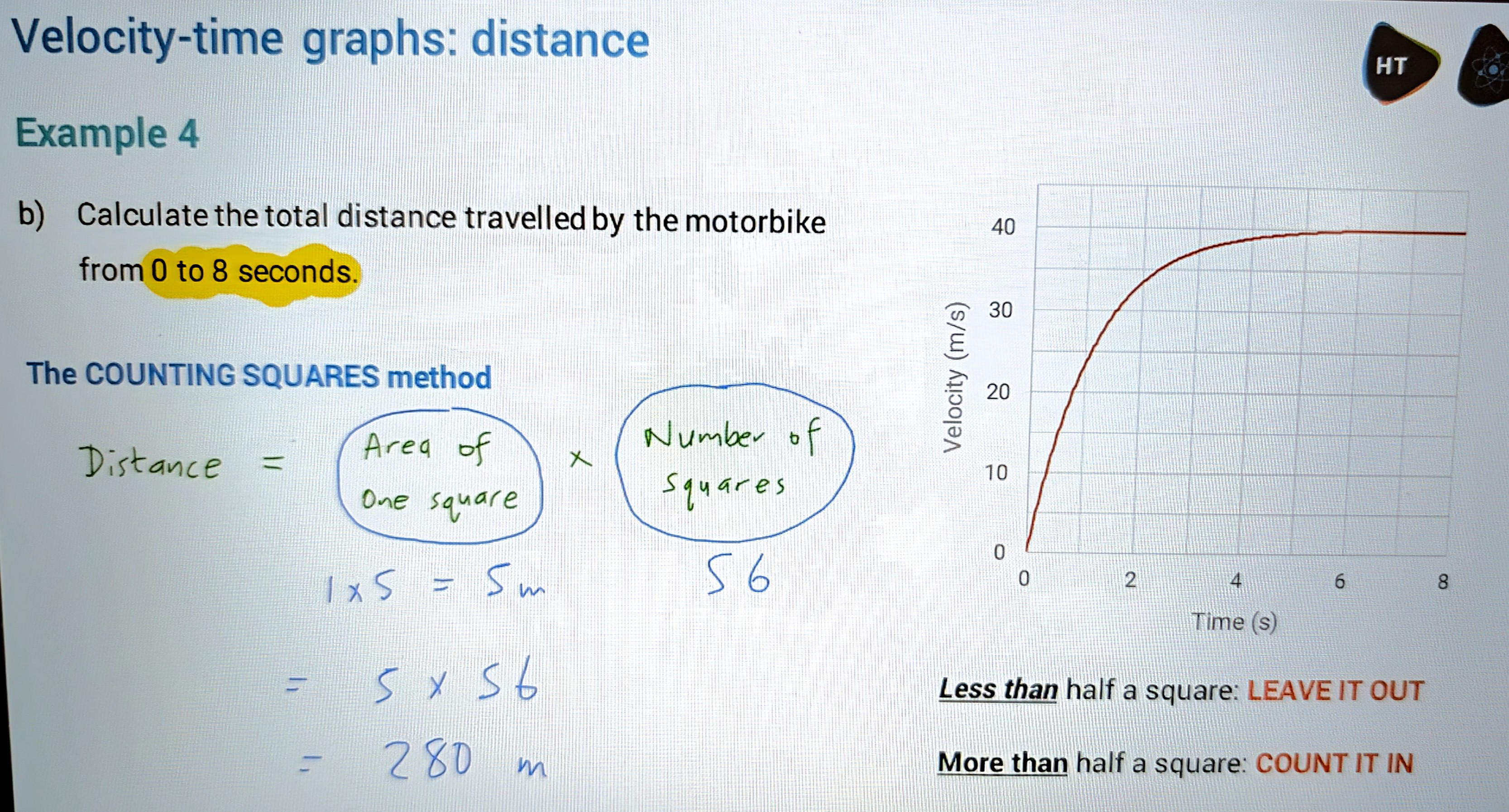
What Gives the Total Distance Travelled by an Object from its Velocity Time Graph?
Area Under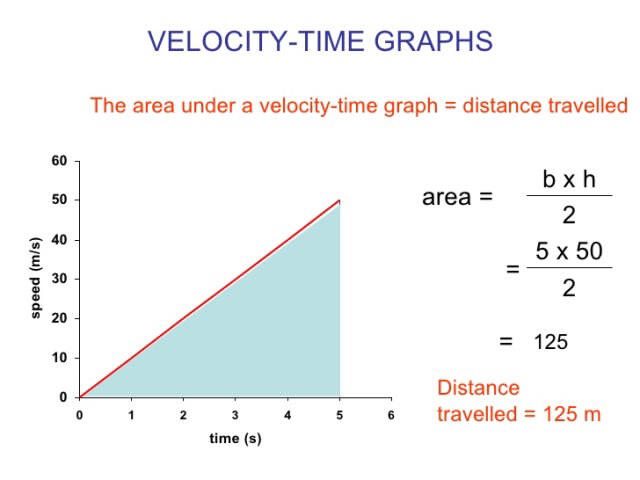
129
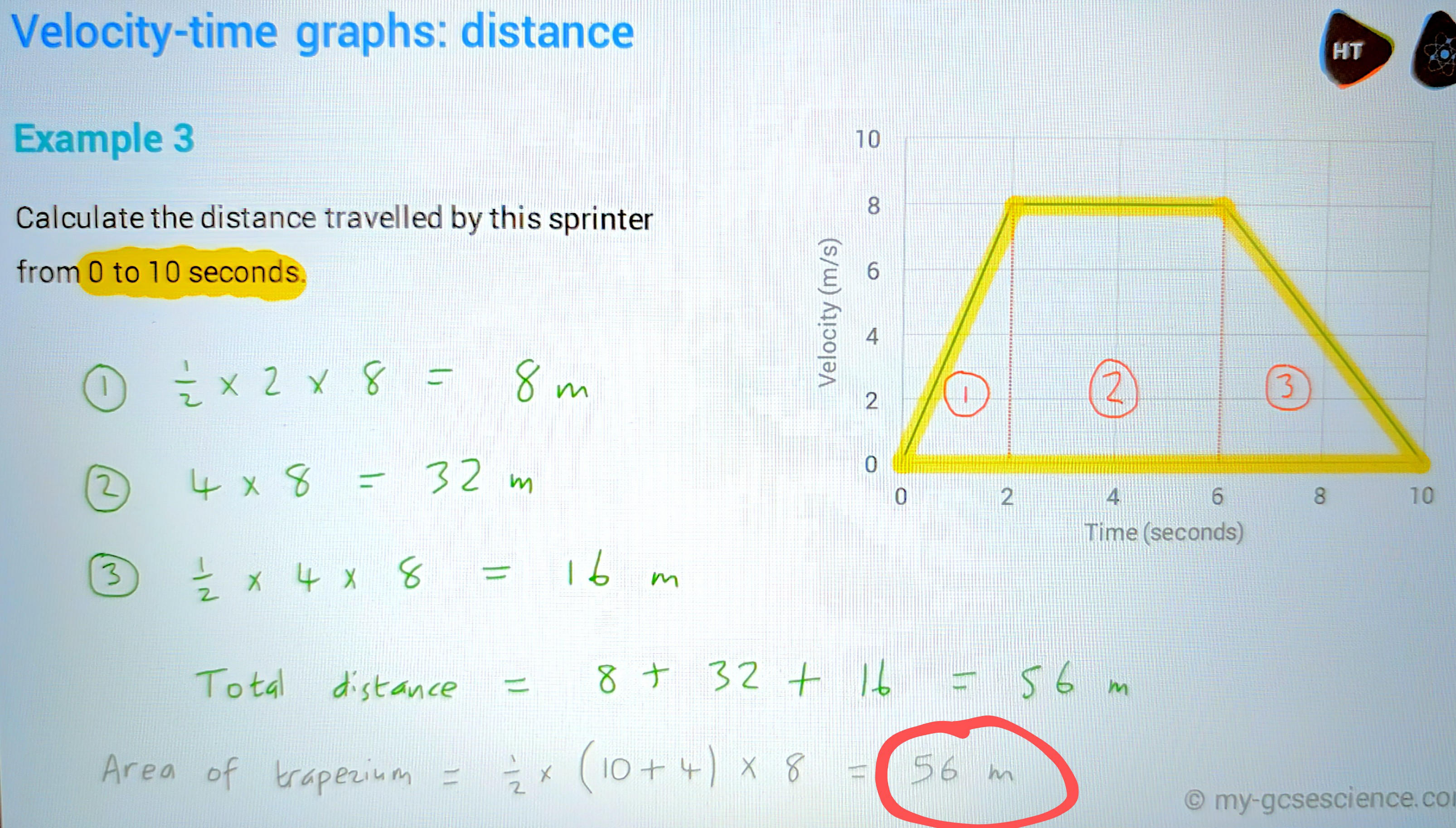
What are the Two Methods for Working out the Distance using Velocity Time Graph?
Working out the Area by Splitting into Triangles and Squares
or
Counting Square Method
or
Counting Square Method
130
What are the Rules for the Counting Square Method
Distance= Area Of 1 Square × Number of Squares
Less Than Half Square: LEAVE OUT
More Than Half Square: COUNT IN
Less Than Half Square: LEAVE OUT
More Than Half Square: COUNT IN
131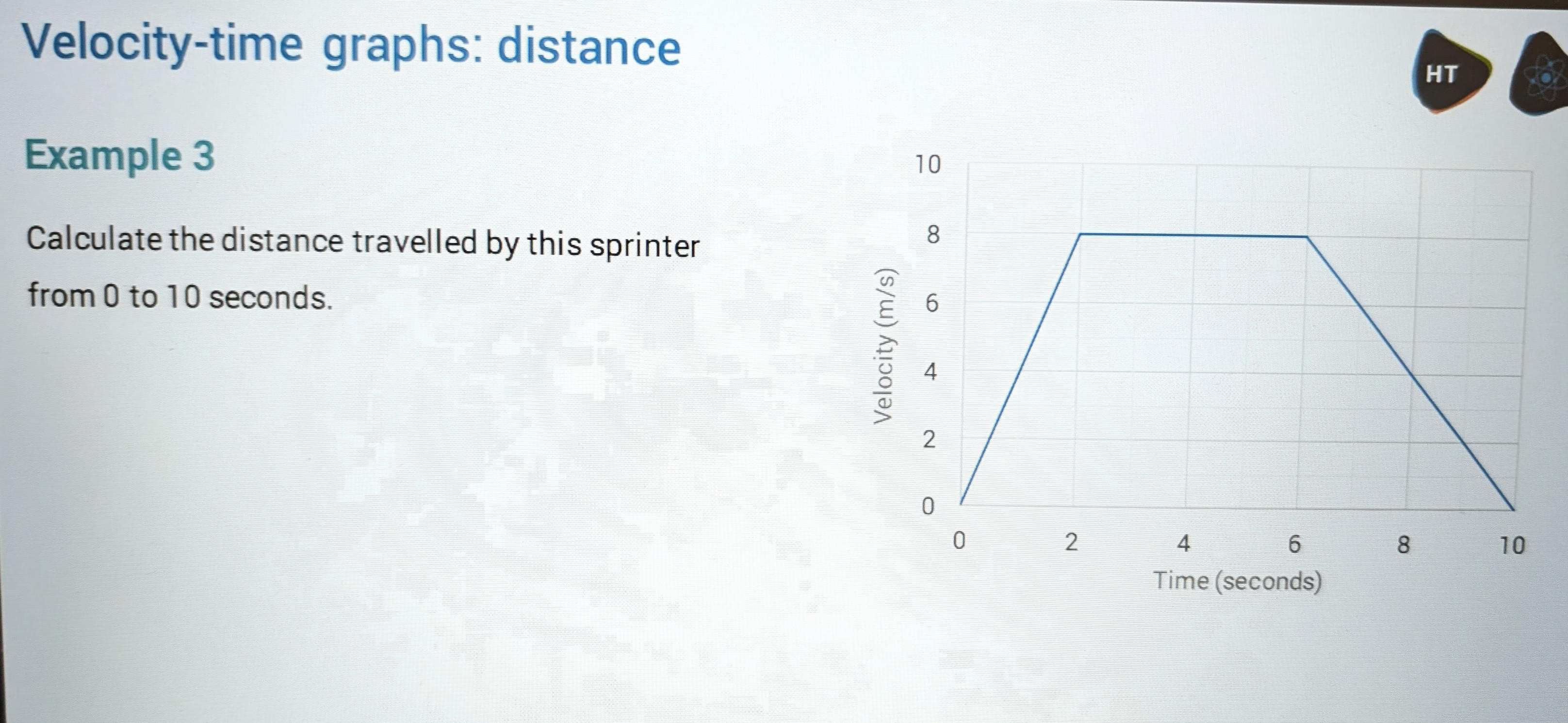
132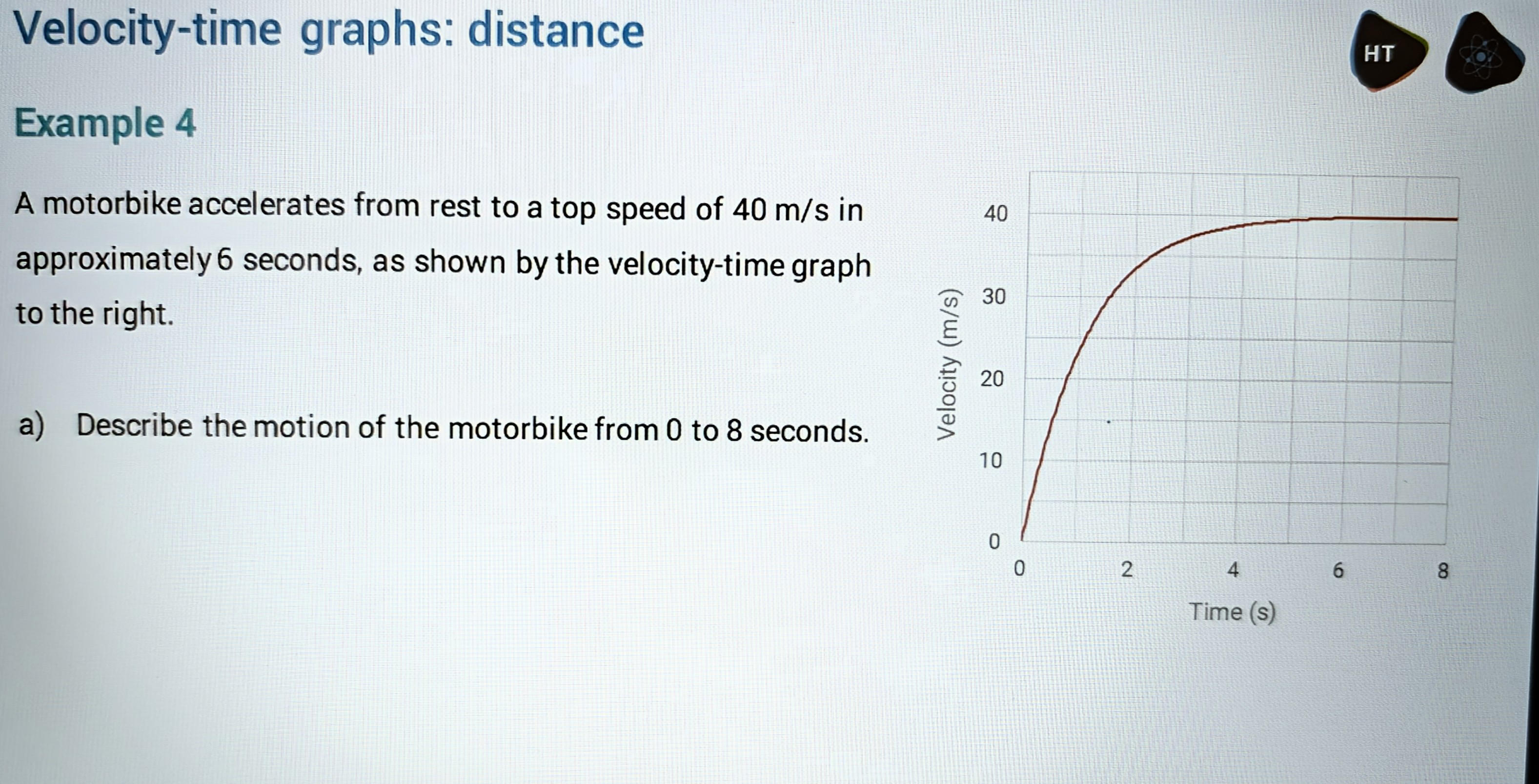
133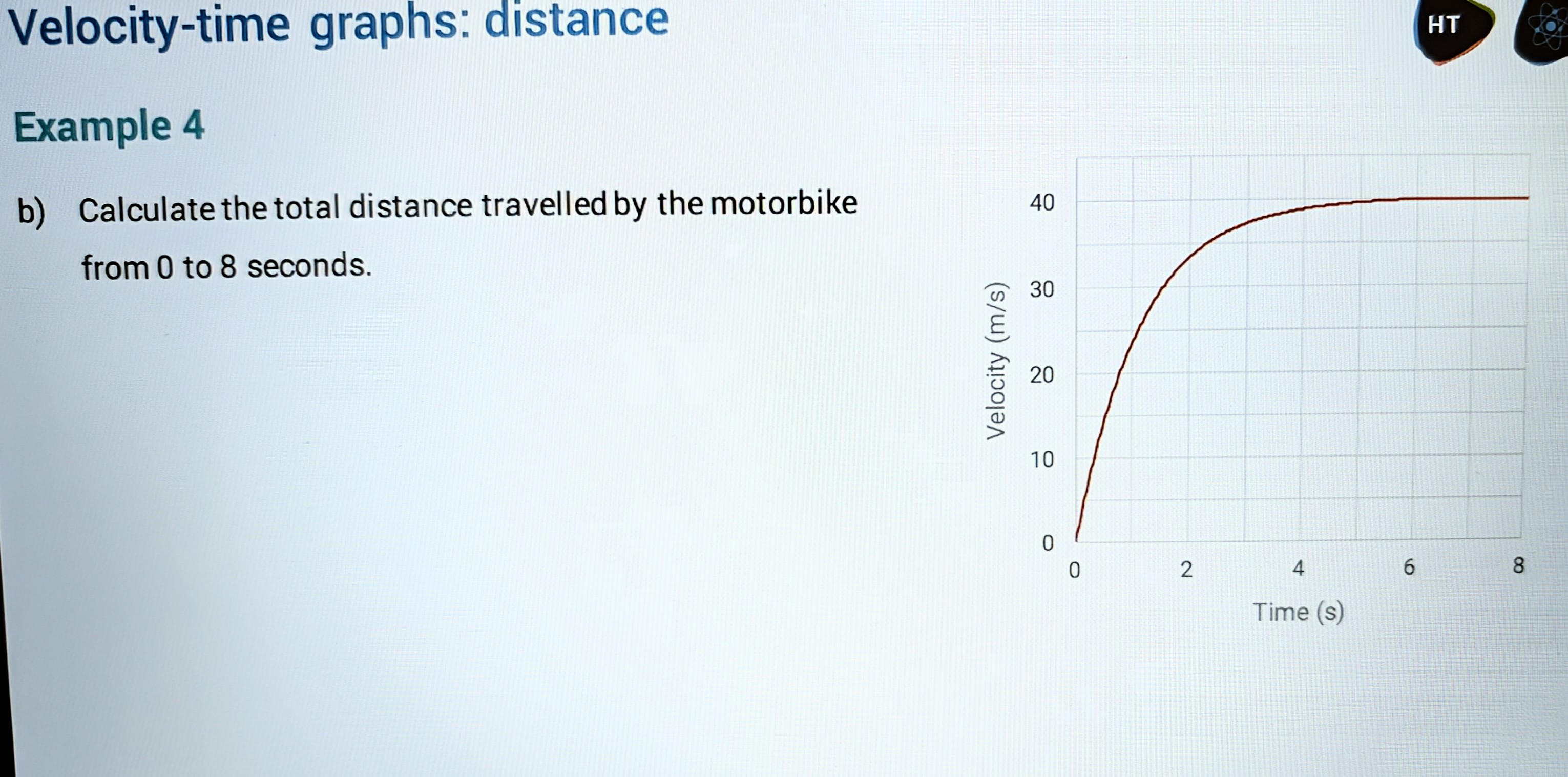
134
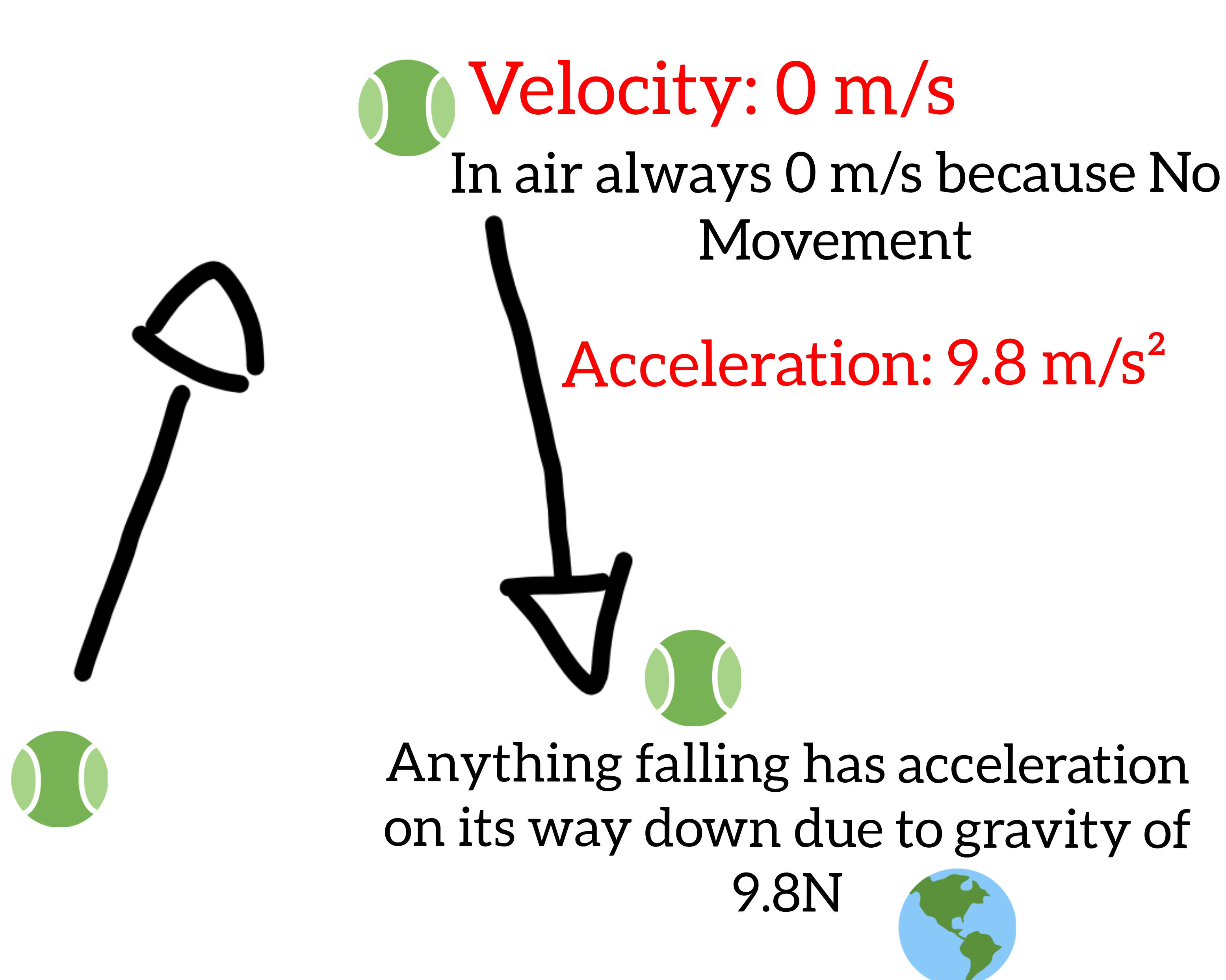
Define Free Fall
When an Object is Accelerating & Only Force Acting on it is Weight
135
An Object is Released from Rest and Undergoes Freefall. What will its Velocity Time Graph Look Like?
Straight Line which Starts from Origin & Slopes Upwards to Right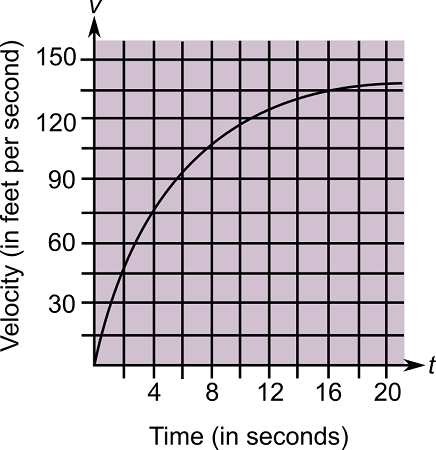
136
Define Terminal Velocity
Maximum Velocity that an Object Can Attain When Falling Through Fluid, such as air or water
137
What happens to an object's acceleration as it approaches terminal velocity?
it will Accelerate at Decreasing Rate & Then Reach Its Terminal Velocity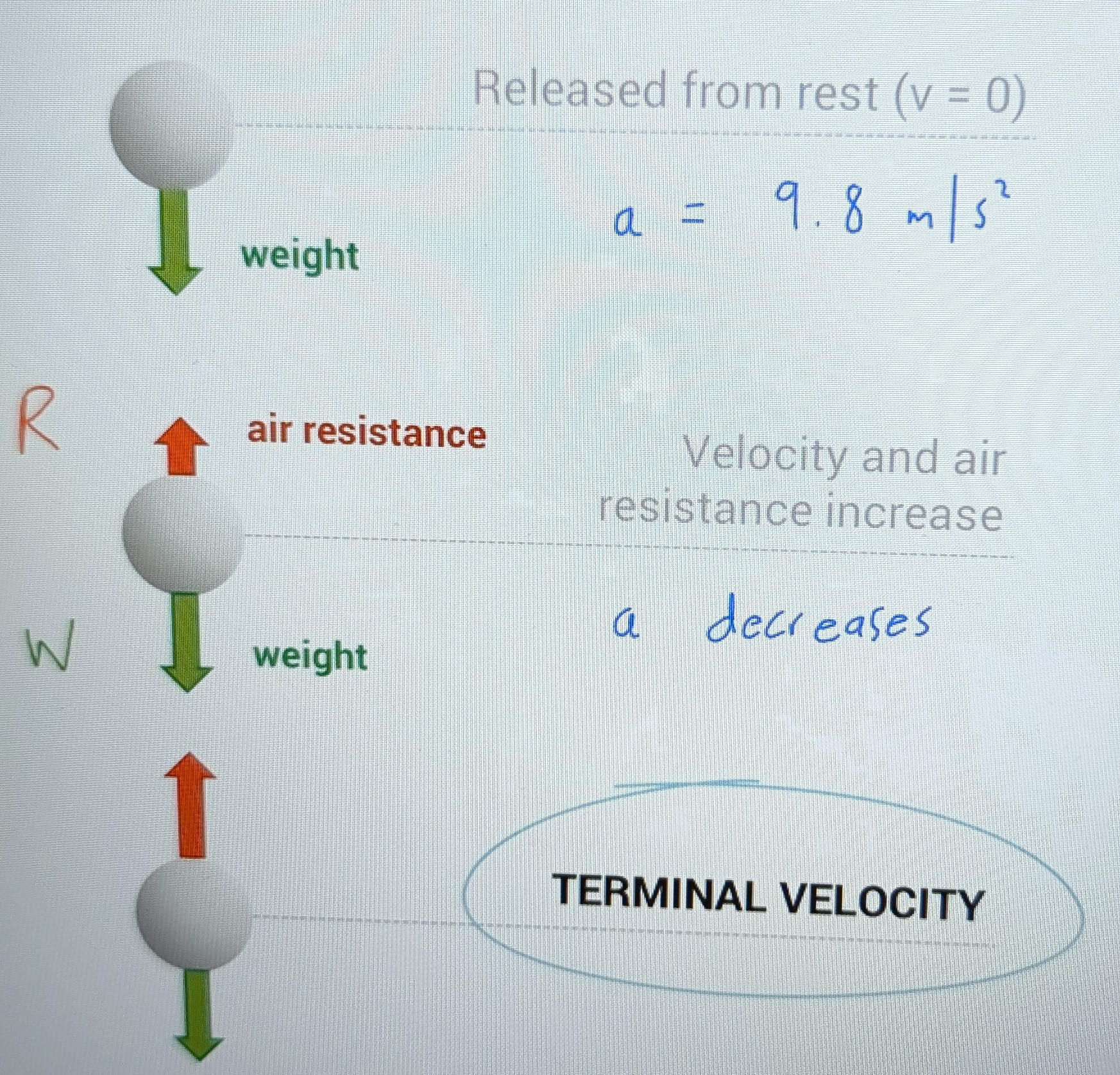
138
Why does a feather stop accelerating when the weight and air resistance are equal?

Weight = air Resistance
Upwards & Downwards Forces Acting on Feather Will be Equal & Opposite to One Another, means Resultant Force Acting on it will be Zero so it will No Longer Accelerate
(it will have reached its terminal velocity
Upwards & Downwards Forces Acting on Feather Will be Equal & Opposite to One Another, means Resultant Force Acting on it will be Zero so it will No Longer Accelerate
(it will have reached its terminal velocity
139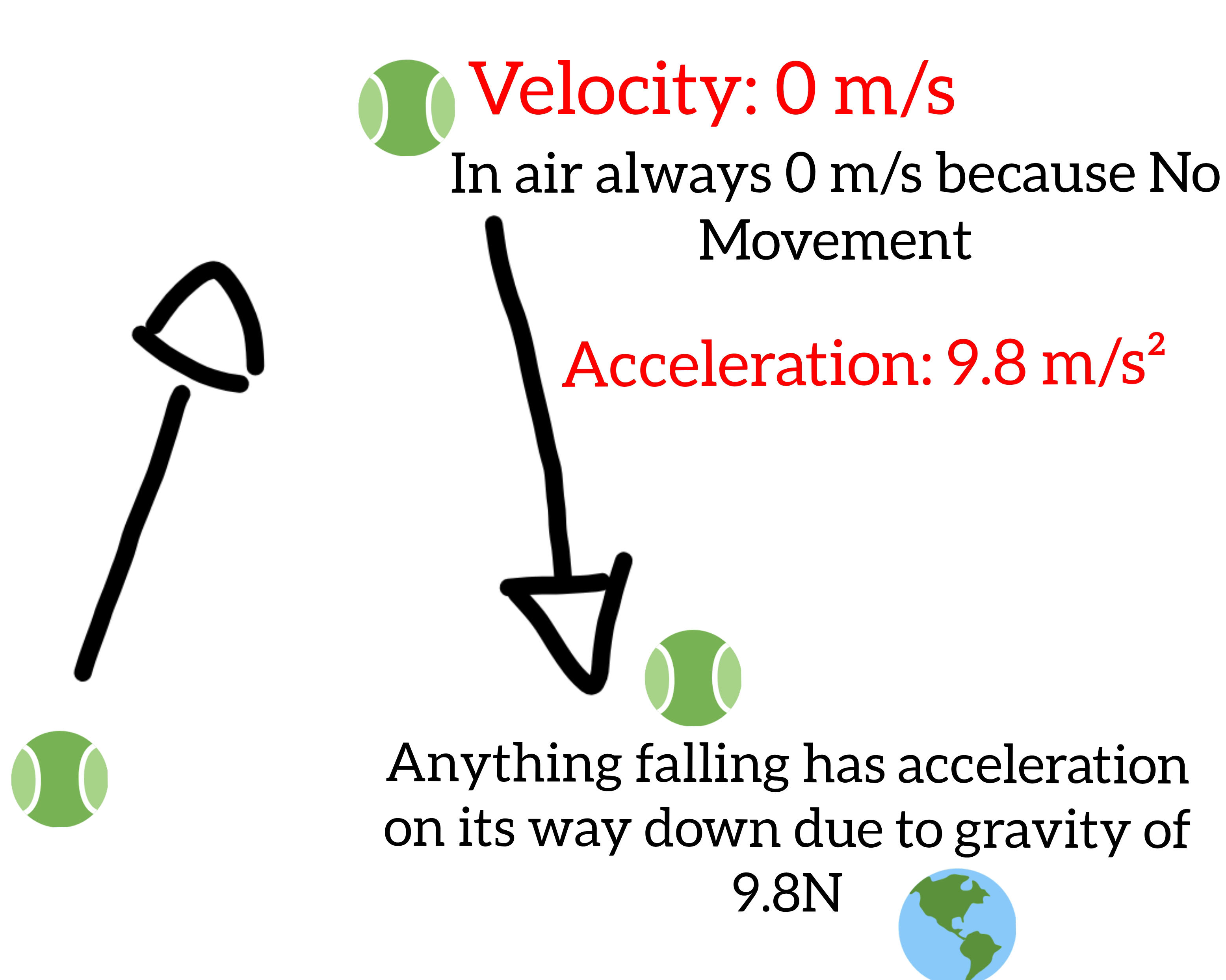
140
What are newtons 3 Laws of Motion?
Law 1: An Object Will Continue to Move in Straight Line at Same Speed Unless Acted on by Force.
Law 2: See image
Law 3:Every Action has an Opposite & Equal Reaction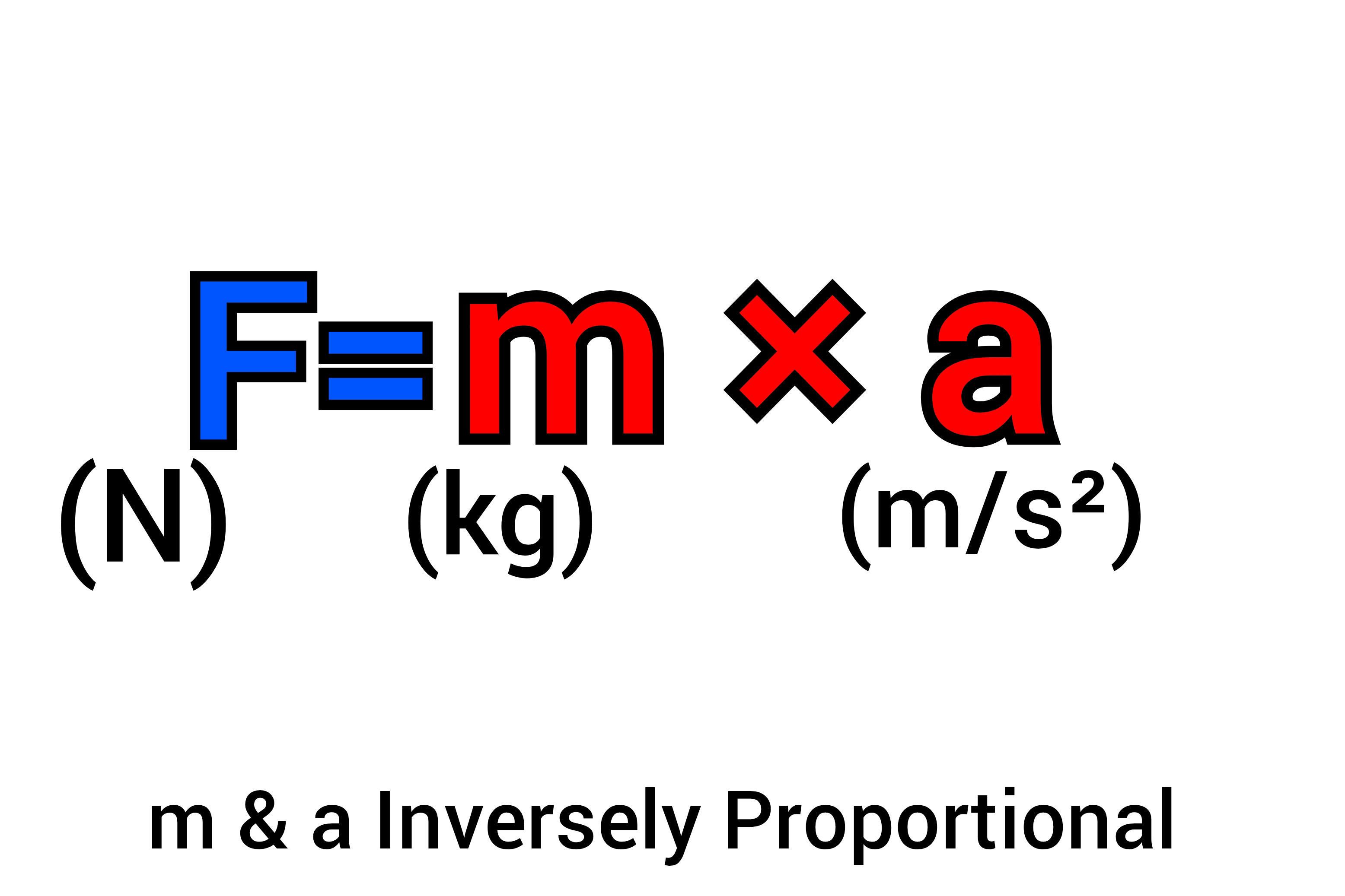
Law 2: See image
Law 3:Every Action has an Opposite & Equal Reaction
141
Define Thinking Distance
Distance Travelled While Reacting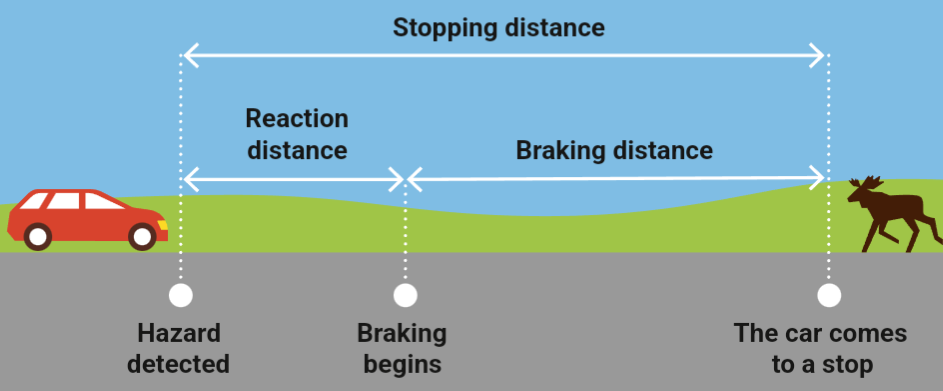
142
Define Braking Dsitance
Vehicle Comes to a Full Stop From its Initial Speed.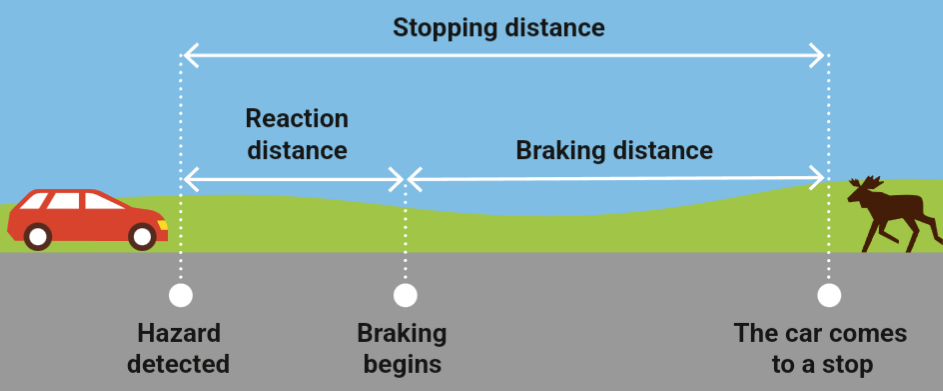
143
Define Stopping Distance
Total distance Over Which Car Comes to Rest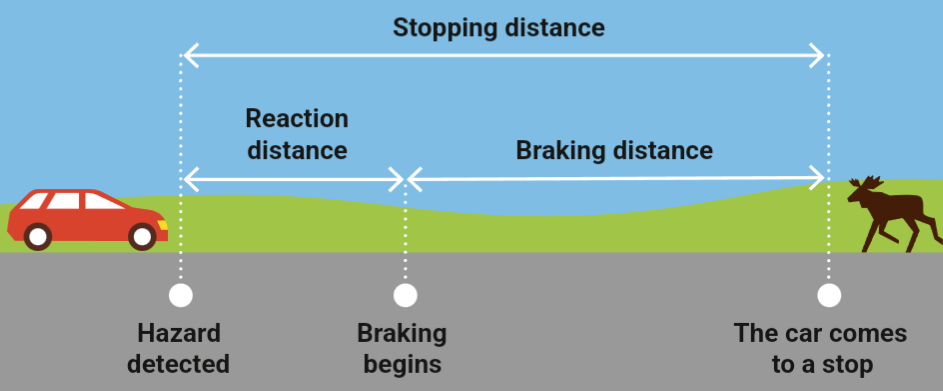
144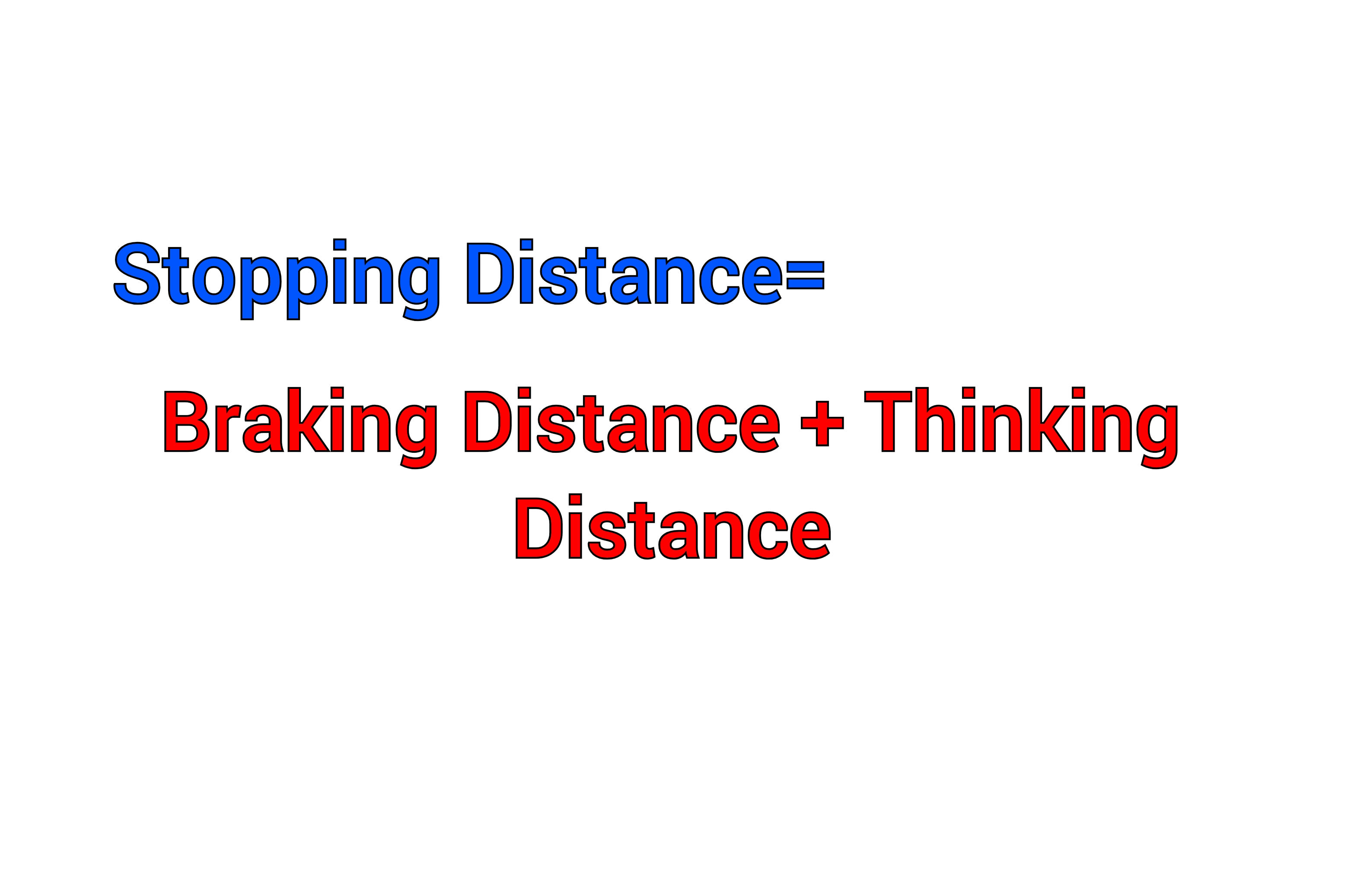
What is the Equation for Stopping Distance?
145
What are the Factors Affecting Reaction Time?
- Tiredness
- Distractions
-Drugs
- Distractions
-Drugs
146
What factors Affect Braking Distance?
- Condition Brakes & Tyres
- Type Of Road Surface
- Weather Conditions
- Size Of Braking Force
- Type Of Road Surface
- Weather Conditions
- Size Of Braking Force
147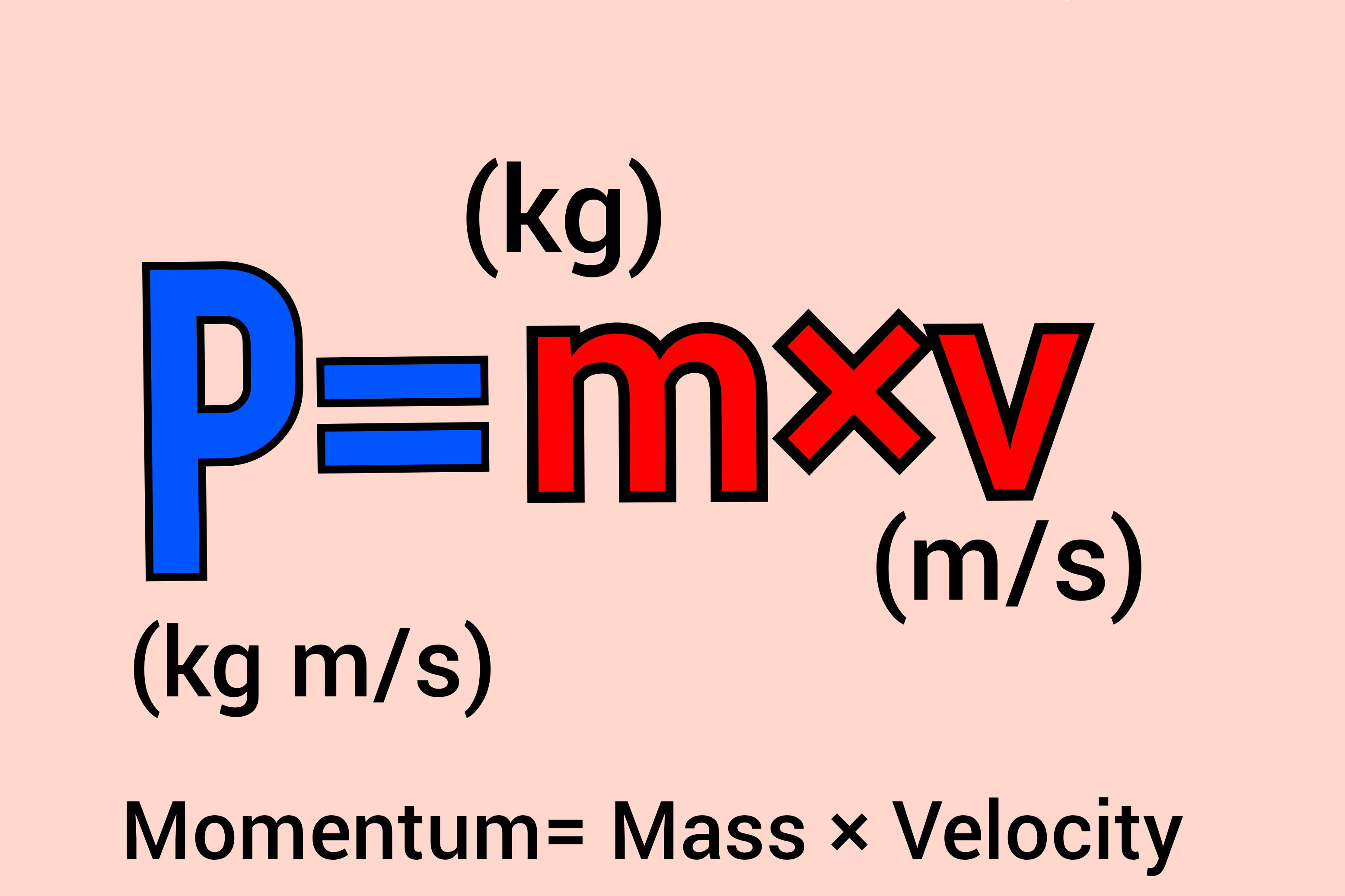
What is the Equation for Momentum & Units?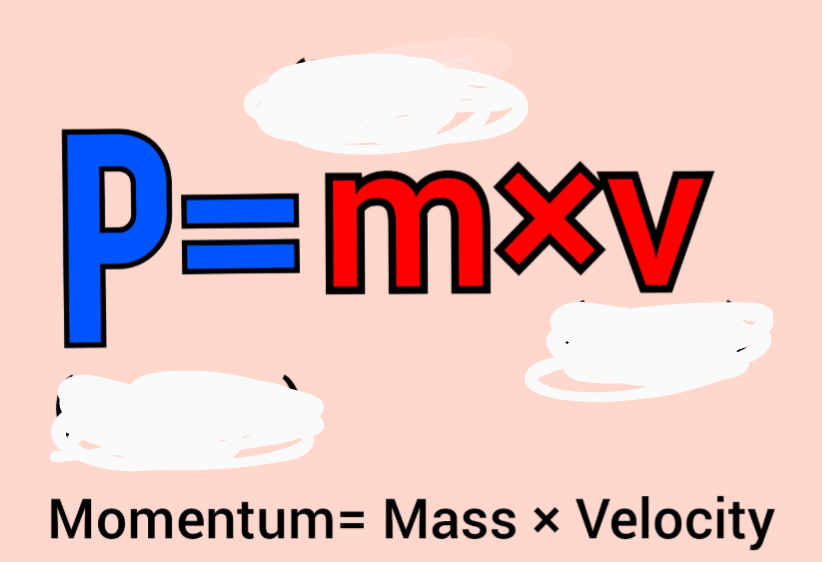
148
149
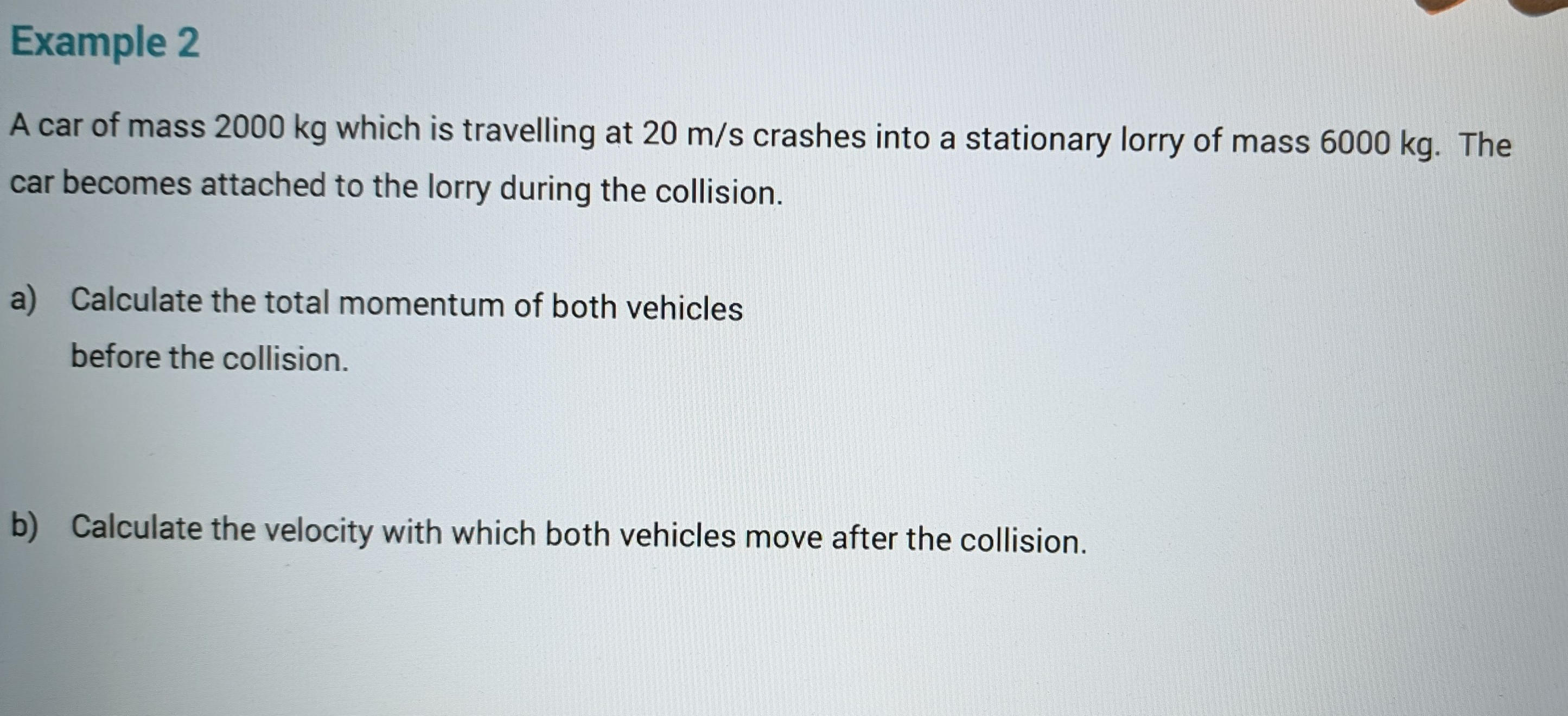
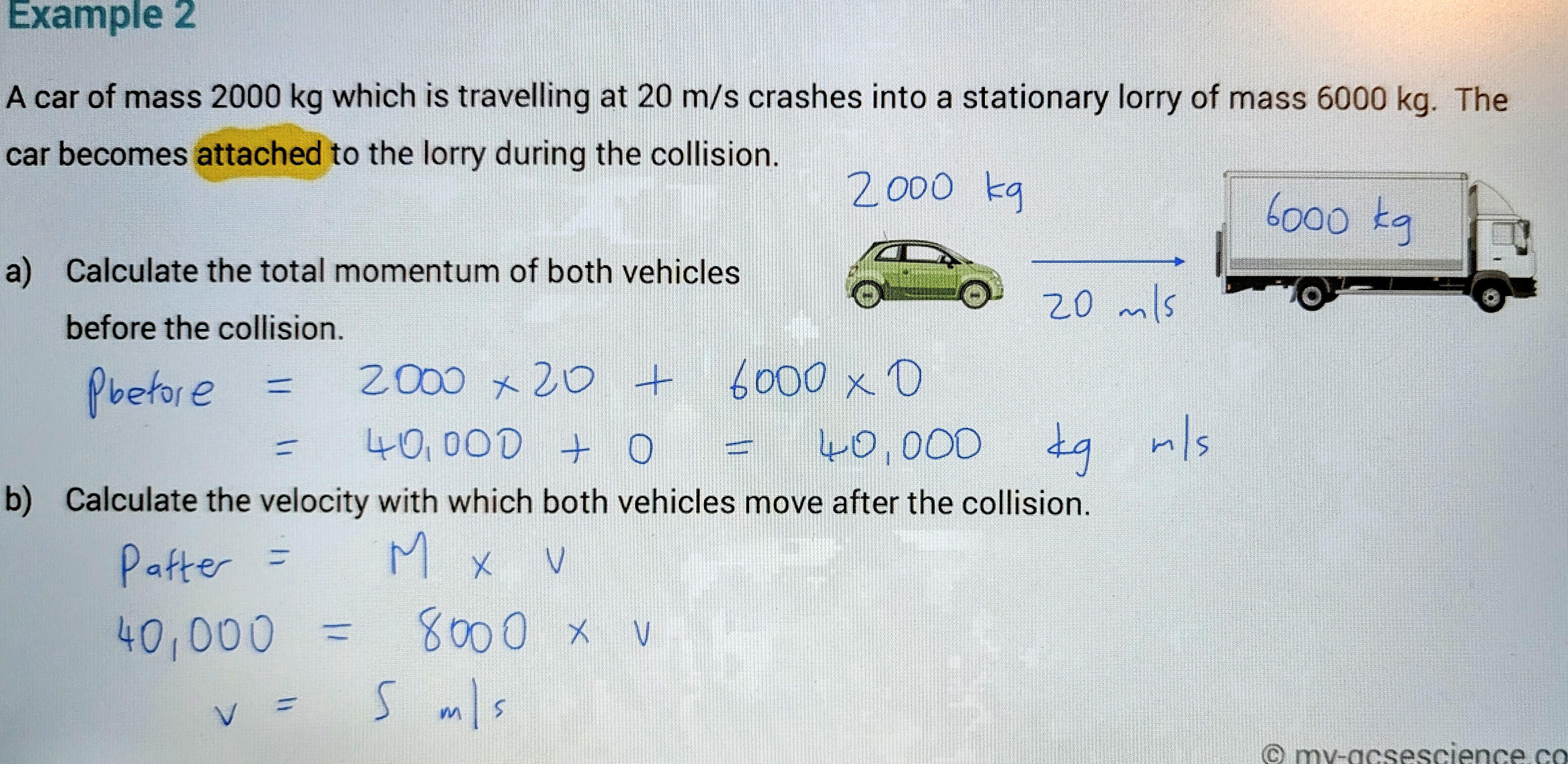
What is the Conservation of Momentum?
In a Closed System, the Total Momentum Before Any Event is Equal to the Total Momentum After the Event
P Before= P After
P Before= P After
150
Define a Closed System
System in which No EXTERNAL Forces Act
151