Cell Division
Study these flashcardsFree · spaced repetition · iPhone, Android, Mac & web
All cards
1
A human body is made up of millions of what?
Cells
2
How do people get ill?
When some cells are injured, missing, or not working properly
3
What is a new way Scientists can treat some diseases?
To use Healthy Cells in the place of the Cells that are Unable To Work Properly.
4
What is Differentiation?
Process by Which a Cell Changes to Become Specialised
5
What are Stem Cells?
Undifferentiated Cells Can Divide to Produce Lots More Undifferentiated Cells.
Have Ability to Transform into Other Cells and Sometimes Serve As these Replacements.
Have Ability to Transform into Other Cells and Sometimes Serve As these Replacements.
6
Define Totipotent
Could Develop Into Any Cell Type
7
Define Multipotent
Could Develop into MANY but Not All Cell Types
8
what are the two kinds of stem cells scientists work with from humans?
•Embryonic Stem Cells
•Non-Embryonic Stem Cells
(Adult Stem Cells)
•Non-Embryonic Stem Cells
(Adult Stem Cells)
9
where are embryonic stem cells from & how are they formed?
Embryonic Stem Cells come from Embryos.
The Embryos have Developed From Eggs that have been Fertilised In Vitro and then Donated For Research.
The Embryos have Developed From Eggs that have been Fertilised In Vitro and then Donated For Research.
10
What type of cells can Embryonic Stem Cells form?
Can Form Any Type Of Cell in Body.
11
What type of cells can Adult Stem Cells form?
They Form a Specialised Cell from a Particular Tissue.
12
where do Adult Stem Cells come from & examples?
Some Stem Cells Remain in Adult Bodies
& Found in Limited Numbers At Certain Locations in Body Such as Bone Marrow.
& Found in Limited Numbers At Certain Locations in Body Such as Bone Marrow.
13
where are chromosomes found?
Nucleus of a Cell
14
Pros and Cons for Embryonic Stem cells
PROS
• Many Available so can Treat a wide Variety Of Diseases
• Turn Into Any Type of Cell
CONS
• Harm to Embryo
• Relatively Untested
• Long term effects are Unknown
• Embryo can't
"give consent"
• Many Available so can Treat a wide Variety Of Diseases
• Turn Into Any Type of Cell
CONS
• Harm to Embryo
• Relatively Untested
• Long term effects are Unknown
• Embryo can't
"give consent"
15
Pros and Cons for Adult Stem Cells
PROS
• Consent is Given
• Quick Recovery
• It is safe
• Thoroughly tested
CONS
• There are Operation Hazards
• Few Diseases can be Treated
• It is painful
• Consent is Given
• Quick Recovery
• It is safe
• Thoroughly tested
CONS
• There are Operation Hazards
• Few Diseases can be Treated
• It is painful
16
how many pairs of chromosomes are in every human body cell?
23 pairs
17
how many chromosomes do we have in total?
46
18
where does one of each pair of chromosomes come from?
Each parent gives 23 chromosomes
19
what are chromosomes made up of?
Strips of Tightly Coiled DNA
20
what are the properties of genes & Function?
• A Short Section Of a Chromosome
• Each Gene Codes For a Different Characteristic
• Different Versions of Each Gene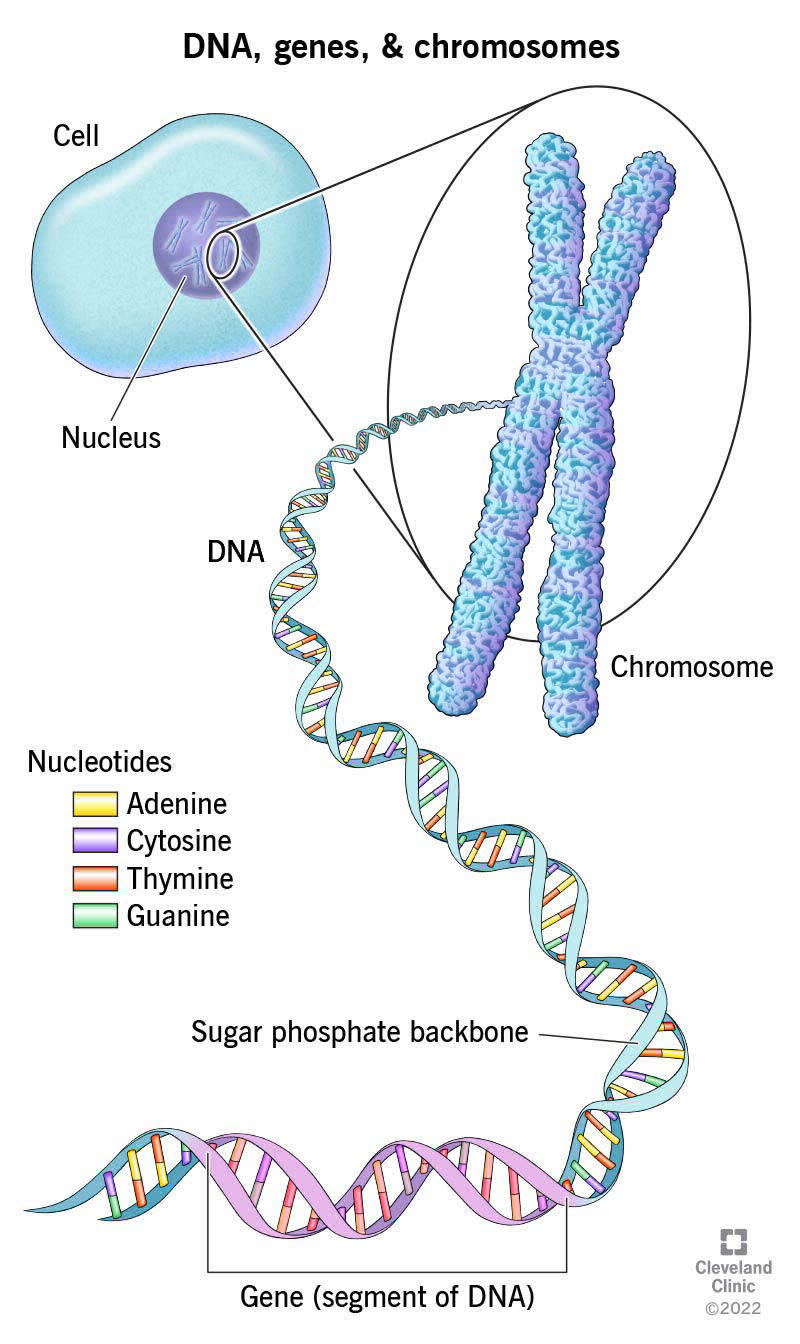
• Each Gene Codes For a Different Characteristic
• Different Versions of Each Gene
21
what is DNA short for?
Deoxyribonucleic Acid
22
what are the properties of DNA?
• Chain Molecule that is made up of a Combination of 4 DNA Bases
• DNA has a Structure called a Double Helix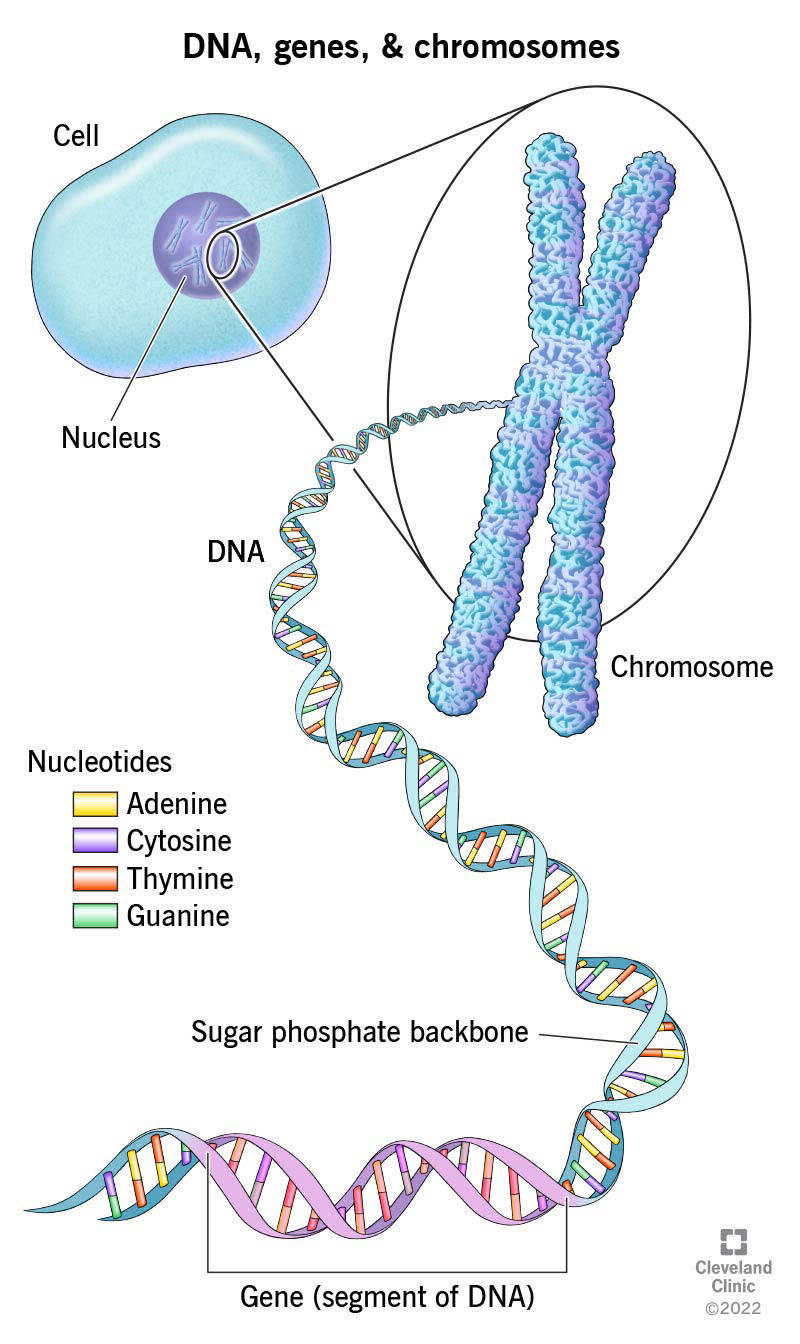
• DNA has a Structure called a Double Helix
23
In order of Increasing Size, how is the Genetic Material of Eukaryotes Organised?
Eukaryotes is Organised as:
DNA, Chromosome, Nucleus.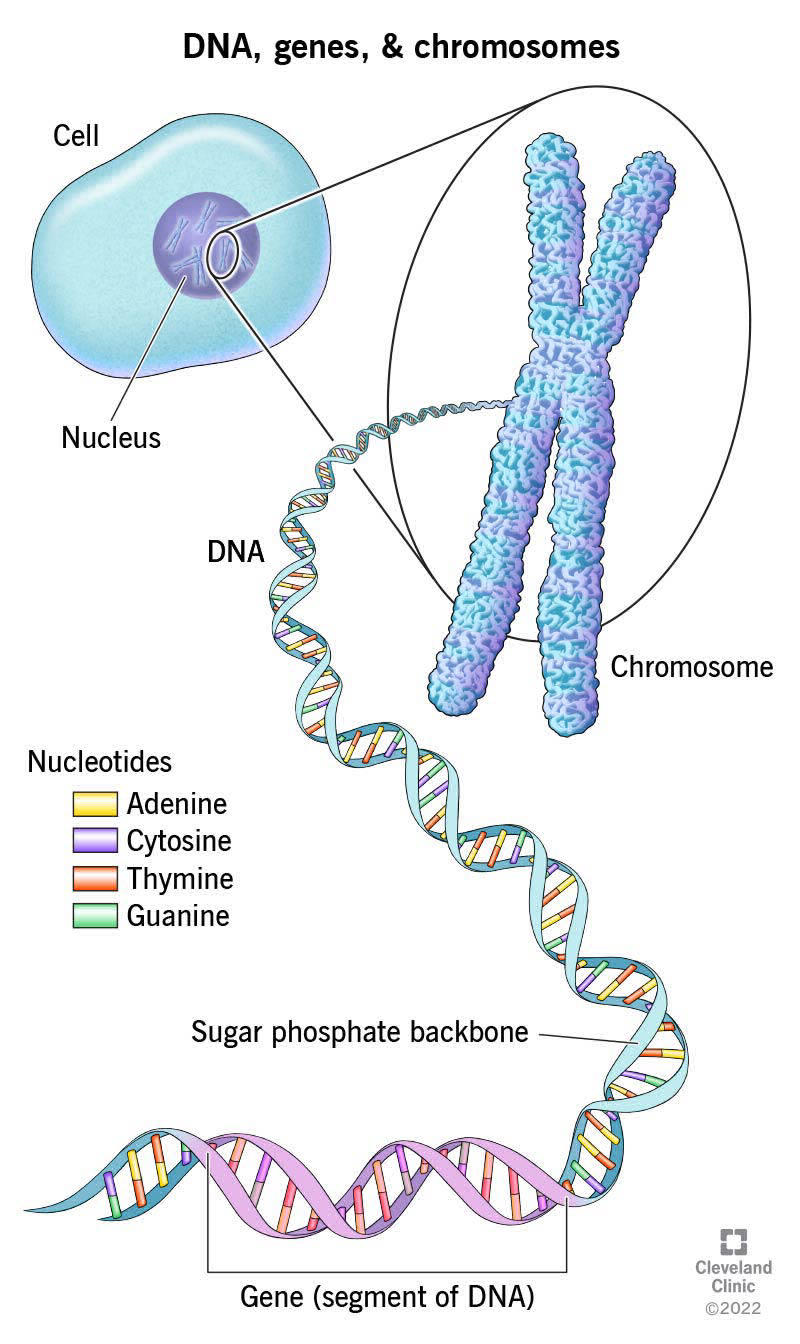
DNA, Chromosome, Nucleus.
24
what is The Cell Cycle?
Body Cells Divide in a Series Of Stages
25
What are the Two Main Stages Called in Cell Cycle?
• Growth & DNA Replication
• Mitosis
• Mitosis
26
What happenes during Growth & DNA Replication?
DNA Replicates to Form X Shaped Chromosomes, Subcellular Structures Divide & Cell Grows Bigger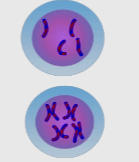
27
What is Mitosis?
Nucleus Disappears. Chromosomes Line Up At Center of Cell.
Cell Fibers Pull 2 identical Arms Of Each Chromosome Apart & Towards Opposite Pole of Cell
New Nucleus Forms Around Each Set of Chromosomes.
Cytoplasm Divides Forming 2 identical Daughter Cells.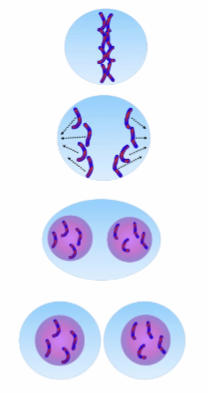
Cell Fibers Pull 2 identical Arms Of Each Chromosome Apart & Towards Opposite Pole of Cell
New Nucleus Forms Around Each Set of Chromosomes.
Cytoplasm Divides Forming 2 identical Daughter Cells.
28
Describe Reasons Why Mitosis Occurs?
Grow, Replace Damaged Cells, Repair Damaged Tissue & Assexual Reproduction
29
Suggest Why Length of Cell Cycle Varies in Different Tissues?
Different Replacement Rates
30
In animals, Mitosis would occur in:
• Skin
• Gut
• Gut
31
How do we use Stem Cells?
• Cure Diseases
• Used for Cell-Based Therapies
• Used for Cell-Based Therapies
32
What do we already use Adult Stem Cells for?
Cure Disease by Replacing Faulty Cells
33
What is Therapeutic Cloning?
Produce Stem Cells With Same Genetic Information As Patient.
34
What does Therapeutic Cloning Technique Involve?
Transfer Nucleus From Cell of Patient, to An Egg Cell Whose Nucleus Has Been Removed.
Stem cells Produced Transferred to Patient. Stem Cells Would Be Genetically identical & Wouldn't Rejected By Patient's Immune System.
no evidence that, as yet, they have been used to treat anyone.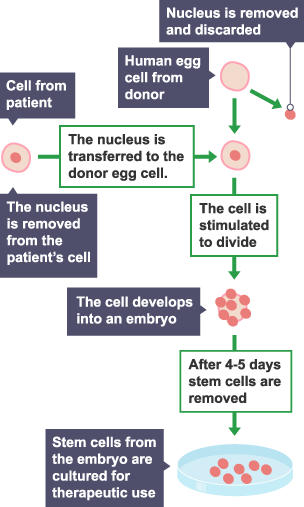
Stem cells Produced Transferred to Patient. Stem Cells Would Be Genetically identical & Wouldn't Rejected By Patient's Immune System.
no evidence that, as yet, they have been used to treat anyone.
35
where do Cell Divisions occur in plants?
Meristems
36
Where are the main Meristems?
Main Meristemsare Close To Tip Of Root & Tip Of Shoot. 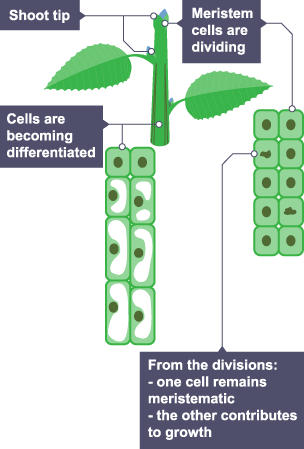
37
What can Cells of Meristem Differentiate to Produce?
Differentiate Produce All Types of Plant Cells At Any Time During Plants Life.
38
How do plant stem cells differentiate?
Growing Shoot, New Cells Being Produced Continuously Near Tip.
As Cells Become Older, Further Away From Tip, Become Differentiated – they Enlarge and Develop Vacuoles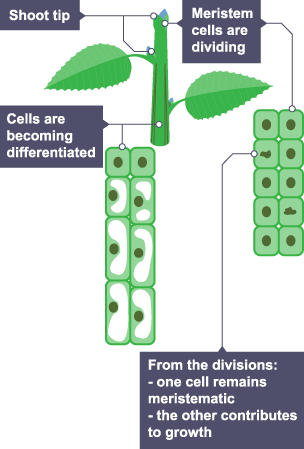
As Cells Become Older, Further Away From Tip, Become Differentiated – they Enlarge and Develop Vacuoles
39
How we use Plant Stem Cells?
• Produce Clones of Plants Quickly & Cheaply
• Grow more Rare Species
• Grow Crops of Identical Plants Have Desired Features (Disease Resistant)
• Grow more Rare Species
• Grow Crops of Identical Plants Have Desired Features (Disease Resistant)
40
How are Meristems cloned?
Meristemic Cells are Removed from a plant and Grown in Tissue Culture.
41
What is the process of cloning a plant?
1) Take the tissue sample from parent plant
2) Put it in growth medium with nutrients and auxins (agar)
3) Let it develop
4) Plant cloned plants into the compost
2) Put it in growth medium with nutrients and auxins (agar)
3) Let it develop
4) Plant cloned plants into the compost
42
Why do Muscle Cells need to divide by mitosis more often than most other cells?
To repair the muscles
43
A cell has 8 chromosomes and it divides by mitosis.
How many chromosomes will each cell contain?
How many chromosomes will each cell contain?
8
MITOSIS
It doubles then splits
8 ---) Doubles 16 ---) Splits 8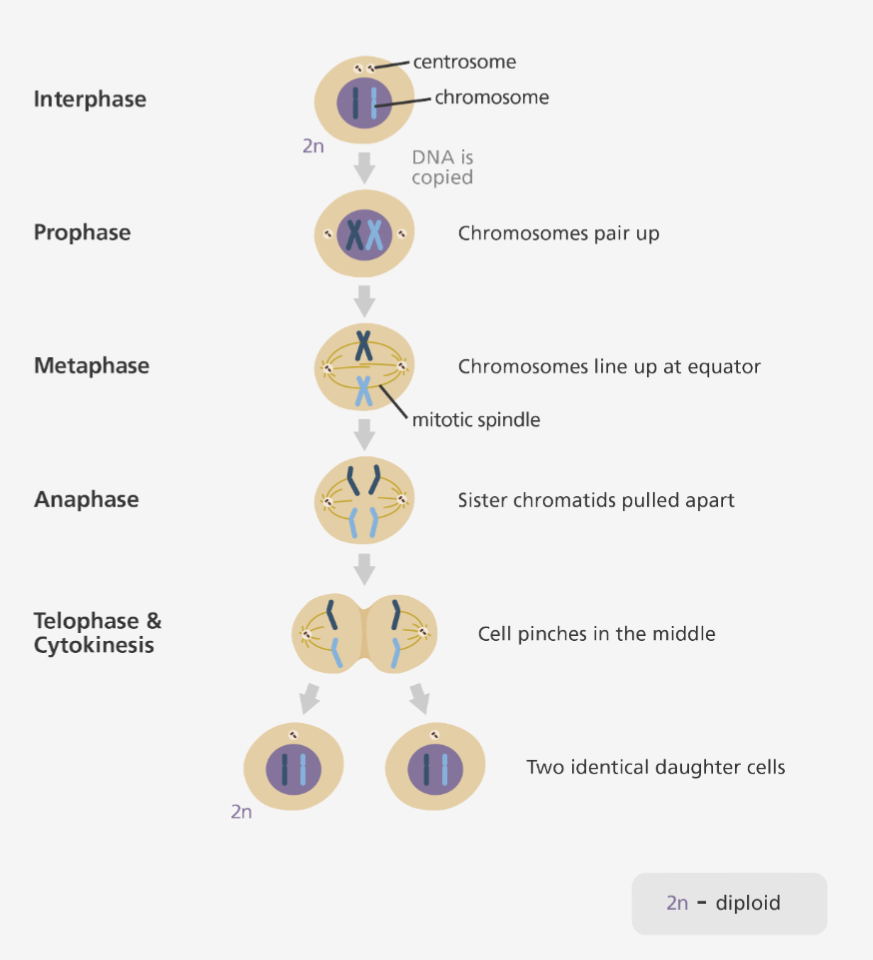
MITOSIS
It doubles then splits
8 ---) Doubles 16 ---) Splits 8