Chapter 23
Study these flashcardsFree · spaced repetition · iPhone, Android, Mac & web
All cards
1
What is the precursor for bile acid?
Cholesterol
2
In normal quantities, cholesterol have adverse impacts on health
In normal quantities, cholesterol does not have adverse impacts on health
3
Cholesterol can be synthesized from synthesis, in other words, they can be made
Cholesterol can be synthesized from de novo synthesis, in other words, they can be made "from scratch"
4
is the precursor for making cholesterol
Acetyl CoA is the precursor for making cholesterol
5
In the formation of cholesterol, is turned into , the to , then into , and cyclized into
In the formation of cholesterol, acetyl CoA is turned into HMG CoA, the to isporene, then into squalene, and cyclized into lanosterol
6
is the key step in cholesterol synthesis
HMG-COA Reductase is the key step in cholesterol synthesis
7
Regulation in cholesterol synthesis occurs at the and also at the (i.e. / )
Regulation in cholesterol synthesis occurs at the gene level and also at the hormone level (i.e. glucagon/insulin)
8
inhibit the HMG CoA reductase
Statins inhibit the HMG CoA reductase
9
Statins are (type of inhibitor competetive, non-competetive, uncompetetive)
Statins are competetive inhibitors (type of inhibitor competetive, non-competetive, uncompetetive)
10
Formic acid
C1
11
Acetic acid
C2
12
Propionic acid
C3
13
Butyric acid
C4
14
Caproic acid
6
15
Caprylic acid
8
16
Capric acid
10
17
Lauric acid
12
18
Myristic acid
14
19
Pamitic acid
16
20
Stearic acid
18
21
Pamitoleic
16:1 (9)
22
Oleic acid
18:1 (9)
23
Linoleic acid. What isimportant about it?
18:2 (9,12). Essential fatty acid.
24
Linolenic acid. What is important about it?
18:3 (9, 12, 15). Essential fatty acid.
25
Arachidonic acid
20:4 (5,8,11,14)
26
How many carbons does cholesterol have? How many ring?
27, 4 rings
27
Important structures of cholesterol
-OH at 3
-Double bond between 4=5
-Methyls at 18,19,21
-Isopropyl at 25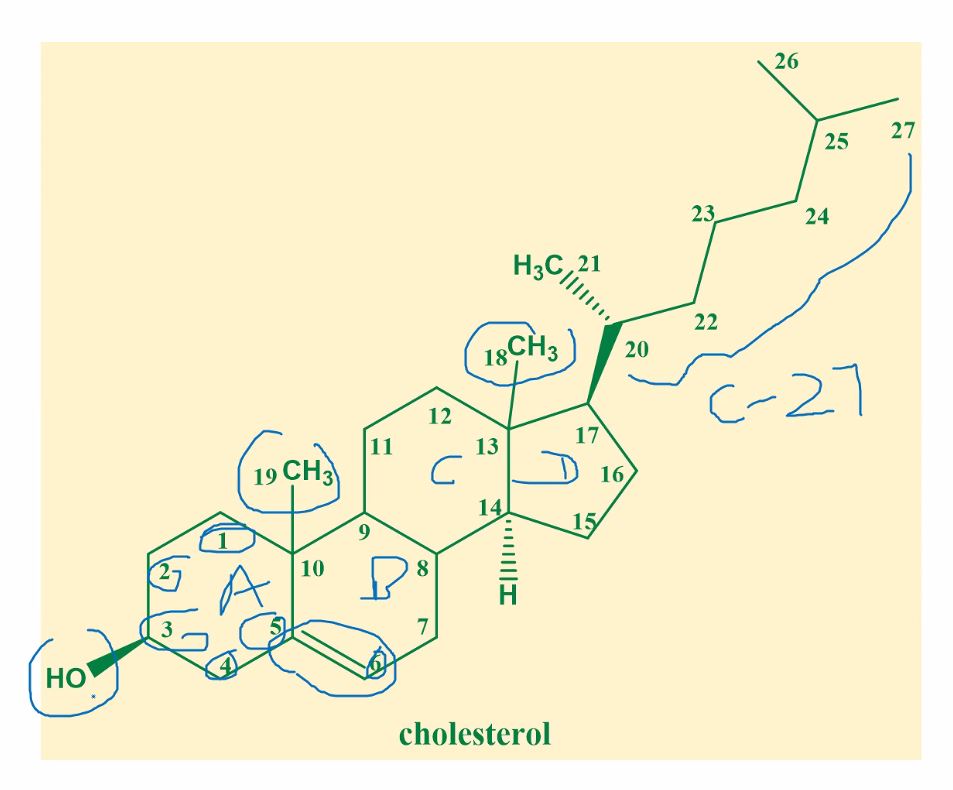
-Double bond between 4=5
-Methyls at 18,19,21
-Isopropyl at 25
28
What is the most hydrophobic compound in biological systems?
cholesteryl ester
29
If the -OH in cholesterol is replaced with a sulfur group, what is it's role?
It plays a role in skin differentiation
30
Cholesterol can be esterified to form or
Cholesterol can be esterified to form taurine (sulfur amino acid) or glycine
31
If the is isopropyl group is replaced with -COO-, what does it become?
Bile acid (cholic acid)
32
What type of hormone does cholesterol form?
Forms steroid precursor (pregnenolone)
33
What type of vitamin does cholesterol serve as a precursor for?
Vitamin D3 (Cholecalciferol)
34
Within the cell
membrane cholesterol
functions in
membrane cholesterol
functions in
Within the cell
membrane cholesterol
functions in intracellular
transport
membrane cholesterol
functions in intracellular
transport
35
Cholesterol plays a role in cell and
Cholesterol plays a role in cell signaling and nerve conduction
36
Cholesterol is essential
for the structure and
function of
invaginated and
for the structure and
function of
invaginated and
Cholesterol is essential
for the structure and
function of
invaginated caveole and clathrin‐coated pits.
for the structure and
function of
invaginated caveole and clathrin‐coated pits.
37
Cholesterol is involved in
endocytosis.
endocytosis.
Cholesterol is involved in
caveola‐dependent and
clathrin‐
dependent endocytosis.
caveola‐dependent and
clathrin‐
dependent endocytosis.
38
In atherosclerosis, there is an accumulation of cholesterol and leads to the formation of a . The macrophaes interact with the plauge and bcomes .
In atherosclerosis, there is an accumulation of LDL cholesterol and leads to the formation of a fribrous plauqe. The macrophaes interact with the plauge and bcomes foam cells.
39
In de denvo synthesis, two molecules of combine to form using enzyme. This is the first step and happens in the .
In de denvo synthesis, two molecules of acetyl CoA combine to form acteoacetyl CoA using thiolase enzyme. This is the first step and happens in the cytosol. 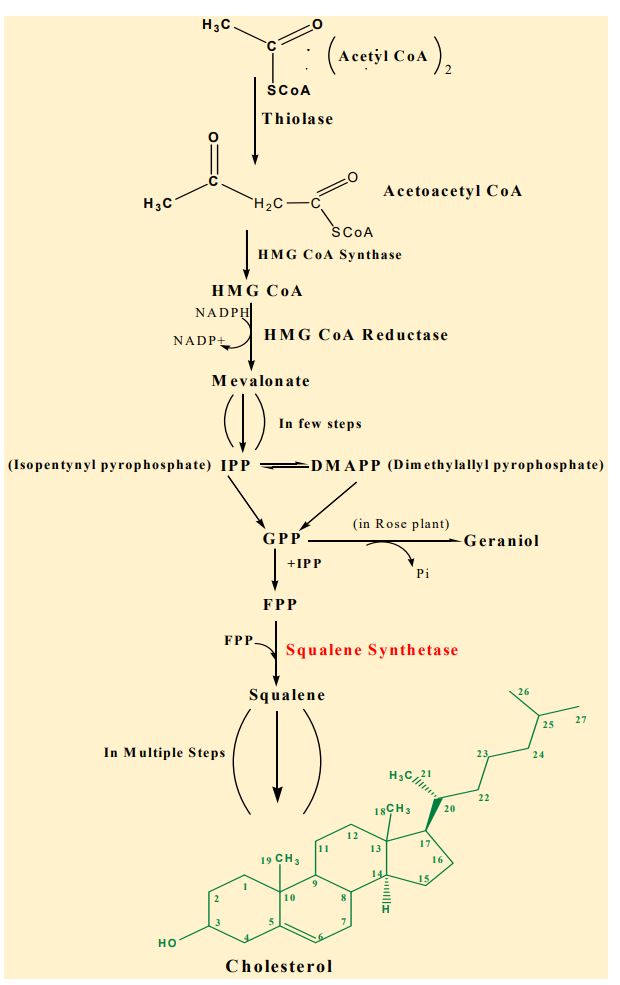
40
In the second step of the denovo synthesis, is converted into using and .
In the second step of the denovo synthesis, acetoacetyl CoA is converted into HMG CoA using acteyl CoA and HMG CoA synthase .
41
In the third step of de novo synthesis, HMG CoA is converted into using and
In the third step of de novo synthesis, HMG CoA is converted into mevalonate using 2 NADPH and HMG CoA Reductase
42
HMG COA reducatse is an
HMG COA reducatse is an ER bound enzyme
43
HMG COA Reductase is by statins
HMG COA Reductase is competetively inhibited by statins
44
HMGR has (888 amino acids) and (835 aminio acids)
HMGR has two isoforms (888 amino acids) and (835 aminio acids)
45
HMG CoA Reductase (HMGCR) is
derived from the HMGCR gene that is
located on chromosome
derived from the HMGCR gene that is
located on chromosome
HMG CoA Reductase (HMGCR) is
derived from the HMGCR gene that is
located on chromosome 5q13.3.
derived from the HMGCR gene that is
located on chromosome 5q13.3.
46
HMG CoA Reductase is made of that generate alternatively spliced mRNA that encode its
HMG CoA Reductase is made of 22 exons that generate two alternatively spliced mRNA that encode its two isoforms.
47
Mevalonate is converted to IPP using , , and is converted.
Mevalonate is converted to IPP using MVA kinase, MVAPK (perisome), and 3 ATP is converted.
48
IPP gets isomerized into to form
IPP gets isomerized into DMAPP to form GPP
49
When IPP is added to , it forms , which then condenses with another to form
When IPP is added to GPP, it forms FPP, which then condenses with another +FPP to form squalene
50
Squalene is acitivated by oxygen to form and then forms which is the first . Lanosterol then become cholesterol.
Squalene is acitivated by oxygen to form squalene epoxide and then forms lanosterol which is the first cyclic molecule. Lanosterol then become cholesterol.
51
FPP can also become ( + )
FPP can also become isoprenoids (dolichol + ubiquinone)
52
Dolichol
(used in the synthesis of ), coenzyme
Q (of the ), or the side chain of
(used in the synthesis of ), coenzyme
Q (of the ), or the side chain of
Dolichol
(used in the synthesis of Nlinked glycoproteins), coenzyme
Q (of the electron transport
system), or the side chain of
heme-a.
(used in the synthesis of Nlinked glycoproteins), coenzyme
Q (of the electron transport
system), or the side chain of
heme-a.
53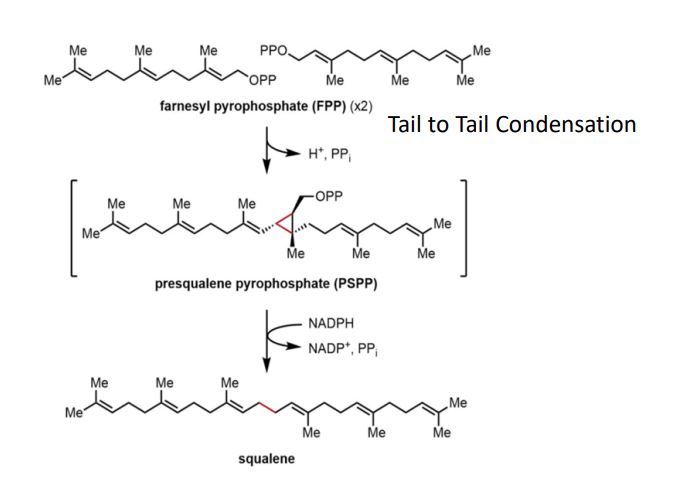
Draw general schematic for squalene synthase
54
From Acetyl CoA it takes
steps to Lanosterol
steps to Lanosterol
From Acetyl CoA it takes 18
steps to Lanosterol
steps to Lanosterol
55
From Lanosterol to
Cholesterol in steps
Cholesterol in steps
From Lanosterol to
Cholesterol in 19 steps
Cholesterol in 19 steps
56
Cholesterol de novo Synthesis:
Occurs Mainly in
Also some in ,
and
Occurs Mainly in
Also some in ,
and
Cholesterol de novo Synthesis:
Occurs Mainly in Liver
Also some in Intestine,
Reproductive Tissues and
Adrenal Glands
Occurs Mainly in Liver
Also some in Intestine,
Reproductive Tissues and
Adrenal Glands
57
If squalene synthesis is inhibited, will be adveresely impacted
If squalene synthesis is inhibited, cholesterol production will be adveresely impacted
58
High Cholesterol inhibits ( inhibition).
High Cholesterol inhibits HMG‐CoA
reductase (feedback inhibition).
reductase (feedback inhibition).
59
High Cholesterol activates which
HMG‐CoA reductase and it.
HMG‐CoA reductase and it.
High Cholesterol activates AMP
activated kinase which phosphorylates
HMG‐CoA reductase and inactivates it.
activated kinase which phosphorylates
HMG‐CoA reductase and inactivates it.
60
High Cholesterol leads to
degradation of
degradation of
High Cholesterol leads to proteosome
degradation of HMG‐CoA reductase
degradation of HMG‐CoA reductase
61
We did not get into the gene level controls, but do know that it is done by
We did not get into the gene level controls, but do know that it is done by transcription factors
62
Ubiquinone is part of the
Ubiquinone is part of the Mitochondrial Electron Transport System
63
Ubiquinone - If it is produced (from de novo) pathway properly, it can then cause
.
.
Ubiquinone - If it is NOT produced (from de novo) pathway properly, it can then cause
mitochondrial dysfunction.
mitochondrial dysfunction.
64
Heme A is a for
cytochrome aa
3 (also
known as
) of
.
cytochrome aa
3 (also
known as
) of
.
Heme A is a prosthetic group for
cytochrome aa
3 (also
known as
cytochrome
c oxidase) of
complex IV.
cytochrome aa
3 (also
known as
cytochrome
c oxidase) of
complex IV.
65
Deficiency in (due to gene
mutations) results in the disorder
called Smith‐Lemli‐ Optiz Syndrome
(SLOS). SLOS is characterized by increased
levels of and
reduced levels (15% to 27% of normal)
of resulting in multiple
and
mutations) results in the disorder
called Smith‐Lemli‐ Optiz Syndrome
(SLOS). SLOS is characterized by increased
levels of and
reduced levels (15% to 27% of normal)
of resulting in multiple
and
Deficiency in DHCR7 (due to gene
mutations) results in the disorder
called Smith‐Lemli‐ Optiz Syndrome
(SLOS). SLOS is characterized by increased
levels of 7‐dehydrocholesterol and
reduced levels (15% to 27% of normal)
of cholesterol resulting in multiple
developmental malformations and
behavioral problems.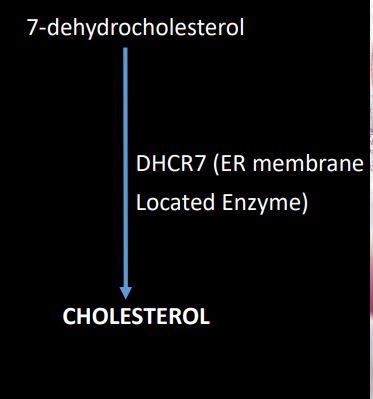
mutations) results in the disorder
called Smith‐Lemli‐ Optiz Syndrome
(SLOS). SLOS is characterized by increased
levels of 7‐dehydrocholesterol and
reduced levels (15% to 27% of normal)
of cholesterol resulting in multiple
developmental malformations and
behavioral problems.
66
Side effects of include to Muscle Weakness, Muscle
Pain, Myopathy (Actual
Damage of Muscle Tissue), and Peripheral Neuropathy
(burning Pain)
Pain, Myopathy (Actual
Damage of Muscle Tissue), and Peripheral Neuropathy
(burning Pain)
Side effects of statins include to Muscle Weakness, Muscle
Pain, Myopathy (Actual
Damage of Muscle Tissue), and Peripheral Neuropathy
(burning Pain)
Pain, Myopathy (Actual
Damage of Muscle Tissue), and Peripheral Neuropathy
(burning Pain)
67
may help reduce low-density lipoprotein (LDL) cholesterol and total cholesterol levels
CoQ10 may help reduce low-density lipoprotein (LDL) cholesterol and total cholesterol levels
68
New drugs act on the instead of HMG CoA Reducatse (statins)
New drugs act on the squalene synthase instead of HMG CoA Reducatse (statins)
69
Squalene synthase
inhibitors include as ,
(SQS Inhibitor), and
(a natural
product Inhibitor
from Fungi)
inhibitors include as ,
(SQS Inhibitor), and
(a natural
product Inhibitor
from Fungi)
Squalene synthase
inhibitors include as TAK-475, Lapaquistat
(SQS Inhibitor), and Zaragozic acids
(a natural
product Inhibitor
from Fungi)
inhibitors include as TAK-475, Lapaquistat
(SQS Inhibitor), and Zaragozic acids
(a natural
product Inhibitor
from Fungi)
70
High HDL is a risk factor for
High HDL is a risk factor for Coronary
Artery Disease
(CAD)
Artery Disease
(CAD)
71
Bile Acids and Bile
Salts are
Salts are
Bile Acids and Bile
Salts are Emulsifying agents
Salts are Emulsifying agents
72
Bile acids are in
that the are hydrophilic
pointing downward and the
groups are hydrophobic
that the are hydrophilic
pointing downward and the
groups are hydrophobic
Bile acids are amphipathic in
that the OH group are hydrophilic
pointing downward and the CH3
groups are hydrophobic
that the OH group are hydrophilic
pointing downward and the CH3
groups are hydrophobic
73
Cholesterol is converted to bile acid by
Cholesterol is converted to bile acid by 7 alpha hydroxylase
74
Bile contains liquid mixture of
and .
and .
Bile contains liquid mixture of organic
and inorganics.
and inorganics.
75
(lecithin) and (conjugated bile acids) are the most
important compounds.
important compounds.
Phosphatidylcholine (lecithin) and bile
salts (conjugated bile acids) are the most
important compounds.
salts (conjugated bile acids) are the most
important compounds.
76
Bile synthesized in and stored in
.
.
Bile synthesized in liver and stored in
gall bladder.
gall bladder.
77
CCK stimulates the contraction of to release .
CCK stimulates the contraction of gall
bladder to release bile.
bladder to release bile.
78
conjugated onto cholesterol form bile salt
Taruine conjugated onto cholesterol form bile salt
79
Bile salts are more amphipathic and therefore
Bile salts are more amphipathic and therefore better lipid solubilizing agents
80
Seondary bile acids necessitate healthy intestinal . to necessitates this. (diol) to necessitates this.
Seondary bile acids necessitate healthy intestinal Bacteria flora . Cholic acid to Deoxycholic acid necessitates this. Chenodeoxycholic acid (diol) to Lithocholic acid necessitates this.
81
Bile acids/salts are transported back from through
and taken up by
and taken up by
Bile acids/salts are transported back from intestinal epithelium through
portal vein and taken up by liver.
portal vein and taken up by liver.
82
in the blood ties up the bile acids.
Albumin in the blood ties up the bile acids.
83
Liver picks it up from blood, conjugates the bile acids into bile salts sends
it back thru bile duct in to and stores them in the .
it back thru bile duct in to and stores them in the .
Liver picks it up from blood, conjugates the bile acids into bile salts sends
it back thru bile duct in to gall bladder and stores them in the (bile).
it back thru bile duct in to gall bladder and stores them in the (bile).
84
Cholestyramine and Dietary Fiber binds bile acid/salts. This diverts more cholesterol in and
Cholestyramine and Dietary Fiber binds bile acid/salts. This diverts more cholesterol in bile acid/salt synthesis and lowers
cholesterol
cholesterol
85
Cholelithiasis involves less and
in Gall bladder. More in the bile
causes precipitation and forms
in Gall bladder. More in the bile
causes precipitation and forms
Cholelithiasis involves less Phospholipid (lecithin) and
bileacids in Gall bladder. More Cholesterol in the bile
causes precipitation and forms gallstones
bileacids in Gall bladder. More Cholesterol in the bile
causes precipitation and forms gallstones
86
It results from cholesterol
deposits in corneal stroma. It is an indicator of
or
, in younger
individuals
deposits in corneal stroma. It is an indicator of
or
, in younger
individuals
Arcus Senilis It results from cholesterol
deposits in corneal stroma. It is an indicator of
hypercholesterolemia or
hyperlipidemia, in younger
individuals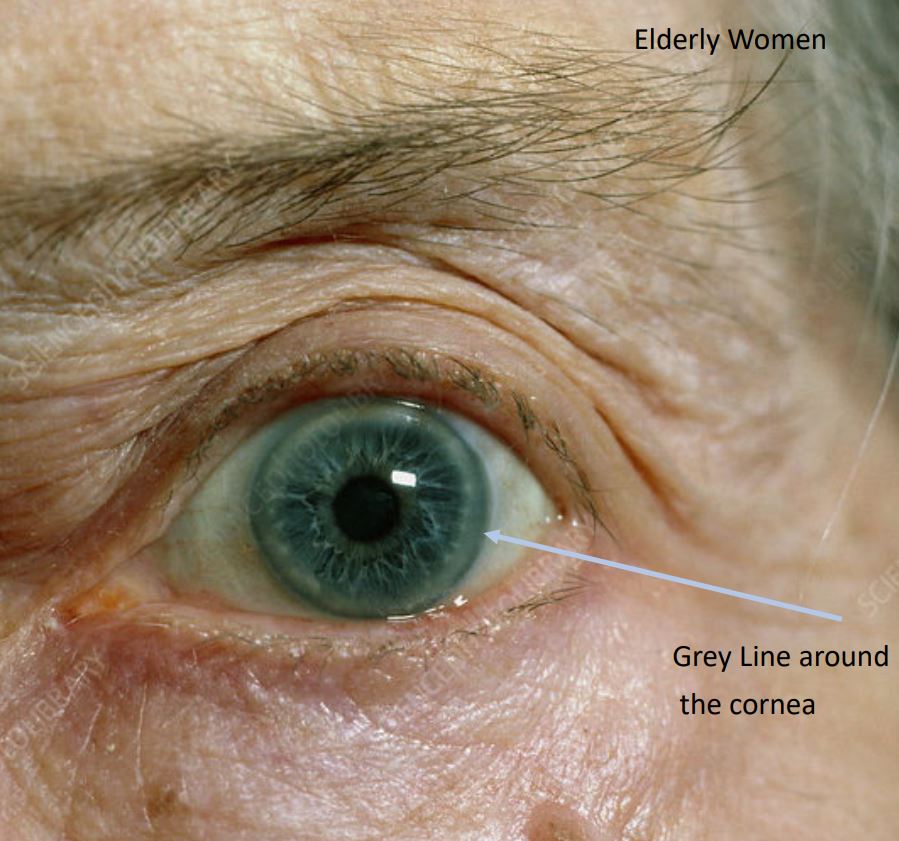
deposits in corneal stroma. It is an indicator of
hypercholesterolemia or
hyperlipidemia, in younger
individuals
87
No Clear Correlation with
Increased risk of
atherosclerosis
No Clear Correlation with
Increased risk of
atherosclerosis
Xanthelasma
No Clear Correlation with
Increased risk of
atherosclerosis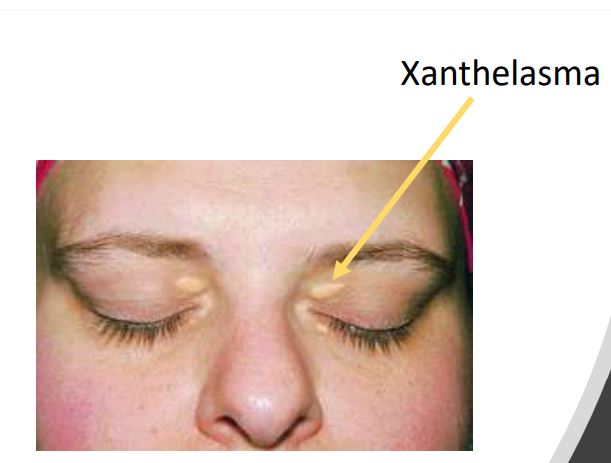
No Clear Correlation with
Increased risk of
atherosclerosis
88
:
Indication of Familial
Hypercholesterolemia
Indication of Familial
Hypercholesterolemia
Xanthoma tendinosum:
Indication of Familial
Hypercholesterolemia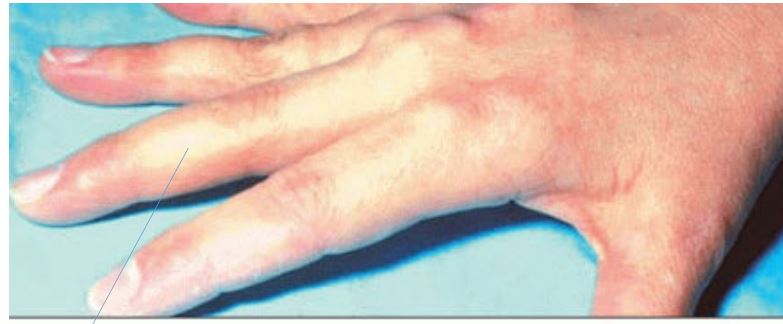
Indication of Familial
Hypercholesterolemia