Lower Ext 1
Study these flashcardsFree · spaced repetition · iPhone, Android, Mac & web
All cards
1
Lower limb has bones
Lower limb has 30 bones
2
** TEST QUESTION Sartorius is also called
** TEST QUESTION Sartorius is also called Tailor’s
muscle
muscle
3
2 roles of lower limb
locomotion and balance
4
4 Regions of the lower limb
1. Femoral region (thigh)
2. Knee and leg region (between the knee joint and ankle joint)
3. Ankle Region (tarsal bones)
4. Foot
2. Knee and leg region (between the knee joint and ankle joint)
3. Ankle Region (tarsal bones)
4. Foot
5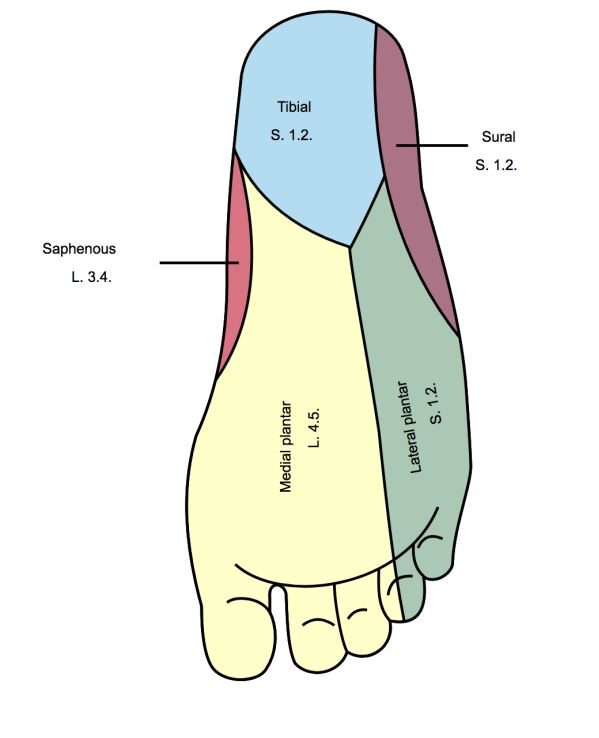
Image occlusion: name the hidden labels
6
Gluteus maximus =
Gluteus maximus = cheeks
7
Natal/ gluteal cleft =
Natal/ gluteal cleft = crack
8
Gluteal folds =
Gluteal folds = bottom of cheek
9
Borders of Femoral Triangle
• Sartorius (lateral)
• Adductor longus (medial)
• Inguinal ligament
(superior)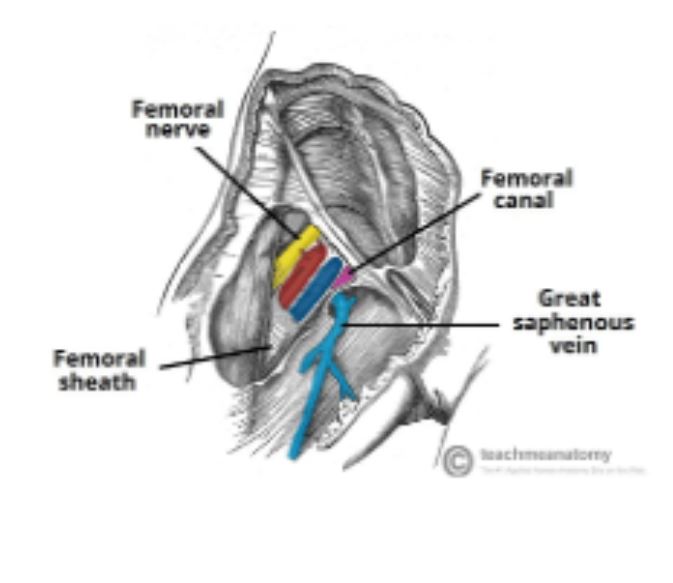
• Adductor longus (medial)
• Inguinal ligament
(superior)
10
What is NOT in the femoral sheath?
Femoral nerve
11
What is the pelvic girdle?
-Bony ring of sacrum and right and left hip bones
-Joined at pubic symphysis
-Joined at pubic symphysis
12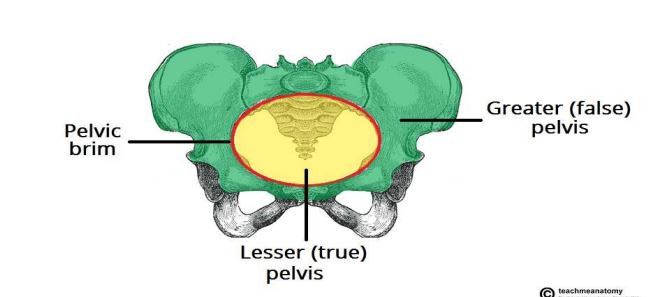
Image occlusion: name the hidden labels
13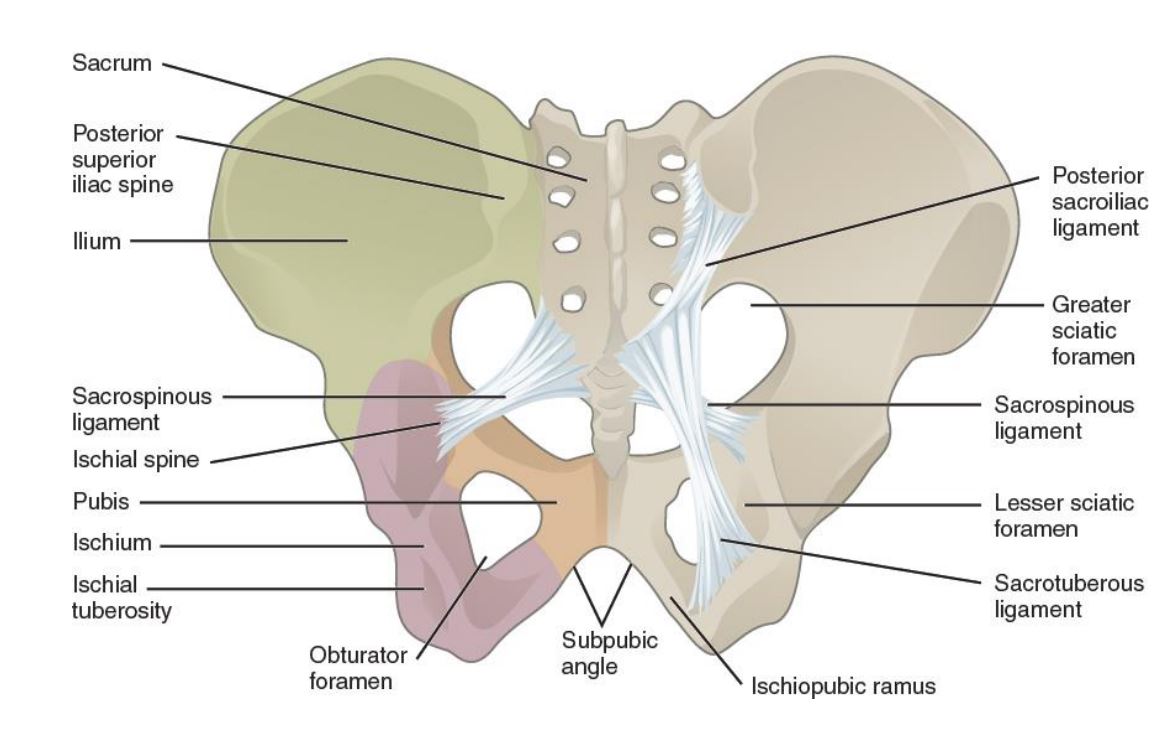
Image occlusion: name the hidden labels
14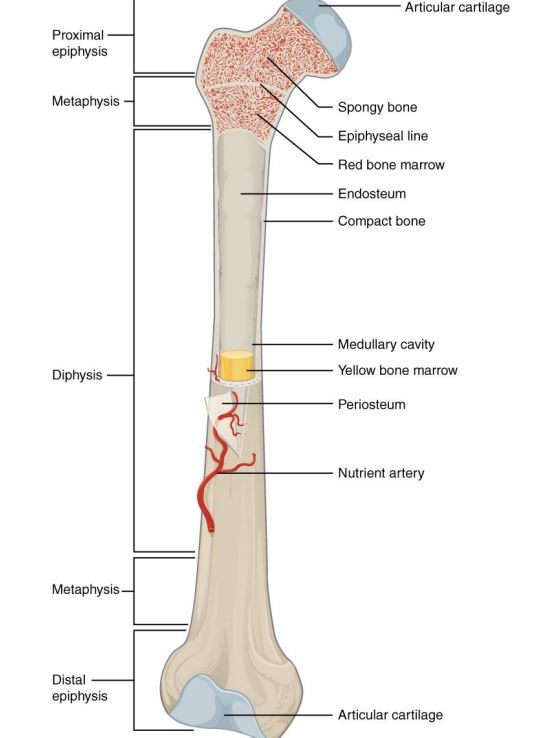
Image occlusion: name the hidden labels
15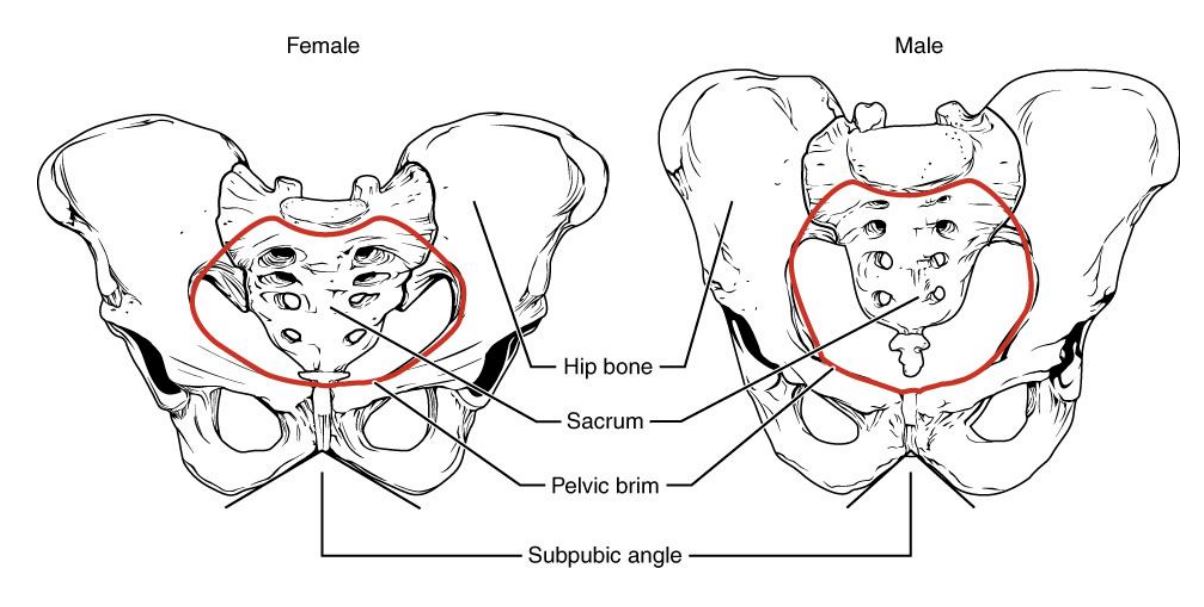
Image occlusion: name the hidden labels
16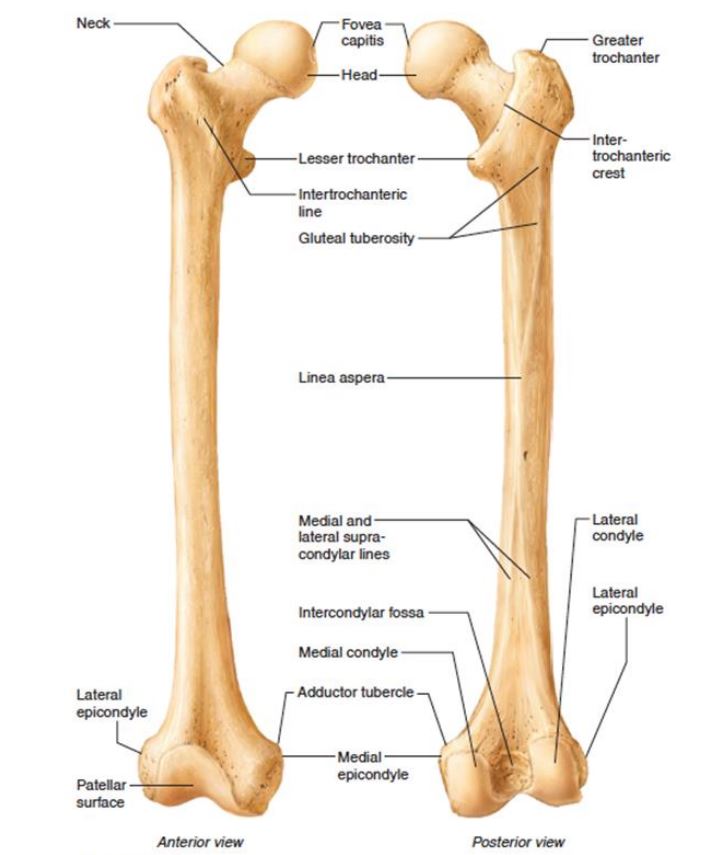
Image occlusion: name the hidden labels
17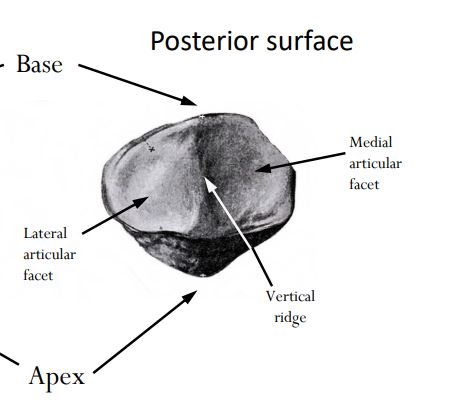
Image occlusion: name the hidden labels
18
What type of bone is the patella?
Sesamoid bone
19
What tendon is the patella found within?
Quadraceps fermoris and the knee joint capsule
20
What do seasmoid bones develop within?
Tendons
21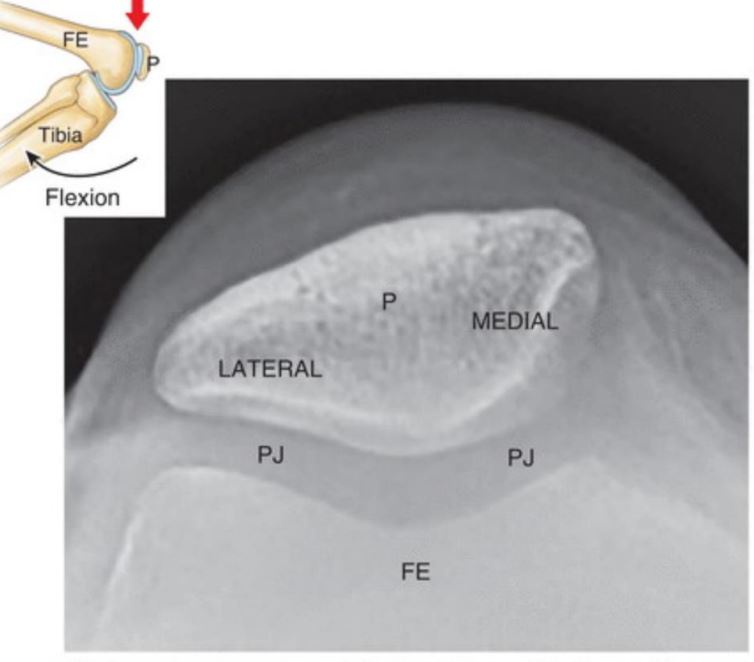
Image occlusion: name the hidden labels
22
What is more medial- Tibia or Fibula?
Tibia
23
What is more lateral- Tibia or Fibula?
Fibula
24
What are NOT functions of the fibula?
Does NOT do pronation or supination
25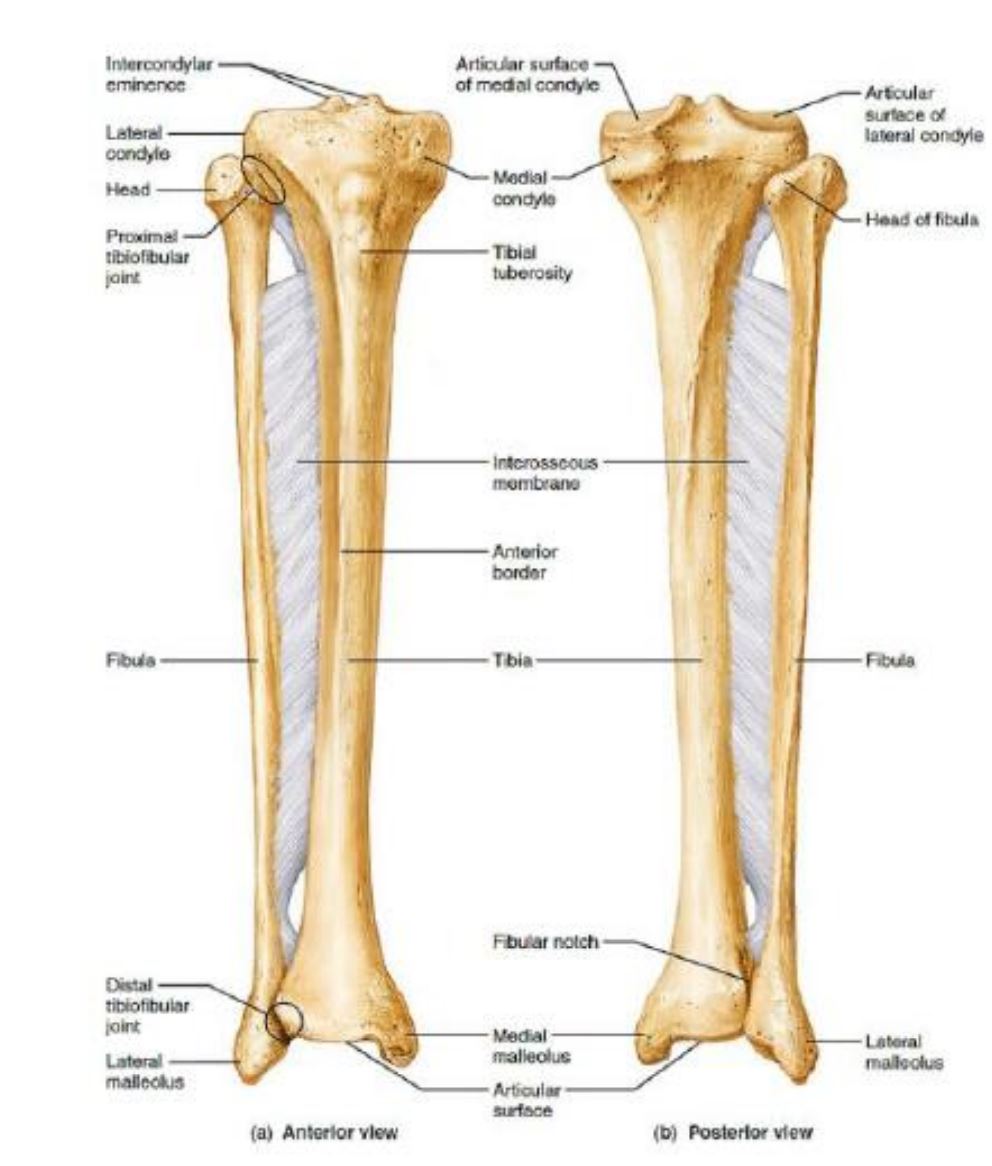
Image occlusion: name the hidden labels
26
Talus = . Found between the . Articulates with .
Talus = ankle. Found between the tibia and fibula. Articulates with both.
27
Calcaneus = . Attachment for . Carries the .
Calcaneus = heel. Attachment for Calcaneal tendon. Carries the talus.
28
The matatarsals are homologous to the
The matatarsals are homologous to the metacarpals
29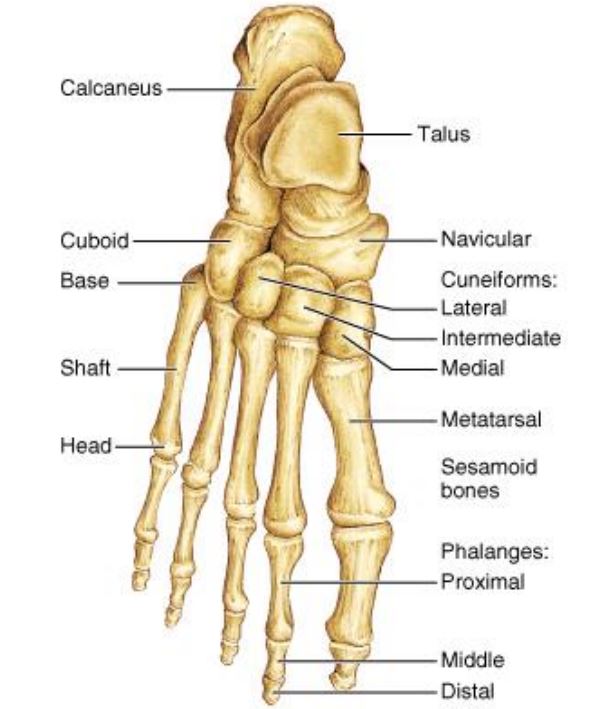
Image occlusion: name the hidden labels
30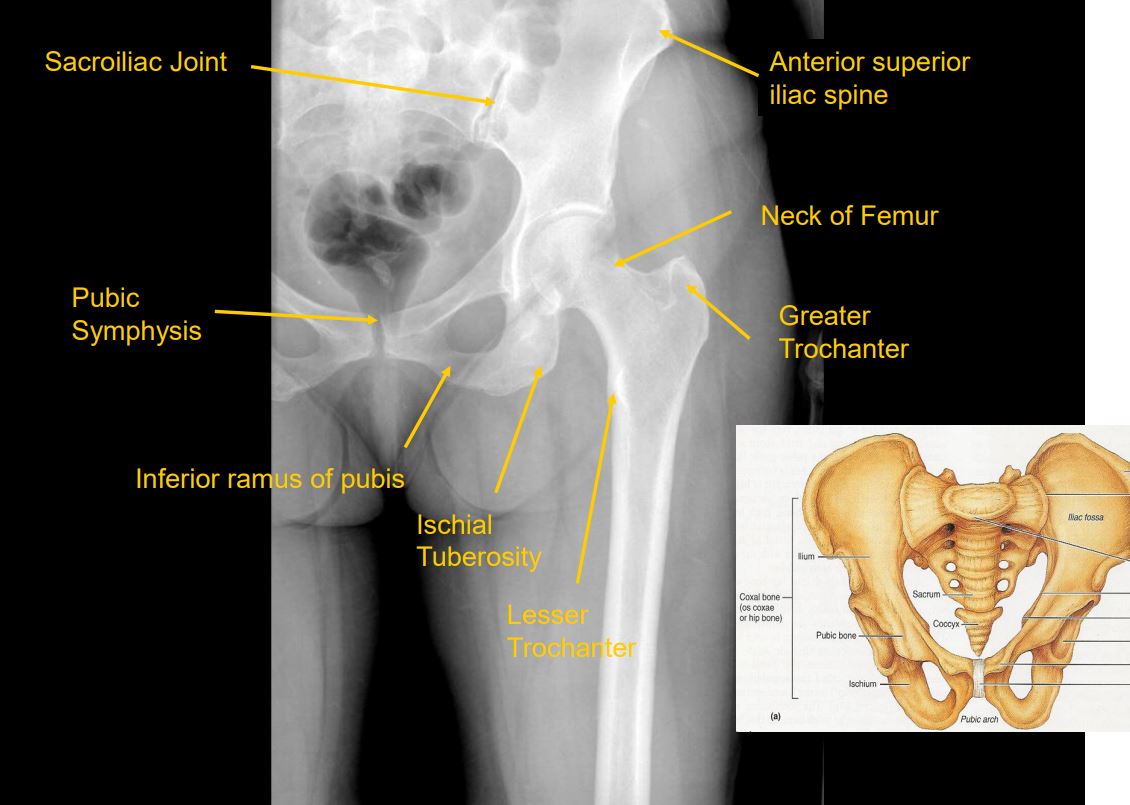
Image occlusion: name the hidden labels
31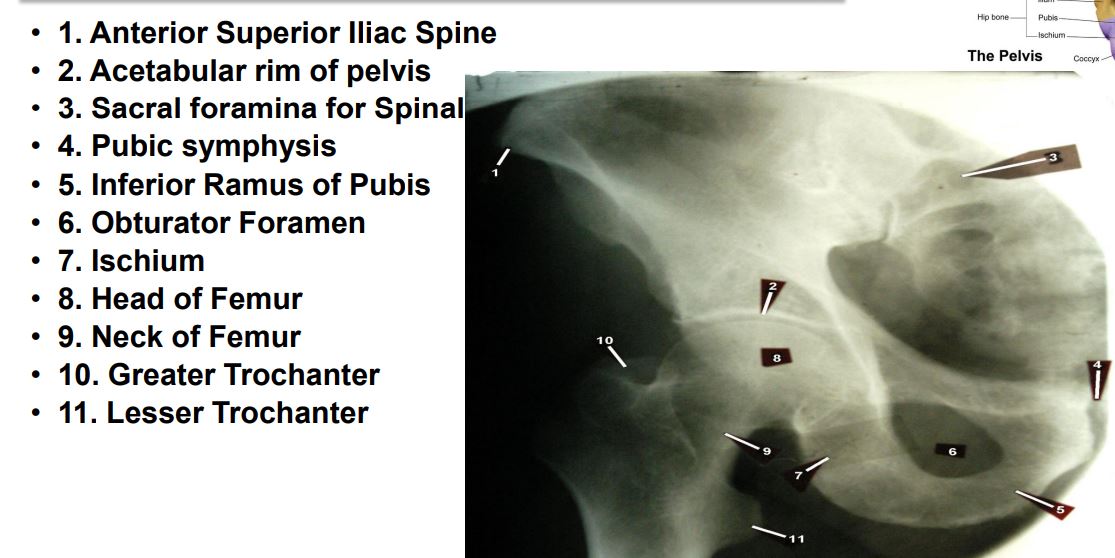
Image occlusion: name the hidden labels
32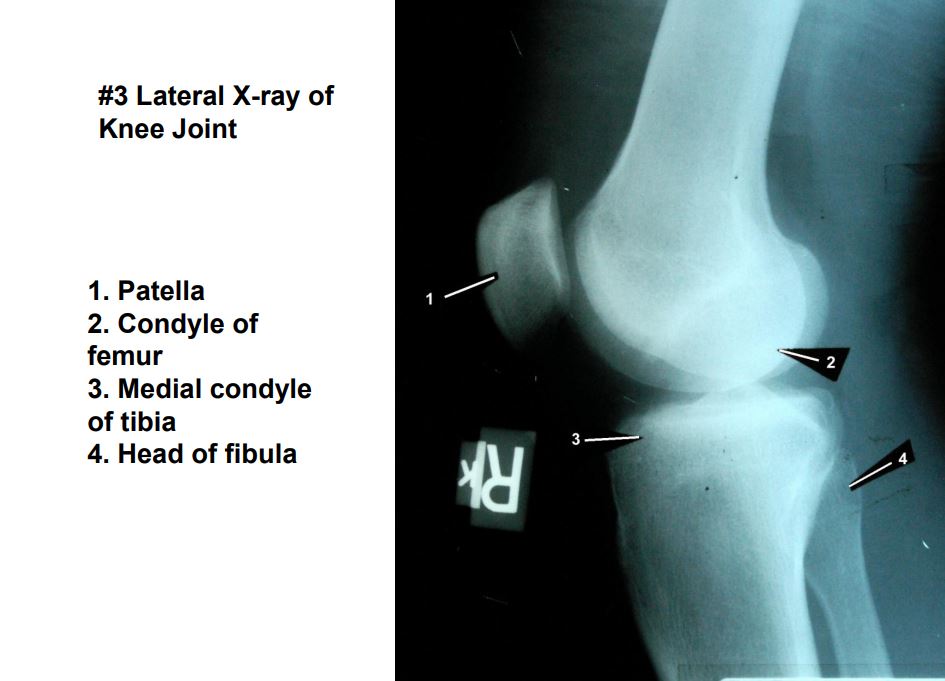
Image occlusion: name the hidden labels
33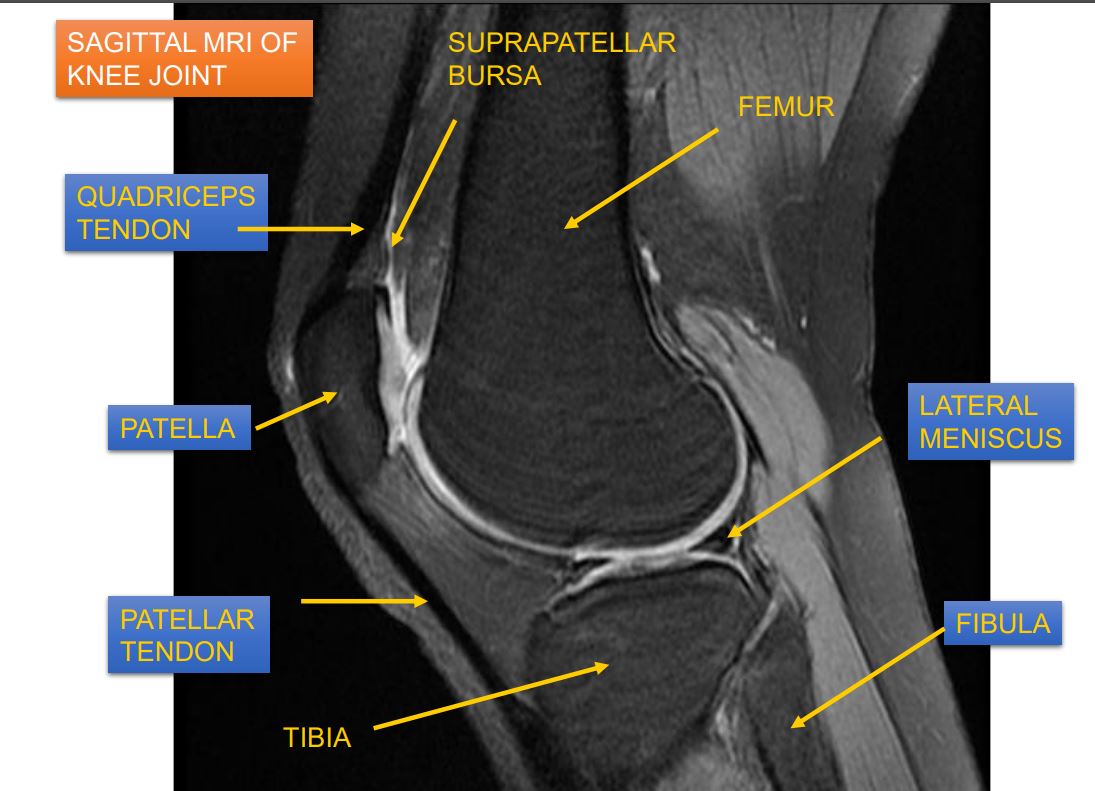
Image occlusion: name the hidden labels
34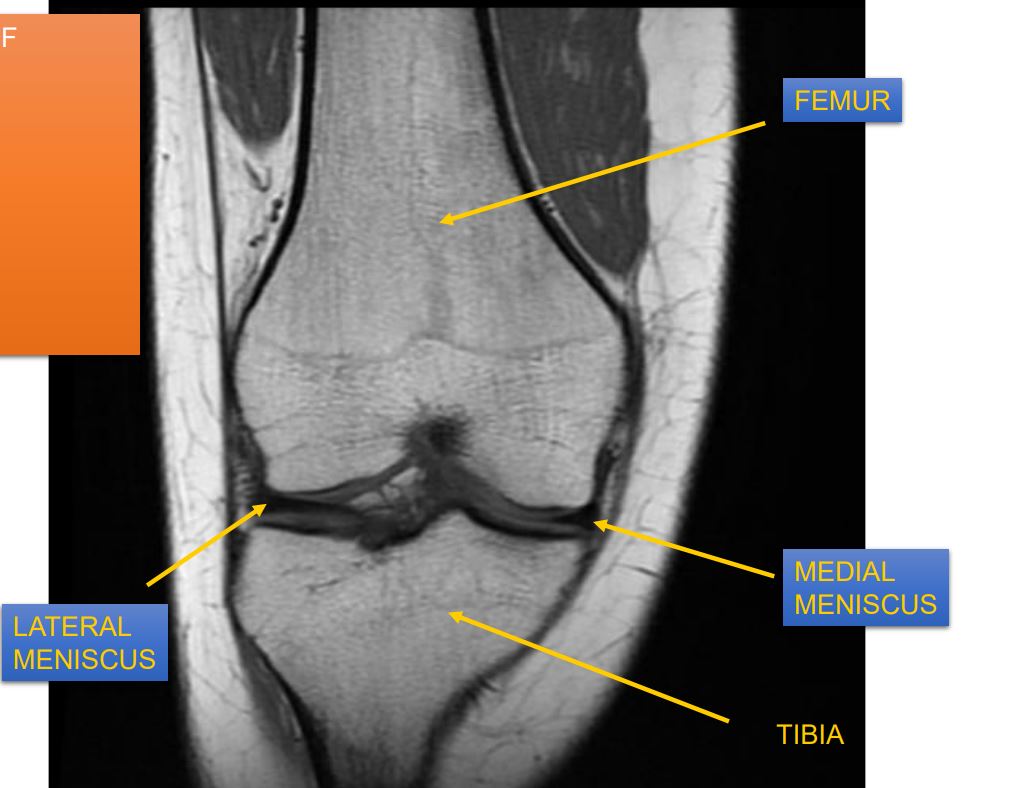
Image occlusion: name the hidden labels
35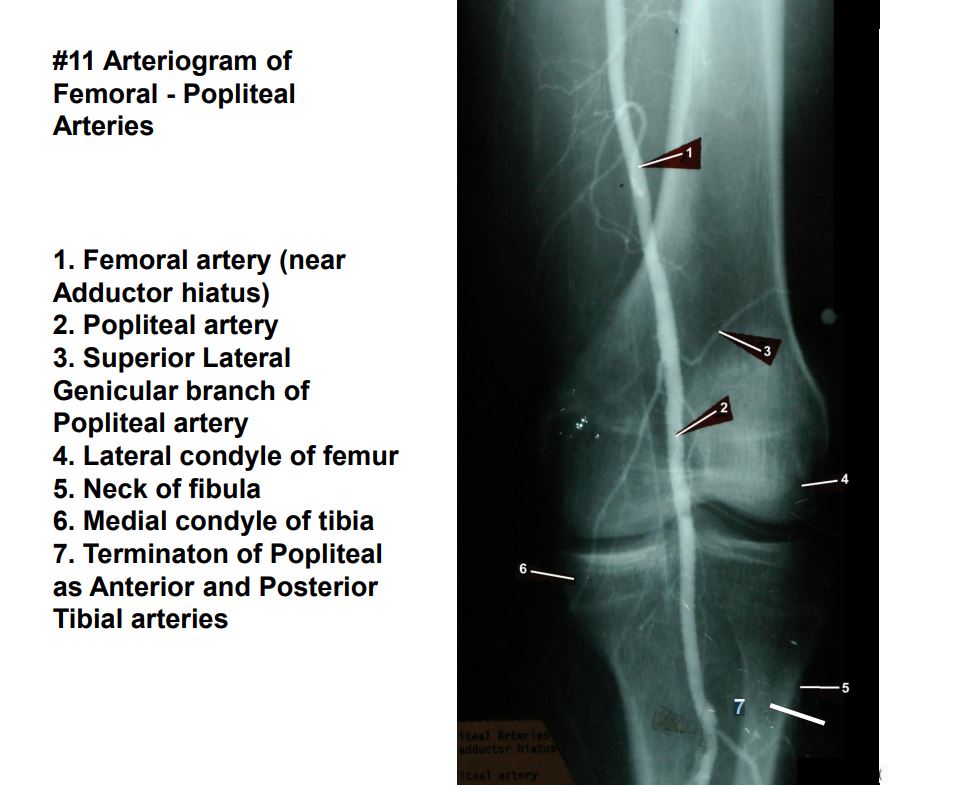
Image occlusion: name the hidden labels
36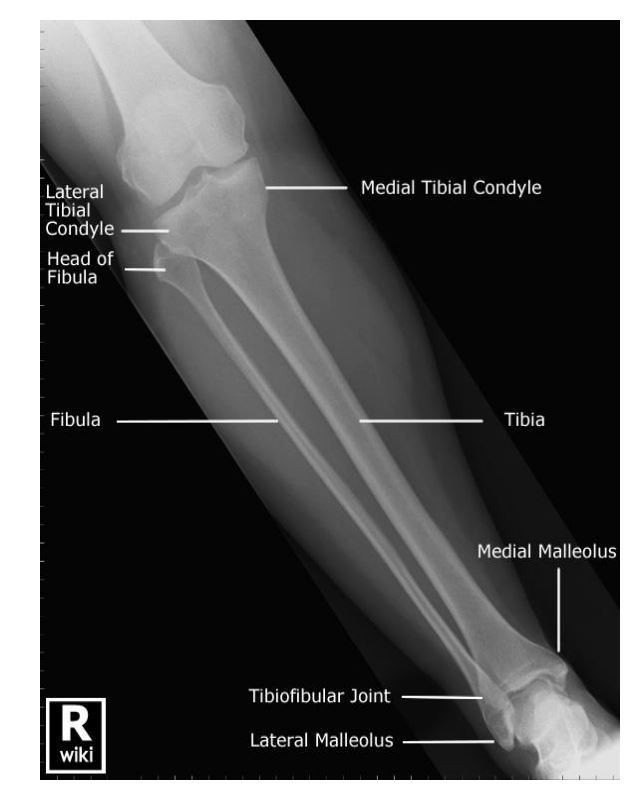
Image occlusion: name the hidden labels
37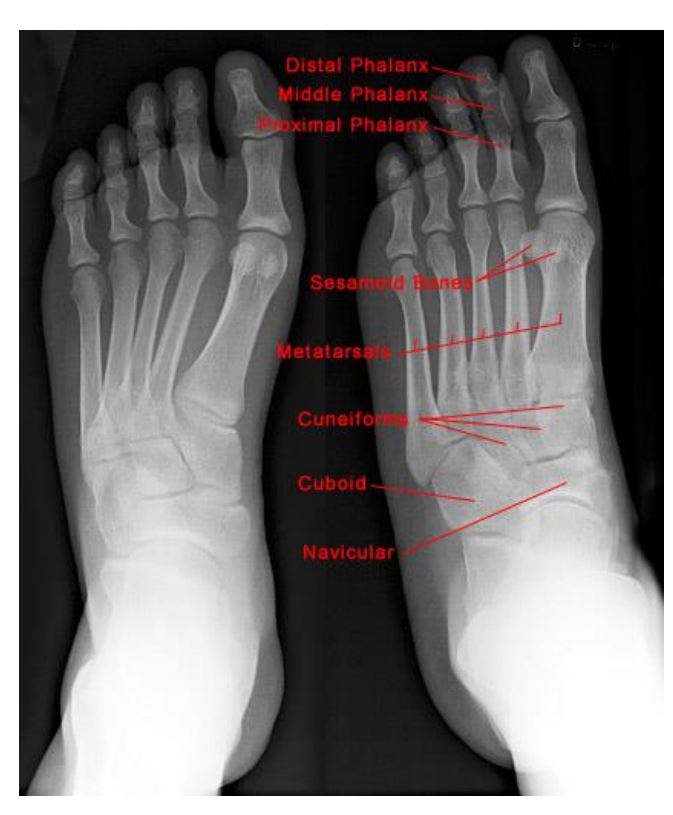
Image occlusion: name the hidden labels
38
What is fascia?
Band of connective tissue
39
Superficical fascia is attached to the
Superficical fascia is attached to the dermis of skin
40
Deep fascia forms the
Deep fascia forms the intermuscular septa
41
Superfical fascia is made of . It determines the . It surrounds , , and . It also conserves
Superfical fascia is made of areolar tissue with fat. It determines the shape of the body. It surrounds organs, glands, and neurovasular bundles. It also conserves body heat
42
What is the deep fasica of the tighh that encloses the thigh like a trouser leg?
Fascia lata
43
What is the fascia lata attached to on its upper end?
Pelvis and inguinal ligament
44
What is the fascia attached to on its lateral aspect?
The thickened ILIOTIBIAL TRACT
45
The gap in front of the thigh and below inguninal ligament is called the
The gap in front of the thigh and below inguninal ligament is called the Saphenous opening
46
What is in the Saphenous opening?
1. Great saphenous vein
2. Small branches of femoral artery
3. Lymph vessels
2. Small branches of femoral artery
3. Lymph vessels
47
What is the lower border of the saphenous opening? What does it lie anterior to?
The falciform margin. Lies anterior to femoral vessels
48
What is the connective tissue in the saphenous opening called?
Cribriform fascia
49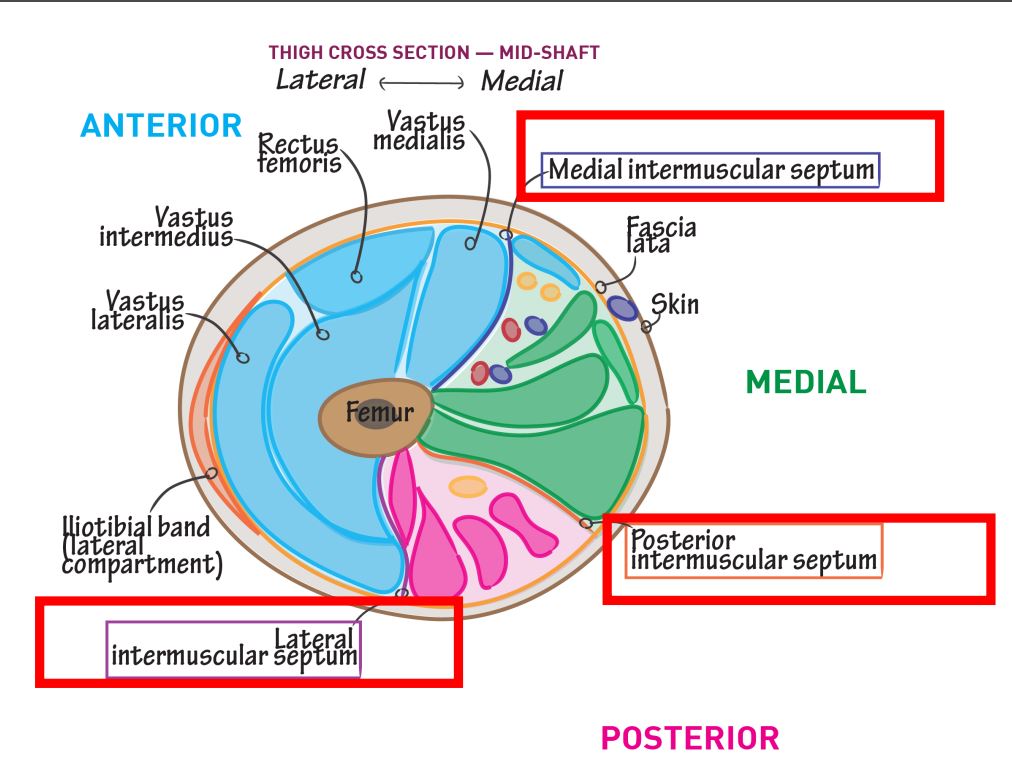
Image occlusion: name the hidden labels
50
Where are the superficial inguinal lymph nodes located?
Proximal region of femoral triangle
51
What does the medial superifical inguinal lymph nodes drain?
1. Anterior abdominal wall below umbilical
2. Lower anal canal
3. External genitalia
2. Lower anal canal
3. External genitalia
52
What does the lateral superficial inguinal lympph node drain?
1. Buttox
2. Back below iliac crest
2. Back below iliac crest
53
The great saphenous vein is formed by the , and the
The great saphenous vein is formed by the dorsal venous arch
of the foot, and the dorsal vein of
the great toe
of the foot, and the dorsal vein of
the great toe
54
The great saphenous vein It ascends up the medial side of
the leg, passing anteriorly to
the at the ankle,
and posteriorly to the medial
condyle at the knee
the leg, passing anteriorly to
the at the ankle,
and posteriorly to the medial
condyle at the knee
The great saphenous vein It ascends up the medial side of
the leg, passing anteriorly to
the medial malleolus at the ankle,
and posteriorly to the medial
condyle at the knee
the leg, passing anteriorly to
the medial malleolus at the ankle,
and posteriorly to the medial
condyle at the knee
55
The great saphenous vein terminates by
draining into the femoral vein
immediately inferior to the
draining into the femoral vein
immediately inferior to the
The great saphenous vein terminates by
draining into the femoral vein
immediately inferior to the inguinal
ligament
draining into the femoral vein
immediately inferior to the inguinal
ligament
56
Surgically, the great saphenous vein
can be harvested and used as a
vessel in
can be harvested and used as a
vessel in
Surgically, the great saphenous vein
can be harvested and used as a
vessel in coronary artery bypasses.
can be harvested and used as a
vessel in coronary artery bypasses.
57
Which hip muscles are responsible for flexion?
Iliopsoas, rectus femoris, sartorius. Adductor muscles
58
Which hip mucles are resonsible for extension?
Gluteus maximus, hamstrings
59
Which hip muscles are responsible for abduction?
Gluteus medius and minimus, sartorius, tensor fascia
lata, piriformis, upper fibers of gluteus maximus
lata, piriformis, upper fibers of gluteus maximus
60
What hip muscles do adduction?
Adductor muscles, pectineus, gracilis
61
What hip muscles do lateral rotation?
Piriformis, obturator internus and externus, superior
and inferior gemelli, quadratus femoris, gluteus
maximus
and inferior gemelli, quadratus femoris, gluteus
maximus
62
What hip muscles do medial rotation?
Anterior fibers of gluteus medius and minimus, tensor
fascia lata
fascia lata
63
Which hip muscles do circumduction?
All are needed
64
What are the 4 superficial muscles of the gluteal region?
1. Gulteus maximus
2. Gluteus medius
3. Gluteus minimus
4. Tensor fasia lata
2. Gluteus medius
3. Gluteus minimus
4. Tensor fasia lata
65
What is the nerve supply of all of the muscles of the superficial gluteal region? Exceptions?
The gluetus medius, gluetus minimus, and tensor fascia lata are all supplied by the superior gluteal nerve (L4-S1). The gluetus maximus is supplied by the Inferior Gluteal nerve (L5-S2).
66
What is the action of the gluteus maximus?
Extension, lateral
rotation, abduction.
Climbing, running
rising from sitting
position
rotation, abduction.
Climbing, running
rising from sitting
position
67
What is the action of the Gluteus Medius?
Abduction, medial
rotation. Tilts the pelvis
when walking
rotation. Tilts the pelvis
when walking
68
What is the action of the Gluteus Minimus?
Abduction, medial
rotation
rotation
69
What is the action of the tensor fascia lata?
Flexion and medial
rotation. Tenses the
fascia lata
rotation. Tenses the
fascia lata
70
What is the origin and insertion of the tensor fascia lata?
O: Iliac crest, ASIS
I: Iliotibial tract
I: Iliotibial tract
71
What are the 6 muscles of the deep gluteal region?
1. Piriformis
2. Superior gemellus
3. Obturator internus
4. Obturator externus
5. Inferior gemellus
6. Quadratus femoris
2. Superior gemellus
3. Obturator internus
4. Obturator externus
5. Inferior gemellus
6. Quadratus femoris
72
What is the nerve supply of the piriformis?
Ventral rami of S1, S2
(sacral plexus)
(sacral plexus)
73
What is the nerve supply of the superior gemellus?
Sacral plexus (L5-S2)
74
What is the nerve supply of the Obturator Internus?
Sacral plexus (L5-S2)
75
What is the nerve supply of the Obturator Externus?
Posterior branch of
obturator nerve (L2,3,4)
obturator nerve (L2,3,4)
76
What is the nerve supply of the inferior gemellus?
Nerve to the quadratus
femoris (L4-S1
femoris (L4-S1
77
What is the nerve supply of the Quadratus Femoris?
Nerve to the quadratus
78
All of the muscles of the deep gluteal region do which action?
Lateral rotation
79
The two muscles of the deep gluteal region that do abduction are?
Piriformis and Obturator Internus
80
The only muscle of the deep gluteal region that does adduction is?
Obturator Externus
81
The glut maximus is the of the thigh
The glut maximus is the extensor of the thigh
82
The does pelvic tilt relative to insertion when foot is planted
The glut medius does pelvic tilt relative to insertion when foot is planted
83
The major lateral rotator is the .
The major lateral rotator is the Piriformis.
84
What are the 6 muscles of the anterior thigh?
1. Psoas major
2. Iliacus
3. Iliopsoas
4. Sartorius
5. Quadriceps femoris (4 muscles)
6. Articularis genus
2. Iliacus
3. Iliopsoas
4. Sartorius
5. Quadriceps femoris (4 muscles)
6. Articularis genus
85
What is the nerve supply of psoas major?
Lumbar plexus (L2, L3)
86
What is the action of psoas major?
Flexion of the thigh;
flexion of the trunk
*****sitting up from lying
down position
flexion of the trunk
*****sitting up from lying
down position
87
What is the nerve supply of the iliacus?
Femoral nerve
88
What is the action of the iliacus?
Flexion of the thigh/trunk
89
What is the nerve supply of the iliopsoas?
L1-L3 and part of femoral nerve
90
What is the action of the iliospoas?
***Chief flexor of the thigh. Advance limb when walking
91
What is the nerve supply of the sartorius?
Femoral nerve (L2,3,4)
92
What is the action of the sartorius?
Flexion, abduction and
lateral rotation of the
thigh. Flexion and
medial rotation of the
leg
lateral rotation of the
thigh. Flexion and
medial rotation of the
leg
93
All of the the quadriceps femoris muscles are supplied by the?
Femoral nerve (L2, 3, 4)
94
Are are the 4 quadriceps muscles?
1. Rectus femoris
2. Vastus Lateralis
3. Vastus Medialis
4. Vastus Intermedius
2. Vastus Lateralis
3. Vastus Medialis
4. Vastus Intermedius
95
What is the function of all of the quadricep fermoris muscles?
Extension of the leg and flexion of thigh
96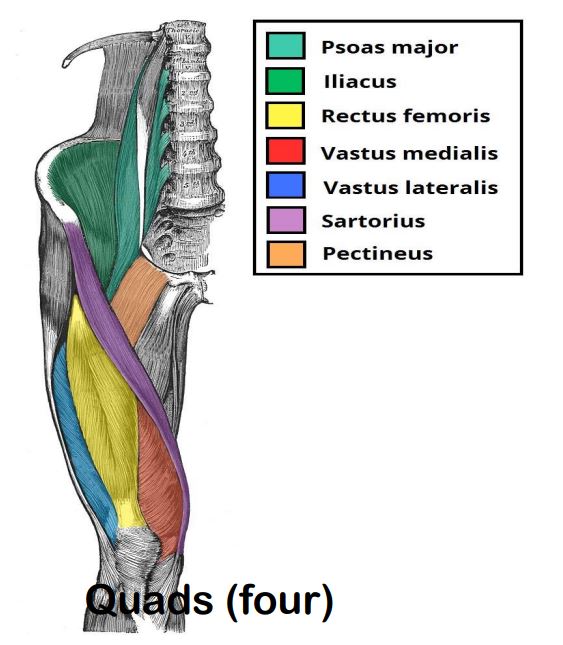
Image occlusion: name the hidden labels
97
What are the muscles of the medial compartment of the thigh?
1. Pectineus
2. Gracilis
3. Adductor longus
4. Adductor brevis
5. Adductor magnus
2. Gracilis
3. Adductor longus
4. Adductor brevis
5. Adductor magnus
98
What is the general action of the muscles of the medial compartment of the thigh?
Adduction
99
What is the nerve supply of the pectineus?
-Femoral nerve (L2-L4)
-Accessory obtruator nerve (L2,3,4)
-Accessory obtruator nerve (L2,3,4)
100
What is the action of the pectineus?
Adduction, flexion of the knee and medial rotation of hip
101
What is the nerve supply of the gracialis?
Anterior branch of obtruator
102
What is the function of the gracialis muscle?
Flexion of the knee and medial rotation of hip
103
What is the nerve supply of the adductor longus?
Adduction, assists in lateral rotation and flexion
104
What is the nerve supply of adductor brevis?
Anterior branch of obturator
105
What is the action of the adductor brevis?
Adduction; assists in lateral
rotation and flexion
rotation and flexion
106
What is the nerve supply of the ADDUCTOR MAGNUS?
Posterior division of obturator (adductor part)
Tibial nerve (extensor part)
Tibial nerve (extensor part)
107
What is the action of the adductor magnus?
Adduction and extension of the thigh
108
Draw out lumbar plexus
Watch video 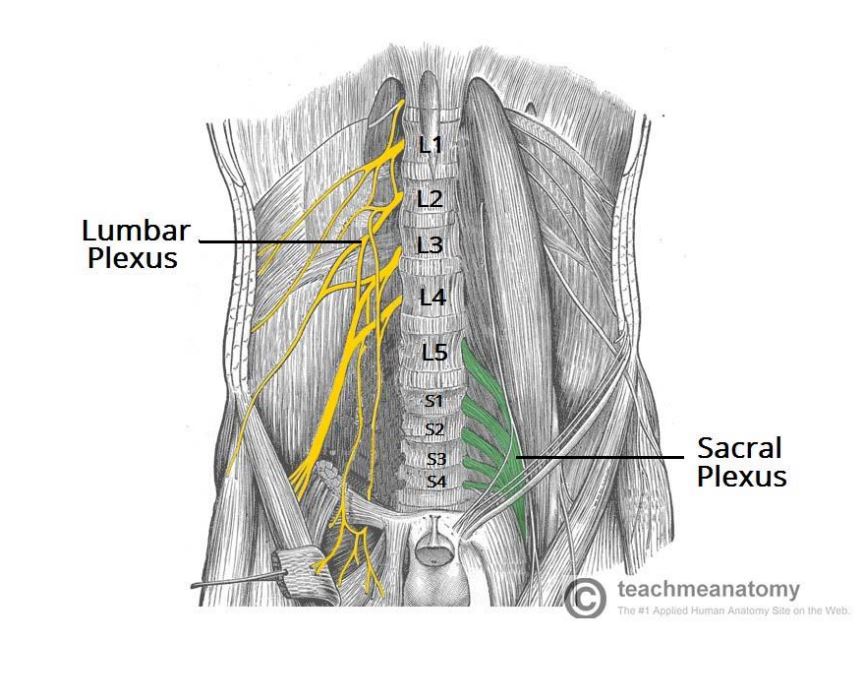
109
Lumbar plexus
L1 – L4
110
Sacral plexus
S1 – S4
111
Lumbosacral trunk
L4 – L5
112
Lumbosacral trunk (L4-L5) + Sacral plexus (S1-S4) =
Lumbosacral trunk (L4-L5) + Sacral plexus (S1-S4) =
LUMBOSACRAL PLEXUS
LUMBOSACRAL PLEXUS
113
The lumbosacral plexus is formed by the
The lumbosacral plexus is formed by the ventral rami of L2-S3
114
Nerves that contain fibers from the superior rami of the plexus (L2 through L4)
innervate muscles in the region that act on the
innervate muscles in the region that act on the
Nerves that contain fibers from the superior rami of the plexus (L2 through L4)
innervate muscles in the anterior and medial thigh region that act on the hip and
knee joints
innervate muscles in the anterior and medial thigh region that act on the hip and
knee joints
115
Nerves that contain fibers from the inferior rami of the plexus (S1 through S3)
innervate muscles of the that act on the
innervate muscles of the that act on the
Nerves that contain fibers from the inferior rami of the plexus (S1 through S3)
innervate muscles of the leg that act on the ankle and foot joints.
innervate muscles of the leg that act on the ankle and foot joints.
116
The and travel through the gluteal region and thigh in a common connective
tissue sheath and together are called the SCIATIC NERVE.
tissue sheath and together are called the SCIATIC NERVE.
The tibial and common fibular nerves travel through the gluteal region and thigh in a common connective
tissue sheath and together are called the SCIATIC NERVE.
tissue sheath and together are called the SCIATIC NERVE.
117
The common fibular nerve divides in the proximal leg into
The common fibular nerve divides in the proximal leg into superficial and deep fibular nerves.
118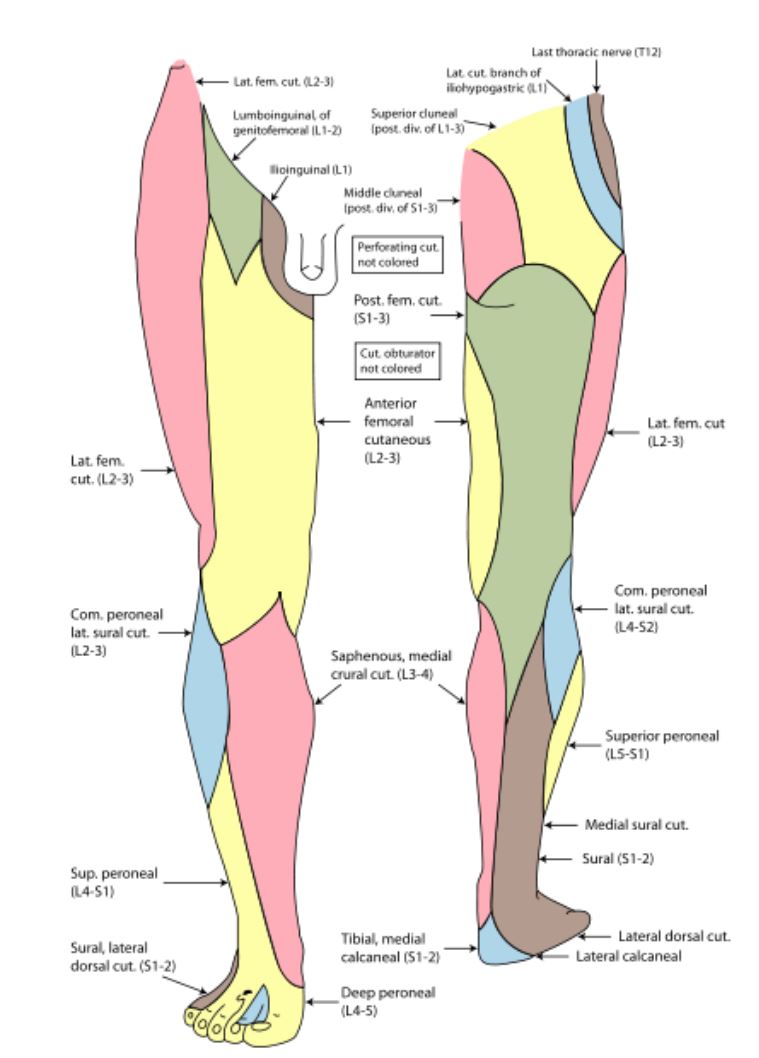
Draw out sensory innervation of lower limb
119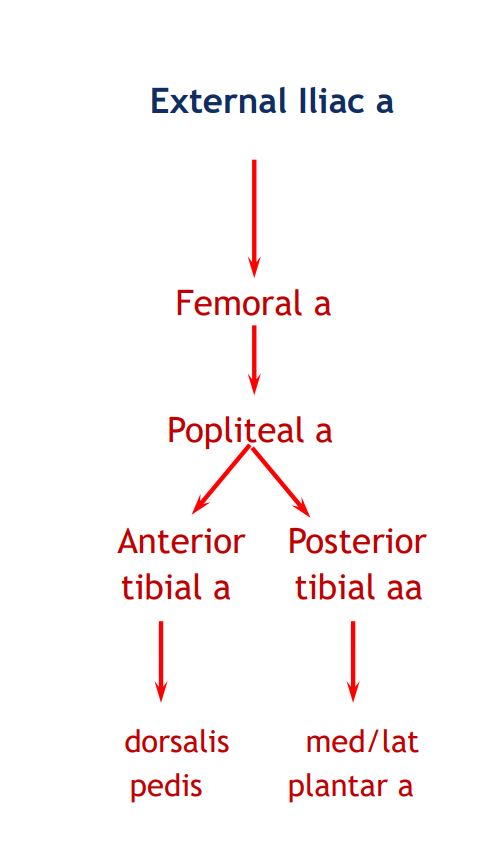
Draw out chart with division of blood supply
120
Problems with extension of quadriceps,issues with squat rise is a problem, diminished knee jerk with which nerve root
L4
121
Problems with dorsiflexion of great toe and foot and heel walking is an issue which which nerve root
L5
122
Problems with plantar flexion of great toe and foot, walking on toes, and ankle jerk dimished is an issue which which nerve root?
S1
123
Anterior hip dislocation causes damage to which nerve?
Obturator l2-l4
124
Pelvic fracture causes damage to which nerve?
Femoral L2-L4
125
Fibula neck compression or fracture damages which nerve?
Common peroneal or fibular (L4-S2)
126
Knee trauma damages which nerve?
Tibial (L4-S3)
127
Trendenlenburgs sign is indicative of damage to which nerve?
Superior gluteal (L4-S1)
128
Issues with jumping, climbing stairs, or pushing inferiorly is damage to which nevre?
Inferior gluteal (L5-S2)
129
Weak knee flexion and loss of ankle and foot control affecting all phases of gait is indicative of muscle damage to which nerve? What is the condition?
Sciatic nerve (L4-S3)
Condition is siatica
Condition is siatica
130
Which muscles are impacted in siatica?
1. Hamstring group
2. Adductor magnus
2. Adductor magnus
131
The and groups are particularly
at risk for muscle strains
because they cross both the hip
and knee joints
at risk for muscle strains
because they cross both the hip
and knee joints
The hamstring and quadriceps
muscle groups are particularly
at risk for muscle strains
because they cross both the hip
and knee joints
muscle groups are particularly
at risk for muscle strains
because they cross both the hip
and knee joints
132
is a devastating condition where an
osseofascial compartment pressure
rises to a level that decreases
perfusion. Causes are things like trauma, burns, tight cast, crush injury.
osseofascial compartment pressure
rises to a level that decreases
perfusion. Causes are things like trauma, burns, tight cast, crush injury.
Compartment syndrome is a devastating condition where an
osseofascial compartment pressure
rises to a level that decreases
perfusion. Causes are things like trauma, burns, tight cast, crush injury.
osseofascial compartment pressure
rises to a level that decreases
perfusion. Causes are things like trauma, burns, tight cast, crush injury.