Biochem Lecture 6
Study these flashcardsFree · spaced repetition · iPhone, Android, Mac & web
All cards
1
Most Enzymes are
Most Enzymes are Proteins
2
Some are Catalytic, these are called ribozymes
Some RNA are Catalytic, these are called ribozymes
3
What is an example of an RNA enzyme?
tRNA (peptidyl-transfer tRNA)
4
Enzymes are biological catalysts that accelerates the of the reaction without altering the of the reaction.
Enzymes are biological catalysts that accelerates the rate of the reaction without altering the equilibrium of the reaction.
5
CO2 dissolved in H2O forms H2CO3 at room temperature (without carbonic anyhydrase) and it reaches equilibrium, but it
CO2 dissolved in H2O forms H2CO3 at room temperature (without carbonic anyhydrase) and it reaches equilibrium, but it takes longer
6
Which amino acids absorb at 280 nm?
Tryphtophan, tyrosine, phenylalanine
7
What does this graph provide support for? 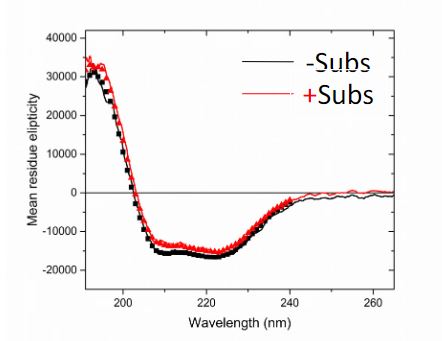
Provides support for the lock-and-key model because the mean residue elipticity did not change with or without substrate
8
Who proposed lock and key?
Emil Fisher
9
Who proposed induced kit?
Daniel Koshland
10
What is the lock and key model?
Substrate and enzyme are perfect fit
11
What is the induced fit model model?
The substrate and active site will modify their structures to accomodate each other
12
RNaseH degrade after transcription is concluded by breaking down linkage.
RNaseH degrade RNA after transcription is concluded by breaking down phosphodiester linkage.
13
What is the difference between cofactors and coenzymes?
cofactors are inorganic and coenzymes are organic
14
Zn2+ is used by , (does not participate in redox reactions but rather functions as a to accept a pair of
electrons)
electrons)
Zn2+ is used by Carbonic anhydrase, Zinc Proteases (does not participate in redox reactions but rather functions as a Lewis acid to accept a pair of
electrons)
electrons)
15
Mg2+ is used by many
Mg2+ is used by many Kinases
16
Most Enzymes are
Most Enzymes are Proteins
17
Se (Non metal) is used by
Se (Non metal) is used by Glutathione Peroxidase
18
Most Enzymes are
Most Enzymes are Proteins
19
Fe2+ is used by which breaks down
Fe2+ is used by catalase which breaks down hydrogen peroxide
20
A nonprotein group forming part of or combined with a protein is called a
A nonprotein group forming part of or combined with a protein is called a prosthetic group
21
The formation of the enzyme substrate complex is
The formation of the enzyme substrate complex is non-enzymatic
22
B1
Thiamin (Pyruvate dehydrogenase)
23
B2
Riboflavin (FAD+/FADH, Succinate dehydrogenase ) *Important for ETC
24
B3
Niacin (NAD+, NADH, Lactate dehydrogenase)
25
B5
Pantothenate (acyl carrier protein)
26
B6
Pyridoxine (Transaminase)
27
B7
Biotin (Acetyl CoA carboxylase)
28
B9
Folic Acid (Thymidylate)
29
B12
Cobalamin (methy malonyl CoA mutase)
30
catalyzes oxidation reduction reactions
Oxidoreductases catalyzes oxidation reduction reactions
31
catalyze the transfer of a functional group from a donor molecule to an acceptor molecule.
Transferases catalyze the transfer of a functional group from a donor molecule to an acceptor molecule.
32
catalyze the cleavage of a covalent bond using water
Hydrolases catalyze the cleavage of a covalent bond using water
33
are the enzymes that break chemical bonds in order to form new compounds
Lyases are the enzymes that break chemical bonds in order to form new compounds
34
A is an enzyme that catalyzes the conversion of a specified compound to an isomer (same formula, but differenant arrangement of atoms).
A isomerase is an enzyme that catalyzes the conversion of a specified compound to an isomer (same formula, but differenant arrangement of atoms).
35
A is an enzyme that forms chemical bonds in order to combine different compounds
A ligase is an enzyme that forms chemical bonds in order to combine different compounds
36
Lactate dehydrogenase is an example of what type of enzyme? 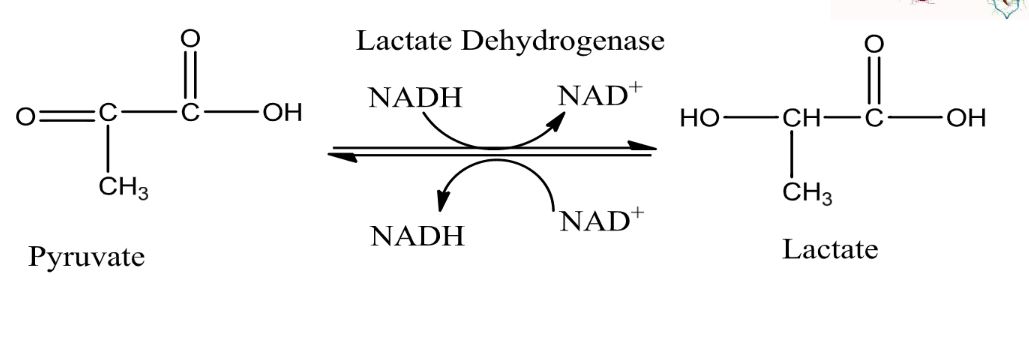
Oxidoreductases
37
Most ensymes have a rate of
10^5 s^-1M^-1
38
Cholinesterase is what type of enzyme? 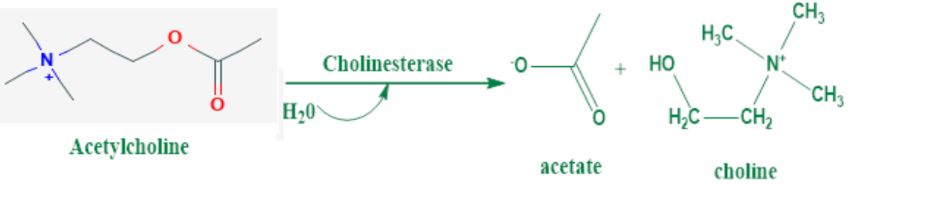
Hydrolase
39
What type of enzyme is shown? 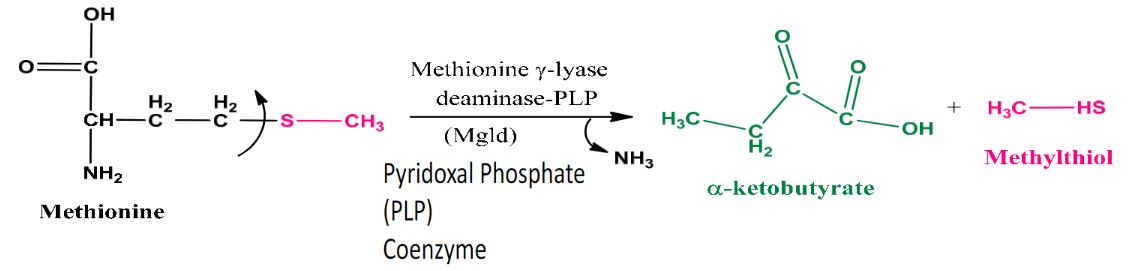
Lyase
40
What type of enzyme is shown? 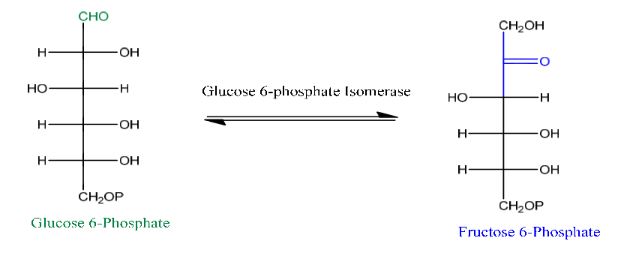
Isomerase
41
bind equally well to the enzyme and enzyme–substrate complex. bind only to the enzyme–substrate complex.
Non-competitive inhibitors bind equally well to the enzyme and enzyme–substrate complex. Uncompetitive inhibitors bind only to the enzyme–substrate complex.
42
What type of enzyme is arginosuccinate? 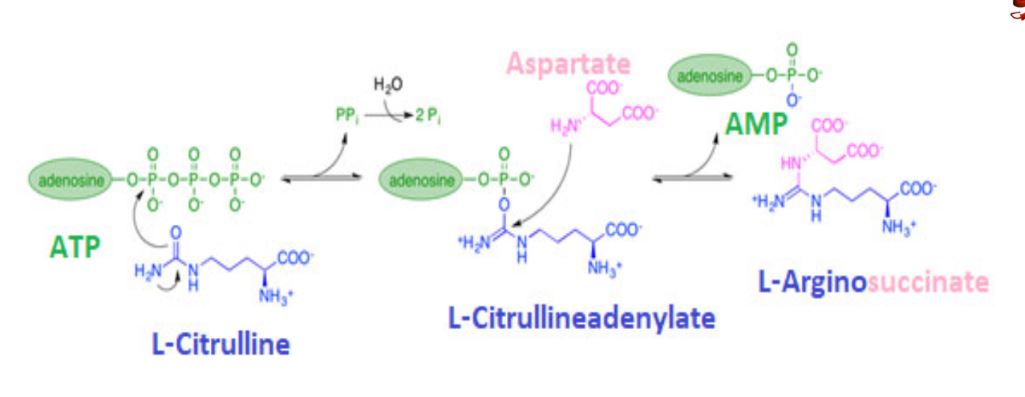
Ligase
43
Prosthetic groups are
Prosthetic groups are covalently linked
44
The is a sulfonated donor that is bound to ATP, has a magnesium cofactor, and two histidines in its active site. The two hisitidnes stack with the and keeps the pocket tightly regulated.
The PAPS synthase is a sulfonated donor that is bound to ATP, has a magnesium cofactor, and two histidines in its active site. The two hisitidnes stack with the adenine ring and keeps the pocket tightly regulated.
45
In high CO2 concentration, carbonic anhydrase catalyzes what rxn?
CO2 + H2O --> H2CO3
46
In low concentration of CO2, carbonic anhydrase catalyzes what rxn?
H2CO3 --> CO2 + H2O
47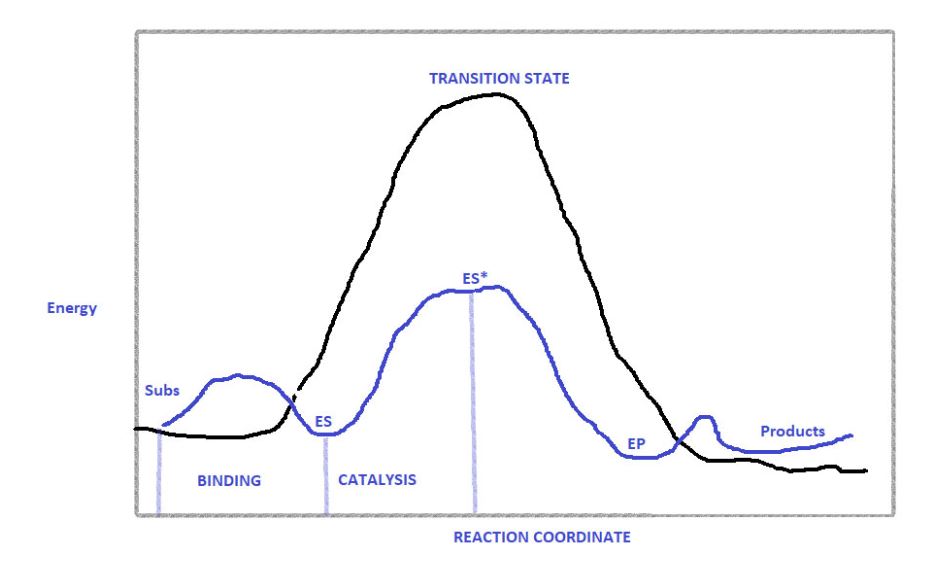
Image occlusion: name the hidden labels
48
Image occlusion: name the hidden labels
49
What is Km equal to?
1/2 Vmax
50
v (velocity of rxn) =
Vmax[S]/Km+[s]
51
How is catalytic efficency calculated?
catalytic efficiency =Kcat/Km
52
Most ensymes have a rate of
10^5 s^-1M^-1
53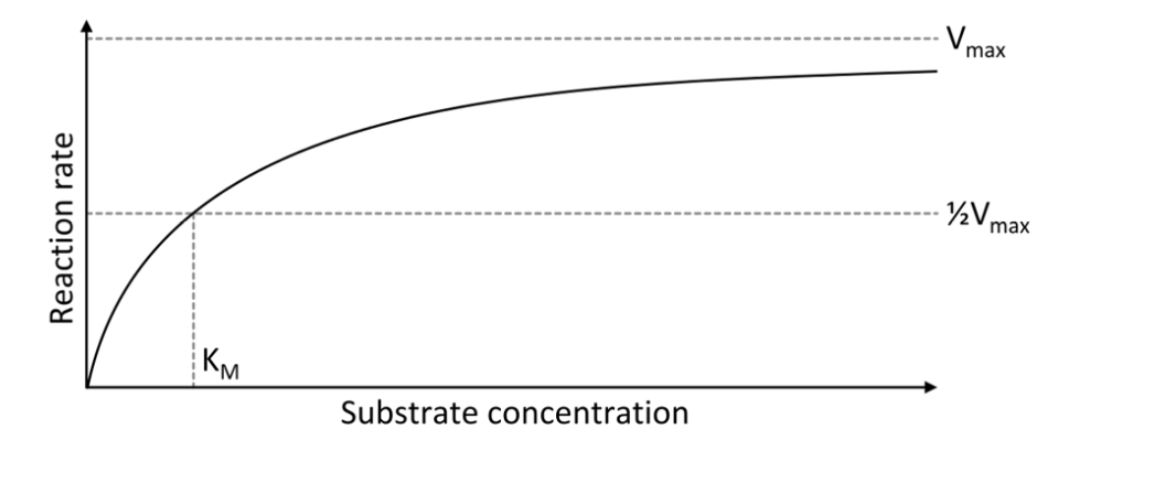
Image occlusion: name the hidden labels
54
Image occlusion: name the hidden labels
55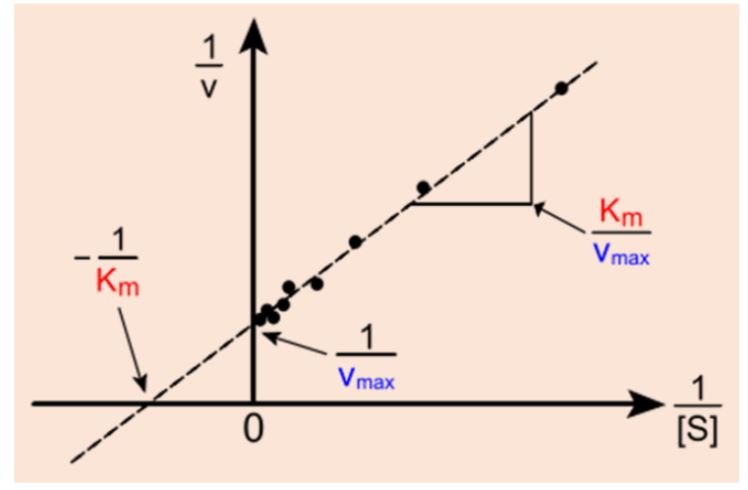
Image occlusion: name the hidden labels
56
Image occlusion: name the hidden labels
57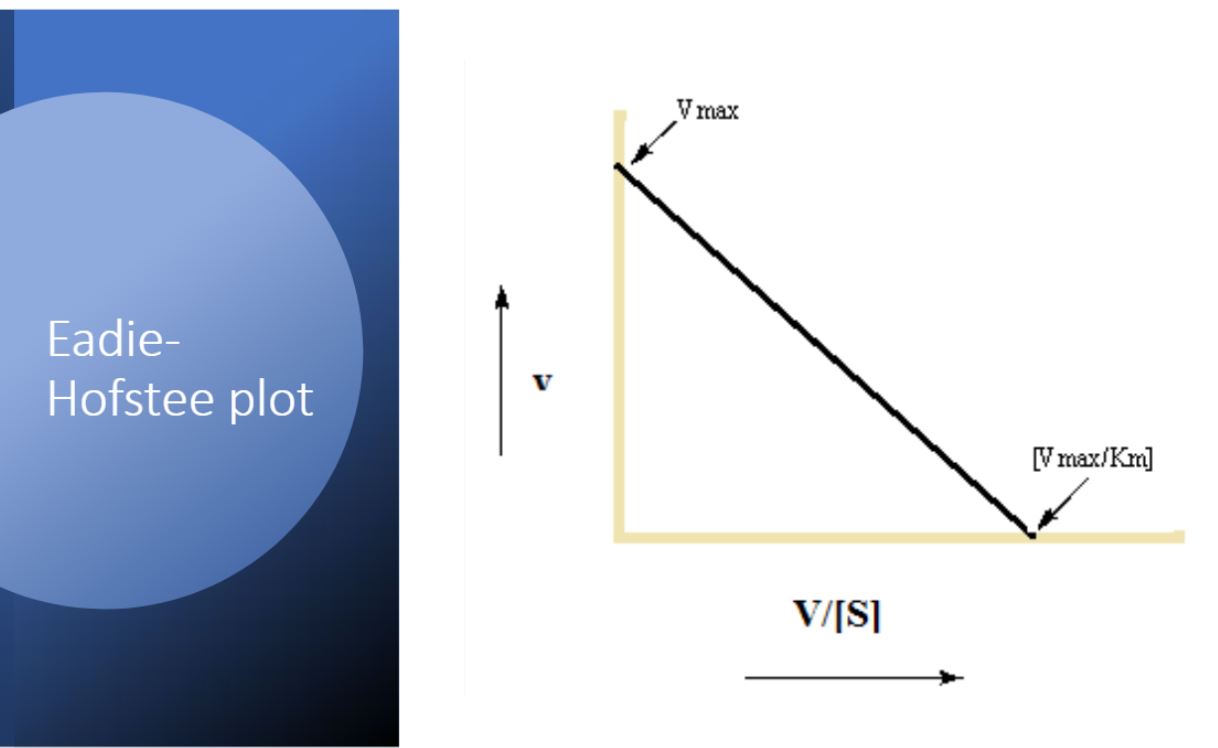
Image occlusion: name the hidden labels
58
Image occlusion: name the hidden labels
59
Image occlusion: name the hidden labels
60
Image occlusion: name the hidden labels
61
An inactivates an enzyme by bonding covalently to a particular group at the active site.
An irreversible inhibitor inactivates an enzyme by bonding covalently to a particular group at the active site.
62
The nerve gases, especially , irreversibly inhibit biological systems by forming an enzyme-inhibitor complex with a specific OH group of serine situated at the active sites of certain enzymes.
The nerve gases, especially Diisopropyl fluorophosphate (DIFP), irreversibly inhibit biological systems by forming an enzyme-inhibitor complex with a specific OH group of serine situated at the active sites of certain enzymes.
63
In , the inhibitor and the substrate both compete for the same active site.
In competitive inhibition, the inhibitor and the substrate both compete for the same active site.
64
is a type of enzyme inhibition where the inhibitor reduces the activity of the enzyme and binds equally well to the enzyme whether or not it has already bound the substrate.
Noncompetetive inhibition is a type of enzyme inhibition where the inhibitor reduces the activity of the enzyme and binds equally well to the enzyme whether or not it has already bound the substrate.
65
takes place when an enzyme inhibitor binds only to the complex formed between the enzyme and the substrate (the E-S complex)
Uncompeitive inhibition takes place when an enzyme inhibitor binds only to the complex formed between the enzyme and the substrate (the E-S complex)
66
An enzyme with a high Km has a for its substrate
An enzyme with a high Km has a low affinity for its substrate
67
is the reaction rate when the enzyme is fully saturated by substrate
Vmax is the reaction rate when the enzyme is fully saturated by substrate
68
In competitive inhibition, Vmax and Km
In competitive inhibition, Vmax stays the same and Km increases
69
In noncompetitive inhibition, Vmax is and Km
In noncompetitive inhibition, Vmax is decreased and Km stays the same
70
In uncompetitive inhibition, V max is and Km is .
In uncompetitive inhibition, V max is decreased and Km is decreased.
71
What are 3 IMPORTANT examples of positive effectors that bind to allosteric sites?
ATP, Fructose, 2,6 BP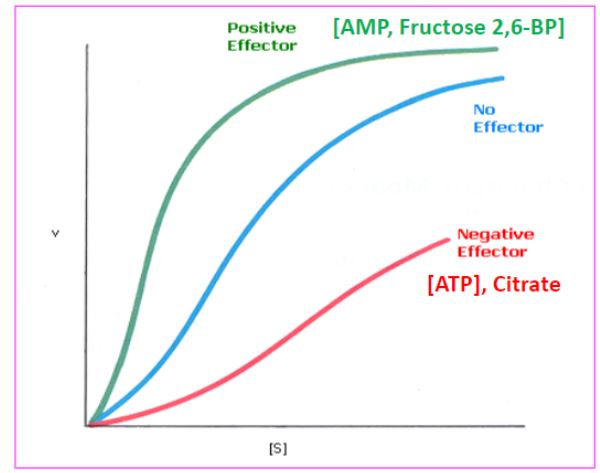
72
What are 2 IMPORTANT examples of negative effectors that bind to allosteric sites?
ATP, Citrate 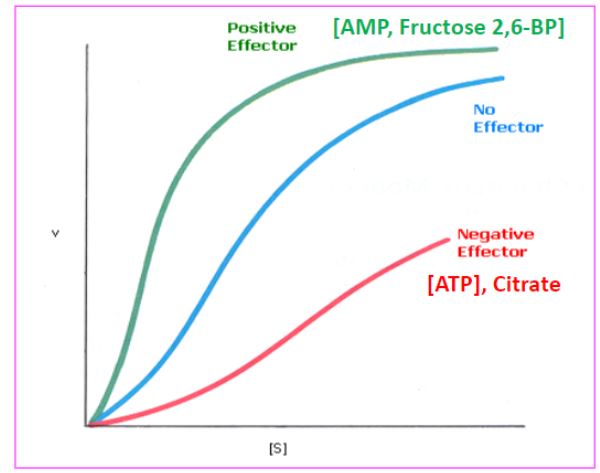
73
What is the R state?
The activated relaxed state
74
What is the T state?
The inhibited, taut/tense state