Biochem Ch 8
Study these flashcardsFree · spaced repetition · iPhone, Android, Mac & web
All cards
1
Arterial Plasma Concentrations of Ions: [H+] = nMols/liter
Arterial Plasma Concentrations of Ions: [H+] = 40nMols/liter
2
Arterial Plasma Concentrations of Ions: [Na+ ] = mMol/liter
Arterial Plasma Concentrations of Ions: [Na+ ] = 140 mMol/liter
3
Arterial Plasma Concentration: [HCO 3– ] = mMol/liter
Arterial Plasma Concentration: [HCO 3– ] = 25 mMol/liter
4
The consists of a bilayer, containing
transport proteins, membrane bound enzymes, channels, adhesion
proteins etc.
transport proteins, membrane bound enzymes, channels, adhesion
proteins etc.
The cell membrane consists of a phospholipid bilayer, containing
transport proteins, membrane bound enzymes, channels, adhesion
proteins etc.
transport proteins, membrane bound enzymes, channels, adhesion
proteins etc.
5
Cytosol: pH is around
Cytosol: pH is around 7.0.
6
Glycolysis, glycogen synthesis and degradation, hexose monophosphate pathway, amino acid
synthesis, nucleic acid monomer synthesis, fatty acid , xenobiotic modifications and cytosolic protein synthesis by free ribosomes all takes place in
synthesis, nucleic acid monomer synthesis, fatty acid , xenobiotic modifications and cytosolic protein synthesis by free ribosomes all takes place in
Glycolysis, glycogen synthesis and degradation, hexose monophosphate pathway, amino acid
synthesis, nucleic acid monomer synthesis, fatty acid synthesis, xenobiotic modifications and cytosolic protein synthesis by free ribosomes all takes place in cytosol.
synthesis, nucleic acid monomer synthesis, fatty acid synthesis, xenobiotic modifications and cytosolic protein synthesis by free ribosomes all takes place in cytosol.
7
Cell cytoskeleton, cell
morphology, cell motility, and intracellular movements are
mediated by and
morphology, cell motility, and intracellular movements are
mediated by and
Cell cytoskeleton, cell
morphology, cell motility, and intracellular movements are
mediated by microfilaments and microtubules.
morphology, cell motility, and intracellular movements are
mediated by microfilaments and microtubules.
8
The nucleus has a double membrane termed as The outer membrane is continuous with the
The nucleus has a double membrane termed as nuclear
envelope. The outer membrane is continuous with the
ER.
envelope. The outer membrane is continuous with the
ER.
9
Nuclear membrane
has , which allow the flow of some molecules
between nucleus and cytoplasm.
has , which allow the flow of some molecules
between nucleus and cytoplasm.
Nuclear membrane
has pores, which allow the flow of some molecules
between nucleus and cytoplasm.
has pores, which allow the flow of some molecules
between nucleus and cytoplasm.
10
Arterial Plasma Concentrations of Ions: [H+] = nMols/liter
Arterial Plasma Concentrations of Ions: [H+] = 40nMols/liter
11
A nucleolus is a sub-compartment present in nucleus.
It is primarily composed of and ,
which are responsible for synthesizing
It is primarily composed of and ,
which are responsible for synthesizing
A nucleolus is a sub-compartment present in nucleus.
It is primarily composed of proteins and ribosomal RNA,
which are responsible for synthesizing ribosomes.
It is primarily composed of proteins and ribosomal RNA,
which are responsible for synthesizing ribosomes.
12
The processing of the also takes place in the
nucleolus.
nucleolus.
The processing of the RNA also takes place in the
nucleolus.
nucleolus.
13
Membrane synthesis takes place in
Membrane synthesis takes place in ER.
14
Membrane proteins are translocated into for
further processing.
further processing.
Membrane proteins are translocated into RER for
further processing.
further processing.
15
Smooth ER (SER) is the region where some of the enzymes of
synthesis, synthesis and reaction are located.
synthesis, synthesis and reaction are located.
Smooth ER (SER) is the region where some of the enzymes of cholesterol
synthesis, lipid synthesis and detoxification reaction are located.
synthesis, lipid synthesis and detoxification reaction are located.
16
Modification (glycan trimming) sorting of proteins for incorporation into organelles
and for export occurs in
and for export occurs in
Modification (glycan trimming) sorting of proteins for incorporation into organelles
and for export occurs in Golgi apparatus.
and for export occurs in Golgi apparatus.
17
Lysosomes and peroxisomes are also formed from the
Lysosomes and peroxisomes are also formed from the Golgi vesicles
18
Leucocyte to
Endothelial Cell
Adhesion
is mediated by
Endothelial Cell
Adhesion
is mediated by
Leucocyte to
Endothelial Cell
Adhesion
is mediated by glycosyl
units
Endothelial Cell
Adhesion
is mediated by glycosyl
units
19
Cell Adhesion Molecules like
plant lectins, selectins are
proteins
plant lectins, selectins are
proteins
Cell Adhesion Molecules like
plant lectins, selectins are
glycosylated
proteins
plant lectins, selectins are
glycosylated
proteins
20
Explain how glycan trimming is done in the golgi apparatus (4 steps)
(1) Lipid dolichol phosphate transfers sugar group to an amino acid ASN in the ER
(2) In the cis-golgi, sugars are trimmed
(3) In the medial golgi, GlcNac is added
(4) In the trans golgi, new sugars and non-sugars (sialic acid) are added
(2) In the cis-golgi, sugars are trimmed
(3) In the medial golgi, GlcNac is added
(4) In the trans golgi, new sugars and non-sugars (sialic acid) are added
21
The inner mitochondrial membrane is
composed of invaginations called
composed of invaginations called
The inner mitochondrial membrane is
composed of invaginations called cristae.
composed of invaginations called cristae.
22
What is the carbon and bond numbers for linoleic leic acid?
18:2 (9, 12)
23
Mitochondrial ATP synthase is embedded in the membrane.
Mitochondrial ATP synthase is embedded in the inner membrane.
24
The mitochondrial matrix contains the enzymes of the cycle, cycle and some of synthesis.
The mitochondrial matrix contains the enzymes of the TCA cycle, urea cycle and some of heme synthesis.
25
The Beda oxidation of fatty acids also takes place in the
The Beda oxidation of fatty acids also takes place in the mitochondrial matrix.
26
Inheritance of mitochondrial DNA is mainly through (type of transmission)
Inheritance of mitochondrial DNA is mainly through maternal transmission (type of transmission)
27
What is Luft disease?
A defect in proper mitochondrial oxygen utilization
28
Lysosome Possess a single limiting membrane with a matrix pH of
Lysosome Possess a single limiting membrane with a matrix pH of 5.
29
All these hydrolytic enzymes (glucosidases, peptidases, nucleases, lipases,
phosphatases, sulfatases) exhibit a pH optimum around
phosphatases, sulfatases) exhibit a pH optimum around
All these hydrolytic enzymes (glucosidases, peptidases, nucleases, lipases,
phosphatases, sulfatases) exhibit a pH optimum around 5.0.
phosphatases, sulfatases) exhibit a pH optimum around 5.0.
30
What is Gout?
Elevated levels of urate, form crystals, which damages the lysosome membrane resulting in
the release of degradative enzymes causing autolysis of cells.
the release of degradative enzymes causing autolysis of cells.
31
What is Wolman's disease?
Lysosomal acid lipase deficiency, which is inherited by autosomal recessive mechanism.
32
Oxidation reactions involving oxygen and inactivation or breakdown of hydrogen
peroxide take place in
peroxide take place in
Oxidation reactions involving oxygen and inactivation or breakdown of hydrogen
peroxide take place in peroxisomes.
peroxide take place in peroxisomes.
33
Oxidation of uric acid, oxidation of very long chain fatty acids into medium
chain fatty acids, synthesis of glycerol lipids and glycerol ether lipids
(plasmalogens) and oxidation of cholesterol side chain needed for bile acid synthesis all take place in the
chain fatty acids, synthesis of glycerol lipids and glycerol ether lipids
(plasmalogens) and oxidation of cholesterol side chain needed for bile acid synthesis all take place in the
Oxidation of uric acid, oxidation of very long chain fatty acids into medium
chain fatty acids, synthesis of glycerol lipids and glycerol ether lipids
(plasmalogens) and oxidation of cholesterol side chain needed for bile acid synthesis all take place in the peroxisomes.
chain fatty acids, synthesis of glycerol lipids and glycerol ether lipids
(plasmalogens) and oxidation of cholesterol side chain needed for bile acid synthesis all take place in the peroxisomes.
34
What is Zellweger syndrome?
Inherited by autosomal recessive
transmission. Signs include decreased levels of plasmalogens,
increased levels of long chain fatty acids and cholastenoic acid
derivatives (bile acid precursor). The deficiency is due to the
absence of functional peroxisomes.
transmission. Signs include decreased levels of plasmalogens,
increased levels of long chain fatty acids and cholastenoic acid
derivatives (bile acid precursor). The deficiency is due to the
absence of functional peroxisomes.
35
What are the 4 main metabolites?
1. Carbohydrates 2. Lipids 3. Proteins 4. Nucelotides
36
What is the carbon and bond number for linolenic acid?
18:3 (9, 12, 15)
37
What is the carbon and bond numbers for linoleic acid?
18:2 (9, 12)
38
Energy from carbohydrate
4 kcal / gm
39
Energy from protein
4 kcal / gm
40
Energy from fat
9 kcal / gm
41
What are examples of long term v. short term control?
Long term = hormonal/DNA or RNA, short term =phosphorylation, allosteric control
42
are a group of transmembrane ion-channel proteins which open to allow ions such as Na-, K+, Ca²+, and/or Cl- to pass through the membrane in response to the binding of a chemical messenger
Ligand-gated ion channels are a group of transmembrane ion-channel proteins which open to allow ions such as Na-, K+, Ca²+, and/or Cl- to pass through the membrane in response to the binding of a chemical messenger
43
What is the difference between a uniport, symport, and antiport?
Uniport is in one direction, symport is two substances in same direction, antiport is two substances in opposite direction
44
What is diastrophic dysplasia?
Defect of the sulfate transporter. Leads to low intracellular sulfate, which causes under sulfated cartilage and bones resulting in deformity
45
What is cystic fibrosis?
Mutation in the chloride channel causing it to remain closed leading to increased Cl- intracellularly. Muscus accumulates and leads to Pesudomonas aeruguinosa infection.
46
What is simple diffusion?
Moving across lipid membrane, no protein needed. Done by concentration gradient.
47
What is facilitated diffusion?
Movement across lipid membrane with a protein helper. With concentration graident.
48
What is active trasnport?
Movement across the lipid membrane using ATP. AGAINST the concentration graident.
49
What is an example of a linear pathway?
glycolysis
50
What are two examples of cyclical pathways?
Urea and TCA
51
What is an example of a branched pathway?
Amino acid synthesis
52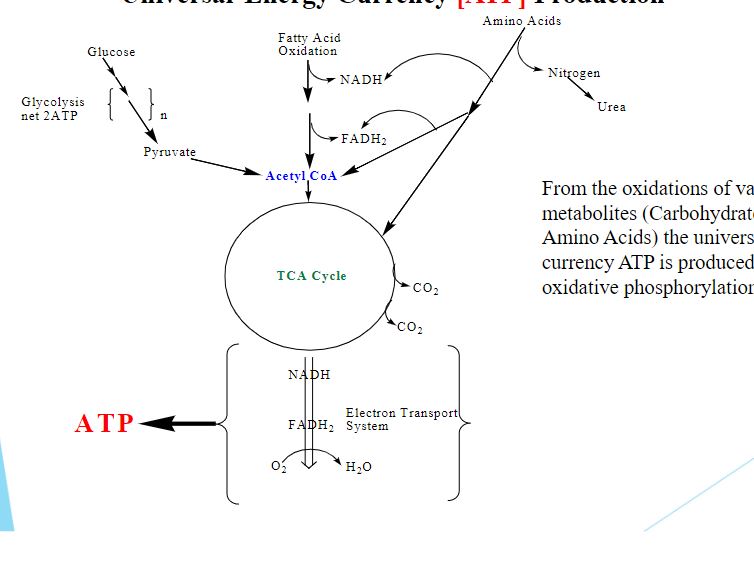
General pathway of all of metabolism to glance at.