All cards
1
Bulk flow requires a
Bulk flow requires a pressure gradient
2
= equal, = consistent state, not necessarily equal
Equilibrium = equal, Steady state = consistent state, not necessarily equal 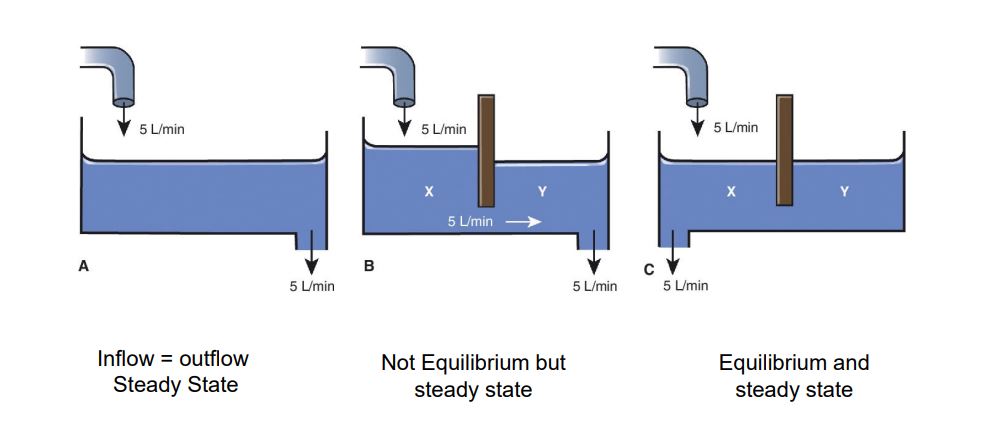
3
Rate of diffusion depends on
1.
2.
3.
1.
2.
3.
Rate of diffusion depends on
1. Concentration graident
2. Area
3. Lipid solubulity
1. Concentration graident
2. Area
3. Lipid solubulity
4
Permeability coefficent includes and
Permeability coefficent includes membrane thickness and lipid solubility
5
Rate of diffusion is proportional to concentration
difference:
difference:
Rate of diffusion is proportional to concentration
difference: Fick’s Law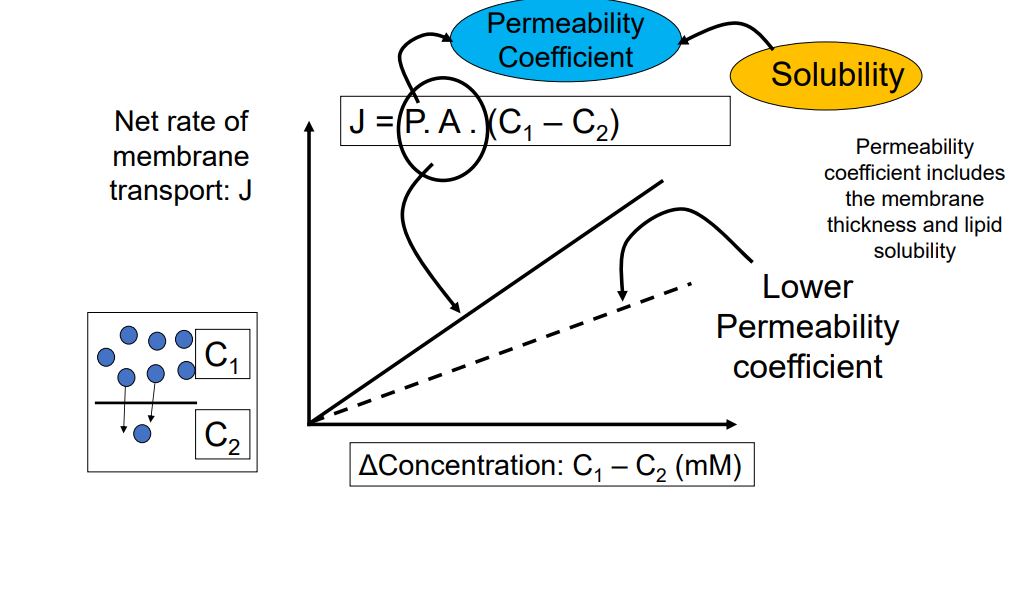
difference: Fick’s Law
6
In simple diffusion, Vmax increases with
increased
increased
In simple diffusion, Vmax increases with
increased concentration gradient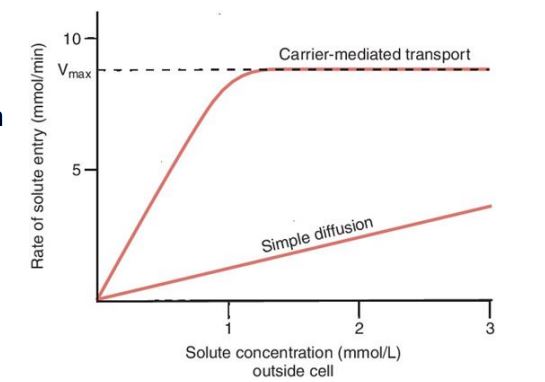
increased concentration gradient
7
In carrier mediated transport, Vmax is
reached when all channels are in use,
so a rise in extracellular concentration
make in Vmax
reached when all channels are in use,
so a rise in extracellular concentration
make in Vmax
In carrier mediated transport, Vmax is
reached when all channels are in use,
so a rise in extracellular concentration
make no difference in Vmax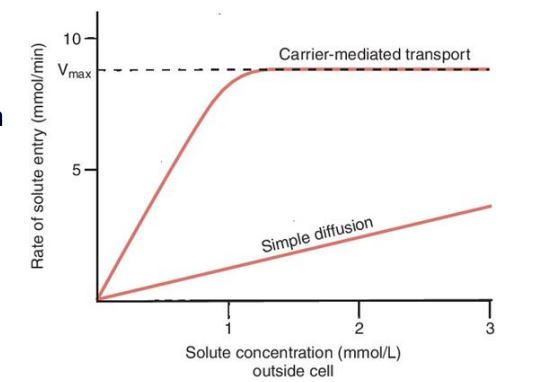
reached when all channels are in use,
so a rise in extracellular concentration
make no difference in Vmax
8
Carrier mediated (Facilitated) diffusion is
Carrier mediated (Facilitated) diffusion is saturable 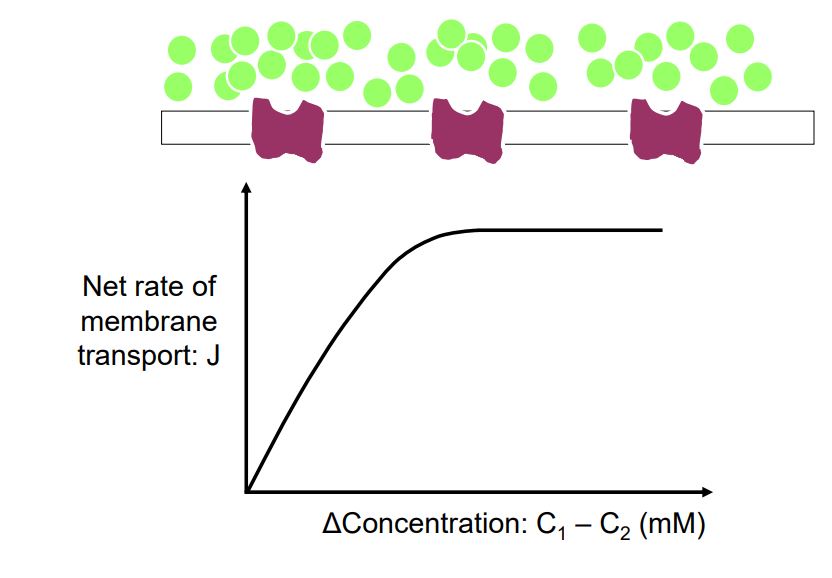
9
Molecules that mix well with lipids in
the plasma have a high therefore and cross the
membrane easily and are
the plasma have a high therefore and cross the
membrane easily and are
Molecules that mix well with lipids in
the plasma have a high partition
coefficient therefore high
permeability coefficient and cross the
membrane easily and are “lipophilic”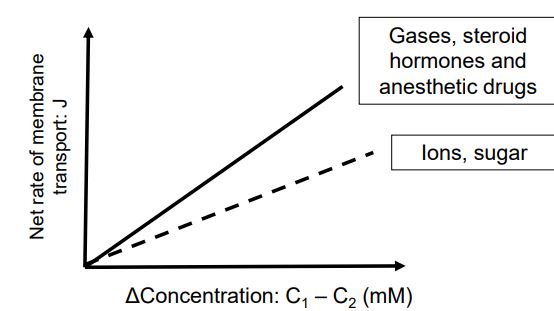
the plasma have a high partition
coefficient therefore high
permeability coefficient and cross the
membrane easily and are “lipophilic”
10
is controlling the opening/closing of an ion channel based on
membrane potential
membrane potential
Voltage gating is controlling the opening/closing of an ion channel based on
membrane potential
membrane potential
11
is controlling the opening/closing of an ion channel based on ligand
binding (i.e. nicotinic acetylcholine receptor)
binding (i.e. nicotinic acetylcholine receptor)
Ligand gating is controlling the opening/closing of an ion channel based on ligand
binding (i.e. nicotinic acetylcholine receptor)
binding (i.e. nicotinic acetylcholine receptor)
12
a channel opens or close with events happening at
other locations in the cell (i.e. cGMP sodium channel in rod cells)
other locations in the cell (i.e. cGMP sodium channel in rod cells)
Second messenger gating: a channel opens or close with events happening at
other locations in the cell (i.e. cGMP sodium channel in rod cells)
other locations in the cell (i.e. cGMP sodium channel in rod cells)
13
allows for the transport of hydrophillic molecules and reaches saturation with structural . There can be if structure is similar (i.e. D-galactose, D-glucose).
Carrier mediated transport allows for the transport of hydrophillic molecules and reaches saturation with structural specificty . There can be competetive inhibition if structure is similar (i.e. D-galactose, D-glucose).
14
General mechanism of carrier diffusion: molecule enters and creates change to exit.
General mechanism of carrier diffusion: molecule enters and creates conformation change to exit.
15
What are the 3 examples of facilitated diffusion?
1. -
2. -
3. -
1. -
2. -
3. -
What are the 3 examples of facilitated diffusion?
1. Glucose transporters (GLUTs) - Neutral
2. Urea transporter (UT) - Neurtal
3. Organic cation transporter (OCT) - Electrogenic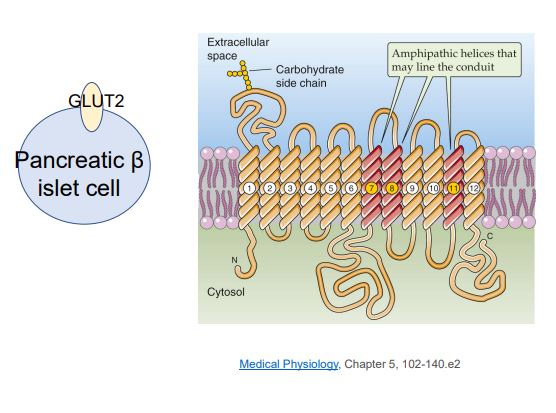
1. Glucose transporters (GLUTs) - Neutral
2. Urea transporter (UT) - Neurtal
3. Organic cation transporter (OCT) - Electrogenic
16
Active transport moves
solutes a
concentration gradient
solutes a
concentration gradient
Active transport moves
solutes against a
concentration gradient
solutes against a
concentration gradient
17
What is an example of active transport found in all cells?
Na/K ATPase
18
What is an example of active transport found in intracellular organelles SERCA?
Calcium pumps
19
What is an example of active transport found in Parietal cells (stomach), alpha
intercalated cells collecting duct
(kidney)?
intercalated cells collecting duct
(kidney)?
H+/K+ pump
20
What is an example of active transport found in Golgi and lysosomes, keeps the
inside more acidic , osteoclasts
(bone breakdown)?
inside more acidic , osteoclasts
(bone breakdown)?
Proton pump
21
What is an example of active transport found in mitochondria?
F-type
22
A (AKA ) is involved in the transport of two different molecules across the cell membrane in the same direction (One transporter is transport and the symporter is transport )
A co-transporter (AKA symporter) is involved in the transport of two different molecules across the cell membrane in the same direction (One transporter isPRIMARY ACTIVE transport and the symporter is SECONDARY ACTIVE transport )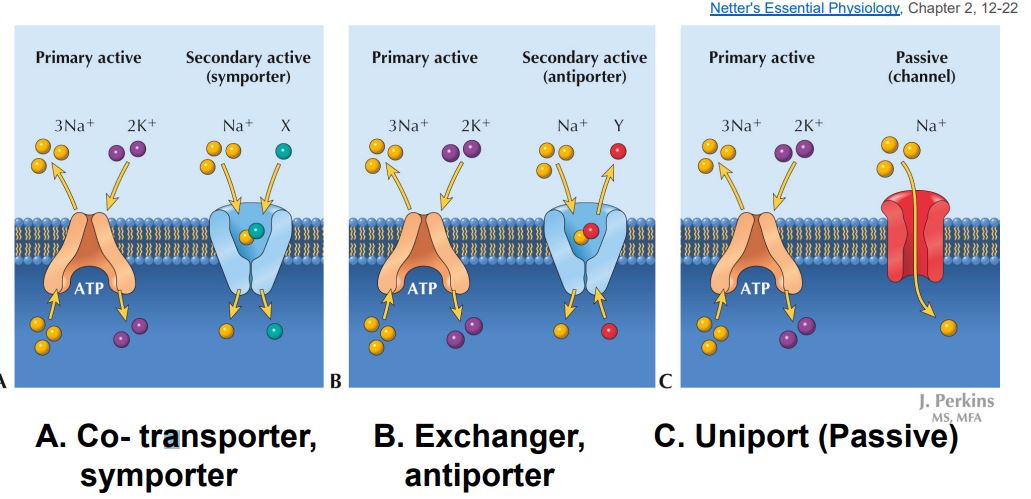
23
An (AKA ) is involved in the transport of two different molecules across the cell membrane in opposite directions (One transporter is transport and the antiporter is transport)
An exhanger (AKA antiporter) is involved in the transport of two different molecules across the cell membrane in opposite directions (One transporter isPRIMARY ACTIVE transport and the antiporter is SECONDARY ACTIVE transport) 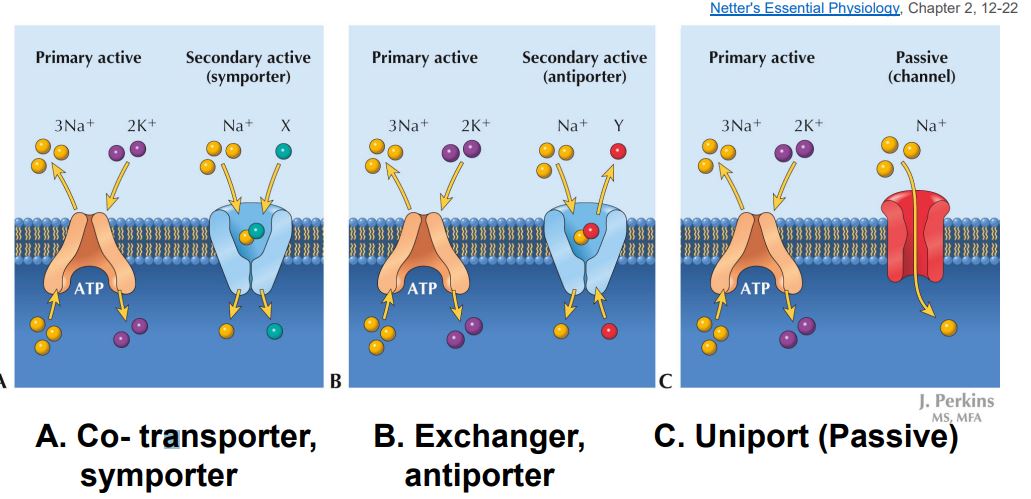
24
SECONDARY ACTIVE TRANSPORT: A uniport (passive) transporter involves one transporter that is and another that is a
SECONDARY ACTIVE TRANSPORT: A uniport (passive) transporter involves one transporter that is primary active and another that is a passive channel 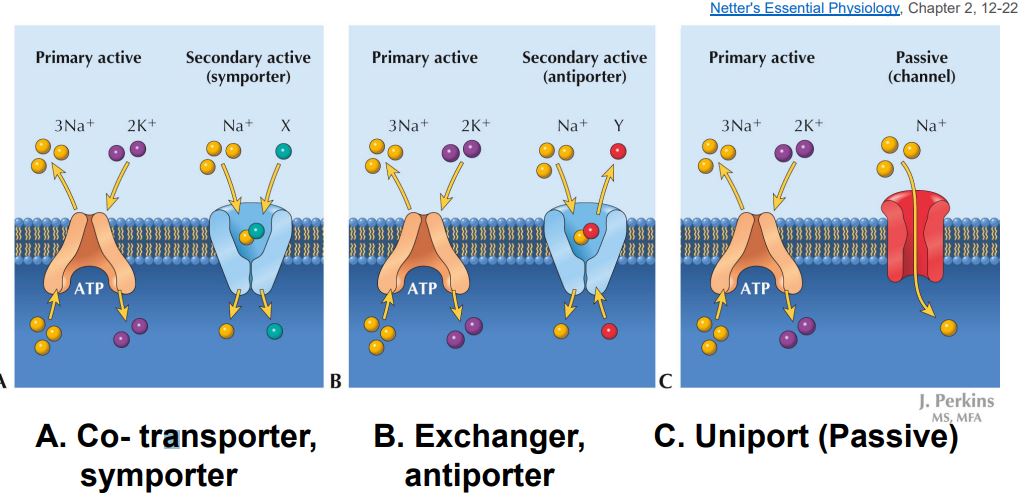
25
Symporters, antiporters, and uniports DO NOT USE ATP. They harnest the energy generated from .
Symporters, antiporters, and uniports DO NOT USE ATP. They harnest the energy generated from another transporter using ATP.
26
Examples of an Na+/Glucose symporter can be found in the .
Examples of an Na+/Glucose symporter can be found in the renal proximal tubular cell. 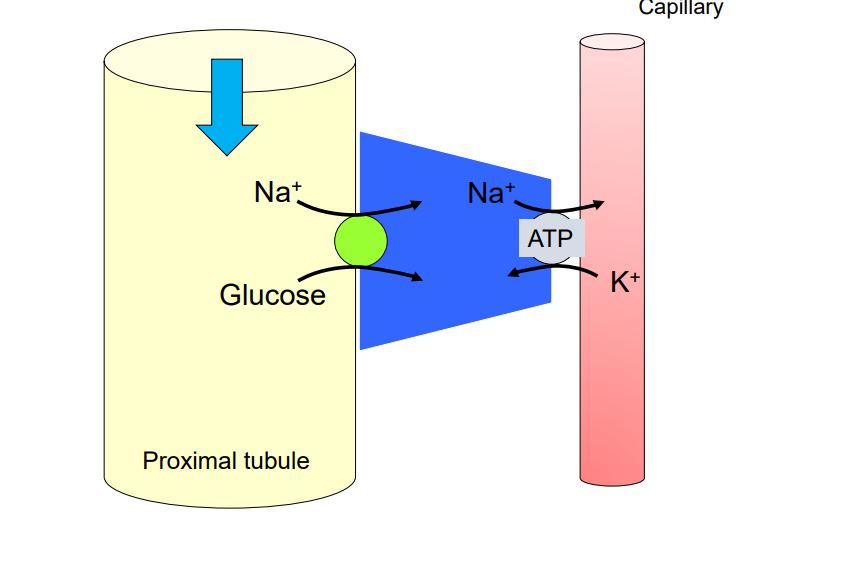
27
= general mechanism by which region of plasma membrane pinched off
Endocytosis = general mechanism by which region of plasma membrane pinched off 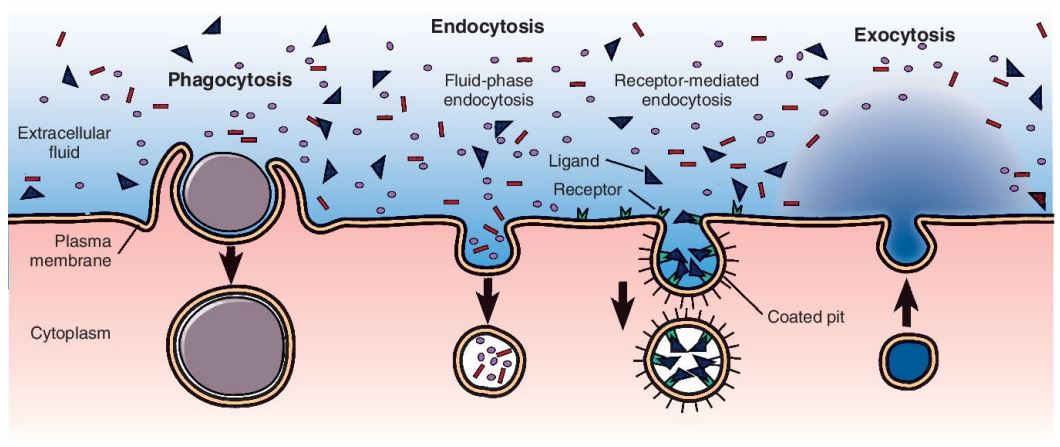
28
endocytosis (nonspecific uptake of extracellular fluid). endocytosis (more efficient process where recepted accumulate coated pits)
Fluid-phase endocytosis (nonspecific uptake of extracellular fluid). Receptor mediated endocytosis (more efficient process where recepted accumulate coated pits) 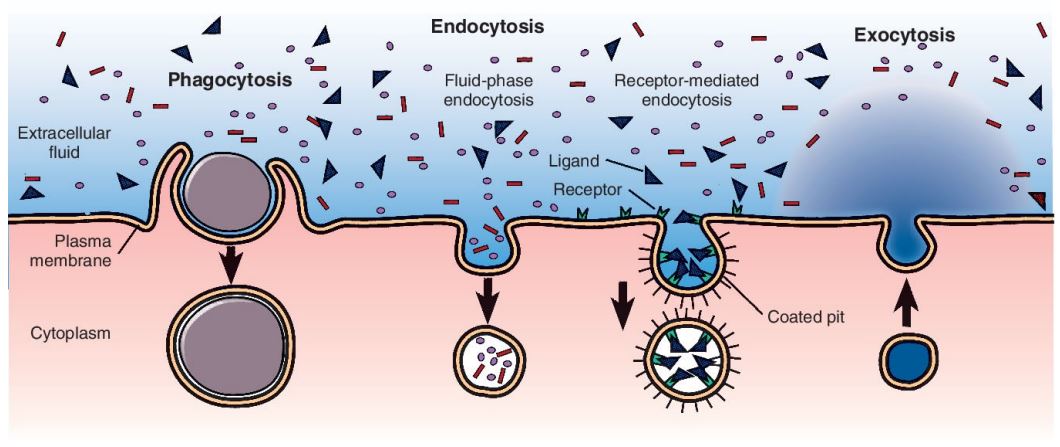
29
Continuous secretion “ pathway”
Continuous secretion “constitutive pathway”
30
pathway: molecules are stored inside a cell until a signal stimulates
their release- this pathway is responsible for release of hormones,
digestive enzymes, etc.
their release- this pathway is responsible for release of hormones,
digestive enzymes, etc.
Regulated pathway: molecules are stored inside a cell until a signal stimulates
their release- this pathway is responsible for on-demand release of hormones,
digestive enzymes, etc.
their release- this pathway is responsible for on-demand release of hormones,
digestive enzymes, etc.
31
The difference between paracellular and trancellular transport is based on the physiology of the
The difference between paracellular and trancellular transport is based on the physiology of the epithelial cells.
32
In the Gastrointestinal System,
* side is the side facing the Interstitial fluid
* : facing the tubular fluid/lumen
* side is the side facing the Interstitial fluid
* : facing the tubular fluid/lumen
In the Gastrointestinal System,
*Basolateral side is the side facing the Interstitial fluid
*Apical: facing the tubular fluid/lumen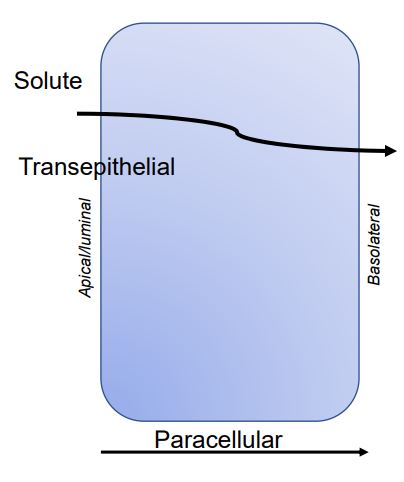
*Basolateral side is the side facing the Interstitial fluid
*Apical: facing the tubular fluid/lumen
33
Transport of Glucose in Epithelial Cells: TQ
An transporter brings in and on the apical side of cell. Sodium potassium pump allows the formation of a gradient that allows amino acids to enter into blood on basolateral side. The same mechanism is used by to move sodium and glucose in on the apical end, which causes to be released at end.
An transporter brings in and on the apical side of cell. Sodium potassium pump allows the formation of a gradient that allows amino acids to enter into blood on basolateral side. The same mechanism is used by to move sodium and glucose in on the apical end, which causes to be released at end.
Transport of Glucose in Epithelial Cells: TQ
An Na+/Amino acid transporter brings in amino acids and sodium on the apical side of cell. Sodium potassium pump allows the formation of a gradient that allows amino acids to enter into blood on basolateral side. The same mechanism is used by SGLT to move sodium and glucose in on the apical end, which causes GLUT2 to be released at basolateral end.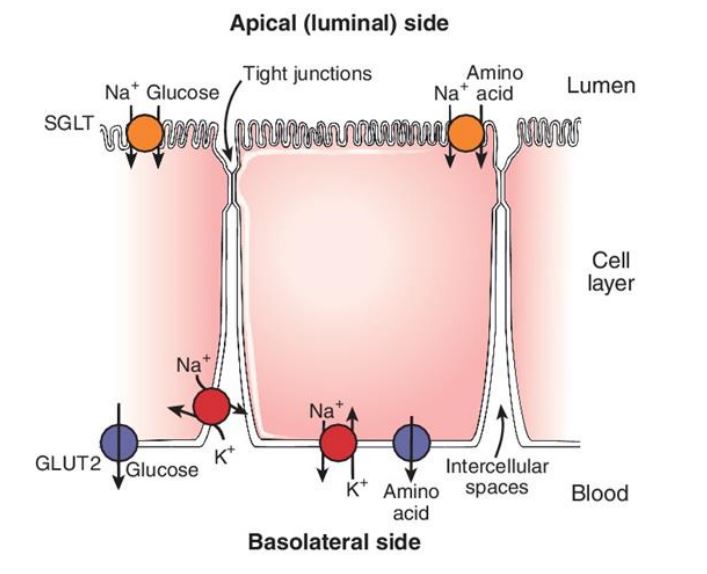
An Na+/Amino acid transporter brings in amino acids and sodium on the apical side of cell. Sodium potassium pump allows the formation of a gradient that allows amino acids to enter into blood on basolateral side. The same mechanism is used by SGLT to move sodium and glucose in on the apical end, which causes GLUT2 to be released at basolateral end.
34
When a cell is referred to as " ", it means that one side has one set of transporters and the other side has a set of transporters.
When a cell is referred to as "polarized", it means that one side has one set of transporters and the other side has a different set of transporters.
35
Cystic fibrosis: Involves a defect in
Cystic fibrosis: Involves a defect in membrane transport
36
Cytstic Fibrosis: Transport of “ ” is necessary for
maintaining a hydrated mucus layer.
Mucus layer is protective in the
respiratory tract and GI system
In the lungs, defect in the reduced the
hydration of the mucus layer,
creating a thick layer creating the
of the disease
maintaining a hydrated mucus layer.
Mucus layer is protective in the
respiratory tract and GI system
In the lungs, defect in the reduced the
hydration of the mucus layer,
creating a thick layer creating the
of the disease
Cytstic Fibrosis: Transport of “solute” is necessary for
maintaining a hydrated mucus layer.
Mucus layer is protective in the
respiratory tract and GI system
In the lungs, defect in the cystic
fibrosis channel (CFTR) reduced the
hydration of the mucus layer,
creating a thick layer creating the
sequalae of the disease
maintaining a hydrated mucus layer.
Mucus layer is protective in the
respiratory tract and GI system
In the lungs, defect in the cystic
fibrosis channel (CFTR) reduced the
hydration of the mucus layer,
creating a thick layer creating the
sequalae of the disease
37
Bacteria cause diarrhea by secreting that bind to receptor apical end. Causes the permanent activation of cAMP, and maximal secretion is stimulated
Bacteria cause diarrhea by secreting enteroxins that bind to receptor apical end. Causes the permanent activation of cAMP, and maximal secretion is stimulated
38
Epithelial cells maintain equilibrium through which is unidirectional transport from one side of the cell to
the opposite side of the cell
the opposite side of the cell
Epithelial cells maintain equilibrium through vectorial
transport which is unidirectional transport from one side of the cell to
the opposite side of the cell
transport which is unidirectional transport from one side of the cell to
the opposite side of the cell
39
is in contact with
external environment or (membrane type?)
external environment or (membrane type?)
Apical membrane is in contact with
external environment or lumen (membrane type?)
external environment or lumen (membrane type?)
40
: faces
extracellular fluid compartment (membrane type?)
extracellular fluid compartment (membrane type?)
Basolateral membrane: faces
extracellular fluid compartment (membrane type?)
extracellular fluid compartment (membrane type?)
41
: separates apical &
basolateral membranes
basolateral membranes
Tight junction: separates apical &
basolateral membranes
basolateral membranes
42
: link
epithelial cells to the cytoskeleton, also
contains cadherins (adhesion molecules)
epithelial cells to the cytoskeleton, also
contains cadherins (adhesion molecules)
Adhering junction & desmosomes: link
epithelial cells to the cytoskeleton, also
contains cadherins (adhesion molecules)
epithelial cells to the cytoskeleton, also
contains cadherins (adhesion molecules)
43
are Mechanical adhesion by linking together the
of cells
of cells
Adhering junctions are Mechanical adhesion by linking together the
cytoskeleton of adjacent cells
cytoskeleton of adjacent cells
44
Mechanical adhesion by linking of cells
Hemidesmosomes Mechanical adhesion by linking connective
tissue of adjacent cells
tissue of adjacent cells
45
Cytoplasmic to share molecules
between cells, Reduce resistance across
cells, important physiologically in spread of
action potential
between cells, Reduce resistance across
cells, important physiologically in spread of
action potential
Gap junctions Cytoplasmic bridges to share molecules
between cells, Reduce resistance across
cells, important physiologically in spread of
action potential
between cells, Reduce resistance across
cells, important physiologically in spread of
action potential
46
1) Divides the cell into and
domains
2) transport
1) Divides the cell into and
domains
2) transport
Tight junctions
1) Divides the cell into apical and
basolateral domains
2) Vectoral transport
1) Divides the cell into apical and
basolateral domains
2) Vectoral transport
47
Functional unit of the gap junction
Connexons Functional unit of the gap junction
48
Epithelial cells are capable of
transport (AKA ) because of its structure
transport (AKA ) because of its structure
Epithelial cells are capable of unidirectional
transport (AKA vectoral) because of its structure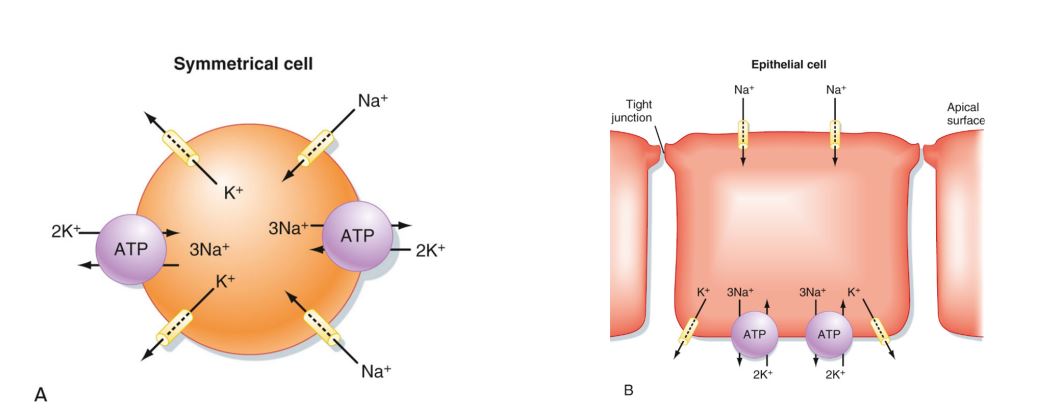
transport (AKA vectoral) because of its structure
49
Tight junctions are also known as “ ". Consists of several membrane proteins and
Tight junctions are also known as “zona occludens". Consists of several integral membrane proteins and junctional adhesion molecules (JAM)
50
The most important of the epithelial junctions are the because they serve as barriers
The most important of the epithelial junctions are the CLAUDINS because they serve as barriers
51
Movement through tight junctions makes the
pathway depended on the
pathway
pathway depended on the
pathway
Movement through tight junctions makes the
paracellular pathway depended on the transcellular
pathway
paracellular pathway depended on the transcellular
pathway
52
is an important determinant
in ionic movement, which in turn is regulated based
on the function of the cell
in ionic movement, which in turn is regulated based
on the function of the cell
Transepithelial voltage is an important determinant
in ionic movement, which in turn is regulated based
on the function of the cell
in ionic movement, which in turn is regulated based
on the function of the cell
53
The is always more positive compared to the side
The capillary side is always more positive compared to the lumen side
54
and both move in a paracellular fashion down electrical gradient with moving towards basolateral membrane and moving towards apical membrane.
Sodium and choride both move in a paracellular fashion down electrical gradient with Cl- moving towards basolateral membrane and Na+ moving towards apical membrane. 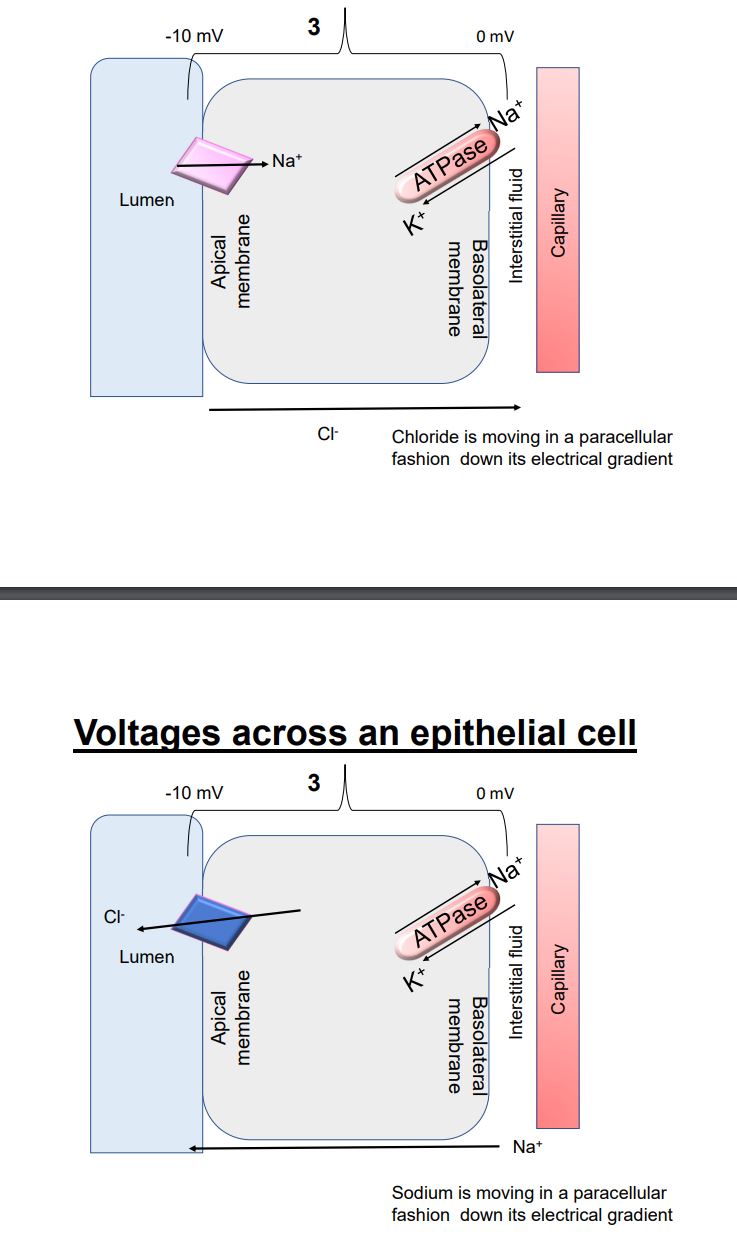
55
Capillaries are also lined by endothelial cells with and surface. Some capillaries have .
Capillaries are also lined by endothelial cells with luminal and basal surface. Some capillaries have fenestrations.