PRELIM_Done
Study these flashcardsFree · spaced repetition · iPhone, Android, Mac & web
All cards
1
It is a plant or animal product that can be grown and harvested extensively for profit or subsistence
Crop
2
This includes horticulture, floriculture and industrial crops
Non food Crop
3
It is the stage of crop production immediately following harvest, including cooling, cleaning, sorting and packing
Postharvest Handling
4
Post Harvest aims to?
extend the shelf life of fresh fruits and vegetables
5
It is the science and practice of growing, processing and marketing fruits, vegetables, and ornamental plants
Horticulture
6
Horticulture crops are? (5)
"1. Highly perishable
2. Alive, continues to metabolize (sprout, form roots, ripen, abscisse)
3. Has high water content
4. Prone to damage
5. Prone to diseases and pests"
2. Alive, continues to metabolize (sprout, form roots, ripen, abscisse)
3. Has high water content
4. Prone to damage
5. Prone to diseases and pests"
7
This accounts for 44% of the total volume of food crops in the Philippines
Horticulture Crops
8
It is the science and practice of growing field crops such as cotton, wheat, tobacco, corn and soybeans
Agronomy
9
Agromonic Crops are? (4)
1. Perishable
2. Alive, in dormant state
3. Prone to damage by various organisms
(vertebrates, insects, microorganisms)
4. Often stored at low moisture content
2. Alive, in dormant state
3. Prone to damage by various organisms
(vertebrates, insects, microorganisms)
4. Often stored at low moisture content
10
In agronomic crops the maturity is determined by? (2)
1. senescing foliage
2. grain or pod color
2. grain or pod color
11
In agronomic crops harvesting is done by?
"Mechanical Reaper
(Threshing)
(Shelling)"
(Threshing)
(Shelling)"
12
In agronomic crops drying is done by? (2)
1. Mechanical Drying
2. Sun Drying
2. Sun Drying
13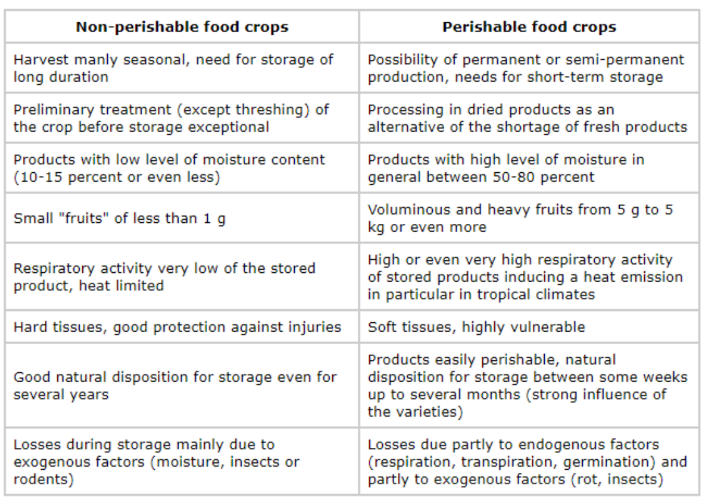
Image occlusion: name the hidden labels
14
Stages of a whole post-harvest system
1. Harvesting
2. Threshing
3. Drying
4. Storing
5. Processing
6. Primary processing
7. Secondary processing
8. Product evaluation
9. Packaging
10. Marketing
11. Use
12. Consumer Preference
2. Threshing
3. Drying
4. Storing
5. Processing
6. Primary processing
7. Secondary processing
8. Product evaluation
9. Packaging
10. Marketing
11. Use
12. Consumer Preference
15
This can have a drastic effect on the postharvest quality and shelf life of most harvested fruits and vegetables?
Physical Handling
16
This is mainly done to reduce postharvest losses?
Postharvest Handling
17
It is either qualitative or quantitative, represent significant waste of production
Losses
18
This should not be confused with damage?
Losses
19
In the Philippines, postharvest losses in fruits and vegetables is up to? (%)
28 to 42%
20
Food Pipeline (7)
"1. Producer
2. Pre-Processing
3. Transport
4. Storage
5. Processing& Packaging
6. Marketing
7. Consumer"
2. Pre-Processing
3. Transport
4. Storage
5. Processing& Packaging
6. Marketing
7. Consumer"
21
Cutting the leaves happens in the what process?
Supply & Transport
22
Types of Losses (6)
1. Moisture Content
2. Damage
3. Direct & Indirect Losses
4. Weight Loss
5. Quality Loss
6. Food Loss
2. Damage
3. Direct & Indirect Losses
4. Weight Loss
5. Quality Loss
6. Food Loss
23
It is the rate that usually indicated as a proportion of the moist product
Moisture Content
24
It is a clear deterioration in the product.
Damage
25
It occurs when the disappearance of a foodstuff is caused by leakage or consumption by pests?
Direct Loss
26
It occurs when a reduction in quality leads to the consumer's refusal to purchase?
Indirect Loss
27
It can be caused by leakage, during transport. It is often the result of prolonged infestation and consumption by insects, rodents and birds or poor packaging?
Weight Loss
28
This covera a wide range and are concerned both with external features, shape and size and with odor and taste?
Quality Loss
29
This clearly results from a loss in quantity, it also results, but more insidiously, from a loss in quality and edibility, making it unfit for human consumption.
Food Loss
30
a region of active cell division and growth located at the tip of the potato tuber. This is the area from which new shoots or sprouts, commonly known as "eyes," develop.
Apical meristem
31
Changes icrops that lead to post-harvest losses
1. Sprouting and rooting
2. Toughening, seed development
3. Shrivealing
4. Loss of flavor
5. Feathering
2. Toughening, seed development
3. Shrivealing
4. Loss of flavor
5. Feathering
32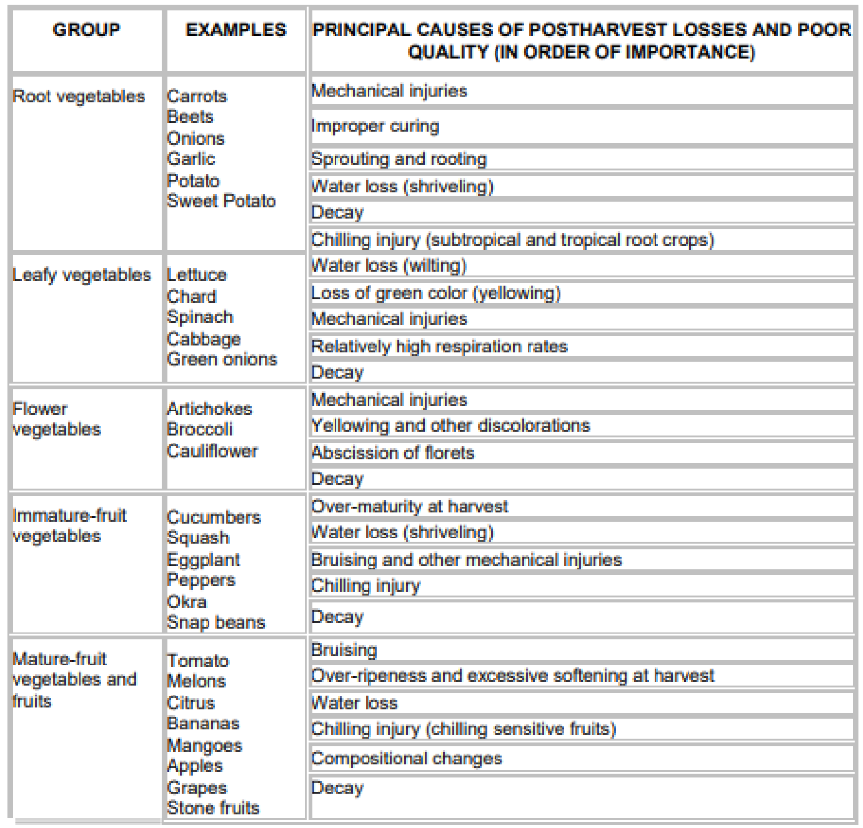
Image occlusion: name the hidden labels
33
Refers to the natural aging process of the potato tuber, leading to changes in its physiological and biochemical characteristics. As potatoes age, they may experience alterations in texture, color, and taste.
Senility
34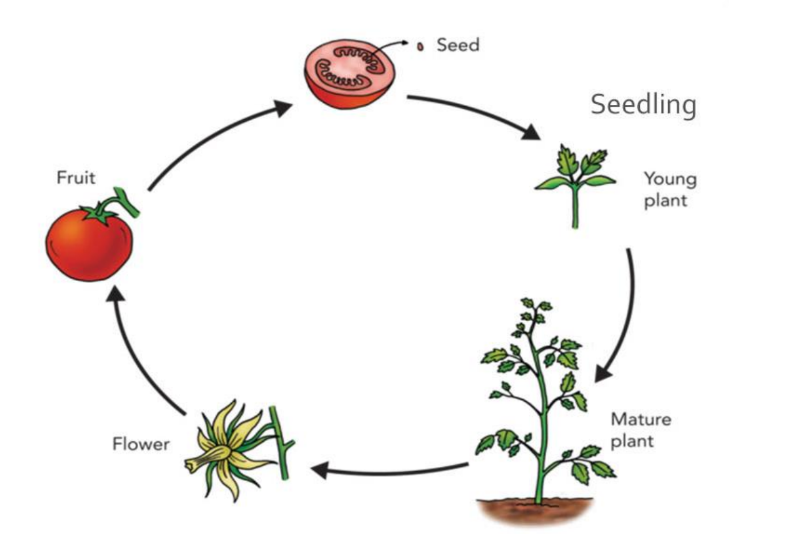
Image occlusion: name the hidden labels
35
Harvested crops respond to?(4)
1. Temperature
2. Relative Humidity
3. Pest & Disease
4. Gases
2. Relative Humidity
3. Pest & Disease
4. Gases
36
When the temperature is high it increases respiration, transpiration or water loss, microbial and insect development?
Temperature
37
Relative Humidity involves? (2)
1. Air normally contains water vapor
2. Crops lose water when air is dry
2. Crops lose water when air is dry
38
Gases involves?
1. Carbon Dioxide
2. Oxygen
2. Oxygen
39
Abbreviation of FAO?
Food and Agriculture Organization
40
FAO's Goal?
Program for food loss prevention
41
In 1975 FAOs programs focuses on what produce?
Grains
42
Abbreviation of PHTRC?
Postharvest Horticulture and Training Research Institute
43
When PHTRC established?
1977
44
Where was establishment of PHTRC held?
University of the Philippines Los Banos
45
It is diverse in structure (not just fruit/seed) and Can be classified based on origin
(number of carpels from which they originate), consistency and structure?"
(number of carpels from which they originate), consistency and structure?"
Horticultural Produce
46
"Same with horticultural produce, this produce can be classified based on morphological similarity and can also be classified based on use and economic importance?"
Agronomic Produce
47
It is the study of anatomical forms and structures with emphasis on characteristics useful in distinguishing the species?
Morpho-anatomy
48
Fruit structure primarily contains two parts?
"1. Pericarp
2 Seed"
2 Seed"
49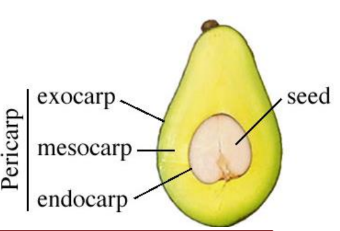
Image occlusion: name the hidden labels
50
Image occlusion: name the hidden labels
51
Image occlusion: name the hidden labels
52
Image occlusion: name the hidden labels
53
Image occlusion: name the hidden labels
54
It is the outer wall of the ovary from which fruit is developed?
Pericarp
55
Pericarp has three (3) layers?
"1. Epicarp
2. Mesocarp
3. Endocarp"
2. Mesocarp
3. Endocarp"
56
Fruit Classification (3)
"1. Simple
2. Aggregrate
3. Multiple"
2. Aggregrate
3. Multiple"
57
It is a type of fruit classification where the fruit is developed from a single ovary of one or more carpels and divided into Dry fruits and Fleshy fruits depending upon pericarp
Simple
58
It is a type of fruit classification where the fruit is developed from multiple ovaries but of the same flower (e.g. strawberries)?
Aggregrate
59
It is a type of fruit classification where the fruit is formed by all the flowers of an inflorescence which together result in a single big fruit (e.g. pineapple)?
Multiple
60
This is call if the pericarp is not succulent and becomes dry?
Dry fruit
61
Two types of dry fruit?
"1. Dehiscent
2. Indehiscent"
2. Indehiscent"
62
This fruit classification splits open when they mature?
Dehiscent
63
This fruit classification does not split open on maturity?
Indehscent
64
It is called the fruit wall or pericarp is thick and fleshy?
Fleshy Fruit
65
Three types of fleshy fruits?
"1. Berry
2. Drupe
3. Pome"
2. Drupe
3. Pome"
66
"It is made up of one or more carpals and contains one or more seeds, soft, fleshy pericarp?"
Berry
67
"It is derived from a single carpel and containing one seed, thin exocarp, fleshy mesocarp?"
Drupe
68
It is the accessory fleshy fruit formed by a group of carpels that are firmly united with each other and surrounded by and united to the receptacle?
Pome
69
"The study of vegetables arise either from shoots, roots, stems, leaves, petioles, inflorescence buds and other plant parts?"
Vegetable Morphology
70
Vegetable classification (6)
"1. Leafy
2. Fruit vegetable
3. Bulbs
4. Legumes
5. Roots
6. Flower vegetables"
2. Fruit vegetable
3. Bulbs
4. Legumes
5. Roots
6. Flower vegetables"
71
Modified Organs (7)?
"1. Sweet potato swollen root
2. Ginger modified stem
3. Potato swollen tip of stem
4. Gabi/Taro swollen base of stem
5. Onion fleshy scale leaves plus stem
6. Cabbage terminal bud
7. Cauliflowercurd bracts and apices"
2. Ginger modified stem
3. Potato swollen tip of stem
4. Gabi/Taro swollen base of stem
5. Onion fleshy scale leaves plus stem
6. Cabbage terminal bud
7. Cauliflowercurd bracts and apices"
72
Leafy Vegetables(6)?
"1. Pechay
2. Lettuce
3. Mustard
4. Kangkong
5. Celery
6. Cabbage"
2. Lettuce
3. Mustard
4. Kangkong
5. Celery
6. Cabbage"
73
Flower Vegetables?
Cauliflower
74
Root Crops (Enlarged tubers) (5)?
"1. Cassava
2. Sweet Potato
3. Yam
4. Arrowroot
5. Carrot"
2. Sweet Potato
3. Yam
4. Arrowroot
5. Carrot"
75
Root Crops (Bulb) (4)?
"1. Potato
2. Radish
3. Onion
4. Garlic"
2. Radish
3. Onion
4. Garlic"
76
Fruit (Seed)(4)?
"1. Sitao
2. Cowpea
3. Winged Bean
4. Pigeon pea"
2. Cowpea
3. Winged Bean
4. Pigeon pea"
77
Fruit Vegetables (8)?
"1. Tomato
2. Eggplant
3. Squash
4. Pepper
5. Patola
6. Ampalaya
7. Chayote
8. Upo"
2. Eggplant
3. Squash
4. Pepper
5. Patola
6. Ampalaya
7. Chayote
8. Upo"
78
Tree Vegetabes (2)
"1. Malunggay
2. Katuray"
2. Katuray"
79
Medicinal Crops (7)?
"1. Lagundi
2 Tobacco
3. Tsaang
4. Gubat
5. Yerba
6. Buena
7. Sambong"
2 Tobacco
3. Tsaang
4. Gubat
5. Yerba
6. Buena
7. Sambong"
80
it is from the gramineous family and crops harvested for dry grain only?
Cereals
81
Tissue System? (3)
"1. Ground/Fundamental
2. Vascular
3. Dermal"
2. Vascular
3. Dermal"
82
"It is a thin walls and large vacuoles, found in all parts of the plant?"
Parenchyma
83
It is an elongated cells with thick walls to strengthen stems?
Collenchyma
84
"It is a fiber cell, sand-like/hard leathery texture?"
Sclerenchyma
85
It is associated with the vascular bundle?
Laticifers
86
"It is the topmost layer, easily removed during handling?"
Wax layer
87
It is beneath the bee wax?
Cutin
88
It guards the cells?
Stomata
89
It is the loose corky cells
Lenticels
90
It is the other term for hair spines?
Emergences
91
Type of Organs (4)?
"1. Leaves and flowers wilt easily
2. Flower buds open
3. Fruits ripen
4. Cutflowers have more organs than leafy vegetables"
2. Flower buds open
3. Fruits ripen
4. Cutflowers have more organs than leafy vegetables"
92
Nature of the Fruit Wall? (3)
"1. Thin - very susceptible
2. Thin leathery peel less
susceptible
3. Thick/Hard withstand damage"
2. Thin leathery peel less
susceptible
3. Thick/Hard withstand damage"
93
The main passageway for loss of water and entry of air for respiration?
Numbers of Stomata
94
This are visible hairs or spines?
Emergences
95
This are tiny hairs not visible to the naked eye?
Trichomes
96
This are hairs found on Rambutan?
Spintern
97
Non-cellular waxy layer are found above what?
Epidermal cells
98
It is the circular groups of protruding air-filled cells with central opening?
Lenticels
99
This is a sap or latex producing ducts surrounding vascular bundles?
Laticifers
100
Characteristics of Perishables?(6)
"1. Energy-requiring
2. Continuously changing
3. High water content
4. Susceptible to attack of pathogens and insects
5. Responsive to its environment
6. Prone to injury"
2. Continuously changing
3. High water content
4. Susceptible to attack of pathogens and insects
5. Responsive to its environment
6. Prone to injury"
101
"The study of physiology and biochemistry of crops which includes metabolism, physical and chemical changes during the entire development lifecycle, and disorders?"
Physio-chemical
102
An oxidation process by which organic materials or products of photosynthesis are broken down to simpler forms accompanied by release of energy and heat?
Respiration
103
Factors Affecting Respiration?
"1. Substrates availability
2.Oxygen availability
3. Temperature
4. Type and Plant age"
2.Oxygen availability
3. Temperature
4. Type and Plant age"
104
This is a typical respiration rate for young tissues (570.6 mg CO2/kg/ha)?
High Respiration Rate
105
This is typical respiration rate for unripe fruits and leafy vegetables (70mg CO2/kg/ha)?
Intermediate Respiration Rate
"This is typical for storage organs from roots, underground stem, bulbs, and mature fruits (1.52mgCO2/kg/ha)?
"This is typical for storage organs from roots, underground stem, bulbs, and mature fruits (1.52mgCO2/kg/ha)?
106
"
Low Respiration Rate
107
Loss of water from plants and most fruits and vegetables are composed of cells loosely bound together with spaces which interconnect and lead to lenticels or stomates?
Transpiration
108
Conditions to Slow Down Respiration and Transpiration?
"1. Low Temperature
2. Low oxygen
3. High Relative Humidity"
2. Low oxygen
3. High Relative Humidity"
109
It is a colorless gas hormone produced by plant tissues or when organs are wounded or stressed?
Ethylene
110
This system operates during initial stage of senescence?
System 1
111
It is an autocatalytic ethylene system?
System 2
112
Fruits with low ethylene producrtion? (less than 1)
"1. Okra
2. Cabbage
3. Lanzones"
2. Cabbage
3. Lanzones"
113
Fruits with intermediate ethylene producrtion? (between 1-100)
"1. Avocado
2. Cardaba
3. Durian"
2. Cardaba
3. Durian"
114
Fruits with high ethylene producrtion? (more than 100)
1. Passion Fruit
115
The effects of ethylene production?
"1. Hastened ripening
2. Promotes sprouting of root, tuber and bulb
crops
3. Induction of physiological disorders"
2. Promotes sprouting of root, tuber and bulb
crops
3. Induction of physiological disorders"
116
It is a stage of fruit ripening associated increased with ethylene production and a rise in cellular respiration
Climacteric
117
It is the final physiological process that marks the end of fruit maturation and the beginning of fruit senescence
Climacteric
118
It is where the most ripening was done on the plant and will slowly begin to rot after harvest?
Non-climacteric
119
41 photo
120
Major component of produce?
Water
121
Water rate in produce? (%)
76-95%
122
This component participates in various biological processes?
Water
123
The toughening of the cell is due to decreased of what component?
Water
124
This is the major component of the cell wall and dietary fiber?
Cellulose
125
It is the deposited in the cell wall?
Pectin
126
It is when glucose and fructose linked together?
Sucrose
127
Simple Suger (2)?
"1. Glucose
2.Fructose"
2.Fructose"
128
44-45
129
Organic Acids? (4)
"1. Citric Acid
2. Malic Acid
3. Oxalic Acid
4. Tartaric Acid"
2. Malic Acid
3. Oxalic Acid
4. Tartaric Acid"
130
Fruits with Citric Acid? (2)
"1. Citrus
2. Tomato"
2. Tomato"
131
Fruits with Malic Acid? (4)
"1. Banana
2. Mango
3. Melon
4. Carrot"
2. Mango
3. Melon
4. Carrot"
132
Fruits with Oxalic Acid? (2)
"1. Kamias
2. Chayote"
2. Chayote"
133
Fruits with Tartaric Acid? (2)
"1. Grapes
2. Tamarind"
2. Tamarind"
134
Fruit that has 61 aroma volatiles?
Mango
135
"Fruit that has 26 volatiles, hydrogen sulfide and diethylsulfide?"
Durian
136
Fruit that has allicin and alliin?
Onion
137
This compounds with either one or many OH groups attached directly to the benzene ring and involved in browning reactions in fresh cuts?
Phenolics
138
Examples of fruits that have tannins? (2)
"!. Banana
2. Star Apple"
2. Star Apple"
139
It is the hardness in bean pods and mangosteen?
Lignins
140
This slows down senescence process?
Antioxidants
141
"It is found in red, orange, and purple fruits and veggies?"
Flavanoids
142
Glucoseinolates is found in what vegetable?
Brocolli
143
Main pigments?(6)
"1. Chlorophyll
2. Lycopene
3. Carotene
4 Anthocyanin
5. Cryptoxanthin
6. Lutein"
2. Lycopene
3. Carotene
4 Anthocyanin
5. Cryptoxanthin
6. Lutein"
144
"Green, blue green, yellow green are found in what pigment?"
Chlorophyll
145
" Red in tomatoes, watermelon are found in what pigment?"
Lycopene
146
" Orange, yellow found in carrots, squash are found in what pigment?"
Carotene
147
"Blue, purple, red found in berries are found in what pigment?"
Anthocyanin
148
Yellow in papaya are found in what pigment?
Cryptoxanthin
149
"Yellow, orange found in kale, brocolli are found in what pigment?"
Lutein
"Complex mixture of long chain hydrocrabons, alcohols, ketones, fatty acids and esters and makes product resistant to moisture loss,
"Complex mixture of long chain hydrocrabons, alcohols, ketones, fatty acids and esters and makes product resistant to moisture loss,
150
microbial attack, and mechanical damage"
Waxes
151
A defense system on the tree?
Latex
152
Can cause damage to fruit peel?
Latex
153
Fruits that have latex? (5)
"1. Sweet potato
2. Lanzones
3. Jackfruit
4. Papaya
5. Mango"
2. Lanzones
3. Jackfruit
4. Papaya
5. Mango"
154
Types of development of Quarantine treatments? (2)
"1. Hot Water Treatment
2. Vapor Heat Treatment"
2. Vapor Heat Treatment"
155
Aspects of Physical Properties? (6)
"1. Physical
2. Optical
3. Mechanical
4. Thermal
5. Acoustic
6. Heat"
2. Optical
3. Mechanical
4. Thermal
5. Acoustic
6. Heat"
156
It is the physical dimension of commodity?
Physical
157
It is the light characteristics?
Optical
158
It is the resistance when placed under stress?
Mechanical
159
It is the movement of heat?
Thermal
160
It is the changes in sound transmitted through a commodity?
Acoustic
161
"It is the changes in transmittance of electromagnetic radiation, radio frequency and electrical energy?"
Electrical
162
Physical Characteristics? (6)
"1. Size
2. Shape
3. Volume
4. Density
5. Specific Gravity
6. Surface Area"
2. Shape
3. Volume
4. Density
5. Specific Gravity
6. Surface Area"
163
"It is the weight dimension (L, W, D) of one unit of a commodity?"
Size
164
It is the general outline or profile of a commodity?
Shape
165
It is the space occupied by one unit of a commodity?
Volume
166
It is the ratio of weight to volume?
Density
167
It is the ratio of unit density of object to density of pure water?
Specific Gravity
168
It is the area when laid out on a flat surface?
Surface Area
169
Methods of measurement for Size?(4)
"1. Weighing Scales
2. Measuring aids
3. Correlation of Weight with major dimensions
4. Machine Vision"
2. Measuring aids
3. Correlation of Weight with major dimensions
4. Machine Vision"
170
57 photo
171
Methods of measurement for Shapes?(3)
"1. Charted Standards
2. Comparison with geometric shapes
3. Shape descriptors"
2. Comparison with geometric shapes
3. Shape descriptors"
172
Applications of Sizes?(2)
"1. Basis for classifying produce, pricing
2. Basis for package design"
2. Basis for package design"
173
Application of Shapes?(3)
"1. Maturity Index
2. Basis for equipment design
3. Basis for grading"
2. Basis for equipment design
3. Basis for grading"
174
Methods of measurement for Volume? (4)
"1. Water Displacement
2. Weight in air and water
3. Correlation with major dimensions
4. Resemblance to geometric bodies"
2. Weight in air and water
3. Correlation with major dimensions
4. Resemblance to geometric bodies"
175
Application of Volume? (3)
"1. Basis for equipment design
2. Sorting
3. Non-destructive testing of fruit"
2. Sorting
3. Non-destructive testing of fruit"
176
Methods of measurement for Density? (2)
"1. Water Displacement
2. Weighing in air and water"
2. Weighing in air and water"
177
Application of Density? (3)
"1. Maturity Index
2. Harvesting Index
3. Basis for sorting and grading"
2. Harvesting Index
3. Basis for sorting and grading"
178
Methods of measurement for Surface Area? (3)
"1. Planimetric
2. Correlation with major dimensions
3. Resemblance to geometric bodies"
2. Correlation with major dimensions
3. Resemblance to geometric bodies"
179
Application of Surface Area?(2)
"1. Measure of the reactive area for biological processes
2. Ease of cooling determination"
2. Ease of cooling determination"
180
62 photo
181
Methods of measurement for Reflectance? (4)
"1. Rating systems/indices
2. Color meters
3. Spectrophotometer
4. Imageprocessing"
2. Color meters
3. Spectrophotometer
4. Imageprocessing"
182
Application of Reflectance?(4)
"1. Basis for classification
2. Prediction of levels of constituents
3. Objective monitoring of disease
4. Indicator of maturity"
2. Prediction of levels of constituents
3. Objective monitoring of disease
4. Indicator of maturity"
183
Methods of measurement for Transmittance? (3)
"1. Manual devices
2. Spectroscopy
3. Imageprocessing"
2. Spectroscopy
3. Imageprocessing"
184
Applications of Transmittance?(2)
"1. Detection of injury
2. Prediction of constituent levels"
2. Prediction of constituent levels"
185
It is an emission of light even after illumination source is turned off?
Delayed light emission
186
Methods of measurement for Delayed light emission?
Fluorescence
187
Applications of Delayed light emission?(2)
"1. Prediction of internal constituents
2. Research tool for physiological studies when plant is under stress"
2. Research tool for physiological studies when plant is under stress"
188
It is the ability to resist compressive load over time without incurring damage?
Compressive Strength
189
Methods of measurement for Compressive Strength
"1. Compression test: Finger pressure, force
2. Deformation tests
3. Puncture tests"
2. Deformation tests
3. Puncture tests"
190
Applications of Compressive Strength?(2)
"1. Design and improvement of handling systems
2. Basis for classification"
2. Basis for classification"
191
67 photo
192
It is the ability to resist damage when dropped on a surface or when hit by other commodities?
Impact Resistance
193
Methods of measurement for Impact resistance? (2)
"1. Drop test
2. Pendulum test"
2. Pendulum test"
194
Applications of Impact Resistance?(2)
"1. Design and improvement of handling systems
2. Establishment of bruise thresholds"
2. Establishment of bruise thresholds"
195
It Is the ability to tolerate vibration stress by rapid cynical movement?
Vibration Resistance
196
Methods of measurement for Vibration Resistance?
Simulated tests
197
Applications of Vibration Resistance?(2)
"1. Design and improvement of transport systems
2. Design and improvement of packaging and packing practice"
2. Design and improvement of packaging and packing practice"
198
It is the transmission of mechanical waves (sound waves or vibrations)?
Acoustic Response
199
Methods of measurement for Acoustic Response?(2)
"1. Impact Force
2. Resonant frequency"
2. Resonant frequency"
200
Applications of Acoustic Response?
Tapping of commodity as basis for classification
201
It is the sound waves above the range of humans?
Ultrasonic transmission
202
Methods of measurement for Ultrasonic Transmission?
Ultrasonic emitter
203
Application of Ultrasonic transmission?
Non- destructive evaluation of internal quality and defects
204
It is the heat absorbing capacity of a material at constant pressure?
Specific heat
205
Methods of measurement for Specific Heat?
Differential scanning calorimetry
206
Applications of Specific Heat?
"1. Heat load calculation
2. Optimization of heat treatments"
2. Optimization of heat treatments"
207
photo 73