neuromuscular system
Study these flashcardsFree · spaced repetition · iPhone, Android, Mac & web
All cards
1
neuromuscular system
the nervous system and muscles work together to allow movement
2
sympathetic nervous system
prepares the body for exercise
3
parasympathetic nervous system
relaxes the body and slows down the high energy functions
4
3 types of muscle fibers
type 1 slow oxidative, type 2a fast oxidative glycolitic, type 2x fast glycolitic
5
slow oxidative -type 1
slower contraction speed and produce most of their energy aerobically. used for lower intensities, so have specific characteristics that allow them to use oxygem more efficiently
6
type 2 fast twitch
faster contraction speed and greater force. they provide energy anaerobically, and fatigue quickly, 2 types
7
type 2a fast oxidative glycolitic
provide a longer burst of energy, as the fibers are more resistan to fatigue used for events such as 1500m
8
type 2x fast glycolitic
provide a quick, short burst of energy so are used for highly explosive events like 100m. fibers fatigue much quicker than type 2a
9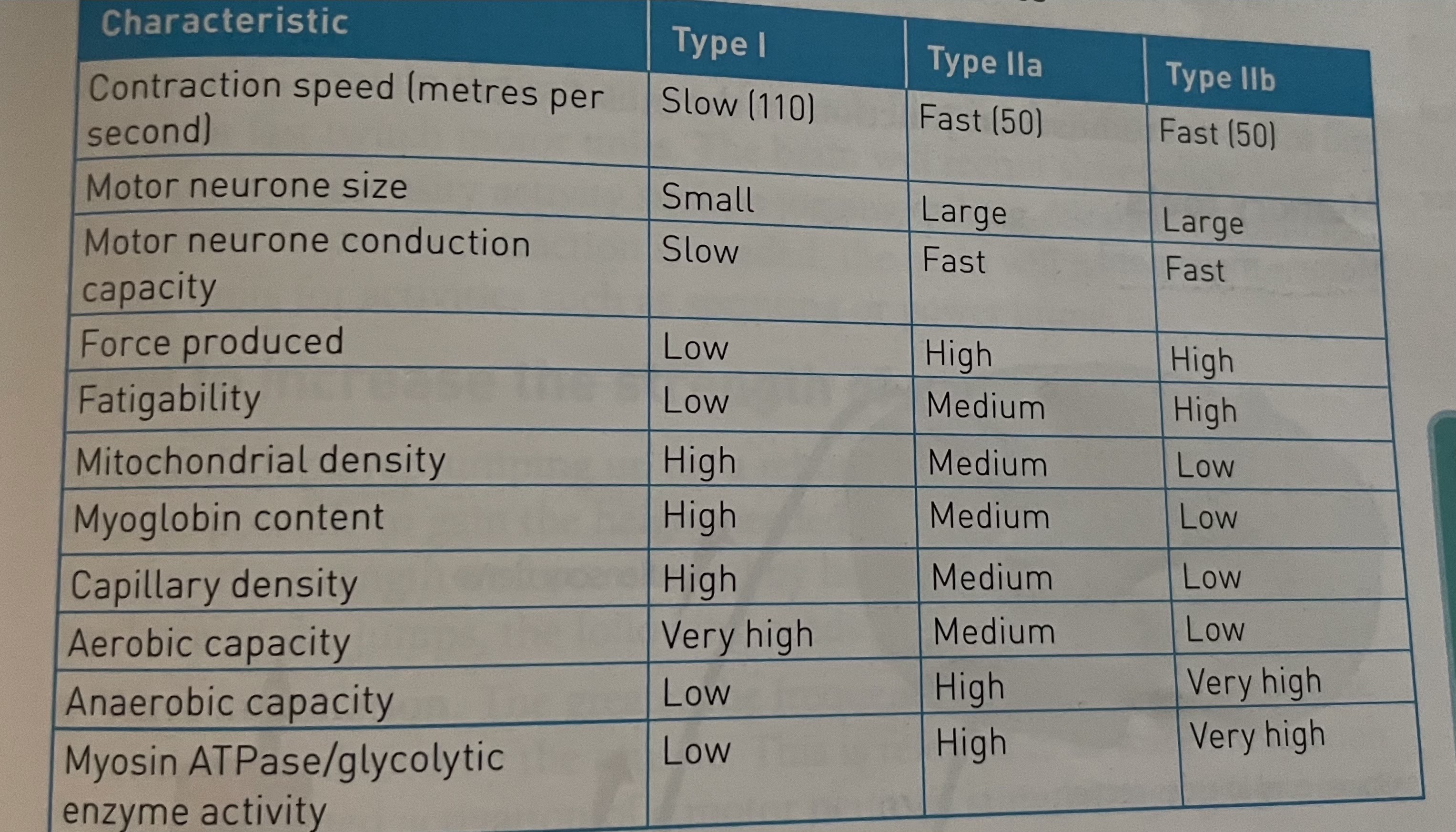
characteristics of slow and fast twitch muscle fibers
10
hypertrophy
increase in muscle size. the muscle becomes bigger and stronger
11
what is a motor unit
a motor unit is a motor neuron and its muscle fibers
12
motor neurones
nerve cells which transmit the brains instructions as electrical impulses to the muscles
13
neuromuscular junction
where the motor neurone and the muscle fiber meet
14
all or none law
where a sequence of impulses has to be of sufficient intensity to stimulate all of the muscle fibers in a motor unit, in order for them to contract, if not none of them will contract
15
slow and fast twitch motor units
motor units contain the same type of muscle fiber so they are either slow twitch or fast twitch motor units. the brain will recruit slow twitch for low intensity activities. if a greater force of contraction is needed the brain will recruit fast twitch
16
wave summation
where there is a repeated nerve impulse with no time to relax, so a smooth sustained contraction occurs rather than twitches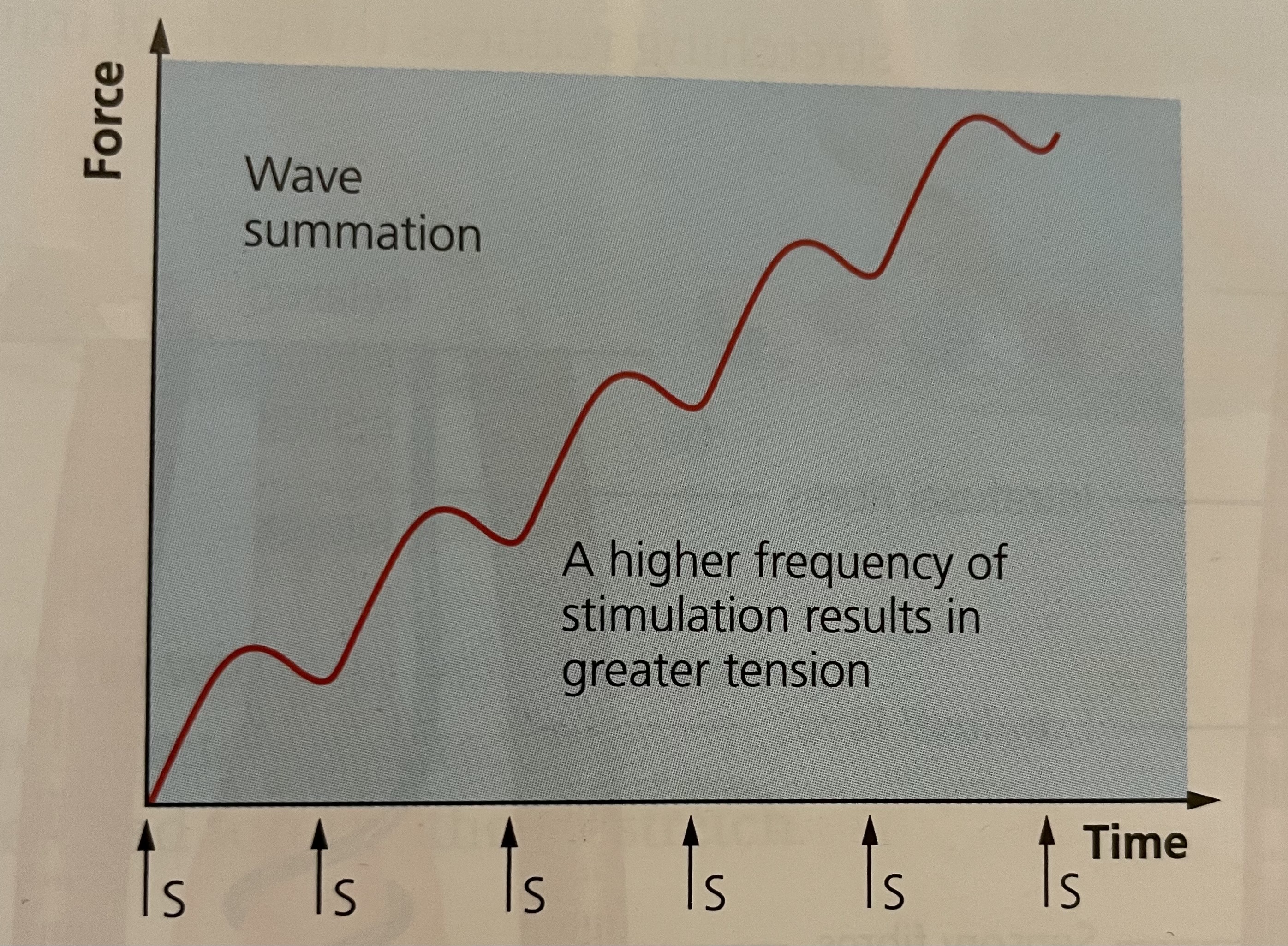
17
tectanic contraction
a sustained muscle contraction caused by a series of fast repeating stimuli
18
spatial summation
when the strength of a contraction changes by altering the number and size of the muscles motor units
19
PNF
advanced streaching technique. effective for flexibility training
20
muscle spindles
they detect how far and fast a muscle is being streached and produce a streach reflex. very sensitive proprioceptors that lie between the skeletal muscle fibers. they send exitatory signals to the CNS which sends signals back telling it to contact triggering a streatch reflex. this reflex causes the muscle to contract and prevent over streatching
21
golgi tendon organs
activated when there is tension in a muscle. found between muscle fiber and tendon. when the muscle is contracted isometrically in PNF, they sence the increase in muscle tension and send inhibitory signals to the brain, this allows the agonist to relax and lengthen (autogenic inhibition)
22
isometric contraction
when theres tension in a muscle but no visible movement
23
autogenic inhibition
when there is a sudden relaxation of a muscle in responce to high tension - golgi tendon organs are the receptors involved
24
PNF in practice step 1
1.individual performs a passive streatch with the help of a partner until tension is felt. the streatch is detected by muscle spindles, if a muscle is being streatched too far then a streatch reflex should occur
25
PNF in proctice step 2
the individual should then isometrically contract their muscle for atleast 10 seconds by pushing it against a partner who holds it stationary. during this the golgi tendon organs are activated and the inhibitory signals they send ovarride the excitatory signals from the muscle spindles delaying the streach reflex
26
PNF in practive step 3
the leg is then lifted again, the golgi tendon organs are responsible for the antagonist muscle relaxing, which means the leg streatches further. this process can be repreated until no more gains are possible.