The respiratory system
Study these flashcardsFree · spaced repetition · iPhone, Android, Mac & web
All cards
1
State the respiratory system in order
Nose, larynx, trachea, bronchi, bronchioles, alveoli
2
diffusion
the movement of gas particles from an area of high concentration(partial pressure) to an area of low concentration (partial pressure)
3
Gaseous exchange
the movement of oxygen from the air into the blood and carbon dioxide from the blood into the air
4
Alveoli and key features of their structure
- Responsible for exchange of gasses between air and blood, which occurs via diffusion. structure- Large surface area, one cell thic, and good blood supply
5
Mechanics of breathing - pressure
The greater the difference in pressure, the faster air will flow in. this means that in order to inspire, the pressure needs to be lower in the lungs than in the atmosphere. to Expire, the pressure needs to be lower in the atmosphere than in the lungs
6
what happens when you increase and decrease the volume of the thoracic cavity
increase- it will reduce the pressure of air in the lungs. Deacrease- increase the pressure of air in the lungs. the contraction of muscles causes these pressure changes.
7
what happens during inhalation
the external intercostal muscles contract moving the rib cage up and out. the diaphgram contracts, moves down and flatterns, decreasing the pressure in the lungs forcing air in.
8
what happens during exhalation
the external intercostal muscles relax moving the ribcage down and in, the diaphgram relaxes, rises and returns to its dome shape. increasing the lung pressure, therefore forcing air out
9
Tidal volume
volume of air breathed in or out per breath
10
inspiritory reserve volume
volume of air that can be forcibly inspired after a normal breath
11
Expiritory reserve volume
volume of air that can be forcibly expired after a normal breath
12
Minute ventilation and equation
the volume of air inspired or expired per minute. equation: number of breaths(pert min) x tidal volume
13
Residual volume
the amount of air that remains in the lungs after maximal expiration
14
what happens to lung volumes during exercise? 5
-Tidal volume increases. -inspiritory reserve volume decreases. -Expiritory reserve volume slightly decreases. -Residual volume stays the same. -minute ventilation massivley increases
15
Spirometer
a device thats used to measure the volume of air inspired and expired by the lungs 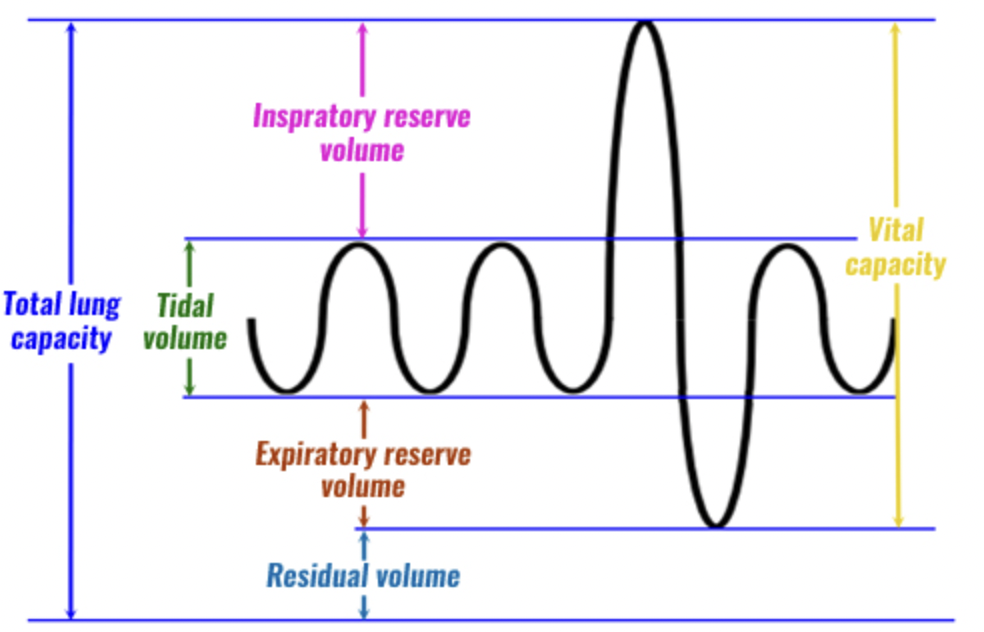
16
what is Gaseous exchange concerned with
-getting oxygen into the lungs, so it can be diffused into the blood and be transported to cells. -removal of carbon dioxidefrom the blood.
17
Partial pressure
the pressure exerted by an individual gas when it exists in a mixture of gasses
18
gaseous exchange at the alveoli
the PP of oxygen is higher in the alveoli (100mmHg) than in the capillary blood vessels(40mmHg). this is because oxygen has been removed by the working muscles and the concentration is lower. the differenceis PP causes the diffusion gradient to be higher, causing diffusion to be quicker. oxygen will diffuse from alveoli to blood until the pressure is equal.
19
What 3 factors are involved in regulation of pulminary ventilation during exercise
- neural control, -hormonal control, chemical control
20
neural and chemical regulation of pulmonary ventilation
-involves the brain and nervous system, -chemical control is concerned with blood acidity. -work together as a team to regulate breathing. -when blood acidity is high, the brain is informed and it sends an impulse through the nervous system to increase breathing. pulminary ventilation is breathing and the nervous system controls this automatically therough the sympathetic and parasympathetic system.
21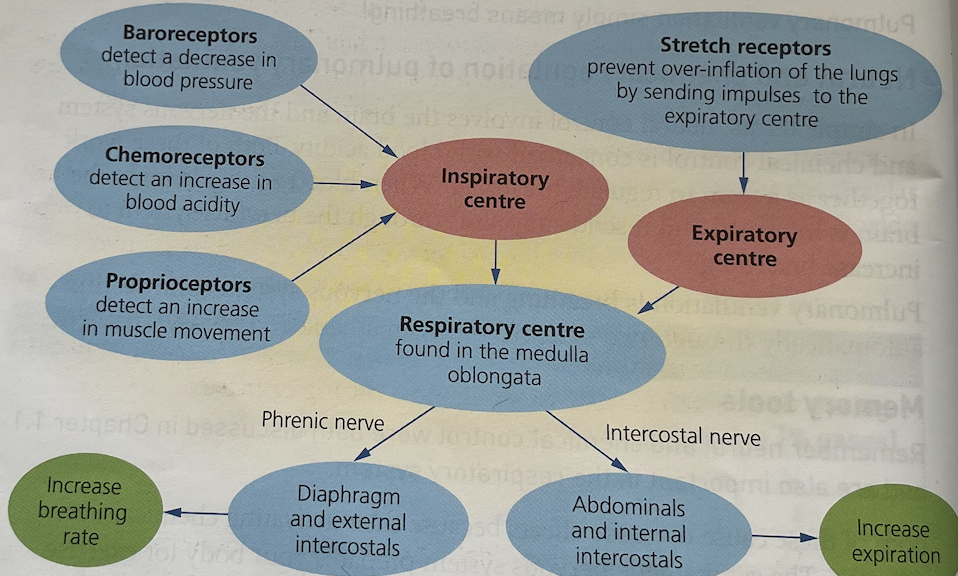
control of ventilation
22
state the order of neural/chemical control for inspiration and expiration
inspiration- receptor-->medulla-->phrenic nerve--> diaphragm and external intercostals. expiration-receptor-->medulla-->intercostal nerve-->abdominals and internal intercostals
23
hormonal regulation of pulmonary ventilation during exercise
adrenaline causes the anticipatory rise prior to exercise
24
effects of smoking on the respiritory system
it can cause irritation of the trachea and bronchi. it reduces lung function and increases breathlessness by swelling and narroing the lungs airways
25
what does cigarette smoke damage
the cells lining the trachea, bronchi, and bronchioles. when they are damaged, excess mucus to build up in the lung passages which lead to a smokers cough
26
what happens when smoking damages the alveolar
their walls breakdown and join together forming larger airspaces than normal. this redues the efficiency of gaseous exchange and increases the rick of COPD
27
how does smoking affect oxygen transport
the carbon monoxide from cigarettes combines with haemoglobin in RBC more readily than oxygen, reducing the oxygen carrying capacity of the blood which increases breathlessness during exercise