emergence of globalisation of sport in the 21st century
Study these flashcardsFree · spaced repetition · iPhone, Android, Mac & web
All cards
1
Life in pre-industrial britain features/charateristics. 6
communication and transport was limited
there was widespread illiteracy
violent in the lower class
limited freetime
clear class division (feudal system)
lived in countryside
there was widespread illiteracy
violent in the lower class
limited freetime
clear class division (feudal system)
lived in countryside
2
Feudal system
a way of structuring society around a relationship derrived fromholding land in exchange for service or labour
3
Popular recreation
sport and passtimes of people in preindustrial britain
4
characteristics of popular recreation
long working hours meant recreation was occational and restricted to anual events
Limited transport meant the recreation was local and specific
low literacy meant that there was limited rules
activities were aggressive and male dominated as a result of the harsh society lots of property damage
wadgers placed by upper class
Limited transport meant the recreation was local and specific
low literacy meant that there was limited rules
activities were aggressive and male dominated as a result of the harsh society lots of property damage
wadgers placed by upper class
5
5 characteristics of mob football
violent
lead to injury or death
damage of property
gambling/wagering
lots of alcohol
lead to injury or death
damage of property
gambling/wagering
lots of alcohol
6
5 characteristics of real tennis
played by upper class males
high moral code
played in leisure time
specialised equipment
ability to travel and play
high moral code
played in leisure time
specialised equipment
ability to travel and play
7
Rational recreation
19th century sport past times for lower classes which were designed by the middle classes to be well ordered, organised and controlled
8
Wenlock olympian games
- set up to premote moral, physical and interlectual improvements especially in lower class. -set up by William Penny Brookes. -mixture of athletic, traditional country sport. -DR Penny Brookes campaigned for PE to be on school curriculum to premote the benifits of sport and exercise
9
industrial revolution
-mid 18th century to mid 19th century. -this period marked a chane in britain from a feudal, rural society, to an industrial, machine-based, capitalist society, controlled by a powerful urban middle class
10
initial effects of the industrial revolution during the first half of the 19th century 6
- Migration of the lower class to urban areas, loss of space. -lack of leisure time. -lack of income. -poor health. -loss of rights. -lack of public provision
11
improvements made during the second half of the 19th century---7
-Health and hygene improved. - gradual increase in wages. -more time for sport. -development of the middle class. -influence of ex-public school boys. -increased values of athleticism. -improved and cheaper transport
12
Development of the new middle class 6
-self made men took advantage of the new buisness oportunities in factories. -playing sport became more socially acceptable and was played to a higher standard and moral code. -developed rules. -provided facilities. - broken time payments
13
values of athleticism
athleticism- physical endevour and moral integrity, always work hard. -spirit of fair play spread to the lower class
14
industral patronage
factory owners set up factory teams, provided facilities and encoraged loyaltiy in the workforce
15
improved transport and communications 5
road development. -steam trains allowed further travel. allowing leagues to develop. fixtures and results were published in newspapers. so people could follow a team
16
cheaper travel
more accessable to play and watch sport
17
migraion of the lower class into urban areas
looking for work in the new factories
18
what did the industrial revolution lead to for mob games
lead to loss of space to play mob games and over crowding. there wasnt space for traditional mob games
19
lack of leisure time - industrial revolution
- a shift from seasonal to machine time. - 12 hour shifts. -6 days a week. -sabbath, sunday for religous obervance 'the day of rest'
20
lack of income - industrial revolution
low wages and poverty. little spare income for leisure pursuits
21
poor health - industrial revolution.
- poor working and living conditions lead to pollution and lack of hygiene. - also means little energy to play sport
22
what did a loss of rights mean - industrial revolution
restrictions placed on mob games and blood sports by changes in criminal laws
23
lack of public provision - industrial revolution
no access to private facilities or personal equipment for lower classes
24
health and hygiene improved
gradual improvements in living conditions and local council provisions of baths to improve clenliness and stop the spread of disease. giving people more energy for sport
25
Gradual increase in wages and more time for sport
increase in wages and more time for sport is due to factory act and sunday half day being provided to workers
26
what is urbanisation
large numbers of people migrating from rural areas into towns and cities. seeking work in factories
27
4 key features of urbanisation that have contributed to the development of sport
- lack of space. - large working class population. -loss of traditional sports. -change in working conditions
28
Urbanisation - lack of space
in cities space was premium. lead to a development of purpose built facilites e.g football grounds
29
Urbanisation - large working class population
large working class populations need to be entertained. so theres mass spectator numbers at football and rugby matches
30
Urbanisation - loss of traditional sports
working class traditional sports e.g mob games were banned so there was a need for sports to emerge
31
Urbanisation - changes in working conditions
initially working class worked long hours, so had -limited free time, income or energy for sport. as this improved they had improved sports attendance and participation
32
Transport revolution - development of steam trains and railways
aided the movement of teams and spectators. improved access to different parts of the country. cheaper train travel. improved acsess to the country side
33
Transport revolution, movement of teams and spectators
development of railways allowed faster, further and cheaper travel. this lead to nationwide fixtures developing regularly
34
transport revolution - improved acsess to different parts of the country
nationwide train travel enabled sport to become national and leagues formed with clubs from all over the country
35
Transport revolution - cheaper train travel
cheap and affordable train travellead to the working class being able to follow their teams to home and away matches
36
Transport revolution - improved acsess to the countryside
activities e.g rambling became popular as rural areas were reachable and affordable
37
communications : urban industrial society
second half of the 19th century , gradual improvements in education of the working class. society became more literate. so people could follow teams via news papers
38
influence of the church - late 19th century
- view changes helped to premote sport and recreation. - social control via civilised activities (which reduced gambling and alcoholism). - provided facilities to promote 'morality' and christian views. - the clergy saw sport as a way of increasing church attendance
39
emergence of the middle class in a 3 tier society - effect on sport
Made a codification. -competitions. -public provisions. -increased leisure time. -moved to 'profetionalism'
40
emergence of the middle class - codifications
- a strict set of rules were written as public school boys and university old boys formed NGB. -NGB controlled sport and became key organisers. -NGB formed clubs, which were lead by the middle class
41
Emergence of the middle class - competitions
development of leagues and competitions via the middle class involvment in public schools, unis, clubs, NGB, factorys and church teams
42
emergence of the middle class - public provision
Development of public facilities e.g parks and baths via the middle class 'philanthropists', factory owners, the church and passing of government acts in their role as local polititions
43
Philanthropists
kind generous middle class individuals who had a social conscious and were keen to try and provide a better life for the working class
44
Emergence of the middle class, increased leisure time
Factory owners gradually gave workers more leisure time (e.g saturday half day) allowing them to watch and participate in sport
45
Emergence of the middle. class - move to professionalism
helped to develop early profetional sport. factory owners paying broken time payments in football
46
what effect did the british empire have on sport
- public school boys spread games ethics globally. - sport seen as a good way of instilling moral values. binds the empire together
47
Development of sport in britain and its spread through the british empire. - public school boys and university old boys
- As teachers they developed teams and taught sporting values. - As industrialists and factory owners they set up teams and gave workers time to play. -as clergy they developed teams and became missionaries and took sport abroad. -as officers in the army, they used sport with armed service members from the british empire. -as diplomats, they travelled and took sport with them. - they formed NGB
48
Public provision
local council provision of facilities (e.g sport and recreational) for the masses to participate
49
public provision and its influence on the development and spread of rational recreation
development of public baths positivley influenced the oppotunity for working class recreation. local councils felt a civic responsibility to apply for grants to provide public washing facilities and improve their town status. increased public provision started in the second half of the 19th century. plunge baths developed for swimming and recreational use. involvement in positive physical activity was seen a social control of the working classes keeping them away from drinking and violence. it also premote work productivity and workers became healthier.
50
why was NGB developed
- sport was becoming more popular and there was wide spread play. -more teams and clubs were formed. -more national and international fixtures were being organised. -leagues and competitions were needed for these teams to compete. -nationally agreed rules and codification was needed to enable fair play. -----
51
rational recreation
involves post industrial development of sport. it was characterised by a number of features including respectability, regularity, strict administration and codification. - sport for the masses
52
characteristics of rational recreation
-respectability, -regionally/nationally/. regularly played. -stringent administration and codification. -referees/officials. -purpose buil facilities. -skills/tacics based
53
characteristics of rational recreation - respectability
non-violent in nature and the emphasis was on fair play
54
characteristics of rational recreation -reigonally/nationally/ regularly played
comps were played regionally/nationally/internationally. watching saturday-afternoon matches was particularly popular for the masses in their time off
55
characteristics of rational recreation - stringent administration and codification
strict and complex written rules were set down by NGB for the conduct of a sport
56
characteristics of rational recreation - referees/officials
they were present to enforce the newly developed rules in sporting contests
57
characteristics of rational recreation - purpose built facilities
sport took place in specially conducted grounds, pitches, or tracks. oftern set around urban areas with large populations to draw around for spectators???????
58
characteristics of rational recreation - skills/ tactics based
players had positional roles which they were 'specialists in. performers trained to improve their techniques and fitness levels to increase their chances of winning
59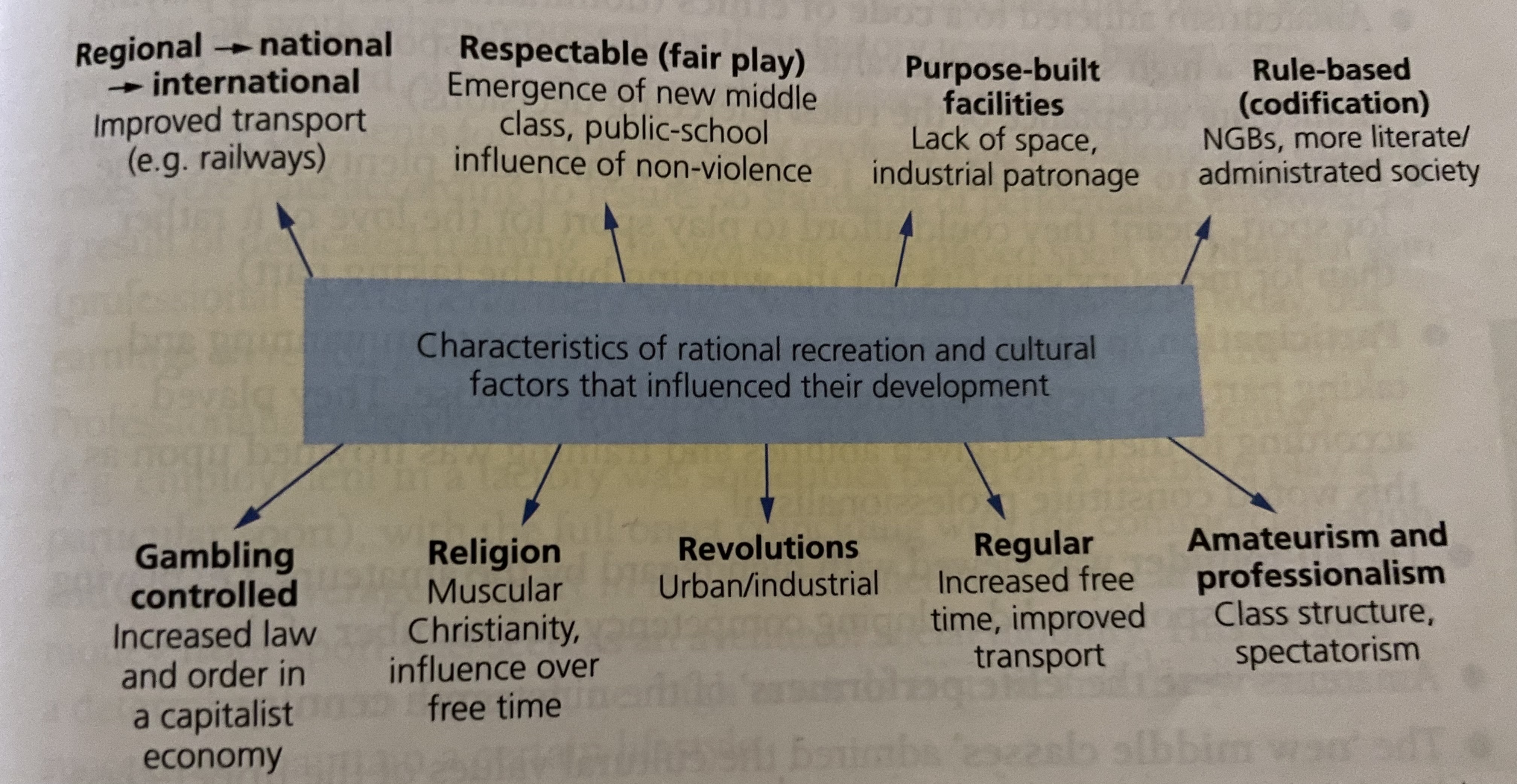
characteristics of rational recreation and cultural factors which influenced their development. 9
60
amaturism and professionalism
participation has been viewed to 2 very different codes. first the amature code- stresses sport purley for the sake of it. professional code- emphasis on winning
61
amature
a person who plays sport fot he love of it and no financial gain
62
professional
a person who playes sport for financial gain
63
amaturism values in the late 19th century
-'mainliness' robustness, striving and physical endevor. -appretiating the value of health and fitness. -appretiating the value of rule-regulated activity. -high moral integrity
64
characteristics of a 'gentleman amature'
- being a respected member of society with a public school background: high status in sport is refected by highstatus in society. -belonging to social elite: having wealth and plenty of free time for sport. -participation was viewed as character building: training was frowned upton as this would constitute profetional. -played a large range of sports using natural talents. -playing sport to a high moral code
65
positive impacts of a 19th century gentleman amature - amatures held a higher status then professionals
-elite sport was dominated by upper and middle classes, who had a high status in sport and society .
66
positive impacts of a 19th century gentleman amature - code of amaturism
the code was based on playing sport to clearly set rules which were put in place by middle and upper classes that formed many NGB
67
positive impacts of a 19th century gentleman amature - code of ethics
playing sport to a high set of moral values
68
positive impacts of a 19th century gentleman amature - belonging to the social elite
ie having wealth and plenty of free time for sport meant that they could play for the love of it rather than monetry gain
69
positive impacts of a 19th century gentleman amature - participation in sport
participation was seen as more important that winning and taking part was viewed as a character building exercise. they played acording to their 'God-givern' abilities and training was frowned upon as this is seen as 'professionalism'
70
positive impacts of a 19th century gentleman amature - all rounder
the all-rounder was viewed with high reguard by the amatures
71
positive impacts of a 19th century gentleman amature - 'elite performers'
amatures were the elite performers of the 19th century
72
positive impacts of a 19th century gentleman amature - 'new middle classes'
new middle classes were admired the cultural values of the upper-class gentleman amature. they played sport in their free time according to simular principals of amaturism
73
why did the demand for spectator sports increase
as sports like football become more popular, and the working classes had increased time and wages
74
working class professional
came from a poor background and was percieved to be corruptible as he was controlled by money e.g would take a bribe to loose a fight.
75
what was foul play and gamesmanship used for
used to try and gain an advantage and increase the chances of winning. challenging the refs decision became increasingly popular as 'professionalism set in'
76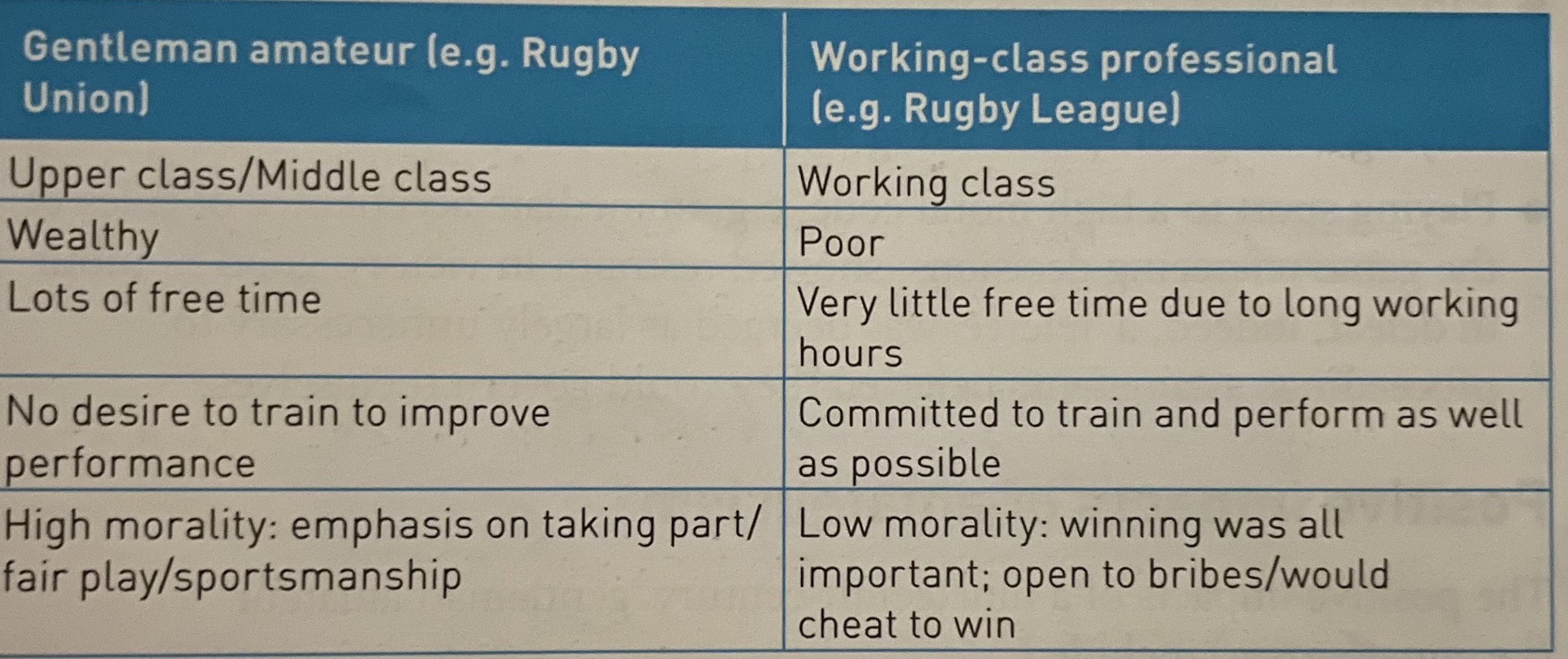
gentleman amature vs working class professionals
77
positive impacts of the 19th century professionalism on sport development
the working class needed to be paid to have time off work to represent their factory team e.g broken time payments. the working class played sport for finanacial gain. professionalism slowly developed by the end of 19th century coinciding with commertialisation and media coverage in the late 20th century. earning money from sport was seen as an avenue of social morbility; which created determination to succeed.
78
early 20th century amatures
at the start of the 20th century amatures maintained their prominance in a number of ways. the amatures were therefore still the best performers, playing with high morality and emphasising sportsmanship in their participation
79
key features of early 20th century amatures
high status, controllers of sport, top performers, highly moral
80
key features of early 20th century amatures - high status
they held a high stauts in sport and society
81
key features of early 20th century amatures - controllers of sport
the middle and upper classes controlled sport, excluding working classes from 'amature sport'
82
key features of early 20th century amatures - top performers
it was more likely that top performers would come from middle or upper classes
83
key features of early 20th century amatures - highly moral
they had sufficient income and leisure time to play sport for the love of it, recieving no payment. them emphasised fairplay and sportsmanship
84
modern day amatures
as the 20th century progressed, amatures began to loose some of their status and power in sport. society slowly began to be based more on equality of opertunity, with achievements based more on merit and professional performance standards
85
key features of modern day professionals
-lower status than professionals now. -some high level performers are still not professional. -there has been a bluring of amature and professional distinctions with less likely hood of excusions as society has become ore eglitarian. e.g equal and achievement based-performance at the top level of sports is now open to all. -some amatures recieve finance to pay for training expences e.g by the lottery. it could be argued that this enables them to train as full time athletes in modern day sport and they dont gain financiall from the lottery funding so does this mean they are still amatures
86
positives of modern day amaturism
-codes of amaturism are still present in modern day sport
87
factors involved in the growth of professional sport from the 20th century to modern day
-all classes can compete (social class is no longer a barrier). - people are now respected for their talents and efforts in reaching the top. -high rewards for professionals. through media and sponsorship. -celebrity status, investment and media coverage led to a vast increase in financial rewards. -more time to train leads to a higher standard of play. -positive role models act as motivators for achieve in professional sport. money enables events to operate and survive. -more spectators attend matches with easier and more affordable travel.
88
reasons that can explain the growth and development of association football in the mid 19th century through to the present. interms of industrialisation and post-industrialisation
Urbanisation, more freetime/increased leisure time, more disposable income, improved transport, increased professionalism, social class links, increased organisation
89
reasons that can explain the growth and development of association football in the mid 19th century through to the present. interms of industrialisation and post-industrialisation - urbanisation
large numbers of people living in one place gave a large captive audience for football. lack of space in urban areas lead to purpose built specialist facilities playing facilities for playing football, with stands for spectators
90
reasons that can explain the growth and development of association football in the mid 19th century through to the present. interms of industrialisation and post-industrialisation - more free time/increased leisure time
as workers spent less time in factories, more time was avalible to watch and play sport
91
reasons that can explain the growth and development of association football in the mid 19th century through to the present. interms of industrialisation and post-industrialisation - more disposable income
improves standards of living via higher wages gave the working class enough money to pay entrance fees and transport
92
reasons that can explain the growth and development of association football in the mid 19th century through to the present. interms of industrialisation and post-industrialisation - improved transport
development of trains in particulr, enabled fans to travel to away matches and increased the regularity of matches resulting in the developent of leagues
93
reasons that can explain the growth and development of association football in the mid 19th century through to the present. interms of industrialisation and post-industrialisation - increased professionalism
opportunities to play sport professionally as a job increased e.g broken time payments.
94
reasons that can explain the growth and development of association football in the mid 19th century through to the present. interms of industrialisation and post-industrialisation - social class links
middle class influence and approval gave association football more respectability, with emphasis on high morality and sporting etiquette. this was challenged quickly by the working class who made it the peoples game with large numbers playing and watching
95
reasons that can explain the growth and development of association football in the mid 19th century through to the present. interms of industrialisation and post-industrialisation - increased organisation
football quickly became highly structured and standardised when ex public schoolboys set up the FA. national rules and codification meant that the game was far more controlled with less violence
96
the bosman rulling
granting the right for any player to move freely to another employer (club) at the end of a contract without a transfer fee.
97
socio-cultural factors which have lead to an incease in equal opportunities for women to participate and progress to elite level football
Equal opportunities, increased media coverage, more female role models, more provision via school PE programmes, increased approval/encoragement via the FA, more clubs forming, increased participation via more funding into the game, more free time
98
socio-cultural factors which have lead to an incease in equal opportunities for women to participate and progress to elite level football - equal opportunities
more sports and generally avalible and socially acceptable. legally the sex discrimination act has been passed leading to less sexual discrimination in sport on the basis of gender
99
socio-cultural factors which have lead to an incease in equal opportunities for women to participate and progress to elite level football - increased media coverage
BT sport provides live coverage of the WSL; womens sport is part of fifa 16
100
socio-cultural factors which have lead to an incease in equal opportunities for women to participate and progress to elite level football - more female role models
as performers, coaches and officials
101
socio-cultural factors which have lead to an incease in equal opportunities for women to participate and progress to elite level football - more provision via school PE programmes
in national curriculum PE lessons as well as via extra-curricular oppertunities
102
socio-cultural factors which have lead to an incease in equal opportunities for women to participate and progress to elite level football - increased approval/encoragement via the FA
e.g the womens national team are finally supported by the fa
103
socio-cultural factors which have lead to an incease in equal opportunities for women to participate and progress to elite level football - more clubs forming
at local and 'professional' level
104
socio-cultural factors which have lead to an incease in equal opportunities for women to participate and progress to elite level football - increased participation via more funding into the game
at grass roots level as well as elite level
105
socio-cultural factors which have lead to an incease in equal opportunities for women to participate and progress to elite level football - more free time
as traditional domestic responsibility role has decreased
106
key features of lawn tennis as it developed in the industrial/post industrial period
Middle class invention, played by middle class, organised by middle class, use of specialist equipment, use of standardised rules, played by males and females, public provision
107
key features of lawn tennis as it developed in the industrial/post industrial period - middle class invention
the middle class invented tennis as an affordable substitute to real tennis. this sets the middle class apart from the working class and led to private clubs developing
108
key features of lawn tennis as it developed in the industrial/post industrial period - played by the middle class
played middle class suberban gardens on lawns big enough to house private tennis courts
109
key features of lawn tennis as it developed in the industrial/post industrial period - organised by middle class
middle class had the organisal skills to form their own private clubs
110
The golden triangle
the relationship between sport, buisness (sponsorship) and media
111
how do the aspect of the golden triangle rely on eachother
without media coverage, sport is less attractive to sponsors who want their business or product to be publicised to as many people as possible. the media uses sport to gain viewers, readers and liseners. business and sponsors use sport to advertise their products and services
112
what is commercialism
the process of attempting to gain money from an activity
113
what is sponsorship
when a company pays for their products to be publically advertised, usually as an attempt to increase sales
114
what is merchandising
the brand or image from one product is used to sell another
115
6 characteristics of commertial sport
-professional sport (high quality), sport and business. -Entertainment (watching sport is part of mass entertainment, viewing needs to fit into a relativley short time scale) -contracts (involving tv rights and sales of merch), a-thletes as commodities (increase product sales and athletes reputation), -wide media coverage (interest in high profile sports that are visually appealing and have high skill levels, well matched competition and simple rules)
116
6 effects of commertialisation on professional sport
-they recive high incomes for sport participation and commertial activities. -paid for successful results which makes winning important. -can be put under pressure to perform when injured. -must be a specialist, which puts pressure of training hard, dedication and self sacrifice. they become household names. -they are controlled by the sponsor, become public comodities and suffer from lack of privacy
117
5 Effects of commertialisation on sport
-rules and scoring systems have been changed to prevent spectator boredom. -breaks are provided so that sponsors can advertide products, -competition formats have changed. -sports played by women have less coverage so affects participation and funding. -increase in tech has lead to a more personal experience for the performer
118
7 reasons why companies invest large amounts into sport
-increased sales. -increased awarness of the brand. -creates an association with high level sport. -creates an associaltion with a healthy image of sport. -gives an opportunity to link to corporate hospitality. -sponsorship can decrease tax payed by a company. -improved company moral linked to winning
119
what is globalisation
the process whereby nations are increasingly being linked together and people are becoming more independent via communications in communications and travel
120
what is globalisation in sport seen via 4
-the sponsorship of events. -the way players are recruited to play for teams in other contries other than their own. -the spread of different sports to new nations. -increasing pressure on athletes to perform to their best