concepts of physical activity and sport
Study these flashcardsFree · spaced repetition · iPhone, Android, Mac & web
All cards
1
physical recreation
the active aspect of leisure
2
levels of the sporting continuum
foundation - grass roots in primary. participation- socialising and making friends. -performance level profetional athlete
3
characteristics of physical leisure
- fun and enjoyable. -physically energetic. -participation is voluntary. -tends to be at the participation level in adults. -its flexible(ie rules) - its self officiated
4
benifits of physical recreation
-develop self confidence. -reduces stress. -fitness and skill increases -improves social skills. -sence of fun and enjoyment
5
positive outcomes of physical recreation for society
- increased health and fitness reduces the strain on the NHS and lowers obesity rates. -more people using facilities and equipment leads to employment and economic benifits. - its a more positive use of free time, social control e.g reduces crime rates. - it can lead to more individuals progressing into elite sport
6
key characteristsic of sport
serious/competitive - win at all costs attitude, prowess- high skill levels particularly by profetionals. organised- sport has rules and regulations. rewards- avalible for winning and intrinsic satisfaction, Time and space - restrictions apply
7
characteristics and aims of Physical education
- its compulsory. -it envolves formal taught lessons. -4 key stages as part of the national curriculum ages 5-16. -beggins at primary school "foundation level'. -teachers in charge and deliver lessons. -pre-planned and highly structured lessons. -during school time
8
Objectives of national curriculum PE
- self esteem, -mental skills. -physical skills. -social skills. -active leisure. -leadership. -health and fitness
9
outdoor education
activities that take place in the natural environment and utilise nature
10
outdoor adventure activities functions
-awareness of saftey(percieved risk only), -teamwork,-social/communication skills, -leadership skills, -self-descovery/esteem, -knowledge of/ respect for natural environment.
11
problems faced by PE departments to do with offering OAA
- lack of time (in curriculum). -lack of money (specialist equipment is expensive). -lack of qualified or motivated staff
12
A triangular model of PE
- education(national curriculum), school sport (Extra curricular, competitive), recreation (extra curricular, non-competitive)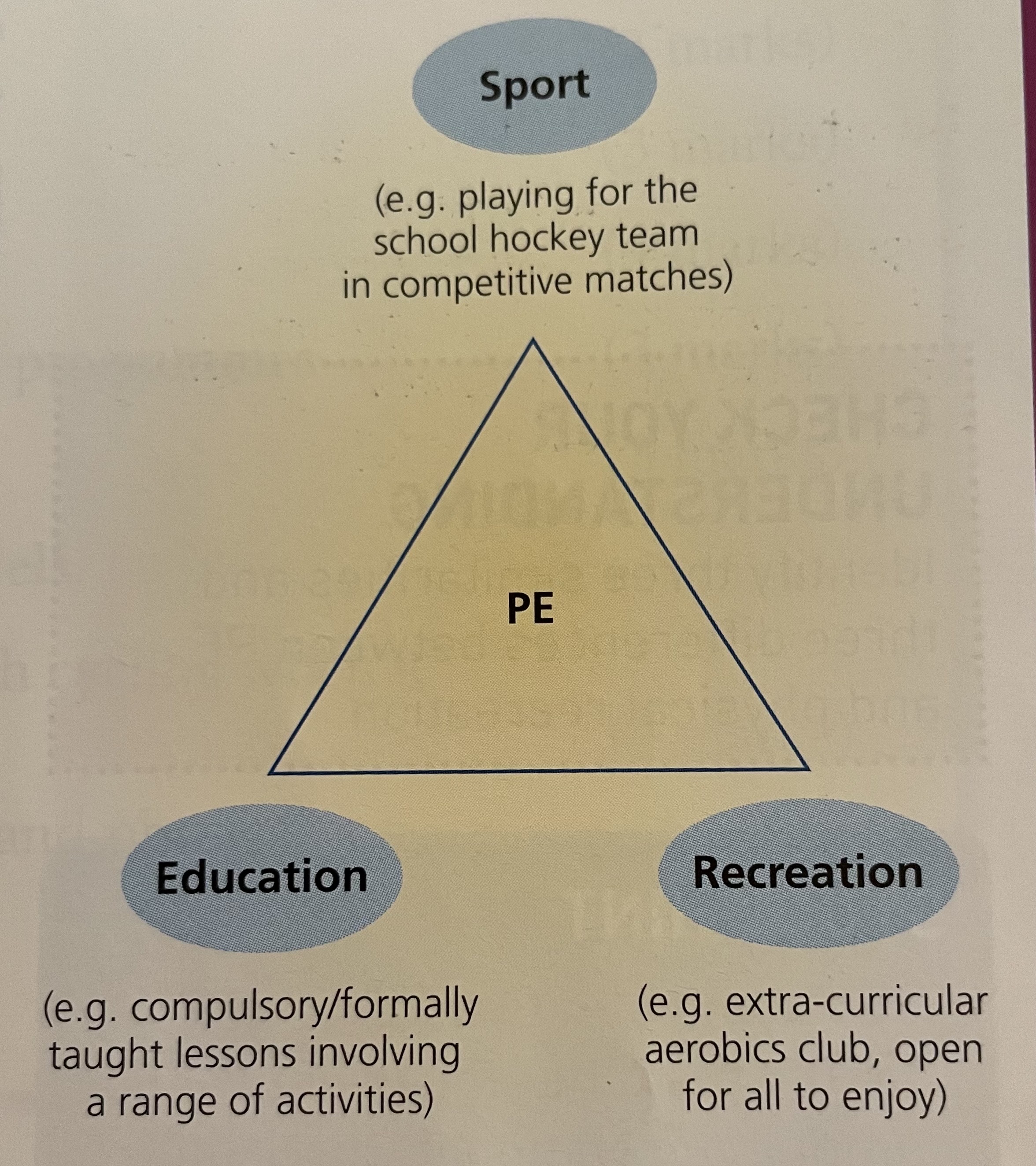
13
characteristics and aims of school sport
-occurs in extra curricular time and is optional. -competitive and has been promoted by the government with initiatives like school sport partnerships. -schools sometimes use sports coaches to increase the range of sports and use specialisms to develop pupils talents to the full. -
14
key benifits of school sport
- physically increased activity levels increase health, fitness and skill. - increased self esteem, -inproved friendships and cognative skills.
15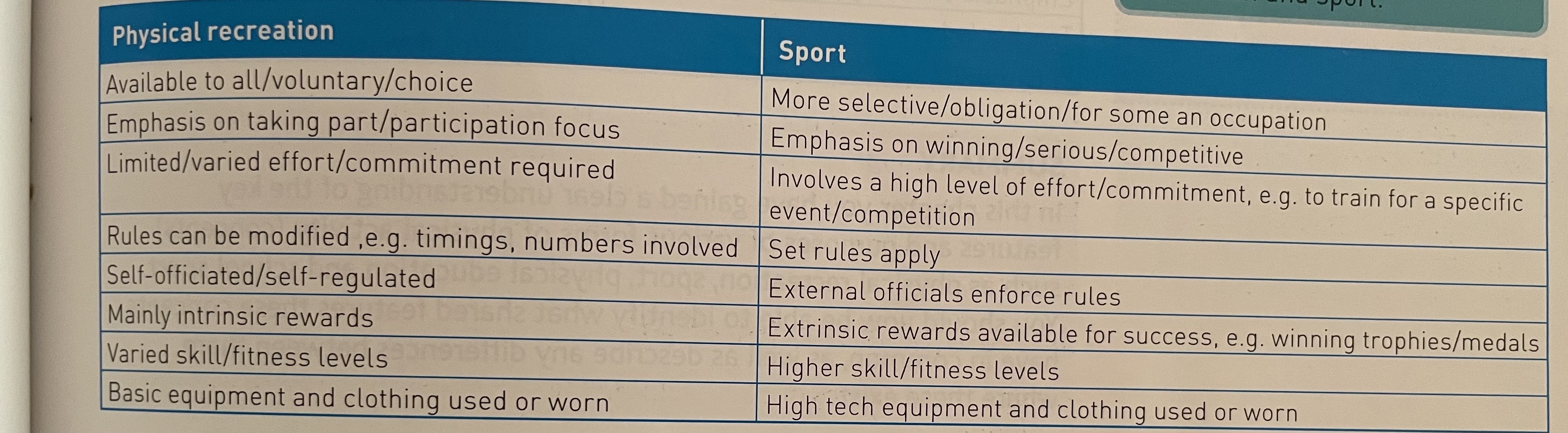
Similarities and Differences between Physical recreation and school sport
16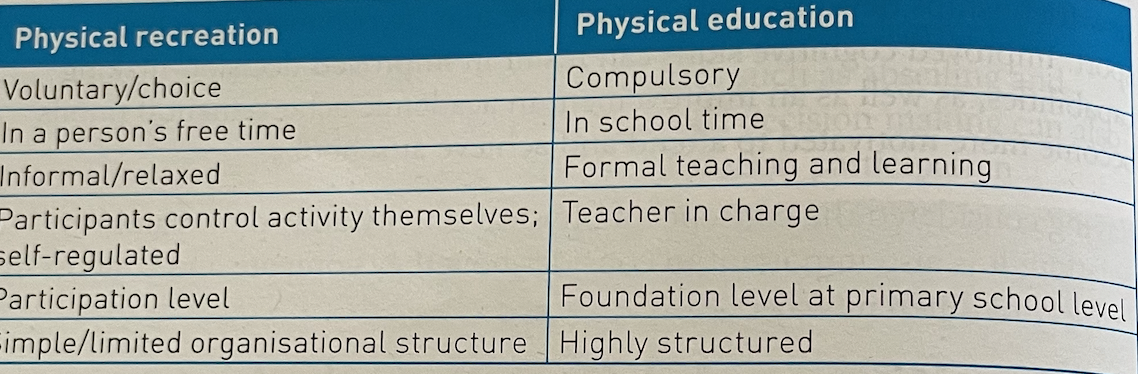
similarities between physical recreation and physical education
17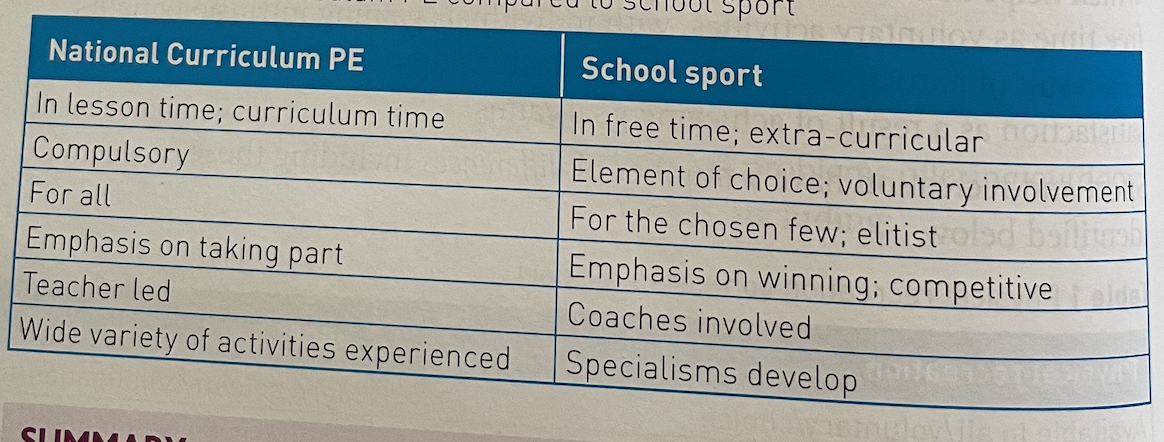
comparison between PE and school sport