All cards
1
arousal
a level of activation and degree of readiness to perform. arousal is the energised state a performer is in prior to and during playing sport.
2
why is arousal important
it gives competitors some degree of drive and enthusiasm
3
what can cause increased arousal
increased level of competiton e.g major game/competition.
the effects of an audience
frustrating circumstancese.g not playing well or loosing
the effects of an audience
frustrating circumstancese.g not playing well or loosing
4
what are the 4 theories of of arousal
drive theory
inverted u thory
catastrophy theory
zone of optimal functioning
inverted u thory
catastrophy theory
zone of optimal functioning
5
drive theory and equation
as arousal increases so does performance
P=f(DxH) performance is a function of drive manipulated by habit
P=f(DxH) performance is a function of drive manipulated by habit
6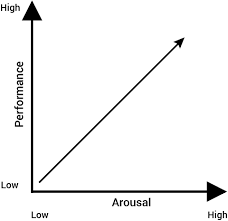
Drive theory graph
7
drive theory and the dominant responce
at high arousal, less information is processed and the performer tends to focus on the dominant responce. in experts the dominant responce is usually correct, but with beginners the dominant responce may not be developed so the perfomer may choose the wrong option and lead to a negative performance
8
dominant responce
this is the stand out responce that the performer thinks is correct
9
inverted u theory
as drive and arousal increase, so does performance until you reach an optimal point a further increase in arousal can cause performance to deteriorate. both under and over arousal can be bad for a performer
10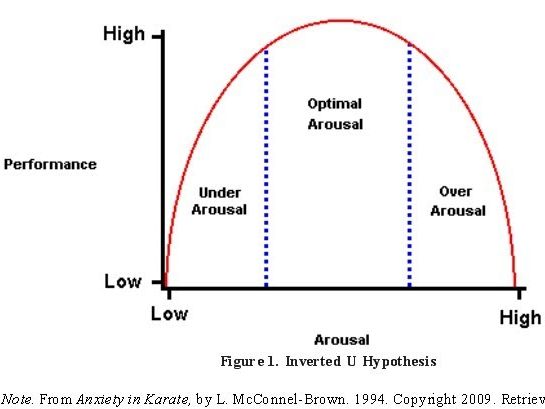
inverted u theory graph
11
factors affecting arousal
-experience
-personality
- if the skill is gross or fine
-personality
- if the skill is gross or fine
12
factors affecting arousal- experience
a more experienced player is used to performing under pressure and can deal with tasks effectivley, even with limited information. the dominant responce of an experienced player is more likely to be correct, so they can produce a high level of performance at high arousal. a beginner may need to operate at low levels of arousal as they would be uncomfortable under high pressure
13
factors affecting arousal- personality
extroverts- may perform happily at high arousal whereas introverts would perfer low arousal. this may be because the levels of adreneline in the body are lower for extroverts and so they can handle a higher level of arousal. where as introverts are said to have higher levels of adrenelin so would perform best at low arousal.
14
factors affecting arousal- gross or fine skill
if the task is gross it can be performed at a higher level of arousal then fine skills
15
catastrophe theory
suggests that increased arousal improves performance to an optimal point, but there is a drastic reduction in performance when arousal increases past this point. rather than a gradual reduction there is a sudden reduction in performance, this is due to high levels of both cognative and somatic anxiety. a player can attempt to regain control and return to their optimal, but only if the initial cause is mild
16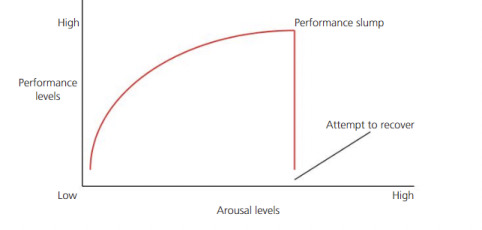
catastrophe theory graph
17
zone of optimal functioning
arousal can increase performance but rather than a point of optimal arousal, the best level of optimal arousal for maximal confidence and control in sport is an area or 'zone'. some players find their zone at low arousal and otheres at moderate arousal and high. the zone is a bandwidth rather than an optimal point
18
how can a performer find there zone of optimal functioning
by using techniques such as positive self talk, mental rehursal, relaxation and visualisation
19
once in the zone of optimal functioning, what causes performance to improve
- things seem to flow effortly. -the performer reaches a state of supreme confidence and remains calm under pressure. -athlete feel in total control of their actions and focused on the activity.
20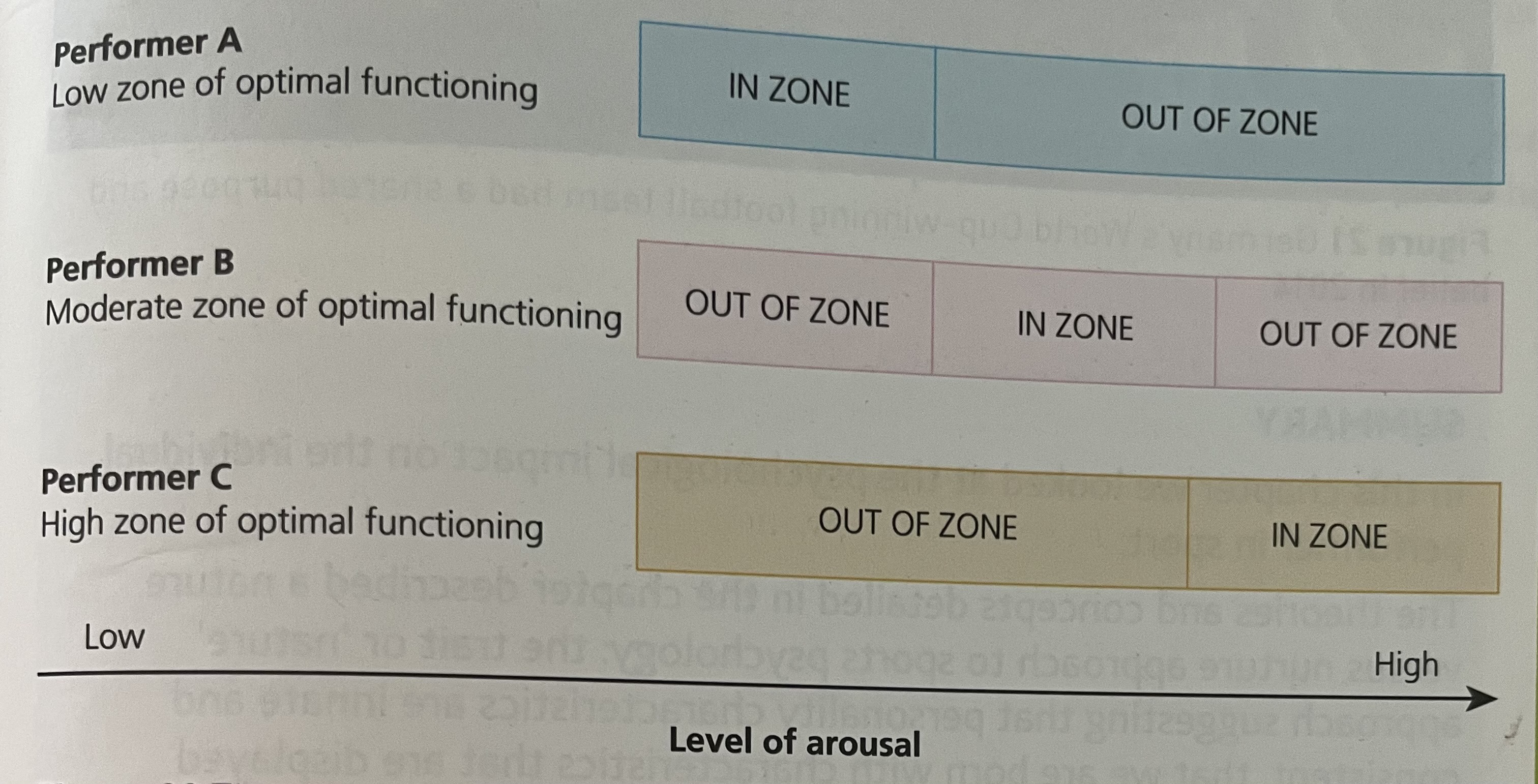
summary of the zone of optimal functioning and how it varies for different performers
21
the peak flow experience
ultimate intrinsic experience felt by athletes from a positive mental attitude, with supreme confidence, focus and effiency. - a belief in the ability to complete a challenge, clear goals, total focus, effortless movemnt and subconscious feelings of control
22
when does the peak flow experience occur
when timing, action and movement appear to be perfect
23
factors affecting the peakflow experience
1. poor mental preparation and failure to reach optimal arousal levels. 2.environmental influences such as a crowd or frustration. 3.the effect of injury or fatigue during the game