P1 formulas
Study these flashcardsFree · spaced repetition · iPhone, Android, Mac & web
All cards
1
When stock increases which will produce a larger profit
- Marginal costing
- Absorption costing
2
How do you reconcile the profit between marginal and absorption costing
multiply the change in inventory by the overhead absorption rate to give you the difference. If stocks have increases in the period absorption costing will be the higher profit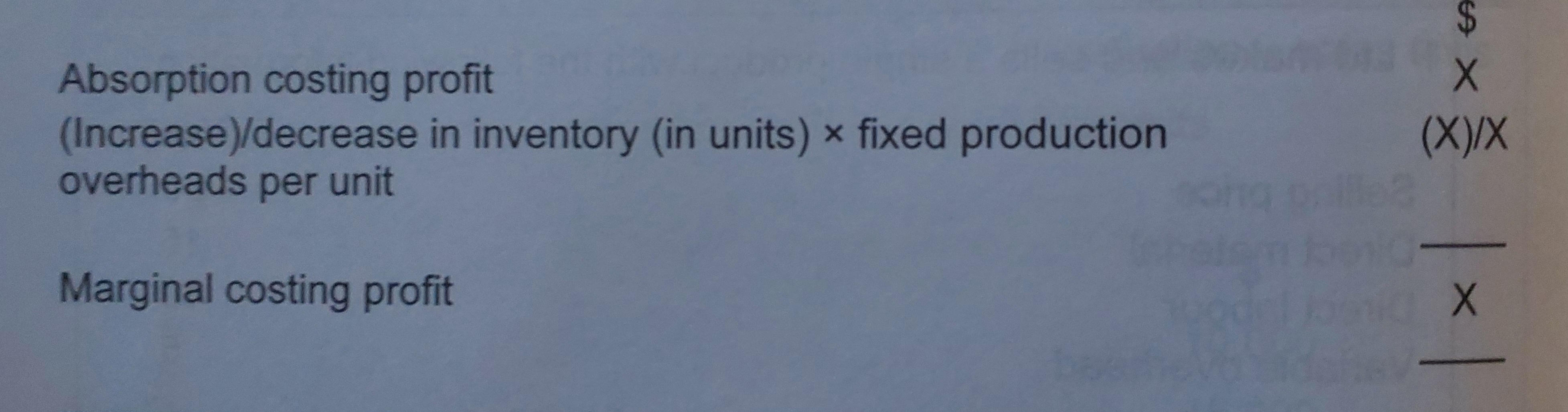
3
What does the full product cost include (4)
Direct material
Direct labour
Direct expenses
Production overheads
Direct labour
Direct expenses
Production overheads
4
What is a period cost?
Costs which are charged in full to the P&L in the period in which they occured. These include admin costs, selling and distribution costs and finance costs
5
What would be included in the Prime Cost of a unit?
Direct Materials
Direct Labour
Direct Expense
NO OVERHEADS
Direct Labour
Direct Expense
NO OVERHEADS
6
What would not be included in the full production cost?
Non production overheads (also called period costs which are charged in full to the P&L
7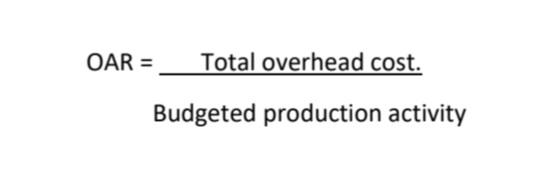
How do you calculate the overhead absorption rate (OAR)?
8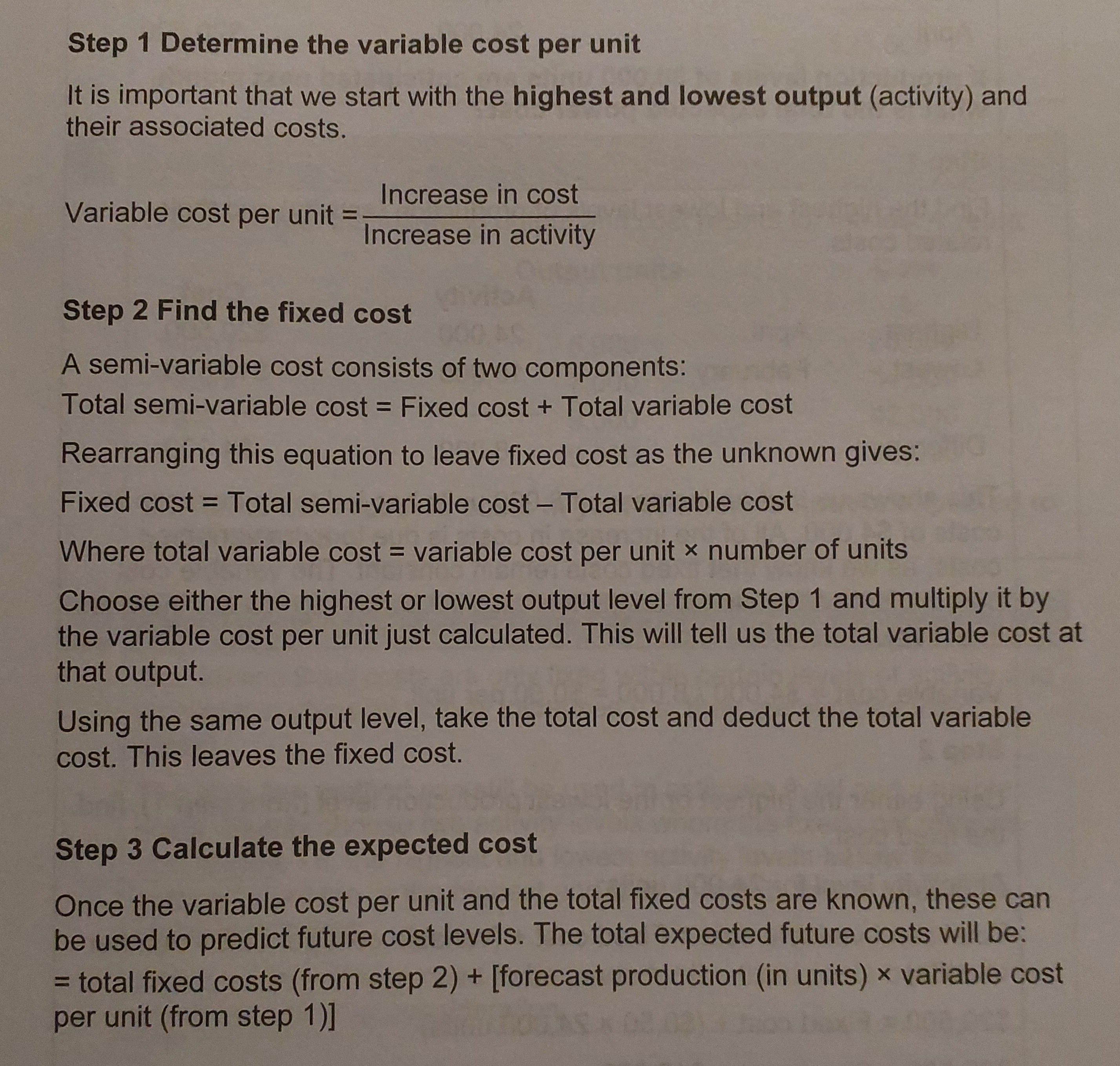
How do you use the high low method to analyse semi variable costs into their fixed and variable elements?
9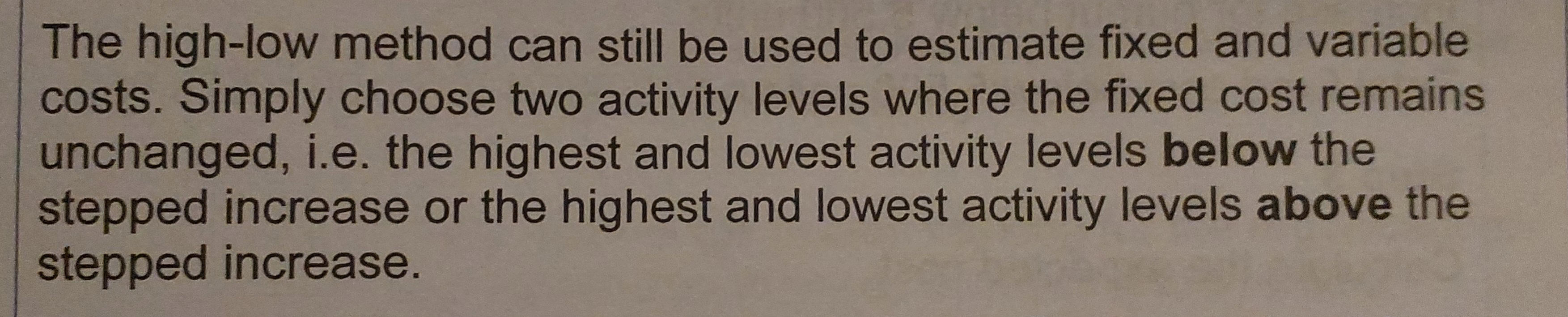
How do you use the high low method to calculate fixed and variable costs for STEPPED FIXED COSTS
10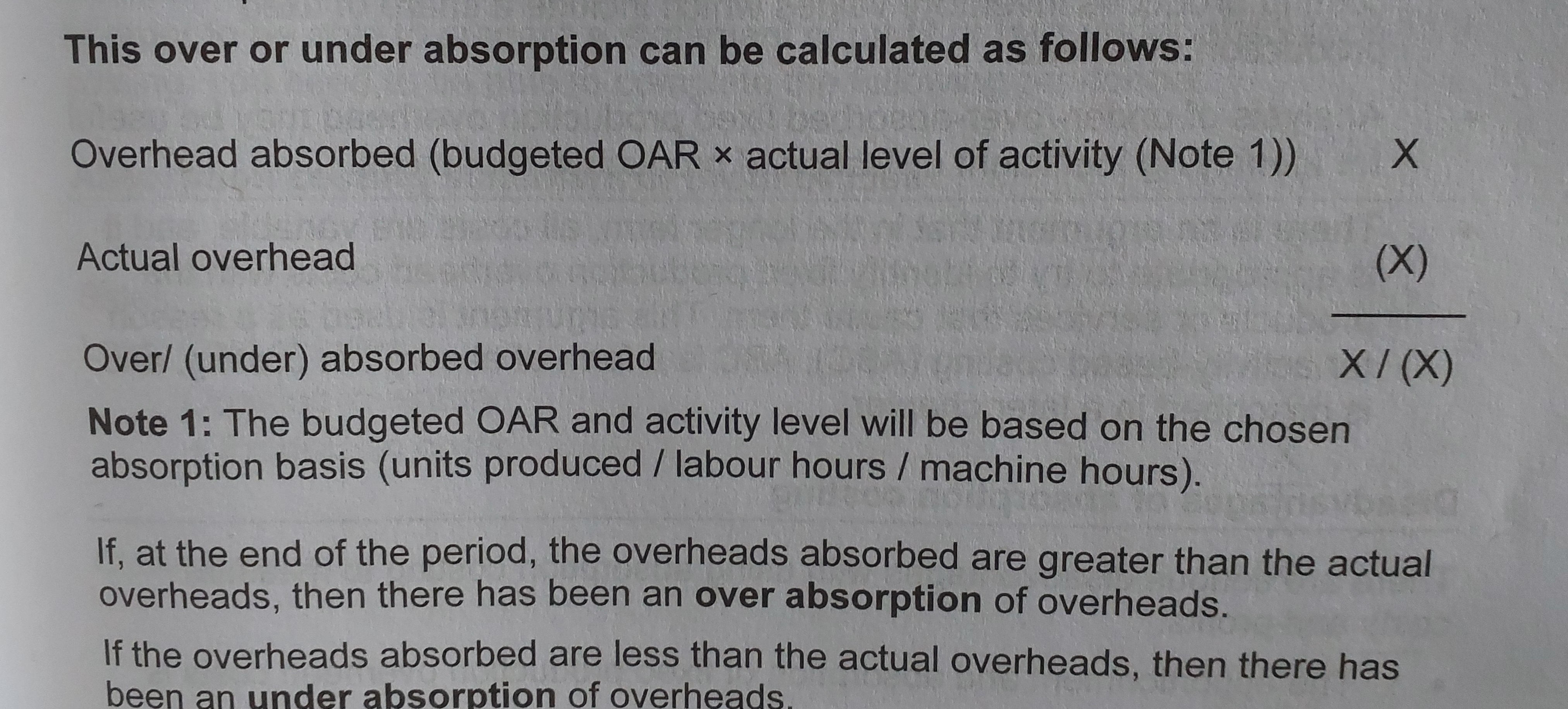
How do you calculate the overhead over / under absorption amount
11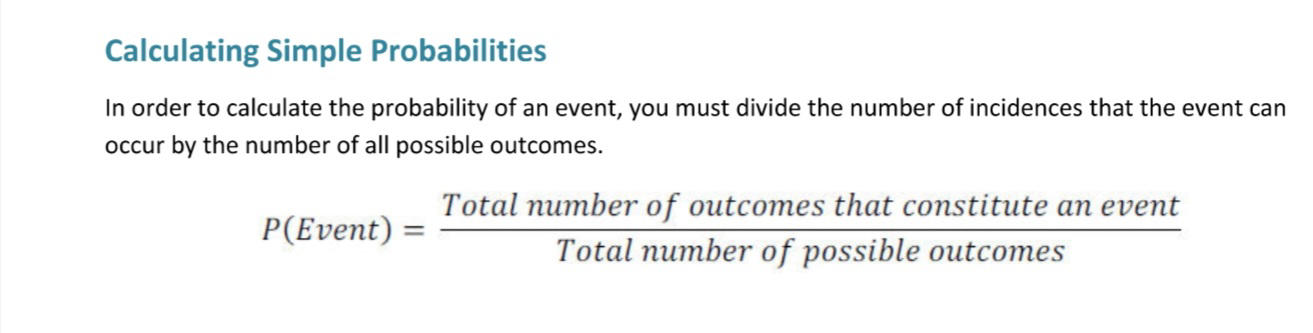
What is the formula for calculating simple probabilities
12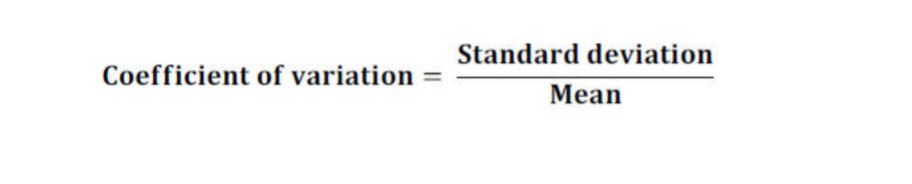
How do you calculate the coefficient of variation
13
in a formula what does this mean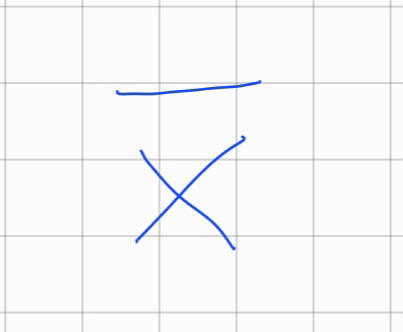
average of X
14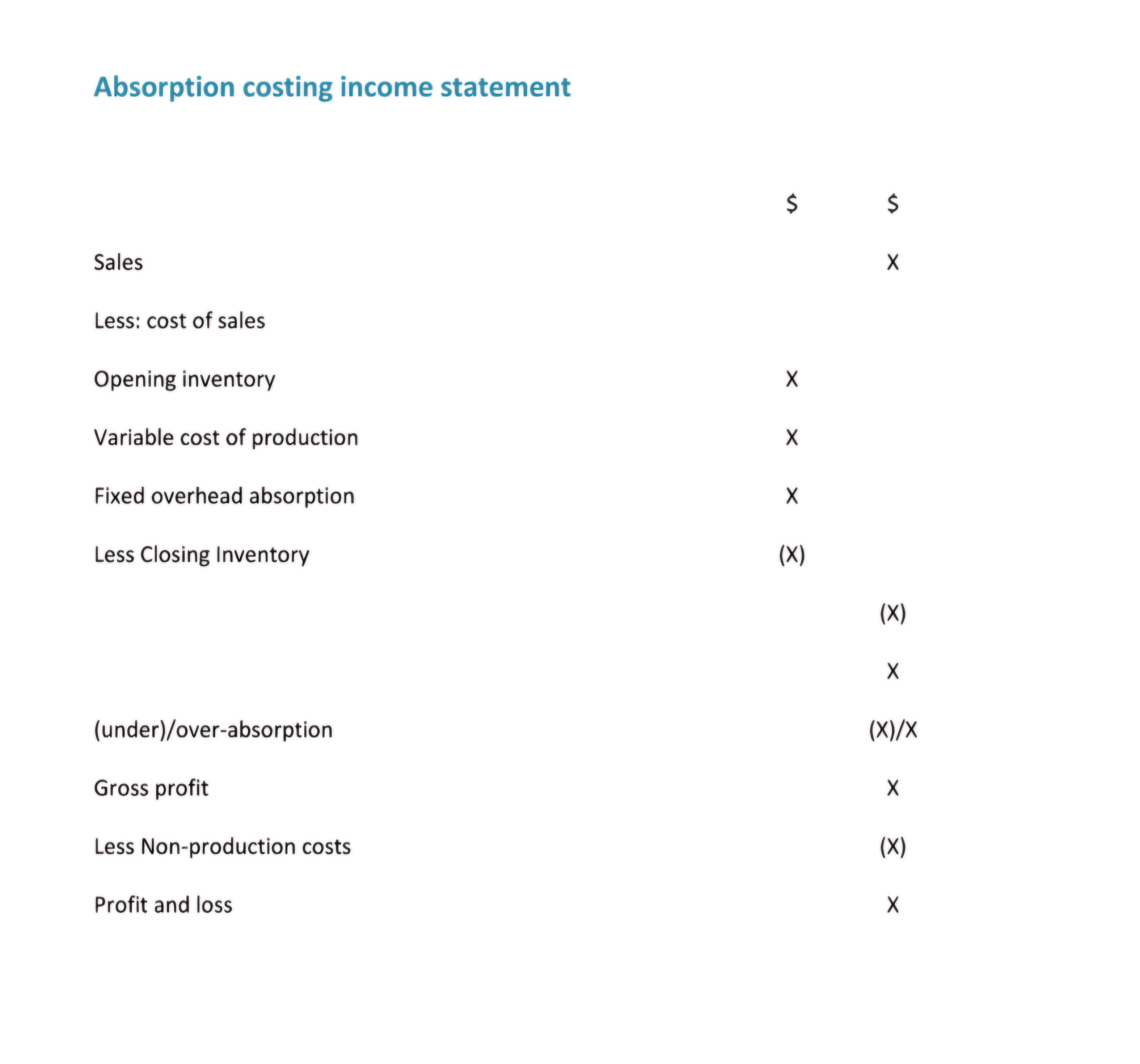
what is the pro forma for an absorption costing income statement
15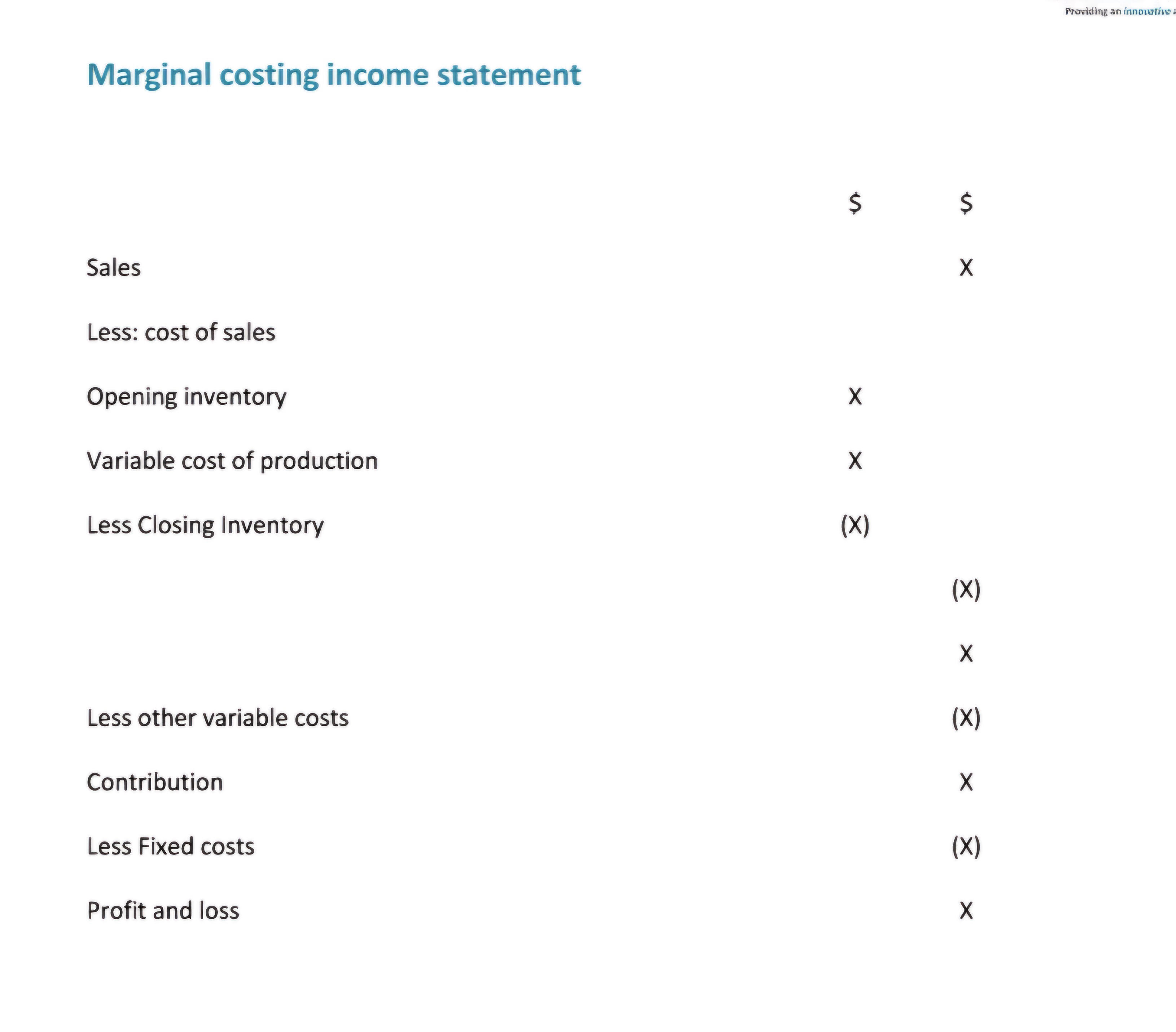
what is the proforma for a marginal costing income statement
16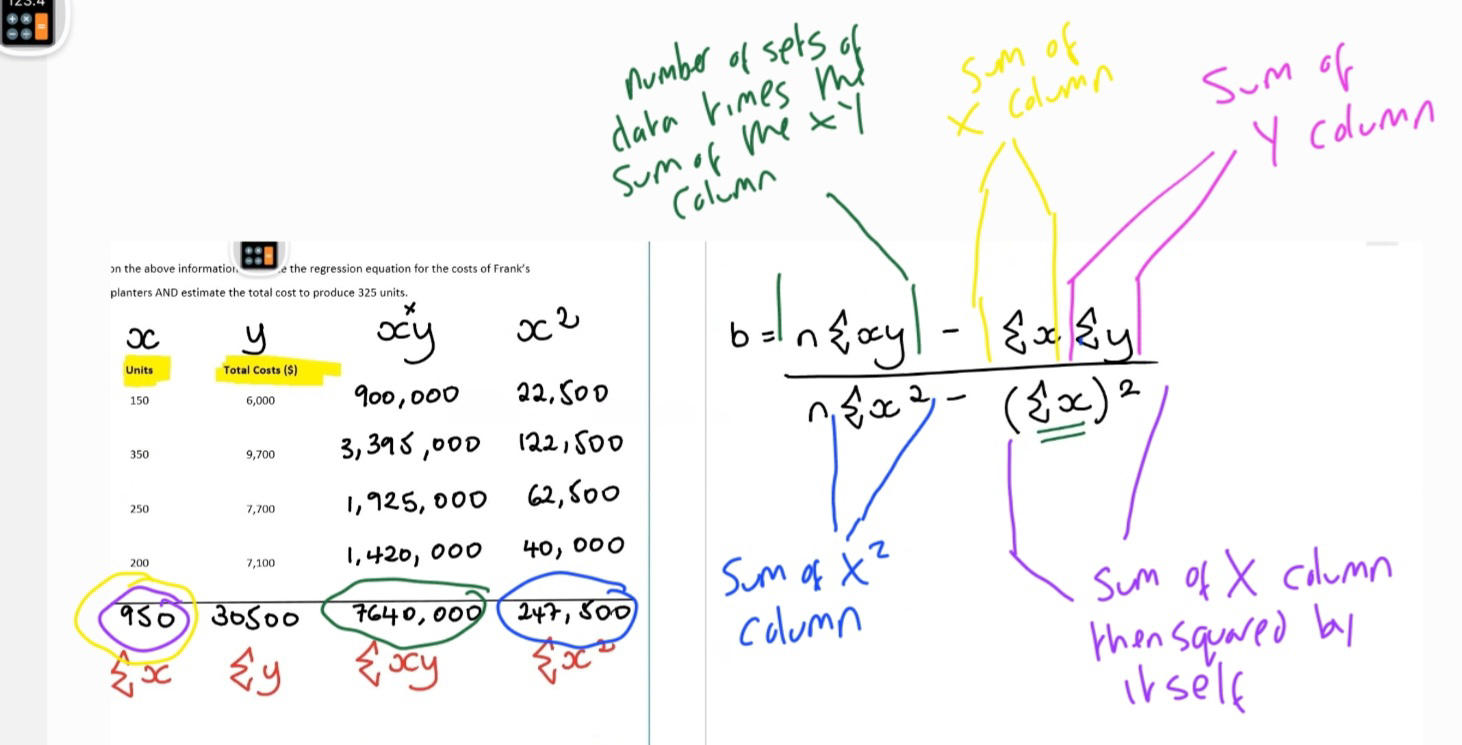
In linear regression how can you calculate B ie variable cost per unit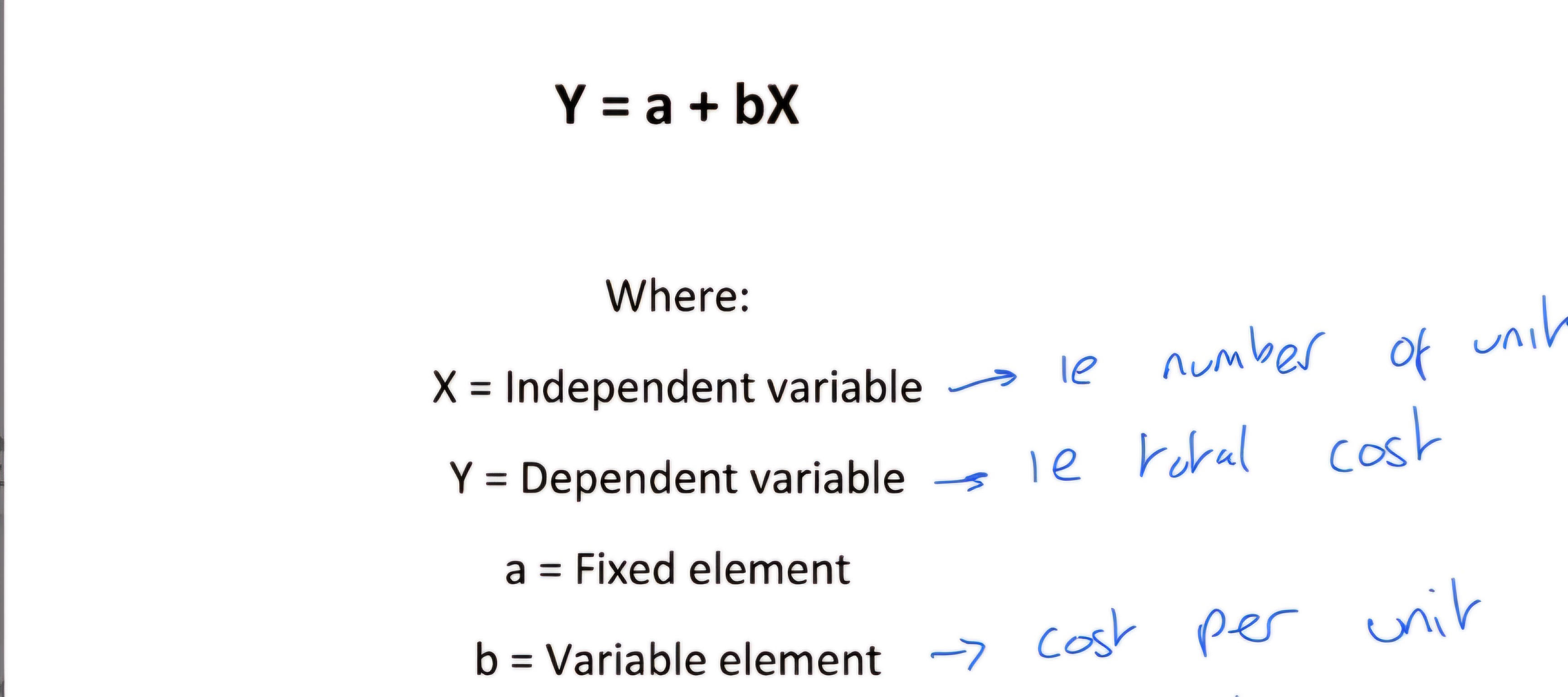
17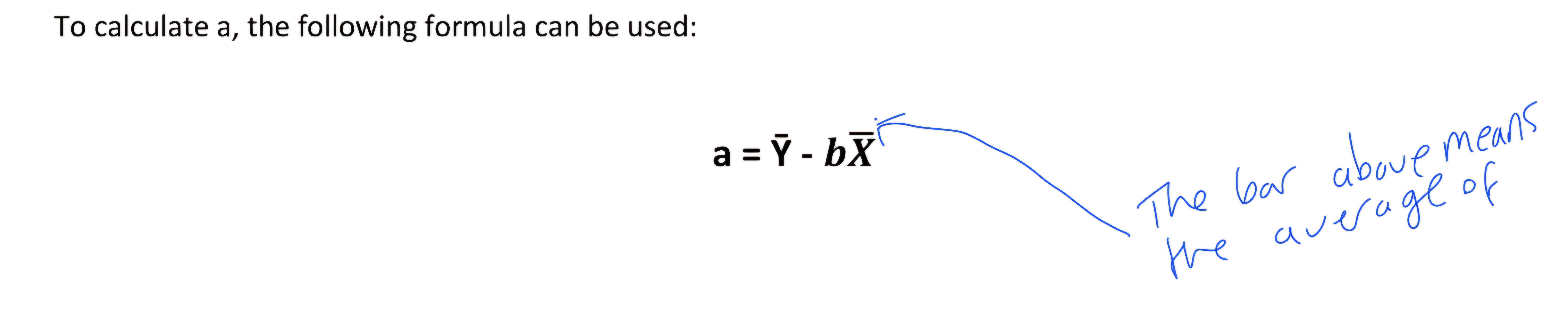
in the linear regression straight line formula how can you calculate a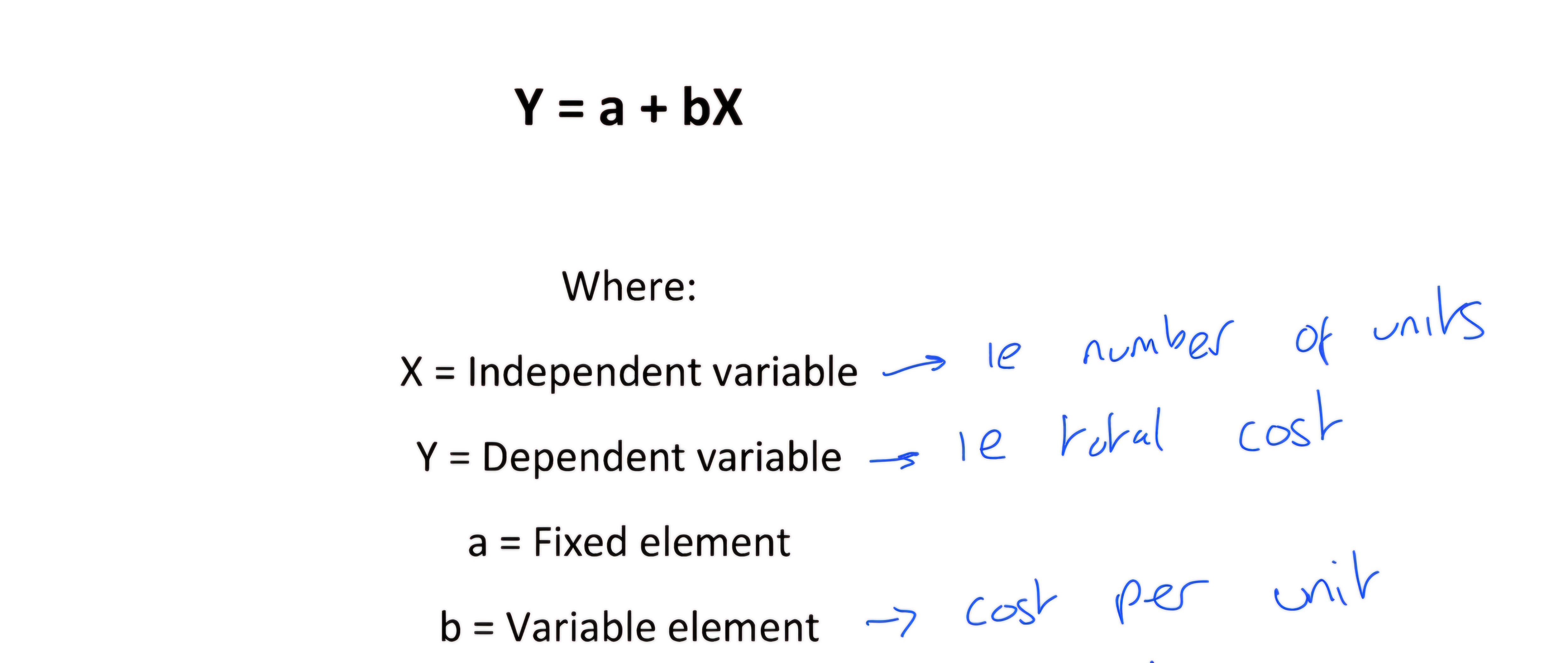
18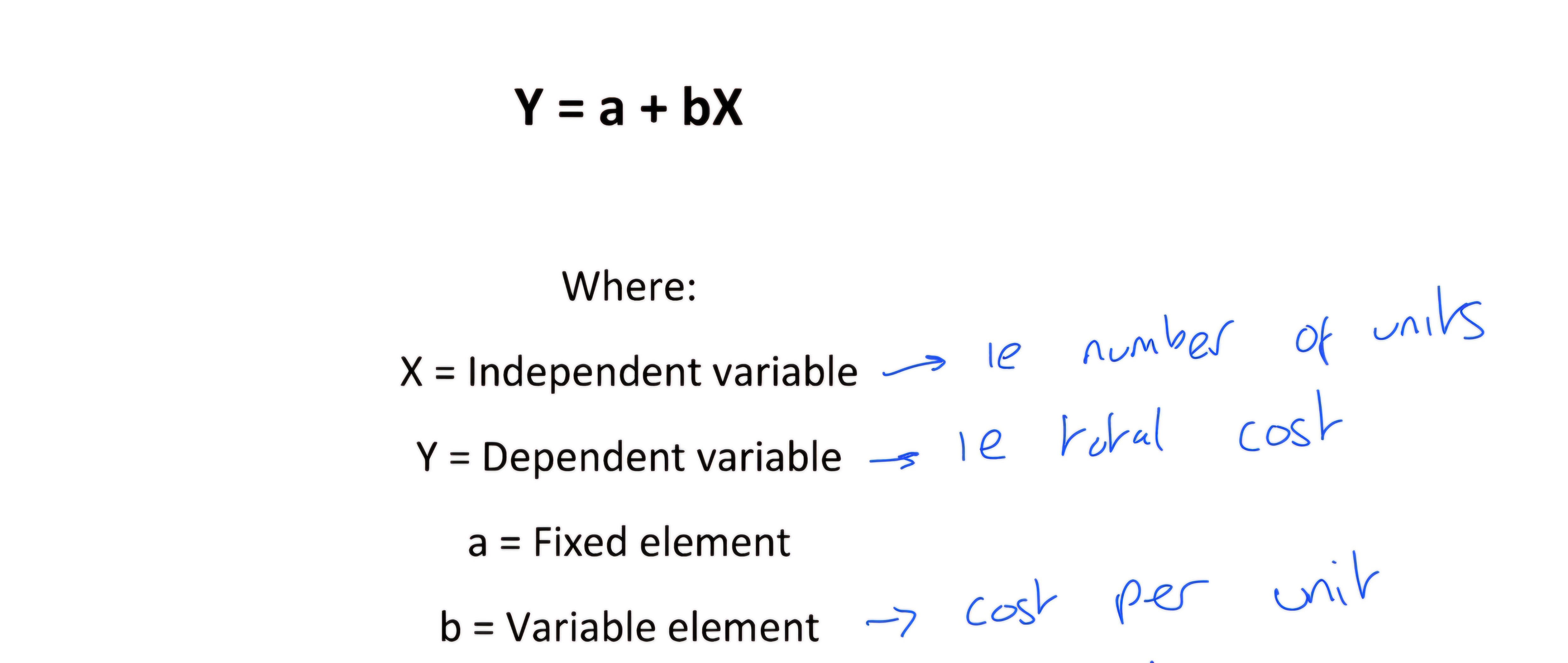
In linear regression what is the formula for calculating the straight line
19
in a formula what does sigma mean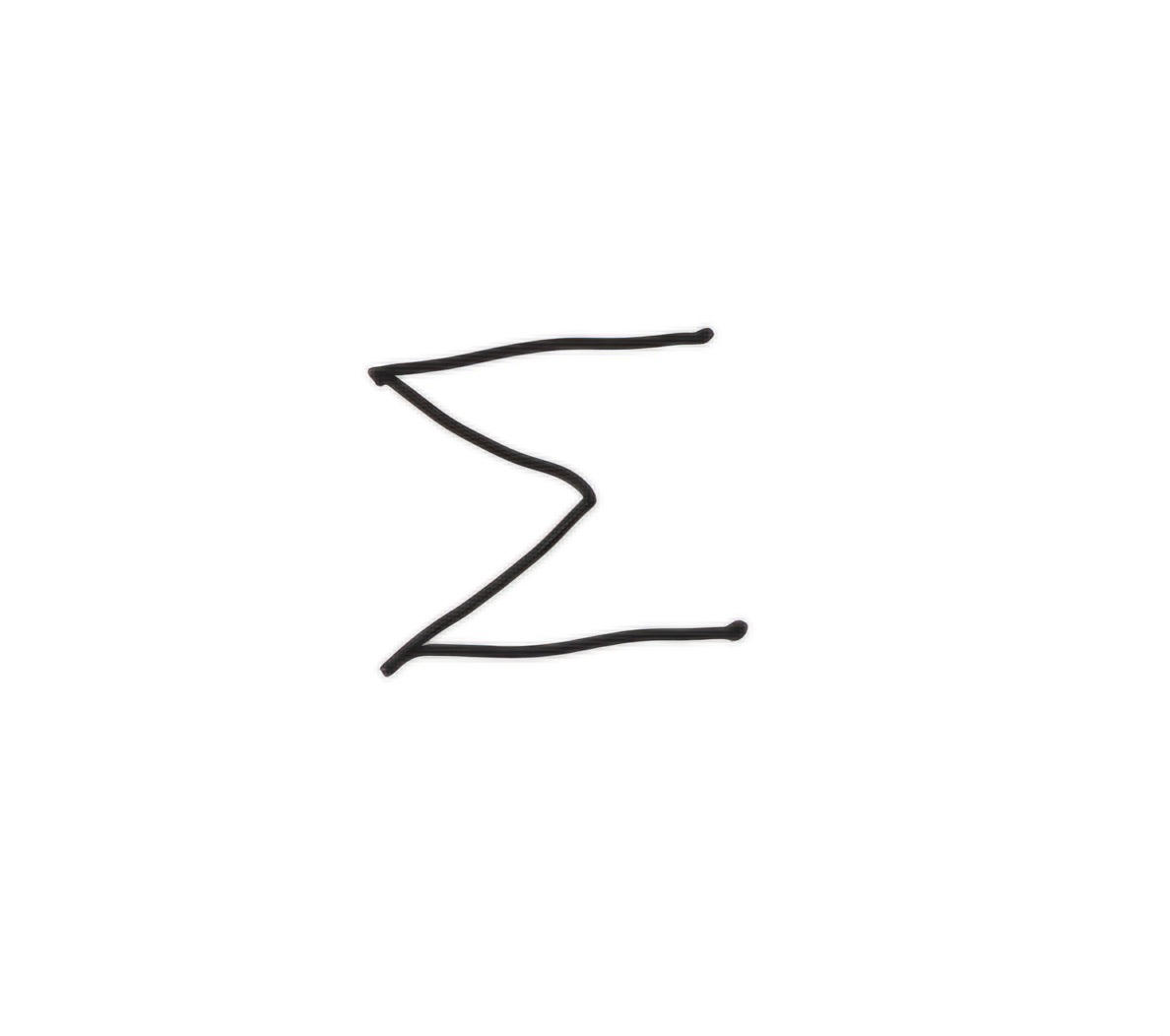
the sum of
20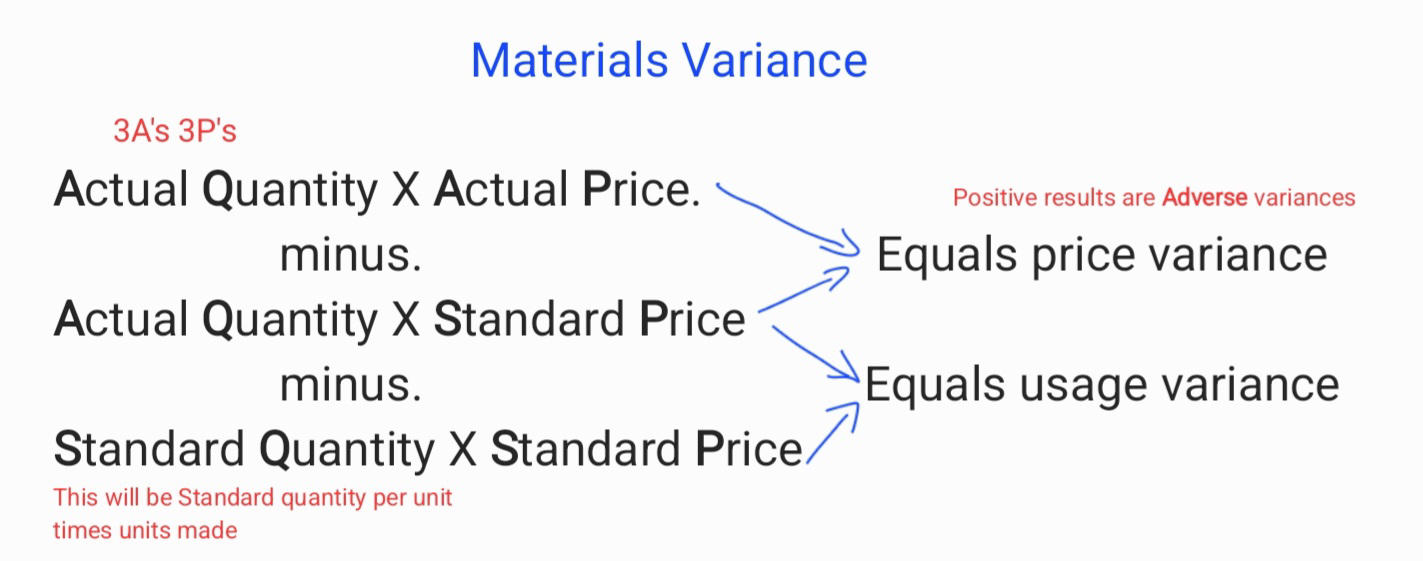
How do you calculate a materials variance?
21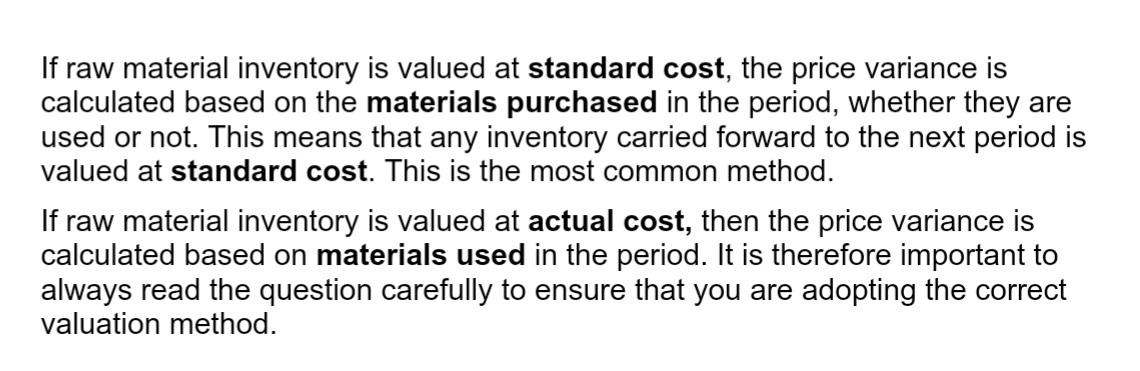
How does the valuation of raw materials effect the calculation of materials Price variances?
22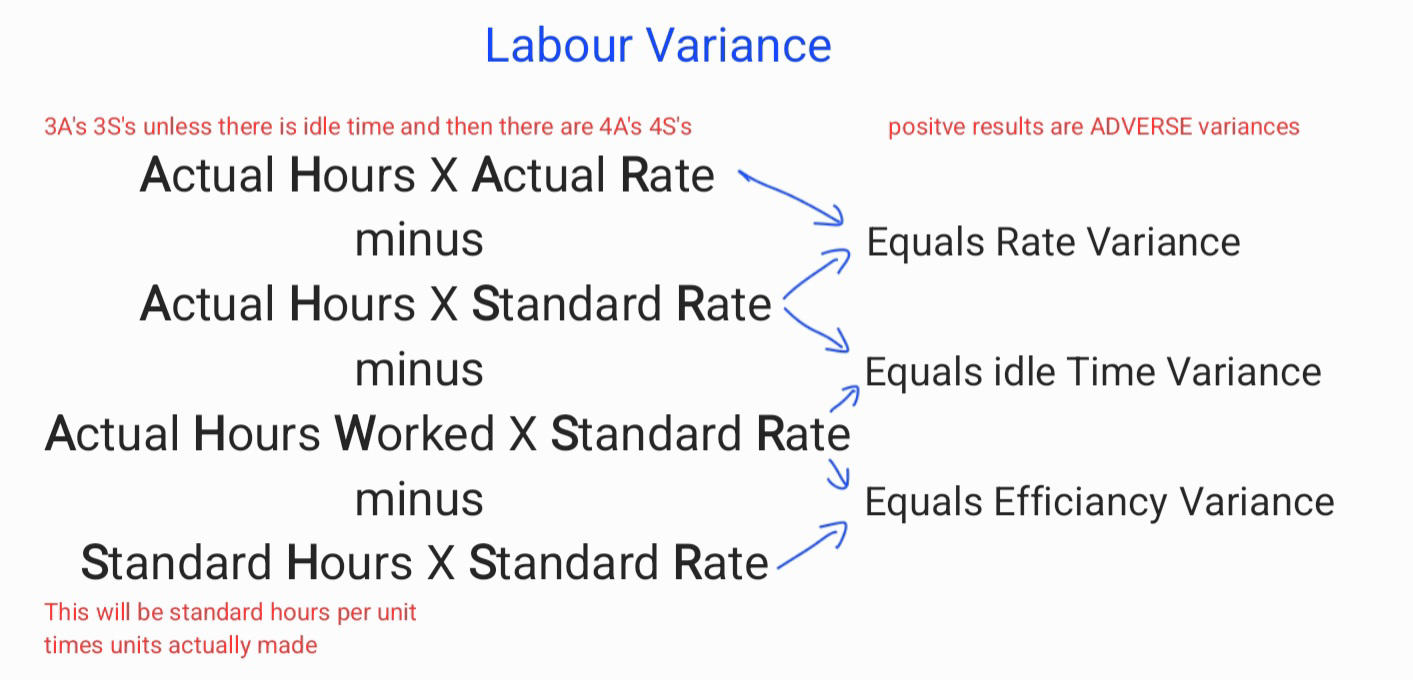
How do you calculate a labour variance?
23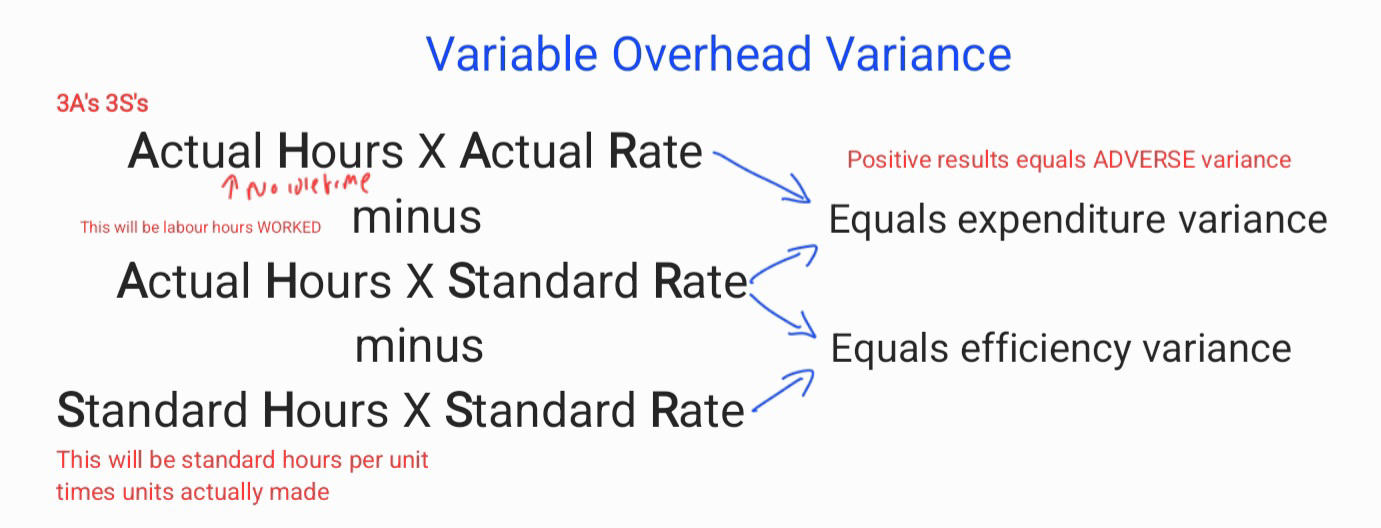
How do you calculate a variable overhead variance?
24
What does this symbol mean?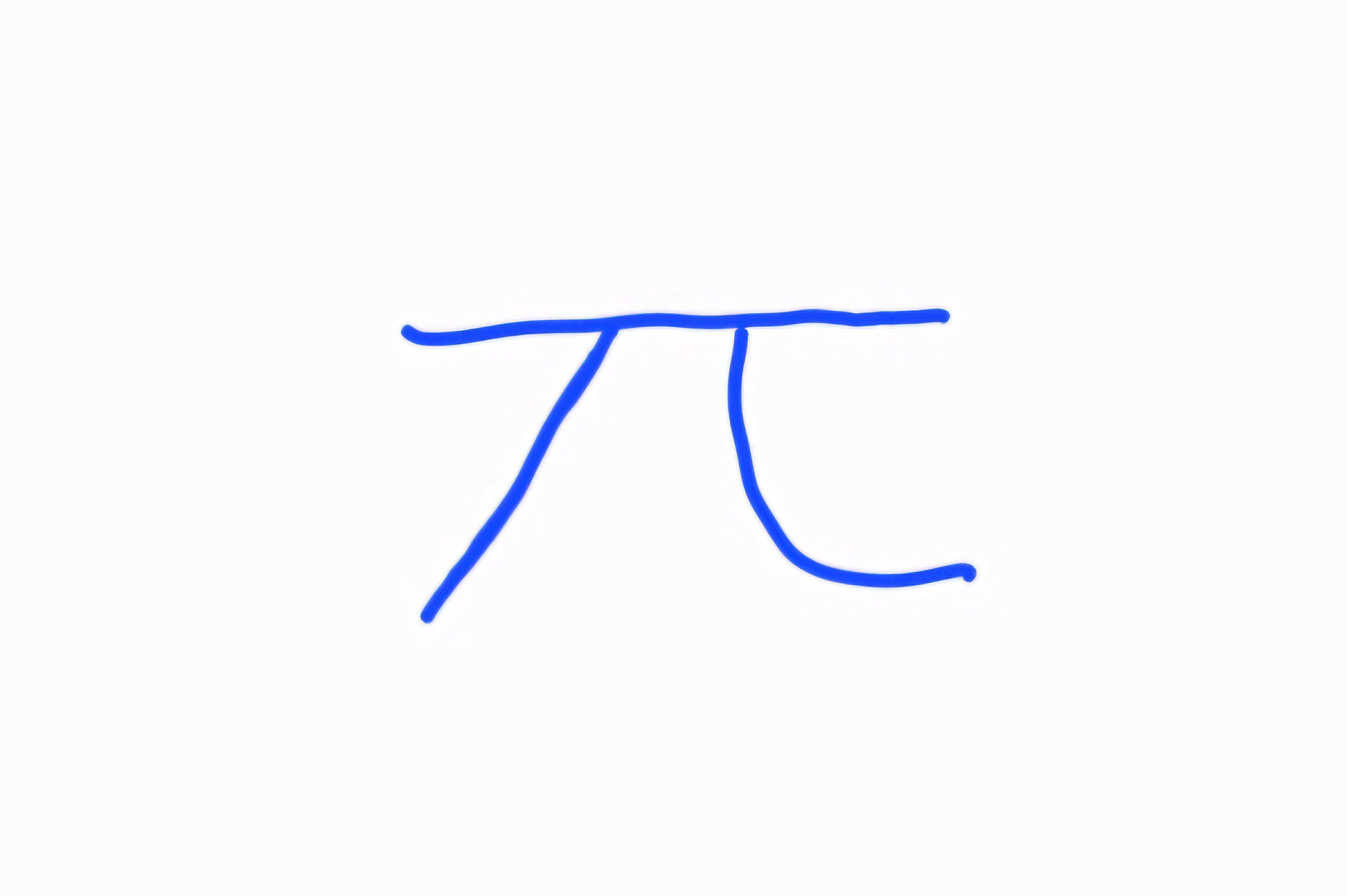
Profit
25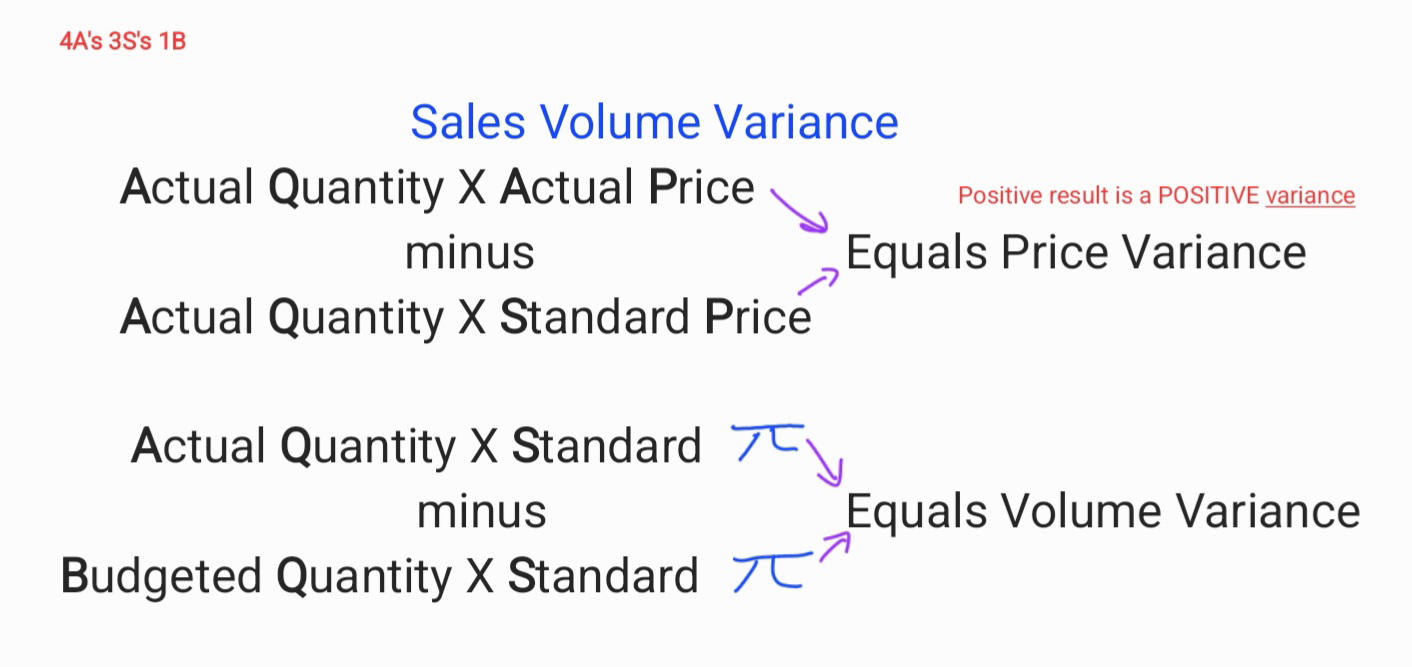
How do you calculate a sales variance?
26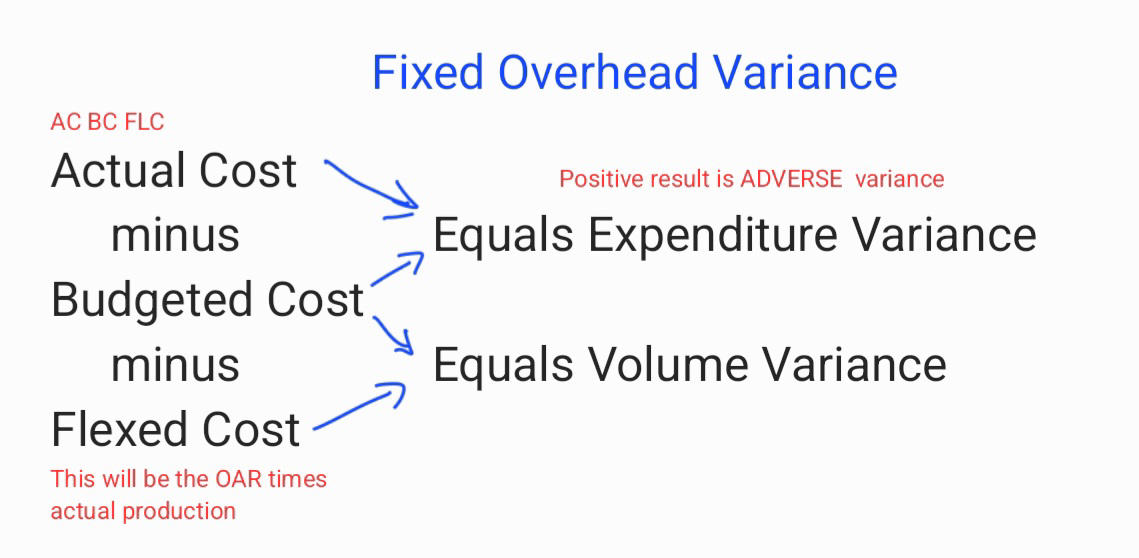
How do you calculate a fixed over head variance?
27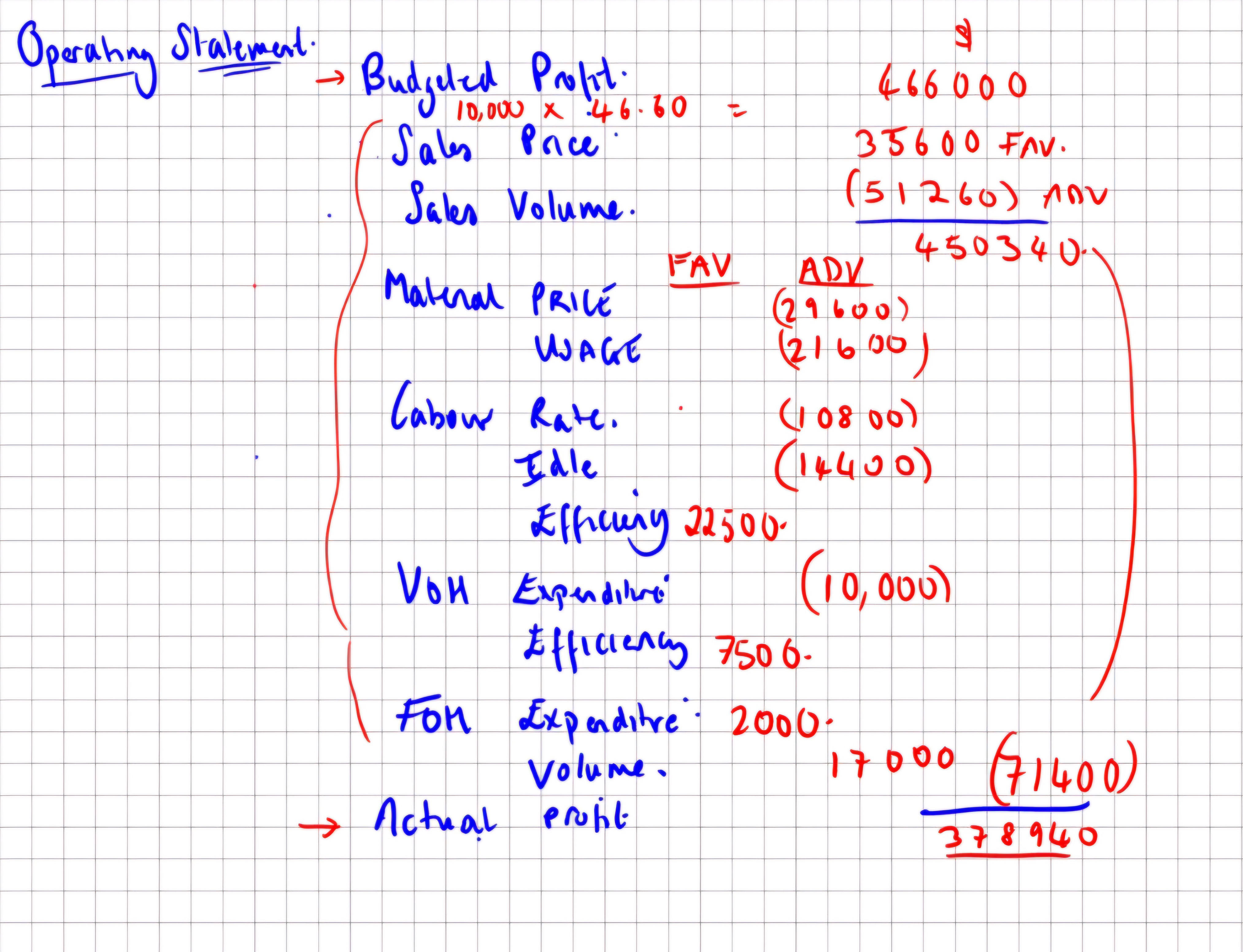
How do you calculate the operating profit using the budgeted amounts and the variances (Operating Statement)
28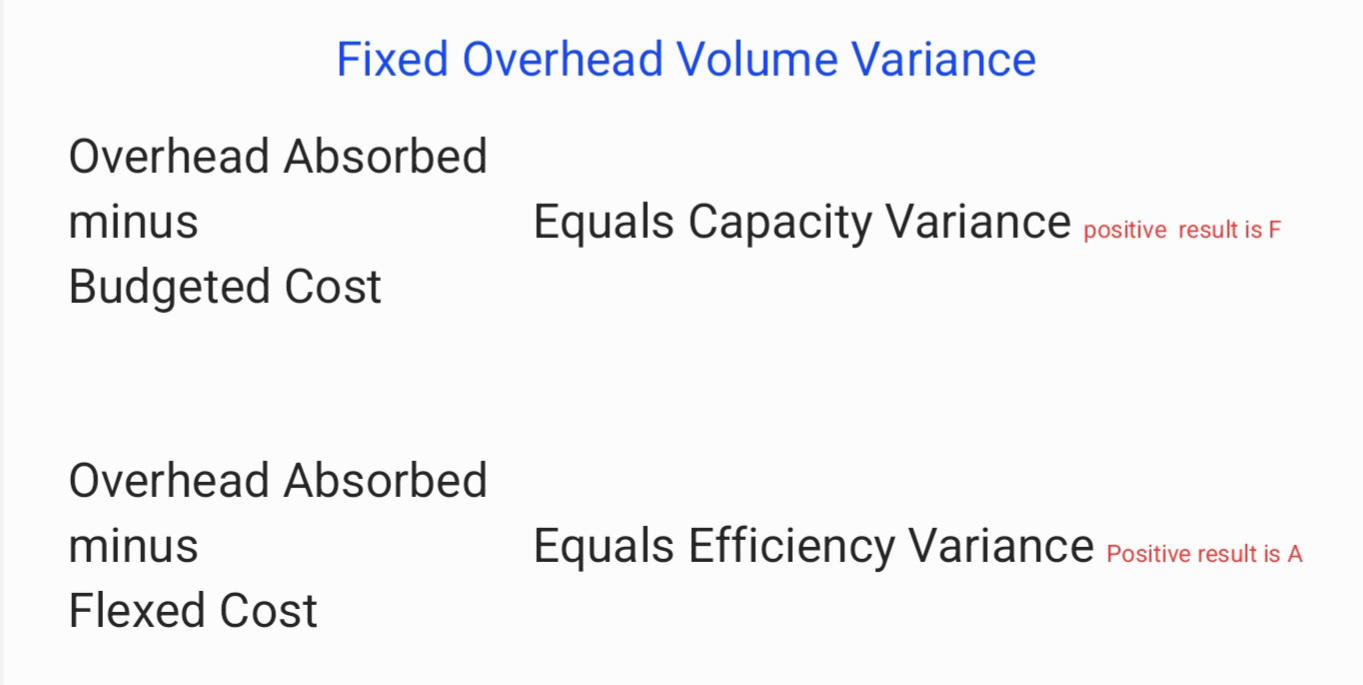
In the fixed overhead VOLUME variance, how do you calculate the capacity and efficiency variances?
29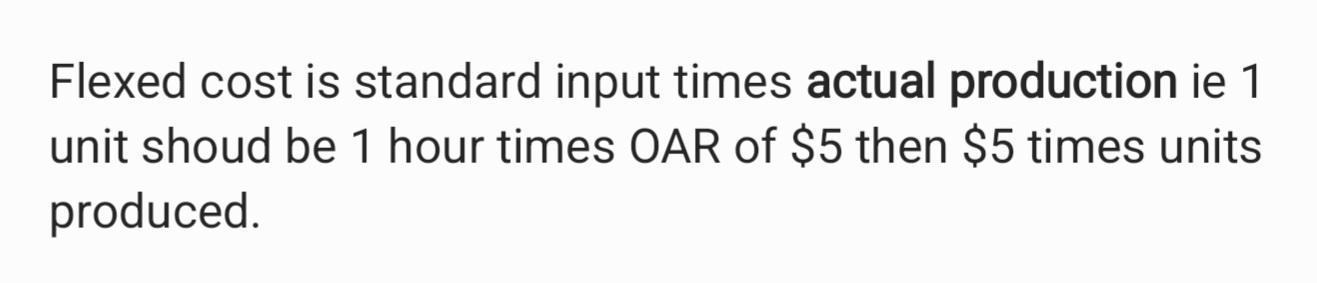
How do you calculate the Flexed cost
30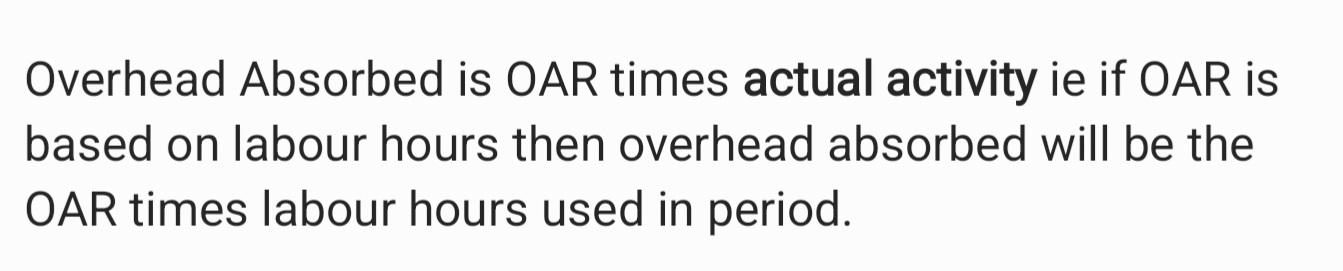
How do you calculate the Overhead Absorbed
31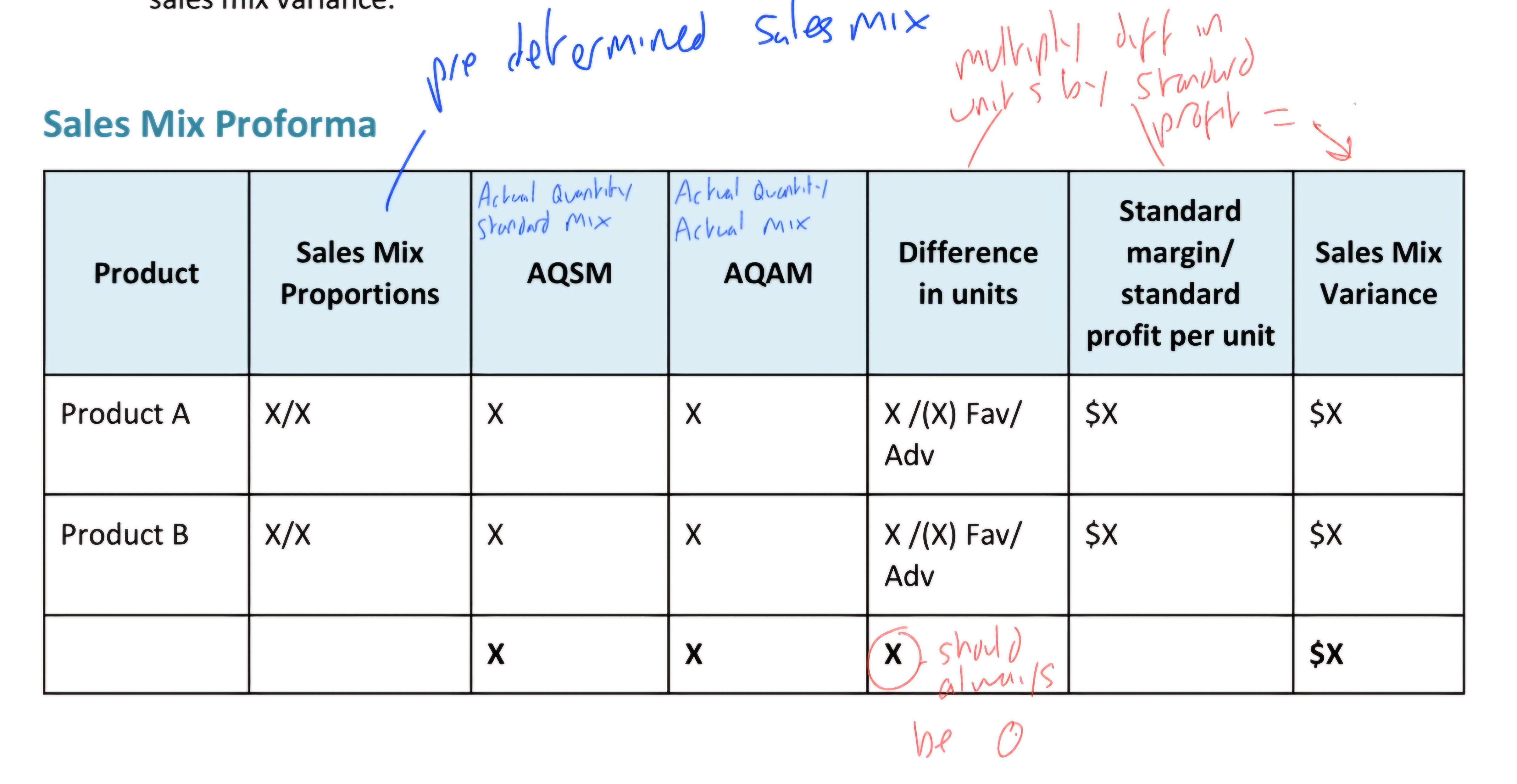
How do you calculate the sales mix variance using the individual method?
32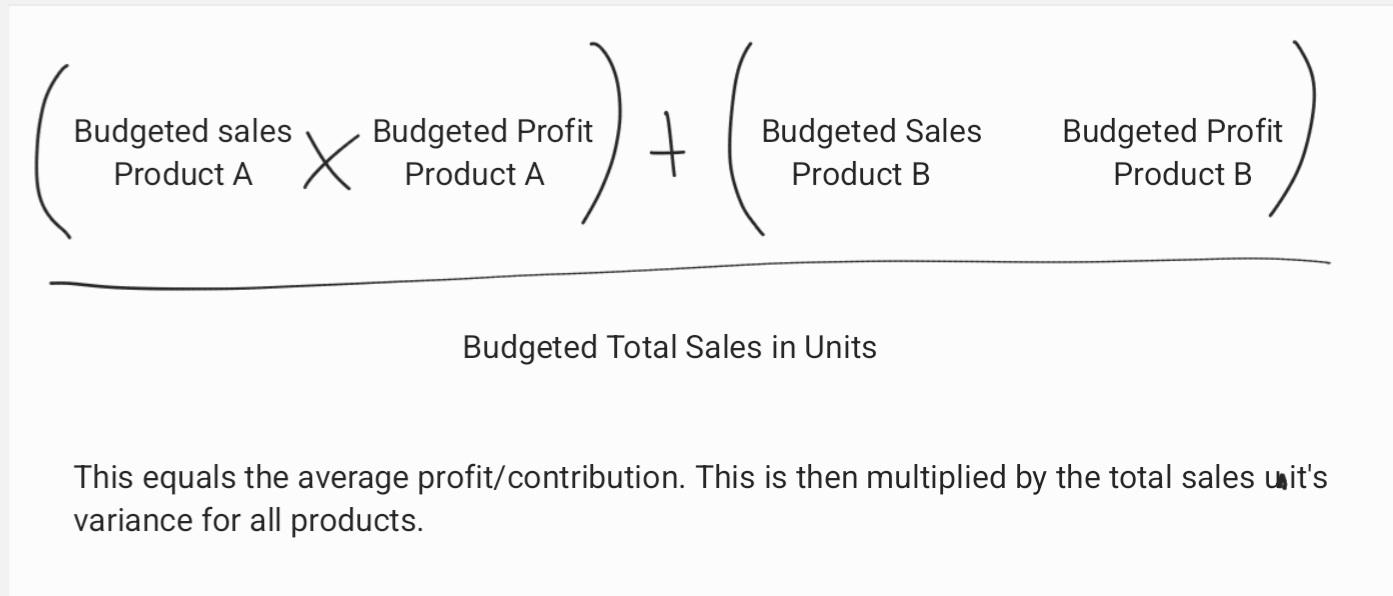
How do you calculate the sales Quantity Profit variance for sales mix?
33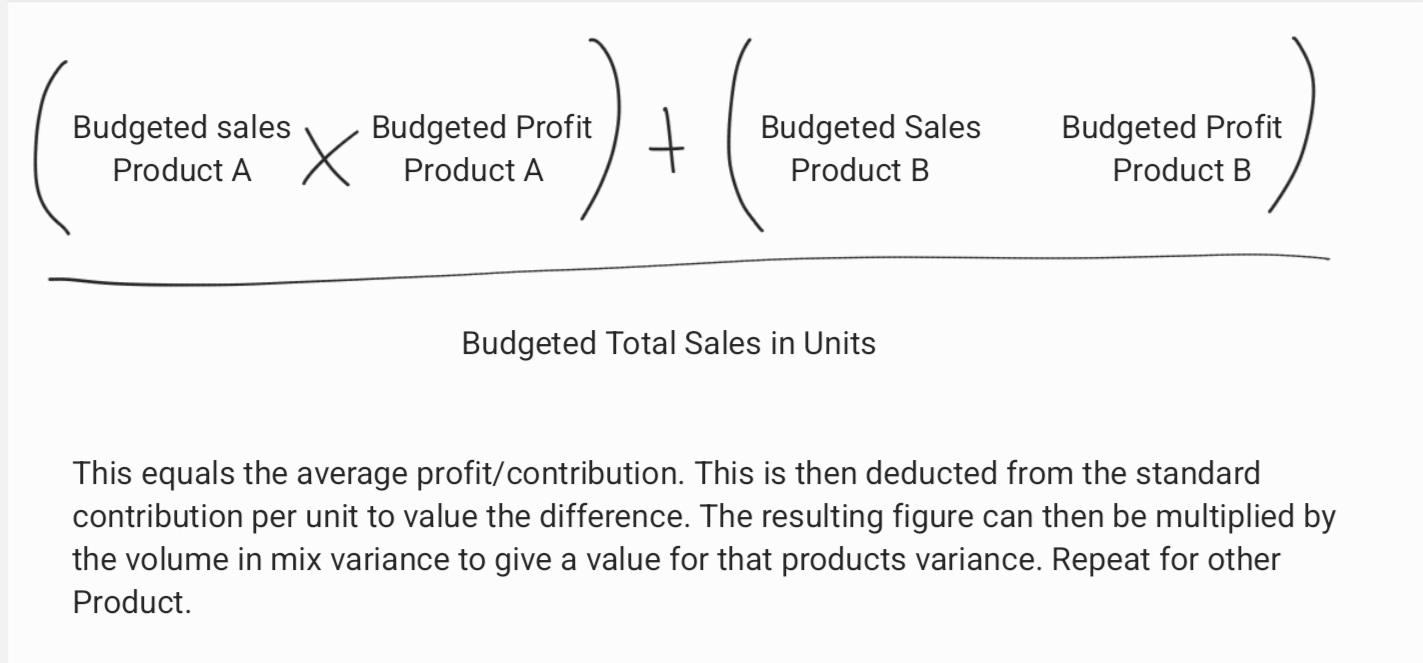
How do you calculate the Sales mix variance using the weighted average method?
34
How do you calculate material planning and operational variances?
use actual production X the revised amounts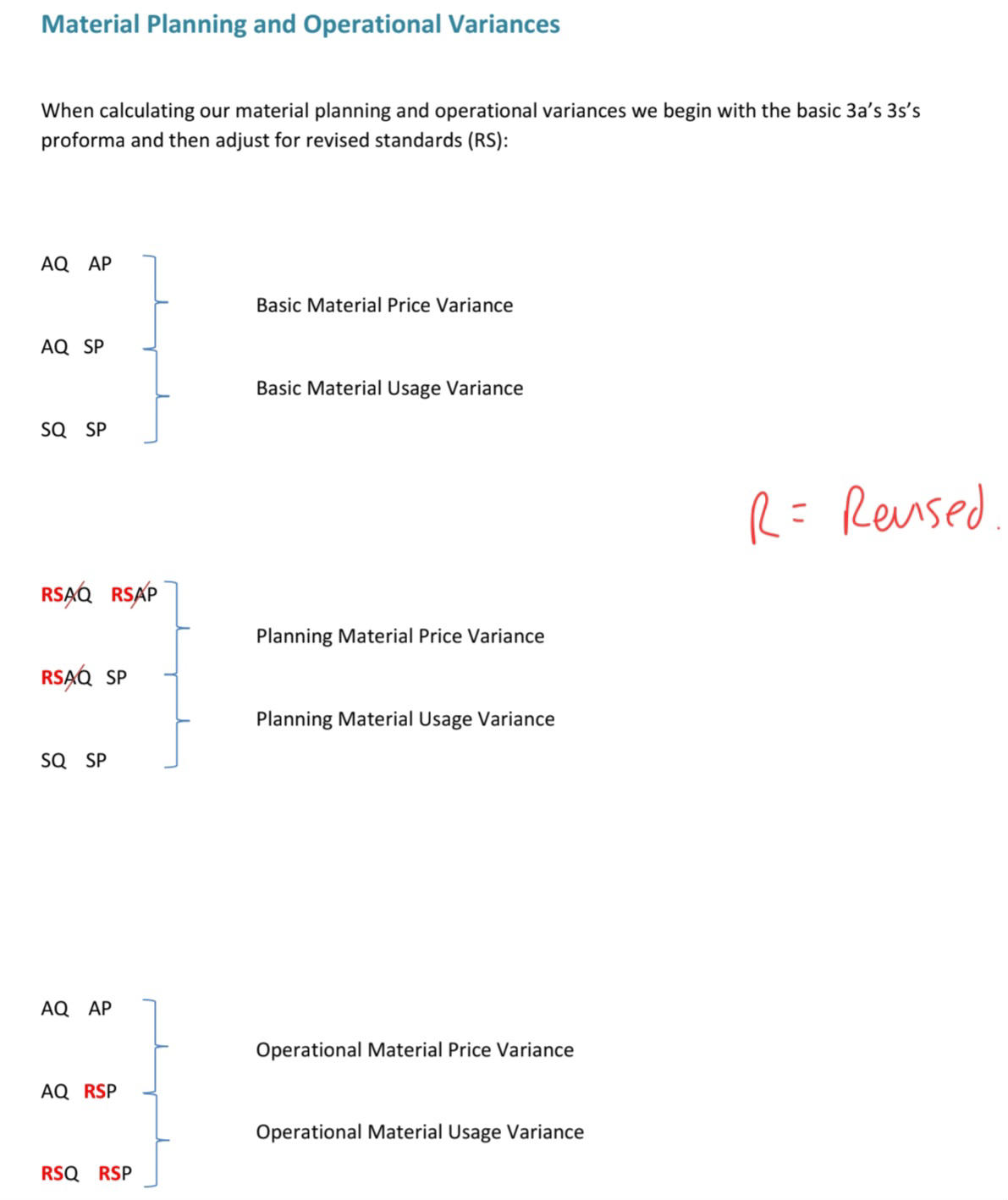
35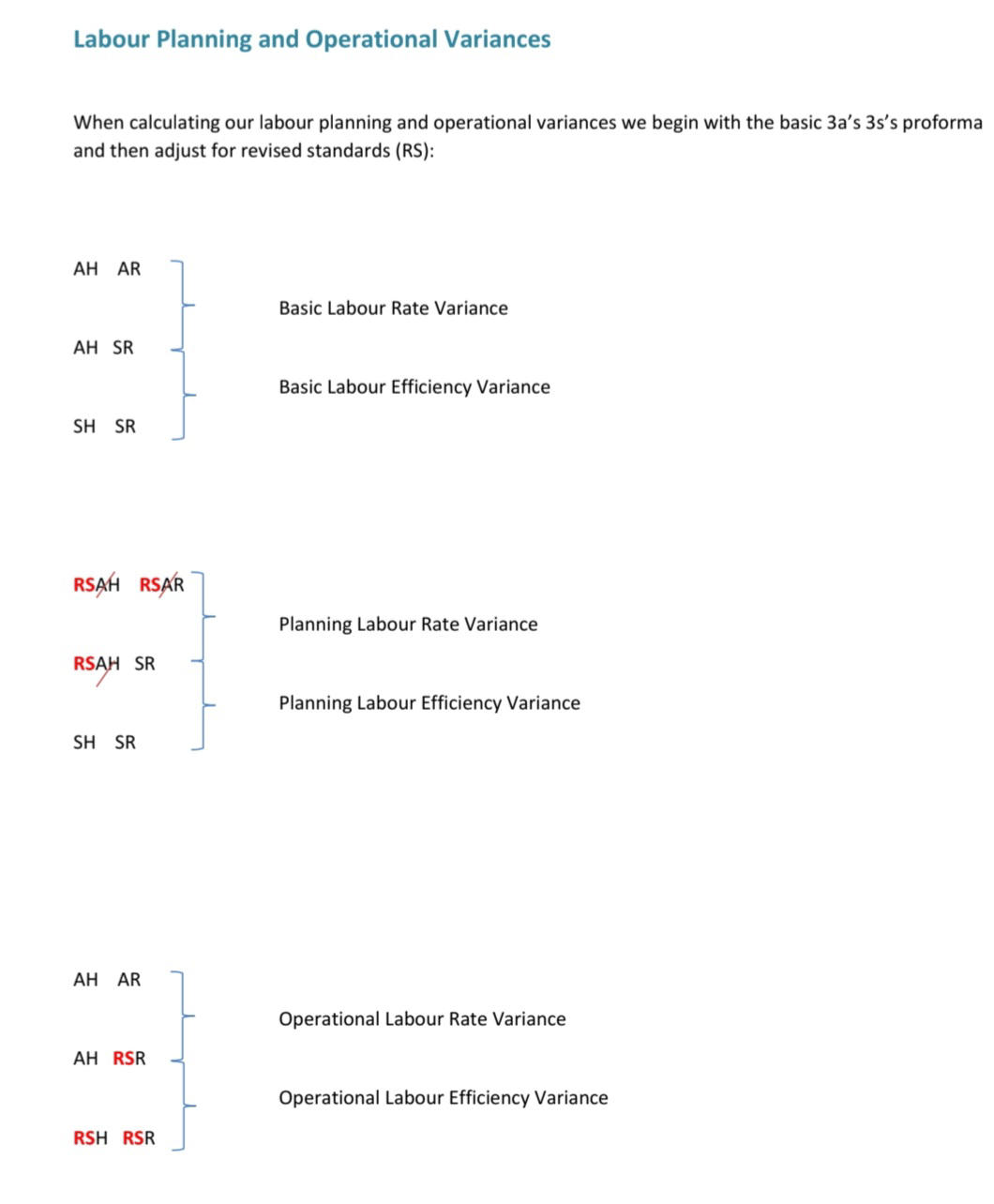
How do you calculate the labour planning and operational variances?
36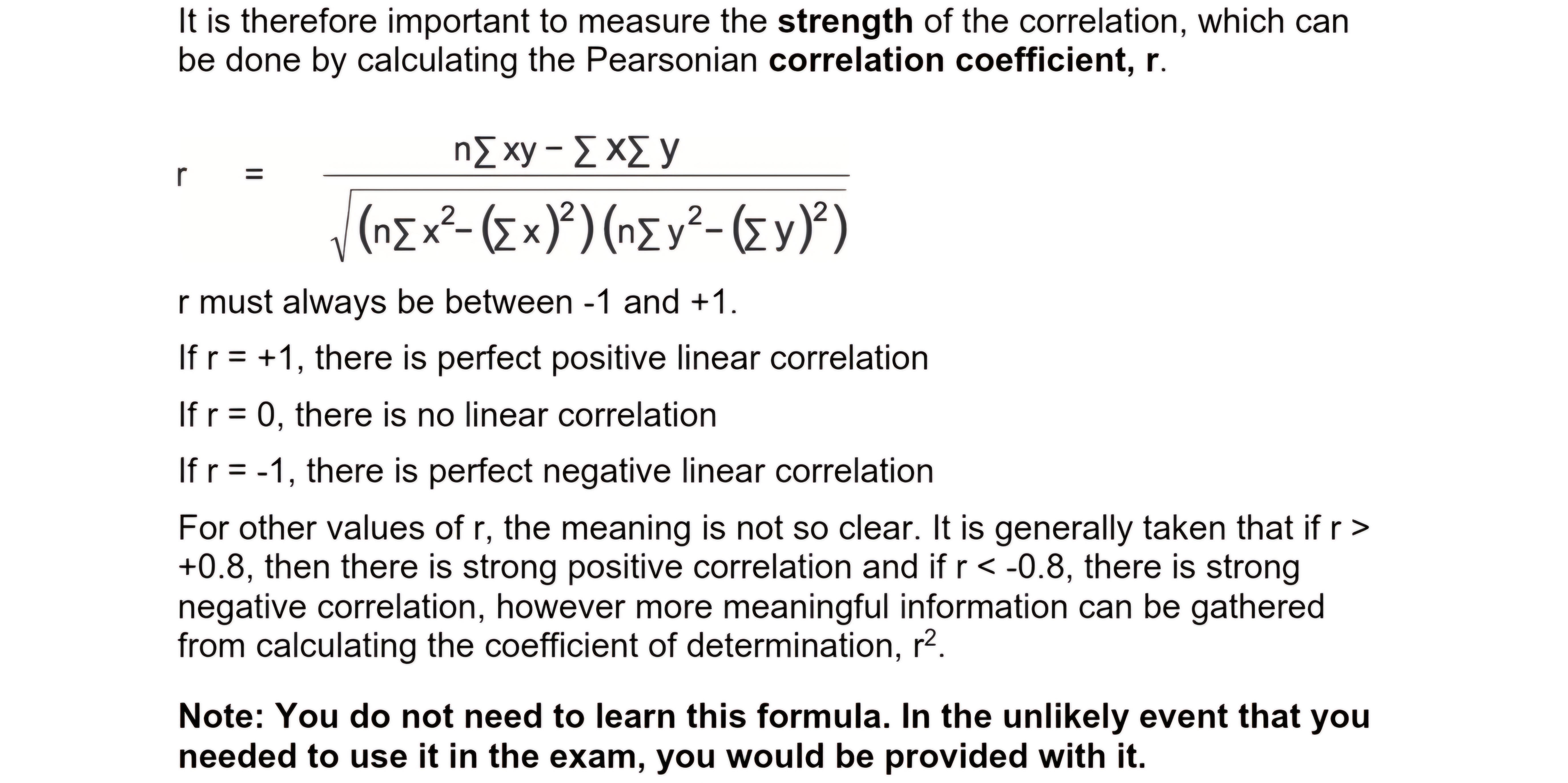
How do you calculate the correlation coefficient
37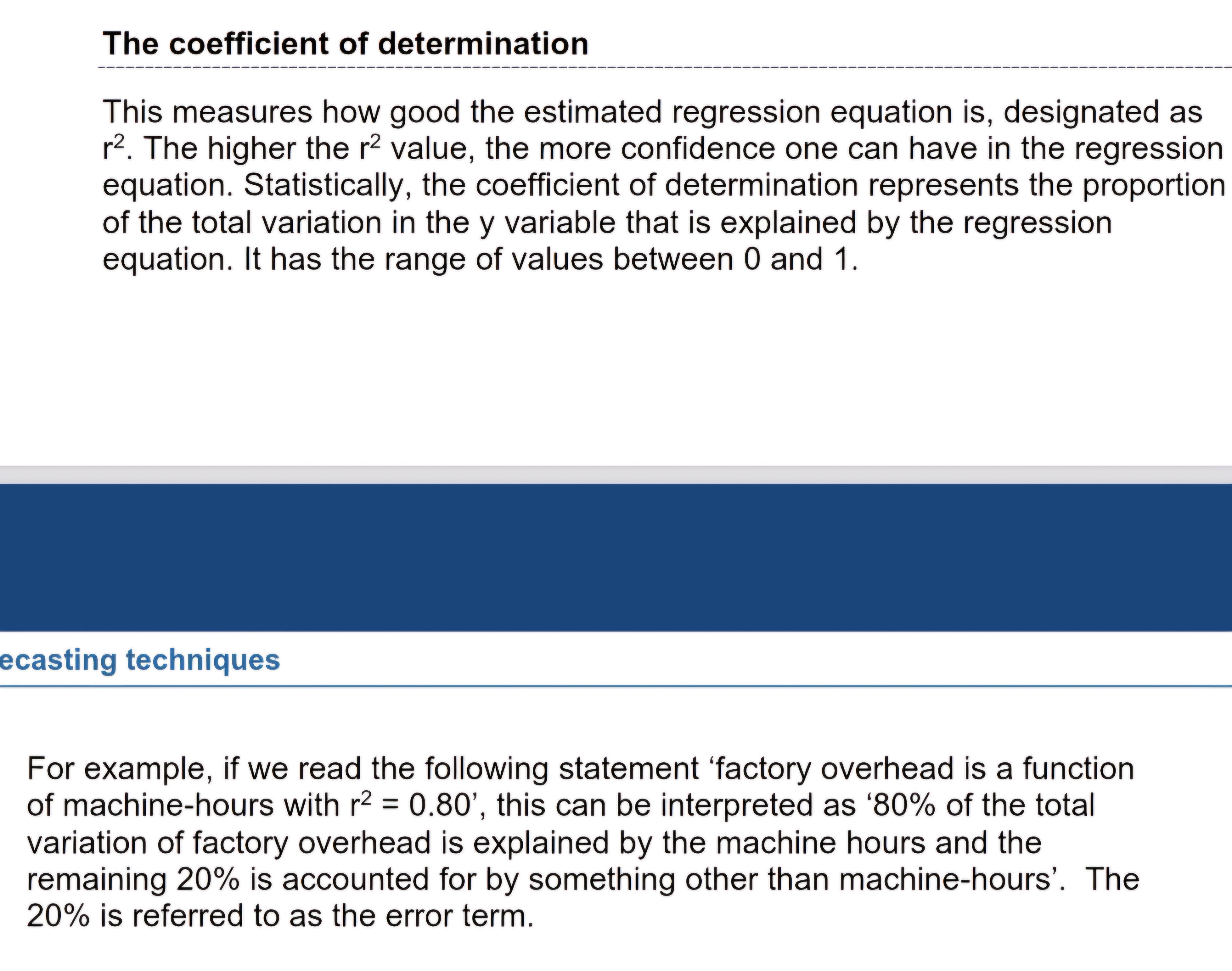
Explain the coefficient of determination
38
How do you adjust forecasts for inflation using the price index?
Times by the year you are going to, divide by the year you are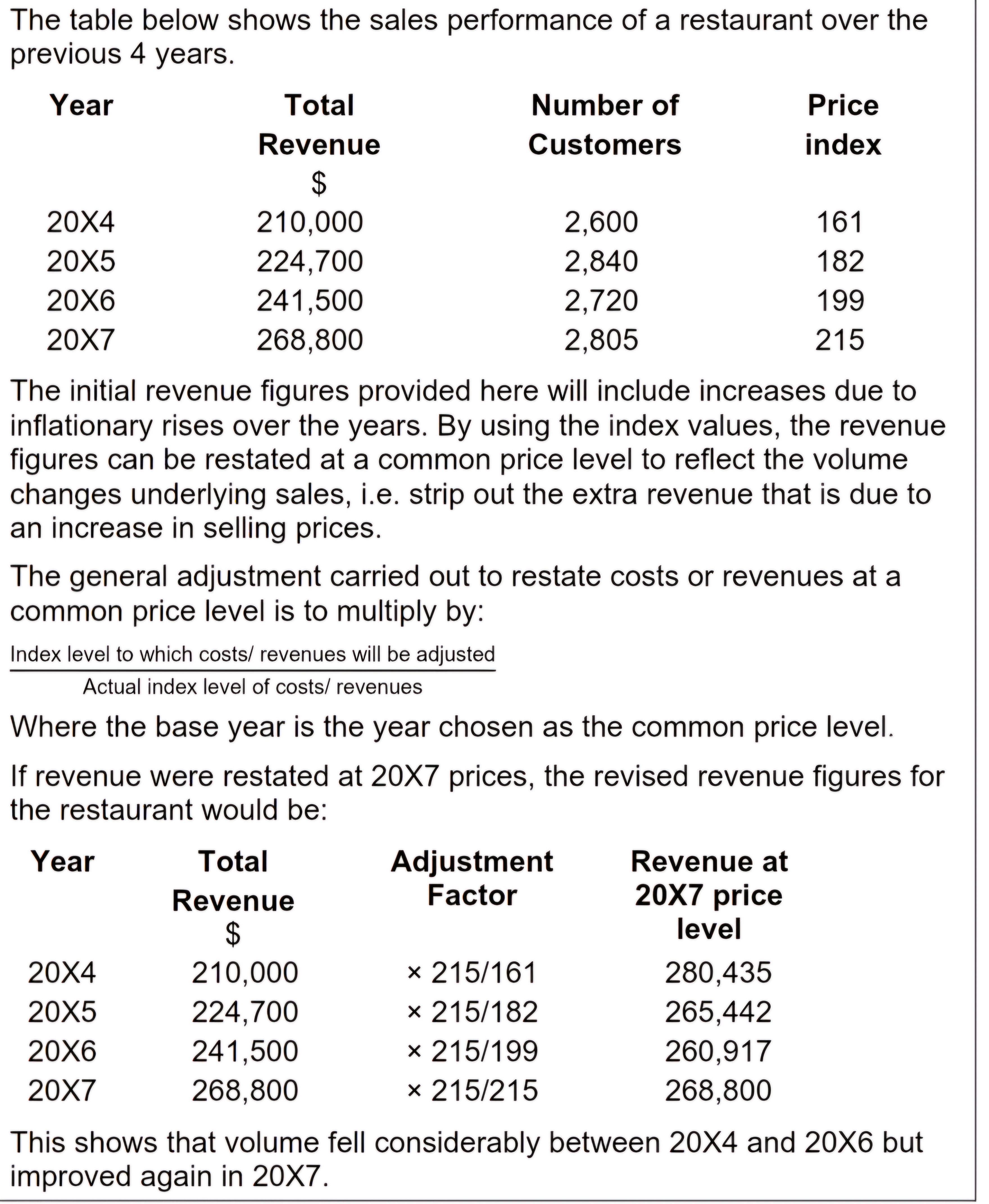
39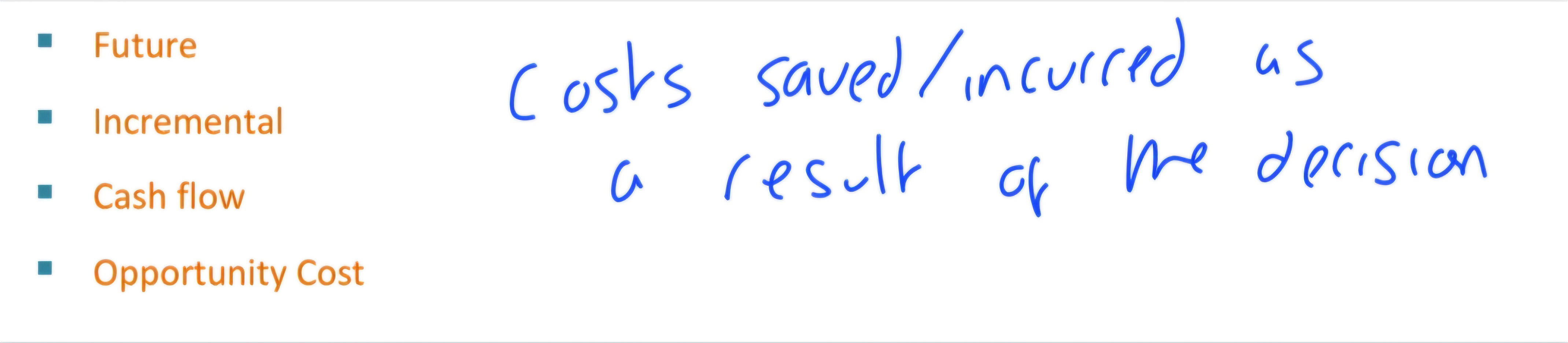
What should be included in relevant costs
40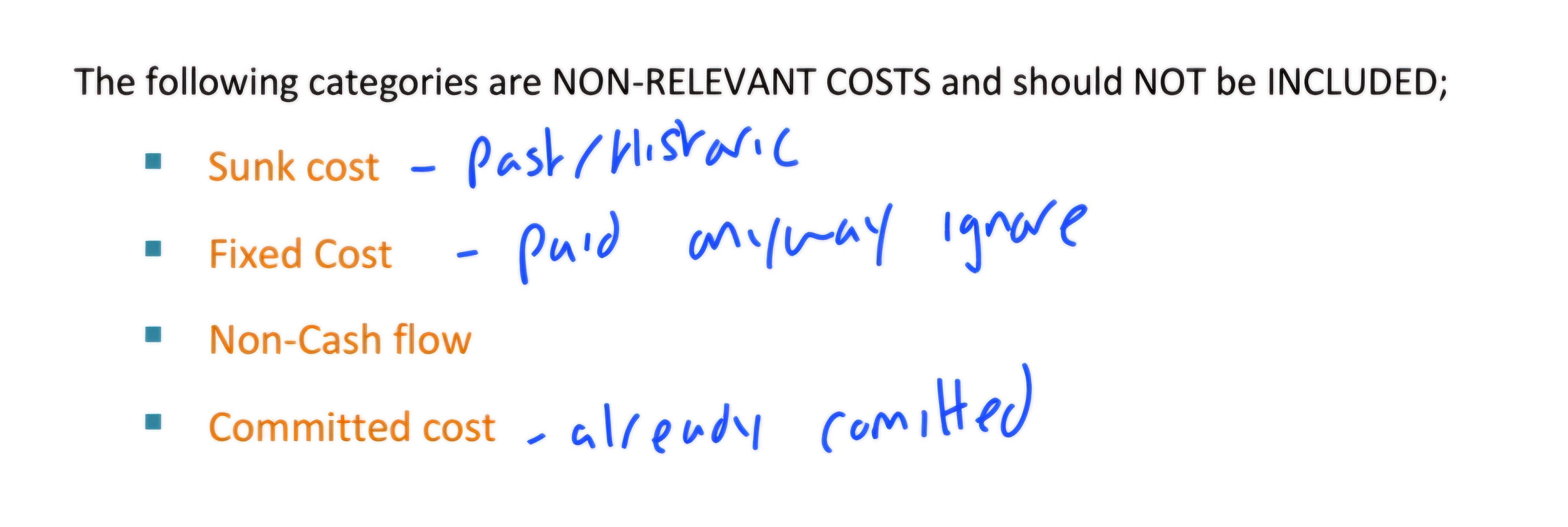
What should NOT be included in relevant costs
41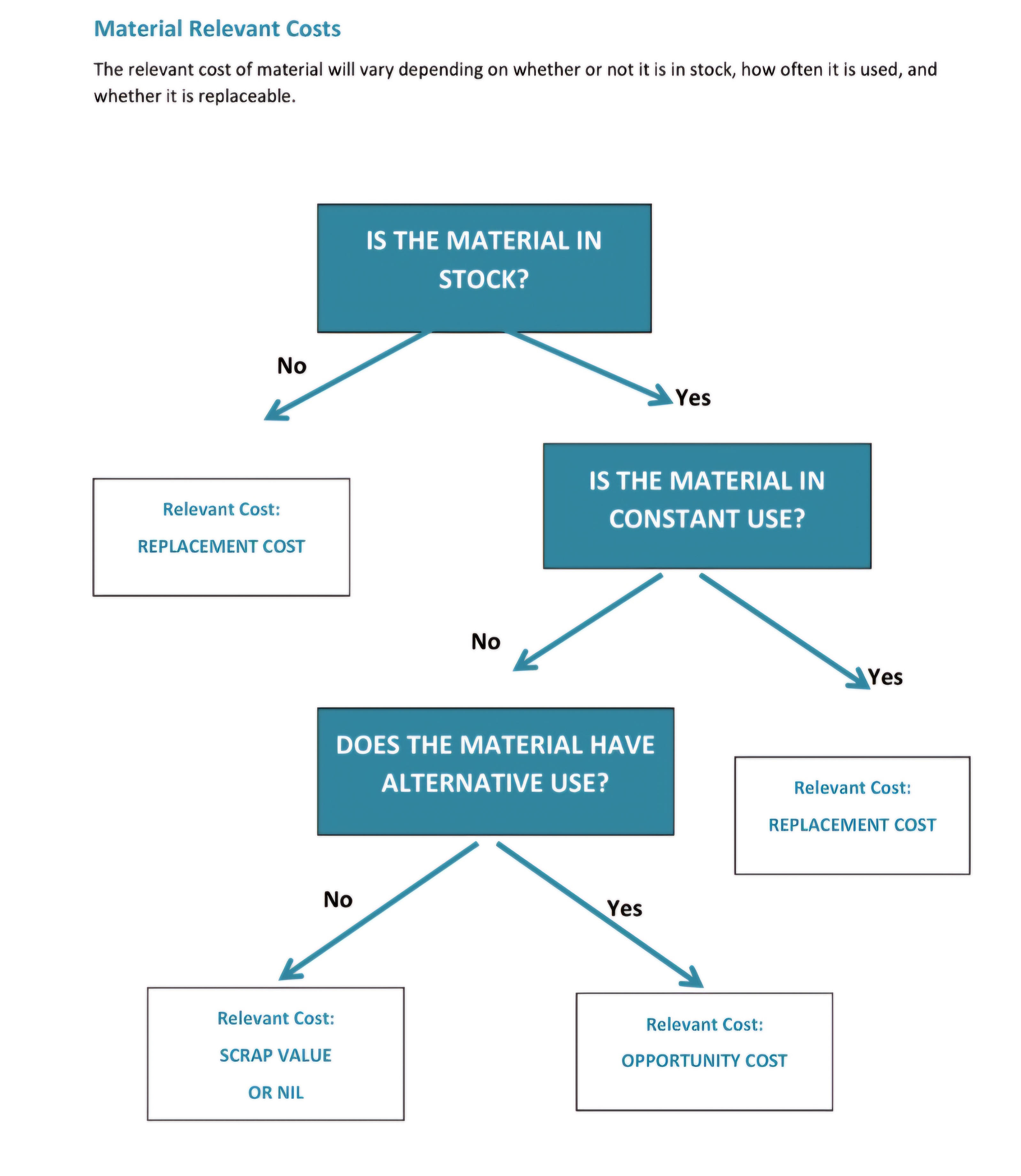
How do you determine if a material is a relevant cost
42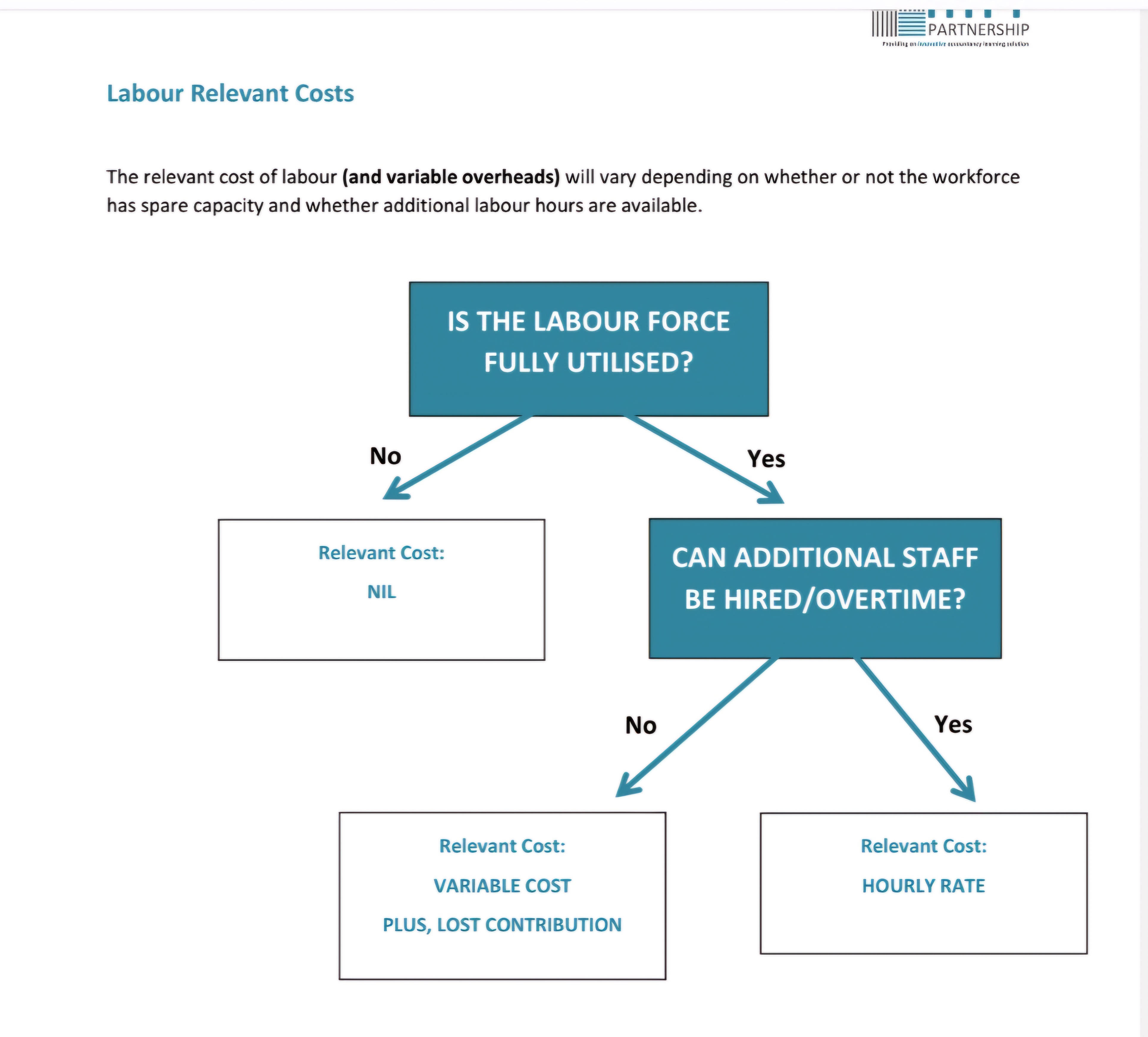
How do you determine if labour is a relevant cost
43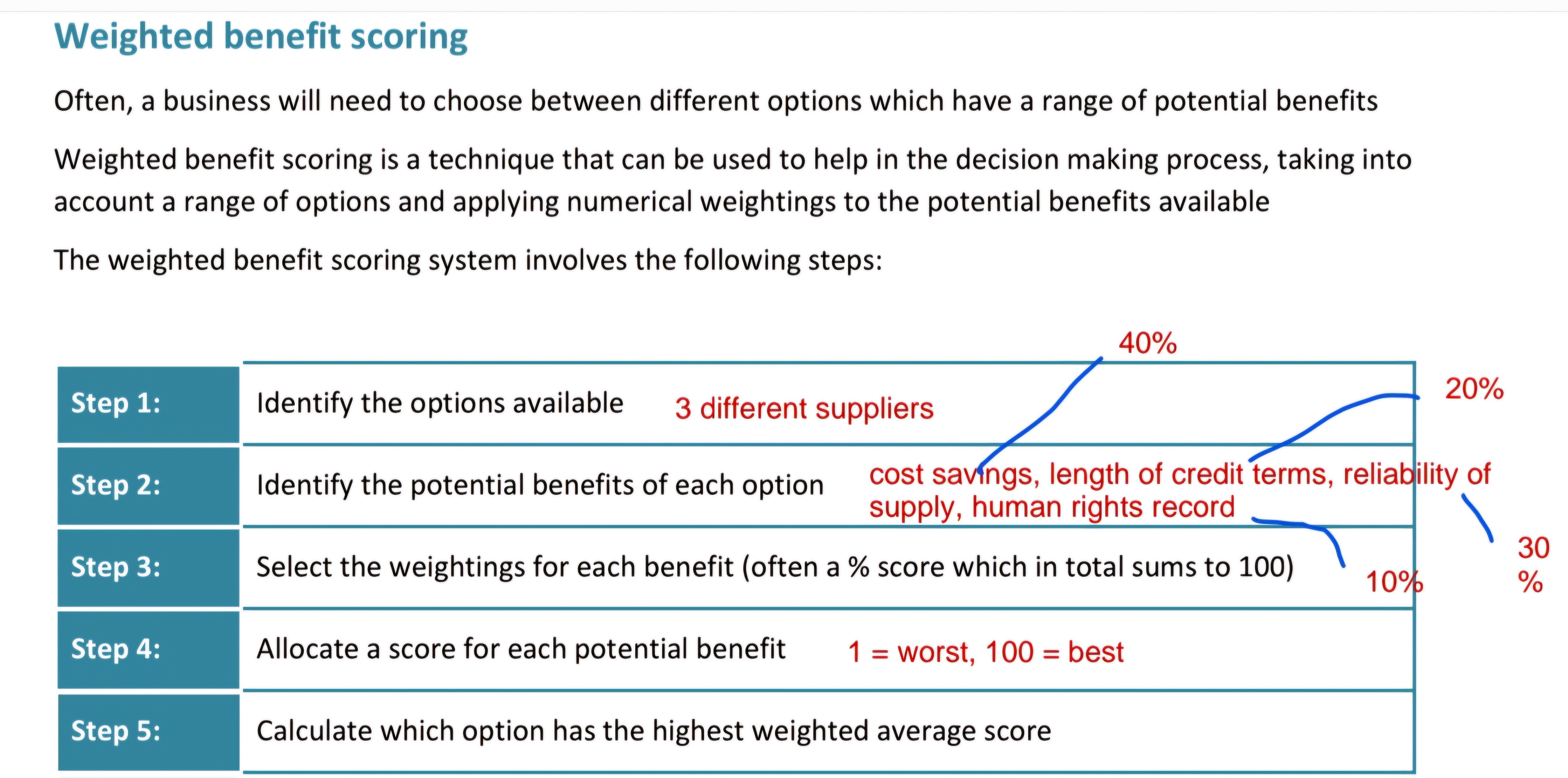
What are the 5 steps in weighted benefit scoring
44
For breakeven analysis how do you calculate contribution?
45
How do you calculate Breakeven point in units?
46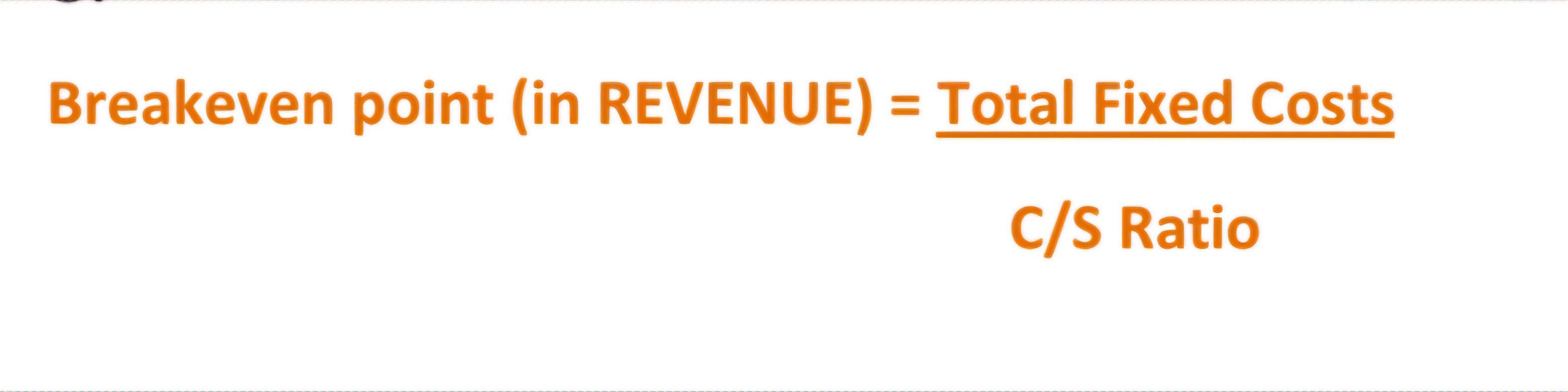
How do you calculate breakeven point in sales revenue?
47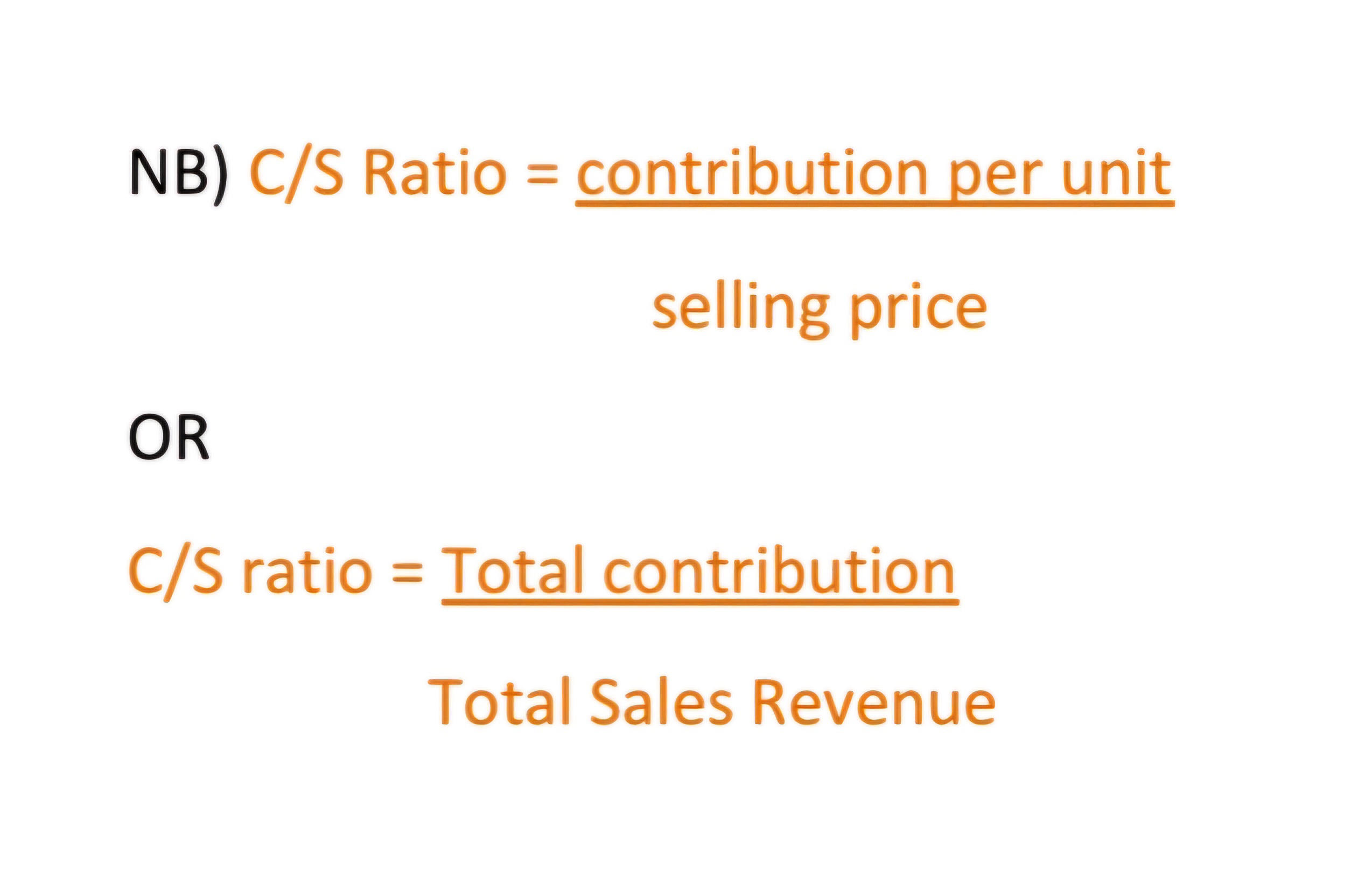
How do you calculate the C/S ratio?
48
How do you calculate margin of safety in units
49
How do you calculate margin of safety as a %
50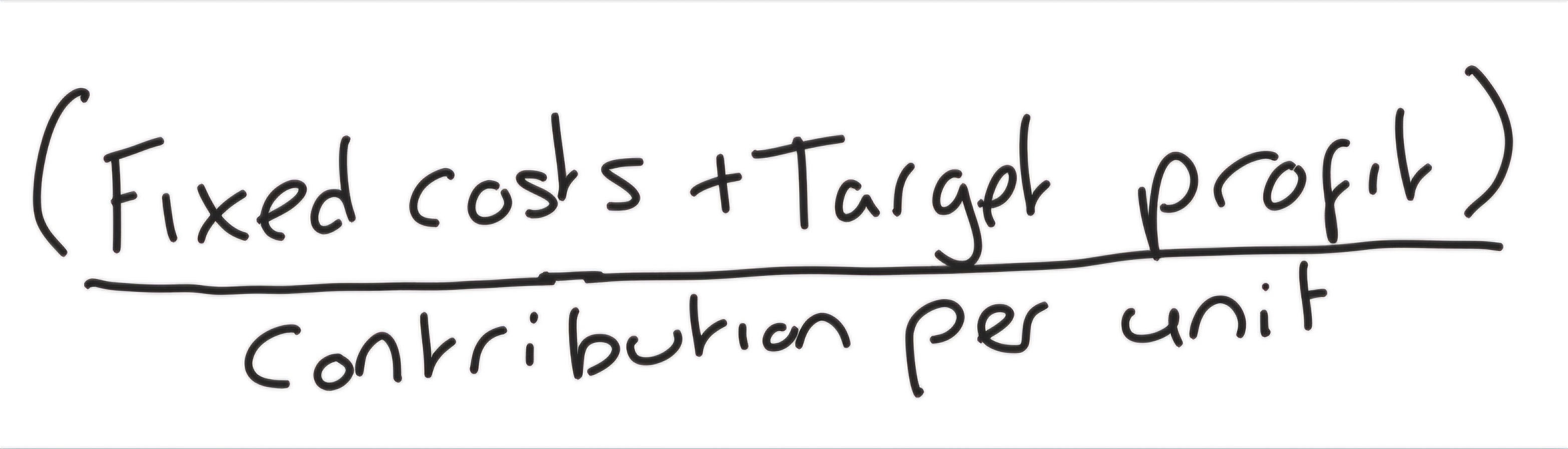
How do you calculate profit target in Units?
51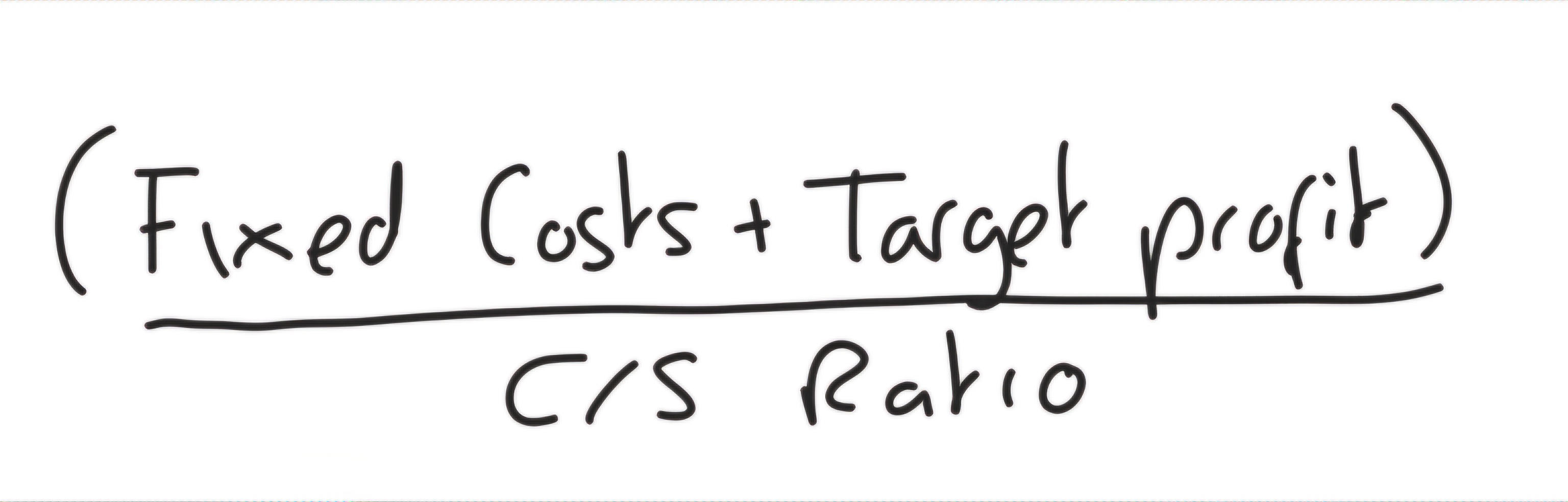
How do you calculate profit target in revenue?
52
What is operational gearing?
The proportion of Fixed costs to total costs
High operational gearing = high fixed costs, high breakeven point and high C/S ratio.
High operational gearing means profits increase rapidly after breakeven point
also means they would struggle in recession as Fixed costs hard to reduce
High operational gearing = high fixed costs, high breakeven point and high C/S ratio.
High operational gearing means profits increase rapidly after breakeven point
also means they would struggle in recession as Fixed costs hard to reduce
53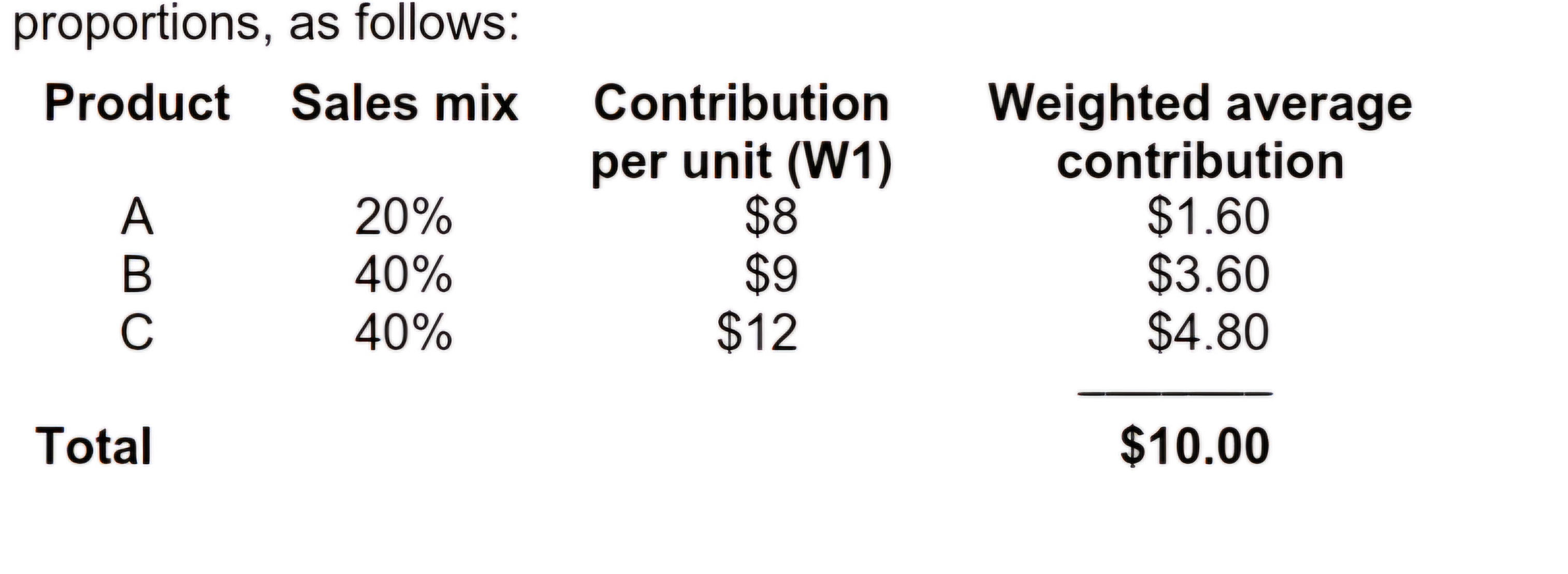
How do you calculate the weighted average contribution?
54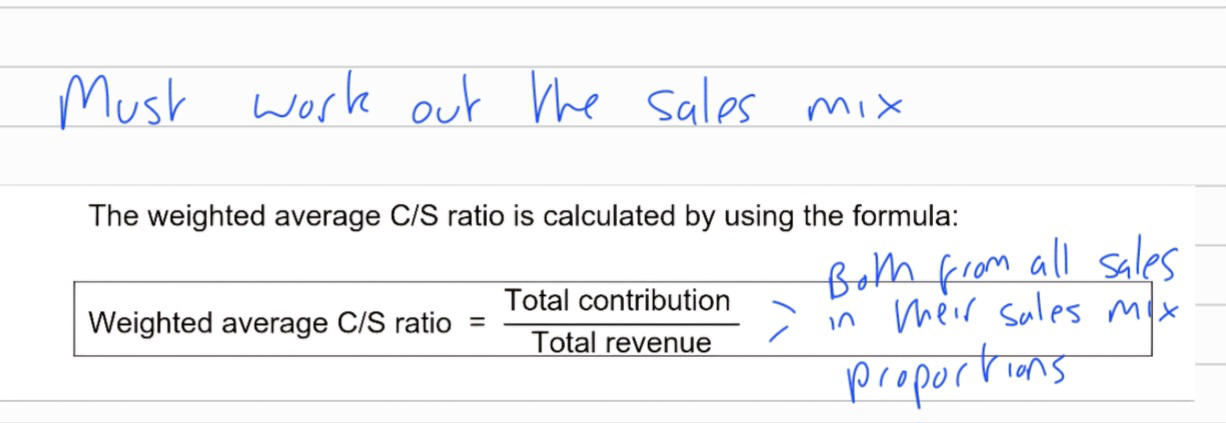
How do you calculate the weighted C/S ratio when there is a sales mix?
55
What are the 6 steps to Linear programming?
DOFPIS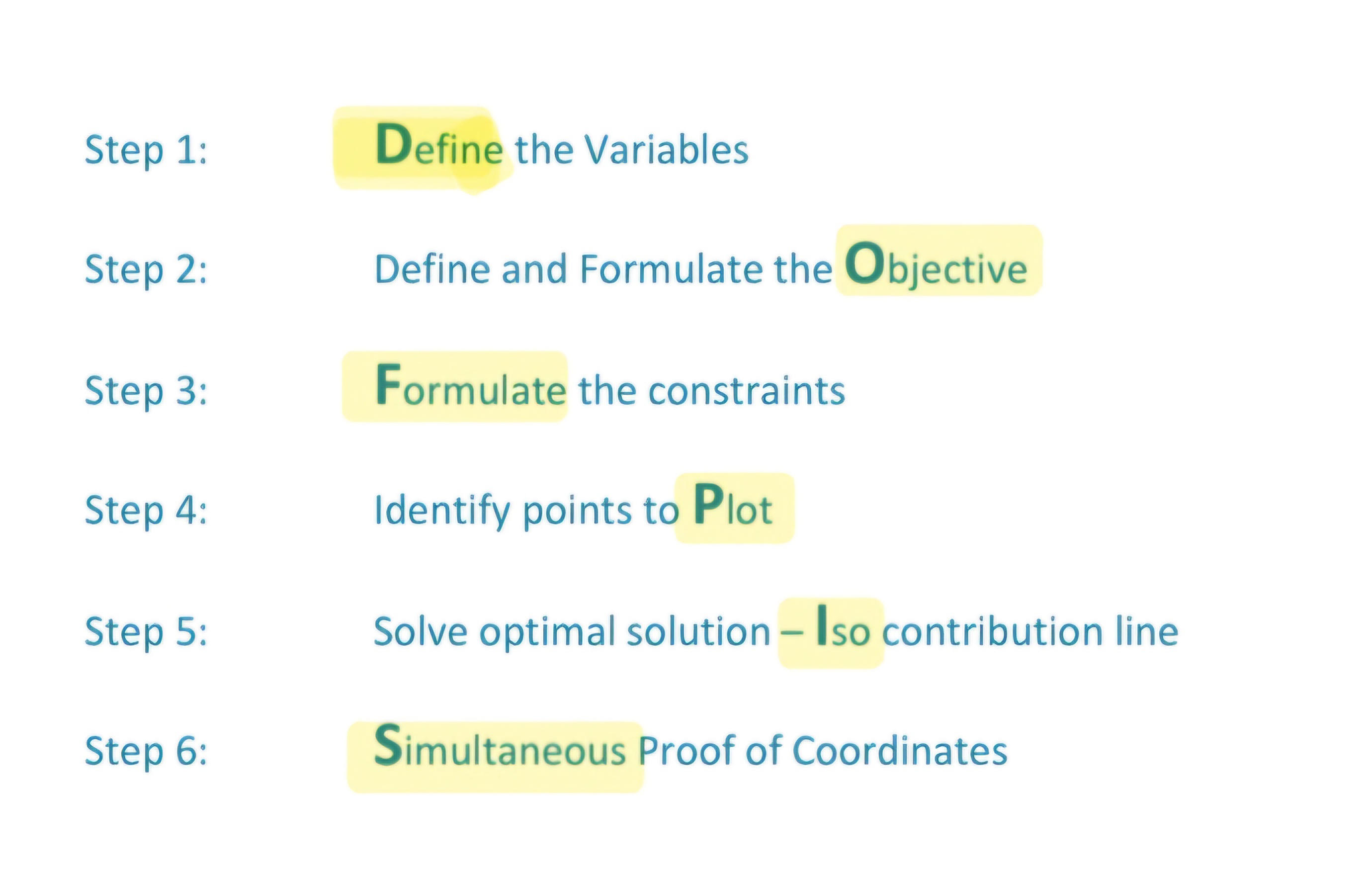
56
In step 1 of linear programming how do you DEFINE THE VARIABLES
Simplify the equations by using abbreviations for the products or variables ie use X and Y instead of product alpha and product bravo
57
In step 2 of linear programming how do you STATE THE OBJECTIVE FUNCTION
Unless told otherwise the objective is usually to maximise contribution, so, you need to express this is a formula. For example if you are using X and Y as your variables and the contribution for each is 4X and 8Y then your forlual would be contribution = 4X + 8Y
58
In step 3 of linear programming how do you STATE THE CONSTRAINTS
Restate each of the contraints in a formula. For example
Dept A: 8X + 10Y < 11,000
Dept B: 4X + 10Y <9,000
you also need a non negative contraint, for example
X,Y > 0
which simply means X & Y cant be less than zero
Dept A: 8X + 10Y < 11,000
Dept B: 4X + 10Y <9,000
you also need a non negative contraint, for example
X,Y > 0
which simply means X & Y cant be less than zero
59
In step 4 of linear programming how do you IDENTIFY POINTS TO PLOT (or draw graph)
Draw the constraint lines. If a constraint is 4X + 8Y < 8000 then make the X zero so that 8Y = 8000, this becomes 8000/8 = 1000. You can mark 1000 on the Y axis ( on the Y line) then do the same the other way around, 4X +8Y < 8000 becomes 4X + 0Y = 8000, which becomes 8000/4 = 2000. you can mark 2000 on the X axis line. Then you join the 2 points together. Repeat for each constraint. The area between zero and the crossover points is the feasable area.
60
For step 5 of linear programming How do you FIND THE OPTIMAL SOLUTION - ISO CONTRIBUTION LINE
There are 2 options.
. using simultaneous equations
. using an IS0- contribution line
Simultaneous equation = Calculate the coordinates for X and Y at each vertex (further points) on the feasible region. Then calculate the contribution for each vertex by substituting the values for X and Y into the objective function. The one with the highest contribution is the solution. If you cannot determine the numbers at all of the points then use the simultaneous equations. for example:-
if you have Dept A: 8x + 10y = 11,000
Dept B: 12x + 6y = 12000
multiply one of the sets of data to get one common denominator ie Dept A times 1.5 would mean that both x's are now 12, so this becomes
Dept A: 12x + 15y = 16,500
Dept B: 12x + 6y = 12,000
Then duduct one set of data from the other to leave 0x + 9y = 4,500. you can then dicide 4,500 by 9 to get the value for Y as 500. You can then use that value to solve the rest nto get the value of x
Iso contribution line = we need to maximise contribution so choose a value for you contributions ie if contribution is £4 for X and £8 for Y you could use 4X + 8Y = 4000. You can plot the this on the graph as y = 500 and x = 1000 for the 2 points (you changed one to zero and divided the 4000 by the remainder) then joint the 2 points to give your ISO line. Move this line outwards evenly and the last crossover point it touches in the feasible area is your optimal solution. Calculate the constribution for those levels of production
. using simultaneous equations
. using an IS0- contribution line
Simultaneous equation = Calculate the coordinates for X and Y at each vertex (further points) on the feasible region. Then calculate the contribution for each vertex by substituting the values for X and Y into the objective function. The one with the highest contribution is the solution. If you cannot determine the numbers at all of the points then use the simultaneous equations. for example:-
if you have Dept A: 8x + 10y = 11,000
Dept B: 12x + 6y = 12000
multiply one of the sets of data to get one common denominator ie Dept A times 1.5 would mean that both x's are now 12, so this becomes
Dept A: 12x + 15y = 16,500
Dept B: 12x + 6y = 12,000
Then duduct one set of data from the other to leave 0x + 9y = 4,500. you can then dicide 4,500 by 9 to get the value for Y as 500. You can then use that value to solve the rest nto get the value of x
Iso contribution line = we need to maximise contribution so choose a value for you contributions ie if contribution is £4 for X and £8 for Y you could use 4X + 8Y = 4000. You can plot the this on the graph as y = 500 and x = 1000 for the 2 points (you changed one to zero and divided the 4000 by the remainder) then joint the 2 points to give your ISO line. Move this line outwards evenly and the last crossover point it touches in the feasible area is your optimal solution. Calculate the constribution for those levels of production
61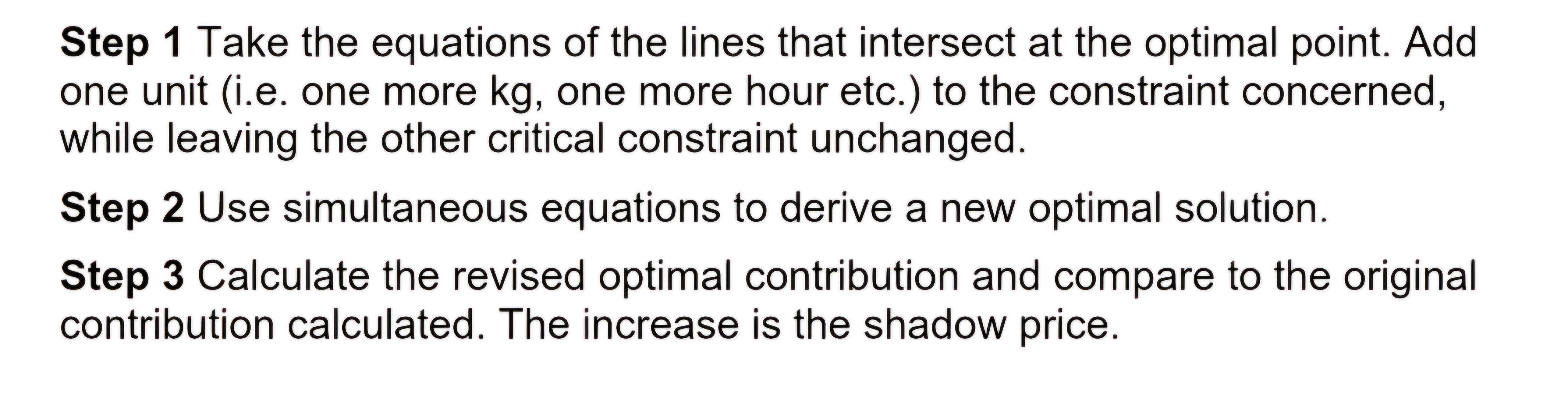
How do you calculate the shadow price for a critical constraint?
62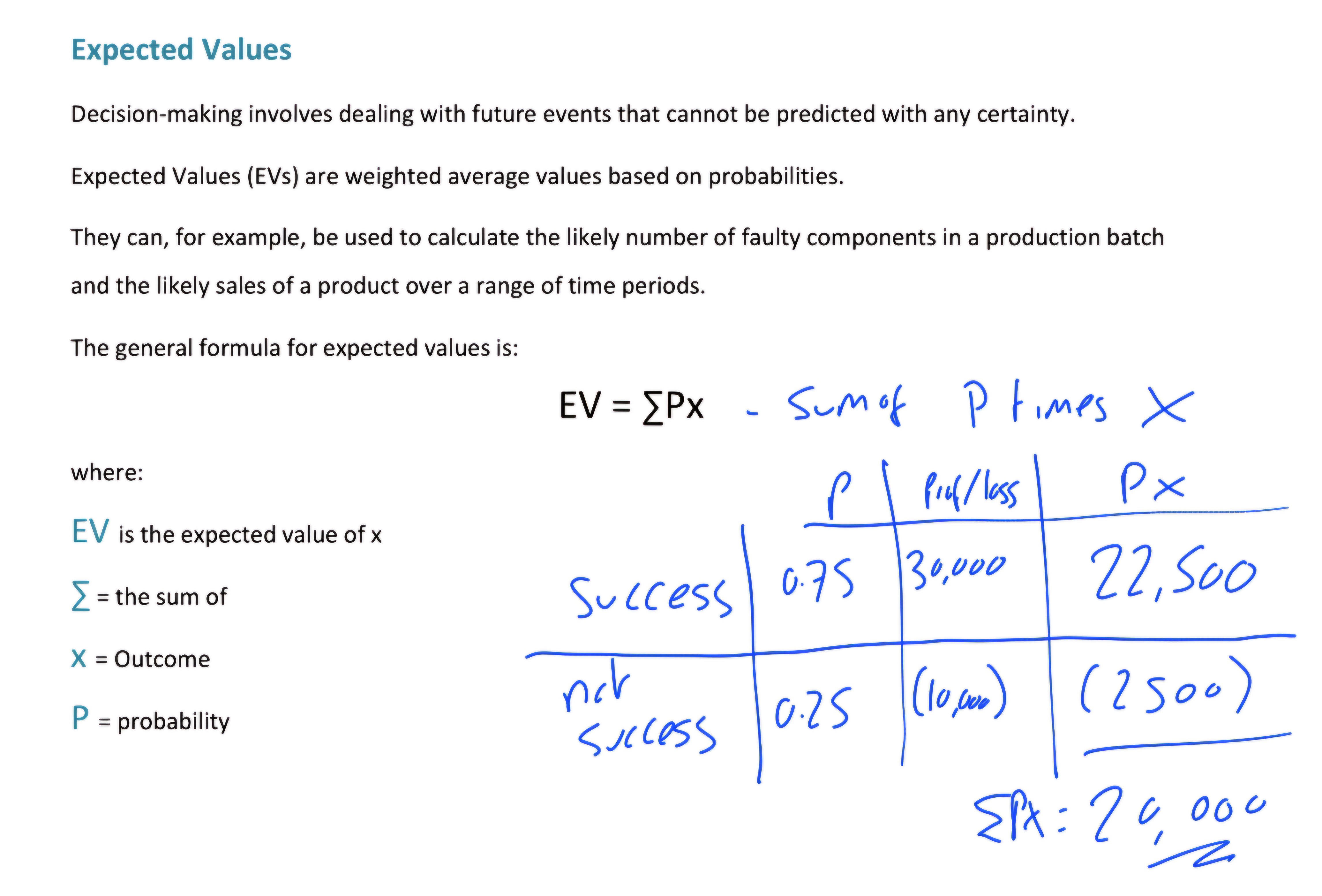
How do you calculate expected value?
63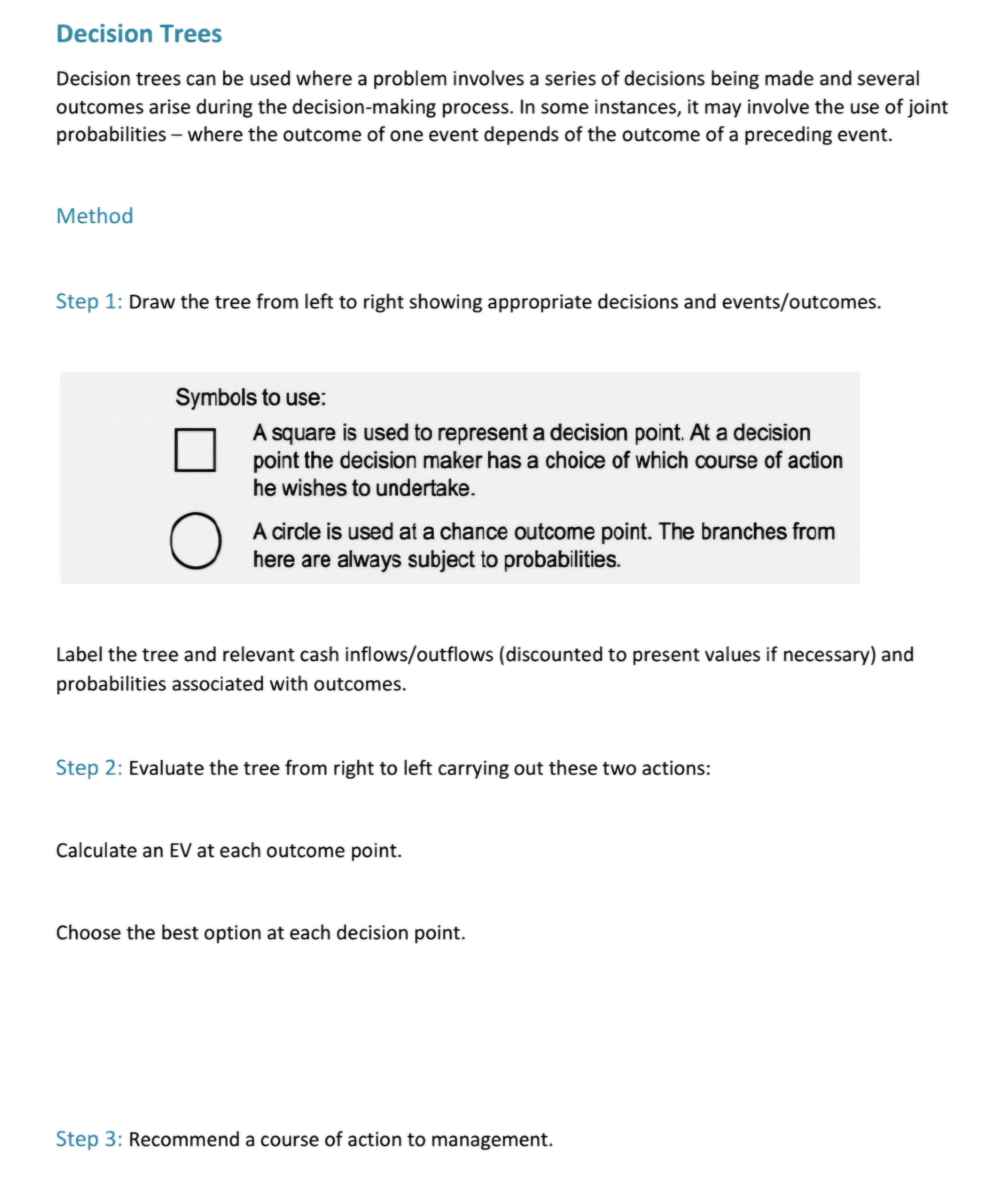
What are the 3 steps to a decision tree?
64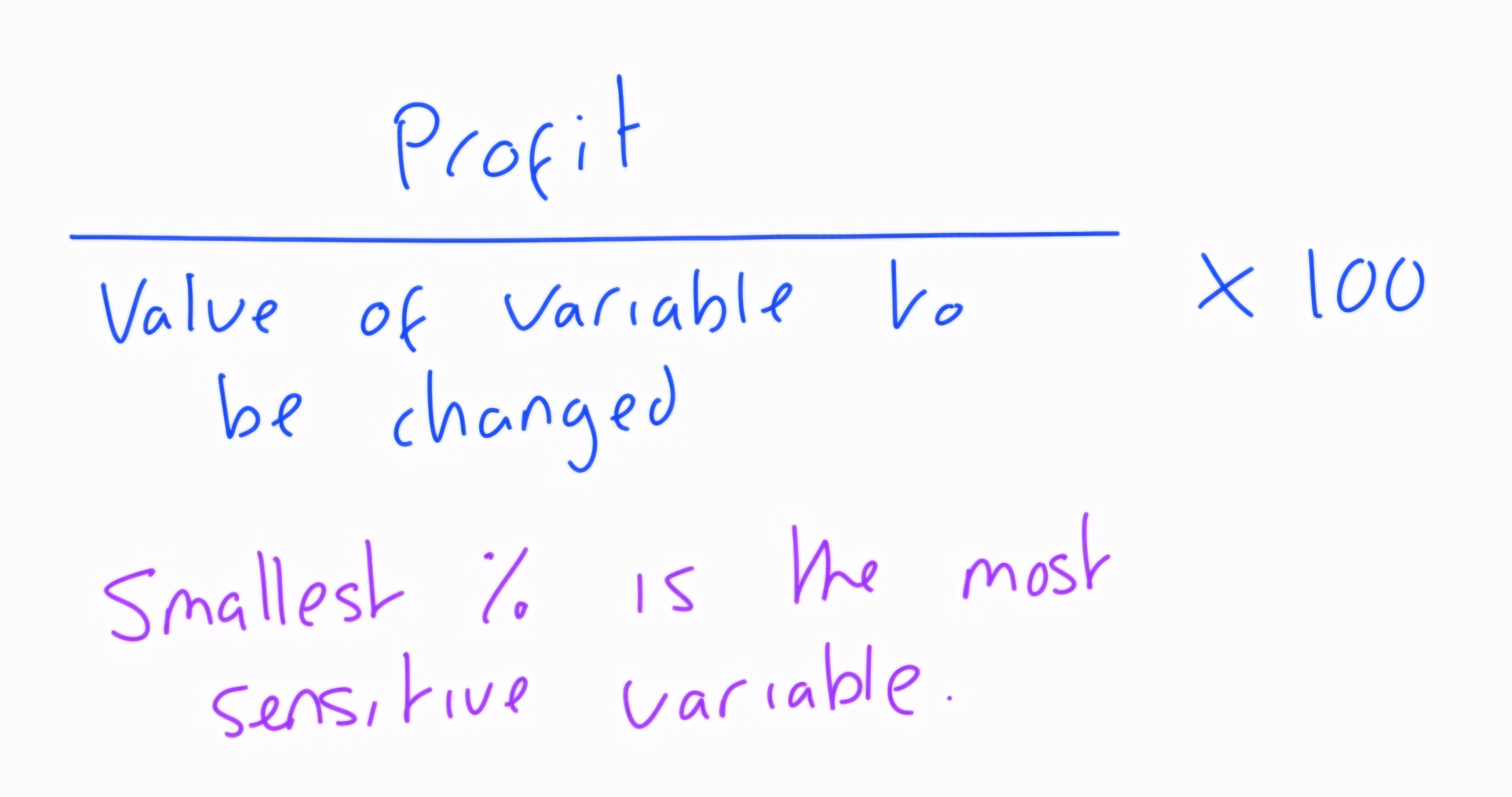
How do you calculate sensitivity?
65
How do you calcualte the sensitivity of sales VOLUME?
You do profit / CONTRIBUTION X 100
66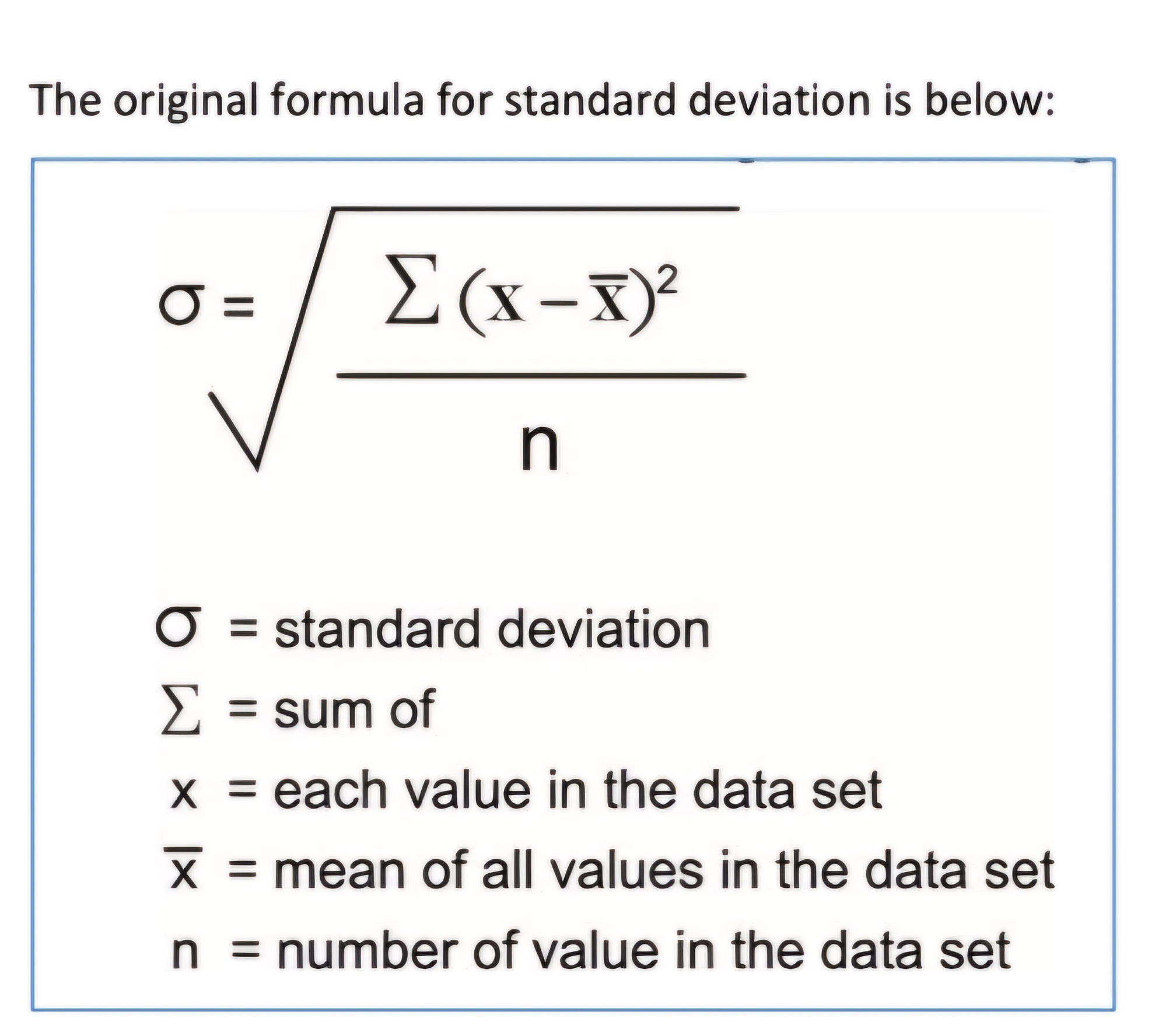
What is the original formula for calculating standard deviation?
67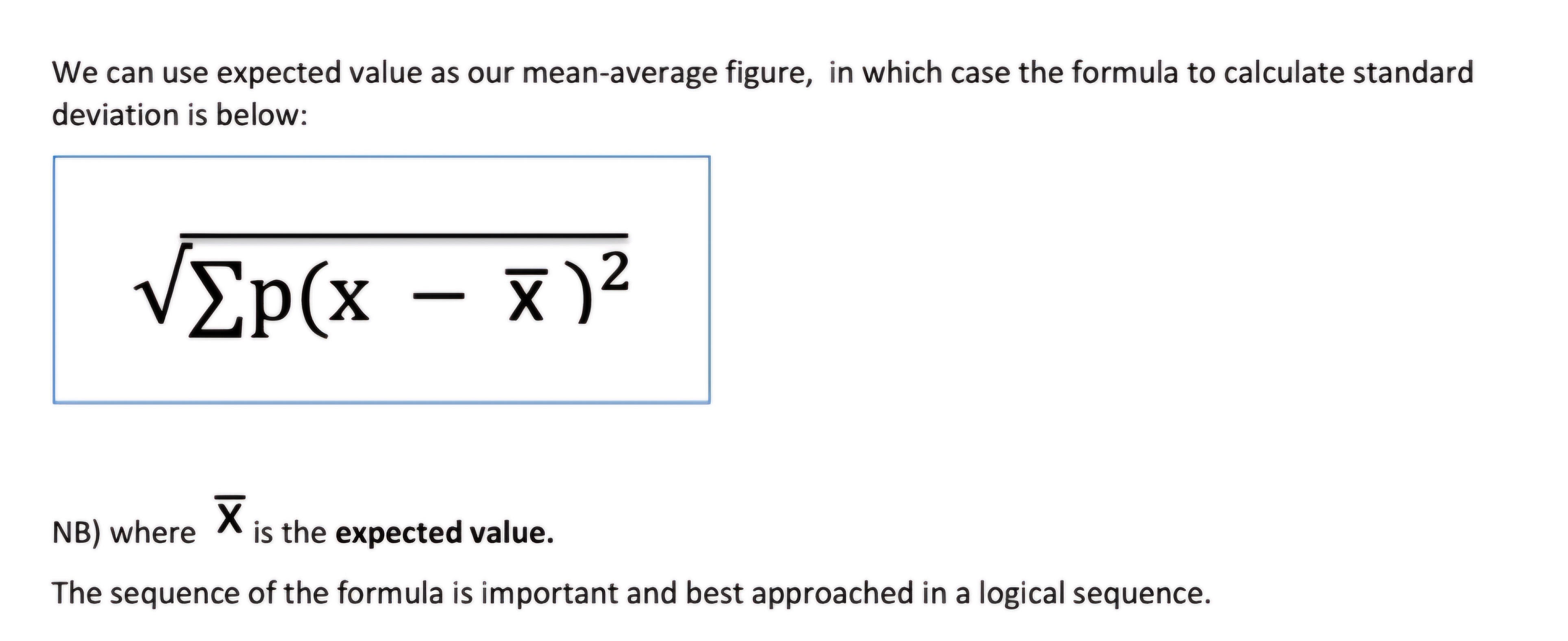
When using expected value as the mean average figure what is then the formula for standard deviation?
68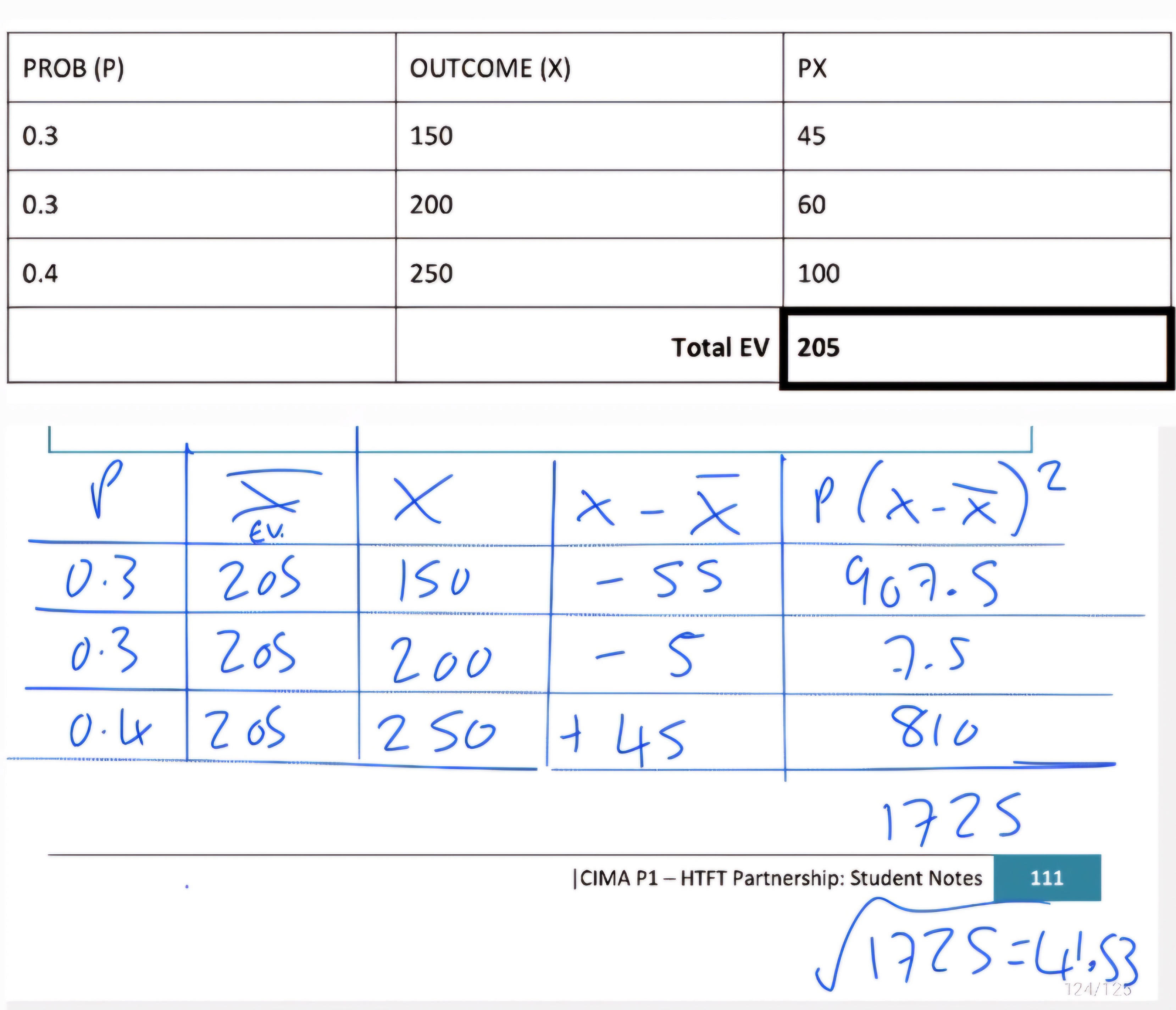
Example of how to calculate standard deviation
69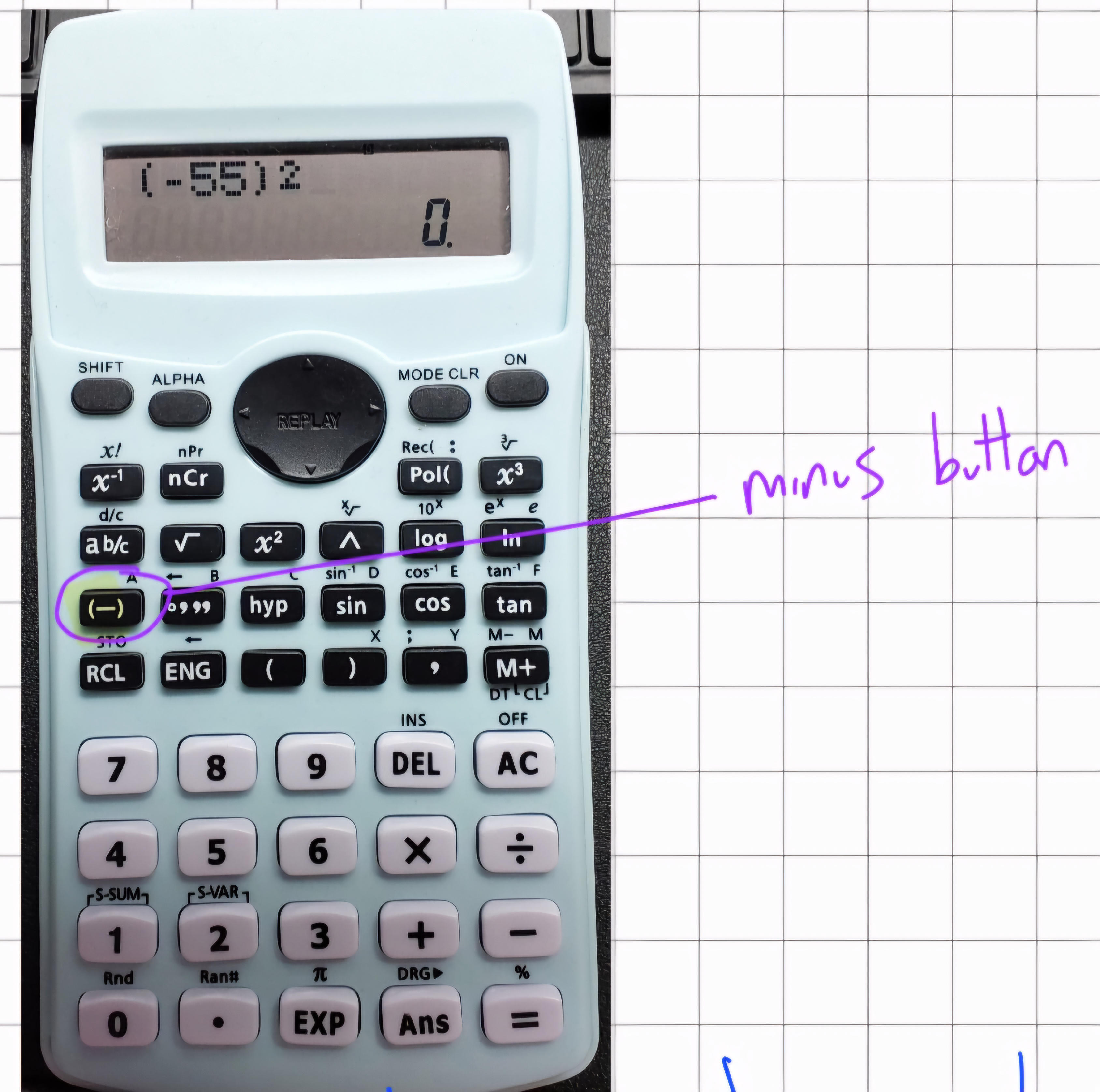
How do you square a minus figure in a calculator
70
How do you calculate the Co-efficient of Variation (CoV)
times by 100 to show as %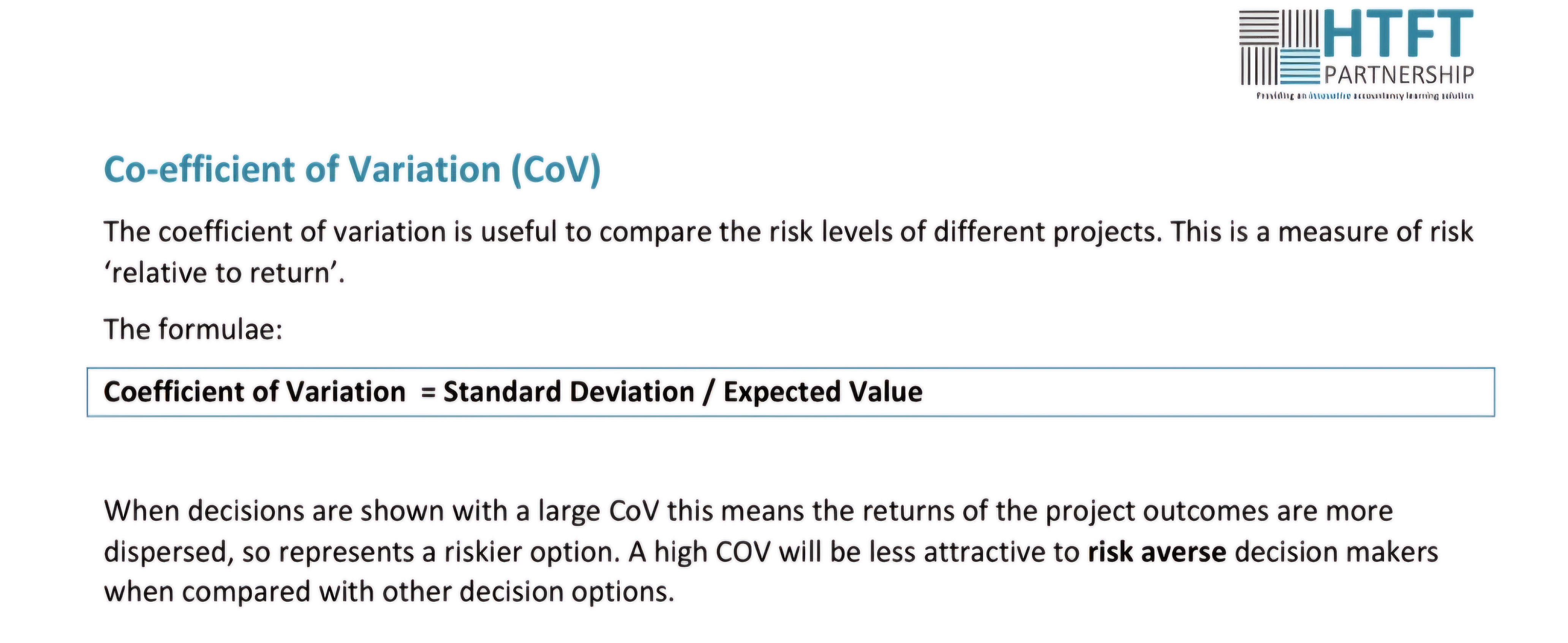
71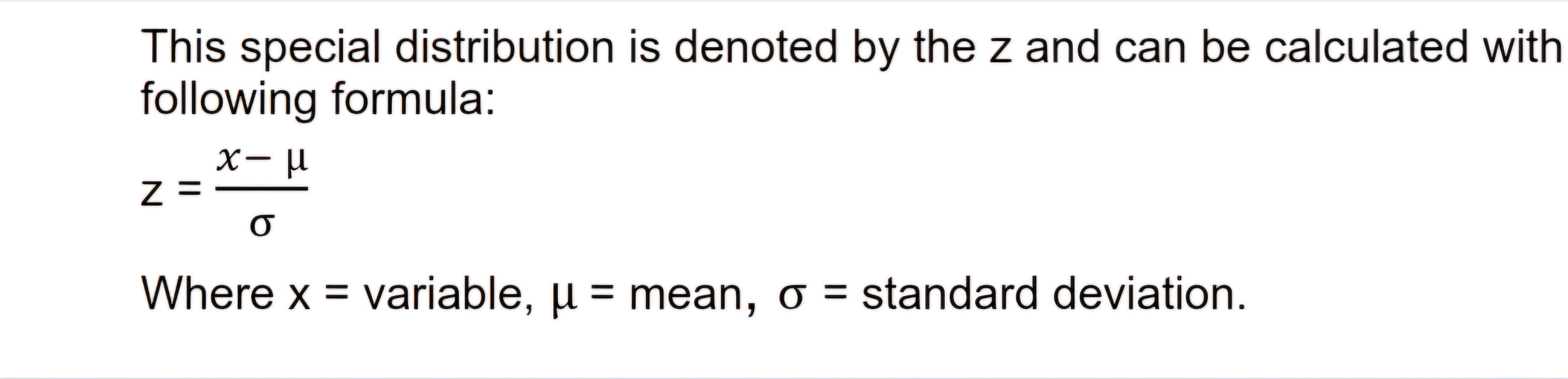
How do you determine probabilities using normal distributions?
72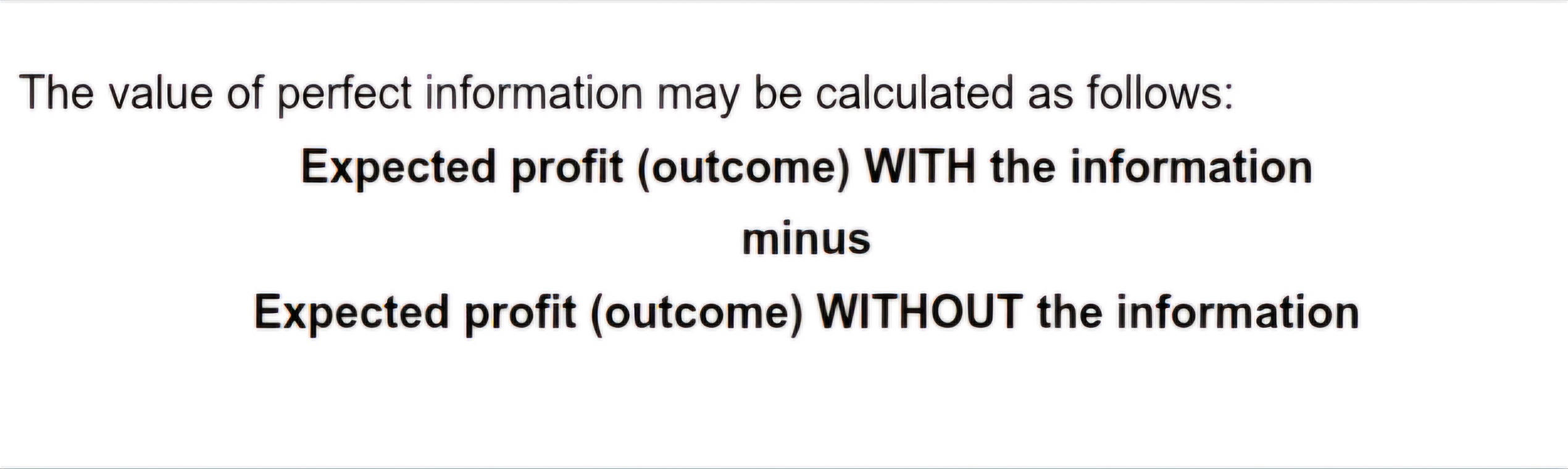
How do you calculate the value of perfect information ?