F2 Financial Instruments FOCUS
Study these flashcardsFree · spaced repetition · iPhone, Android, Mac & web
All cards
1
Why might irredeemable preference shares be treated as liabilities and not equity?
Because there is a mandatory obligation to pay a fixed dividend, making them function more like debt.
2
What is the key difference between ordinary shares and preference shares in terms of accounting classification?
Ordinary shares have no fixed obligation for payment, so they are equity; preference shares with fixed dividends or repayment obligations are liabilities.
3
If a company issues 5% cumulative irredeemable preference shares, how should it record them in its accounts?
Debit bank and credit financial liability, because despite being shares in legal form, the mandatory payment makes them debt in substance.
4
How are dividends on preference shares with mandatory payment obligations shown in financial statements?
As a finance cost (in profit & loss), not as dividends.
5
What is a compound (hybrid) financial instrument?
It is an instrument with both a liability component and an equity component—for example, a convertible bond that can be repaid or converted into shares.
6
How do you account for convertable bonds at initial measurement?
Use split accounting
Dr bank as normal,
calculate how much is a liability By finding the present value of the future payments (interest and principal) discounted at the market rate assuming no conversion. This means multiplying the principal by the interest rate given on sale of the bonds, then discounting using the rate of interest for similar debt without conversion right.
Then calculate the equity amount as the balancing figure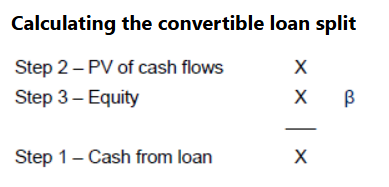
Dr bank as normal,
calculate how much is a liability By finding the present value of the future payments (interest and principal) discounted at the market rate assuming no conversion. This means multiplying the principal by the interest rate given on sale of the bonds, then discounting using the rate of interest for similar debt without conversion right.
Then calculate the equity amount as the balancing figure
7
How do you calculate the initial recognition and subsequent measurememnt of a convertable bond
Split accounting
Initial measurement at fair value ie present value of interest payments and principal is the debt portion
reminder that makes up to the amount received equals the equity
subsequesnt measurement at amortised costs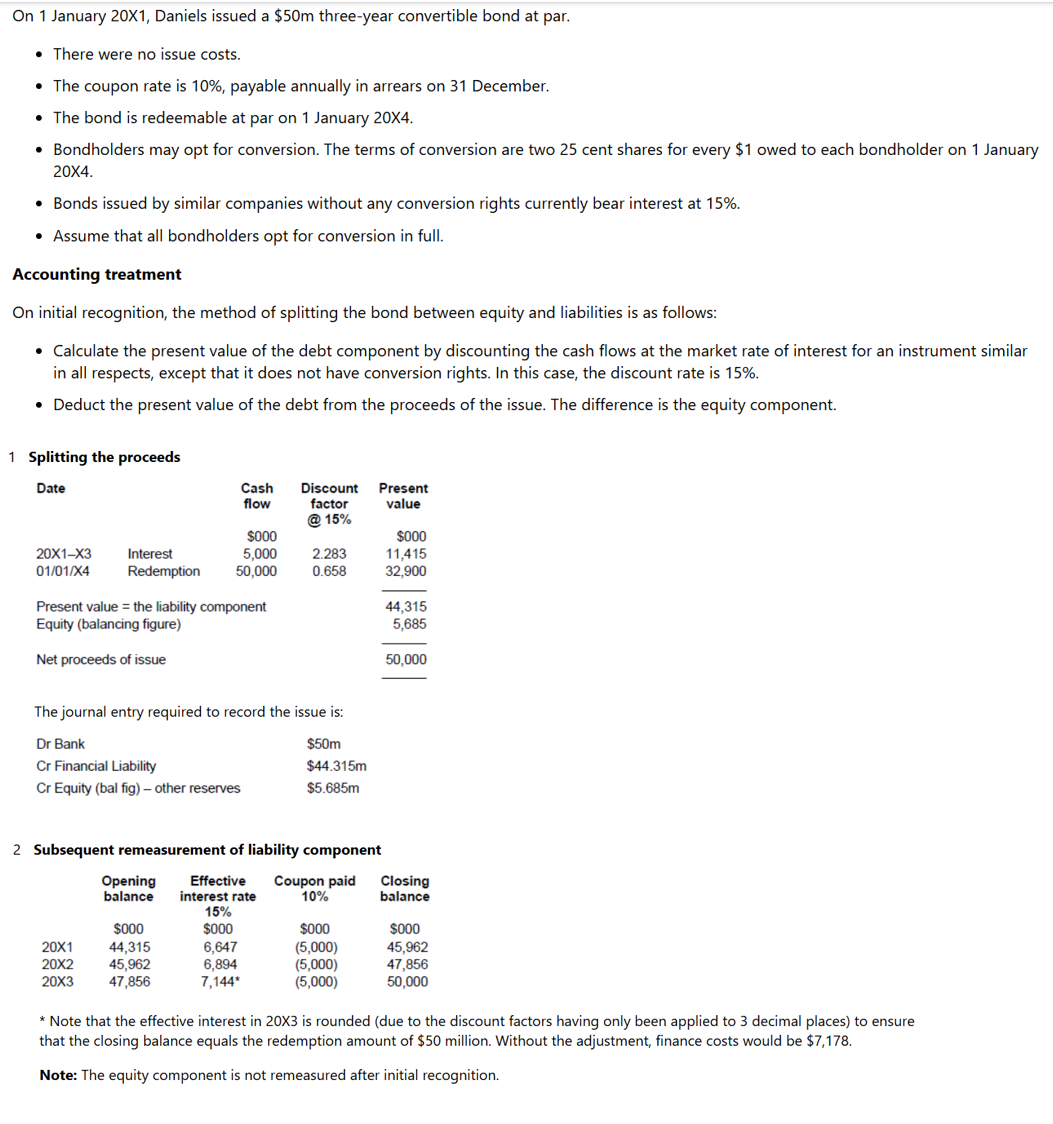
Initial measurement at fair value ie present value of interest payments and principal is the debt portion
reminder that makes up to the amount received equals the equity
subsequesnt measurement at amortised costs
8
Why is the number of shares each bond can convert into considered irrelevant at initial recognition?
Because actual conversion does not happen until a future date; the initial split only involves valuing the liability and using the rest as equity.
9
How are financial liabilities recognised as amortised cost initially measured?
They are measured at fair value, usually the transaction price minus any transaction costs.
10
How are financial liabilities classified as FVTPL initially measured
At full fair value. Costs are expensed to P&L
11
What journal entries are made when raising finance through debt?
Debit the bank with the net proceeds received and credit the liability with the net proceeds after deducting transaction costs.
12
What are the two categories for subsequent measurement of financial liabilities?
Fair value through the profit & loss (P&L) account, and 2) Amortised cost.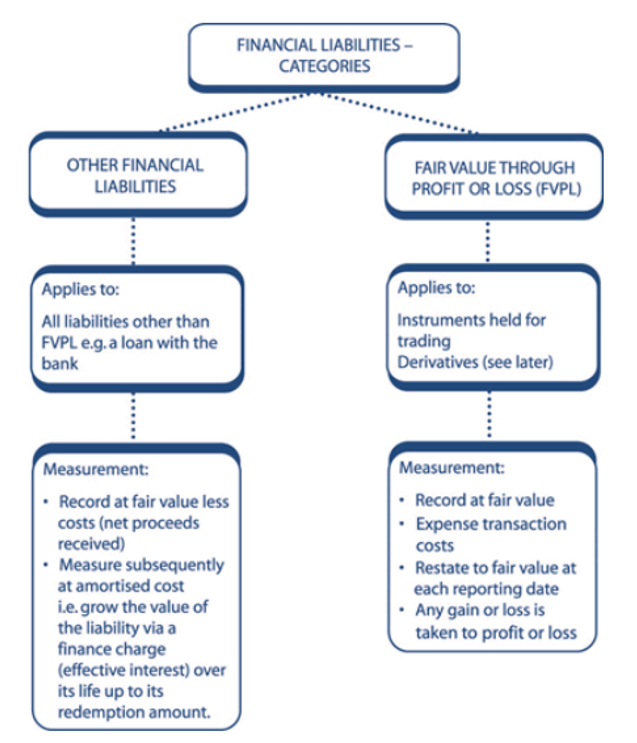
13
Which category is most financial liabilities measured at after initial recognition?
The majority (about 90-99%) are measured at amortised cost.
14
When is 'fair value through P&L' used for financial liabilities?
It is used when liabilities are held for trading purposes, such as derivatives.
15
How are interest/dividends from financial liabilities recorded?
They are accrued at the end of the year and recorded in the P&L account. If paid, the bank account is credited and the liability is reduced.
16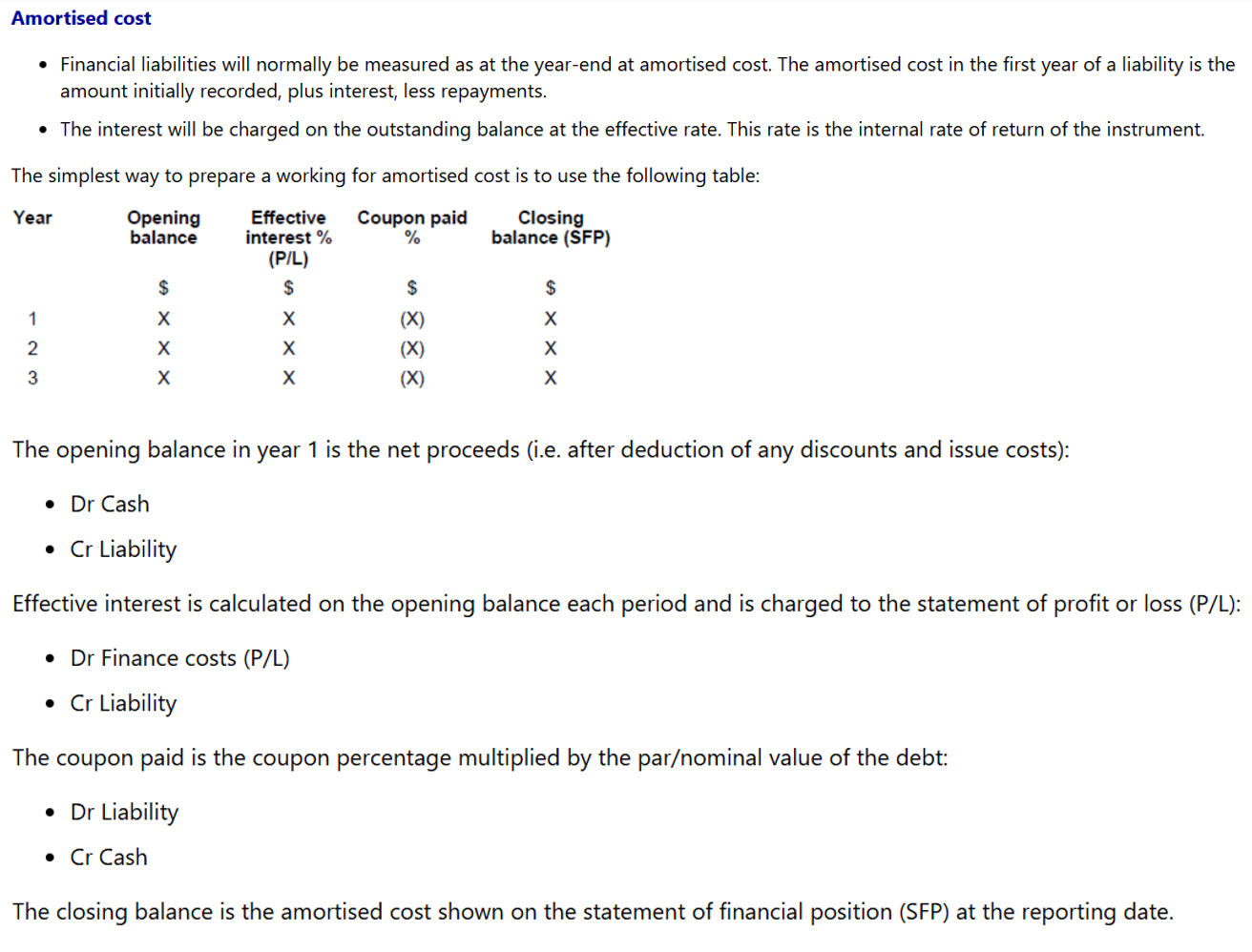
What is amortised cost
17
How do you calculate the carrying amount of financial liabilities using the amortised cost method
Each year you will add on the interest charge calculated using the carying balance times the effective interest rate, then deduct the payment which is the NOMINAL value of the shares times the coupon rate.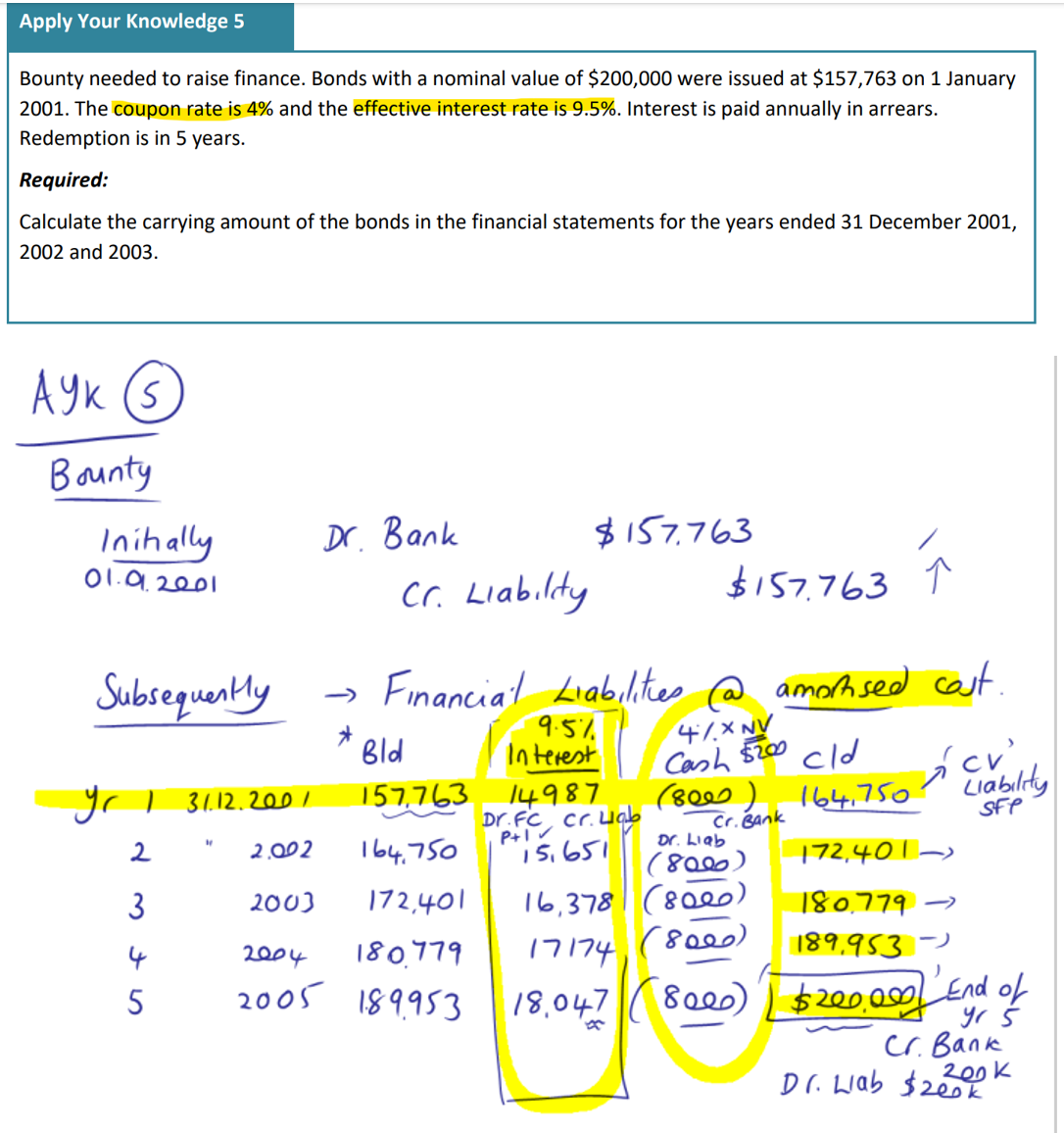
18
What are the 3 accounting standards that deal with financial instruments
19
What is Par value
Headline value of a debenture / bond. Can also be described as the nominbal value.
20
What is Coupon rate
Minimum interest repayment per annum based on par values
21
What is discount (financial liability context)
If the loan is issued at a discount, the cash amount received from the loan is less than the par value
22
What is the redemption date
Date of repayment of capital element of loan a.k.a the maturity date
23
What is premium
Extra amount repayable at redemption date based on par values
24
What is effective interest rate
The rate of interest that spreads the total finance costs, including discounts, premiums and coupon rate repayments, across the life of the loan at a constant rate.
25
What are the 2 types of financial assets?
Equity financial asset
Debt financial asset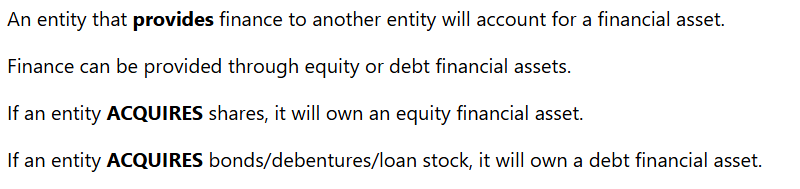
Debt financial asset
26
How should financial assets be initially recognised
At fair value. If FVTPL costs are expensed to P&L. If FVTOCI or amortised costs expenses are added to the asset
27
What are the options for subsequent measurement of an equity financial asset
FVTPL or FVTOCI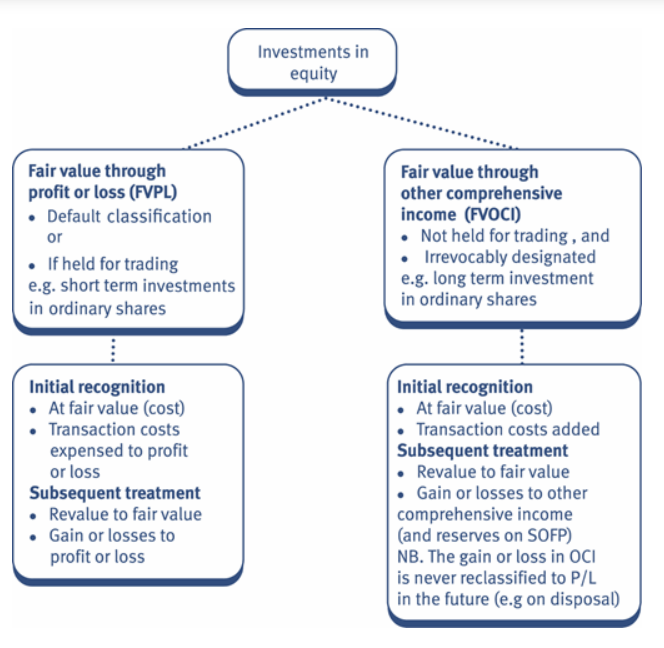
28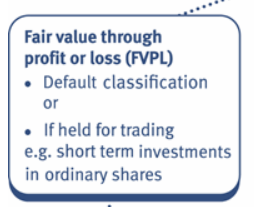
When does an equity financial asset get classified as FVPL
29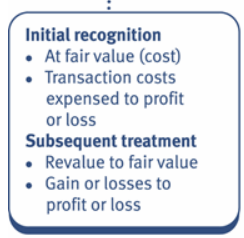
What is the initial measurement and subsequent measurment for an asset classified as FVPL
30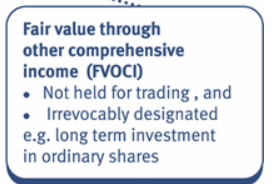
When does an equity financial asset get classified as FVOCI
31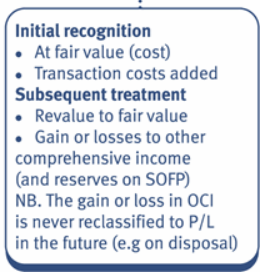
What is the initial measurement and subsequent measurment for an asset classified as FVOCI
32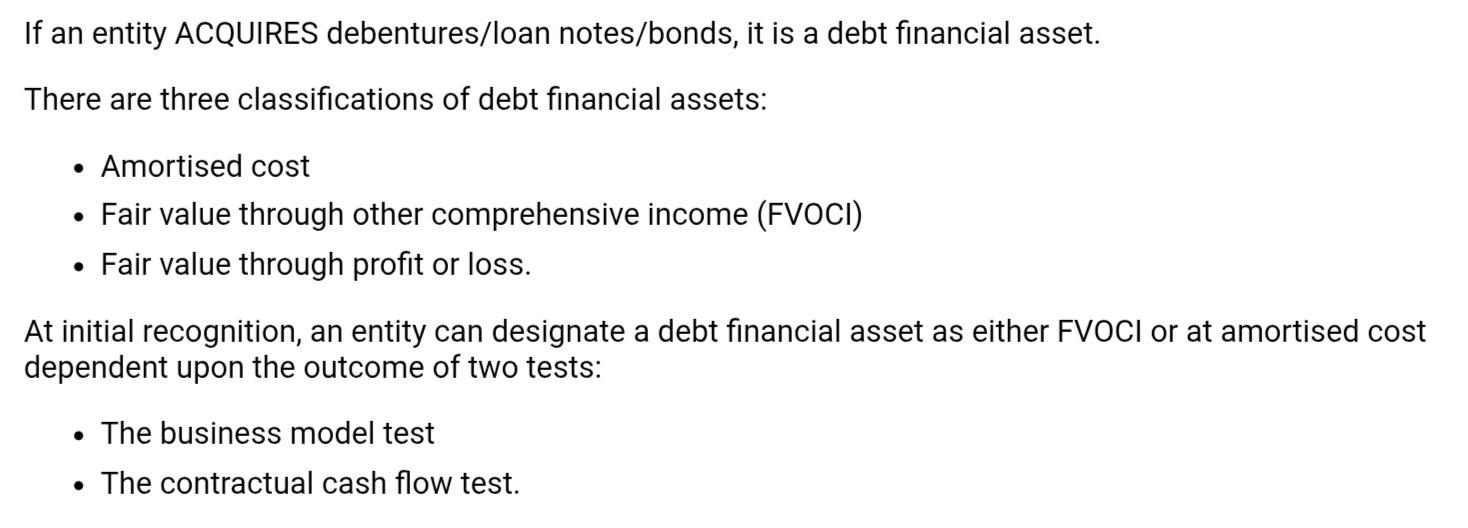
What are 3 classifications od debt financial assets
33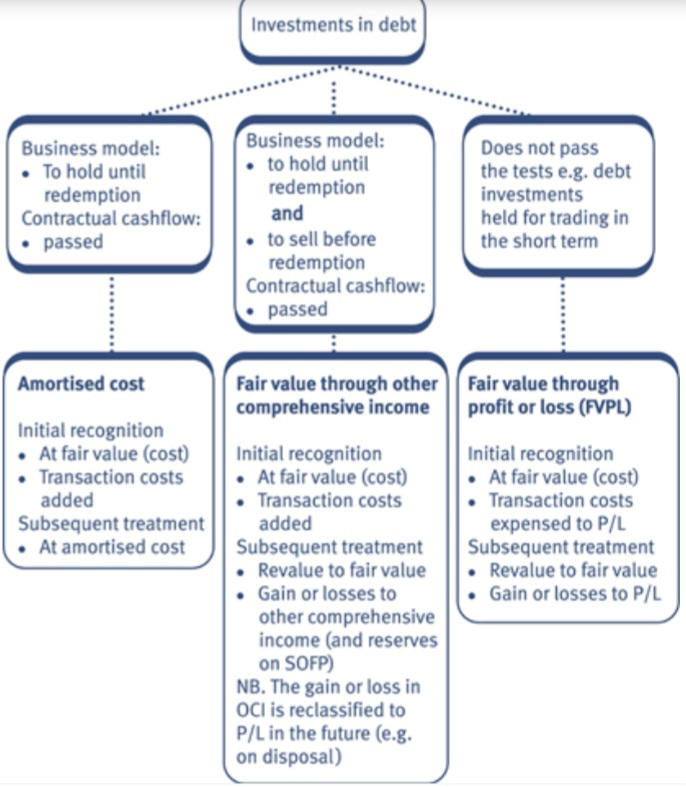
How do you choose a classification of debt financial assets
34
what is the business model test for debt financial assets
If planning to trade/sell the classify as FVTPL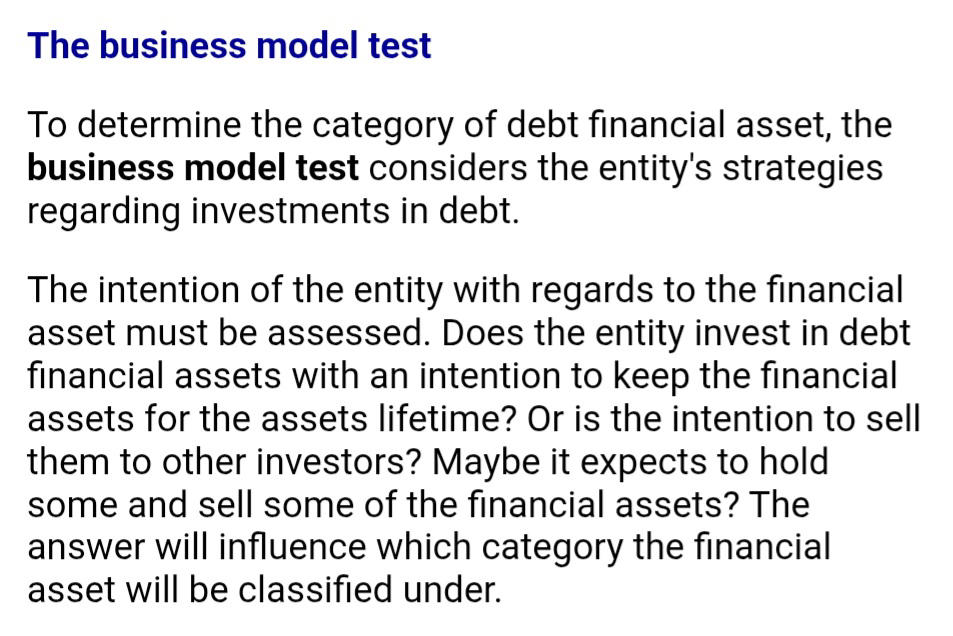
35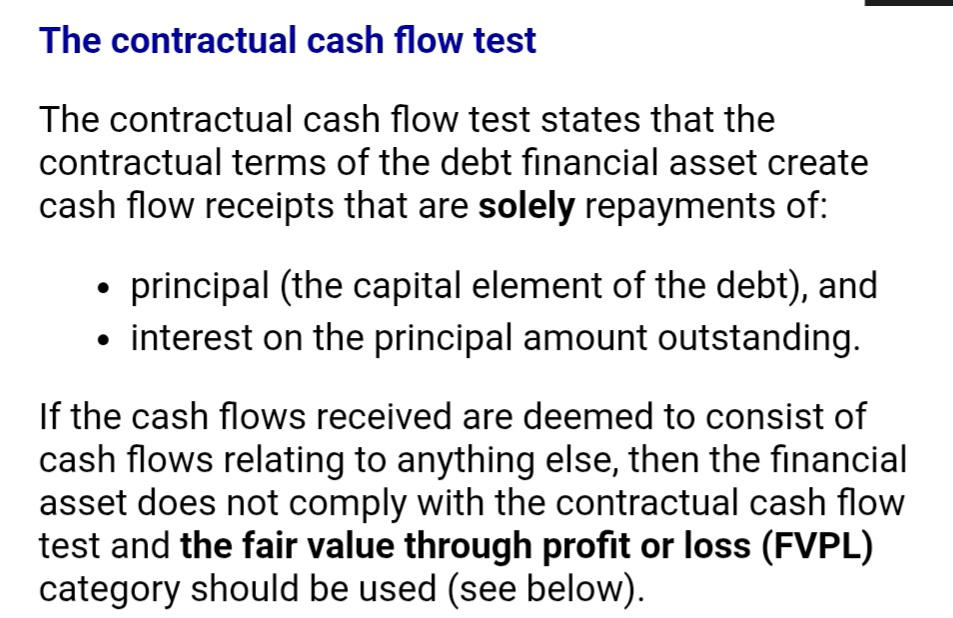
what is the contractual cashflow test for debt financial assets
36
when does a debt financial asset get classified as amortised cost
Business model is to hold until redemption
Contractual cashflow passed
Contractual cashflow passed
37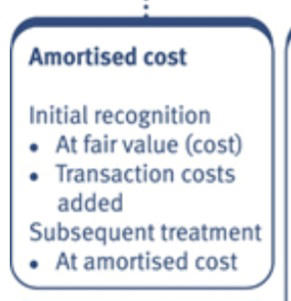
How do you measure at amortised cost
38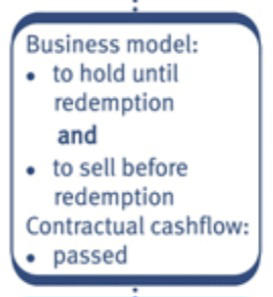
when does a debt financial asset get classified as FVOCI
39
how do you measure a debt financial asset as FVOCI
the debt financial asset still earns interest income and will receive coupon rate interest repayments. the interest income is calculated based upon the figures as if the debt financial asset were classified at amortised cost. the revalued fair value amounts do not affect the interest income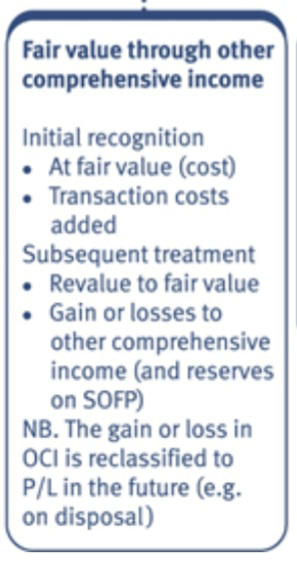
40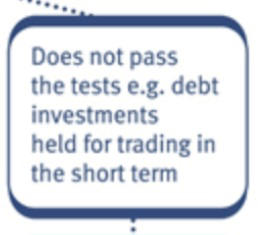
when do you classify a debt financial asset as FVPL
41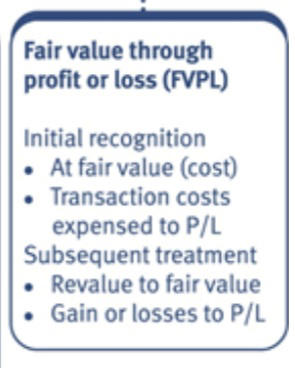
how do you classify a debt financial asset as FVPL
42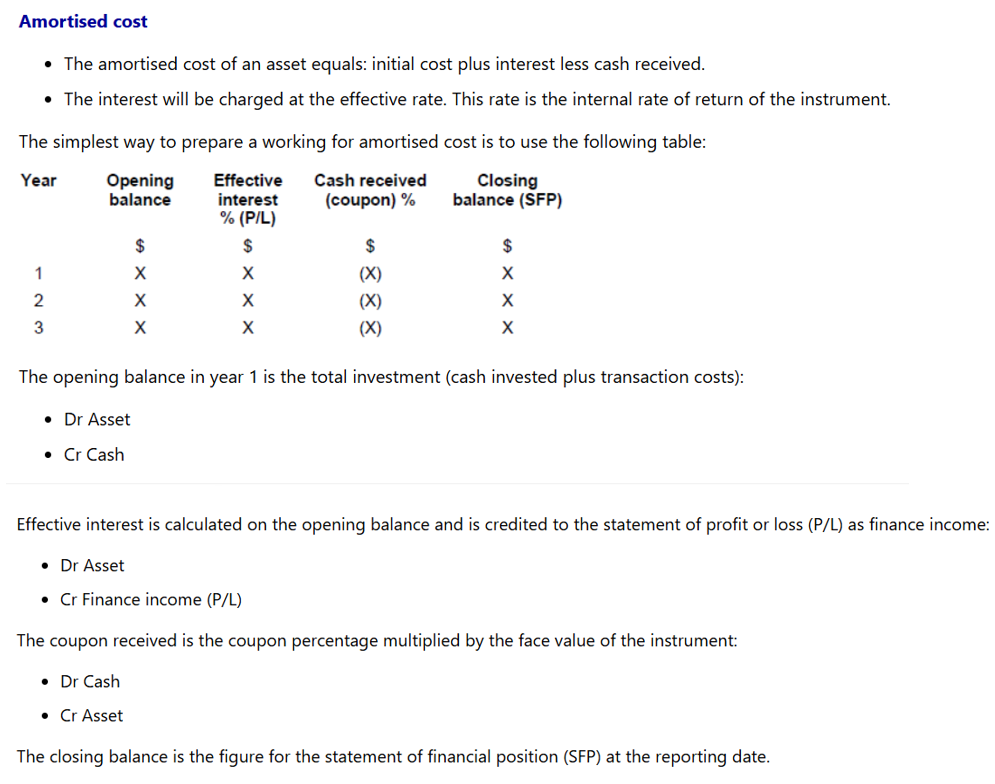
What is the process of amortised debt financial asset
43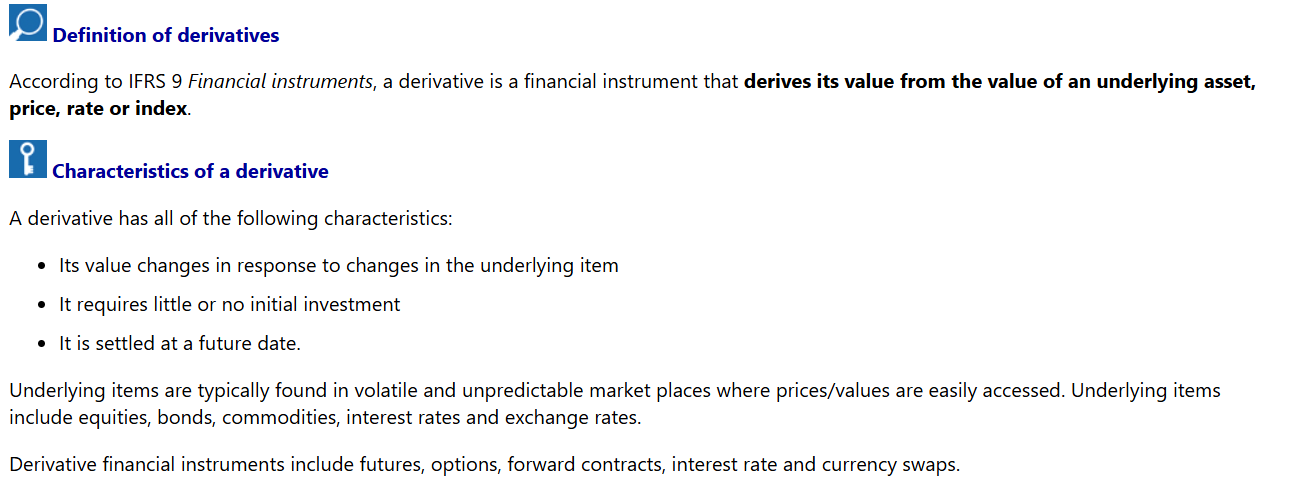
What are derivatives
44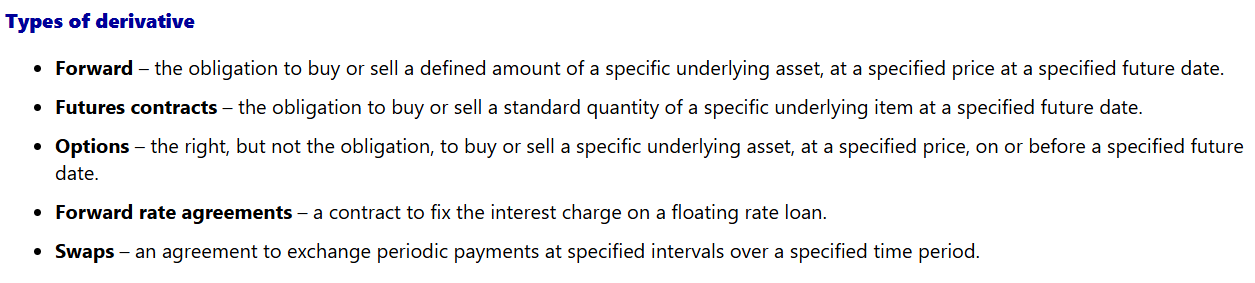
What are the types of derivatives
45
How are derivatives accounted for
always through FVPL
46
What is an irredeemable bond
Bonds that pay a fixed rate of interest to infinity. They have no redemption date
47
What is a redeemable bond
A bond that will be either paid back at par value or at a premium at a specified date