F2 Earnings Per Share
Study these flashcardsFree · spaced repetition · iPhone, Android, Mac & web
All cards
1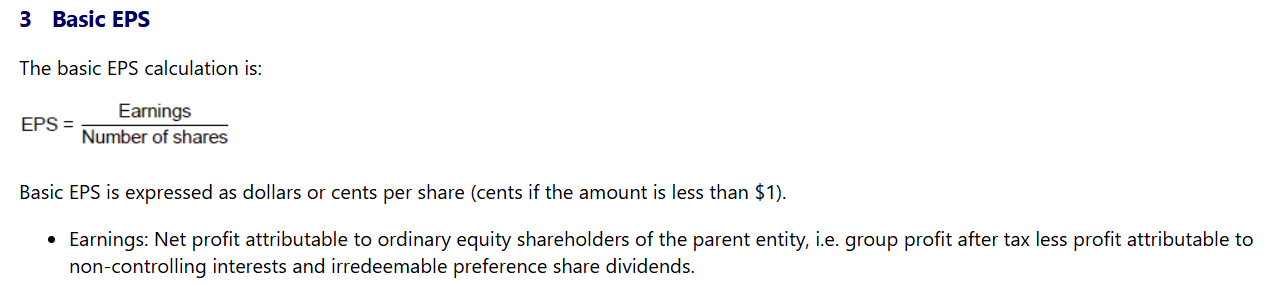
How do you calculate EPS (earnings per share)
2
Which standard covers earnings per share
IAS 33
3
What is Earnings Per Share (EPS) and why is it important for listed companies?
EPS is a measure of a company's profit allocated to each ordinary share. It is important because listed companies must publish EPS in their financial statements, and it helps investors evaluate company performance and compare with others.
4
Where is EPS reported in financial statements?
EPS is published at the foot of the statement of profit and loss account for listed companies.
5
How do preference dividends affect EPS calculation?
If classified as equity, preference dividends are deducted from profit after tax; if classified as liabilities, no further deduction is necessary as they are already included in finance costs.
6
What is the weighted average number of ordinary shares, and why is it used?
It's the average number of shares during the year, adjusted for changes from share issues. It ensures the EPS accurately reflects ownership over the period.
7
What is the P/E ratio and what does it indicate?
The Price/Earnings (P/E) ratio is the market value per share divided by EPS. It reflects how confident the market is in the company—higher ratios mean greater confidence.
8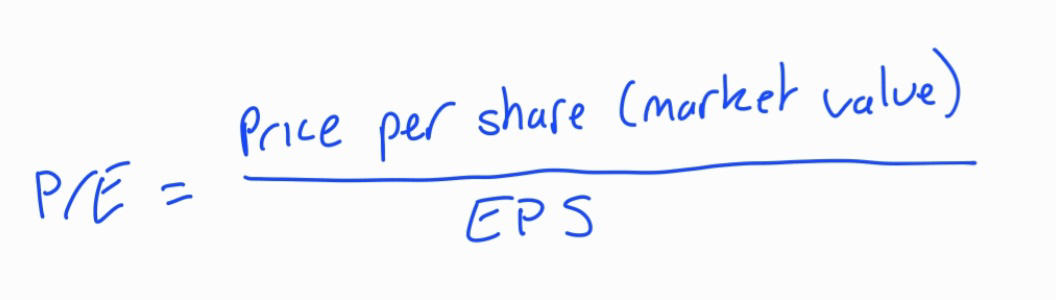
How do you calculate the P/E ratio
9
Do you need to deduct a redeemable preference share dividend from profit before tax in order to calculate EPS
No - because a redeemable preference share would have been classified as debt
10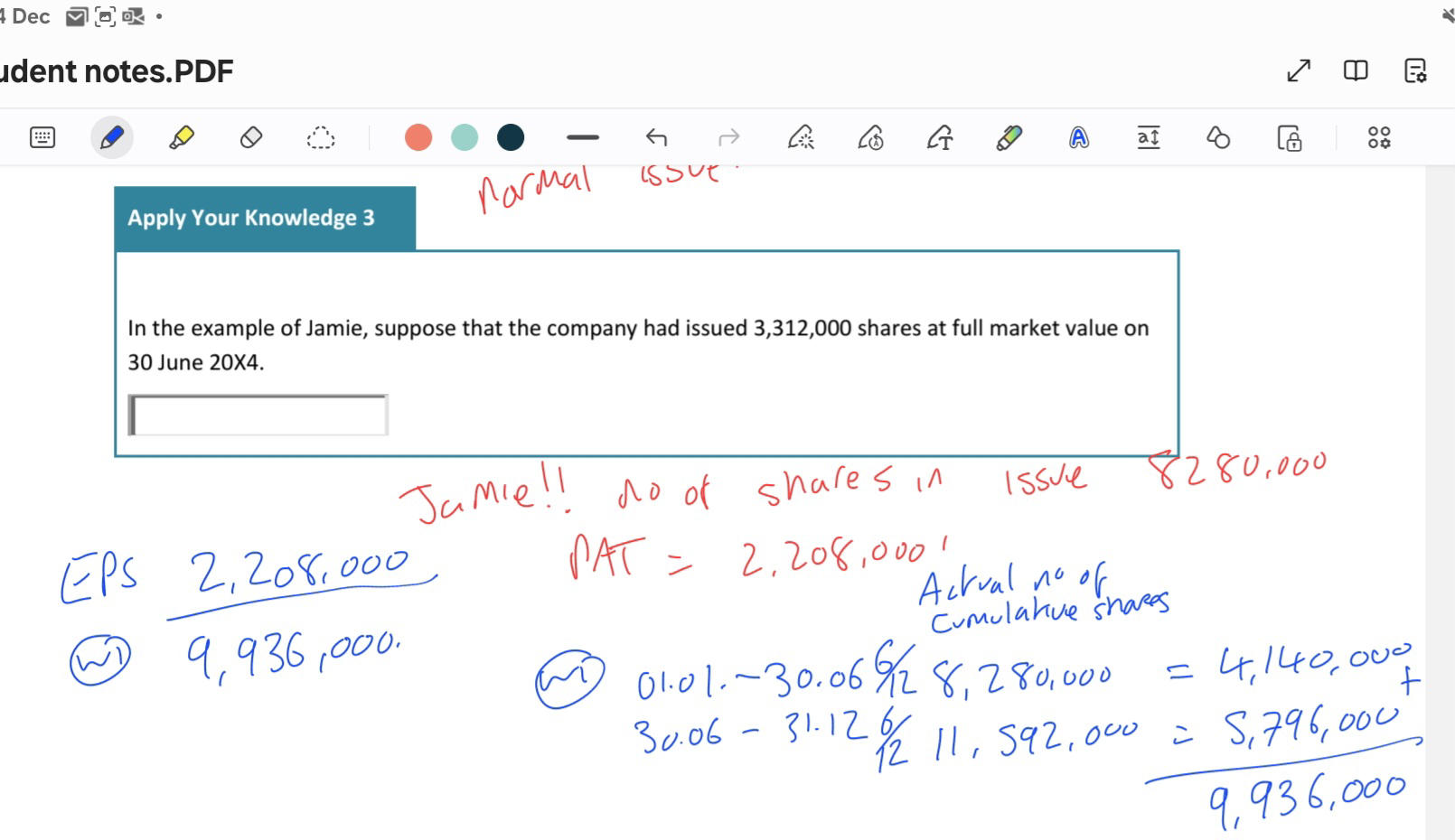
How do you calculate the weighted average of ordinary shares if there was a share issue during the year
11
How do you adjust the EPS calculation if there was a bonus issue of shares
As a bonus issue of shares does not bring in cash (given to existing shareholders)
add the additional shares onto the previous amount but DO NOT pro rater for the year.
Treat the bonus shares as if they have always been in issue
add the additional shares onto the previous amount but DO NOT pro rater for the year.
Treat the bonus shares as if they have always been in issue
12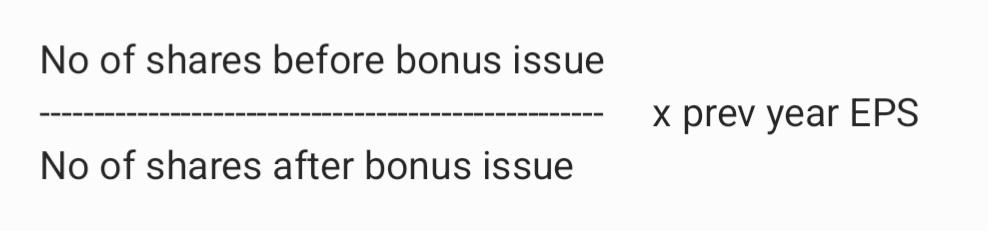
How do you calculate the restating of the previous years EPS when you have had a bonus issue in the current year
13
What is a rights issue?
An issue of shares that offered to existing shareholders at a lower price so is considered a mix of bonus and full price shares.
14
How do you calculate EPS when there has been a rights issue?
Calculate the weighted average of shares post issue as normal, but, with the pre issue before mutiplying by number of months of the year, multiply by the RIBF (rights issues bonus fraction)
15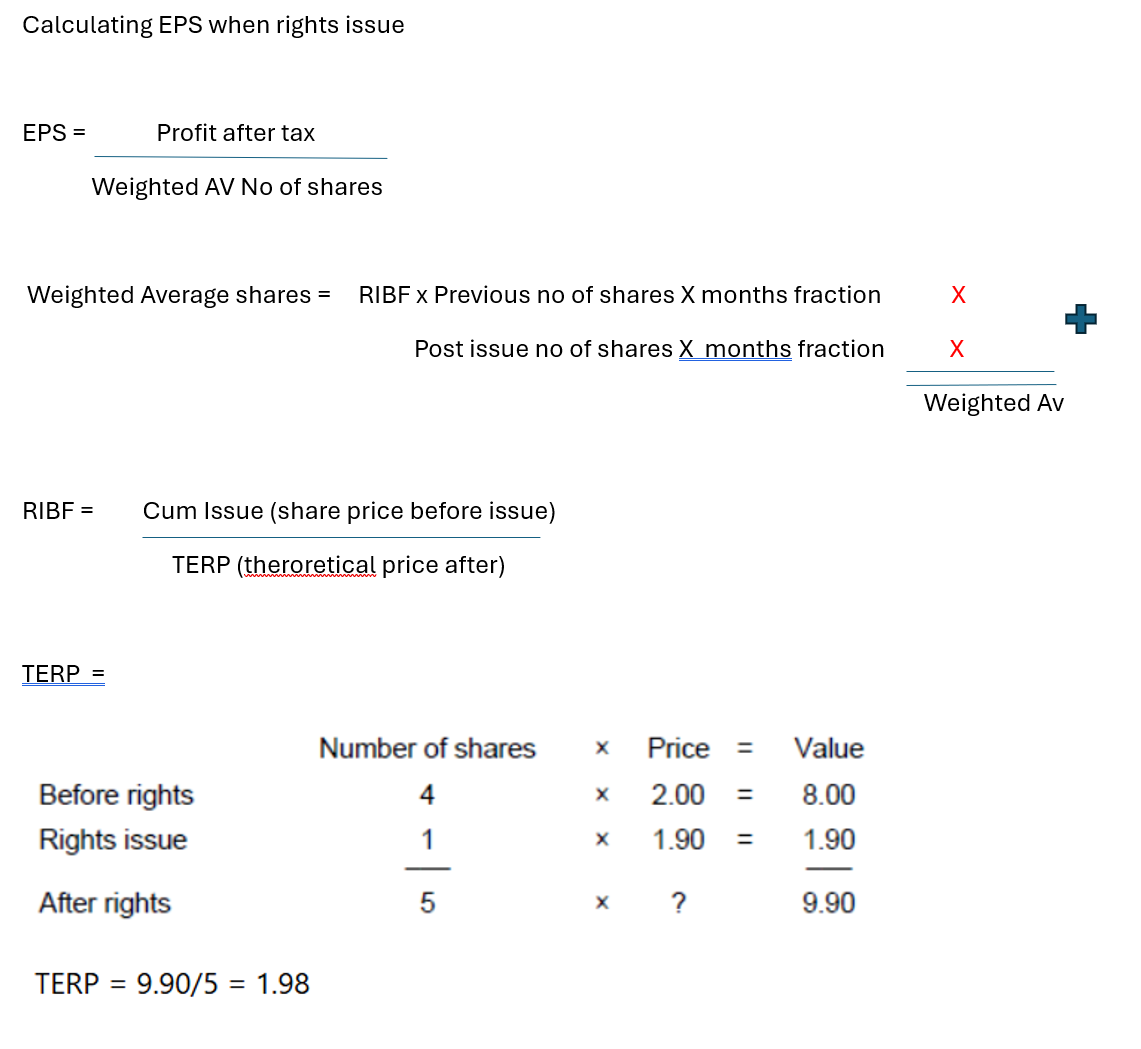
How do you calculate EPS when there has been a rights issue? Full process
16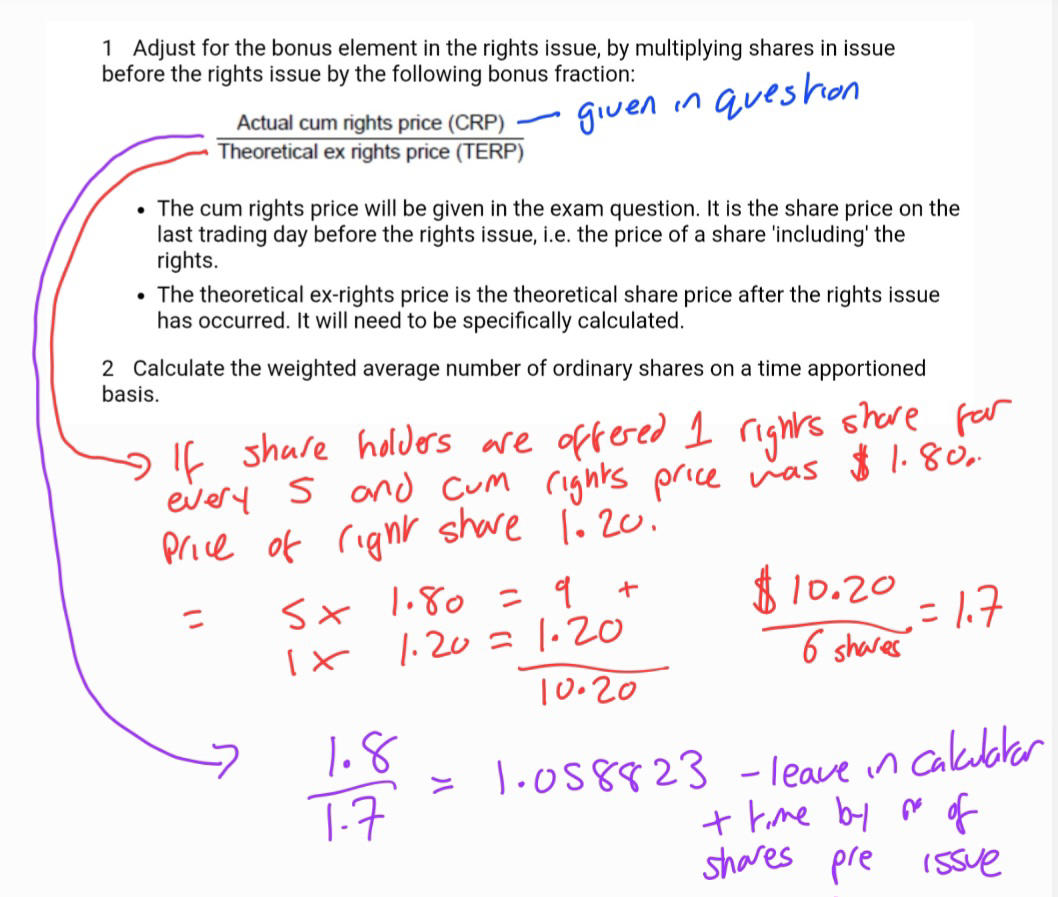
How do you calculate the RIBF (rights issue bonus fraction)
17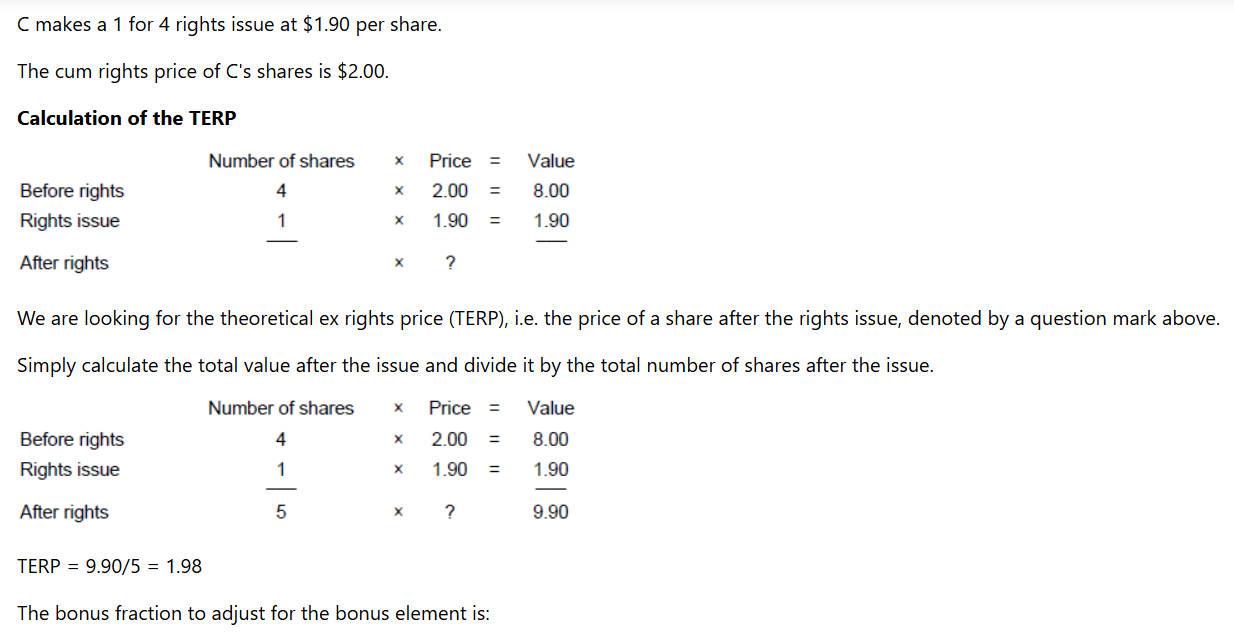
Example of RIBF calculation
18
If given the previous year EPS how do you calculate the restated EPS for comparison when there has been a rights issue?
Multiply last years EPS by an inverted RIBF 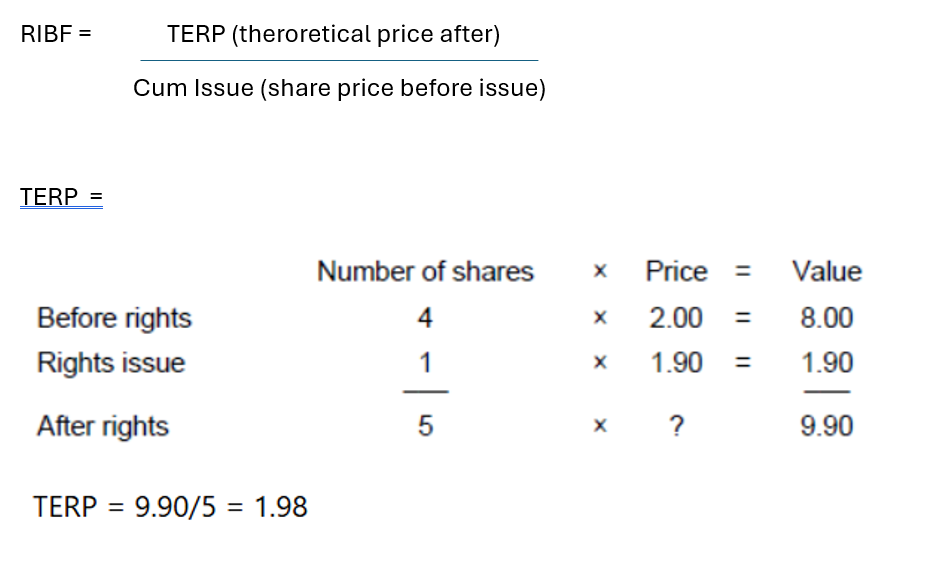
19
What is diluted earnings per share (DEPS)?
Diluted EPS shows the lowest possible EPS a company could report if all convertible securities (like options or convertible debt) are exercised, potentially increasing the number of shares.
20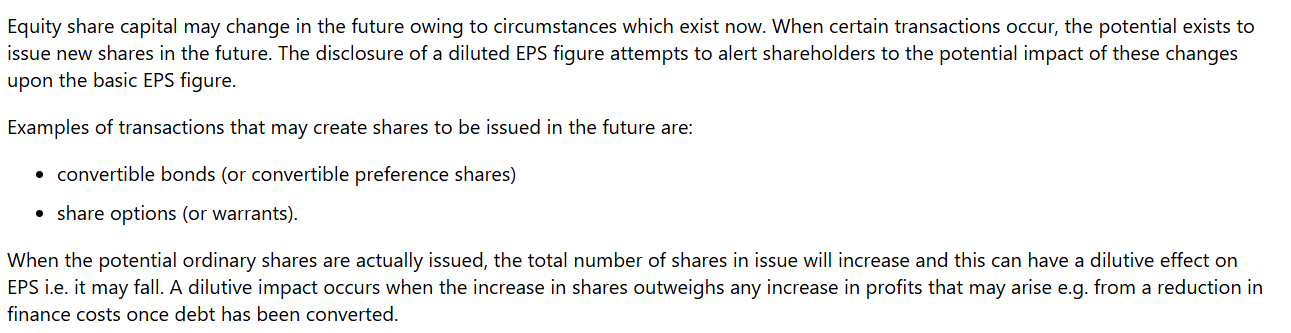
Explain DEPS
21
How do you calculate DEPS
22
When must a company disclose diluted EPS?
When it has potential ordinary shares outstanding that could reduce (dilute) basic EPS if exercised or converted.
23
Name two common scenarios where diluted EPS is relevant.
1) Convertible debt or preference shares; 2) Share options granted that could result in new shares in the future.
24
How do convertible bonds and convertible preference shares differ in DEPS calculation
Interest on convertible bonds is tax deductable, interest on preference shares is not. So if you increase the earnings for interest not paid for a convertable bond you have to deduct the tax from the extra income.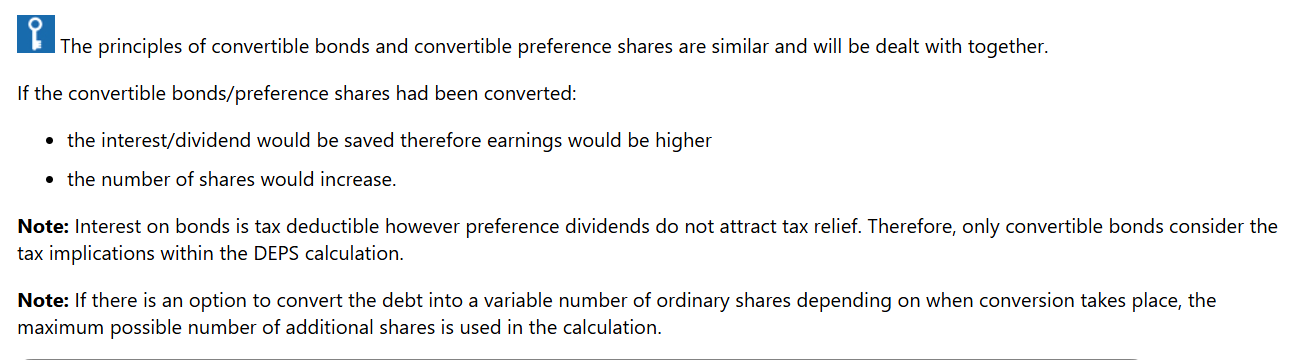
25
How do you treat anti-dilutive instruments in diluted EPS calculation?
Ignore any instruments that would increase EPS ("anti-dilutive"); only include those that could decrease EPS.
26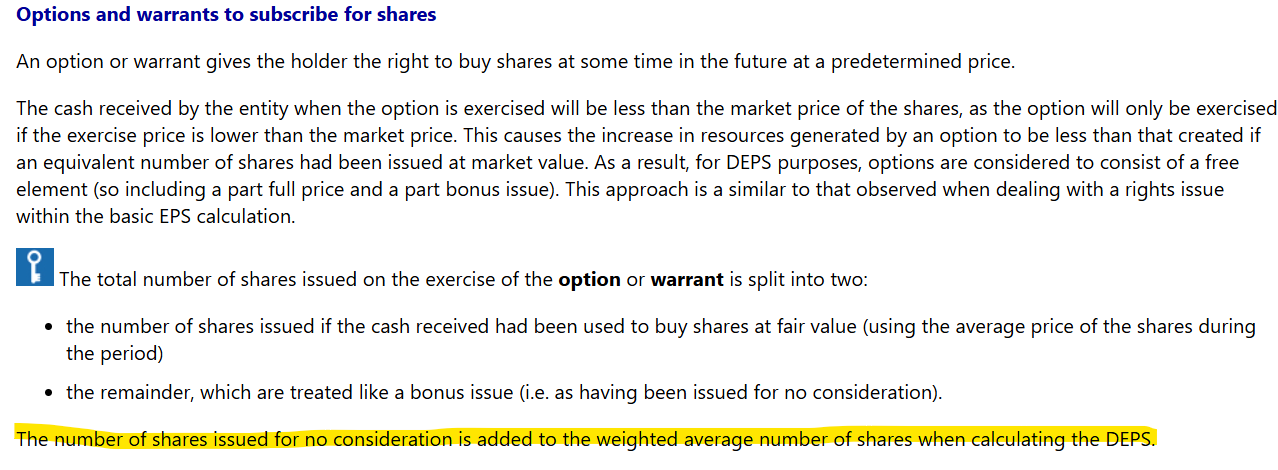
Explain options and warrents in the context of DPS
27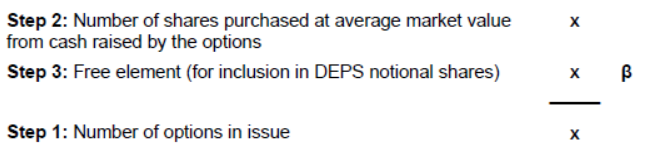
How do you calculate the "bonus issue" portion of an option or warrent for inclusion in the DEPS calculation?
28
How do you calculate EPS when there has been a normal issue of shares and then a bonus issue of shares
First calculate the weighted average for the year ignoring the bonus issue, ie weighted average of B/f shares plus normal issue. Then calculate the number of bonus shares issued based on the weighted average figures and add them together