E2 Managing Organisational Relationships
Study these flashcardsFree · spaced repetition · iPhone, Android, Mac & web
All cards
1
Based on style and purpose what can communication be classed as
* Formal communication
* Informal communication
* Informal communication
2
Based on the communication channel what can communication be?
* Verbal
* Non verbal
* Non verbal
3
What is the process of communication?
1. Sender
2. Encoding
3. Channel
4. Decode
5. Receiver
6. Feedback
Noise can be throughout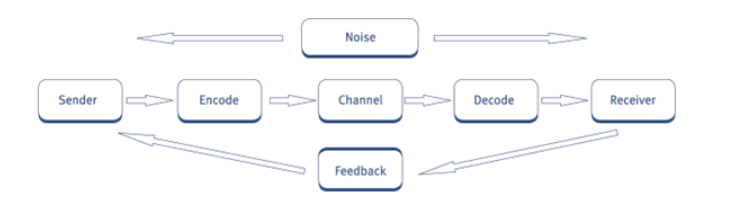
2. Encoding
3. Channel
4. Decode
5. Receiver
6. Feedback
Noise can be throughout
4
In the process of communication explain SENDER
The SENDER is the entity that conveys or sends the message
5
In the process of communication explain ENCODING
ENCODING is a process through which the message is symbolised
6
In the process of communication explain CHANNEL
CHANNEL is the medium through which message is being sent. (email, face-to-face conversations, meetings, telephone calls etc).
7
In the process of communication explain DECODING
DECODING is the process in which the message is translated and meaning is generated out of it. (problems can occur here due to interpretation).
8
In the process of communication explain RECEIVER
RECEIVER. The receiver is the entity that receives the message
9
In the process of communication explain FEEDBACK
FEEDBACK. Is the process through which receiver sends their response.
10
In the process of communication explain NOISE
NOISE is anything which interferes with the communication process and stops the message being received and understood by the receiver as it was intended.
11
What are the types of communication noise?
* Environmental/physical noise
* Physiological noise
* Semantic noise
* Psychological noise
* Physiological noise
* Semantic noise
* Psychological noise
12
What is Environmental/physical noise?
Physically disrupts communication.
Loud music
Phones
Chatting
Loud music
Phones
Chatting
13
What is Physiological noise?
Physical barriers
Deaf
Poor sight
Speech impairment
Deaf
Poor sight
Speech impairment
14
What is Semanic noise?
Caused by sender and receiver having a different understanding of the words.
Different dialects/languages
Using jargon
Words with several meanings
Different dialects/languages
Using jargon
Words with several meanings
15
What is Psycological noise?
The attitude of the sender and receiver
Anger
Sadness etc
Anger
Sadness etc
16
How does a sender create barriers to communication?
* Not being clear
* Ommitting information
* Poor word choice
* Using words that provoke an emotional response
* Using jargon
* Using innapropriate medium
* Sending too much information
* Sending mixed messages
* Ommitting information
* Poor word choice
* Using words that provoke an emotional response
* Using jargon
* Using innapropriate medium
* Sending too much information
* Sending mixed messages
17
How does a receiver create barriers to communication?
* Not in an appropriate state to receive the message
* Not wishing to receive the message
* Filtering out elements they dont want to deal with
* Information overload
Mindset that does not admit the substance of the message
* Not wishing to receive the message
* Filtering out elements they dont want to deal with
* Information overload
Mindset that does not admit the substance of the message
18
How can a sender overcome barriers to communication
* Have a clear objective
* Plan the communication
* Think about the receiver and their situation
* Anticipate reactions to the message
* Practice using the channels of communication
* Seek and work with the feedback
* Plan the communication
* Think about the receiver and their situation
* Anticipate reactions to the message
* Practice using the channels of communication
* Seek and work with the feedback
19
How can a receiver overcome barriers to communication?
* Consider their contribution
* Listen attentively
* Check out anything that is vague
* Give feedback
* Listen attentively
* Check out anything that is vague
* Give feedback
20
What are the digital tools for communication?
* Tracking & case software (tracks customer/staff queries)
* Internal blogs
* Discussion forums
* Intranet
* Chat & private messaging
* Internal blogs
* Discussion forums
* Intranet
* Chat & private messaging
21
What is data visualisation?
Data visualisation allows large volumes of complex data to be displayed in a visually appealing and accessible way that facilitates the understanding and use of the underlying data.
22
What are the steps to an effective meeting?
* Determine the purpose of the meeting
* Establish who needs to attend
* Determine the agenda in advance
* Make suitable arrangements for location and time
* Facilitate discussion
* Manage the plan of action
* Summarise
* Publish results/minutes
* Establish who needs to attend
* Determine the agenda in advance
* Make suitable arrangements for location and time
* Facilitate discussion
* Manage the plan of action
* Summarise
* Publish results/minutes
23
What are the roles of team members in a meeting?
* Facilitator
* Chair
* Secretary/administrator
* Protagonists
* Antagonists
* Chair
* Secretary/administrator
* Protagonists
* Antagonists
24
What is a facilitator in a meeting?
sets the agenda, ensures the objectives of the meeting are being met
25
What does the chair do in a meeting?
Makes sure the agenda is being followed and all members participate equally
26
What does the secretary/administrator do in a meeting?
Takes minutes and distributes them in a timely manner
27
What does a protagonist do in a meeting?
Positive supporter
28
What does an antagonist do in a meeting?
Disagreement and a negative attitude to team members
29
What are the problems with meetings?
* Inappropriate chairperson
* Objectives of meeting undefined or unclear
* Lack of interest in meeting
* Too much talk
* Attendees cannot reach agreement on issues
* Action points from previous meeting not carried out
* Minutes too long or too short
* Objectives of meeting undefined or unclear
* Lack of interest in meeting
* Too much talk
* Attendees cannot reach agreement on issues
* Action points from previous meeting not carried out
* Minutes too long or too short
30
How can you avoid having an innapropriate chair in a meeting?
31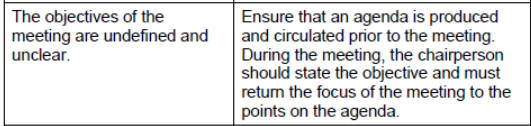
How can you avoid having unclear objectives in a meeting?
32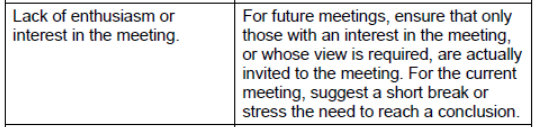
How can you avoid a lack of interest in a meeting?
33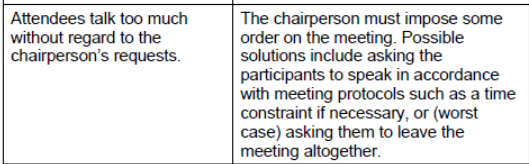
How can you avoid too much talk in a meeting?
34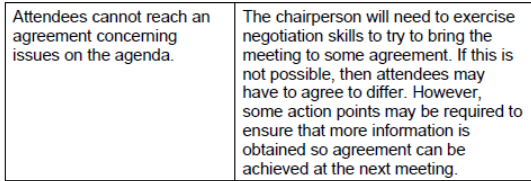
How can you avoid attendees not reaching an agreement in a meeting?
35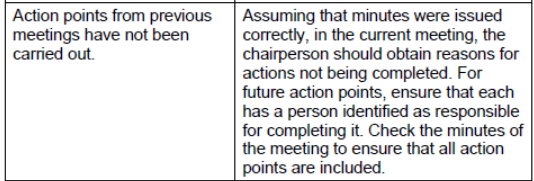
How can you avoid action points from previous meeting not being carried out?
36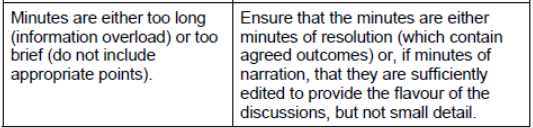
How can you avoid minutes being too long or short?
37
What is INFLUENCE
38
What is PURSUASION
Persuasion is a stronger form of influence. While influence can be direct or indirect, intentional or unintentional, persuasion is always direct and intentional. The aim of influence could be to inspire someone to buy in to an idea or make a particular decision, while the aim of persuasion is to change a person, or group's attitude or behaviour towards something or someone. The person using persuasion has a clear objective and is set on achieving it by getting others to support them. Persuasion falls short of telling or ordering someone to do something, but may use coercion as it attempts to get the other person to agree, albeit perhaps under duress.
39
What is NEGOTIATION
40
What is direct influence?
41
What is indirect influence?
42
What are Caldini's 6 principals of influence?
* Reciprocity
* Commitment
* Social Proof
* Liking
* Authority
* Scarcity
* Commitment
* Social Proof
* Liking
* Authority
* Scarcity
43
In Caldini's principals of influence explain RECIPROCITY
44
In Caldini's principals of influence explain COMMITMENT
45
In Caldini's principals of influence explain SOCIAL PROOF
46
In Caldini's principals of influence explain LIKING
47
In Caldini's principals of influence explain AUTHORITY
48
In Caldini's principals of influence explain SCARCITY
49
What are the 3 characteristics of negotiation?
1 Conflict of interest between two or more parties. What one wants is not necessarily what the others want.
2 No established set of rules for resolving conflict, or the parties prefer to work outside of an established set of rules to develop their own solution.
3 Parties prefer to search for an agreement rather than to fight openly, to have one side capitulate, to break off contact permanently, or to take their dispute to a higher authority.
2 No established set of rules for resolving conflict, or the parties prefer to work outside of an established set of rules to develop their own solution.
3 Parties prefer to search for an agreement rather than to fight openly, to have one side capitulate, to break off contact permanently, or to take their dispute to a higher authority.
50
What skills are required by a negotiator?
51
What is the process of negotiation?
* Preparation
* Opening
* Bargaining
* Closing
* Opening
* Bargaining
* Closing
52
In negotiation explain PREPARATION
53
In negotiation explain OPENING
54
In negotiation explain BARGAINING
55
In negotiation explain CLOSE
56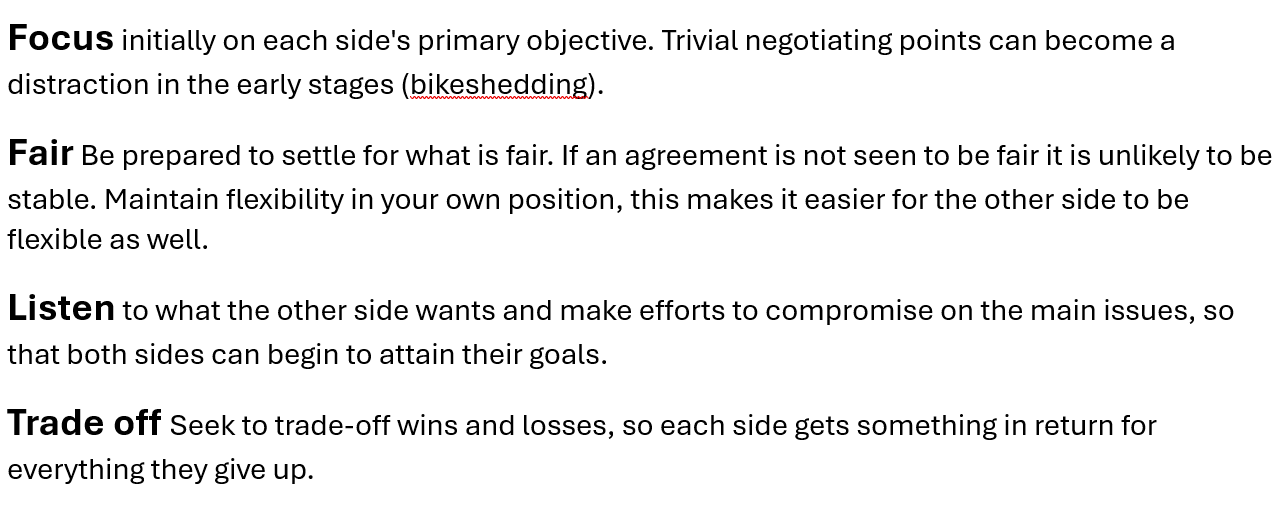
What is the guideance for successful negotiation
57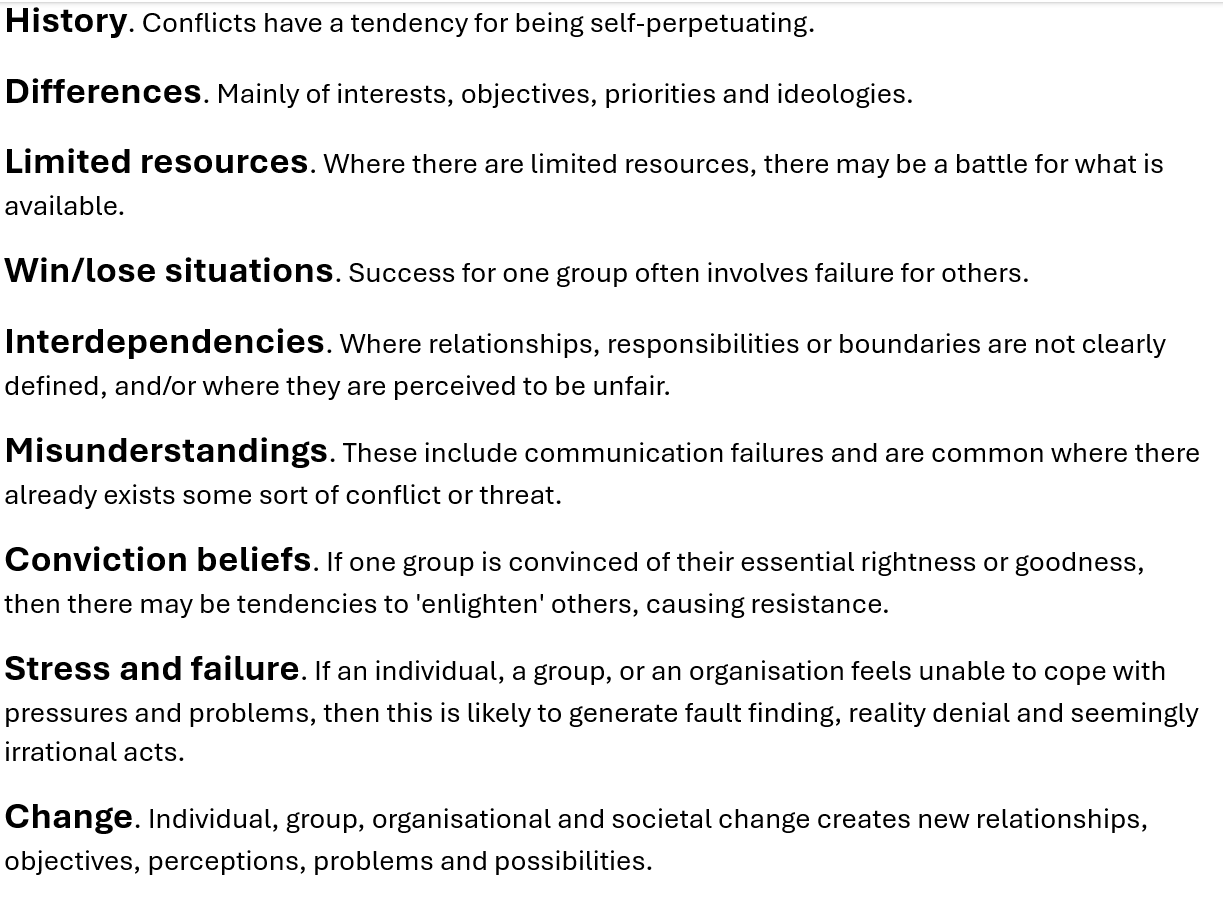
What did Mainwaring suggest are the causes of conflict?
58
What are the symptoms of conflict?
* Competition for scarce resources
* Competition for power and influence
* Differences in goals, values, expectations
* Competition for power and influence
* Differences in goals, values, expectations
59
Explain competition for scarce resources
60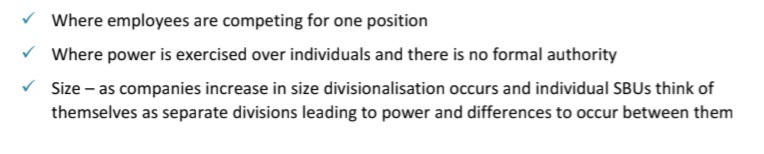
Explain competition for power and influence
61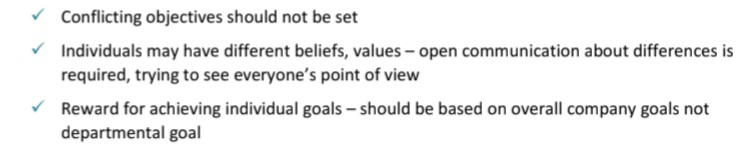
Explain differences in goals, values, expectations
62
What is Horizontal conflict?
Horizontal conflict occurs between groups and departments at the same level in the hierarchy
63
What is vertical conflict?
Vertical conflict occurs among individuals and groups at different levels in the hierarchy.
64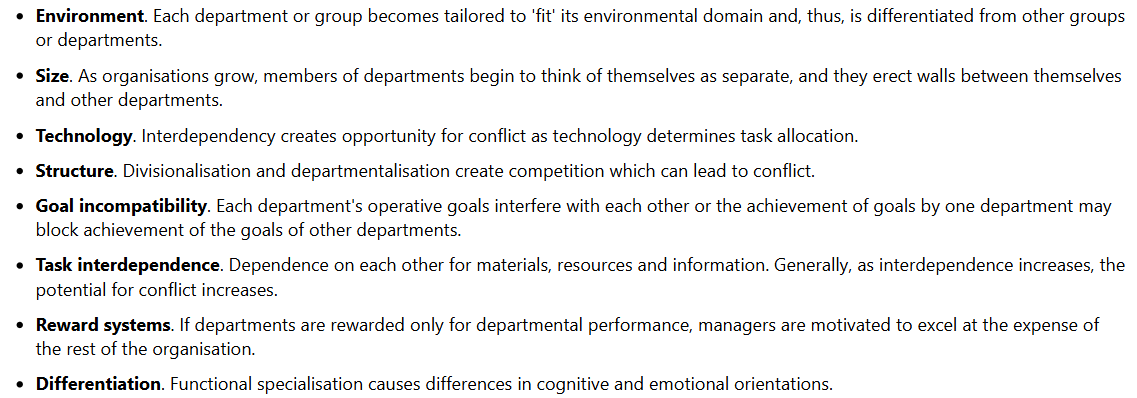
What are the types of horizontal conflict?
65
What are the types of vertical conflict?
66
What is constructive conflict?
67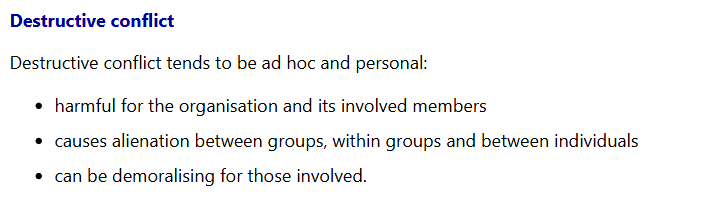
What is destructive conflict?
68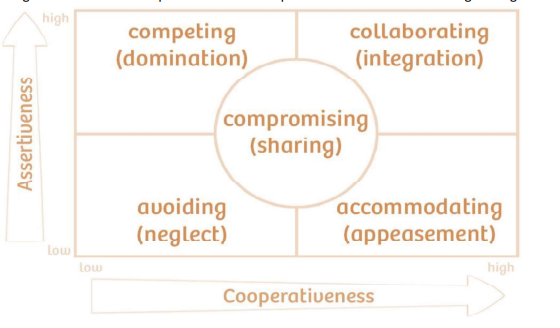
What is the Thomas-Kilmann conflict mode instrument?
69
In the Thomas-Kilmann conflict mode instrument explain AVOIDANCE
70
In the Thomas-Kilmann conflict mode instrument explain ACCOMODATING
71
In the Thomas-Kilmann conflict mode instrument explain COLLABORATING
72
In the Thomas-Kilmann conflict mode instrument explain COMPETING
73
In the Thomas-Kilmann conflict mode instrument explain COMPROMISING