F2 The Consolidated SPLOCI
Study these flashcardsFree · spaced repetition · iPhone, Android, Mac & web
All cards
1
When consolidating a subsidiary acquired partway through the year, how do you account for its results?
Only consolidate the subsidiary’s results from the date of acquisition, pro-rating income and expenses for the period of control. Same with eliminating inter group transactions - only eliminate what occurred after acquisition
2
What does “control” mean in the context of group accounts?
Control means the parent can exercise power over the subsidiary, so 100% of the subsidiary’s results are consolidated, regardless of ownership percentage.
3
How are intergroup transactions treated in consolidated financial statements?
Intergroup transactions (sales, purchases, interest, dividends) must be eliminated in full to reflect only the group’s performance with the outside world.
4
What is the role of the non-controlling interest (NCI) in consolidated accounts?
NCI is allocated its share of the subsidiary’s profit after tax and total comprehensive income, but not of the parent’s profits.
5
What is the maximum allowable difference in year-ends between a parent and subsidiary for consolidation?
The difference must be no more than three months, and the subsidiary’s policies must be aligned with the parent’s.
6
How is unrealized profit in inventory handled in consolidation?
Unrealized profit still in inventory at year-end is eliminated by adjusting cost of sales and reducing closing stock
7
How is the share of profit from an associate company shown in the consolidated P&L?
The group includes its share (e.g., 30% if it owns 30%) of the associate’s profit or loss as a single line item.
8
What is the pro forma for a consolidated statement of profit or loss and other comprehensive income
9
What is the formula for calculating consolidated revenue
10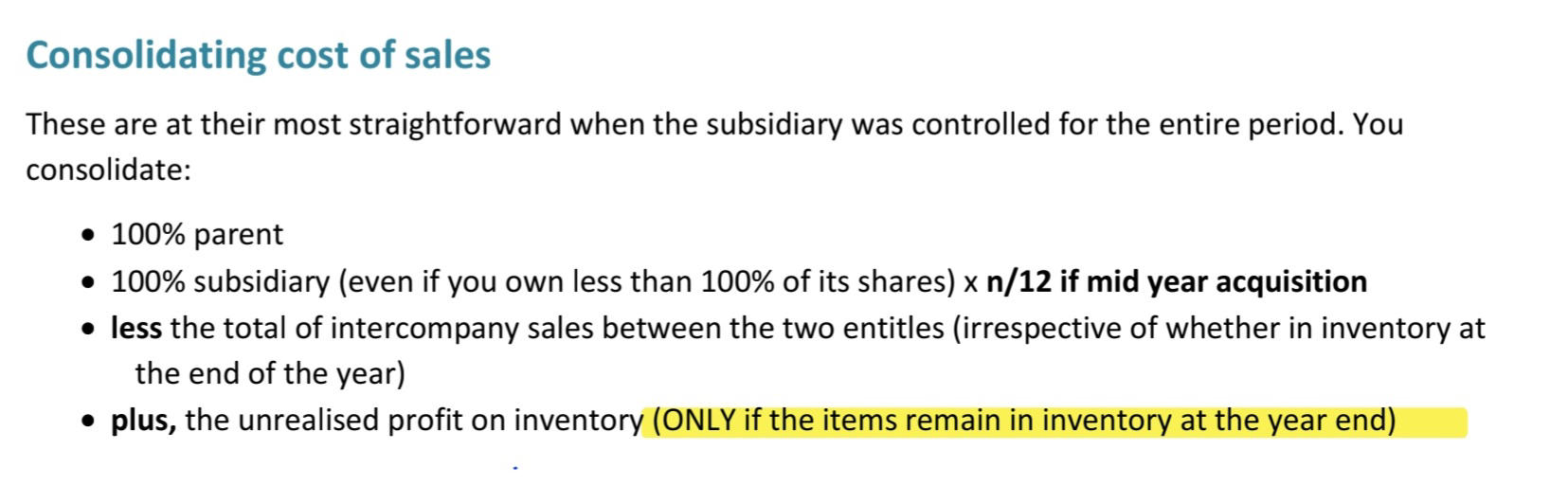
How do you consolidate cost of Sales?
11
Where is goodwill impairment recorded in the consolidated profit and loss account?
It is added to administrative expenses in the P&L for the current year.
12
Does goodwill impairment always impact the Non-Controlling Interest (NCI)
No. It only impacts NCI if the fair value method is used to calculate goodwill, not the proportion of net assets method.
13
How do you account for a fair value adjustment to a subsidiary’s asset in the consolidated P&L?
Add the additional annual depreciation from the fair value adjustment to operating expenses for the year.
14
If goodwill was impaired in a previous year, do you add it to the current year’s operating expenses?
No. Only current year impairments are added to the current year’s operating expenses.
15
What is the key rule for including goodwill impairment in consolidated operating expenses?
Always add any current year goodwill impairment to operating expenses, regardless of the goodwill calculation method.
16
Why are dividends paid by a subsidiary to a parent company eliminated upon consolidation?
Because they represent intergroup investment income, which would otherwise be double-counted when consolidating 100% of the subsidiary’s income and expenses.
17
How do you calculate the profit attributable to NCI and parent
Calculate the NCI figure then deduct it from total to get parent as the balancing figure
18
What happens to the dividend paid by a subsidiary in the consolidated financial statements?
The portion received by the parent is eliminated against the dividend income, leaving only the amount paid to the non-controlling interest (NCI) in retained earnings.
19
How do you calculate consolidated investment income?
Add 100% of the investment income from each company, then eliminate any intergroup dividends received from subsidiaries
20
What is the rationale for eliminating intergroup dividends in consolidation?
To avoid double-counting income, since the group consolidates all income and expenses line by line.
21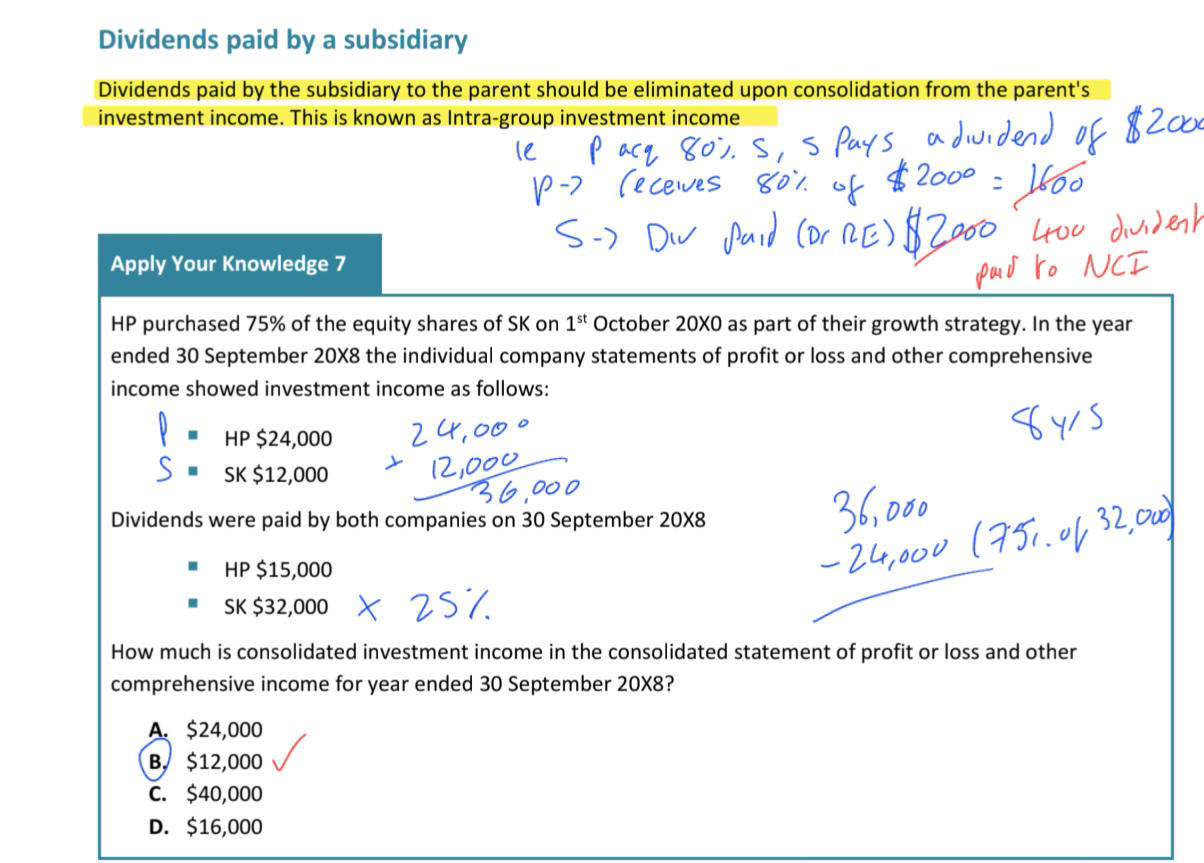
Example of eliminating dividends paid by subsidiary
22
When do you adjust NCI for unrealized profit in intra-group sales?
If the subsidiary (S) sells to the parent (P), adjust NCI. If the parent sells to the subsidiary, do not adjust NCI.
23
How does the method of goodwill calculation affect NCI adjustments for impairment?
If goodwill is measured at fair value, adjust NCI for their share of impairment. If using the proportion of net assets method, do not adjust NCI.
24
Which group adjustments affect NCI?
Adjustments that change the subsidiary’s profit, such as unrealized profit, impairment of goodwill, and fair value adjustments (e.g., extra depreciation).
25
How do you calculate the unrealized profit (perp adjustment)
Multiply the intra group sales by profit margin then by the percentage of goods remaining in inventory at year-end.
26
What is the PURP adjustment if a parent sells to a SUBSIDIARY?
Dr Cost of sales (P&L)
Cr Inventory (SOFP)
Cr Inventory (SOFP)
27
What is the PURP adjustment if a SUBSIDIARY sells to parent?
Dr Cost of sales (P&L)
Cr Inventory (SOFP)
also need to deduct the NCI amount of the PURP from the amount attributable to NCI
Cr Inventory (SOFP)
also need to deduct the NCI amount of the PURP from the amount attributable to NCI
28
In consolidated P&L what is W1
29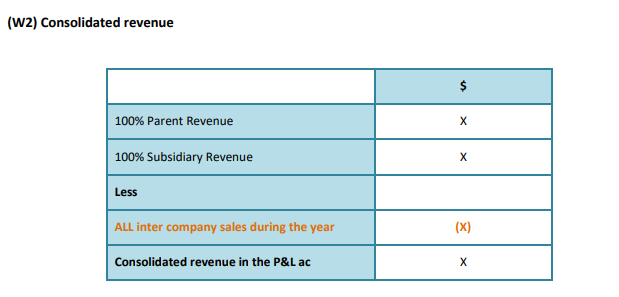
In consolidated P&L how do you calculate consolidated revenue W2
30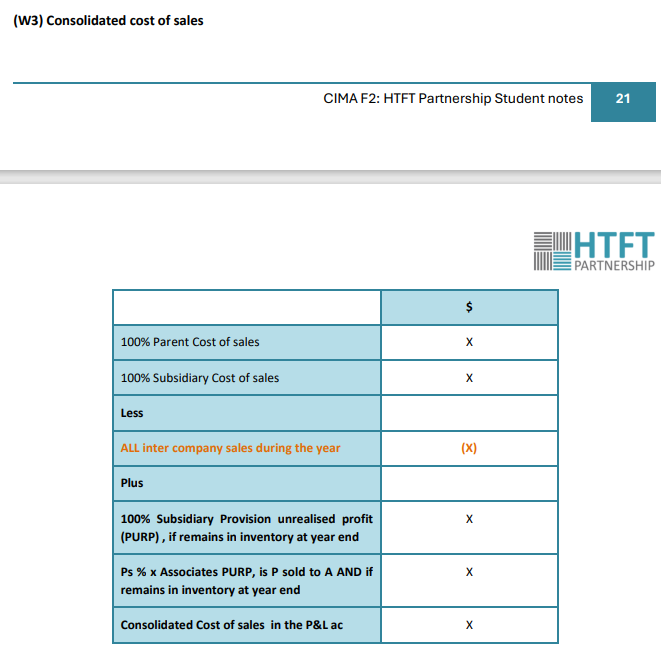
In consolidated P&L how do you calculate consolidated cost of sales W3
31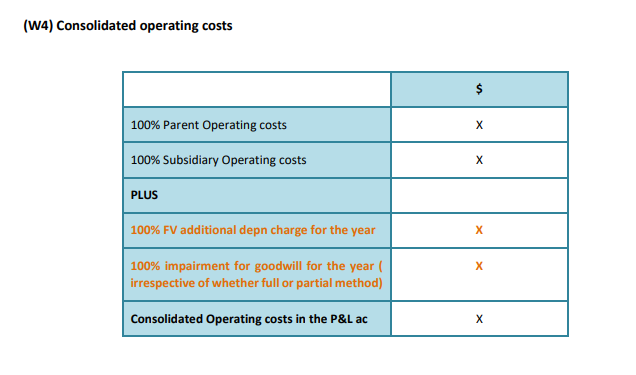
In consolidated P&L how do you calculate operating costs W4
32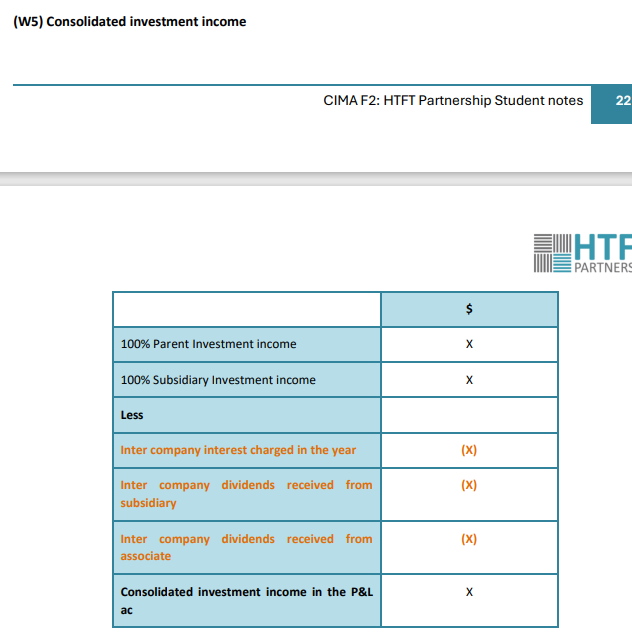
In consolidated P&L how do you calculate consolidated investment income W5
33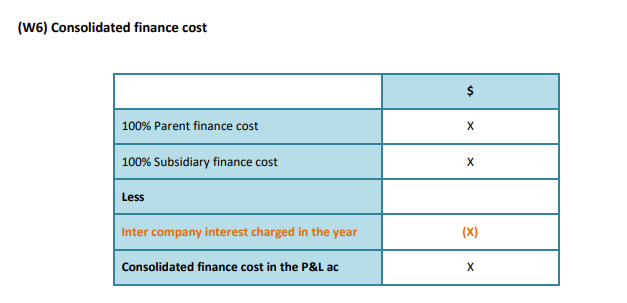
In consolidated P&L how do you calculate consolidated finance cost W6
34
In consolidated P&L how do you calculate consolidated tax W7
35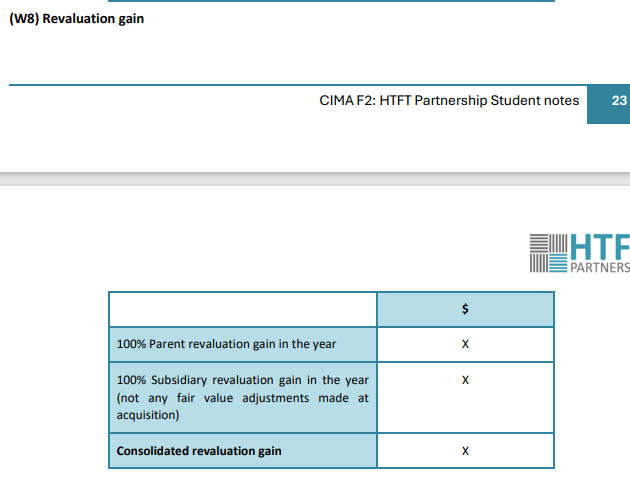
In consolidated P&L how do you calculate revaluation gain W8
36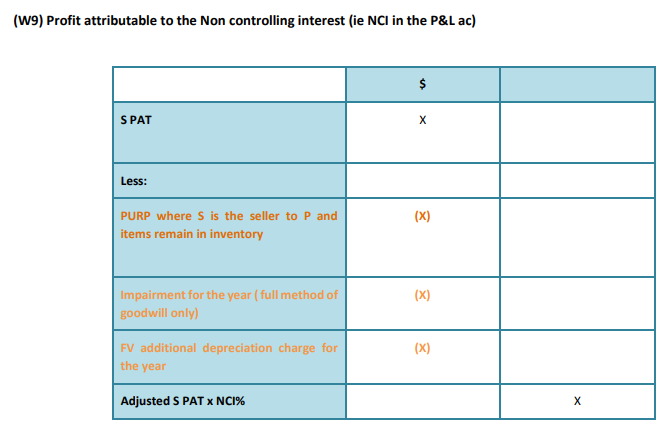
In consolidated P&L how do you calculate profit attributable to NCI W9
37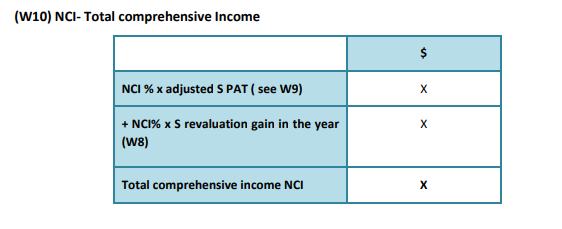
In consolidated P&L how do you calculate NCI total comprehensive income W10
38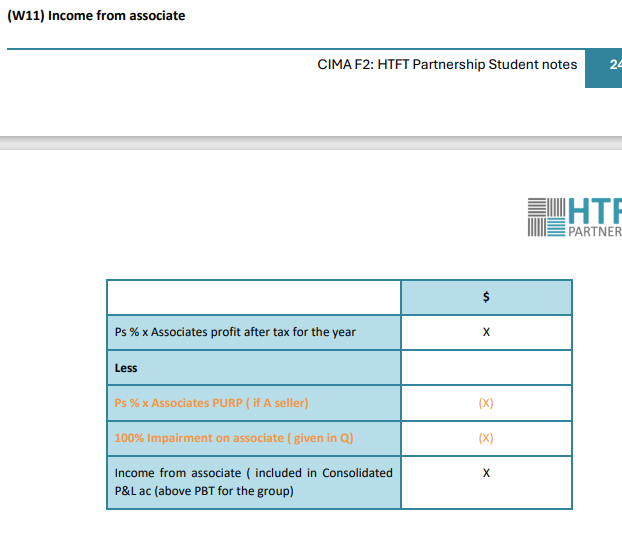
In consolidated P&L how do you calculate income from associate W11