E2 Business Models
Study these flashcardsFree · spaced repetition · iPhone, Android, Mac & web
All cards
1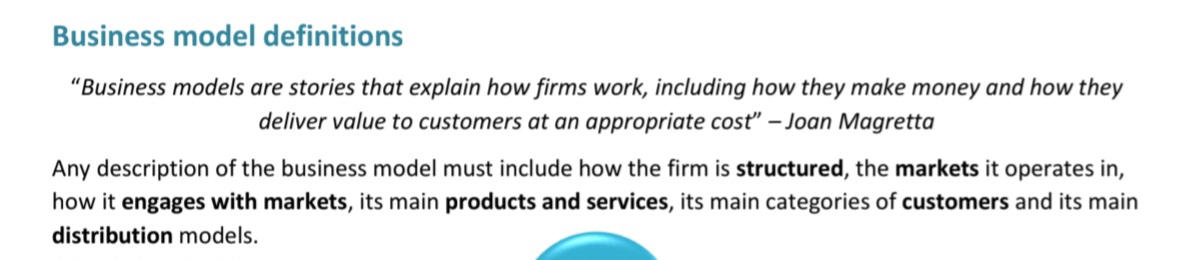
What is the definition of a business model
2
What are the key aspects of a traditional business model? (4)
3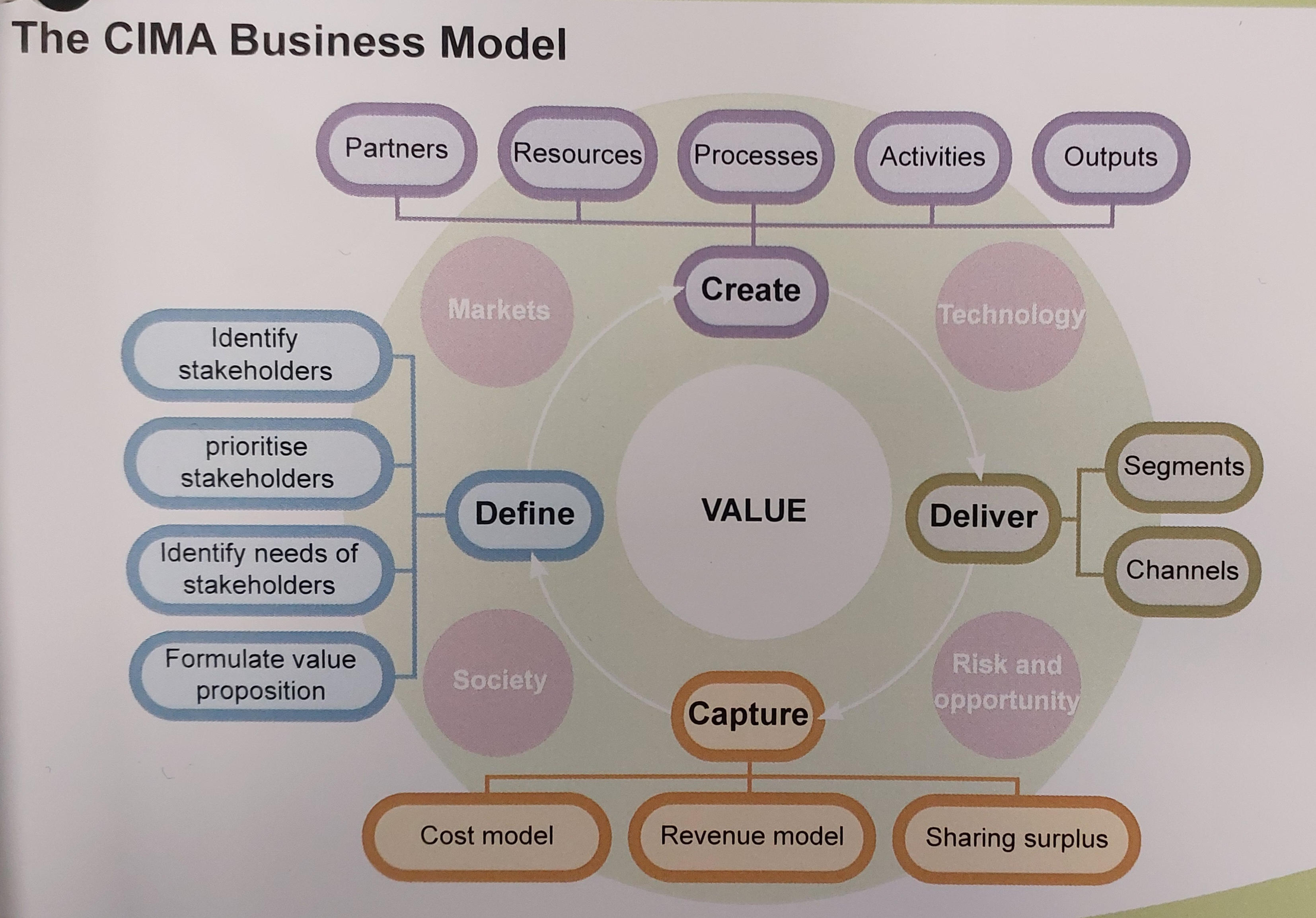
What is the CIMA business model ?
4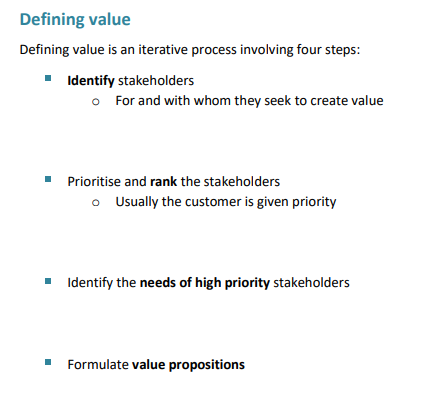
What are the 4 steps to defining value? (1st key aspect of traditional business model)
5
What is a stakeholder
any person or group that can affect or be affected by the policies or activities of an organisation
6
How do you Identify stakeholders using mendelows matrix
Stakeholder identification is necessary to gain an understanding of the sources of risks and disruption. It is important in terms of assessing the sources of influence over the objectives and outcomes for the business decisions.
In strategic analysis, stakeholder influence is assessed in terms of each stakeholders power and interest, with higher power and higher interest combining to generate the highest influence.
Low interest low power - small shareholders / general public
High interest low power - staff/customers/suppliers
Low interest high power - national government/institutional shareholders
high interest high power - Directors/major shareholders/trade unions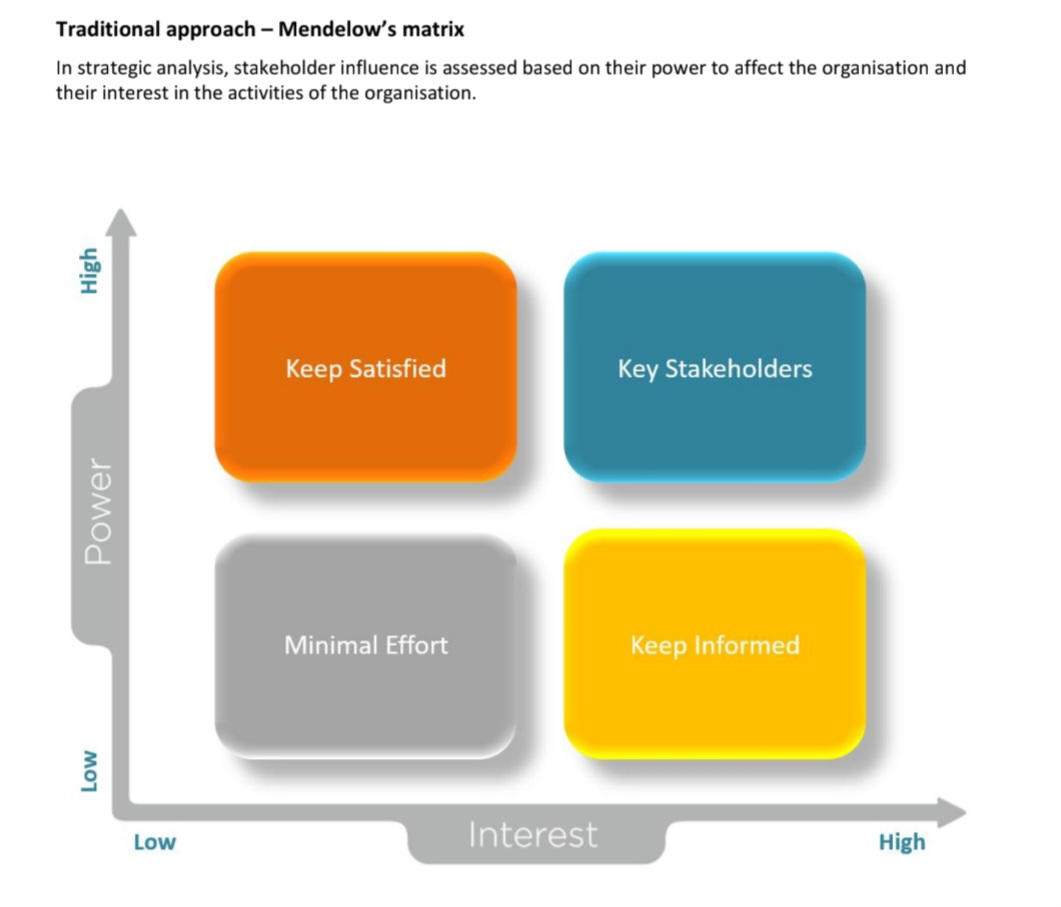
In strategic analysis, stakeholder influence is assessed in terms of each stakeholders power and interest, with higher power and higher interest combining to generate the highest influence.
Low interest low power - small shareholders / general public
High interest low power - staff/customers/suppliers
Low interest high power - national government/institutional shareholders
high interest high power - Directors/major shareholders/trade unions
7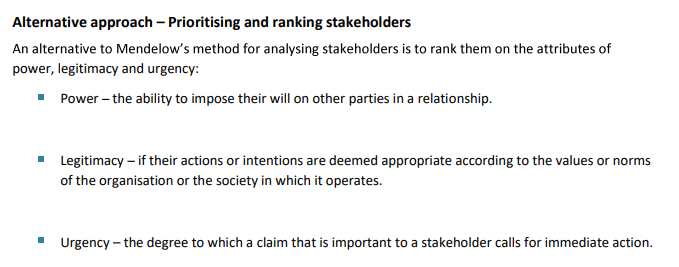
What 3 attributes are used to rank stakeholders?
8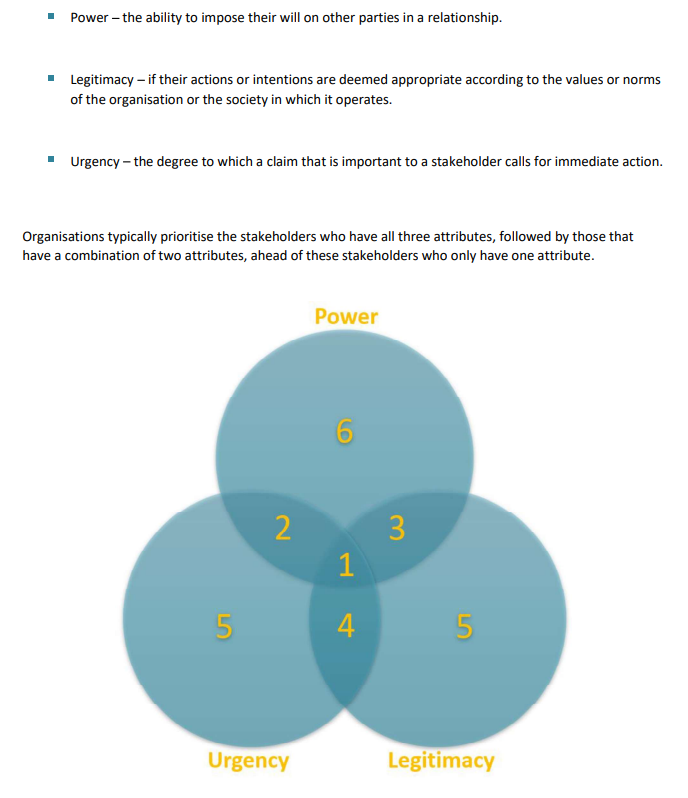
How do you prioritise stakeholders based on their ranking?
9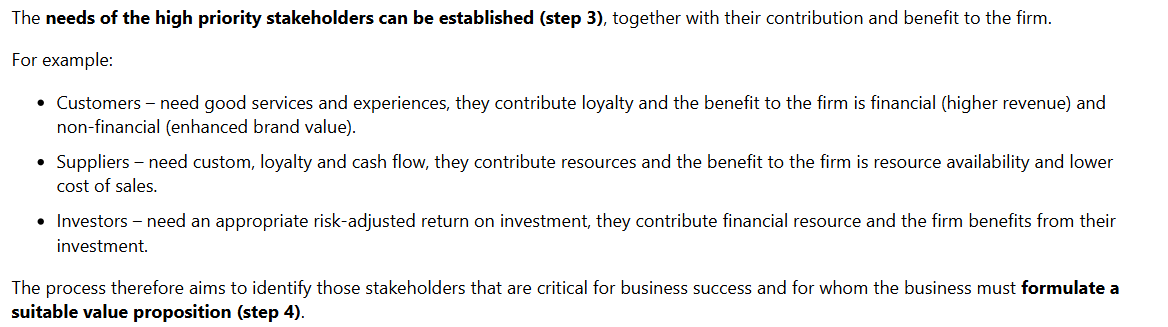
How do you identify the needs of the priority stakeholders?
10
How do you Create Value? (2nd Key aspect of the business model)
*Partners - suppliers/employees/contractors who provide access to resources/markets and technologies.
*Resources - firms use their relationships with their suppliers to source and secure the right resources to make products or services that satisfy their customers. These are both tangible and intangible inputs.
*Processes - firms need to design, develop, and deploy processes that provide the infrastructure to convert resources (inputs) into goods and services (outputs). High-quality processes can lead to improved cycle times, productivity, quality, and costs.
*Activities - firms and their partners engage in activities that use the processes to convert resources into goods and services. They depict what is done and where know-how, skills, learning, and culture come together to make things happen, capturing how valuable the people element is in value creation. Effectiveness and efficiency are the key measures of success in this context.
*Outputs - resources are converted through activities and processing into outputs which can be products, services, or experiences, all of which aim to meet the customer value proposition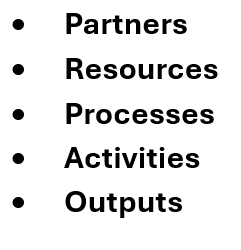
*Resources - firms use their relationships with their suppliers to source and secure the right resources to make products or services that satisfy their customers. These are both tangible and intangible inputs.
*Processes - firms need to design, develop, and deploy processes that provide the infrastructure to convert resources (inputs) into goods and services (outputs). High-quality processes can lead to improved cycle times, productivity, quality, and costs.
*Activities - firms and their partners engage in activities that use the processes to convert resources into goods and services. They depict what is done and where know-how, skills, learning, and culture come together to make things happen, capturing how valuable the people element is in value creation. Effectiveness and efficiency are the key measures of success in this context.
*Outputs - resources are converted through activities and processing into outputs which can be products, services, or experiences, all of which aim to meet the customer value proposition
11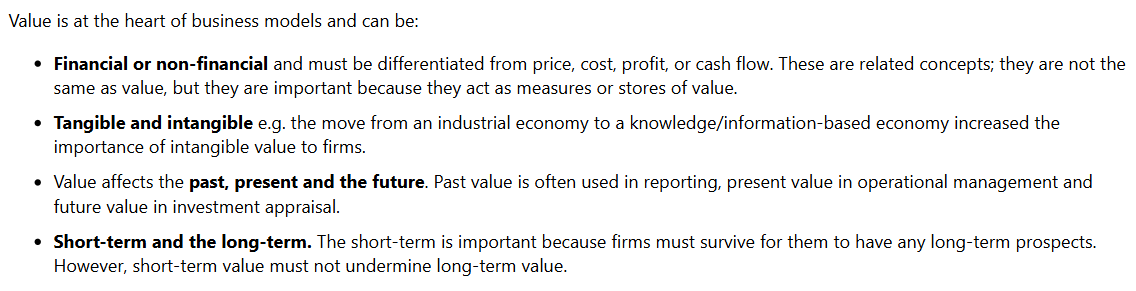
What is value?
12
How do you deliver value (3rd key aspect of traditional business model)
*Segments
*Channels
*Channels
13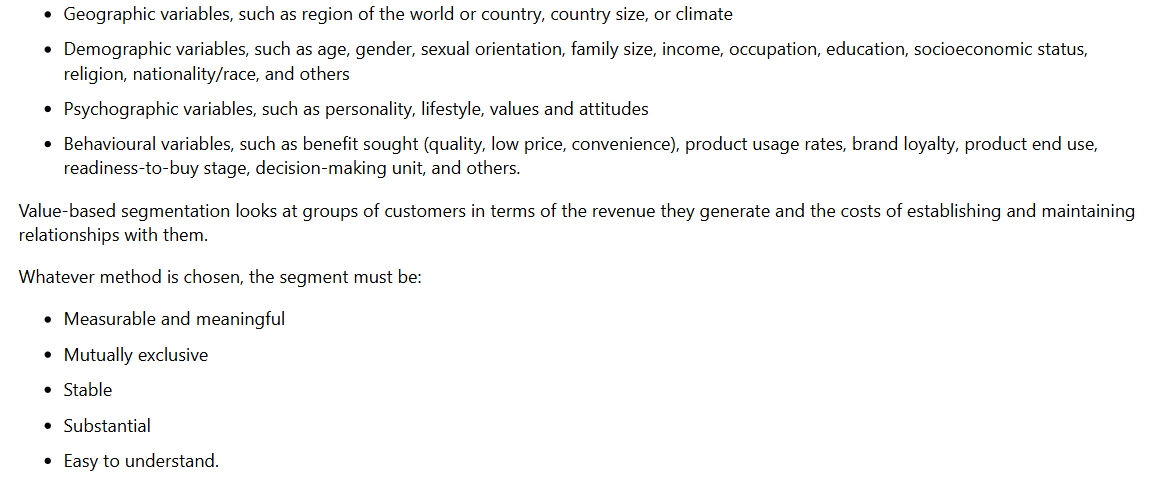
How do you use segments to deliver value?
14
How do you use channels to deliver value?
Firms deliver value to customers through communication, distribution, and sales channels. In this context the advent and growth of technology has opened many channels for firms to connect with their customers, for example using mobile phones and social media.
15
When is value captured?
When revenue earned from delivering value exceeds the costs of creating value
16
How do you capture value (4th key aspect of traditional business model)
*Cost model
*Revenue model
*Sharing surplus
*Revenue model
*Sharing surplus
17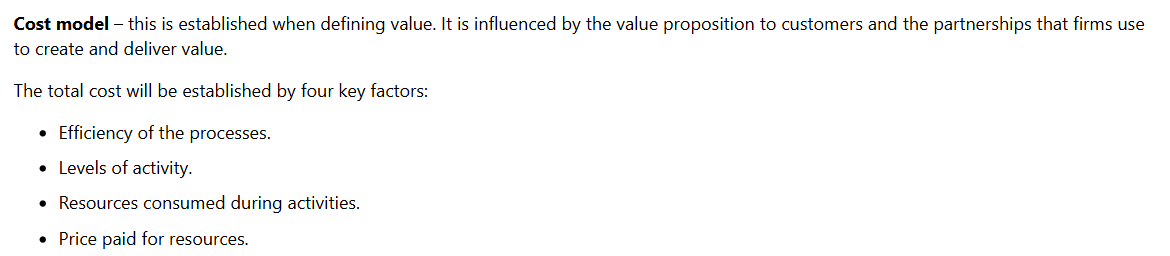
What are the 4 factors affecting the cost model?
18
Explain revenue model
19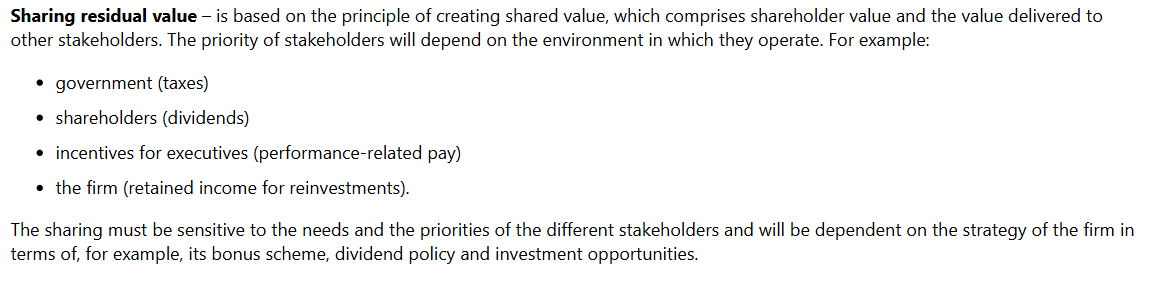
Explain sharing residual value
20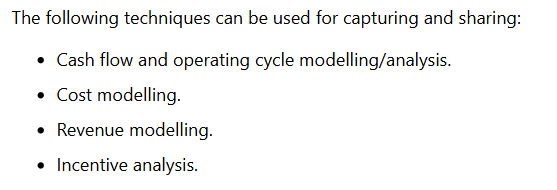
What techniques can be used for capturing and sharing value?
21
What 4 key actions should firms adopt when dealing with customer data?