P2 The investment Decision Making Process
Study these flashcardsFree · spaced repetition · iPhone, Android, Mac & web
All cards
1
What is the capital investment process?
2
Why does money have a time value
3
What is the difference between compounding and discounting
Compounding - A sum invested today will earn interest. Compunding calculates the future (or terminal) value of the sum invested for a number of years. The sum is increased over the number of years it earns interest
Discounting - Considers a sum receivable in the future and establishes it equivelent value today
Discounting - Considers a sum receivable in the future and establishes it equivelent value today
4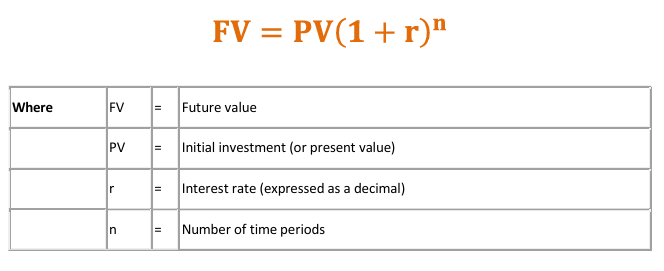
How do you calculate compound interest
5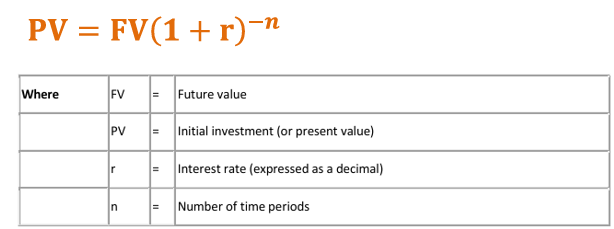
How do you discount a future cashflow to present value (without the PV table)
6
What is an annuity
A contant annual cashflow for a number of years
7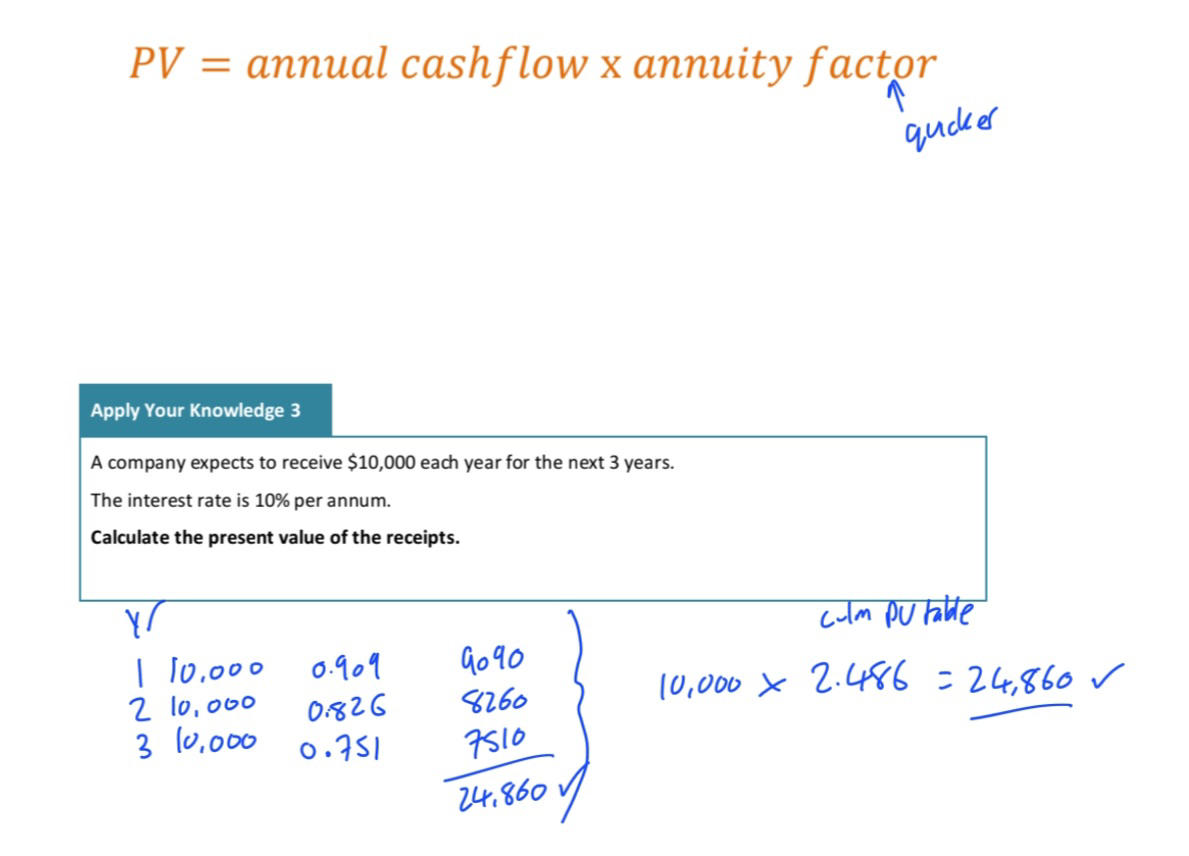
How do you calculate the present value of an annuity
8
What is a perpetuity
An annual cashflow that occurs forever
9
How do you calculate the net present value of a perpetuity
the r in this formula represents the cost of capital or required return expressed as a decimal ie 0.09 for 9%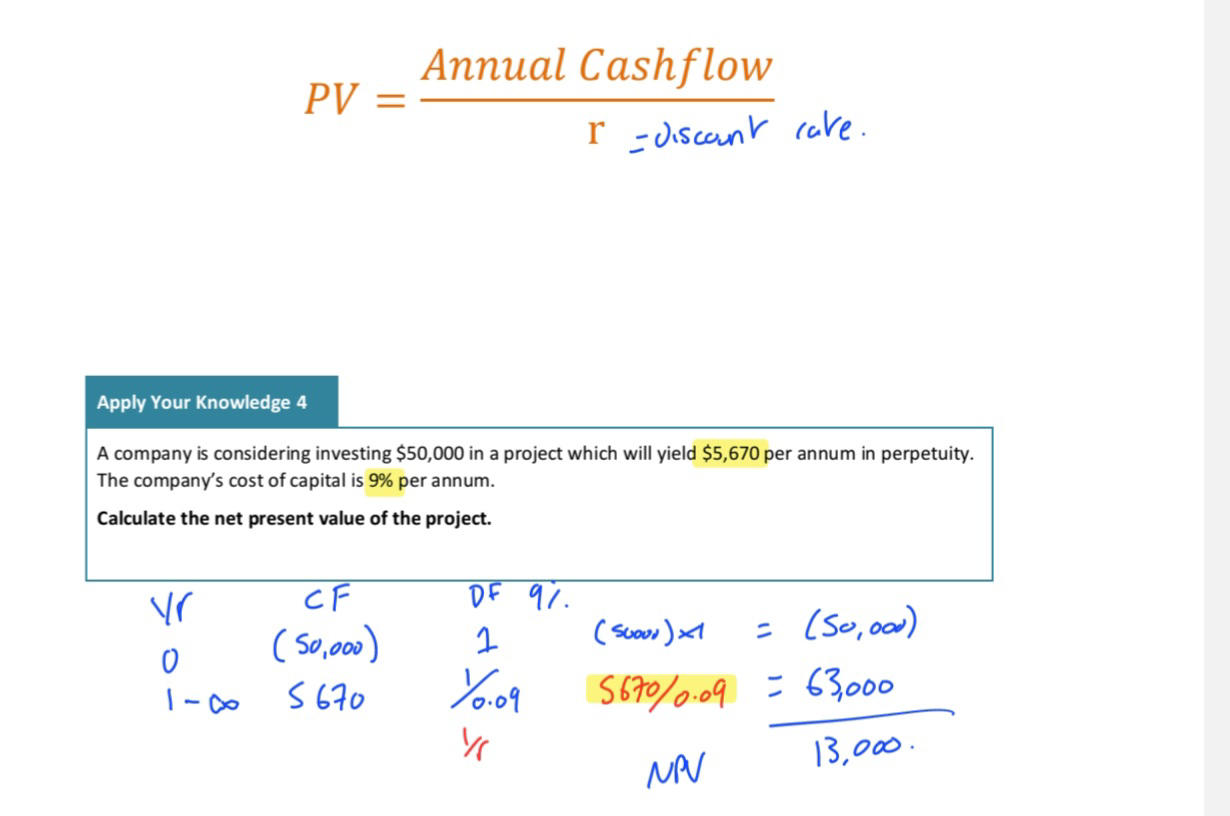
10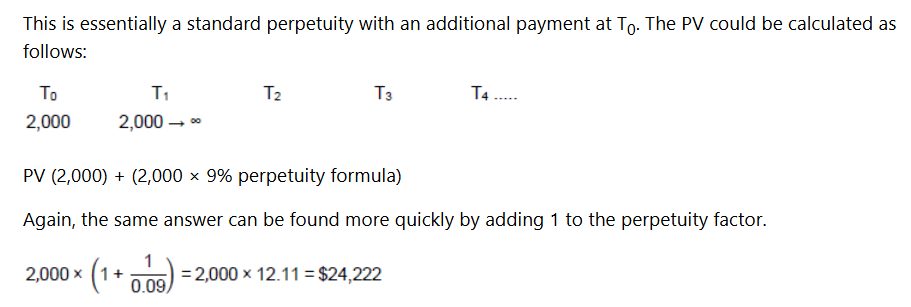
How do you calculate the present value of an advanced perpetuity
11
How do you calculate advanced annuities
if an advanced annuity is for 5 yrs starting now, then the 5th payment is in 4 yrs, so you use the 4 yr annuity factor but add on 1 to account for the first payment at T0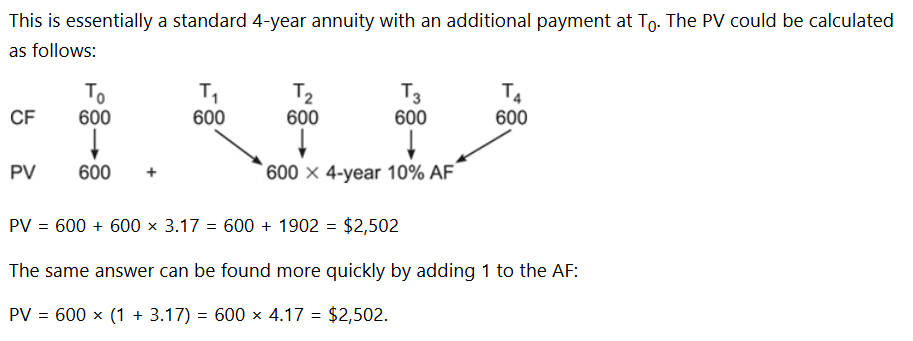
12
How do you calculate delayed annuities
Find the normal annuity factor (cumulative PV) then find the delayed annuity factor (PV table number of years of the delay) multiply them together then use this to multiply against your annual cashflow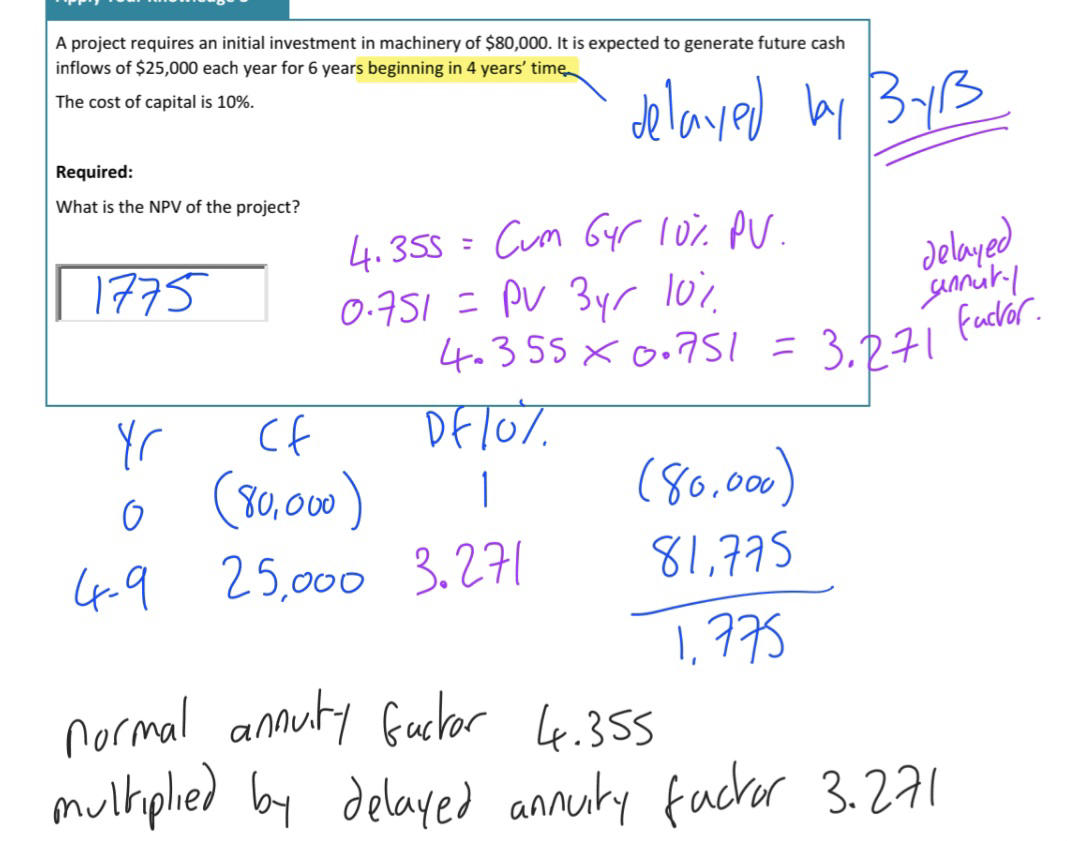
13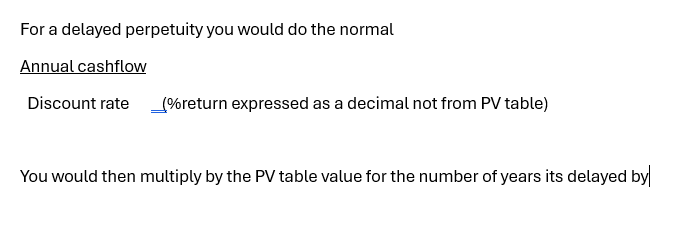
How do you calculate delayed perpetuities
14
What are the capital investment techniques
15
What is Net present Value
The SUM of the projected DISCOUNTED cash inflows and outflows attributable to a capital investment
16
How do you decide wether to accept a project based on NPV
Because the cost of capital % is used to calculate, if the answer is 0 then the project earns the required return
17
What are the advantages and disadvantsages of NPV
18
What is IRR
19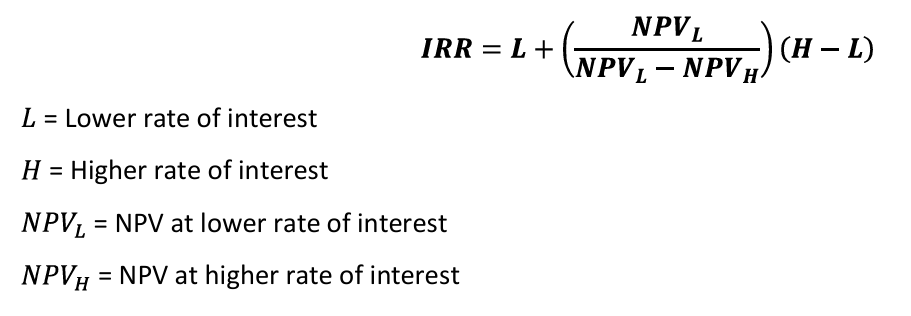
How do you calculate IRR
20
What are the advantages and disadvantages of IRR
21
What is MIRR
22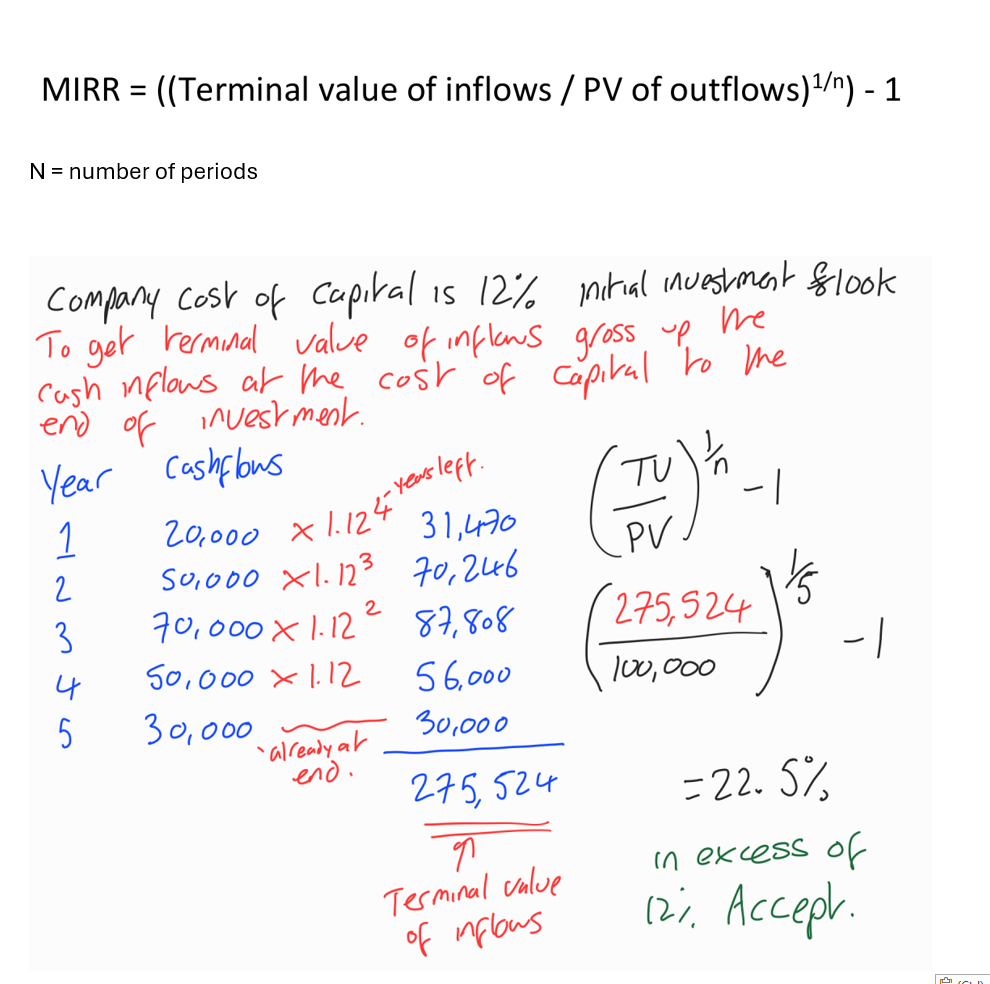
How do you calculate MIRR
23
What are capital asset replacement decisions
24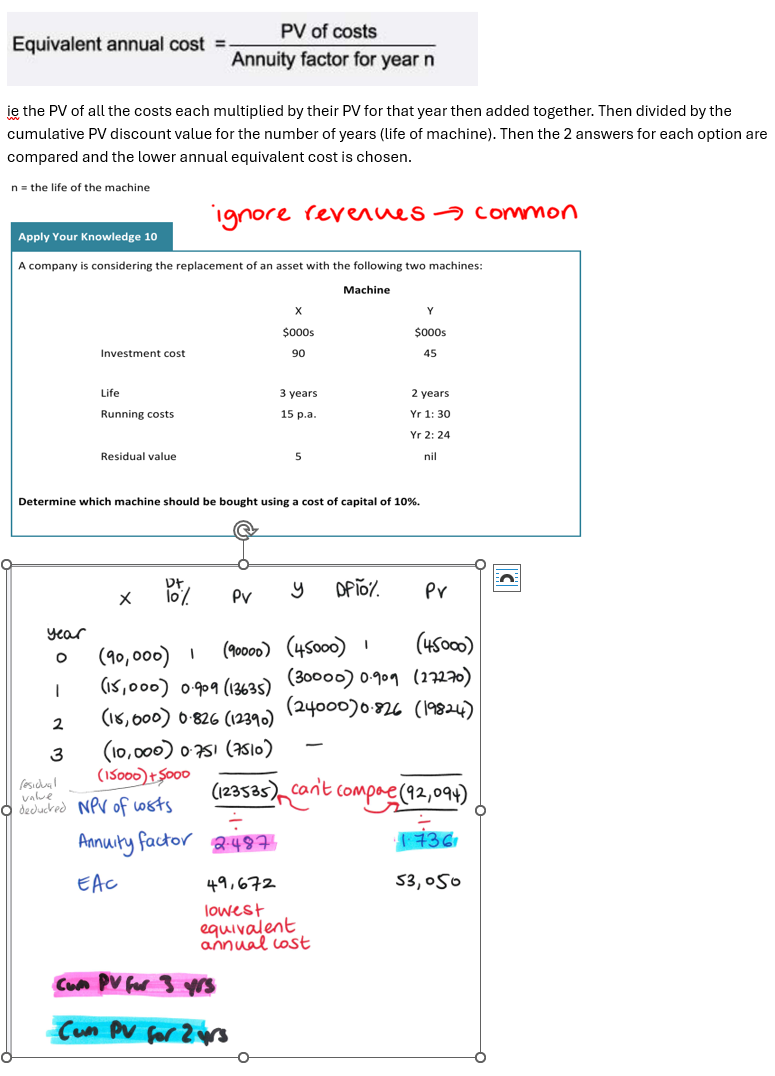
How do you calculate the equivalent annual cost for a capital asset replacement decision
25
What is capital rationing
26
What is the profitability index
It gives NPV per £1 invested. It is used to rank investment opportunities when the projects are divisible
27
How do you calculate profitablility index
28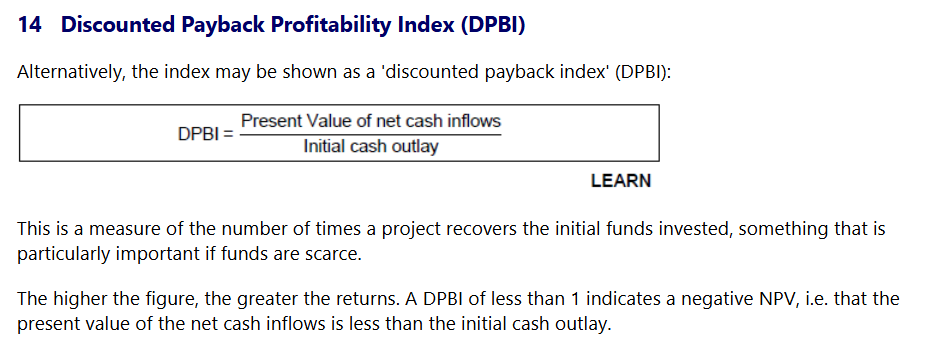
What is the Discounted Payback Profitability Index (DPBI) and how do you calculate it
29
What are some of the real options when considering projects to invest in
30
What is a post completion audit of projects
31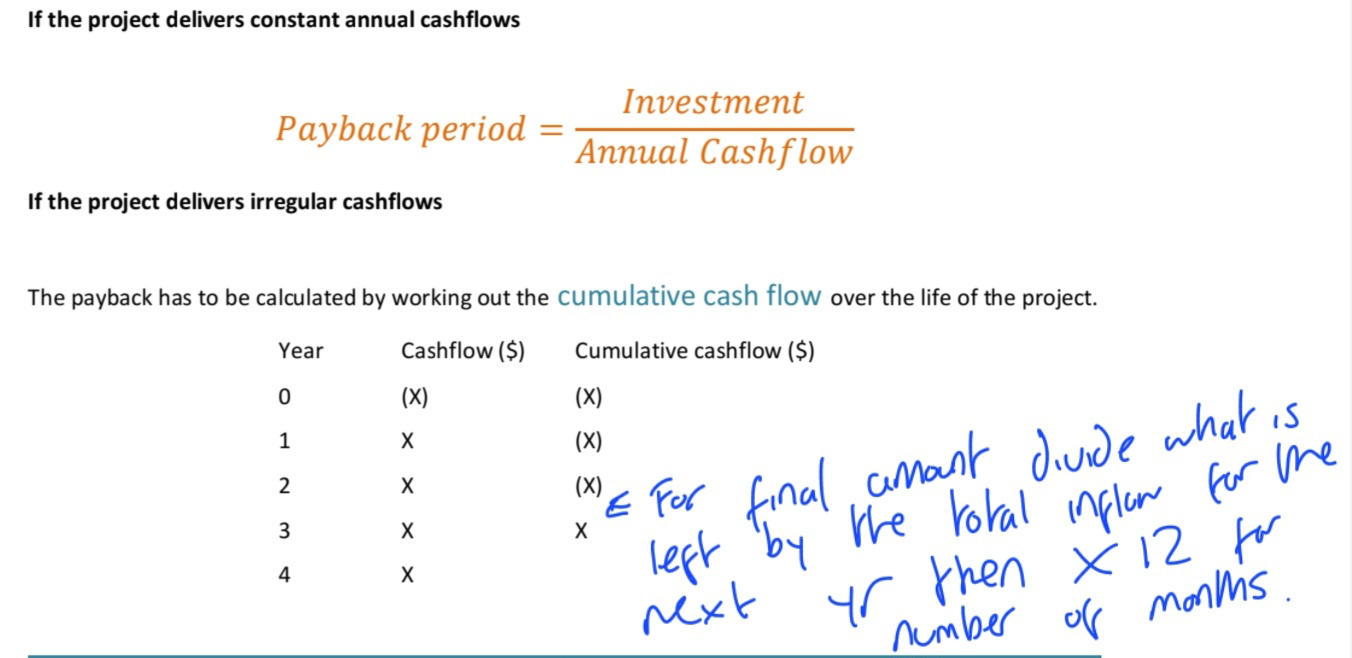
How do you calculate the payback period
32
What are the advantages and disadvantages of the payback period
33
How do you calculate discounted payback
Same as payback but you discount each inflow before calculating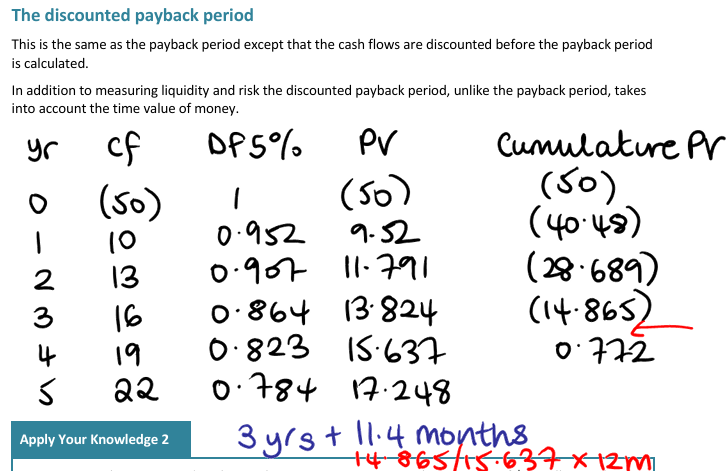
34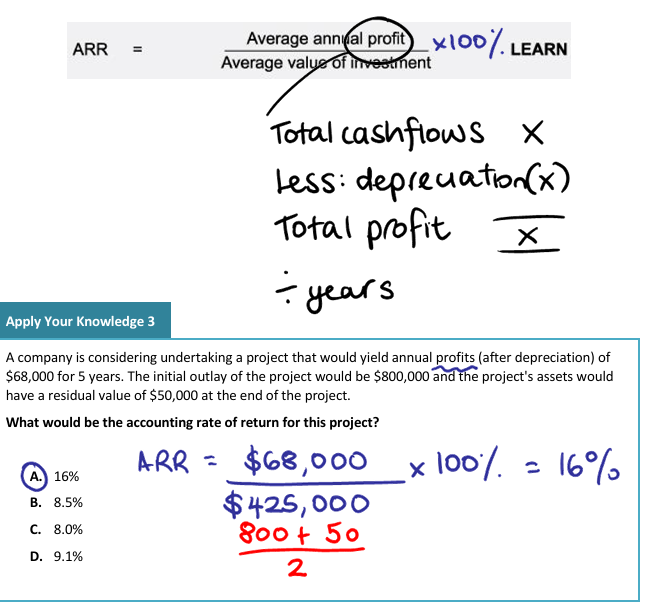
How do you calculate accounting rate of return (ARR)
35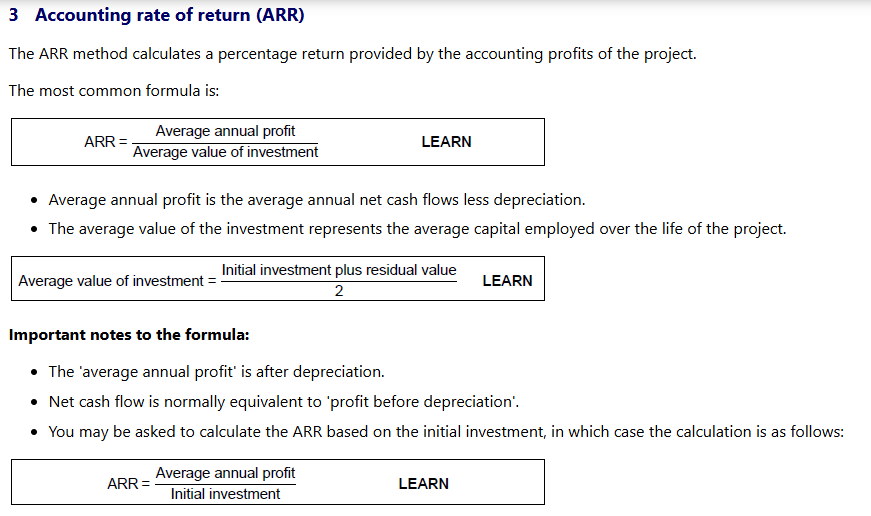
How do you calculate average value of investment for the ARR calculation
36
What are the advantages and disadvantages of accounting rate of return (ARR)
37
How do you calculate the present value of a tax allowance
First calcuate the depreciation based on instructions
Calculate the tax allowance on that depreciation by multiplying with the tax rate
Multiply the tax allowance amount by the dicount factor (cost of capital) for that year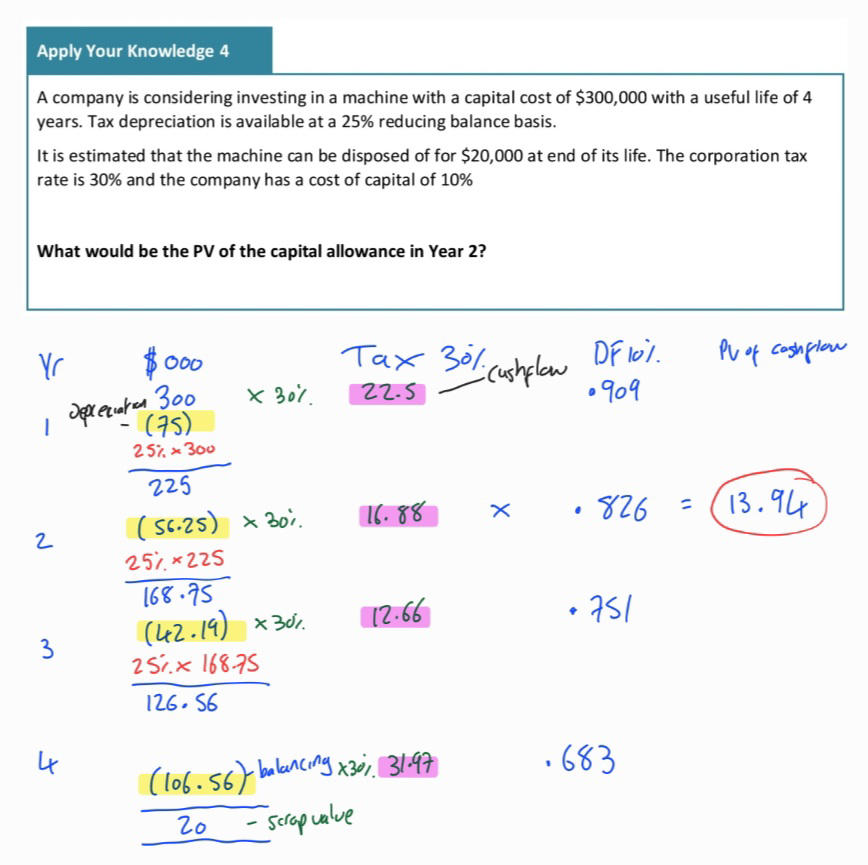
Calculate the tax allowance on that depreciation by multiplying with the tax rate
Multiply the tax allowance amount by the dicount factor (cost of capital) for that year
38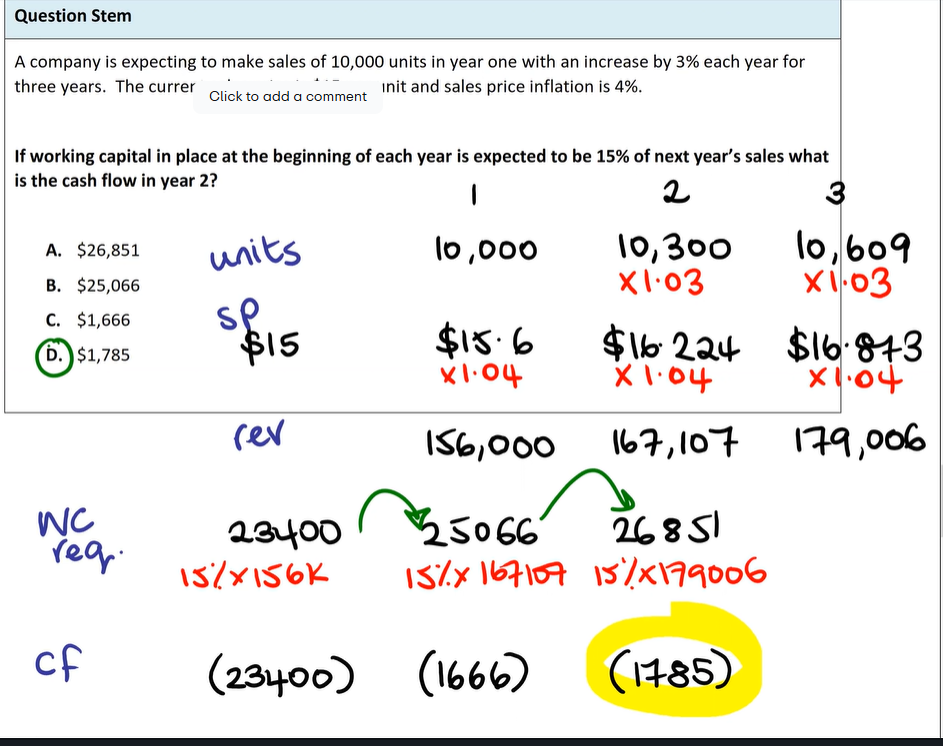
How do you calculate woring capital cashflow
39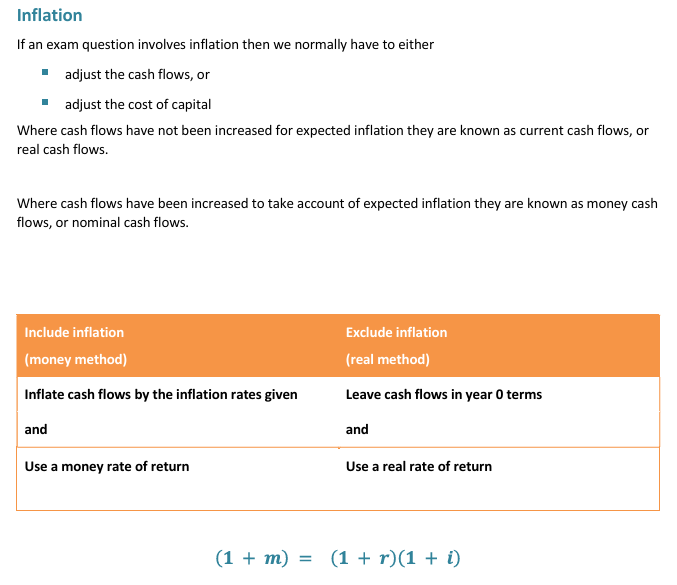
How do you calculate PV when there is inflation
40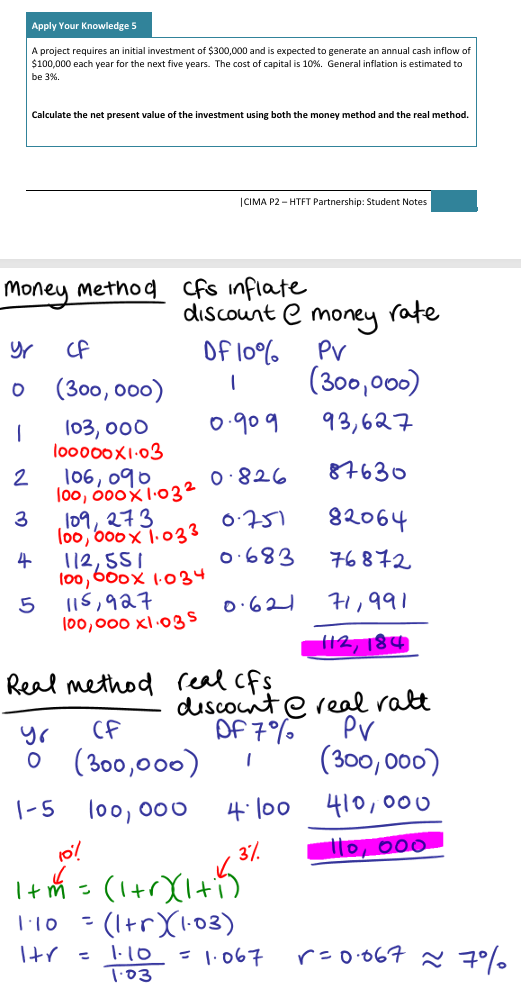
How do you calculate the NPV of an investment using the money method and the real method
41
How do you calculate the real rate of return using the cost of capital and the rate of inflation
need to do minus one then times 100 after the division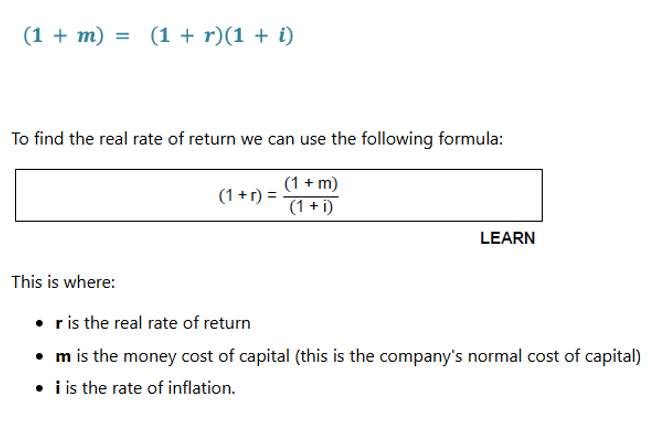
42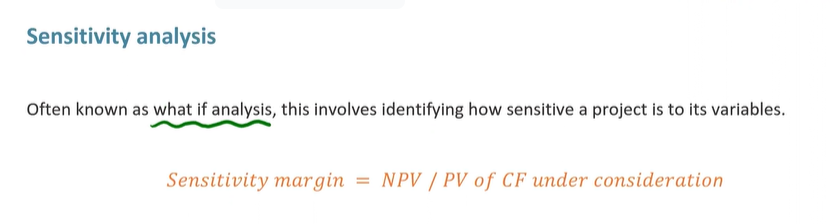
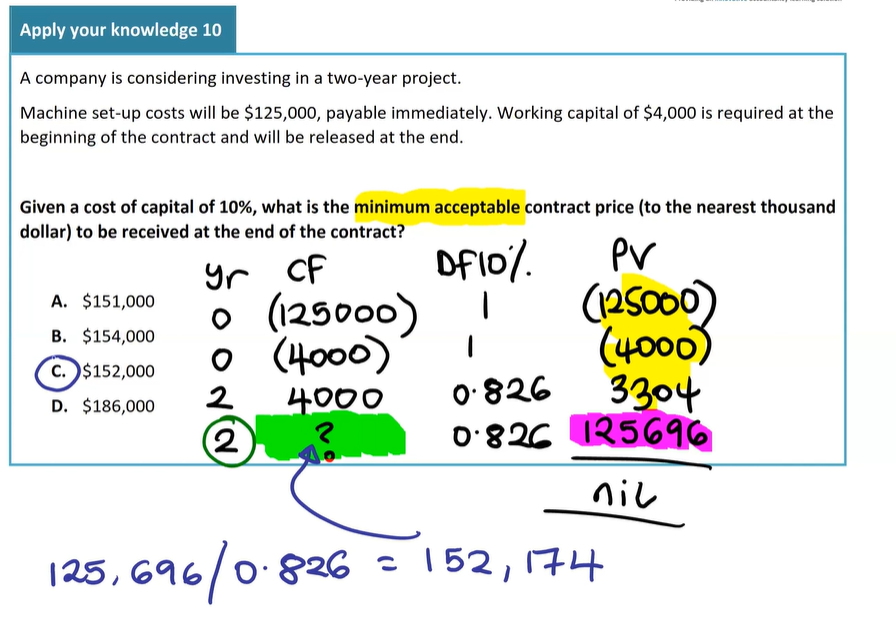
How do you calculate the sensitivity margin of a project
43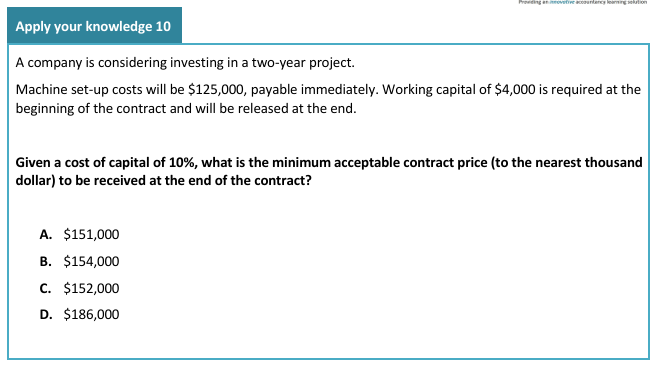
44
How do you calculate the IRR of an annuity?
Because an annuity has equal cash inflows you can shortcut the formula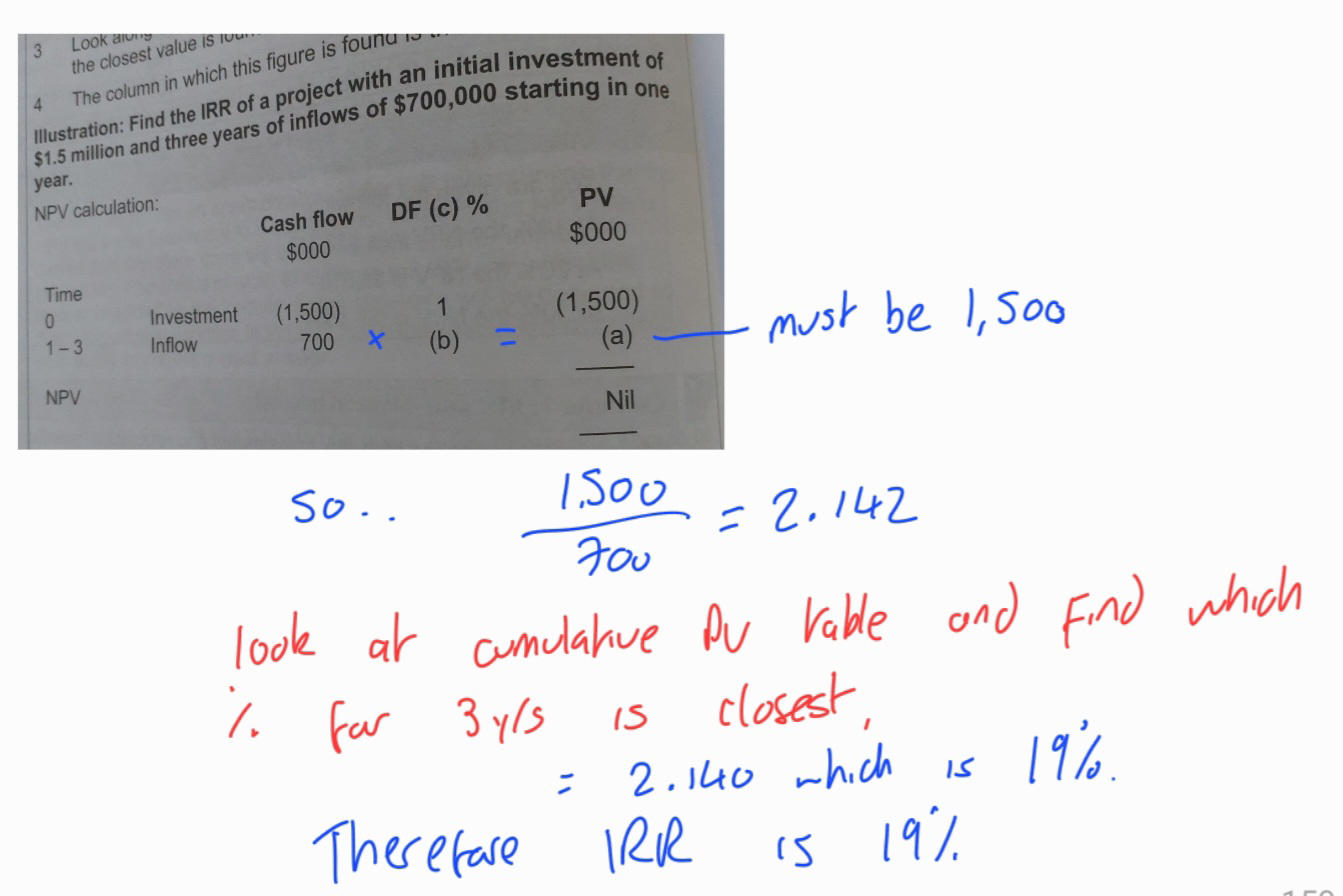
45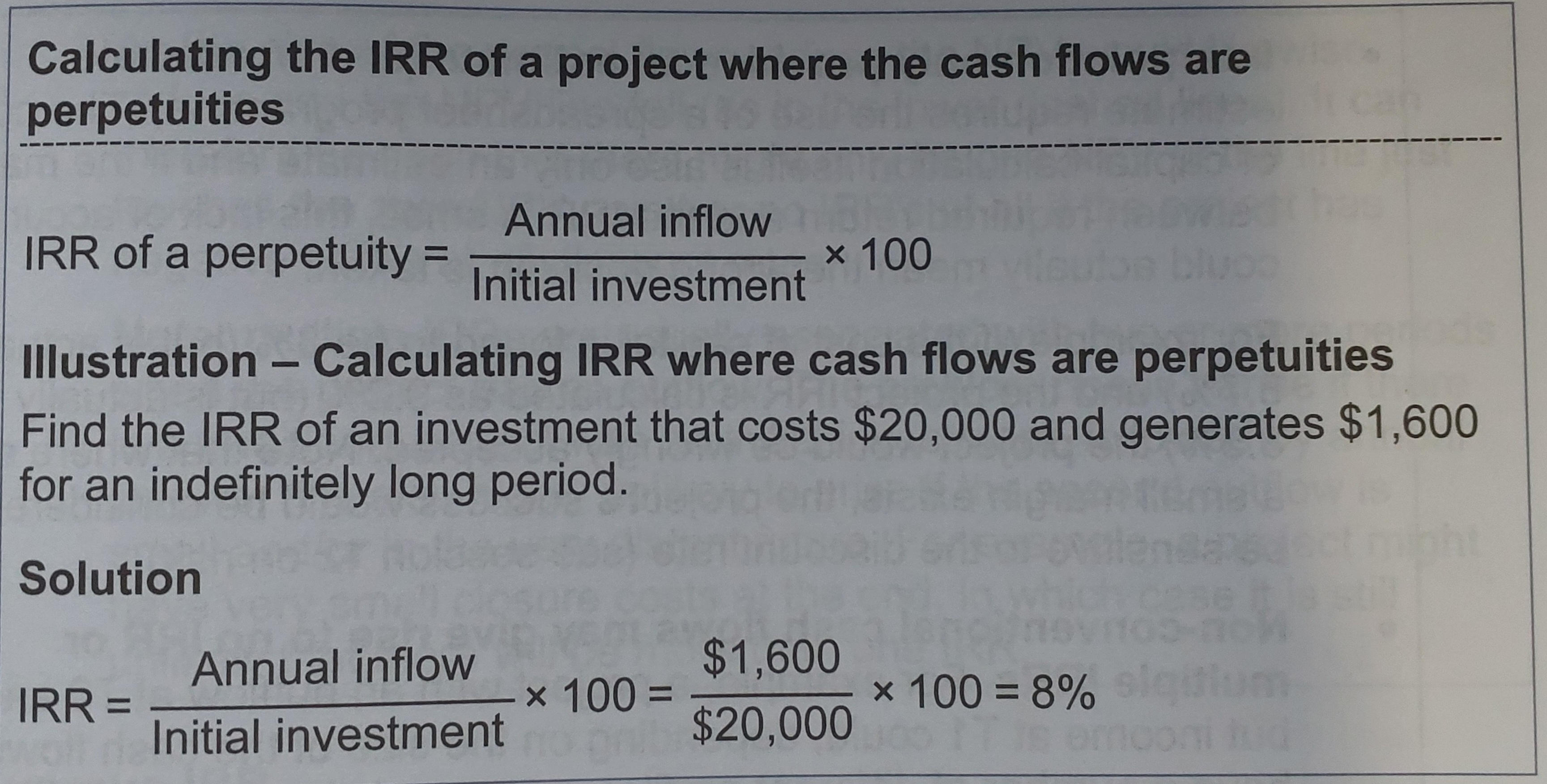
How do you calculate the IRR of a perpetuity