E2 Combined
Study these flashcardsFree · spaced repetition · iPhone, Android, Mac & web
All cards
1
What is a team?
A formal group.
geared towards a final result
reason for working together
need each others talent and skills
geared towards a final result
reason for working together
need each others talent and skills
2
What are the types of group (4)
Reference - others are going to be aspiring to join
Informal - voluntary membership
Formal - team set up by an organisation
Self directed - Work without supervision
Informal - voluntary membership
Formal - team set up by an organisation
Self directed - Work without supervision
3
What is a multi disciplinary team?
People from across departments or functions, pooling the skills of specialists
4
What is a multi skilled team?
Team contains people who have more than one skill
5
What are the benefits of a team?
* Increased productivity - appropriate skills for the job, tasks can be linked
* Synergy - Outputs of the group better than individuals 2+2 = 5
* Improved problem solving and creativity - diversity, better decision making
* Increased satisfaction & motivation - sense of belonging, collective responsibility
* Improved information flows - more effective communication through participation in group discussions
* Synergy - Outputs of the group better than individuals 2+2 = 5
* Improved problem solving and creativity - diversity, better decision making
* Increased satisfaction & motivation - sense of belonging, collective responsibility
* Improved information flows - more effective communication through participation in group discussions
6
What are the problems with teams?
* Conformity - individuals may feel pressure to agree when they know a decision is wrong
* The Abilene paradox - Group will go along with outcomes that none of the individuals wanted
* Risky shift - Riskier decisions can be taken by the team than they would otherwise make on an individual basis
* Group think - the group will try to minimise conflict by reaching a concensus rather than challenge
* The Abilene paradox - Group will go along with outcomes that none of the individuals wanted
* Risky shift - Riskier decisions can be taken by the team than they would otherwise make on an individual basis
* Group think - the group will try to minimise conflict by reaching a concensus rather than challenge
7
What did Tuckman suggest are the four stages of group development?
* Forming - gain awareness of each other - clear direction is needed
* Storming - can be constructive, can generate ideas, but if not resolved will not be constructive in the long term
* Norming - Cooperation, agree on worksharing, leadership style needs to be less autocratic & allow team members to be involved in decision making
* Performing - productivity at peak, cohesive team, operating to full potential, progress towards organisational goals
* Storming - can be constructive, can generate ideas, but if not resolved will not be constructive in the long term
* Norming - Cooperation, agree on worksharing, leadership style needs to be less autocratic & allow team members to be involved in decision making
* Performing - productivity at peak, cohesive team, operating to full potential, progress towards organisational goals
8
What is Belbin's theory on teams?
Belbin believed that if you have all 9 of the following roles then the team ISPERFECT
* Implementer - company worker, disciplined, reliable, turns ideas into practical actions
* Shaper - define the tasks, challenging, dynamic, thrive on pressure, drive & courage to overcome obstacles, can provoke others
* Plant - generates ideas, creative, imaginative, solve difficult problems, not good communicators
* Evaluator/monitor - evaluating ideas, sees all the options, judging accurately, criticise others & bring team back down to earth
* Resource investigator - seeking out resource, extrovert, explore opportunity, develop contacts outside work
* Finisher/completer - ensure deadlines are met, painstakingly conscientious, search out errors & omissions, delivers on time, anxious, introverts
* Expert/Specialist - Technical, single minded, specialist knowledge or skills, may overlook the bigger picture
* Coordinator - chairman/setting agenda, mature, confident, clarify goals, promote decision making
* Teamworker - maintaining group cohesion, diplomatic, diffuse conflict
* Implementer - company worker, disciplined, reliable, turns ideas into practical actions
* Shaper - define the tasks, challenging, dynamic, thrive on pressure, drive & courage to overcome obstacles, can provoke others
* Plant - generates ideas, creative, imaginative, solve difficult problems, not good communicators
* Evaluator/monitor - evaluating ideas, sees all the options, judging accurately, criticise others & bring team back down to earth
* Resource investigator - seeking out resource, extrovert, explore opportunity, develop contacts outside work
* Finisher/completer - ensure deadlines are met, painstakingly conscientious, search out errors & omissions, delivers on time, anxious, introverts
* Expert/Specialist - Technical, single minded, specialist knowledge or skills, may overlook the bigger picture
* Coordinator - chairman/setting agenda, mature, confident, clarify goals, promote decision making
* Teamworker - maintaining group cohesion, diplomatic, diffuse conflict
9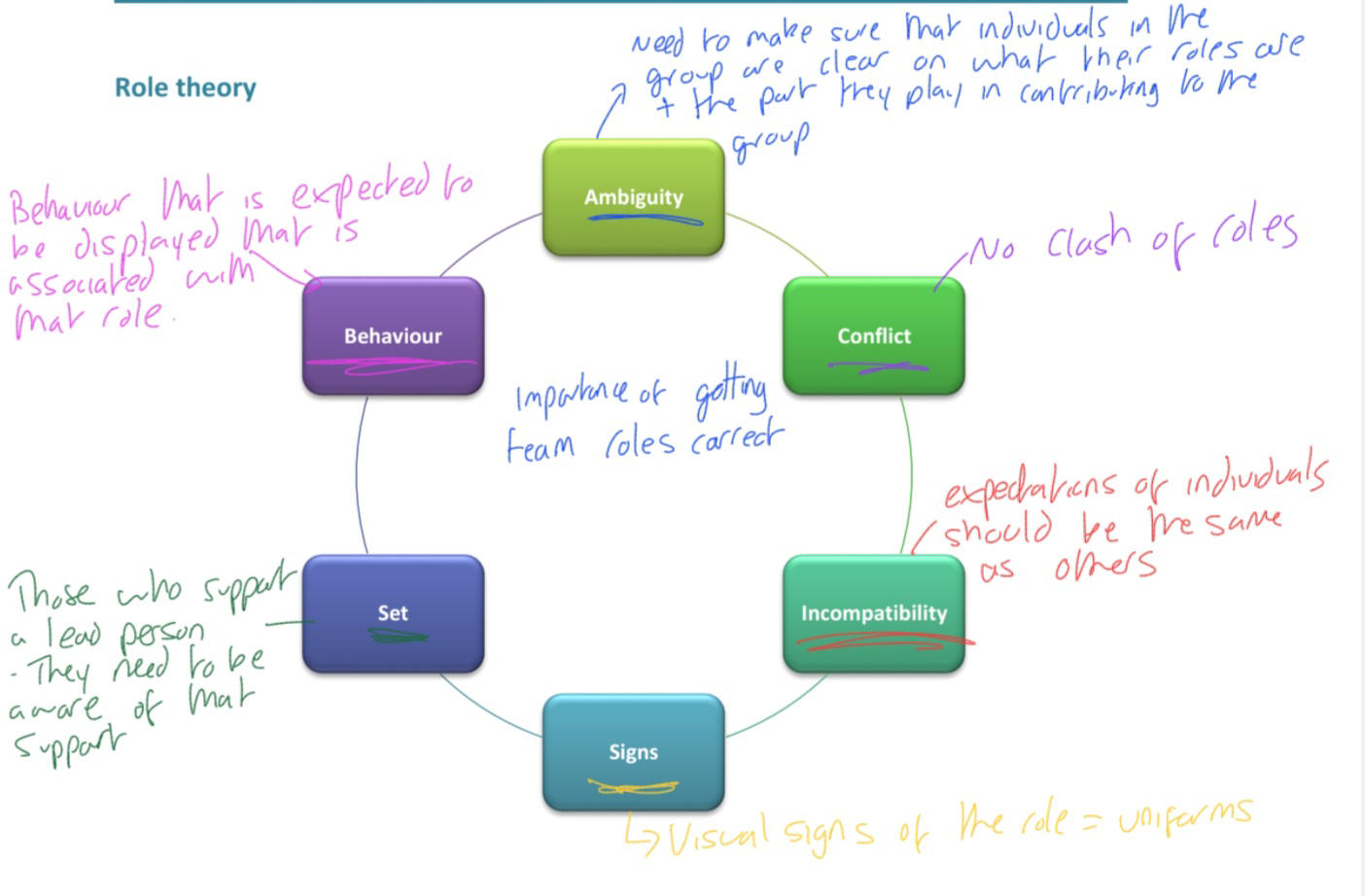
What is role theory
10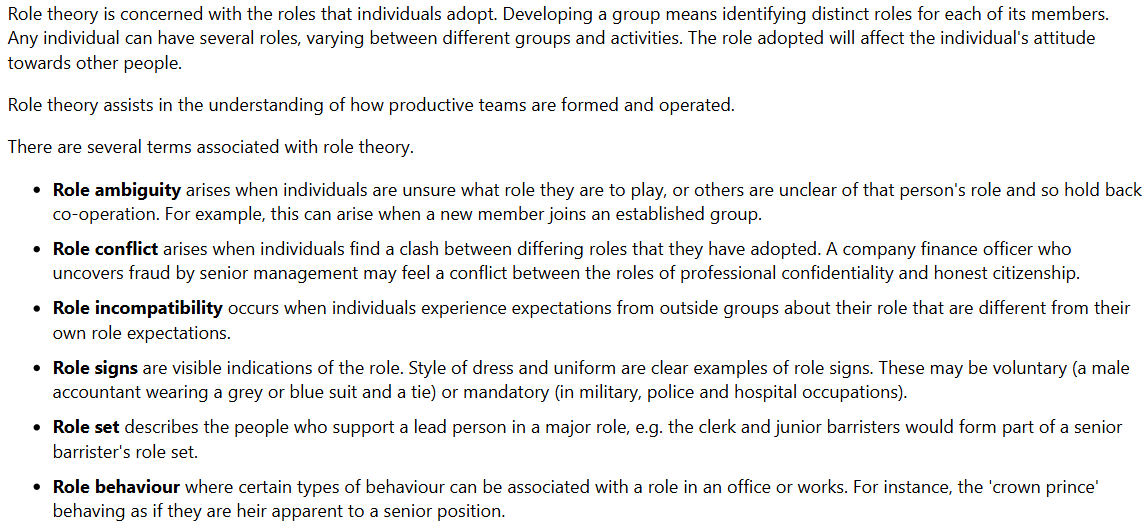
What is role theory?
11
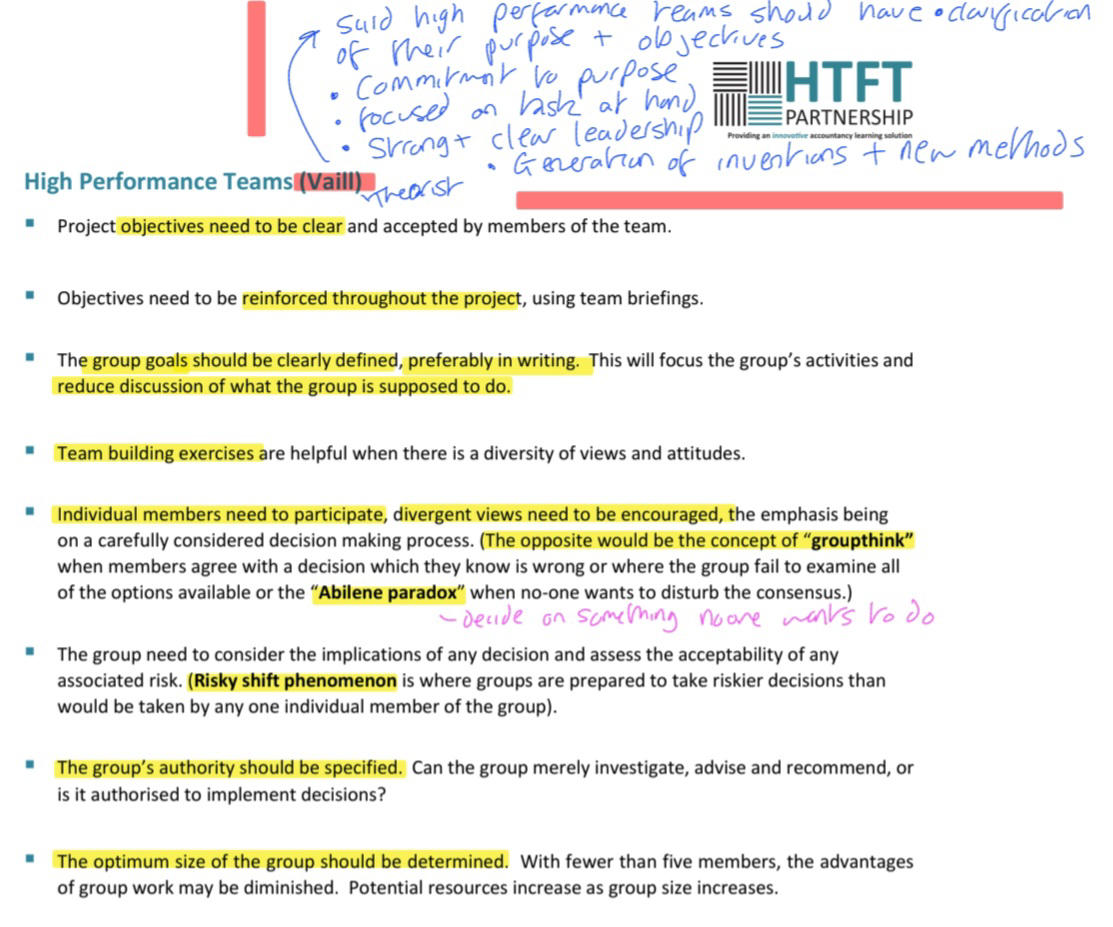
What is Vaill's theory on high performance teams
high performing teams share certain characteristics
* clarification of broad purposes and near term objectives
* commitment to purpose
* teamwork focused on the task at hand
* strong and clear leadership
* generation of inventions and new methods
* clarification of broad purposes and near term objectives
* commitment to purpose
* teamwork focused on the task at hand
* strong and clear leadership
* generation of inventions and new methods
12
What affects group cohesiveness?
Membership factors
* Homogeneity - of status both internally or externally leads to a more cohesive group
* Alternatives - if the member has alternatives then dependance on the group is reduced, also high turnover of group members will mean the group lacks cohesion
* Size of the group - as the size of the group goes up productivity of individual members goes down, less opportunity to contribute, cliques can form, less work is done
* membership in other groups - this may detract from the cohesion and effectiveness of the original group
Environmental factors
* Task - the nature of the task and its organisation must be compatible
* isolation of the group - external threats and incentives are lower the omre isolated the group is
* the climate of management and leadership - the leadership style adopted shoul dbe appropriate to the task.
Dynamic factors
* Groups are continually changing - not just in membership but also understading of the task and each other
* Success and failure - there can be a tendancy for a groups to persist in failure
* Homogeneity - of status both internally or externally leads to a more cohesive group
* Alternatives - if the member has alternatives then dependance on the group is reduced, also high turnover of group members will mean the group lacks cohesion
* Size of the group - as the size of the group goes up productivity of individual members goes down, less opportunity to contribute, cliques can form, less work is done
* membership in other groups - this may detract from the cohesion and effectiveness of the original group
Environmental factors
* Task - the nature of the task and its organisation must be compatible
* isolation of the group - external threats and incentives are lower the omre isolated the group is
* the climate of management and leadership - the leadership style adopted shoul dbe appropriate to the task.
Dynamic factors
* Groups are continually changing - not just in membership but also understading of the task and each other
* Success and failure - there can be a tendancy for a groups to persist in failure
13
What are Peters and Watermans 5 key aspects of a successful team?
* Small - gives everyone an ability to contribute
* Limited duration - only there to acheive a particular task
* Voluntary - should choose to be a member
* Communication informal and unstructured - no status barriers
* Action oriented - the team should create a plan for action not just a form of words
* Limited duration - only there to acheive a particular task
* Voluntary - should choose to be a member
* Communication informal and unstructured - no status barriers
* Action oriented - the team should create a plan for action not just a form of words
14
What is distributed leadership?
Also known as shared, or collective leadership and involves the sharing of the power base between a number of individuals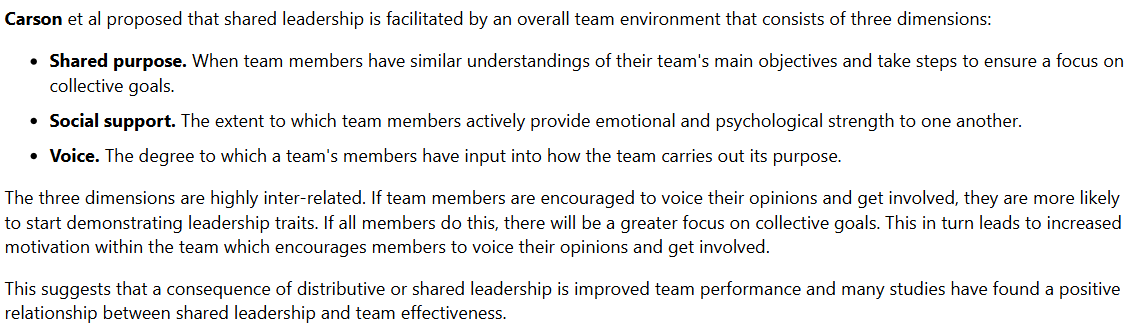
15
What is intra group conflict?
16
What is inter group conflict?
17
Inter group conflicts require what 3 ingredients?
18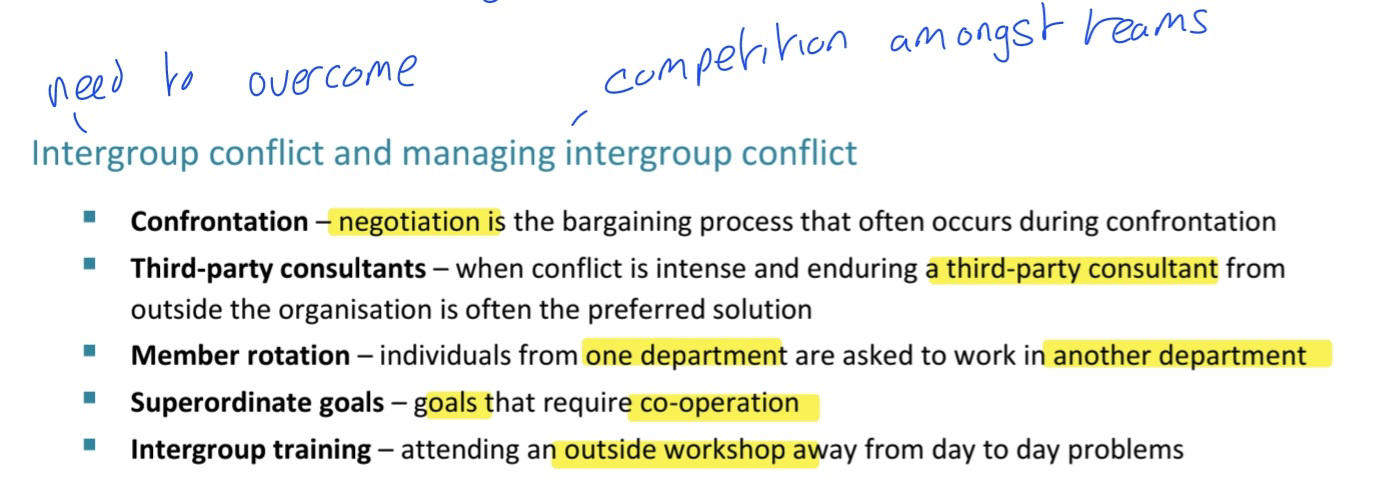
What methods can be used to manage inter group conflicts?
19
what is the difference between traditional markets and ecosystems
in business ecosystems organisations as a whole create more value by working collaboratively
traditional markets are linear and act with self interest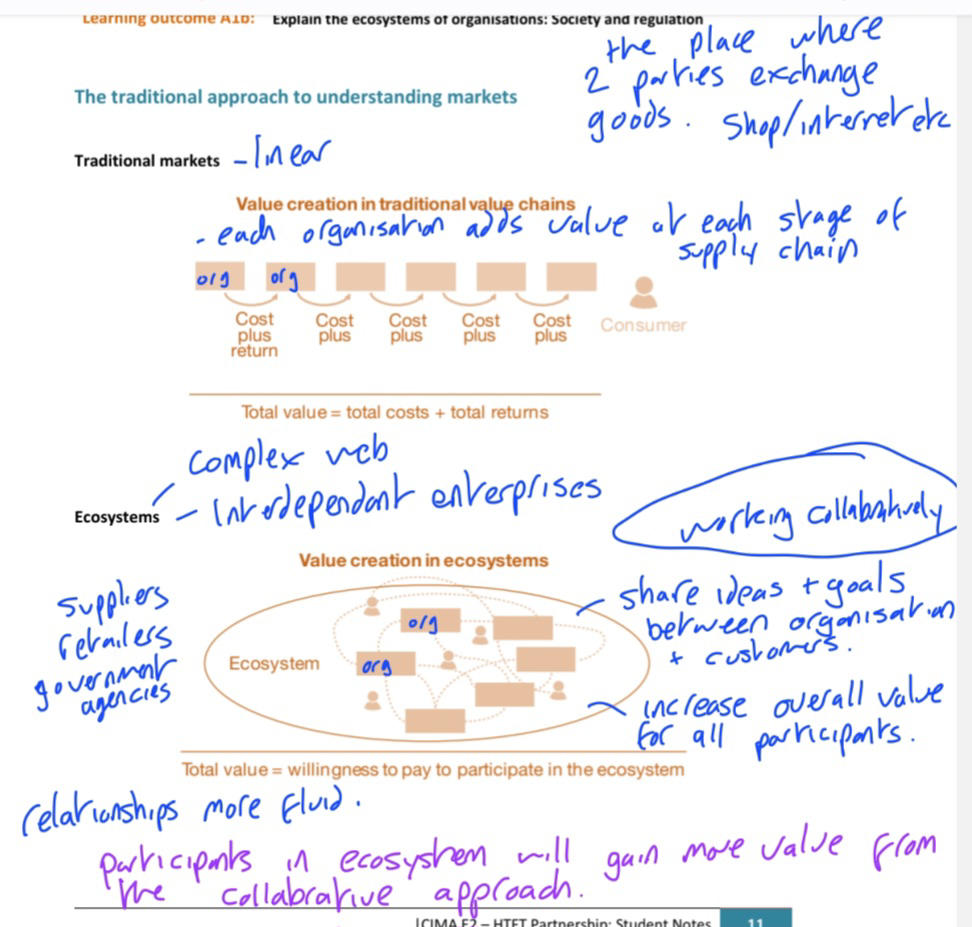
traditional markets are linear and act with self interest
20
What are the drivers of the digital revolution
* Mobile devices
* Social media
* Cloud computing
* Data analytics and visuaisation
*AI and machine learning
*Blockchain
* Cryptocurrencies
* Internet of things (smart devices)
* Bio-nanotechnology
*3D printing
* Social media
* Cloud computing
* Data analytics and visuaisation
*AI and machine learning
*Blockchain
* Cryptocurrencies
* Internet of things (smart devices)
* Bio-nanotechnology
*3D printing
21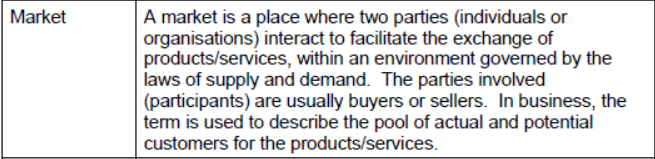
What is a market?
22
What is a physical market?
23
What is a virtual market
24
Define competition
25
What is a traditional market
26
What is a business ecosystem
A business ecosystem is a network of organisations (suppliers, distributors, customers, competitors, government agencies, etc.), who are involved in the delivery of a specific product or service through both competition and cooperation. This network will collaborate and evolve roles and capabilities to build value and increase efficiency.The idea is that each entity in the ecosystem affects and is affected by the others, creating a constantly evolving relationship in which each entity must be flexible and adaptable to survive, as is the case in a biological ecosystem.In this context, an ecosystem is a number of interdependent enterprises drawn together in complex relationships aimed at creating and allocating business value. There is a mutual and multiplicative interaction about business ecosystems whereby the whole is greater than the sum of the individual parts, thus providing the incentive for the participants to be part of the system.Business ecosystems are broad by nature, potentially spanning multiple geographies and industries, including public and private institutions, and consumers. Organisations will therefore come together to create value.In a less-competitive ecosystem, groups such as a government, charity and a community group might collaborate on health or public policy because each entity has a shared interest and goal.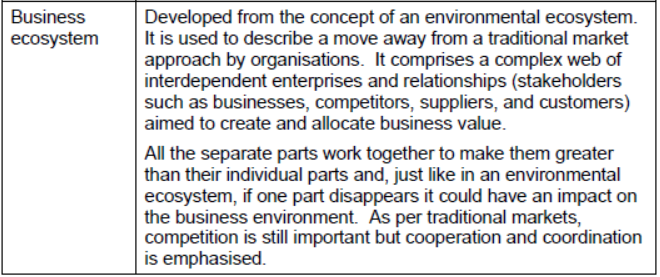
27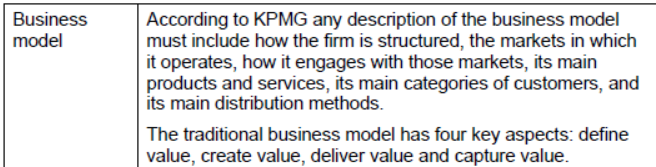
What is a business model
28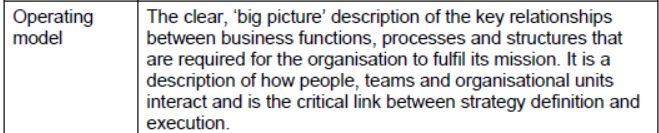
What is an operating model
29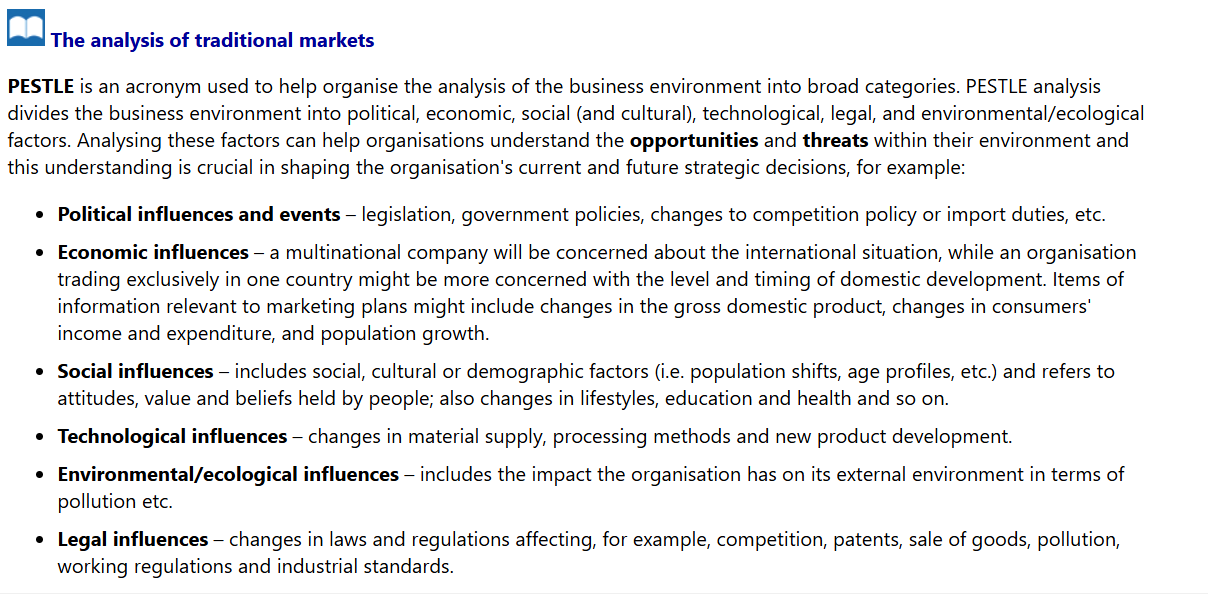
What is PESTEL analysis
30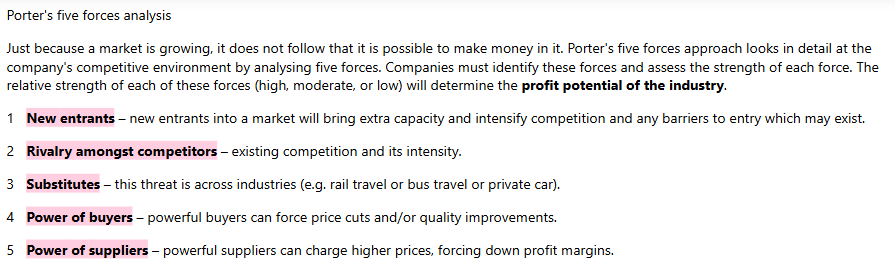
What is Porters 5 forces analysis
31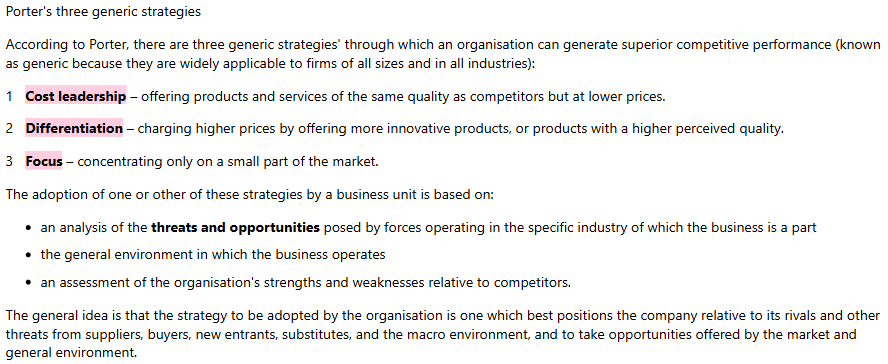
What are Porters 3 generic strategies to generate superior competitive performance?
32
Business ecosystems and traditional markets have Participants and interactions - explain participants
33
Business ecosystems and traditional markets have participants and interactions - explain interactions
34
What are the characteristics of a business ecosystem
Orchestration
Mutuality
Mutuality
35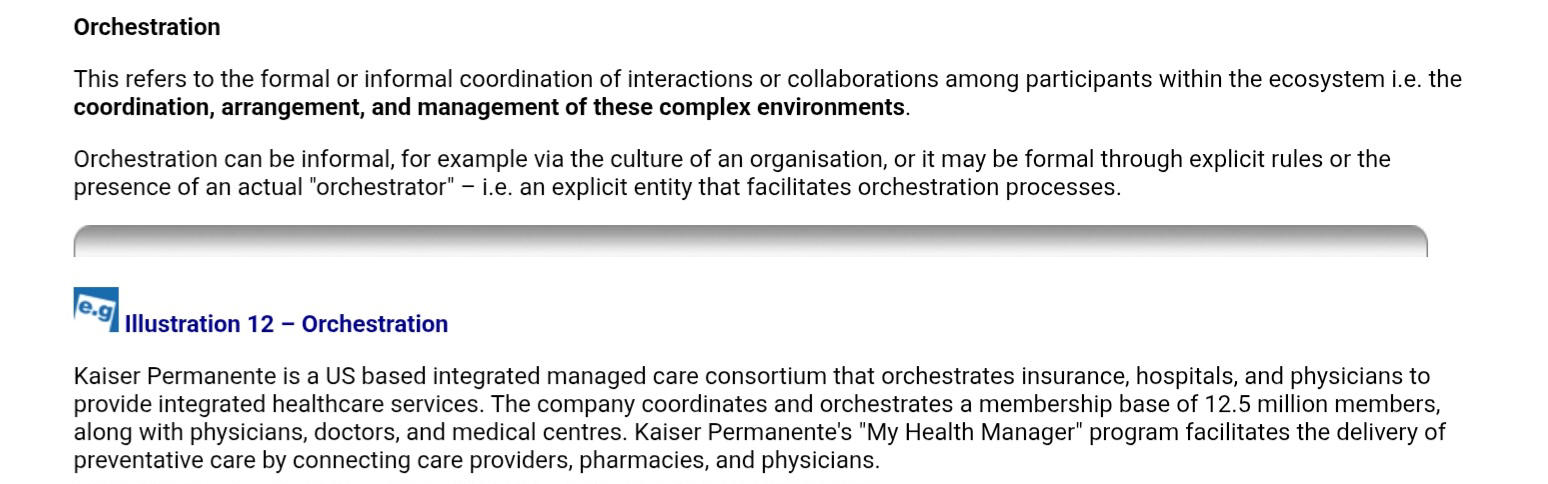
Explain Orchestration
36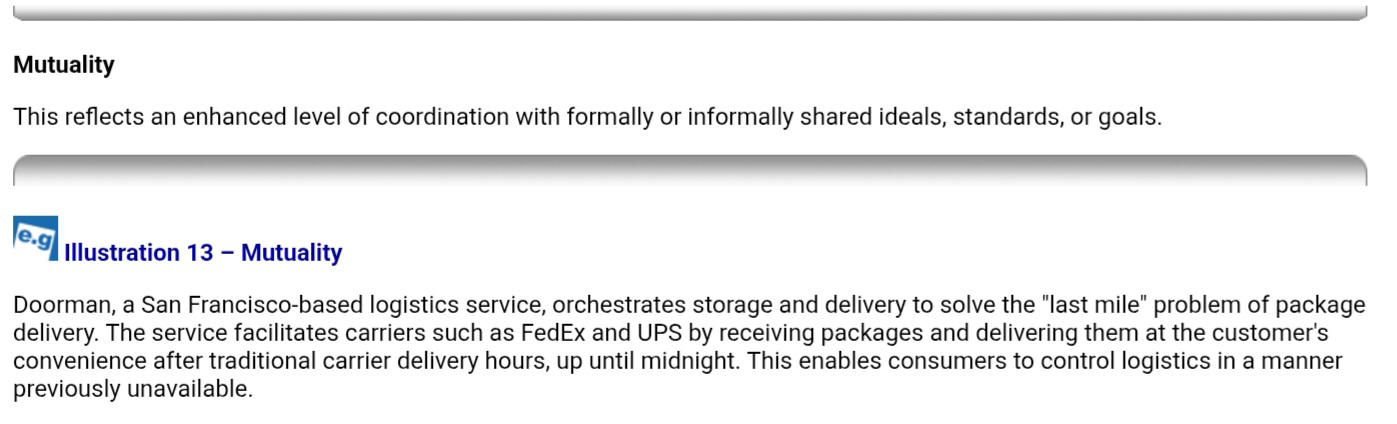
Explain mutuality
37
What are the goals of a business eco system
C Create barriers
A Address human need
C Collaborate
S Streamlining
A Accelerate learning
I Innovate
L Leverage technology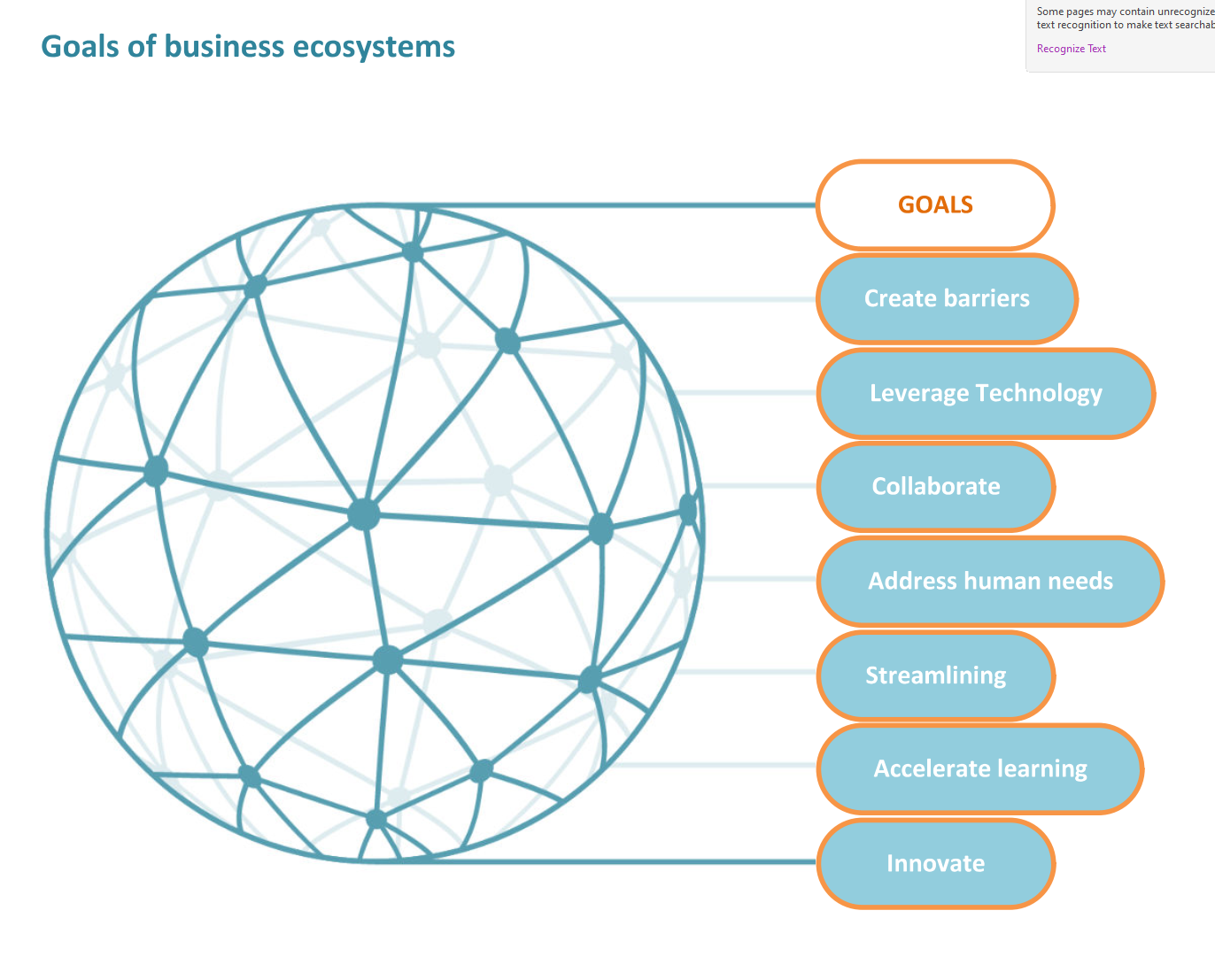
A Address human need
C Collaborate
S Streamlining
A Accelerate learning
I Innovate
L Leverage technology
38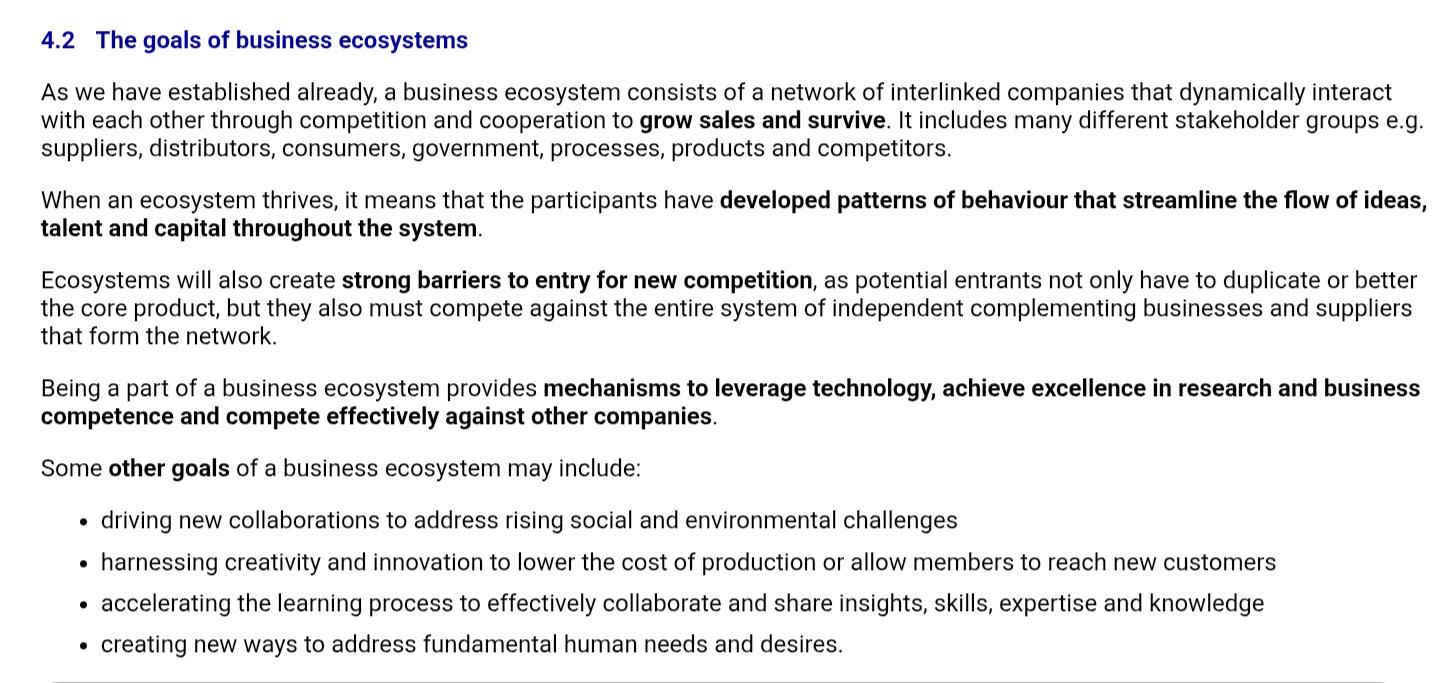
Elaborate on goals of an ecosystem
39
How is value created?
40
How is value captured?
41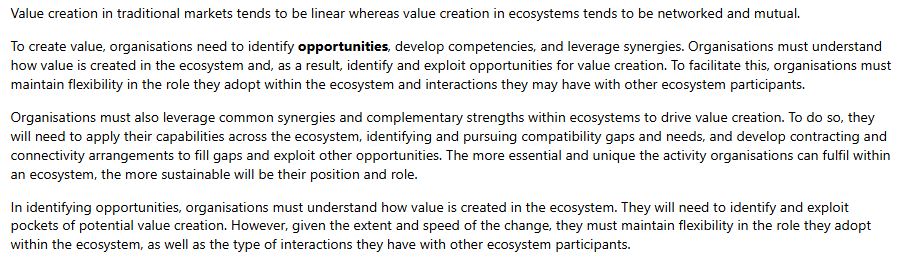
In terms of value creation how do traditional markets and eco systems differ?
42
What are the 2 types of value capture
Direct value capture
Indirect value capture
Indirect value capture
43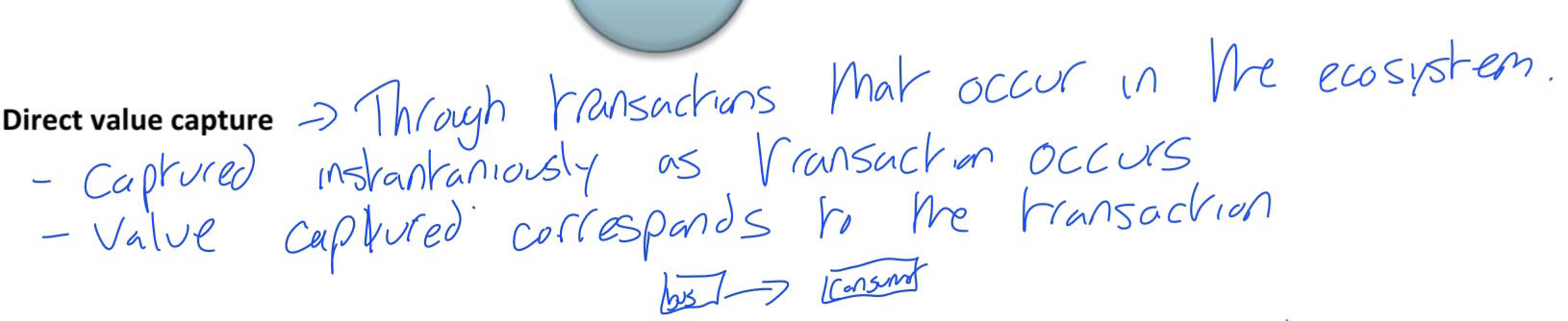
explain direct value capture
44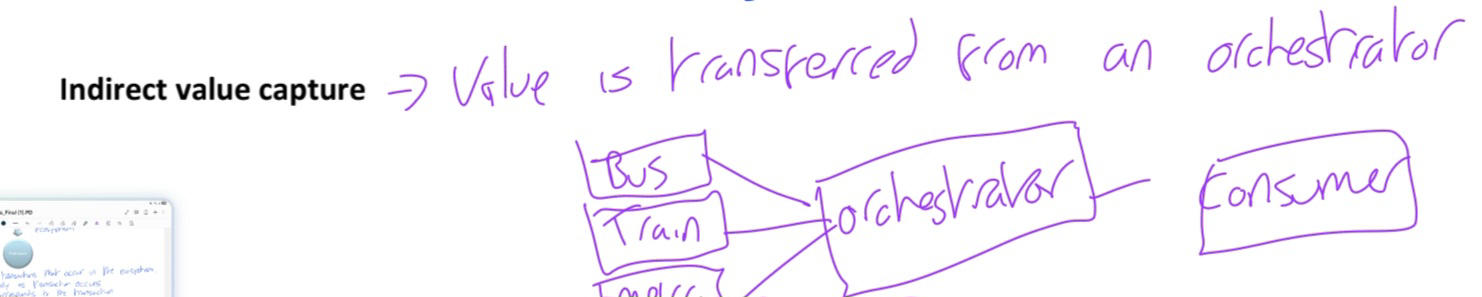
Explain indirect value capture
45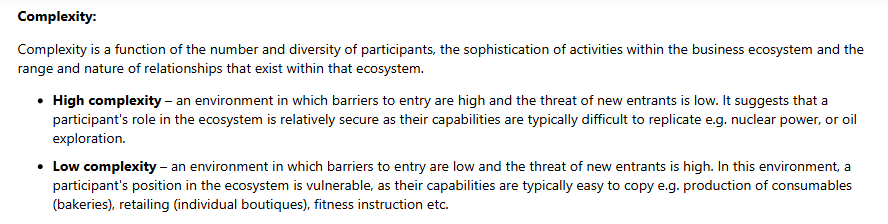
Explain Complexity (as a driver to a strategy for capturing value)
46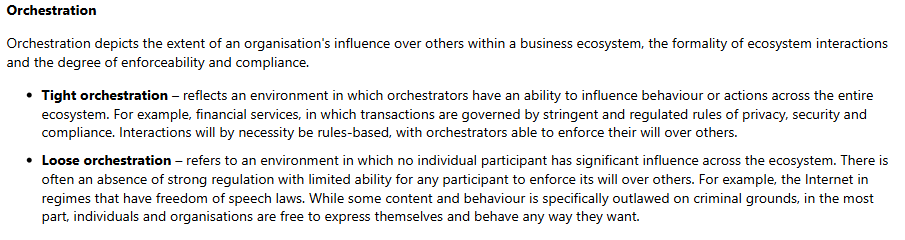
Explain Orchestration (as a driver to a strategy for capturing value)
47
What are the 4 Ecosystem archetypes
Hornets nest
Lions Pride
Sharks Tank
Wolf pack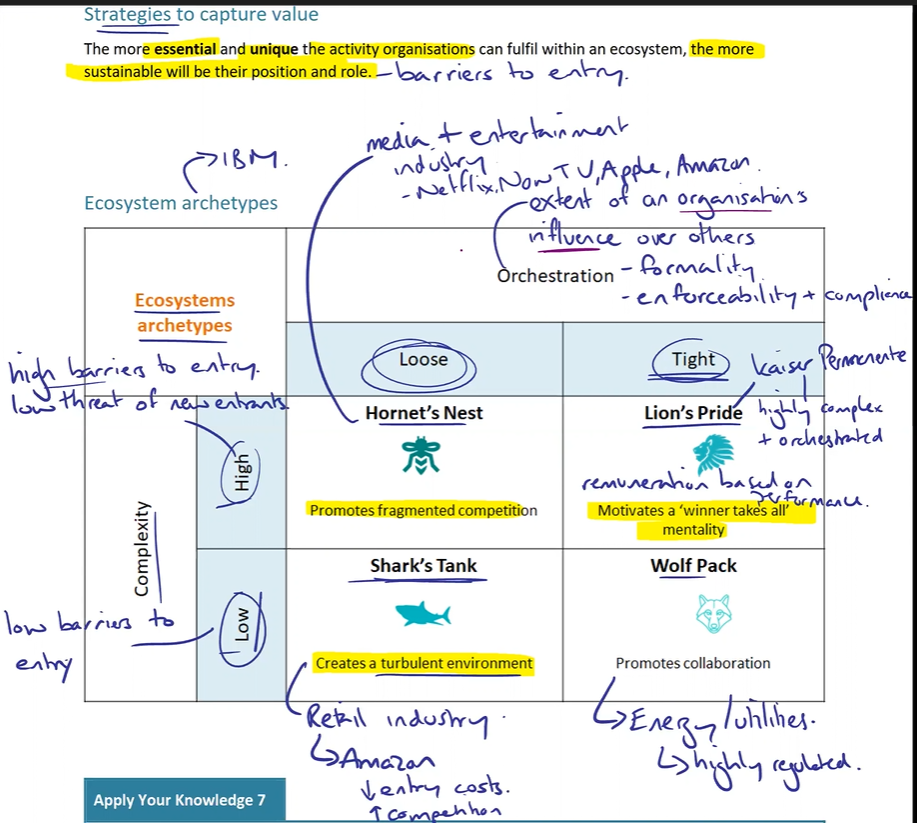
Lions Pride
Sharks Tank
Wolf pack
48
Explain the ecosystem archetype Shark Tank
49
Explain the ecosystem archetype Lions Pride
50
Explain the ecosystem archetype Hornets Nest
51
Explain the ecosystem archetype Wolf Pack
52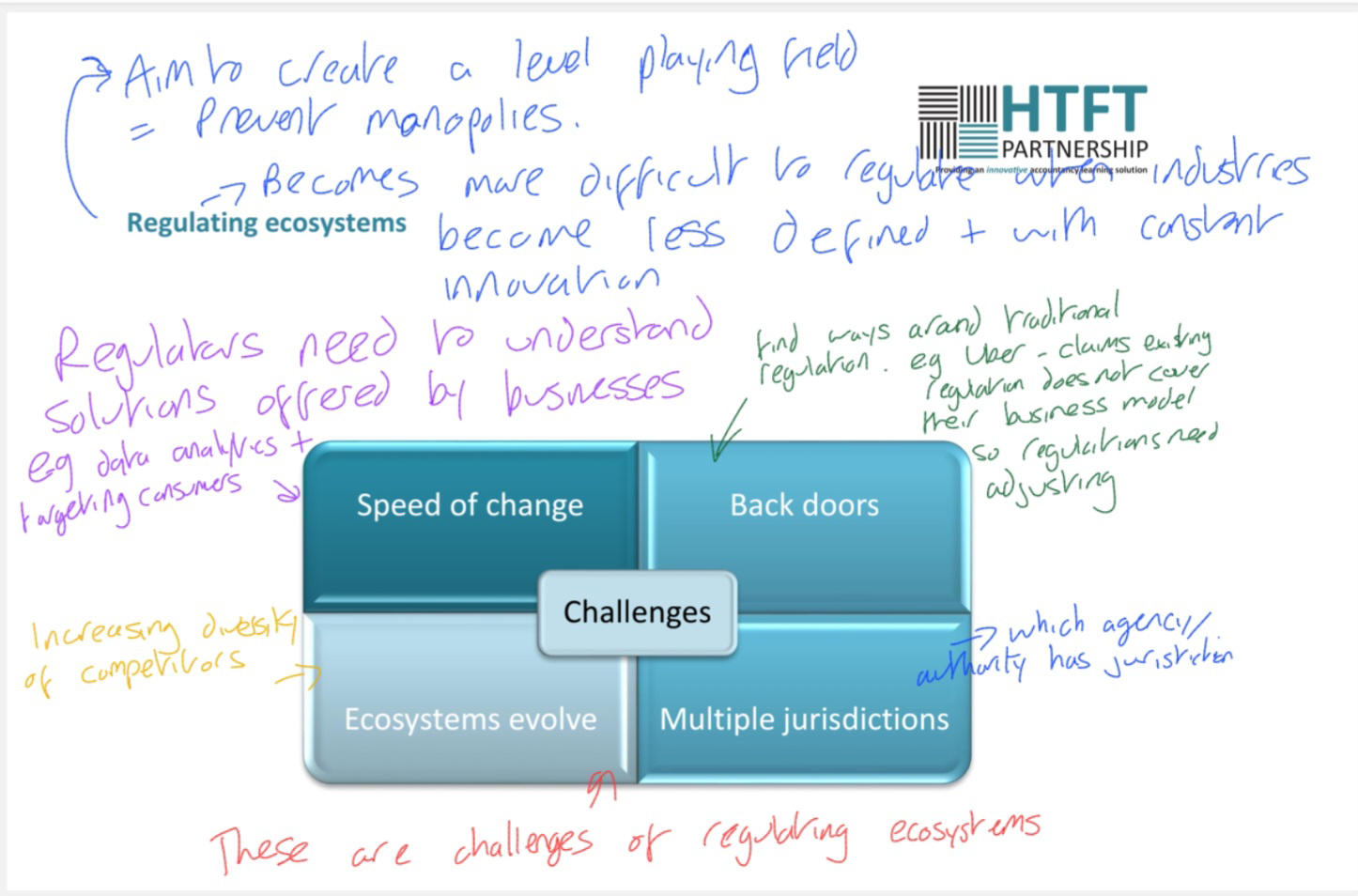
What are the 4 challenges to regulating ecosystems
53
In the challenges to regulating ecosystems explain Speed Of Change
54
In the challenges to regulating ecosystems explain Back Door
55
In the challenges to regulating ecosystems explain Ecosystems Evolve
56
In the challenges to regulating ecosystems explain Multiple Jurisdictions
57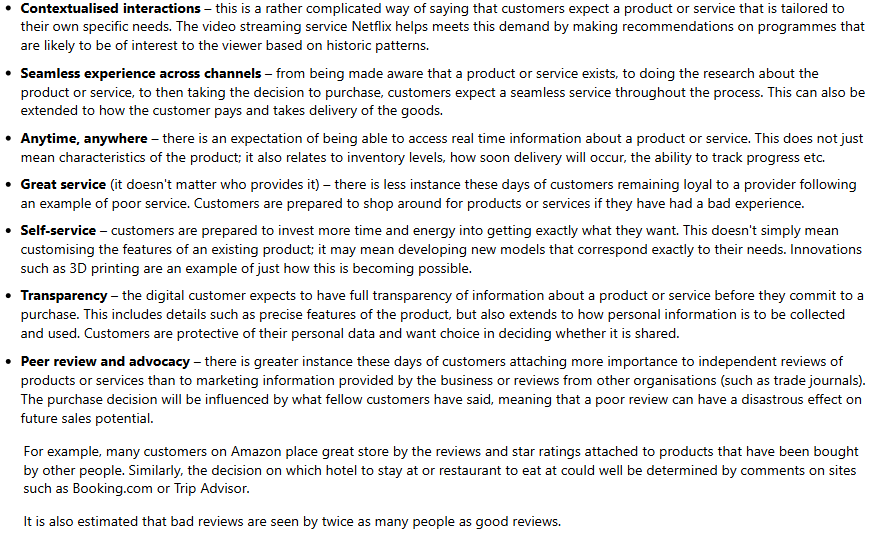
What does a digital customer want? (7)
58
How can organisations maintain a competitive advantage? (4)
Design Thinking
Experiential Pilots
Prototyping
Brand Atomisation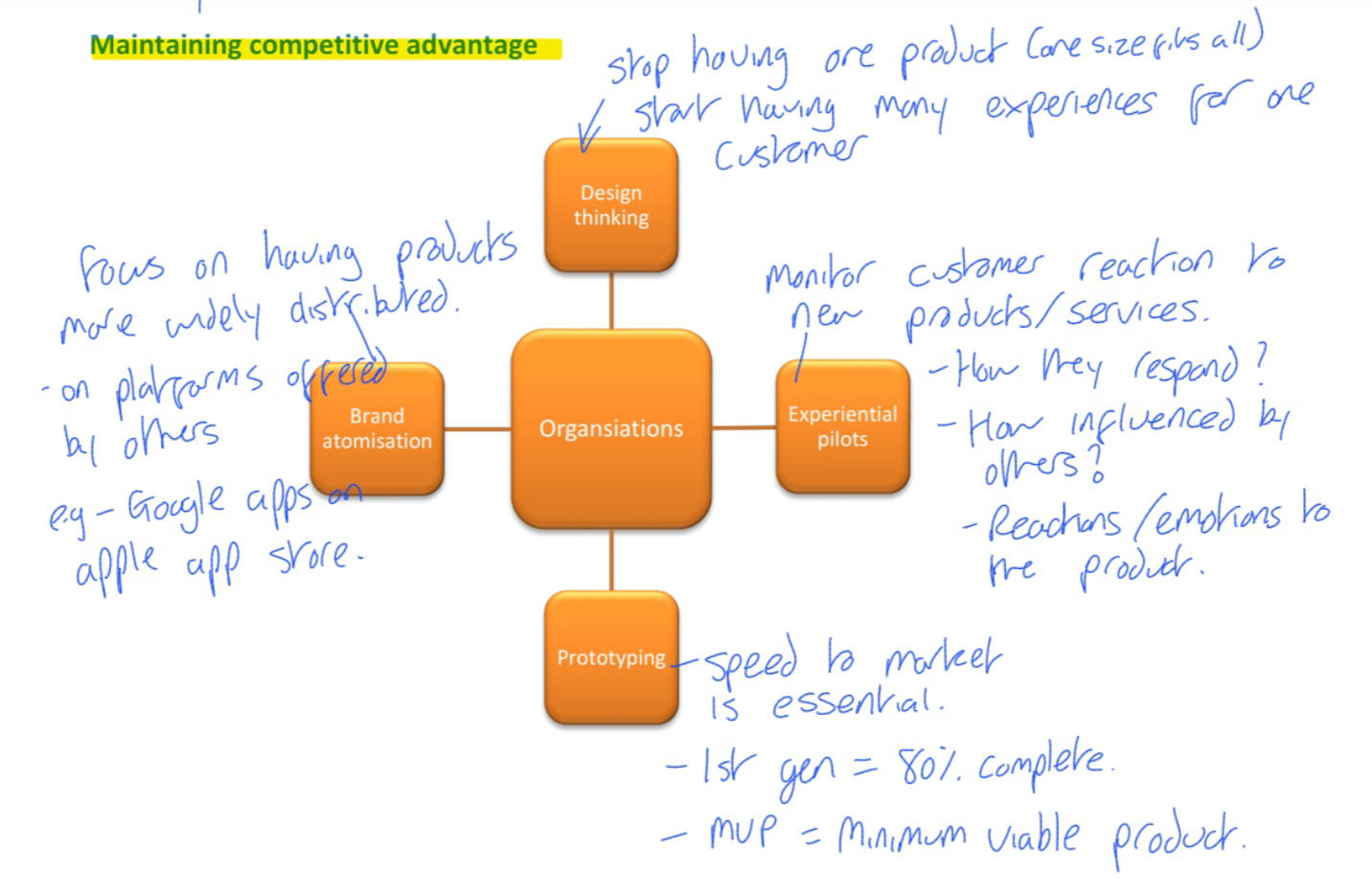
Experiential Pilots
Prototyping
Brand Atomisation
59
Explain Design Thinking
instead of designing a single product or service that can be marketed to many customers, there should be a shift in mind-set to designing many experiences for one customer. This must be mixed with the ability to constantly learn and adapt as customer needs change.
60
Explain Experiential Pilots
this refers to the need to monitor how customers behave and to gain an appreciation of their reaction to new experiences. Questions should be asked such as "How are the customers responding to a new technology in the way they engage with it? How are customers being influenced by others? What reactions, emotional and behavioural, are we seeing through the new customer experience?"
61
Explain Prototyping
instead of waiting until a new product has been perfected before bringing it to market, an organisation should recognise that speed to market is vital. So, the first generation of a product may be only about 80% ready, but it provides vital feedback in terms of customer reactions and what needs to be done with the second version.
62
Explain Atomisation
organisations will need to design their offerings so that they can be more widely distributed and be part of the platform that is offered by other providers.
63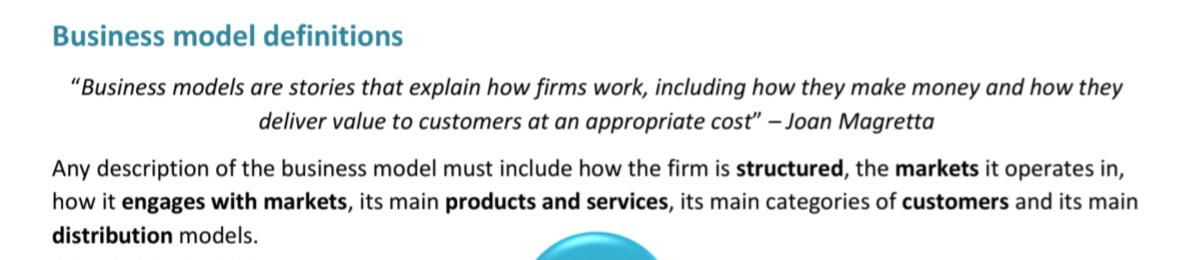
What is the definition of a business model
64
What are the key aspects of a traditional business model? (4)
65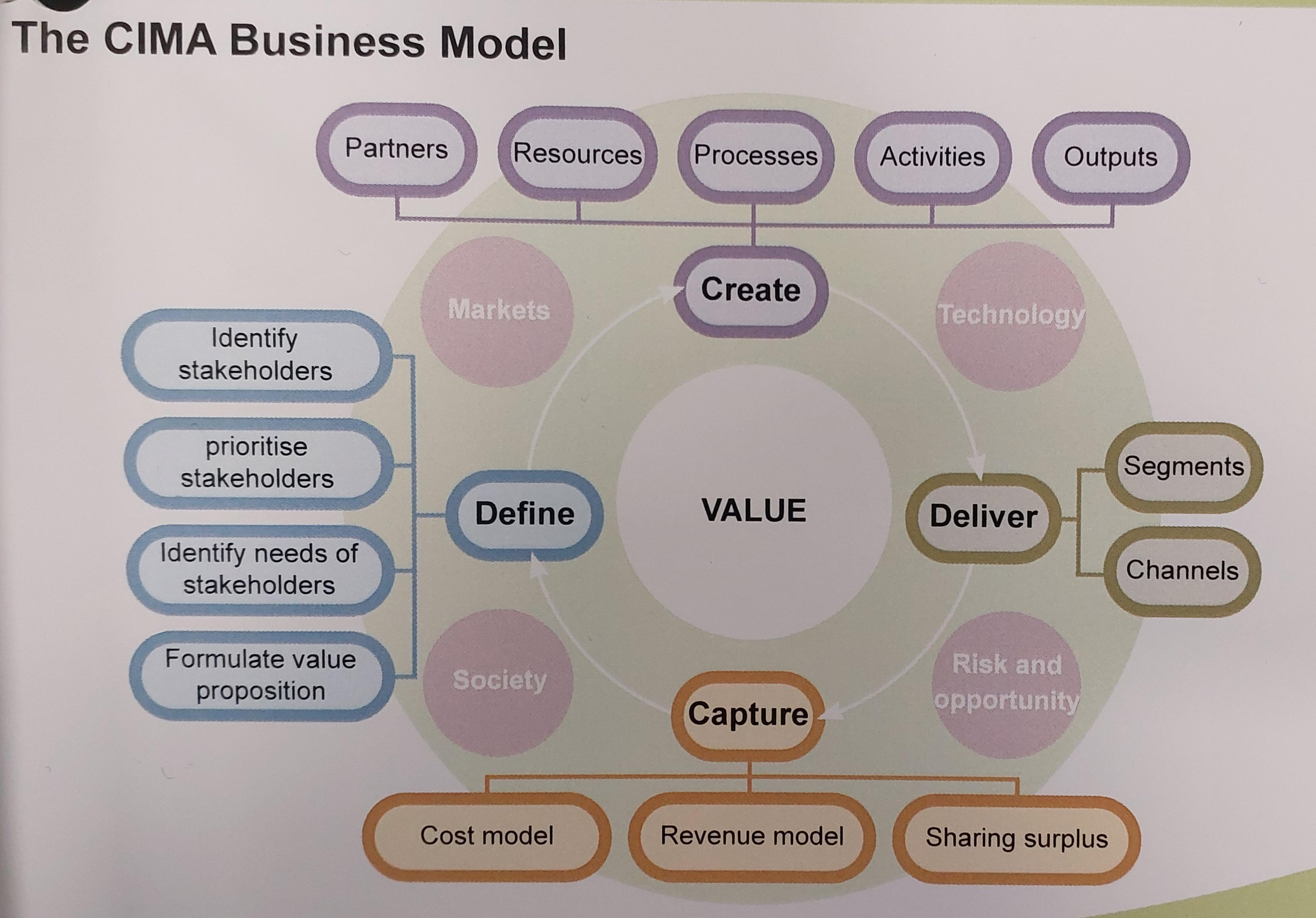
What is the CIMA business model ?
66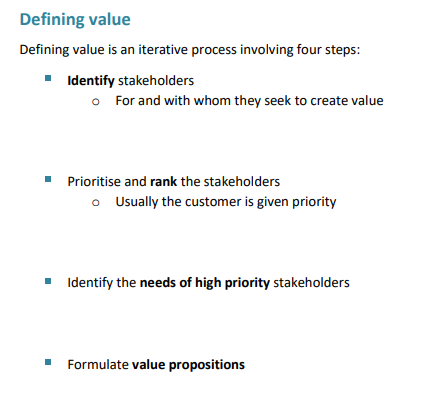
What are the 4 steps to defining value? (1st key aspect of traditional business model)
67
What is a stakeholder
any person or group that can affect or be affected by the policies or activities of an organisation
68
How do you Identify stakeholders using mendelows matrix
Stakeholder identification is necessary to gain an understanding of the sources of risks and disruption. It is important in terms of assessing the sources of influence over the objectives and outcomes for the business decisions.
In strategic analysis, stakeholder influence is assessed in terms of each stakeholders power and interest, with higher power and higher interest combining to generate the highest influence.
Low interest low power - small shareholders / general public
High interest low power - staff/customers/suppliers
Low interest high power - national government/institutional shareholders
high interest high power - Directors/major shareholders/trade unions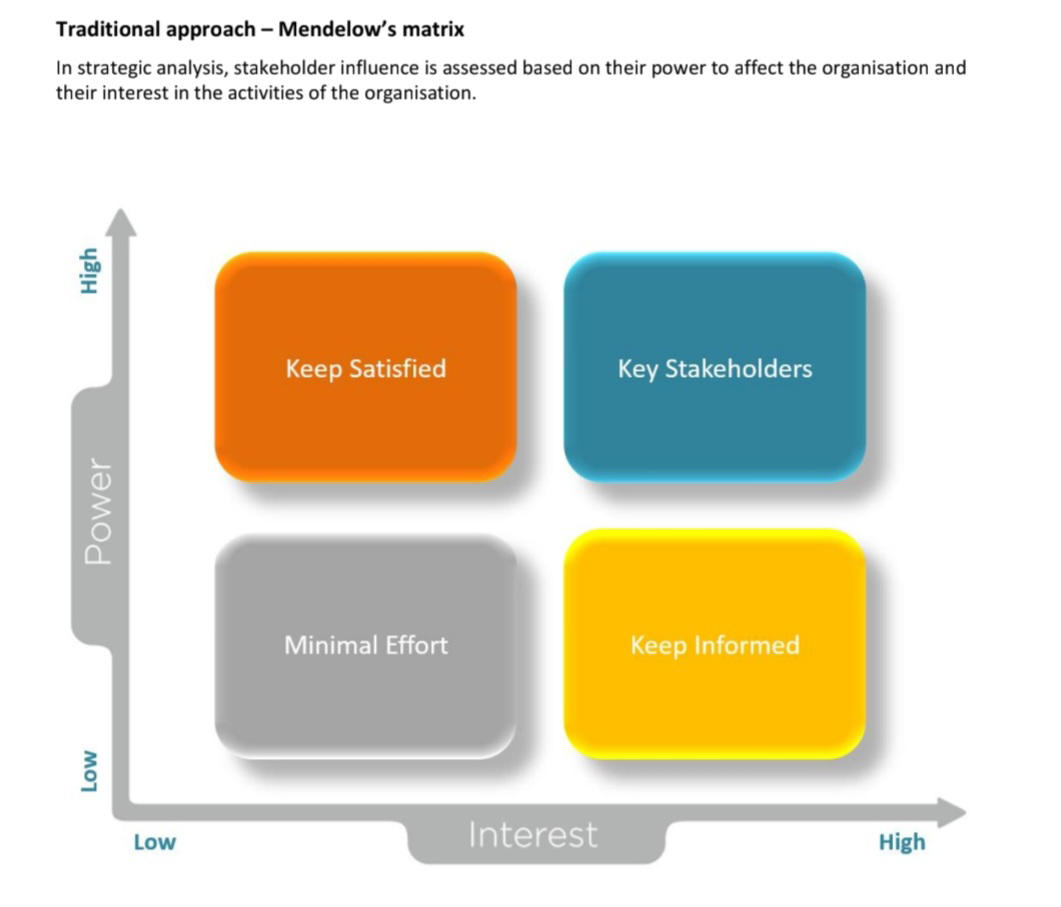
In strategic analysis, stakeholder influence is assessed in terms of each stakeholders power and interest, with higher power and higher interest combining to generate the highest influence.
Low interest low power - small shareholders / general public
High interest low power - staff/customers/suppliers
Low interest high power - national government/institutional shareholders
high interest high power - Directors/major shareholders/trade unions
69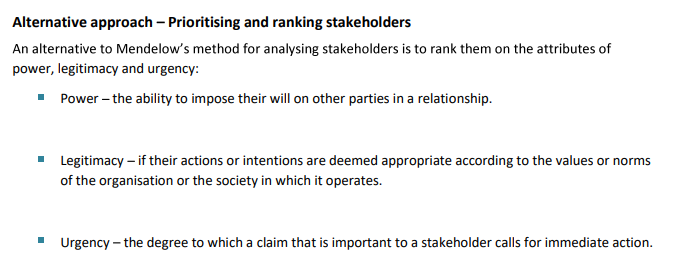
What 3 attributes are used to rank stakeholders?
70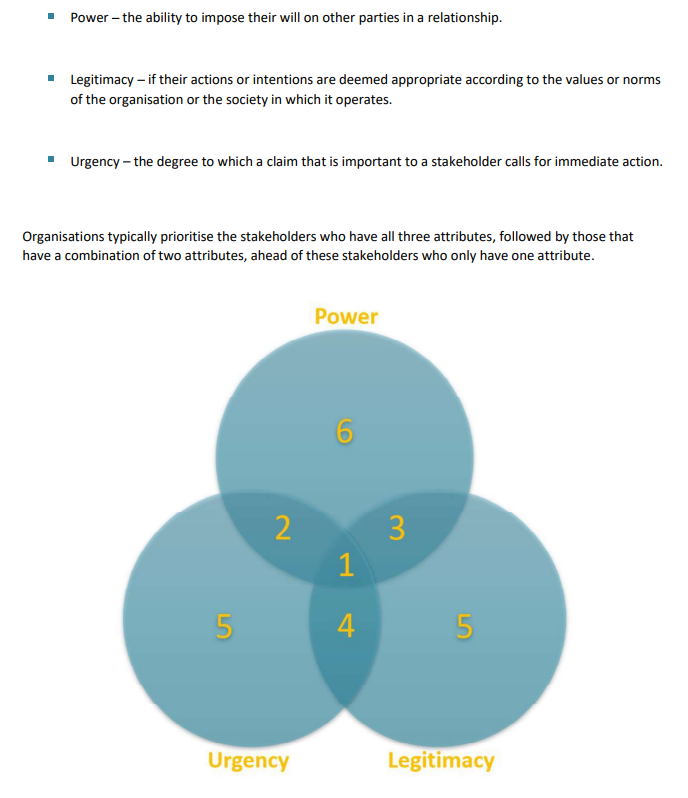
How do you prioritise stakeholders based on their ranking?
71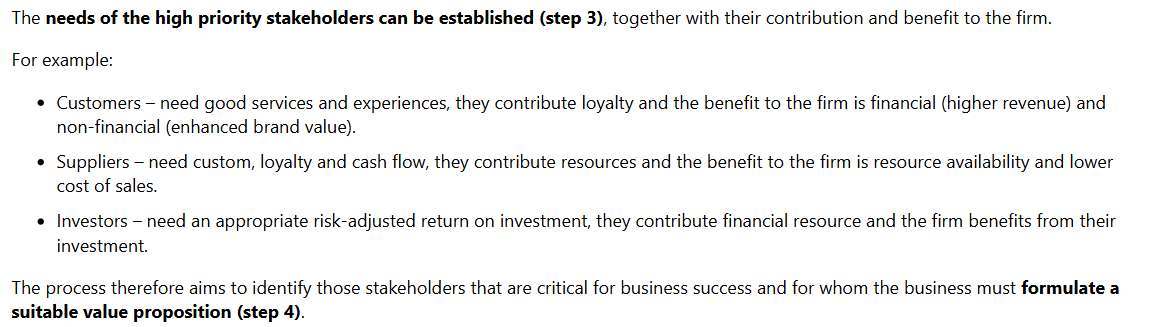
How do you identify the needs of the priority stakeholders?
72
How do you Create Value? (2nd Key aspect of the business model)
*Partners
*Resources
*Processes
*Activities
*Outputs
*Resources
*Processes
*Activities
*Outputs
73
How do you Create Value? (2nd Key aspect of the business model)
*Partners - suppliers/employees/contractors who provide access to resources/markets and technologies.
*Resources - firms use their relationships with their suppliers to source and secure the right resources to make products or services that satisfy their customers. These are both tangible and intangible inputs.
*Processes - firms need to design, develop, and deploy processes that provide the infrastructure to convert resources (inputs) into goods and services (outputs). High-quality processes can lead to improved cycle times, productivity, quality, and costs.
*Activities - firms and their partners engage in activities that use the processes to convert resources into goods and services. They depict what is done and where know-how, skills, learning, and culture come together to make things happen, capturing how valuable the people element is in value creation. Effectiveness and efficiency are the key measures of success in this context.
*Outputs - resources are converted through activities and processing into outputs which can be products, services, or experiences, all of which aim to meet the customer value proposition
*Resources - firms use their relationships with their suppliers to source and secure the right resources to make products or services that satisfy their customers. These are both tangible and intangible inputs.
*Processes - firms need to design, develop, and deploy processes that provide the infrastructure to convert resources (inputs) into goods and services (outputs). High-quality processes can lead to improved cycle times, productivity, quality, and costs.
*Activities - firms and their partners engage in activities that use the processes to convert resources into goods and services. They depict what is done and where know-how, skills, learning, and culture come together to make things happen, capturing how valuable the people element is in value creation. Effectiveness and efficiency are the key measures of success in this context.
*Outputs - resources are converted through activities and processing into outputs which can be products, services, or experiences, all of which aim to meet the customer value proposition
74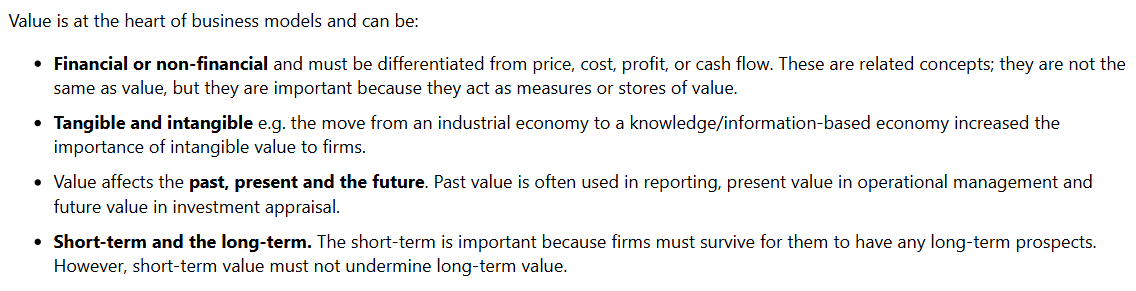
What is value?
75
How do you deliver value (3rd key aspect of traditional business model)
*Segments
*Channels
*Channels
76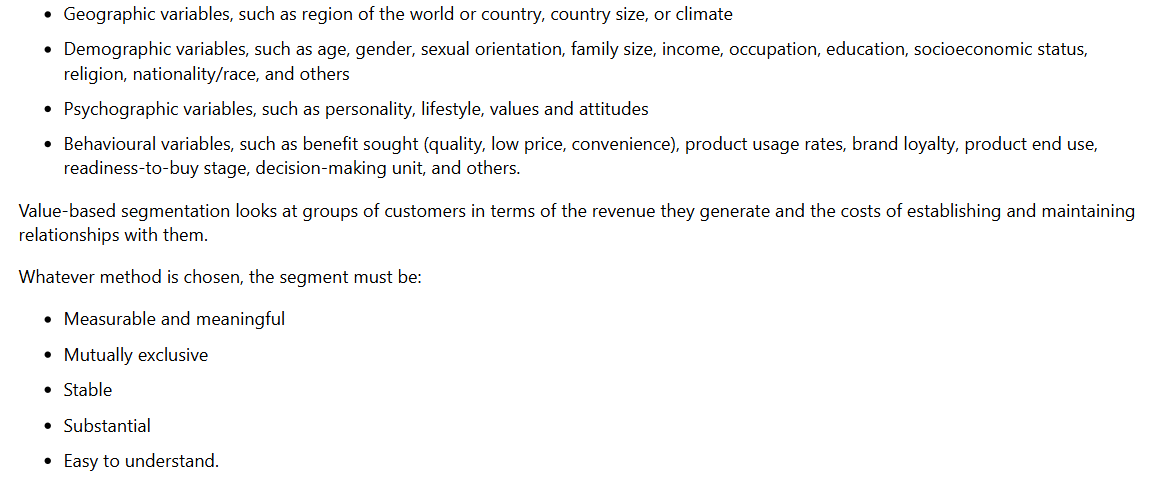
How do you use segments to deliver value?
77
How do you use channels to deliver value?
Firms deliver value to customers through communication, distribution, and sales channels. In this context the advent and growth of technology has opened many channels for firms to connect with their customers, for example using mobile phones and social media.
78
When is value captured?
When revenue earned from delivering value exceeds the costs of creating value
79
How do you capture value (4th key aspect of traditional business model)
*Cost model
*Revenue model
*Sharing surplus
*Revenue model
*Sharing surplus
80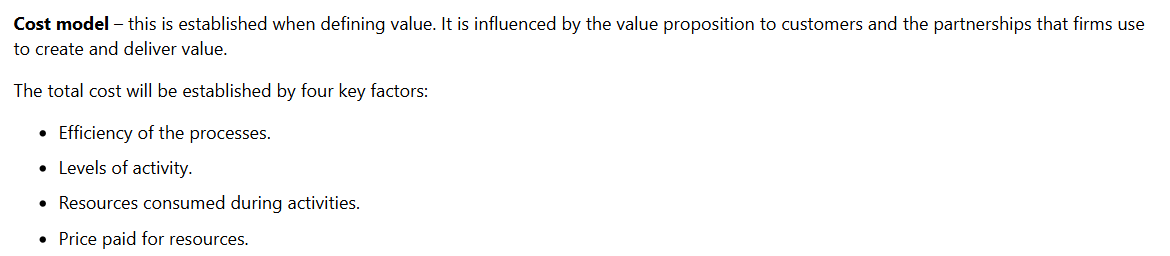
What are the 4 factors affecting the cost model?
81
Explain revenue model
82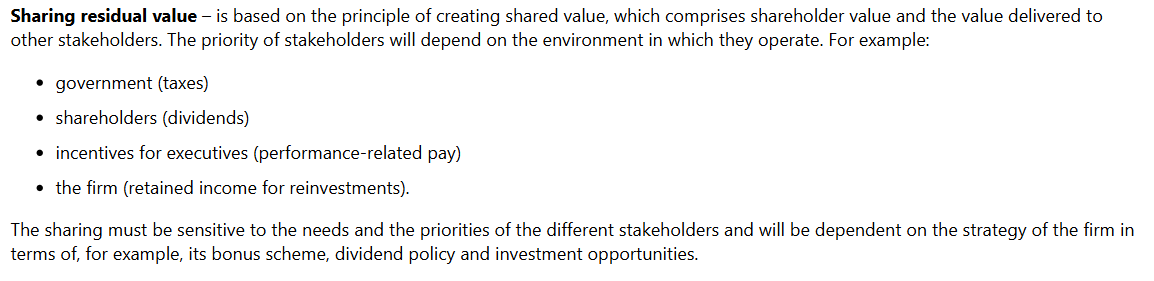
Explain sharing residual value
83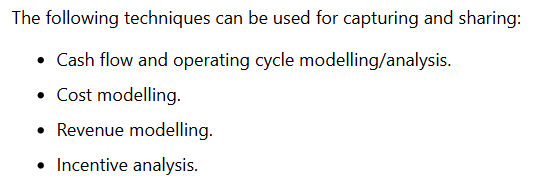
What techniques can be used for capturing and sharing value?
84
What 4 key actions should firms adopt when dealing with customer data?
85
What are the 5 key areas of business models and digital ecosystems
*Disruptive technology
*Surviving digital disruption
*Leadership and culture
*Strategies to build disruptive business
*Digital operating models
*Surviving digital disruption
*Leadership and culture
*Strategies to build disruptive business
*Digital operating models
86
What is disruptive tehnology
87
What are disruptors
88
in surviving digital disruption what are the 5 emerging trends shaping the digital landscape?
*The internet of me
*Outcome economy
*The platform revolution
*The intelligent enterprise
*Workforce reimagined
*Outcome economy
*The platform revolution
*The intelligent enterprise
*Workforce reimagined
89
What is the internet of me?
90
What is outcome economy
91
What is the platform revolution
92
What is the intelligent enterprise?
93
What is workforce reimagined
94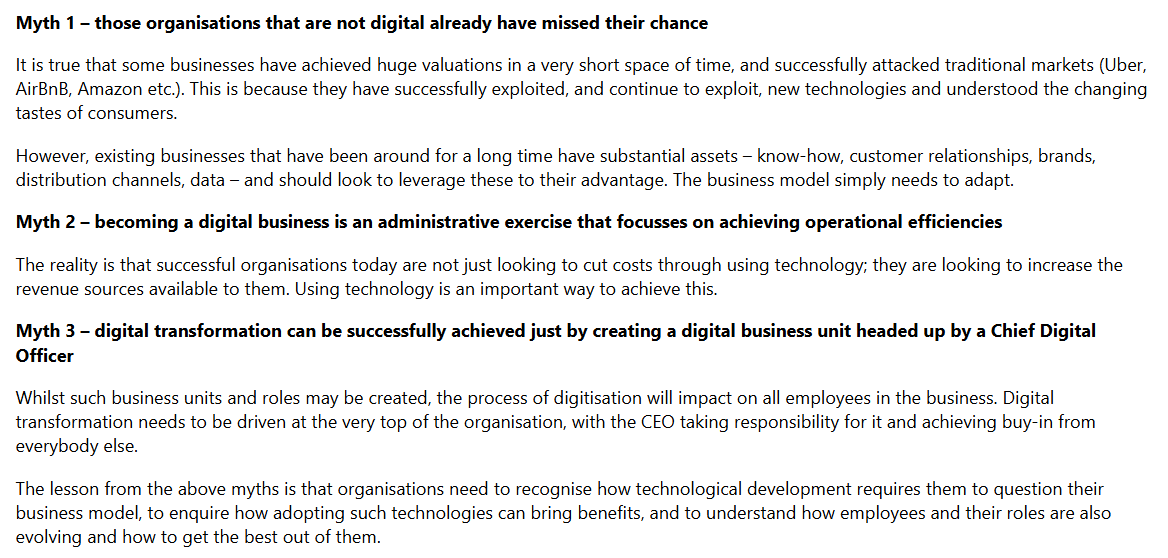
What are the myths about digital transformation
95
When considering how to foster digital talent what must companies be able to do? (3)
96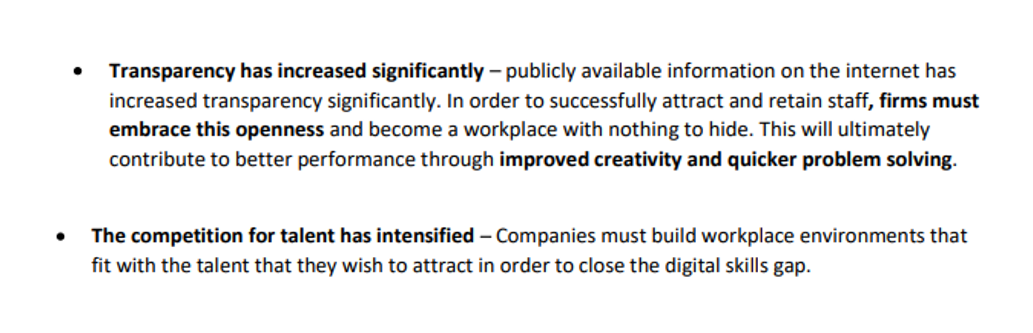
How can you attract and retain talent in the digital age?
97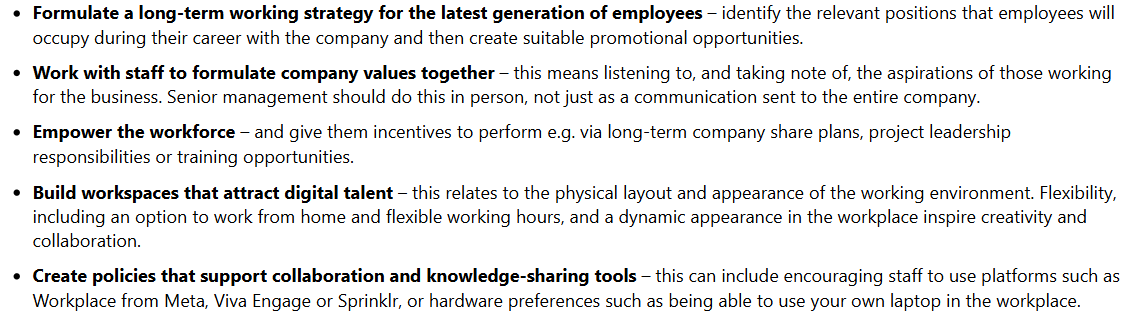
What are the 5 objectives to compete for talent?
98
What 6 key roles did the world economic forum indentify that CEO's will have to undertake?
* Creator of vision and mission – the company’s mission statement should be expanded to encompass a transformation purpose.
* Strategic planner – this is nothing new, but the focus will change. There should be a move from five year to annual planning cycles, driven by data and analysis. Greater focus should be on experimentation rather than long-term planning.
* Driver of information-based business models – find and develop new products that are (fully) data- and information-based for scalability.
* Enabler of the shift to on-demand operating models – the CEO should champion the benefit that can be gained from communities in the workplace, crowdsourcing, and staff on demand.
* Innovation promoter - appetite for risk / acceptance of failure.
* Operational excellence driver – identify ways in which automation can be introduced into processes in all departments of the organisation.
* Strategic planner – this is nothing new, but the focus will change. There should be a move from five year to annual planning cycles, driven by data and analysis. Greater focus should be on experimentation rather than long-term planning.
* Driver of information-based business models – find and develop new products that are (fully) data- and information-based for scalability.
* Enabler of the shift to on-demand operating models – the CEO should champion the benefit that can be gained from communities in the workplace, crowdsourcing, and staff on demand.
* Innovation promoter - appetite for risk / acceptance of failure.
* Operational excellence driver – identify ways in which automation can be introduced into processes in all departments of the organisation.
99
How can entities foster a digital culture? (4)
* Communication - open & honest / by digital means / social media / blogs / forums
* Journey management - Support middle managers to create culture / training / release creativity / HR policies & procedures
* Make changes visible - Visual aids / wall charts / create new working practices / office layout
* Continuous change monitoring - Feedback / 2 way communication / surveys / monitoring performance
* Journey management - Support middle managers to create culture / training / release creativity / HR policies & procedures
* Make changes visible - Visual aids / wall charts / create new working practices / office layout
* Continuous change monitoring - Feedback / 2 way communication / surveys / monitoring performance
100
What are the 5 strategies to build a disruptive business model?
* Build - create in house if time
* Buy - 100% aquisition of emerging business
* Partner - work closly with disrupters / build trust/ exchange ideas
*Invest - part own - avoids stifling innovation
* Incubate/accelerate - bring into your infrastructure / access to resouces / access to management
* Buy - 100% aquisition of emerging business
* Partner - work closly with disrupters / build trust/ exchange ideas
*Invest - part own - avoids stifling innovation
* Incubate/accelerate - bring into your infrastructure / access to resouces / access to management
101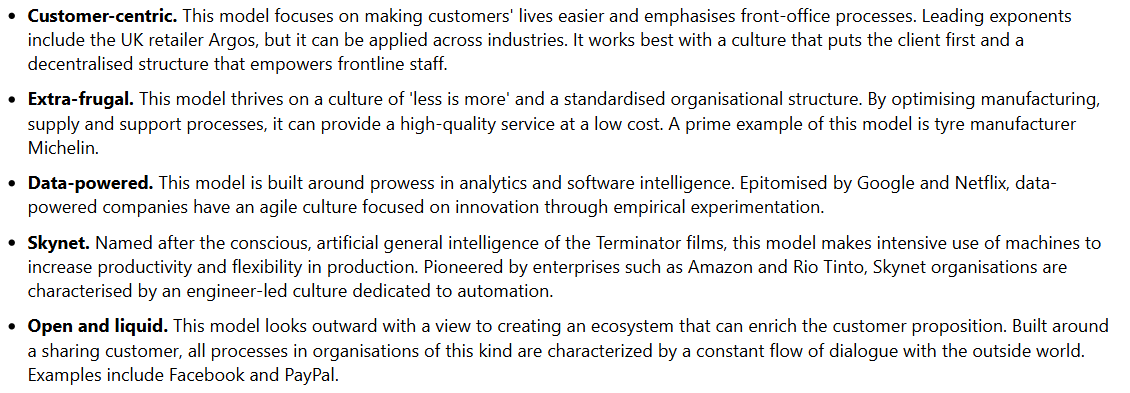
What are the 5 successful digital operating models?
102
What is the World econoic forums proposed 7 step process to build a digital workforce?
1) Attract and retain talent
2) Become an employer of choice for the latest generation of employees
3) Create a workforce with digital skills
4) Bring leadership into the digital age
5) Foster a digital culture in the enterpise
6) Create environments where humans and robots can work successfully together
7) Integrate your on-demand workforce
2) Become an employer of choice for the latest generation of employees
3) Create a workforce with digital skills
4) Bring leadership into the digital age
5) Foster a digital culture in the enterpise
6) Create environments where humans and robots can work successfully together
7) Integrate your on-demand workforce
103
What is management control?
the whole system of controls, financial and otherwise, established by the management in order to carry on the business of the enterprise in an orderly and efficiant manner.
104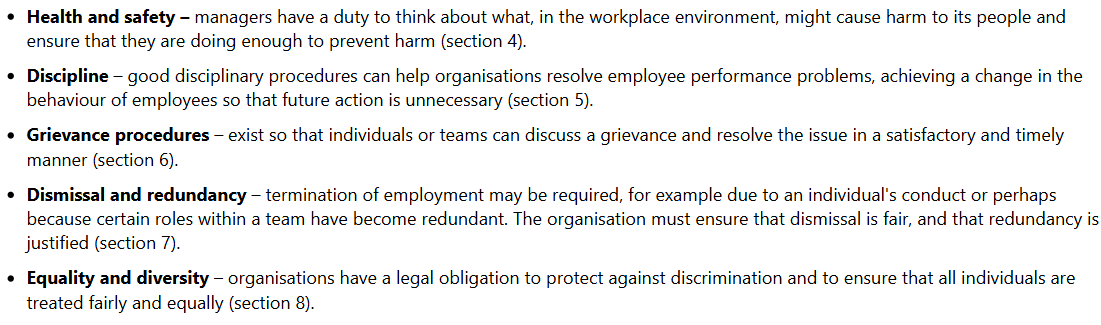
What are the 5 areas of control?
105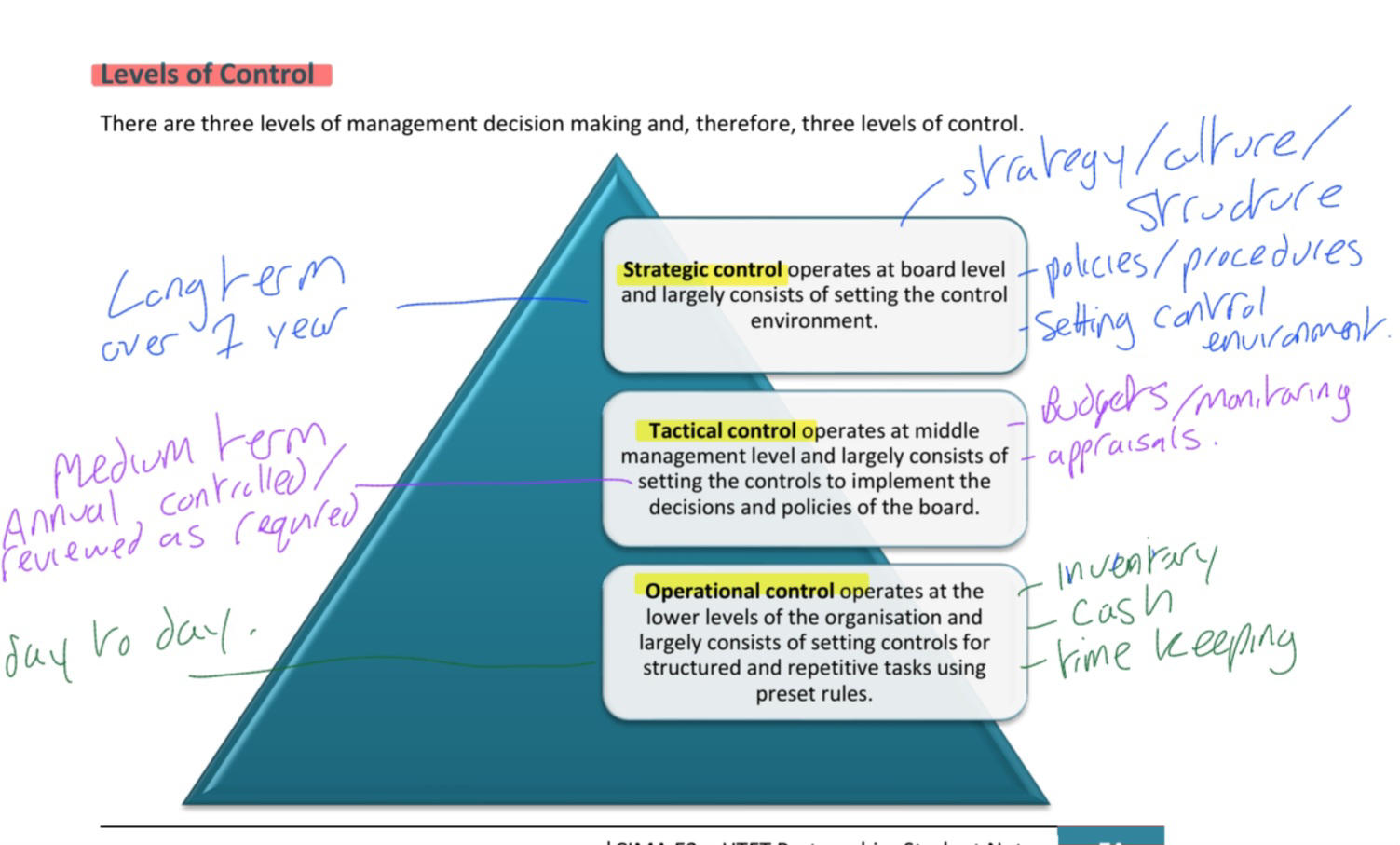
What are the 3 levels of control?
106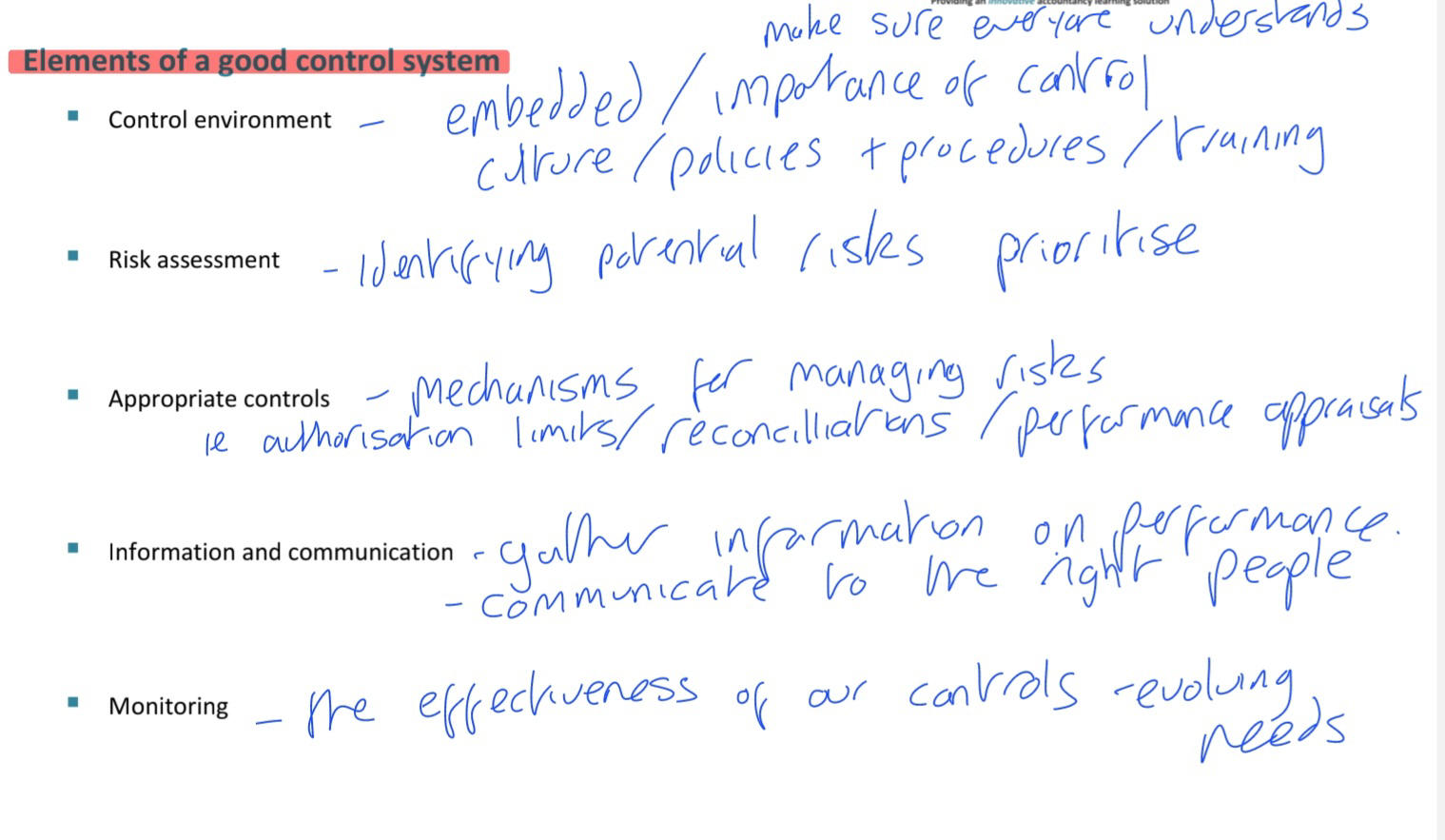
What are the elements of a good control system? (5)
107
What are the benefits of health and safety controls?
108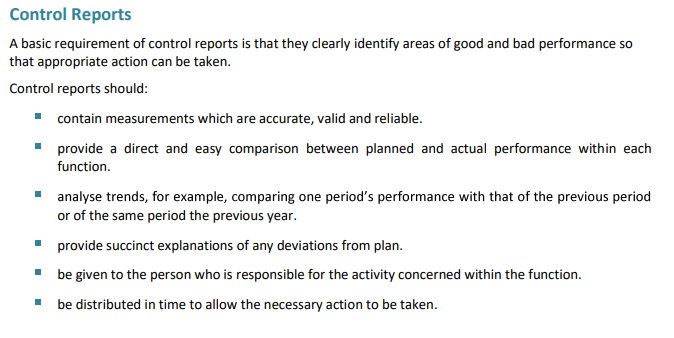
What should a control report contain?
109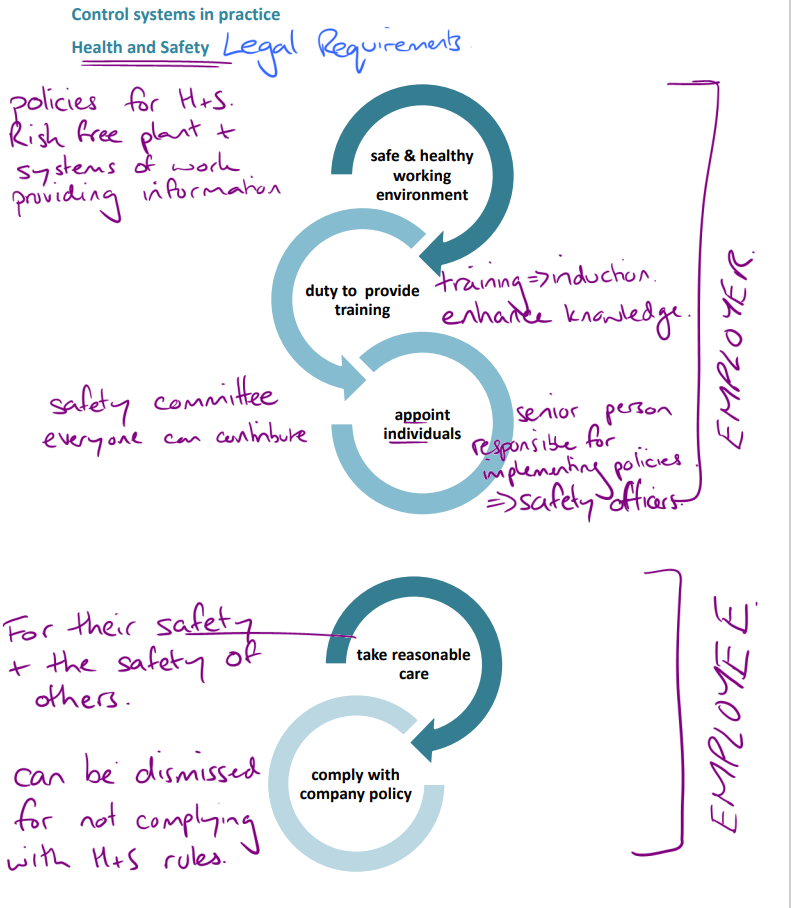
Whata re the responsibilities of the emplyer and employee for health and safety
110
Whaat is the goal of disciplinary proceedures?
To correct unsatisfactory behaviour
111
What health and safety policies should organisations with over 5 staff produce?
112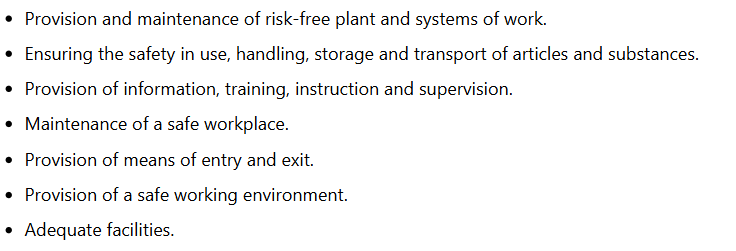
What key areas should be highlighted to staff in the health and safety policies?
113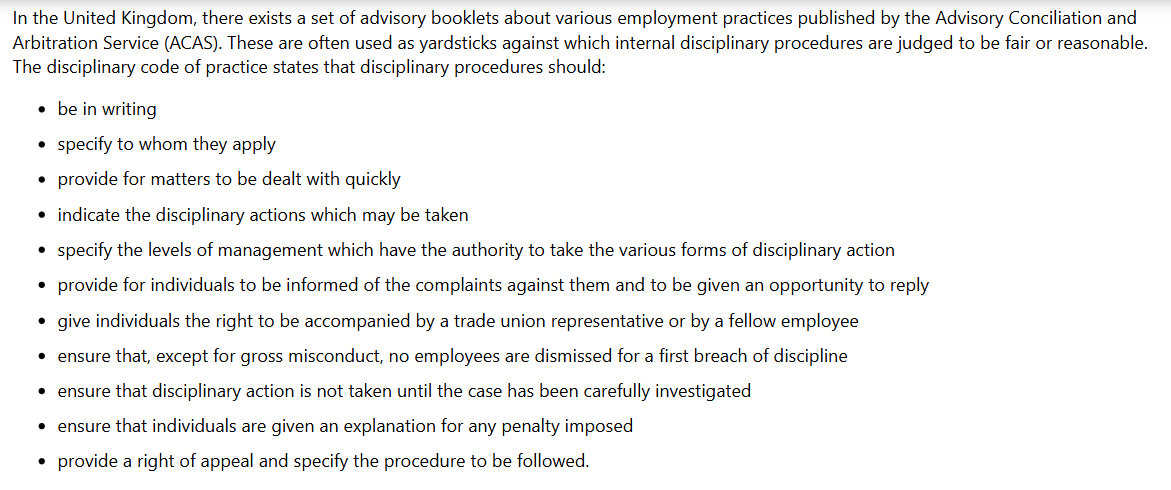
What does ACAS (advisory conciliation and arbitration service) state disciplinary procedures should be?
114
What are the 3 steps in a statutory procedure?
115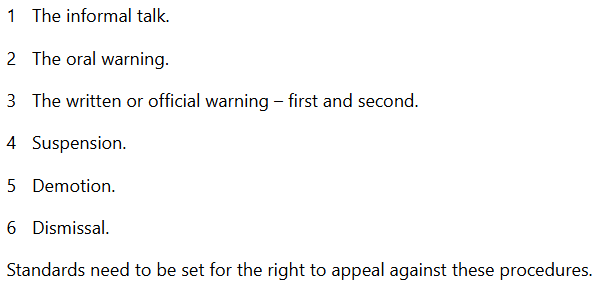
What stages should be followed for disciplinary procedures?
116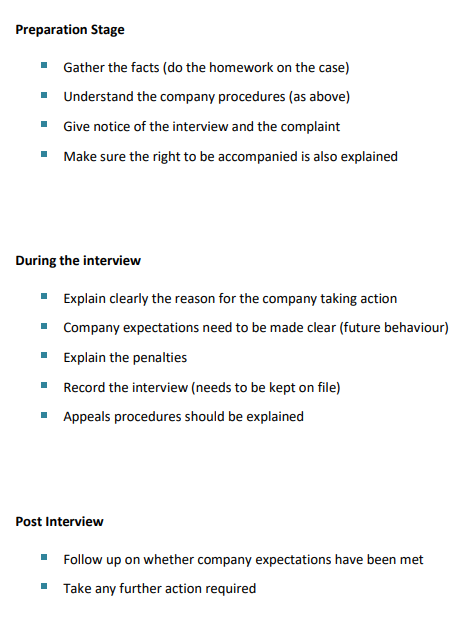
What should be the discipliary interview process?
117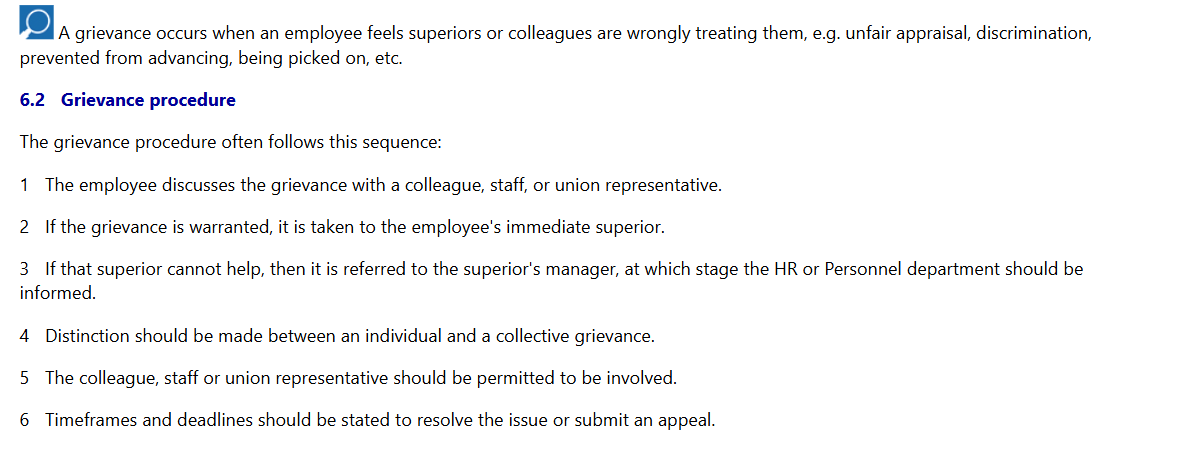
What should be the grievance procedure?
118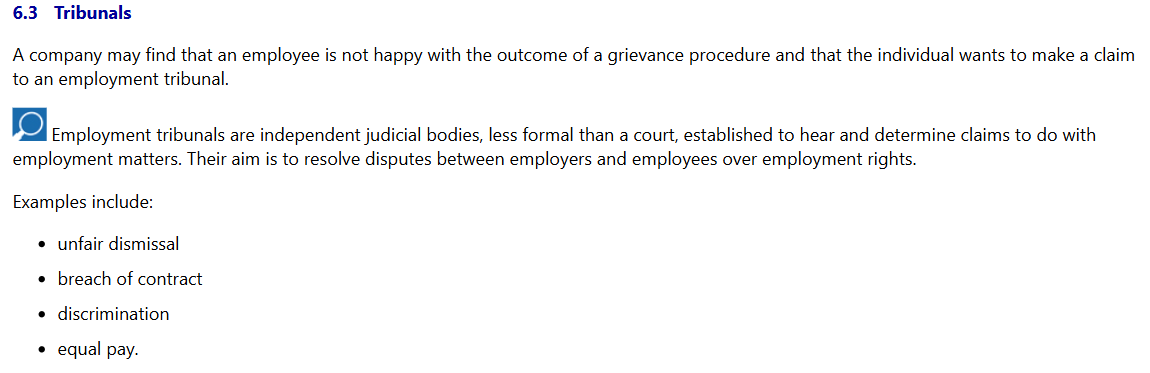
What are the common reasons for emplyment tribunals?
119
How can disputes be resolved without tribunals?
* Arbitration
* Mediation
* Conciliation
* Mediation
* Conciliation
120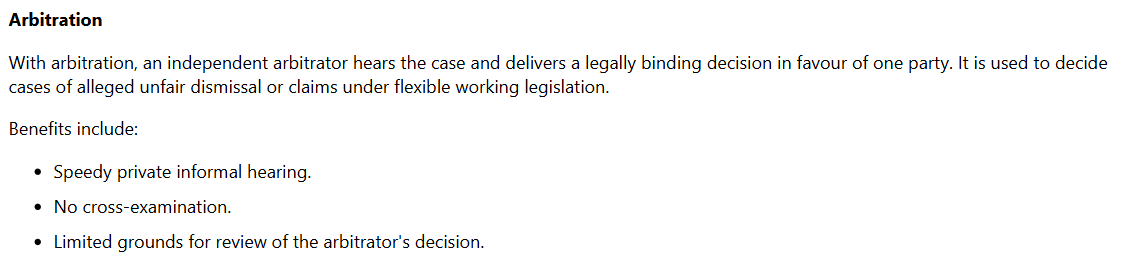
What is arbitration?
121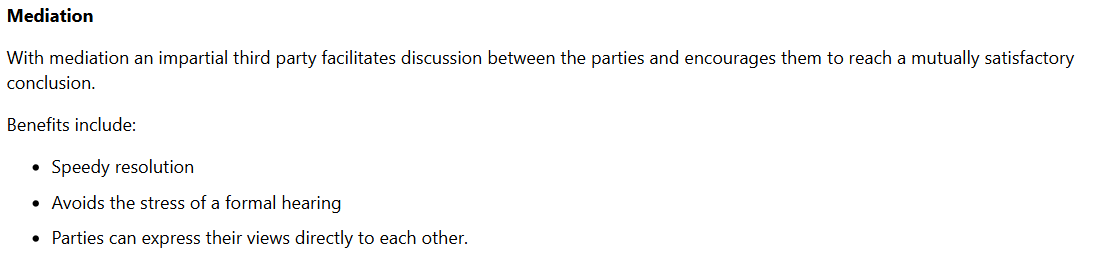
What is mediation
122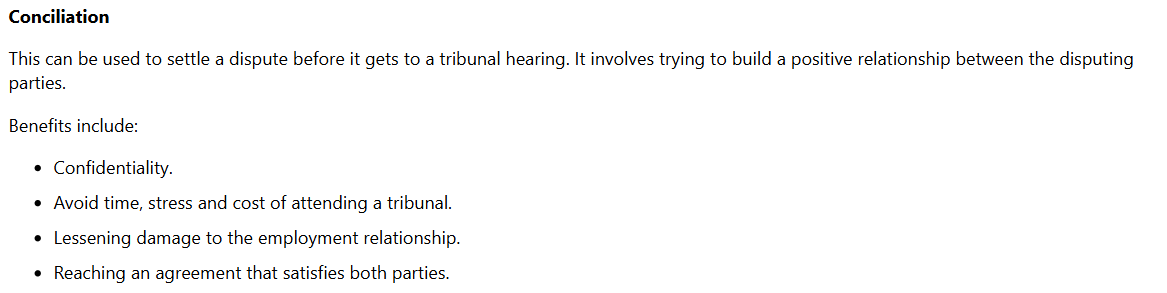
what is conciliation
123
What are the 5 areas of human resource management?
* Dismissal
* Redundancy
* Fairness and equality
* Equality and diversity
* Equal opportunities
* Redundancy
* Fairness and equality
* Equality and diversity
* Equal opportunities
124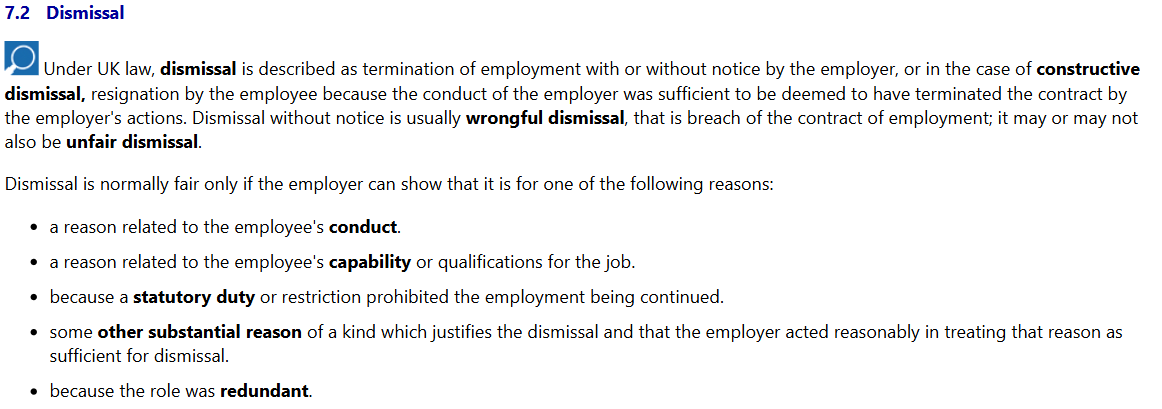
Explain dismissal
125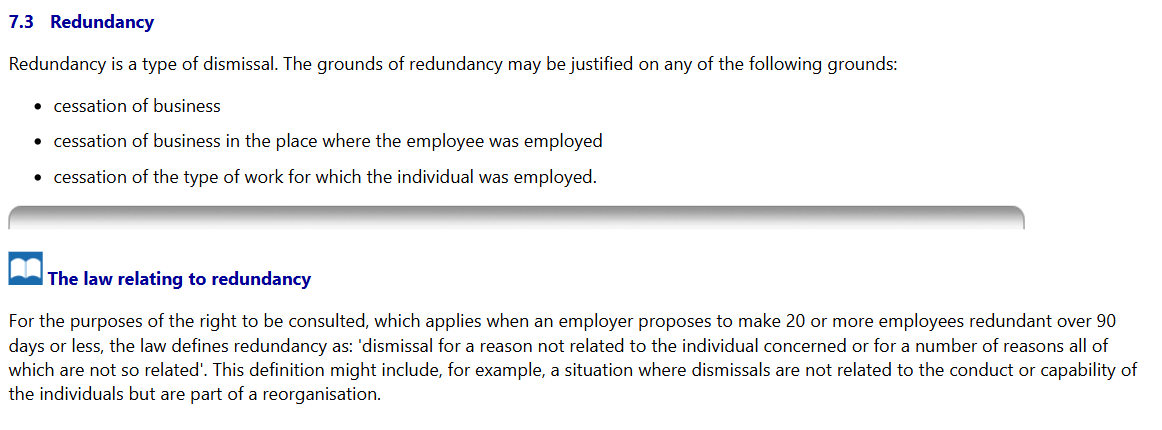
Explain redundancy
126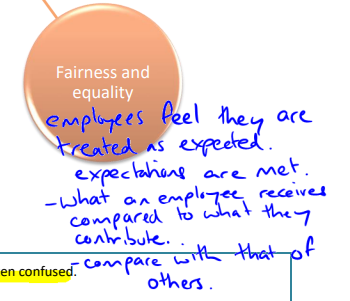
Explain fairness & equality
127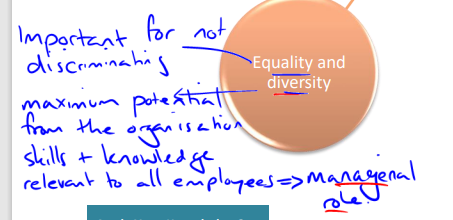
Explain equality & diversity
128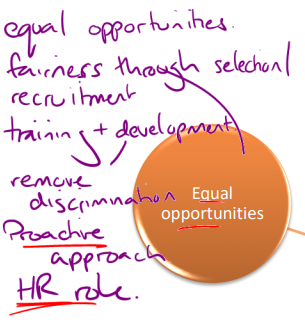
Explain equal opportunities
129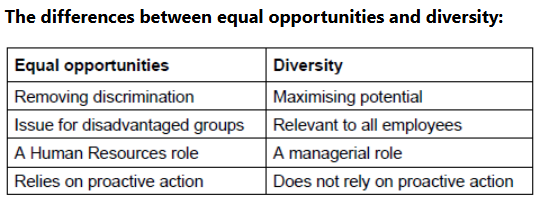
What is the difference between equal opportunities and diversity
130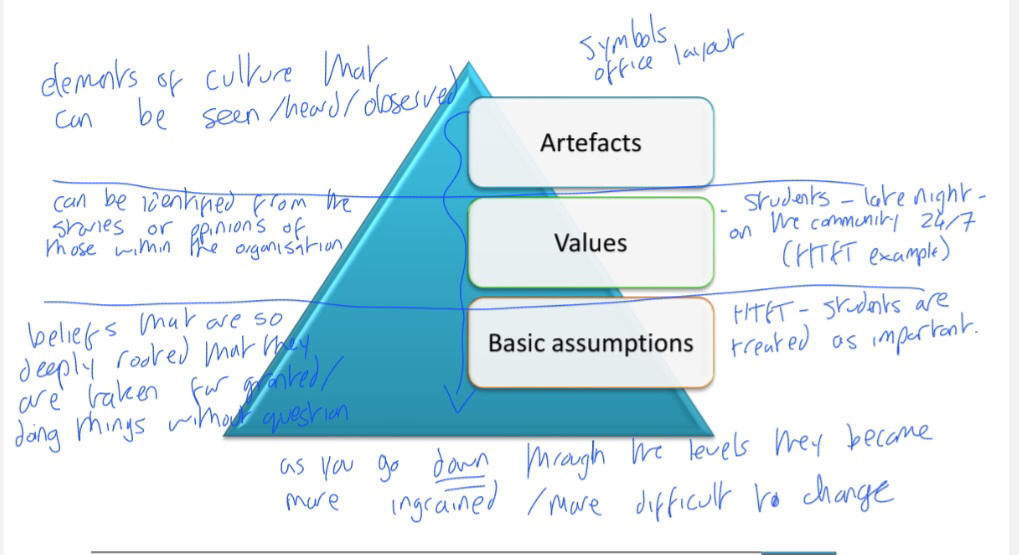
what are the 3 levels of culture
131
Explain the arefacts level of culture
132
explain the values level of culture
133
explain the basic assumptions level of culture
134
What is the organisational iceberg
the idea of hidden elements in culture
The iceberg discribes 2 levels at which culture operates
* Formal aspects (visible) above the water
* Behavioural aspects (hidden) below the water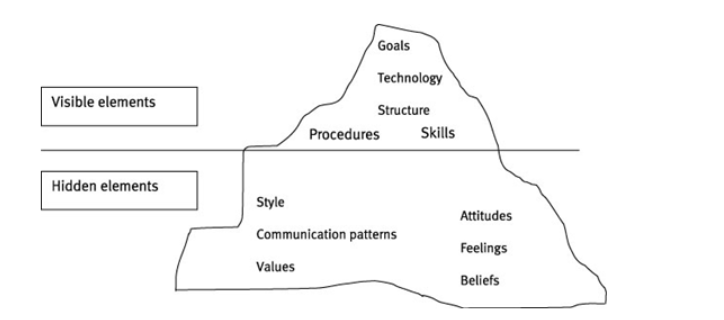
The iceberg discribes 2 levels at which culture operates
* Formal aspects (visible) above the water
* Behavioural aspects (hidden) below the water
135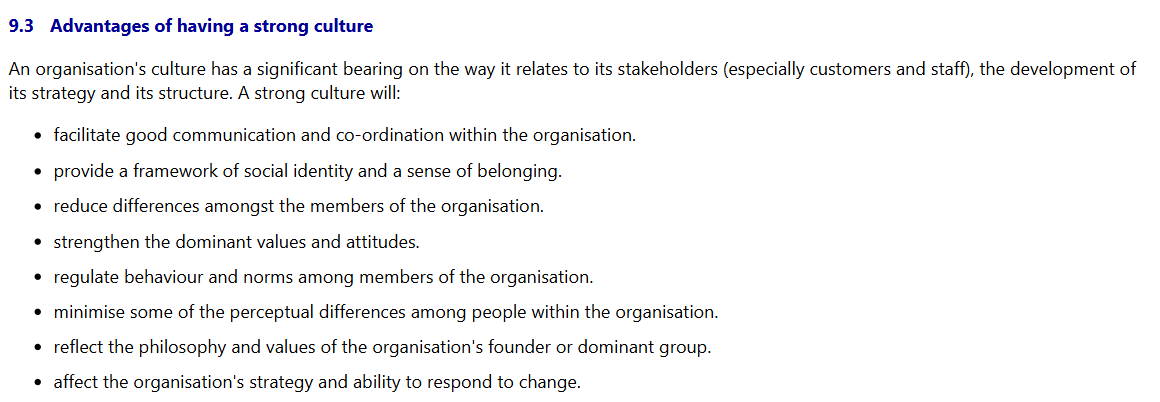
What are the advantages of a stong culture?
136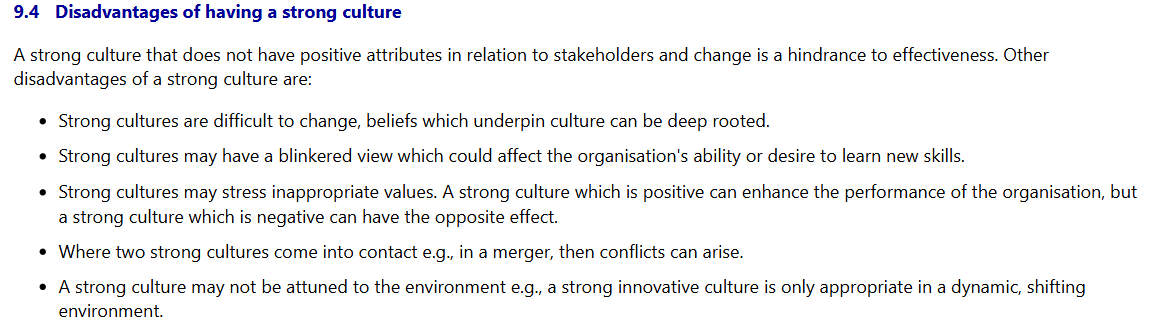
Whata re the disadvantages of a strong culture?
137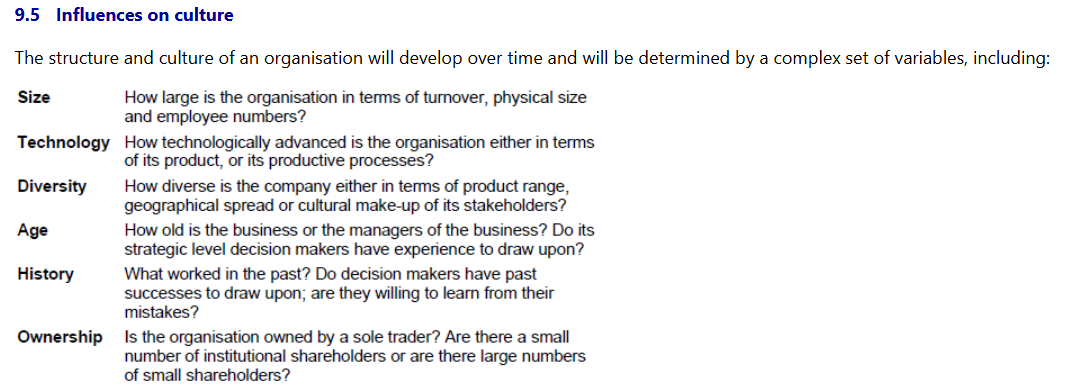
What influences culture?
138
What are Charles Handys 4 types of organisation
* Power culture (Zues)
* Role culture (Apollo)
* Task culture (Athena)
* Person culture (Dionysus)
* Role culture (Apollo)
* Task culture (Athena)
* Person culture (Dionysus)
139
explain Charles Handys power culture
140
explain Charles Handys role culture
141
explain Charles Handys task culture
142
explain Charles Handys person culture
143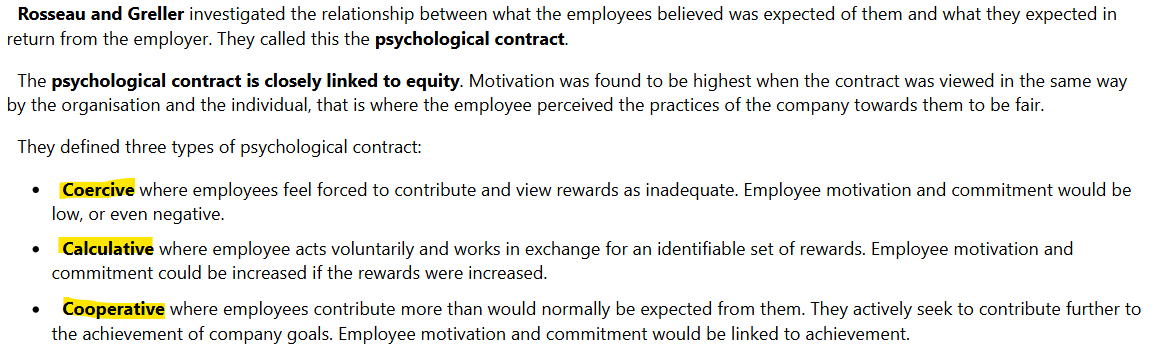
What are Rosseau & Grellers 3 types of psychological contract?
144
What is behavioural control?
Where we look to modify behaviour through controls
This is a managers responsibility
We want to get people to do the right things
Get people to act ethically
Motivate them
Improve productivity
Improve quality
Prevent mistakes
This is a managers responsibility
We want to get people to do the right things
Get people to act ethically
Motivate them
Improve productivity
Improve quality
Prevent mistakes
145
What are the control mechanisms?
* Organisational structure
* Targets / budget setting - set expectations
* Supervision
* Culture
* Control systems - TARA / budgeting
* Policies & Guidelines
* Targets / budget setting - set expectations
* Supervision
* Culture
* Control systems - TARA / budgeting
* Policies & Guidelines
146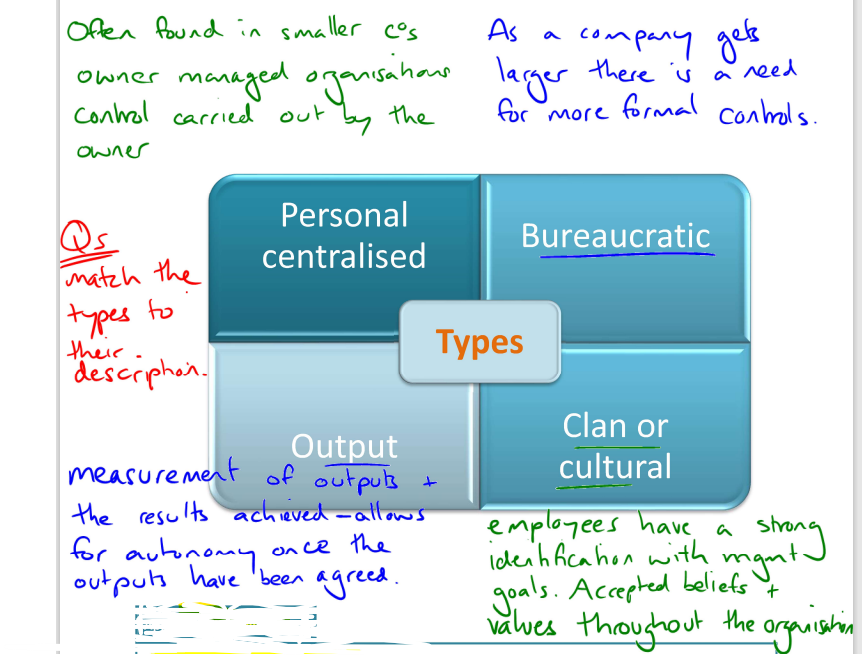
What are the 4 types of control?
147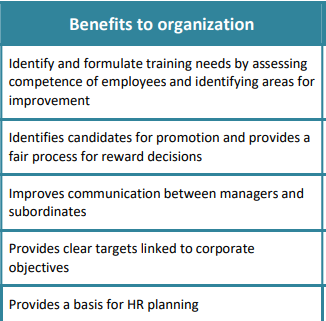
What are the benefits to an organisation of doing performance appraisals
148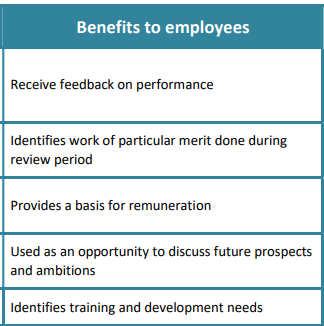
What are the benefits to an employee of the company doing performance appraisals
149
What are the 4 approaches to appraisals
* The ranking system = scored 1 - 5 on agreed targets (1 usually bad)
* The unstructured format = Essays / short form answers, open ended and can cover any aspect not just agreed targets
* 360 approach - manager appraise individuals, individuals appraise managers, can also appraise colleagues
* Self rating - you rate your own performance and give it to your manager, then they make their own assesment
* The unstructured format = Essays / short form answers, open ended and can cover any aspect not just agreed targets
* 360 approach - manager appraise individuals, individuals appraise managers, can also appraise colleagues
* Self rating - you rate your own performance and give it to your manager, then they make their own assesment
150
What are the 5 F's to effective appraisals?
* Fair - no bias or favouratism - dont be judgemental
* Factual - evidenced - not a chat
* Firm -- it is ok to give negative feedback as long as it is constructive - not confrontational
* Frequent - as is required - managers to put in effort to undertake regular feedback - dont just do them annually
* Feedback - meant to be about continuous improvement - no unfinished business left
* Factual - evidenced - not a chat
* Firm -- it is ok to give negative feedback as long as it is constructive - not confrontational
* Frequent - as is required - managers to put in effort to undertake regular feedback - dont just do them annually
* Feedback - meant to be about continuous improvement - no unfinished business left
151
What are Herzbergs dual factor motivators
* Intrinsic - to do with the job itself - accomplishment - recognition - increased responsibiity
* Extrinsic - not to do with the job itself - policies - health & safety - treated fairly - appropriate salary
Extrinsic motivators are not actually motivators they just prevent dissatisfaction, intrinsic motivate.
* Extrinsic - not to do with the job itself - policies - health & safety - treated fairly - appropriate salary
Extrinsic motivators are not actually motivators they just prevent dissatisfaction, intrinsic motivate.
152
What are the 7 insentive schemes
* PRP - performance related pay - tied to the performance of the company
* Piecework - paid solely on output of work
* Profit sharing - profits distributed to employees
* MBO - management by objectives - key results = rewards are paid for achieving them
* Commision - usually sales - proportion of sales made paid to employee
* Points scheme - Range of rewards based on the scale of the acheivment
* Bonus scheme - usually a one off payment for acheiving specific target
* Piecework - paid solely on output of work
* Profit sharing - profits distributed to employees
* MBO - management by objectives - key results = rewards are paid for achieving them
* Commision - usually sales - proportion of sales made paid to employee
* Points scheme - Range of rewards based on the scale of the acheivment
* Bonus scheme - usually a one off payment for acheiving specific target
153
What are Druckers 8 suggested objectives (management by objectives)
Profitability - sales/profit/ROCE
Innovation - time to market / how many new products
Market standing - market share relative to others
Productivity - output targets
Financial & Physical resources - financing debt / share equity
Managerial performance and development - training / new accreditations
Worker performance attitude - behavioural controls / performance reviews
Public responsibility - corporate social responsibility / ethical values
Innovation - time to market / how many new products
Market standing - market share relative to others
Productivity - output targets
Financial & Physical resources - financing debt / share equity
Managerial performance and development - training / new accreditations
Worker performance attitude - behavioural controls / performance reviews
Public responsibility - corporate social responsibility / ethical values
154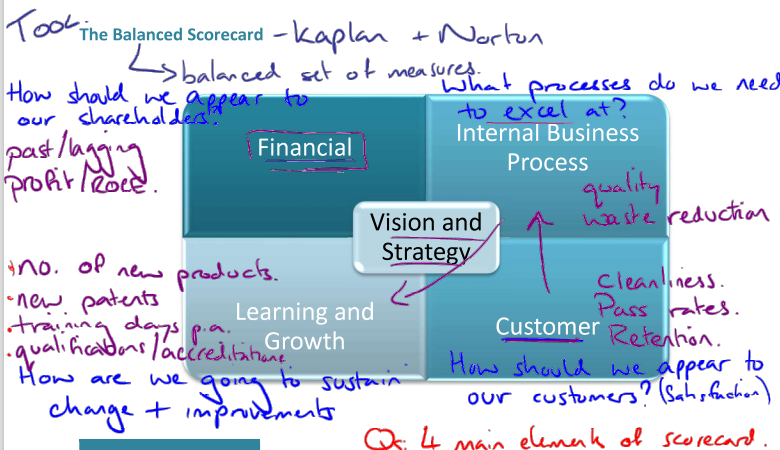
What are the 4 elements to a balanced scorcard (Kaplan & Norton)
155
what is a mentor
156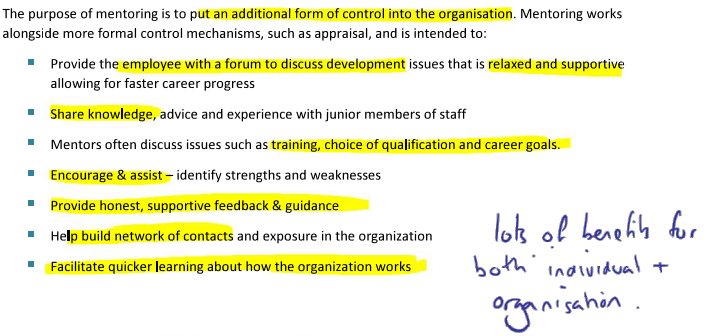
what is the purpose of mentoring
157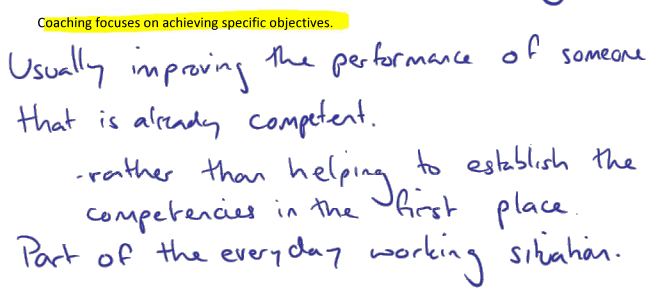
what is coaching
158
What is leadership?
159
What is management?
160
What are Fayols 5 common features of managers?
1) Planning & Forecasting - draw up plans of action / identify strategies
2) Organising - decide which tasks need to be done by who
3) Co-ordination - Bringing people together / harmonising activities / goal congruence
4) Commanding - give orders / tell employees exactly what to do and how
5) Controlling - need to reveive feedback on processes so they can make adjustments if necessary
2) Organising - decide which tasks need to be done by who
3) Co-ordination - Bringing people together / harmonising activities / goal congruence
4) Commanding - give orders / tell employees exactly what to do and how
5) Controlling - need to reveive feedback on processes so they can make adjustments if necessary
161
What are the 3 categories that Mintzbergs managerial roles fall into?
1) Interpersonal
2) Informational
2) Decisional
2) Informational
2) Decisional
162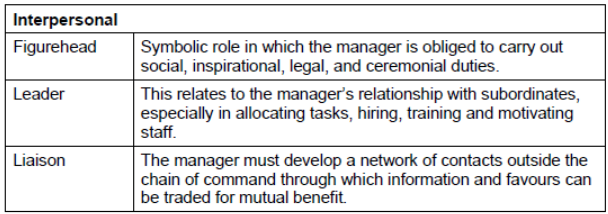
What are the roles that fall into Mintzbergs interpersonal category?
163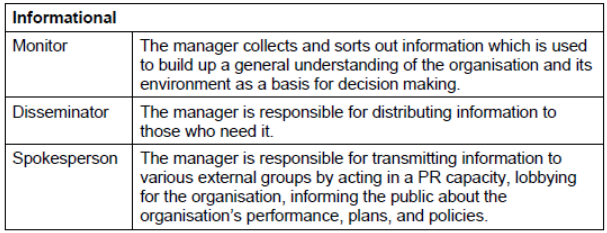
What are the roles that fall into Mintzbergs informational category?
164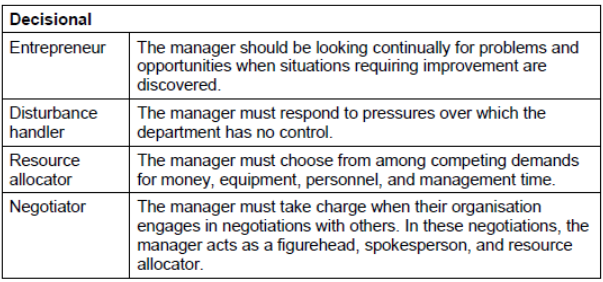
What are the roles that fall into Mintzbergs decisional category?
165
What is the definition of power?
166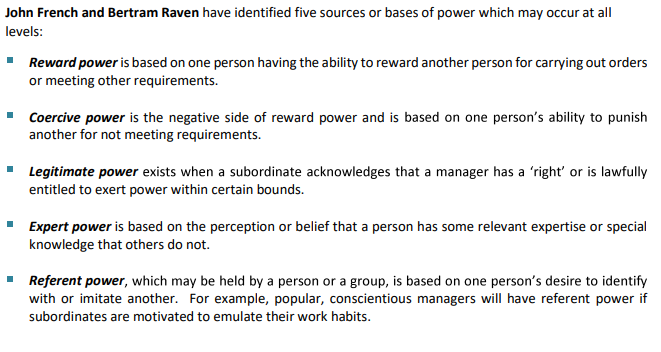
What are John French and Bertram Ravens 5 sources of power?
167
What is authority?
The right to do or act (to take actions and make decisions)
168
What are Weber's 3 bases for authority?
* Charismatic - derived from personality of the leader - individual characteristic - will leave with leader
* Traditional - derived from custom and practice - ie parent/child or teacher/student
* Rational-legal - derived from position in organisation
* Traditional - derived from custom and practice - ie parent/child or teacher/student
* Rational-legal - derived from position in organisation
169
What is responsibility?
Involves obligation and cannot be delegated.
The buck should stop with the responsible manager
Accountability
If a manager is given responsibility without the necessary authority they are powerless ie being responsible for timekeeping with no authority to punish for lateness
The buck should stop with the responsible manager
Accountability
If a manager is given responsibility without the necessary authority they are powerless ie being responsible for timekeeping with no authority to punish for lateness
170
What is accountability?
The need to explain and justify any failure to fulfil their responsibilities to their superiors. Being called to account for ones actions
171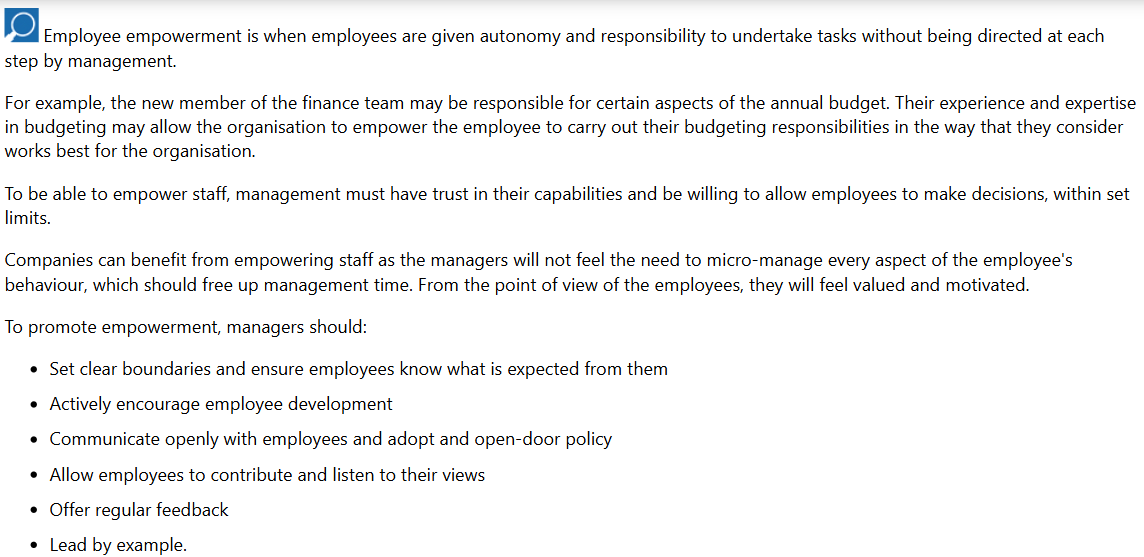
What is empowerment?
172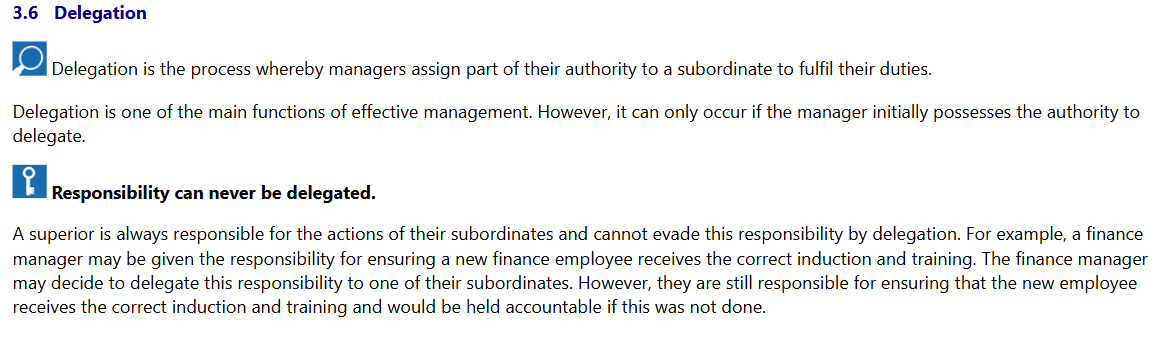
What is delegation
173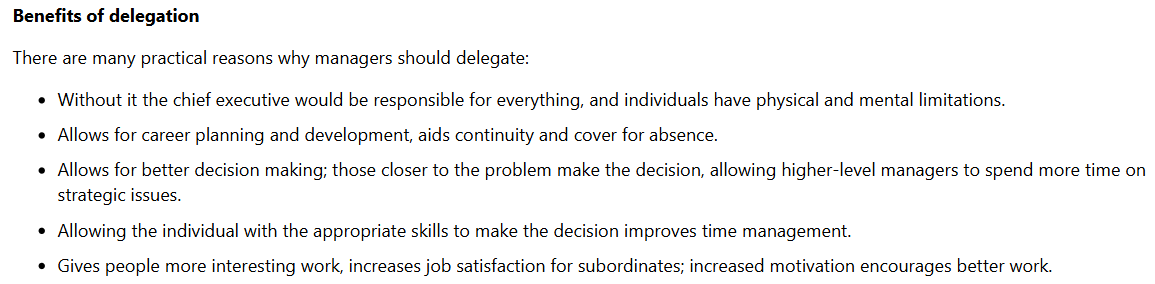
What are the benefis of delegation?
174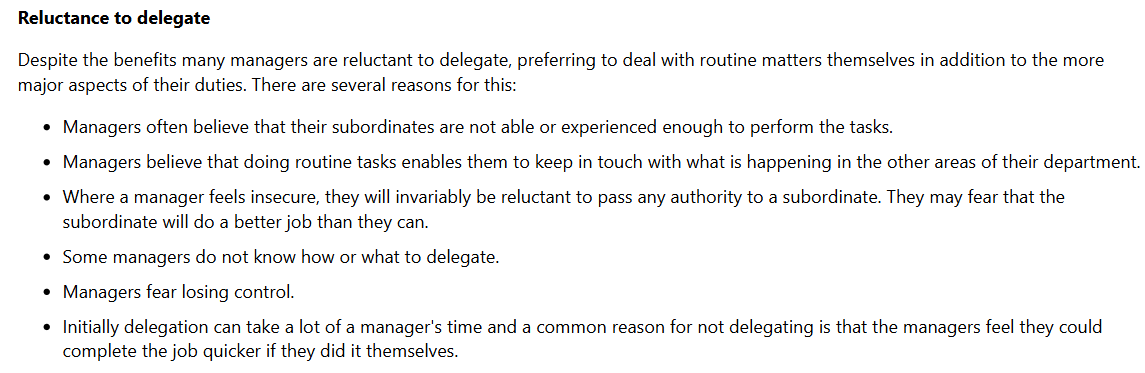
Why is there a reluctance to delegate?
175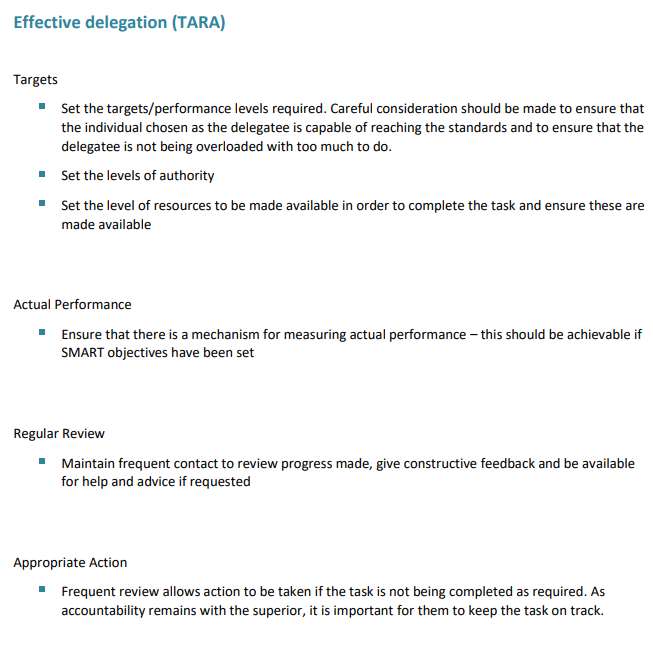
How do you delegate effectively?
176
What is the process of delegating?
1) Specify performance
2) Formally assign tasks
3) Allocate resources & authority
4) Allow performance - maintain contact (TARA)
2) Formally assign tasks
3) Allocate resources & authority
4) Allow performance - maintain contact (TARA)
177
What are the methods of delegation?
178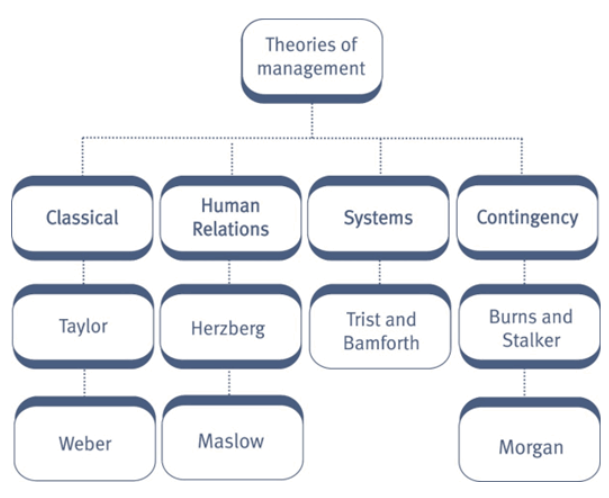
Who are the main management theorists?
179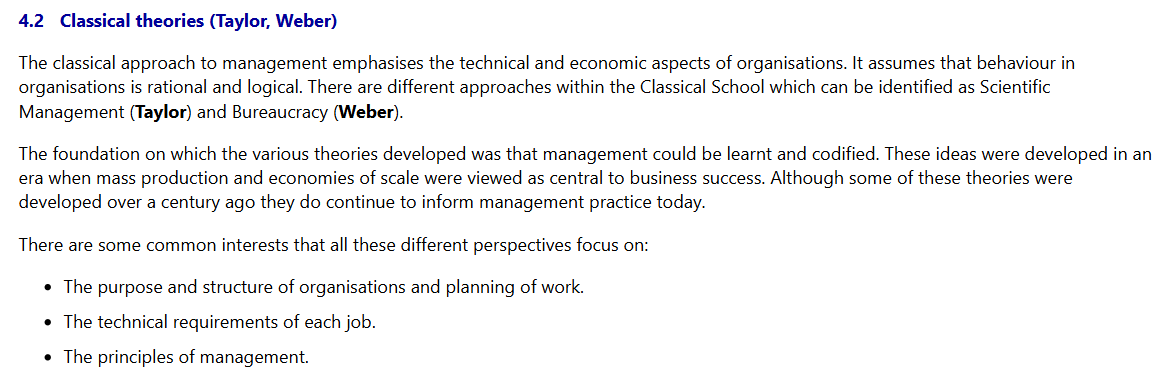
What are the classical theores of management?
180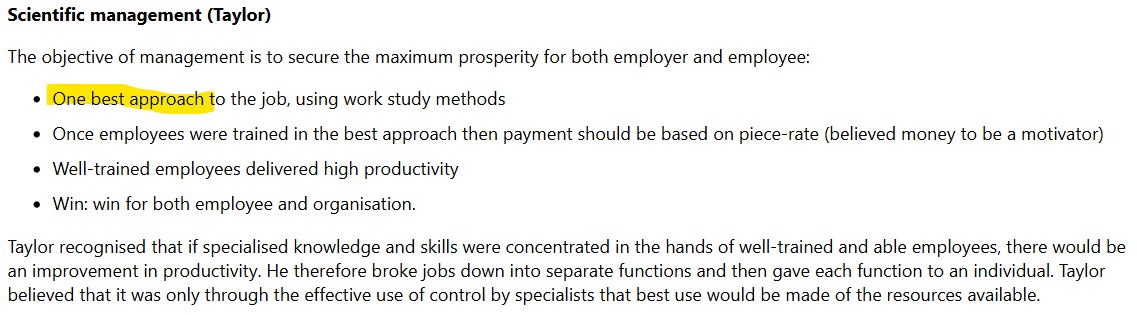
What is Taylors management theory?
181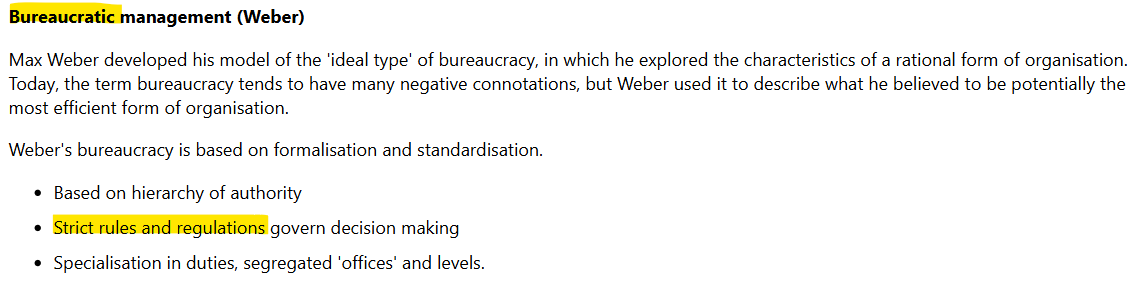
What is Webers management theory?
182
What are Webers characteristics of bureaucracy?
C Career officials
A Appointed officials
R Rules
P Public/private division
F Full-time officials
I Impersonality
S Specialisation
H Hierarchy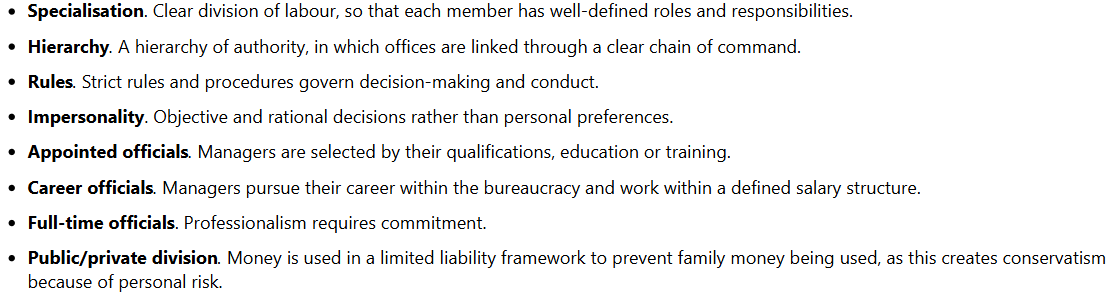
A Appointed officials
R Rules
P Public/private division
F Full-time officials
I Impersonality
S Specialisation
H Hierarchy
183
What are the human relations (contemporary) theories of management?
also Mayo
184
What is Mayo's theory of management
The need for recognition, security and a sense of belonging are important.
Hawthorne experiments - Western electric
Made changes to working hours, rest breaks, lighting conditions, temperature and measured how it affected productivity. When the reverted back to the conditions from the start of the experiment staff were more productive & had increased morale.
Psychological contract between colleagues & management = good working relationship
Hawthorne experiments - Western electric
Made changes to working hours, rest breaks, lighting conditions, temperature and measured how it affected productivity. When the reverted back to the conditions from the start of the experiment staff were more productive & had increased morale.
Psychological contract between colleagues & management = good working relationship
185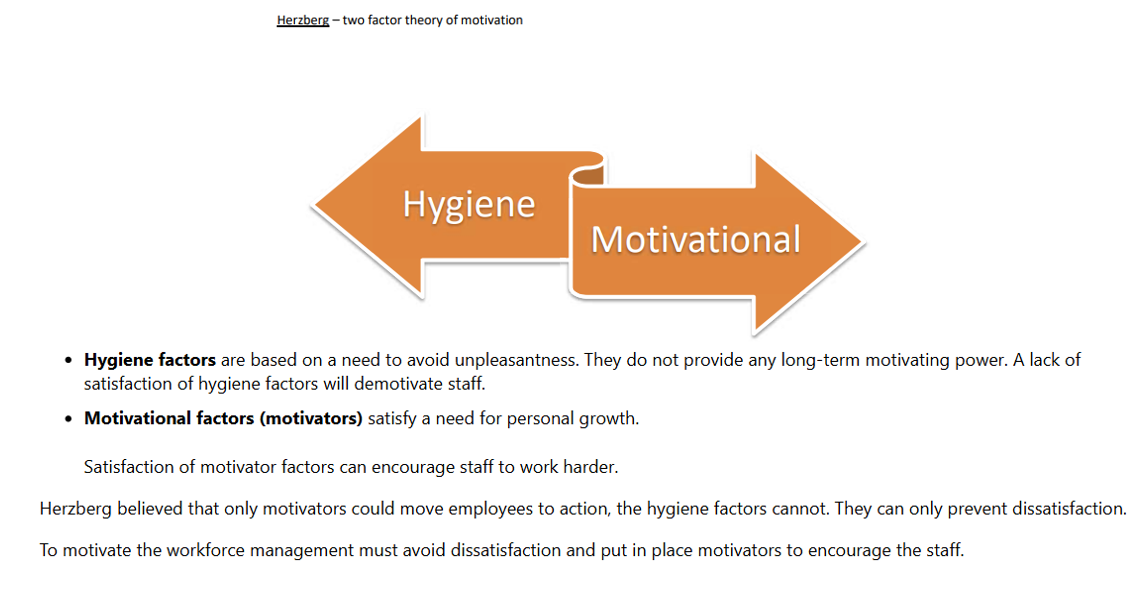
What is herzberg's management theory?
186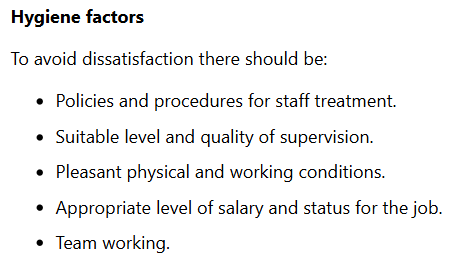
What are the hygiene factors in Herzbergs theory?
187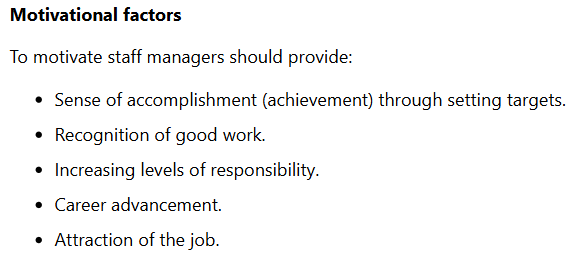
What are the motivational factors in Herzbergs theory?
188
What is Maslows management theory?
189
What are the systems management theories?
190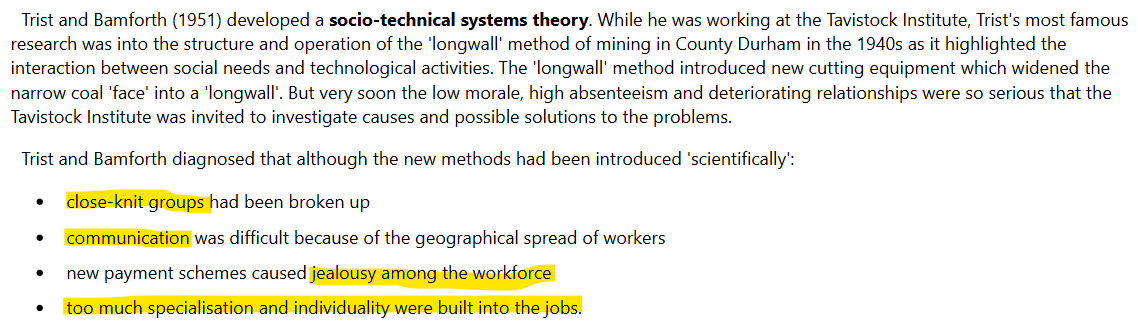
What is Trist & Bamforth's management theory?
191
What are the contingency management theories?
No one best approach.
192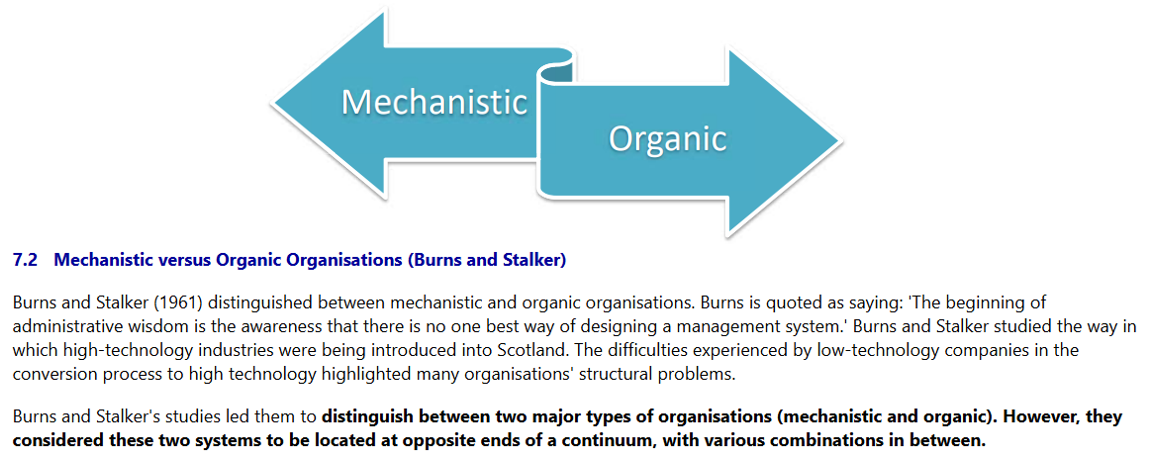
What is Burns and Stalkers management theory?
193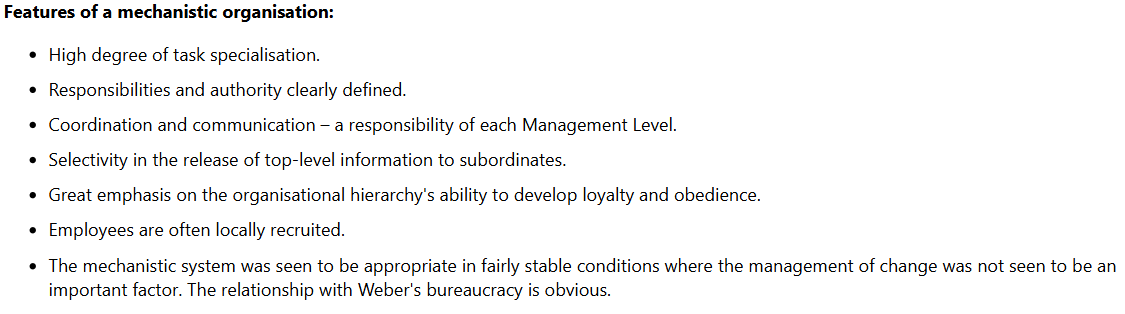
What are the features of a mechanistic organisation (Burns & Stalker)
194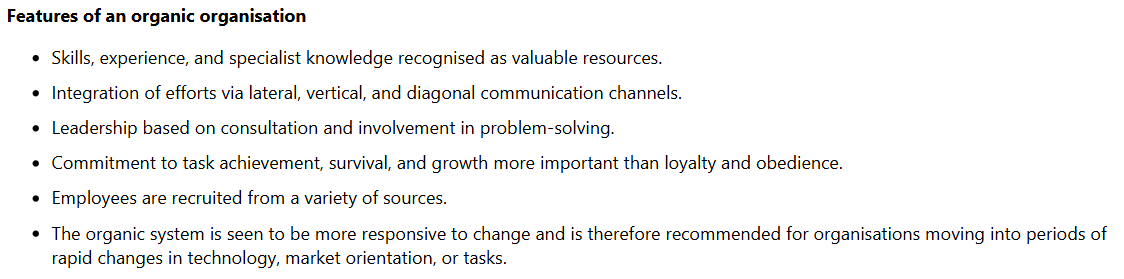
What are the features of an organic organisation (Burns & Stalker)
195
What is Morgans management theory?
196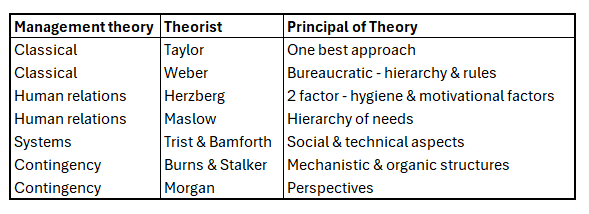
Summary of management theories
197
What is a leader?
A leader is someone who excercises influence over other people
198
How do leaders come about?
199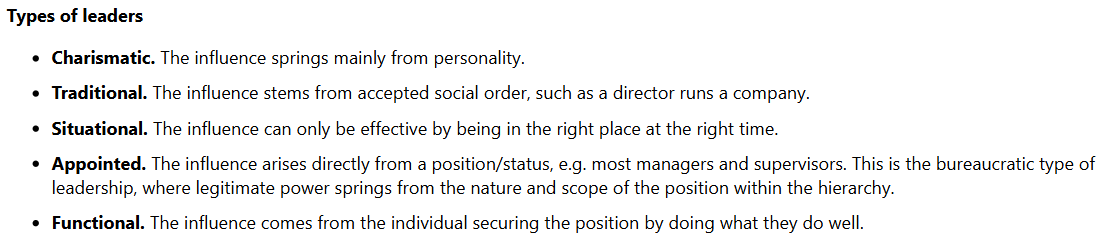
What are the types of leader?
200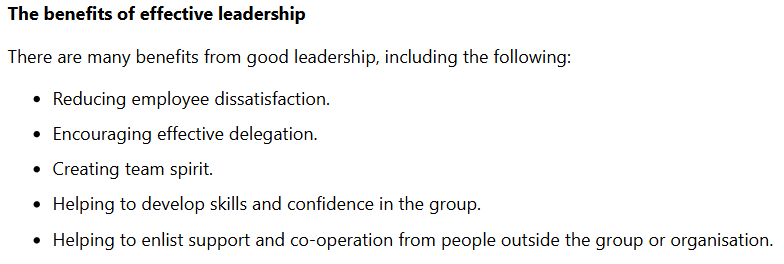
What are the benefits of leadership?
201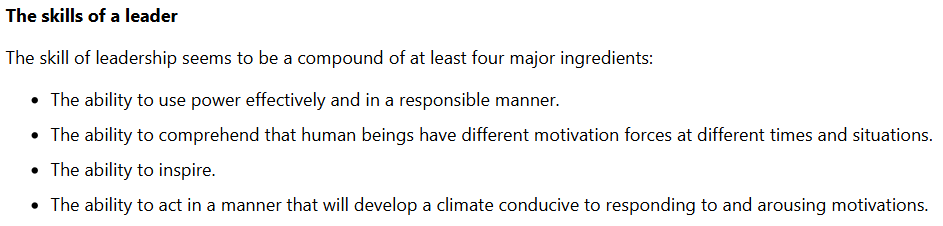
What are the skills of a leader?
202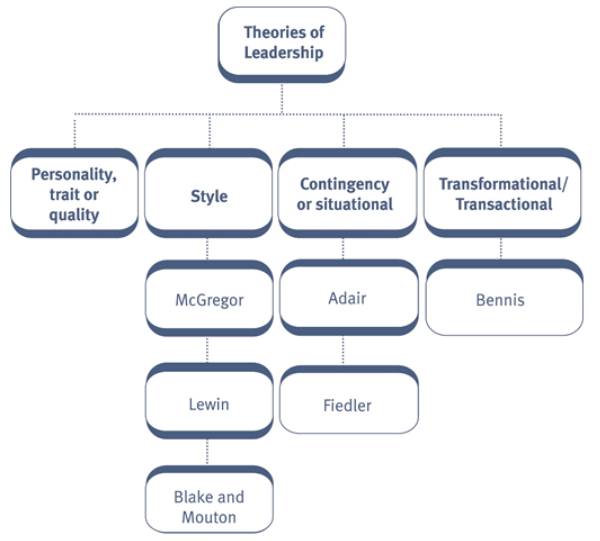
Who are the leadership theorists?
203
What are the 3 main styles of leadership?
* Autocratic - Do this/tell approach
* Democratic - lets work together approach
* Delegative - you go sort the problem out
* Democratic - lets work together approach
* Delegative - you go sort the problem out
204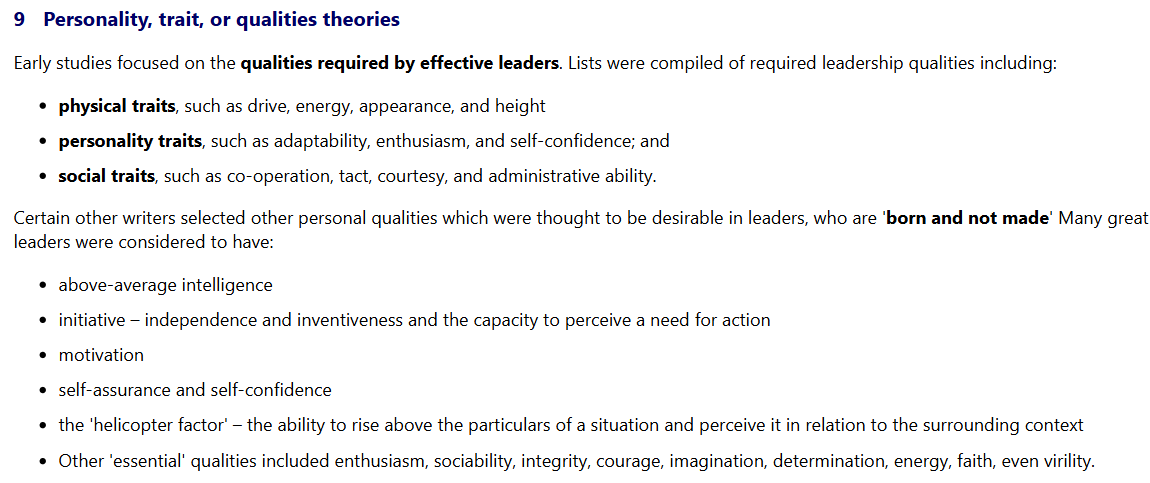
What is the personalities, traits or qualities theory?
205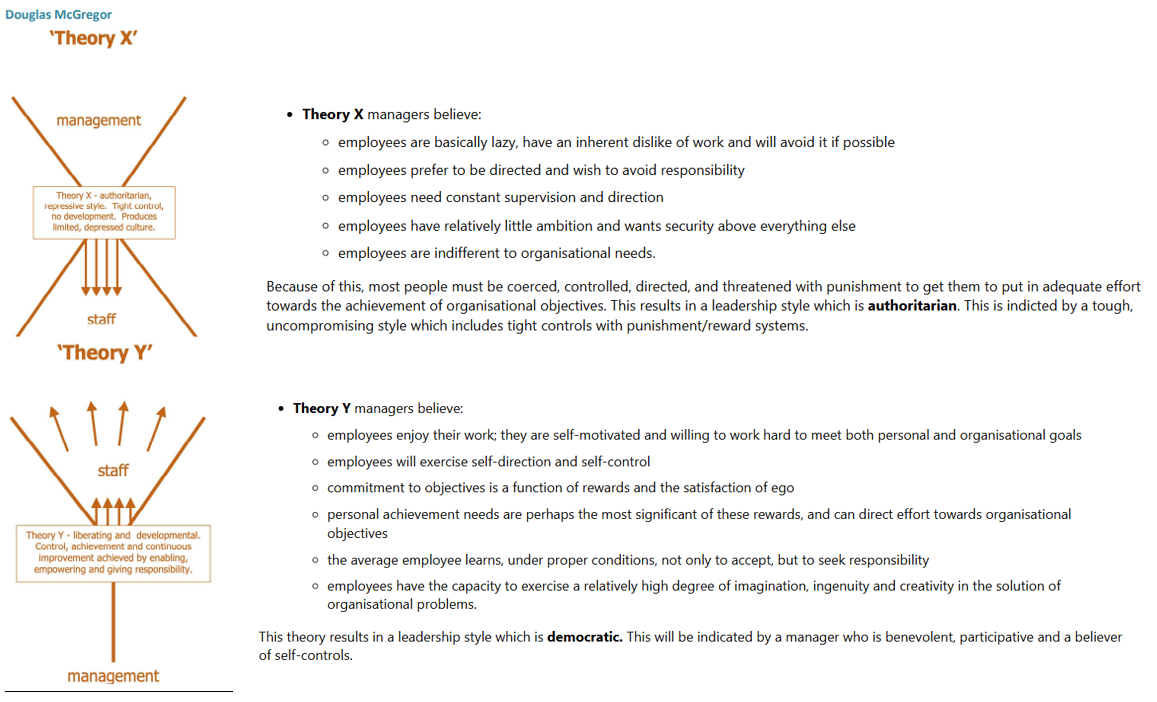
What is Douglas McGregors leadership theory?
206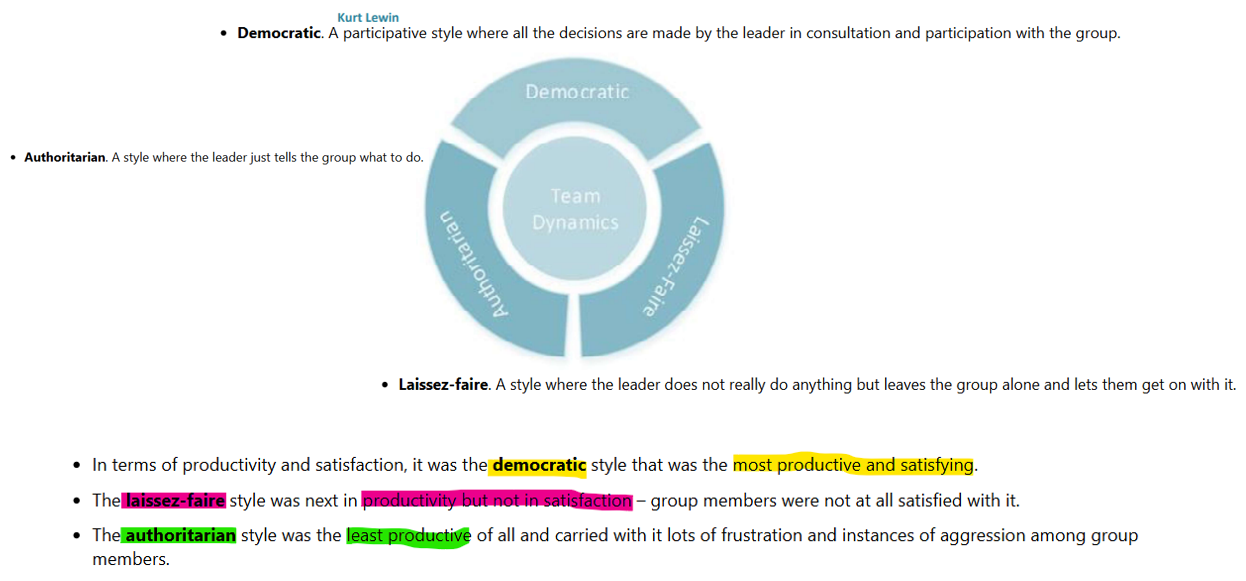
What is kurt Lewins leadership theory?
207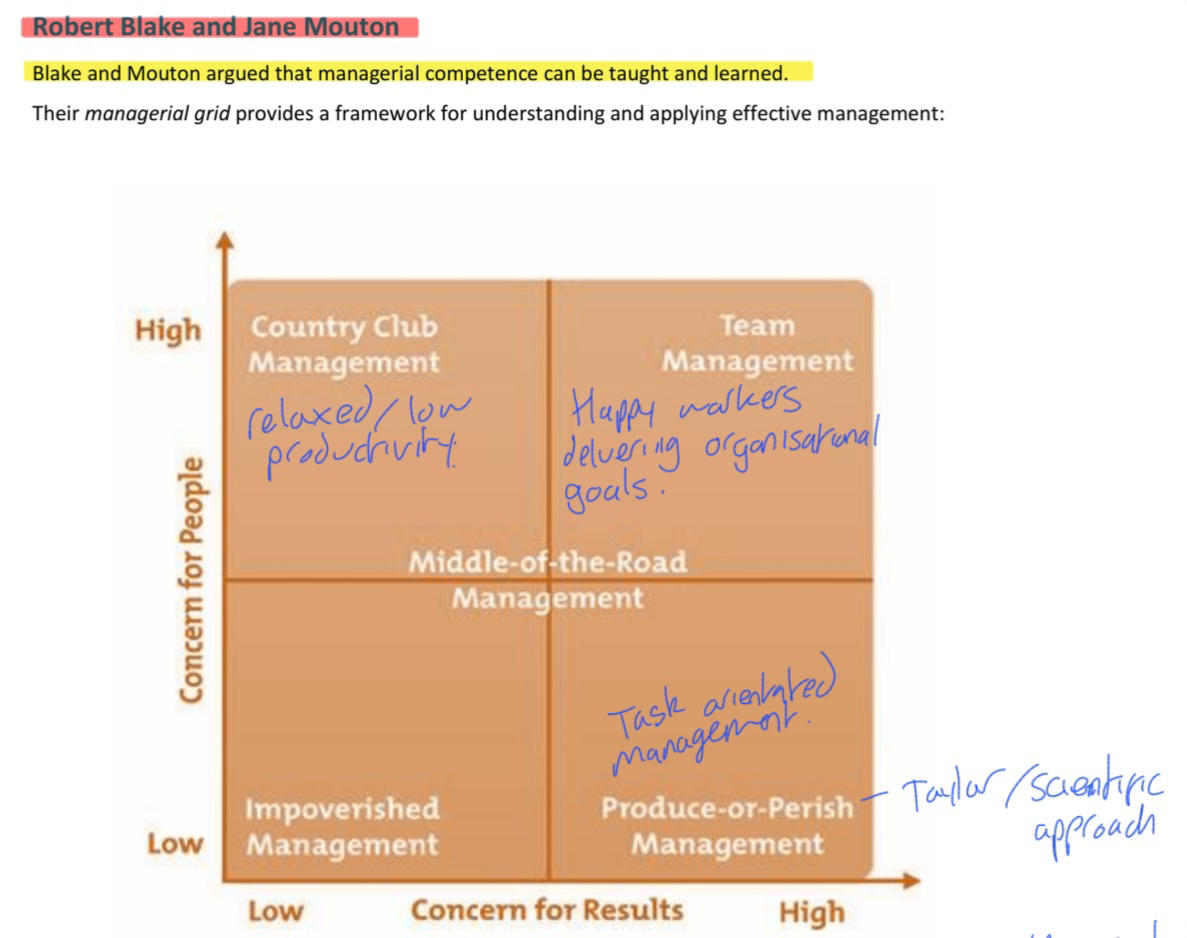
What is Blake & Moultons leadership theory?
208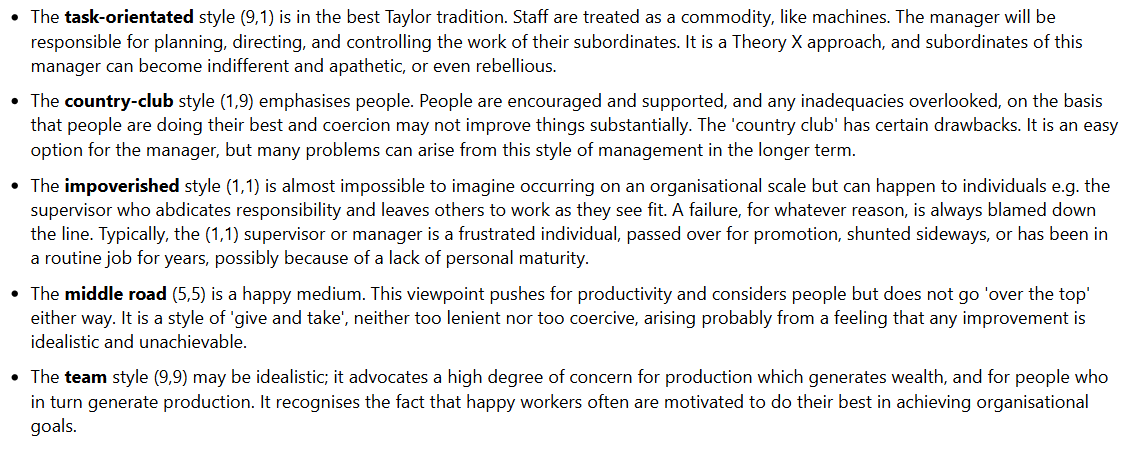
Explain Blake & Moultons leadership types
209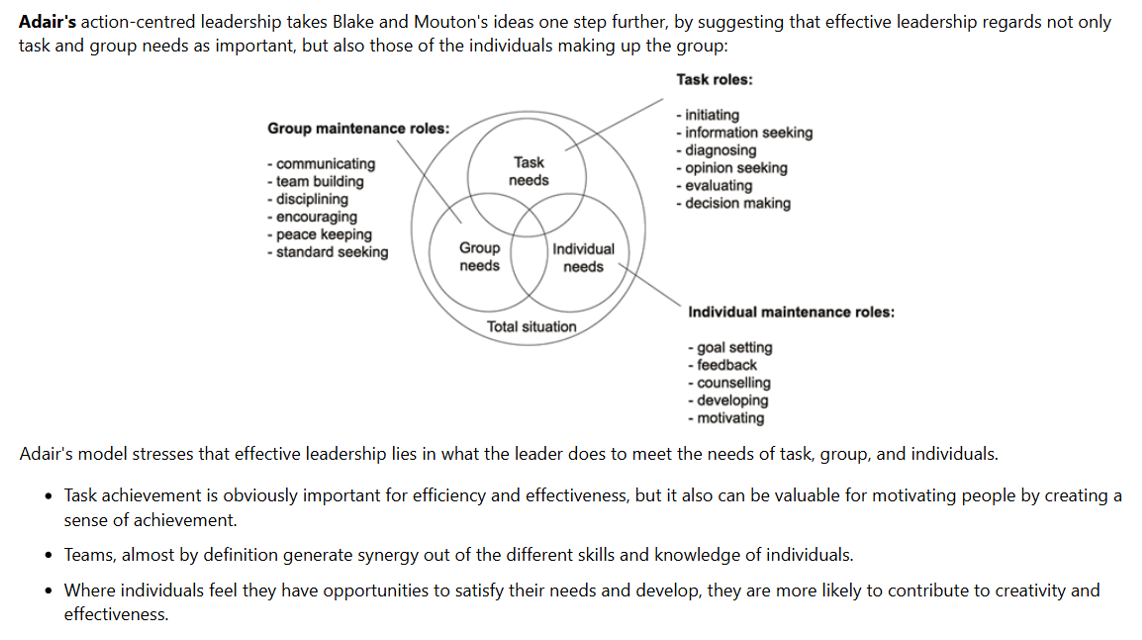
What is Adairs leadership theory?
210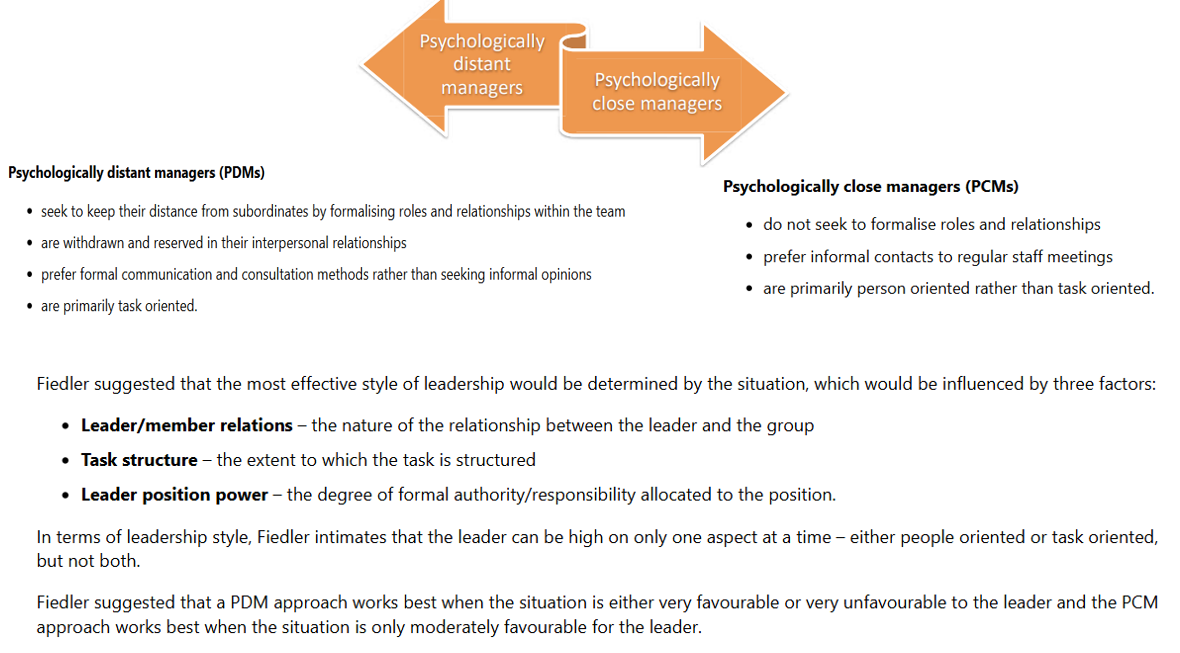
What is Fielders leadership theory?
211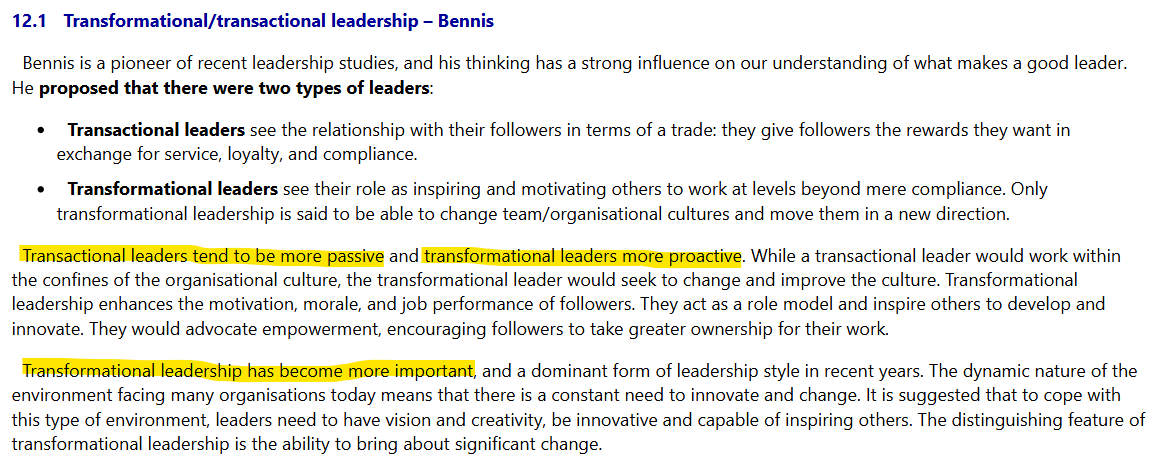
What is Bennis's leadership theory?
212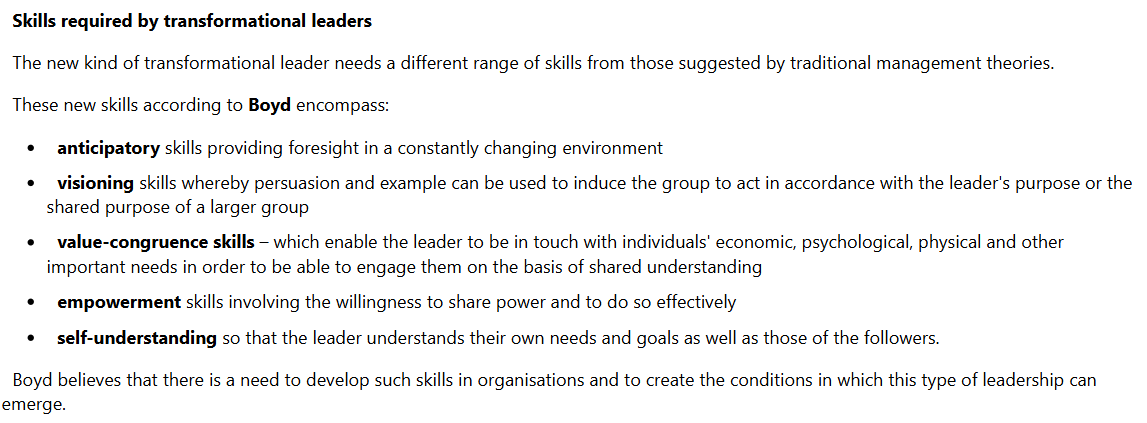
What skills are needed by transformational leaders?
213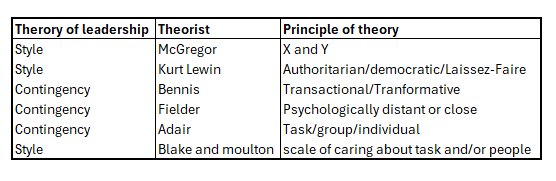
Summary of leadership theories
214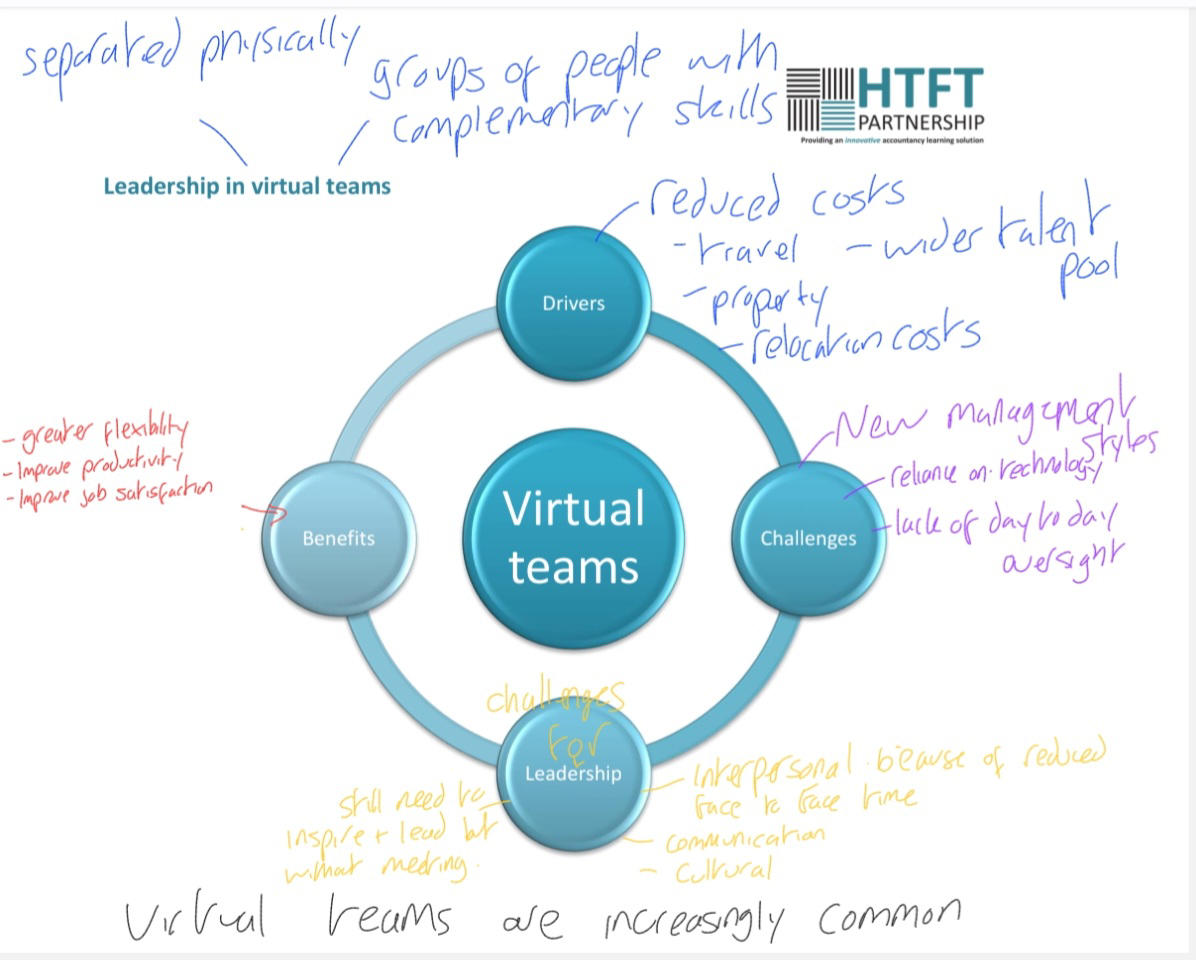
What are the pros and cons of virtual teams
215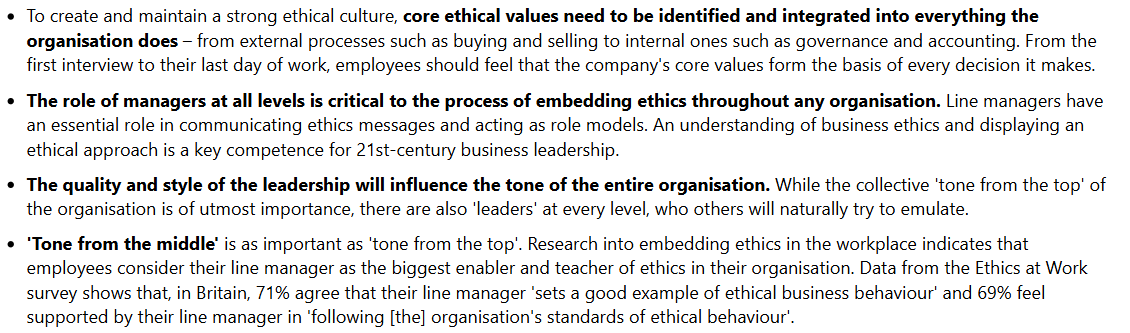
How does an organisation ensure that it is developing its business leaders with a strong ethical approach?