F2 Integrated reporting and sustainability reporting
Study these flashcardsFree · spaced repetition · iPhone, Android, Mac & web
All cards
1
What are the 3 discreet elements of business value that investors are typically interested in
2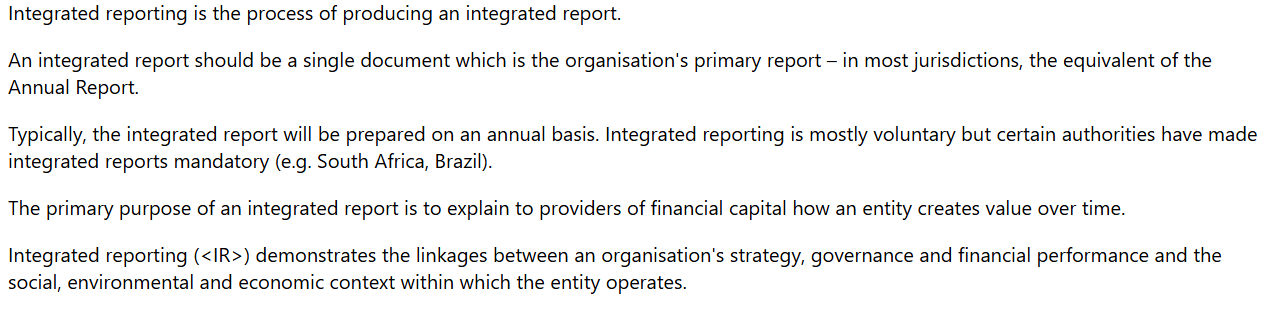
What is integrated reporting
3
What are the 3 fundamental principals of integrated reporting
* value creation
* Capitals (stock of value)
* Value creation process
* Capitals (stock of value)
* Value creation process
4
What is integrated thinking?
Integrated thinking is the active consideration of relationships between operational/functional units and capitals of an organisation to guide decision-making for value creation in the short, medium, and long term.
5
Why is integrated reporting considered a “coherent whole statement”?
Because it combines strategy, governance, performance, and social/environmental/economic context into a single comprehensive report.
6
Give an example of value creation beyond just profit.
Supporting local businesses for community wellbeing, even if it is not the cheapest option, demonstrates value beyond profits.
7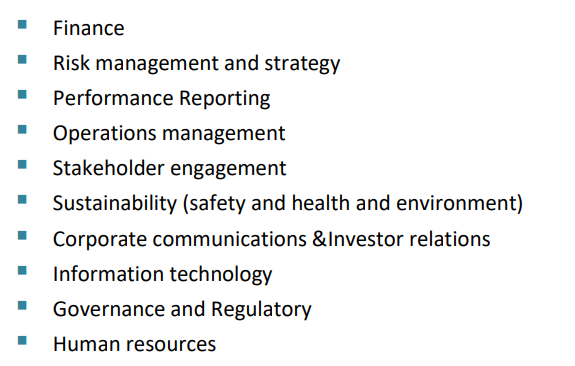
What teams do successful integrated reports typically include
8
What is value creation
Value creation is the process by which an organization transforms capitals (resources and relationships) through its business activities and outputs, leading to increases or decreases in those capitals. It goes beyond financials, affecting the external environment and stakeholders.
9
What are "capitals"
Capitals are the resources and relationships an organization uses and affects. They are sometimes referred to as stocks or values.
10
What is the IIRC
International Integrated Reporting Council
11
What is the main mission of the IIRC?
To establish integrated reporting and thinking as part of mainstream business practice, for both public and private sectors, aligning capital allocation and corporate behavior with financial sustainability.
12
What is the main purpose of the integrated reporting framework?
To provide guidance for producing integrated reports that connect various aspects of an organization and explain how value is created across multiple capitals.
13
What fundamental change does integrated thinking and reporting aim to drive in organizations?
It aims to change how companies are managed and report to multi-stakeholders by focusing on how different units and capitals relate and interact.
14
Who are the primary audience and beneficiaries targeted by integrated reporting?
Providers of financial capital, as well as multiple other stakeholders.
15
What are the six capitals to consider in integrated reporting?
* Financial
* manufactured
* intellectual
* human
* social
* natural.
* manufactured
* intellectual
* human
* social
* natural.
16
How does integrated reporting improve the quality of information?
It promotes coherence by connecting information across different capitals, making reporting more efficient and meaningful.
17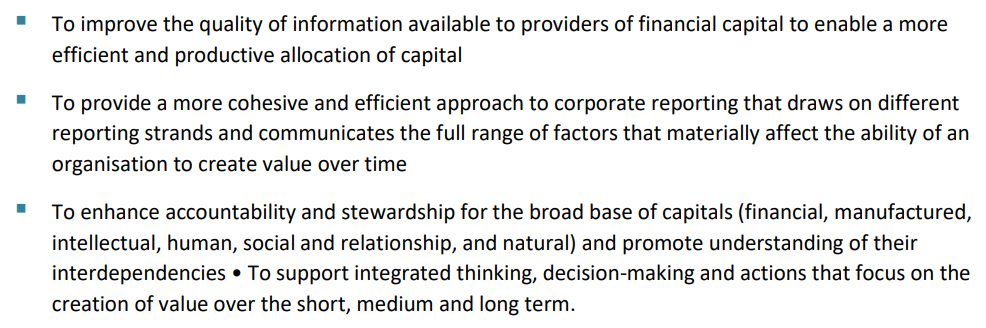
What is the purpose of the IR framework
18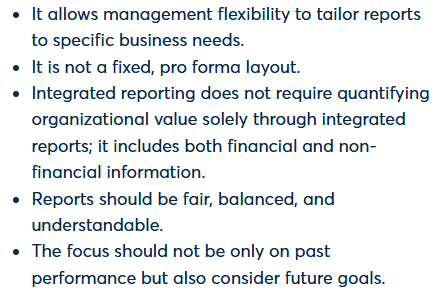
Give some key points of the IRR Framework
19
What is financial capital
20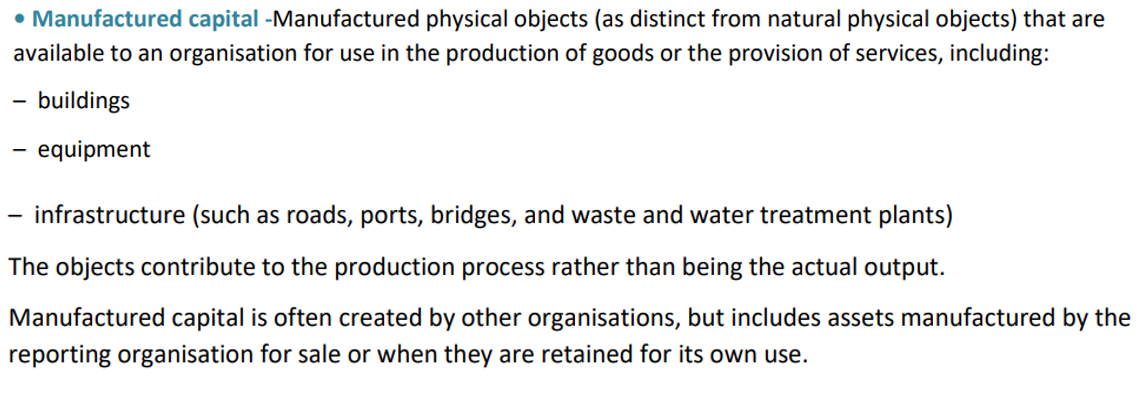
What is manufacured capital
21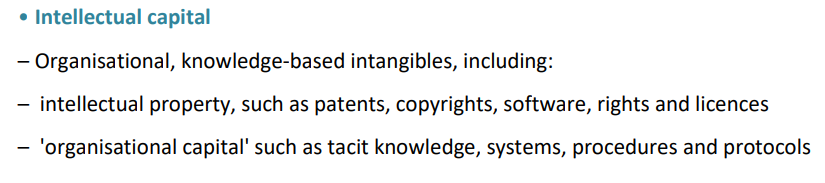
What is intellectual capital
22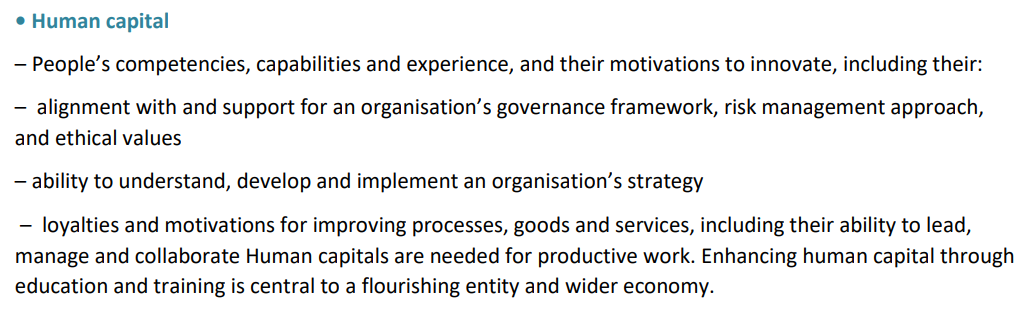
What is human capital
23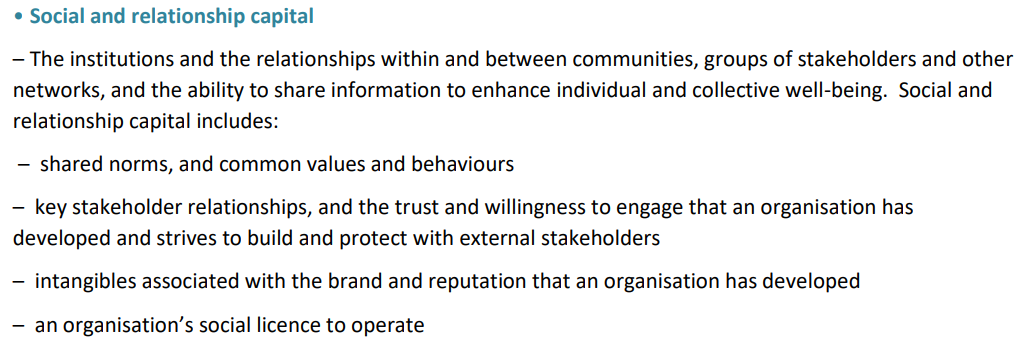
What is social capital
24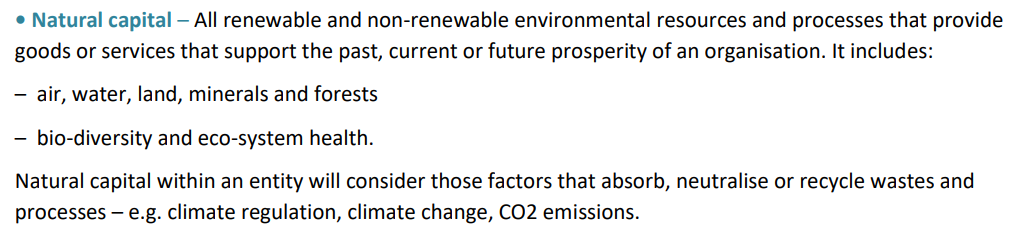
What is natural capital
25
Explain what the capitals are
stocks of value that increase or decrease depending on what the business does. Spending on staff training would increae human capital but decrease financial capital
26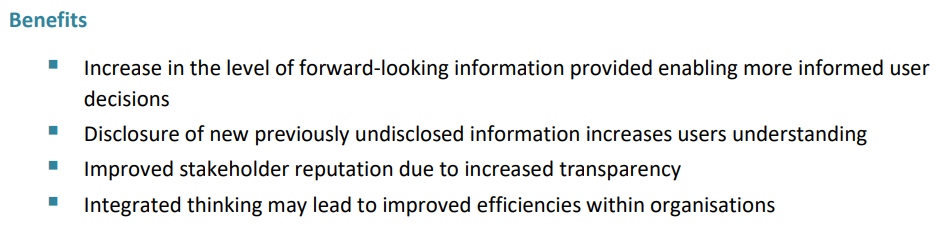
What are the benefits of integrated reporting
27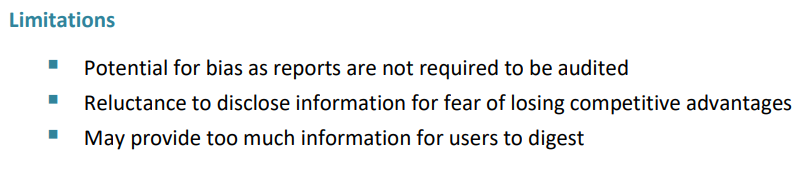
What are the limitations of integrated reporting
28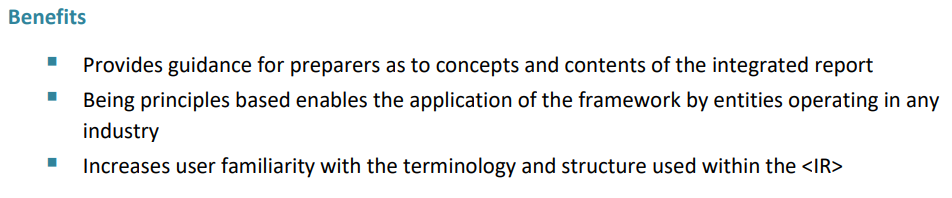
What are the benefits of the IR framework
29
What are the limitations of the IR framework
30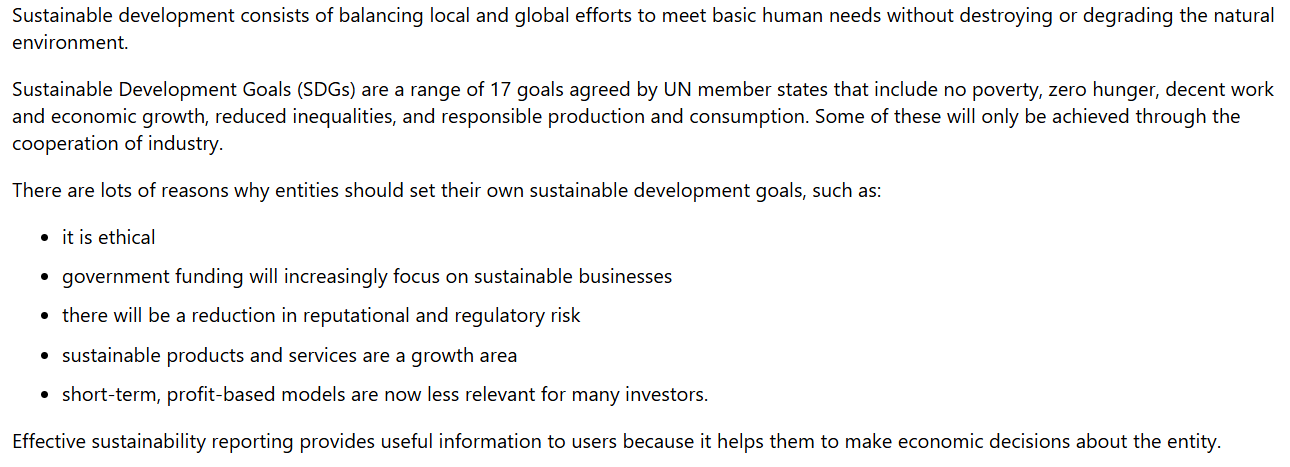
What is the background of sustainability reporting
31
What is the UNGC
32
What is the GRI
33
What is th ISSB
34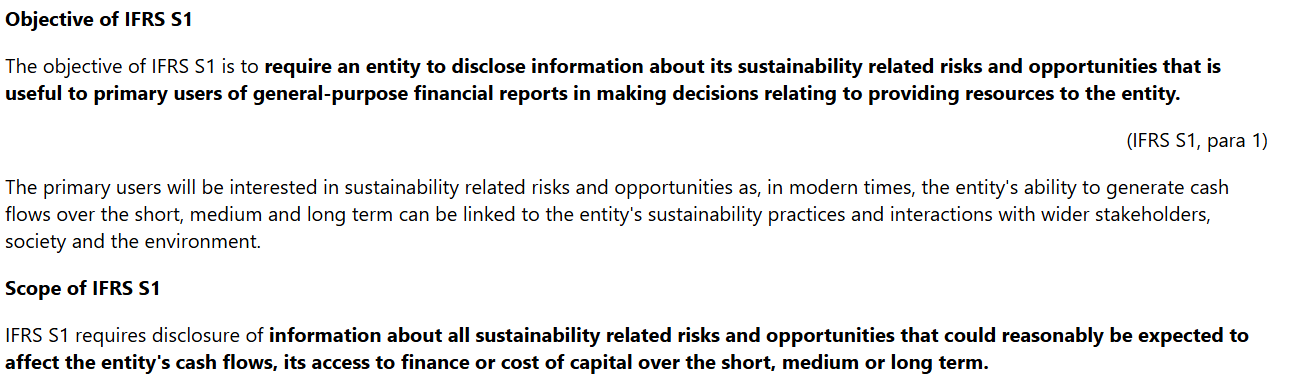
What is IFRS S1
35
What are the qualitive characteristics outlined in IFRS S1
36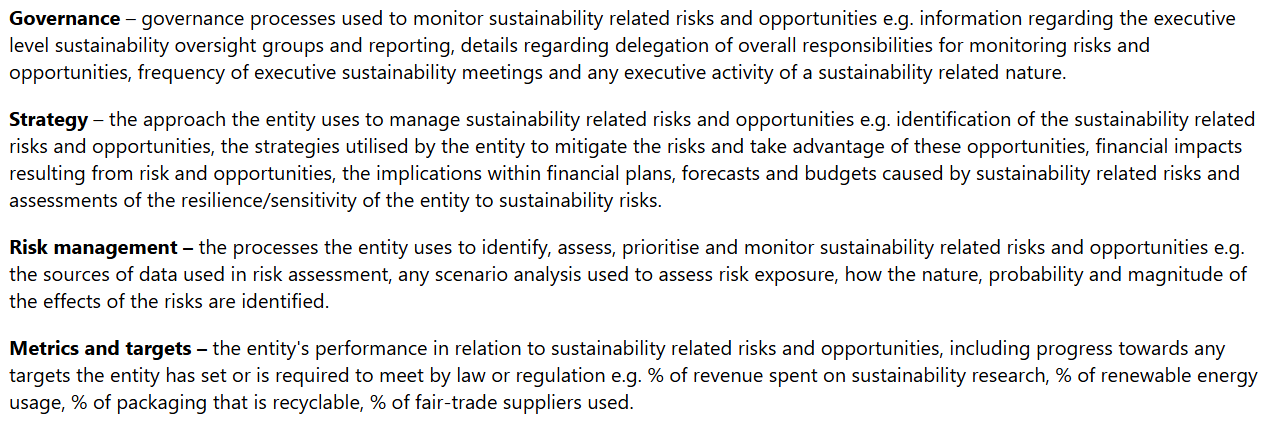
What are the 4 areas that an entity should disclose on if adopting IFRS S1
37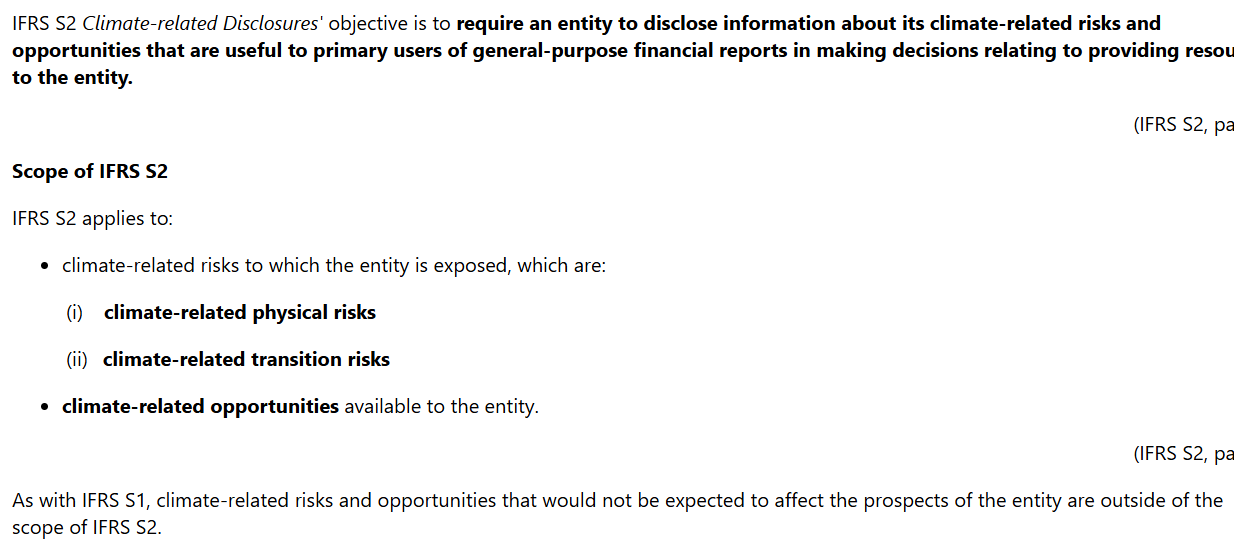
What is IFRS S2
38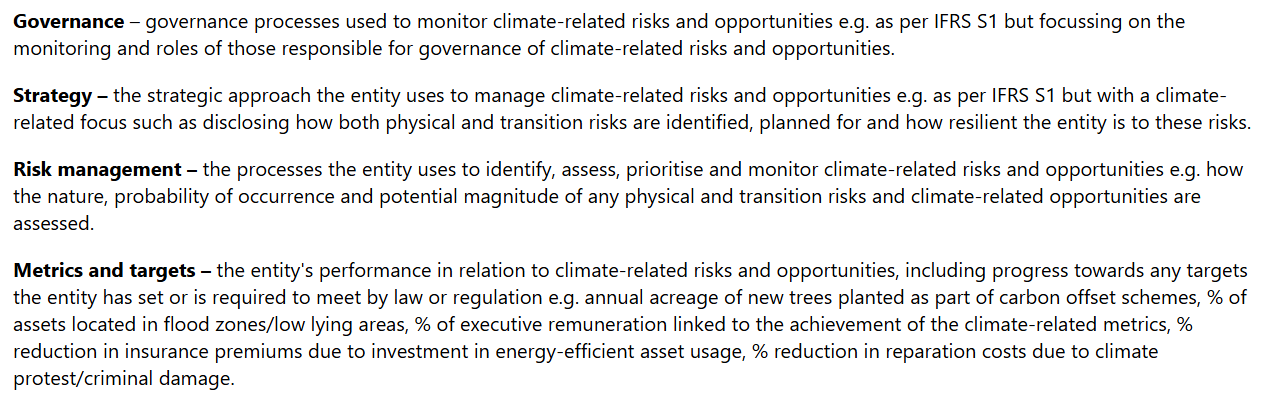
What are the 4 areas that an entity should disclose on if adopting IFRS S2
39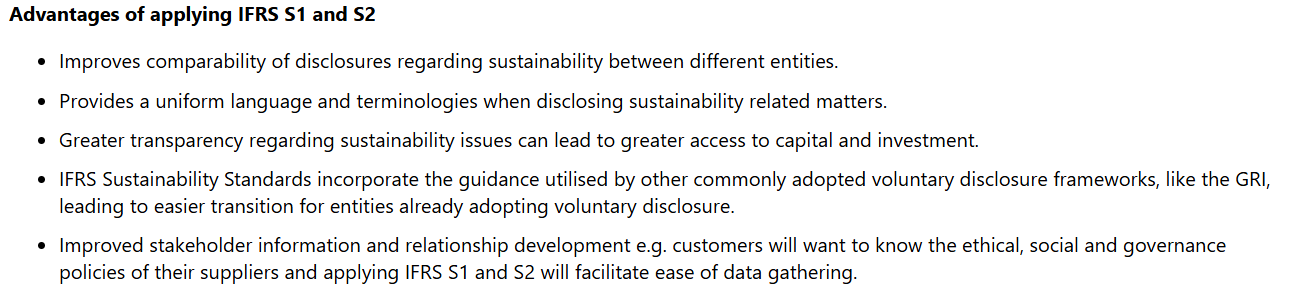
What are the advantages of adopting IFRS S1 & S2
40
What are the disadvantages of adopting IFRS S1 & S2