F2 intangible assets
Study these flashcardsFree · spaced repetition · iPhone, Android, Mac & web
All cards
1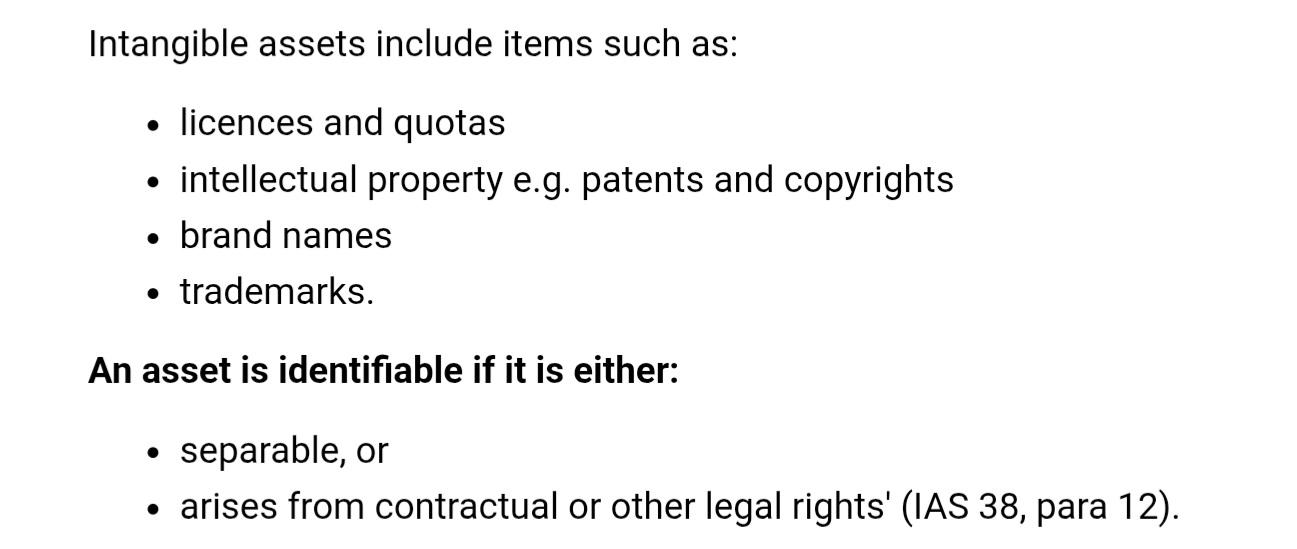
what can be recognised as an intangible asset
2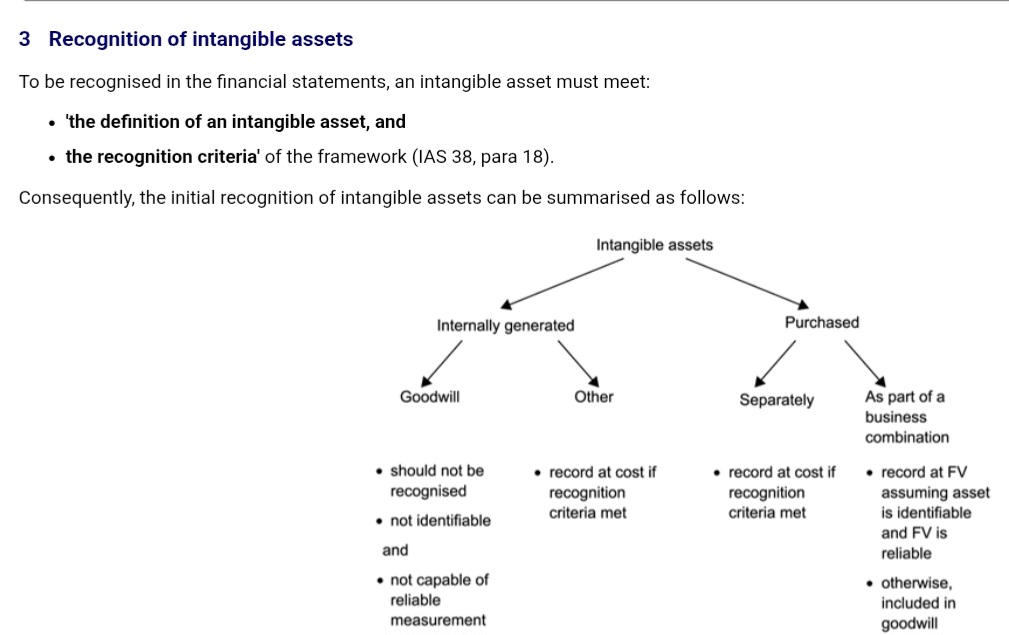
When can an intangible asset be recognised in the financial statements
3
why are internally generated intangible assets rarely capitalised in the financial statements
4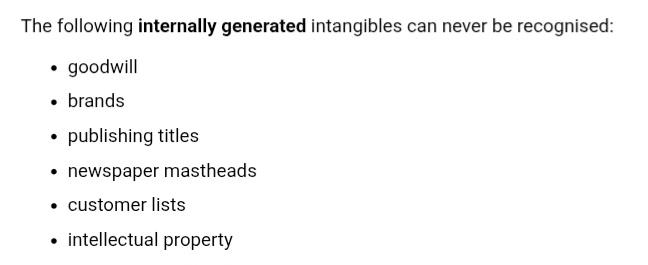
Which internally generated intangibles can never be capitalised in the financial statements
5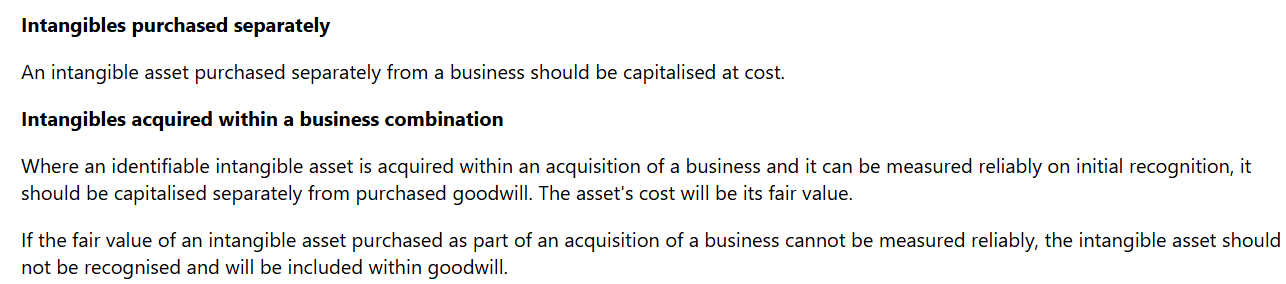
How should purchased intagibles be treated
6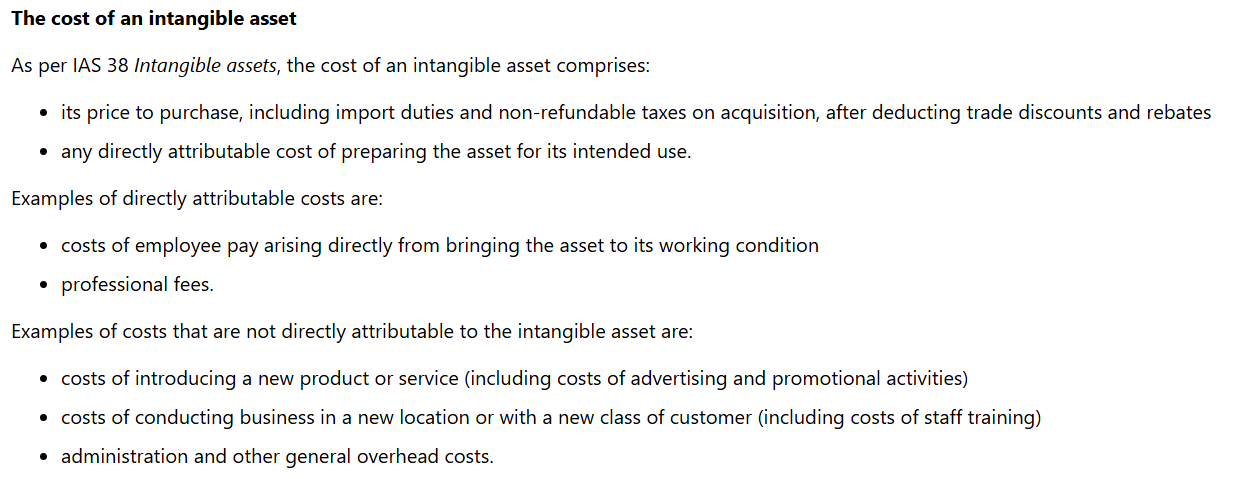
What can be included in the cost of an intagible asset
7
What are the 2 options for subsequent measurement of an intangible asset
* Cost model
* Revaluation model
* Revaluation model
8
What is the cost model for an intangible asset
Asset should be carried at cost less amortisation and any impairment losses.
Should be amortised over useful life, usually on straight line with no residual value.
If asset has an indefinite useful life it should not be amortised but should be tested for impairment annually
Should be amortised over useful life, usually on straight line with no residual value.
If asset has an indefinite useful life it should not be amortised but should be tested for impairment annually
9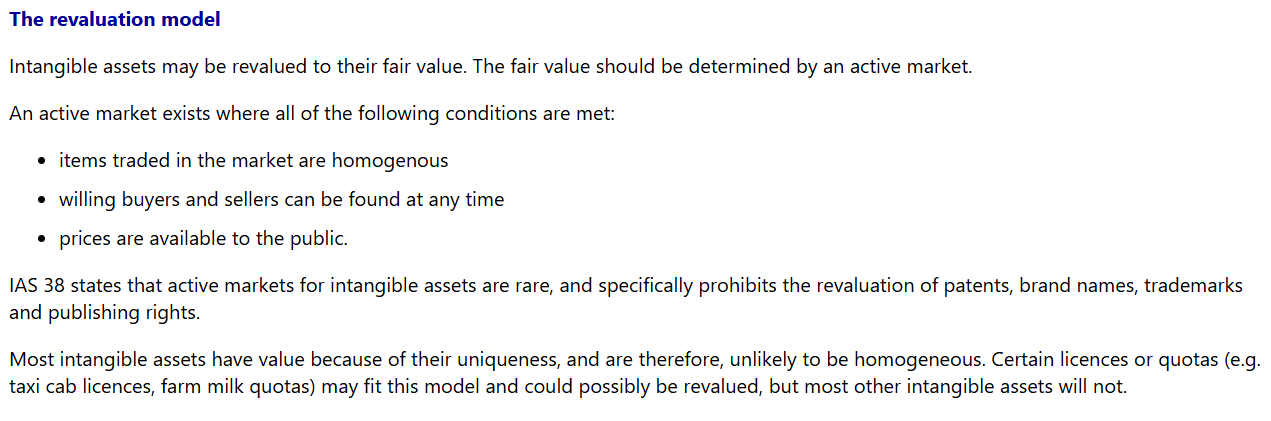
What is the revaluation model for intangible assets
10
When is an intangible asset derecognised?
* On disposal, or
* When no future economic benefits are expected from it.
* When no future economic benefits are expected from it.
11
Under IAS 38 how should research be classified
As an expense
12
What criteria must development meet in order to be classified as an intangible asset
Application of research findings or other knowledge to produce new or substantially improved products. Amortisation starts when the developed products goes live
* Able to use/sell
* Intend to complete
* Reliable measurement of costs
* Technically feasible
* Adequate resources
* Probable future benefits
if criteria not met then expense cost to P&L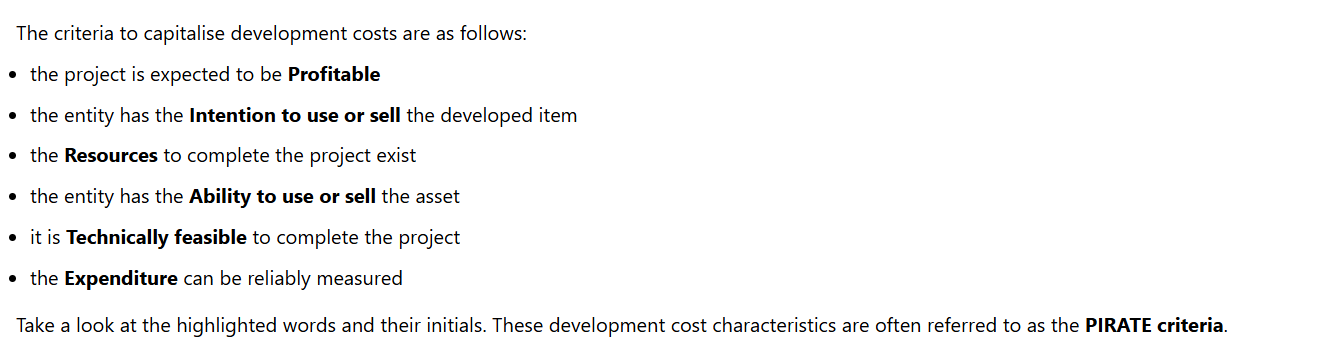
* Able to use/sell
* Intend to complete
* Reliable measurement of costs
* Technically feasible
* Adequate resources
* Probable future benefits
if criteria not met then expense cost to P&L
13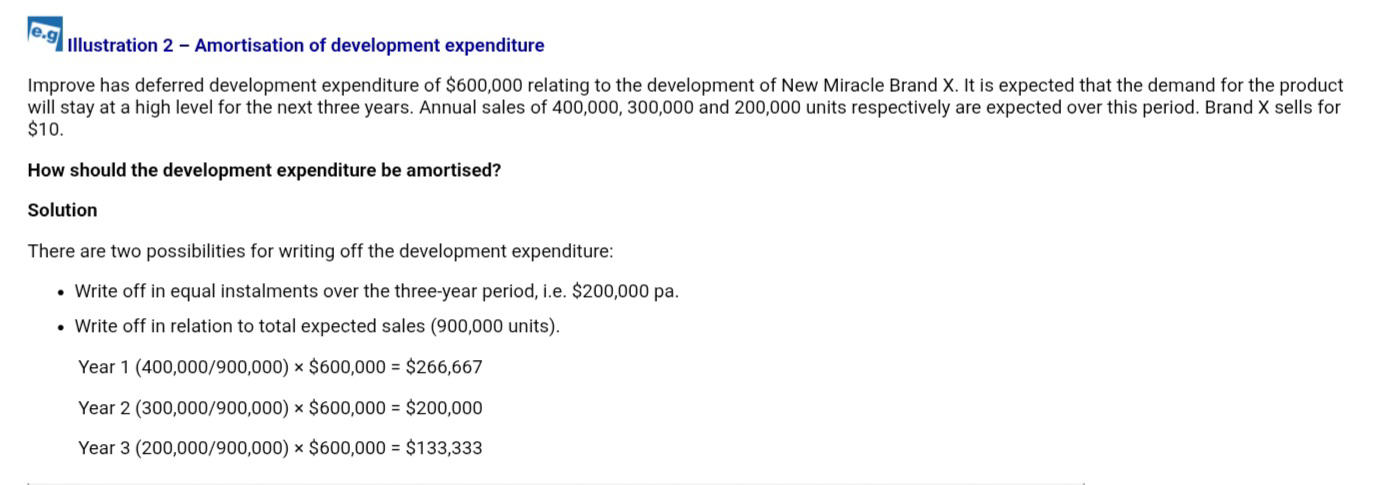
how should development costs be amortised